
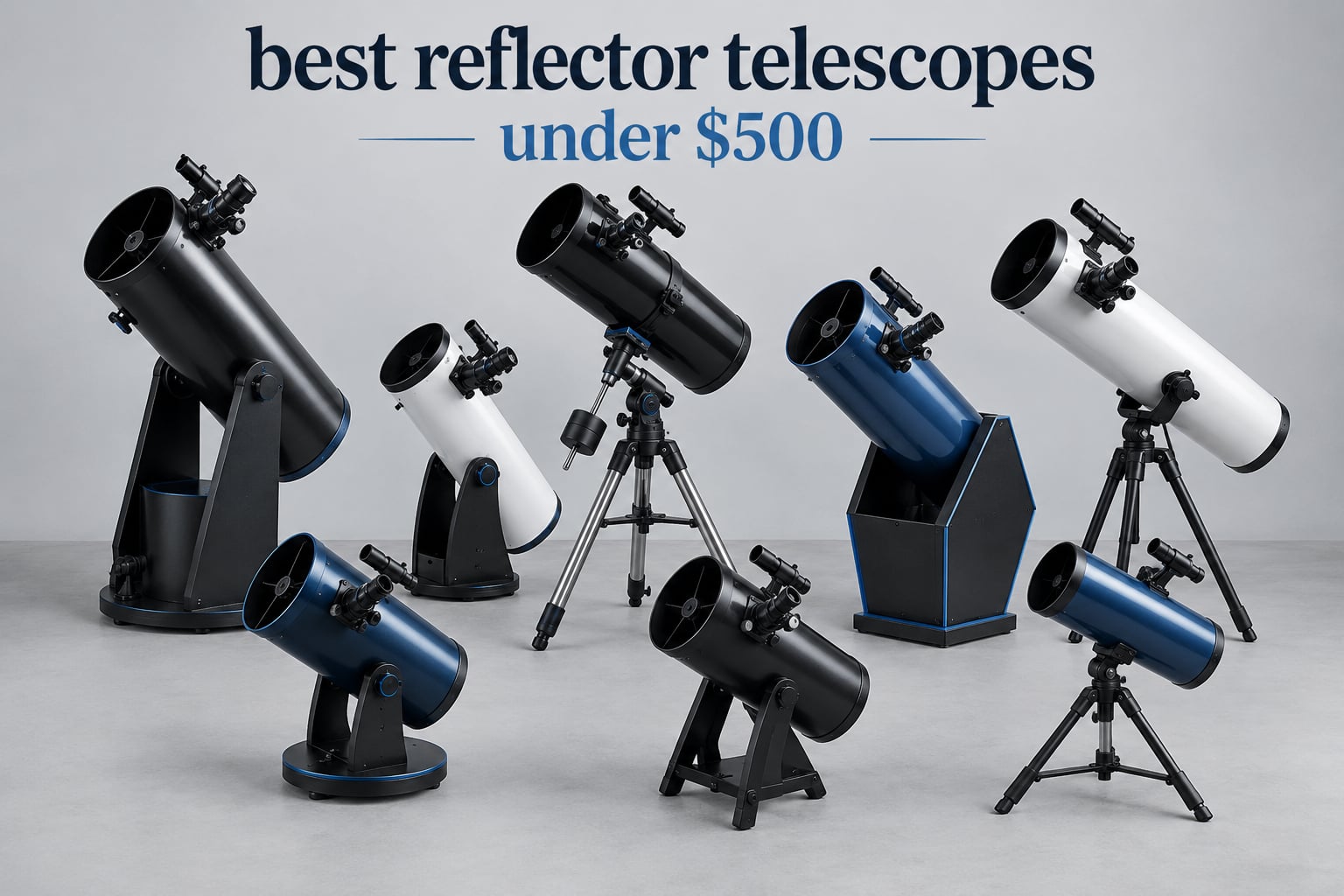
The best reflector telescopes under 500 dollars split into two clear winners. For most beginners, a 6-inch Dobsonian collects the most light per dollar, while observers who want planets and guided deep-sky viewing get more control from a 130mm Newtonian on a German equatorial mount. Both architectures deliver more aperture per dollar than any refractor at the same spend, because a mirror is simpler to make large than a lens.
That is the whole argument for a reflector, and it is why every scope in this roundup is a Newtonian. We did not include refractors or catadioptric scopes, even where they would otherwise fit the budget, because a 100mm refractor gathers only about 60 percent of the light of a 130mm reflector and puts the money into a lens element instead of an aperture. If you have been reading general telescope roundups and felt that none of them answered your question, this is the reflector-only version.
Our team compared eight Newtonians across aperture, focal length, mount stability, included eyepieces and the ownership details that show up a year later, not just in the spec sheet. We read more than 19,000 owner reviews in total, and the patterns in them shaped the rankings more than any headline specification did. Several of these scopes have an owner-reported flaw worth knowing about before you buy, and we name those flaws in every entry.
One thing to keep in mind about pricing: reflector prices in this tier move often, and the scopes here sit across a wide band rather than clustered near the ceiling. Use the buttons on each section to check the current figure, and read our wider [8 best telescopes reviewed](https://www.dognotebook.com/best-telescopes-under-500/) if you want the broader market context.
Table of Contents
Top 3 Picks for Best Budget Reflector Telescopes in 2026
Celestron PowerSeeker 127EQ
- 127mm aperture
- 1000mm focal length
- Manual German equatorial mount

Celestron AstroMaster 130EQ
- 130mm aperture
- 650mm focal length
- Dual-axis slow-motion controls

Sky-Watcher Heritage 150 Tabletop
- 150mm aperture
- 750mm f/5 focal length
- Tabletop altazimuth base
All 8 Reflectors at a Glance in 2026
Every scope below is a Newtonian reflector with a concave primary mirror and a diagonal that folds the light to the side of the tube. The column that decides most purchases is aperture, because light gathering scales with the square of the diameter.
| Product | Specifications | Action |
|---|---|---|
| Celestron PowerSeeker 127EQ |
|
Check Latest Price |
| Celestron AstroMaster 130EQ |
|
Check Latest Price |
 Celestron StarSense LT 114AZ Celestron StarSense LT 114AZ |
|
Check Latest Price |
 SOLOMARK 130EQ SOLOMARK 130EQ |
|
Check Latest Price |
 Gskyer 130EQ Gskyer 130EQ |
|
Check Latest Price |
 MEEZAA 150EQ MEEZAA 150EQ |
|
Check Latest Price |
| Sky-Watcher Heritage 150 Tabletop |
|
Check Latest Price |
 Koolpte 130EQ Koolpte 130EQ |
|
Check Latest Price |
1. Celestron PowerSeeker 127EQ – Editor’s Choice Gateway Newtonian
- Largest owner base in this group at 9255 ratings
- Light-gauge tube that moves between backyard and campsite
- 20mm and 4mm eyepieces plus 3x Barlow included
- Aluminum and SiO2 coated mirrors
- Collimation is a real hurdle for newcomers
- Light-gauge tripod shows shake and backlash
- Included finderscope shows a reversed image
- 4mm eyepiece is awkward and performance falls off past moderate power
This is the scope we recommend first for most people, and the reason is unglamorous: it has been bought and owned more times than anything else in this roundup by a wide margin. With a 4.1 average across 9255 ratings, it is the only scope here with a large enough sample for you to see the whole distribution of experiences rather than a handful of early adopters. Most of the complaints are the same complaints, which means you can plan around them.
Optically it is a 127mm Newtonian with a 1000mm focal length and aluminum and SiO2 coated mirrors. That long tube length puts it in a slower focal ratio than the 130mm scopes here, which makes it forgiving on faint deep-sky objects and gives a wide 2.5 degree field of view. Owners most often mention lunar craters and the Orion Nebula as first targets, and the reported Dawes limit of 0.91 arc seconds is respectable for the aperture.
The mount is the honest weak point. It is a manual German equatorial with a slow-motion altitude rod, and reviewers describe it as light-gauge, with noticeable shake and backlash under load. On Cloudy Nights, where the subject comes up constantly, the prevailing view is that very cheap equatorial mounts are hard to recommend for the job. If you are put off by that, the altazimuth scopes in this list avoid the problem entirely by not pretending to track.
Collimation is the second thing nobody mentions in the sales copy. Owners consistently report needing to align the mirrors before first use and rechecking after transport. Many have added a laser collimator to the setup, which is the single most common accessory purchase in this category and worth budgeting for.
What 127mm actually shows you
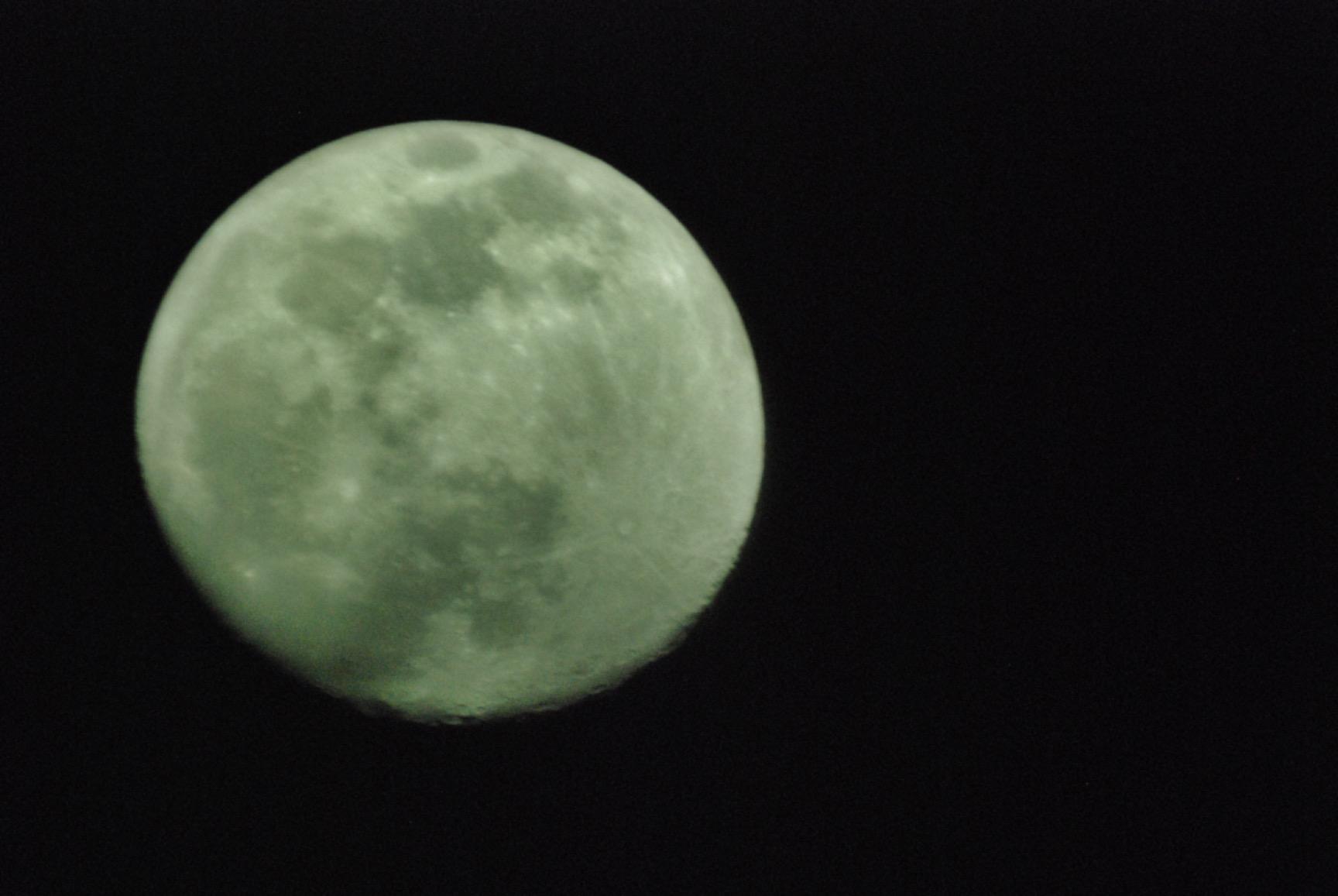
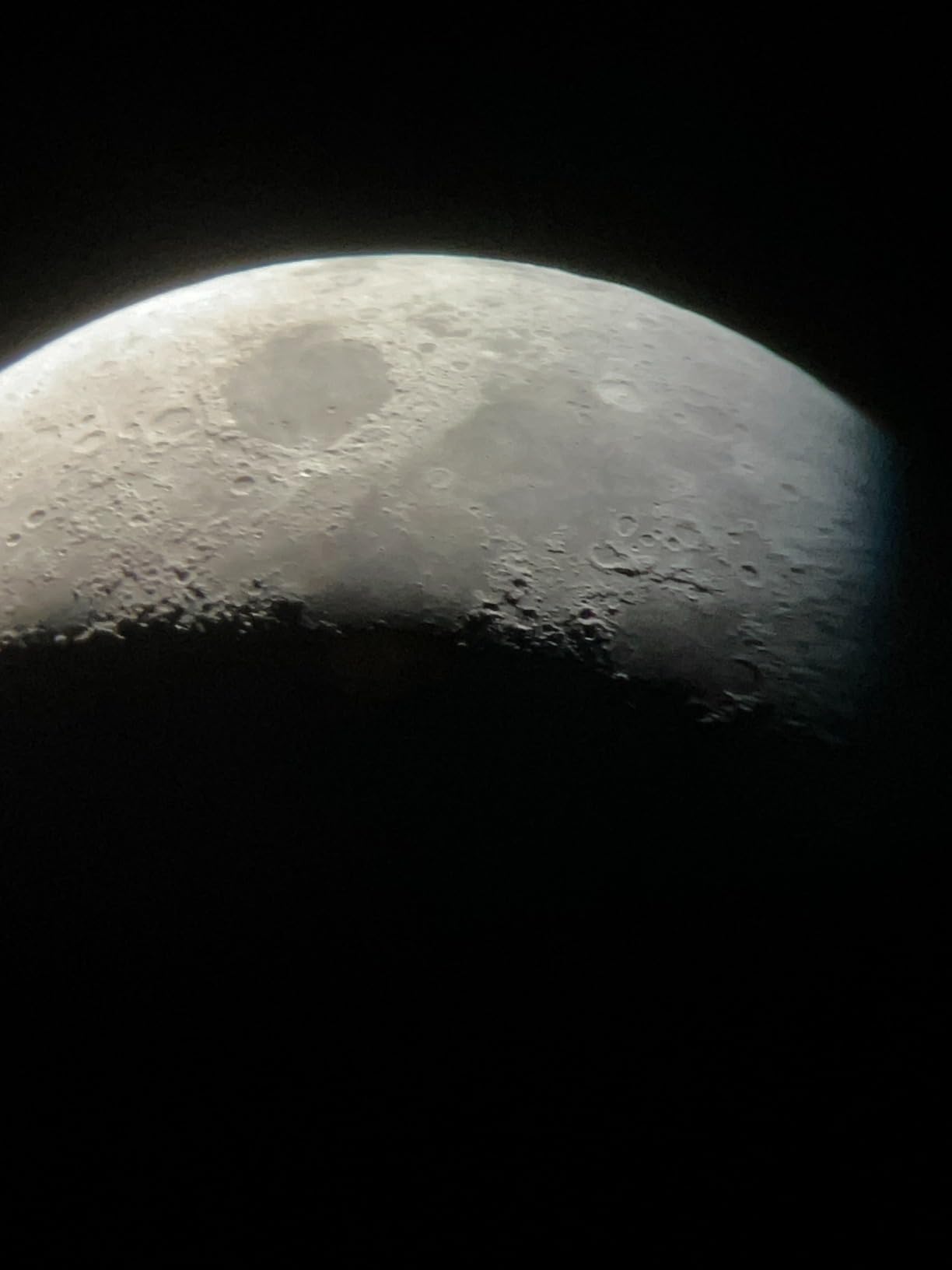
The Moon is where this scope earns its keep. At 127mm you get genuine crater relief along the terminator rather than a flat grey disc, and the 20mm eyepiece starts you low and wide. Saturn’s rings separate cleanly, and Jupiter shows its bands plus the four Galilean moons moving across the field within minutes.
Deep-sky wise, expect the bright end of the catalogue. The Orion Nebula, the Andromeda Galaxy, the Pleiades and the Beehive all resolve into structure. Fainter galaxy detail stops being reachable, and that is the limit that pushes people toward a 150mm scope later.
Where this scope will disappoint you
The 4mm eyepiece is the weak link optically. Reviewers describe it as awkward to use, with image quality falling off quickly past moderate magnification, so plan on adding one good 25mm Plossl rather than trusting the supplied set.
The supplied finderscope is also widely criticised as low quality and showing a reversed image. Owners replace it with a reflex sight or a unit with more magnification, which is a small, cheap fix. If your priority is stability at high power, look at the altazimuth route instead.
2. Celestron AstroMaster 130EQ – Best Value Step Up
- 130mm aperture is the sweet spot for this budget
- Both axes have slow-motion knobs so objects hold better
- Tool-free assembly gets you outside quickly
- 20mm erect-image eyepiece and 10mm included
- Owners rate the light gain over smaller scopes as obvious
- Manual only
- so objects drift during long sessions
- Tripod uses light steel and some plastic fittings
- Declination axis can feel rough
- Collimation needs a tool that is not included
If the PowerSeeker is the gateway and the 150mm scopes are the destination, this is the step in between that most people should actually buy. It carries a 4.3 average across 3444 ratings, the second-highest score in the group, and the extra 3mm of aperture over the 127mm buys roughly 5 percent more light gathering for a step most owners describe as the obvious move.
The 650mm focal length makes this a fast f/5 design, which means a wide field and good performance on clusters and nebulae without the fuss of very long tubes. Reviewers most often praise the optical clarity on the Moon and planets, and the mount becomes genuinely useful once you have polar aligned it. Both axes carry slow-motion control knobs, so you can centre an object without losing it.
The mount has a real learning curve that the packaging does not advertise. You are buying a piece of equipment that only behaves properly after polar alignment, and the manual is thin on the topic. On forums the pattern is consistent: people who spent the evening learning it rate the scope highly, and people who expected it to work like an altazimuth feel let down. Our [telescope roundup](https://www.dognotebook.com/best-telescopes/) covers the alignment habit in more detail.
Tool-free assembly is a genuine plus for beginners. Reviewers note getting from box to backyard quickly, which matters more than most spec comparisons admit. The permanently mounted StarPointer red dot finder is included and does the job of getting you onto targets once you know how to use it.
Why 130mm is the number people search for
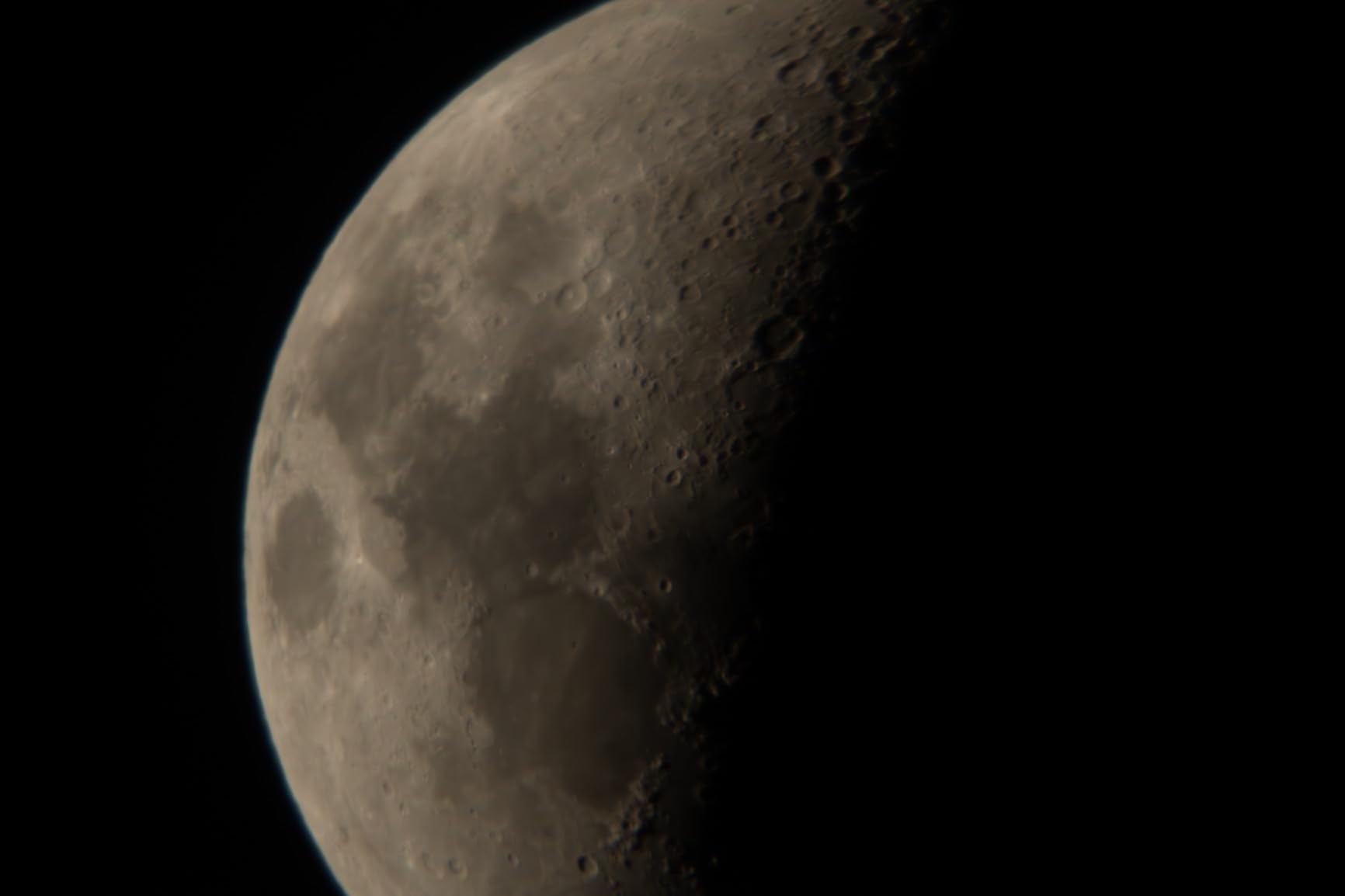
At 130mm you cross the threshold where the popular beginner deep-sky objects stop being pale smudges. The Ring Nebula, the Dumbbell and M31’s brighter core all start to show shape rather than just brightness. On planets the jump is in resolution: Jupiter’s belts separate more cleanly and Saturn’s Cassini Division becomes discernible under steady seeing.
The f/5 focal ratio also keeps stars tighter toward the edge of the field than a long f/8 tube would, which is why this style of scope rewards a modest field stop or a 25mm eyepiece. As a general rule, double the aperture in millimetres gives you the maximum magnification worth using, so 130mm supports roughly 260x before the image turns to mush.
Where this scope will disappoint you
The tripod is built with light steel tubing and some plastic fittings, and owners describe it as under-built for the optics above it. At 17 pounds the whole rig is manageable but not grab-and-go, and backlash shows up if you push the slow-motion knobs hard.
It is manual only. During a long session an object drifts steadily and you re-centre by hand, which is the reason to consider adding a tracking motor later. It is also not suited to astrophotography without modification, so treat it as a visual instrument.
3. Celestron StarSense LT 114AZ – Best Guided Scope for First-Time Buyers
Celestron StarSense Explorer LT 114AZ Newtonian Smartphone Guided Telescope
- StarSense app points the scope at targets for you
- App suggests the best objects for tonight based on time and location
- Lightest serious setup in this roundup at 10.4 pounds
- Sharp Moon
- Jupiter and Saturn views
- 114mm aperture is smaller than the 130mm and 150mm options here
- Altitude slow motion means you nudge it manually as objects drift
- App needs a docked smartphone and clear skies
- Red dot finder alignment is fiddly and has no magnification
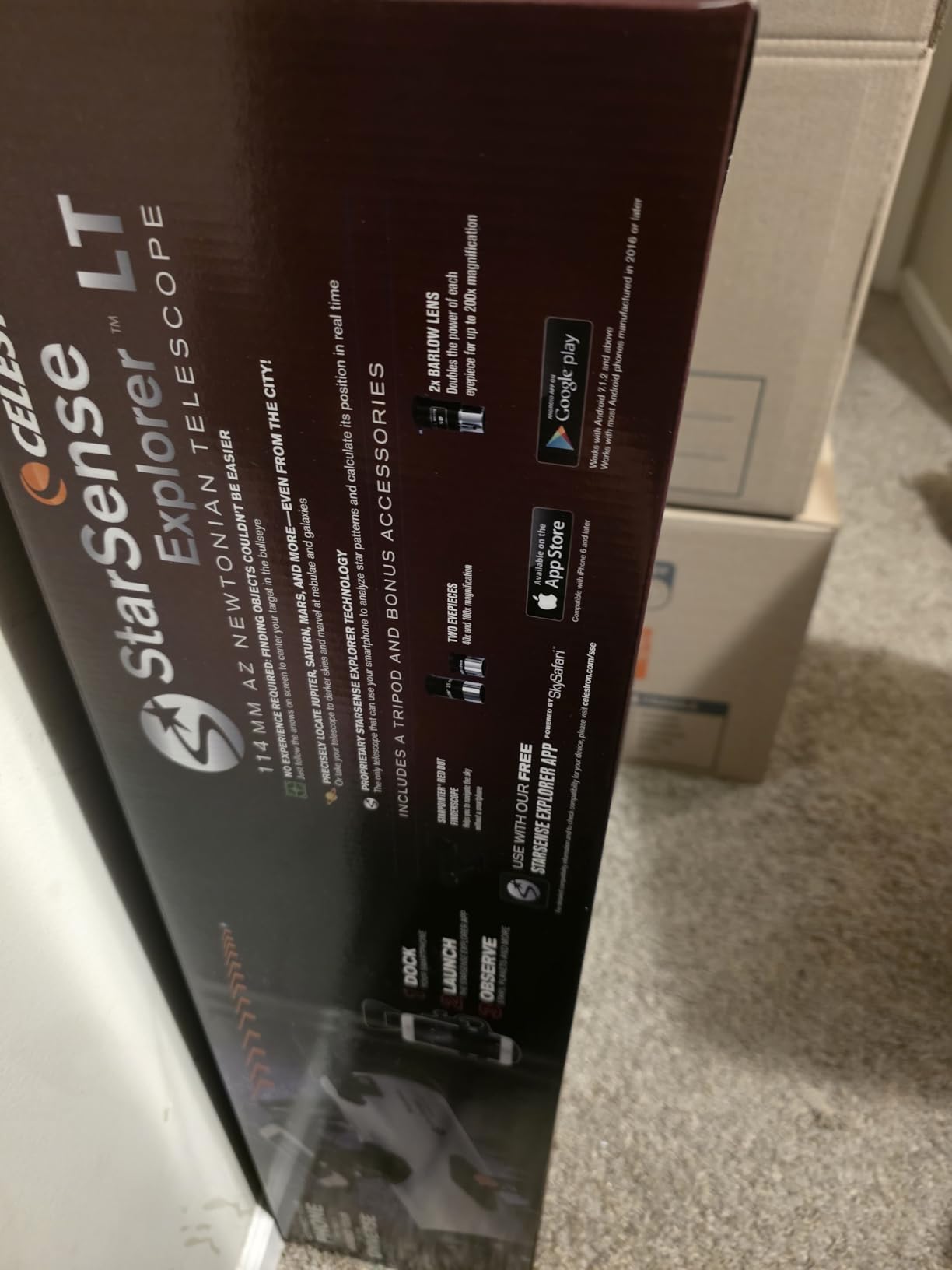
The hardest part of buying a first telescope is not aperture. It is finding things. Forum threads about budget reflectors repeatedly return to the same frustration, that star-hopping defeats beginners before they ever see a nebula, and this scope is the answer to that specific problem. It scores 4.1 across 1571 ratings, and the reviews are dominated by how much the guidance lowers the barrier to entry.
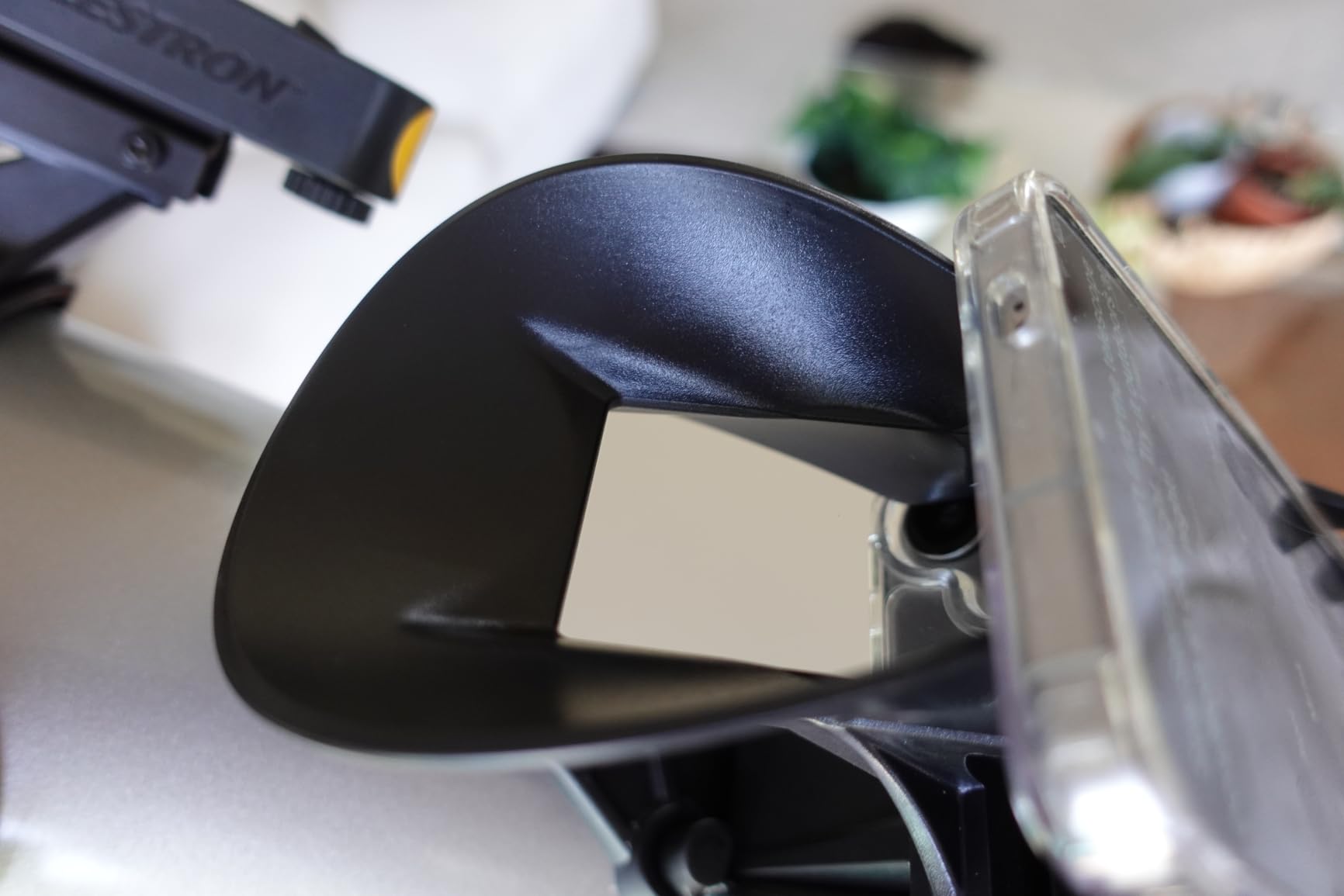
The StarSense app recognises the sky from the phone camera and shows pointing arrows on screen, then generates a shortlist of what is worth looking at tonight. You dock the phone to the tube, follow the arrows, and the object appears in the finder. For a family with children or for anyone who has given up on a previous scope, that is worth more than extra millimetres.
Optically it is a 114mm Newtonian with a 1000mm focal length and coated glass mirrors, giving a wide 2.04 degree field. Reviewers confirm sharp views of the Moon, Jupiter and Saturn, and the 25mm and 10mm eyepieces plus a 2x Barlow cover most of what you need for a first year. At 10.4 pounds it is the setup we would most happily carry to a darker site on short notice.
The mount is a manual altazimuth with altitude slow motion and a sliding rod. That means no polar alignment and no counterweight, which is a genuine relief if you found the German equatorial concept intimidating. The trade is that objects drift and you nudge the scope manually during longer sessions.
What you gain and give up with 114mm
You give up resolution and faint detail. The Dawes limit of 1.02 arc seconds is the weakest of the reflectors here, so fine planetary detail is correspondingly harder, and deep-sky objects that a 130mm scope shows with structure tend to look like faint grey clouds here. For the Moon, Jupiter’s bands and Saturn’s rings, the difference is small enough that most beginners will never notice it.
What you gain is the ability to actually find things. Reviewers repeatedly single out the app as the reason they kept using this scope rather than abandoning it. Our [best telescopes under $200 roundup](https://www.dognotebook.com/best-telescopes-under-200/) covers what smaller apertures can and cannot show, and the same trade applies one tier up.
Where this scope will disappoint you
Photography is the weak area. The app requires a smartphone docked to the tube and works best under clear skies, and a red dot finder with no magnification can make fine alignment fiddly. If Moon and planet close-ups are your main interest, spend your upgrade budget on a higher-power finder instead.
Long sessions expose the drift. With altitude slow motion rather than tracking, you are adjusting the scope throughout, which becomes tiring after an hour. And the 114mm aperture means you are permanently leaving some deep-sky detail on the table, which is exactly the reason many owners step up later.
4. SOLOMARK 130EQ – Best Accessory Bundle
- Most complete box in the roundup for the money
- 130mm fully coated optics give bright planet and deep-sky views
- Carbon-fiber style tube looks premium and packs well
- Large-diameter aluminum tripod with accessory tray
- Mount dials and control cables allow smooth manual tracking
- Straight-through finder is cheap plastic and hard to align
- No collimation tool included and the manual barely covers it
- Eyepieces are Kellner K10 and K20 despite being described as Plossl
- Included 1.5x Barlow is noticeably lower quality
Judged purely on what arrives in the box, this is the best-equipped scope in the roundup. You get two eyepieces, a 1.5x erecting Barlow, a 1.25-inch 13 percent transmission Moon filter and a cellphone adapter, which is the accessory list most buyers end up assembling themselves anyway. It holds a 4.2 average across 1361 ratings.
The optics are a 130mm Newtonian with a 650mm focal length and fully coated glass, giving a 1.3 degree field of view. Owners describe bright views of planets and deep-sky objects, and the carbon-fiber style tube finish stands apart from the plain white and black tubes elsewhere in this group. Packaging is good and the tube arrives well protected, which matters for a component that must survive a collimation adjustment without shifting.
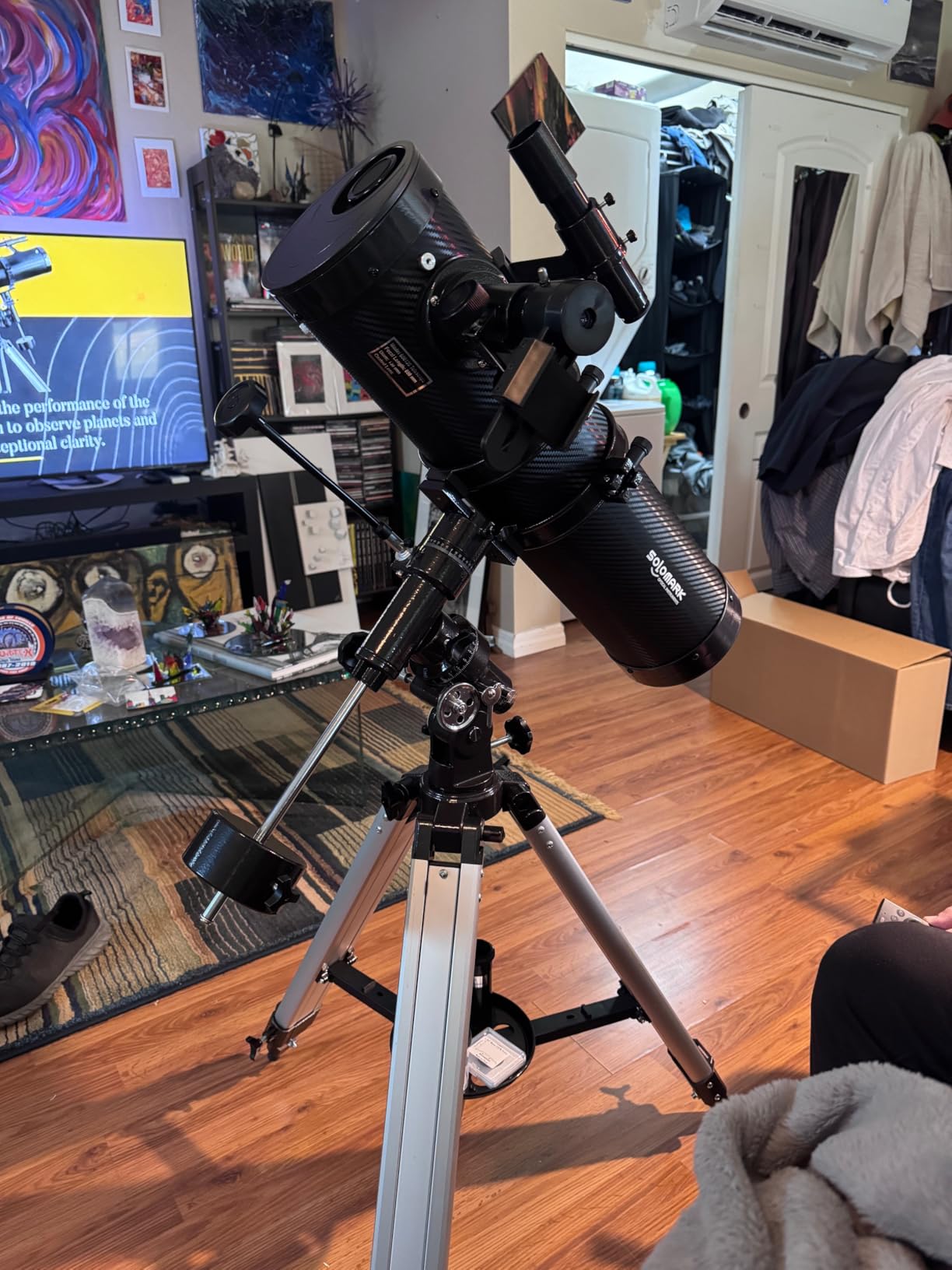
Forum buyers have flagged this brand along with several others as one where spec sheets run ahead of reality and that quality is inconsistent between examples. That caution is worth taking seriously here. Specifically, the verifiable complaint from owners of this scope is about the eyepieces: they are Kellner K10 and K20 eyepieces even though the listing describes them as Plossl. That is a real downgrade in the one component that matters most to the view.
The straight-through finder is the other near-universal complaint. Reviewers call it cheap plastic and difficult to align, and several replaced it. On support, some buyers reported slow answers when asking about a replacement finder, which is worth factoring in if you expect to change it.
Getting the most from the included bundle
The Moon filter is the sleeper item here. At 13 percent transmission it cuts glare on the lunar surface enough that you can hold detail in the bright limb instead of washing it out, and at this budget that filter alone usually costs a meaningful fraction of the scope price. Keep it in the box rather than putting it in a drawer.
The erecting Barlow is useful because Newtonian images are inverted, so the 1.5x corrects orientation for terrestrial viewing and adds a little reach on planets. Just be aware of the quality note above and use the native eyepieces first to judge what the optics can really do.
Where this scope will disappoint you
No collimation tool is included, and reviewers note the manual barely covers the process. That leaves you either buying a collimation aid or learning by eye on your first night, which is not a good combination for a beginner.
The German equatorial mount here has dials and control cables that some reviewers find smooth to use, but you still face polar alignment and manual drift. If documentation quality is your main worry, pick a scope with clearer guidance even if the box is plainer.
5. Gskyer 130EQ – Best for Phone Photography
- Highest-rated option with a meaningful review count at 4.4
- Multi-coated all-glass optics with high transmission coatings
- German equatorial mount tracks objects across the sky
- Short 24 inch tube gives a wide forgiving field
- Bluetooth remote makes phone photos simple without an app
- At 30.1 pounds it is the heaviest rig here and awkward to carry
- Three included eyepieces are entry level and most owners upgrade
- Collimating still needs a tool that is not included
- Toothless focuser takes practice to operate smoothly
This is the scope to buy if the word that pulls you in is astrophotography, because the Bluetooth wireless remote lets you trigger phone exposures without touching the tripod. That alone removes most of the shake that ruins Moon and planet snapshots. It rates 4.4 across 454 ratings, among the highest scores in the group, with real review volume behind it.
Optically it is a 130mm, which the manufacturer lists as 5.1 inches, on a 650mm focal length for an f/5 ratio. The short 24 inch tube and fast focal ratio give a wide, forgiving field of view, and the multi-coated all-glass optics with high transmission coatings are described by owners as delivering bright, clear images. Listed maximum magnification is 307x, which is a number to treat as a ceiling rather than a target.
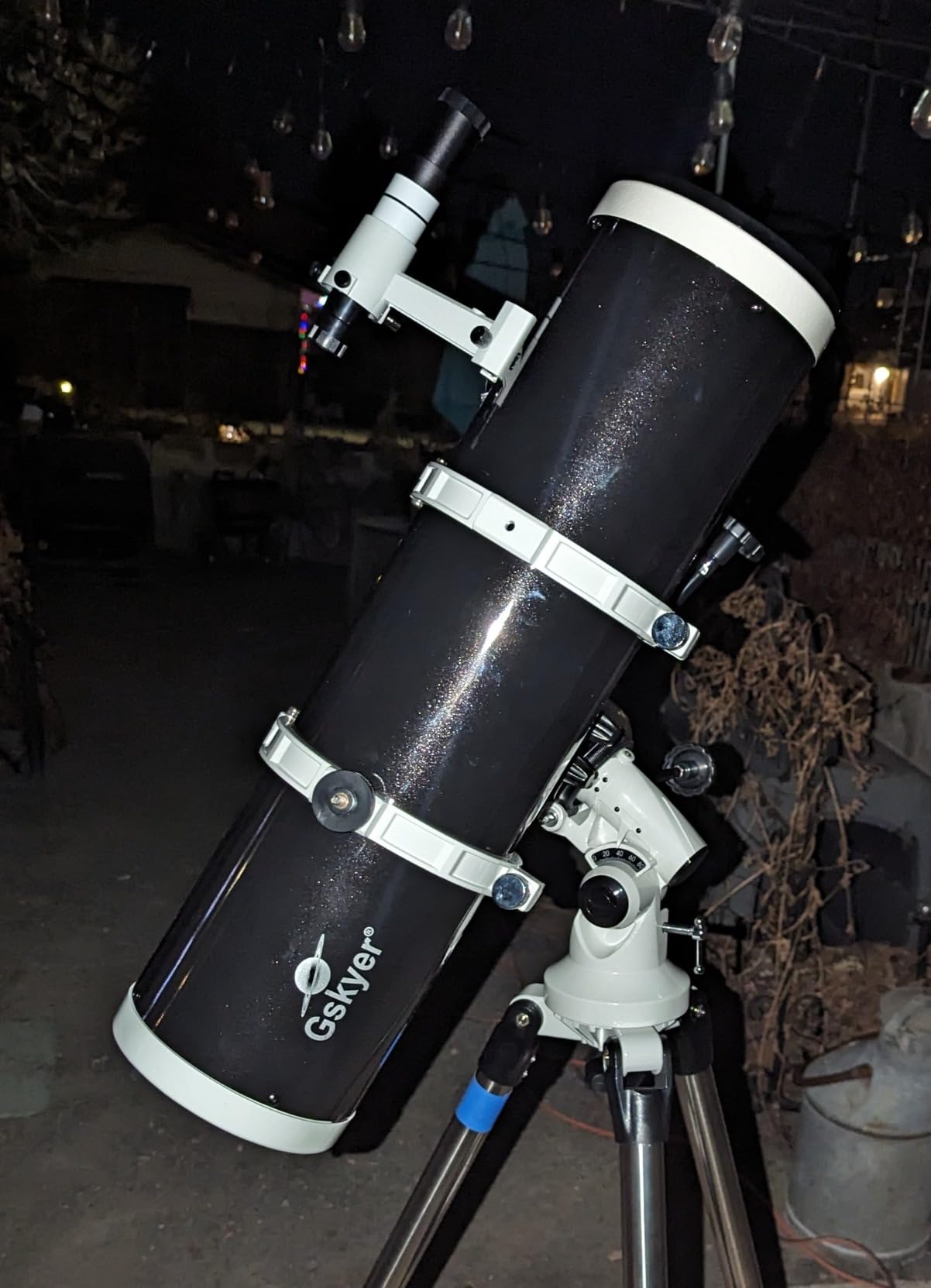
What earns the rating is the mount. This is a genuine German equatorial with dials rather than a token one, and it holds an object steady enough to be worth the effort. Owners highlight it as strong value for the price, which is consistent with what the extra weight is paying for.
The weight is the catch. At 30.1 pounds this is the heaviest rig in the roundup, and it is not a grab-and-go scope. If you plan to travel to dark skies more than once, the 10.4-pound altazimuth option or a tabletop Dobsonian is a far more realistic companion.
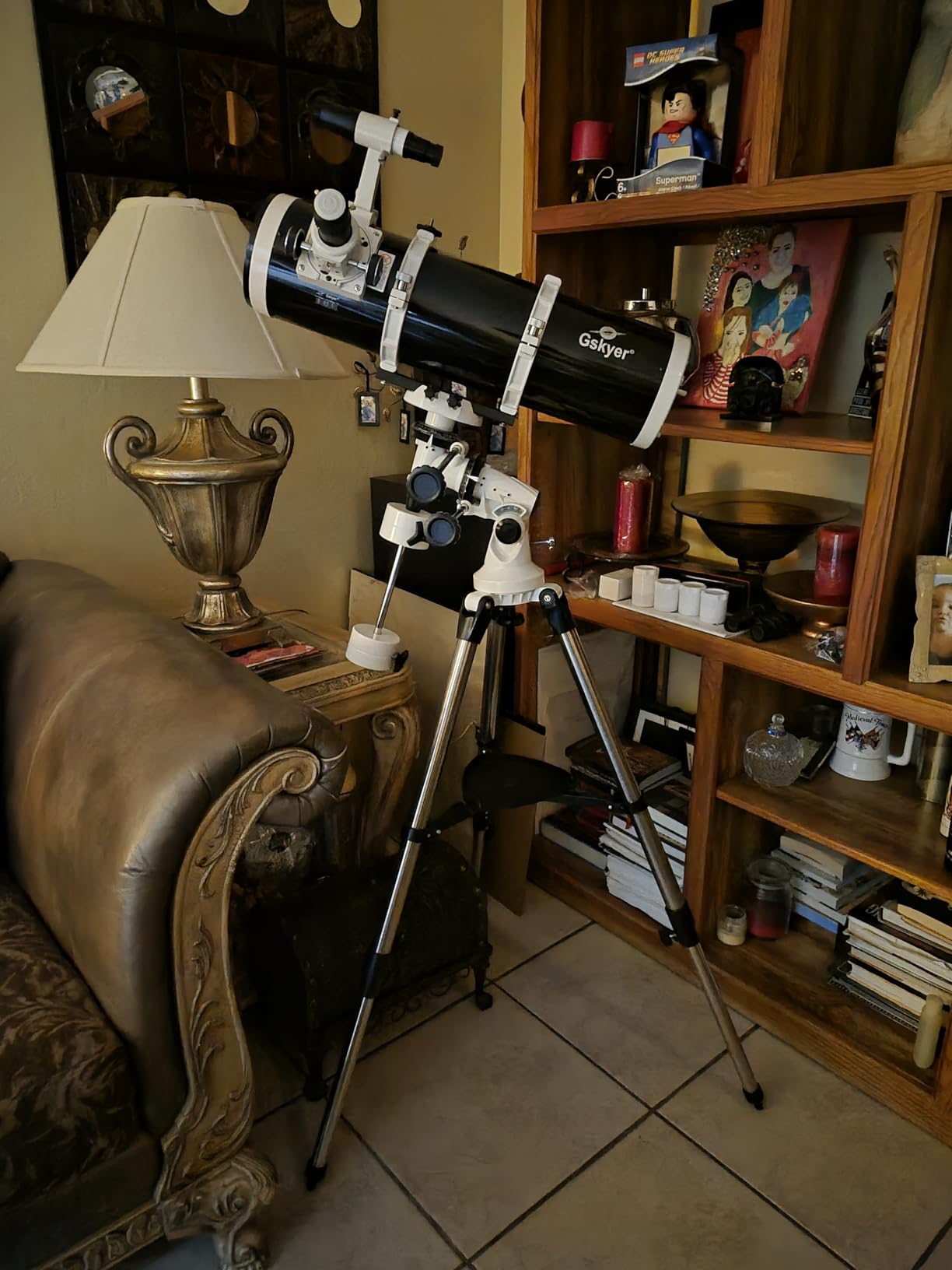
What phone astrophotography at this budget can and cannot do
Expect good Moon and planet shots and nothing more. A phone held to the eyepiece with the remote firing exposures will capture crater detail, Jupiter’s moons against the disc, and Saturn in a stable frame. The reflector-only argument matters here too, since a fast Newtonian works reasonably well with a cheap adapter.
Deep-sky imaging is a different story. Forum consensus at this budget is that imaging ambitions point people toward smart telescopes rather than optical scopes, and that is the honest read. Treat the remote as a Moon and planet tool, not the start of a nebula gallery.
Where this scope will disappoint you
The three included eyepieces are entry level, and most owners upgrade them. Spend early on one good Plossl and a 2-inch diagonal rather than several cheap eyepieces.
The toothless focuser takes practice to operate smoothly, and the focuser has enough play that changing eyepieces can knock an object out of focus. The warranty is one year with lifetime maintenance, which is thinner than the two years most scopes here carry.
6. MEEZAA 150EQ – Best Complete Package
- 150mm aperture is the largest here for equatorial-style mounting
- Comes with eyepieces
- 2x Barlow
- finder
- Moon filter
- phone adapter and carry bag
- German equatorial mount with slow-motion knobs tracks smoothly once aligned
- Sharp views of Jupiter
- Saturn and deep-sky targets in suburban skies
- Pre-lubed mount and clear color-coded instructions
- One reviewer reports the primary is 130mm rather than the advertised 150mm
- Included Kellner eyepieces are entry level and many upgrade
- All-plastic focuser and a fiddly phone holder
- Assembly may need two people
- Changing eyepieces knocks the object out of focus
The appeal of this scope is straightforward: it mounts a 150mm mirror on an equatorial head, which means the largest aperture in the roundup paired with tracking control. Aperture is the hardest specification to increase at any budget, and this is one of the few scopes in the group that gives you six inches of it without a tabletop base. It holds a 4.4 average across 250 ratings.
The 650mm focal length gives bright, detailed lunar and planetary views, and owners report sharp results on Jupiter, Saturn and brighter deep-sky targets even from suburban skies. Magnification runs from 26x to 130x with the included 25mm and 10mm Kellner eyepieces and the 2x Barlow, which is a sensible range for an aperture this size.
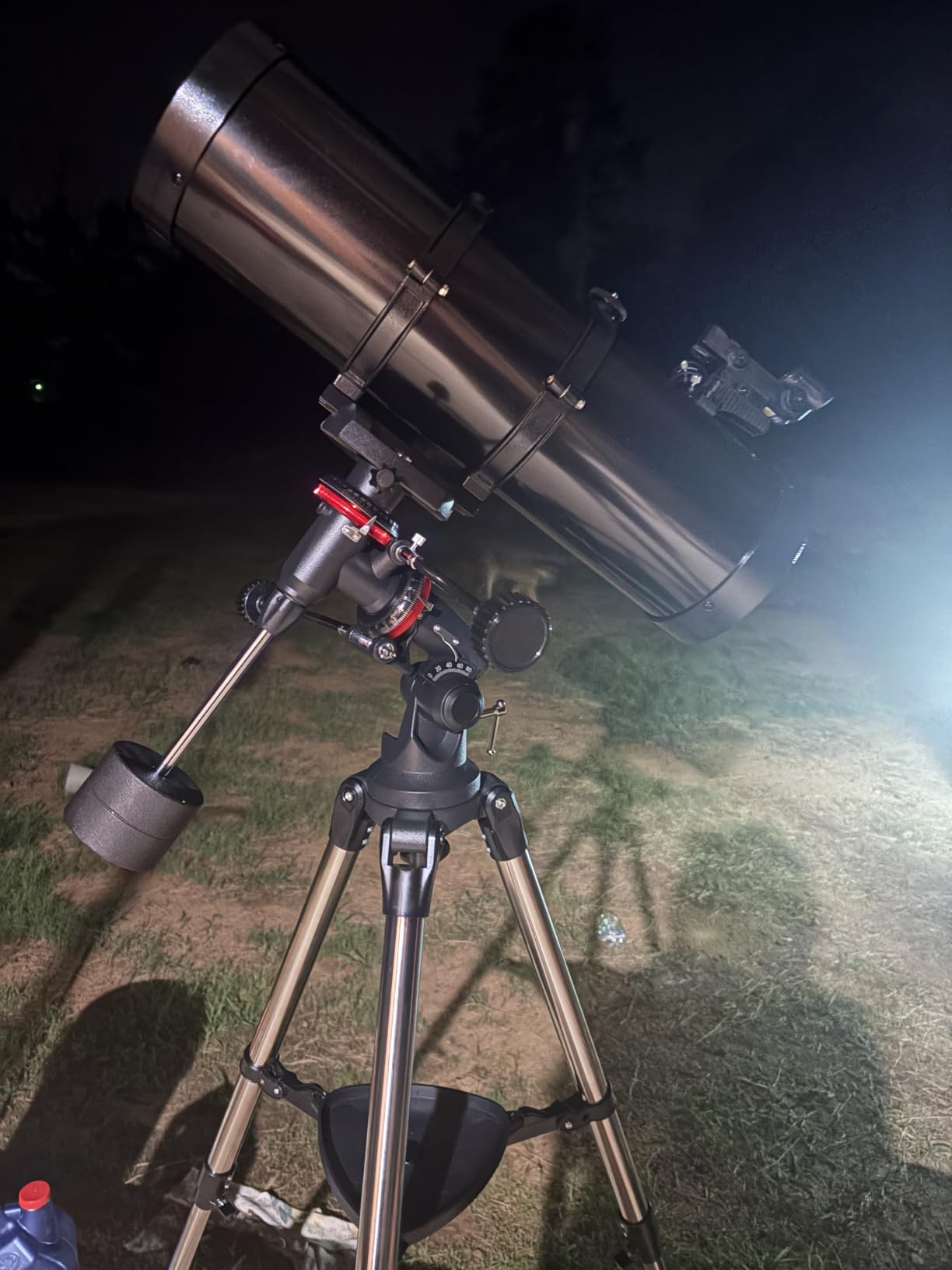
The accessory list is the most generous here. You get eyepieces, a 2x Barlow, a red dot finder, a Moon filter, a phone adapter and a large carry bag, plus a heavy-duty stainless steel tripod with an accessory tray. Owners also note the mount arrives pre-lubed and the packaging and instructions are unusually clear for this category.
One credibility issue deserves prominence rather than burial. A reviewer reports that the primary mirror received is 130mm rather than the advertised 150mm. Whether that is an isolated unit or a broader pattern we cannot say, but it is exactly the sort of specification dispute that should make you verify the aperture yourself on arrival.
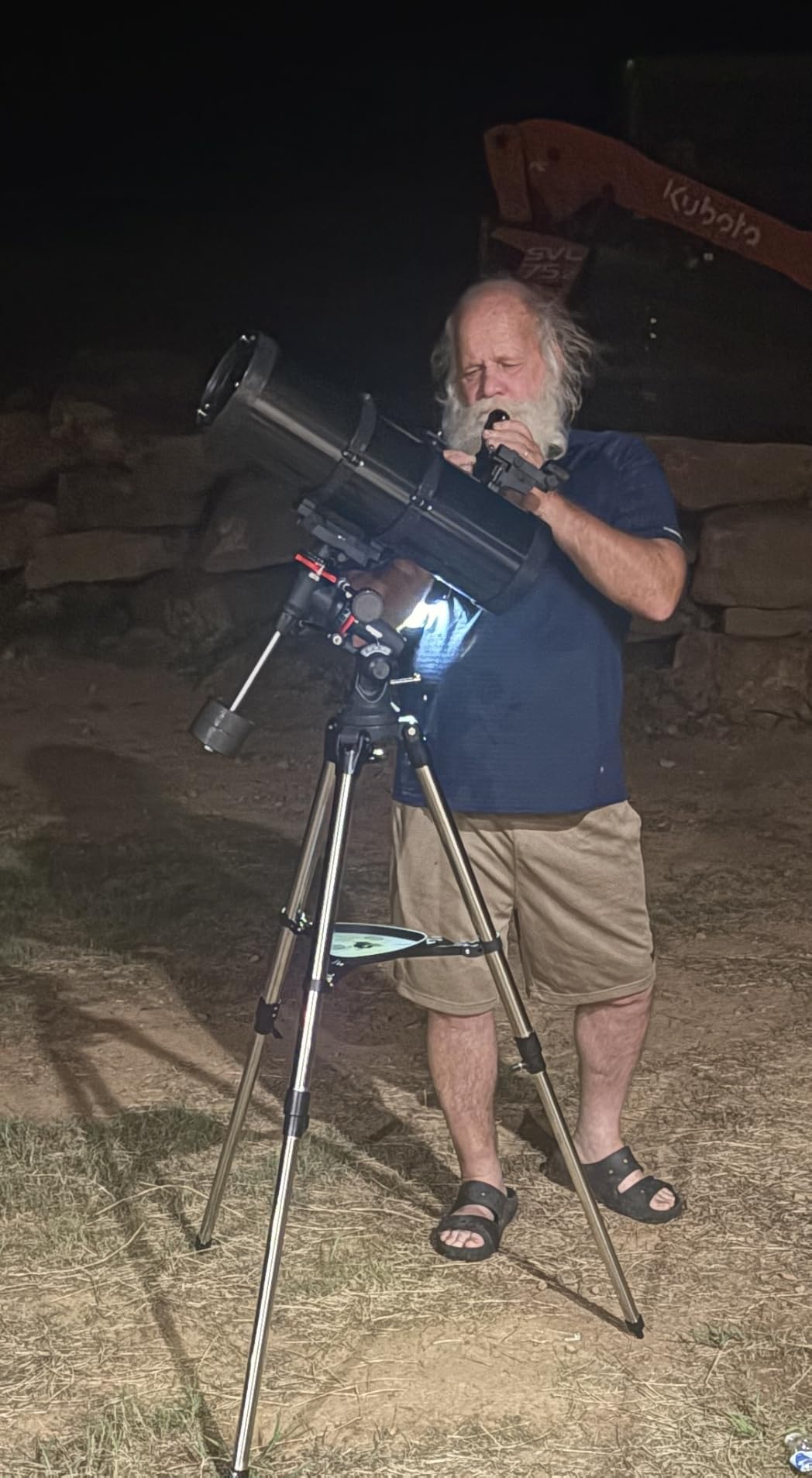
Verifying what actually arrived
When a Newtonian arrives, check three things before first light. Measure the primary mirror across its actual glass rather than the housing, confirm the focuser and diagonal are tight, and check that the secondary is centred when you look down the tube. That check takes two minutes and it is the difference between a good first session and a frustrating one.
If the mirror measures 130mm, that still puts it ahead of most of this list optically. Treat it as the 130mm scope it is and adjust your expectations about faint deep-sky detail accordingly. A 250-review average on a product with an unresolved spec dispute is worth weighing carefully.
Where this scope will disappoint you
Assembly is more involved than a simple altazimuth scope and reviewers say it may take two people. The all-plastic focuser is a weak point, as is the fiddly phone holder, and the Kellner eyepieces are entry level that many owners replace.
Changing eyepieces knocks the object out of focus and requires re-aiming, which is frustrating on an equatorial head where re-aiming is not instant. If your heart is set on 150mm aperture, our [Dobsonian roundup](https://www.dognotebook.com/best-dobsonian-telescopes/) covers the simpler route to the same light gathering.
7. Sky-Watcher Heritage 150 Tabletop – Best Tabletop Dobsonian
Sky-Watcher Heritage 150 Tabletop Dobsonian Telescope – Perfect for Beginners, Easy Setup, Portable, and Fun (S11710)
- 150mm aperture gives crisp
- contrast-rich Moon and planet views
- Fast f/5 ratio on 750mm suits wide-field deep-sky observing
- Borosilicate parabolic primary with RAQ coating is a rare step up
- Collapsible tube keeps collimation and improves portability
- Rubber feet cut vibration for steady observing
- Table format needs a sturdy table or stand outdoors
- Helical focuser is coarse next to a rack-and-pinion
- No equatorial tracking so targets drift
- Light-polluted urban observing is limited
On the forums, the recurring recommendation at this budget is a 6-inch Dobsonian, and the Sky-Watcher Heritage 150 is the one that keeps coming up. Users in r/telescopes describe Sky-Watcher 6 inch Dobsonians as fantastic, and Cloudy Nights calls Dobs the cheapest way to satisfactorily mount a telescope with significant aperture. That consensus is why this scope sits in our top three despite a smaller review count.
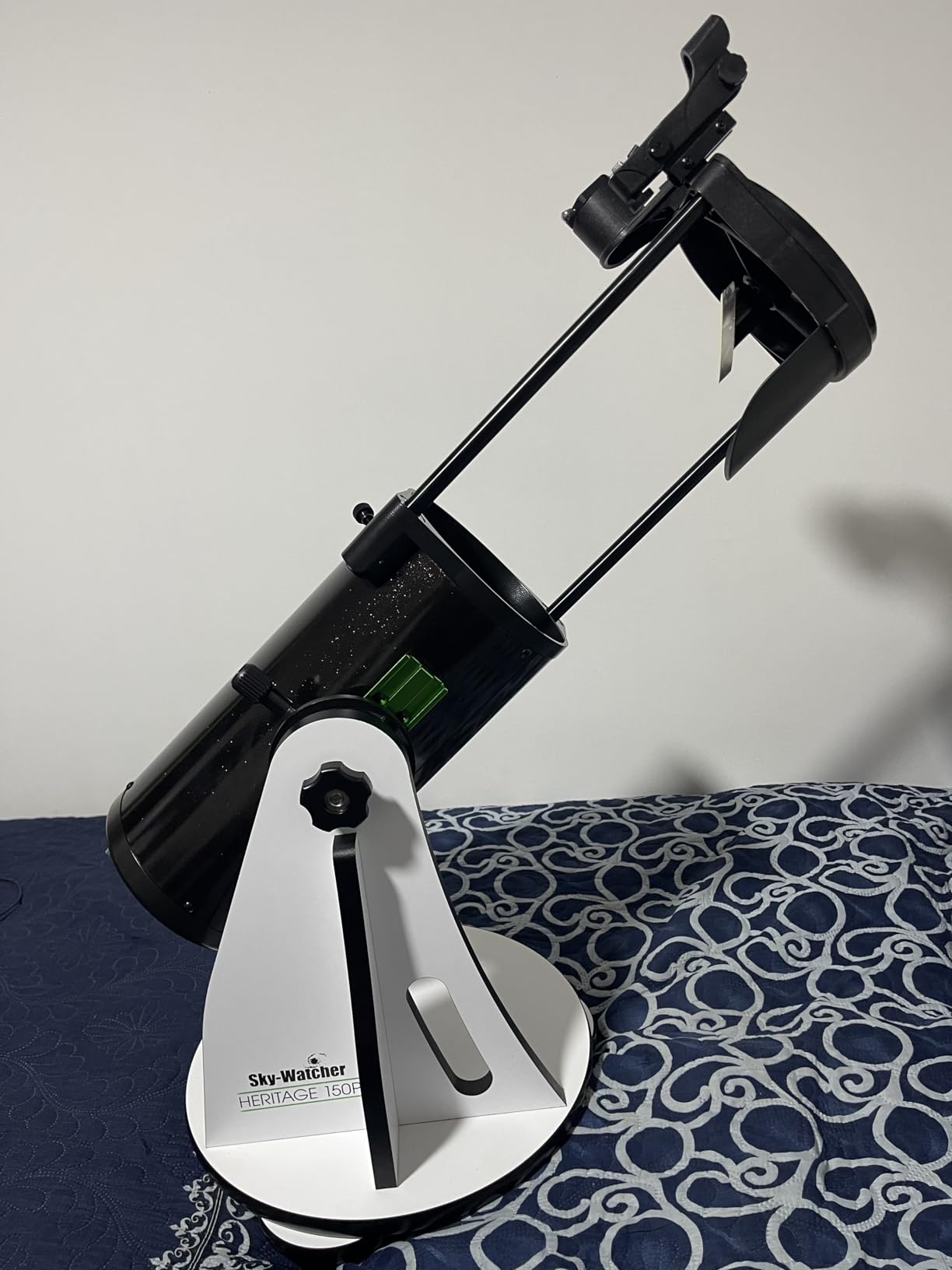
The hardware justifies it. You get a 150mm borosilicate parabolic primary with Sky-Watcher’s Radiant Aluminum Quartz coating, which reviewers single out as unusual at this price, on a 750mm focal length for a fast f/5 ratio and a 1.15 degree field. The collapsible tube design is the clever part: it improves portability and storage while keeping collimation, which solves the objection most people have to folding tubes.
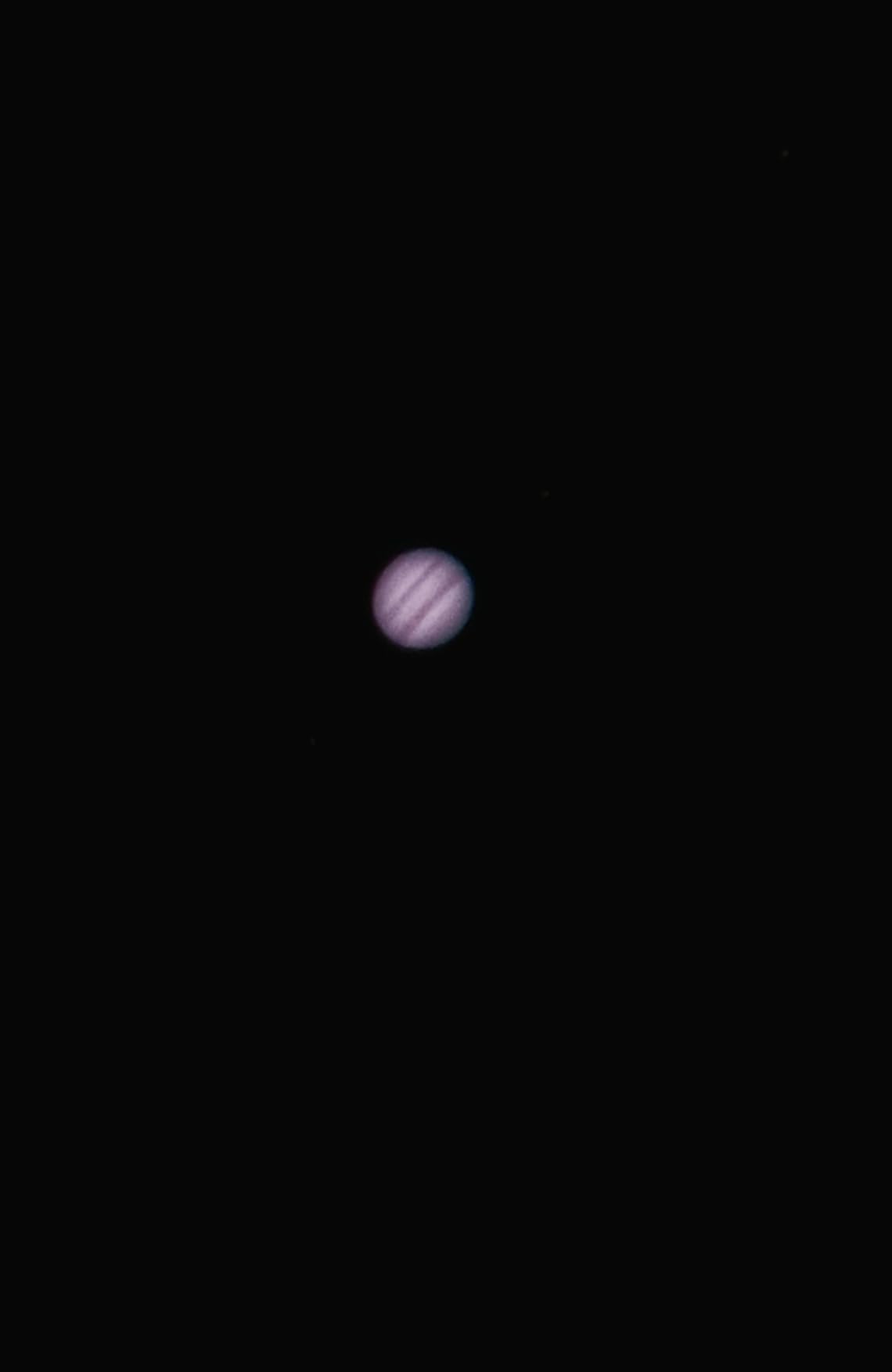
There is no tripod, no counterweight and no polar alignment. You set it on a surface, rotate the base to pan, and tilt the tube to change elevation. On Cloudy Nights, Dobsonians and altazimuth mounts are described as quicker and easier to set up than equatorial rigs, and that is accurate. The rubber feet dampen vibration so high power is usable.
What you give up is tracking. There is no equatorial option here, so a target drifts steadily and you move the tube. For short sessions under an hour that is barely noticeable, and it removes an entire category of setup friction for a beginner.
Whether you actually have a table
This is the question that decides it, and it comes up repeatedly. Reviewers caution that the tabletop format needs a sturdy table or stand outdoors and is awkward in the field, and forum threads about tabletop Dobs often turn on tables that are not tall enough, leaving you crouching.
A dining table works for most adults, but check the height first. If you plan to use it standing up or in a field, the tabletop format works against you, and an altaz tripod or a 130mm equatorial is the more sensible purchase. If you have a table and a patio, this gets you six inches of aperture with no tripod, no counterweight and nothing to align.
Where this scope will disappoint you
The 1.25-inch helical focuser is coarse compared with a rack-and-pinion, with a narrower adjustment range, which makes fine focusing on planets fussy. The Plossl eyepiece supplied is a good starting point, and adding one more is worthwhile.
Light-polluted observing is the other limit. Forum members note that Dobs can be outshone in urban skies by inexpensive GoTo scopes, because those guide you to objects you cannot otherwise find. If your sky is heavily polluted, budget for a finder with a wide field or accept narrower targets.
8. Koolpte 130EQ – Best Compact 130mm Setup
- Highest average rating in the roundup at 4.5
- 130mm at 650mm gives bright Moon and planet views
- Fully multi-coated XLT optics
- Equatorial mount with cables makes manual tracking straightforward with practice
- Phone adapter plus wireless remote for Moon photos
- Assembly instructions are sparse with missing steps
- One unit arrived with a loose secondary needing collimation
- Counterweight is heavier than expected and can unbalance the mount
- Phone adapter has focusing and lighting issues
- Manual tracking means constant small adjustments
This is the highest-rated scope in the roundup at 4.5, though with 102 reviews the sample is small enough that you should read that number carefully. What the reviews do suggest is that first-time buyers are getting clean, sharp Moon and Saturn views from a 130mm at 650mm with fully multi-coated XLT optics. The instruction booklet is the recurring problem.
The mount is a manual equatorial head with slow-motion control cables, and owners describe manual tracking as straightforward once you have some practice. That is a fair description of every German equatorial at this price. The counterweight, though, is heavier than expected and can unbalance the mount if you do not slide it in and out properly, which is the most common beginner mistake with this style of head.
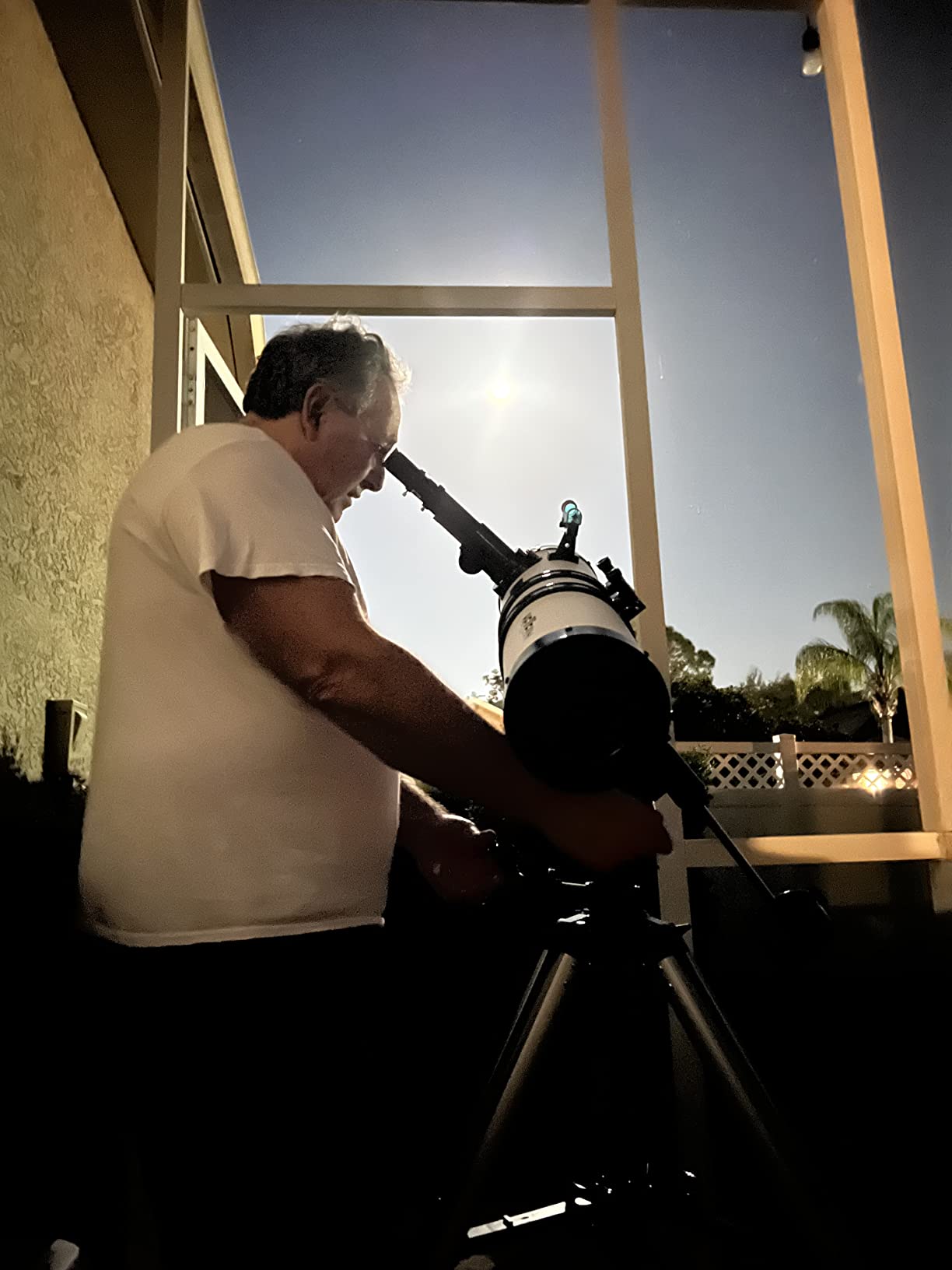
The box also carries a red dot finder, 25mm and 6.5mm Kellner eyepieces, a 2x Barlow, a Moon filter, a phone adapter and a wireless remote. Those Kellner eyepieces give 26x and 100x, which the manufacturer states doubles with the Barlow. It is a full package for the money, and owners report the setup is compact and light enough to move between viewing locations.
Documentation is the flaw to plan around. Several owners struggled with the assembly manual and reported missing steps, so budget extra time for assembly and consider watching a walkthrough before you start. One unit arrived with a loose secondary mirror that needed collimation, which is worth checking during your initial inspection.
Rating versus evidence
A 4.5 average from 102 ratings tells you the people who bought it mostly liked it. It does not tell you the same thing as the PowerSeeker’s 4.1 from 9255 ratings, where the complaints are well known and avoidable. If you are nervous about first-time ownership, a large sample of known problems is often more useful than a small sample of high scores.
The 6.5mm eyepiece is the piece to consider carefully. It is quite high power on a 130mm aperture, where roughly 260x is the useful ceiling, so it will be usable but not revealing its best image. Use the 25mm for most of your early observing and save the short focal length for specific targets.
Where this scope will disappoint you
Manual tracking means constant small knob adjustments through a session, and the cables need a light touch. If sustained tracking matters to you, a Dobsonian at the same spending level gives you more light and steadier motion at high power.
The phone adapter has focusing and lighting problems that owners call out specifically, so treat phone capture as a bonus rather than a feature. And the missing instruction steps mean your first session may go to assembly rather than observing.
Why Buy a Reflector in This Budget Tier?
A reflector uses a concave primary mirror to gather light and focuses it onto the eyepiece via a small flat diagonal near the mouth of the tube. The decisive point is manufacturing cost. A mirror is a single piece of glass with a reflective coating, while a lens set needs multiple elements ground and polished to precise curves, and that difference grows steeply with diameter. It is why a 150mm reflector exists at this price and a 150mm refractor does not.
Forum consensus is blunt about the consequence. Astrobin users describe Newtonians as great aperture and low cost with collimation as a must, and Cloudy Nights notes that very cheap equatorial mounts are much weaker than the 130 and 650 reflectors they carry. That is, put simply, the market agreeing that aperture beats mount refinement at this budget. Buying a cheaper mount to protect a smaller mirror is usually the wrong direction of trade.
The honest downsides of reflectors are worth stating plainly. Images are inverted, so a terrestrial erecting prism or Barlow is needed for daytime use. Optics need periodic collimation, which is a skill you either learn or buy a small tool for. And the open tube lets in dust and stray light, which matters more for photography than for visual work. None of these are dealbreakers, but all three surprise newcomers.
Refractors are easier in three specific ways: they need no collimation, they hold contrast better on planetary detail, and they are sealed. That is why they suit children and why a smaller refractor appears in some budget roundups. The question is never whether a refractor is better made. It is whether you would rather have 130mm of light with a maintenance task, or 80mm of light without one.
There is one more reflector-specific trap worth naming. Because the primary mirror sits at the open end of the tube facing the sky, you should never look at the Sun through any of these scopes without a full-aperture solar filter fitted over the front. A Moon filter does not make the Sun safe to view. If daytime use is likely, budget a certified solar filter rather than assuming the erecting prism will handle it.
The Aperture Ladder: 114mm vs 130mm vs 150mm
Light gathering scales with the square of the diameter, so the jump from 114mm to 130mm is a 30 percent gain in collected light and the jump from 130mm to 150mm adds another 33 percent. Doubling the aperture in millimetres gives the maximum magnification worth using, so 114mm tops out near 228x, 130mm near 260x and 150mm near 300x before the atmosphere and the eyepiece take over.
At 114mm you get an excellent Moon, clear Jupiter bands, Saturn’s rings and the Galilean moons. Fainter galaxies are present but small, and objects like the Ring and Dumbbell Nebulae read as grey smudges. This is plenty for a first year, and it is why the guided 114mm remains a serious recommendation rather than a compromise.
At 130mm the popular beginner deep-sky catalogue starts to show structure. The Ring Nebula, M31’s core and the Dumbbell all develop shape, and planetary resolution improves enough that Saturn’s Cassini Division becomes a real target. If you can only afford one step up, this is it, and it is why the 130mm scopes dominate both our list and the wider forum conversation.
At 150mm you are at the practical threshold where most of the bright Messier catalogue shows detail rather than brightness alone. Resolving power also improves enough to split tighter double stars and show more belt structure on Jupiter. This is also the largest aperture available in this group, and it is the reason the Dobsonian architecture dominates forum recommendations.
Focal ratio matters less than aperture, but it shapes what you see. Fast f/5 Newtonians like the 130mm and 150mm here give wide fields and low magnification from a long eyepiece, which suits clusters. Slower f/8 designs like the 127mm PowerSeeker deliver higher magnification for the same eyepiece and are gentler on faint objects, at the cost of a narrower field.
Dobsonian or Equatorial Mount: A Five-Question Checklist
This is the most argued question in budget astronomy and no competitor roundup answers it as a decision. Cloudy Nights sums up the good version of the Dobsonian case: they are stable, simple, and the cheapest way to mount significant aperture. The good version of the equatorial case is that once polar aligned, a decent equatorial head is easier to keep on target.
Question one: will you learn polar alignment? If yes, the equatorial route opens up. If not, the drag of an unaligned head is worse than an altaz mount that simply needs nudging. Question two: is your observing site urban and light-polluted? Large aperture still helps, but forum members note Dobs can be outshone by inexpensive GoTo scopes in skies with few visible stars, because guiding matters more there.
Question three: is a sturdy table available at your usual site? If yes, a tabletop Dobsonian is the fastest route to the most light. If no, you will spend every session improvising a stand. Question four: do you want to grow into astrophotography? Guided equatorial mounting is the only one of these options that leads anywhere useful, though at this budget the destination is still mostly visual.
Question five: what will you carry? Dobsonians and altaz tripod scopes move easily between sites. Equatorial rigs at 17 to 30 pounds with counterweights and tripods are a two-person job in the dark. Our honest summary is that most beginners should buy aperture and a simple mount, then learn alignment later. The [computerized telescopes roundup](https://www.dognotebook.com/best-computerized-telescopes/) covers what pointing automation does and does not solve, which is a different question from tracking.
There is also a family option that gets overlooked. The two lightest setups here, the 10.4-pound guided scope and the tabletop Dobsonian, are the two most likely to survive a decade of family life, because a child can be handed either one without a counterweight, a polar alignment or a 30-pound tripod. Our broader [telescope reviews](https://www.dognotebook.com/best-telescopes-under-500/) list covers the rest of the market if you are weighing a different aperture entirely.
Collimation and Your First Night Out
Collimation is the number one ownership surprise in forums. New buyers do not realise that a Newtonian needs its mirrors aligned, and the discovery arrives as blurry or oddly shaped stars. It is not damage and it is not a defect. It is a maintenance task with a fifteen-minute solution once you learn it.
Worth putting in perspective: the mirrors do not degrade. Alignment drifting out is a small shift in the angle between two surfaces that were set at the factory, not a scratch or a coating failure. That is why forum owners who learn the procedure tend to describe it as a five-minute chore rather than a problem, and why several scopes here ship with a collapsible or removable tube specifically to protect the alignment in transit.
The sequence is straightforward. Look down the focuser without an eyepiece and adjust the secondary until its reflection is centred inside the outline of the primary. Next, look into the focuser again and use the screws on the back cell to bring the reflection of the primary to concentric with the secondary. Repeat once to check, and finish by checking the image at high power. Doing this before you go outside, in daylight, on a flat surface saves you a frustrating hour.
How often you repeat it depends on transport. Dobs with removable tubes and scopes carried in a car need checking every few months; a scope left assembled indoors needs checking a few times a year at most. Astrobin owners describe regular collimation as a must from experience, which matches what we would tell a beginner.
A laser collimator costs less than one eyepiece and is the accessory most owners in these reviews buy first. It converts a fiddly judgement call into a repeatable check. Our general rule is that any budget reflector purchase should reserve a little money for one, because every scope here needs it at some point, including the ones that ship collimated.
The Hidden Cost of a Complete Setup
The scope is roughly two-thirds of what you spend. The rest is the part that decides whether you keep using the thing in year two, and no roundup at this budget accounts for it. We have seen the same pattern in owner reviews: people buy the telescope, struggle with the supplied eyepieces and finder, and either upgrade or stop observing.
Eyepieces are the first hidden cost. Almost every scope here includes Kellner or entry Plossl eyepieces, and owners repeatedly report upgrading. A single good 25mm Plossl for wide-field and one 8mm or 9mm for planets will improve every night you observe more than any other purchase at this level. Our [authentic telescopes roundup](https://www.dognotebook.com/best-telescopes/) covers what the different eyepiece types actually change in the view.
There is a fourth hidden cost that people forget, which is time. A telescope that takes forty minutes to assemble, align and polar align is a telescope that gets used twice a year. The altazimuth and tabletop designs on this list can be set up in ten minutes, and that convenience quietly matters more after the novelty wears off than any specification on the box. We would rather see you outside on a Tuesday than staring at a manual.
A Moon filter is the second. Most bright Moon views are uncomfortable at high magnification, and the cheap clip-in filters in this tier work well. Three of the eight scopes here already include one, which is a genuine reason to prefer those bundles.
The third is mount-specific. If you buy a German equatorial scope, a tracking motor is sold separately for most of them, and that motor plus the cost of a stable tripod is often close to the price of moving up an aperture tier. That is the real argument for buying a Dobsonian instead: the tracking cost simply does not exist. Budget a laser collimator, one or two better eyepieces and a filter, and you have accounted for nearly everything you will need.
Frequently Asked Questions
What is the best reflector telescope on a tight budget?
The Celestron PowerSeeker 127EQ is the most proven entry Newtonian, with a 4.1 average across 9255 ratings. It gives 127mm of aperture, a 1000mm focal length and slow-motion controls on a manual German equatorial head. Collimation and a light tripod are its known weaknesses, so budget for a collimation tool.
What are the disadvantages of reflector telescopes?
Reflector images are inverted, so an erecting prism or Barlow is needed for daytime viewing. The open tube collects dust and stray light, which matters more for photography than for visual work. Optical tube and tripod shake can be noticeable at high power, and the mirrors need periodic collimation. None of these are serious faults, but all three surprise first-time owners.
How big should a first telescope be?
Aim for the largest aperture you can carry rather than the smallest you can afford. Below 100mm the images are dim and detail is scarce, while 114mm is enough for the Moon and planets and 130mm is where bright deep-sky objects start showing structure. A 150mm Dobsonian is the practical ceiling at this budget, and on forums it is the most common recommendation.
Do I need a motorized equatorial mount at this budget?
Not for visual observing. Most budget German equatorial heads include slow-motion knobs, and once polar aligned they hold objects well enough for extended visual work. A motor is worthwhile mainly for longer sessions or any photography, and it is sold separately for several of these scopes. A Dobsonian avoids polar alignment entirely and is often the better first choice.
Can you see Mars with a small reflector?
Yes, though detail scales with aperture. At 80mm you can identify Mars as a disc and see it change colour and brightness as it rotates. Around 114mm you start to see surface markings and one pole, and at 130mm or 150mm the contrast improves further. Mars sits far from Earth, so its apparent detail is limited by seeing as much as by aperture.
How often does a Newtonian need collimating?
Check it before first light, then after any journey where the tube was moved or bumped. After that, scopes that live assembled indoors need it a few times a year, and scopes transported to dark sites need checking more often. A laser collimator costs less than one eyepiece and turns the job into a repeatable check rather than a judgement call.
Conclusion: The Right Reflector Telescope by Use Case
There is no single winner across the best reflector telescopes under 500 dollars, because the two architectures solve different problems. Our top pick, the Celestron PowerSeeker 127EQ, wins on evidence: the largest owner base in the group at 9255 ratings, a usable equatorial head and eyepieces that cover a first year. If you can step up to a slightly higher spend, the Celestron AstroMaster 130EQ is the smarter purchase, because the extra aperture and the 4.3 average make it the value pick.
Choose the Celestron StarSense Explorer LT 114AZ if finding objects is what defeats you, the Sky-Watcher Heritage 150 tabletop Dobsonian if you have a sturdy table and want the most light per dollar, and the MEEZAA 150EQ only if you want 150mm on an equatorial head and are willing to verify the aperture on arrival. Among the rest, the Gskyer 130EQ wins for phone photography, the SOLOMARK 130EQ for the box contents, and the Koolpte 130EQ as a compact 130mm package.
Whichever you choose, spend a little of the remaining budget on a laser collimator and one better eyepiece. Those two purchases do more for your first year of observing than any specification on this list, and the review patterns in this roundup show almost every owner who added them kept going with the telescope. Check current pricing on each scope, pick the largest aperture you can actually carry to your observing site, and give it a clear night this month.