
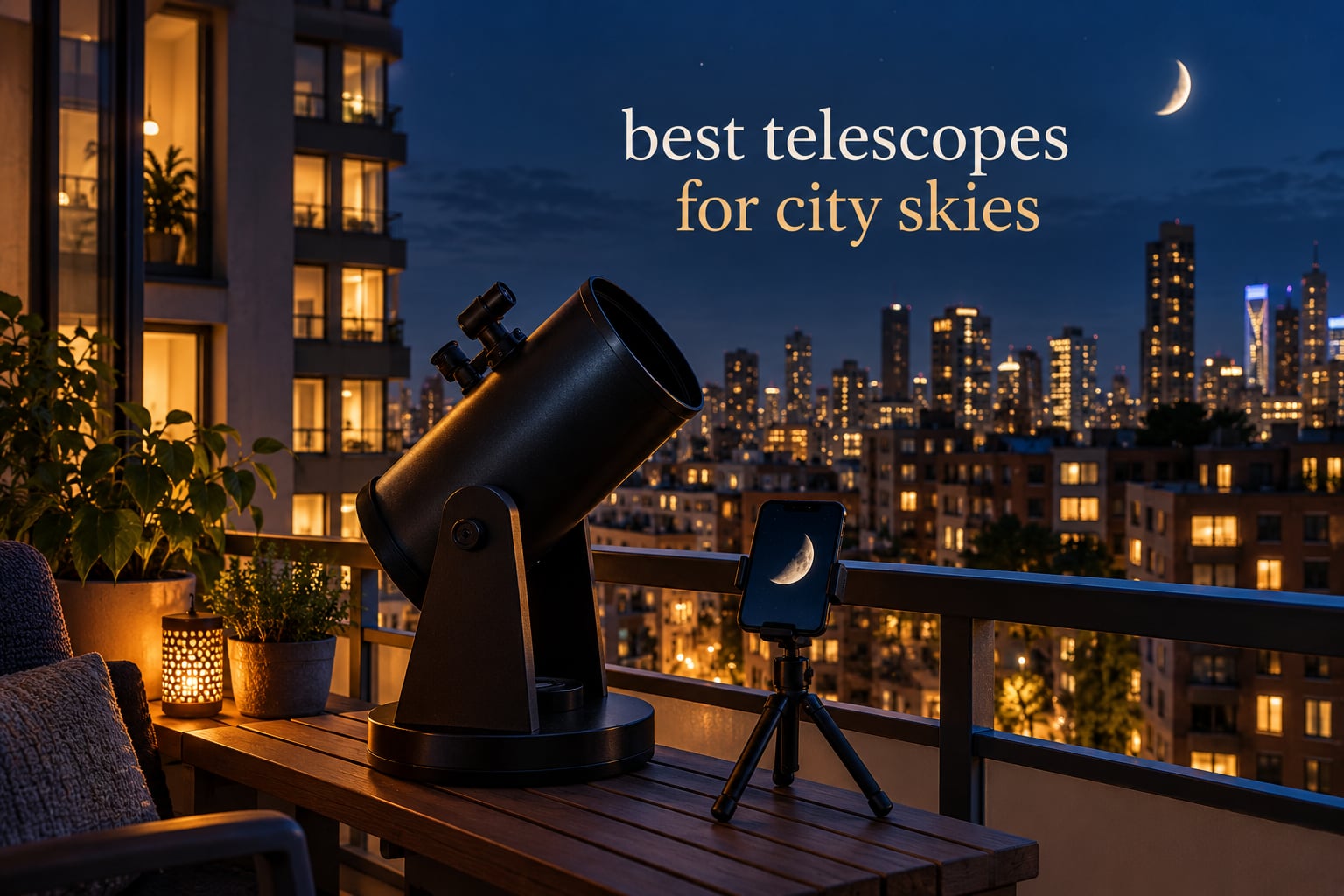
Light pollution is the reason most city beginners never buy a telescope. They walk outside, see six stars instead of six thousand, assume astronomy has been taken away from them, and put the idea on hold for good. That reaction is understandable and it is also completely wrong.
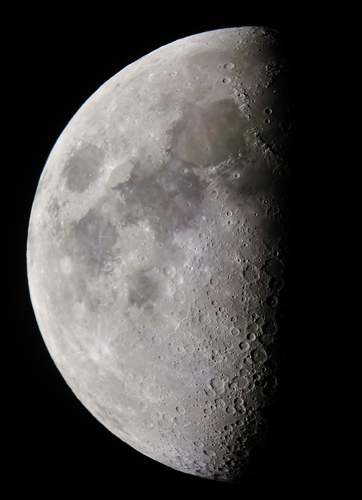
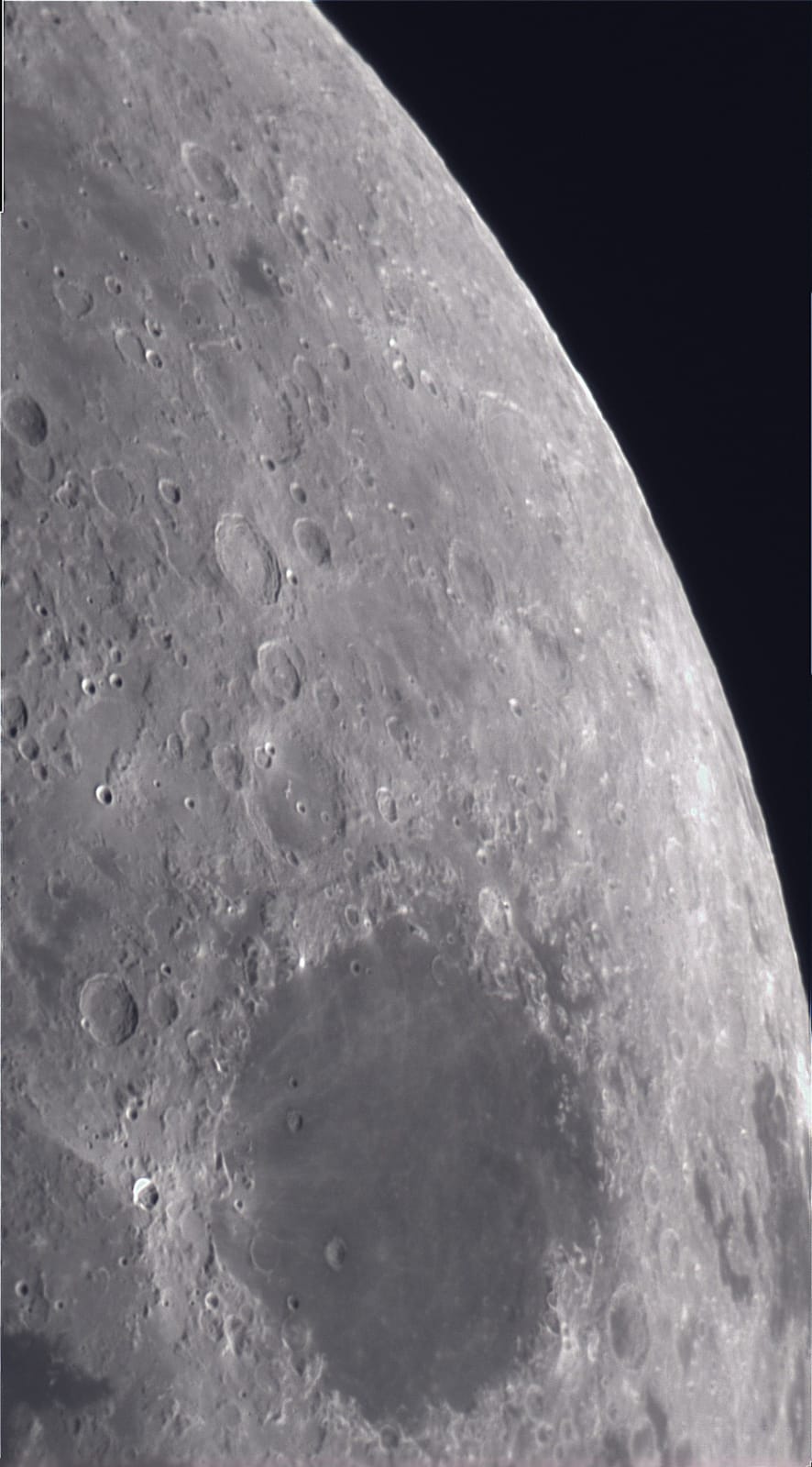
The Moon, Jupiter, Saturn, Venus and the brighter double stars are essentially unaffected by sky glow. They are bright, compact and high in contrast, so a modest aperture picks them up from a Bortle 8 city backyard exactly as it would from a Bortle 2 site. What light pollution destroys is the faint, wide, low-contrast stuff: galaxies, the Milky Way band, dim nebulae. Those targets need either a much larger aperture or a camera that stacks many sub-exposures and averages the glow away.
So the best telescopes for city skies are not the ones with the biggest apertures or the flashiest magnification claims. They are the ones that give you real light grasp, a reliable way to point at a target when you cannot see enough stars to star-hop, and a setup you can actually carry down four flights of stairs. We compared 10 models built around those three demands, weighing aperture against portability and checking what owners actually report seeing from bright skies.
We also cover what light pollution filters genuinely do, which Bortle class you are probably observing from, and the scopes worth walking past in a shop. If you are still choosing between optical designs, our 12 best telescopes guide covers the fundamentals before you commit to a city-specific list.
Table of Contents
Top 3 Best Telescopes for City Skies in 2026
These three cover the three genuinely different city use cases: looking through an eyepiece at planets, upgrading to a portable computerized scope, and photographing deep-sky objects from a bright balcony.

Celestron NexStar 6SE
- 6 inch Schmidt-Cassegrain aperture
- Computerized GoTo with 40000 plus object database
- SkyAlign alignment in minutes
- Single fork arm alt-az mount

Celestron NexStar 5SE
- 5 inch Schmidt-Cassegrain at 2500mm focal length
- Built-in wedge for polar alignment
- Only 17.6 lb for rooftop carry
- Computerized GoTo mount
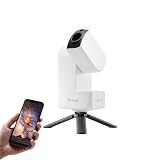
ZWO Seestar S30 Pro
- One-tap stacking with no computer
- Apochromatic optics
- Built-in light pollution filters
- 3.6 lb battery powered body
Best Telescopes for City Skies in 2026: Quick Comparison
All ten scopes, side by side, with the feature that actually decides whether each one works under a bright urban sky.
| Product | Specifications | Action |
|---|---|---|
| Celestron NexStar 6SE |
|
Check Latest Price |
| Celestron NexStar 5SE |
|
Check Latest Price |
| ZWO Seestar S30 Pro |
|
Check Latest Price |
 Celestron NexStar 127SLT Celestron NexStar 127SLT |
|
Check Latest Price |
 DWARFLAB Dwarf 3 DWARFLAB Dwarf 3 |
|
Check Latest Price |
 DWARFLAB Dwarf Mini DWARFLAB Dwarf Mini |
|
Check Latest Price |
 Sky-Watcher Heritage 150 Sky-Watcher Heritage 150 |
|
Check Latest Price |
 Celestron StarSense DX 130AZ Celestron StarSense DX 130AZ |
|
Check Latest Price |
 Sarblue Mak60 Sarblue Mak60 |
|
Check Latest Price |
 Gskyer 70mm Refractor Gskyer 70mm Refractor |
|
Check Latest Price |
1. Celestron NexStar 6SE – Best Overall Telescope for City Skies
- Crisp lunar and planetary detail from 6 inch Schmidt-Cassegrain optics
- Computerized GoTo removes star charts entirely
- SkyAlign alignment takes minutes in any sky
- Breaks down for balcony and rooftop sessions
- Bright globulars and galaxies still visible under glow
- Needs an external power source for long sessions
- Included 25mm eyepiece limits planetary detail
- Fork tracking limits long-exposure imaging
The 6SE is the scope I keep coming back to for city observing because it solves the two city problems at once. Six inches of aperture is enough light to keep planetary detail sharp through a bright sky, and the single fork arm with the GoTo database means nobody has to identify stars by eye before they can find anything.
Owners consistently report sharp, crisp lunar and planetary images from this glass, with cloud bands on Jupiter and ring structure on Saturn holding up even from heavily light-polluted backyards. Several reviewers mention keeping it set up in a driveway or on a balcony and getting usable results within a few minutes of switching it on.
The SkyAlign procedure is the part that matters most in a city. You centre any three bright objects in the finder, and the computer works out where you are and where it is pointing. Star charts and star-hopping are largely useless below Bortle 6, so a computerized mount is not a luxury here, it is the difference between observing and packing up.
Globular clusters such as M13 and a handful of bright galaxies do surface from bright sites, though they are pale compared with what the same scope shows under darker skies. The Dawes limit of 0.77 arc seconds gives the optics headroom on double stars, where city glow matters least because the targets themselves are bright.
Who the NexStar 6SE suits
It suits a beginner who wants a single instrument that handles the Moon, the planets and the brightest clusters without a learning curve in pointing. The included StarPointer red dot finder, 25mm eyepiece and star diagonal mean you can be observing the same evening it arrives, and the 40,000-plus object database means a target never gets lost just because you cannot see the stars around it.
It also suits anyone who expects to move the scope. At 21 lb it is not a featherweight, but the single fork arm design means the whole thing breaks into a manageable set of pieces that one person can move from a living room to a rooftop. Owners frequently describe using it from balconies, patios and car parks.
Who should skip the NexStar 6SE
Skip it if your plan is long-exposure astrophotography. Alt-az fork tracking with a single arm allows roughly 10-second exposures before field rotation becomes visible, which is fine for the Moon and short planetary clips but not enough for deep-sky imaging.
Also skip it if you refuse to buy a power pack. The listed power options are 8-AA batteries, a 12v AC adapter or a Celestron PowerTank, and none of those come in the box. Reviewers treat external power as effectively mandatory for a session longer than an hour. If a tripod and batteries are all you want, our best telescopes under 500 reviewed roundup has simpler options.
2. Celestron NexStar 5SE – Lightweight GoTo for Rooftops and Balconies
- Light enough for one person to carry as a complete setup
- Sharp optics giving good planetary detail in bright skies
- GoTo database reliably locates faint targets without charts
- Built-in wedge allows basic polar alignment
- Assembles in about 15 minutes
- Azimuth locks when power is off
- SkyAlign can need repeating
- The supplied 25mm eyepiece gives only about 50x
The 5SE is the 6SE with two trade-offs and one gain. You give up an inch of aperture, and you get back 3.4 lb, a shorter tube and a built-in wedge that the larger scope does not have. For a fifth-floor flat with a small balcony, that is often the better balance.
Reviewers frame it as the sweet spot in Celestron’s computerized Maksutov line, delivering most of the 6-inch’s planetary detail at a noticeably lighter carry weight. Urban observers report clear views of Jupiter’s belts, Saturn’s rings and the Moon from heavily light-polluted locations, while noting that faint galaxies wash out under city glow.
The 2500mm focal length is unusually long for a 5-inch scope, and that long focal ratio is exactly what you want for planets in a bright sky. Longer focal length means a narrower, steadier, higher-contrast image of Jupiter, and the exit pupil diameter listed at 12.5mm shows how much light the eyepiece is throwing at you per view.
The built-in wedge is the feature that separates this from the 6SE. It lets you tilt the fork into a rough polar alignment, which reduces field rotation and makes short entry-level imaging exposures possible. It is rudimentary, and alignment is awkward at low latitudes, but it is a real step up from an unassisted fork.
Who the NexStar 5SE suits
It suits city observers whose real constraint is carrying weight up stairs or across a courtyard. At 17.6 lb with a 33 cm optical tube, several owners describe moving the whole setup as a one-person job, which is not something you can say about an 8-inch Dobsonian in a first-floor flat.
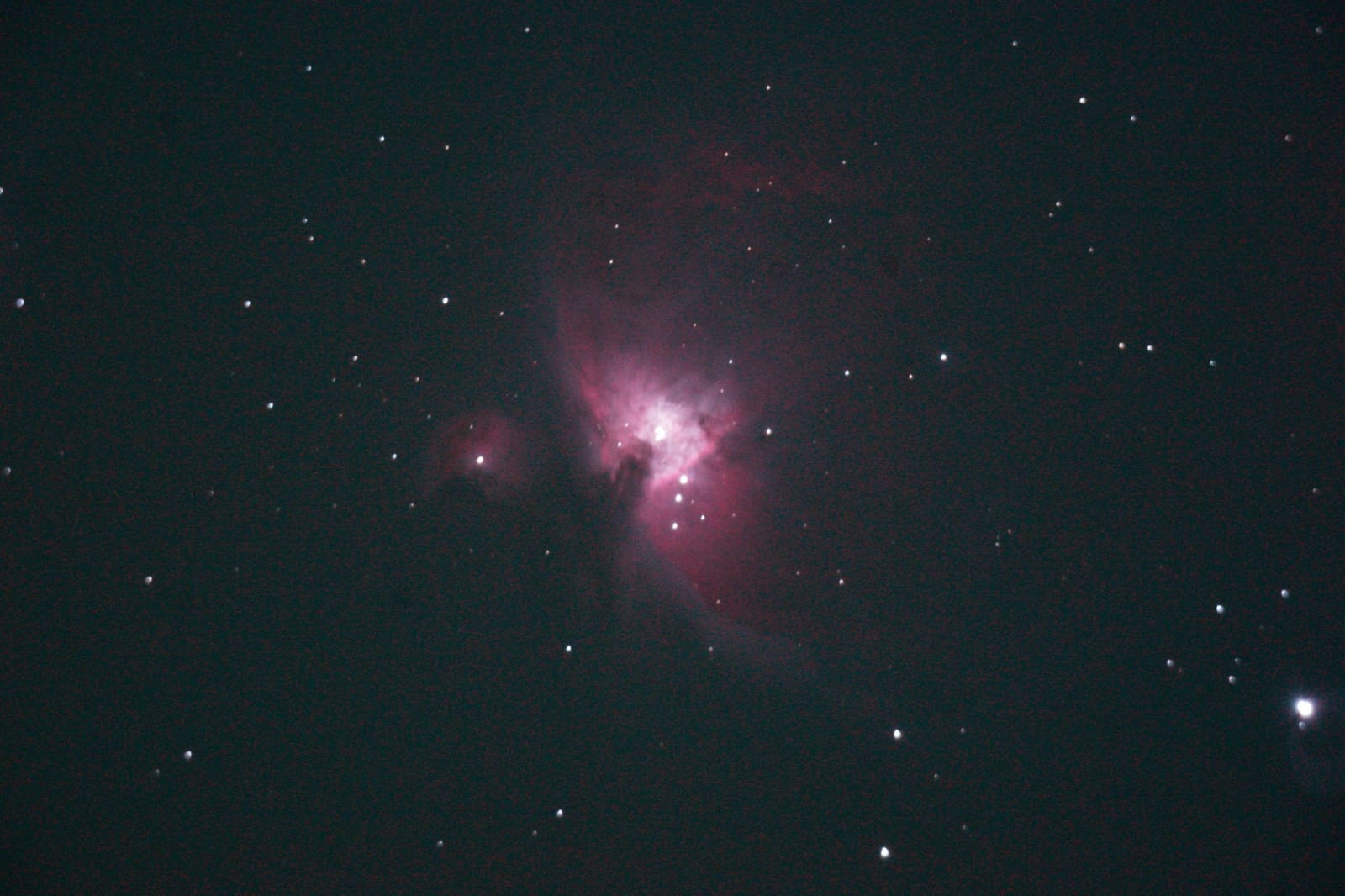
It also suits anyone stepping up from a manual refractor. The GoTo database holds more than 40,000 objects, and the SkyAlign routine gets you observing in minutes without knowing any star names. The 5-inch aperture is enough to see lunar craters, Jupiter’s Galilean moons, Saturn’s rings and the Orion Nebula when conditions allow.
Who should skip the NexStar 5SE
Skip it if you like manual pointing. The azimuth locks when power is off, so you cannot simply grab the tube and swing it to a new object. Users who prefer star-hopping or push-to movement will find that restriction genuinely annoying.
Skip it if the single included 25mm eyepiece is going to be your only one. At 2500mm focal length that eyepiece gives roughly 50x, which is too low for serious planetary detail. You will want a zoom or a set of eyepieces to push the scope properly, and the StarPointer finder is thin enough that a few owners report it failing.
3. ZWO Seestar S30 Pro – Smart Scope Built for Bright Skies
ZWO Seestar S30 Pro Smart Telescope, App-Controlled Astrophotography
- One-tap capture and automatic stacking with no computer
- Built-in light pollution filters made for urban skies
- Apochromatic optics give sharper stars and higher contrast
- Easily moved to a balcony or park
- Dual-camera 4K imaging covers wide scenes and framed targets
- Built for deep-sky imaging rather than planets
- 30mm objective limits true optical resolution
- Workflow depends on app settings
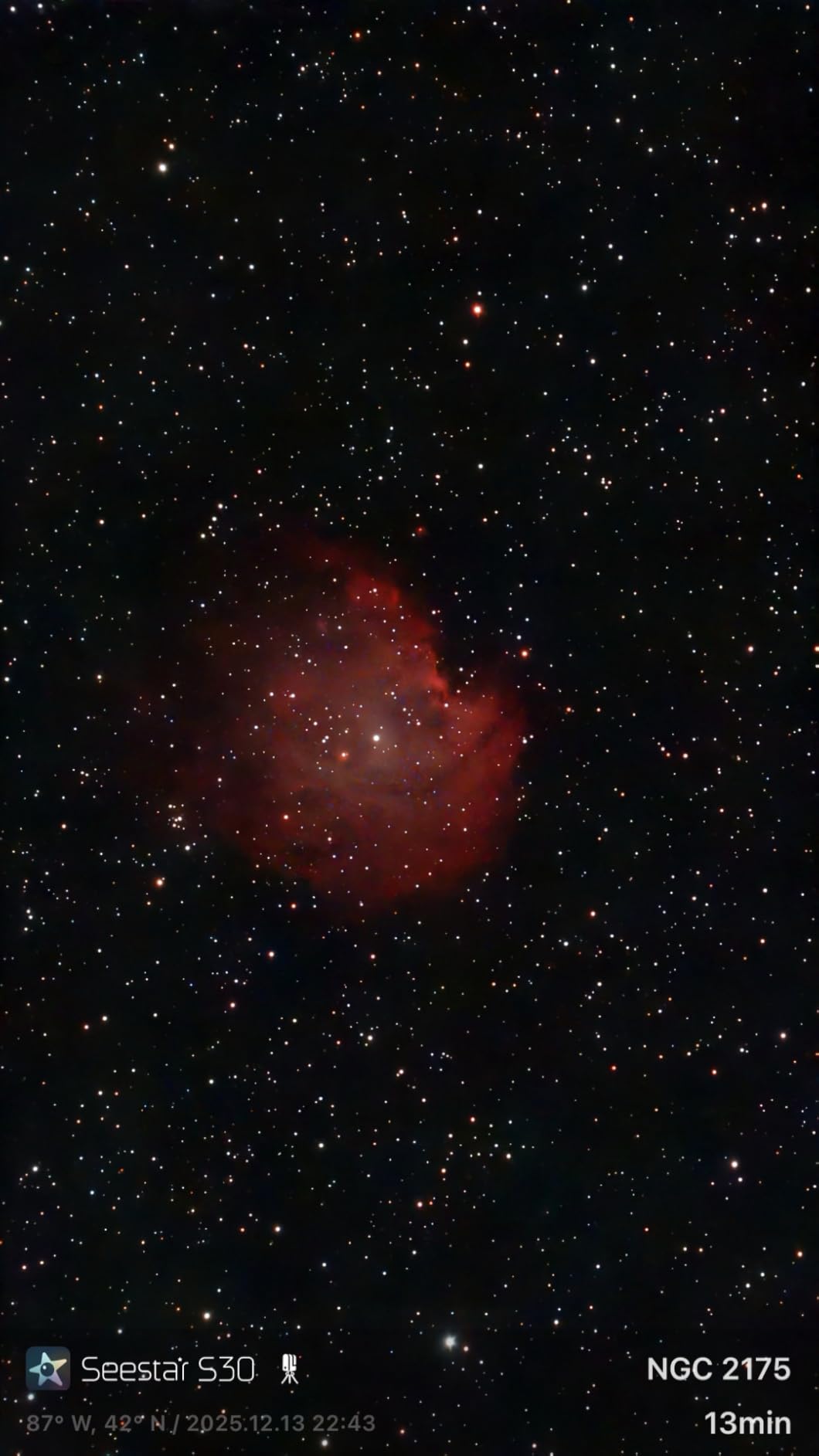
This is the only category on the list that attacks light pollution directly instead of working around it. Rather than asking you to see a faint galaxy through an eyepiece, the S30 Pro takes repeated sub-exposures, stacks them internally and produces a finished image where the background sky glow is averaged down.
That is why smart scopes come up so often in city discussions. Community consensus on observing forums repeatedly points at stacking, not aperture, as the thing that makes faint targets reachable from a bright backyard. Several owners of this generation of smart scopes report successful imaging from Bortle 9 skies.
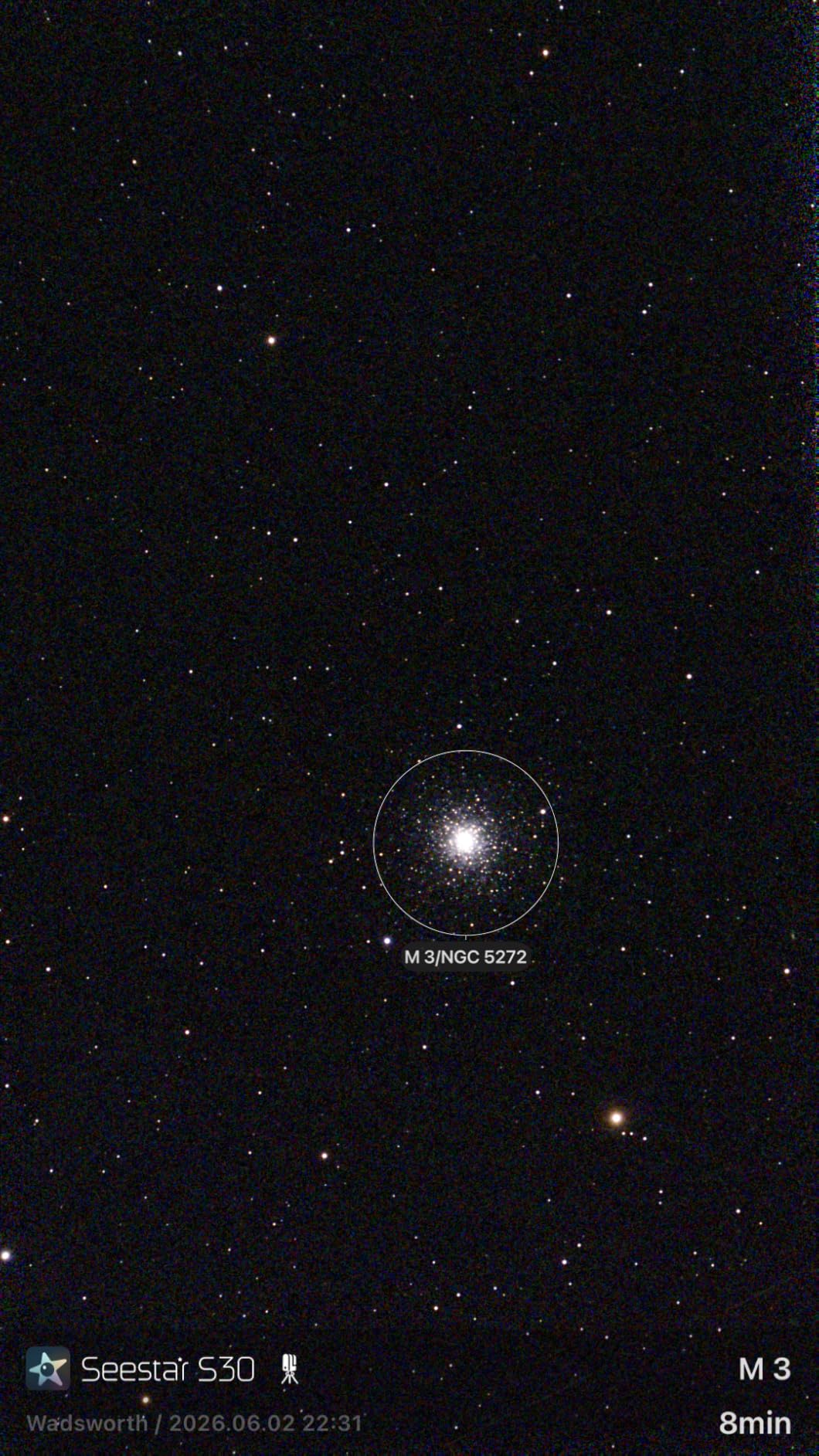
You power it on, connect the app, and it does the rest. Automatic GoTo targeting and tracking find and follow the object, and one-tap modes cover the Milky Way, star trails, nebulae, galaxies, the Moon and the Sun. AI processing reduces noise and separates sky from foreground, which is a big deal when a streetlight is sitting just outside your frame.
The optics are apochromatic with full multi-coating, which reduces colour distortion around bright stars and gives more contrast than a typical entry-level scope. With a 30mm objective at 160mm focal length and a 4.6 degree field, it is a wide instrument, suited to large objects rather than planetary detail.
Who the Seestar S30 Pro suits
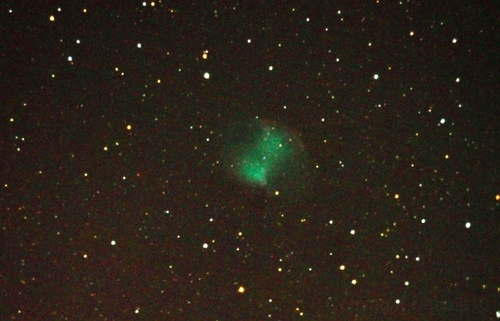
It suits someone whose interest is photographs rather than views. If your goal is a M27, a globular cluster or a Milky Way panorama from a city balcony, the built-in filters and one-tap stacking are doing work no eyepiece telescope in this list can do.
It also suits households without a yard or a dark site. At 3.6 lb with a battery, it moves between a windowsill, a park lawn and a friend’s garden without a vehicle, a power supply or a computer. Two-year warranty and anti-dew protection support the long-session use the equatorial mode is designed for.
Who should skip the Seestar S30 Pro
Skip it if you want to look through glass. There is no eyepiece. Forum users are blunt about this trade-off: a smart telescope gives you a screen, and if the pleasure you want is the eyepiece experience, this is the wrong instrument regardless of how good the images are.
Skip it for planets. The listing is explicit that the scope is designed for deep-sky objects and not for planetary observation, and a 30mm objective is far too small for serious planetary resolution. The device must also stay stationary during deep-sky imaging, so no grab-and-go street observing.
4. Celestron NexStar 127SLT – High-Contrast Maksutov With a Huge Database
Celestron NexStar 127SLT Maksutov-Cassegrain Computerized GoTo Telescope
- Folded optics give high contrast on planets and double stars
- Compact short tube is quick to set up
- GoTo hand control reaches targets that glow hides
- Includes 20mm and 9mm eyepieces for two magnifications
- Works well as a shared scope for adults and children
- 127mm aperture shows only the brightest nebulae
- Single fork mount limits exposure length
- Battery operation is best paired with external power
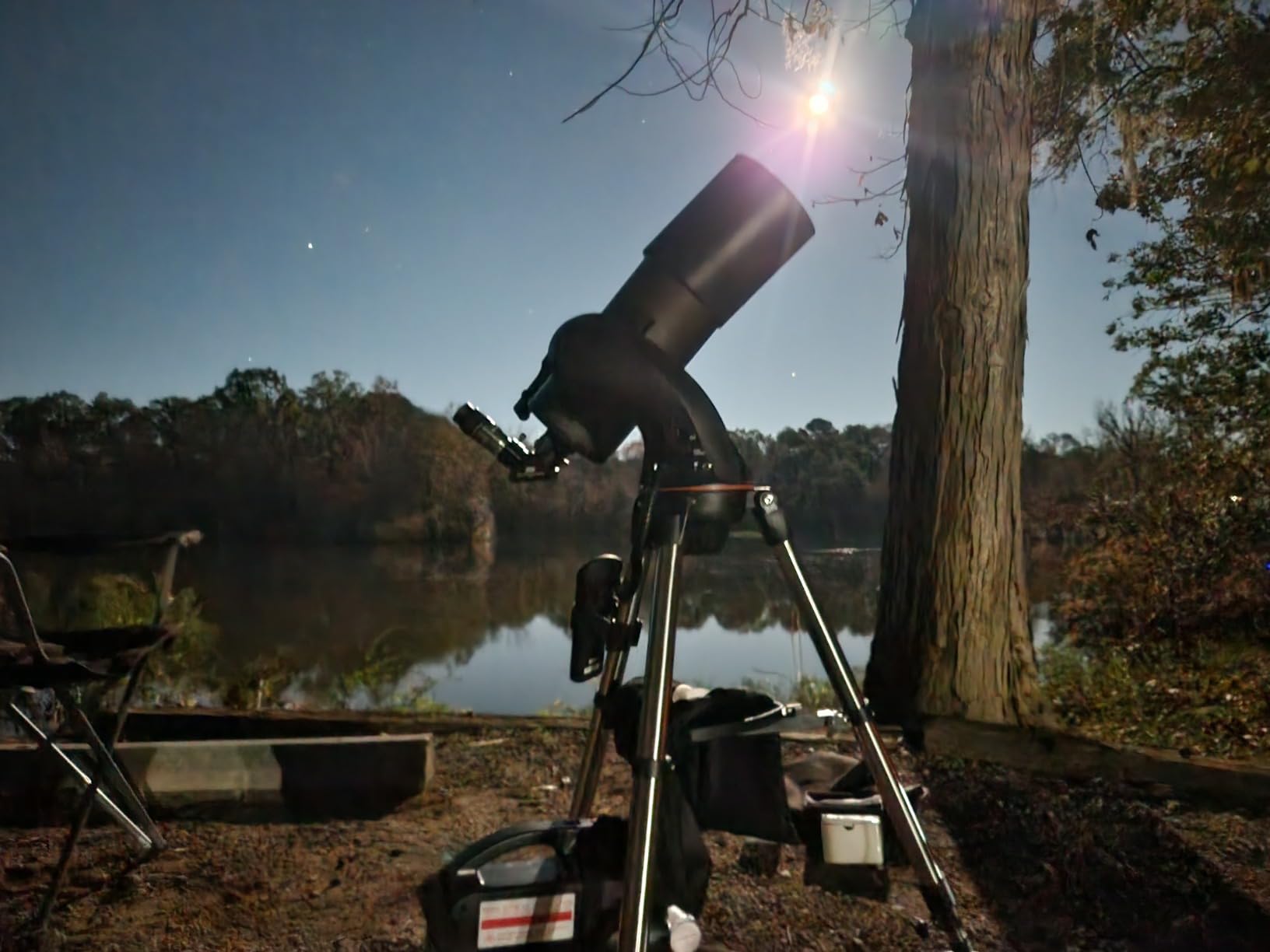
With more than 1,200 reviews behind it, the 127SLT is one of the most thoroughly tested telescopes in this roundup, and reviewers treat it as a dependable compact GoTo scope for backyard and urban observing. The folded Maksutov-Cassegrain design packs a 1500mm focal length into a short tube, which is exactly the shape of instrument that survives apartment storage.
The Maksutov’s strength in a bright sky is contrast. A folded catadioptric with a small central obstruction tends to give a clean, high-contrast image on the Moon, on planetary discs and on tight double stars, and those are precisely the targets that city glow does not dim. Reviewers value it for lunar craters and planetary detail for that reason.
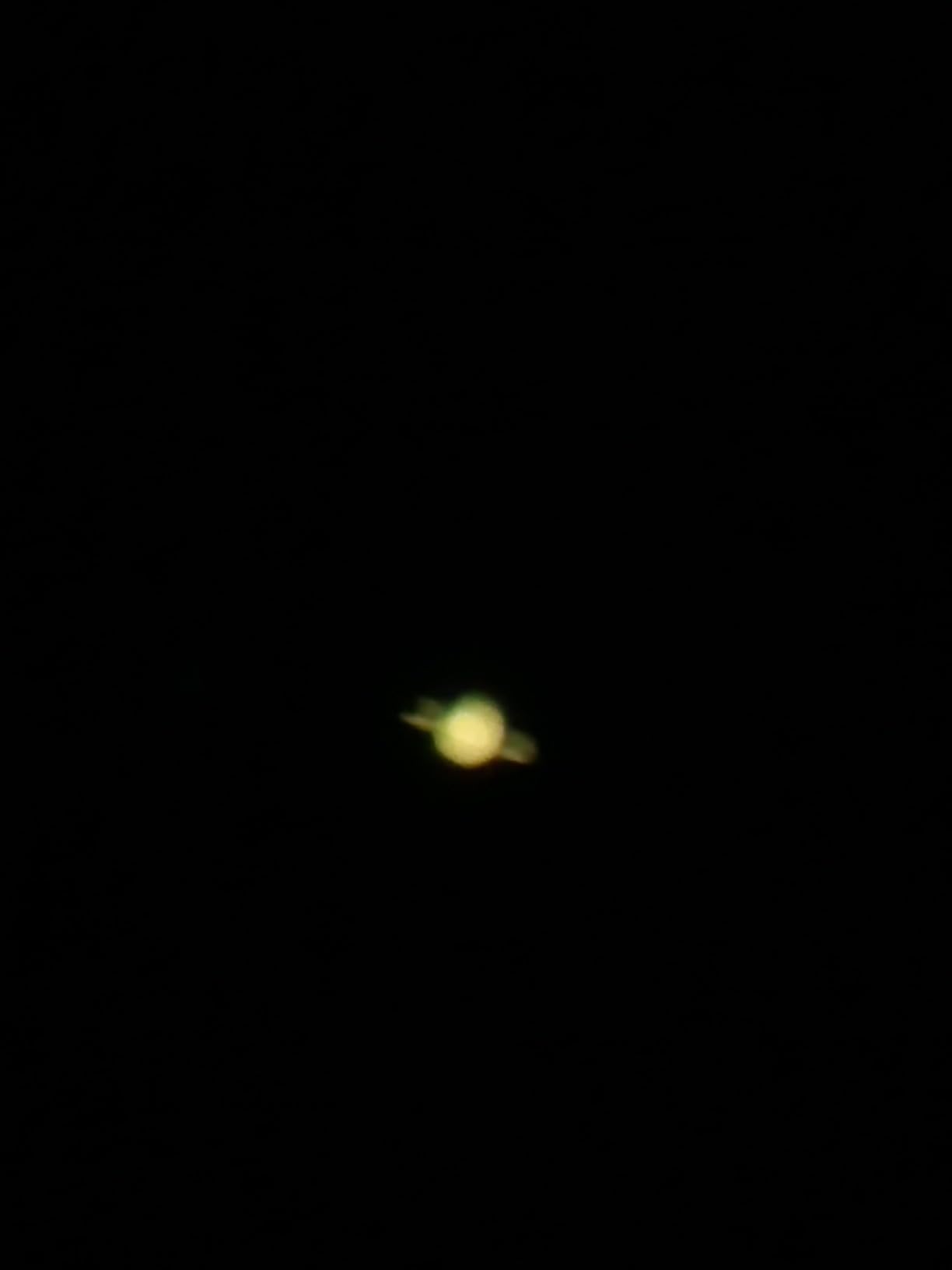
The GoTo database is the other half of the city argument. Owners specifically praise the hand control for reaching targets that light pollution makes impossible to locate manually, which matters because a red dot finder needs visible stars to work with. The included 20mm and 9mm eyepieces give you two usable magnifications straight away rather than a single token eyepiece.
Free Starry Night Special Edition software is bundled, and a two-year limited warranty with US-based support covers the electronics-heavy parts of the mount. The 40,000-plus object library is the same Celestron platform as the 6SE and 5SE, so the learning curve transfers if you upgrade later.
Who the NexStar 127SLT suits
It suits families and casual observers who want a single scope for the Moon and planets without wrestling with aperture limits. At 127mm the image is bright and steady, and the two included eyepieces mean a child can be handed an eyepiece and a target list and actually see something on the first night.
It also suits anyone who wants a traditional eyepiece telescope with none of the setup fuss of collimation. There is nothing to align beyond SkyAlign, no batteries in the optical path, and the fork mount is a well-understood design with plenty of accessory support.
Who should skip the NexStar 127SLT
Skip it if deep-sky galaxies are the reason you want a telescope. At 127mm you will see the brightest nebulae and the larger globulars, and very little else from a city sky. Owners are consistent on this: the aperture shows planetary and lunar detail well and deep-sky detail poorly under skyglow.
Also note the fork arm can show noticeable gear backlash on the first slew after a move, and the alt-az single fork mount restricts astrophotography exposure length. If you want to photograph rather than look, spend your budget on one of the smart scopes instead.
5. DWARFLAB Dwarf 3 – Dual-Lens Astrograph That Travels Anywhere
DWARFLAB Dwarf 3 Smart Telescope, App-Controlled Astrophotography Camera
- Only 3 lb
- among the most portable smart telescopes available
- App-guided auto tracking needs no manual pointing
- Cloud processing stacks images without a computer
- Dual lens system covers Milky Way and framed targets
- Suitable for ages 6 to 98
- Camera-based astrograph rather than a visual telescope
- 35mm aperture constrains resolution
- App and cloud processing required for good results
The Dwarf 3 solves a specific city problem: getting a telescope out of the building at all. At 3 lb it fits in a standard backpack, and the manufacturer markets it explicitly for spontaneous trips, which for a city observer usually means a park twenty minutes away by bus rather than a dark site four hours away.
The dual imaging system is the distinguishing feature. A telephoto lens handles framed deep-sky objects and closer targets, while a wide-angle lens covers the Milky Way and star trails, and 4K auto-tracking keeps stars sharp during the exposure. That dual coverage is why reviewers treat it as an all-rounder rather than a specialist.
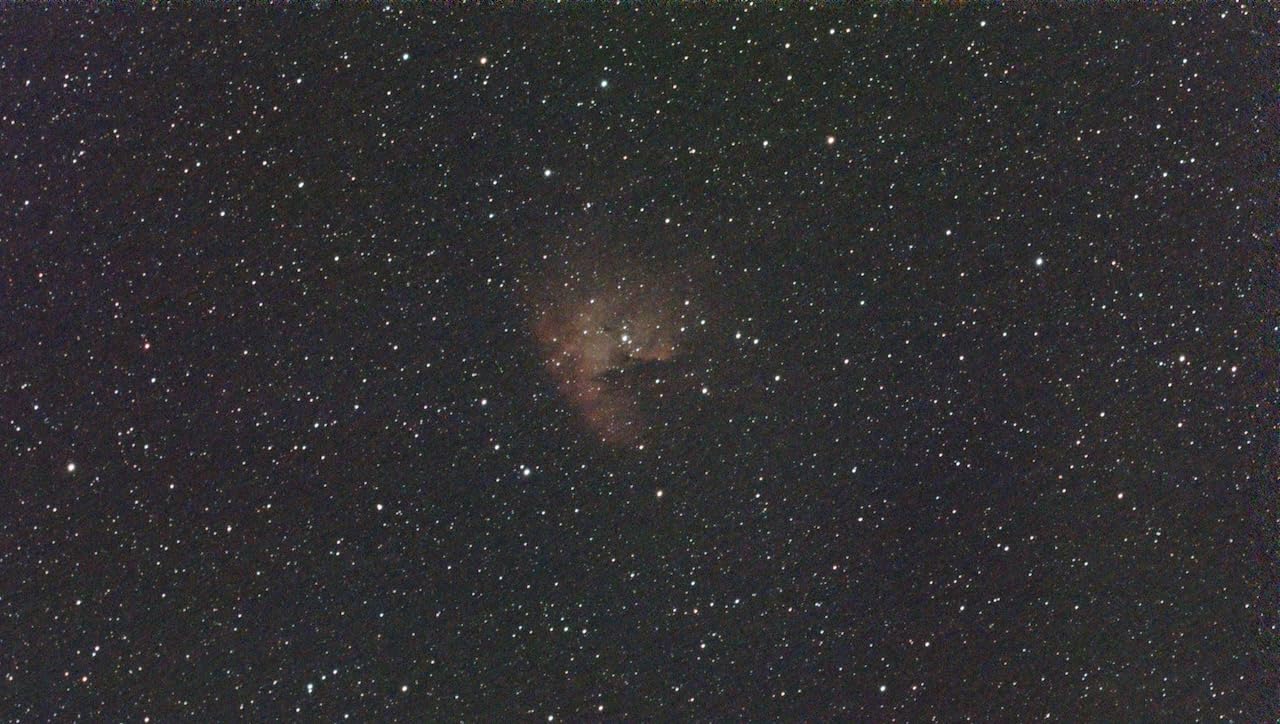
Image processing happens in the cloud through the DWARFLAB app, so there is no laptop, no stacking software and no learning curve. Reviewers emphasise that one-touch processing as the single biggest quality-of-life improvement, because the usual reason people never finish an astrograph project is the software step after the data is captured.
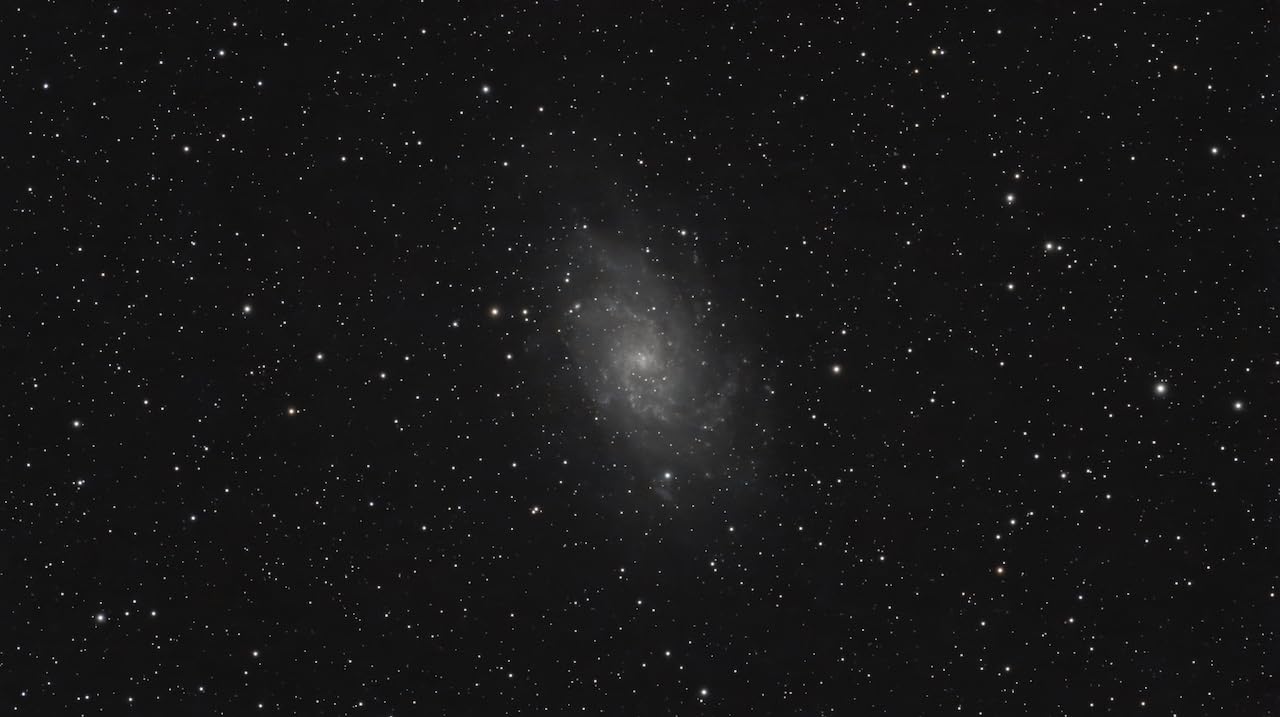
Because light pollution is processed out rather than fought optically, a bright city location costs you image sharpness more than target visibility. The carrying bag and magnetic filters are included, and a two-year manufacturer warranty is standard.
Who the Dwarf 3 suits
It suits renters, students and anyone whose storage is a hallway cupboard. A 3 lb all-in-one body with a carrying bag means the whole kit lives in one bag and can be carried up stairs by one person, which is a bigger practical advantage in the city than any optical specification.
It also suits people who photograph day and night. The same body handles deep-space objects, countryside scenes and wildlife, which makes it a genuinely dual-purpose device for a family that also wants to use it in daylight.
Who should skip the Dwarf 3
Skip it if you want to see planets through an eyepiece. As a smart-camera instrument, its role is astrophotography, and owners are clear that it is not built for detailed planetary viewing. A 35mm aperture is not the constraint; the missing eyepiece is.
Skip it if you want to process your own images. Cloud processing is the point of the design, not a convenience, and owners note that good results depend on the app working as intended. If you enjoy the craft of acquisition and stacking yourself, a conventional telescope plus a tracking mount will suit you better, and our best computerized telescopes guide covers those platforms.
6. DWARFLAB Dwarf Mini – Pocket-Sized Smart Scope With EQ Mode
DWARFLAB Dwarf Mini Smart Telescope – 1.85lb Portable Astronomy Telescope
- Plate solving sets the scope down and it points itself
- Built-in light pollution filters with EQ mode up to 90 second exposures
- Stacks internally and processes in the cloud
- Only 1.85 lb
- fits a backpack or large pocket
- 360 degree pivot and solar filter included
- Not suited to planetary detail
- Small deep-sky objects do not enlarge well
- Sensor resolution suits social media not large prints
At 1.85 lb this is the smallest capable instrument on the list, and for a city observer that weight is transformative. It fits in a backpack or a large pocket, so the decision to observe does not depend on finding a car park or carrying a full tripod up six flights.
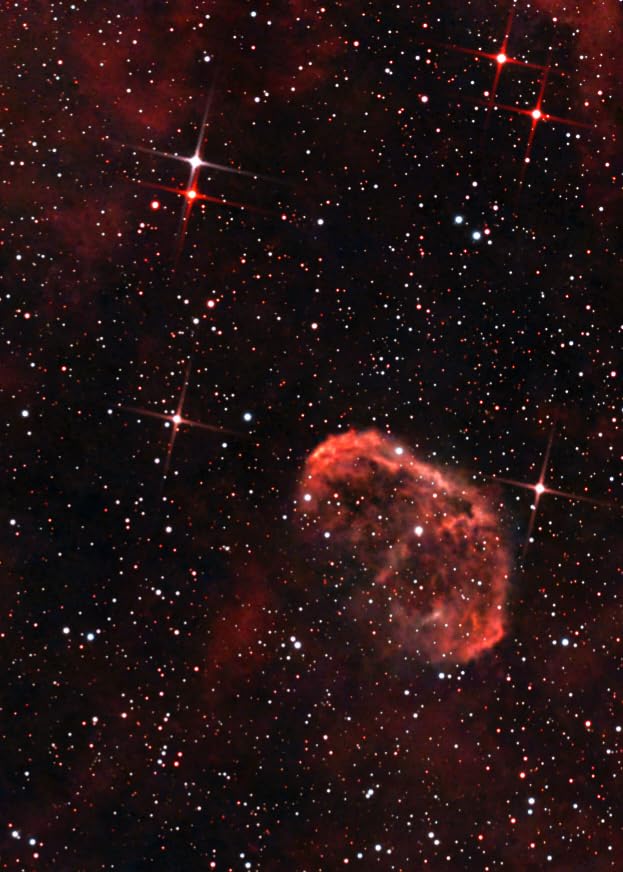
Owners describe it as the best value in smart telescopes for reaching targets invisible to the naked eye from urban backyards, and several reviewers report successful imaging from Bortle 9 skies. That is the strongest evidence in this roundup that stacking genuinely beats skyglow for deep-sky work.
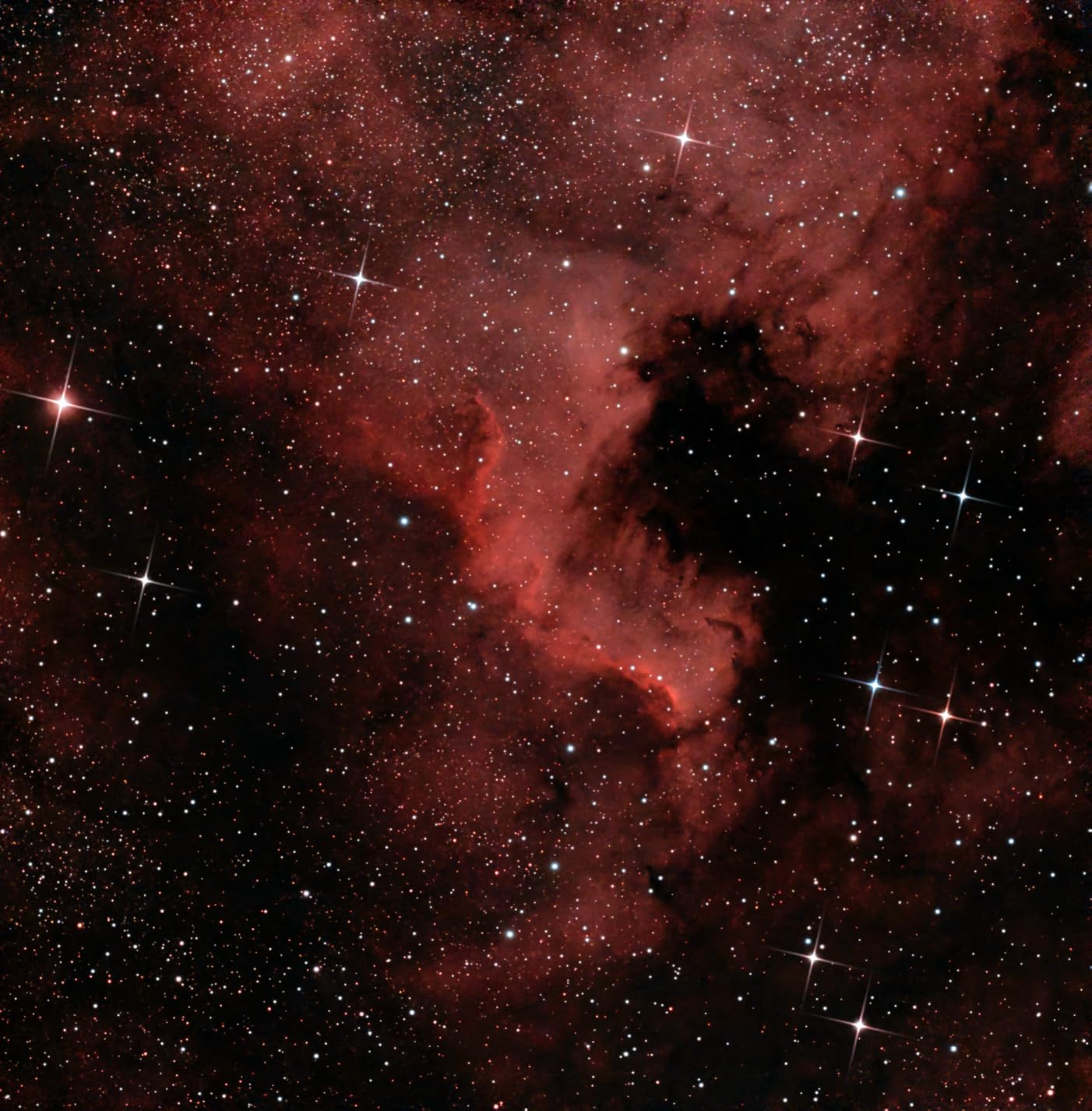
The equatorial mode is the technical headline. It supports single-frame exposures up to 90 seconds, which in practice means it can hold faint nebula signal rather than just the bright core, and combined with the built-in light pollution filters it is a purpose-built city deep-sky rig. The Sony IMX662 sensor has 2.9 micron pixels on a 1/2.8 inch chip, which is a deliberate trade of size for sensitivity.
A 360 degree pivot lets you reframe targets without moving the tripod, the app includes an interactive sky atlas so you are not hunting through menus, and a magnetic solar filter is included for eclipse and sunspot work. The mega-stack function accumulates sub-frames across several nights, so a target can be built up over a week of clear evenings.
Who the Dwarf Mini suits
It suits the balcony astronomer with no space at all. There is no tripod to store, no power supply to run, and the body fits in a drawer between sessions. Owners report starting in about three minutes from unboxing, which matters for anyone whose clear-sky windows are short and unpredictable.
It also suits anyone starting astrophotography who would be put off by a laptop, a camera, a mount and stacking software. Internal stacking plus cloud processing removes three of the four components, and it is the most compact entry point of any smart telescope we tested.
Who should skip the Dwarf Mini
Skip it for planetary work and for large prints. Reviewers set expectations clearly: planets render as small discs without surface markings, small deep-sky objects appear very small and do not enlarge, and sensor resolution suits social media rather than wall-sized output.
Skip it if you intend to shoot all night in equatorial mode without extra gear. Owners who do report better results after adding a fluid-head tripod and a power bank. It also only tracks stars and celestial objects, not birds, aircraft or anything else that moves, and a few owners mention initial Wi-Fi connection friction.
7. Sky-Watcher Heritage 150 – Tabletop Dobsonian With Real Aperture
Sky-Watcher Heritage 150 Tabletop Dobsonian Telescope – Perfect for Beginners, Easy Setup, Portable, and Fun (S11710)
- 150mm aperture gives more light grasp than small tabletop refractors
- Fast f/5 ratio keeps lunar and planetary images bright
- Collapsible tube stores compactly while holding collimation
- Tabletop base with rubber feet cuts setup time
- Fully manual operation means no batteries or alignment
- Manual mount means targets must be star-hopped
- Needs a sturdy table at a comfortable height
- No tracking so targets drift during long views
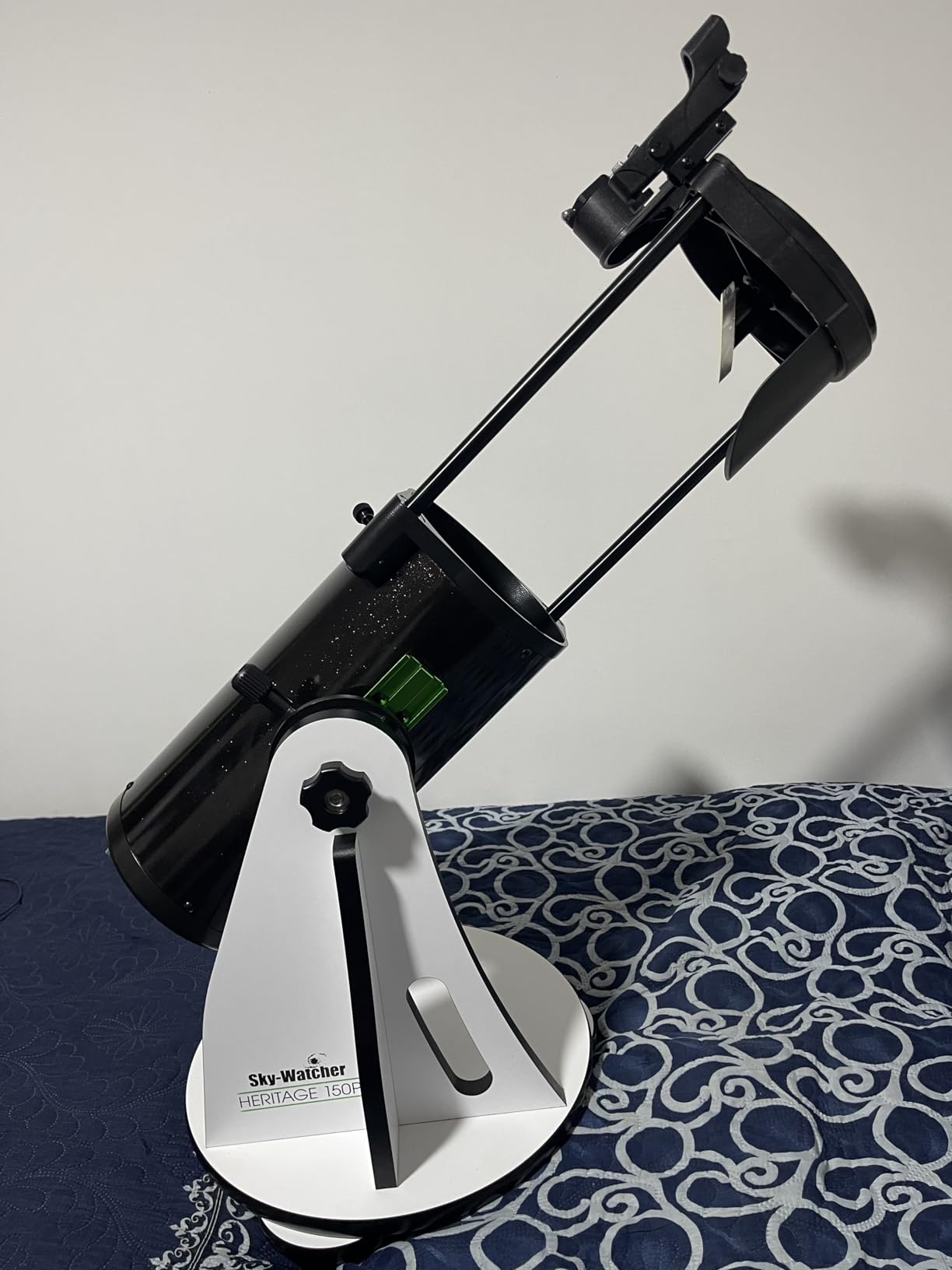
Community consensus across the major observing forums names 6-inch and 8-inch Dobsonians as the best value for beginners, and this is the small-footprint version of that idea. Six inches of parabolic primary on a tabletop base is the most light you can get from something that fits under a desk when it is not in use.
Aperture is the argument in a bright sky. Light gathering power scales with the square of the diameter, so a 150mm primary collects far more light than the 60mm and 70mm refractors lower down this list, and more light is precisely what a faint target needs to rise above sky glow.
The f/5 focal ratio at 750mm is fast, and fast is bright. Wide-field refractors are pleasant on the Moon, but this reflector gives the contrasty, saturated planetary and lunar images that observers in bright skies look for. The borosilicate parabolic primary carries a Radiant Aluminum Quartz multi-coating that holds up well against condensation.
The collapsible tube is the apartment feature. It stores compactly and, according to Sky-Watcher’s design and owner reports, retains collimation while collapsed, so you are not re-aligning mirrors every time. The rubber feet damp vibration from a table surface, which matters more than people expect on a wooden balcony table.
Who the Heritage 150 suits
It suits anyone who wants the most telescope per unit of storage. There are no batteries, no alignment procedure and no electronics to fail, so it works the moment you set it on a table. For a family sharing one scope, the manual operation is a feature because there is nothing to break or teach.
It also suits observers who already know how to find things. If you can star-hop, or you use a printed planisphere, the manual alt-azimuth mount is refreshingly simple. Our best Dobsonian telescopes guide covers the rest of this family if you want a larger aperture.
Who should skip the Heritage 150
Skip it if you cannot see enough stars to star-hop. This is the one product on the list with no finding aid at all, and in a bright urban sky you may be trying to find a galaxy you cannot see. That is a real limitation rather than a minor inconvenience, and it is why this is not our top pick for a first-time city buyer.
Also skip it if you have nowhere to put a table. The tabletop format needs a sturdy surface at a comfortable viewing height, and 23 lb of telescope on a wobbly folding chair is a frustrating way to spend an evening. There is no tracking, so objects drift across the field during longer views.
8. Celestron StarSense DX 130AZ – Phone-Guided Newtonian That Finds Targets
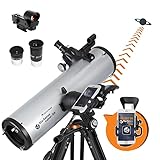
Celestron StarSense Explorer DX 130AZ Smartphone Guided Newtonian Telescope
- StarSense pointing described as more consistent than costly GoTo mounts
- Dual-axis slow motion controls make centring straightforward
- 5 inch aperture gives more light than smaller models
- Preassembled tripod and two eyepieces included
- Red night-vision mode supports dark adaptation
- Tripod is light and can feel flimsy
- Tube and phone cradle vibrate in wind
- No tracking so targets drift
- Limited clearance above about 65 to 70 degrees altitude
This scope answers the objection we hear most often about GoTo mounts in the city: cost. Instead of a motorized database, the DX 130AZ uses the StarSense app and your phone camera to recognise the star field it is pointed at, work out where it is, and then walk you to a target with on-screen arrows. No alignment stars, no motor, no hand control.
Experienced observers who own computerized GoTo mounts report that the StarSense app points this scope more consistently than those mounts do, and the community view is that light pollution plays no role in whether it works. The plate solving reads a faint star field that a human eye would struggle with under skyglow.
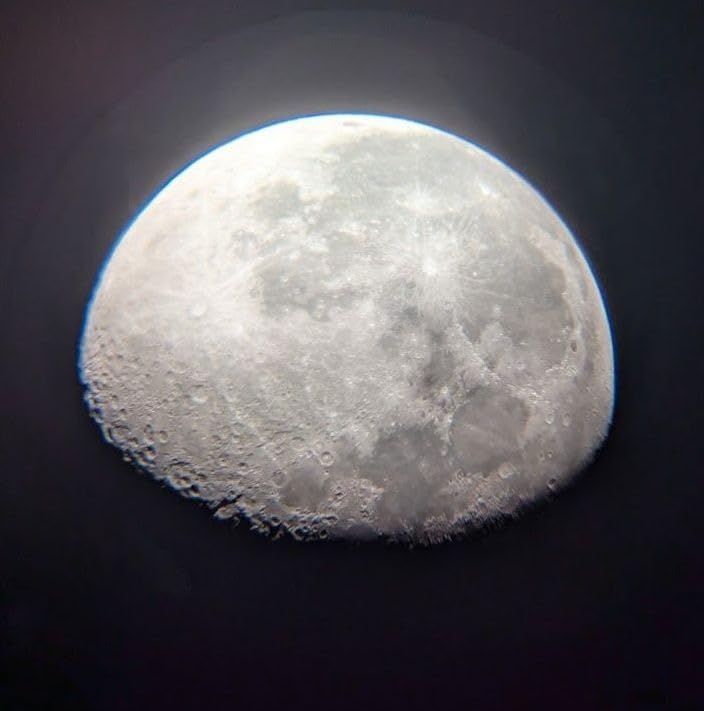
Owners confirm bright, sharp views of Saturn’s rings, Jupiter’s bands, Albireo and the Andromeda galaxy from light-polluted yards, which is a better deep-sky showing than most 5-inch scopes manage. The 130mm parabolic primary with aluminium and silicon dioxide coatings sits on a short 650mm tube, and the whole optical design is essentially the same as Celestron’s 130 SLT.
Dual-axis slow-motion controls let you nudge the target without losing it, and the app generates a curated list of the best objects for your time and location. The red night-vision mode keeps your phone dim so you do not lose dark adaptation, and a 5×24 finder is included for rough aiming.
Who the StarSense DX 130AZ suits
It suits beginners who find alignment procedures intimidating. There is nothing to learn before you can observe. Dock the phone, launch the app, follow the arrows, and you are on target. It is the fastest route from opening the box to a view of Saturn on this list.
It also suits anyone who wants manual control without giving up finding. The slow-motion knobs mean you are never fighting a motor, and a red dot finder plus a Newtonian reflector is a proven combination. At 18 lb it is portable enough for a park or a friend’s garden, and our value telescope guide shows how it compares with cheaper alternatives.
Who should skip the StarSense DX 130AZ
Skip it if you are sensitive to vibration. The tripod is light, the mount and plastic phone-cradle neck shake in light wind or when nudged, and tightening knobs have snapped on some models. At high power, wobble is what ruins planetary views, so this matters more here than the specification list suggests.
Skip it if you want to observe objects near the zenith. Clearance between the tube and the tripod restricts comfortable viewing to roughly 65 to 70 degrees of altitude, which is a limitation worth checking against your balcony sightline. There is no tracking, so targets drift, and 130mm still cannot show many smaller deep-sky targets under city glow.
9. Sarblue Mak60 – Compact Maksutov for Kids and Small Balconies
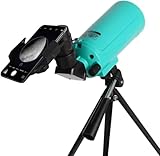
Maksutov-Cassegrain Telescope for Adults Kids Astronomy Beginners, Sarblue Mak60 Catadioptric Compound Telescope 750x60mm, Compact Portable Travel Telescope, with Tabletop Tripod Phone Adapter
- 750mm focal length packed into a 200mm tube
- Multi-coated optics give sharp lunar and planetary images
- 20mm eyepiece at 37.5x shows Jupiter bands and Saturn rings
- Polycarbonate body is light with a precise focuser
- Detachable lid exposes the internal mirrors for learning
- 60mm aperture dims images at higher magnification
- No finder included beyond simple sight bumps
- Focuser needs many turns to reach focus
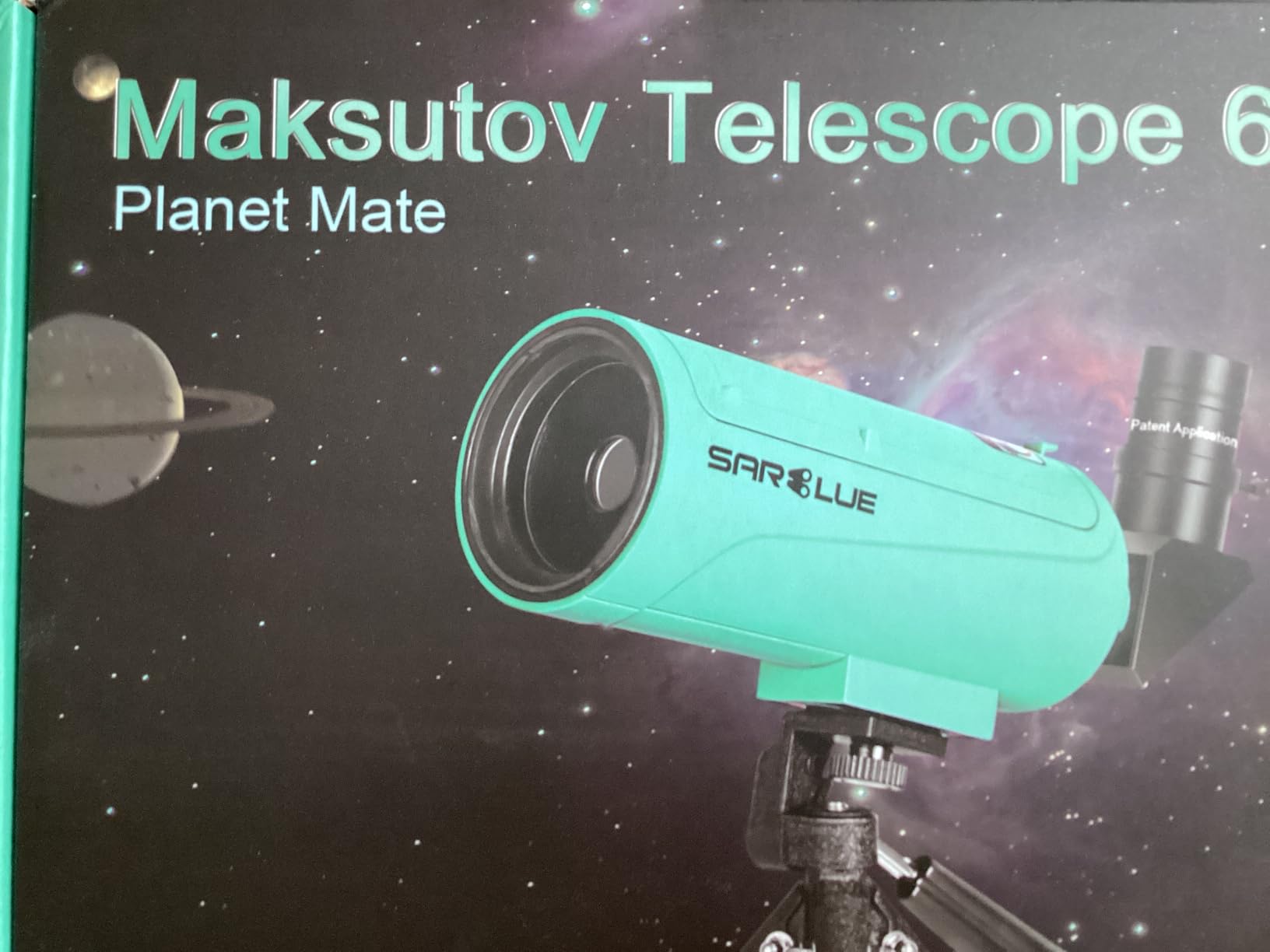
The Mak60 solves storage better than any other scope here. A Maksutov-Cassegrain folds a 750mm focal length into a 200mm tube, which means it lives in a desk drawer rather than a cupboard, and the detachable lid that reveals the internal mirror assembly turns the thing itself into a teaching aid.
Owners frequently describe the optics as well beyond what the compact plastic body suggests, with experienced stargazers comparing its sharpness favourably to costlier refractors. Lunar crater and mountain detail is the strongest result, and Jupiter’s bands, Saturn’s rings and the Galilean moons are all identifiable at the supplied 37.5x.
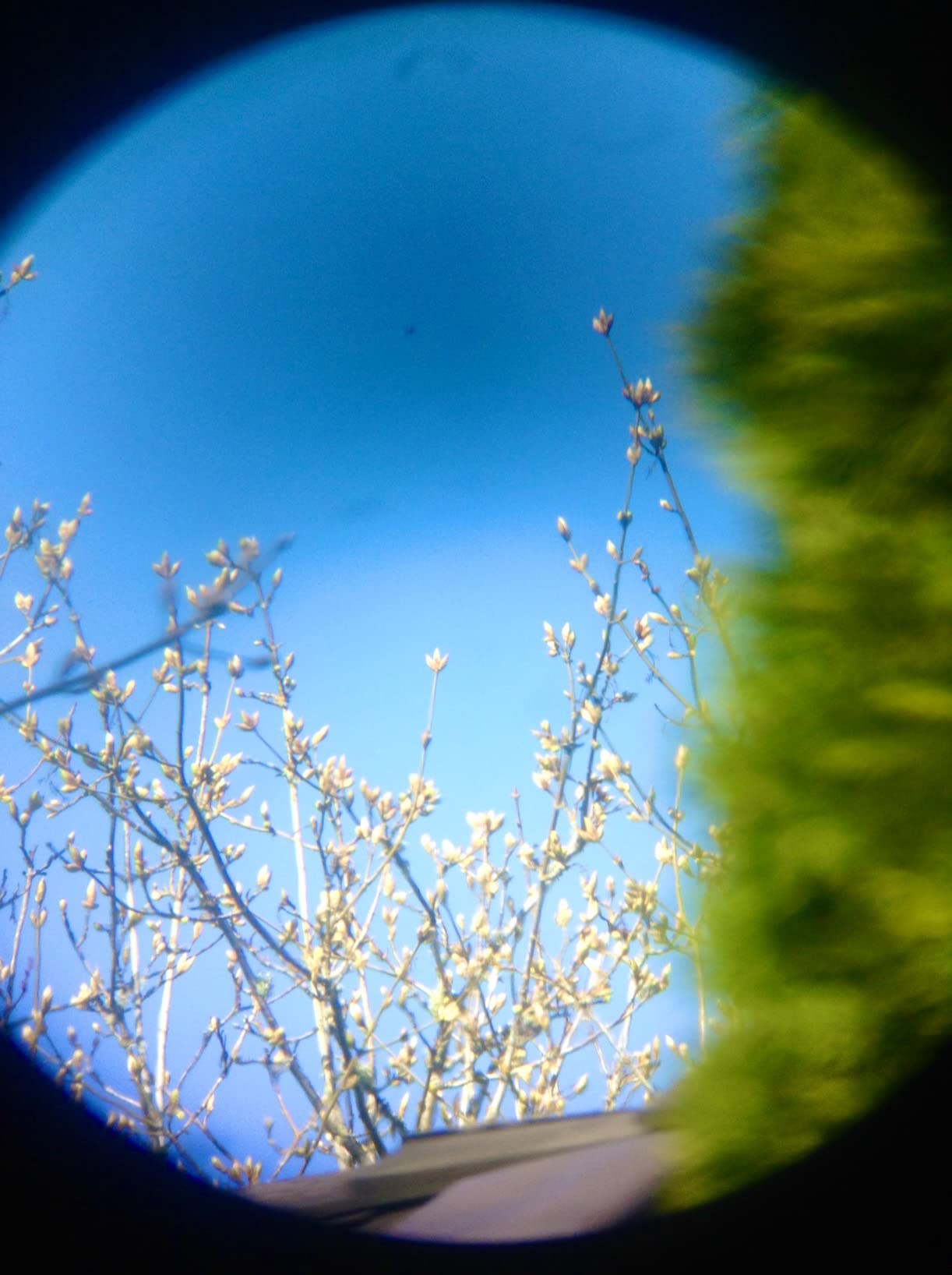
It is a genuinely portable instrument. Carrying it to a park or setting it on a picnic table takes seconds, there is no assembly beyond attaching the tripod, and the fully multi-coated glass keeps chromatic and spherical aberration low enough for clean lunar images. A one-year warranty and no-tool setup keep the first session painless.
The erect-image diagonal means the view is the right way up, which matters a great deal for children. A young observer who points at the wrong part of the Moon because the image is flipped usually loses interest, and this scope avoids that entirely.
Who the Sarblue Mak60 suits
It suits families with a first telescope and very little storage. The tube is the size of a large water bottle, the tripod folds down, and there is no battery, motor or app to introduce. A child can carry it outside alone, which removes a real barrier to regular use.
It also suits anyone who wants to see how a telescope works. The removable aperture cap exposes the internal construction, so a beginner can understand why a folded catadioptric is compact before they ever learn about focal ratio.
Who should skip the Sarblue Mak60
Skip it if you want a wide field or deep-sky objects. A 1.7 degree field is narrow, so sweeping open clusters is not its strength, and a 60mm aperture dims every image as magnification rises. Reviewers are specific that detail is lost beyond about a 7.5mm to 8mm eyepiece, so treat the included 20mm as the practical limit.
Skip it if awkward focus will frustrate you. The focuser requires many turns to reach focus, which is a steep learning curve for beginners, there is no finder beyond two simple sight bumps, and the phone holder only accepts the included 20mm eyepiece rather than standard 1.25 inch eyepieces. If you want the cheapest sensible option instead, our best telescopes under 200 guide covers that tier.
10. Gskyer 70mm Refractor – Simplest First Scope for a Bright Sky
- Bright wide field makes the Moon and planets easy to find
- 5.8 degree field needs no GoTo to navigate
- Includes finder
- two eyepieces
- a 3x Barlow and a carry bag
- Smartphone adapter and wireless shutter for basic photos
- Very high review volume indicates a consistent product
- 70mm aperture limits planetary detail
- No motorized mount or tracking
- Chromatic aberration shows at higher power
- Short 400mm focal length caps magnification
With more than 22,000 ratings, this is one of the most widely reviewed entry telescopes available, and the consistency of that feedback is itself informative. Reviewers treat it as a first or second instrument, valued for simple assembly, a bright wide field and a complete kit in one bag.
A 5.8 degree field of view is the important number for a city beginner. It is wide enough that you can sweep and find things without charts, which means you are not dependent on seeing faint stars. A wide field is exactly the antidote to a washed-out sky, and it is why this scope keeps earning repeat buyers as a first telescope.
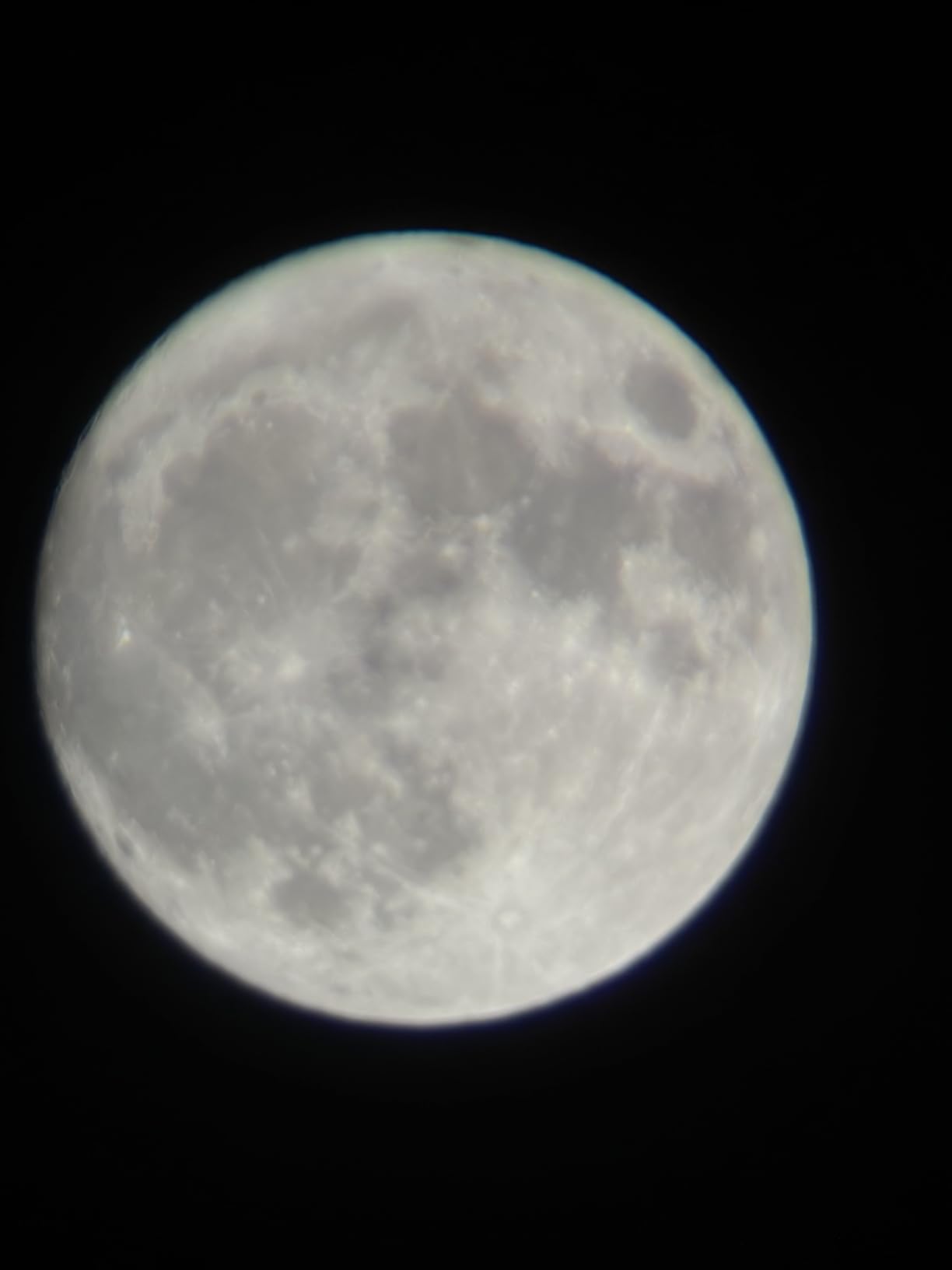
The 70mm fully coated refractor at 400mm focal length gives bright views of the Moon and planets, and the 5×24 crosshair finder makes locating objects straightforward. Two eyepieces plus a 3x Barlow give a spread of magnifications, and the aluminium tripod adjusts to a range of sitting and standing positions.
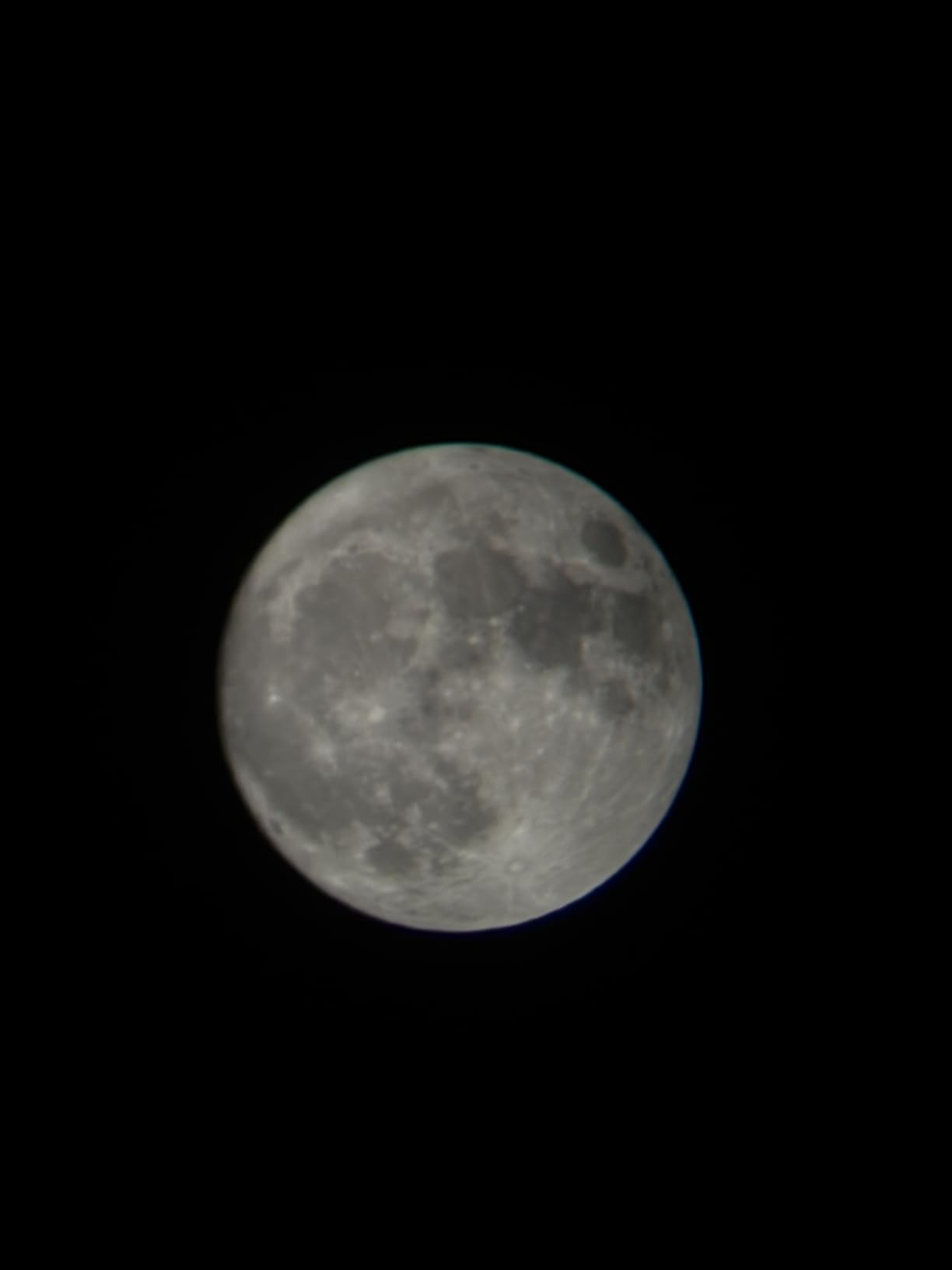
The carry bag that fits the telescope and tripod is what makes it a genuine city instrument. Assembly takes minutes, there is no alignment, no power and no app, and the smartphone adapter with a wireless shutter remote lets a beginner take a first Moon picture on the same evening.
Who the Gskyer 70mm suits
It suits a child or an adult who wants a hobby starter with no commitment. It is the lowest-friction entry point on this list, and the most likely to survive a first winter indoors. If the interest turns out to be real, this is a scope you will pass on rather than regret.
It also suits anyone who wants an instrument for a city park, a caravan or a hotel balcony. Everything fits in one bag, the field is wide, and nothing needs charging. The one-year warranty is shorter than the two years on the Celestron scopes, which is the trade you make for the price point.
Who should skip the Gskyer 70mm
Skip it if planetary surface detail is your goal. A 70mm achromatic aperture shows lunar craters and Jupiter’s four moons but little else, and chromatic aberration becomes visible on bright targets at higher power. The 400mm focal length also caps useful magnification at around 120x even with the 3x Barlow.
Skip it if you expect to see deep-sky objects. Reviewers are consistent that deep-sky targets are largely lost to light pollution at this aperture, and a manual alt-azimuth mount makes following moving targets awkward. This is a Moon-and-planets instrument, and it is honest about that.
What You Can Actually See from a Light-Polluted Sky?
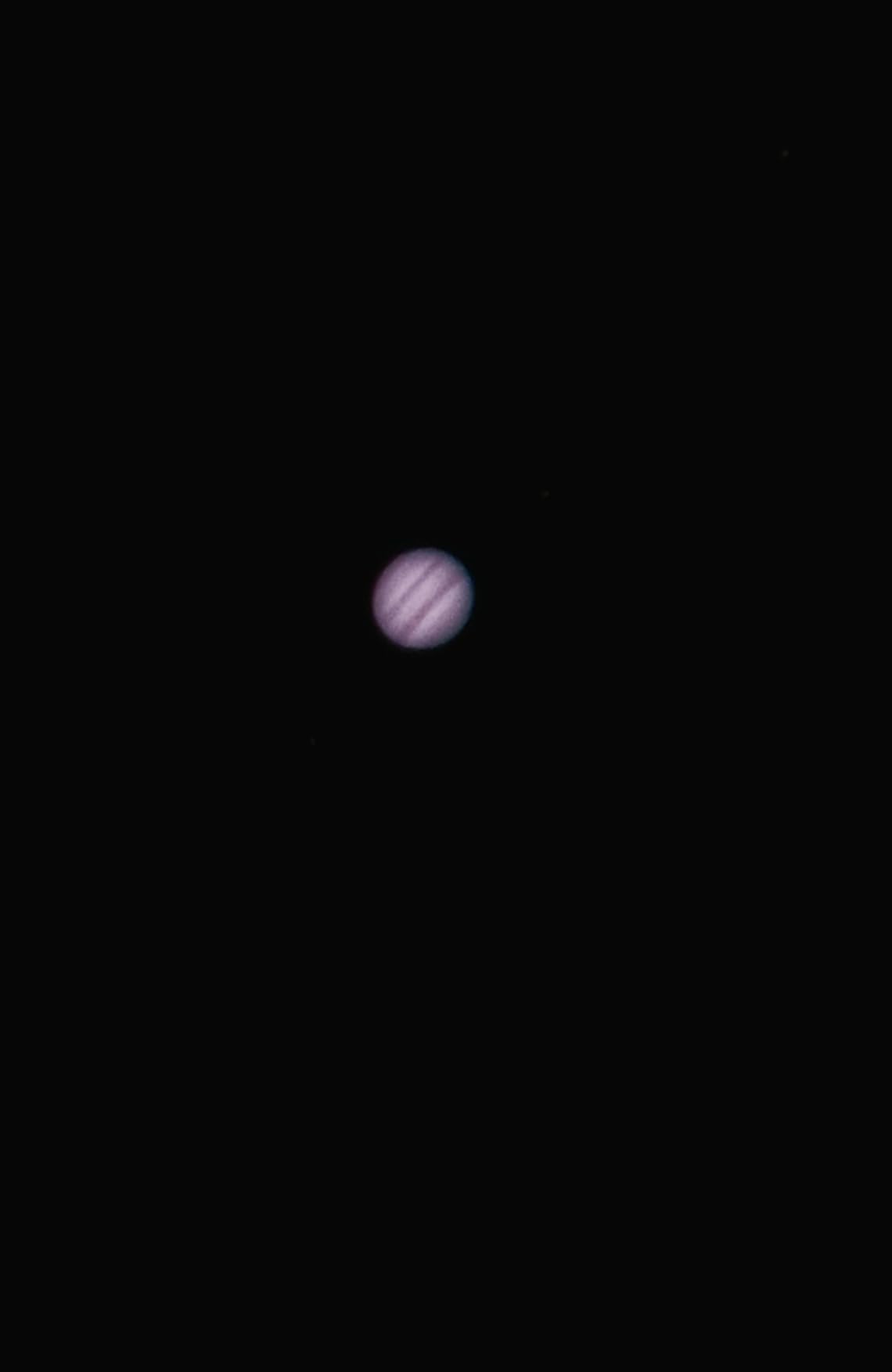
The honest answer is that light pollution does almost nothing to the Moon and the planets. Forum users report this independently and without prompting: bright, compact, high-contrast targets are simply not dimmed by skyglow, and the same aperture that shows nothing of a faint galaxy will show Saturn’s rings crisply from a city centre.
Here is roughly what to expect by Bortle class. Class 1 to 3 is a genuinely dark site you will rarely reach from a city. Class 4 to 5 is a decent suburban or rural sky where the Milky Way is a strong band and galaxies begin to show structure. Class 6 to 7 is bright suburban, where the Milky Way is faint or absent and you are down to globulars, bright planetary nebulae and the Messier clusters that are large and bright.
Class 8 to 9 is inner city, where naked-eye limiting magnitude drops sharply and star-hopping becomes unreliable. At Class 9 you are realistically looking at the Moon, the planets, Venus, the bright double stars, Jupiter’s moons, and the two or three globular clusters that punch above the glow. Everything else is a camera job.
That is why a computerized or phone-guided mount matters more in the city than the marketing implies. Under a Class 8 sky, the reason people fail to find M13 is not that the telescope is too small, it is that they cannot see enough intermediate stars to walk to it. A pointing system removes that problem entirely, and reviewers of the StarSense and NexStar platforms all describe the same relief.
How to Choose a Telescope for City Skies?
Aperture is the number that decides everything else. Light gathering scales with the square of the diameter, so a 150mm scope collects more than four times the light of a 70mm one. In a bright sky that gap is the difference between a grey smudge and a recognisable object. Buy the largest aperture you can physically carry up your stairs and store in a cupboard.
Second, be skeptical of magnification claims. The useful rule of thumb is roughly twice the aperture in millimetres, so a 70mm scope is useful to about 140x and a 150mm scope to about 300x. Department-store listings advertising 450x or 675x on a 60mm aperture are describing an unusable number, and forum discussions about hobby-killer telescopes almost always trace back to exactly that mismatch between claimed power and real aperture.
Third, decide how you will find things. You have three options and they suit different observers. Manual star-hopping is cheapest and works only where stars are visible. Phone-based plate solving such as StarSense or a smart scope’s automatic GoTo works in bright skies and is what most city observers should choose. Motorized GoTo is the most capable and the most expensive, and it also brings alignment routines and power requirements.
Fourth, think about the mount before the optics. Tripod wobble is the single most reported reason high-power planetary views get ruined, and a wobbly mount will waste a good optical tube. A manual alt-azimuth mount with slow-motion controls, or a well-damped tabletop base, is a better use of budget than a slightly larger aperture on a flimsy tripod.
Fifth, check the storage math honestly. A 150mm tabletop Dobsonian on rubber feet stores under a desk. An 8-inch Dobsonian on a full mount takes up a car boot and a large corner of a room, which is why so many owners describe it as dominating storage. City living punishes bulk more than it punishes aperture, so a compact Maksutov or a collapsible tabletop reflector is frequently the smarter city purchase.
Sixth, consider collimation. Reflectors need their mirrors aligned, and beginners describe it as a recurring setup frustration. A Maksutov or Schmidt-Cassegrain needs none, which is why the smart first-telescope packages and the folded catadioptrics remain the most common recommendations in beginner forums. A manual collimation tool makes a Newtonian far less daunting, but it is a step you cannot skip.
How to Beat Light Pollution Without Moving
Filters get oversold, and you should know exactly what they do before buying one. A broadband light pollution filter such as a CLS or UHC design suppresses the continuous sodium and LED glow that raises your background sky, increasing contrast on emission nebulae and bright clusters. It does nothing for galaxies, which are broadband continuum targets, and forum consensus is blunt on that point.
Narrowband filters are the opposite trade. They isolate specific emission lines, so they cut through skyglow superbly for emission nebulae, but they are an imaging accessory that requires a camera and long exposures. They are not a visual aid. If your interest is looking rather than photographing, a broadband filter is the only category worth considering.
Smart telescopes are the second real answer, and it is why four of the ten scopes on this list have no eyepiece at all. Live stacking averages down random sky-glow noise across many sub-exposures, recovering targets that are invisible to the eye from the same location. The Dwarf Mini and Seestar S30 Pro both ship with light pollution filters built in, which removes the accessory decision entirely.
The third answer is a dark sky trip, and it is more accessible than it sounds. Many city observers drive one to two hours to reach a Class 3 or 4 site once or twice a year, and a scope that is easy to load beats an aperture that is impossible to transport. The Sky-Watcher tabletop reflector and the two Dwarf smart scopes are the most practical choices for that trip, since everything fits in one or two bags.
The fourth answer is simply protecting your night vision, and it costs nothing. Use a red torch, keep the phone in night mode, and let your eyes dark-adapt for twenty minutes. Bright white phone screens and door lights undo adaptation faster than any filter can restore it.
Telescopes to Avoid in the City
Walk past department-store packages advertising 450x or 675x magnification. The useful magnification ceiling of roughly twice the aperture in millimetres means a 60mm scope that claims 675x is telling you the marketing was written by someone who has never looked through it. Owners consistently describe cheap packages with thin mounts and included eyepieces that are just okay.
Avoid Bird-Jones style designs such as the Celestron PowerSeeker 127EQ, which community members specifically warn about as fussy, with mediocre corrector lenses and focusers that frustrate new users. If you want that aperture, buy a cleaner design.
Avoid anything where the tripod is the weakest component. Wobble and vibration destroy planetary detail, and no amount of aperture compensates. Check reviews for mentions of shaking, vibrating or flexing before you commit, and treat flimsy knob threading as a return signal.
Avoid high-magnification refractors with very short focal lengths. At 400mm with a 70mm aperture, chromatic aberration becomes obvious on bright targets, and the marketing magnification of 120x is beyond what the optic can support usefully. Wide fields are honest at that focal length; power claims are not.
Avoid buying a big Newtonian without a collimation plan. A parabolic mirror that arrives out of alignment will frustrate you for weeks, and cheap collimating screws are hard to adjust. A folded catadioptric or a scope that arrives collimated removes that risk entirely.
Frequently Asked Questions
Do telescopes work in cities?
Yes, and the difference is smaller than most beginners expect. Light pollution raises the background sky brightness, which hides large faint objects like galaxies and the Milky Way, but bright compact targets such as the Moon, Jupiter, Saturn and Venus stay almost unaffected. A 5-inch or 6-inch scope with a pointing system will show you craters, ring structure and cloud belts from a bright city backyard all night.
What is the best telescope for city viewing?
The Celestron NexStar 6SE is our pick for most city observers. Its 6-inch Schmidt-Cassegrain aperture keeps planetary and lunar detail sharp under skyglow, and the computerized GoTo database reaches targets you cannot star-hop to in a bright sky. For a lighter carry weight on a small balcony, the 5-inch NexStar 5SE offers a similar experience with a built-in imaging wedge.
What telescope do I need to see Jupiter?
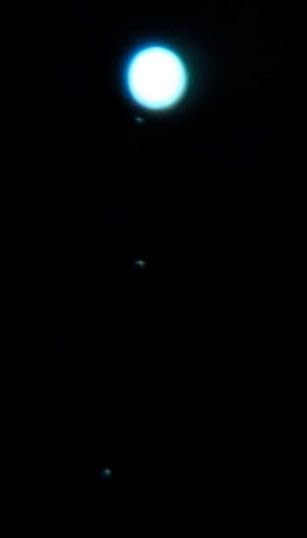
You need aperture for contrast and a steady mount for detail. Jupiter’s cloud belts and the four Galilean moons show up in a 70mm refractor, but you need roughly 100mm or more to see banding structure and colour. All of the Celestron scopes on this list handle it well, and the NexStar 6SE resolves the most from a bright sky.
Which telescope is best to see stars and deep-sky objects?
For visual deep-sky work from the city, aperture is the limiting factor, so a 6-inch reflector such as the Sky-Watcher Heritage 150 gives the brightest views. For faint galaxies and nebulae that are invisible from a bright sky, a smart telescope with live stacking is the realistic answer, because stacking averages down sky glow across many sub-exposures.
Is a smart telescope better for city use?
Smart telescopes are better for city astrophotography and worse for visual observing. They find and track targets automatically, stack images in the device, and process them in the cloud, so faint targets become reachable from a bright backyard without a computer. But there is no eyepiece, so if you want to look through glass, a conventional telescope is the right choice.
Do light pollution filters really work?
Broadband filters help by suppressing the background glow from sodium and LED lighting, which raises contrast on emission nebulae and bright clusters. They do essentially nothing for galaxies, which emit a continuous spectrum. Narrowband filters cut skyglow far better but are an imaging accessory only, not a visual aid. Several smart scopes on our list have these filters built in.
Final Verdict: The Best Telescopes for City Skies in 2026
The best telescopes for city skies depend on which of the two hobbies you actually want. If you want to look through an eyepiece at the Moon and planets, the Celestron NexStar 6SE is the strongest all-round choice, with the 5SE as the lighter alternative and the Celestron 127SLT as the family-friendly option at a lower aperture.
If you want to photograph deep-sky objects that are invisible from your own sky glow, a smart telescope is the honest answer, and the Dwarf Mini or Seestar S30 Pro will get more faint targets into focus from a Class 8 balcony than any eyepiece scope of any aperture. If your storage is one drawer, the Sarblue Mak60 or the Sky-Watcher Heritage 150 will actually get used, which matters more than any specification.
Whatever you choose, buy the largest aperture you can carry, distrust magnification claims, and pick a pointing system you will not get frustrated by. The Moon will be there on the next clear night, and it does not care how bright your city is.