
If you want one guide scope to buy today, the SVBONY SV165 30mm Mini is the safest bet: 519 reviews at 4.6 stars, 45mm of back focus that suits small CMOS guide cameras, and 342g that barely touches your payload balance. If you image long-focal Newtonians or SCTs, take the extra aperture of the SVBONY SV106 helical-focuser model instead.
That distinction is the whole buying decision. A guide scope is not a small telescope you look through. It is a second, inexpensive optical tube bolted alongside your imaging scope that carries a guide camera and feeds continuous micro-corrections back to your equatorial mount. Pick the wrong aperture or the wrong mounting hardware and autoguiding quietly becomes the weakest link in the chain. Pick well and sub-arcsecond total error is routine on rigs that cost many times more than the scope.
We compared six guide scopes on aperture, focal length, focuser design, focus travel, mounting interface and weight, then weighed those numbers against what owners actually report about guide star acquisition and focus stability. If you have not settled the imaging half of the train yet, our picks for the best telescopes for astrophotography cover that first. This is our complete guide to the best guide scopes for astrophotography: what each one is for, who it fails, and when a guide scope is the wrong tool altogether.
Table of Contents
Top 3 Guide Scope Picks for Astrophotography (October 2026)

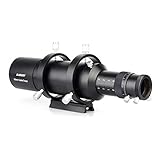
SVBONY SV106 Helical
- Helical focuser keeps star field fixed
- 240mm focal length
- 43mm total focus travel
- All-metal build

Sky-Watcher EvoGuide 50DX
- 50mm f/4.8 apochromatic ED doublet
- 242mm focal length
- V-style dovetail and rings
- 2 year warranty
Those three cover the overwhelming majority of rigs, and the middle one is where most people land. The SV165 wins on proven reliability rather than optics. The SV106 wins on focuser design and total focus travel, which is the practical difference between a guide camera that focuses in a minute and one that fights you.
The EvoGuide 50DX is the only true apochromat in the group, and owners who already own cheaper scopes report that it shrinks guide stars dramatically. Its 59 reviews are the thinnest evidence base of the three, so treat the optics claim as well supported but the long-term reliability record as still short.
Best Scopes at a Glance in 2026
| Product | Specifications | Action |
|---|---|---|
| SVBONY SV165 30mm Mini Guide Scope |
|
Check Latest Price |
| SVBONY SV106 50mm Helical Guide Scope |
|
Check Latest Price |
| Sky-Watcher EvoGuide 50DX APO |
|
Check Latest Price |
 Astromania 60mm Helical Guide Scope Astromania 60mm Helical Guide Scope |
|
Check Latest Price |
 Alstar 50mm Double Helical Guide Scope Alstar 50mm Double Helical Guide Scope |
|
Check Latest Price |
 MEOPTEX 60mm Guide Scope MEOPTEX 60mm Guide Scope |
|
Check Latest Price |
Read that table for shape rather than for a single winner. Three of these six are mini scopes under 400g, two sit in the 50mm to 60mm band at roughly 2 lb, and one is a premium apochromat. That spread maps cleanly onto three different imaging telescopes, which is exactly how we have organised the reviews below.
What a Guide Scope Actually Does
Earth’s rotation drags your target across the sensor during a long exposure. Your mount’s tracking error and periodic error add their own wobble on top. A guide scope plus a guide camera closes that loop: the camera images a star several times a second, software such as PHD2 measures how far the star has drifted, and the mount motors pulse to cancel it in real time.
That is why the word autoguiding matters. A mount with low periodic error correction still drifts, still has backlash, and still loses you faint stars when the sky is bright. Guiding removes the drift continuously instead of modelling it once. Stack a few hundred corrected sub-exposures and the difference between a guided and unguided frame is the difference between a usable image and a stack of smudges.
The threshold most people care about is about 30 seconds. Below that, your sky is dark, stars are fat, and unguided subs often stack fine. Above it, guiding stops being optional, and the faster your imaging focal length the more true that becomes.
Guide scope versus finder scope
The most common mix-up in this category is the finder scope. A finder is for your eye: small, cheap, achromatic, full of glass elements and an eyepiece. A guide scope is for a camera: it needs long back focus for a camera body, a focuser that will not rotate the sensor, and usually a rigid mounting bracket. Several scopes on our list do double duty, but only because the manufacturer added a drawtube and a T-thread collar.
1. SVBONY SV165 30mm Mini Guide Scope – The Most Proven Starting Point
SVBONY SV165 Guide Scope, 30mm Focal Ratio F4 Mini Finder and Guide Scope
- Most reviewed guide scope here at 519 ratings
- 45mm back focus suits small CMOS guide cameras
- 342g barely affects payload balance
- 1.25 inch and M42 interfaces cover most guide cameras
- Doubles as a visual finder with an eyepiece
- Basic focuser with unsmooth motion
- 30mm aperture limits it to bright guide stars
- Needs extra accessories for a diagonal setup
We picked this one first in our list because it is the guide scope we would put on a rig without hesitation. The 30mm fully multi-coated achromatic doublet at 120mm gives a wide field with plenty of candidate guide stars, and at 342g it is effectively invisible on the balance. Owners report sub-arcsecond total guiding error on budget setups, and the rating split is heavily favourable with roughly 80% five-star feedback.
The 45mm back focus distance is the detail that makes it work with modern gear. Small CMOS guide cameras with thin sensor boards and short connectors need room, and a scope that only offers 20mm of travel leaves you hunting for spacers. This one gives you room out of the box.
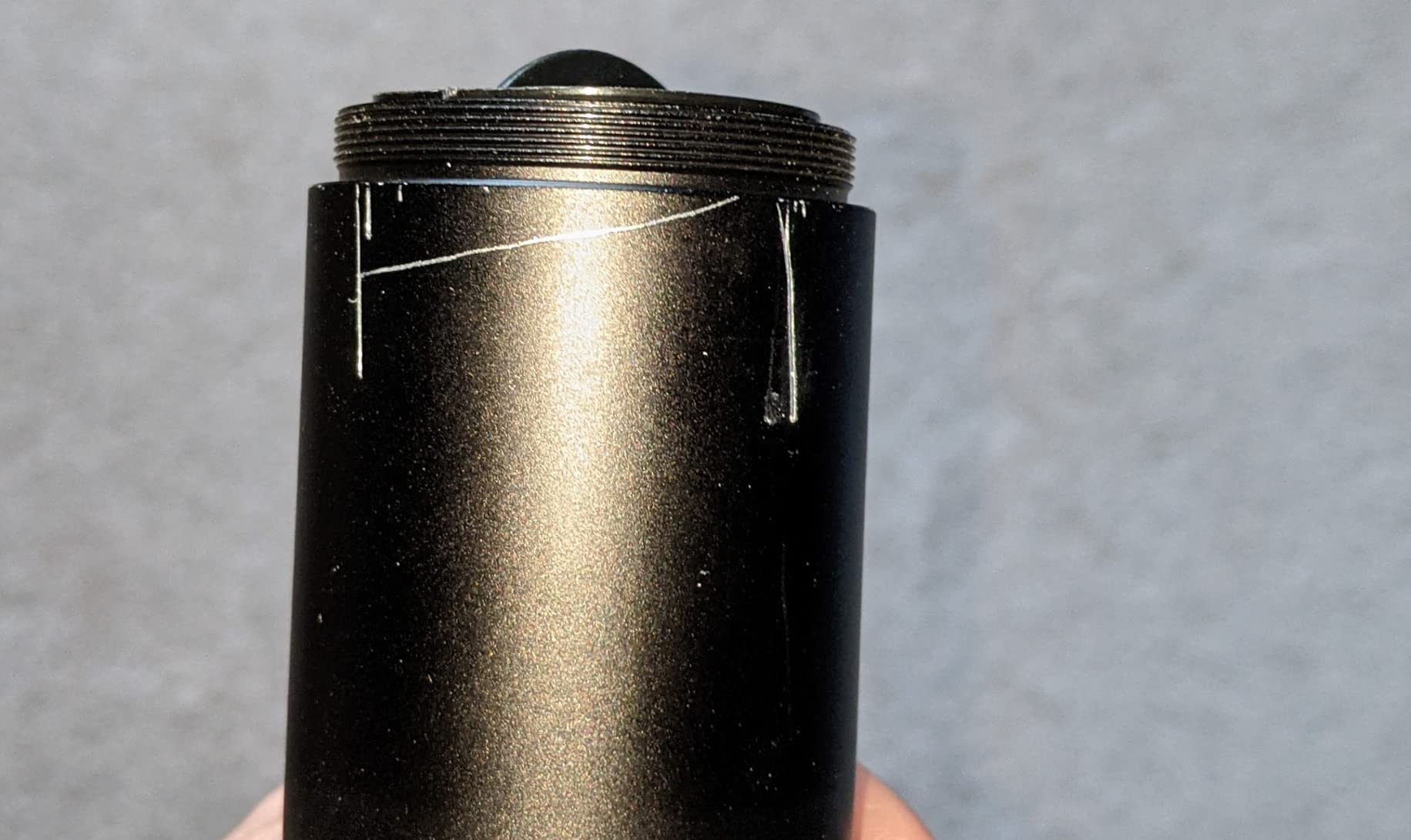
The mounting side is straightforward too. A 1.25 inch and M42 interface covers most guide cameras directly, and 1/4-20 threads on the ring base mean it will fit standard dovetail bars and brackets. The nylon-tipped thumbscrews are a small touch that matters, because metal tips will mark the anodised tube.
What you give up is aperture. Thirty millimetres will only lock onto bright stars, so in a light-polluted backyard or a heavy moon you may find PHD2 hunting or refusing stars that a 50mm scope would grab instantly. The focuser is also deliberately plain; focus is achieved, but it is not silky.

Who this scope suits
Wide-field refractors in the RedCat class, small fast Newtonians, and any tracker setup where every gram counts. It is also the first guide scope most people buy and the one most people keep, because the evidence base of 519 ratings is by far the deepest here.
If your imaging focal length sits below roughly 600mm, you will not run out of guide stars in a dark site, and 342g leaves your mount’s payload budget intact.
Who this scope does not suit
Long-focal Newtonians and Schmidt-Cassegrains imaging at 1000mm or beyond. At that focal length the sky drifts through the guide field fast and the small aperture leaves you fewer stars to choose from, which is exactly when guiding needs to be boring rather than clever.
It is also a poor choice as a visual right-angle finder without extra parts, since the back focus is tuned for cameras rather than diagonals.
2. SVBONY SV106 50mm Helical Guide Scope – The Best All-Rounder
SVBONY SV106 Guide Scope Finder Scope 60mm,Helical Focuser Finder Multi-Use
- Helical focuser stops the guide star field rotating
- 43mm of combined focus travel
- All-metal fully multi-coated build
- Brass compression ring protects cameras
- T-thread collar accepts cameras directly
- Doubles as a finder with an eyepiece
- Heavier at 790g than any mini scope
- Aperture listed inconsistently across the listing
- Eyepieces sold separately
The helical focuser is the reason this scope keeps appearing in forum recommendations. A helical moves the focuser in and out while keeping its orientation, so your guide star field does not swing around as you focus. On a 1.25 inch drawtube focuser, every millimeter of rotation drags the field, and PHD2 has to reacquire after each adjustment.
Focus travel is the other headline number: 8mm of helical micro-focus plus a telescoping drawtube that adds up to 35mm of back travel. That covers almost any guide camera spacing, including taller bodies that need extra adapters, which is why several owners report pairing it with small CMOS cameras without buying spacers.
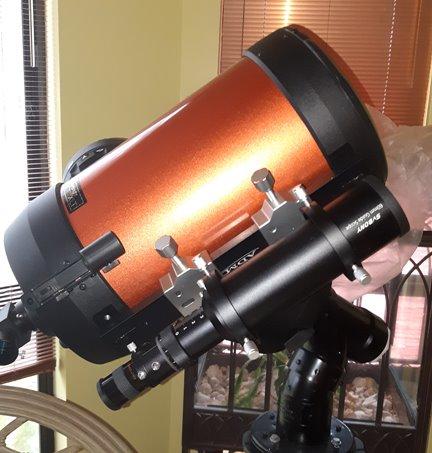
Optically it is a fully multi-coated achromatic objective in a metal tube, sharp enough for guiding where nothing but star position matters. Note one honest wrinkle: the listing title says 60mm while the specification table says 50mm, with both sizes offered as variants. Check the variant you actually receive before assuming an aperture.
The male T-threads on the focuser collar let female T-thread cameras attach directly, and the brass compression ring keeps both cameras and eyepieces from getting scratched. It also works as a straight-through finder with a 25mm eyepiece if you want one tube doing two jobs.
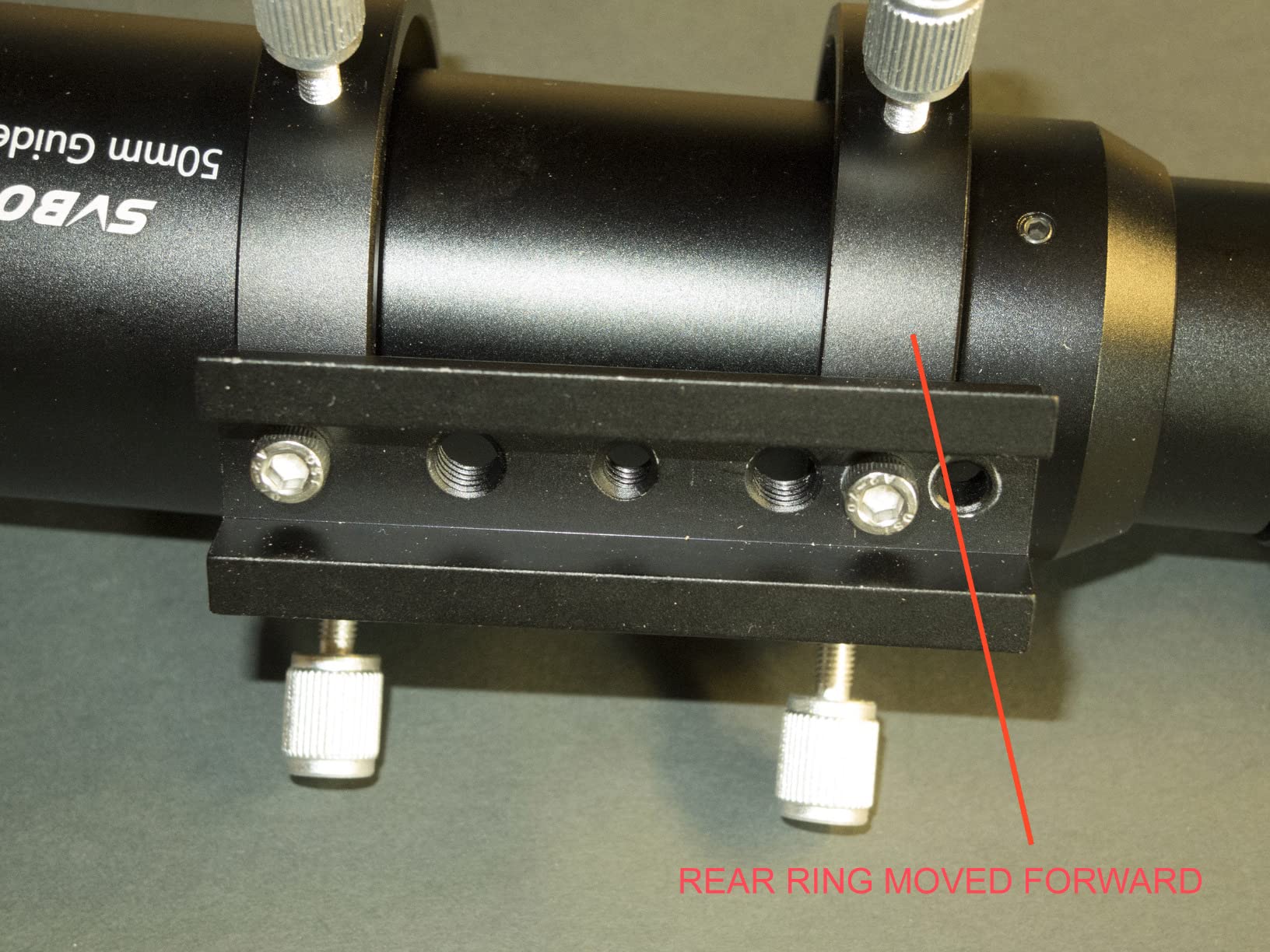
Who this scope suits
Anyone whose imaging focal length runs from about 400mm to 1500mm. The aperture gives you enough stars to guide reliably without hunting, and the focuser design keeps the loop calm, which is where the real precision comes from.
It is the safest middle choice for a mixed rig that moves between a wide-field refractor and a longer Newtonian on the same mount.
Who this scope does not suit
Travel setups. At 790g you are adding real weight to the end of a dovetail bar, and on a small star tracker that offset can eat your payload margin before you have added a camera.
It is also not the choice if you want the smallest guide star possible. That is an optics problem, not a focusing problem, and no amount of helical precision fixes an achromatic objective.
3. Sky-Watcher EvoGuide 50DX APO – The Optics Upgrade
- ED glass doublet gives visibly smaller guide stars
- Highest rated optics in the group at 4.8 stars
- Focus holds steady for hours
- V-style dovetail and tube rings included
- Backed by a 2 year warranty
- Helical focuser has noticeable backlash when adjusting
- Focuser is fixed and cannot be replaced
- Stars elongate toward the field edge without a flattener
- Back focus is limited for DSLR and mirrorless
This is the only true apochromatic guide scope in our group. The 50mm f/4.8 doublet uses expertly matched ED glass rather than a basic achromatic element, and owners who came to it from cheaper scopes report guide stars shrinking dramatically and total error dropping with them. Guide camera sensors are small, so sharper stars mean better centroids and a tighter guiding loop.
The build is where it feels like a serious instrument. A machined aluminium V-style dovetail plate and tube rings are included, along with a finder stalk that fits standard finder brackets, so mounting it does not depend on a single proprietary plate. The finder stalk alone is useful if you want to reuse it later on something else.
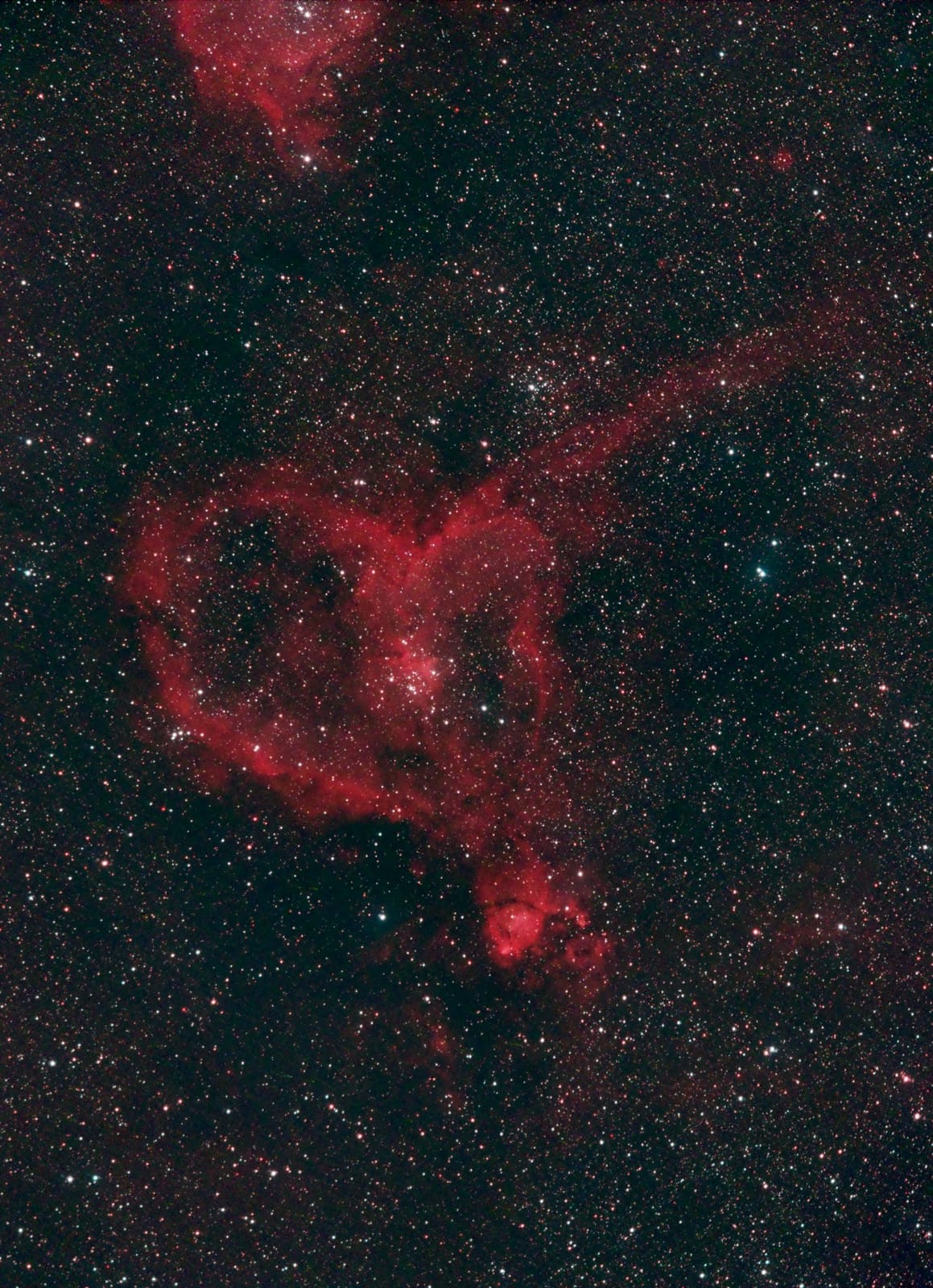
Two things are worth knowing before you commit. First, out of the box stars elongate toward the edge of the field, so for imaging work you will want a flattener. Second, the 1.25 inch helical focuser is the weakest part of an otherwise refined instrument, and owners describe noticeable backlash that takes a few turns to take up slack.
Once focused, though, that focus holds for hours, which is the property that actually matters on a long imaging session. Back focus is limited enough that DSLR and mirrorless bodies are awkward without an adapter, so pair it with a compact CMOS camera instead.
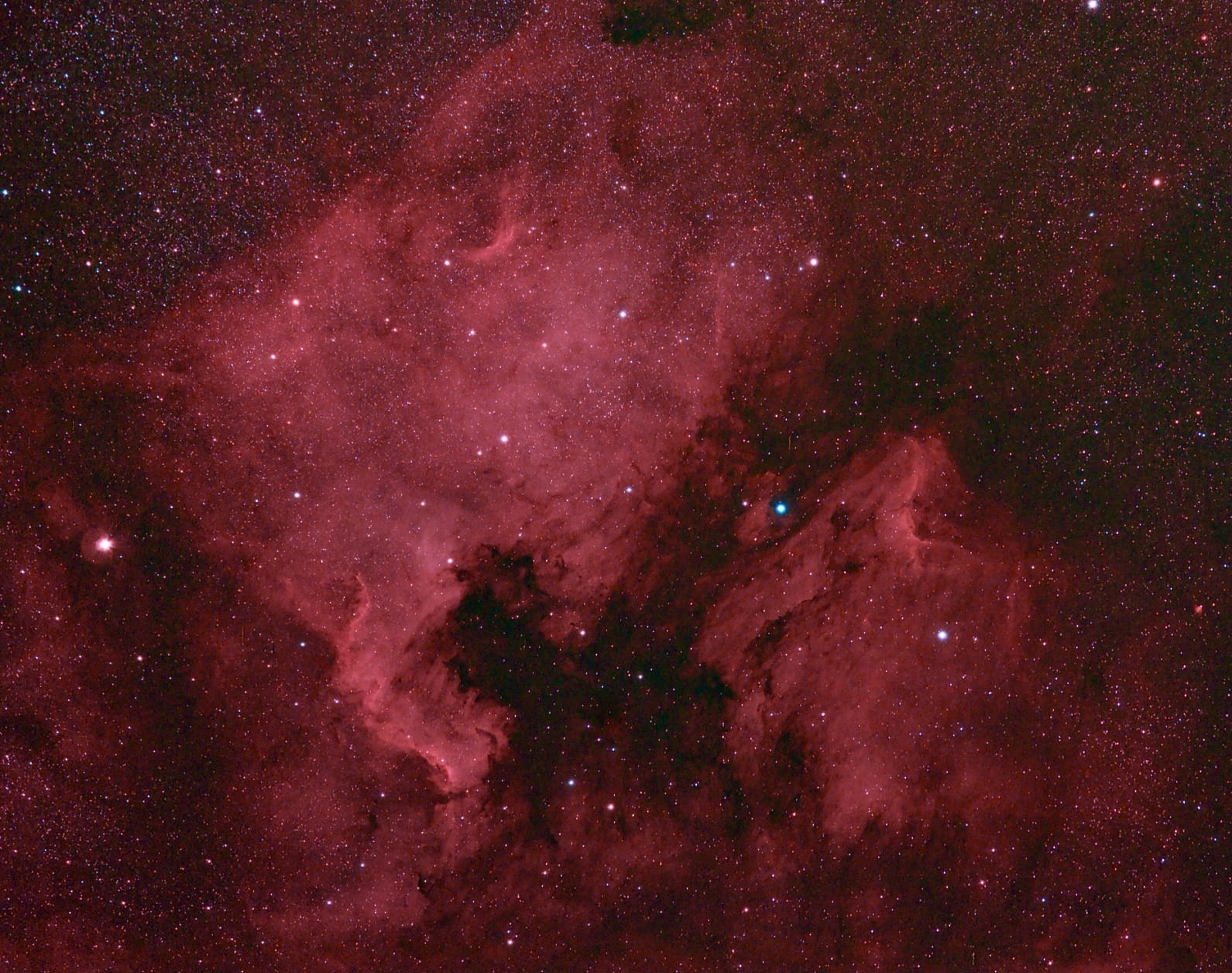
Who this scope suits
Observers already running two or three cheaper guide scopes who have concluded that aperture and focuser design are not the bottleneck. It is also a capable wide-field imaging telescope in its own right with a field flattener, which some owners use as a second imaging optic.
Buy it if you want the tightest guiding in this list and can live with a focuser you set once and leave alone.
Who this scope does not suit
First-time buyers building a first guiding chain from nothing. You would be paying for optical quality that a small CMOS camera cannot fully use yet, and the 59-review record is thin compared with the leaders here.
It is also the wrong pick for a mount already at its payload limit, at 2.7 pounds before you add a camera.
4. Astromania 60mm Helical Guide Scope – Aperture for Long Scopes
Astromania Guide Scope Finder Scope 60mm FMC Multi-Use with Helical Focuser
- Large aperture rated for scopes up to 1500mm
- Graded coarse and fine focus with two independent systems
- Plenty of back focus travel for any guide camera
- Adjustable dovetail with hex key alignment screws
- Black anodized aluminium housing
- Brass ring and dual thumbscrews hold cameras securely
- Focus range will not reach infinity with a 90 degree diagonal
- Helical fine focus can feel stiff
- Some units arrive with transit damage or a loose fine focus screw
- Lowest average rating here at 4.2 stars
The pitch here is simple: 60mm of aperture at 240mm focal length, specified by the manufacturer for imaging telescopes up to 1500mm focal length. That is the long-focal Newtonians and SCTs territory where a 30mm mini genuinely struggles to hold a star. Several owners report total guiding error below 0.40 arcseconds with small CMOS guide cameras, which is the sort of result that makes long sub-exposures possible.
The dual focus system is the piece we like most. A worm and drawtube handle coarse focus, then a helical micro-focus and brass compression ring take over for fine adjustment. Total range is 45mm, split between about 10mm of helical and 35mm of drawtube, and both stages carry graduated scales so you can return to a known setting.
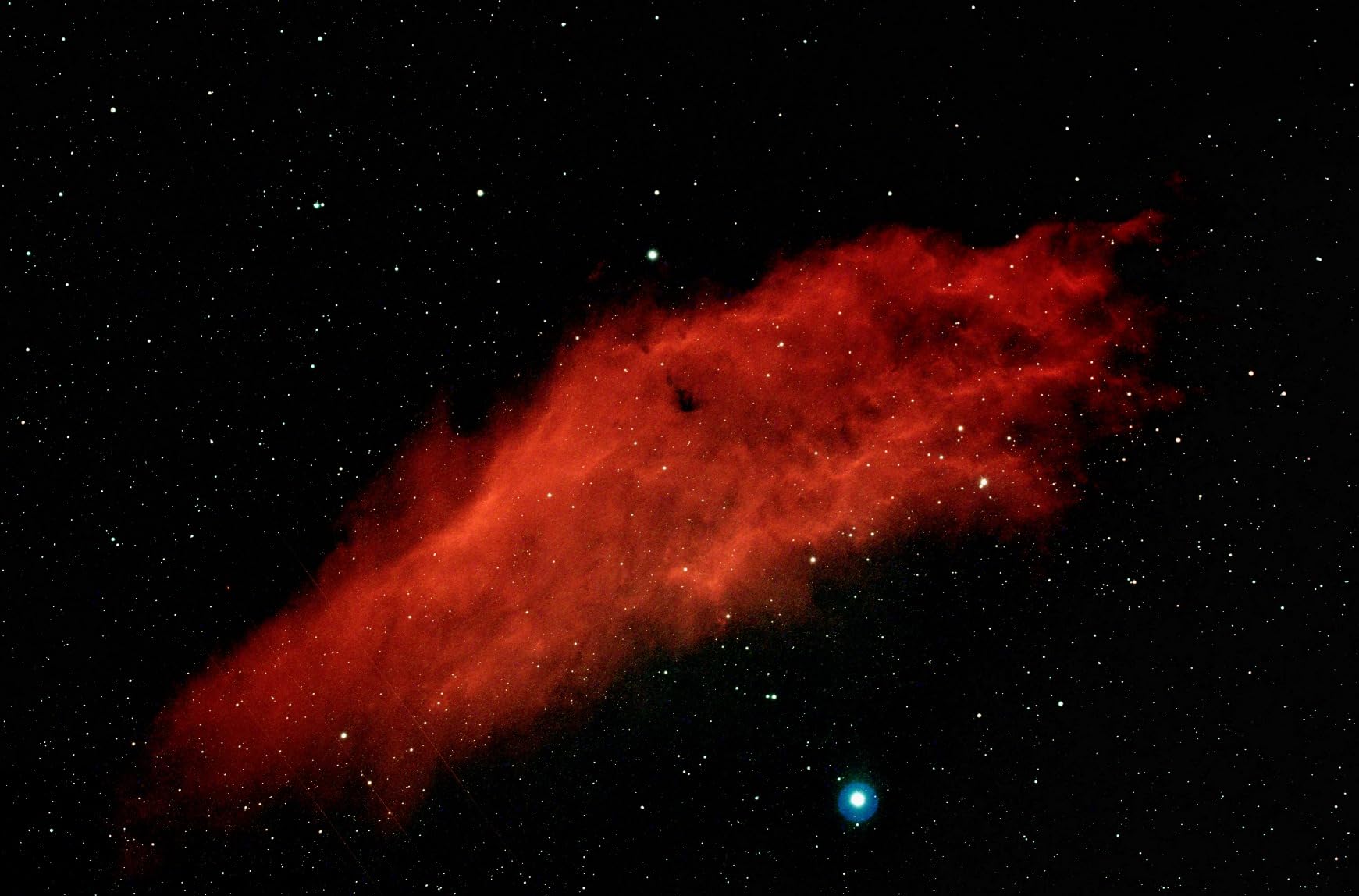
Mounting hardware is unusually complete. The adjustable dovetail base has built-in hex key alignment screws, so you can centre the guide scope on your imaging train rather than eyeballing it, and pipe clamps plus a Synta-style plate cover most mounts. The outer eyepiece holder carries T-threads, so cameras attach without a 1.25 inch adapter.
The repeated complaint is about visual use, not guiding. The 45mm focus range does not reach infinity with a 90 degree diagonal without a Barlow, which makes it an awkward right-angle finder even though it works well as a camera guide. Quality control is uneven too, with reports of packaging damage and a loose fine-focus screw on arrival.
Who this scope suits
Long-focal Newtonians and Schmidt-Cassegrains, and anyone who guides under a bright moon or in a suburban backyard where faint guide stars simply are not available. Sixty millimetres solves star availability more decisively than any other spec on this list.
It is also a comfortable finder for visual work straight through or with a low-profile eyepiece.
Who this scope does not suit
Portable rigs. At two pounds it is the second-heaviest scope here, and the adjustable dovetail needs enough bar length to do its job properly. If your mount balances at the limit, this will push you over.
If you only image wide-field refractors, the extra aperture buys you nothing you will ever use.
5. Alstar 50mm Double Helical Guide Scope – Fine Focus Control First
Alstar Guide Scope Finder Scope 50mm, Double Helical Focuser Guidescope
- Dual helical focuser with brass compression ring
- 40mm focus range including 10mm of micro focus
- Milled knurled rings stop camera rotation
- Includes Synta style dovetail and pipe clamps
- Adjustable dovetail weight helps balance the rig
- Only 6 reviews
- so the 5.0 average is not meaningful
- Focal length listed inconsistently between 190mm and 200mm
- Narrower field than the 60mm alternatives
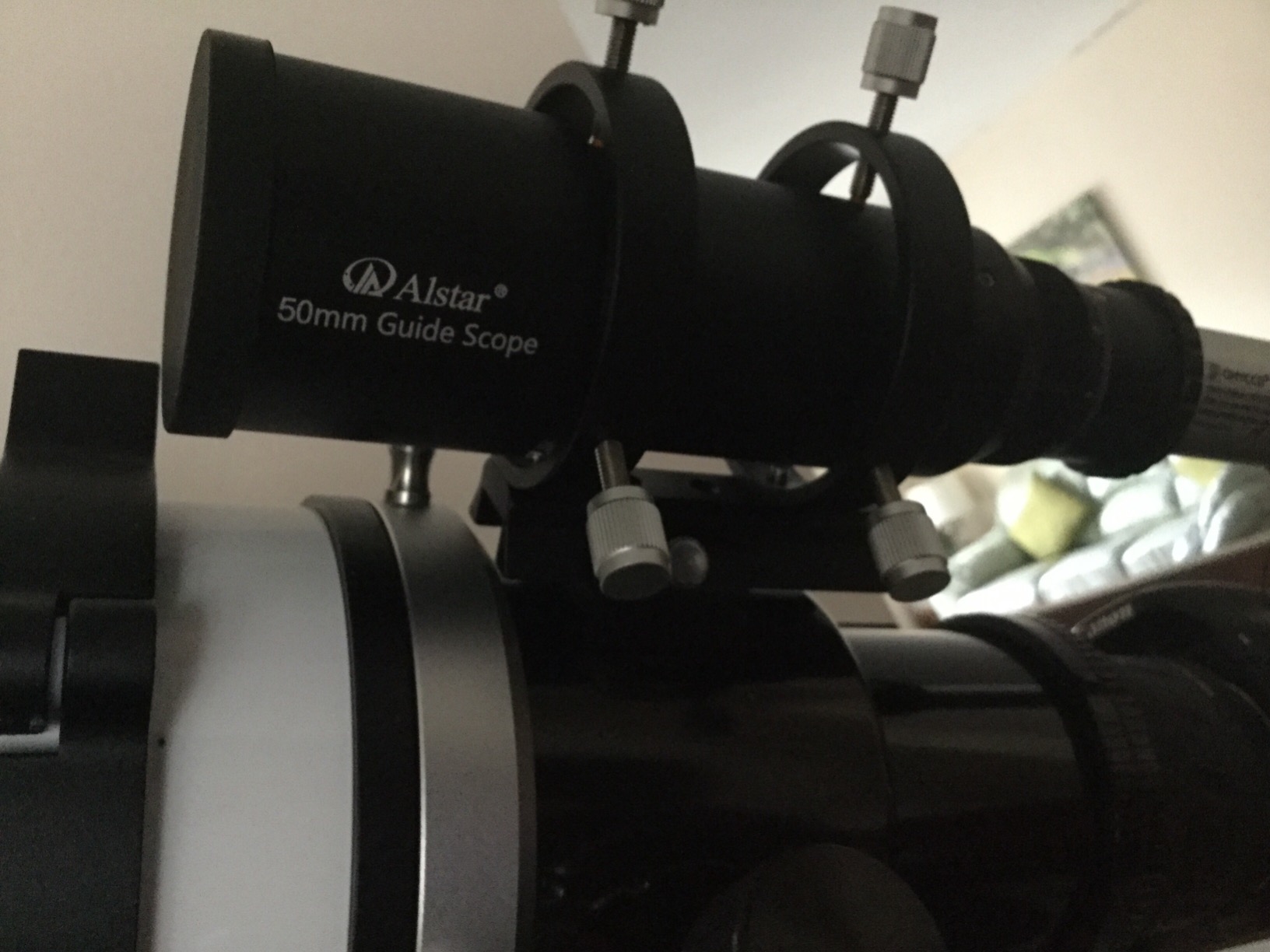
We are including this one with a clear caveat. The design is a 50mm multi-coated objective at roughly 190mm focal length with a dual helical focuser, 40mm of total focus range including 10mm of micro-focus, and milled knurled rings designed to stop the camera rotating while you focus. That is a sensible layout on paper.
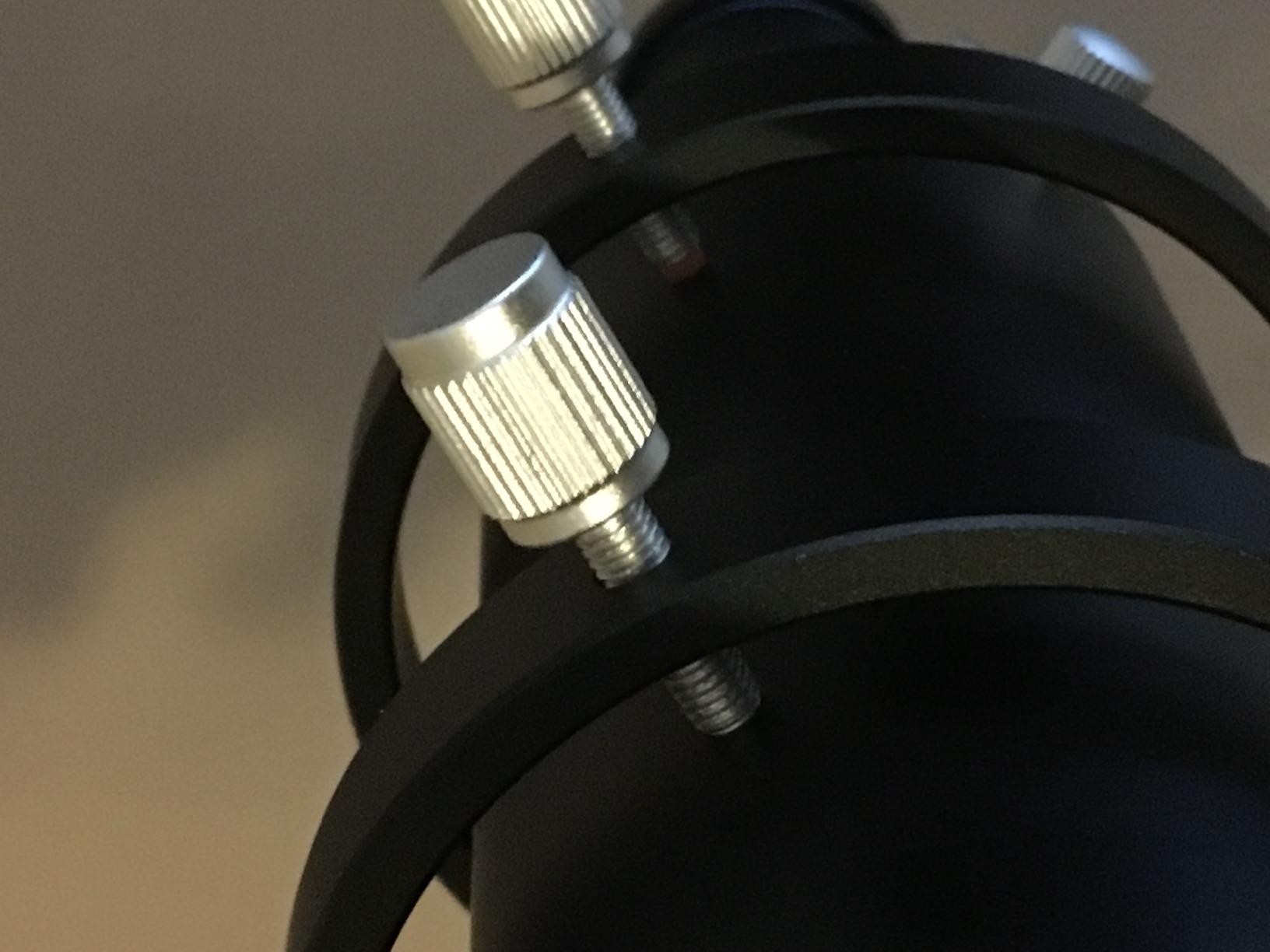
The knurled rings matter more than they sound. They are what make a double helical setup stable, because fine focus should not twist the camera. The brass compression ring and dual thumbscrews then lock it down, and the Synta-style dovetail plus pipe clamps make it installable on most imaging telescopes.
The problem is evidence. Six reviews, all five-star, tells you almost nothing about long-term reliability, and a perfect average across a sample that size is not a meaningful signal. There is also a specification inconsistency, with focal length listed as 200mm in one place and 190mm in another, which is worth checking against the physical tube.
At 1.3 pounds it is lighter than the other 50mm-plus options in this list, and the adjustable dovetail weight is a genuinely useful feature for balance on a rig that is already near its limit.
Who this scope suits
A buyer who wants helical focusing quality, metal construction and moderate weight at a modest outlay, and who is comfortable verifying the specification of an unproven listing themselves. The 50mm aperture gives it enough reach for mid-range focal lengths.
It is also the kind of tube that appears under several brand names, so if you see an identical design elsewhere, you are looking at the same hardware.
Who this scope does not suit
Anyone who relies on long-term owner reports to make a purchase decision. There are almost none here, so you would be buying on the specification sheet alone.
If you need the widest possible guide star selection, the narrower field of a 50mm tube is a step back from the 60mm options.
6. MEOPTEX 60mm Guide Scope – The No-Frills Large Aperture
MEOPTEX 60mm Guide Scope for Telescope with 1.25″ Micro Focuser Black
- 60mm aperture gives the widest star selection available
- Double helical micro focuser for fine adjustment
- Adjustable-aim dovetail weight aids balance and stows away
- Detachable bracket fits most imaging telescopes
- Simple design with nothing to break
- Only 2 reviews
- so there is no customer evidence base
- Focal length and coating are not stated in the listing
- Heaviest in the group at 2.5 lb
- Package contents including rings are not specified
This is the simplest thing on the list. A 60mm objective with bright wide-field optics, a 1.25 inch double helical micro focuser, and an adjustable-aim dovetail weight that can be detached and stowed in an accessory case between sessions. The detachable bracket installs on virtually any imaging telescope, so the mounting problem is solved by design.
Aperture is the selling point. Sixty millimetres gives you the largest selection of candidate guide stars in this roundup, which is what decides whether PHD2 locks on cleanly on a first attempt under a suburban sky.
The weakness is that the listing is thin. Focal length, coating and lens type are not stated, and the package contents are not specified either, so you should confirm whether rings and a camera adapter are included before you order. At 2.5 pounds it is the heaviest scope here, which is a lot of mass for a mount bracket that has to stay rigid.
Who this scope suits
Observers under heavy light pollution or a bright moon who need aperture above all else and do not want to fiddle with fine mechanics. The double helical micro focuser is the right tool for delicate adjustments, and the stowable dovetail weight keeps the rig portable between locations.
If you already own rings and a bracket, this is a straightforward tube to build a chain around.
Who this scope does not suit
Travel setups and anything weight constrained. Two and a half pounds on the front of a dovetail bar is the heaviest addition in this roundup, and on a small tracker it can be the difference between balanced and unstable.
It is also a poor choice for anyone who wants a documented specification or a record of long-term ownership, because neither exists for this listing.
Guide Scope vs Off-Axis Guider: Which One Should You Use?
An off-axis guider bolts between your imaging camera and the focuser and samples a star from the imaging field itself. A guide scope watches a separate star in a separate tube. Both close the guiding loop, and both will improve your images, but they fail in completely different ways.
Differential flexure is the deciding factor. Two tubes mounted side by side can flex relative to each other as the mount moves through the sky. The imaging star drifts while the guide star sits still, so the guider is confidently correcting in the wrong direction and your stars come out trailed or elongated. The problem grows with imaging focal length and with tube length, which is why it is worst on long Newtonians and SCTs and largely absent on short refractors.
An off-axis guider has no second tube, so there is nothing to flex relative to anything. That is its entire argument, and on a long optical train it is a decisive one. The cost is back focus: adding a body between camera and focuser pushes the sensor position back, and with a focal reducer fitted you can run out of focuser travel entirely.
Set against that, a guide scope is far cheaper, far lighter, far easier to align, and it can be removed in seconds when you are doing visual work. It also cannot foul up your imaging train, which matters if you also use the telescope visually. If you can accept occasional flexure, it remains the easiest way to add autoguiding to a rig.
Our rule of thumb: guide scope for wide-field refractors and short trains, off-axis guider for anything long and heavy. If your stars are consistently oval or egg-shaped rather than round, that is flexure, and changing guide scopes will not fix it.
How to Choose a Guide Scope: Six Criteria That Decide It
Ignore everything except these six, and you cannot choose badly.
Aperture between 30mm and 60mm. Below 30mm you will struggle for stars in a bright sky. Above 60mm you are carrying weight you will rarely use. Thirty millimetres is enough for wide-field refractors; fifty to sixty is what long-focal Newtonians and SCTs need.
Focal length between roughly 120mm and 250mm. Longer focal length narrows the guide field, which makes acquisition harder but keeps the guiding star further from edge distortion. Shorter focal length gives a wider field and faster acquisition. Most of the good options in this list sit between 120mm and 242mm.
A helical focuser rather than a drawtube. Helical focus keeps the camera from rotating, so your guide star field stays put while you focus. This is the single biggest practical quality difference between cheap and good guide scopes.
Enough focus travel for your camera. Small CMOS guide cameras need roughly 20mm, but check the spec. The better scopes here offer 40mm to 45mm of combined range, which removes adapter guesswork entirely.
A rigid mounting interface. Check whether you get a Vixen-style dovetail, a Synta-style plate, or nothing but a bare ring. An adjustable dovetail with alignment screws is a genuine advantage because you can centre the guide star on the imaging field.
Weight you can balance. Mini scopes run 300g to 350g. Fifty and sixty millimetre scopes run 2 to 2.5 pounds. Add the guide camera and you should still be inside your mount’s payload rating after the imaging train is loaded.
Everything else on a spec sheet is secondary. Coating quality matters far less than most listings suggest, because you are measuring star centroids rather than looking at a view.
Matching a Guide Scope to Your Imaging Telescope
The rule that resolves most arguments is simple: match guide scope focal ratio and aperture to the imaging telescope’s focal length, not to its aperture.
For a RedCat-class wide-field refractor in the 250mm to 500mm range, a 30mm mini at 120mm focal length is genuinely enough. You will always find stars, and the wide field means acquisition is fast even with a cheap guide camera. Several owners run exactly this pairing with a small CMOS monochrome camera and report reliable results.
For a fast Newtonian around 800mm to 1000mm, step up to 40mm or 50mm. The drift rate is higher and the flexure risk is starting to appear, so a stiffer scope with a helical focuser earns its place.
For long focal lengths from 1200mm upward, including 1500mm-class Newtonians and SCTs, aperture matters most. A 60mm scope at 240mm keeps more candidate stars available as drift accelerates, and this is the tier where a good off-axis guider starts to be the better answer.
For star trackers and travel rigs, weight rules. Stick to a 30mm mini and accept bright-star-only guiding in exchange for a setup that still fits in the car.
Fixing Bad Guiding: Backlash or Flexure?
Before you blame the guide scope, work through these in order. The first three cost nothing.
Check the guide star shape. Round stars point to calibration or seeing. Oval or egg-shaped stars point to differential flexure, and no guide scope change will fix it. Move to an off-axis guider.
Check for backlash first, not last. Reversing a large RA movement and watching the star shift on a short exposure tells you whether your mount has backlash. Users frequently swap guide scopes repeatedly before realising the mount was the problem.
Confirm PHD2 dithering is switched on. Dithering settles the mount between corrections and usually reduces total error noticeably on long Newtonians.
Re-run the calibration. Guiding degrades when the mount, camera or optics have been moved or rebalanced, and calibration is the first thing to redo.
Stiffen the mounting last. If stars are round and backlash is excluded, look at the bracket. Tube ring slip, a mismatched clamp type between Synta and Vixen styles, or a loose dovetail all add flexure that no software can correct.
If you have worked through those and stars are still trailing, the answer is a stiffer train or an off-axis guider, not a more expensive guide scope.
Frequently Asked Questions
What aperture and focal length should I look for in a guide scope?
Look for between 30mm and 60mm of aperture, and roughly 120mm to 250mm of focal length. Thirty millimetres suits wide-field refractors up to about 600mm imaging focal length. Fifty to sixty millimetres is the right range for long-focal Newtonians and Schmidt-Cassegrains, where sky drift is fast and faint guide stars are harder to hold. A helical focuser matters more than either number once you are in range.
What is the best guide scope for astrophotography?
The SVBONY SV165 30mm Mini is the most dependable all-round choice, with 519 ratings at 4.6 stars, 45mm of back focus and a weight of just 342g. Choose the SVBONY SV106 helical-focuser model instead if your imaging focal length runs past roughly 800mm and you want more aperture and a focuser that does not rotate the camera.
Do I need a guide scope for astrophotography?
If you take sub-exposures longer than about 30 seconds, guiding is what turns single frames into a usable stack. Without it, field rotation, periodic error and drift smear your stars. If your subs are short and your mount tracks well, guiding may be optional. An off-axis guider solves the same problem for long optical trains where differential flexure between two tubes becomes the limiting factor.
Is a 30mm guide scope enough?
Yes, for most wide-field work. A 30mm aperture has no trouble finding stars when your imaging telescope is a fast refractor of about 600mm focal length or less, especially at a dark site. Thirty millimetres becomes marginal when the sky is bright or your imaging focal length is long, because the smaller field offers fewer candidate stars and PHD2 may hunt between them.
What guide camera goes with a mini guide scope?
Match the camera body to the focus travel. Small CMOS monochrome cameras with thin boards and short connectors need around 20mm of back focus, which a 30mm mini with 45mm of available travel handles without adapters. Longer bodies such as DSLR or mirrorless cameras need far more travel, which is where a drawtube or helical scope with 35mm or more of back travel earns its place.
How do I stop my guide scope causing flexure?
Tighten every joint in the chain first: bracket, tube rings and dovetail bar. Confirm the guide scope is centred on the imaging field with its alignment screws rather than eyeballed. Check for tube ring slip by nudging the tube and watching the star move. If stars stay oval after the mechanics are solid, flexure is intrinsic to running two tubes and only an off-axis guider removes it.
The Best Guide Scopes for Astrophotography: Final Verdict
The SVBONY SV165 30mm Mini is the best guide scope for astrophotography for most people, and it is our Editor’s Choice because 519 ratings at 4.6 stars with 342g of weight is an evidence base nothing else in this roundup can match. The SVBONY SV106 is the better buy if your imaging focal length runs past 800mm, because its helical focuser and 43mm of focus travel remove two problems a 30mm mini cannot.
The Sky-Watcher EvoGuide 50DX is the optics upgrade, with an ED apochromatic doublet that shrinks guide stars noticeably, though its thin review record makes it a second purchase rather than a first. The Astromania 60mm answers star availability under bright skies, the Alstar 50mm buys fine focus control on a modest budget, and the MEOPTEX 60mm is the simplest large-aperture option available.
One last reminder before you order: if your stars are oval rather than round, you have flexure, and an off-axis guider is the tool that solves it. If they are round and merely wandering, a better focuser will help more than a bigger objective.
If you are still assembling the rest of the train, our guide to the best lenses for astrophotography covers the optics in front of the sensor, and our best spotting scopes comparison explains the visual side of the same equipment.