
Table of Contents
What Is a Luxating Patella?
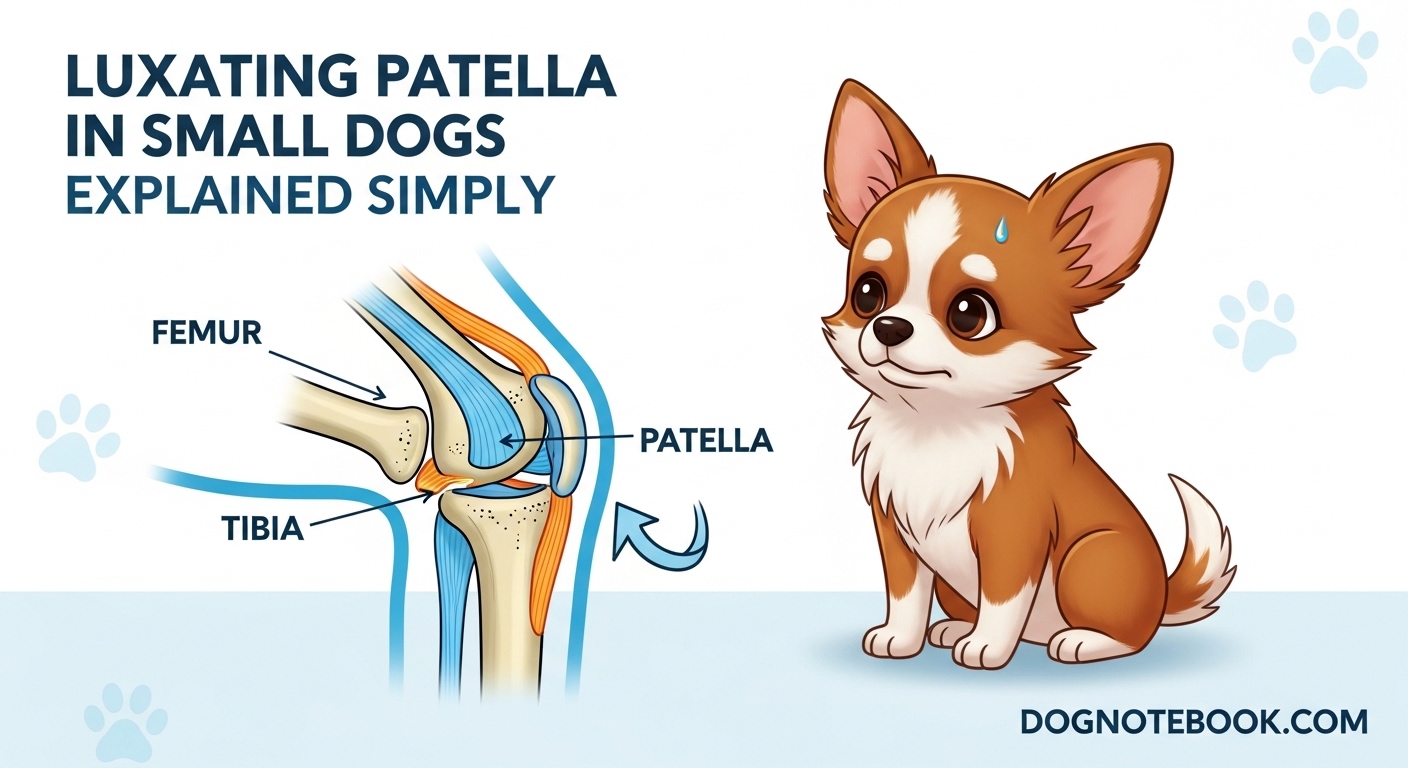
A luxating patella is simply a kneecap that pops out of place. The word “patella” means kneecap, and “luxating” means dislocating or slipping out of position. When this happens, the kneecap moves out of the small groove at the end of the thighbone (femur) where it normally sits and slides. Think of it like a train on a track. Under normal conditions, the kneecap glides smoothly up and down in a channel at the front of the knee joint as your dog walks and runs. But if that groove is too shallow, or if the structures holding the kneecap in place are a bit loose, the kneecap can slip off to one side. When the kneecap slips to the inside of the leg (toward the dog’s body), it is called medial luxation. This is by far the most common type in small dogs, accounting for about 75 to 80 percent of cases. When it slides to the outside of the leg, it is called lateral luxation, which is less common in small breeds but can occur. Most of the time, the kneecap pops back into its groove on its own, which is why your dog might skip for a stride or two and then walk normally again. In more severe cases, the kneecap stays out of place and causes ongoing pain and mobility problems. Small dogs are more prone to this condition because of their anatomy. Their knee joints are tiny, and even slight structural differences in how the bones align can make the kneecap groove shallower than it should be. This is why the condition shows up so frequently in toy and miniature breeds.The 4 Grades of Luxating Patella in Small Dogs
Vets grade patellar luxation on a scale from 1 to 4 based on how easily the kneecap slips out and whether it returns on its own. Understanding the grade helps you and your vet make the right treatment decisions. Grade 1: The kneecap can be manually pushed out of place during a vet exam, but it slides right back into position on its own. Your dog probably shows no symptoms at all and may never need treatment. Most dogs with Grade 1 luxating patella live their entire lives without any issues. Grade 2: The kneecap pops out occasionally, especially during certain movements, and may sometimes stay out briefly before returning on its own. This is the stage where you might notice your dog skipping or holding a leg up from time to time. Some Grade 2 dogs need treatment, while others do well with conservative management like weight control and joint supplements. Grade 3: The kneecap is out of place most of the time, though a vet can push it back into the groove manually. It tends to pop right back out again though. Dogs with Grade 3 luxation often show consistent limping, a bowlegged stance, and reduced activity. Surgery is usually recommended at this stage to prevent arthritis and further joint damage. Grade 4: The kneecap is permanently dislocated and cannot be repositioned manually at all. This is the most severe form, and dogs with Grade 4 luxation have significant mobility problems. They may walk with a crouched gait or have trouble bearing weight on the affected leg. Surgery is almost always necessary. The grade matters because it directly affects the treatment plan. A Grade 1 diagnosis might just mean annual vet checkups and keeping your dog at a healthy weight. A Grade 3 or 4 diagnosis usually means discussing surgical options with a veterinary orthopedic specialist.Which Small Dog Breeds Get Luxating Patella Most?
While any dog can develop a luxating patella, the condition is far more common in small and toy breeds. Certain breeds have a much higher predisposition due to their genetics and body structure. Here are the breeds most commonly affected:- Yorkshire Terrier – One of the most frequently diagnosed breeds, with some studies showing up to 26 percent affected
- Chihuahua – Their tiny frames make knee instability more likely
- Toy Poodle and Miniature Poodle – Both varieties are predisposed to the condition
- Maltese – Commonly diagnosed, often in both knees
- Pomeranian – Small size and genetic factors increase risk
- Boston Terrier – Their compact build contributes to knee alignment issues
- Pekingese – Their unique body shape puts extra stress on the knee joints
- Shih Tzu – Another small breed with elevated rates of patellar luxation
- Bichon Frise – Frequently seen in clinical practice
- Cavalier King Charles Spaniel – Known for both heart and knee issues
Signs Your Small Dog Might Have Luxating Patella
Recognizing the symptoms early can make a real difference in your dog’s outcome. The signs vary depending on the grade of luxation, but here are the most common things to watch for. The signature skip: The most telltale sign is intermittent skipping or hopping on a back leg. Your dog might be running along normally, then suddenly hold one back leg up for a few strides before putting it back down and continuing as if nothing happened. This happens when the kneecap pops out and then pops back in on its own. Intermittent limping: You might notice your dog limping on and off, especially after exercise or first thing in the morning. The limping often comes and goes, which can make it tricky to catch during a vet exam. Reluctance to jump or climb: If your dog used to bound onto the couch or race up stairs but has started hesitating or avoiding those movements, knee pain could be the reason. Stiffness after rest: Dogs with patellar luxation often seem stiff when they first get up from a nap. This usually improves after a few minutes of moving around. Bowlegged stance: In more severe cases (usually Grade 3 or 4), you might notice your dog standing with their back legs curved outward. This happens because the body compensates for the misaligned kneecap by adjusting the leg position. Reduced activity: Some dogs simply become less active over time. If your usually playful pup seems to be slowing down or avoids rough play, knee discomfort could be a factor. When to see a vet right away: If your dog suddenly refuses to put any weight on a leg, cries out in pain, or the leg appears swollen, get them to a vet as soon as possible. These could indicate a more serious injury or a Grade 4 luxation that needs urgent attention. Do not wait to see if it resolves on its own in these cases.What Causes Luxating Patella in Small Dogs?
The short answer is that most cases are genetic. But let me break that down a bit more. Genetic and developmental causes: The vast majority of luxating patella cases in small dogs are caused by how the bones develop as the dog grows. The groove in the thighbone (the trochlear groove) may be too shallow from birth, or the attachment point of the patellar ligament on the shinbone (tibia) may be slightly off-center. These structural differences are inherited, which is why certain breeds are so commonly affected. When the groove is too shallow or the ligament attachment is misaligned, the kneecap does not track properly. Over time, repeated slipping can wear down the groove even more, making the problem progressively worse. Trauma: Less commonly, a luxating patella can result from an injury. A bad fall, getting hit by a car, or twisting the leg awkwardly can force the kneecap out of position. This is more typical in larger dogs and is called acquired or traumatic patellar luxation. Important reassurance: If your dog was diagnosed with luxating patella, it is not your fault. You did not cause this by letting them jump on the couch or by feeding the wrong food. This is a structural condition that your dog was likely born with, and no amount of careful handling would have prevented it. Many owners on forums like r/dogs express guilt about their dog’s diagnosis, but the reality is that genetics are the primary driver.How Is Luxating Patella in Small Dogs Treated?
Treatment depends almost entirely on the grade of luxation and how much it affects your dog’s quality of life. Your vet will recommend either conservative management or surgery, and the right choice varies from dog to dog.Conservative Management (Typically for Grade 1 and 2)
For dogs with mild luxating patella that is not causing significant pain or mobility issues, vets often recommend managing the condition without surgery. Weight management: This is probably the single most important thing you can do. Extra weight puts additional stress on already-compromised knee joints. Keeping your small dog lean can significantly reduce symptoms and slow progression. Joint supplements: Supplements containing glucosamine, chondroitin, and MSM are commonly recommended. Dasuquin and Cosequin are two brands that come up again and again in both vet recommendations and owner reports on Reddit forums. These do not fix the structural problem, but they can help support joint health and reduce inflammation. Controlled exercise: Gentle, regular walking is generally good for dogs with mild luxating patella. It helps maintain muscle tone around the knee, which provides better support for the joint. Short, consistent walks on flat surfaces are better than sporadic intense activity. Avoid activities that involve a lot of jumping or sharp turns. Physical therapy and hydrotherapy: Many owners report excellent results with professional canine rehabilitation. Underwater treadmill therapy is particularly effective because it allows the dog to exercise with minimal stress on the joints. If you have access to a canine rehab facility, it can be a valuable part of your dog’s management plan. Pain medication: When flare-ups occur, your vet may prescribe NSAIDs (non-steroidal anti-inflammatory drugs) like carprofen or meloxicam to manage pain and inflammation. A newer injectable medication called Librela (bedinvetmab) has also shown promise for managing osteoarthritis pain associated with joint conditions.Surgical Treatment (Typically for Grade 3 and 4)
When conservative management is not enough, surgery becomes the best option to restore normal knee function and prevent long-term damage. When is surgery recommended? Your vet may recommend surgery if your dog has persistent pain, frequent episodes of lameness, progressive arthritis, or Grade 3 to 4 luxation. Surgery is also considered when a dog injures their cruciate ligament, which can happen as a complication of chronic patellar luxation. Common surgical techniques:- Trochleoplasty: The surgeon deepens the groove in the thighbone so the kneecap sits more securely. Think of it like making the train track deeper so the train cannot jump off.
- Tibial tuberosity transposition: The attachment point of the patellar ligament on the shinbone is moved and secured in a better position to keep the kneecap tracking straight.
- Imbrication (soft tissue tightening): The tissues around the knee are tightened on one side and potentially loosened on the other to help center the kneecap.
Recovery After Surgery
Recovery takes patience, but the outcomes are generally very good. Here is what to expect. First 2 weeks: Your dog will need strict rest, usually in a crate or small confined area. Leash-only trips outside for bathroom breaks. No stairs, no jumping, no off-leash activity. Pain medication and anti-inflammatory drugs will be prescribed. Weeks 3 to 4: Gradual increase in short, controlled leash walks. Your vet may recommend starting gentle range-of-motion exercises. Stitches are typically removed around the 10 to 14 day mark. Weeks 5 to 8: Activity continues to increase slowly. Many vets recommend beginning physical therapy or hydrotherapy around this time to rebuild strength and range of motion. Full recovery: Most dogs are back to normal activity by 8 to 12 weeks post-surgery. The success rate for luxating patella surgery is high, with most dogs regaining full use of the leg and returning to their normal activities. Throughout recovery, follow your vet or surgeon’s instructions exactly. It can be hard to keep an energetic small dog calm, but pushing too hard too soon can compromise the surgical repair.Living With a Dog Who Has Luxating Patella
Whether your dog is managing the condition conservatively or recovering from surgery, there are practical things you can do at home to help them stay comfortable and active. Make your home knee-friendly: Add non-slip mats or rugs on slippery floors. Small dogs with knee instability are more likely to slip on hardwood or tile, which can cause the kneecap to pop out. Consider ramps for getting on and off furniture or into the car. Keep exercise consistent and moderate: Regular, gentle walks are better than occasional intense play sessions. Swimming is excellent low-impact exercise if your dog enjoys water. Avoid activities that encourage lots of jumping, like fetch with high throws. Watch their weight closely: I cannot stress this enough. Even one or two extra pounds on a 10-pound dog is the equivalent of 15 to 20 extra pounds on a person. That extra weight goes directly through those small knee joints with every step. Consider ongoing joint support: Joint supplements, omega-3 fatty acids, and a high-quality diet can all help support your dog’s joint health long-term. Talk to your vet about what makes sense for your dog’s specific situation. Stay on top of vet checkups: If your dog has been diagnosed with Grade 1 or 2 luxating patella, have your vet recheck the knees every 6 to 12 months. The condition can progress over time, and catching changes early gives you more treatment options. Many dogs with mild to moderate luxating patella live full, active, happy lives. From what I have seen in dog owner communities, the vast majority of small dogs with this condition do just fine with proper management. Some need surgery along the way, and many do not. Either way, it is a very treatable condition.FAQ
Can luxating patella go away on its own?
No, luxating patella does not go away on its own because it is a structural issue with how the bones and ligaments are formed. The kneecap groove does not deepen without surgical intervention. However, many dogs with Grade 1 or 2 luxating patella never develop significant problems and live normal lives with conservative management including weight control, joint supplements, and controlled exercise.
Is walking good for dogs with luxating patella?
Yes, gentle walking is generally beneficial for dogs with mild to moderate luxating patella. Regular, controlled walks help maintain muscle tone around the knee joint, which provides better support and stability. Short walks on flat surfaces are ideal. Avoid sudden sprints, sharp turns, and jumping activities. Your vet can recommend the right amount and type of exercise for your dog’s specific grade of luxation.
How long can a dog live with luxating patella?
A dog with luxating patella can live a full, normal lifespan. The condition itself is not life-threatening. Most dogs with Grade 1 or 2 luxation manage well throughout their lives with conservative care. Even dogs with more severe grades that require surgery typically recover fully and go on to live active lives. The key is working with your vet on an appropriate management or treatment plan to prevent arthritis and maintain good quality of life.
How painful is a luxating patella in dogs?
Pain levels vary by grade. Grade 1 luxation typically causes no pain at all. Grade 2 may cause occasional discomfort when the kneecap pops out. Grades 3 and 4 can cause significant and persistent pain, especially as arthritis develops in the joint over time. Some dogs are very stoic and do not show obvious pain signs, which is why regular vet checkups are important for monitoring the condition.
Should I get surgery for my dog’s luxating patella?
That depends on the grade and your dog’s symptoms. Grade 1 rarely requires surgery. Grade 2 may or may not need it, depending on how often symptoms occur and whether the condition is progressing. Grades 3 and 4 usually benefit from surgery to prevent arthritis and restore mobility. Your vet or a veterinary orthopedic surgeon can help you weigh the pros and cons based on your dog’s specific situation, age, and overall health.
What breeds are most likely to get luxating patellas?
The breeds most commonly affected include Yorkshire Terriers, Chihuahuas, Toy and Miniature Poodles, Maltese, Pomeranians, Boston Terriers, Pekingese, Shih Tzus, Bichon Frises, and Cavalier King Charles Spaniels. The condition is much more common in toy and small breed dogs due to their genetics and the way their knee joints develop. About 7 percent of all puppies are born with some degree of patellar luxation.
Why do small dogs get luxating patella?
Small dogs get luxating patella primarily because of genetics. Many toy and small breeds inherit a shallower-than-normal groove in the thighbone where the kneecap should sit, or the ligament attachment point on the shinbone is slightly off-center. These structural differences cause the kneecap to slip out of place. The condition is linked to breeding patterns, which is why it clusters so heavily in specific small breeds.