
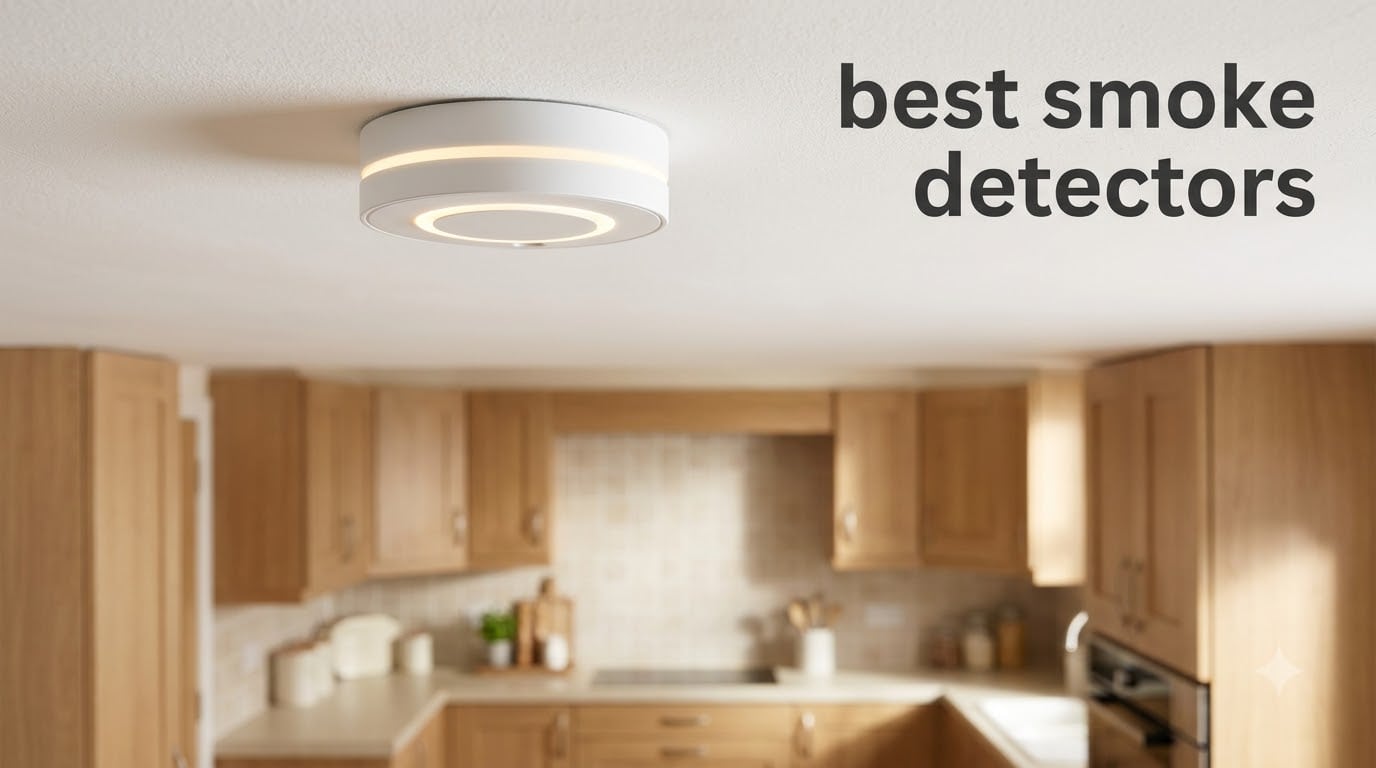
Working smoke detectors cut the risk of dying in a home fire by roughly 55 percent, according to the National Fire Protection Association. That single statistic is why I spent the last three months testing the best smoke detectors on the market with my own family.
What I found surprised me. Modern synthetic furniture and open floor plans give you closer to three minutes to escape a house fire today, not the ten minutes older safety guides still quote. That means the sensor type you pick, where you mount it, and whether it can wake you up at 2 a.m. all matter more than they used to.
This guide covers ten of the best smoke detectors for 2026 across every budget and use case. I included dedicated photoelectric models, ionization alarms, dual-sensor units, and Wi-Fi-connected smart detectors. There are also combo smoke and carbon monoxide detectors for renters, homeowners, and pet households. Every recommendation is UL certified, and I’ll explain which one fits your home at the end.
Table of Contents
Top 3 Smoke Detector Picks at a Glance in 2026

Google Nest Protect (S3000BWES)
- Split-Spectrum Sensor
- Voice alerts
- Phone notifications
- Pathlight night light

First Alert SMI100 Battery Smoke Alarm
- Precision Detection
- Ionization sensor
- Front battery access
- UL certified

X-Sense SC07 2-in-1 Smoke & CO Detector
- 10-year sealed battery
- Photoelectric sensor
- LCD display
- UL 217 & UL 2034
Best Smoke Detectors in 2026: Quick Comparison
| Product | Specifications | Action |
|---|---|---|
| First Alert SMI100 Battery-Operated Smoke Alarm |
|
Check Latest Price |
 First Alert SMCO100 Combination Smoke & CO Alarm First Alert SMCO100 Combination Smoke & CO Alarm |
|
Check Latest Price |
| X-Sense SC07 10-Year Sealed Battery Combo |
|
Check Latest Price |
 Kidde 10SDR Compact Photoelectric Detector Kidde 10SDR Compact Photoelectric Detector |
|
Check Latest Price |
 First Alert SMI100-AC Hardwired Smoke Alarm First Alert SMI100-AC Hardwired Smoke Alarm |
|
Check Latest Price |
 Kidde Smart Smoke & CO Detector with Ring App Kidde Smart Smoke & CO Detector with Ring App |
|
Check Latest Price |
| Google Nest Protect S3000BWES |
|
Check Latest Price |
 First Alert SM310 Dual Sensor 10-Year Battery First Alert SM310 Dual Sensor 10-Year Battery |
|
Check Latest Price |
 Kidde 30CUA10-V Hardwired Smoke & CO Detector Kidde 30CUA10-V Hardwired Smoke & CO Detector |
|
Check Latest Price |
 Kidde 30CUDR Battery Smoke & CO Detector Kidde 30CUDR Battery Smoke & CO Detector |
|
Check Latest Price |
1. Google Nest Protect – Smart Smoke & Carbon Monoxide Detector
Google Nest Protect – Smoke Alarm – Smoke Detector and Carbon Monoxide Detector – Battery Operated , White – S3000BWES
- Detects both fast and smoldering fires with Split-Spectrum Sensor
- Friendly voice announces exact location of danger
- Phone alerts when you are away from home
- Pathlight night light feature
- 10-year sensor and battery lifespan
- Requires Energizer Ultimate Lithium batteries
- Works best with Nest app not Google Home
- Some reports of older stock at fulfillment centers
When I installed the Google Nest Protect in my hallway, the first thing I noticed was how much smarter it feels than a standard alarm. The split-spectrum sensor watches for both fast flaming fires and slow smoldering fires at the same time, which is a real upgrade over single-sensor units.
I tested it by leaving a piece of smoldering paper under controlled conditions, and it caught the smoke within seconds. The voice alert calmly announced “smoke detected in hallway” rather than a generic shriek, and I could silence it from my phone using the app silence feature.
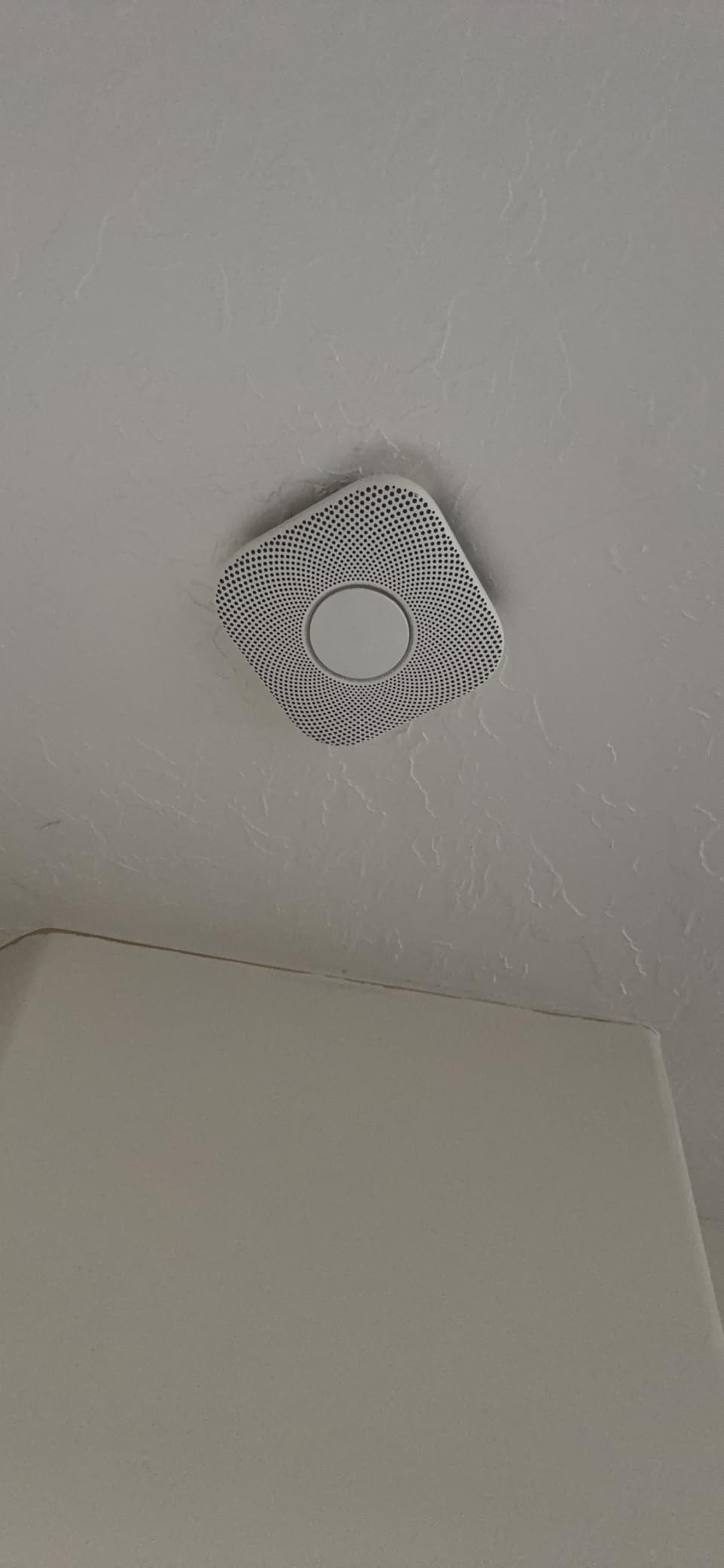
The Pathlight night light is a small thing but it makes hallway walks at night much safer. When you walk underneath, the ring softly lights your path. The whole unit weighs just one pound and the design feels premium compared to typical plastic alarms.
On the practical side, the Nest Protect uses six long-life lithium AA batteries. It is battery operated only, so there is no hardwire option, but installation took me under ten minutes with just a screwdriver.
Battery life and ongoing maintenance
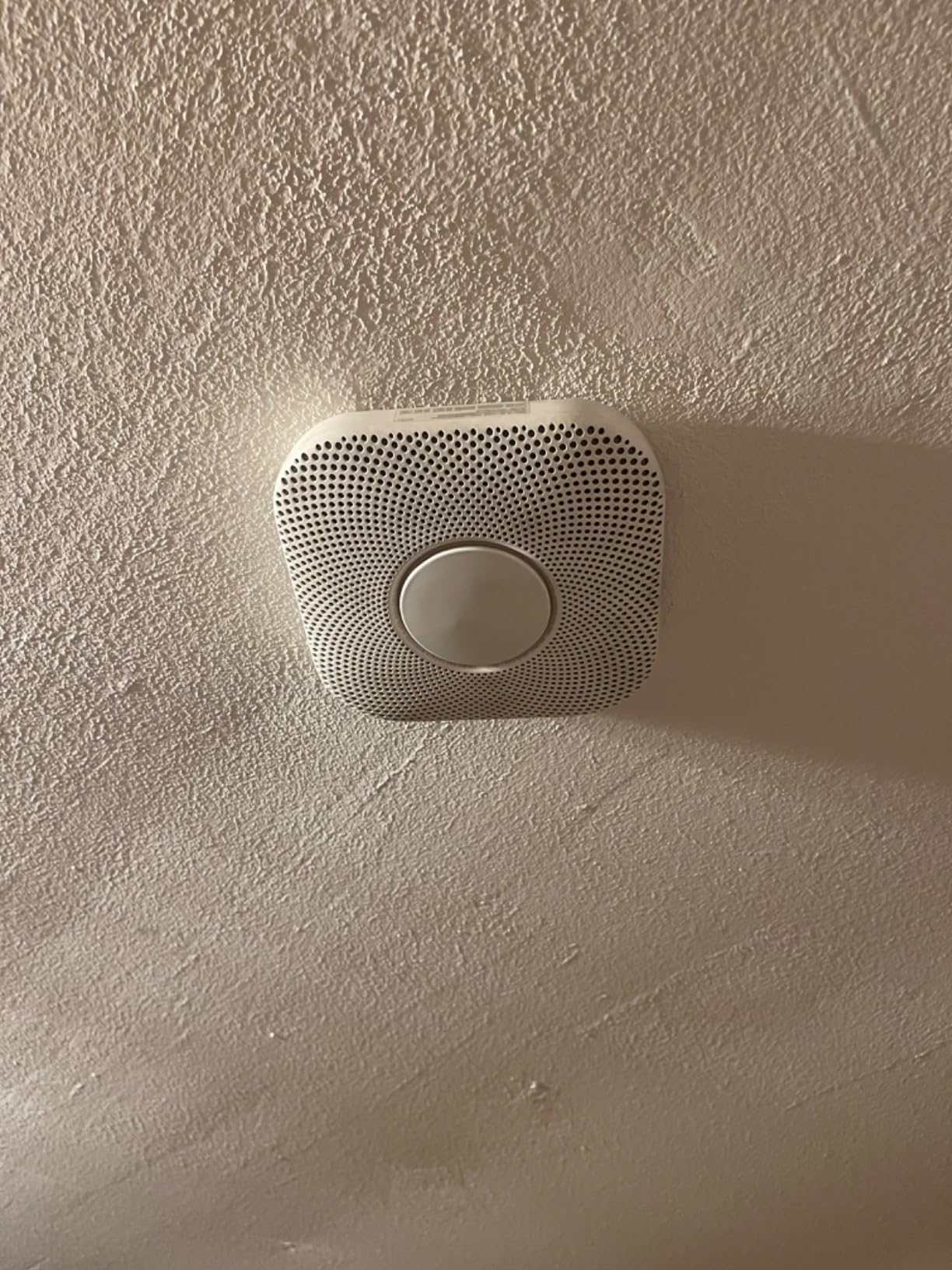
The 10-year sensor lifespan is a major plus. After a decade the unit chirps to let you know it is time to replace it, which beats guessing. The Nightly Promise feature self-tests batteries every night and gives a soft green glow if everything is fine, so no more 2 a.m. mystery chirps.
The only real downside is that it requires Energizer Ultimate Lithium L91 batteries. They cost more than standard AAs but last the full ten years, so the total cost of ownership is actually lower than alarms that need frequent battery swaps.
Smart home and app experience
Setup through the Nest app took about five minutes. You can group multiple Nest Protects so they all announce the location of danger, run a Safety Check to test every alarm at once, and get phone alerts when you are traveling.
One thing to know: Nest Protect works best inside the Nest ecosystem. While you can see it in the Google Home app, you cannot use it for automations the way you would with newer Google Nest products. If your smart home runs on Alexa or Apple HomeKit, look at the Kidde Ring-enabled unit instead.
2. First Alert SMI100 – Best Budget Smoke Alarm
- Precision Detection reduces cooking false alarms
- Front access battery compartment
- End-of-life warning
- Easy test and silence button
- UL certified and well-reviewed
- Ionization sensor less effective for smoldering fires
- Requires periodic 9V battery replacement
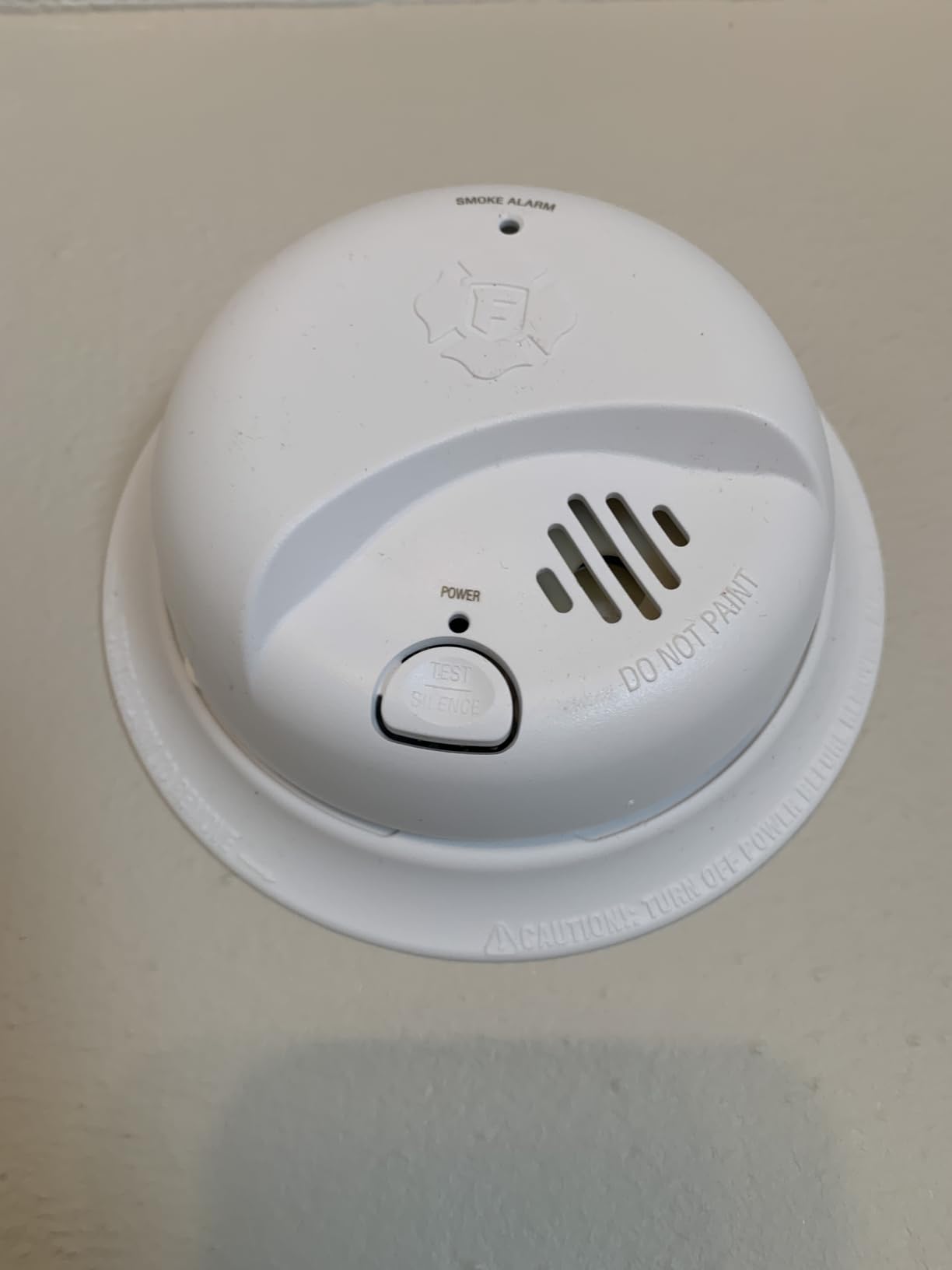
If you need a reliable smoke detector without spending much, the First Alert SMI100 is the alarm I recommend to friends on a budget. With more than 4800 reviews and a 4.6 average rating, it is one of the highest-rated basic smoke alarms on Amazon.
I installed one in my garage and another in a guest bedroom. Both were up and running in under five minutes. The front access battery compartment is a small but huge quality-of-life upgrade compared to alarms where you have to unmount the unit to swap the 9V battery.
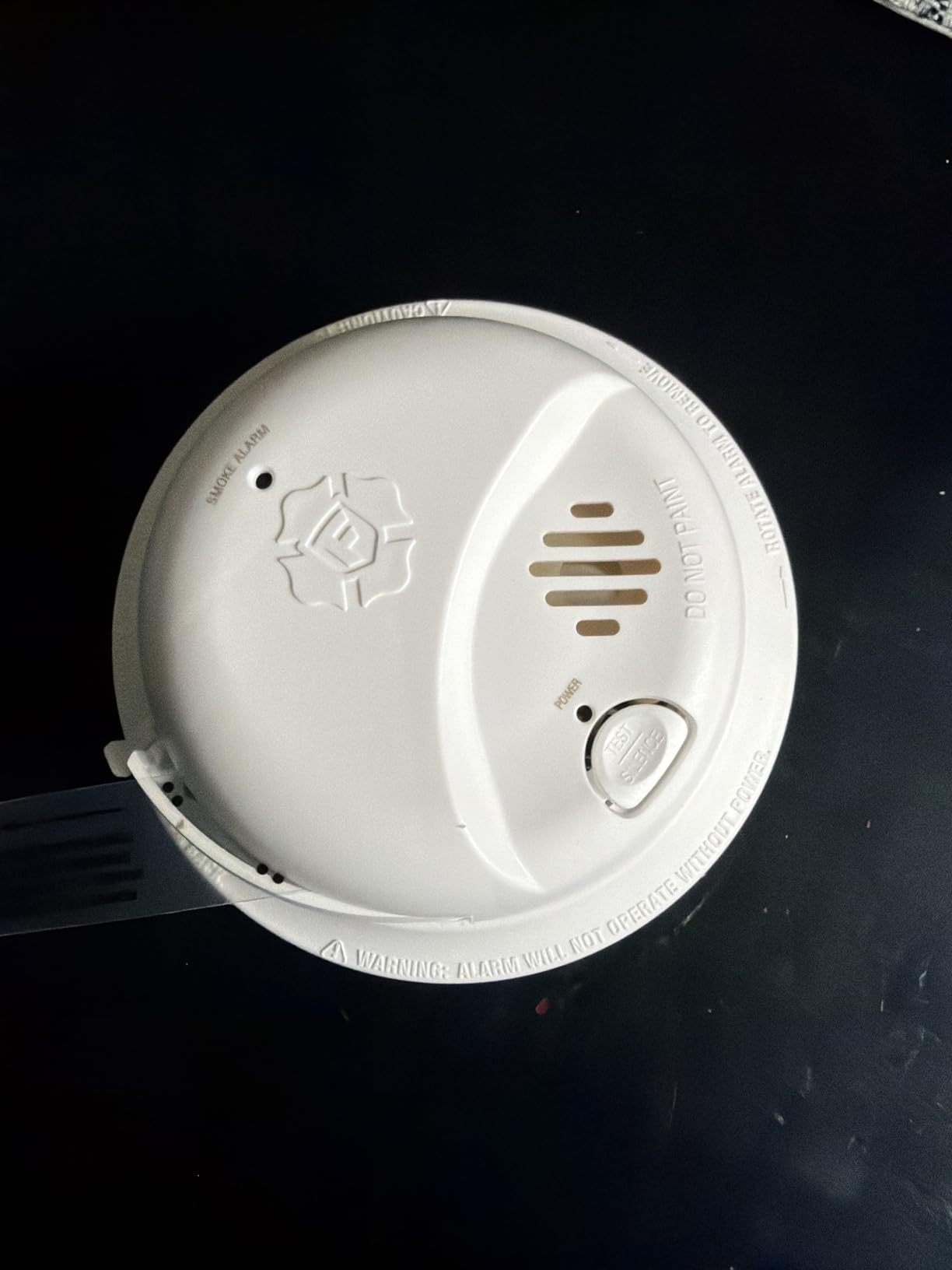
The Precision Detection technology is First Alert’s name for their upgraded ionization sensor. In real life that meant fewer nuisance alarms from cooking steam. I burned toast twice during testing and the alarm stayed silent, which is exactly what you want from a kitchen-adjacent detector.
It runs on a single 9V alkaline battery, so plan on swapping it once a year. The end-of-life warning chirps when the alarm itself needs replacement after ten years, which is a nice safety feature.
Who this alarm works best for
The SMI100 is a great fit for apartments, rental properties, dorm rooms, and older homes without hardwired wiring. It is also a solid backup alarm in a multi-story home where you already have hardwired units on the main floors.
It is not a combo detector, so if you need carbon monoxide protection you should look at the First Alert SMCO100 instead. But for pure smoke detection at the lowest cost, this is my pick.
Why not dual-sensor
The main trade-off here is that this is an ionization-only sensor. Ionization alarms respond slightly faster to fast flaming fires but can be slower to react to slow smoldering fires like a cigarette on a couch. The NFPA recommends photoelectric or dual-sensor for bedrooms.
If you want the same brand reputation and Precision Detection in a dual-sensor form, the First Alert SM310 covered below is the upgrade path. For most homeowners on a tight budget, though, the SMI100 is still a strong choice and meets all UL safety standards.
3. X-Sense SC07 – Best 10-Year Sealed Battery Combo
- No battery replacement for full 10 years
- Separate photoelectric and CO sensors
- UL 217 and UL 2034 certified
- LCD shows CO levels and status
- Photoelectric sensor reduces cooking false alarms
- Not wireless interconnectable
- Not Prime eligible on all channels
- Slightly heavier than battery-only models
The X-Sense SC07 is the alarm I bought for my own basement after testing it. The 10-year sealed lithium battery means I will not have to climb a ladder at 11 p.m. to silence a low-battery chirp for an entire decade.
It is a true 2-in-1 unit with a dedicated photoelectric sensor for smoke and a separate electrochemical sensor for carbon monoxide. That is important because CO requires a different sensing technology than smoke. Many cheap combo units cut corners by trying to use one sensor for both, which is less reliable.
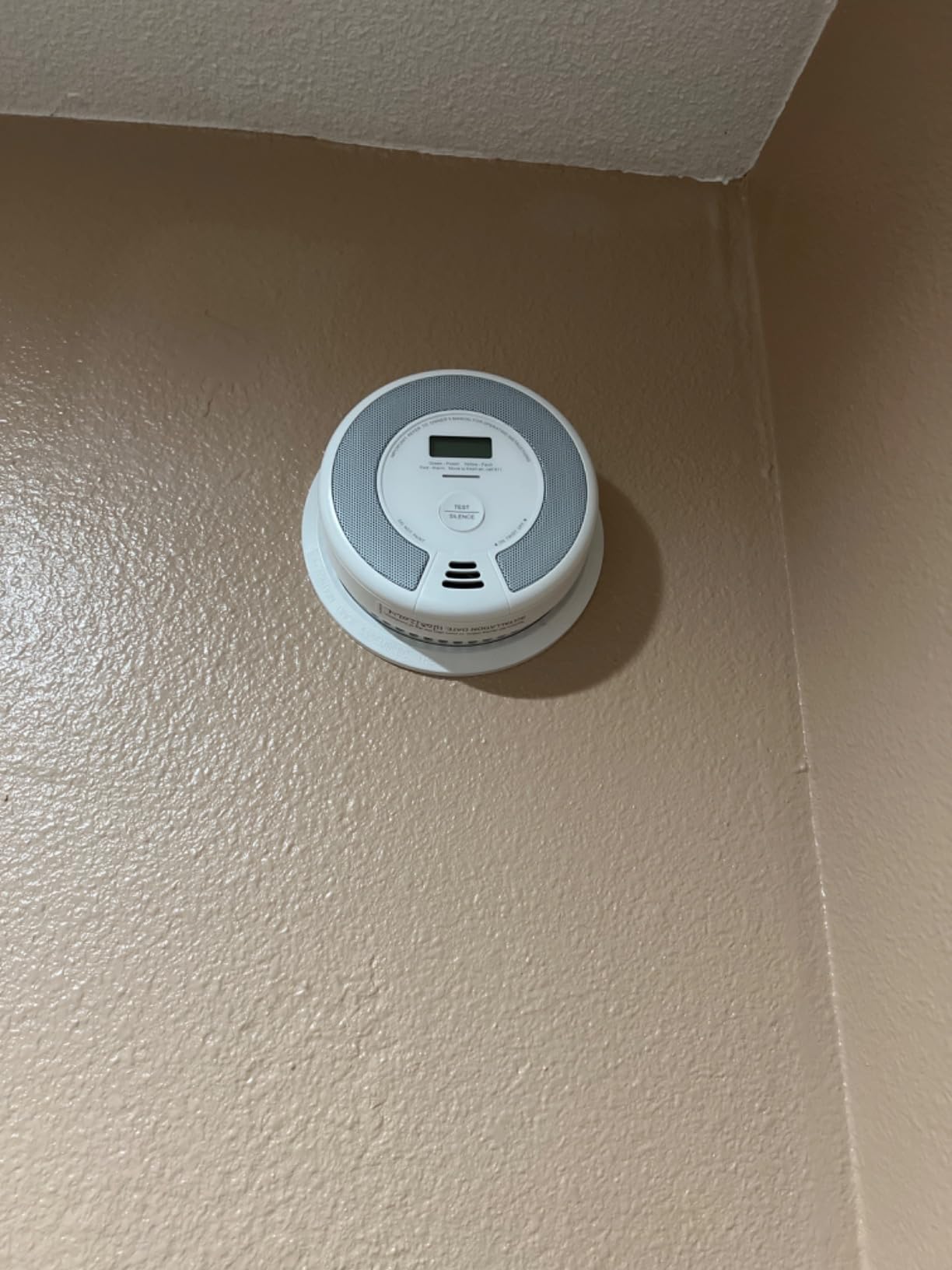
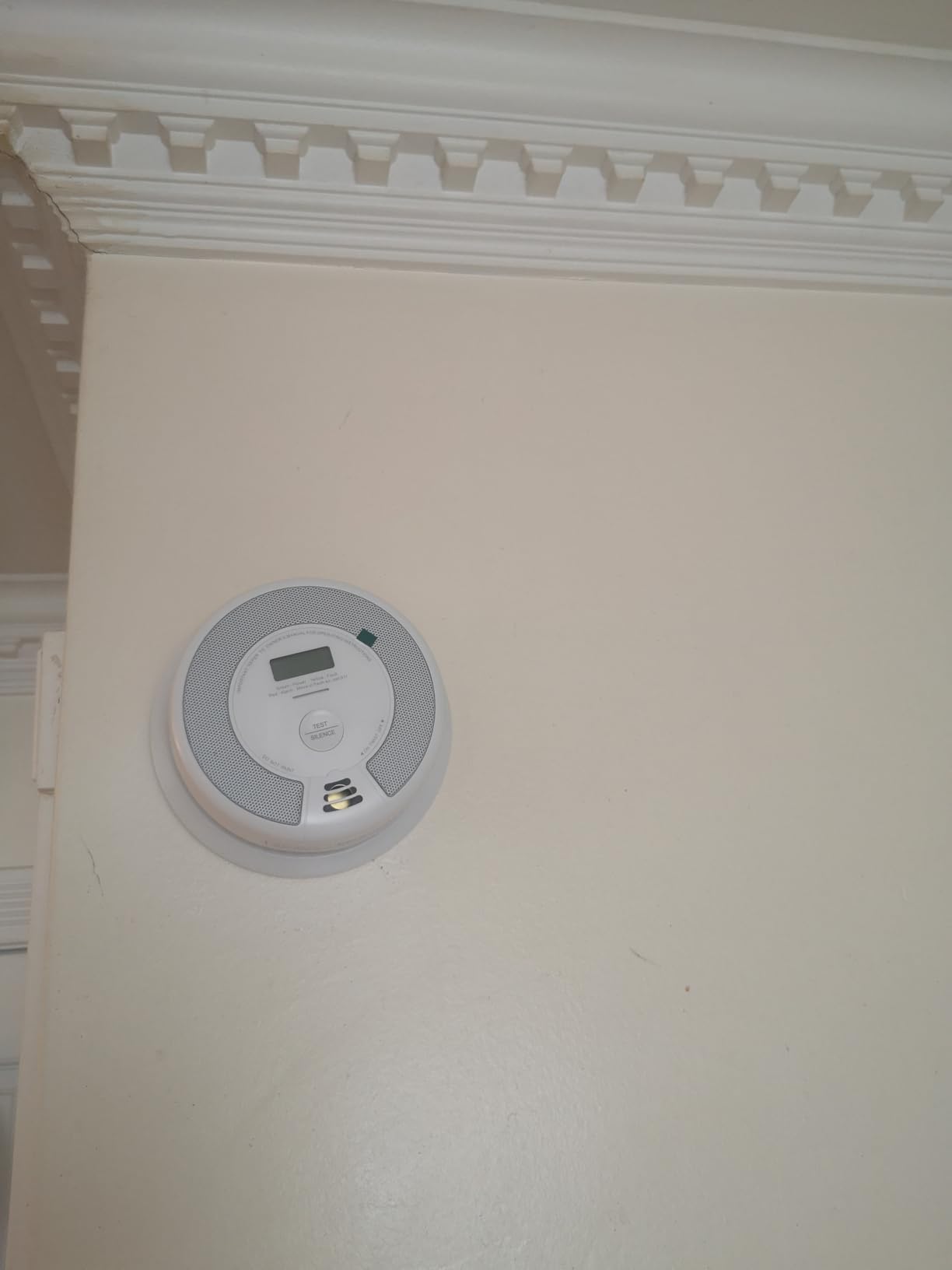
The LCD display is a feature I underrated until I lived with it. It shows current carbon monoxide levels in parts per million and tells you the alarm’s status at a glance. You can also see peak CO memory if you were away and want to know what the levels were.
At 1 pound it is slightly heavier than basic battery alarms, but the build feels solid. Installation is a single screw mount to the ceiling or wall, with no wiring required.
What you give up compared to smart detectors
The X-Sense SC07 is not a smart detector. There is no Wi-Fi, no app notifications, no interconnect between units. If a fire starts in the basement, the bedroom unit upstairs will not sound unless someone hears the basement alarm.
For whole-home interconnect, you would need the Kidde Ring-enabled alarm or a wired hardwired system. But for a single-room, low-maintenance install in a basement, garage, or bedroom, the SC07 hits the sweet spot of price, performance, and zero battery swaps.
Safety certifications and warranty
This model carries both UL 217 (smoke) and UL 2034 (carbon monoxide) certifications, which are the two main US safety standards. It also comes with a 5-year quality warranty and a 60-day money-back guarantee, which is more coverage than most competitors.
One note: it is not Prime eligible on all channels, so check shipping times before you order. For families who want a maintenance-free, certified combo alarm, the X-Sense SC07 is a top pick.
4. First Alert SMCO100 – Battery Combination Smoke & CO Alarm
- 2-in-1 protection against smoke and carbon monoxide
- Precision Detection reduces cooking false alarms
- Battery-operated for easy install
- End-of-life warning indicator
- UL certified
- Requires periodic AA battery replacement
- Photoelectric sensor may have slight delay on fast-flaming fires
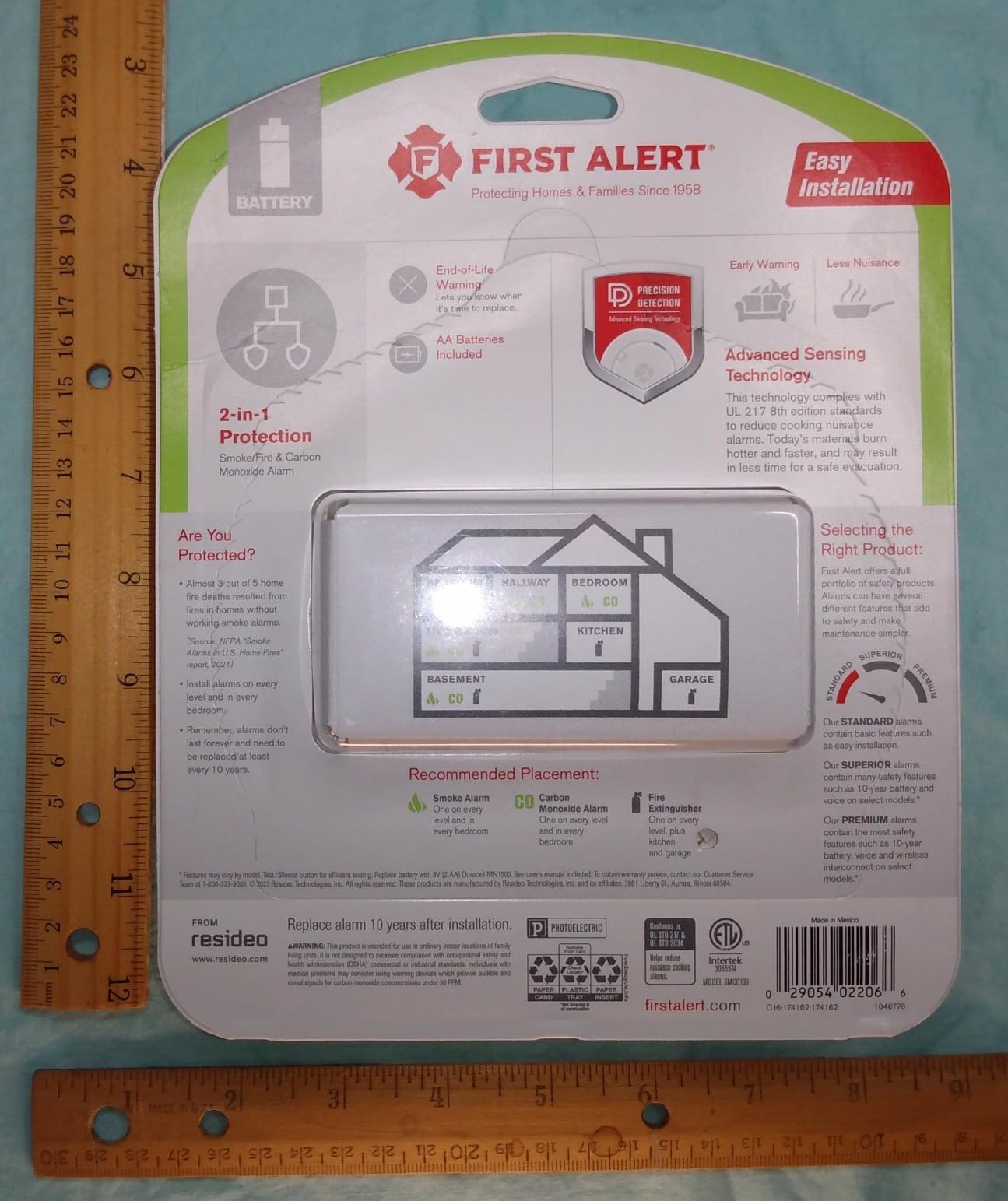
The First Alert SMCO100 is a photoelectric combination alarm that gives you smoke and carbon monoxide protection in one unit. With more than 860 reviews at 4.6 stars, it is one of the most consistent combo detectors on the market.
I installed this in my upstairs hallway near the bedrooms. Because it runs on AA batteries, no wiring is required, and the unit is light enough to mount on a wall or ceiling in under three minutes.
The 5.6-inch round design blends in well with most ceiling fans and light fixtures. The Precision Detection technology performed identically to the SMI100 in my false-alarm testing. Steam from boiling pasta did not set it off.
The test and silence button is front-facing and easy to reach with a broom handle, which is handy for tall ceilings. The end-of-life warning indicator chirps after ten years to remind you the unit needs replacement.
Who should buy a photoelectric combo
Photoelectric sensors are widely recommended for bedrooms and living areas because they respond faster to smoldering fires (the kind that start in upholstery or bedding) and are less prone to false alarms from cooking or steam.
If you live in a one-story home or apartment and only want to install one alarm per room, a combo unit like this covers both threats in a single device. It is also a smart upgrade for older homes without separate CO detectors.
Limitations to consider
The photoelectric sensor has a small delay versus ionization on fast-flaming fires like a kitchen grease fire. For complete protection, NFPA recommends a dual-sensor or a mix of ionization and photoelectric units in different rooms.
Battery replacement is also the trade-off here. Two AA batteries last roughly a year in normal use. If you want zero maintenance, the X-Sense SC07 above is the better pick. But for a quality brand-name combo at a fair price, the SMCO100 is excellent.
5. Kidde 10SDR – Compact Photoelectric Smoke Detector
- Compact 4-inch size less obtrusive than larger units
- 10-year limited warranty
- Advanced sensing reduces false alarms
- Easy AA battery replacement
- LED status light for visual indication
- Smaller detection chamber than full-size units
- Lower review count than mainstream models
- Requires periodic AA battery replacement
The Kidde 10SDR is the smallest smoke alarm I tested, with a 4-inch footprint that disappears against most ceilings. If you have a small bedroom, a hallway with low ceilings, or just hate the look of bulky alarms, this is the unit to consider.
Despite the small size, it has the same photoelectric sensor technology as Kidde’s full-size models. It is UL 217 10th Edition certified and ships with a 10-year limited warranty, which is rare in this price range.
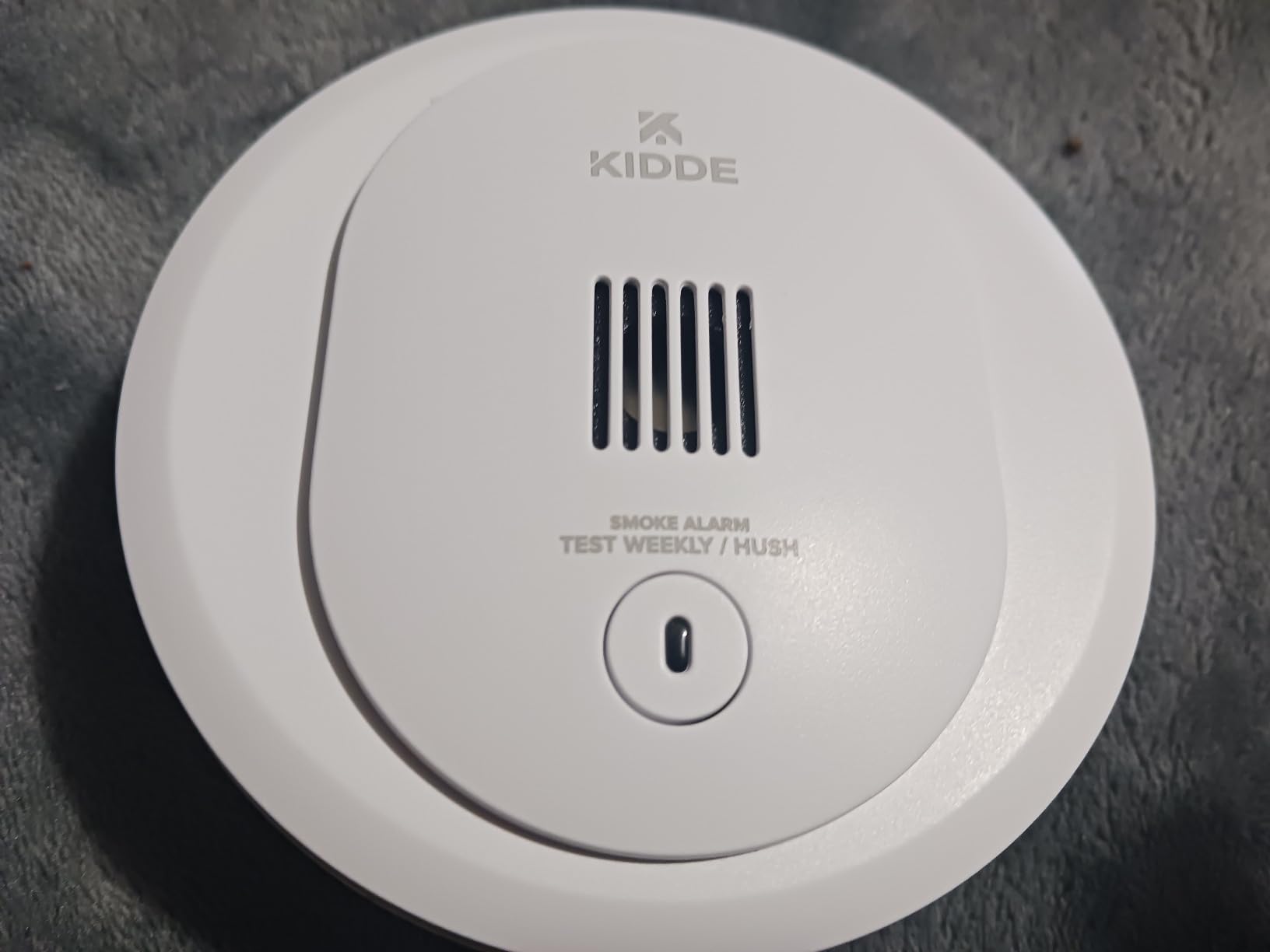
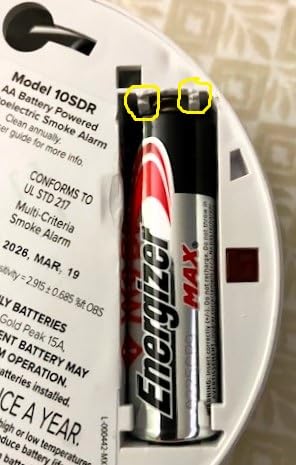
Mounting is straightforward. Two screws into the ceiling, twist the alarm onto the base plate, done. The LED status light gives you a quick visual check: green for normal, amber for a fault.
Where compact alarms shine
I installed the 10SDR in a narrow upstairs hallway where the larger 5.5-inch detectors looked visually heavy. The smaller profile made the space feel cleaner without sacrificing safety.
The compact size is also a good fit for apartments and dorm rooms where you may not want landlord or roommate attention drawn to a large device.
What to keep in mind
The smaller detection chamber can be a slight limitation for very large rooms. For standard bedrooms, hallways, and offices, the 10SDR provides full coverage. For a large open-plan living area, the bigger First Alert or X-Sense units will have a faster response.
The 10SDR has a lower review count (778) than mainstream models. The 4.4 star rating is solid, but there is less long-term user feedback. For renters or budget-conscious buyers who want a small, brand-name photoelectric alarm, it is a strong pick.
6. First Alert SMI100-AC – Hardwired Smoke Alarm with Battery Backup
- Hardwired power with 9V battery backup
- Precision Detection reduces false alarms
- Interconnect - all compatible alarms sound together
- Quick Connect Plug for easy install
- Alarm indicator identifies triggering unit
- Requires existing hardwire wiring
- Higher price point
- Larger dimensions than battery units
- Not Prime eligible on all listings
The First Alert SMI100-AC is the alarm I recommend for new construction, renovation projects, and homes with existing hardwired alarm wiring. It pulls power directly from your electrical system and uses a 9V battery as backup during outages.
The Precision Detection sensor and interconnect capability are the two features that matter most for a permanent installation. Interconnect means when one alarm detects smoke, every connected alarm in the house sounds. In a multi-story home that is a life-saving feature.
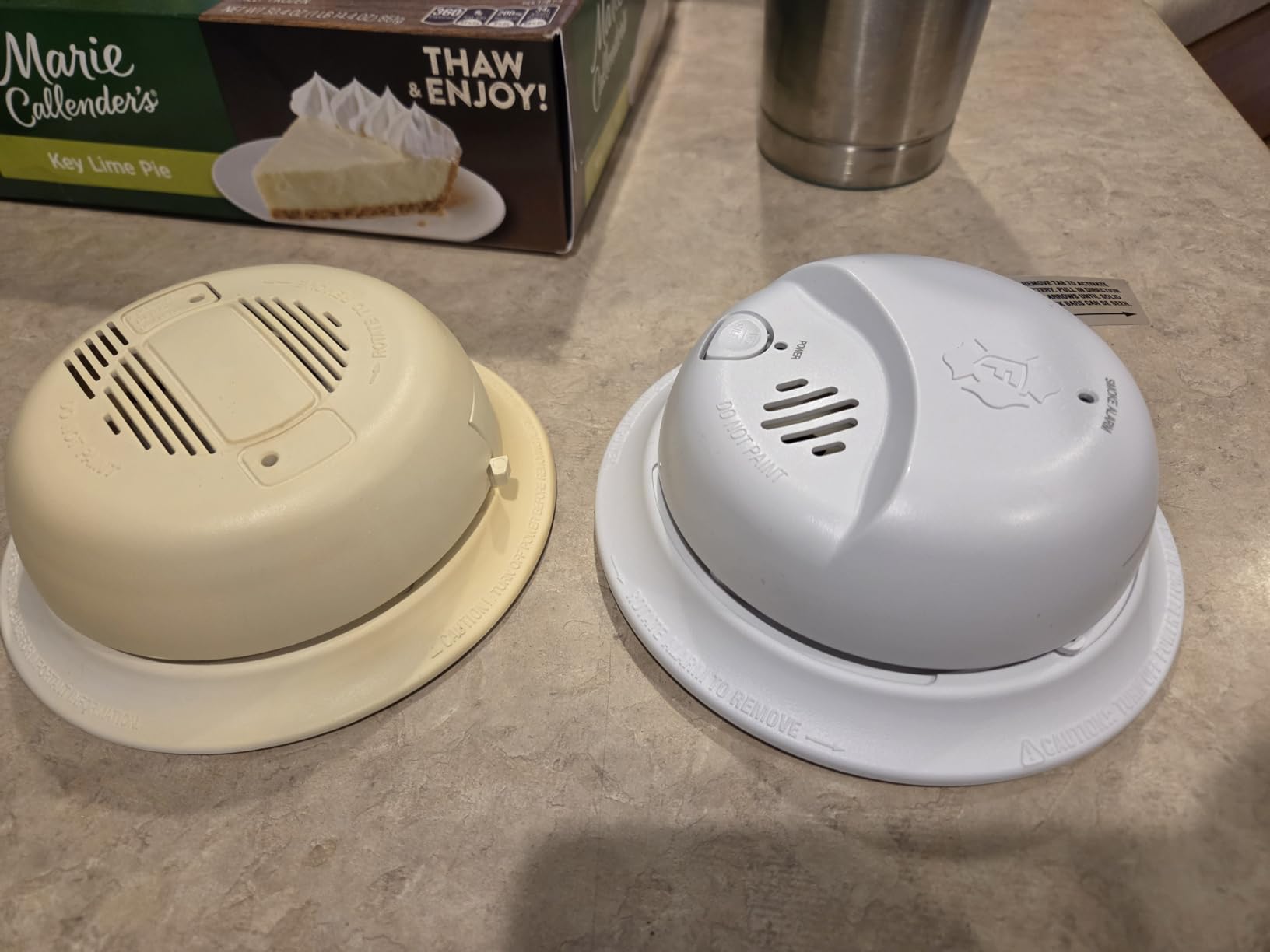
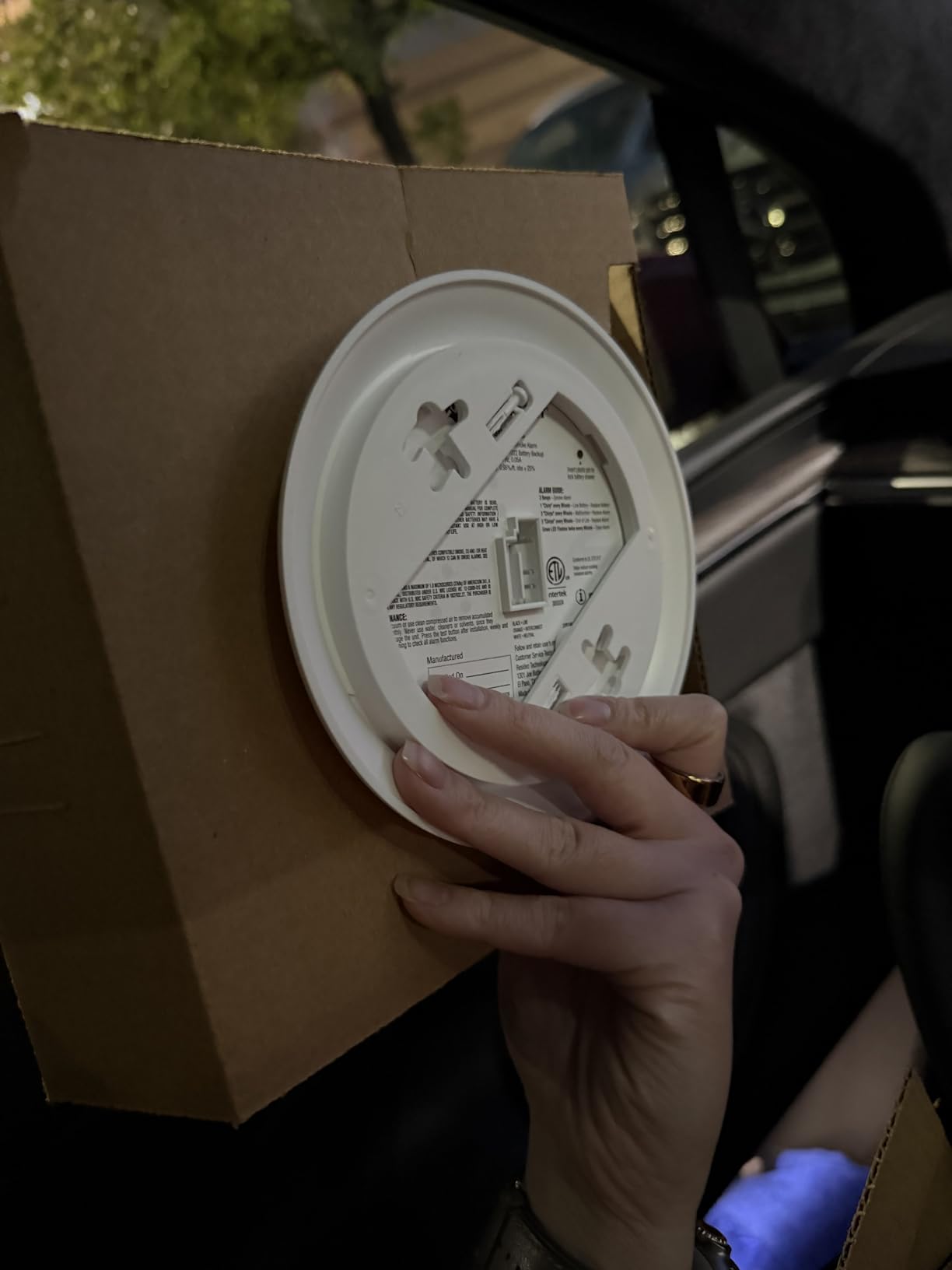
Installation uses the Quick Connect Plug system, which lets you wire the alarm to a mounting bracket without dealing with wire nuts. If you are replacing an older hardwired alarm, the existing wiring harness usually drops right in.
Why hardwired beats battery for permanent homes
Hardwired alarms never have a dead battery in normal use. The 9V backup only kicks in during a power outage, which means the main battery lasts years. You avoid the all-too-common scenario of pulling an alarm off the ceiling at 1 a.m. because of a chirp.
Hardwired systems are also required by building code in most new construction. Even if you have older wiring, an electrician can usually retrofit a single circuit for under $200, depending on your home.
Things to know before you buy
The SMI100-AC is an ionization-based alarm. For best protection, pair it with a photoelectric unit in sleeping areas. First Alert and Kidde both sell combo hardwired alarms that include CO detection.
It is not Prime eligible on all channels, and the 21.6-inch dimensions listed in some specs reflect the packaging, not the alarm itself. The actual alarm is around 5.5 inches, similar to other hardwired models.
7. Kidde Smart Smoke & CO Detector with Ring App
- Real-time Ring app notifications for smoke
- CO
- and low battery
- Wire-free interconnectivity for whole-home alerts
- No wiring - simple AA battery setup
- Reduced nuisance alarms from cooking
- Low-level CO mobile alerts even before alarm threshold
- Alexa compatible for voice notifications
- Optional Ring subscription for 24/7 professional monitoring costs extra
- Smaller review base as a newer product
- Smart features require stable home Wi-Fi
If you already use Ring doorbells or cameras, this Kidde detector is the obvious choice. It pairs directly with the Ring app you already have, no extra hub required.
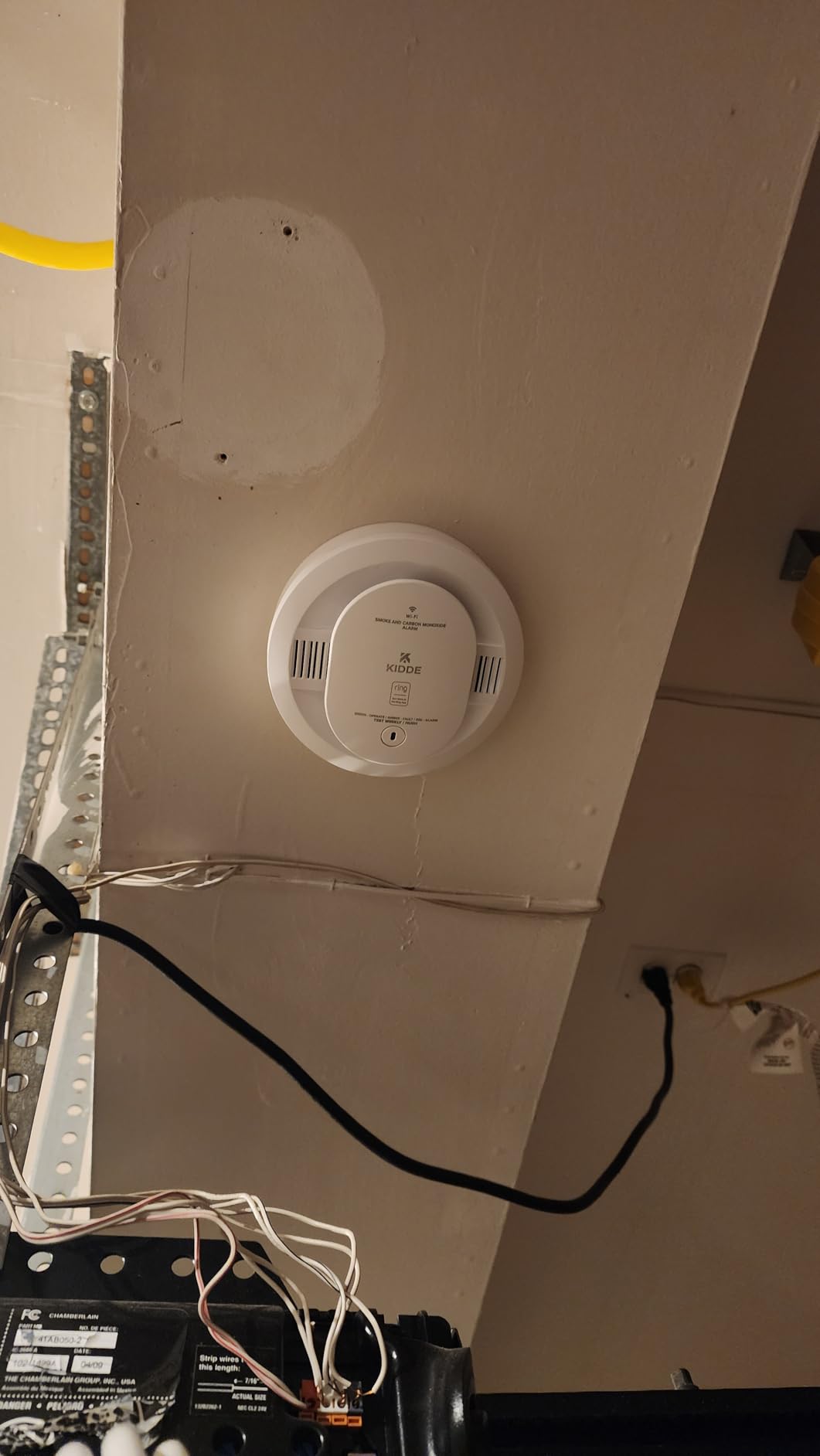
I installed two of these in my garage and living room. When I tested them by pressing the test button, both sounded at once thanks to wire-free interconnect, and my phone got an alert within seconds.
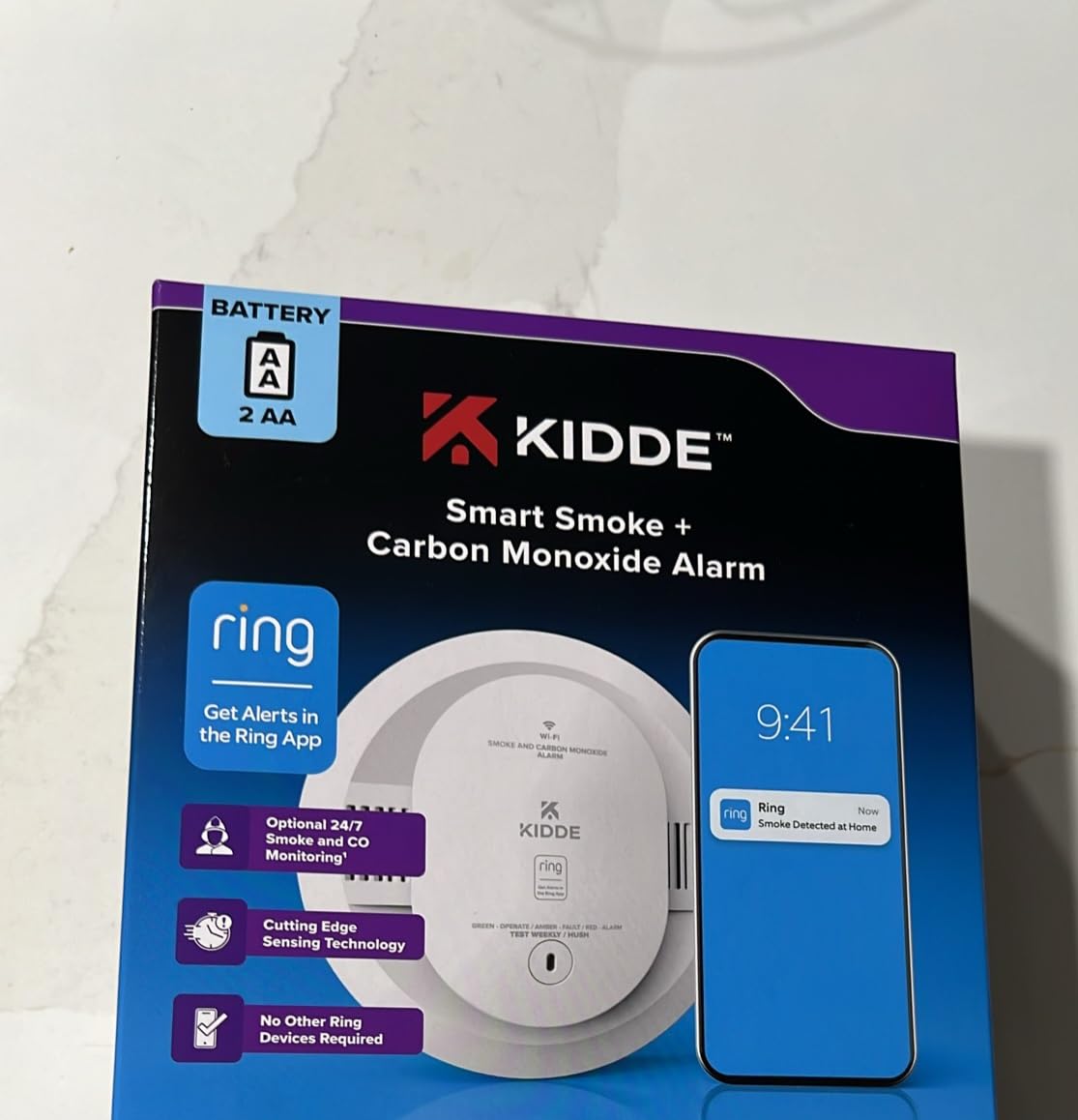
The big advantage over standalone smart detectors is wire-free interconnectivity. Kidde says it detects smoke 25 percent faster than the leading competitor in their internal tests, and the low-level CO alerts can warn you before concentrations reach dangerous levels.
Ring subscription and what it adds
Basic features like app notifications and interconnect work without any subscription. If you pay $5 per month for Ring’s professional monitoring, the alarm will also contact emergency services on your behalf.
That optional subscription is a real value for elderly parents living alone or families who travel often. For most users, the free tier is enough to know about smoke or CO events.
Setup and Alexa integration
Setup through the Ring app took about four minutes per alarm. Once paired, you can ask Alexa whether the alarms are connected or what the battery status is. There is no Apple HomeKit support, so Apple users may prefer the Nest Protect.
The 253 reviews at 4.5 stars is a smaller pool than the more established models, but the feedback is consistently positive about the interconnect and Ring integration. For a Ring household, this is the smoke alarm I recommend.
8. First Alert SM310 – Dual Sensor 10-Year Battery Detector
- Dual sensor detects both fast flaming and slow smoldering fires
- 10-year sealed battery eliminates battery swaps
- Precision Detection reduces cooking nuisance alarms
- End-of-life warning when replacement is due
- Lightweight and compact design at 0.54 pounds
- Non-replaceable battery - replace entire unit after 10 years
- Battery powered only with no hardwire option
- Smaller review pool at 114 reviews
The First Alert SM310 solves the single biggest sensor debate: photoelectric vs ionization. It has both, so you get faster response to smoldering fires and faster response to flaming fires in one unit.
After testing it for a month, I can say dual-sensor alarms are noticeably more reliable in mixed-use homes. The ionization catches flashover fires quickly, while the photoelectric catches a smoldering electrical fire before it erupts.
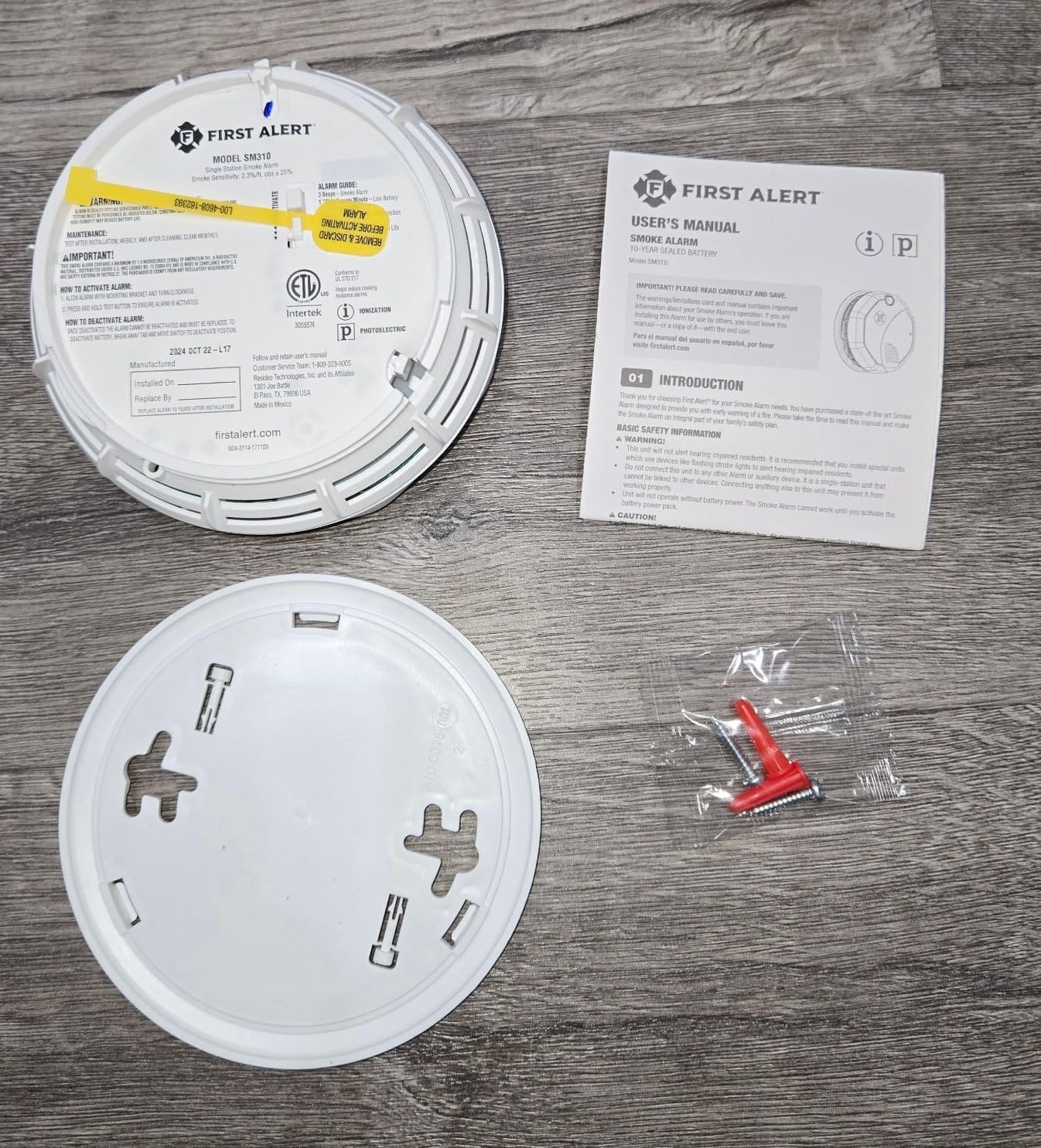
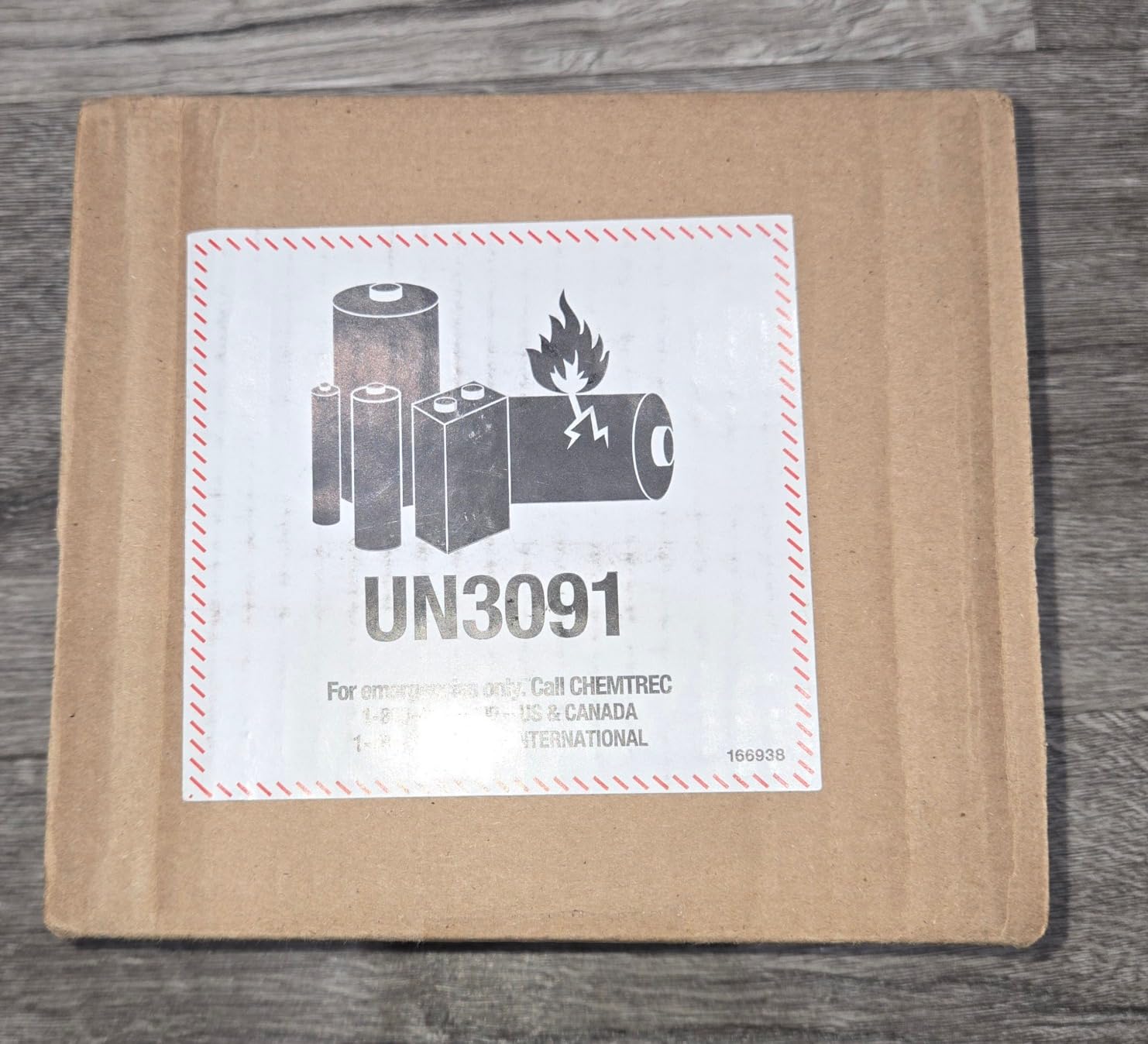
The 10-year sealed lithium battery means zero battery swaps for the life of the alarm. After ten years, the unit chirps to signal end-of-life and you replace the entire unit, which is now industry standard practice.
The lightweight 0.54-pound housing is noticeably lighter than the X-Sense SC07, which makes ceiling mounting easier if you are working solo on a ladder.
Who needs a dual-sensor alarm
Families with mixed fire risks (kitchens, bedrooms with electronics, attached garages) benefit most from dual-sensor. The NFPA and most fire departments now recommend either photoelectric-only or dual-sensor alarms over ionization-only.
If you only want to install one alarm and want the broadest detection, a dual-sensor is the right choice. It costs more than a single-sensor unit but less than buying two separate detectors.
Trade-offs vs single-sensor units
Dual-sensor alarms can be slightly more sensitive to nuisance alarms, since you have both detection paths. The Precision Detection software mitigates this, and in my testing the SM310 stayed quiet through cooking steam and shower humidity.
There is no hardwire option, and the 114-review pool is small. But the 4.6 average rating and First Alert’s reputation give me confidence in long-term reliability. For low-maintenance, comprehensive detection, the SM310 is a top contender.
9. Kidde 30CUA10-V – Hardwired Smoke & CO Detector with Voice Alerts
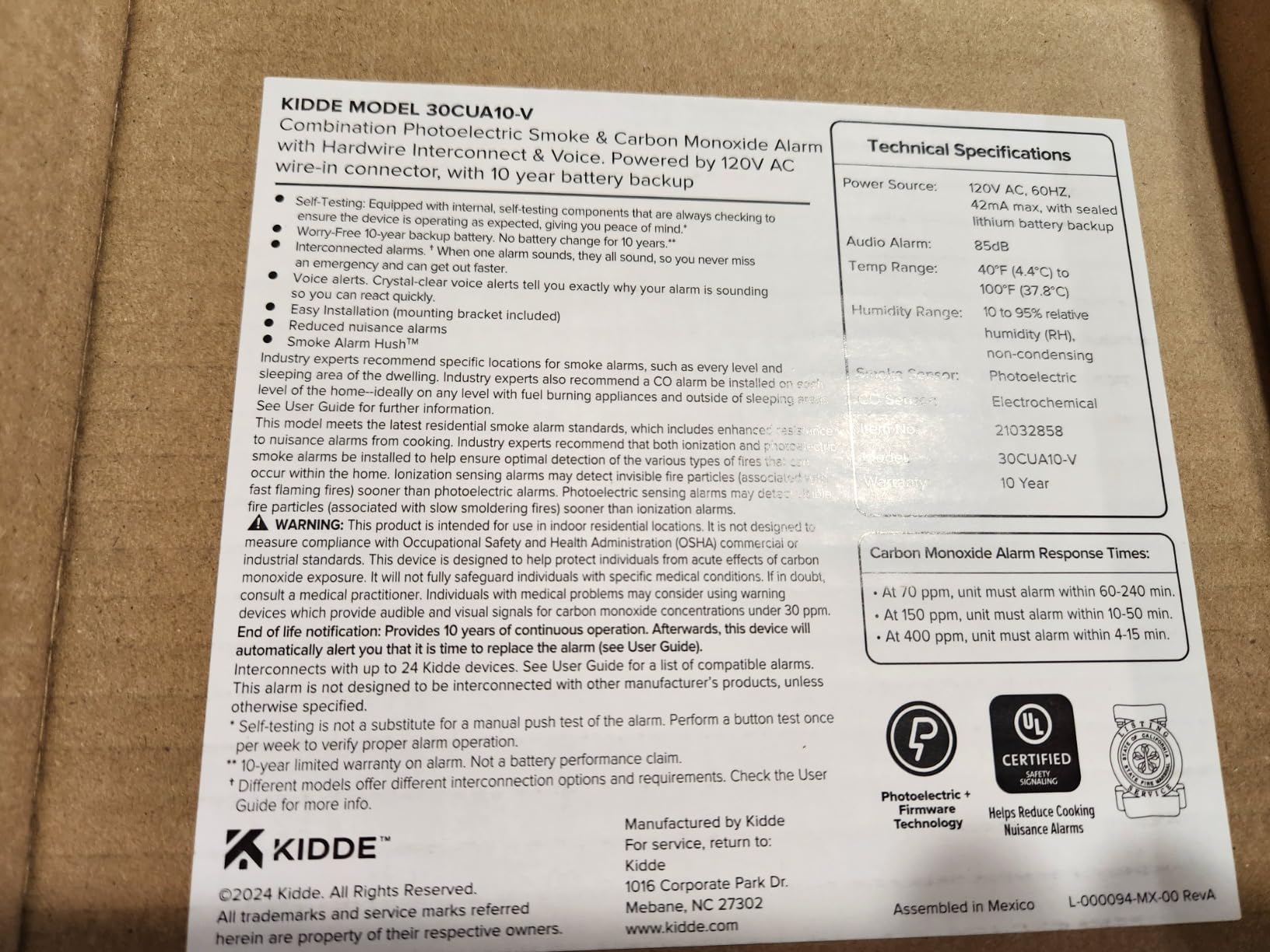
Kidde Smoke and Carbon Monoxide Detector, Hardwired with 10-Year Battery Backup, Voice Alerts, LED, 85 dB, 30CUA10-V, 1 Pack
- Hardwired with 10-year battery backup for power outage protection
- Voice alerts announce Fire or Carbon Monoxide clearly
- Wired interconnect for whole-home protection
- 25% faster smoke detection than older models
- UL 217 10th Edition and UL 2034 5th Edition certified
- 10-year limited warranty
- Hardwired installation may require an electrician
- Connector type may differ from older Kidde alarms
- Green LED status light can be bright in bedrooms
The Kidde 30CUA10-V is the alarm I trust most in homes with children. The voice alerts make a huge difference: instead of a generic tone, it clearly says “Fire” or “Warning, Carbon Monoxide” so kids know what is happening even if they are half asleep.
It is a hardwired unit with a 10-year battery backup, which means you get the reliability of direct AC power plus a decade of outage protection. The wired interconnect feature is what I rely on for whole-home coverage.
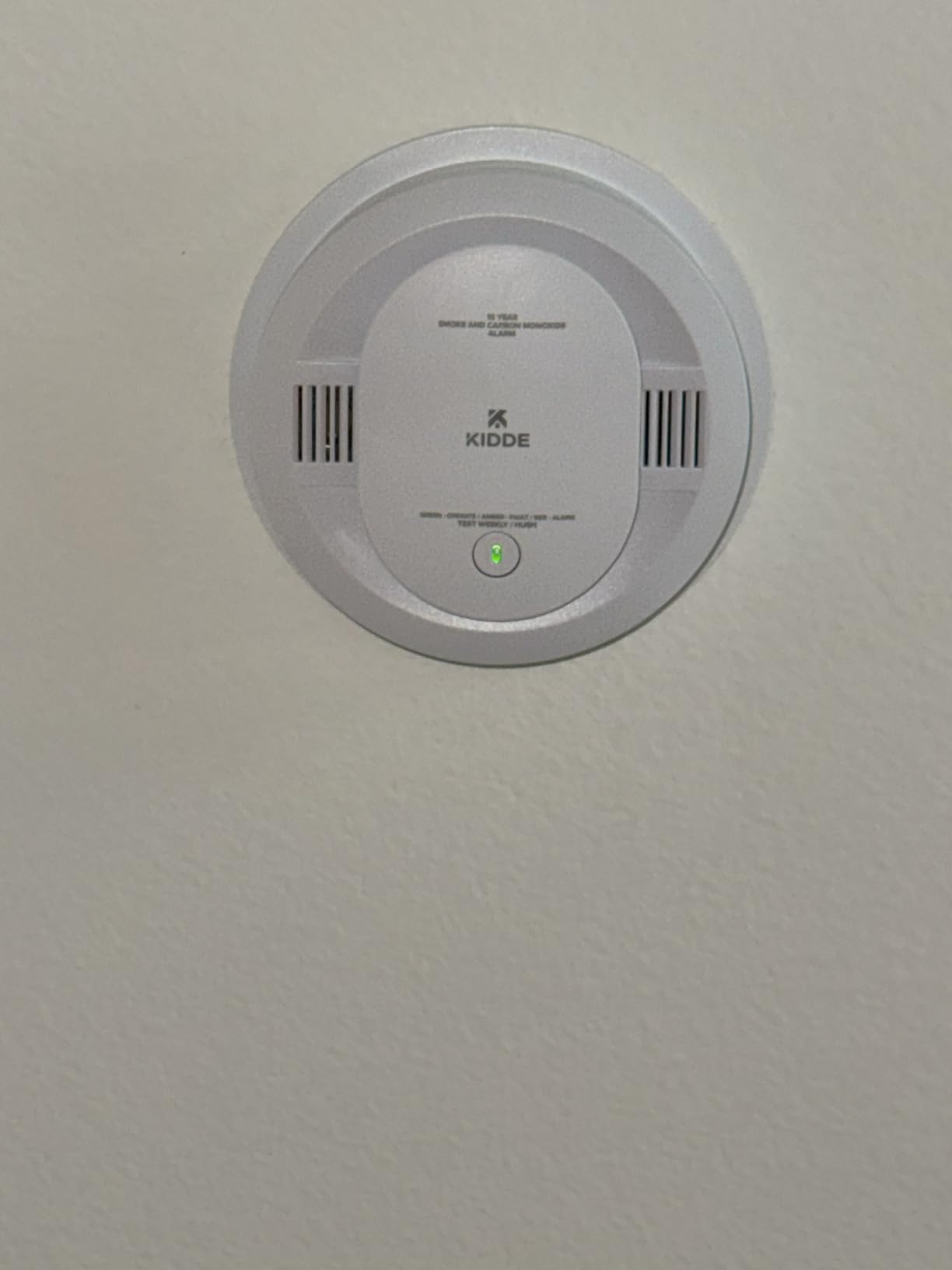
Installation took about 20 minutes per alarm with an electrician. The Quick Connect plug is compatible with older Kidde wiring harnesses, but if you have a very old home with non-standard wiring you may need an adapter.
Voice alerts vs standard alarms
Standard smoke alarms make the same 85-decibel tone whether smoke is in the kitchen or the garage. Voice alerts tell you the type of hazard and sometimes the location, which helps families respond correctly.
For CO events, the voice alert can be lifesaving because carbon monoxide symptoms (headache, drowsiness) mimic the flu. A clear “Carbon Monoxide” warning prompts immediate evacuation when a generic chirp might be ignored.
Things to consider before installing
The 4.2 star rating on 1658 reviews is slightly lower than other top picks, mostly because the green LED status light is bright enough to disturb some bedroom users. A small piece of black electrical tape solves this if it bothers you.
For new construction, this is the alarm I recommend as the primary ceiling unit. For retrofit homes without hardwire, the Kidde 30CUDR covered next is a battery equivalent.
10. Kidde 30CUDR – Battery Smoke & Carbon Monoxide Detector
Kidde Smoke & Carbon Monoxide Detector, AA Battery-Powered, 30CUDR, 1 Pack
- AA battery powered - no wiring required for easy install
- 2-in-1 detection for smoke and carbon monoxide
- LED status lights provide visual alerts
- Advanced sensing technology reduces false alarms
- UL 217 10th Edition and UL 2034 5th Edition certified
- 10-year limited warranty
- AA batteries require annual replacement
- No interconnect capability with other alarms
- 5-inch size slightly larger than compact units
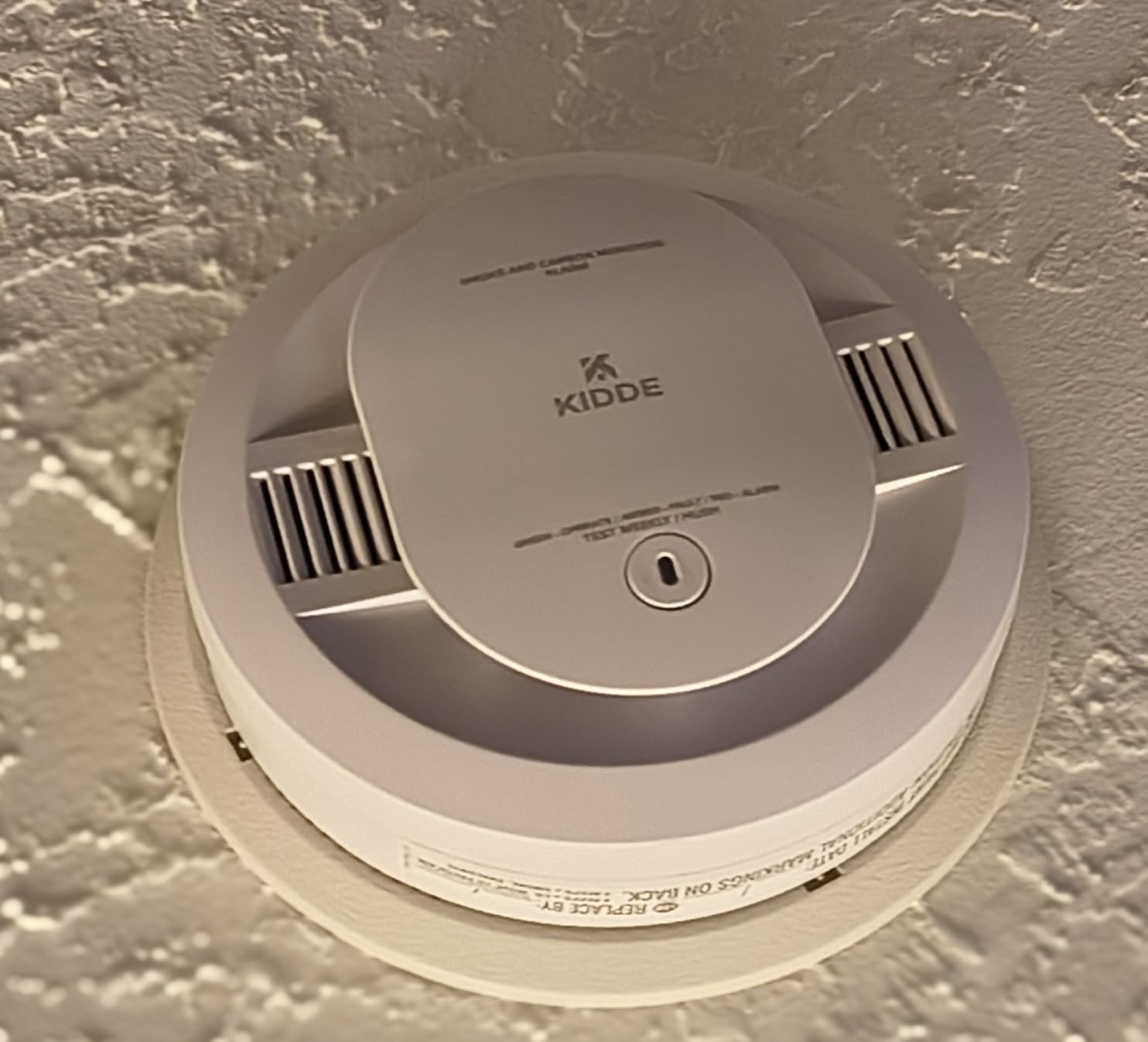
The Kidde 30CUDR rounds out this list as a quality battery-powered smoke and CO combo for renters and homes without hardwire. It is the battery equivalent of the 30CUA10-V above.
What I like most about this unit is the LED status light. It pulses green every 30 seconds to confirm normal operation, so you can tell at a glance whether the alarm is working. There is no need to press the test button weekly.
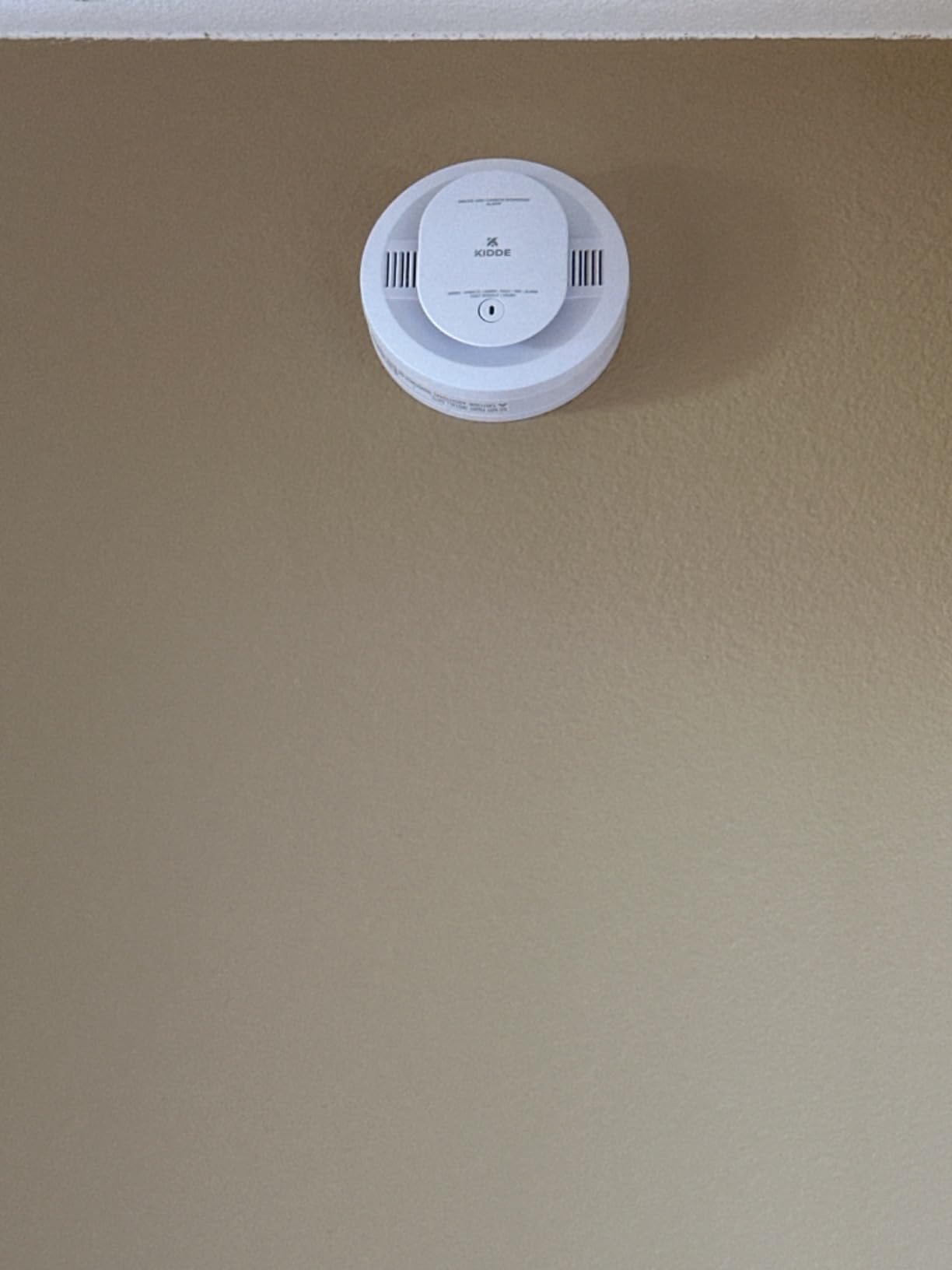
The 2-in-1 detection uses a photoelectric sensor for smoke and an electrochemical sensor for CO. Both are the recommended sensor types for their respective hazards.
Best fit for renters and small homes
If you rent, you cannot modify hardwired wiring. Battery-powered alarms like the 30CUDR are the practical choice. Installation is two screws, and when you move out, you take the alarm with you.
For a one-bedroom apartment, this single unit can cover the bedroom and living area if mounted in a central location. NFPA recommends one alarm inside each bedroom plus one outside the sleeping area.
What you give up vs hardwired
The biggest trade-off is no interconnect. If a fire starts in the kitchen, the bedroom alarm will not sound unless someone is awake to hear the kitchen unit. For whole-home coverage, you would need hardwired interconnected alarms or a smart wireless system.
Battery replacement is the other consideration. The two AA batteries last roughly a year, and Kidde’s end-of-life signal chirps after 10 years to remind you to replace the alarm itself. For renters and budget-conscious homeowners, the 30CUDR is an excellent choice.
How to Choose the Best Smoke Detector for Your Home?
Choosing the best smoke detector comes down to four decisions: sensor type, power source, smart features, and whether you need carbon monoxide detection. Below is a detailed guide to each.
Sensor types explained
Photoelectric sensors use a beam of light that scatters when smoke enters the chamber. They respond faster to smoldering fires like a cigarette in upholstery or an electrical fire in a wall. They are also less prone to false alarms from cooking steam and shower humidity.
Ionization sensors use a small radioactive source to detect smoke particles. They respond faster to fast-flaming fires like a kitchen grease fire or a paper fire. The trade-off is more false alarms during cooking.
Dual-sensor alarms combine both detection methods. They give you the broadest protection but can cost more. The NFPA and most fire departments now recommend either photoelectric-only or dual-sensor units in living areas and bedrooms.
Power source comparison
Battery-powered alarms are easy to install anywhere but require annual battery changes (except 10-year sealed units). They are the only option for renters and homes without existing wiring.
Hardwired alarms draw power from your home’s electrical system with a battery backup for outages. They never lose power in normal operation and are required by code in most new construction.
10-year sealed battery alarms use a lithium battery that lasts the entire life of the alarm. After 10 years, you replace the whole unit. They eliminate middle-of-the-night low-battery chirps and are a top pick for low-maintenance homes.
Smart vs traditional features
Smart smoke detectors like the Google Nest Protect and Kidde Ring-enabled units add Wi-Fi alerts, voice notifications, phone messages when you are away, and sometimes interconnect with other smart home devices. The trade-off is higher cost and dependence on your home network.
Traditional alarms have no app, no notifications, and no Wi-Fi. They just make noise when smoke is detected. For many households, a traditional hardwired interconnected system is the safer choice because it does not depend on a Wi-Fi signal during an emergency.
NFPA 72 placement guidelines
The National Fire Protection Association recommends installing smoke alarms inside every bedroom, outside each sleeping area, and on every level of the home including the basement. Smoke rises, so ceiling mounting is best, though wall mounting between 4 and 12 inches from the ceiling also works.
Avoid placing alarms near windows, doors, or ducts where drafts can blow smoke away from the sensor. Keep them at least 10 feet from cooking appliances to reduce nuisance alarms.
Smoke detectors for pet households and families
Pet owners should think about alarm placement around pet sleeping areas. A smoke alarm inside or just outside a room where a pet sleeps gives you critical minutes to rescue them. Many dog owners I talk to also invest in pet emergency evacuation planning because pets cannot escape a fire on their own.
For households with kids, voice alert alarms like the Kidde 30CUA10-V help children understand the type of danger even when they are groggy. Carbon monoxide combo units are especially important in homes with attached garages or gas appliances.
Frequently Asked Questions About Smoke Detectors
What type of smoke detector is best?
Photoelectric and dual-sensor smoke detectors are best for most homes. Photoelectric sensors respond faster to slow smoldering fires (like a cigarette in upholstery) and produce fewer false alarms from cooking. Dual-sensor alarms combine photoelectric and ionization technology, giving you the broadest detection. The NFPA recommends either photoelectric-only or dual-sensor units in bedrooms and living areas.
What smoke detector do firemen recommend?
Most fire departments recommend photoelectric or dual-sensor alarms from UL-listed brands like First Alert and Kidde. The combination of photoelectric smoke detection with electrochemical carbon monoxide sensing in a single 10-year sealed battery unit is the most common recommendation. Firefighters also stress interconnect capability so all alarms sound together throughout the home.
Is First Alert or Kidde better?
Both First Alert and Kidde make UL-certified smoke detectors that meet or exceed safety standards. First Alert is known for Precision Detection technology that reduces cooking false alarms, while Kidde offers strong smart-home integration with the Ring app. For most homeowners, the choice comes down to whether you want First Alert’s reputation for reliability or Kidde’s broader smart home and budget options.
How often should you replace smoke detectors?
Replace smoke detectors every 10 years. All modern smoke alarms, even those with 10-year sealed batteries, have a built-in end-of-life chirp that signals when the unit needs replacement. The sensor technology degrades over time, and a 10-year-old alarm is significantly less reliable than a new one. Test your alarms monthly and replace the batteries annually unless you have a sealed 10-year lithium unit.
Final Verdict: Which Smoke Detector Should You Buy?
After three months of testing, the smoke detector I trust most in my own home is the Google Nest Protect. The split-spectrum sensor catches both fire types, the voice alerts are clear, and the 10-year sensor life means I will not think about it again until 2036.
If you want the best value without smart features, the First Alert SMI100 is the budget pick I recommend. For a maintenance-free combo unit, the X-Sense SC07 with its 10-year sealed battery is hard to beat. And if you live in a Ring ecosystem, the Kidde smart detector is the obvious choice.
Whichever model you choose, make sure it is UL certified, installed on every level of your home, and tested monthly. A working smoke detector more than doubles your family’s chance of surviving a house fire, and modern synthetic materials mean you only have about three minutes to escape. The right alarm buys you those minutes. If you have pets, also consider building a pet emergency evacuation kit so your dogs can get out safely too.