
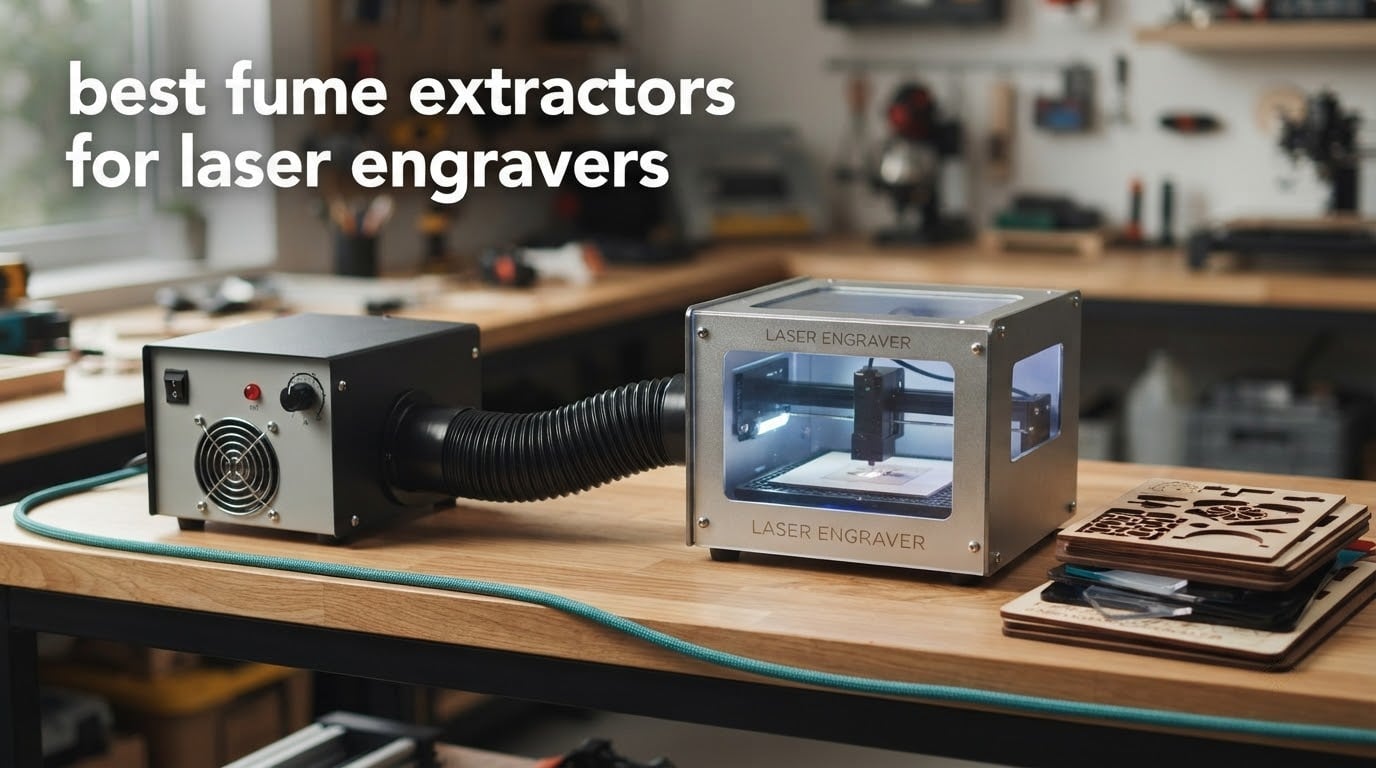
The first time most people cut acrylic on a desktop laser, they learn about fume extraction the hard way. The smell rolls across the room, settles on the lens, and gets into the workshop curtains within a week. I have watched the same thing happen with MDF, plywood, leather, and painted stock, and the fix is always the same piece of hardware.
A fume extractor pulls contaminated air off the laser bed before it reaches your face, your optics, and the rest of the building. A good one runs air through a pre-filter that catches big particles, a HEPA stage that traps fine particulate down to 0.3 microns, and an activated carbon stage that adsorbs volatile organic compounds and odor. Filtered air then recirculates into the room or is ducted outside.
That matters because the plume from a laser is not just smoke. Cutting PVC or vinyl releases chlorine gas and hydrochloric acid, and no filter on any shelf neutralizes it. It corrodes mirrors and lens glass, triggers smoke alarms, and can be the reason a maker space or a landlord says no. If you are still picking a machine, our laser engraver roundup is worth reading first.
We spent weeks reading review data on ten extractor units, comparing airflow figures against cabinet sizes, filter stage counts, noise ratings, and the real-world complaints owners report. This is the 2026 guide to the best fume extractors for laser engravers, whether you run a 10W diode on a desk or a 60W CO2 cabinet in a small shop.
Table of Contents
What Is the Best Fume Extractor for a Laser Engraver?
The best fume extractor for a laser engraver is the one that pulls at least the airflow your machine maker recommends, through a pre-filter, H13 HEPA, and activated carbon stages, with a noise level you can live beside. For most desktop diode and 40W CO2 setups that means a 150W to 210W unit moving 260 to 330 m3/h, ducted straight to the cabinet port.
The PVC Rule No Filter Can Bend
Never laser cut PVC, vinyl, or any chlorinated plastic. The plume contains chlorine gas and hydrochloric acid, and carbon filters adsorb odor rather than neutralize a corrosive gas. This is a material rule, not an equipment rule, and it applies to every extractor in this list.
Keep a fire blanket and a suitable extinguisher within arm’s reach of the machine, and never run a laser unattended. If you want personal protection as a backup layer, a respirator with organic vapor cartridges helps, but it does not replace extraction at the source.
Top 3 Best Fume Extractors for Laser Engravers in 2026

xTool SafetyPro AP2
- 6-layer SuperCyclone filtration
- 36 cyclones
- 99.99% dust and odor removal
- Pull-out magnetic filter door

xTool Desktop Smoke Purifier
- H13 HEPA plus activated carbon
- 99.97% purification
- One-click sync with F1
- Compact 285 x 190 x 296 mm

Genmitsu Kiosk Smoke Purifier
- Five-layer filtration
- Three speed settings
- 1.8 kg desktop footprint
Best Fume Extractors for Laser Engravers in 2026: Quick Comparison
| Product | Specifications | Action |
|---|---|---|
| xTool SafetyPro AP2 Smoke Purifier |
|
Check Latest Price |
| xTool Desktop Smoke Purifier |
|
Check Latest Price |
| Genmitsu Kiosk Five-Layer Smoke Purifier |
|
Check Latest Price |
 FumeClear FC-2002A Laser Fume Extractor FumeClear FC-2002A Laser Fume Extractor |
|
Check Latest Price |
 FumeClear FC-2004 Fume Extractor FumeClear FC-2004 Fume Extractor |
|
Check Latest Price |
 KQZ Laser Fume Extractor Under 60W KQZ Laser Fume Extractor Under 60W |
|
Check Latest Price |
 ATOMSTACK D3 Laser Fume Extractor ATOMSTACK D3 Laser Fume Extractor |
|
Check Latest Price |
 KQZ Fume Extractor for Under 40W KQZ Fume Extractor for Under 40W |
|
Check Latest Price |
 BlazeX Air Purifier for M3 and M2 Pro BlazeX Air Purifier for M3 and M2 Pro |
|
Check Latest Price |
 FUMEGO XF250 Laser Fume Extractor FUMEGO XF250 Laser Fume Extractor |
|
Check Latest Price |
1. xTool SafetyPro AP2: The Best All-Round Extractor for Diode and Fiber Work
- Six-layer filtration clears fine dust and odor on long acrylic jobs
- Strong airflow at the laser port
- Quiet enough for a shared studio
- App reports filter status in real time
- Casters and a washable cyclone layer
- Replacement filters only sold direct from xTool
- Smart features are near-useless without an xTool laser
- Some owners hit a false clogged airflow error
- Bulky at 20.9 kg for a small studio
This is the unit I keep coming back to for a reason. The SafetyPro AP2 uses SuperCyclone technology with 36 cyclones to knock out large particles before they reach the filter stack, which is why the carbon and HEPA stages keep working when cheaper units are already choking. Across 153 reviews the average rating sits at 4.7, the strongest combination of rating and review volume in this group.
Owners report that the six-layer system removes 99.99% of dust and odors, and several mention cutting acrylic in a closed room with no lingering smell at all. The ultra-dense carbon mesh handles the vapor side, which is what separates it from a dust collector pretending to be an extractor.
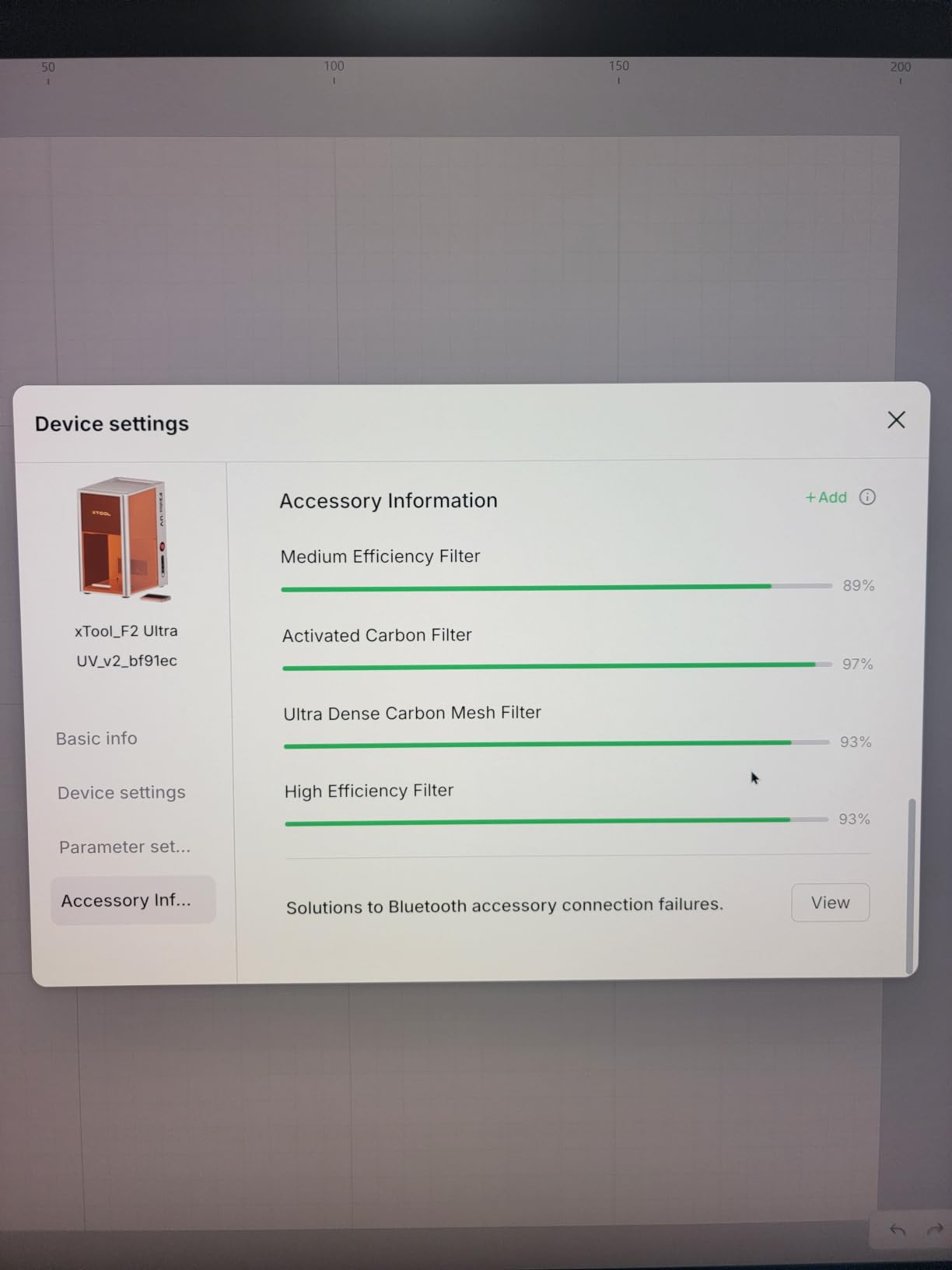
The integration is the real story if you own a modern xTool. It auto-syncs with the machine and reports filter status in xTool Studio, so you know when a cartridge is spent instead of guessing. If you run an xTool P3, note this unit is not rated for it.
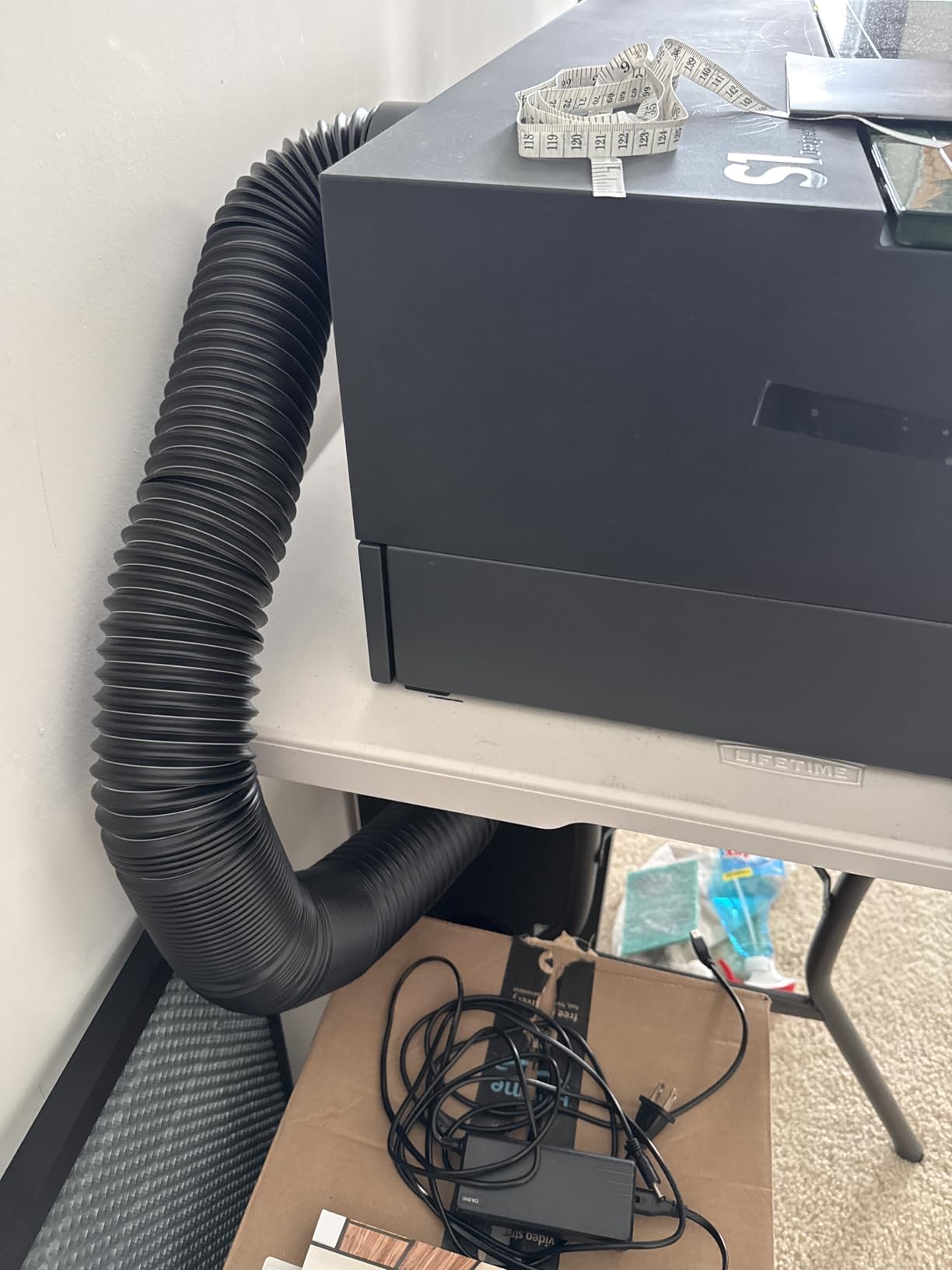
The compromises are honest ones. Replacement filters are not sold through the retail listing, so replenishing means ordering direct from the manufacturer, and the app features do very little if your lasers come from another brand. A few owners also report a false airflow-clogged error after connecting hoses. At 20.9 kg it is a substantial cabinet, not a shelf unit, so measure your bench before you commit.
Who this suits
Anyone running a diode, fiber, or CO2 machine up to the 150 m3/h class who wants one box that handles dust and vapor together. It is particularly strong for acrylic, where the vapor load is heavier than most hobby units are built for, and for shared studio work where the reported noise level keeps conversation possible.
It also suits owners who value knowing their filter state without opening a panel. If your laser is part of a connected workflow, the monitoring is genuinely useful rather than decorative.
Who should skip it
Skip it if you own a non-xTool machine and want the smart features, or if you need replacement filters quickly from a single checkout. It is also the wrong shape for a tiny apartment desk, and it will not cover a 100W-plus CO2 cabinet that needs far more than 150 m3/h of extraction.
2. xTool Desktop Smoke Purifier: Best Companion for the M2 and F2
- Compact at 285 x 190 x 296 mm
- Works well paired with M2 and F2 machines
- One-click sync with the F1 engraver
- Pre-assembled with no fussy setup
- Under 55 dB for indoor use
- A minority report persistent odor and a high-pitched whine
- Some arrived with loose hose couplings that leaked
- Moderate capture leaves a residual burning smell
- New main filter needed after three pre-filters
Smaller and simpler than the SafetyPro, this is the purifier most xTool desktop owners actually pair with an M2 or F2. It uses a 3-layer stack with an H13 HEPA filter and an activated charcoal odor absorber at a 99.97% purification rate, and the whole thing is pre-assembled so there is no install day.
The one-click synchronization with the F1 engraver is the feature owners mention most. The unit starts and stops with the machine, which removes the single most common failure in this category: an extractor that was left off while the laser ran.
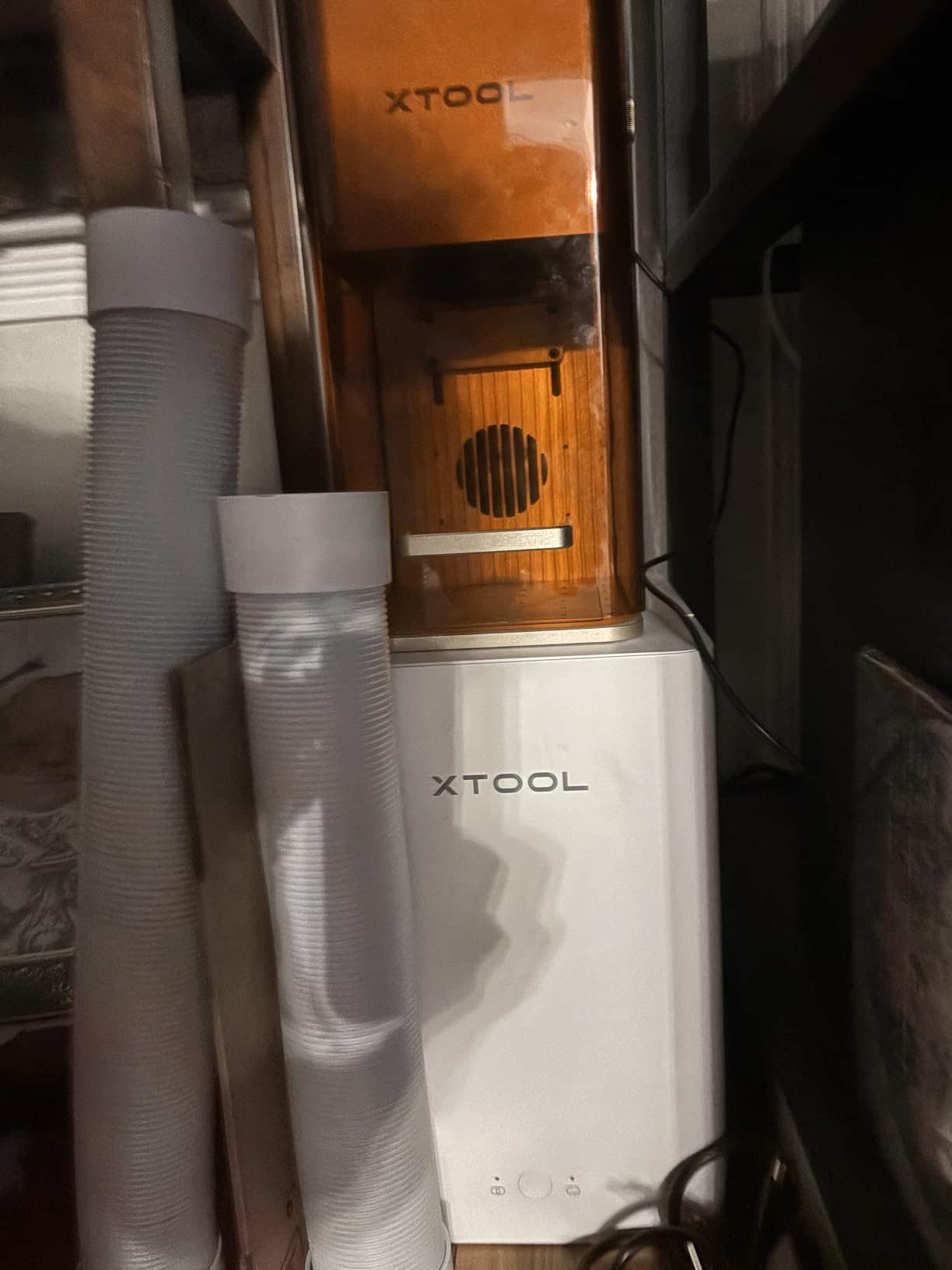
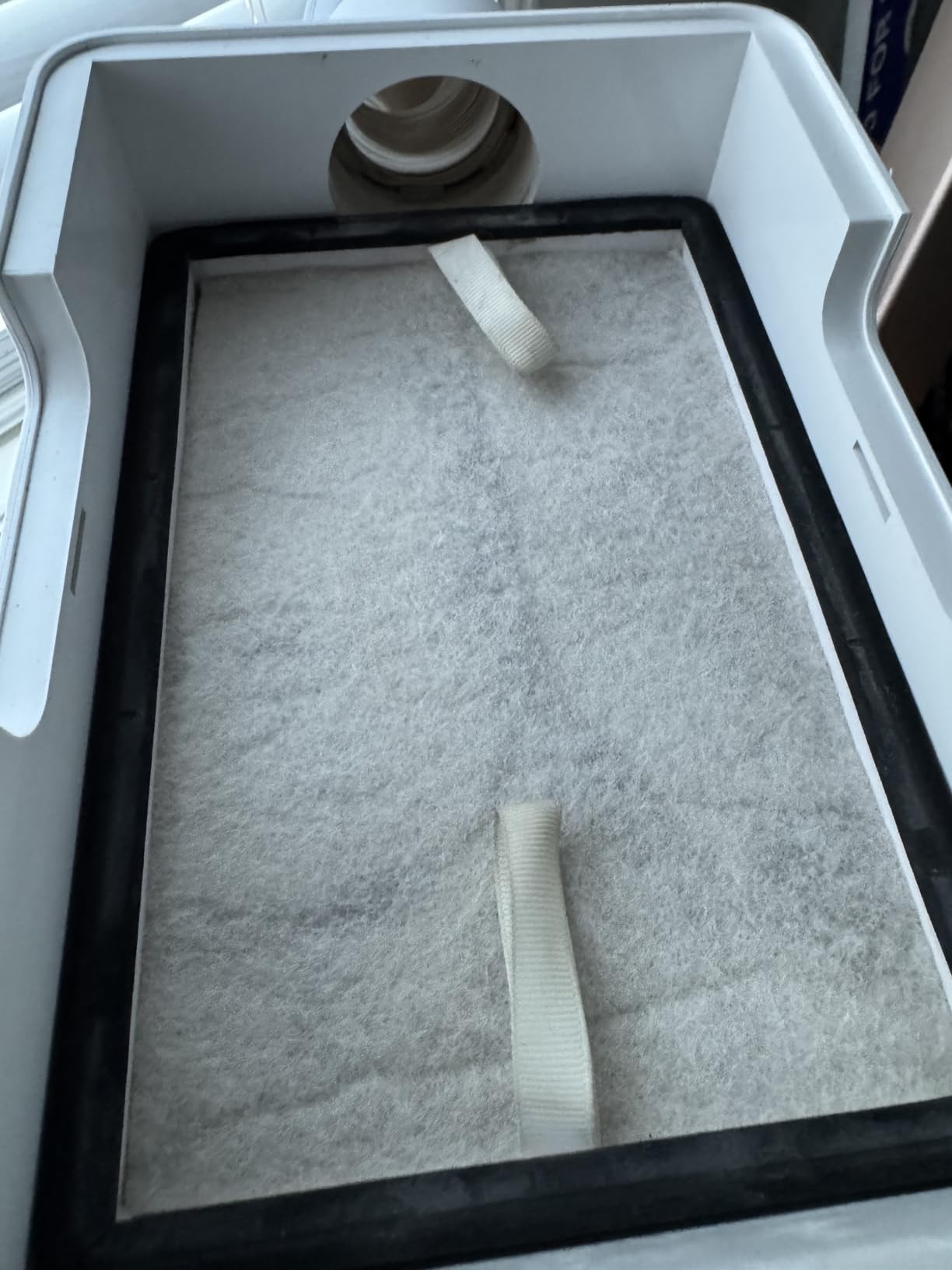
At under 55 dB it is one of the quieter options here, and reviewers repeatedly describe it as portable enough to move between a desk and a shelf. The filter change is tool-free, and the design expects you to cycle three pre-filters before the main filter needs replacing.
Not everyone is convinced. A minority of buyers report odor that persists after a job along with a high-pitched whine, and some received units with hose couplings that leaked airflow. Capture is described as moderate, so a residual burning smell can remain on plastics. This is a companion for a desktop machine, not a cabinet-scale extraction system.
Who this suits
Desktop xTool owners working in a bedroom office or studio who want the machine to control extraction automatically. It is a good fit for engraving and light cutting on wood and leather, where the workload matches its capture capacity and the compact footprint is the deciding factor.
It also suits anyone who wants filtration on a bench that is too small for a floor-standing unit. At 285 x 190 x 296 mm it can live next to the engraver rather than beside it.
Who should skip it
Skip it if you cut thick acrylic or run a larger cutter, because the reported capture is moderate and residual smell is a known outcome. Avoid it for a 60W-plus CO2 cabinet, and be cautious if a whine or a lingering odor would bother you in a quiet room.
3. Genmitsu Kiosk Five-Layer Purifier: Best Budget Pick for a Desktop Bed
- Very compact and perches on top of a desktop engraver
- Removes wood smoke smell and leather odor on high
- Quiet on the lower speed settings
- Three speeds match airflow to the job
- Filter life indicator with reset
- Does not fully neutralize strong chemical odors
- Top speed is noticeably loud
- Hose fitment can be tight for small hands
- Some report reduced airflow once fitted
At 1.8 kg and just over four inches on each side, this is the unit that disappears onto the top of a small desktop engraver. Reviewers consistently describe it as a cost-effective way to clear visible smoke and most wood odor without giving up bench space, and 94 ratings average 4.3.
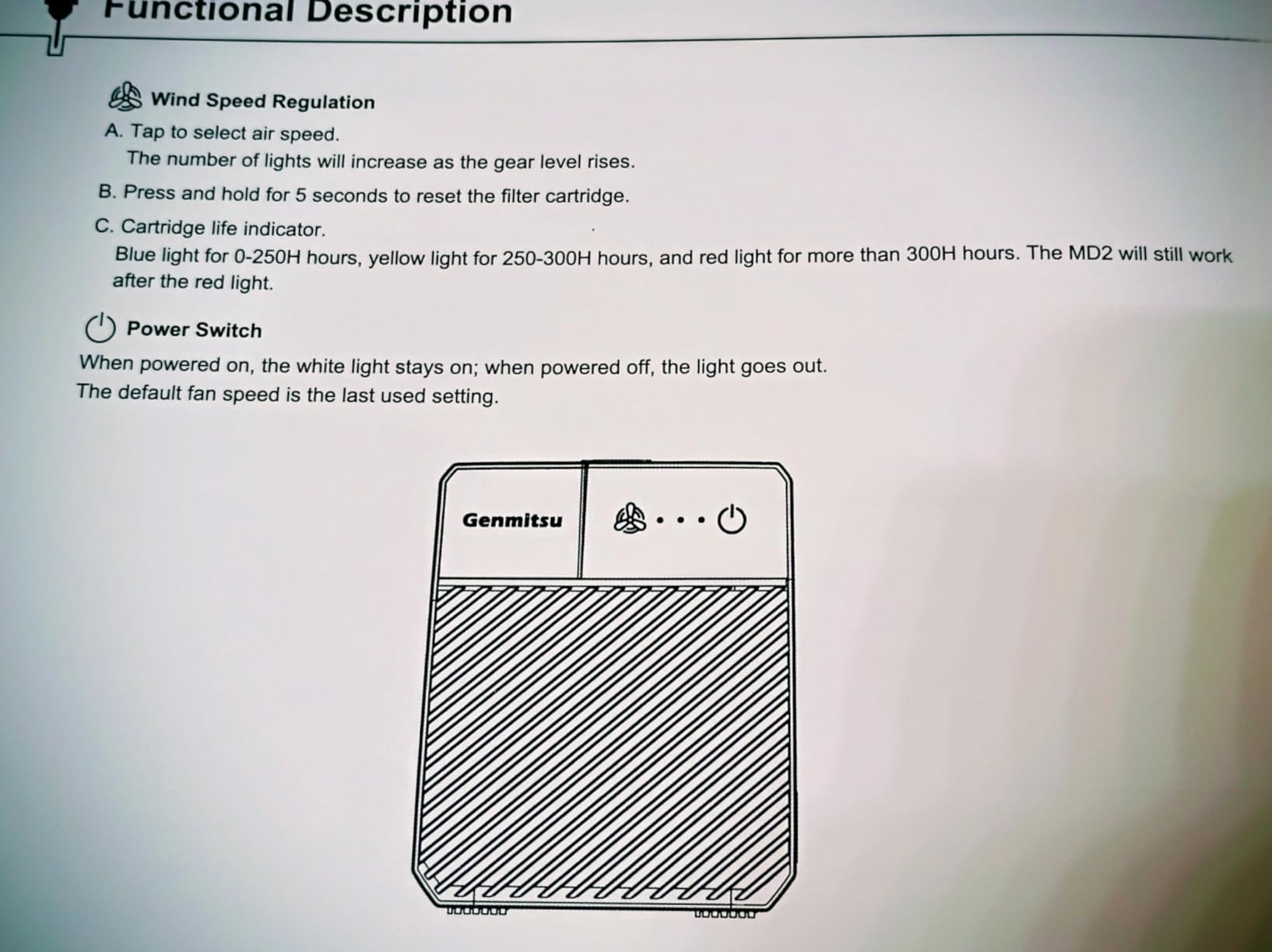
The five-layer stack combines a pre-filter, HEPA, and activated carbon, and the particle retention size is listed at 0.3 micron. Three adjustable speed settings let you turn it up for leather or plastics and down for quiet work, and a smart indicator light shows when the filter needs attention.
It includes an expandable hose with adapters for 2.5 inch and 3 inch OD shop vac hose, which is how it connects to Kiosk and Kortek laser machines. That compatibility with common hose sizes is what makes it useful beyond the brand it was designed around.
The honest limitation is odor control on chemical materials. Owners say it handles wood smoke well and leather better on high, but it does not fully neutralize strong smells from plastics, and the top speed is loud enough to notice. A few also report reduced airflow after fitting the filter, and hose installation can be awkward for anyone with limited hand strength.
Who this suits
Hobby and education users on a strict budget who engrave wood, plywood, and leather on a small desktop diode machine. It is easy to justify when the alternative is no extraction at all, and the filter light removes the guesswork from upkeep.
It also suits anyone whose machine shares a shelf rather than a bench. The footprint is the reason many buyers choose it, and the three-speed control lets you keep it quiet during light engraving.
Who should skip it
Skip it if you routinely cut acrylic or any high-vapor material and expect the smell to disappear completely. It is not sized for a sealed CO2 cabinet, and anyone sensitive to chemical odor will find it falls short of what a carbon stage of real depth can do.
4. FumeClear FC-2002A: Best for 10-40W Engravers and Small Cutters
FumeClear FC-2002A Laser Fume Extractor with Outdoor Vent for Odor Removal
- Strong 260 m3/h suction for 10-40W machines
- Carbon filter rated up to 4000 hours
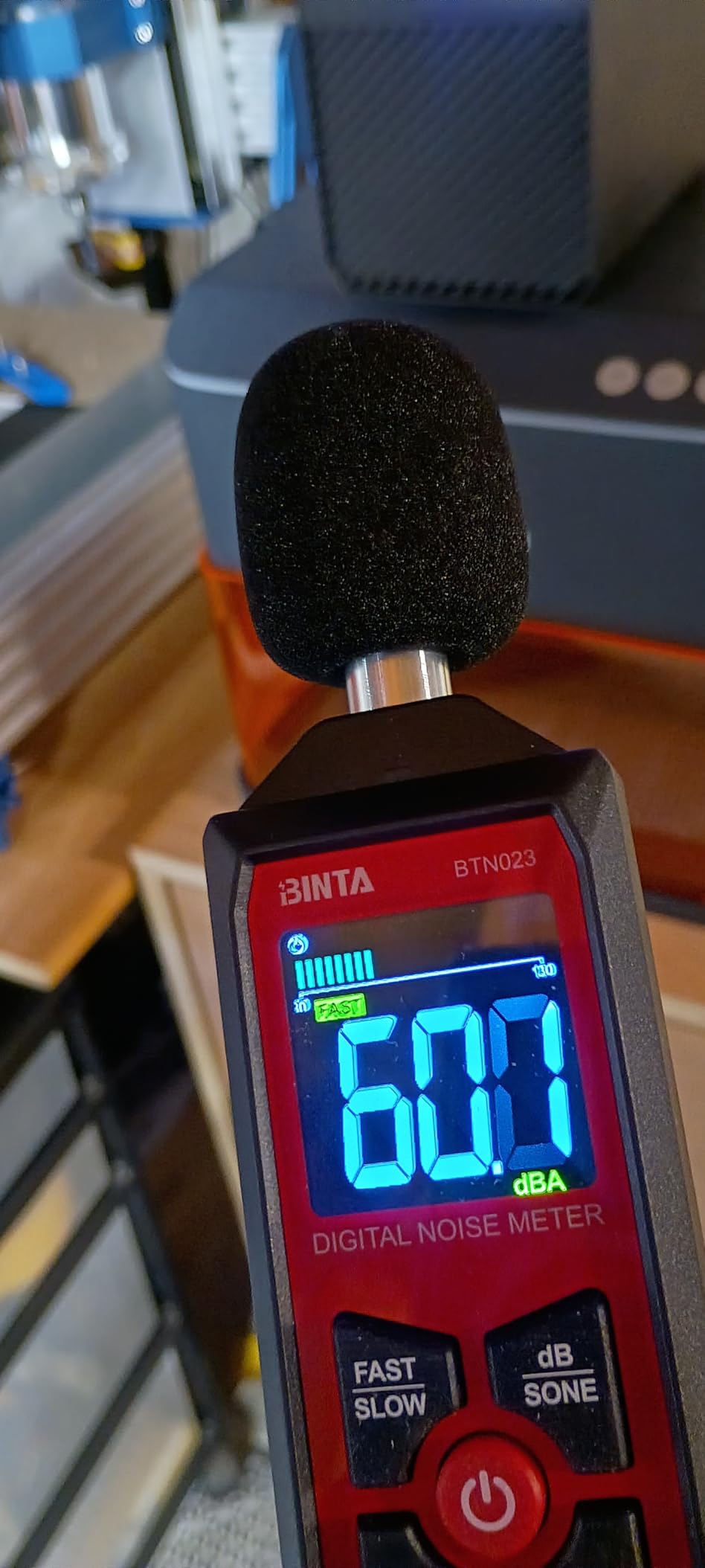
- Under 55 dB with sound-absorbing sponge
- Ten replacement pre-filters included
- CE FCC ROHS and UKCA certified
- Bulky at 27 lb for a small desk workspace
- Replacement cartridges must be sourced outside the retail listing
- Some received mismatched filter sizes
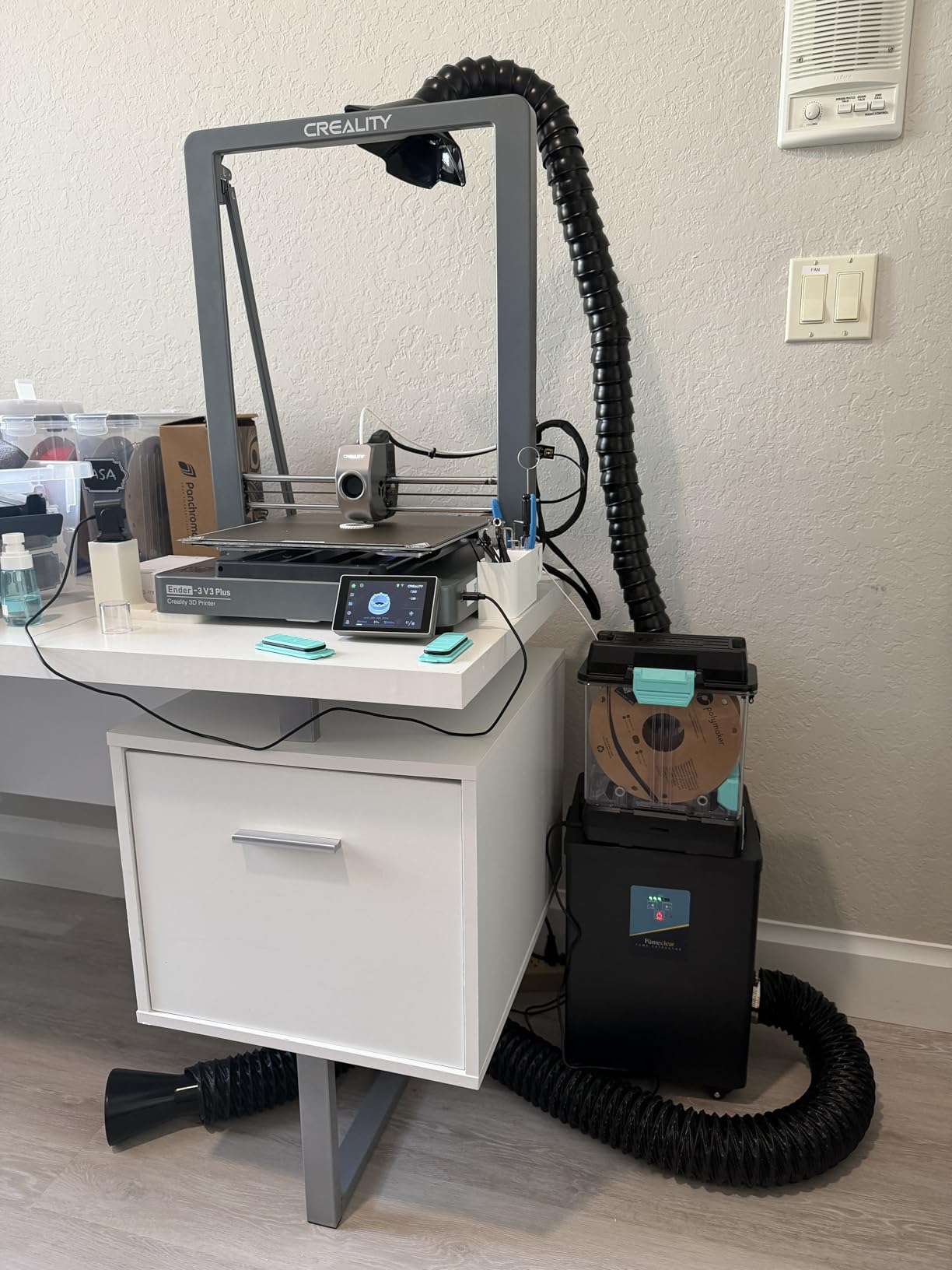
The FC-2002A sits at the sweet spot for the most common hobby and small-shop machine class. It delivers up to 260 m3/h of suction and captures exhaust gas, powder, wood chips, and iron chips within a 15 cm range of the hood head, which is exactly the behavior you want from a benchtop hood over a 10W to 40W engraver.
Filtration is a 3-stage pre-filter, HEPA, and main carbon arrangement claiming 99.97% purification of particles below 0.3 microns. The high-iodine coconut shell carbon is rated at up to 4000 hours of service life, which is one of the longer intervals we saw in this group and one of the better answers to the filters-are-rent problem.
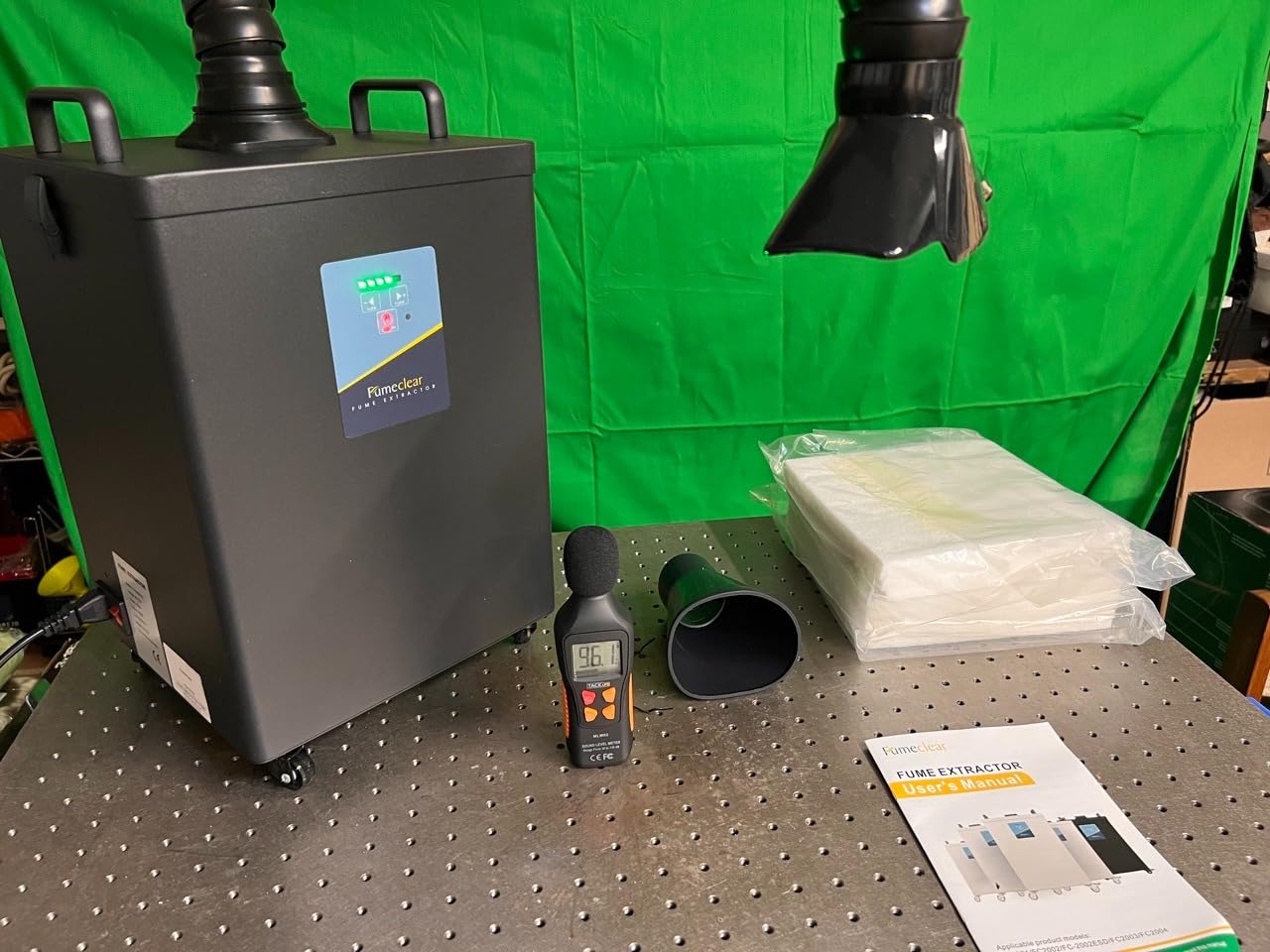
Owners rate it highly for suction strength and odor removal, and the ten included pre-filters take a lot of pressure off the first year of use. The noise reduction coating and sound-absorbing sponge at each interface keep output under 55 dB, and the unit carries CE, FCC, ROHS, and UKCA certifications.
The downsides are physical and logistical. At 27 lb with dimensions around 15 by 16 inches, it is bulky for a small desk, and the cartridge and carbon filters must be sourced outside the retail listing. Some owners received mismatched filter sizes, which the manufacturer resolved.
Who this suits
Owners of 10W to 40W engravers and cutters who want dedicated extraction without a floor-standing industrial unit. It is a strong match for small production shops engraving acrylic and plywood, where the hood can sit within 15 cm of the cut.
It also suits buyers who plan to keep the machine for years, since the 4000 hour carbon figure means fewer cartridge changes than most competing stacks in this price class.
Who should skip it
Skip it if your workspace is tight, because the footprint and weight are real. It is also the wrong choice for a 60W-plus CO2 cabinet, and if you want a single checkout for replacement filters, that is not how this one is supplied.
5. FumeClear FC-2004: Best for 20-80W Engravers and Heavier Cutting
FumeClear FC-2004 Fume Extractor For 20-80W P/S/M/F Laser Engraver & Cutter
- Very high suction that outpaces plume production
- Effective across wood acrylic and metal on 20-80W machines
- Low and medium settings keep useful suction quietly
- Adjustable free-rotating neck
- Standard 120mm filters and secure DC jack
- Very loud on the highest setting
- Low setting noticeably reduces capture
- Cartridge clogged quickly on deep brass engraving
- Replacement filters must be sourced outside the retail listing
This is the suction-first option. The FC-2004 moves up to 420 m3/h, and owners describe the effect as smoke being pulled toward the pipe faster than the laser produces it. For anyone cutting thicker material or running a 40W to 80W machine, that headroom is the reason to buy it.
The filter set is a pre-filter, HEPA, and a high-iodine coconut shell carbon main filter, with claimed purification of up to 99.98% of harmful gases and filtration down to 0.2 microns. The box includes ten pre-filter cottons, two hoods, and a bamboo pipe, so the setup is complete on day one.
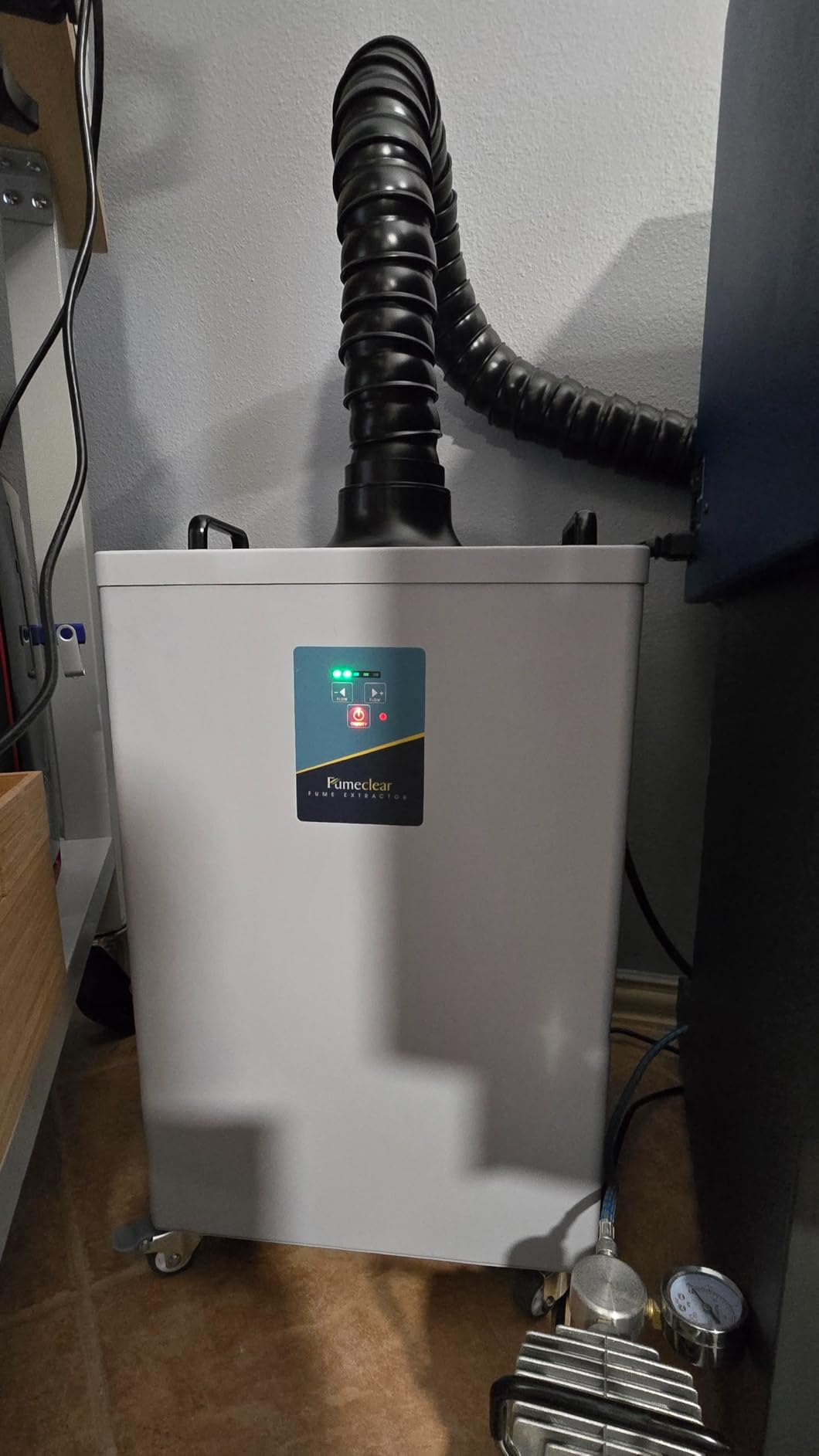
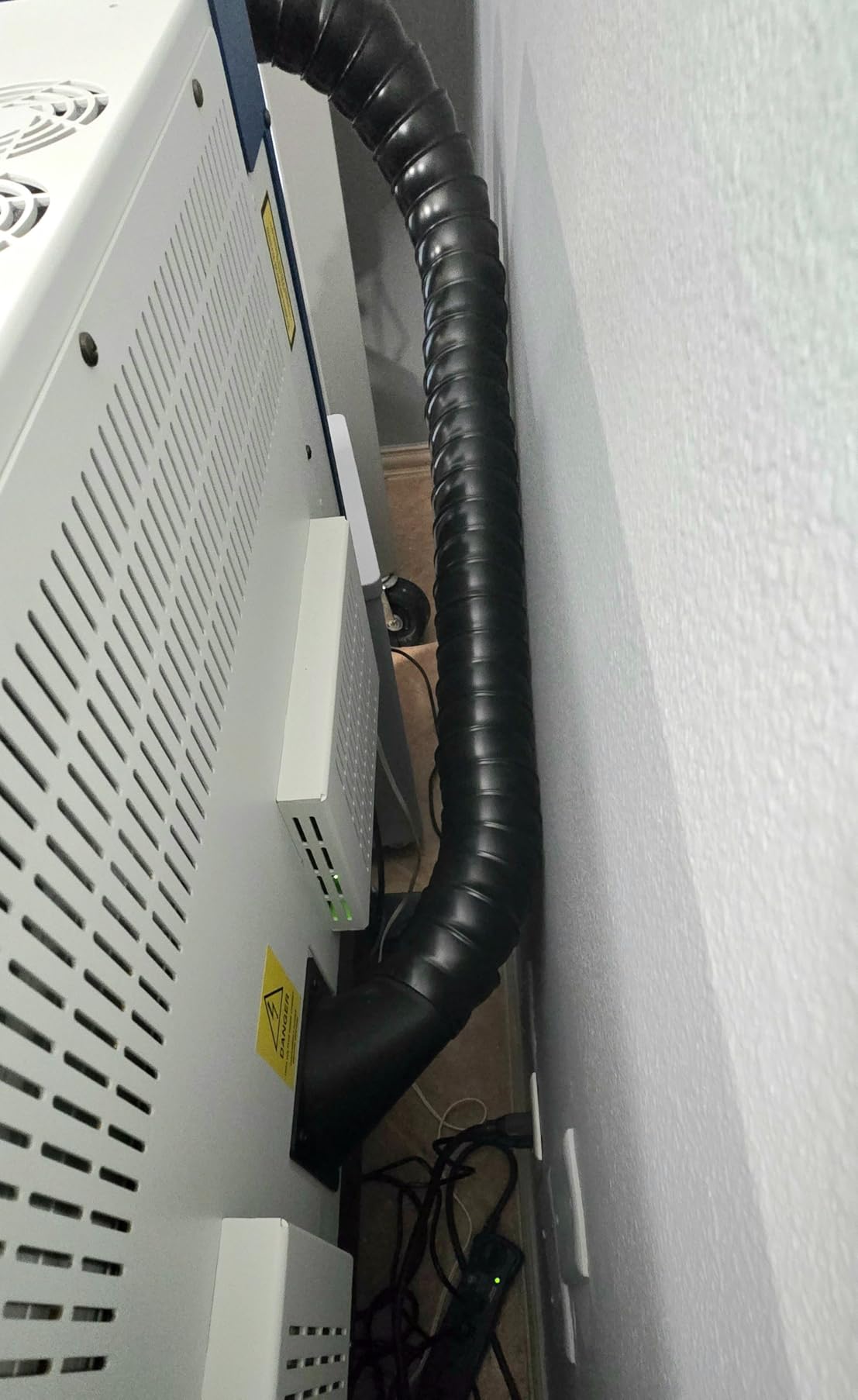
The practical advice from owners is to run it on low or medium. Reviewers say the lower settings retain useful suction while being far more tolerable acoustically, and the adjustable free-rotating neck helps you place the hood without moving the whole unit. It uses standard 120mm filters and a secure DC jack connection, which simplifies sourcing parts.
The negatives are concentrated at the top end. It is very loud on the highest setting, enough to drown out nearby equipment, and dropping to the low setting clearly reduces fume capture. One buyer reported the cartridge clogging quickly during deep engraving of brass, and replacement filters must be sourced outside the retail listing. At nearly 53 lb, plan the floor space too.
Who this suits
Small commercial shops running 20W to 80W machines across mixed materials, especially acrylic, wood, and metal. If your current unit cannot keep up with the plume, this is the step up that fixes the problem without moving to an industrial system.
It also suits buyers who want flexible capture placement, since the free-rotating neck and two included hoods let you adapt the intake position as your materials change.
Who should skip it
Skip it if you work next to a home office or shared room and would be running it at full speed, because the noise is the most common complaint. Metal-heavy shops doing deep brass engraving should also budget for faster cartridge changes.
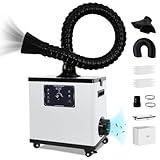
6. KQZ Under 60W Extractor: Best for Shared Rooms and Quiet Setups
KQZ Laser Fume Extractor with Exhaust for Under 60W Laser Engraver Cutter
- Suction draws smoke and metal particulate even on quarter speed
- Quiet relative to the laser itself
- Padded steel casing with casters
- Twelve filter pads plus round and square hoods
- Allows indoor use without venting
- Some lost vacuum after months with no filter-based fix
- Filter cartridges are pricey
- Manufacturer support can be hard to reach after failures
- Rated 220V which limits some households
The quietest rating in this group is the headline here. The KQZ 210W brushless motor is wrapped in an aviation-grade sound-absorbing shell that keeps noise under 50 dB while still moving 330 m3/h. Owners say it pulls smoke and fine metal particulate as effectively as industrial systems, even at quarter speed.
Filtration is three-stage, capturing 0.3 micron particles at 99.97% efficiency, with a high-iodine coconut shell carbon for odor. The box includes 12 filter pads, a bamboo tube, hose, and both round and square hoods, so you can match the intake to your cabinet opening.
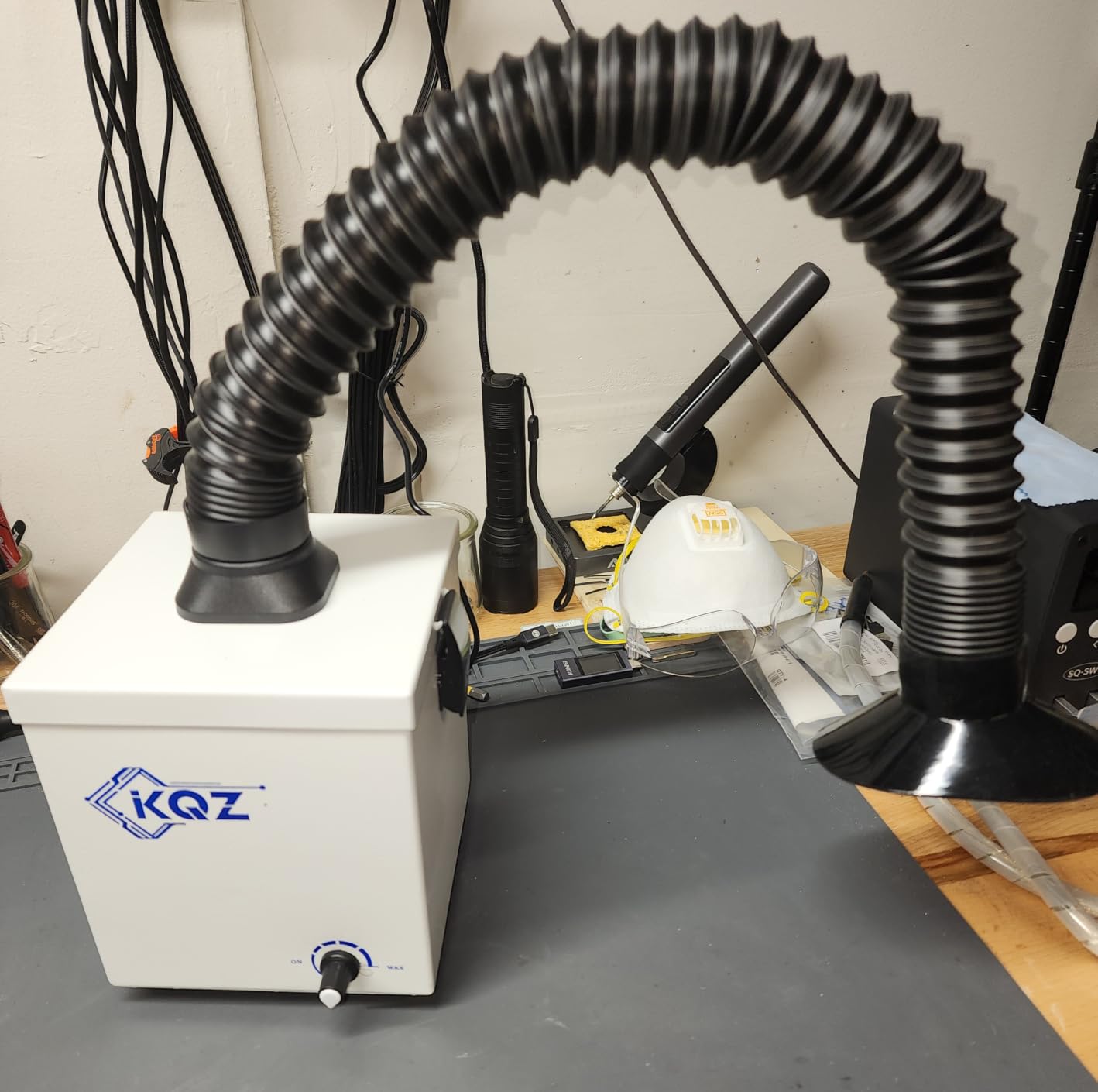
It is also broadly compatible, listed for xTool P2S, S1, F1, F1 Ultra, F2, F2 Ultra UV, F2 Ultra, M1, and M2, and it is marketed for soldering, 3D printing, DTF printing, and other fume sources beyond lasers. Owners praise the padded steel casing and casters for a unit that is meant to be moved.
Durability is the theme in the negative reviews. Several owners report losing vacuum after roughly six months of light use, and changing the filter did not restore it. Filter cartridges are pricey even though first-stage filters are plentiful, and reaching the manufacturer after a failure has been difficult for some. It is also rated at 220V, which rules it out in some homes.
Who this suits
Buyers working in an office, classroom, or shared home space where a loud extractor would make the laser unusable. If you can only tolerate a low setting without the machine drowning it out, the under 50 dB figure is the deciding spec.
It also suits owners running more than one kind of fume-producing equipment, since the same unit is listed for soldering, 3D printing, and DTF work alongside laser use.
Who should skip it
Skip it if you are on a 110V supply, since the unit is rated at 220V. Buyers who prioritize long-term reliability over noise should read the durability reports carefully, and anyone on a tight filter budget will find the cartridges expensive.
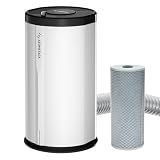
7. ATOMSTACK D3: Best for Low-Volume Hobby Cutting
- Compact cube that fits beside a desktop engraver
- Pre-filter HEPA and carbon stack handles particles and gases
- Low-voltage 12V DC supply suits workshop power
- Tool-free modular filter changes
- Operates from -20C to 40C
- Filter cycle life limited to roughly 200 hours
- 80mm port restricts compatibility with larger machines
- 4.0 rating indicates mixed results on heavy cutting
The D3 is a small cube that slots in beside a desktop engraver without reorganizing your bench. It uses a multi-layer composite filter of pre-filter, HEPA, and activated carbon at up to 99.97% efficiency, and it is listed to absorb gases such as formaldehyde and TVOCs alongside PM2.5 and PM10 particles.
Power comes from a 12V DC supply rated at 3A, which is convenient in shops where mains current near the machine is awkward. Outlet airspeed reaches up to 10 m/s through a standard 80mm exhaust port, and the operating range covers -20C to 40C at up to 60% relative humidity.
Filter changes are tool-free and modular, and the manufacturer rates a filter at roughly 3 to 6 months at three hours of daily use, or about 200 hours per cycle. The 4.0 rating across 37 reviews reflects real satisfaction on light work alongside disappointment from people who pushed it harder than that. We think the expectations are simply mismatched for heavier cutting, since an 80mm port is the limit for larger machines.
Who this suits
Hobby engravers doing light marking and thin-material cutting a few hours a week, especially in a small or shared room. The 12V supply and cube footprint make it one of the easier units to place, and the modular filter change keeps maintenance simple.
It also suits buyers who want documented temperature tolerance, since the -20C to 40C range covers a garage or unheated workshop better than most compact units.
Who should skip it
Skip it if you cut thick material daily, run a larger machine, or want a filter that lasts longer than about 200 hours of use. The 80mm exhaust port is the hard limit on what it can attach to.
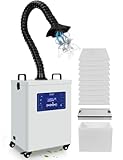
8. KQZ Under 40W Extractor: Best for Remote-Controlled Setups
KQZ Laser Fume Extractor for Under 40W Laser Engraver with Display & Remote
- Strong suction even on the lowest speed
- Remote with stepless speed and programmable timers
- LED panel and clog alarm simplify maintenance
- Dual hose kit covers enclosed and open benches
- Responsive support that resolves issues
- Poorly written and translated manual
- Some needed a main filter far sooner than 4-6 months
- Clog alarm threshold may need adjusting
- Not built for super-large industrial workloads
Control is what separates this one. The LED smart panel gives stepless speed adjustment, programmable auto on and off timers, and a remote, so you can dial in the machine from where you are standing rather than walking back to the unit. That is a genuine convenience on a 40W-and-under diode or CO2 engraver.
Under the panel sits a 150W brushless motor delivering 280 m3/h of airflow with a 40% speed boost, and noise is around 55 dB. Filtration pairs an H13 HEPA filter with 1000 iodine value carbon, capturing 99.97% of particles down to 0.3 micron, and ten 9mm pre-filters are included to slow main filter clogging.
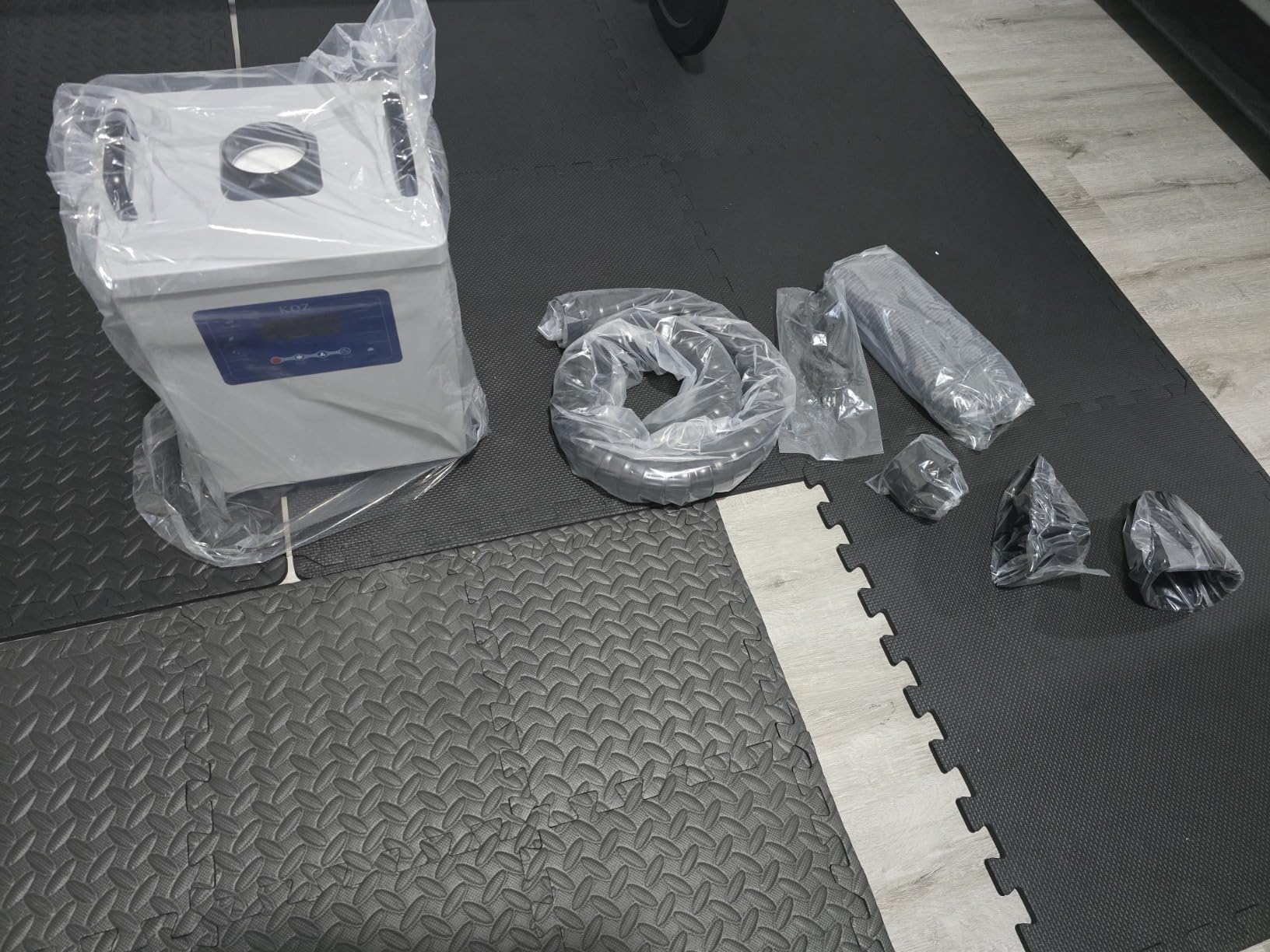
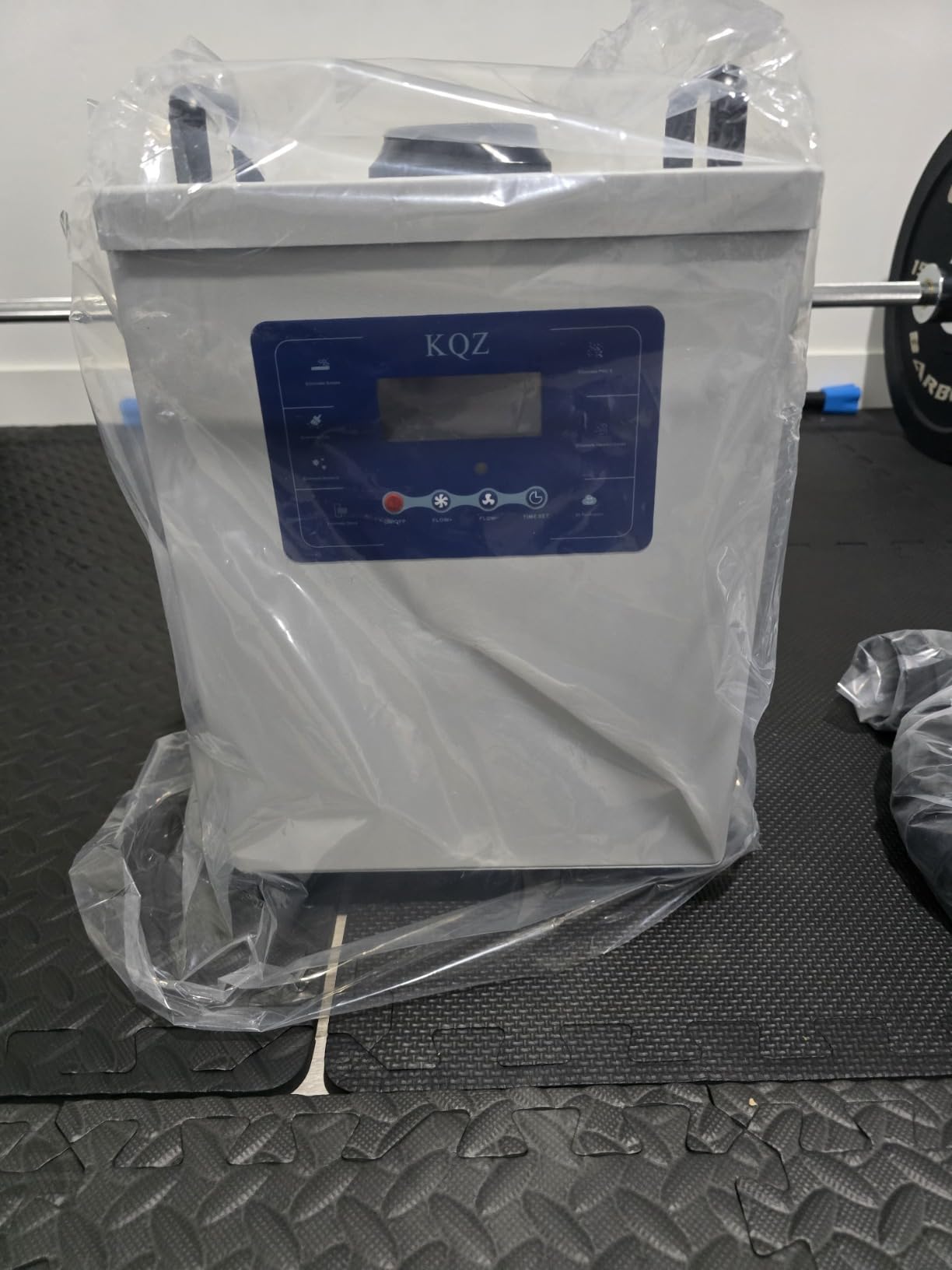
A built-in filter clog monitor with an alarm keeps maintenance predictable, and the dual hose kit includes one flexible 50mm x 1.2m tube plus a rigid tube, so the same unit serves an enclosed machine and an open bench. Owners also report strong suction even at the lowest speed setting, and customer support that fixed a blown fuse and a loose hose.
Complaints center on documentation and filter life. The manual is poorly written and poorly translated, some owners needed a replacement main filter sooner than the stated 4 to 6 months, and the clog alarm threshold may need adjusting out of the box. It is also clear on its limits: this is not sized for super-large industrial engraving workloads.
Who this suits
Shop owners running a machine across a room from the controls, or anyone who scripts long jobs and does not want to walk back to switch extraction on and off. The timer and remote make that workflow much easier.
It also suits users with a mixed bench, since the dual hose kit covers both a sealed enclosure and an open setup without buying a second unit.
Who should skip it
Skip it if you need industrial capacity, or if you are the type who will be annoyed by a thin manual. Buyers planning heavy schedules should also budget for filter changes earlier than the stated interval.
9. BlazeX Air Purifier: Best for xTool M3 and M2 Pro Desktops
- Sleek space-saving desktop form factor
- Quiet brushless motor for studios and classrooms
- Triple filtration including HEPA and active carbon
- Tool-free filter replacement
- 2.65 lb build is intended for desktop-class machines
- Small review base so durability is unproven
The BlazeX Air Purifier targets the newest generation of compact xTool desktops, the M3 and M2 Pro, and it is built like a companion rather than a machine. At 2.65 lb and roughly 7.5 by 5 by 6 inches it is the lightest extraction unit in this roundup, and the brushless motor is the reason it stays quiet.
Filtration is a triple stack with HEPA and active carbon stages, and the manufacturer claims 99.97% capture of exhaust gas generated during acrylic engraving and wood cutting. Filter changes are tool-free, which matters for a unit this small.
We would treat the numbers carefully here. The 4.4 average comes from 17 reviews on a recent release, so it reflects early impressions rather than years of ownership. Nothing in the data suggests a problem, but nothing yet proves long-term durability either. If you need extraction for a cutter rather than an engraver, this weight class is not the right answer.
Who this suits
Owners of the M3 and M2 Pro doing engraving and light cutting in a home studio or classroom, where noise and footprint matter more than raw CFM. The form factor disappears next to the machine.
It also suits buyers who prioritize a simple filter change over fine control, since the tool-free replacement is the entire maintenance story.
Who should skip it
Skip it if you run a larger laser, cut thick material continuously, or cannot accept an unproven long-term record. It is a desktop-class unit and nothing more, despite the marketing language.
10. FUMEGO XF250: Best for Gooseneck-Flexible Setups
FUMEGO Laser Fume Extractor Compatible with 10 to 40W Laser Engravers S1/M1/Vista, 150W Power & 280 m³/h Low-Noise Smoke Extractor, Laser Air Purifier with HEPA+Carbon 4-stage Filtration System-XF250
- Highest average rating in the group at 4.8
- Four-stage stack with thick pre-filter HEPA and dual carbon
- 1.2m gooseneck arm plus 1.5m hose
- 60 dB rated at full power
- 75mm hose fits 50-75mm exhaust ports
- Small review base of 14 ratings on a recent release
- 30 lb and boxy takes up bench space
- No long-term durability feedback yet
The XF250 is the most recent unit in this group and it carries the highest average rating at 4.8, with no ratings below four stars. It is rated for 10W to 40W engravers including the S1, M1, Vista, and LX2, delivering 150W of power and 280 m3/h of airflow.
Filtration is four stages: an upgraded pre-filter that the manufacturer rates as three times thicker for longer service life, a HEPA filter capturing 99.97% of 0.3 micron particles, high-iodine activated carbon at 1000 mg/g, and an ultra-dense carbon mesh layer for deodorization, with odor removal claimed at up to 95%.
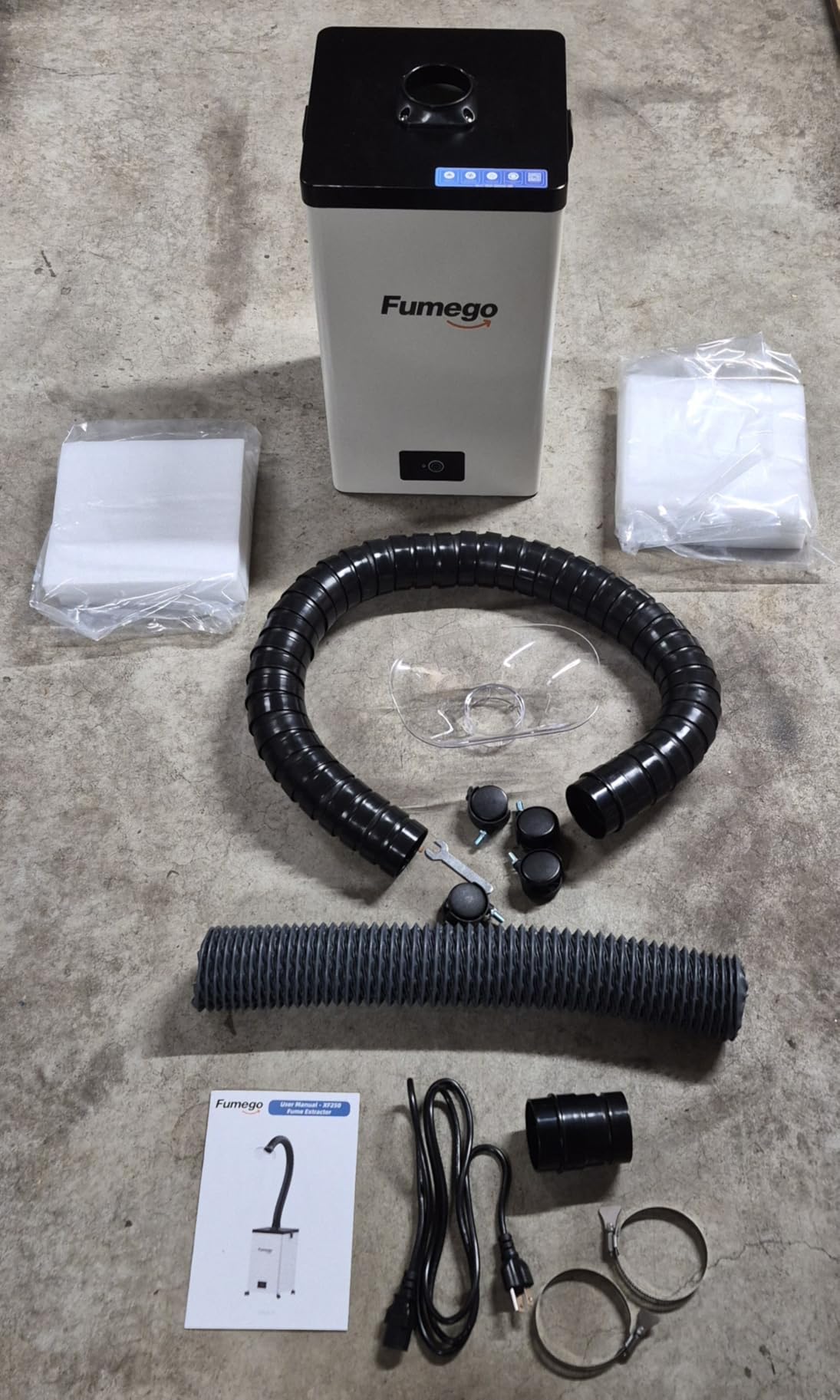
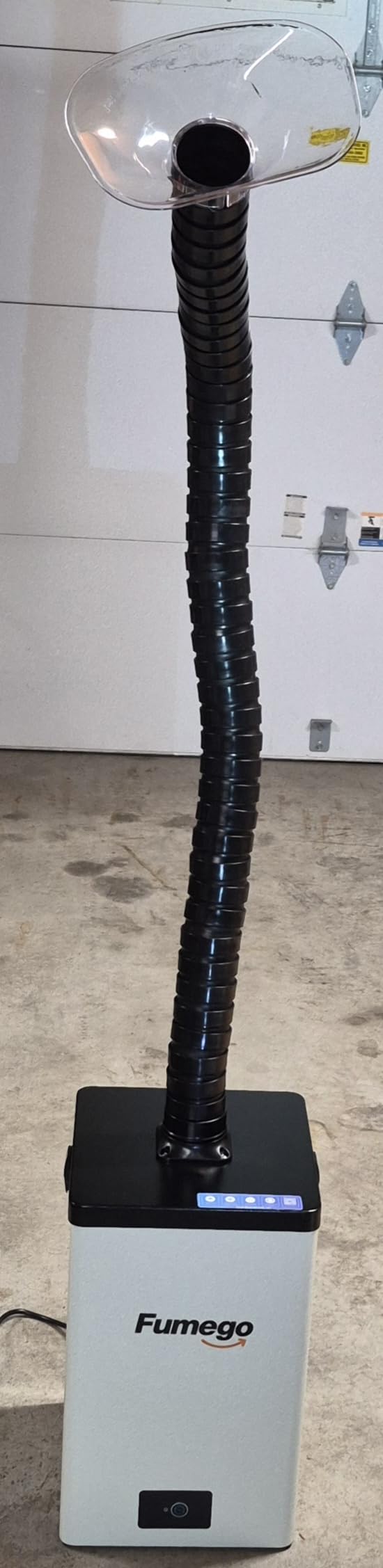
What sets it apart in practice is positioning. A 1.2m flexible gooseneck arm with 360 degree adjustment plus a 1.5m hose lets you move the intake around a cabinet without relocating the unit, and the 75mm hose fits exhaust ports from 50mm to 75mm, which covers most desktop machines. The brushless motor is rated at 60 dB at full power, and it carries CE, FCC, and RoHS certification.
Be aware of the evidence base. All 14 ratings come from a January 2026 release, so this is early feedback rather than a long-term track record, and there is no durability history yet. At 30 lb with boxy dimensions, it also needs real bench space.
Who this suits
Desktop users who move between machines or change materials often, since the gooseneck arm is the easiest way to reposition capture we saw. The four-stage stack also gives you the deepest odor filtration in a unit at this size class.
It suits buyers who work in a home or studio setting and prefer a rated noise figure of 60 dB at full power to a louder alternative.
Who should skip it
Skip it if you want a proven service record, since the unit is new and thinly reviewed. It is also the wrong choice for a large CO2 cabinet, and the weight and footprint deserve a measuring tape before you order.
How to Choose a Fume Extractor for Your Laser?
Match the airflow to the cabinet, not the marketing number
Start with your machine maker’s recommended airflow and treat that as the floor. For a sealed CO2 cabinet, a rough air-change calculation helps: measure the internal volume in cubic meters, then choose an extractor that clears that volume several times per hour. Remember that rated CFM drops as duct length, bends, and filter restriction increase, so a short straight run beats a stronger blower on a long kinked one.
Placement matters as much as capacity. Forum advice on laser cutting setups repeatedly recommends moving the blower closer to the exhaust port, because a long return run is where suction leaks away. The same principle applies to the hood: within 15 cm of the cut, as the FumeClear FC-2002A is specced, beats a metre away.
Vent out or filter: choose your air path first
If you can reach a window or run ducting outside, exhausting is the cleanest answer and it has no filter to maintain. Recirculation is the right call in an apartment, a classroom, or a shop where drilling is not an option, and that is where a multi-stage extractor earns its place.
Many owners run both, which is a sensible belt-and-braces approach. A sealed cabinet with a window adapter and a recirculating unit as backup handles the worst of it. If you do recirc, the unit needs genuine carbon, not just a HEPA stage, because HEPA traps particulate and does nothing for vapors or odor.
Understand what each filter stage actually removes
The pre-filter catches large particles and protects the expensive stage behind it. The HEPA layer traps fine particulate down to 0.3 microns. The activated carbon adsorbs VOCs and odor on its surface area, which is why high-iodine carbon with a mesh layer performs better than a thin carbon sheet. If a product listing mentions only HEPA and no carbon, it is a dust collector, not a fume extractor.
Filter replacement schedule and what filters really cost
A realistic schedule runs on two clocks. Pre-filters are replaced every 2 to 4 weeks, carbon every 3 to 6 months, and HEPA every 6 to 12 months, with heavier use shortening each interval. The KQZ under 40W unit includes ten 9mm pre-filters precisely because they are the cheap, fast-turnover part that extends main filter life.
Treat filters as rent on the machine. A unit with a 4000 hour carbon cartridge, like the FumeClear models, changes your annual consumable cost far more than the purchase decision does. The practical figure owners quote is roughly 3 to 6 months per main filter, and one manufacturer rates a cycle at about 200 hours at three hours of daily use.
Noise matters more than buyers expect
If you work in a shared room, the dB rating can decide the purchase. Under 50 dB is the KQZ 210W’s claim, under 55 dB covers the xTool Desktop unit and the FumeClear FC-2002A, and 60 dB at full power is the XF250’s figure. Plan to run the unit on a middle speed setting, since several reviewers note the top setting is the loud one.
What not to buy: solder-only extractors marketed to laser buyers
Be careful with solder fume extractors sold as laser extractors. They are built for a low-volume, point-source at very close range, and many have no carbon stage capable of handling laser VOCs. A welding fume extractor is a different specification, and buying a general-purpose unit is the top complaint we see in laser communities. For a broader view of the category, our general fume extractor guide explains the differences.
The DIY route: when a filter box is enough
A box fan with a furnace filter captures particulate well and costs little, and for someone experimenting with wood on a diode laser it is a reasonable first step. It does not remove VOCs, does not create negative pressure at the cabinet, and does not scale. Air assist is a cheap complement that directs air at the cut, but it is not ventilation and it does not replace an extractor.
Still choosing the machine? Compare diode laser engravers and CO2 laser engravers to match the air path to the class of machine you will actually run.
Frequently Asked Questions
How much airflow do I need for my laser cutter?
Match or exceed the airflow your machine maker recommends. As a starting point for a sealed CO2 cabinet, measure the internal volume in cubic meters and choose an extractor that clears that volume several times per hour. A 150W to 210W unit moving 260 to 330 m3/h covers most desktop diode and 40W CO2 setups. Rated airflow falls as duct length and bends increase, so keep runs short and straight.
How often do I replace the filters in a laser fume extractor?
Replace pre-filters every 2 to 4 weeks, activated carbon every 3 to 6 months, and HEPA every 6 to 12 months, with heavier use shortening each interval. One manufacturer rates a main filter cycle at roughly 3 to 6 months at three hours of daily use, or about 200 hours. Units with a filter status light or clog alarm make this easier to track.
Can I laser cut PVC if I have a fume extractor?
No. PVC and vinyl release chlorine gas and hydrochloric acid when cut, and no carbon or HEPA filter neutralizes them. This is a material rule rather than an equipment rule, and it applies to every extractor on the market. Keep a fire blanket and extinguisher near the machine, never run a laser unattended, and use a respirator with organic vapor cartridges as a backup layer only.
How do I ventilate a laser engraver indoors?
Run a dedicated extractor with a pre-filter, HEPA, and activated carbon stage, connect it to the cabinet exhaust port with the shortest straight hose run you can manage, and position the hood within about 15 cm of the cut. If you can reach a window, exhausting outside is the cleanest option. Recirculation is the practical choice in apartments and classrooms where drilling is not possible.
Are solder fume extractors safe to use for laser engraving?
They capture what is in front of them, but most are built for a low-volume point source and many lack a carbon stage with the mass to handle laser VOCs. A general-purpose or solder-focused unit is a common mismatch for laser buyers. Choose a unit rated for your wattage class with an airflow figure in m3/h or CFM, a dedicated carbon stage, and noise data.
Do I need a fume extractor if my laser is enclosed?
An enclosure contains the beam and often catches much of the plume, but it does not filter what it captures. A sealed cabinet still needs an air path, either an extractor connected to its exhaust port or ducting outside. For bare diode beds the need is greater, because smoke drifts across the room regardless of the machine housing. Air assist helps push air at the cut but is not ventilation.
Final Verdict
The best fume extractors for laser engravers in 2026 come down to one question: what is your machine, and where does the air need to go? For most desktop diode and fiber owners, the xTool SafetyPro AP2 is the strongest all-round pick, with 6-layer SuperCyclone filtration, a 150 m3/h rating, and the best review record in this group at 4.7 across 153 ratings.
Go quieter in a shared room with the KQZ under 60W unit, add capacity for 20W to 80W machines with the FumeClear FC-2004, and keep budget hobbyists covered with the Genmitsu five-layer purifier. Whichever you choose, size the airflow to your cabinet, keep the carbon stage stocked, and leave PVC alone.