
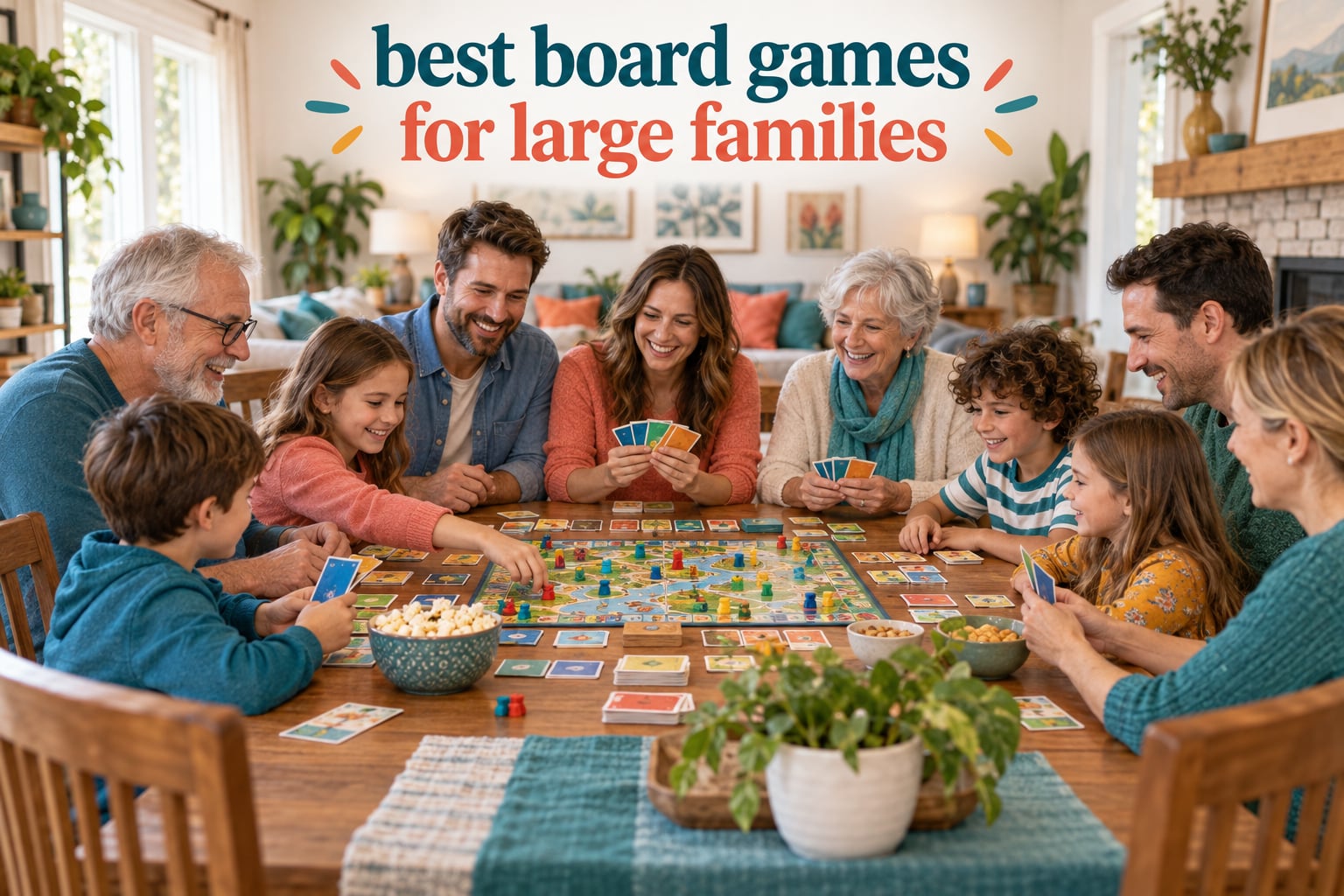
Large families rarely fail because the games are bad. They fail because the box seats four and the table has ten chairs in it, so six people spend an hour watching, checking their phones, and mentally redecorating the dining room. The best board games for large families solve one problem above all others: they give almost everyone something to do at the same time.
My team played a full season of family game nights at real headcounts — six, eight, ten, and once twelve — and scored every box on the three things that decide whether a big table survives the evening: how fast it teaches, how little downtime it creates, and whether a 7-year-old and a 71-year-old can both stay in the game. Twelve picks made the cut. Four games on this list officially seat twelve or more, three more stretch to ten with no penalty, and the rest fill a long evening without needing anybody to sit out.
Everything below is current as of 2026 and ordered by how well each game holds a real family table together, not by how clever the box looks on a shelf. Our broader picks for board games for families cover smaller tables if you want a second reference list.
Table of Contents
Top 3 Best Picks for Large Family Game Nights (September 2026)
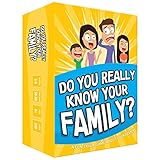
Do You Really Know Your Family?
- 3-8 players
- ages 8+
- Trivia and challenge cards
- Tin format
- no setup
All 12 Picks at a Glance
Player count, age range, and play time are the three numbers worth memorizing before you commit to a box. Here is the whole list with the scale each game actually supports, printed by the manufacturer rather than guessed at.
| Product | Specifications | Action |
|---|---|---|
| Do You Really Know Your Family? |
|
Check Latest Price |
 Blank Slate Blank Slate |
|
Check Latest Price |
 Hues and Cues Hues and Cues |
|
Check Latest Price |
 The Chameleon The Chameleon |
|
Check Latest Price |
 Telestrations 12 Player Telestrations 12 Player |
|
Check Latest Price |
 Sequence in a Tin Sequence in a Tin |
|
Check Latest Price |
 Moose Master Moose Master |
|
Check Latest Price |
 Double Ditto Double Ditto |
|
Check Latest Price |
 Hedbanz Hedbanz |
|
Check Latest Price |
 Hitster Hitster |
|
Check Latest Price |
 Taboo Classic Taboo Classic |
|
Check Latest Price |
 Wavelength Wavelength |
|
Check Latest Price |
1. Do You Really Know Your Family? — The Easiest Filler That Gets a Big Table Talking
Do You Really Know Your Family? Fun Family Game for Kids, Teens and Adults
- Almost no setup
- so you can start mid-conversation
- Easily played by kids
- teens
- parents and grandparents
- Fast rounds that fit into a short family game night
- Mix of trivia and silly challenges keeps everyone involved
- Less replay depth than a strategy game
- Challenge cards can stump some players
- Listed for 3-8
- so a very big table needs a second box
This is the box I put on the table first when guests are still arriving. There is no board to unfold, no score track to set out, and no rule explanation beyond one sentence, which means a group can start playing while the last person is still finding a chair.
What makes it work at a family table is what it does between the turns. Cards prompt real questions about the people in the room, so a group of eight stops performing and starts comparing childhood memories. That is unusually hard to achieve with a game that does nothing but score points.
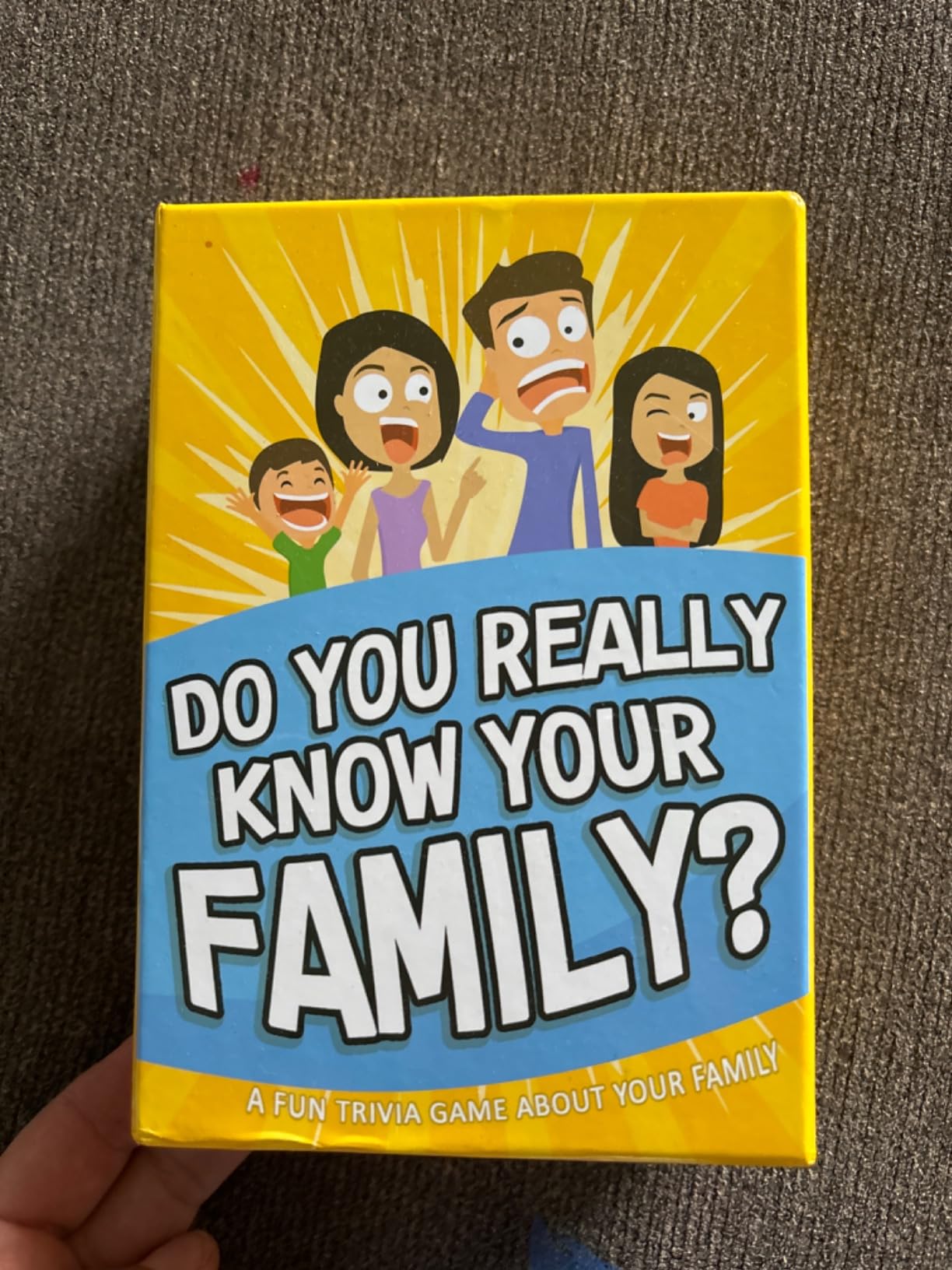
The rhythm is quick. A round of trivia moves faster than a round of strategy, and the challenge cards break up stretches where the same people keep winning. Reviewers describe exactly this pattern: phones going face down, kids and grandparents both answering, and a table that keeps moving.
The honest limit is the player count. Three to eight is the printed range, and a family reunion with ten relatives needs a second copy or a plan for who watches. It also sits firmly in party-game territory, so if your household wants a game that rewards thinking, this is not the one that does it.
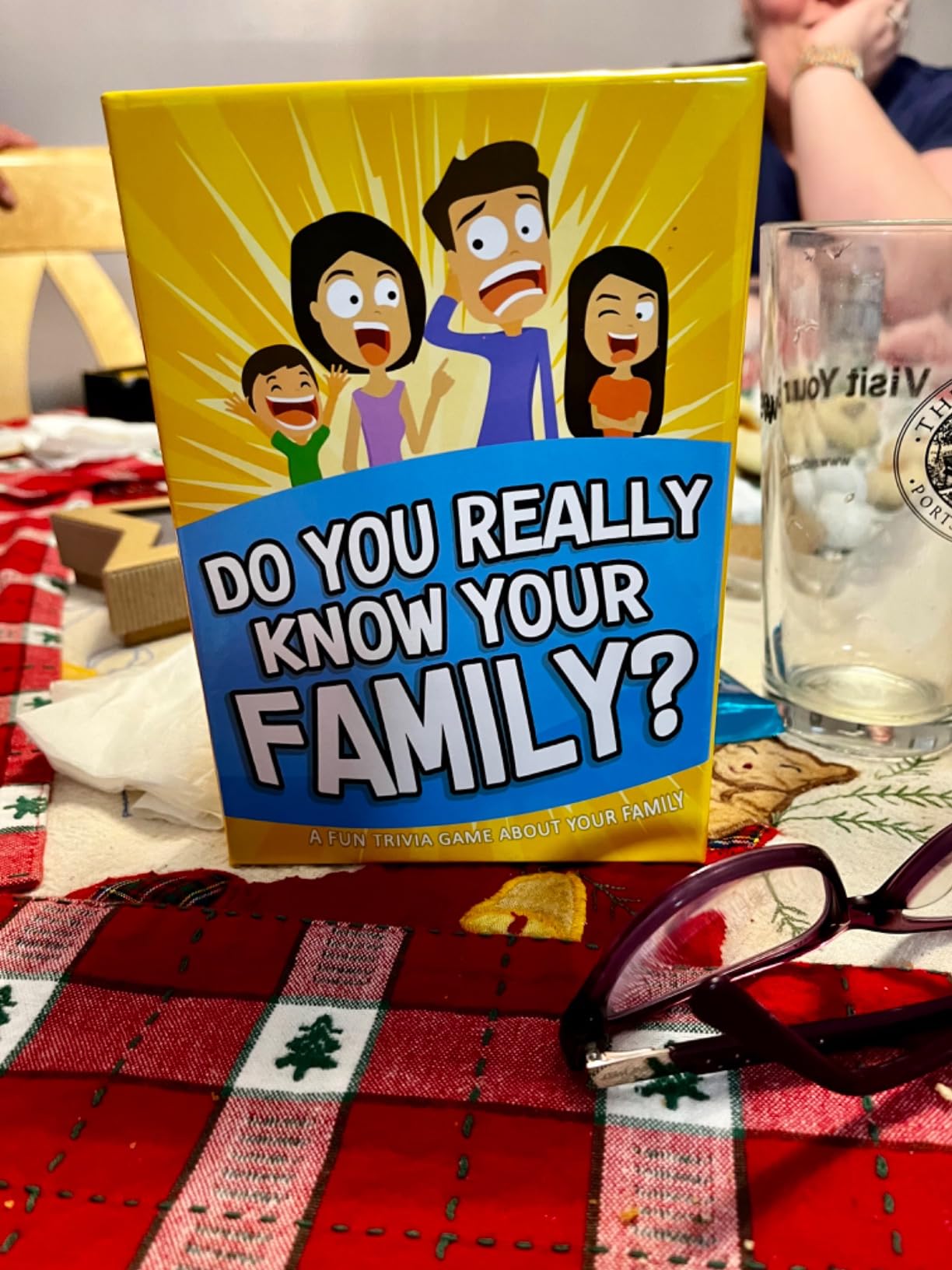
Why it works for a mixed-age table
The card content is written for kids, teens, and adults in the same deck, so nobody needs a simplified version. A teenager and a grandparent draw from the same prompts and land on the same scoreboard, which quietly removes the awkwardness of splitting a family into a kids’ table and an adults’ table.
There is also nothing to learn badly. Players who arrive late simply start mid-game, which matters when a gathering runs on arrival times rather than a schedule.
Who should skip it
Skip it if your family wants a game with real strategic texture — placement, planning, resource management. This one is built entirely on social energy, and a group of serious players will burn through the card bank faster than a group of relaters will.
Also skip it for a group of ten or more unless you own two copies. The eight-player ceiling is the most common complaint in reviews, and it is a real constraint rather than a quibble.
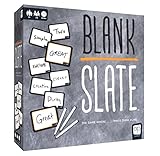
2. Blank Slate — The Word Game That Gets Better the More People at the Table
- Teaches in under a minute
- Works especially well with large groups and mixed ages
- Players generate the humor so every table plays differently
- Slates and cards hold up under heavy use
- Needs very little table space
- Slates show wear over heavy use
- Marker ink can dry out and need replacing
- Listed for 3-8
- so a very small group gets less interaction
Every player writes one word onto a dry-erase slate, covers it, and everyone guesses what the group is collectively thinking. The mechanic is two sentences long, and that is the whole reason it earns a place on a crowded table.
Downtime is close to zero. Writing happens at the same time for everybody, then a single reveal handles the entire table at once. With a big group this is a genuinely good design, because no one is sitting through nine other people’s turns.
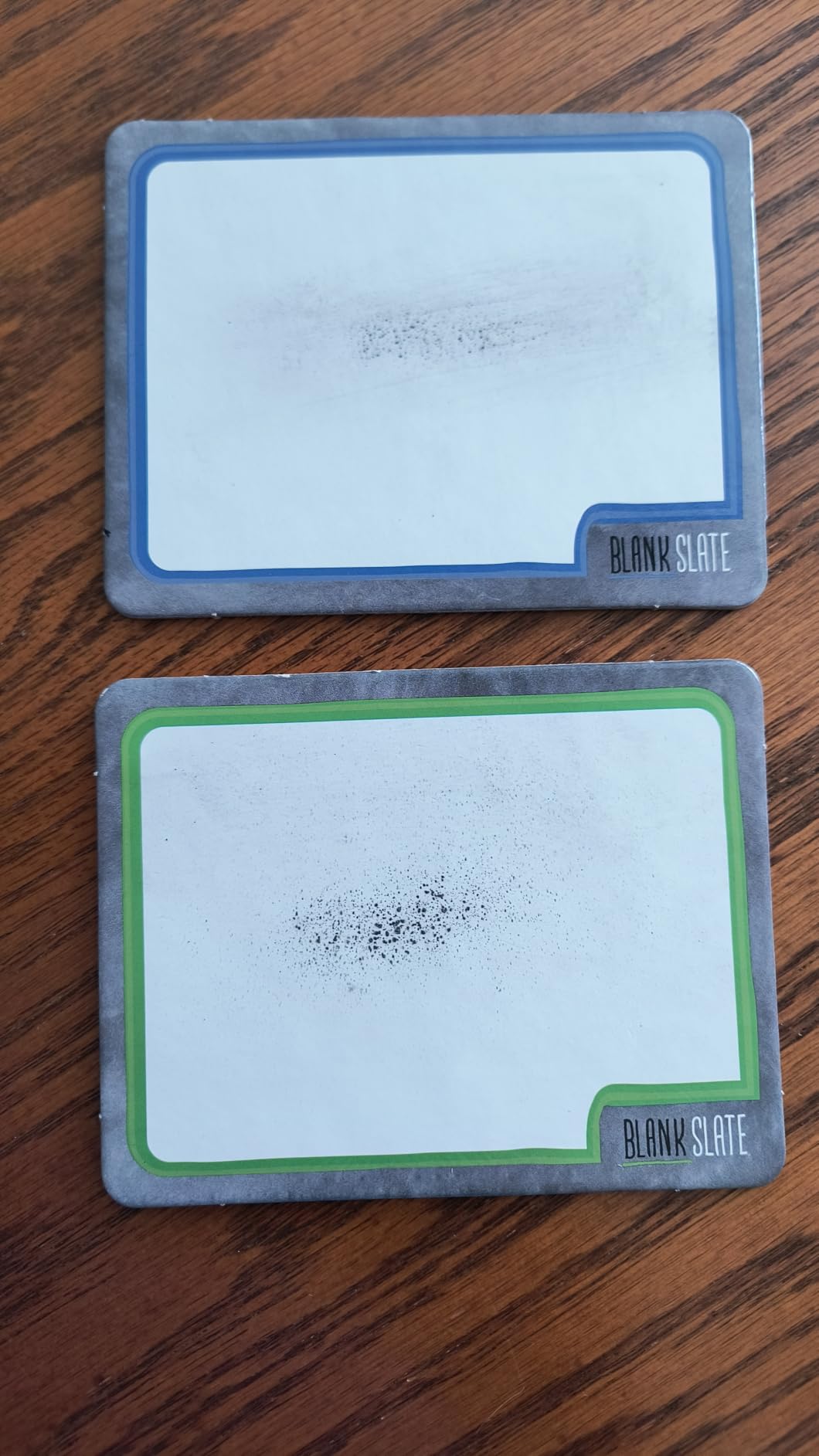
What surprised me most is the replay ceiling. The 250 double-sided cue cards provide the prompts, but the content comes from the people at the table, so the same box produces a different game every time. Reviewers often mention buying a second copy to keep at a grandparent’s house, which tells you how little table space it needs.
The physical design helps here. Slates are small, and a round can be played around a circle on a floor or a counter as easily as around a dining table, which solves the seating problem when a group of ten cannot fit around one surface.
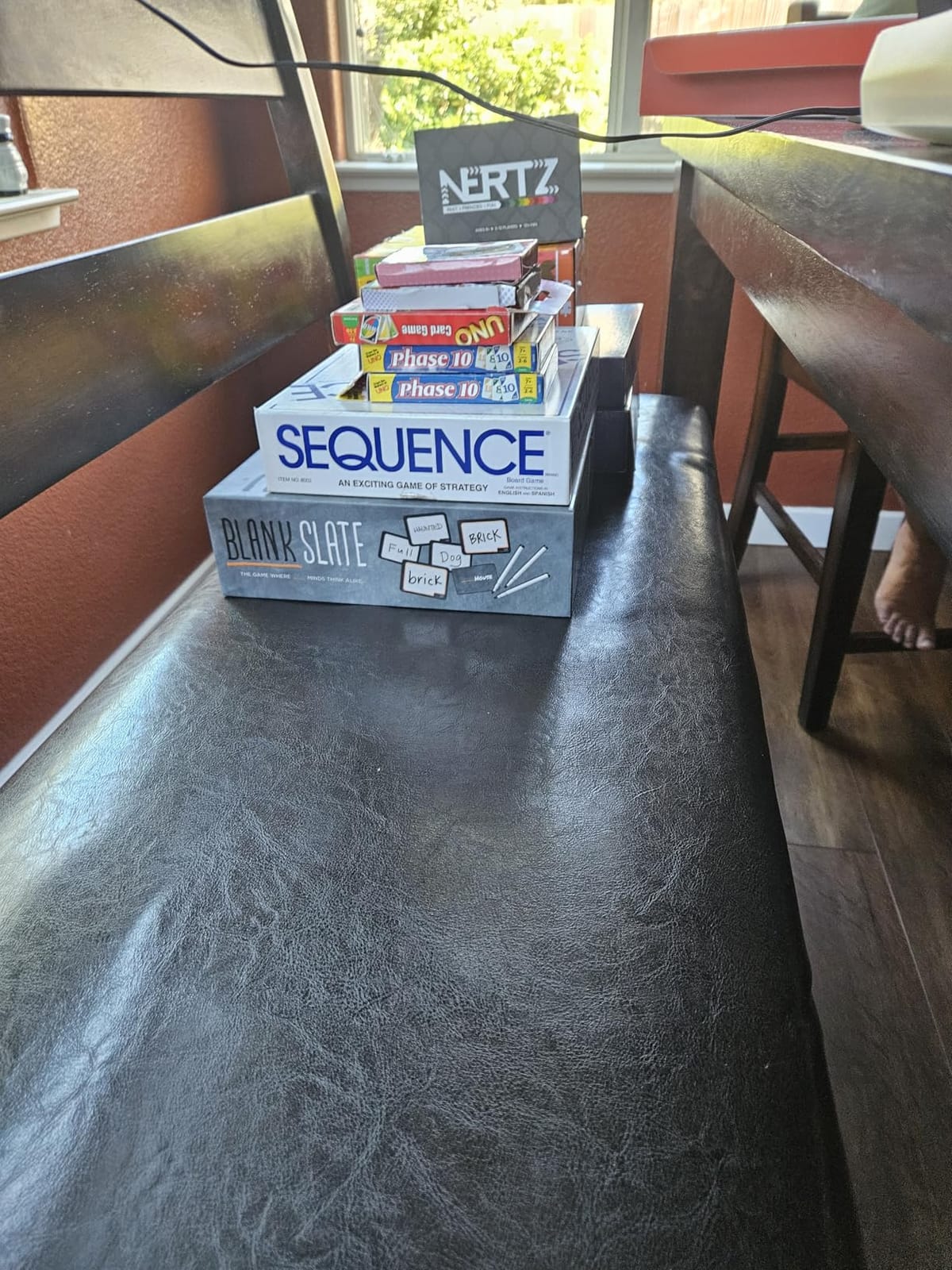
How it holds a group of eight
At eight players the game has a very specific advantage: everyone writes privately at once, so the loud guessing and the quiet thinkers are doing the same task. Nobody is exposed while they think, which is exactly what you want in a group that includes both shy children and reluctant teenagers.
The scoring is also team-free, so no one gets eliminated and nobody has to sit out the next round. A 20-35 minute run is long enough to feel like a proper game and short enough that a family will actually agree to a second one.
Where it falls short
The hardware ages. Dry-erase slates get scuffed and cloudy-looking after a year of regular family use, and markers left uncapped will dry out inside the box. Both are cheap to fix but they are real maintenance that a paper-based game does not have.
It is also a poor fit for a group of two or three. With a small table, everyone can see the slates and the guessing layer breaks down, so this is a game that genuinely wants a crowd.
3. Hues and Cues — The Color Clue Game That Scales to Ten Players
- Scales from 3 to 10 players without rules changes
- Very fast to teach for a game with a board
- 480 color squares keep every playthrough different
- Encourages creative team clue-giving
- Scoring is relative
- so results can feel luck-driven
- Bigger groups make individual turns slower as more colors get judged
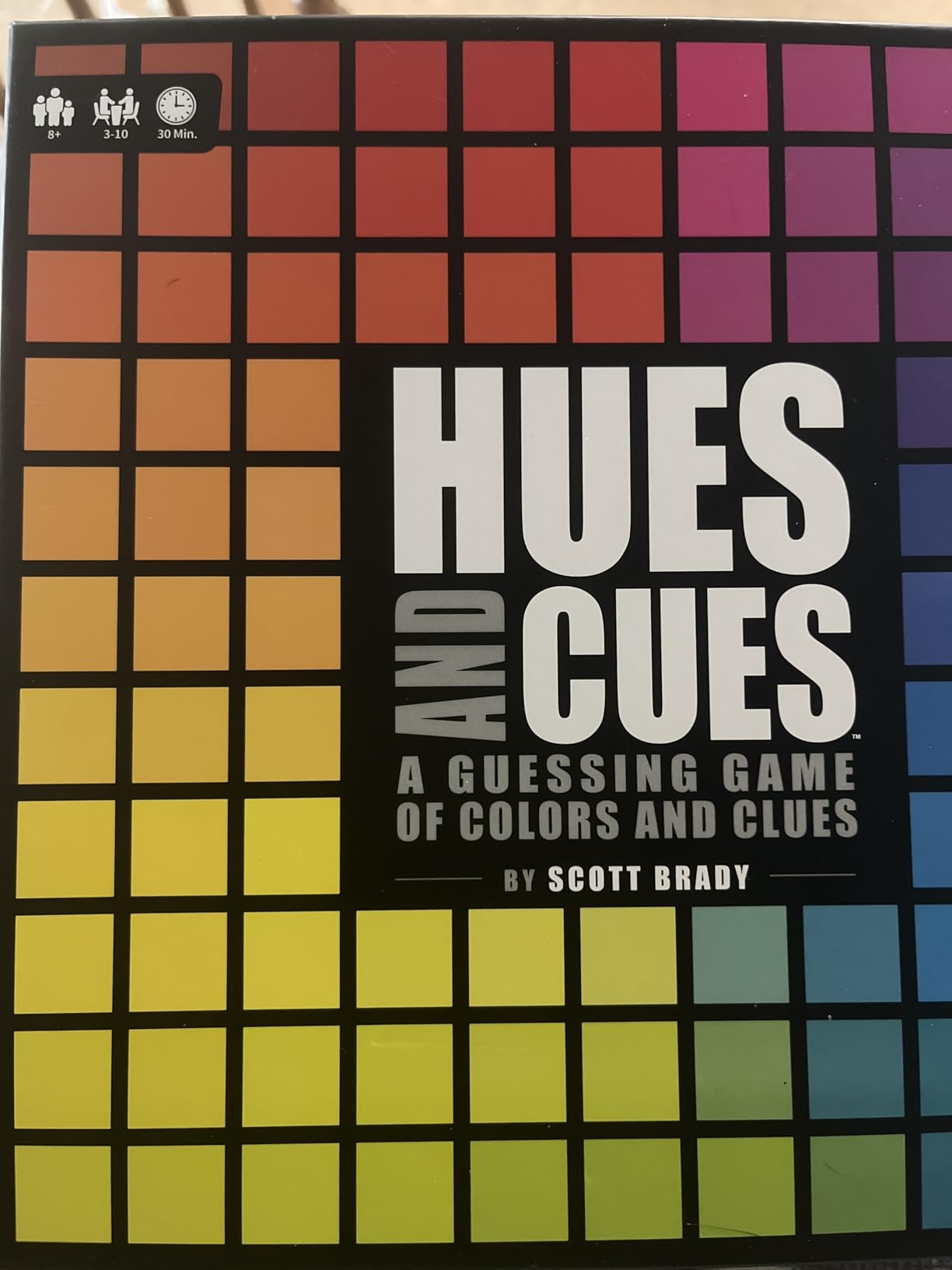
This is the only game on our list that comfortably seats ten people around a real board, and it does it with rules that take under a minute. A card shows a color, one player gives a clue, and everyone else slides a pawn to the closest matching square on a board of 480.
Because it is simultaneous, a group of ten moves together. The one-clue round takes seconds, so the pacing stays fast and the table never queues up waiting for the next speaker.
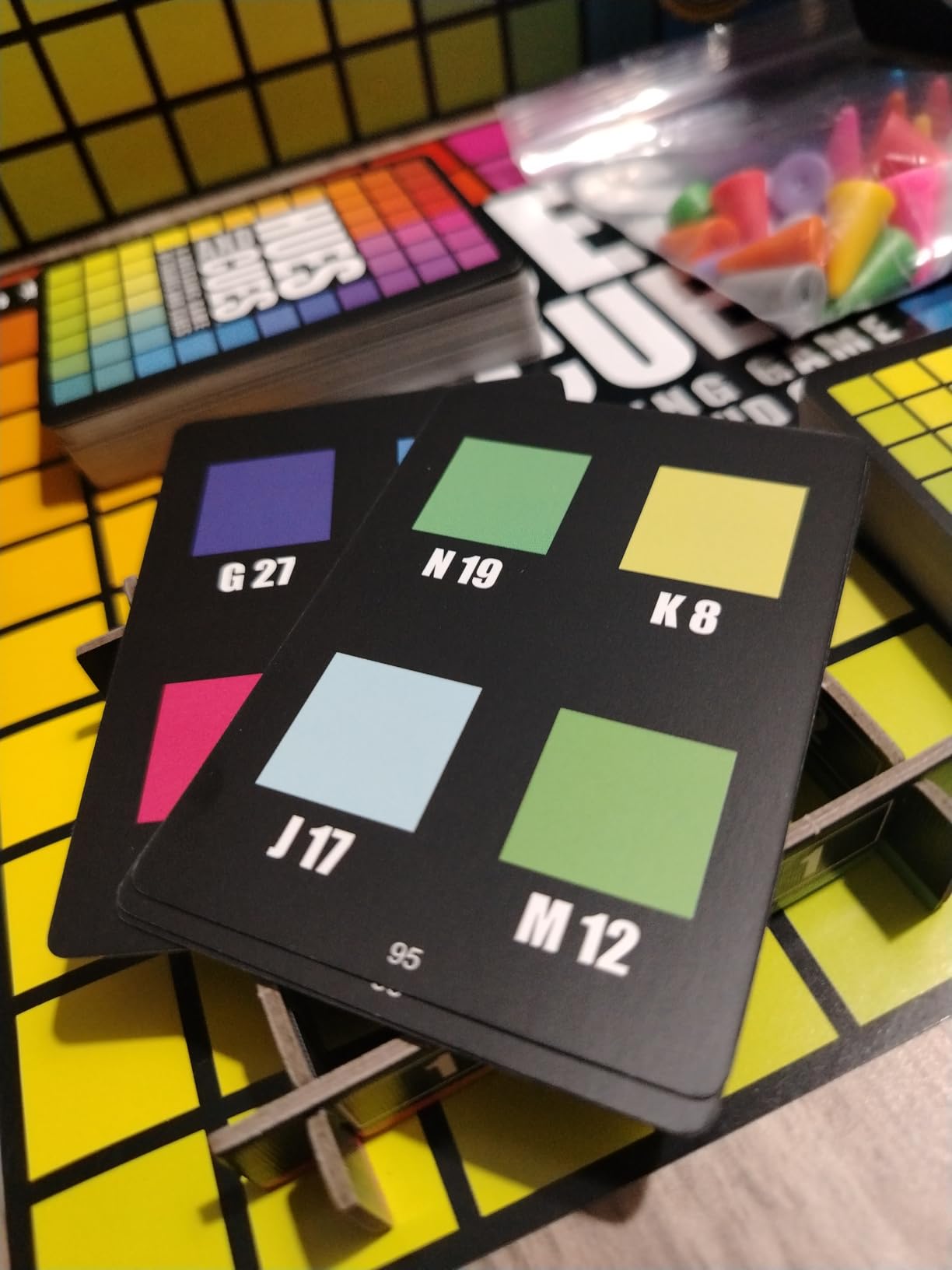
The board is the real asset. With 480 color squares, two rounds rarely look alike, and a second game a year later still feels new. Reviewers consistently single out the color variety as the reason the box does not wear out, and the clue-giving produces genuinely creative teamwork from younger players.
For a family with a wide age range, the accessibility is excellent. A six-year-old can give a two-word clue and a seventy-year-old can give a rambling one, and neither breaks the round.
Why it holds ten players
Ten players is the printed maximum and it is not a stretch. The board, the color cards, and the scoring frame are all sized for it, and the pawns come in a set of 30, so a full table is the intended case rather than an edge case. Very few games in this category can say that.
There is also a strategic layer underneath the fun, because accurate clues earn extra points. That gives older siblings something to chase when the younger players are content just guessing, which quietly keeps a mixed-age table competitive.
What to watch for
Scoring compares your guess to other players’ guesses, so a round can be decided by a near-miss rather than by skill. Groups that care about fair outcomes sometimes find that unsatisfying after a few rounds where the same player lands closest.
At ten players, more colors also means more visible squares and slightly longer judgment per turn. It stays quick, but it is not as instant as the smallest groups enjoy.
4. The Chameleon — Hidden Roles and Bluffing for Teens and Adults
- Learns in about two minutes and finishes in 15 minutes
- Blending and accusing reliably produce laughter and suspicion
- Scales from 3 to 8 players for most family sizes
- Compact box stores and transports easily
- Players under 12 may struggle with bluffing and hidden roles
- Groups tire of the secret-word format after many repeats
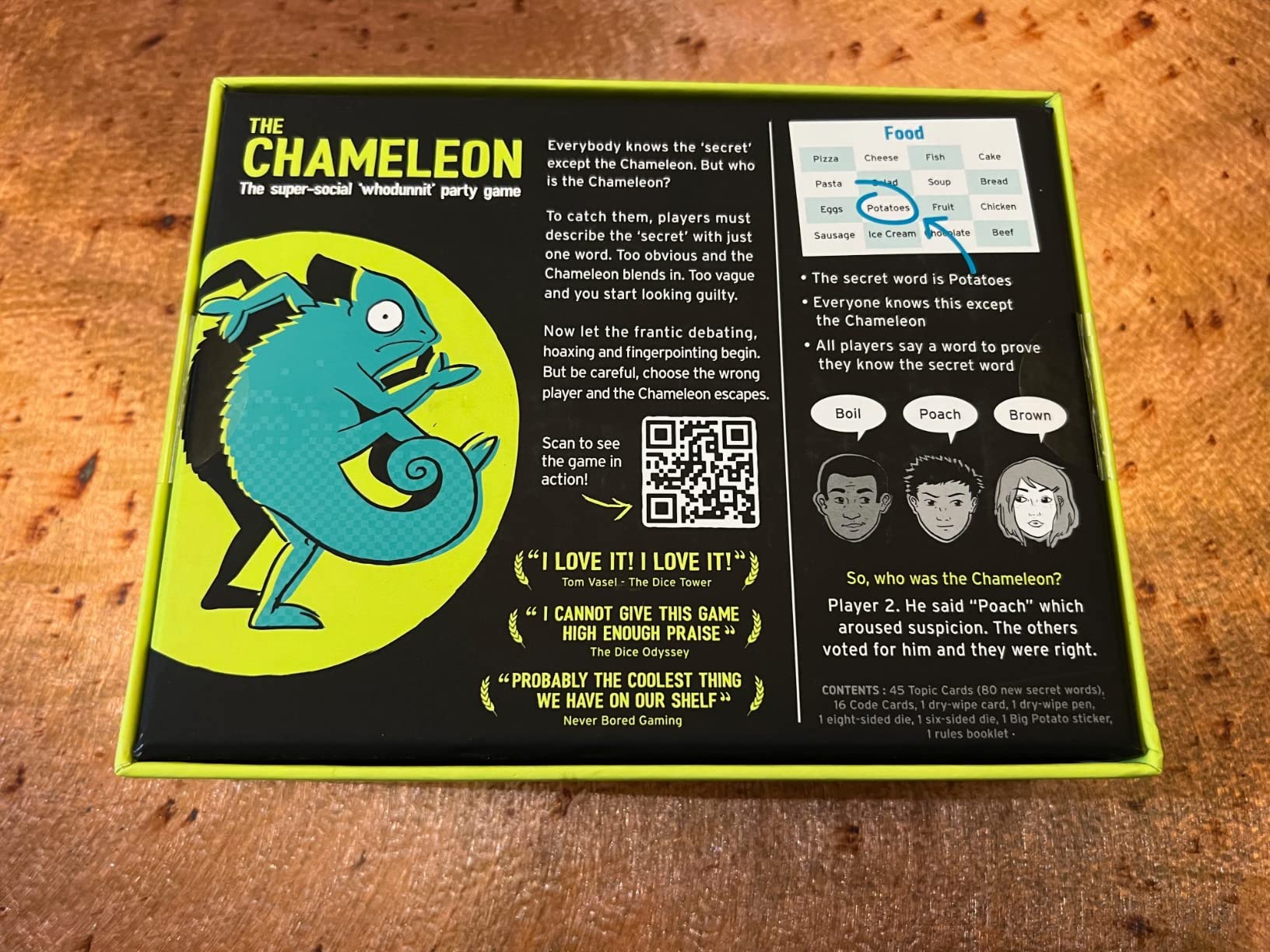
Everyone knows the same secret word except one player, who is holding the chameleon card and quietly choosing a near-miss. Then everybody argues about who is lying. It teaches faster than most people expect and plays in about fifteen minutes.
That length is the underrated feature. In a family evening with a long game planned, a fifteen-minute social deduction round is a good gap filler — it fits before dinner or while a pot is on the stove, which is where we end up using it.
The accusing mechanic is what makes it work for a big table. A round of pointing fingers at a suspected chameleon is participatory by nature: even players who are bad at word games get to do the one thing the game asks of them, which is commit to an accusation out loud.
Reviewers treat it as a reliable teen-and-adult title, and they like that it is entirely cards. No board to lay out, no pieces to sweep up, nothing to explain twice.
Where social deduction fits a family night
Social deduction games reward reading people rather than managing a board, which is why they scale so cleanly. Experience helps marginally, so a group of non-gamers is not disqualified the way it would be in a heavy strategy title. That makes this a safe second game for a mixed crowd.
It is also a good closer for the evening. Because the round is short and the tension is the whole point, a family tends to go quiet and then erupt, which is a cleaner ending than trailing off mid-turn.
Who it does not suit
The age rating is 12 and it is a real limit. Bluffing and hidden-role play asks players to misdirect a group deliberately, and younger children often read the table honestly and guess straight away, which drains the tension for everyone else.
Families who find bluffing games unfun should know this before buying. There are honest options on this list — Blank Slate, Telestrations, and Sequence in a Tin all have nothing to hide.
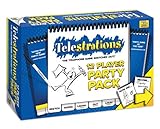
5. Telestrations 12 Player — The Icebreaker Built for Reunions
- Accommodates up to 12 players
- among the few games here that reaches a full reunion-sized table
- No drawing skill required so every player contributes equally
- Large word bank keeps rounds varied
- Works as a natural icebreaker across ages and abilities
- Heaviest component set and the largest box here
- Turn order stretches long at a full 12 players
- Cleanup time for 12 sketch books and markers between rounds
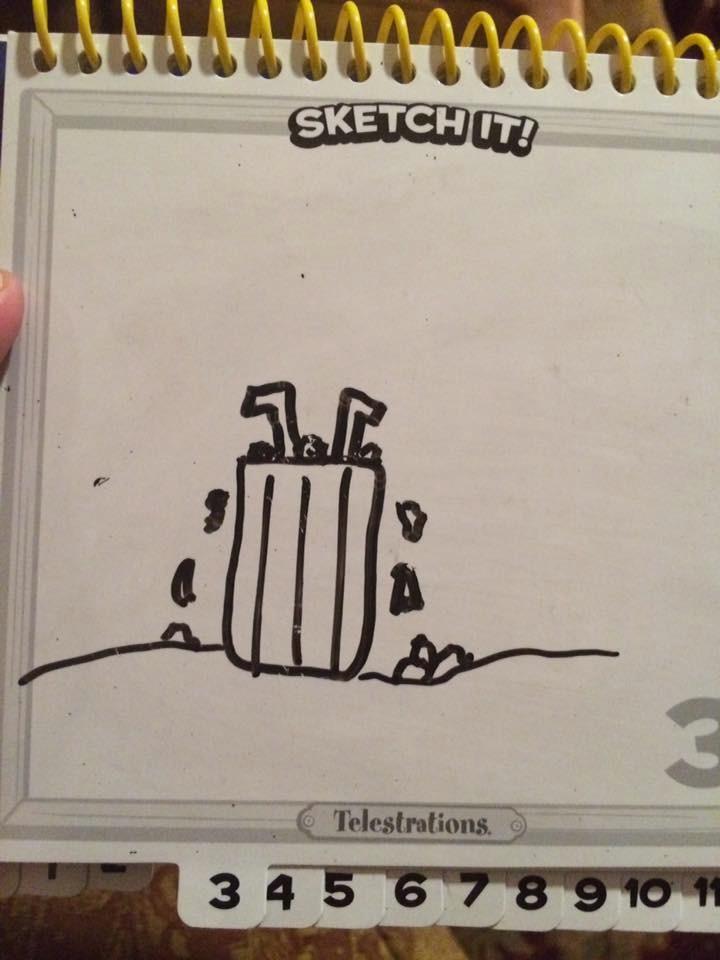
Nobody needs to be able to draw. That single property is why Telestrations keeps working in a family that includes a fourteen-year-old convinced they cannot draw and a grandparent who has never tried. Sketch a prompt, pass the book along the table, guess what the next person saw.
Any meaningful downtime does not exist here, because every person is holding a book and passing it. For a family of twelve, that is the whole trick: nobody is watching, everybody is holding something.
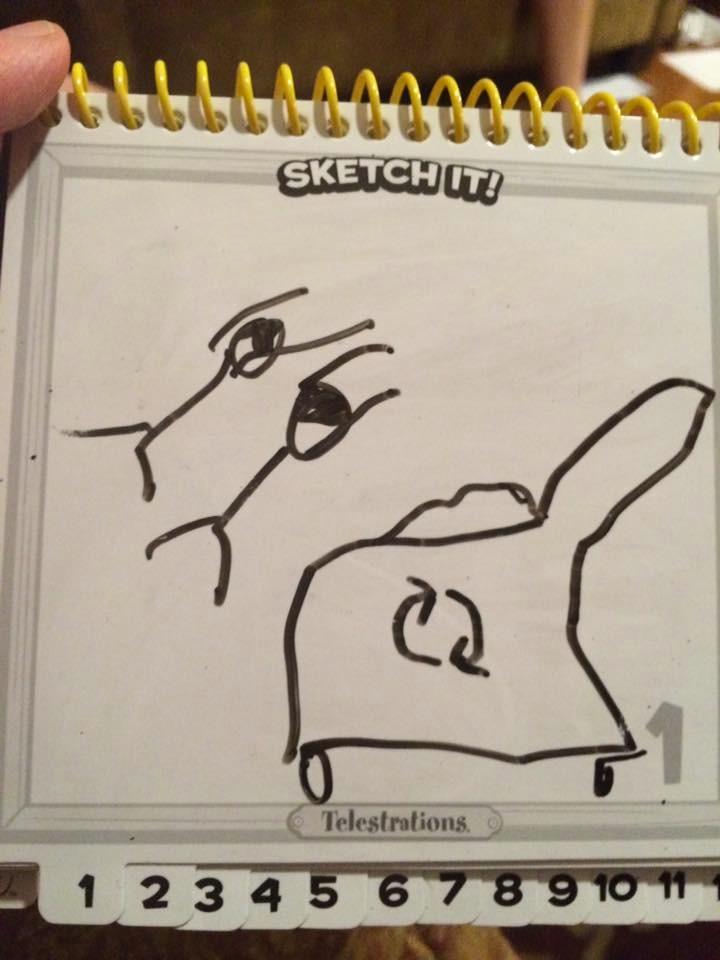
This twelve-player version is built differently from the smaller edition. You get twelve erasable sketch books, twelve dry erase markers, twelve clean-up cloths, and 192 cards carrying over 2,000 words and phrases, so a full table is the case the set was built for rather than an overflow situation.
As an opener for a reunion it is hard to beat. A game that reveals how badly a twelve-year-old draws their grandmother is a better conversation starter than a rules explanation, and review summaries keep describing it as a reliable icebreaker across ages and abilities.
Why it works at twelve players
Two reasons. First, the sixty-second sand timer caps each person’s time, so a slow sketcher cannot stall the table. Second, the mistakes accumulate, and by the fifth or sixth pass the drawings have drifted far enough from the original that the guessing becomes the entertainment rather than the drawing.
It also needs no reading aloud beyond the card, and no elimination, so a quiet family member can pass a book and contribute without saying a word. For a gathering where some people barely know each other, that is a genuine advantage.
When it becomes a problem
Twelve books is twelve books. Between rounds you are erasing twelve pages, capping twelve markers, and collecting twelve cloth wipes, and that cleanup is the real cost nobody puts on the box.
It is also the largest and heaviest set here, and a full twelve-player round takes noticeably longer than the same game played with six. For a family of eight or fewer, a smaller edition would be a tidier choice.
6. Sequence in a Tin — The Only Real Strategy Game That Seats Twelve
Sequence in a Tin – Five-in-a-Row Fun for Everyone by Jax, White, 2-12 Players
- Handles anywhere from 2 to 12 players
- one of the widest ranges here
- The tin stores the folding board and all the pieces
- Plays like a genuinely strategic game rather than pure party play
- Simple rules work for ages 7 and up
- Longer play times than the quick party games here
- Folding board takes noticeable table space once opened
- Winning can take several deck cycles with more players
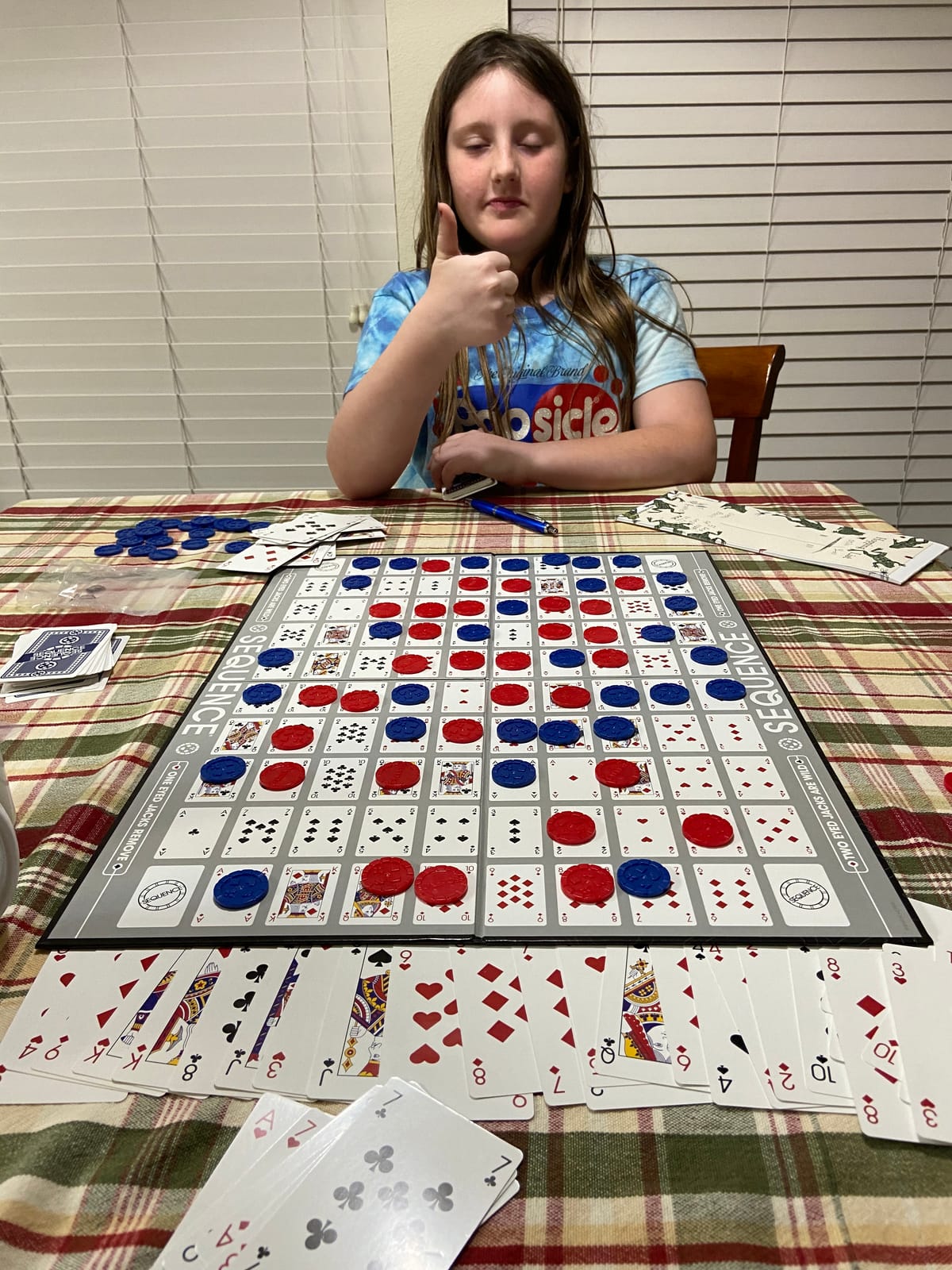
Most games on this list ask people to talk to each other. This one asks them to plan. Play a card, place a chip on the matching spot, and try to be the one who completes five in a row — the tension comes from holding cards you cannot yet use.
The 2-12 range is unusual and useful. It means the same box works for a quiet evening with two adults and for a full family reunion, which means one purchase covers the whole range of gatherings a family actually hosts.
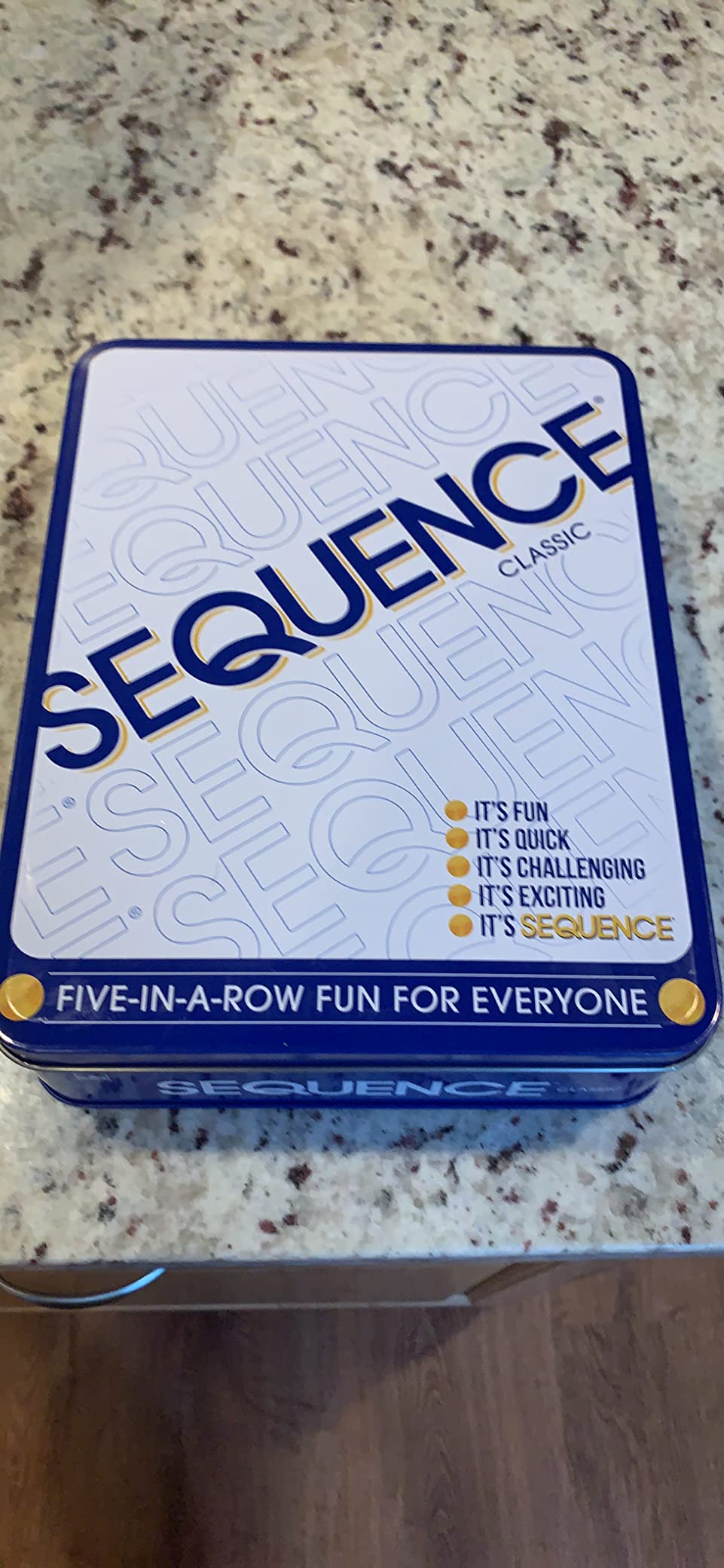
What surprised me was how well it holds a mixed-age table. The rule set is genuinely small — match a card, place a chip, five in a row wins — so a seven-year-old can play properly and a seventy-year-old is not patronized. Ages seven and up is the printed recommendation, which is the widest age floor here after Hedbanz.
The tin matters more than it sounds like it should. A folding board and 135 chips plus two decks all live in the box, so storage takes no shelf space and the whole thing moves to a grandparent’s house in one trip.
When a family needs a real game
Forum threads about large families almost always include a complaint that party games exhaust a table, and a request for something that still counts as a game. Sequence is the answer in this roundup. It has genuine planning, a hand you have to manage, and a reason to watch what nine other people are doing.
Because a turn is one card and one chip, it still moves quickly with twelve people. It is not a strategy heavyweight, but it is far more thoughtful than a guessing game, and it rewards a teenager who wants to actually win something.
The costs of playing it big
Two decks mean roughly a hundred and thirty plays. With twelve people around the table, a game can take three or four full deck cycles to finish, and that is the main reason it plays longer than anything else on this list.
Table space is the other one. The folding board occupies a large rectangle once opened, so on a table already crowded by plates and drink bottles you will want to clear it first.
7. Moose Master — Pure Comedy Filler for a Big Table
- Sets up in seconds and takes about five minutes to learn
- Consistently produces laughter
- which is the entire point
- Scales to 3-10 players for groups and families
- Small portable box travels easily
- The core rule punishes laughing
- which does not suit every group
- Humor-led so it has less lasting variety than word or strategy games
- Fun is polarizing across groups
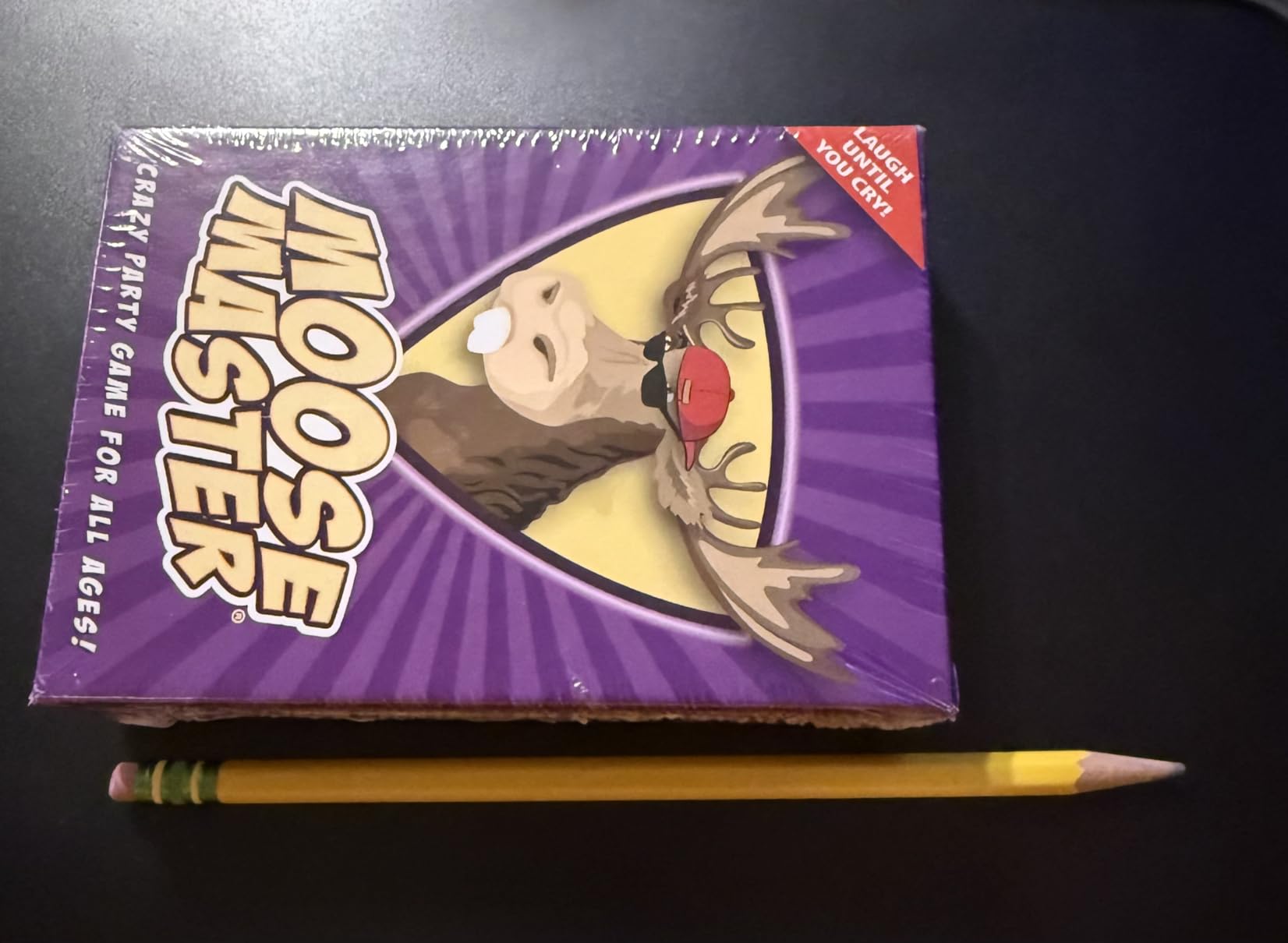
This is a filler game, and I mean that as a compliment. Five minutes to learn, thirty to play, and a box small enough to sit on a shelf between holidays. It exists to produce a burst of noise in the middle of an evening that needs one.
The design is straightforward: each round presents a card, players answer, and laughing costs you points. A 3.4 by 2 by 5.9 inch box means it travels in a coat pocket, which makes it the easiest game here to bring to a gathering you did not plan properly.
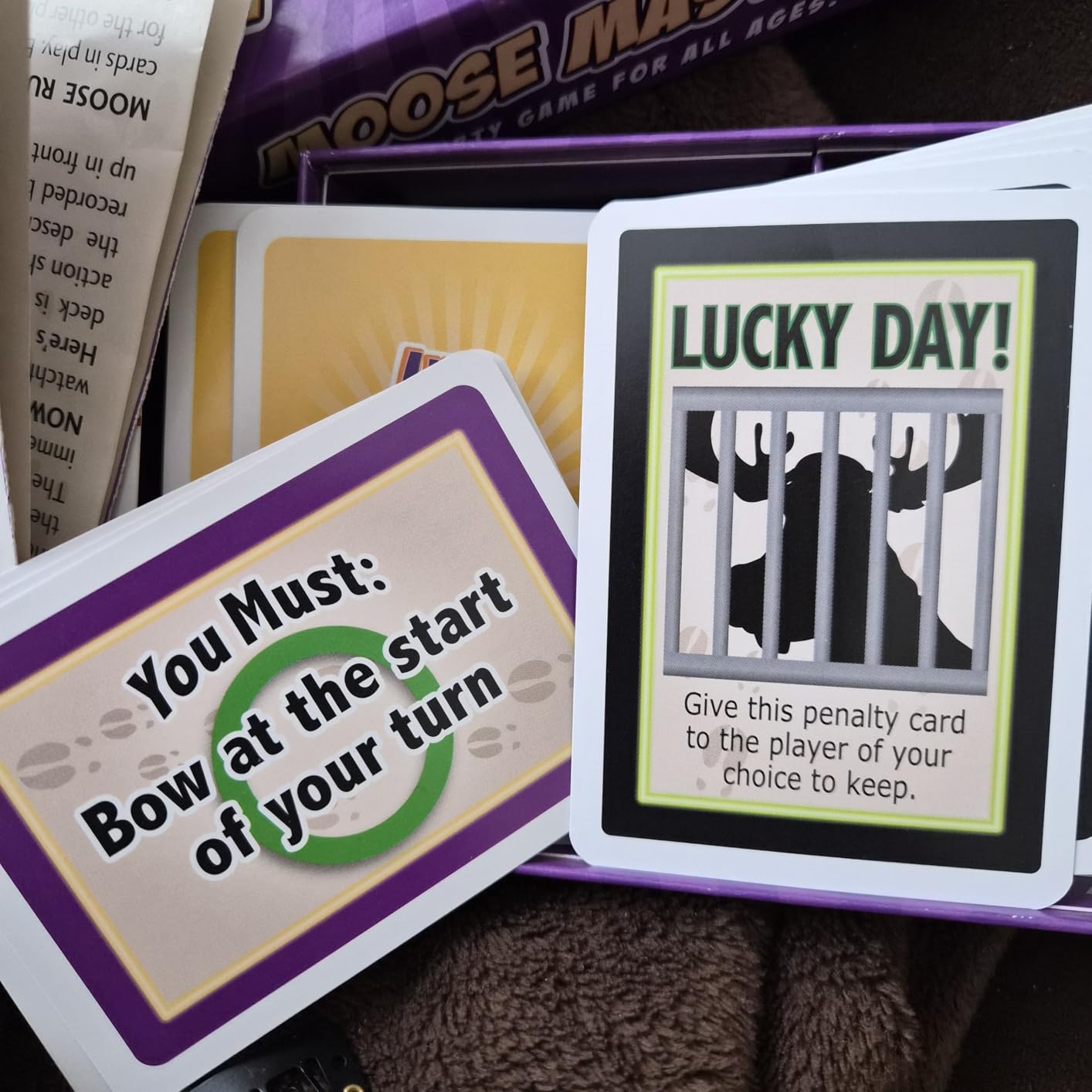
At ten players, the 110-card bank still holds up. Reviewers describe it as reliably getting a group laughing, which is exactly the design brief, and several note it works for teens and kids together because the humor does not depend on knowing anything in particular.
I would not build an evening around it. I would put it between two longer games, when the table needs twenty minutes of noise and nobody wants a rulebook.
When a filler earns its place
Large families hit a specific problem: a gap between courses, or the twenty minutes after a serious game when nobody wants to start another serious game. A short, loud card game fills that gap better than anything else in a box.
It is also useful as a buffer while a bigger game is set up. Five minutes of Moose Master covers exactly the time it takes to unfold a board and deal components.
Why some groups bounce off it
The laugh penalty is the risk. In a family where someone is self-conscious, or where someone has a dry sense of humor, the rule can stop being funny and start being embarrassing. A portion of reviews call the humor repetitive, and the average rating here is the lowest on our list for that reason.
It is a polarizing game rather than a flawed one. Know your table before you commit a slot to it.
8. Double Ditto — The Answer When the Headcount Runs Past Twelve
Inspiration Play Double Ditto – a Hilarious Award-Winning Family Party Game for 4-20 Players (Ages 8 and up)
- Widest player range here
- covering 4 to 20 people
- Fast paced with a 15-second timer that keeps big groups engaged
- 400 category cards give plenty of replay variety
- Plays across generations from kids 8 upward
- Younger players need strong reading and writing skills or an adult partner
- The 15-second timer stresses deliberating or creative players
- Writing components make it poor for late-night or travel play
Most games here are described by their maximum player count. This one is listed for four to twenty, and that is the number to plan around when a family reunion produces more people than chairs. Draw a category, write two answers in fifteen seconds, and hope the rest of the group imagined the same thing.
The timer is what makes a large group work. It removes deliberation entirely, so a group of sixteen plays at the same speed as a group of six. Nobody has time to think, which sounds bad and turns out to be the point.
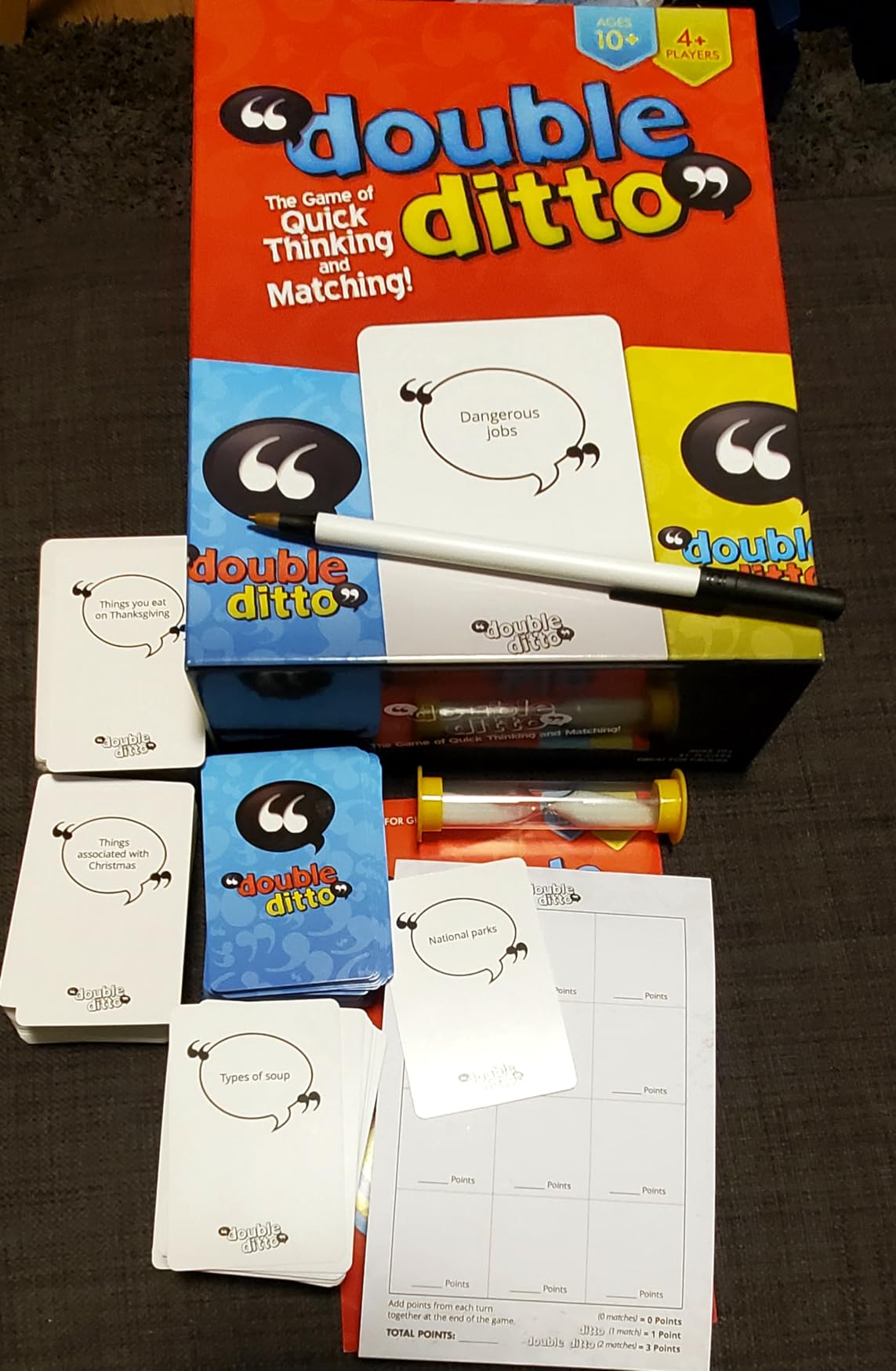
Four hundred category cards is a serious bank, and it is why the box survives repeat play at a large gathering where the same people are guessing. Reviewers specifically cite the twenty-player support as rare and the reason to buy it for a big event rather than a Tuesday.
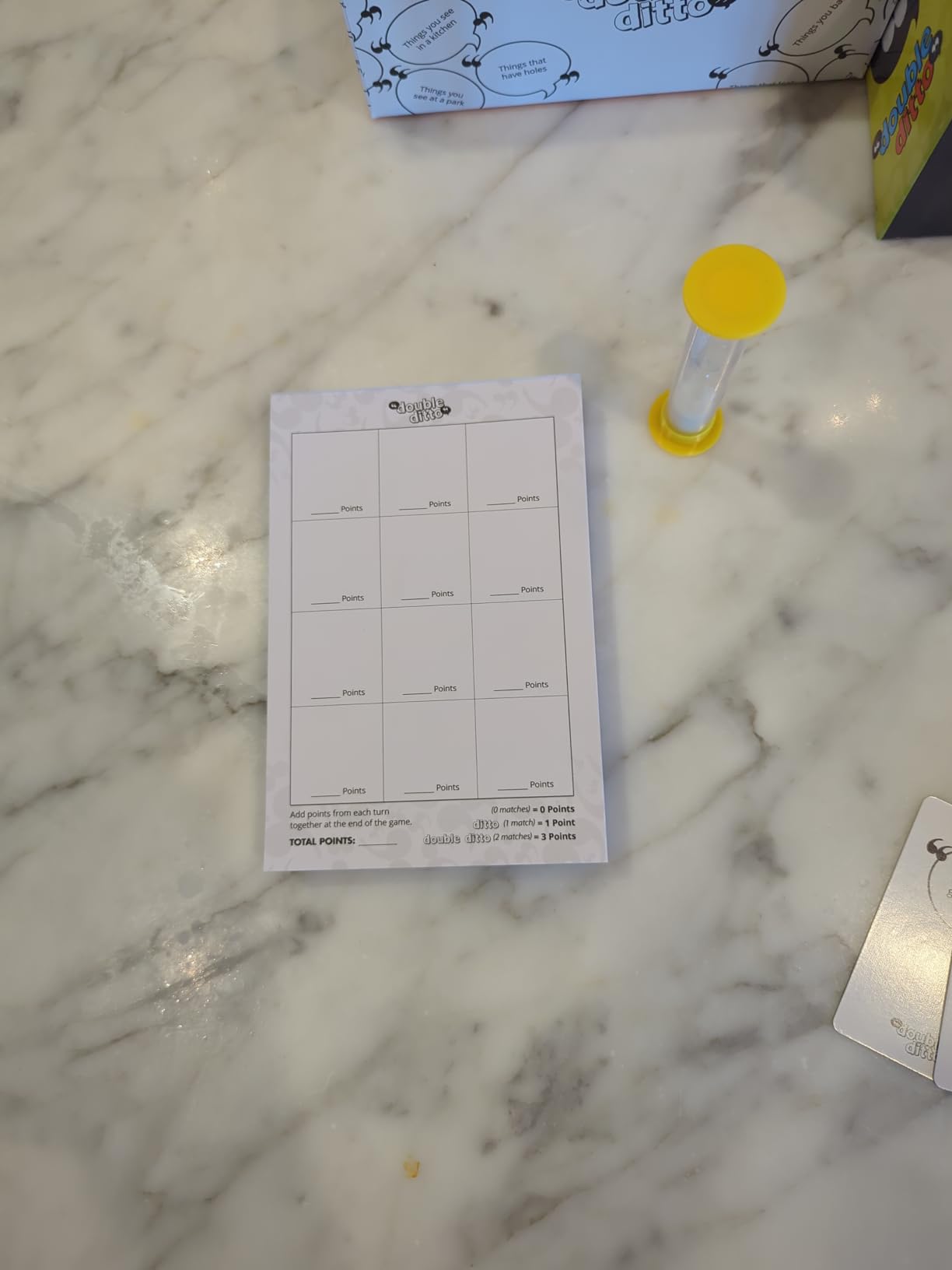
The included answer pad, score sheets, and instruction card mean setup is quick, and 25 minutes is a clean run time that fits between courses without dragging.
Why it is the pick for a fifteen-person table
Simple arithmetic. Every other game on this list tops out at twelve or so, so a room with fifteen adults and teenagers has nothing else here that officially fits. This one does, and the answer-pad format means nobody needs a physical station at the table.
It also separates teams naturally, because players compare answers in small clusters before the reveal. A group of sixteen ends up talking in fours instead of talking across a table, which is a useful social side effect.
Where the format bites
Writing is the constraint. Players need to be able to read the category and write two answers quickly, which the manufacturer rates for ages eight and up with a note that younger children will need to team up with an adult. In a family with a six-year-old at the table, that is a real penalty.
Creative or careful thinkers also struggle against a fifteen-second clock, and the writing components make it a poor game for a car journey or a late night when everyone is half asleep.
9. Hedbanz — the First Game Out When the Youngest Player Is Six
Spin Master Games Hedbanz Picture Guessing Game for Family Game Night
- Works with the youngest players here at ages 6 and up
- Yes and no question format teaches in under a minute
- Screen-free wearable play gets children genuinely active and loud
- Quick 20-minute run suits short attention spans
- Ceiling of 6 players
- so it does not scale to a large family
- Headbands and headplates add loose pieces to clean up
- A larger group hits the ceiling fast and needs a second copy
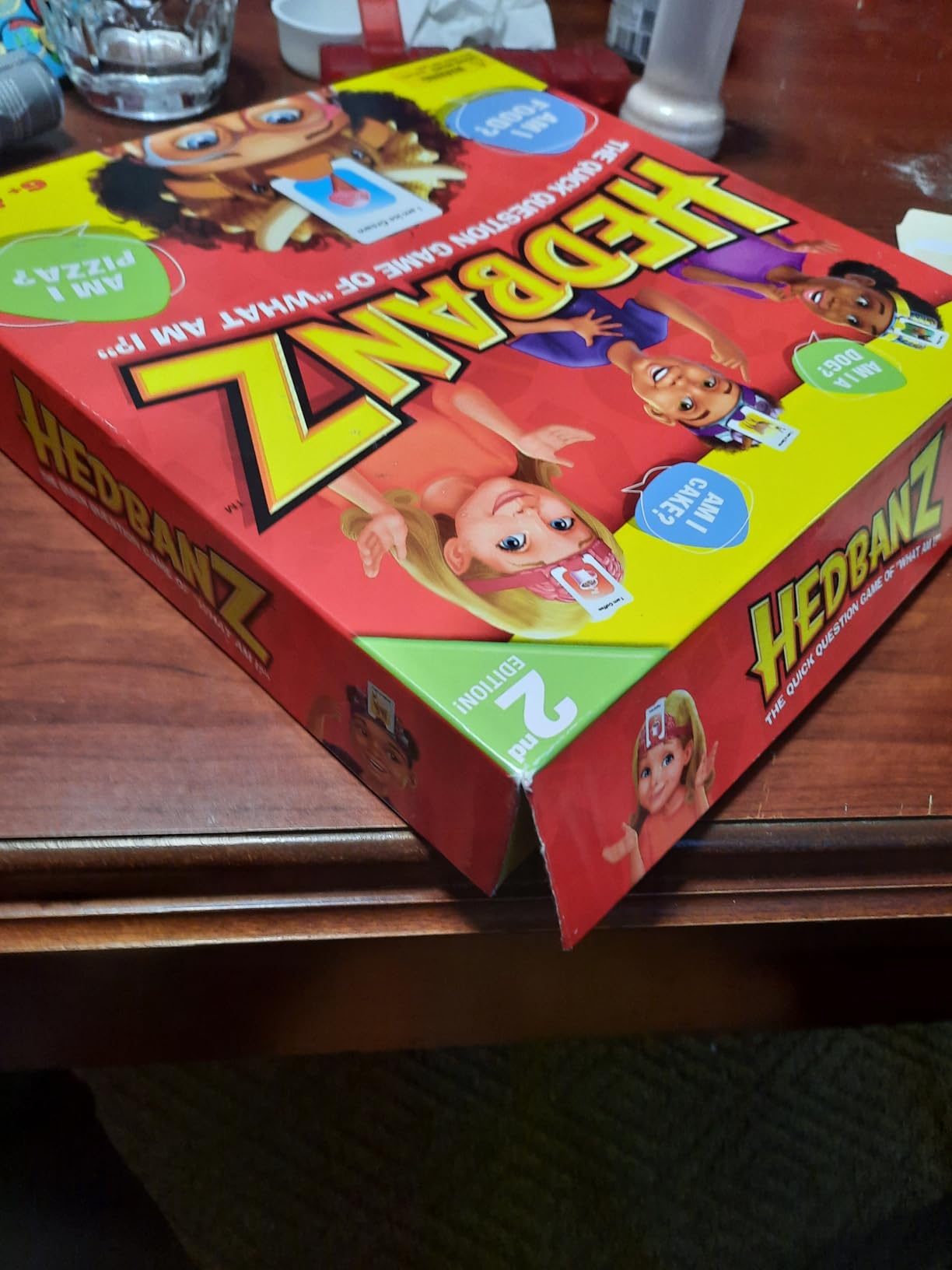
A card goes into a headband, the headband goes on a head, and the wearer cannot see it. Everyone else asks yes or no questions until somebody guesses. It is the lowest age floor on this list, at six, and that is the reason it appears here despite the player ceiling.
The screen-free energy is real. Children stand up, shout questions, and move around, which matters when the family includes a six-year-old who cannot sit through a 30-minute round but can absolutely commit to a 20-minute one.

The yes or no structure is doing a lot of work. There is no bluffing, no hidden reading of a grown-up, and no vocabulary test, so a child who can form simple questions can genuinely compete with an adult.
It comes with six headbands, six headplates, 69 picture cards, 16 scoring badges, a timer, and instructions, and the second edition added dino, narwhal, robot, flower, butterfly, and brain designs that reviewers say kids actually want to wear.
Why it belongs on a large-family list
Not for the headcount — for the age. When a family gathering includes a six-year-old, almost everything else on this list goes quiet or gets played by an adult on the child’s behalf. This one gets the child genuinely in the game, which changes the mood of the whole room.
It also works as a warm-up. A 20-minute game that produces movement and noise is a decent way to start an evening with a mixed-age group before you move to something with more texture.
Where the 6-player ceiling hurts
This is the smallest player range here, and reviewers say the same thing: larger groups hit the ceiling immediately. A family of eight needs two copies or a team arrangement, and a family of twelve needs to split across two tables.
Cleanup is the other cost. Six headbands, headplates, and badges spread across the floor within about ten minutes, so somebody is always picking things up mid-game.
10. Hitster — the Music Quiz That Gets Grandparents in the Game
Jumbo Hitster – The Music Fun Party Quiz Card Game, 2-10 Players – 300 Plus Iconic Music Hits – Great for Adult and Family Game Night
- Rules take about three minutes to explain
- Over 300 songs spanning the 1920s to the 2020s bridge generations
- Compact box travels to parties
- vacations and dinners
- Multiple modes support competitive
- cooperative or solo play
- Full song playback depends on a music streaming account
- Some cards carry explicit lyrics that need removing for mixed-age play
- Playlist skews to mainstream radio with no children's or musical theater songs
- Requires a phone and an app
- so it cannot be played offline
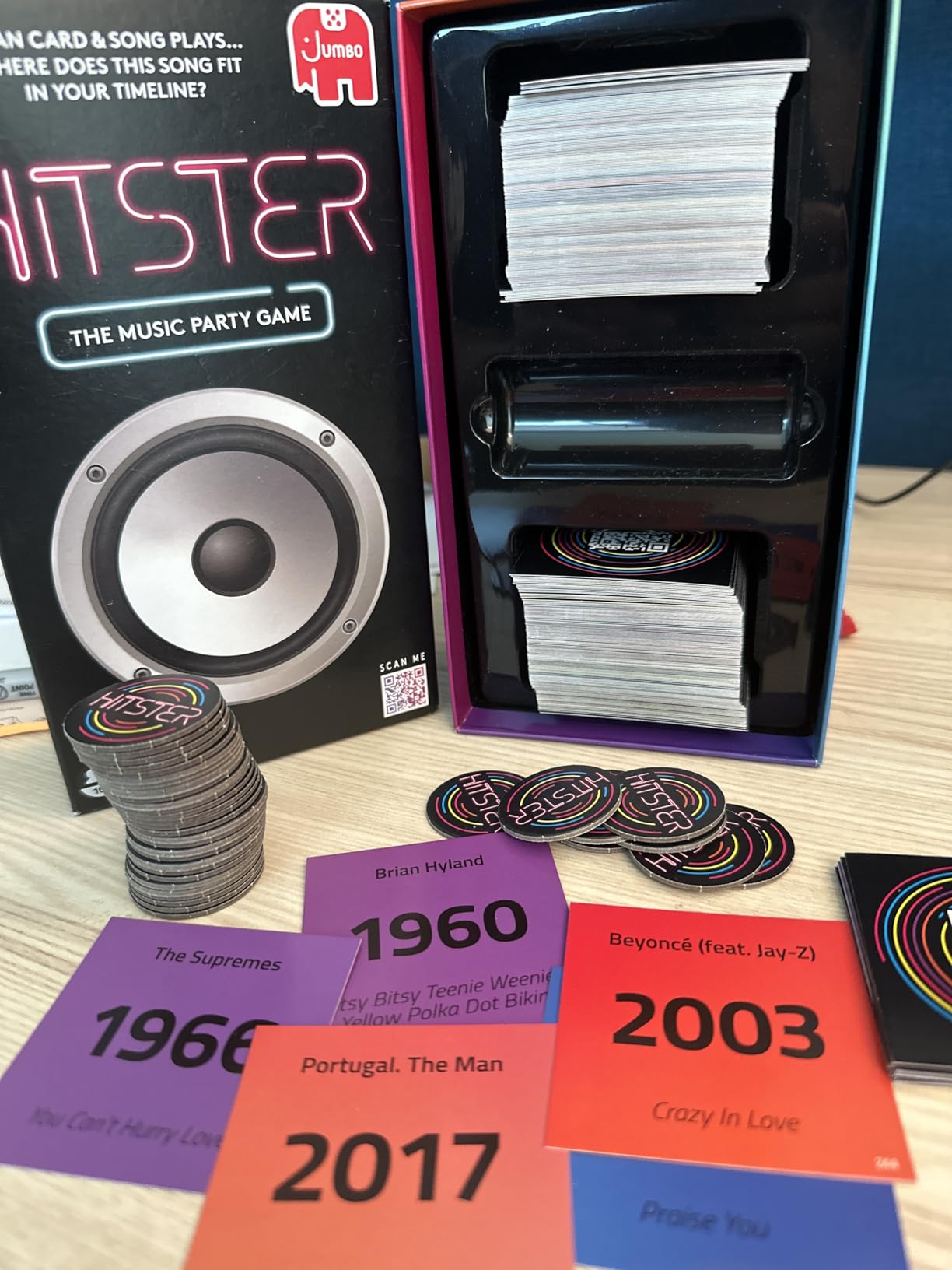
Scan a card, a song plays, and players guess the artist or the year. The song bank runs from the 1920s to the 2020s with over 300 entries, and that range is the entire reason this game is worth owning for a multigenerational family.
In practice, the grandparents know the old songs and the teenagers know the new ones, which means the room ends up helping each other. Reviewers describe exactly that dynamic: grandparents recognizing their era while children contribute recent hits, and both sides feeling useful rather than outmatched.
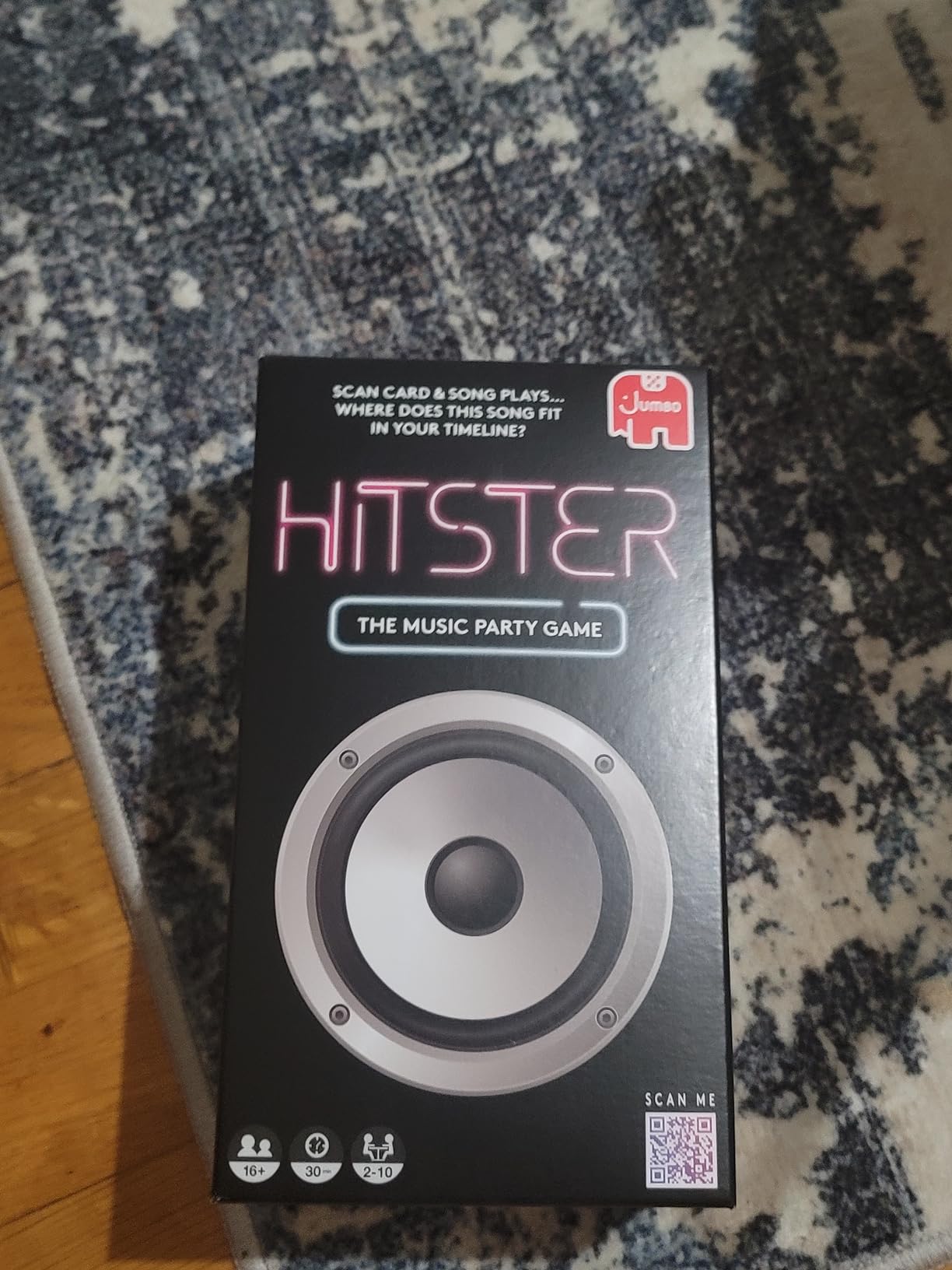
It is also one of the fastest setups here. Three minutes of rules, a phone, and you are playing, and the box measures 8.5 by 4.5 by 3 inches, so it fits in a bag for a holiday or a long drive.
There are 37 chips, competitive and cooperative modes, and a solo option if you end up playing it while waiting for a table to clear. That flexibility makes it easy to slot into an evening rather than plan one.
Where it bridges the age gap better than anything here
Most games on this list either ignore age or stretch the recommendation to cover it. Hitster is different, because music knowledge is genuinely split rather than uniformly absent. A teenager and a grandparent each hold half the deck, and the format needs both halves to score well.
It also runs to ten players, so it works for a full table rather than a pair, and the modes let you turn a competitive round into a team round when a family wants to win together.
What families need to check first
Full song playback depends on a music streaming account tied to the free app. Without one you get short clips only, and without a phone the game does not run at all, so check that before a gathering rather than during it.
Second, a small number of cards carry explicit lyrics. Families with younger children at the table should pull those out in advance, and reviewers mention doing exactly that. Third, the playlist is mainstream radio, so there are no children’s songs and nothing from musical theater.
11. Taboo Classic — the Timed Word Game for a Table of Older Players
Hasbro Gaming Taboo Classic Game, Party Word Guessing Game for Adults and Teens, Board Game for 4+ Players Ages 13 and Up
- List and card design scales cleanly to a large group
- 212 cards and 848 words give strong replay value
- Squeaker and sand timer add real suspense under time pressure
- Portable card box suits parties
- road trips and brunch
- Rated for ages 13 and up
- so it excludes younger children
- Time pressure frustrates players who think slowly
- Some pop culture cards only land with certain audiences
One player describes a word without using the three words printed on their card, and the rest of the team shouts guesses. The squeaker and the sand timer are what turn a familiar game into a genuinely tense one, and with a large group the noise is part of the appeal.
The listed player count is four or more with no ceiling, so it stretches as far as your table does. Teams work naturally, which means a group of fourteen splits into two sides of seven and plays without anybody sitting out.
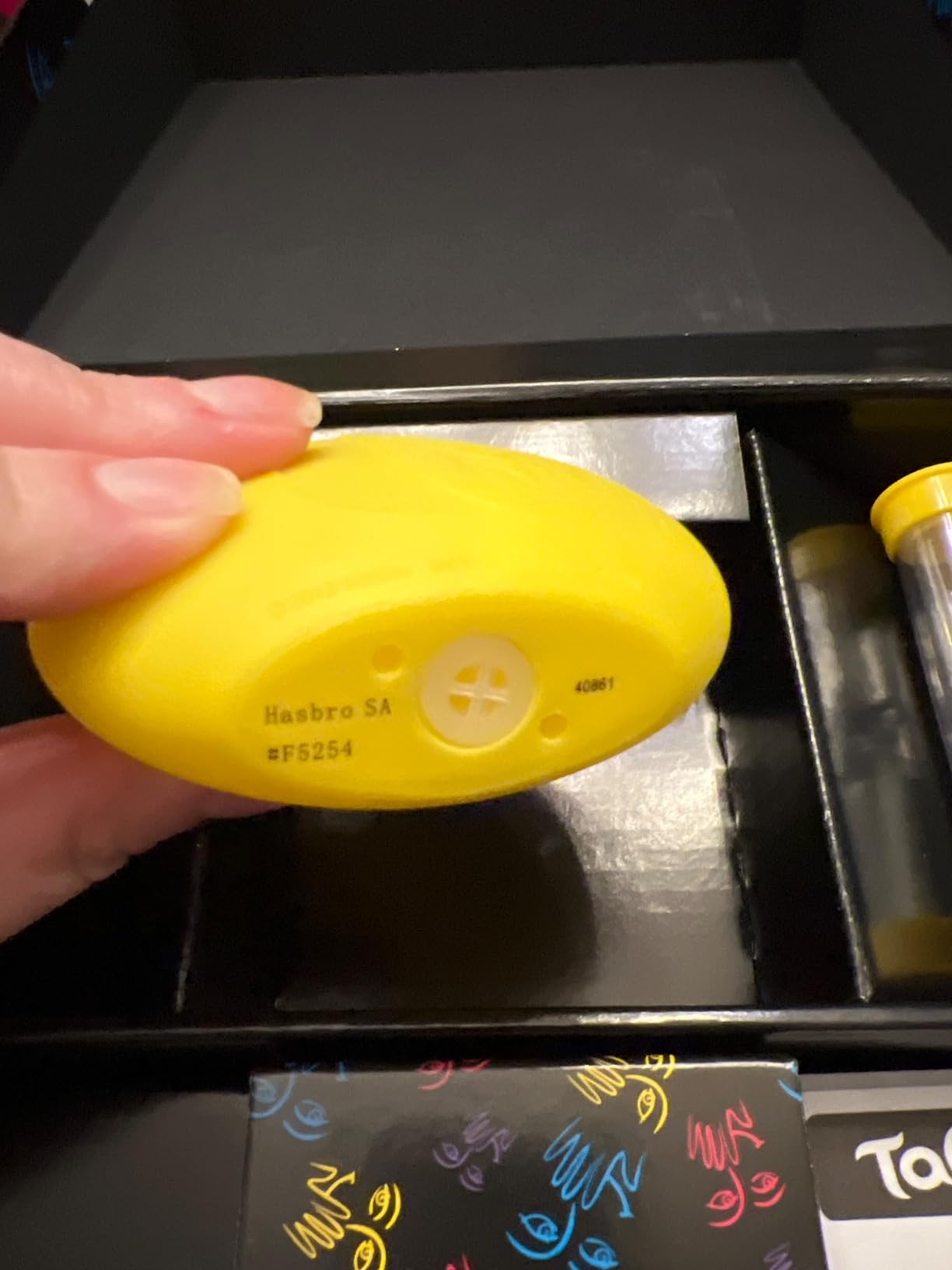
Replay value comes from the card content. This edition carries 212 cards holding 848 guess words, and the newer cards lean on current pop culture rather than the older, more generic prompts. Reviewers point out that means a group only gets the most out of it if they recognize the references.
Several reviewers also describe using it as a speaking exercise, which is a real strength in a family with a second language at the table. The vocabulary demand is the flip side of that.
When a family wants a competitive game
This is the pick for a table that has been politely playing guessing games all evening and wants something with a winner. Team scoring, a clock, and a squeaker give a large group something to actually argue about.
It also travels well, which makes it the one to pack for a holiday house or a long trip where a whole board game is too much to carry. The card box alone is enough for a full session.
What to watch for with younger players
The age rating is 13 and it should be respected. Younger children do not just struggle with the vocabulary — they struggle with the pressure of a clock in front of an audience, and a buzzer going off while they search for a word is a bad way to end their evening.
Players who deliberate slowly or are building fluency also find the timer punishing, and the pop culture cards land unevenly across generations. If your table has mixed ages, pair it with a game for the younger half rather than expecting one game to serve everyone.
12. Wavelength — One Minute to Teach, Twelve Players, No Rulebook
- Scales from 2 to 12+ players
- one of the widest ranges available
- One minute to teach and near-instant setup suits drop-in guests
- Durable dial device and vivid colors built for repeated play
- Card prompts rarely repeat
- so it stays fresh over many plays
- It sits at the pricier end of this roundup
- Some card prompts land weakly for certain groups
- Manual scoring tokens add minor bookkeeping with a large group
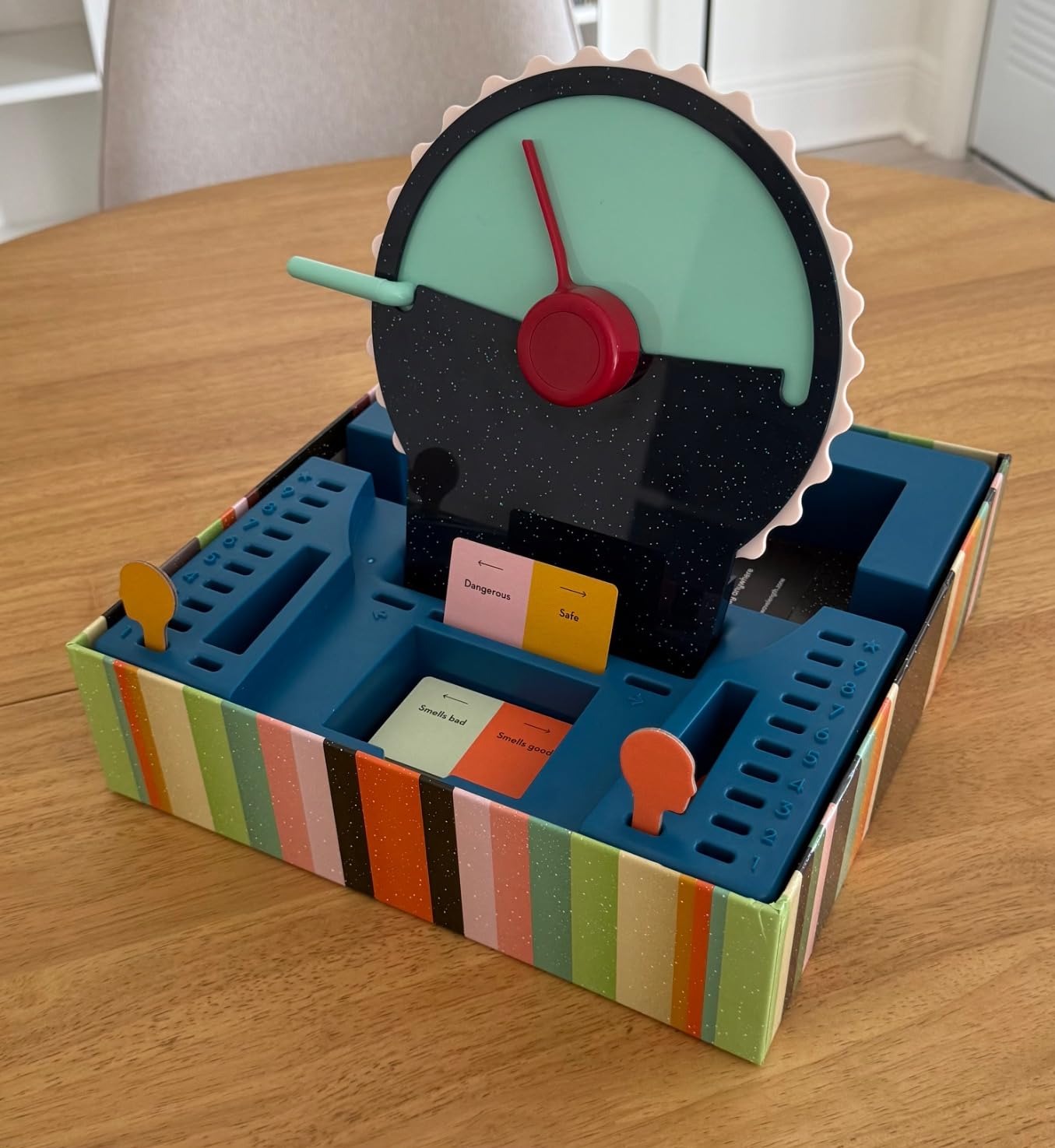
The idea takes one sentence: a player gets a target word and points to a place on a dial between two opposites, and everyone else guesses the number. Five seconds to set up, one minute to learn, 30 minutes to play, and no elimination at any point.
That combination is close to ideal for a family gathering. Guests can arrive mid-evening and be playing inside a minute, which removes the awkward bottleneck where one person explains rules to eleven people who would rather be talking.
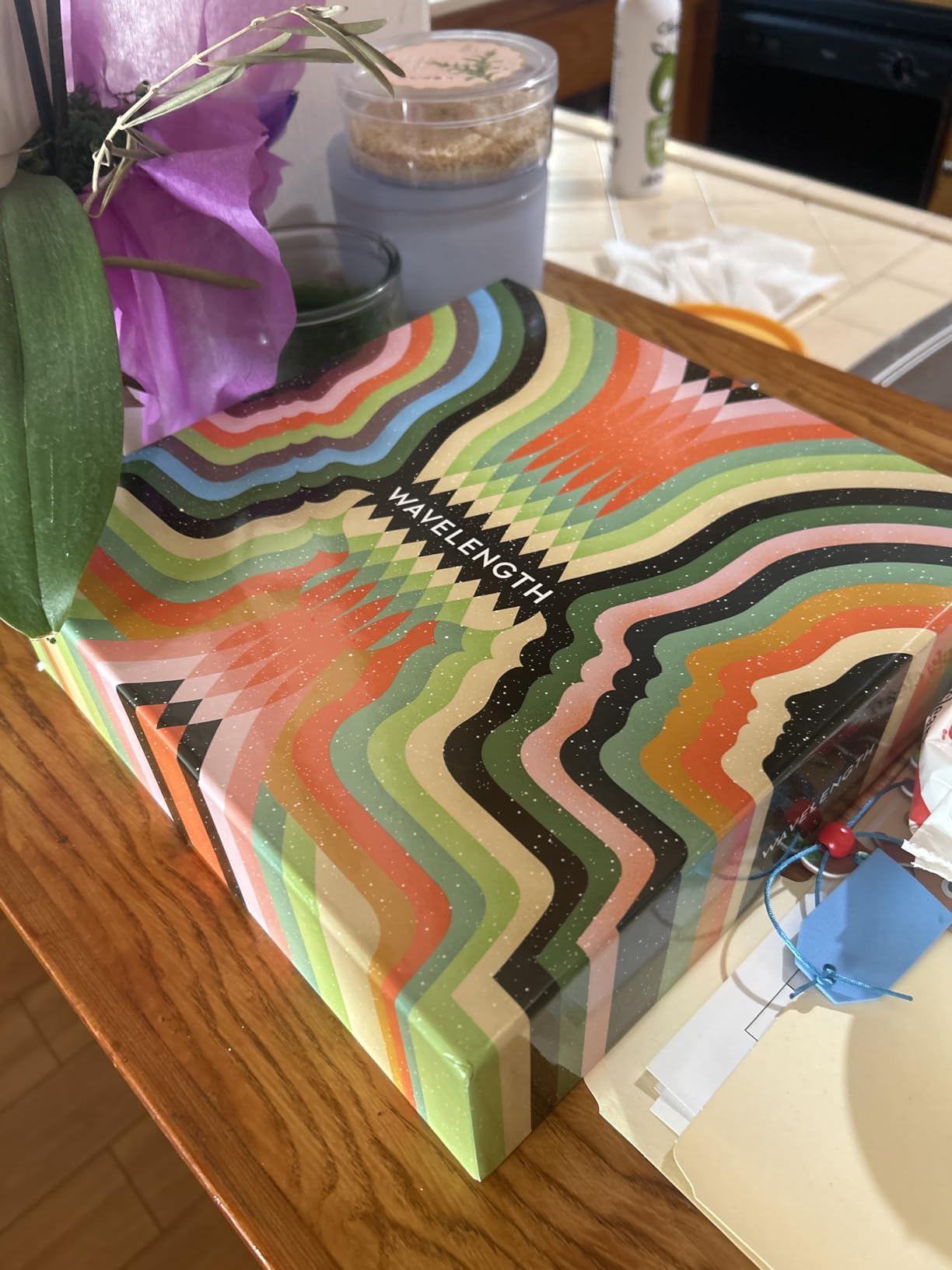
With 2 to 12+ listed, it flexes from a two-person evening to a full family table without a rules change. The box holds 84 standard cards plus 42 advanced ones, and the dial device is the kind of component that survives being passed around a large table for years.
Reviewers keep mentioning how the game reveals how people think. A clue and a guess landing far apart is funny in a way that scoring never is, and the 30-minute runtime means you can run a second round without the evening getting away from you.
Why it is the easiest drop-in game here
Nobody is eliminated, nobody sits out, and nobody needs a hand of cards. The dial does the explaining. For a group of twelve that includes guests who have never played a modern board game, that is about as low a barrier as this category gets.
It is also a good pacing tool. Thirty minutes is short enough to play before dinner or as a bridge, and long enough to feel like more than a filler.
The honest drawbacks
It is one of the pricier boxes here, and that is worth weighing against the fact that its playtime is similar to cheaper fillers. If you want one game for one evening, this is a poor value proposition; if you want one that survives years of gatherings, the durability changes the math.
Card quality is uneven across groups, with some prompts landing weakly. The three manual scoring tokens are minor bookkeeping once you are past eight players, and a few reviewers wish the dial tracked scoring for them.
Best by Group Size: 6-8, 9-10, and 11-12+ Players?
Most lists sort games by genre. This section sorts them by the number of chairs you actually have, because that is the question a large family asks first. Every game below is used inside its printed player range.
Six to eight players: Do You Really Know Your Family? and Blank Slate are the safest picks here, since both seat eight and both teach almost instantly. Add The Chameleon if the table skews old enough for hidden roles, and Sequence in a Tin if the family wants a game with real strategy rather than a guessing game. For a table with a child aged six, Hedbanz covers the youngest player properly, though it seats only six.
Nine to ten players: The narrow band is where most families get stuck, because few games bridge eight and twelve. Hues and Cues, Moose Master, and Hitster all seat ten. Wavelength also works here and beyond. Double Ditto handles ten comfortably, and its 4-20 range makes it the safest bet if the headcount is uncertain.
Eleven to twelve players: Telestrations 12 Player is the most natural fit, with twelve sketch books in the box. Sequence in a Tin seats twelve and is the only genuine strategy game at that count. Wavelength is listed for 12 or more. If the group is bigger than twelve, Double Ditto is the only option here that officially covers it.
One honest note about the far end: games that get genuinely better with more players are rare, and only Double Ditto here has a range that extends past twelve. Most games in this roundup are designed to tolerate a large group rather than improve with one. If your group is regularly 15 or more, look past this list entirely — you need games built for that headcount from the start, not stretched to it.
How to Choose and Run a Large-Family Game Night
The right pick depends on three numbers before it depends on theme. First, teach time: anything over five minutes loses the room while you explain it. Second, downtime, which is the gap between when you act and when you find out what happened — at ten players, a two-minute turn means half an hour of phones. Third, the age spread at your table, which is usually wider than you plan for.
Multigenerational tables need specific things. No game that relies on reading a dense rulebook. No long turns. No elimination, because the person who sits out for the rest of the evening stops enjoying the evening. Games on this list that hit all three are Do You Really Know Your Family?, Blank Slate, Telestrations, and Sequence in a Tin. If your group would rather work as one team, our cooperative board game picks cover the opposite end of the spectrum.
How to stretch a game past its printed player count
Most of the time you should not. A game that says eight and gets twelve is a bad evening for four of those people. But when you have no alternative, three approaches work.
Run two teams. Taboo and Double Ditto are built for this, and Sequence works if you split the board. Two tables of six beats one table of twelve where four people never get a turn.
Use two boxes. Buying a second copy of a card game is cheaper than a bad evening, and Do You Really Know Your Family? and Hedbanz are the two where this matters most because their ceilings are the tightest.
Pair adults with children. Double Ditto explicitly suggests that younger players team up with an adult. This keeps everyone in the game rather than sidelining a six-year-old, though it does reduce the number of independent scorers.
A five-step plan for a ten-person game night
Open with something short. Wavelength or The Chameleon takes about 15 to 30 minutes and starts the evening before anyone gets restless. Its one-minute teach means late arrivals can join mid-evening without a re-explanation.
Put your longest game second, not first. Sequence in a Tin or Hues and Cues needs a table with no plates on it, so it works better once the food is cleared.
Sequence the pace deliberately. Fast game, slower game, fast game. A family that plays two strategy games back to back loses half the table somewhere in the middle, and no amount of good advice fixes that.
Split the table for anything above eight. Two tables of six with a host who moves between them solves both the crowding and the waiting, and it is the single most effective change most large families can make.
Keep a short game in reserve. A filler box in a drawer somewhere — Moose Master or Hedbanz — ends an evening that stalls, and both are small enough to store out of sight.
Where a table of ten runs past what games can fix, a second look at our strategy board game picks helps for the deeper game after the crowd game. For a quieter two-person night afterwards, the adults-only roundup covers a different crowd entirely.
Frequently Asked Questions
What is the best board game for the entire family?
Do You Really Know Your Family? is the best overall pick for a large family, because it seats eight players, teaches in one sentence, needs no setup, and works across kids, teens, parents, and grandparents. For a bigger table, Hues and Cues scales to ten players, and Double Ditto covers four to twenty people when a reunion outgrows everything else.
What are the 10 most popular family board games?
The most popular large-family games in this roundup are Do You Really Know Your Family?, Blank Slate, Hues and Cues, The Chameleon, Telestrations, Sequence, Moose Master, Double Ditto, Hedbanz, and Wavelength. Each has over 1,900 verified reviews, and each supports a headcount of at least eight players while teaching in roughly five minutes or less.
What are some good games for a large family?
Good games for a large family are the ones where everyone acts at the same time: word-association and color-clue games like Blank Slate and Hues and Cues, sketch games like Telestrations, and fast party games like Moose Master and Double Ditto. The key test is downtime. If one player’s turn takes more than a minute, the rest of a ten-person table will be waiting.
What are some good board games for 12 people?
Telestrations 12 Player is the most natural fit at twelve, with twelve erasable sketch books and twelve markers in the box. Sequence in a Tin also seats twelve and adds real strategy. Wavelength is listed for twelve or more and teaches in about a minute. Above twelve players, Double Ditto is the only option here rated for 4-20 people.
What are some good board games for 10 people?
At ten players, Hues and Cues, Moose Master, and Hitster are all rated for ten. Wavelength works at ten and beyond, and Double Ditto handles ten comfortably with room to grow. The main risk at this headcount is turn order, so pick games where everyone writes, draws, or chooses at the same time rather than taking turns.
What to do for Game Night 10 people?
Run three games: a 15 to 30 minute opener like Wavelength or The Chameleon, one longer game once the food is cleared such as Sequence in a Tin or Hues and Cues, then a short filler like Moose Master to close. Teach every rule in under five minutes, split the table into two groups of five if one table cannot seat ten, and keep a short game in reserve for when the evening stalls.
Conclusion
After a season of testing these at six, eight, ten, and twelve players, one pattern held: the best board games for large families are the ones where nobody waits and nobody goes quiet. Do You Really Know Your Family? earns the top spot for its near-zero teach time and its reach across a whole age range, with Blank Slate and Hues and Cues close behind for bigger and more competitive tables.
For a table of ten, start with Hues and Cues or Wavelength. For twelve, use Telestrations. For a reunion that keeps growing, keep Double Ditto in the box. And once the kids have gone to bed, our picks for board games for couples cover a quieter kind of evening. All of these lists are current as of 2026 and get updated as new boxes are tested.