
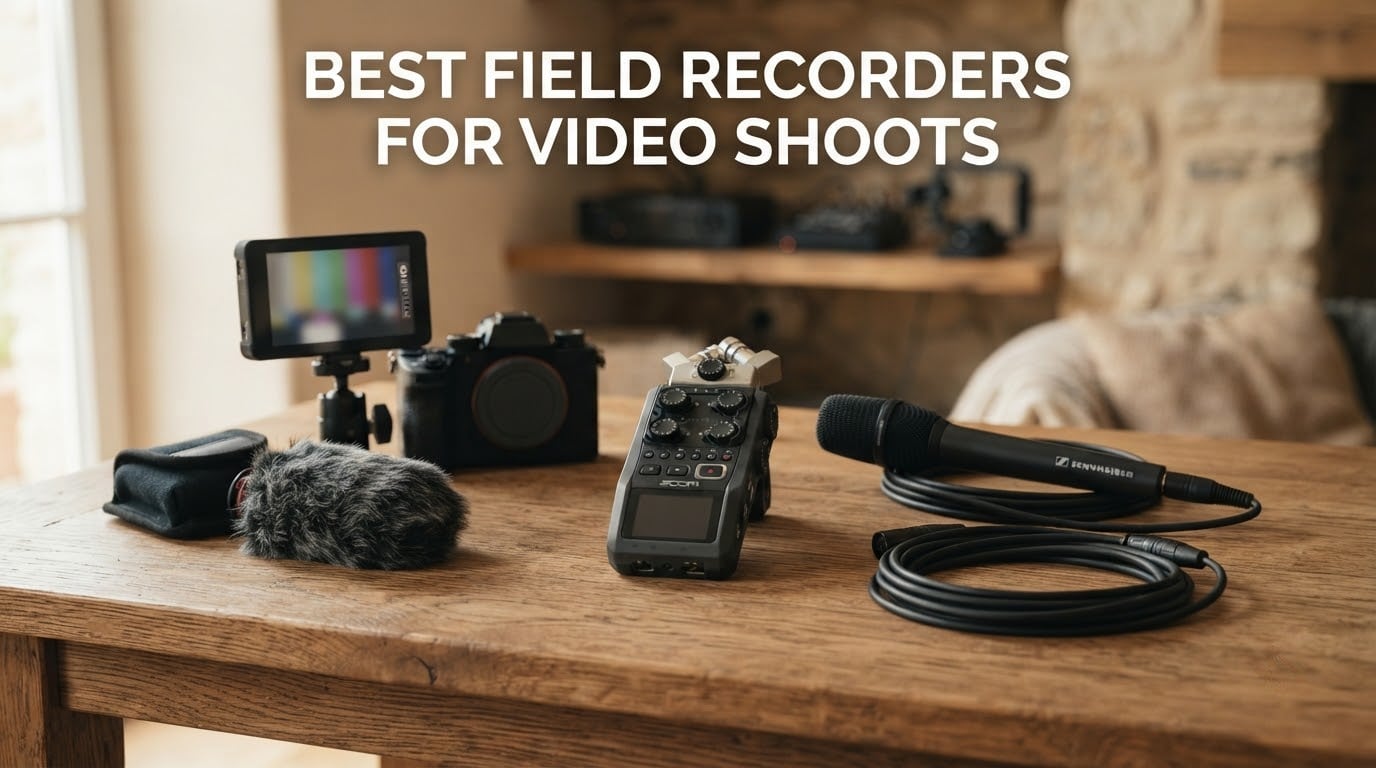
Camera audio is the first thing viewers forgive last. A blown highlight can be graded, a shaky frame can be stabilised, but clipped or noisy dialogue is gone forever, and that is why the best field recorders for video shoots are the cheapest insurance in the whole kit bag. We spent weeks moving seven recorders between a documentary interview, a two-camera corporate shoot and a run-and-gun vlogging day to see which ones actually survive contact with location work.
The short answer: the Zoom H5 is the recorder we would buy first because its interchangeable capsule system lets it cover dialogue, ambience and scratch tracks with one body. The Zoom F3 is the better buy for anyone who shoots unpredictable location sound, because 32-bit float removes the level-setting stress entirely. And the Zoom F8n Pro is the one to look at when a small crew needs eight microphones and timecode on one box.
A field recorder for video is simply a self-contained audio machine that records independently of the camera. It gives you real preamps, XLR inputs for shotgun and lavalier microphones, and a clean track you can lay over the camera’s onboard sound in post. The recorder writes to its own card while the camera writes video, and you align the two later using timecode, a clapperboard, or automatic waveform sync inside Premiere Pro or DaVinci Resolve.
That last point matters more than most buyers expect. On location sound forums, the most common regret is not the microphone purchase, it is the hours lost dragging waveforms around in the edit because nobody recorded timecode. Buying the right recorder, with timecode where you need it, removes a whole category of post-production friction.
Table of Contents
Top 3 Best Field Recorders for Video Shoots in 2026
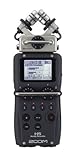
The H5 wins the general category because it is the only recorder here that changes shape with the job. Swap the bundled X/Y capsule for a shotgun or an XLR capsule and the same body handles a two-person interview, a room tone pass and a scratch track without a second purchase.
The F3 wins on nerve. Its 32-bit float capture with dual A/D converters means a shouting subject or a passing bus cannot clip the recording, which is precisely the failure that ruins location dialogue.
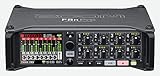
The F8n Pro is for crews rather than solo operators. Eight combo inputs, ten-track recording, dual card slots and a TCXO timecode generator at 0.2ppm accuracy cover everything a small documentary or corporate team throws at it.
Best Field Recorders for Video Shoots at a Glance
| Product | Specifications | Action |
|---|---|---|
| Zoom H5 |
|
Check Latest Price |
 Zoom F3 Zoom F3 |
|
Check Latest Price |
 Zoom F8n Pro Zoom F8n Pro |
|
Check Latest Price |
 Tascam Portacapture X8 Tascam Portacapture X8 |
|
Check Latest Price |
 Tascam FR-AV2 Tascam FR-AV2 |
|
Check Latest Price |
 Tascam DR-70D Tascam DR-70D |
|
Check Latest Price |
 Sound Devices MixPre-3 II Sound Devices MixPre-3 II |
|
Check Latest Price |
Two things stand out in that grid. Five of the seven record 32-bit float, which has moved from specialist feature to default expectation in this category. And the input counts are all over the place, from two locking XLRs on the F3 to eight on the F8n Pro, which is why the buying guide below spends so much time on matching inputs to your shot list rather than on brand.
If you also carry a separate video monitoring rig, our guide to the [best camera field monitors](https://www.dognotebook.com/best-camera-field-monitors/) covers the display side of the same kit bag.
Do You Need a Separate Recorder if Your Camera Already Has XLR Inputs?
Yes, in most cases, and the reason is not audio quality. A camera with XLR inputs records the same sound you would record on an external box. What the camera will not give you is a second, independent take.
That independent copy is the entire point. If a car door slams, a phone buzzes or the operator’s jacket rubs the mic, you lose one of two takes rather than the only take. Editors on videography forums describe the recorder in the bag as a safety track: not the audio you mix from, but the audio that saves the shot when the camera track is compromised.
There are two further arguments for the separate unit. The first is monitoring. Headphones on a properly built recorder let the operator hear levels and wind noise in real time, which onboard camera monitoring rarely does well. The second is physical separation: a recorder on a stand or a boom can sit where the camera cannot.
You can skip the external recorder when the shoot is single-camera, the audio is ambient or a voiceover, and you genuinely do not mind losing the take. For dialogue, interviews, anything with a script and a subject, the answer from almost every working sound recorder is to carry a separate box. It weighs very little and it changes how the crew behaves on set, because everyone knows a second copy exists.
1. Zoom H5 – The All-Round Four-Track Recorder
- Interchangeable input capsules
- 4-track simultaneous recording
- Two XLR/TRS combo inputs with phantom power
- Doubles as a multichannel USB audio interface
- Compact at 115 g
- SD card ceiling of 32GB
- 1.9 inch screen is small in daylight
- Runs on 2 AA batteries
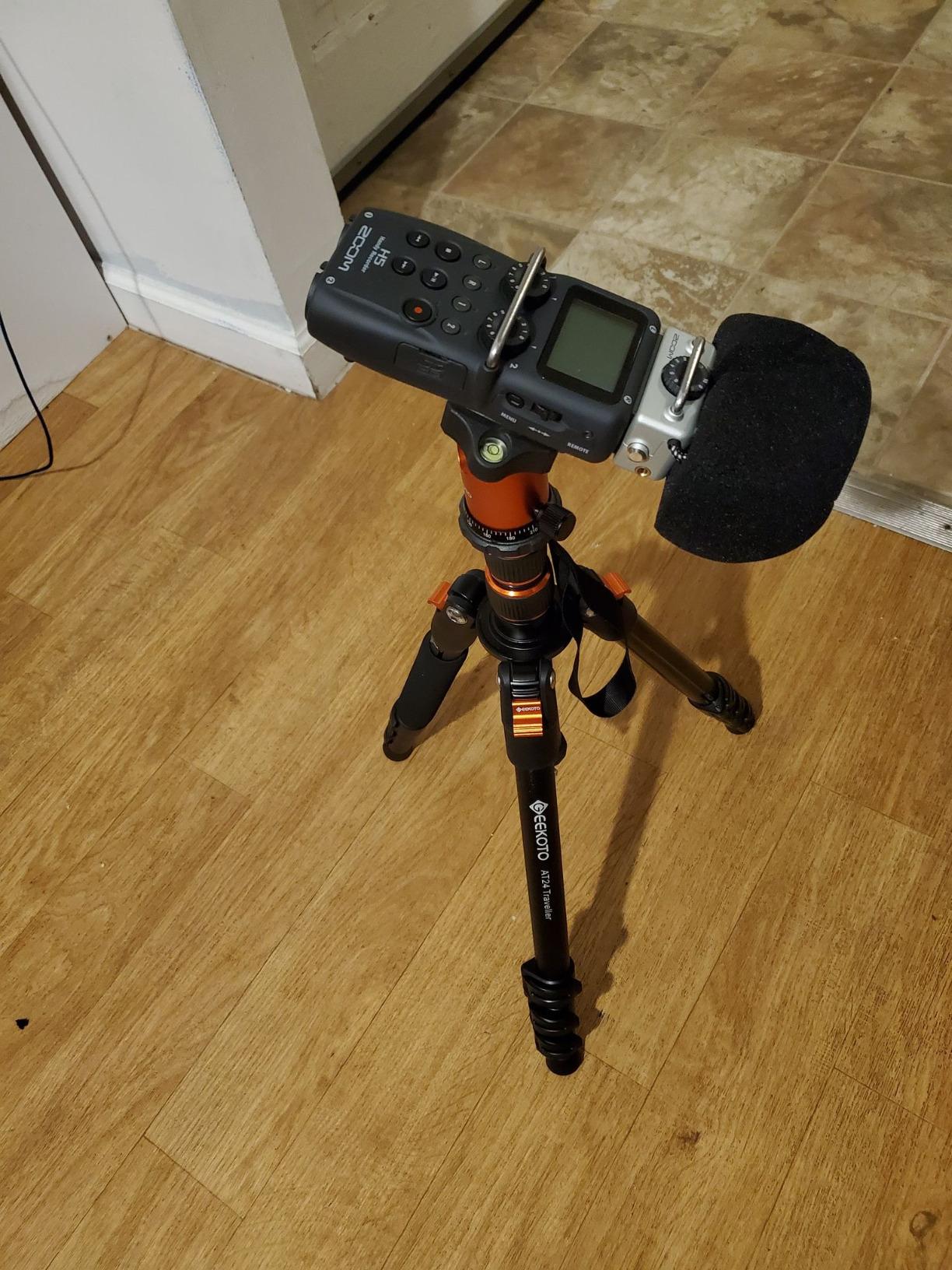
The Zoom H5 is the recorder that quietly does everything. It records four tracks at once, which means you can capture two radio mics, a stereo pair and a boom without a second device, and it ships with the XYH-5 X/Y capsule on a shock mount so it can record straight out of the box.
What makes it our first choice is the capsule system. The same body takes an XLR capsule, a shotgun capsule or a stereo capsule depending on the day, and all Zoom input capsules are compatible. Forum users with older H4 and H5 bodies routinely describe keeping a small unit in the kit for years as a dedicated ambience and backup recorder, which is exactly how we ended up using ours.
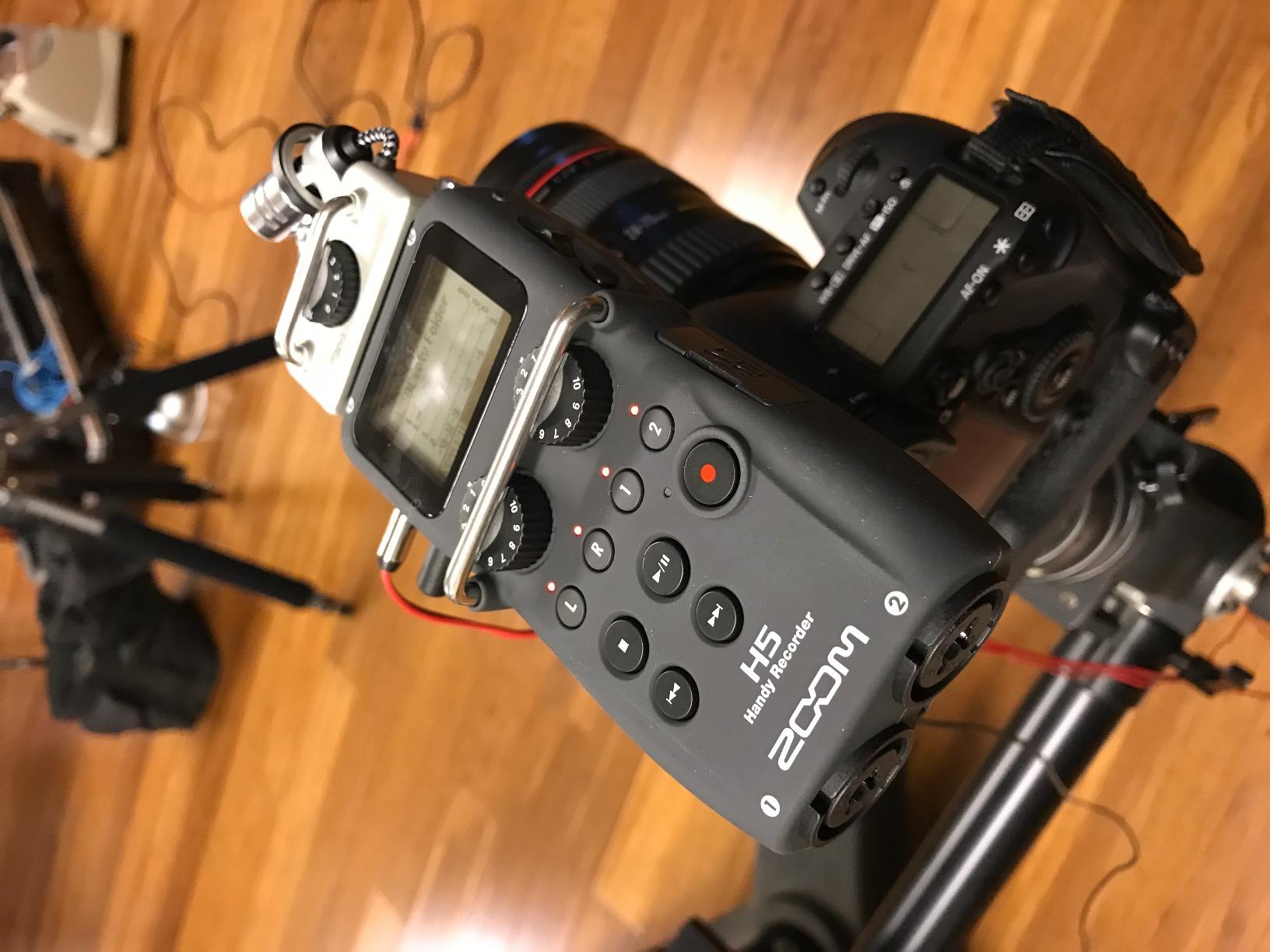
The two XLR/TRS combo inputs carry phantom power and a minus 20dB pad, so a condenser lavalier or a small-diaphragm shotgun plugs straight in with no adapter. On the video side the multichannel and stereo USB audio interface with Loop Back is a genuine second use: the H5 can sit between a camera and a computer for streaming or scratch recording without a second box.
For video production sound, the practical limit is the 1.9 inch display. It is fine for checking that a track is rolling and roughly level, but it is not a screen you will read in direct sunlight while holding a boom. The other limitation is storage: cards are capped at 32GB, so a long shooting day means planned card swaps rather than set-and-forget.
What the H5 does well on a video shoot
Four simultaneous tracks is the number that changes behaviour on a documentary shoot. Two lavs on the subjects, a boom overhead and a stereo pair for room tone all land on one card with separate files, and the ISO workflow means the mixer only opens the channels they need.
Phantom power on both combo inputs means condenser mics work without an external power supply, and the minus 20dB pad gives you headroom on loud sources like a trumpet or a close-miked drummer. A one year limited warranty is standard, and the 115 g body disappears in a jacket pocket when the capsule stays in the bag.
Where the H5 frustrates people
Gain staging is manual and the screen is small, so on a 24-bit machine you are still responsible for getting levels right before a loud source surprises you. If unpredictable location sound is your normal working condition, the 32-bit float models below remove that responsibility entirely.
The 32GB card ceiling is the constraint buyers complain about most, because modern high-capacity cards will not be used. And the removable capsule mount is a point of wear over years, so it is worth treating the body as something that lives in a bag rather than something that lives in a pocket.
2. Zoom F3 – 32-Bit Float in a Two-Input Body
- 32-bit float removes gain-setting worry
- Ultra-low noise dual A/D converter preamps
- 73-hour battery life on 2 AA batteries
- 8.48 oz body
- MicroSD up to 512GB
- Bluetooth app control
- Only 2 inputs and no 3.5mm jack
- Phantom power limited to 10mA combined
- No built-in microphones
The F3 is the recorder that changed how most solo filmmakers think about levels. It records 32-bit float through dual A/D converters, so a subject who goes from a whisper to a shout stays intact in the file, and there is no fader riding on the shoulder of the person holding it.
Community consensus treats the Zoom F-series as the default answer for solo filmmakers precisely because 32-bit float removes the level-setting stress on unpredictable location sound. That matched our own experience: on a street interview with a passing scooter, the take survived without a re-record, which on a 24-bit box would have been a retake.
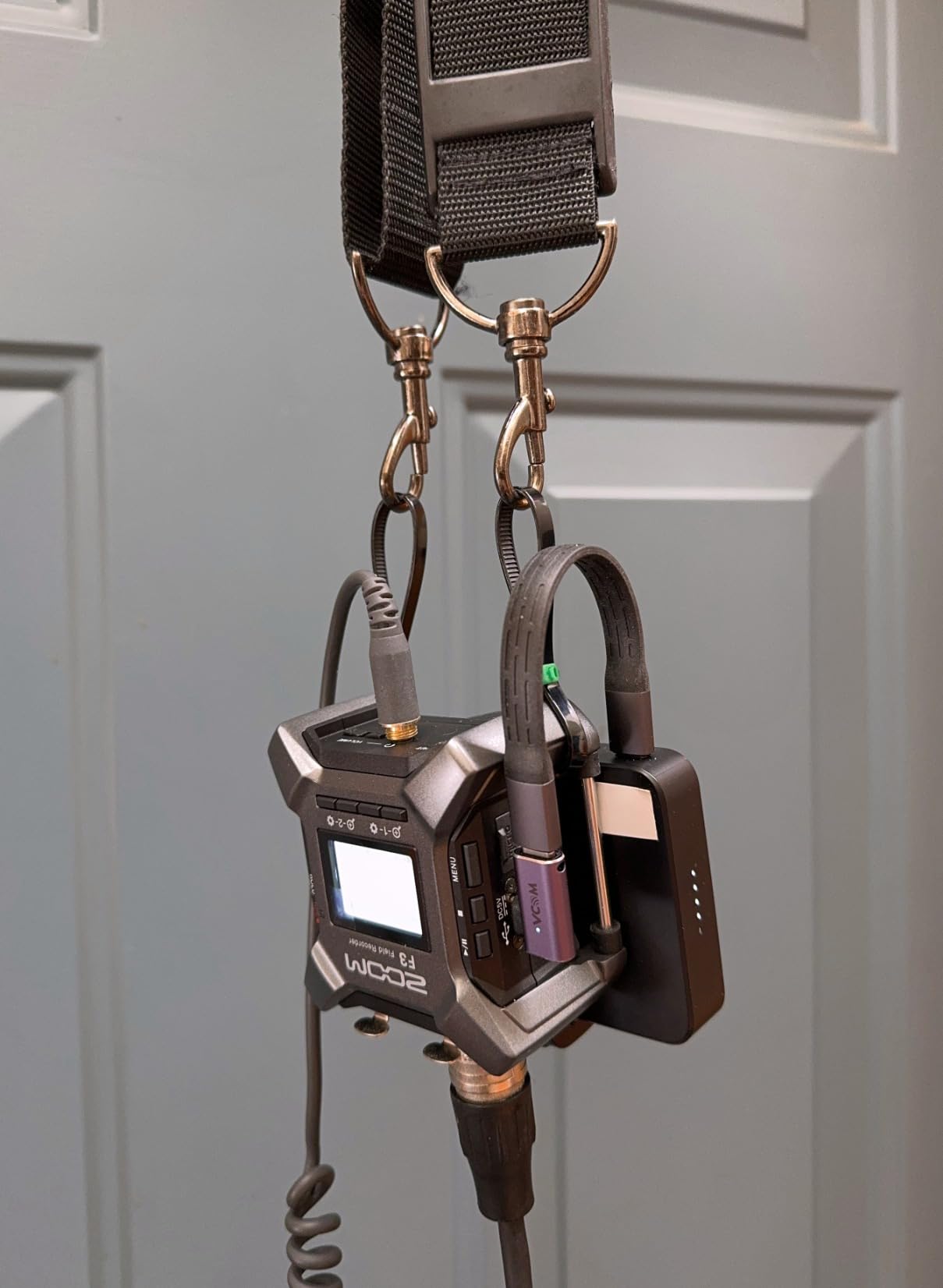
The build is small at 8.48 ounces and 3.04 by 2.95 inches, and it carries a 1/4-20 thread for a tripod or magic arm, so it mounts on a pole, a car mount or a camera cage. The two locking XLR/TRS combo inputs are proper professional connectors, and the 2 inch display is a step up from the older handheld bodies in sunlight.
Battery planning is the quiet star here. The stated figure is 73 hours on two AA batteries, and the unit also runs from a USB power bank, which means a single bank can carry a full shooting day. Storage runs to 512GB on microSD, so a day of continuous 32-bit float capture needs no card swaps. Bluetooth control through the companion app handles start and stop from a camera position.
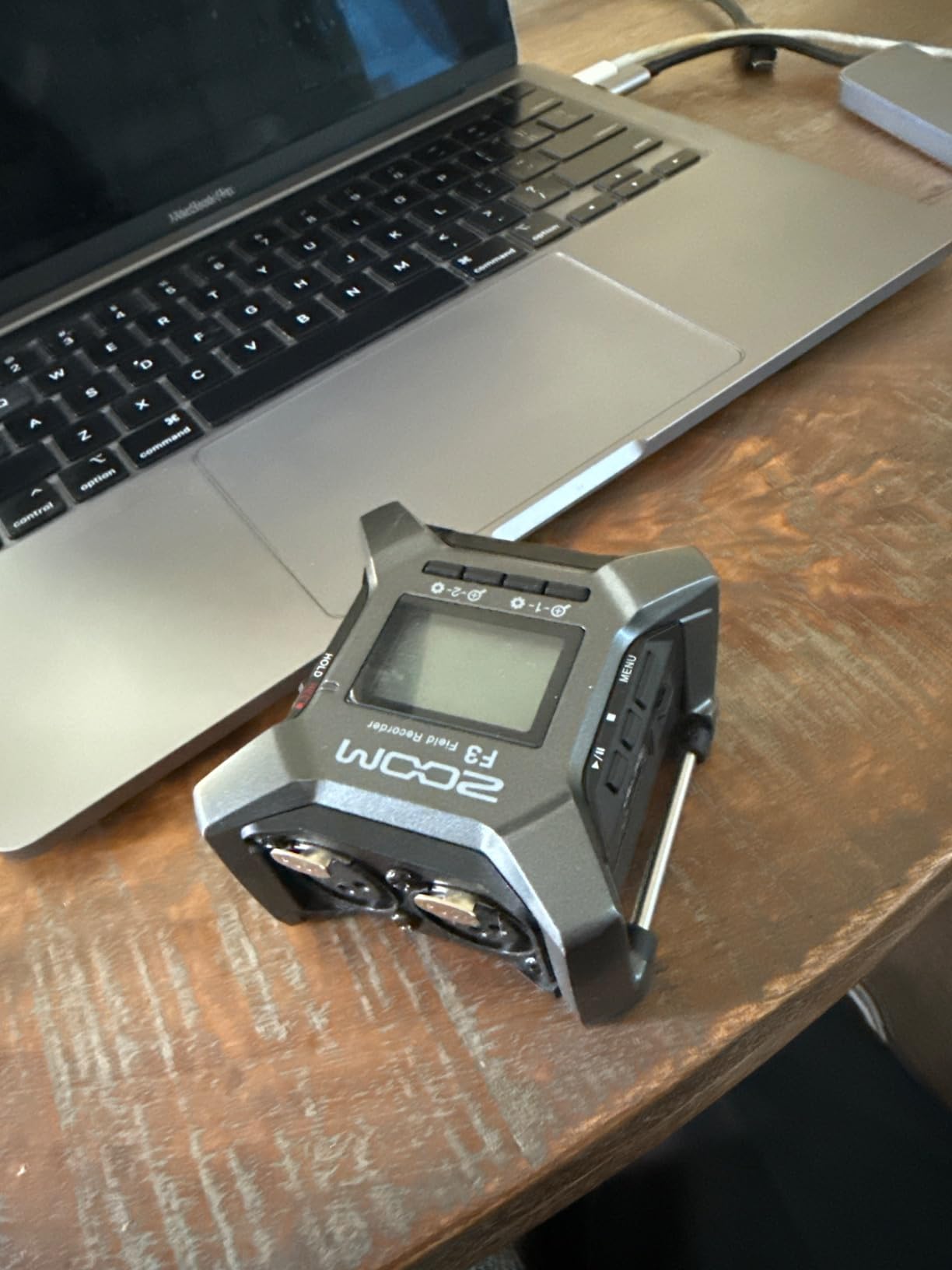
Why the F3 suits unpredictable location sound
Nothing in the signal chain clips, which means you can set the gain once, walk it into an interview and stop thinking about it. Dual A/D converters mean the unit is measuring the same signal through two converters and choosing the better one, so the effective headroom is enormous.
It is also a mic-less design, which some shooters see as a limitation and most location crews see as a feature. No built-in capsules means no handling noise and no wind problems from the recorder itself, because the microphones are always on booms or lavs where they should be.
Where the F3 runs out of room
Two inputs is the hard ceiling. There is no third channel, no 3.5mm jack for a camera feed, and no way to run a stereo pair alongside two radio mics. If your shot list includes a two-person interview plus a stereo ambience track, the H5 or the DR-70D handles it and the F3 does not.
Phantom power is limited to 10mA across both channels combined, so it will not power every condenser mic. Two AA batteries, while long-lasting, means you should still carry spares, and the physical buttons take a few days of practice before a paid shoot.
3. Zoom F8n Pro – Eight Inputs and Timecode for Small Crews
- Eight XLR/TRS combo inputs with 10-track recording
- 32-bit float with dual AD converters
- 75dB gain at -127dBu EIN
- TCXO timecode at 0.2ppm accuracy
- Dual SD card slots for redundant capture
- 8-in/4-out USB interface while recording
- Weighs 1.8 kg with 8 AA batteries
- Micro USB-B port rather than USB-C
- Large for a small bag
The F8n Pro is the smallest recorder here that a crew can actually work with. Eight XLR/TRS combo inputs, ten-track recording including a stereo mix, and 32-bit float through dual A/D converters cover a two-camera interview, a wide stereo ambience pair and a narrator track in one pass.
Preamp specification is where it separates: 75dB of gain with an equivalent input noise of minus 127dBu, which is a real margin for quiet lavalier work in a treated room. Three outputs cover a camera feed, headphones and an external line, so the recorder can send a backup track straight to camera while monitoring separately.
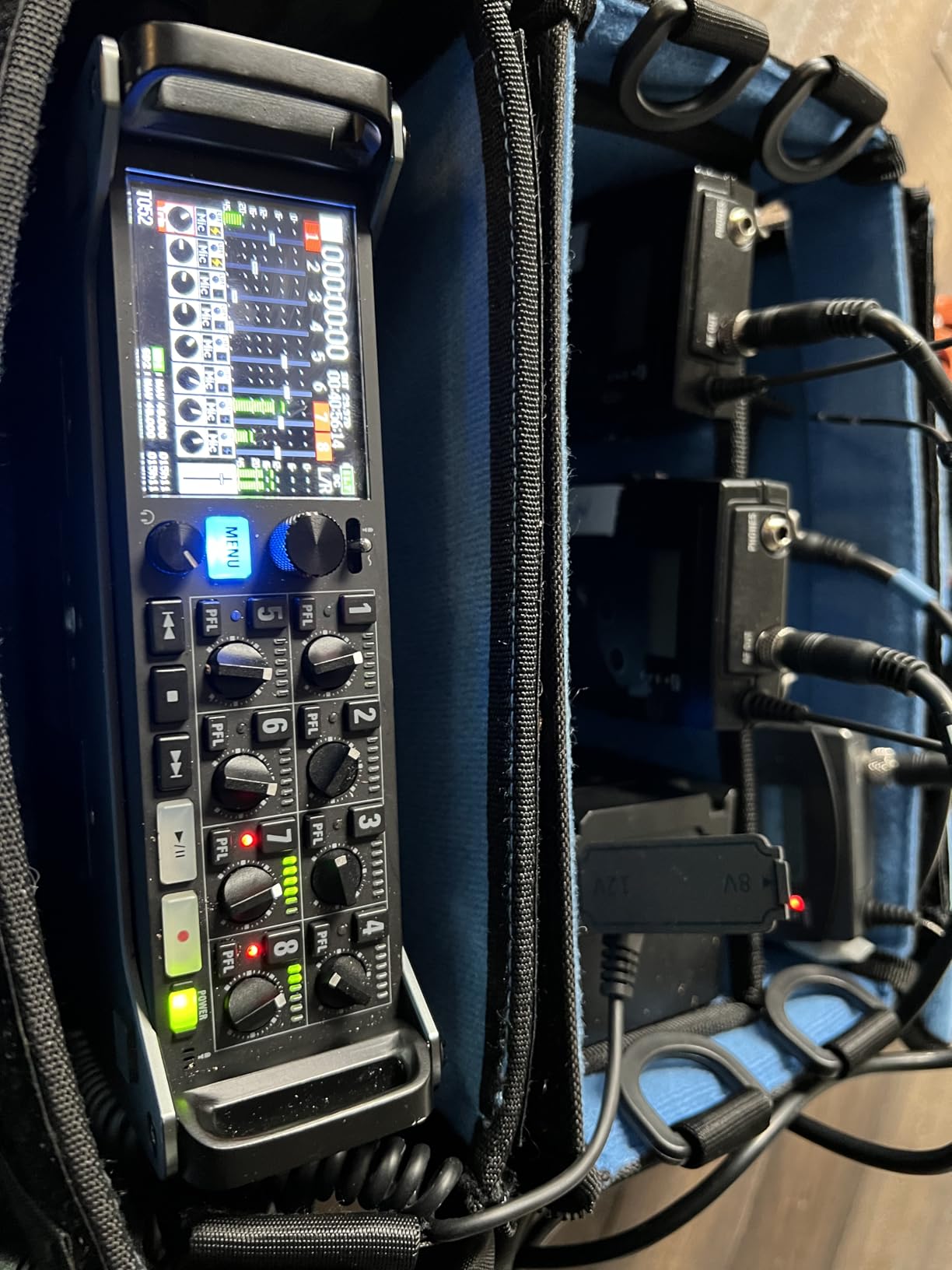
Timecode is the headline for video work. The TCXO-based generator holds 0.2ppm accuracy, and that is the number that decides whether your edit syncs itself or costs you an evening. That removes the manual waveform alignment session that most crews accept as a tax on the edit.
Redundancy is the other quiet strength. Dual SD card slots take up to 1TB each, so a card failure no longer means a lost take. The USB interface runs 8-in and 4-out at 32-bit float and 96kHz while it continues recording to card, and Ambisonics mode covers surround capture when a client asks for it.
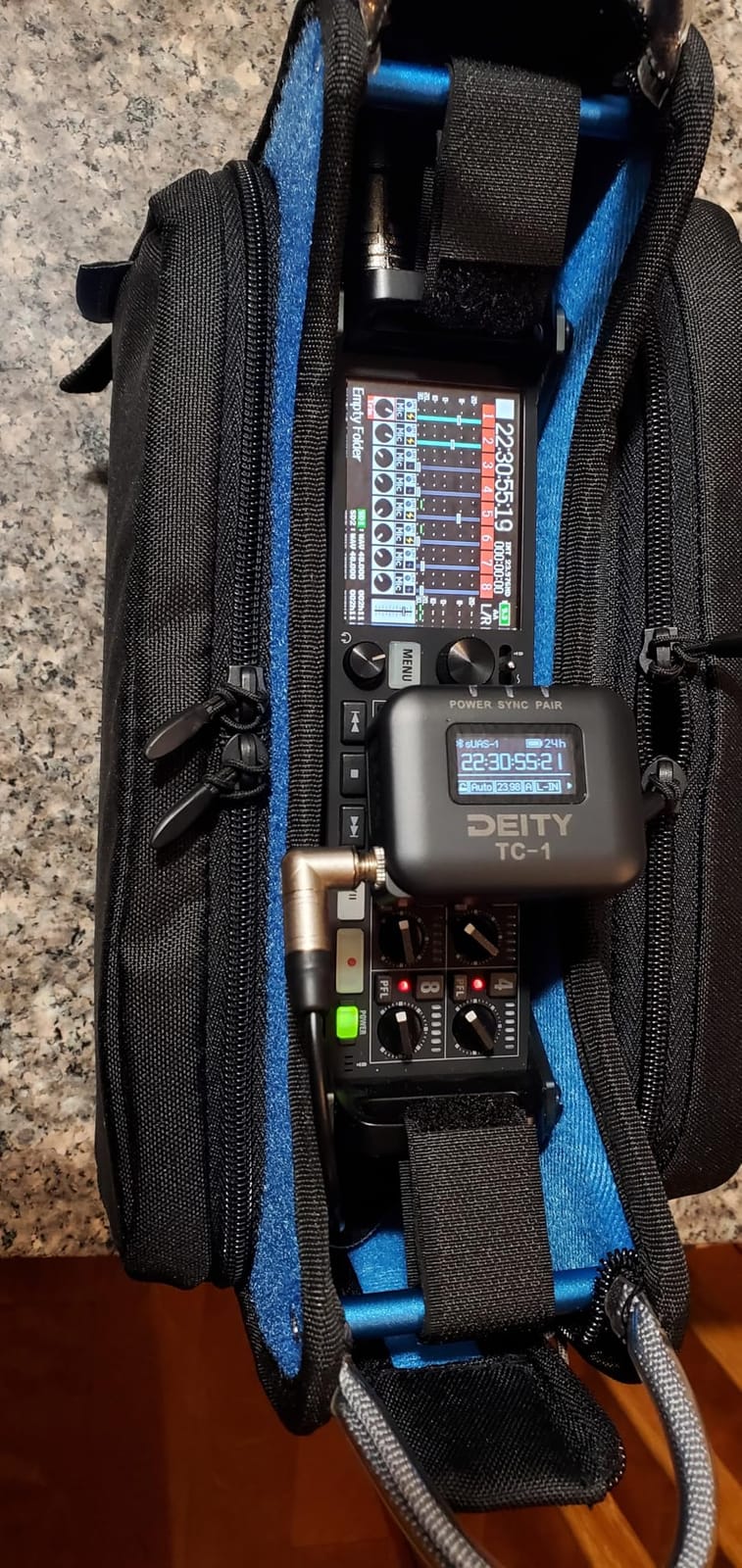
What the F8n Pro does well for crews
Eight inputs plus ten tracks is the combination that ends the argument about who carries what. One box can be the mixer, the backup track source and the timecode master, and a one-year replacement warranty backs it up.
The metal chassis takes the knocks that a plastic handheld will not, and a one-year replacement warranty backs it. Bluetooth app control means the operator can start recording from a camera position rather than walking back to the bag.
Where the F8n Pro is the wrong tool
At 1.8 kg and running on eight AA batteries, this is a bag recorder, not a pocket recorder. A solo vlogger moving between locations will find it heavy and will notice the roughly 8.5 hour battery figure on a long day.
The port situation is dated: micro USB-B rather than USB-C, so you need the cable that came with it. And with 86 reviews behind it, the long-term ownership record is thinner than the H5 or the DR-70D, which for a professional purchase is worth weighing against the specifications.
4. Tascam Portacapture X8 – The Big-Screen 32-Bit Float Recorder
- Large 3.5 inch colour touch panel
- 32-bit float recording up to 192kHz
- 4 locking XLR/TRS inputs with individual phantom power
- Detachable condenser mics for A-B and X-Y positions
- Acts as USB interface
- SD reader and mass storage
- Marketed as 8 channel but has 6 inputs
- Built-in mics feel cheap
- Bluetooth adapter sold separately
- Roughly 5 to 6 hours on alkaline cells
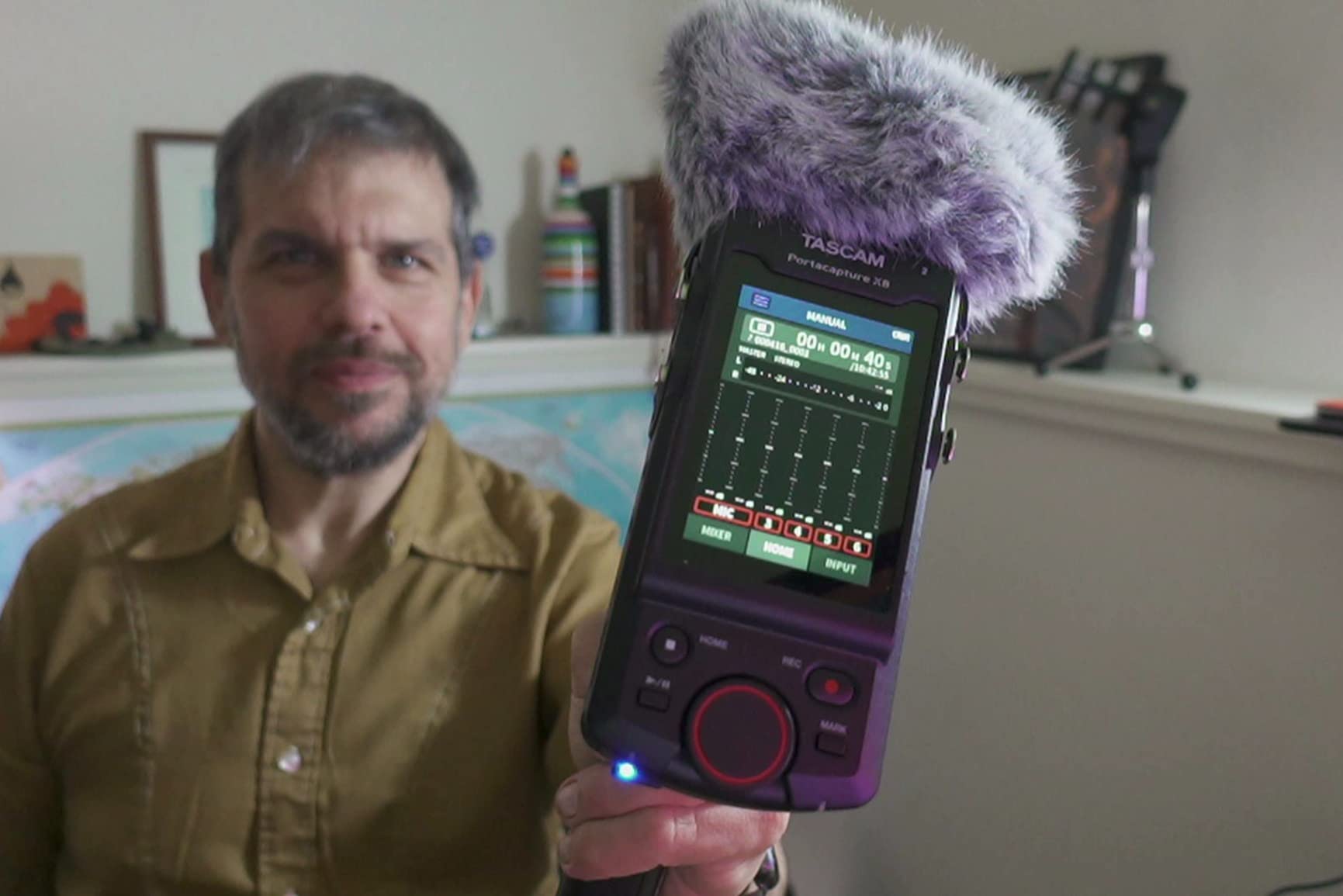
The Portacapture X8 is the recorder for anyone who finds small monochrome screens frustrating. The 3.5 inch colour touch panel is the largest on any unit in this roundup, and it doubles as a metering surface you can actually read at arm’s length in daylight, which matters more than it sounds when the operator is also holding a boom.
Under the screen the audio side is serious. It records 32-bit float up to 192kHz, with four locking XLR/TRS combo jacks and individual 24V or 48V phantom power, fed by HDDA preamps. Six recording mode presets cover basic multitrack, podcasting, music, voice, field recording and ASMR, so a solo operator can jump straight to a sensible setup instead of building one.
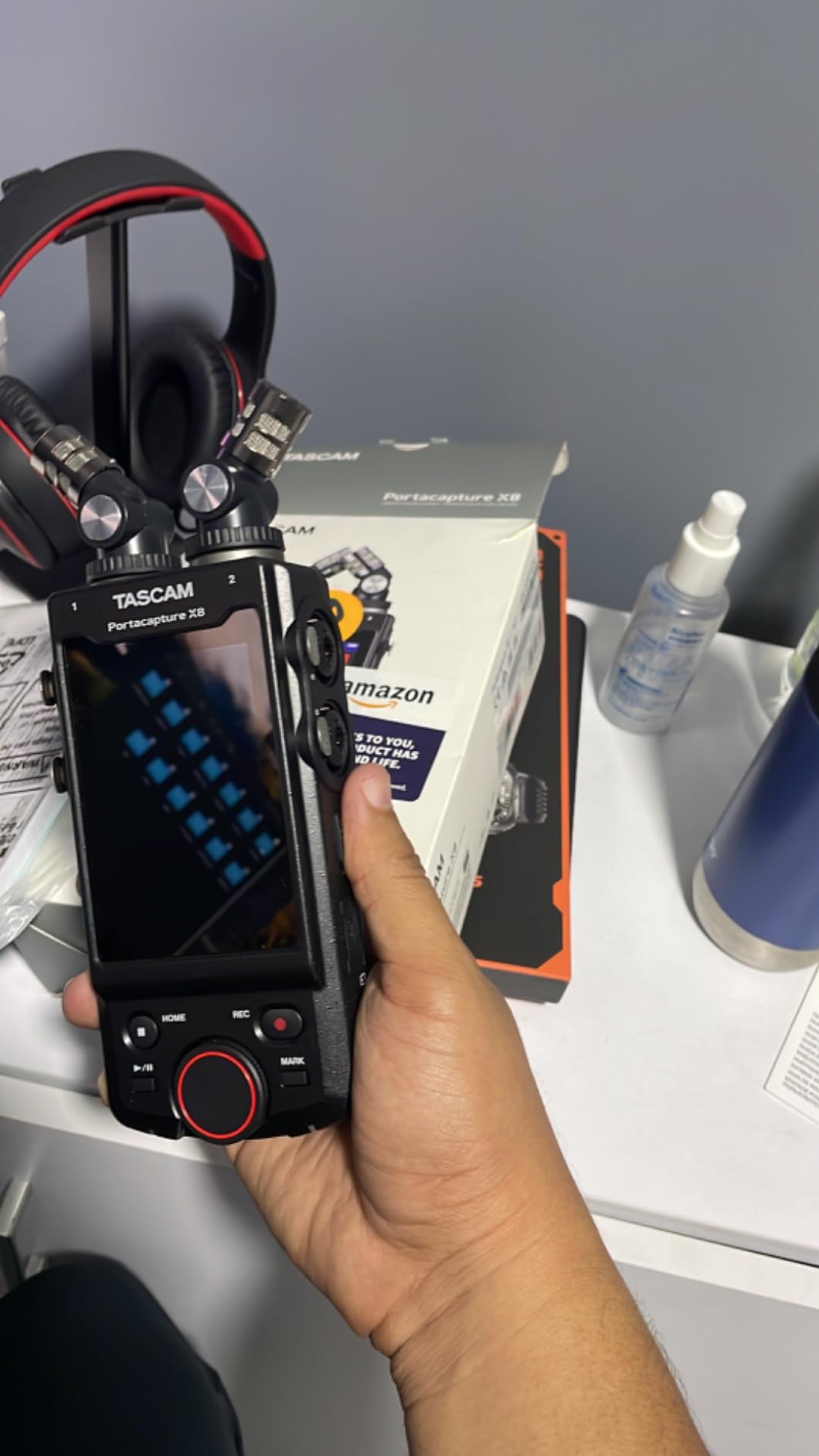
The detachable 14.6mm condenser microphones are a genuinely useful touch for video work. They can sit in A-B or X-Y positions for a quick stereo reference or an ambient bed, then be removed entirely when the shoot moves to lavalier and boom work. That means the same unit covers a scratch track on a documentary and a location ambience pass on a corporate video.
Connectivity is broad for the money. USB handles audio interface duties, SD card reader and mass storage, and the recording functions include built-in reverb and EQ for the non-32-bit modes. Storage is microSD up to 512GB, and reviewers repeatedly single out the value against Sound Devices recorders costing considerably more.
Why the X8 wins on handling and screen
For an operator who is new to location sound, the touchscreen flattens the learning curve that forum users complain about most on button-driven recorders. Levels, track assignment and monitoring are all visible at once, and per-channel phantom power is a tap rather than a menu dive.
It is also the only unit here that captures stereo ambience without an external pair, which is handy for room tone, natural sound and B-roll work. A one-year warranty comes with it, and at 1.6 pounds it is still a reasonable bag item.
Where the X8 disappoints
The name promises more than the chassis delivers. It is marketed as an 8 channel recorder but there are 6 actual input channels, and buying on the name alone leads to disappointment on a shoot that needs more than six.
The detachable built-in mics feel cheap, the touchscreen can have sensitivity issues, and some firmware versions reset input settings on a power cycle. The Bluetooth adapter is a separate purchase and the AK-BT1 is not compatible with the AK-BT2, so check which one you are buying before you rely on wireless control.
5. Tascam FR-AV2 – Compact Timecode for Camera Mounting
- Built-in timecode generator with TCXO accuracy
- 32-bit float with dual ADCs
- Ultra HDDA preamps
- 2 XLR/TRS combo inputs plus a 3.5mm input
- 9.5 oz compact body
- Sample rates to 192kHz
- Only 2 XLR inputs
- Bluetooth adapter sold separately
- 3 AA batteries with no rechargeable option
- Limited long-term review history
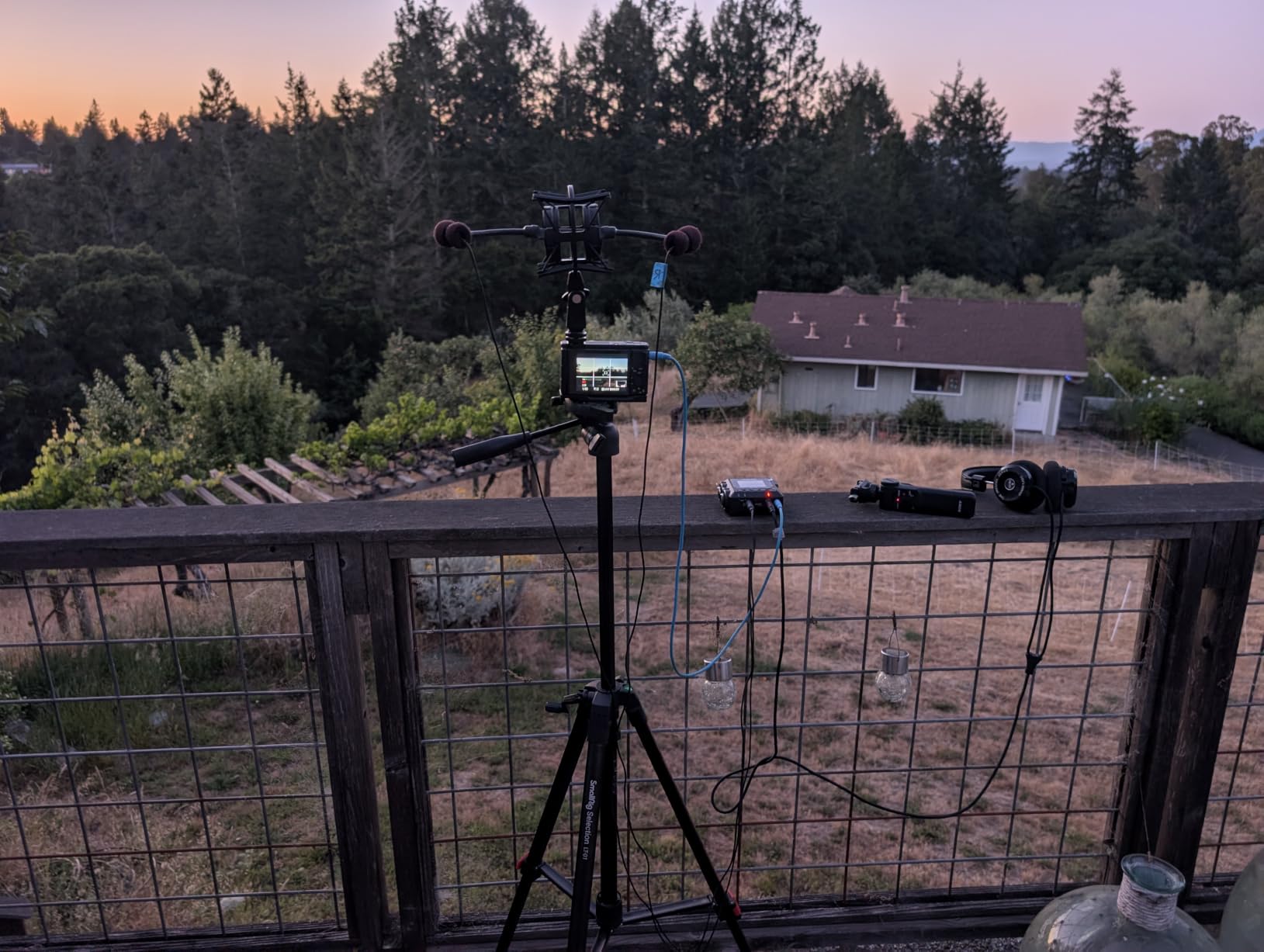
The FR-AV2 exists because of a specific problem: camera audio with no timecode. Its built-in TCXO timecode generator, with timecode in and out, lets a solo shooter jam to the camera’s timecode at the top of the day and then align every take automatically, which is the single most requested feature in location sound forums.
Recording is 32-bit float through dual ADCs with ultra HDDA preamps, at 48kHz, 96kHz or 192kHz. Two XLR/TRS combo inputs handle radio mics or a shotgun, and a 3.5mm input is the detail that makes this body easier to live with than most two-input recorders, because a camera feed or a consumer mic can join the chain without an adapter.
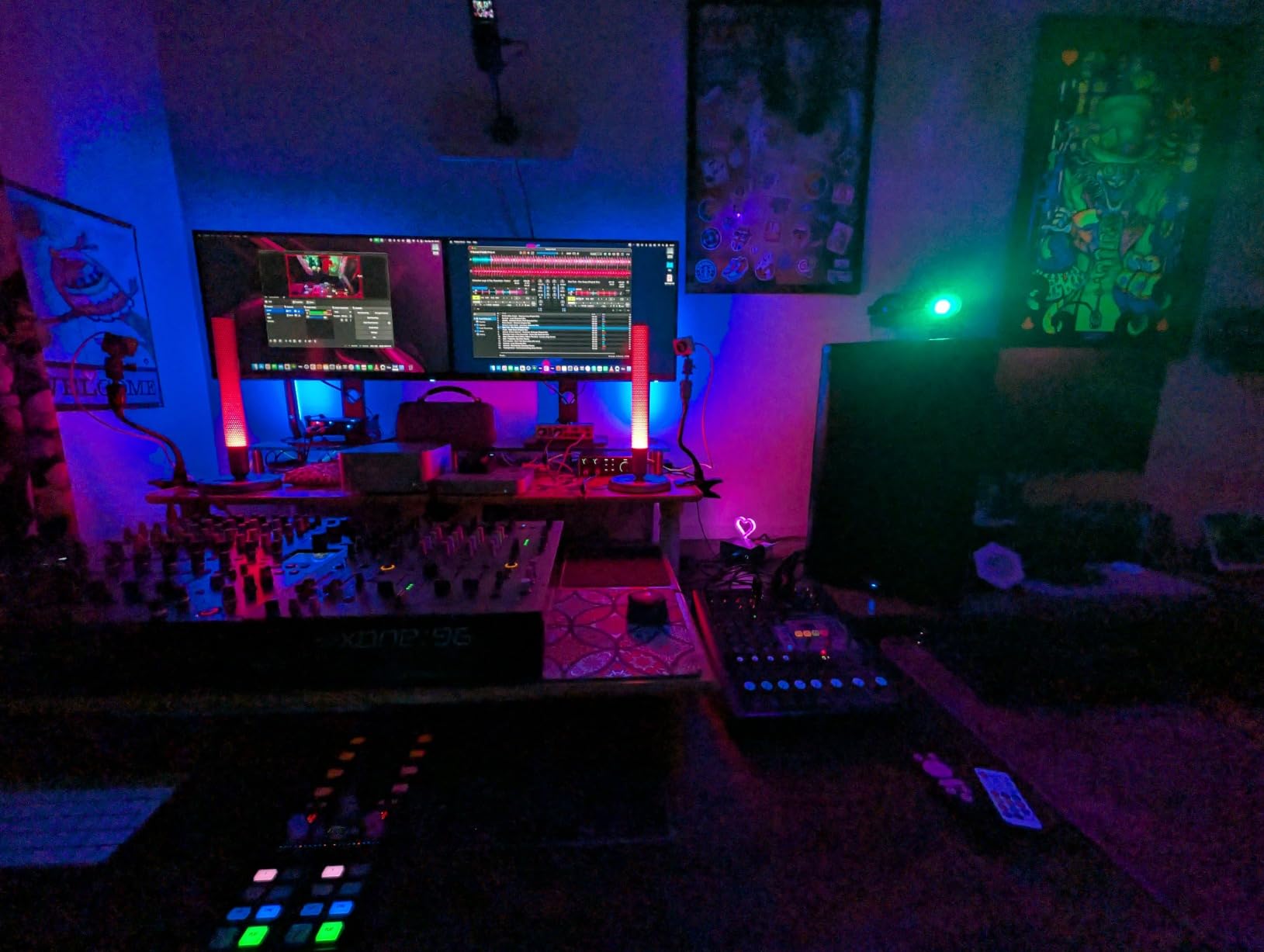
Size is the reason it sits on a camera rather than in a bag. At 9.5 ounces and 3.9 by 3.15 inches it is a realistic hot-shoe or cage mount, so a solo operator can record an isolated track directly off the camera without a second cable run.
That combination, 32-bit float plus timecode in a small body, is rare. Most timecode machines are larger multi-input recorders, and most small recorders have no timecode at all. The constraint is power: it runs on 3 AA lithium metal cells, so it is not a rechargeable unit and you should plan spare cells rather than a power bank.
Where the FR-AV2 is the right tool
Multi-camera shoots. If two cameras roll separately and neither shares a timecode master, the post-production sync work is manual. A built-in generator with both timecode in and out means you can jam this unit at the top of the day and feed a camera that accepts it, so the edit aligns itself.
It is also the sensible choice for a vlogger who wants pro XLR mics and safety-track recording without carrying a full-size mixer. Sampling to 192kHz leaves room for high-resolution capture if a client asks.
Where it is not
Two XLR inputs means a three-person interview or a two-person interview with a stereo ambience pair is out of reach. Wireless control needs the AK-BT2 adapter, which is a separate purchase. This design only reached the market relatively recently, so its long-term review history is shorter than the H5 or the DR-70D, and you are buying on published specifications rather than on years of ownership reports.
The 3.5mm jack is a convenience rather than a pro input, so treat it as a monitor or consumer mic path rather than a channel you would record a primary source on.
6. Tascam DR-70D – Four Inputs With a Safety Track
- Four XLR/TRS combo inputs with individual gain
- Dual recording mode captures a safety track at a lower level
- Limiters and high-pass filter per channel
- Camera mountable on top and bottom
- Two built-in stereo microphones
- Outputs 4 discrete files for editing
- 24-bit only with no 32-bit float
- 1.5 inch screen
- All 3.5mm connectors on the outputs
- Picky about which SD cards you use
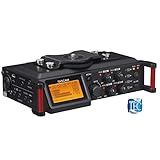
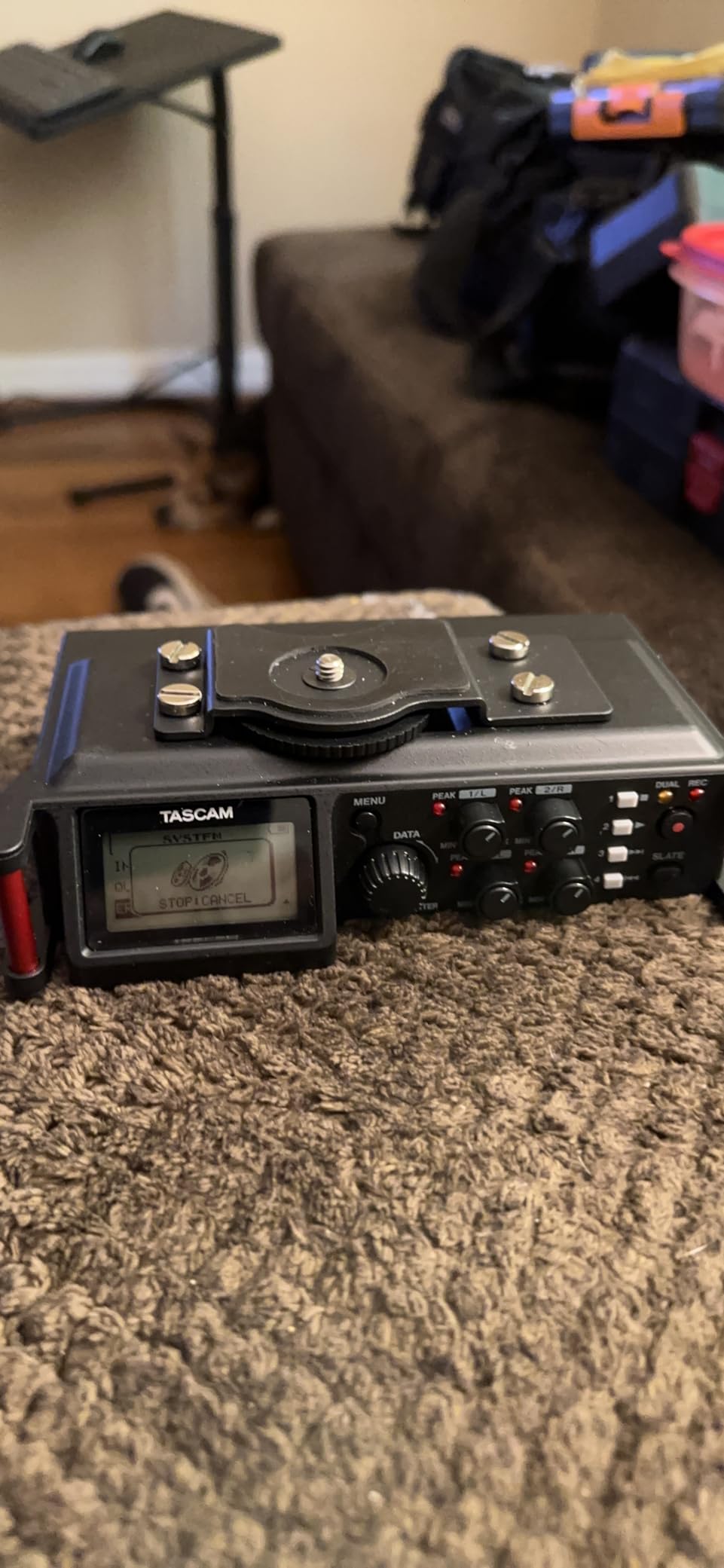
The DR-70D is the value answer, and the value is specifically channel count. Four balanced XLR/TRS combo inputs with individual gain and phantom power, plus two internal microphones, means a two-person interview with a stereo ambience pair fits on one body without any creative accounting.
Its defining feature for video is the dual recording mode. The safety track records a second, lower-level copy of the same channels, so if a subject shouts and the main file clips, the backup usually survives. That is a cheap insurance policy against the exact failure that ruins a take.
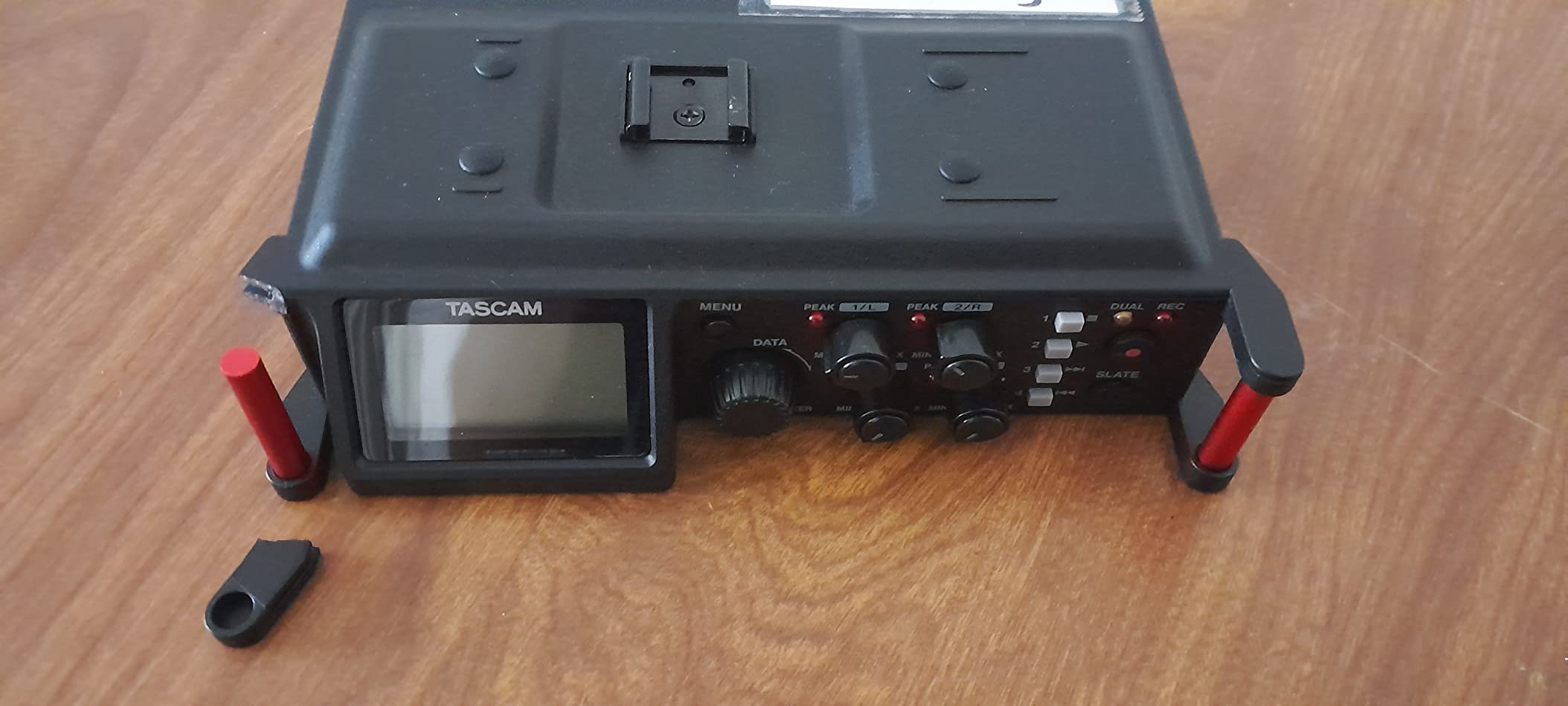
Per-channel limiters and a high-pass filter handle wind rumble and rumble-prone sources before they reach the recording, and the four discrete output files drop straight into an edit as separate tracks. The top and bottom camera mounts mean it can sit on a camera without a cage, which is unusual at four channels.
It is also flexible about power, running on 4 AA batteries or USB, and cards up to 128GB are supported. The chassis is solid metal, which is the opposite of the plastic feeling some cheaper recorders have.
What the DR-70D gets right
Four inputs at this level of build is where most budget recorders stop at two. Combined with per-channel limiters and a high-pass filter, it does more to protect an interview take than a two-input 32-bit float body that relies on gainless capture alone.
Warranty is 90 days labour and one year parts, a little shorter than some rivals, and the stated recording time of roughly 100 hours means you can capture a full multi-day event on one card.
Where it falls behind
It records 24-bit up to 96kHz and there is no 32-bit float, so gain staging is your responsibility again. A surprise loud source can still clip the main file, which is exactly the problem the safety track is there to catch.
The 1.5 inch screen is the smallest of the four-input bodies here, menu navigation is tedious by forum accounts, the output connectors are all 3.5mm rather than 1/4 inch, and the date and time can reset when the batteries change, which matters on a timecode-less multi-day shoot.
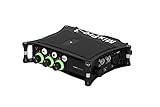
7. Sound Devices MixPre-3 II – Lowest Noise Floor on a Bag Rig
Sound Devices MixPre-3 II Portable 32-Bit Float Multichannel Audio Recorder/Mixer, and USB Audio Interface
- Three ultra-low-noise Kashmir preamps with adjustable limiters
- 32-bit float recording
- Built-in 3 by 2 portable mixer
- 5-in 2-out USB-C audio interface
- Internal LTC generator with HDMI triggering
- Two-year warranty
- Lightweight at 1.1 pounds
- Only 3 preamps on the body
- Battery system is a separate purchase
- 6 channel maximum
- Small 6-channel body limits large rigs
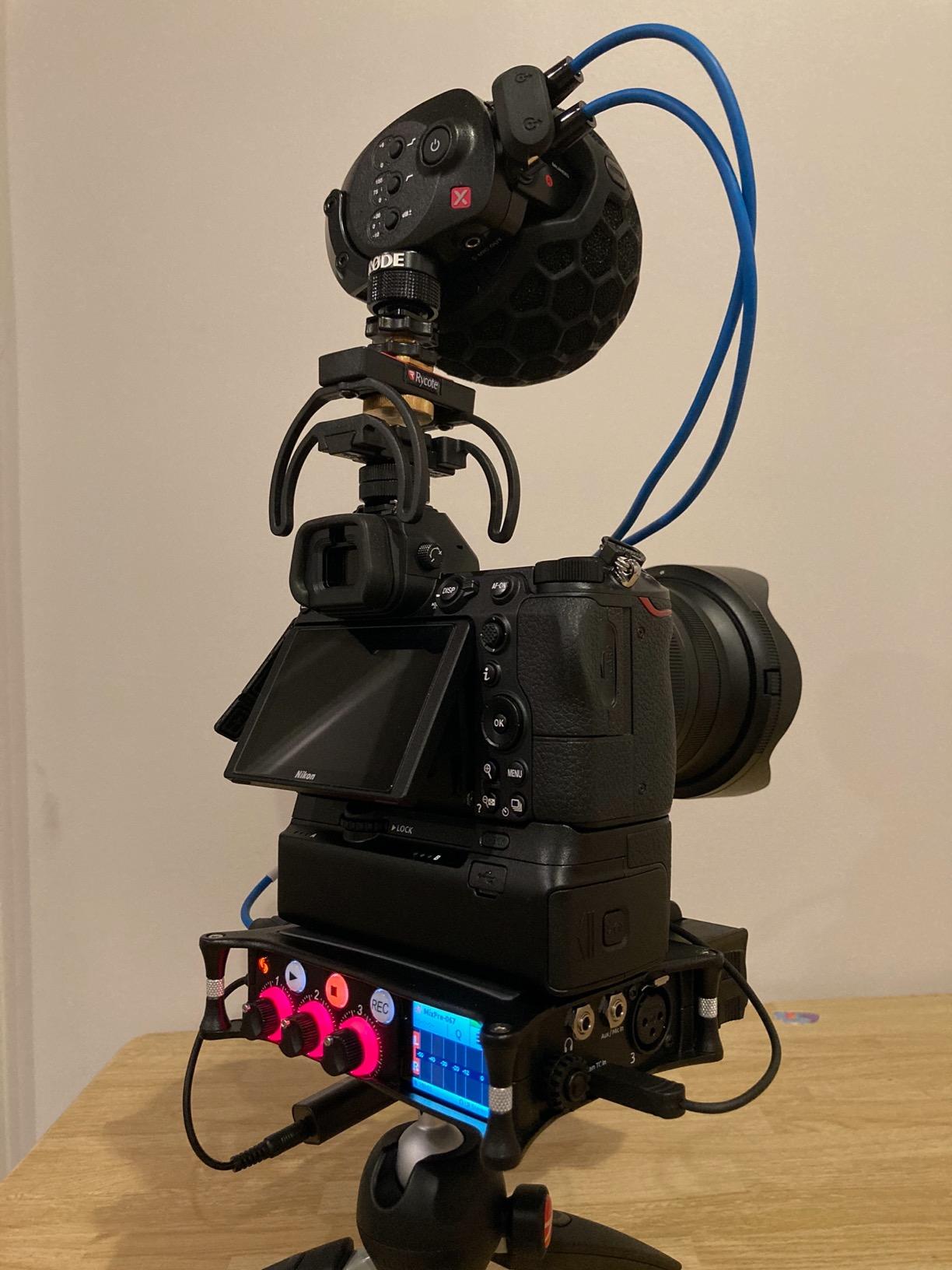
The MixPre-3 II is the recorder you buy when the noise floor of the preamp is the thing keeping you up at night. The three Kashmir preamps are the quietest in this roundup by a clear margin, and paired with 32-bit float they give you both the lowest self-noise and the widest capture window.
It is a mixer as well as a recorder. The built-in 3 by 2 portable mixer handles gain staging, monitoring blend and a direct mix feed to camera, which is the fast professional workflow: set levels once, send a mix to the camera, and record discrete channels to card at the same time.
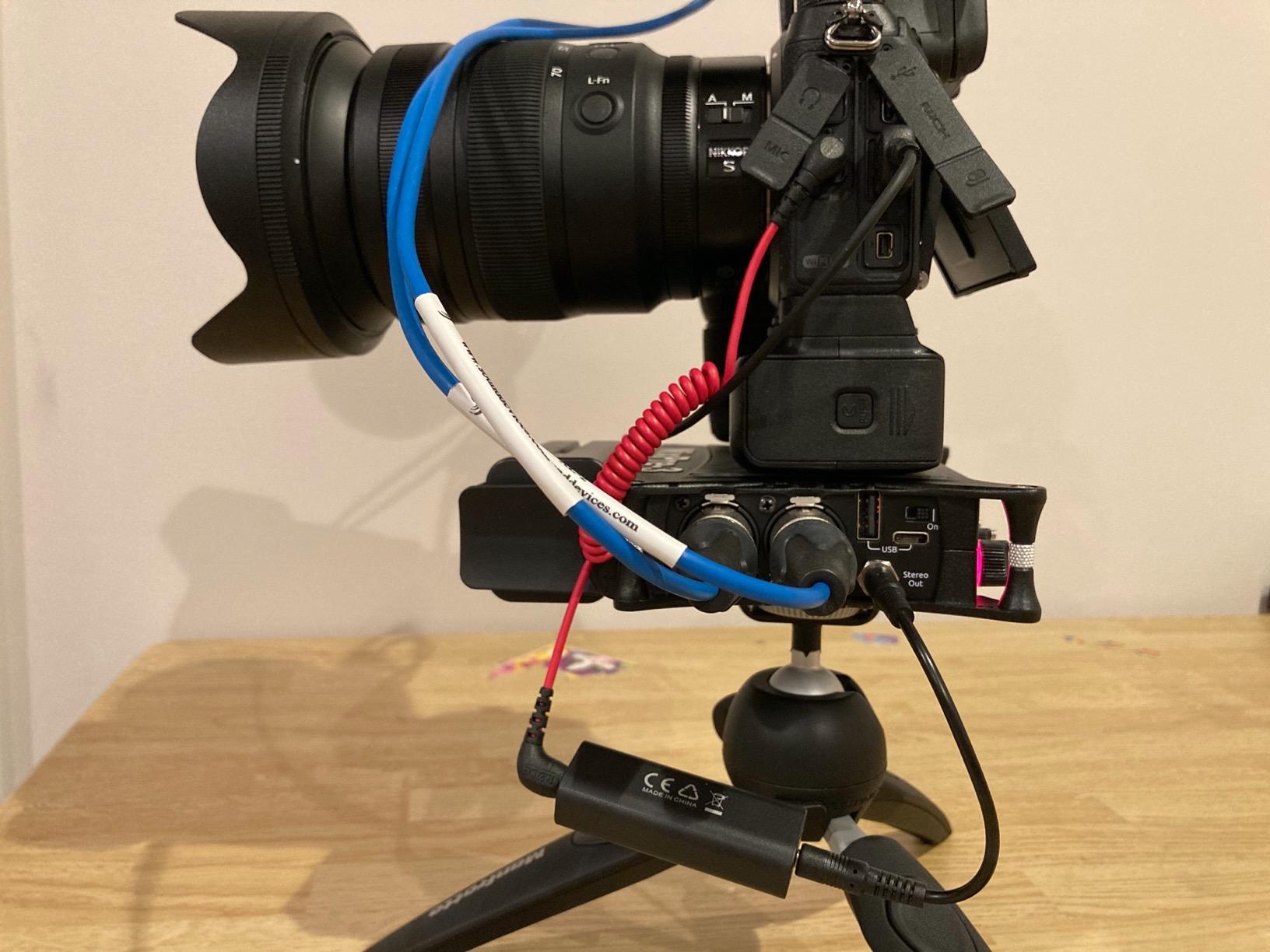
Timecode handling is thorough for a body this small. There is an internal LTC generator, timecode in and out through the aux and stereo connections, and HDMI triggering to jam from a camera, so multi-camera work is straightforward rather than improvised.
The USB-C interface runs 5-in and 2-out at up to 32-bit float, which makes the box a workable studio preamp as well as a field recorder. Sample rates go to 192kHz, the body is 1.1 pounds for bag use, and the two-year warranty is the longest warranty in this roundup.
Where the MixPre-3 II earns its place
Adjustable limiters on every preamp mean the recorder protects itself before the file does, and with 32-bit float alongside them, clipping stops being a conversation you have to have. The Kashmir preamps handle quiet lavalier work in a treated room without the audible self-noise cheaper stages add.
At six channels, three of them mic preamps and the rest line-level, it covers an interview plus a stereo ambience pair comfortably. For a documentary or corporate sound recordist who also wants a fast USB workflow, the two functions in one box reduce kit count.
Where it is the wrong buy
Three mic preamps is the limit. A three-person interview with a boom needs a small mixer or an additional box, and the six-channel ceiling means this is not a small-crew recorder like the F8n Pro.
The battery system is a separate purchase, and with 63 reviews the long-term user history is the thinnest here, so for a professional body you are buying into a small user base. It is also the least forgiving choice for a first recorder, because the mixer depth assumes you already know what you are doing.
How to Choose a Field Recorder for Video Shoots?
Start by counting microphones, not by brand. A solo vlogger with a shotgun on a camera needs one input. A two-person interview with lavaliers needs two. Add a stereo ambience pair and you are at four, which is the number that pushes you toward the DR-70D or the F8n Pro rather than a two-input body.
32-bit float means the recorder captures with such a wide dynamic range that you can raise or lower levels in post without digital clipping, because the original signal was never truncated. Do you need it? Yes, if you shoot unpredictable location sound with unpredictable level. No, if your audio comes from a fixed mic in a controlled room.
XLR inputs and phantom power. XLR/TRS combo jacks accept both balanced microphones and line or instrument cables. Phantom power, usually 24V or 48V, is what powers condenser microphones; if the recorder cannot supply it, you need an external supply. The 10mA limit on the F3 is the kind of detail that only bites when you plug in the wrong mic.
Timecode and sync. A timecode generator writes a running clock into the audio file, and a matching clock in the camera file lets your editor align them instantly instead of dragging waveforms. If you shoot more than one camera, timecode is not a luxury. The F8n Pro and FR-AV2 generate it; most recorders in this roundup do not, and a clapperboard plus waveform sync is the fallback.
Built-in microphones or none. Built-in capsules on the H5 and X8 are genuinely useful for ambience, scratch tracks and reference audio, and useless under wind. Recorders with no built-in mics, like the F3, force you onto booms and lavs, which is the better habit anyway for video work.
Battery and power. The stated figure is a laboratory number. Phantom power roughly halves runtime on AA-powered recorders, and lithium cells last considerably longer than alkaline. Any unit that accepts USB power gives you a power bank as a backup, and card capacity matters as much as cells: a 32GB ceiling on the H5 will interrupt a long day.
Build, screen and interface. Metal bodies survive a bag better than plastic. A 1.5 or 1.9 inch screen is fine for confirming a roll, useless for reading levels in daylight, which is the argument for the X8’s 3.5 inch panel. And if you will use the recorder as a USB audio interface, check the port type, because the F8n Pro’s micro USB-B is a daily irritation in 2026.
Our companion guide to [best field monitors](https://www.dognotebook.com/best-field-monitors/) covers the monitoring side of a shoot, and both of those decisions, the microphone chain and the monitoring chain, are part of the same workflow.
Frequently Asked Questions
What is the best audio recorder for making videos?
The Zoom H5 is the most useful all-rounder because its interchangeable capsule system covers dialogue, ambience and scratch tracks in one body. The Zoom F3 is better if you shoot unpredictable location sound, since 32-bit float recording removes gain-setting stress. The Zoom F8n Pro fits small crews that need eight microphones and timecode.
What is the best portable device for recording audio?
For a solo shooter, the Zoom F3 at 8.48 ounces with 73 hours of stated battery life is the most portable option with professional XLR inputs. The Zoom H5 is the better general answer because the capsule system expands it beyond two inputs. The Tascam FR-AV2 is the smallest unit here with a built-in timecode generator.
How many XLR inputs do I need for a two person interview?
Two inputs cover a two-person interview with one lavalier per subject, which is why the Zoom F3, Tascam FR-AV2 and Sound Devices MixPre-3 II all work for that shoot. Add a stereo ambience pair and you need four inputs, which points to the Tascam DR-70D or the Zoom F8n Pro. Solo vlogging with one shotgun needs only one.
What is 32-bit float recording and why does it matter?
32-bit float recording captures audio with such a wide dynamic range that the recording does not clip when a source gets unexpectedly loud, and levels can be adjusted cleanly in post. It matters on location work where you cannot control how loud a subject or a passing vehicle will be. It matters less in a controlled room with a fixed microphone.
Can a portable recorder sync with my video camera’s timecode?
Yes, if the recorder has a timecode generator. The Zoom F8n Pro uses a TCXO for 0.2ppm accuracy, the Tascam FR-AV2 has a built-in generator with timecode in and out, and the Sound Devices MixPre-3 II offers an internal LTC generator with HDMI triggering. Without timecode, you sync with a clapperboard or automatic waveform matching in Premiere Pro or DaVinci Resolve.
Do I need a field recorder if my camera records audio?
Usually yes, because the recorder gives you a second independent take of the same sound. A camera with XLR inputs records well, but a single file means a clipped, wind-ruined or equipment-rubbing moment is gone. The external recorder works as a safety track you can mix over, and it lets the operator monitor on headphones in real time.
Which Field Recorder Should You Buy?
Buy the Zoom H5 if you want one recorder that covers every kind of audio a video shoot throws at you, and the capsule system means the money is not wasted on the wrong shape of machine. Buy the Zoom F3 instead if you shoot unpredictable people in unpredictable places and would rather never touch a gain control, or if you want the smallest professional body you can carry.
Buy the Tascam DR-70D when four inputs matter more than 32-bit float, and buy the Tascam Portacapture X8 when a big screen and 32-bit float both matter to you. For the recorder that generates timecode, the Tascam FR-AV2 is the compact answer and the Zoom F8n Pro is the crew answer, while the Sound Devices MixPre-3 II is where you go when the preamp noise floor is what is keeping the director awake.
Whichever you pick, test the workflow once before a paid shoot: record a short take, sync it in your editor and confirm your habits with timecode or a clapperboard. That single rehearsal is the difference between a smooth edit and a long night. We will be updating this roundup as new models land through 2026, and the links on each card go to the current listing.