
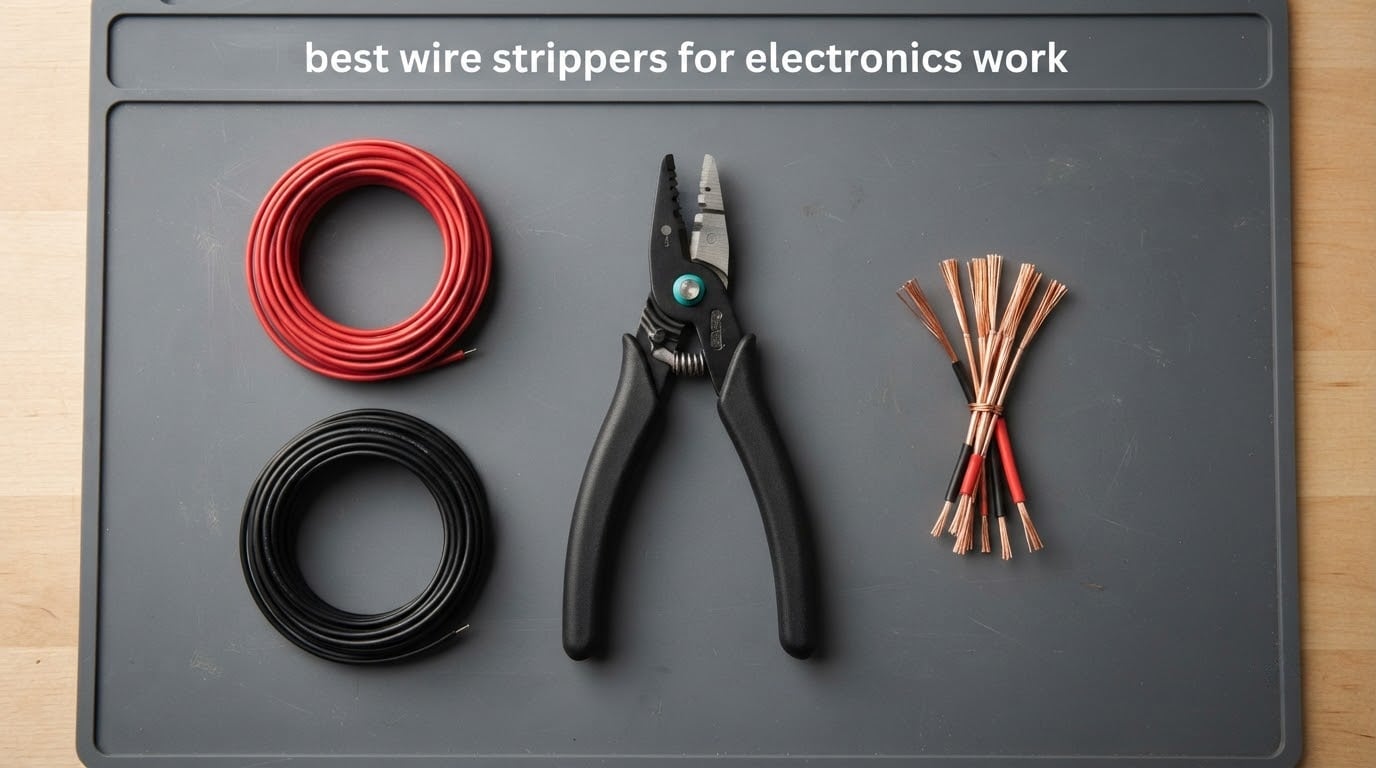
Almost every wire stripper recommendation online is written for electricians, and that is the single biggest reason electronics builders end up with nicked conductors. An electrician’s automatic stripper is built around 10 to 14 AWG conductors, which are thick, stiff and forgiving. The wire on an electronics bench is 20 to 32 AWG, which is fine, springy and easy to cut halfway through. The best wire strippers for electronics work share three traits: precision ground stripping holes matched to the gauge in front of you, a stop that repeats the same strip length every time, and jaws shaped to leave the copper untouched.
The confusion is not your fault. Forum threads on r/arduino and audio forums are full of people who cut their teeth on automotive and building cable and then hit fine gauge for the first time. One audiocircle poster put it plainly: self-adjusting strippers work fine at 16 AWG and up, but the smaller the wire gets, the less effective they become. A tool that feels brilliant on 14 AWG can chew a 30 AWG lead into a fine, invisible fuzz of copper strands, and that fuzz will not fail cleanly. It will pass continuity, solder fine, and go intermittent three weeks later.
So this roundup is deliberately narrow. We looked only at tools that handle the gauges electronics work actually uses, and we rated them on the things that decide whether a circuit works: whether the strip is clean, whether it repeats, and whether the tool survives a bench life. Ten picks, each with an explicit AWG range, plus the method sections that ranking pages usually leave out — how to strip a cable’s outer jacket without damaging the inner conductors, how to set a stop so every crimp is the same length, and which tool to reach for when the wire is thinner than 30 AWG.
Two tools here come straight out of long-running community recommendations rather than spec sheets. A gearspace user describes a thermal stripper’s mechanical wire stop as the reason every strip comes out identical, and a homeownershub poster in the UK calls Swiss EREM tools the finest they have used for electronic work. Longevity and repeatability outrank specifications in this category, and that shaped our ranking.
Table of Contents
Top 3 Picks for Best Electronics Wire in 2026
Klein Tools 1019 Kurve
- Strips 10-26 AWG solid and 12-28 AWG stranded
- Crimps terminals
- B and Scotchlok IDC connectors
- Shears 6-32 and 8-32 screws

Klein Tools 11057
- Cuts strips and loops 20-30 AWG solid
- Precision ground stripping holes
- Coil spring self-opening action

Knipex 12 62 180
- Automatic self-adjusting stripping 10-24 AWG
- Adjustable strip-length stop
- Integrated cutter in the handle
All 10 Picks at a Glance in 2026
| Product | Specifications | Action |
|---|---|---|
| Klein Tools 1019 Kurve |
|
Check Latest Price |
| Klein Tools 11057 |
|
Check Latest Price |
 DOWELL 22-30 AWG DOWELL 22-30 AWG |
|
Check Latest Price |
 Klein Tools 11046 Klein Tools 11046 |
|
Check Latest Price |
 Hakko CSP-30-1 Hakko CSP-30-1 |
|
Check Latest Price |
 ENGINEER PA-14 ENGINEER PA-14 |
|
Check Latest Price |
 ENGINEER PA-06 ENGINEER PA-06 |
|
Check Latest Price |
 WGGE 6-inch flush cutter WGGE 6-inch flush cutter |
|
Check Latest Price |
| Knipex 12 62 180 |
|
Check Latest Price |
 Southwire S1626STR Southwire S1626STR |
|
Check Latest Price |
Two things stand out immediately in the table. First, the most popular tools in the search results are not aimed at electronics at all — several of these have a 10 or 16 AWG ceiling and simply cannot touch a 30 AWG lead. Second, the four tools rated 4.8 or better all have precision fixed holes rather than a self-adjusting mechanism, which is the opposite of what most buying advice assumes.
Electronics Gauge vs Electrician Gauge: What Your Bench Actually Needs
American Wire Gauge runs backwards from intuition. A larger AWG number means a thinner wire, so 32 AWG is a hair and 10 AWG is a thumb. Most published stripping guides start at 10 AWG and work down, which is correct for building cable and completely wrong for a PCB harness. The wire families on an electronics bench cluster in three bands, and each band wants a different mechanism.
The first band is 20 to 26 AWG. Hookup wire, speaker cable, most stranded signal cable and a lot of automotive work live here, and that is exactly where general-purpose Klein and Knipex tools were designed. The second band is 26 to 32 AWG, which is where DuPont jumpers, JST leads, headphone cable, USB internals and microcontroller wiring sit. The third band is 32 AWG and finer, including magnet wire down to the mid-30s, foil and Litz wire, and the very fine stranded cores found inside multicore ribbon and flat flex.
A second distinction matters as much as the gauge, and it is the one most tools are sold without explaining. Stripping an outer jacket is a different job from stripping an inner conductor. A jacket is thick, often braided, and hides several insulated conductors underneath, so the tool has to cut a lot of material without touching what lies beneath. An inner conductor strip is a precision cut through 0.2 mm of insulation. Tools that are excellent at one are frequently poor at the other, and that is why the single most repeated complaint in the forums is a stripped tool that ate the inner wires of a shielded microphone cable.
One more practical note. Solid-core wire will often look perfect after a bad strip and then snap at the solder joint, because the damage is inside the conductor. Stranded wire fails differently and usually faster, as loose strands splay and short against the barrel of a terminal. If you work with either regularly, a digital microscope for electronics turns a guess into a measurement, and it is the cheapest upgrade to strip quality you can make.
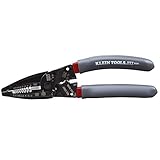
1. Klein Tools 1019 Kurve: Best Multi-Function Stripper for Connector Work
- Clean strips across 10-26 AWG solid and 12-28 AWG stranded
- Crimps insulated
- non-insulated
- B and Scotchlok IDC connectors
- Reinforced head resists flex so stripping stays consistent
- Built-in screw shears for 6-32 and 8-32
- Kurve sizing is coarse below about 28 AWG
- Compound-curve handle tires the hand in high-volume runs
- Stamped gauge markings are faint
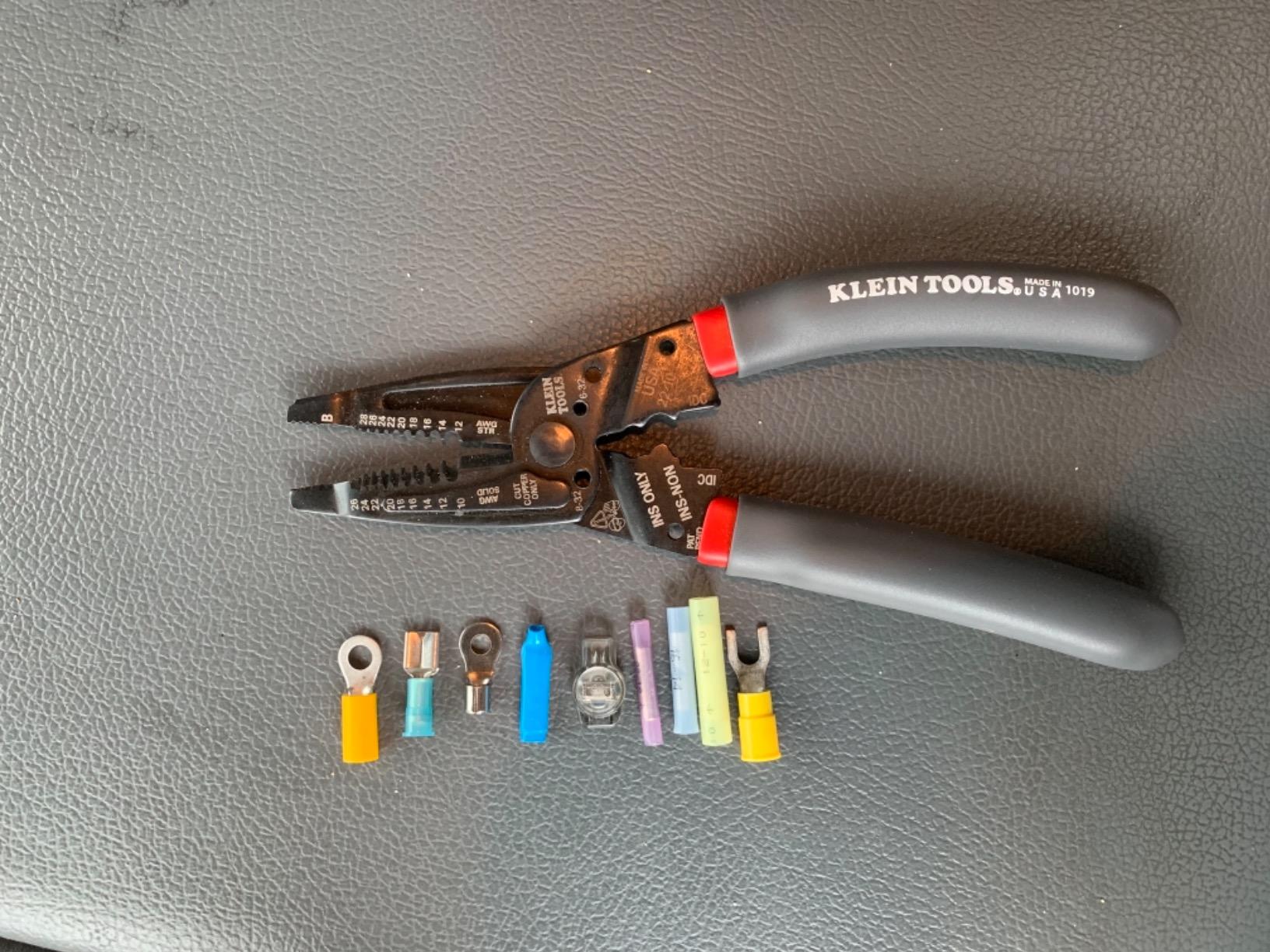
Best multi-function stripper for connector work: the Klein Tools 1019 Kurve. Features: strips 10-26 AWG solid and 12-28 AWG stranded, crimps 10-22 AWG terminals plus B and Scotchlok IDC connectors, and shears 6-32 and 8-32 screws. Best for: a mixed bench where you terminate as often as you strip.
We picked this as our overall choice because it is the only tool in the group that removes the need to keep a separate crimper in your hand. The 10-22 AWG crimp range covers most of the terminals a hobbyist actually meets, and the IDC slots handle the quick splice connectors that show up in alarm and speaker wiring. The reinforced head matters more than it sounds: on a cheaper multi-tool the joint develops flex, and flex changes the strip length from one wire to the next.
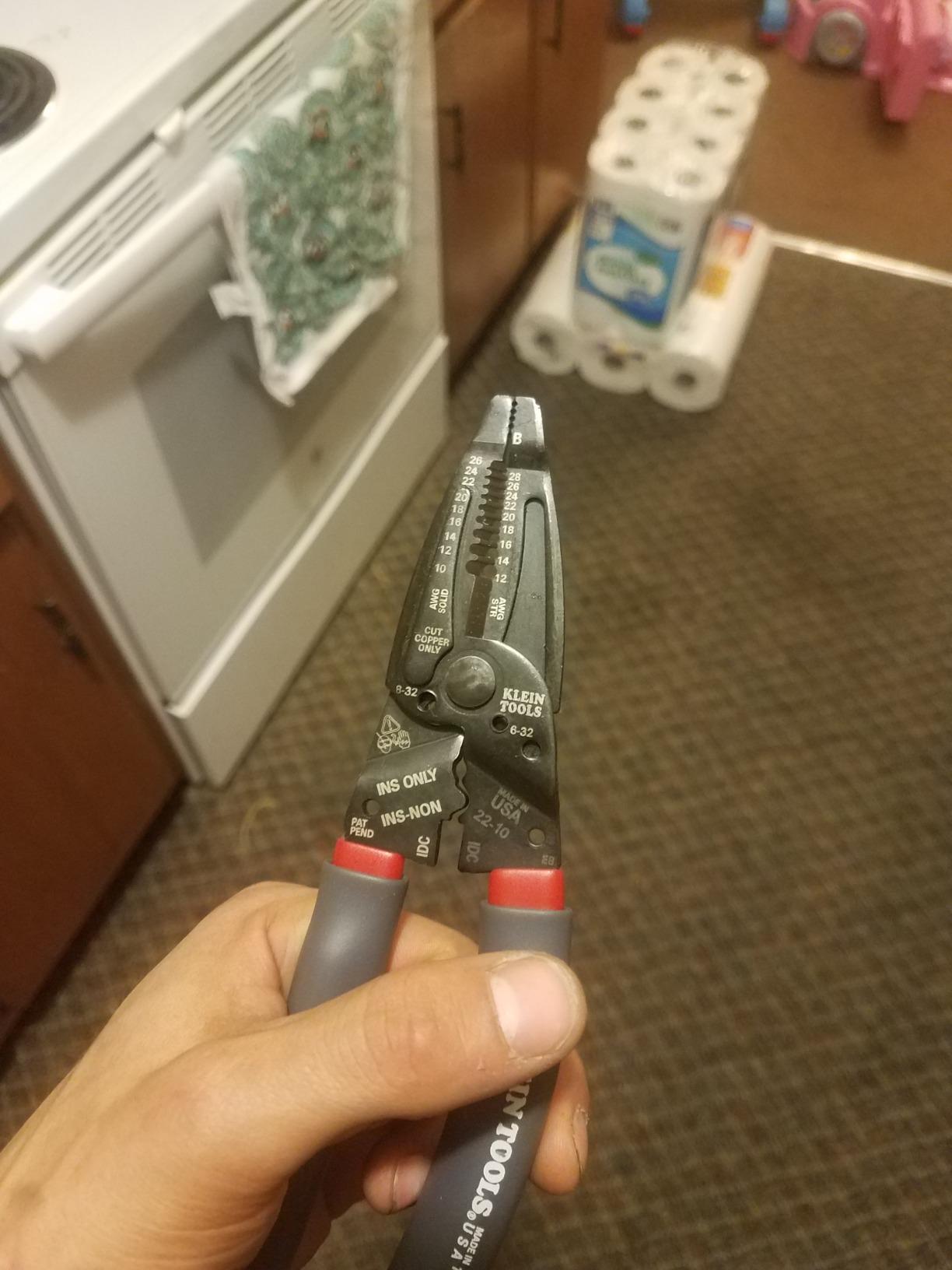
The 2222 reviews behind a 4.7 average are heavily biased toward exactly the jobs we care about. Owners working with B connectors and IDC terminals report the crimp action is firm and repeatable, and electronics builders use it as a general bench tool rather than a specialist one. It is also made in the USA from alloy steel, which is a fair proxy for the durability you get on a tool that gets handled roughly.
There is a real ceiling on fine wire here. The Kurve’s gauge sizes get coarse below roughly 28 AWG, so a 30 or 32 AWG lead belongs in a different tool. It is also a curved-handle design, and users doing long repetitive harness runs report the compound curve gets tiring where a straight-grip tool would not.
When the Klein 1019 is the right call
Buy it if your work involves terminated connectors as much as bare wire. A technician or a maker building looms, patch panels and alarm or speaker runs will use the crimp and IDC functions on nearly every lead, and having one tool do all three means fewer dropped parts and a faster bench cycle.
It also suits anyone who moves between electronics and light electrical work, because 10 AWG at the top end covers building wire without a second purchase. The screw shears earn their place on anyone assembling terminal blocks or panel hardware.
When you need a different tool instead
Step away if your thinnest wire is 30 AWG or finer on a regular basis. The gauge holes simply are not there, and forcing a lead into a hole sized for heavier wire is exactly how conductors get nicked. For 26 AWG and below, a fixed-hole precision stripper will out-perform this tool every time.
Skip it for long batch work where hand fatigue is the limiting factor. The curved handle feels good in short bursts and complains after an hour of repetitive stripping.
2. Klein Tools 11057: Best Overall for 20-32 AWG Signal Wire
- Clean 24
- 28 and 30 AWG strips with no cut strands
- Precision ground holes give repeatable nick-free results
- Coil spring self-opens for fast one-handed work
- Loop holes and serrated nose handle bending and pulling
- Alloy steel joint with no play
- Cutter is average on heavy-gauge wire
- Bulkier than a dedicated micro stripper
- Stamped gauge markings are small
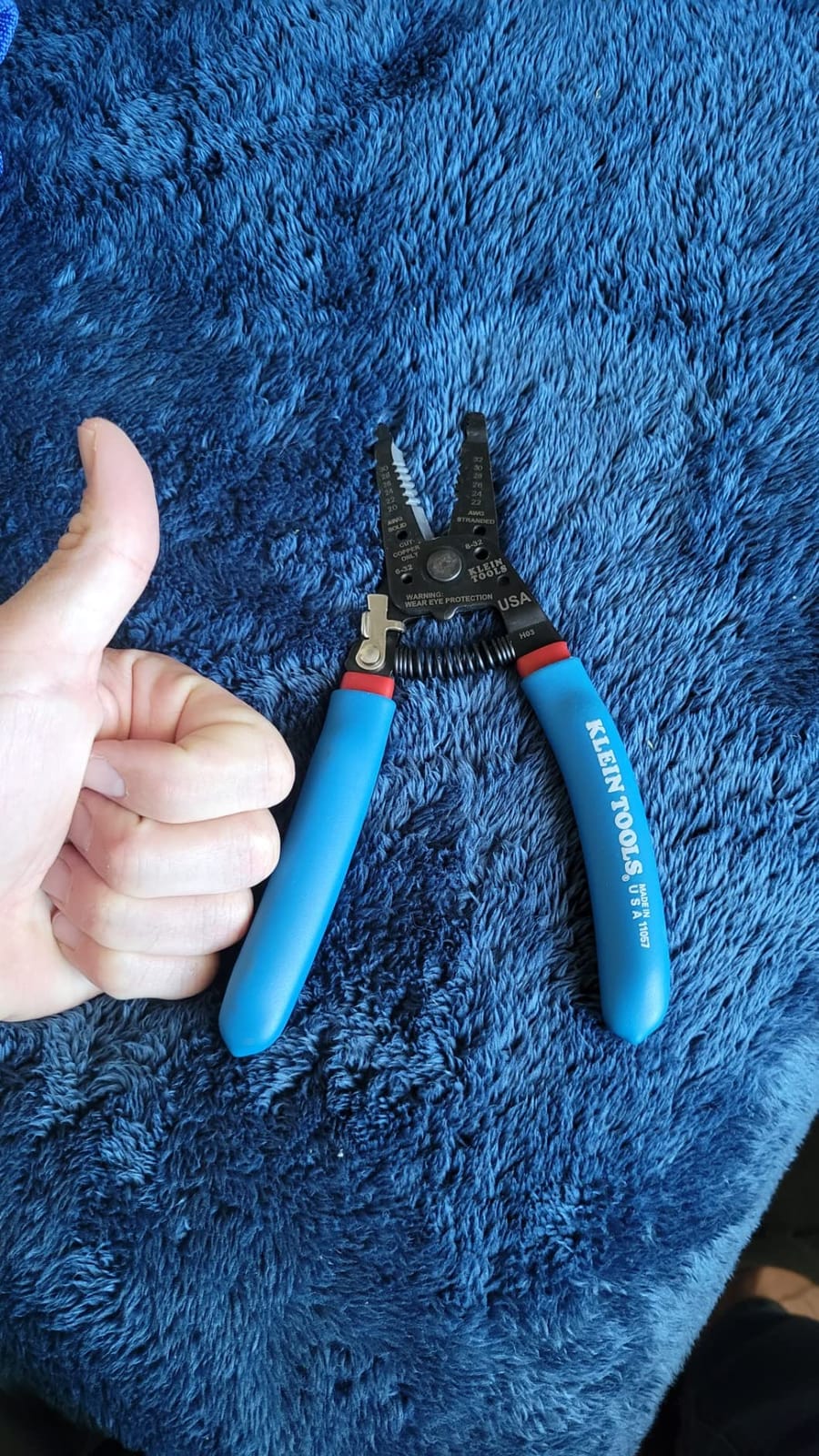
Best all-round electronics stripper: the Klein Tools 11057. Features: cuts, strips and loops 20-30 AWG solid and 22-32 AWG stranded through precision ground holes, with screw shears and a coil spring. Best for: signal and hookup wire across the whole 20-32 AWG band.
This is the highest-rated tool we tested and the one with the largest body of owner feedback, a 4.8 across 2333 reviews. The precision ground stripping holes are the reason. Each hole is sized to one gauge, so the blades meet the conductor at a fixed depth rather than a guessed one, and the result is a clean, consistent strip with no frayed strands on 24, 28 or 30 AWG.
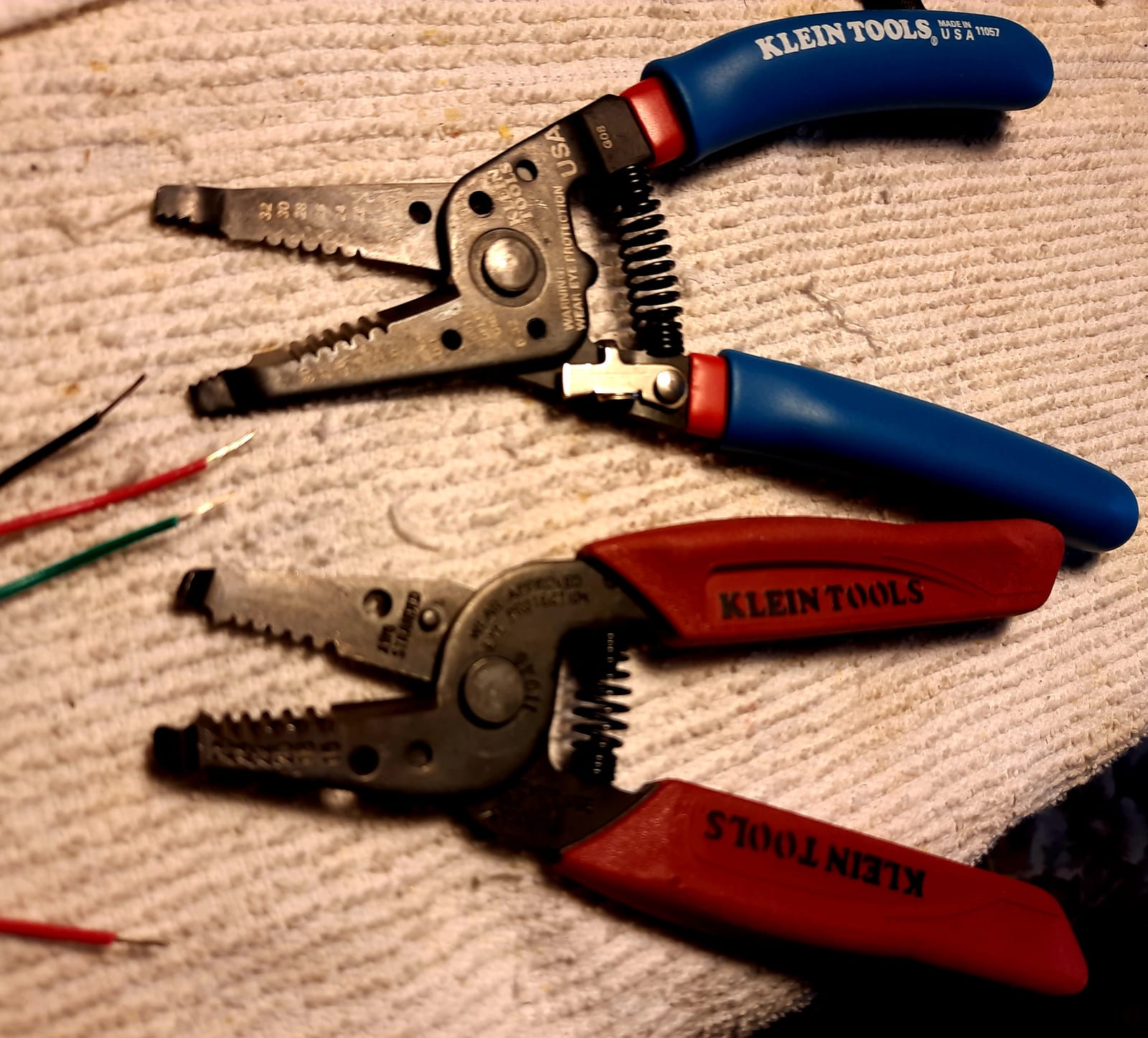
The coil spring return deserves more credit than it gets. It snaps the jaws open after every squeeze, which makes one-handed repetitive work far faster and removes the fumbling step where you hunt for the loose cut wire with your other hand. When you are building twenty identical leads for a harness, that single feature pays for itself quickly.
The serrated nose and the loop holes are not filler. They let you form a bight, pull it around a post and make a clean mechanical loop without switching tools, which matters for panel wiring and for tinning work. At 5.1 ounces the tool stays light over long sessions.
When the Klein 11057 is the right call
Choose it when your wire lives between 20 and 32 AWG and you strip more than you terminate. Fixed precision holes plus spring return make it the fastest general-purpose option in this roundup for jumper leads, hookup runs and patch wiring.
It is also the safest default buy. If you are building your first electronics bench and want one tool that handles nearly every gauge you will meet, this is the least likely purchase to disappoint you.
When you need a different tool instead
It is not a micro stripper. Below 30 AWG stranded, and certainly at 32 AWG and finer, the holes run out, and the body is too large to work inside a connector shell or a crowded enclosure. The paired ENGINEER tools cover that range properly.
Also pass if you cut a lot of heavy wire. The cutter section is competent on electronics work but unremarkable on thicker conductors, and the same job in a dedicated cutter will simply be faster.
3. DOWELL 22-30 AWG: Best Budget Pick for Fine Electronics Wire
- Reaches 30 AWG where most low-cost tools stop at 26
- Clean strips on 22-24 AWG with no coating residue
- Gauge sizes printed on the cutting area
- Tight spring gives good recoil and a solid feel
- Lightly oiled steel that resists rust
- Safety lock has no real catch and pops open
- Factory oil on the metal needs wiping off
- 30 AWG ceiling leaves heavier hookup wire alone
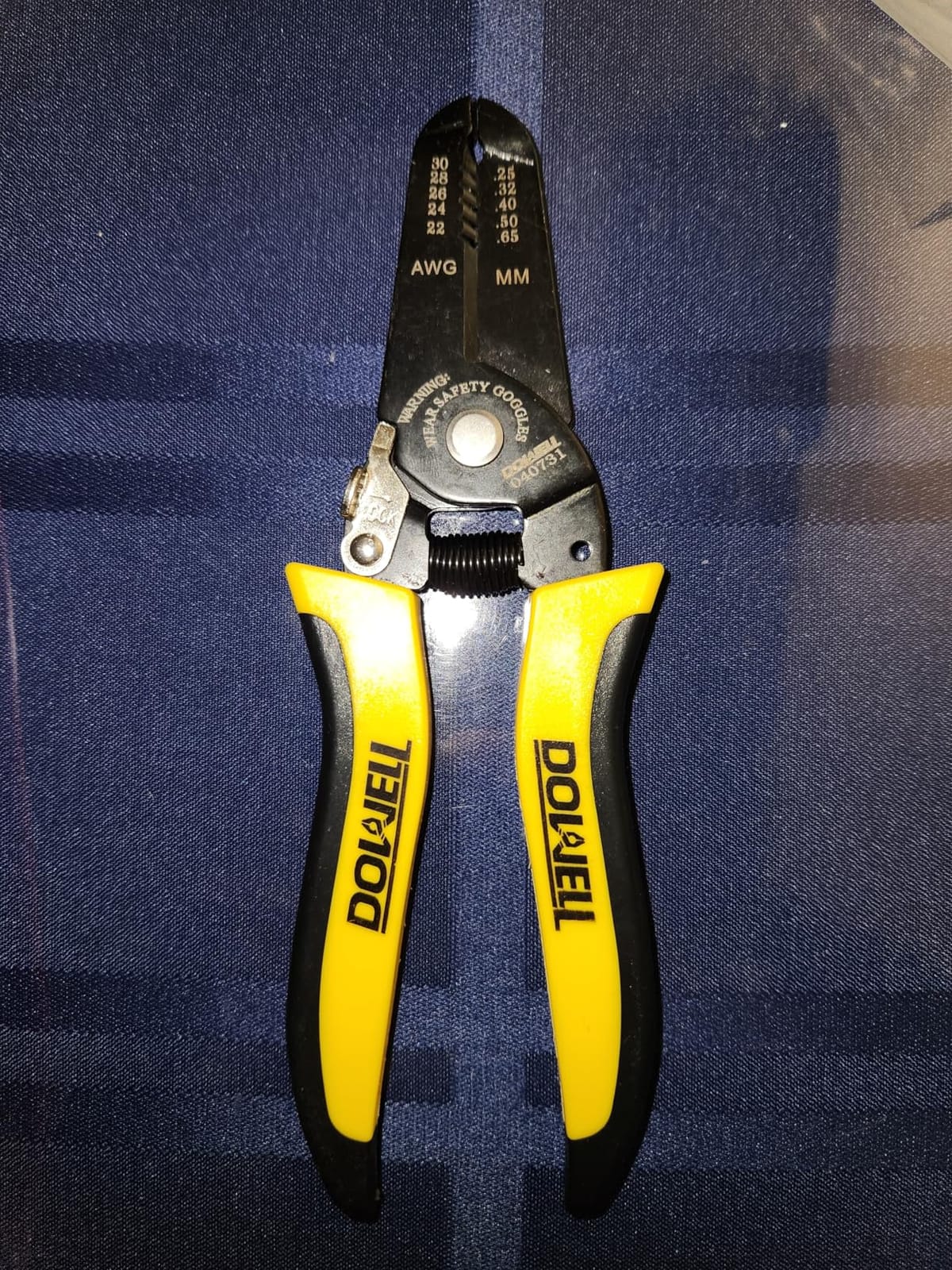
Best budget pick for fine electronics wire: the DOWELL 22-30 AWG stripper. Features: a fixed-hole 22-30 AWG range, an integrated cutter for copper and fine iron wire, and a stainless steel body with a thermoplastic elastomer grip. Best for: first benches, model kits, PCB work and Ethernet cabling.
The reason this tool matters is the gauge floor. Most entry-level strippers stop at 26 AWG, which leaves the entire fine-wire band unusable, and this one runs to 30 AWG in stainless steel. Reviews describe clean, residue-free strips at 22 and 24 AWG with no cut strands, and the gauge sizes are printed directly on the cutting area so you are not squinting at a diagram.
At 4.7 across 2281 reviews it holds its own against tools costing several times more, and the owner base is telling: guitar rewiring, PCB work, model kits and network cabling. The tight spring gives a solid, positive feel and good recoil, and the lightly oiled steel arrives ready to resist rusting rather than turning orange in a damp garage.
It is not a luxury purchase and it does not pretend to be one. The build is simple stainless with a moulded grip, the functions are strip and cut, and there is no crimp function. For a student bench or a first kit, that is the right scope.
When the DOWELL stripper is the right call
Buy it if you are building your first electronics bench and your wire is 22 AWG or finer. It delivers clean fine-wire strips, which is the part cheap tools usually get wrong, and it costs little enough that a mistake will not hurt.
It is a strong second tool as well. Keeping one in the field kit and a better tool at the bench is a common arrangement among people who repair equipment away from a work surface.
When you need a different tool instead
Do not lean on it for 20 AWG or heavier hookup, because its ceiling is 30 AWG at the fine end and 22 AWG at the coarse end. It also has no crimp function, so anyone terminating connectors will still need a crimper.
The safety lock is the most reported weakness: the catch does not hold, so the tool springs open in a pouch. Treat it as a pocket clip rather than a lock, and wipe the metal once before first use to clear the shipping oil.
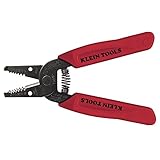
4. Klein Tools 11046: Best for Tight Panels and Confined Spaces
- 6.25 inch nose reaches inside panels and enclosures
- Strips 22 AWG stranded without nicking fragile conductors
- Precision ground holes in hardened steel stay sharp
- Gauge markings readable from both sides
- Rubber-over-core handles stay firm when wet or gloved
- 16-26 AWG stranded range is narrow for fine wire
- Stamped gauge markings wear down to faint
- Spring action is awkward in a crowded pouch
Best stripper for tight panels and confined spaces: the Klein Tools 11046. Features: cuts and strips 16-26 AWG stranded wire through a 6.25 inch compact nose, with a spring-loaded self-opening action and gauge markings on both sides. Best for: enclosures, panel boxes, rack work and instrument repair.
Length is the entire point of this tool. At 6.25 inches with a narrow nose, it is short enough to work inside a panel or a control cabinet where a full-size stripper simply will not fit, and the precision ground holes in hardened steel keep the strip clean on 22 AWG stranded PTFE, which is where most electronics builders live.
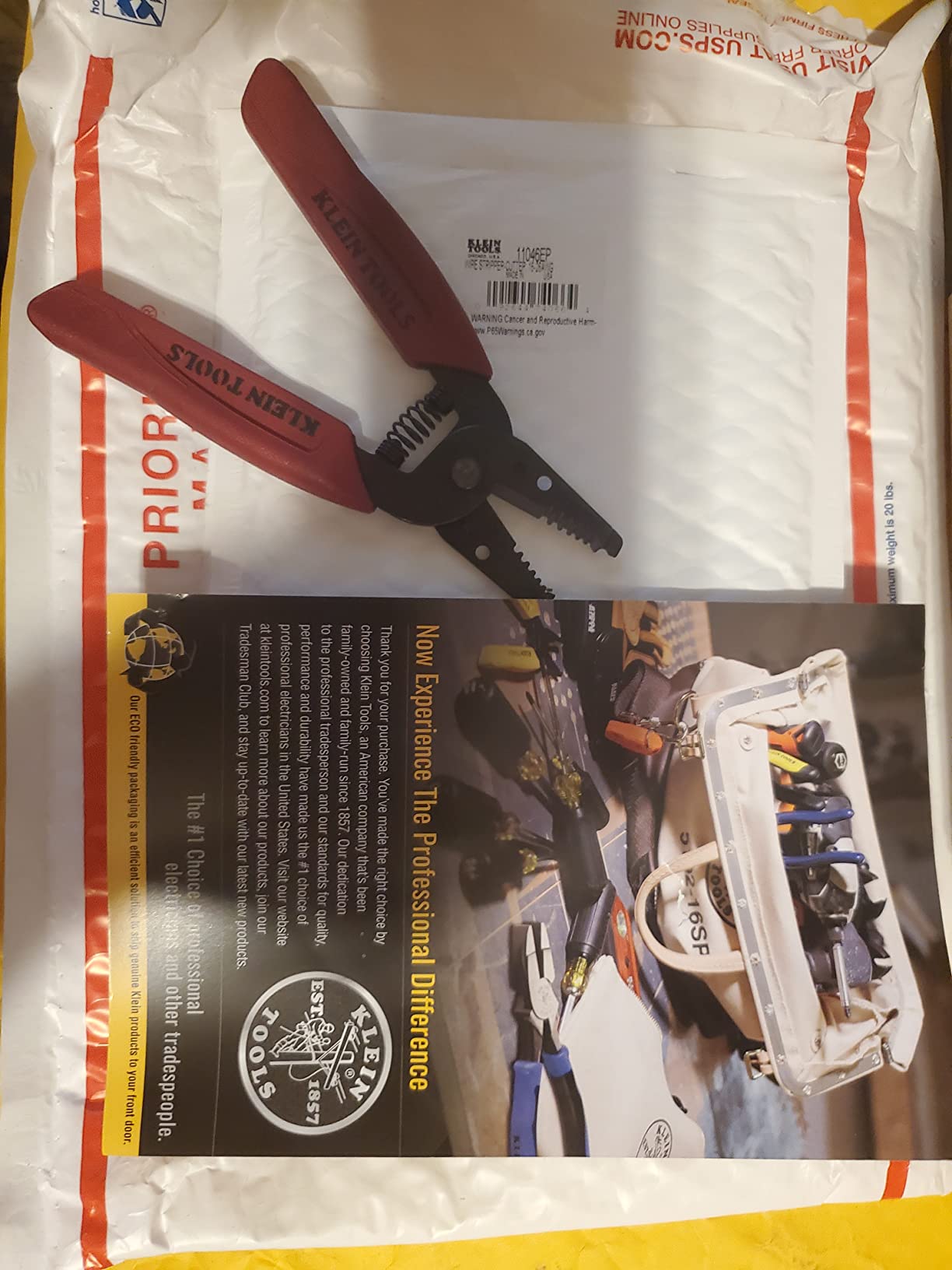
At 4.7 across 2099 reviews it is one of the most established Klein tools in circulation, and owners in audio and electronics specifically call out that it handles fine stranded work that larger automatic strippers are too coarse for. The self-opening spring keeps your other hand free, and the rubber-over-core handles stay firm whether your hands are wet or gloved.
It is also the tool we would hand to someone who only occasionally does electronics. It is small, dependable, made in the USA and does not require learning any technique beyond putting the wire in the right hole.
When the Klein 11046 is the right call
Choose it whenever the wire has to be prepared somewhere you cannot see well and cannot reach into. Inside a distribution board, behind a rack panel, in a hard-case-mounted instrument or in a repair where the whole assembly is on the bench sideways, the short nose is the difference between a clean job and a stripped conductor you cannot reach.
It is also a good match for 22 and 24 AWG stranded signal cable, including PTFE-insulated runs that chew softer blades.
When you need a different tool instead
The 16-26 AWG stranded range is narrow. If your work drops to 28 AWG or below, this tool has no correct hole, and you will be improvising. That is a job for a precision micro stripper.
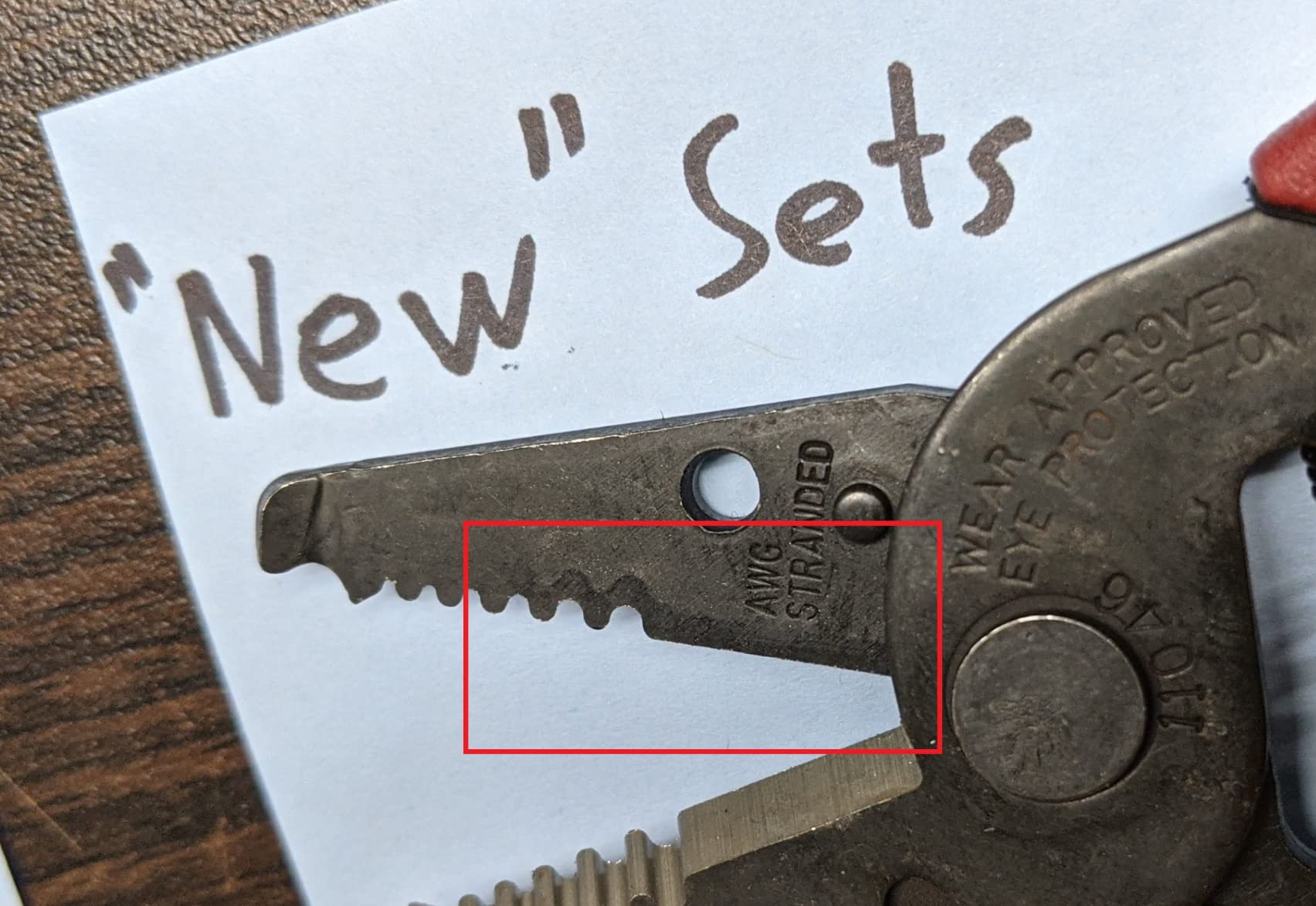
Note also that the stamped gauge markings wear down with use and are the most common minor complaint, so check the hole size against a known sample rather than trusting the stamp alone.
5. Hakko CSP-30-1: Best Lightweight Three-Function Tool for 20-30 AWG
Hakko CHP CSP-30-1 Wire Stripper, 30-20 Gauge Maximum Cutting Capacity
- Clean strips from 30 down to 20 AWG with no core marring
- Just over an ounce so it stays comfortable in long sessions
- Metal stopper holds the jaws partly open on fine wire
- Three functions in one body: stripper
- shear and pliers
- Non-slip rounded rubber grips stay secure
- Gauge numbers are embossed and hard to read
- 20 AWG ceiling rules out heavier hookup wire
- Manual technique takes practice rather than automation
Best lightweight three-function tool for 20-30 AWG: the Hakko CSP-30-1. Features: a 30 to 20 AWG stripping range combined with a shear and pliers, heat-treated steel, soft rubber grips and a metal jaw stop. Best for: long bench sessions, guitar and audio work, and anyone who hates hand fatigue.
At just over one ounce this is the tool you will forget you are holding. The heat-treated alloy steel body is small enough to rest in the palm while the other hand works, and the serrated pliers nose gives it a second life as a gripping and twisting tool rather than leaving it as a single-purpose stripper.
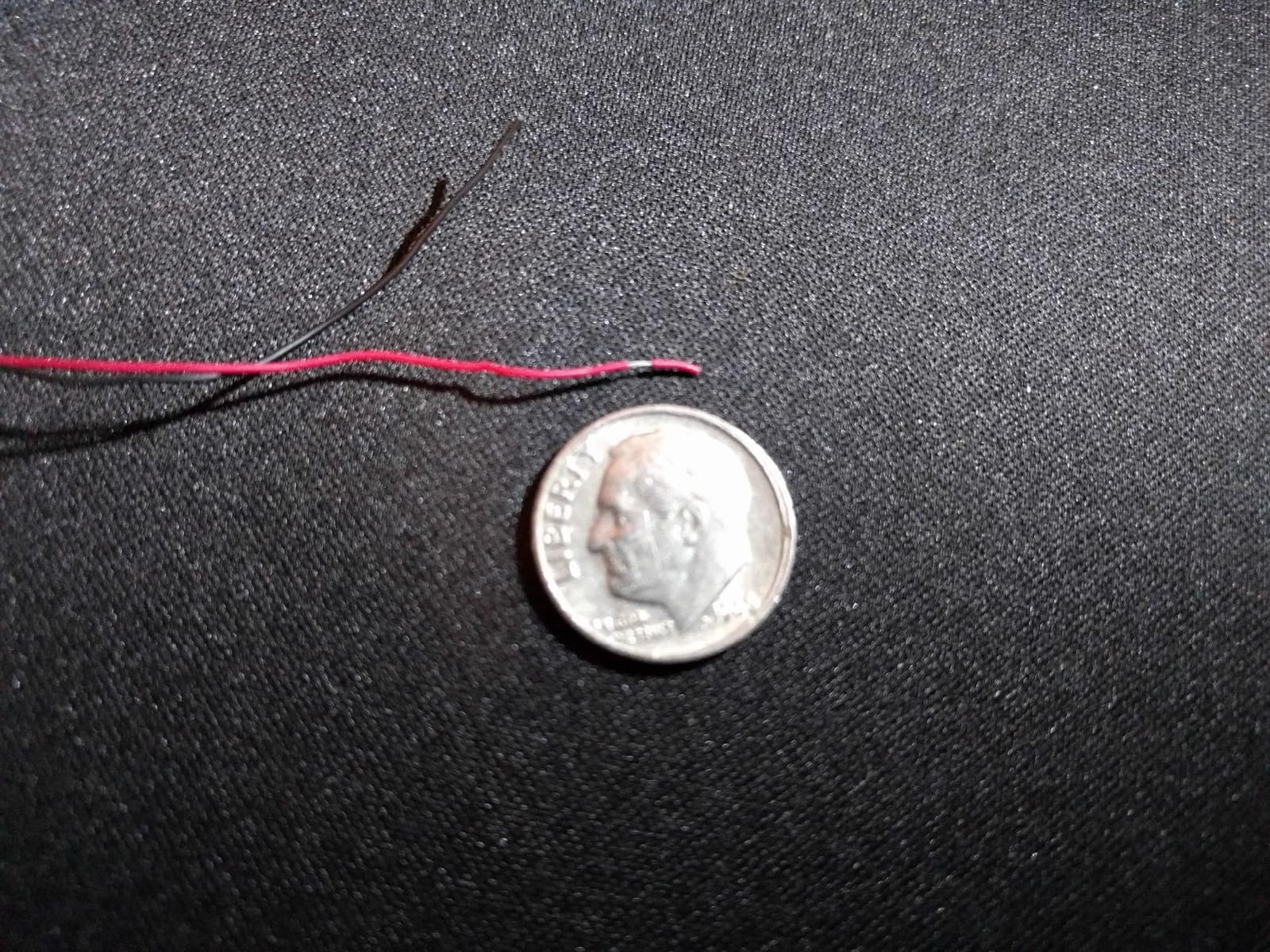
The metal stopper is the feature electronics builders notice first. It holds the jaws partly open, so on fine wire you can set the gap roughly and then rotate the wire into position instead of fighting a jaw that springs shut. Guitar builders and hobbyists working 24-30 AWG mention clean, snag-free strips as the standard result.
Hakko is a Japanese toolmaker with a long track record in electronics hand tools, and at 4.7 across 844 reviews this model holds that reputation without the price of a specialist import. The soft rounded rubber grips stay put in a hand that is slightly damp or wearing thin gloves.
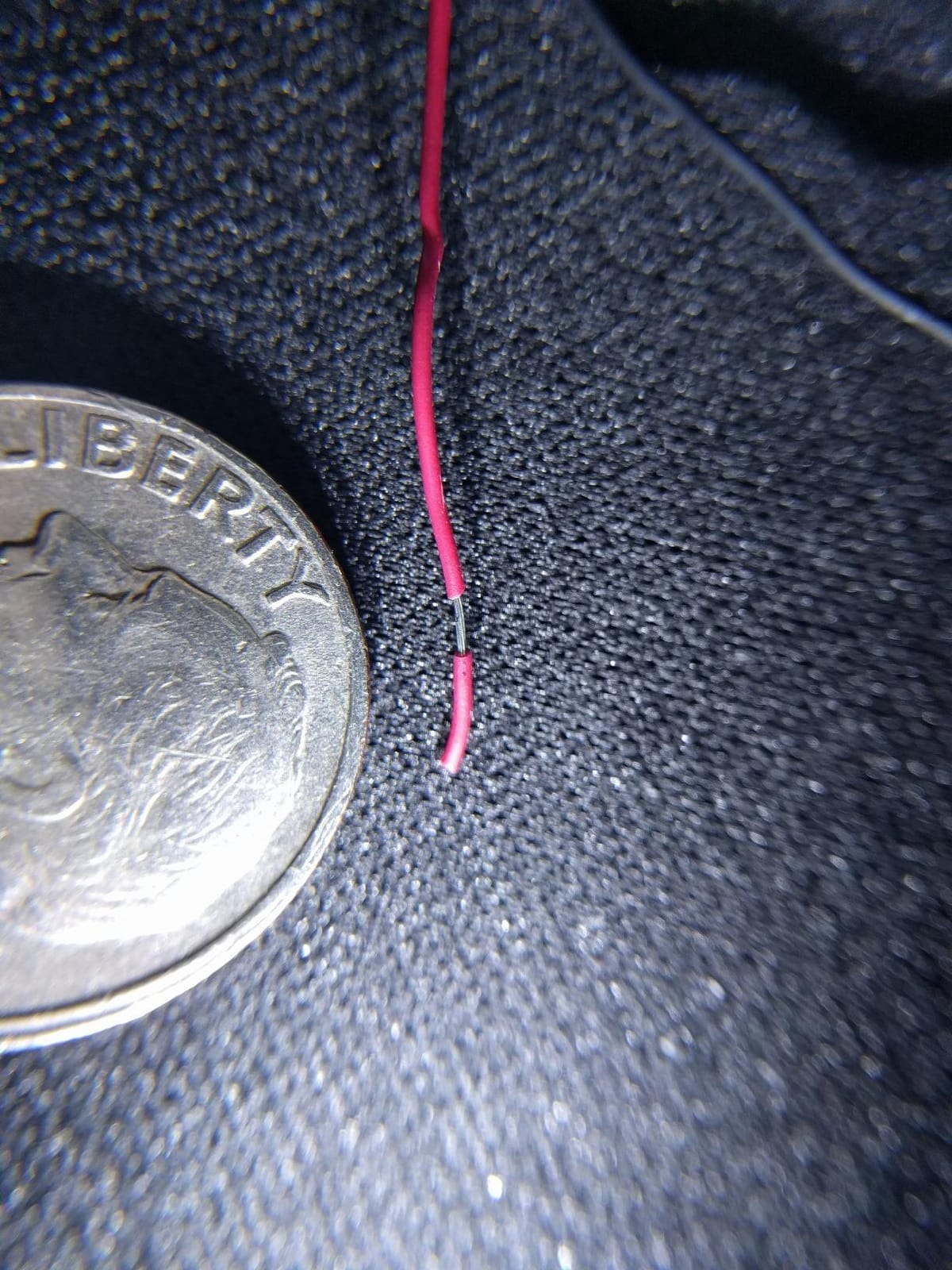
When the Hakko CSP-30-1 is the right call
Pick it if you strip for hours at a stretch and tool weight is what tires you. A multi-function plier of this size is the kind of thing that stays in the hand rather than going on the bench and getting picked up again.
It is a strong match for 24 to 30 AWG work on instruments, speakers and small looms, where the shear and the gripping nose get used almost as often as the stripper.
When you need a different tool instead
Its coarse ceiling is 20 AWG, so heavier hookup wire and building wire are out of reach. At the fine end it tops out at 30 AWG, which leaves 32 AWG and micro-thin wire to a dedicated precision tool.
It is also a manual tool. Buyers who expect an automatic, one-squeeze stripper should look at the Knipex instead. The embossed gauge numbers are also hard to read once the finish wears.
6. ENGINEER PA-14: Best Precision Stripper for Micro-Thin Wire to 34 AWG
ENGINEER PA-14 Precision Wire Stripper for Micro-Thin Wire Made in Japan
- Reaches 34 AWG stranded
- further than any other tool here
- Round finishing edge leaves the copper unmarked
- Sharp high carbon steel jaws need no touch-ups
- Light spring pressure suits delicate conductors
- Some units have undersized slots in the smallest gauges
- Narrow hanger opening needs a separate ring
- Takes more practice than an automatic stripper
Best precision stripper for micro-thin wire: the ENGINEER PA-14. Features: strips stranded wire from 34 to 22 AWG and solid wire from 32 to 20 AWG using high carbon steel jaws with a round finishing edge, and it latches shut for storage. Best for: tonearm wiring, SMD LED harnesses, coil work and fine network cable.
This is the only tool in the roundup that reaches genuine micro-thin wire. Stranded 34 AWG is magnet-wire territory and the very fine cores found inside high-count network cable, and owners report stripping it without nicking a single strand, sometimes checked under magnification. No other tool here can make that claim.
The round finishing edge on the jaws is the mechanical detail that matters. Instead of a sharp corner that bites and leaves a flat on the copper, the edge is ground to a radius, so it parts the insulation and slides past the conductor. That is why a homeownershub poster who has used a lot of tools in the UK reaches for Swiss and Japanese precision tools for exactly this kind of fine electronic work.
The spring load is deliberately light, which suits delicate conductors but does mean technique matters. You seat the wire, close gently and pull rather than squeezing hard, and once that habit is set the results are very consistent.
When the ENGINEER PA-14 is the right call
Buy it when your work includes wire that no general-purpose stripper can legally hold. Turntable tonearms, LED tape and sign harnesses, Cat7 network cable, magnet wire for small coils and hearing-aid or medical harness work all fall here.
It is also the natural companion to a wire wrapping bench, where stranded fine wire is the normal input and consistent stripped ends matter more than speed. Our wire wrapping kit guide covers the other half of that workflow.
When you need a different tool instead
The most-reported weakness is quality variation in the smallest slots, with some units running undersized enough to cut through the thinnest gauges. Check the two or three sizes you actually use on a known sample before committing a batch.
It is slower than an automatic tool and takes practice to use well, so for 20 to 26 AWG bulk work a spring-loaded fixed-hole model will be faster. The narrow hanger opening also means it needs a separate ring or clip rather than the supplied hole.
7. ENGINEER PA-06: Best All-Round Precision Stripper for PTFE and FEP
ENGINEER PA-06 Precision Wire Stripper For Thin Wires AWG 30-18
- Widest usable range of the precision pair
- 30 AWG stranded to 18 AWG
- Cuts through PTFE and FEP insulation that stalls cheaper jaws
- Clean edge to the insulation with no copper damage
- Slim 6.89 inch nose fits tight spaces
- Rear cutter is genuinely usable
- Small size markings are hard to read at a glance
- Marked numbers are hole diameters not wire diameters
- No protective case for the fine jaws
Best all-round precision stripper for PTFE and FEP: the ENGINEER PA-06. Features: solid 28 to 16 AWG and stranded 30 to 18 AWG through sharp high carbon steel jaws, spring loaded with latching handles and a usable rear cutter. Best for: 3D-printer harnesses, PTFE and FEP wiring, and general 18-30 AWG bench work.
This carries the highest rating in the roundup at 4.8, and the range is what earns it. Thirty AWG stranded down to 18 AWG means one tool covers most of the wire an electronics builder touches, and the jaws are sharp enough to cut through PTFE and FEP insulation, which is where cheaper strippers stall, smear or simply polish the insulation without removing it.
Owners building 3D-printer harnesses and audio wiring describe perfectly aligned jaws, zero broken strands and no burrs straight out of the box, and they rate it alongside the established European and Japanese brands. At 6.89 inches it is still slim enough to work in a confined space.
When the ENGINEER PA-06 is the right call
Choose it if you need one precision tool rather than two. The 18-30 AWG span covers hookup, signal and light multi-conductor work, and if your wire runs no finer than 30 AWG stranded you do not need the PA-14 alongside it.
Tough insulation is the other trigger. PTFE and FEP are chemically resistant and springy, and they chew dull blades. This tool’s high carbon steel jaws stay sharp enough to part them cleanly, which is worth knowing before you spend an afternoon wondering why the insulation is only scored.
When you need a different tool instead
Below 30 AWG stranded, switch to the PA-14. The fine slots in this model are not sized for magnet wire or micro-thin cores, and the marked numbers on the tool are hole diameters rather than wire diameters, which is a common source of confusion when you are used to AWG markings.
Two smaller issues. The size markings are hard to read at a glance, and there is no case, so the fine jaws need protecting in a toolbox or drawer where tools move around.
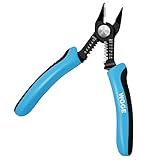
8. WGGE 6-Inch Flush Cutter: Best for Flush Cuts and Board-Level Work
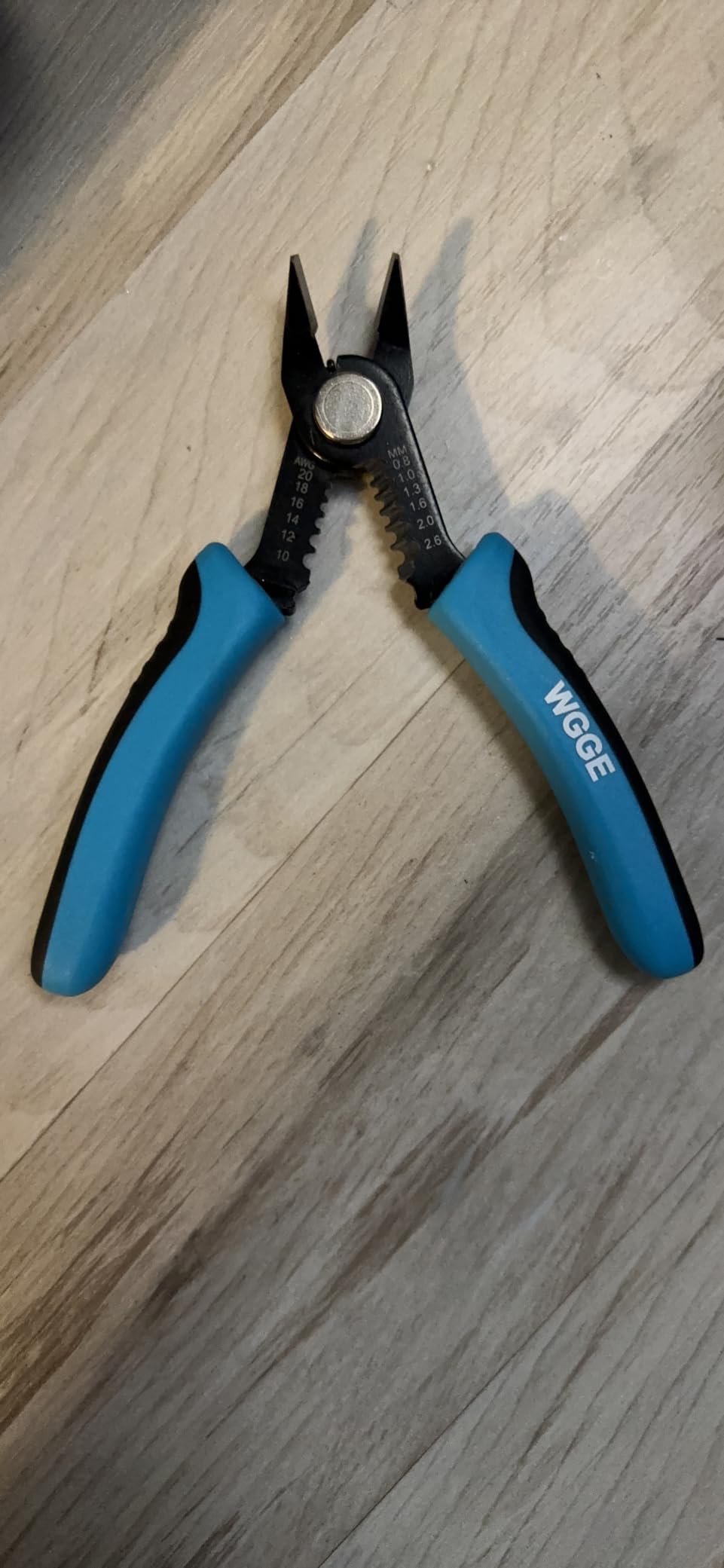
- Sharp points make flush cuts on component leads easy
- 22.5 degree jaws reach board-level pins and corners
- Hidden spring returns it open for one-handed use
- Labeled stripping holes add a stripping function
- No lock
- a cable tie is the only way to close it
- Edges dull faster under regular work use
- Stops at 20 AWG so it is not a fine-wire stripper
Best flush cutter for board-level work: the WGGE 6-inch precision cutter. Features: 22.5 degree angled jaws on a forged high-carbon steel frame, spring-loaded side cutters, stripping holes for 10-20 AWG and a 24 month warranty. Best for: trimming component leads, 3D-printer builds and PCB rework.
This one earns its place in a stripper roundup for a reason that has nothing to do with insulation. Trimming a resistor or capacitor lead flush to a board is half the job in electronics rework, and the 22.5 degree angled jaws reach awkward corners and get right down to board level where a straight pair of diagonals cannot.
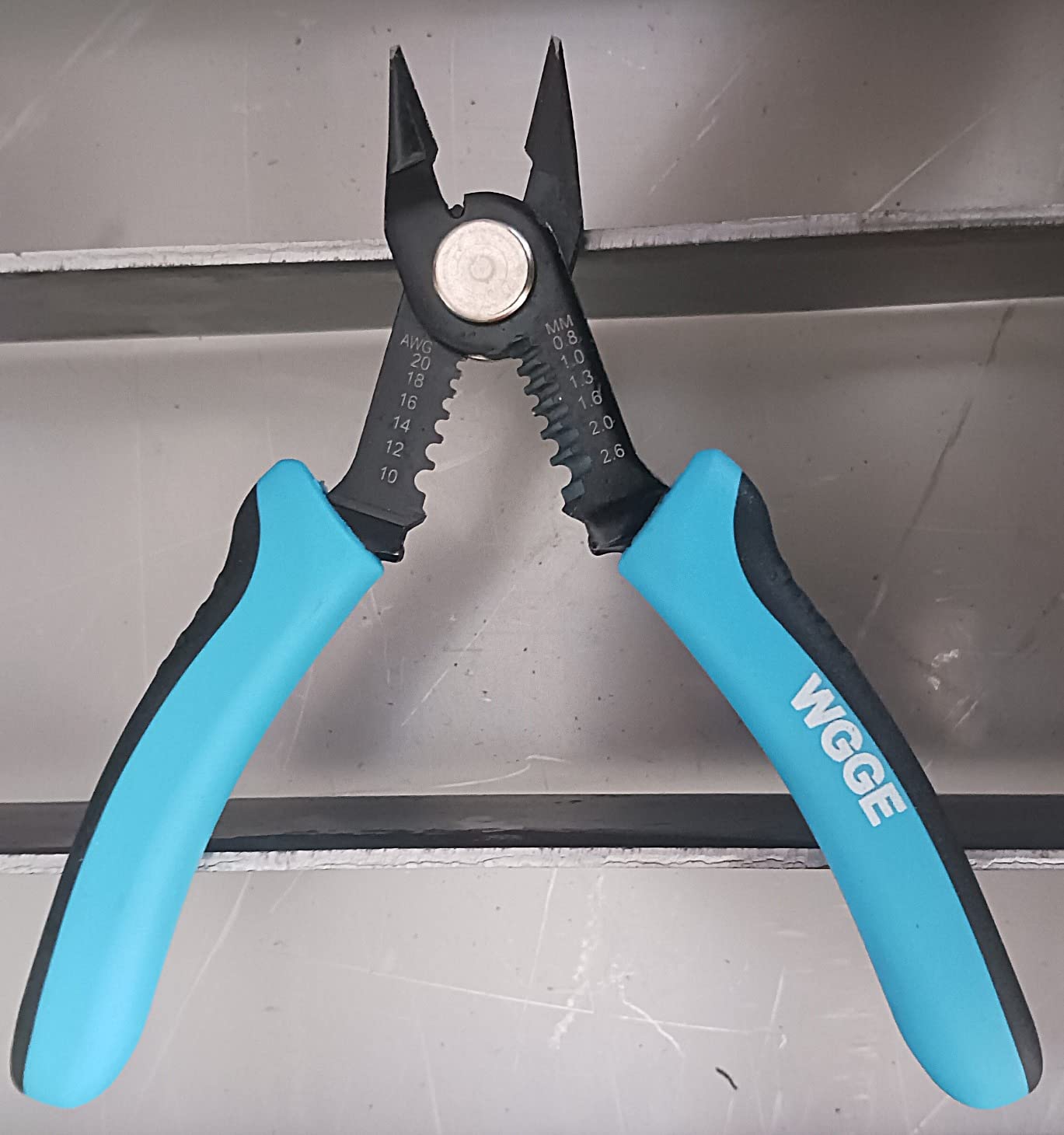
Owners in 3D printing and electronics tinkering report sharp, precise points that make flush cuts easy, and the hidden spring returns the tool to open so you can work one-handed without reaching for a stand. The 6-inch forged frame gives it more rigidity than the price suggests, and the labelled stripping holes are a genuinely useful addition for 10 to 20 AWG.
It is also the most no-nonsense tool here. Nothing on it is decorative, which is exactly what you want from something you use all day.
When the WGGE cutter is the right call
Buy it if you do PCB work, build 3D-printer harnesses, or do any repair where leads have to be cut back close to a board. The angled jaw is the reason, and it is a reason you will feel every single time you use it.
It is a sensible companion to a precision stripper rather than a replacement for one, pairing lead trimming with clean stripping in a tool that fits in the same pocket.
When you need a different tool instead
Its stripping ceiling is 20 AWG, so it cannot serve as your electronics stripper. On fine wire below that, the jaws are simply the wrong shape and the job will end badly.
Expect some wear. Reviews report edges dulling relatively quickly under regular work, a return spring that loses tension, and no locking mechanism at all, so the supplied cable tie is the only way to keep it closed in a bag.
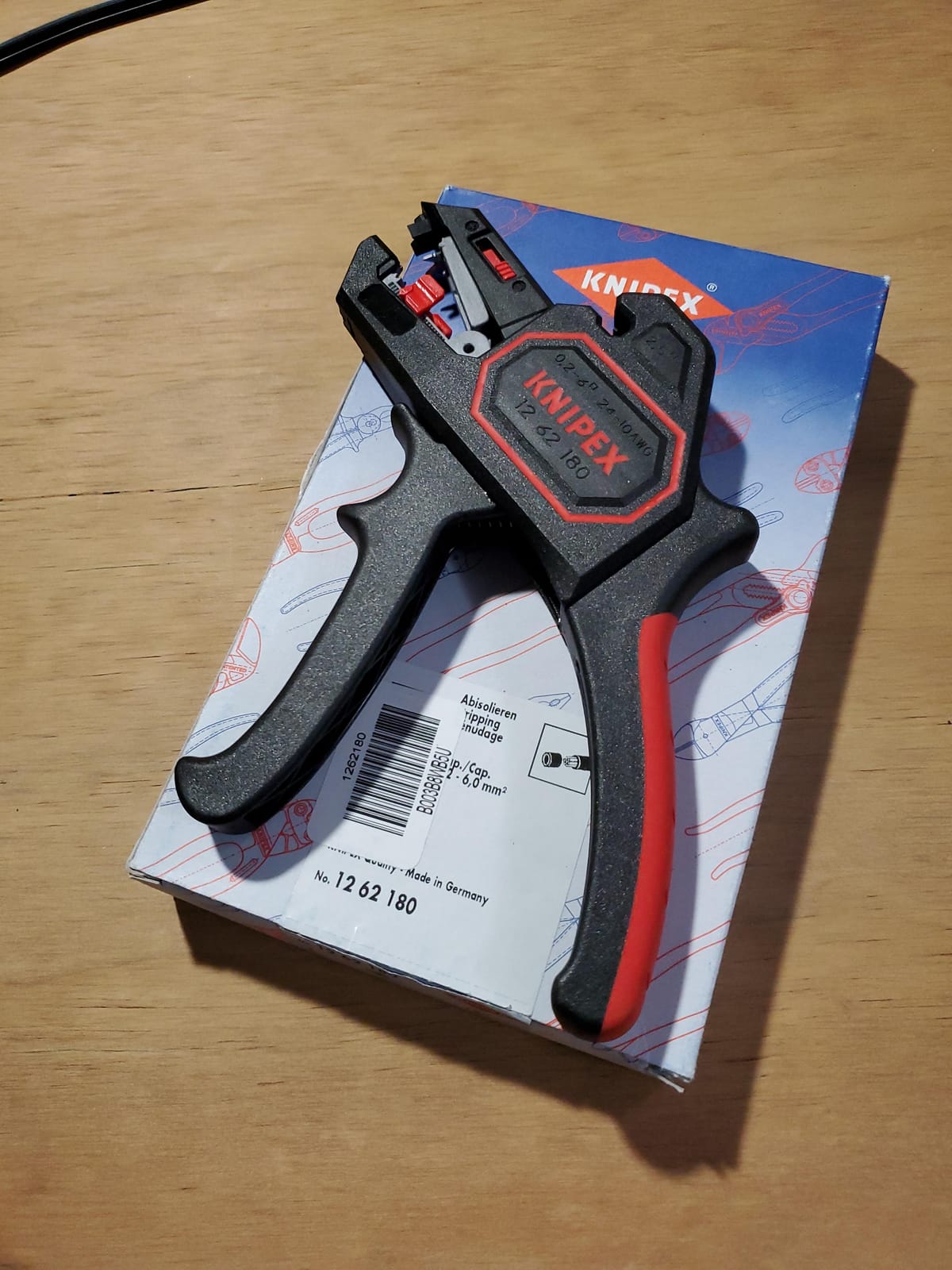
9. Knipex 12 62 180: Best Automatic Stripper with a Repeatable Stop
- Self-adjusting jaws strip cleanly without nicking
- One-squeeze action is fast on repetitive harnesses
- Adjustable stop gives genuinely repeatable strip length
- Pistol grip stays comfortable over long sessions
- Predominantly plastic body feels spongy under heavy force
- Scrapes stiff 10 AWG nylon jacket instead of cutting it
- Minimum practical strip length is about 5mm
Best automatic stripper with a repeatable stop: the Knipex 12 62 180. Features: self-adjusting stripping for 10-24 AWG, an adjustable strip-length stop, an integrated wire cutter in the handle and an ergonomic pistol-grip lever. Best for: production wiring, looms and any volume of identical leads.
Self-adjusting jaws read the wire and stop themselves, which means no gauge selection and no technique. For volume work on 18 to 22 AWG, the one-squeeze action is dramatically faster than working a fixed-hole stripper by hand, and it is the reason this tool has 1853 reviews behind it.
The adjustable stop is the feature that separates this from most automatic strippers, and it addresses the most common practical complaint in the category. Inconsistent strip length breaks terminal crimps, because a crimper sized for a fixed conductor length leaves exposed strand when the strip is short. Set the stop once and every lead comes out the same, which is exactly what the gearspace poster who praises a thermal stripper’s mechanical wire stop values about thermal strippers too.
That said, understand what self-adjusting means. On an audiocircle thread, users report the mechanism works well at 16 AWG and up and becomes progressively less effective as the wire shrinks, which matches the reviews here describing excellent behaviour at 18 to 22 AWG.
When the Knipex 12 62 180 is the right call
Choose it when the job is repetitive and the leads must match. Building a loom, terminating a batch of panels or producing the same lead over and over, the automatic mechanism plus the adjustable stop is a combination nothing else in this roundup offers.
It is also the fastest option per wire. If you strip hundreds of lengths, the time saved compounds quickly, and the pistol grip stays comfortable through a long run.
When you need a different tool instead
It is not a fine-wire tool. At 10 AWG nylon-jacketed wire it tends to scrape rather than cut, and the whole point of this roundup is that electronics wire rarely exceeds 20 AWG, so a fixed-hole precision stripper serves most electronics builders better.
Also note the predominantly plastic construction, which reviewers describe as spongy under heavy force, a minimum practical strip length around 5 mm that rules out very short leads, and an integrated cutter that sits awkwardly in the handle. On very first use, expect to run a couple of blank cycles to clear trapped insulation.
10. Southwire S1626STR: Best Compact Pick for Low-Voltage Field Work
Southwire Compact Wire Stripper 16-26 AWG – Strips, Cuts, & Loops Electrical Wire – Stainless Steel Blades – Spring-Loaded – Lightweight Tool – Compact 16-26 AWG Model
- Compact 8.13 inch body carries easily in a pouch
- Stainless blades give clean strips on 16-26 AWG stranded
- Strips
- cuts and loops in one body
- Four ounces with an ergonomic grip that limits fatigue
- 16-26 AWG stranded only
- no fine electronics wire
- Stamped gauge markings are hard to read
- Narrow profile gives less leverage on heavy conductors
Best compact pick for low-voltage field work: the Southwire S1626STR. Features: strips 16-26 AWG stranded cable with stainless steel blades, spring-loaded, and combines stripping, cutting and looping in an 8.13 inch body. Best for: service kits, low-voltage runs and anyone working away from a bench.
This is a straightforward, well-behaved compact stripper rather than a specialist instrument. The stainless blades produce dependable, clean strips across 16 to 26 AWG stranded, and at four ounces with an ergonomic handle it is easy to carry and easy to use for a long time without fatigue.
Southwire is a familiar US brand in low-voltage work, and that matters for a service kit where a colleague may need to pick it up. The combination of stripping, cutting and looping in one body covers most of what a technician reaches for on a call.
When the Southwire S1626STR is the right call
Pick it for field service on low-voltage systems: security, access control, low-voltage lighting, control circuits and speaker runs. The compact body fits a pouch and the 16-26 AWG stranded range covers exactly the cable those systems use.
It is also a sensible lightweight backup for a bench that already has a fine-wire tool, since the gauge bands barely overlap.
When you need a different tool instead
It stops at 26 AWG on the fine side and is stranded-only, so it cannot do solid fine wire or anything below that range. If your work touches a controller board or a jumper, it is the wrong end of the market.
The narrow profile also gives less leverage on heavier conductors, and the stamped gauge markings are difficult to read once they wear. On the heavy end of its range, a full-size stripper will feel more certain.
How to Strip Wire Without Nicking the Conductor?
Even a good tool produces a bad strip if you use it badly. The five steps below are the sequence that works across gauges, and the two that people skip are the two that cause failures.
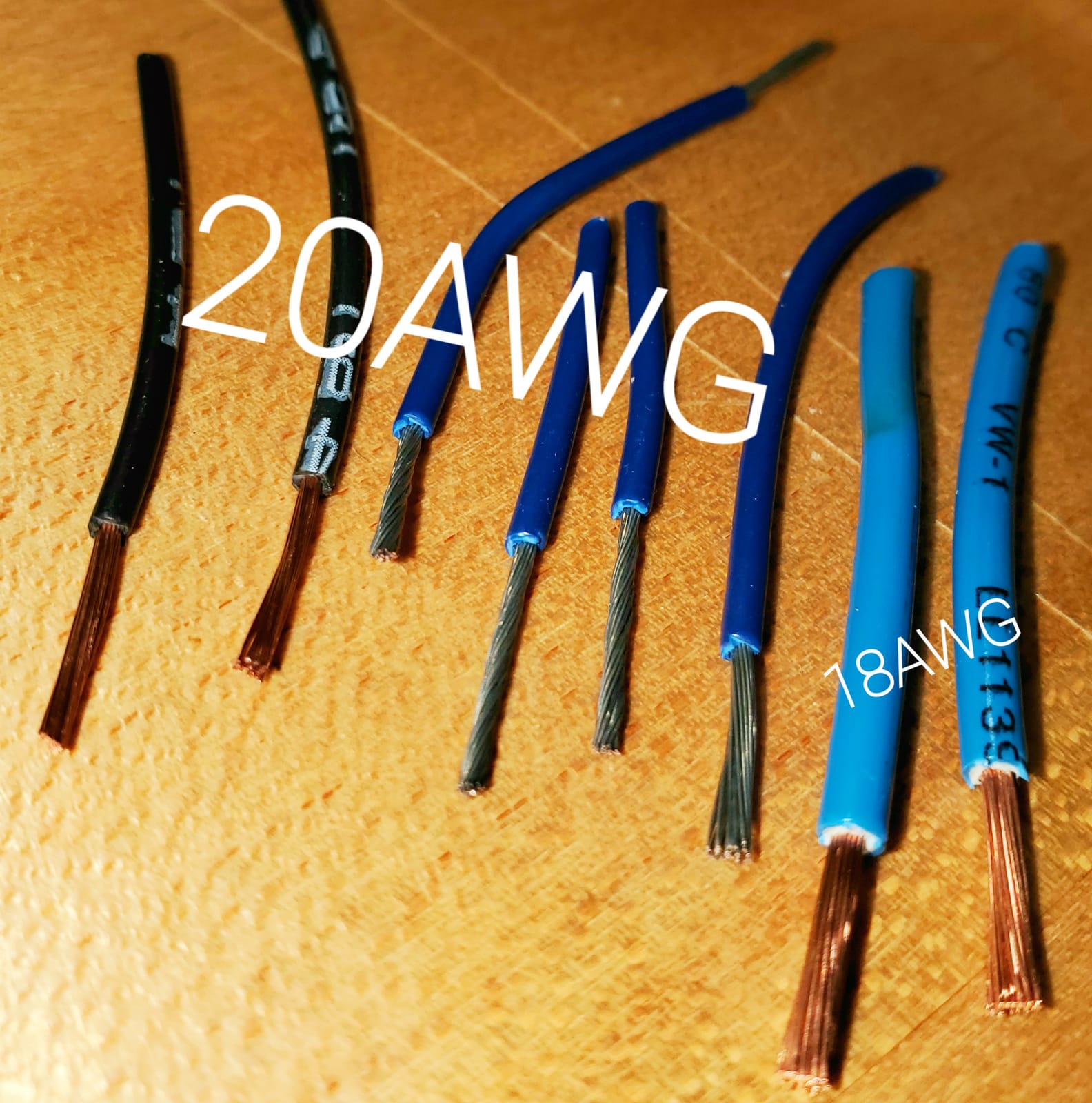
Match the hole to the gauge, not to the wire that is closest. Every fixed-hole stripper is sized for one gauge. If the wire sits loose, the blades are cutting air and the insulation is only scored. If it is tight, the blades are cutting conductor.
Measure the bare length before you strip anything. Decide what the crimp terminal requires, then set or mark that distance from the cut end. A stop that repeats this number is worth more than a clever jaw.
Insert the wire and close gently, then rotate while pulling. A firm, even pull along the axis removes the insulation in one piece. Twisting or snapping the tool sideways shears the conductor.
Inspect the conductor under magnification, at least until you trust the tool. A nick shows as a flat or a bright mark on the copper. Once your hands know what a good strip looks like, the check takes seconds.
Replace the tool, not your technique, when the pattern is consistent bad strips. Dull blades tear rather than cut, and no amount of care fixes a torn result. Blades and jaw assemblies are consumables.
Stripping an outer jacket without damaging the inner conductors
This is the most repeated frustration in the electronics forums, and it is a genuinely different operation. A microphone cable or any shielded multi-conductor cable has an outer jacket, a braid or foil shield, a dielectric filler and then the inner insulated conductors, all within 3 to 4 mm. A stripper sized for the inner conductors will happily cut every one of them.
The reliable method is to separate the two jobs. First, score the jacket with a sharp blade or a dedicated cable stripper, shallow, without cutting through to the layer below, then peel the jacket back by hand along the cable rather than tearing it. Peel the braid and foil back and out of the way. Only then do you switch to a precision stripper sized for the individual inner conductors.
Automatic and self-adjusting strippers are the tools most often reported as mangling inner conductors on first contact with mic cable, and one gearspace participant put it as never having seen one that would not mangle the cable. That is a fair warning, and the reason the manual method above is the one we would teach. If your work is dominated by shielded and multi-conductor cable, buy the tool for the inner conductor and treat the jacket as a knife job.
What beginners get wrong
The most common mistake is a hole sized one gauge too large, which leaves insulation that looks stripped but is only stretched and torn. The second is using a self-adjusting stripper below about 20 AWG, where the mechanism that senses insulation thickness starts scraping. The third is guessing strip length instead of measuring it against the terminal, which produces crimps that pass inspection and fail in service. The fourth is stripping solid-core wire and trusting the visual, when the damage is hidden inside the conductor and shows up as a snap at the solder joint weeks later.
Stripping fine wire with a knife and your thumb still gets recommended, and it is worth saying plainly why we would not. It works, it needs no tool, and it will eventually slip. A cut from a fresh blade on 30 AWG is deep enough to sever the conductor, and a hand cannot react fast enough to prevent it.
How to Choose a Wire Stripper for Your Workbench?
Start from the thinnest wire you will touch
Work upward from the bottom of your wire range, not from the top. The thinnest wire in your kit sets the requirement, and every tool that cannot reach it is dead weight. Someone working 30 AWG jumper wire needs a fixed-hole precision stripper in the 26 to 32 AWG class regardless of what else they own, and someone who only handles 22 AWG stranded signal cable needs nothing finer.
Ask four questions. What is the thinnest wire, solid or stranded? Do you strip outer jackets as well as individual conductors? Do you terminate connectors, or is the bare end going into a screw terminal? And how many leads a week are you making? The answers separate every tool type in this roundup without any ambiguity.
Fixed-hole precision strippers beat self-adjusting below 20 AWG
This is the conclusion the data and the forums both point to, and it runs against most general buying advice. A fixed hole matched to a gauge puts the blade at a known depth every time, and it does not care how springy the wire is. A self-adjusting mechanism has to sense insulation thickness on wire that may be 0.15 mm across, and users consistently report it working well at 16 AWG and above and becoming less effective as the wire shrinks.
Self-adjusting and automatic mechanisms earn their place on volume work at heavier gauges, where the one-squeeze action is faster. Below 20 AWG, precision holes win on repeatability, and repeatability is what determines whether a crimp holds.
Strip-length repeatability is the feature nobody sells
A crimp terminal is designed around a specific conductor length. Too short and strand shows at the back of the terminal. Too long and the excess strand has nowhere to go, creating an intermittent short inside the connector. The failure looks like a wiring fault and is diagnosed as one, which is why inconsistent strip length is such an expensive problem on a bench.
Only one tool in this roundup has a genuinely adjustable stop. Otherwise, the practical workaround is a strip of tape or a mark on the handle used as a fixed reference, and the discipline to check it. If you build the same lead more than a dozen times, that reference is not optional.
Knipex versus Klein
Search results for this query carry a brand battle module, and it is worth answering directly. Klein tools dominate the fixed-hole and multi-function end of this market, they are made in the USA, and the 11057 and 1019 in this roundup carry the largest review volumes of anything we tested. Knipex leads on the self-adjusting and compound-action end, with the 12 62 180 offering a mechanism most Klein models do not have.
They are not really competitors. Choose Klein for precision fixed holes, connector crimping and hand-tool feel, and choose Knipex when you want a self-adjusting mechanism with an adjustable stop. The rocketryforum crowd makes a related point about tool selection in general: match the mechanism to the specific job, because a tool that is excellent on ribbon cable can be a poor choice for the finer gauges in the same harness.
Brand reputation and the clone problem
Brands that recur in this category have one thing in common: they publish parts and blades years after a model sells. That is the practical reason a tool built in the 1950s is still in service, and the reason a gearspace owner running a fifteen-year-old thermal stripper can still maintain it. Longevity outranks specification in a tool you rely on daily.
The parallel warning is about unbranded copies. Forum reports describe cheap clones of reputable designs breaking into two pieces on first use. A tool that snaps mid-strip can damage the wire it was holding, so the cost saving is paid for twice. If a listing shows a brand name and a model number that do not appear on the tool, that is the signal to pass.
Pairing the stripper with the rest of the bench
A stripper on its own gets you halfway. If your leads terminate, the crimper has to match the terminal family you are using, whether that is JST, DuPont or a generic insulated crimp, because a crimper sized for one will not make a reliable joint with the other. A magnifier or a digital microscope then lets you verify each strip and each crimp, which is the difference between wiring that works on the bench and wiring that works on a customer site.
For the opposite end of the gauge spectrum, heavy wire pulling systems are a completely separate discipline with a different set of tools, and mixing the two categories is the most common buying error we see. If your garage or workshop also handles building cable, keep that work in its own kit rather than expecting one tool to span it.
One maintenance habit pays for itself. Wipe the blades with a lint-free cloth after a session, keep the pivots free of swarf, and replace a jaw assembly the moment stripping starts to tear rather than cut. A tool that feels slightly heavier or rougher than it used to is telling you something.
Frequently Asked Questions
What is the best wire stripping tool for electronics?
For general electronics bench work, a fixed-hole precision stripper covering 20 to 30 AWG is the safest answer, because each hole puts the blades at a known depth. Choose a multi-function tool if you also crimp terminals, and an automatic or self-adjusting tool only for repetitive volume work at 18 AWG and above. Fine wire below 28 AWG needs a dedicated precision stripper rather than a general-purpose one.
What is a good tool for stripping small gauge wire?
Small gauge wire means anything at or below 26 AWG on an electronics bench. A precision stripper with individually sized holes, sharp high carbon steel jaws and a spring-loaded action will strip it cleanly without nicking. Look for a 22 to 30 AWG range for jumper and hookup work, and reach further down only if you handle magnet wire or very fine network cores.
What are common wire stripping mistakes?
The most common mistakes are using a hole one gauge too large, which only stretches and tears the insulation, and using a self-adjusting stripper on fine wire, where the mechanism scrapes instead of cutting. Two more cost real time: stripping by eye instead of measuring the length your crimp terminal needs, and stripping solid-core wire without checking for hidden damage inside the conductor.
What is the best way to strip very thin wire?
Use a precision stripper with a hole sized exactly to the gauge, insert the wire fully, then close the jaws gently and pull along the axis while rotating. Do not snap the tool sideways, and do not force the wire into a hole that feels tight. Check the conductor under magnification until you trust the tool, and stop using any tool whose blades have dulled enough to tear the insulation rather than part it.
What is the best DIY drill-powered wire stripping machine for home use?
A drill-powered stripper is a viable bench machine for batches of identical leads, because a spinning abrasive or blade assembly removes insulation at consistent length without hand technique. For a home bench it only pays off if you are making the same wire repeatedly, since a quality hand stripper will beat it on mixed work and on anything below about 26 AWG. Check the stated gauge range carefully, as many bench machines start at 20 AWG or heavier.
Conclusion: The Best Wire Strippers for Electronics Work in 2026
The Klein Tools 1019 Kurve is our pick for the best wire strippers for electronics work in 2026 because it covers 10 to 26 AWG solid and 12 to 28 AWG stranded while also crimping the terminals most electronics builders actually use. If your work is 20 to 32 AWG signal wire and stripping outweighs terminating, the Klein 11057 carries the highest rating and the widest praise for clean, repeatable strips. Drop below 30 AWG and the ENGINEER PA-14 or PA-06 take over, and add the Knipex 12 62 180 when you need speed and an adjustable stop on volume work.
Whichever you choose, match the tool to the thinnest wire in your kit, measure your strip length once instead of guessing it every time, and give jackets and inner conductors separate jobs. That habit alone eliminates most of the nicked conductors that make fine-wire projects intermittent.