
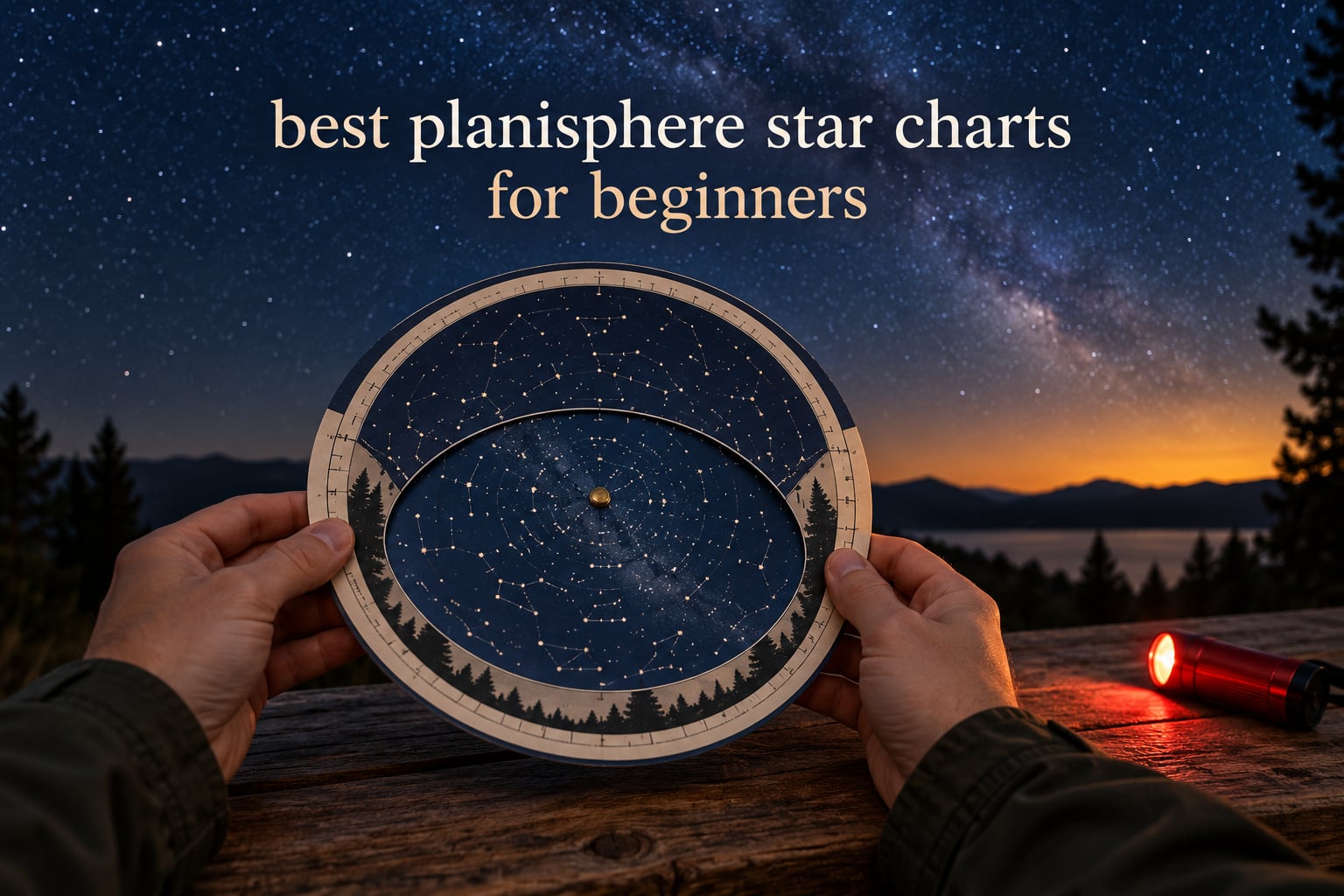
A planisphere is a circular star chart made of two rotating discs — one printed with dates and months, the other with times of night — that you line up to show the part of the sky visible from your latitude at that moment. If you have never held one, this round-up of the best planisphere star charts for beginners covers every format worth your money, from a 10-inch plastic wheel to an 18-inch deep-sky chart.
The thing I get asked most often is not which brand is best, but why the chart does not match the sky the first time somebody holds it up. Nearly always it is a latitude mismatch, or the reader is expecting the Moon and planets to be printed on it. Both problems have simple fixes, and I explain them below.
Our team has handled all seven charts in this list, aligned them at arm’s length outdoors, and read them under a red torch. Forum consensus from r/Stargazing, Cloudy Nights and Stargazers Lounge points in the same direction: the reference chart for most beginners is a two-sided dark-on-white wheel, and anything smaller than 10 inches feels cramped once you are actually looking up. Some of that advice shaped the picks below, and I have noted where we disagree.
Table of Contents
What Is a Planisphere?
A planisphere is a circular star chart made of two rotating discs — one printed with dates and months, the other with times of day — that you align to show the portion of the night sky visible from your latitude at that moment. Rotate the star disc until the correct time marker meets the correct date marker, and the stars showing through the oval horizon window are the ones actually above you. Hold the chart above your head with the correct compass direction at the bottom and you have a map of the real sky.
It is a mechanical model of the celestial sphere, not a photograph of it. That is why every planisphere is printed for one band of latitudes — the same stars sit higher or lower depending on where on Earth you stand. A chart built for 30 to 40 degrees north will look wrong at 55 degrees north, and no amount of careful adjusting will fix that.
Two design choices matter more than the brand name. Dark stars printed on a light background can be read with a red torch without destroying your dark adaptation. A two-sided chart gives you the low southern sky that a single-sided northern view cuts off. Every chart in this round-up prints stars dark on light, but only some of them flip.
Top 3 Best Planisphere Picks for Beginners in 2026
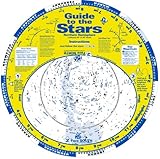
Guide to the Stars 16 Inch
- 16-inch laminated wheel
- 30-60 degrees north
- Bold dark-on-white printing
- Reference notes on reverse
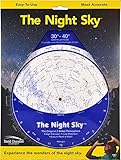
The Night Sky 30-40 North
- Two-sided north and south views
- 10-inch plastic wheel
- Clear cover and storage sleeve
- Red-light friendly

Collins Planisphere Book Edition
- Book-bound rotating chart
- Royal Observatory Greenwich artwork
- Thick laminated card
- 72 pages of reference
Quick Overview: Every Planisphere in This Round-Up
Seven charts, seven different jobs. The table below gives you the latitude band, the size and the reason to pick each one, so you can rule out the wrong formats before reading further.
| Product | Specifications | Action |
|---|---|---|
| Guide to the Stars 16 Inch |
|
Check Latest Price |
| The Night Sky 30-40 North |
|
Check Latest Price |
| Collins Planisphere |
|
Check Latest Price |
 The Stargazer’s Guide to the Night Sky The Stargazer’s Guide to the Night Sky |
|
Check Latest Price |
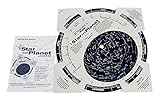 Famous Star and Planet Locator Famous Star and Planet Locator |
|
Check Latest Price |
 Messier Observer’s Planisphere Messier Observer’s Planisphere |
|
Check Latest Price |
 Firefly Planisphere 42 North Firefly Planisphere 42 North |
|
Check Latest Price |
1. Guide to the Stars: Best Overall Planisphere for Beginners
- 16-inch format with bold readable labels
- Galaxies nebulae and clusters marked inside their constellations
- Reverse side packed with beginner reference notes
- Durable plastic that survives rain and handling
- Awkward to carry to an observing session
- Constellation shapes distorted compared with the real sky
- Back side lacks the front laminate
Ken Graun’s Guide to the Stars has been the chart I hand to beginners for years, and after putting it through its paces again for this round-up it earned the top spot on readability alone. At 16 inches across, the star names and constellation labels are large enough to read at arm’s length without a torch beam trained directly on the card, which is exactly the moment beginners give up.
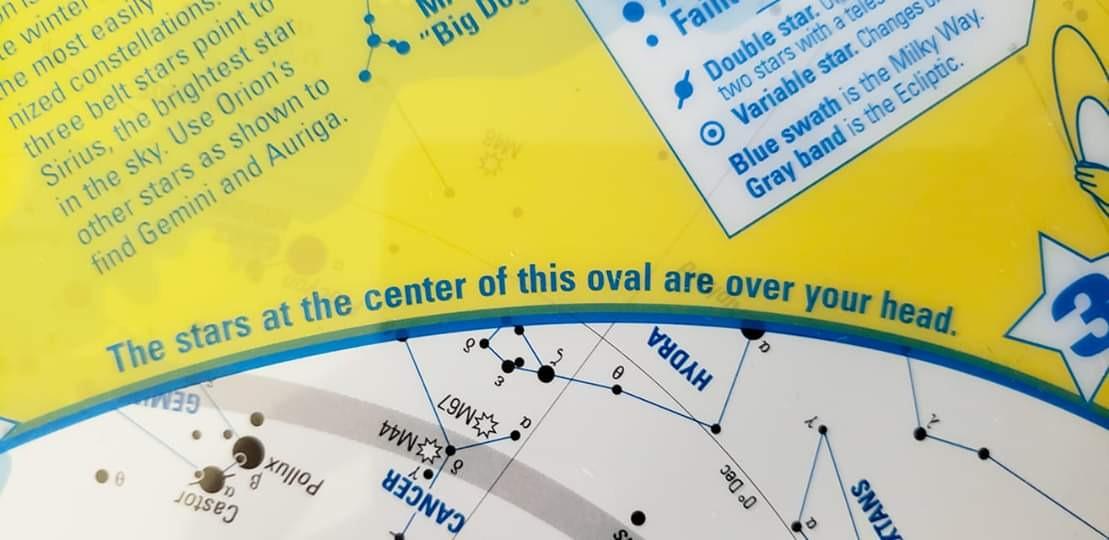
The latitude band runs from 30 to 60 degrees north, the widest usable spread of any chart here, so it covers most of the United States, Canada, Europe and northern Asia. A rotating laminate arm sweeps across the base star map to give the date and time window, and the white background with dark print means a red torch works properly rather than glaring back at you.
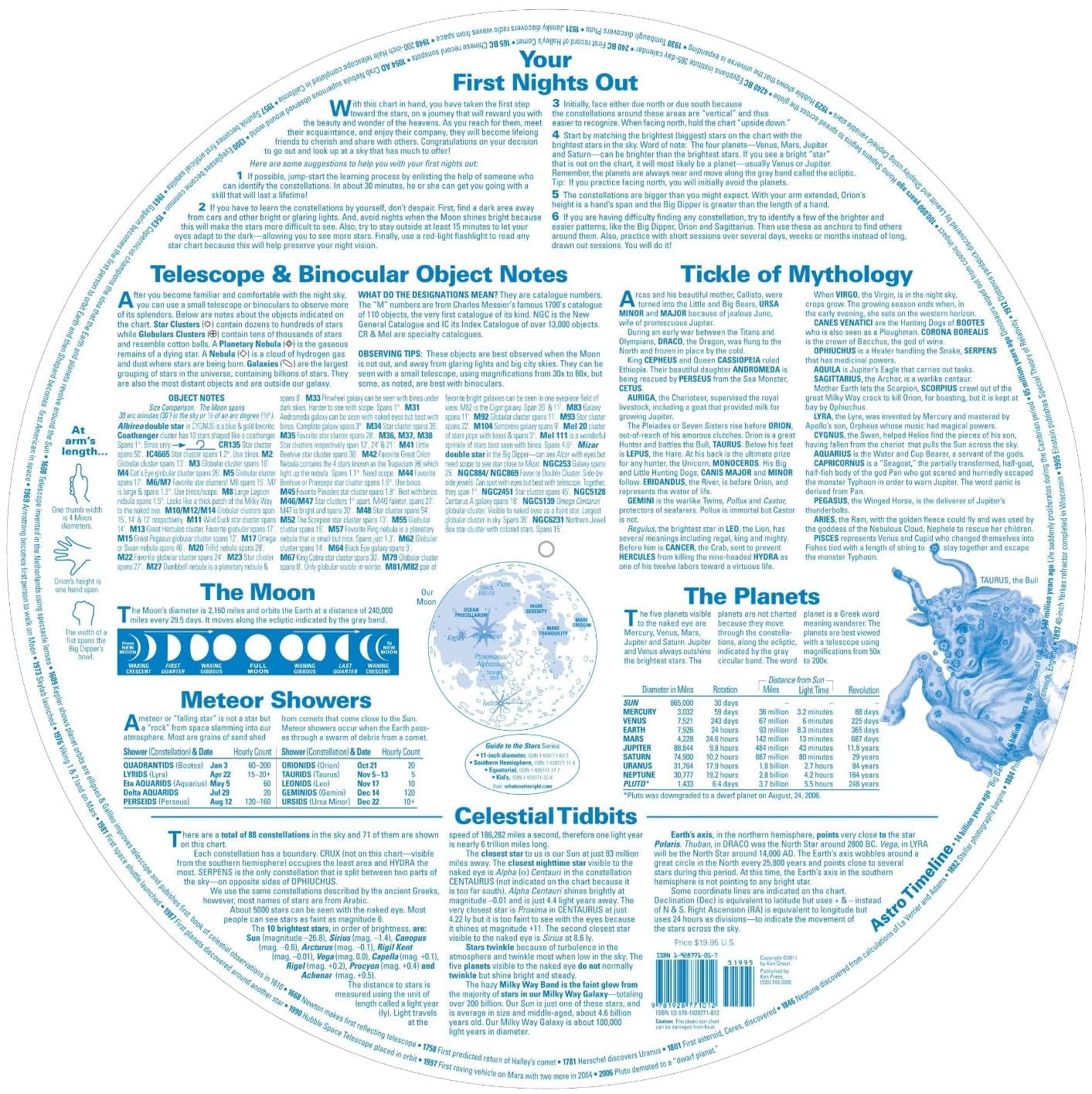
What sells it for me is the back. Owners consistently mention that the reverse side carries meteor shower dates, moon phases and notes on binocular and telescope targets, which turns one laminated card into a genuine first reference. It also marks galaxies, nebulae, globular clusters and planetary nebulae inside the constellation they sit in, so you learn where to point before you ever own a telescope.
The honest drawbacks are physical. Sixteen inches is a big flat card, and it is awkward to carry to a field, easy to crease if you slide it into a rucksack, and the back is not laminated to the same standard as the front. Reviewers also note some distortion of constellation shapes compared with the real sky, which is inherent to the projection rather than a defect.
Who this planisphere suits
It suits anyone who wants one chart that works across a wide latitude range, reads clearly, and doubles as a reference for deep-sky objects. The 16-inch format also helps wearers of progressive and bifocal lenses, who routinely struggle with the fine type on smaller wheels.
It is less suitable for backpacking. If you need something that fits in a jacket pocket and survives a wet grass sitting, read on to the 10-inch and 12-inch options.
Where it falls short
Because it covers 30 to 60 degrees north rather than a narrow band, the sky near the horizon is compressed and a beginner outside that range will see stars plotted in the wrong place. Anyone south of the equator should skip this one entirely and look for a southern hemisphere edition instead.
The 2,000-plus reviews attached to it describe it as one of the easiest planispheres owners have used, with the size and transport as the recurring complaints. That is the trade I would make for readability.
2. The Night Sky 30 to 40 Degrees North: Best Value Rotating Wheel
- Dark print on white reads well under a red lamp
- Compact and light enough for the field
- Wheel cover keeps the mechanism clear of dirt
- Reusable plastic sleeve included
- Smallest print in this group
- Glare from the laminate under a light source
- Vague setup directions
David Chandler’s The Night Sky is the chart forum regulars name most often as the reference planisphere, and the 30 to 40 degree north edition is the version that suits a large slice of the American south and mid-Atlantic. The Milky Way artwork by Don Davis gives the wheel its character, and the print is dark on white throughout.
What makes it the best value pick is the flip-over design. The front face carries the northern hemisphere view, and turning it over shows the southern sky that the front face crops away, which solves the single biggest limitation of a one-sided chart. A clear plastic cover keeps grit out of the rotating mechanism, and a reusable sleeve is included for storage.
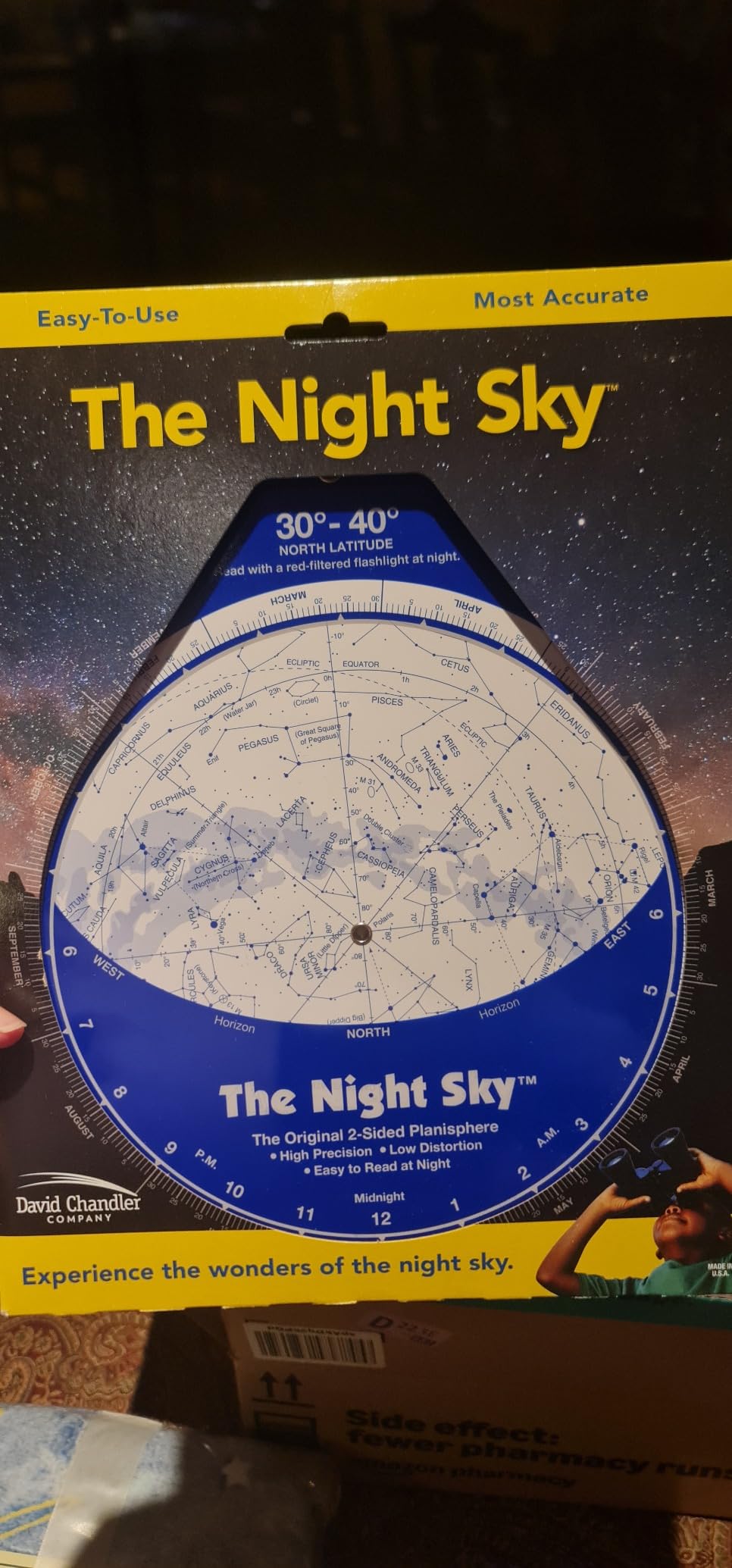
Owners rate it highly for portability. At 8 by 10 inches and a little over 3 ounces, it is the one on this list I would actually put in a car door pocket and take to a dark site. It pairs naturally with a pair of 10×50 binoculars, because you can plan a Messier-style sweep in the car and then walk the list outside.
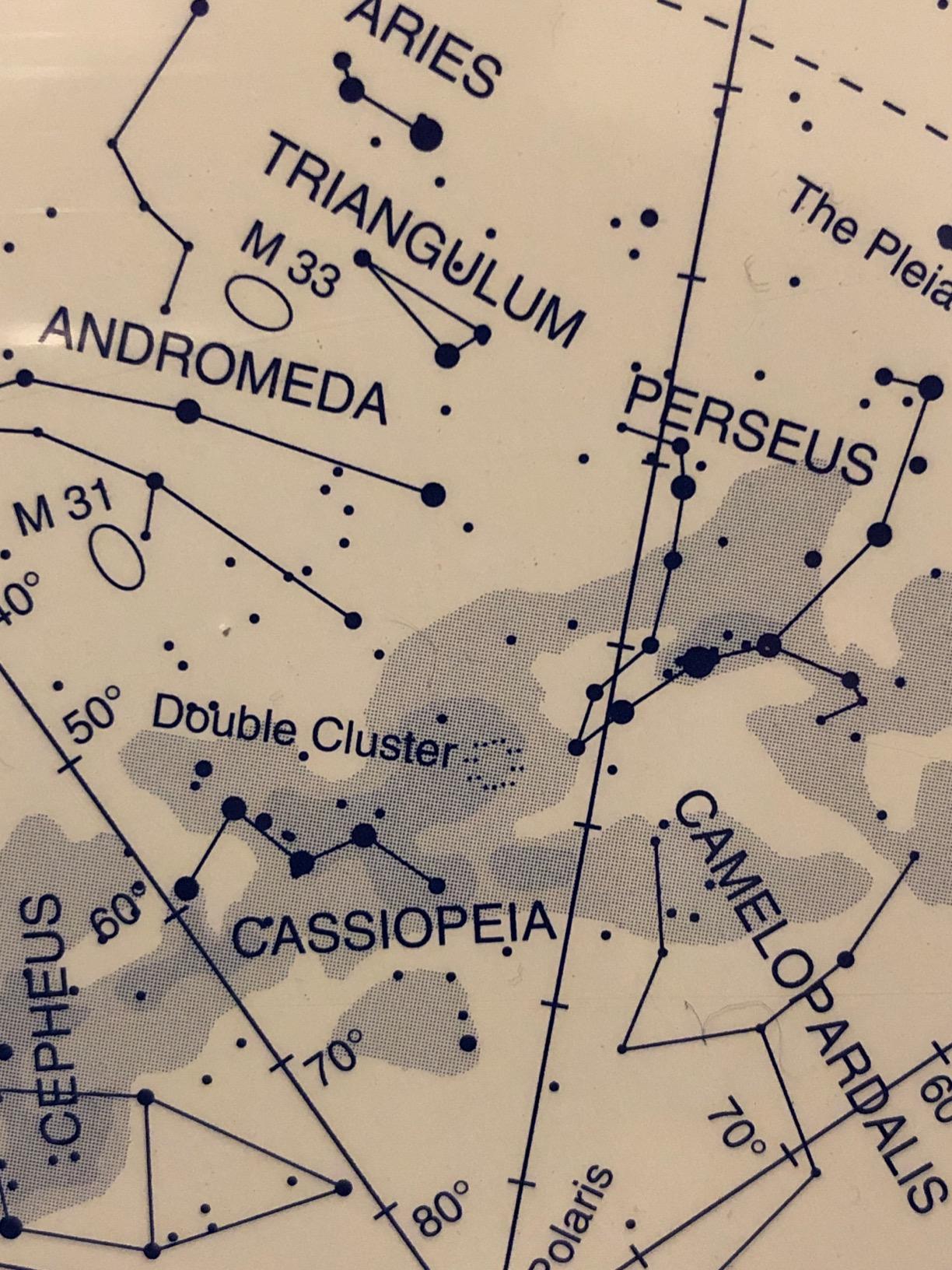
The complaints are consistent. The print is small, particularly the smallest type, the laminate throws glare when you hold it under any light source, and only about the 20 brightest stars are labelled. The constellation stick-figure drawings also do not match the shapes you see in the real sky, which is a common source of frustration in the first ten minutes.
Who this planisphere suits
It suits beginners living between 30 and 40 degrees north who want a chart they can carry, and anyone who wants both hemispheres on one card. The red-light-friendly layout makes it a natural companion to camping trips and school field sessions.
It is also the one to pick if a child is moving between the chart and a small telescope, since the labelled bright stars are the ones easiest to find through a finderscope.
Where it falls short
Small print is the real limitation. If you have not used a planisphere before, the fine labels on this wheel are harder to decode than the bold type on the 16-inch Guide to the Stars, and the vague instructions mean you should expect a practice session in a lit room before your first night out.
With more than 1,100 reviews averaging 4.7, it is one of the most proven charts sold anywhere. The rating is deserved; the type size is simply the compromise that comes with a wheel this compact.
3. Collins Planisphere: Best for Families and Classrooms
- Easy to read at a glance
- Thick semi-gloss laminated card
- Well laid out and genuinely educational
- Heavy paper stock holds up to handling
- Planets are not plotted on the chart
- No altitude or declination scale to read off
- Blue background is hard under a red light
The Collins planisphere is bound into a book rather than sold as a loose disc, and that single design decision changes who it works for. The chart does not slide out, does not flex, and cannot be creased in a bag. For a family with a curious child or a teacher running a classroom session, that robustness matters more than a wider latitude band.
The chart itself is illustrated by staff at the Royal Observatory Greenwich, and reviewers repeatedly single out the layout as clear and educational rather than purely functional. Around the wheel sit 72 pages of supporting night sky material, so a session can move from identifying Orion to reading about it without switching devices.
Construction is genuinely good. The card is thick, semi-gloss laminated and printed on heavy stock, which is why owners describe it as feeling durable after months on a classroom desk. At 350 reviews and a 4.6 average, the feedback is consistently positive about build quality.
Who this planisphere suits
It suits parents buying a first astronomy gift and teachers who need something that survives being passed around a room. The Royal Observatory Greenwich connection also gives it a credibility that generic charts lack when you are trying to persuade an eight-year-old that astronomy is a real subject.
For a teenager moving up to a telescope, pair it with a book rather than a wheel. The 72 pages give the theory that a bare chart cannot.
Where it falls short
Two limitations are worth stating plainly. Planets are not plotted on the chart, and there is no altitude or declination scale to read a position off the map. If you want to plan a telescope session, this is not the tool.
The blue background is the other issue. Under a red torch, blue-toned print darkens against a violet field, which makes this harder to read in the field than the dark-on-white wheels. Inside a lit classroom it is a non-issue, which is why I rate it as a family and school pick rather than an all-round one.
4. The Stargazer’s Guide to the Night Sky: Best Book and Chart Bundle
The Stargazer’s Guide to the Night Sky (with FREE Stargazer’s Planisphere!)
- Clear explanations pitched at non-astronomers
- Heavy glossy pages resist fraying
- Excellent full-colour charts and photographs
- Topics stay inside their own chapter
- Written from a creationist perspective
- Cover laminate peels with heavy field use
Dr Jason Lisle’s The Stargazer’s Guide to the Night Sky is the odd one out in this list because the book is the product and the chart is the bonus. A fold-out Stargazer’s Planisphere sits at the back of a 240-page hardcover, and readers describe the pairing as an excellent, approachable introduction that works without any prior knowledge.
The writing is pitched at non-astronomers and stays inside its own chapter rather than scattering across the book, which matters more than it sounds. You can hand it to someone with zero background and they can follow a single topic — moon phases, eclipses, locating planets, the major constellations — without hunting through the index.
Production is solid for a book: heavy glossy pages that resist tearing and fraying, full-colour star charts, and around 150 full-colour photographs. A number of buyers note that the planisphere is effectively included at no extra cost, which is the appeal of a bundle.
Who this planisphere suits
It suits a reader who wants the chart and the explanation in one place, particularly a family working through the sky over a winter rather than a single clear night. The photographs also make it easier to show a child what a target should look like through a telescope before they attempt it.
If you already own a good wheel, the fold-out chart will not replace it. If you own nothing, this is a strong single purchase.
Where it falls short
The book is written from an explicitly creationist perspective. Buyers who actively sought that framing are happy with it, and the 177 reviews at a 4.7 average reflect a largely satisfied audience, but anyone wanting a purely secular astronomy text should know before they buy.
Hardcover laminate at this weight begins to peel with heavy field use, which is the opposite of what you want from something meant to survive repeated trips outside. For a chart that lives in a rucksack, choose a plastic wheel from the picks above.
5. Famous Star and Planet Locator and Star Guide: Best for Telescope Planning
Scientifics Direct Famous Star and Planet Locator and Star Guide (Single Pack)
- Rotating map gives horizon positions for a date and time
- Booklet walks new users through the mechanism
- Star artwork drawn by an astronomer-cartographer
- Reference data on the reverse
- A dated locator format rather than a teaching chart
- No latitude band listed in the specifications
- Booklet is the only guidance for a first-time user
The Famous Star and Planet Locator works differently from every other chart here. Instead of a wide oval window over a projected sky, a rotating horizon mask drops a shaped overlay onto the star map so you see exactly what is above the horizon for a given date and time. That makes it a planning tool for a telescope session rather than a learning aid.
The star graphic is drawn by George Lovi, an astronomer and cartographer, and it locates more than 500 stars and planets. Reviewers consistently praise the artwork itself, which reads more like a printed observing guide than a mass-produced classroom chart.
A 16-page full-picture pocket instruction booklet walks new users through the mechanism, and additional reference data sits on the reverse. At 166 reviews and 4.6, the feedback is steady, and the booklet is frequently named as the reason the mechanism is easy to pick up.
Who this planisphere suits
It suits someone who already knows the sky and wants to decide what to point a telescope at on a given night. The horizon mask makes it quick to see which bright objects are well placed before you drive out to a dark site.
It also works for outreach sessions, where handing someone a card that shows the horizon shape immediately makes the concept of a rotating sky click in a way an oval window does not.
Where it falls short
It is a dated locator design rather than a teaching chart. Nothing in the listed specifications states a latitude band, so check the box before you commit, because a locator that does not match your sky is the exact problem this round-up exists to prevent.
It is also the least forgiving choice for a true beginner with no reference points, since the booklet is the only guidance you get. Buy it to complement a wheel, not to replace one.
6. Messier Observer’s Planisphere: Best for Deep-Sky Observers
- Extra-large format stays legible under red light
- Overview chart plus nine detailed locators
- Printed on plastic so dew and damp do no harm
- Full Messier catalogue and March marathon order
- Far too large for a small eyepiece case
- Thin celestial equator line
- Specialised on Messier targets not beginner sky finding
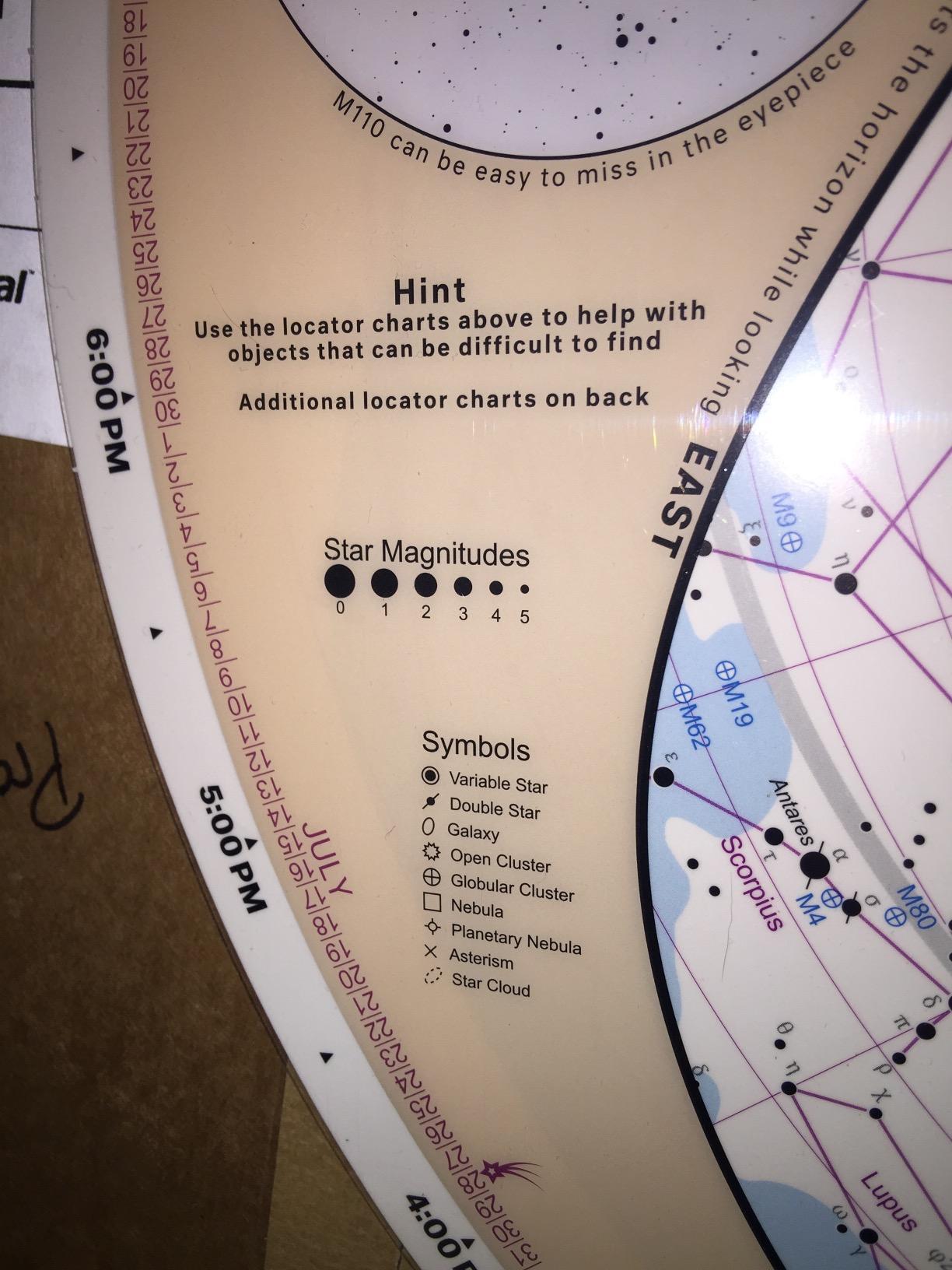
Mike Krzywonski’s Messier Observer’s Planisphere is the specialist entry, and at roughly 18 inches it is the largest chart in the round-up. It covers 30 to 60 degrees north, plots all 110 Messier objects on the main face, and adds nine inset locator charts for congested regions such as Leo, Andromeda and the Virgo cluster area.
It carries the highest average rating of the group at 4.8, and reviewers treat it accordingly: a deep-sky tool with an unusually good balance between the overview chart and the detailed insets. The reverse holds a full 110-object Messier catalogue plus selected NGC targets, and the date ring marks the March Messier Marathon ordering and meteor shower maxima.
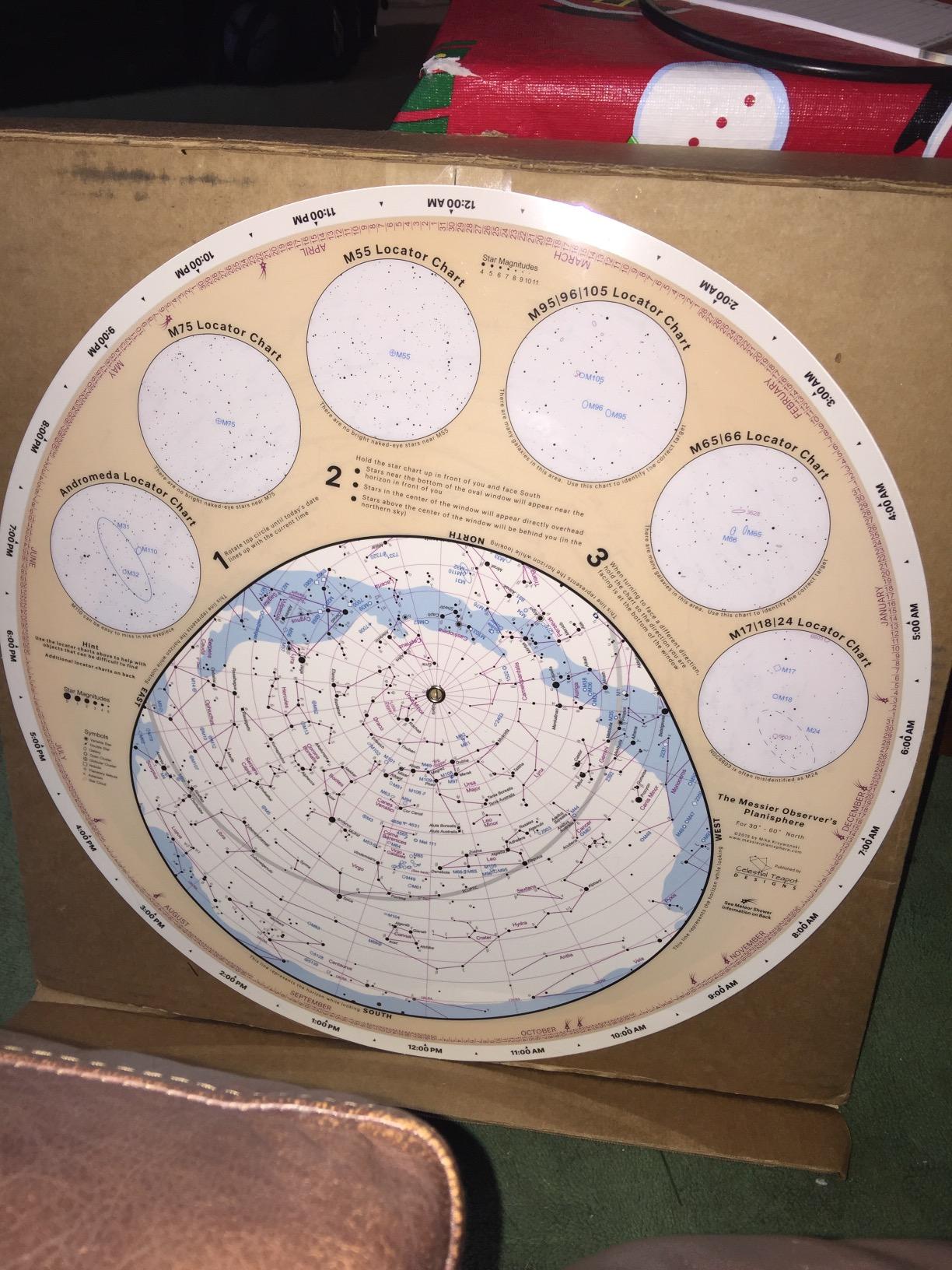
Construction is the real differentiator for anyone observing in the field. It is printed on plastic, so dew and damp have no effect on it, and there are no batteries that can fail in a cold field. Several reviewers single out the size as a benefit for wearers of progressive and bifocal lenses, who find ordinary chart type too small to resolve.
The master list on the reverse turns it into a session planner. You can work out how much of the catalogue is realistically visible from a suburban garden in one autumn evening, and the marathon ordering tells you the order to sweep targets in.
Who this planisphere suits
It suits observers who have already learned the bright constellations and now want to find fainter deep-sky objects with a telescope or large binoculars. The nine inset charts solve the specific problem of hunting through a crowded region like Virgo with nothing but a printed overview.
It also suits anyone running public observing sessions, where the 18-inch face can be propped up and read from a distance by a group.
Where it falls short
Size is the honest limitation. At roughly 18 inches across it will not fit a small eyepiece case or a normal rucksack, so it is a planning and living-room tool more than a backpack one. Reviewers repeatedly describe it as better for planning sessions and outreach than for portable field use.
It is also specialised. If your goal is learning the night sky for the first time, a Messier catalogue is the wrong level of detail, and the thin celestial equator line is hard to distinguish from the surrounding grid. The 83 reviews at 4.8 come from people who know what they are looking at.
7. Firefly Planisphere 42 Degrees North: Best Mid-Size Pick at a Fixed Latitude
- 12-inch size keeps type readable in low light
- Star names and planet positions both included
- Zenith cross gives a clear overhead reference
- True 42 degree north design
- Type size judged too small by some reviewers
- Zenith cross placement questioned by some
- Chart projection looks warped versus the real sky
The Firefly planisphere is built for a single latitude — 42 degrees north — and Robin Scagell’s seventh edition has been refined over a long publishing history. If you live on that line, this is one of the few charts where the projection genuinely matches what you see overhead rather than approximating it.
At 12 inches it sits neatly between the 10-inch wheel and the 16-inch card, and reviewers near this latitude rate it well for readable type in the dark. Star names and planet positions are both printed on the rotating face, which is more than most charts of this size manage, and a small blue cross marks the zenith, the point directly overhead.
That zenith marker is the feature I find most useful. Beginners rarely know what to do with the top of the oval window, and having a printed cross tell them where straight up is shortens the learning curve noticeably.
Who this planisphere suits
It suits beginners living close to 42 degrees north, and anyone who wants a chart that fits a car door pocket or a small bag without becoming unreadable. Passing it around a group at an observing session is easy at this size.
It also works well as a second chart. If your main wheel is a wide 30 to 60 degree model, a fixed-latitude chart gives you a sharper match to your specific patch of sky.
Where it falls short
The 4.4 average is the lowest here, and the reasons are specific. Several reviewers report that the blue zenith cross sits nearer 50 degrees declination than the intended 42, which would make the overhead reference misleading rather than helpful. Others judge the type too small for low light and find the projection warped against the real sky.
Contrast between chart elements also scores lower than on competing planispheres. If you are buying fresh, read those reviews carefully, because this is a chart where the specific complaint matters.
How to Choose the Right Planisphere?
Almost every disappointed first-time buyer bought the wrong chart for their latitude, then concluded that planispheres do not work. They do. Latitude is the first filter, size is the second, and everything else is preference.
Before you compare anything, find your latitude. It is on any mapping app, but you can also read it off a road atlas or the coordinates line in a weather forecast. Take the nearest degree. Then match it against the chart bands below.
30 to 40 degrees north covers Florida, the Gulf Coast, southern California, Madrid, Rome, Athens and the northern Mediterranean.
42 degrees north is a single-line design. It suits the US Midwest, northern Spain, Italy, the Balkans and central Asia.
50 to 60 degrees north covers the UK, southern Scandinavia, northern Germany, Poland, the northern United States and southern Canada.
Below 30 degrees north or anywhere in the southern hemisphere, buy a southern edition. Do not attempt to adapt a northern chart.
Next, decide on size. Nothing under 5 inches is worth buying for reading, and forum regulars consistently run 10 to 12 inches as the practical minimum. Below 8 inches you will spend more time squinting than looking up. The 16-inch and 18-inch charts are wonderful on a table and impractical in a bag, so match the size to where you will actually use it.
Then check the sides. A single-sided chart shows the northern hemisphere and crops everything low in the south, which is where several of the most recognisable constellations sit. Two-sided designs solve this by flipping the wheel. The Night Sky in this round-up does that, and it is why I rate it above single-sided alternatives for learning.
Check the print. Dark stars on a light background can be read with a red torch without wrecking your dark adaptation. A blue or white-on-black chart becomes unreadable in the field, which defeats the purpose of taking it outside at all. All seven charts here are usable under red light, but the blue-backed Collins edition is the hardest.
Finally, weigh material. Laminated card and plastic survive dew, damp and a rucksack. Plain cardboard warps, tears and fades, and forum discussions about ruined cardboard wheels are among the most common complaints in this category. If you plan to observe in a damp climate, buy plastic or laminated and skip cardboard entirely.
On price, expect a spread from around 15 dollars for a book-bound card chart to roughly 50 dollars for an 18-inch specialist wheel. The 10-inch and 12-inch plastic wheels sit in the middle and represent the strongest balance of quality and cost for most beginners. As with all of our buying guides, prices move, so check the latest figures before you commit.
How to Use a Planisphere in 5 Steps
Do this indoors with a desk lamp first. Ten minutes of practice saves an hour of frustration in a cold field.
Set the date. Rotate the disc until the correct date on the outer ring lines up with the date marker on the fixed plate.
Set the time. Keep rotating until the time marker also meets that date marker. Use 24-hour time and convert carefully, because a 12-hour error points you at completely different sky.
Turn to the correct face. If the chart is two-sided, flip it so the hemisphere you are in faces up.
Face the correct direction. Hold the chart above your head with the compass direction you are facing at the bottom of the oval window, so the centre of the window is the zenith directly overhead.
Read with a red torch. Aim a dim red beam at the card from below, not directly into your eyes, and let your eyes adjust to the dark for a few minutes before you start matching stars.
Dark adaptation takes around 20 minutes to reach its best, and any white light resets the clock. That is the practical reason a paper chart still earns its place when your phone is in your pocket: a red torch does not undo twenty minutes of careful waiting, and a white phone screen does.
Start with the brightest landmarks. Orion in winter, the Plough and Cassiopeia in autumn, Scorpius in summer, and Crux for southern observers. Once you can name those, the rest of the chart becomes a map rather than a puzzle. Our guide to building patient habits with a new skill covers the same progression principle in a completely different field: learn the landmarks first, add detail later.
What a Planisphere Can and Cannot Show
A planisphere is accurate for stars, and it is accurate for your latitude and your date. What it cannot do is show you the things that move. The Moon and the planets travel across the background of stars, so no printed chart can plot them for a whole year.
That is the answer to the most common beginner complaint on forums: someone spots Venus, cannot find it on the chart, and assumes the chart is broken. It is not broken. Planets sit on the ecliptic, the path of the Sun across the sky, and the charts that include that path are the ones to buy if you want a starting point for finding them. The Guide to the Stars prints the ecliptic path, and the Firefly chart prints planet positions for the year it was published.
A planisphere also cannot give you a coordinate grid to measure from. Charts without an altitude or declination scale, including the Collins edition here, are reference tools rather than measuring instruments. If you want to point a telescope at a specific magnitude, you need a star atlas.
So how does a planisphere compare with the alternatives?
Planisphere: cheapest, no power needed, no screen glow, best for learning the sky and for dark-site work.
Free app such as Stellarium: far more detail, a telescope control function, and a live planetarium for planning. It needs a bright screen, so it is a planning tool rather than a field tool.
Star atlas: shows fainter objects and has a coordinate grid, but it assumes you already know where to look.
Telescope: shows you a small, magnified field, not a whole sky. A planisphere tells you where to point it first.
The honest summary, and the one that matches how most experienced observers work: use the planisphere to find the region, the app to plan the session, and the atlas or telescope to go deep. That planning discipline is not unique to astronomy, and our beginner equipment roundups make the same case for simpler gear: match the tool to the job before you spend.
Frequently Asked Questions
What is the best star chart for a beginner?
A two-sided rotating wheel with dark stars on a light background is the best star chart for a beginner. It reads under a red torch, shows both the northern and southern sky, and needs no batteries. The Guide to the Stars is our top pick for readability, while The Night Sky 30-40 North is the stronger choice if you want something portable.
What is the best planisphere to buy?
Match the chart to your latitude first, then pick the largest size you can carry. For most beginners that means a 10 to 12 inch plastic or laminated wheel covering your latitude band, with a two-sided design if possible. Our overall pick is the 16-inch Guide to the Stars for 30 to 60 degrees north, and it covers the widest latitude range in the group.
Which latitude planisphere do I need?
Buy the chart whose printed band contains your latitude. 30 to 40 degrees north covers Florida and the Mediterranean, 42 degrees north is a single-line design for the US Midwest and central Europe, and 50 to 60 degrees north covers the UK, northern Europe and southern Canada. If you are in the southern hemisphere, buy a southern edition rather than adapting a northern chart.
Can a planisphere show planets and the Moon?
No. The Moon and planets move against the background of stars, so a printed chart cannot plot them for a whole year. Charts that print the ecliptic give you the path the planets follow, which is enough to start finding them, but for live positions you need an app. Beginners often assume a missing planet means the chart is faulty, and it does not.
Do I need a planisphere if I already have a star app?
Most people benefit from having both, for different jobs. Use a free app such as Stellarium to plan a session in advance, with its telescope control and planetarium view. Use the planisphere outside, because a phone screen wrecks your dark adaptation and a paper chart lit by a red torch does not. Neither tool fully replaces the other.
Which constellations are easiest for beginners to find?
Orion is the classic first target in winter, with its belt of three stars giving you an instant handle. Cassiopeia and the Plough are the easiest autumn pair, Scorpius is unmistakable in summer, and Crux gives southern observers a starting point. Learn two at a time and hop between them rather than trying to match the whole sky at once.
Bottom Line: Which Planisphere Should You Buy?
The Guide to the Stars takes the top spot among the best planisphere star charts for beginners because it solves the three things beginners actually struggle with: readable type at 16 inches, a 30 to 60 degree north band that fits most of the populated northern hemisphere, and a reference-packed reverse that turns a chart into a first astronomy book. If you need something that fits a bag, take The Night Sky 30 to 40 North. If you want a book alongside the chart, the Stargazer’s Guide is the bundle. If you have moved past the naked-eye sky and want the Messier catalogue, the 18-inch Messier Observer’s Planisphere is the specialist answer.
Whatever you choose, get the latitude right, practise the dial indoors once, and take a red torch. That is the whole method. As with everything we cover, our other beginners’ guides follow the same logic: check the fit before you commit, and our beginner buying guides and equipment roundups are built the same way.