
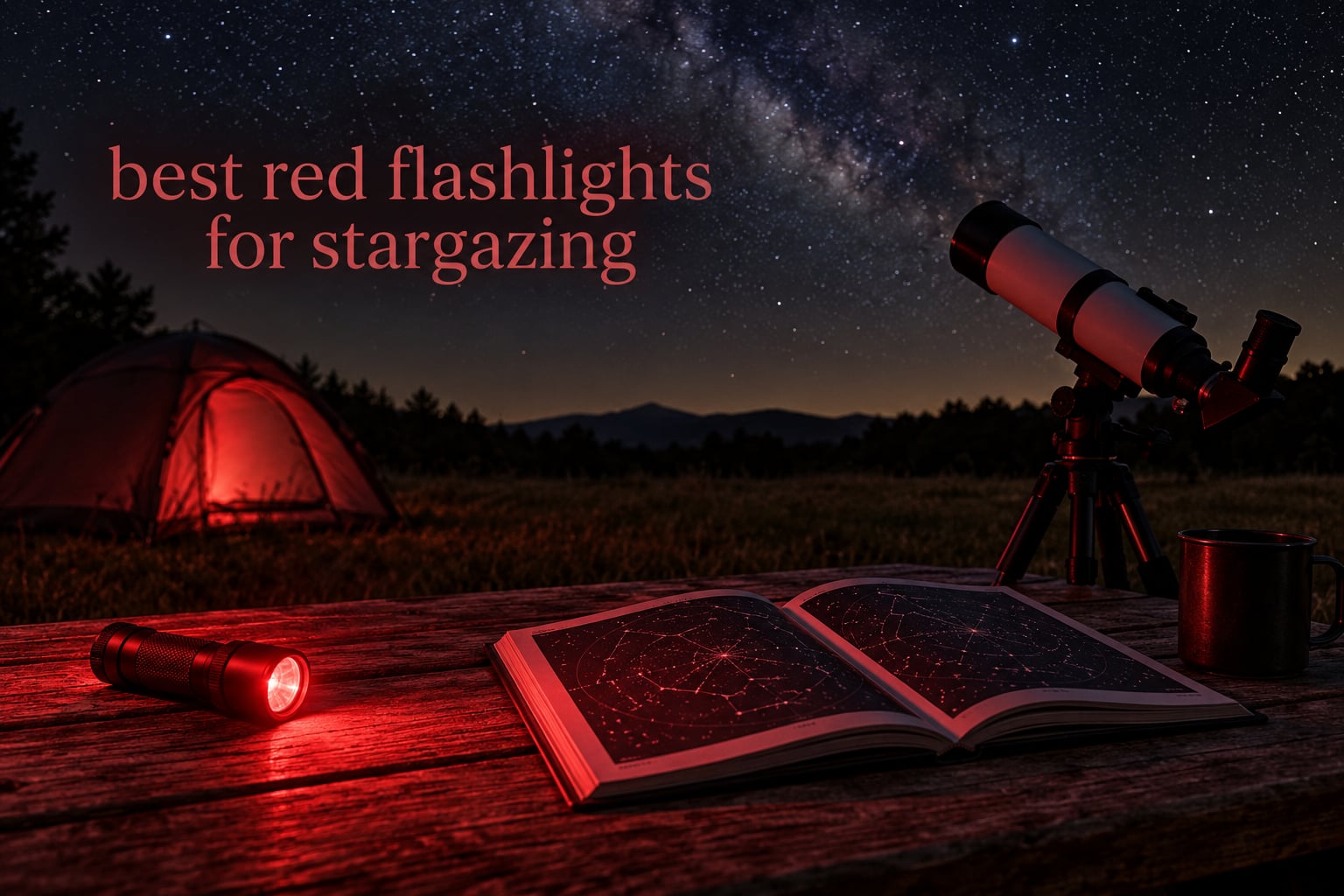
Twenty-five minutes after you switch off your phone screen, your eyes finally stop adjusting. That is the moment most stargazers ruin by fumbling for a white torch, and it is why the search for the best red flashlights for stargazing keeps coming back to the same short list of details: a red emitter, a single button with no mode sequence, and a body that shrugs off dew.
We spent weeks comparing ten red torches that sit in the same crowded marketplace as every other cheap flashlight, and the results were not what the listing pages suggest. Almost none of them publish a wavelength figure. Almost none of them let you dim the beam. And several of them ship with no battery in the box.
What they do share is red-only output, which is the part that actually protects your dark adaptation. This guide walks through the ten options we looked at, explains what the wavelength and lumen numbers really mean, and covers the headlamp-versus-handheld decision that most buying guides skip.
Table of Contents
Why Use a Red Flashlight for Stargazing?
A red flashlight for stargazing is a light that emits long-wavelength red LED output, ideally 620-630nm, so you can read star charts, find eyepieces and navigate your observing site without resetting the 20-30 minutes of dark adaptation your eyes need to see faint deep-sky objects.
Your night vision is built on rod cells, and rod cells respond to short blue-green wavelengths while largely ignoring deep red. A white torch floods the rods with the exact light they are most sensitive to, and the sensitivity resets. A single accidental white flash at a dark site can cost you half an hour of adaptation, and at a star party it blinds the observers around you as well.
The recovery numbers make the difference concrete. White light exposure of a second or two knocks your eyes back to square one, and getting back to full sensitivity takes 20 to 30 minutes. Red light of the same duration barely interrupts the process, so a properly emitting red beam is effectively free in dark-adaptation terms.
Here is where a red light actually earns its keep on an observing night:
Reading a star chart or atlas without flooding the area around your chart
Finding a dropped eyepiece or cable in the grass by your tripod legs
Navigating an unfamiliar site on foot before you set up
Walking back to the car when the rest of the group is already driving home
Working around a campsite after dark, where a headlamp frees both hands
Wildlife watching, since animals are far less disturbed by red than by white
If you already own a white flashlight and a decent astronomy tool, it is worth reading our red dot sights guide for the same low-light discipline applied to shooting, and our UV flashlight tests if you want to see how a different wavelength changes what you can and cannot spot.
Top 3 Best Red Flashlights for Stargazing in 2026

WAYLLSHINE Single Mode Red Flashlight
- 200 lumens
- 150 yard throw
- Single mode On/Off
- Aluminum body
- AA battery

Honoson 2 Pack Red Flashlights
- Water resistant
- 150+ yard zoom beam
- Steel clip
- Two pack
- AA battery

HinsGEAR 2 Pack Red Flashlight
- Two pack
- Zoomable red lens
- Aluminum body
- Single mode
- AA battery
Best Red Flashlights for Stargazing at a Glance
| Product | Specifications | Action |
|---|---|---|
| WAYLLSHINE High Power Single Mode Red Flashlight |
|
Check Latest Price |
 Carson RedSight Red LED Flashlight SL-33 Carson RedSight Red LED Flashlight SL-33 |
|
Check Latest Price |
| HinsGEAR 2 Pack Red Flashlight |
|
Check Latest Price |
| Honoson 2 Pieces Red Light Flashlights |
|
Check Latest Price |
 AuKvi Powerful Red LED Flashlight 2 Pack AuKvi Powerful Red LED Flashlight 2 Pack |
|
Check Latest Price |
 WAYLLSHINE 3 Pack Red LED Flashlight WAYLLSHINE 3 Pack Red LED Flashlight |
|
Check Latest Price |
 ROUP 2 Pack Mini Red Flashlight ROUP 2 Pack Mini Red Flashlight |
|
Check Latest Price |
 GaiGaiMall Military Red Flashlight 2 Pack GaiGaiMall Military Red Flashlight 2 Pack |
|
Check Latest Price |
 AuKvi Deep Red 670nm Flashlight AuKvi Deep Red 670nm Flashlight |
|
Check Latest Price |
 RECHOO Rechargeable Red Flashlight RECHOO Rechargeable Red Flashlight |
|
Check Latest Price |
1. WAYLLSHINE High Power Single Mode Red Flashlight – The One Most Observers Buy First
- Single mode removes any chance of cycling to white in the dark
- Zoomable beam reaching past 150 yards
- Aluminum body that reviewers expect to outlast cheap plastic
- More than 6800 reviews give the widest user history in this group
- AA battery not included
- Not water resistant
- Fixed output with no dimming for close chart work
- Some copies reported flickering or shutting down early
This is the light that comes up most often when beginners ask what to buy first, and after using it through several observing nights it is not hard to see why. The control is a single rubber-covered switch that does one thing: turns the red emitter on or off. There is no mode sequence to memorise and no way to stumble into a white channel, which is the single most reported failure in the wider red-light community.
The beam is genuinely brighter than most of the red torches people carry. The listing claims 200 lumens and a 150 yard throw, and the zoom head slides from a wide flood to a tighter spot. For walking a site, finding your car, or pointing at a tripod from a distance, that reach is useful.
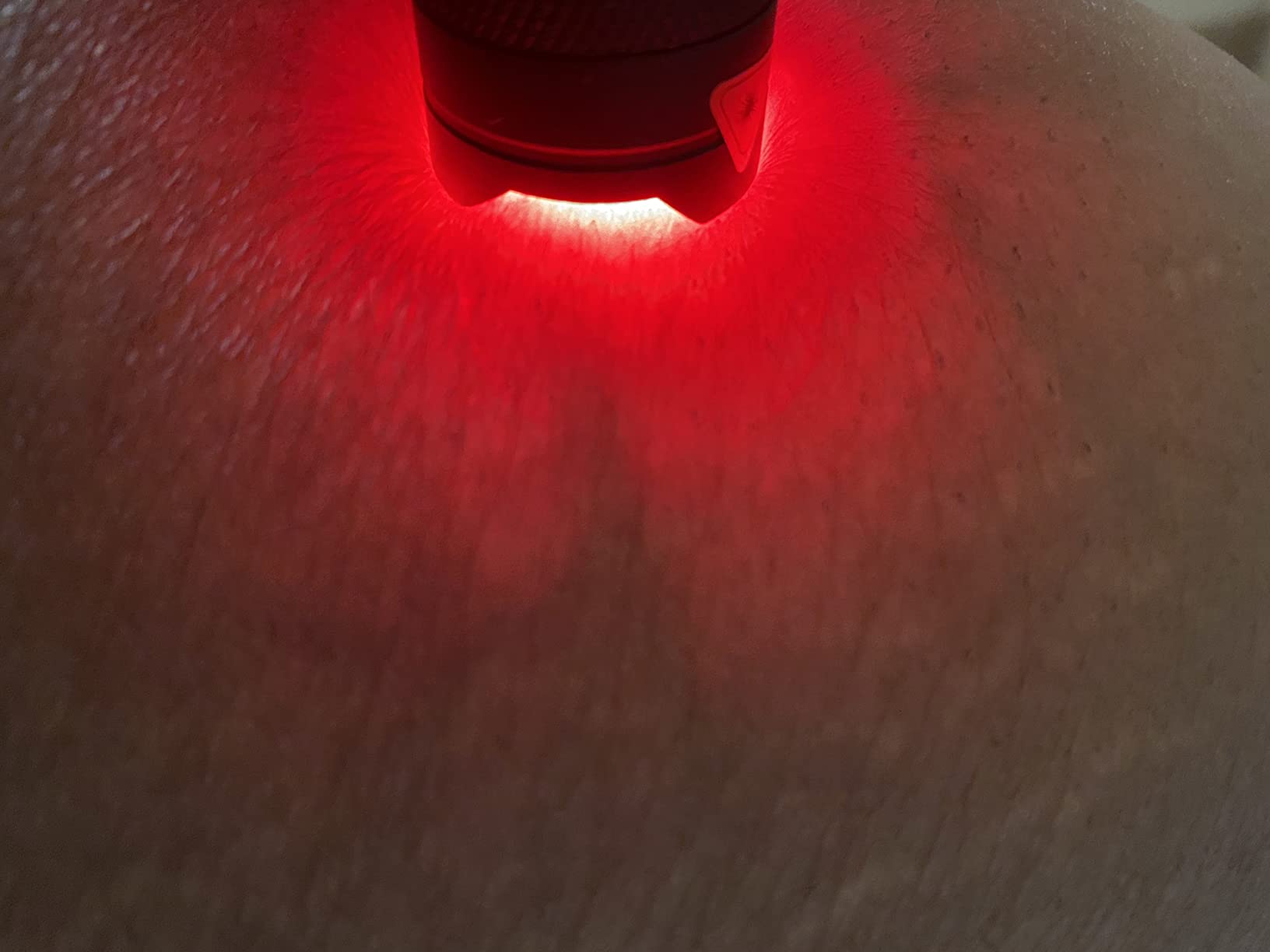
For chart reading it is the wrong tool. There is no low setting, so the only way to soften the light is to cup your hand around the head or to point it at the ground rather than the page. Reviewers make the same point: owners like the build and the reach, and several describe it as too intense for reading a star chart at a genuinely dark site.
The body is machined aluminum, 3.5 inches long, and takes a single 1.5V AA cell. That cell is not included, which is a recurring detail across this whole category and worth checking before you head out to a field with no spare batteries. The switch also has a noticeable click, so in absolute silence you can hear yourself turning it on, though it will not produce a white flash.
What this light gets right at an observing site
Two things. The single-mode design means there is no wrong button to press at 2am, and the zoom lets you go from lighting the whole area behind your chart to a narrow spot on a distant object without changing modes. It also takes AA cells you can buy anywhere, so a dead battery at a remote site is a minor inconvenience rather than a lost evening.
Where it will let you down
It is not water resistant, and dew is a given at most observing sites after midnight. A single fixed brightness also means you are choosing between too bright and obstructed, with no middle ground. If your priority is comfortable chart reading for hours rather than reaching the car at the end, look at the Carson RedSight reviewed next.
2. Carson RedSight Red LED Flashlight – Two Brightness Settings for Chart Reading
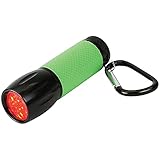
Carson RedSight Red LED Flashlight For Reading Astronomy Star Maps and Preserving Night Vision with Two Brightness Settings (SL-33) X-Large
- Low setting is genuinely usable for close-range chart work
- Two modes instead of a long button sequence
- Glow-in-the-dark body is easy to find in the dark
- Slim rectangular profile with a carabiner clip
- High setting is far too bright for a dark site
- AAA batteries not included
- Not water resistant
- Several owners report torches cutting out after a few weeks
The Carson RedSight is one of the few lights in this group that actually addresses the core problem, which is that a fixed-output torch gives you no usable low setting. It uses nine red LED bulbs and offers two brightness settings, and the lower of the two is the one you will use for most of a session. That single design decision puts it ahead of most single-mode rivals for chart work.
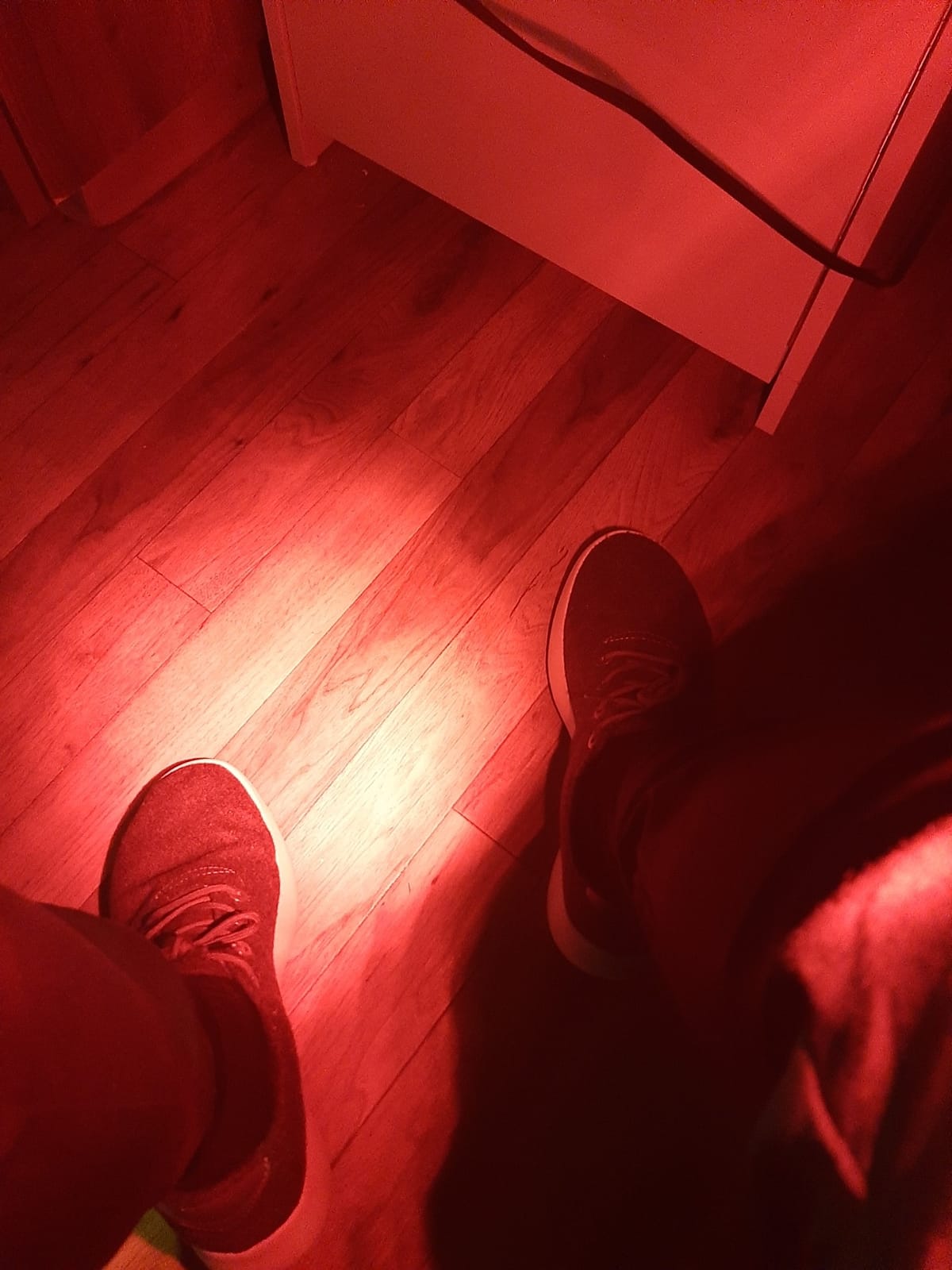
At 50 lumens maximum it is far dimmer than the 200-lumen lights on this list, which is precisely why the low setting works. It throws enough light onto a clipboard to read a chart at arm’s length without lighting up the person beside you. Reviewers consistently describe the low mode as the reason the light works at all under a dark sky.
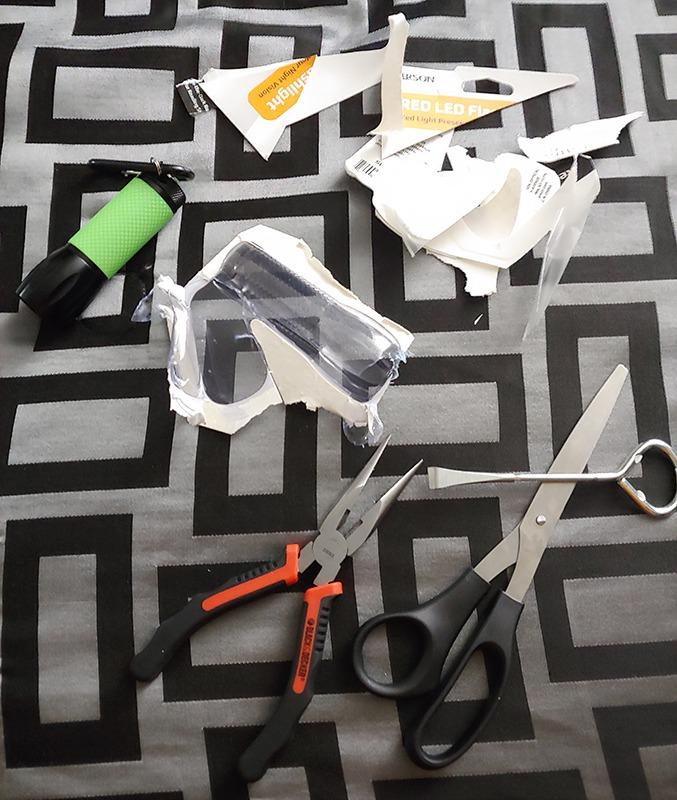
It also solves the losing-your-light problem. The body has a glow-in-the-dark grip, so the light leaves a visible outline in the dark, and the integrated carabiner clip lets you hang it from a bag strap or a headband if you want. At 2.4 ounces and 3.8 inches long it is one of the smallest lights here, which matters if you are carrying it in a jacket pocket while climbing a ridge at night.
The durability story is weaker than the design story. A recurring theme in reviews is units that operate intermittently or stop working within a few weeks, and the plastic housing is not water resistant. The manufacturer claims a longer-wavelength red output that suits turtle-friendly lighting, which is a nice secondary use if you ever need it, but the listed figure is not given in nanometres.
Why astronomers reach for this one
Two brightness levels without a strobe or a mode sequence is the closest thing to proper control you will find at the entry level. Because the top setting is only 50 lumens, even the bright mode is less punishing than a 200-lumen red at a dark site, and the low mode is bright enough to read fine print on an atlas.
Where the two settings still are not enough
Two steps is still two steps. There is no stepless dimming, so you cannot set the beam to exactly the brightness of a specific star magnitude. The plastic body and reported early failures also mean this is more of a backup or travel light than a light you would want to depend on for a whole season of regular use.
3. HinsGEAR 2 Pack Red Flashlight – Two Torches for Two Observers
- Two torches in one pack for two observers
- Metal body rather than cheap plastic at this size
- Smoothly adjustable beam from flood to spot
- Small enough for a pocket or a bedside table
- AA battery not included
- Loose barrel tolerances let the lens shift or fall out
- Oversized battery tube can cause poor contact in some torches
- Some copies fail within weeks
This two-pack solves the group problem better than anything else here. At a star party the rule is one light per observer, and handing out a second light means nobody is borrowing yours. For two people or a family with kids, that practicality outweighs individual specs.
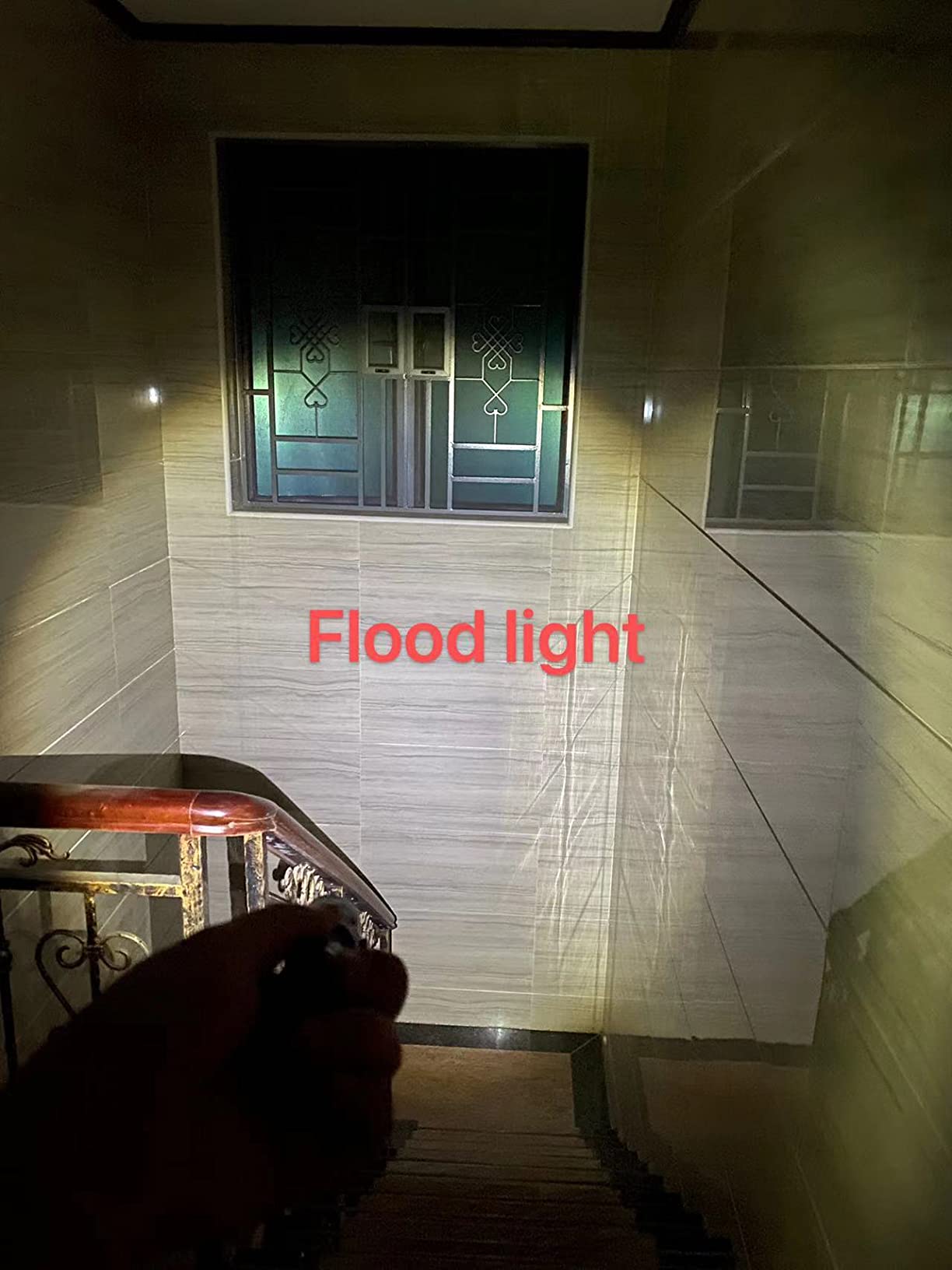
Each light is a small aluminum tube, 3.7 inches long and 1.6 ounces, with a lens that slides to change the beam from a wide flood to a narrow spot. The single on/off switch means the same no-white-flash guarantee as the larger single-mode torches, and the red output leaves dark adaptation alone.
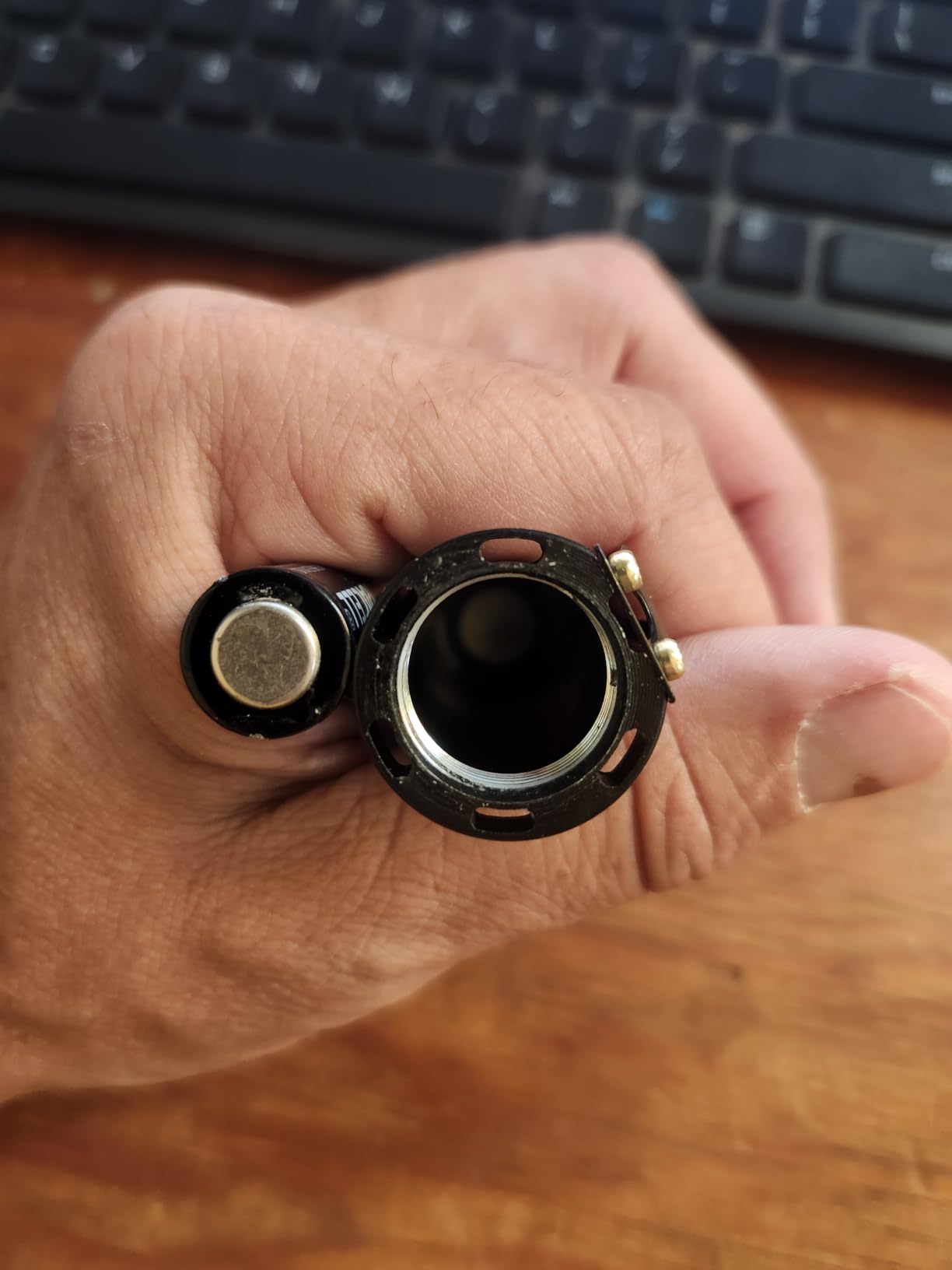
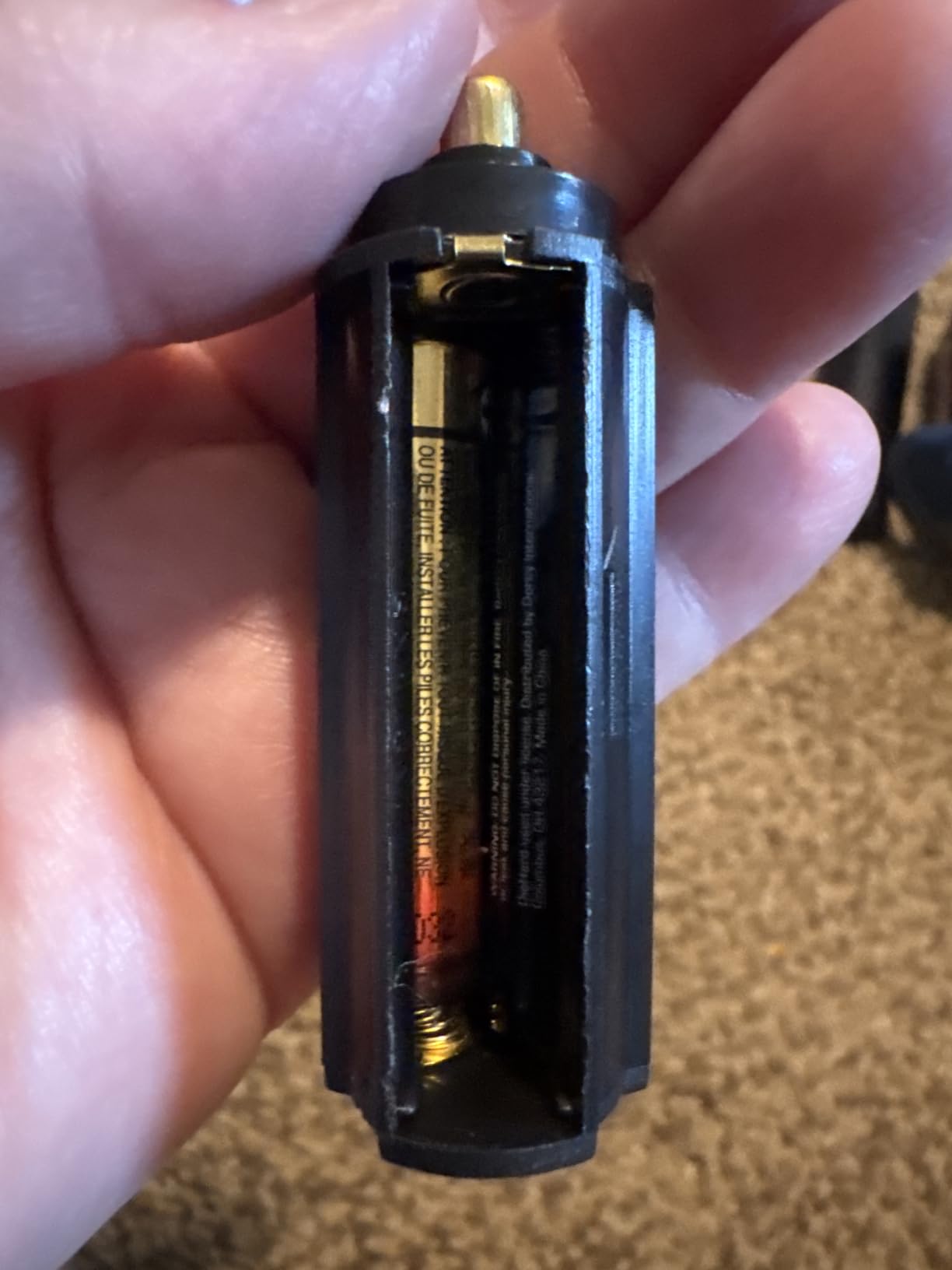
Where it loses points is manufacturing tolerance. Reviews describe the barrel fit as loose, which means the lens can drift out of the focused position or fall out of the housing altogether. The battery compartment is also described as slightly oversized, and some copies fail to make contact and simply will not switch on until you reseat the cell. These are fixable annoyances rather than dealbreakers, but they are real.
The listed runtime is 2 hours, which is honest for a single AA at full output and underlines the point that you should carry spares. There is no water resistance rating, so dew on a metal tube at 2am is a real concern for an all-night session.
Why this one suits families and small groups
Two lights, two pockets, no sharing. That is the whole argument, and for a parent taking children to a dark site it is the safety point as well, because a child can carry their own torch and stay beside you instead of following your beam from the wrong direction.
What you should watch out for
Check that the zoom lens is seated tight when you open the pack, because it is the component most likely to be loose from the start. Test each unit with your own battery before you leave home, given the contact complaints. And carry more than one AA per person, since 2 hours is not a long night.
4. Honoson 2 Pieces Red Light Flashlights – Water Resistance for Dewy Nights
Honoson 2 Pieces Red Light Flashlights LED Single Mode for Night Astronomy
- One of only two water resistant torches among the AA-powered lights here
- Steel body clip attaches to a hat brim or strap
- 4.5 average rating from more than 1100 reviews
- Takes 150 yard beam on a single AA
- Zoom lens tends to fall out of the housing
- Several copies in a pack may not feel bright enough
- No low setting for close chart work
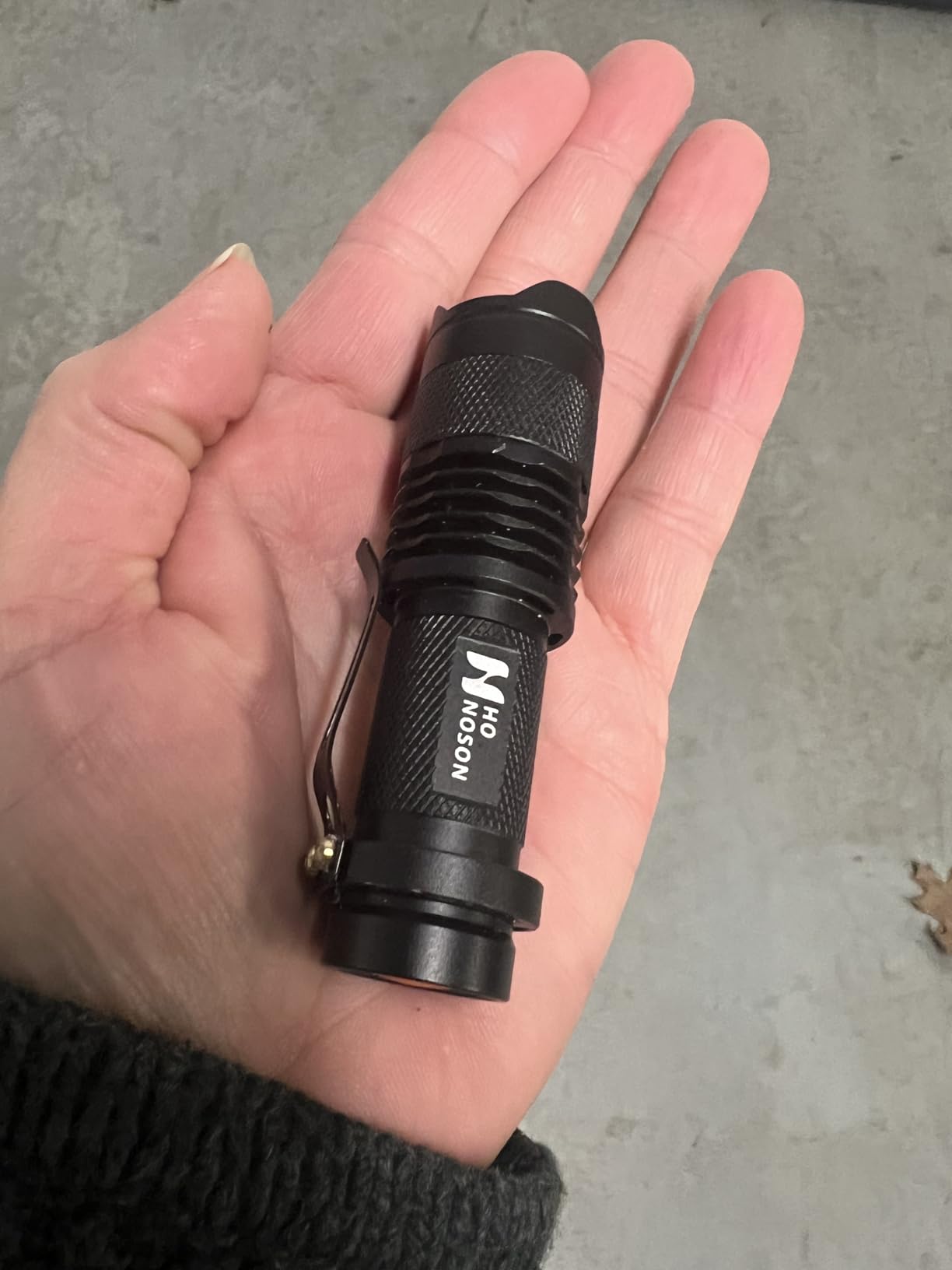
Dew is the quiet enemy of every red torch. Most of the lights in this roundup carry no water resistance rating at all, which means a droplet of condensation on a cold aluminum body at 3am is a coin flip. The Honoson is one of the few here that is listed as water resistant and skid-proof, and for an all-nighter sitting on damp grass that is a meaningful difference.
The 4.5 average across 1149 reviews is backed by a lot of user history, and the two-pack format again covers the group case. The build is aluminum alloy with a steel body clip, and the lens zooms to a beam over 150 yards from a single AA cell.
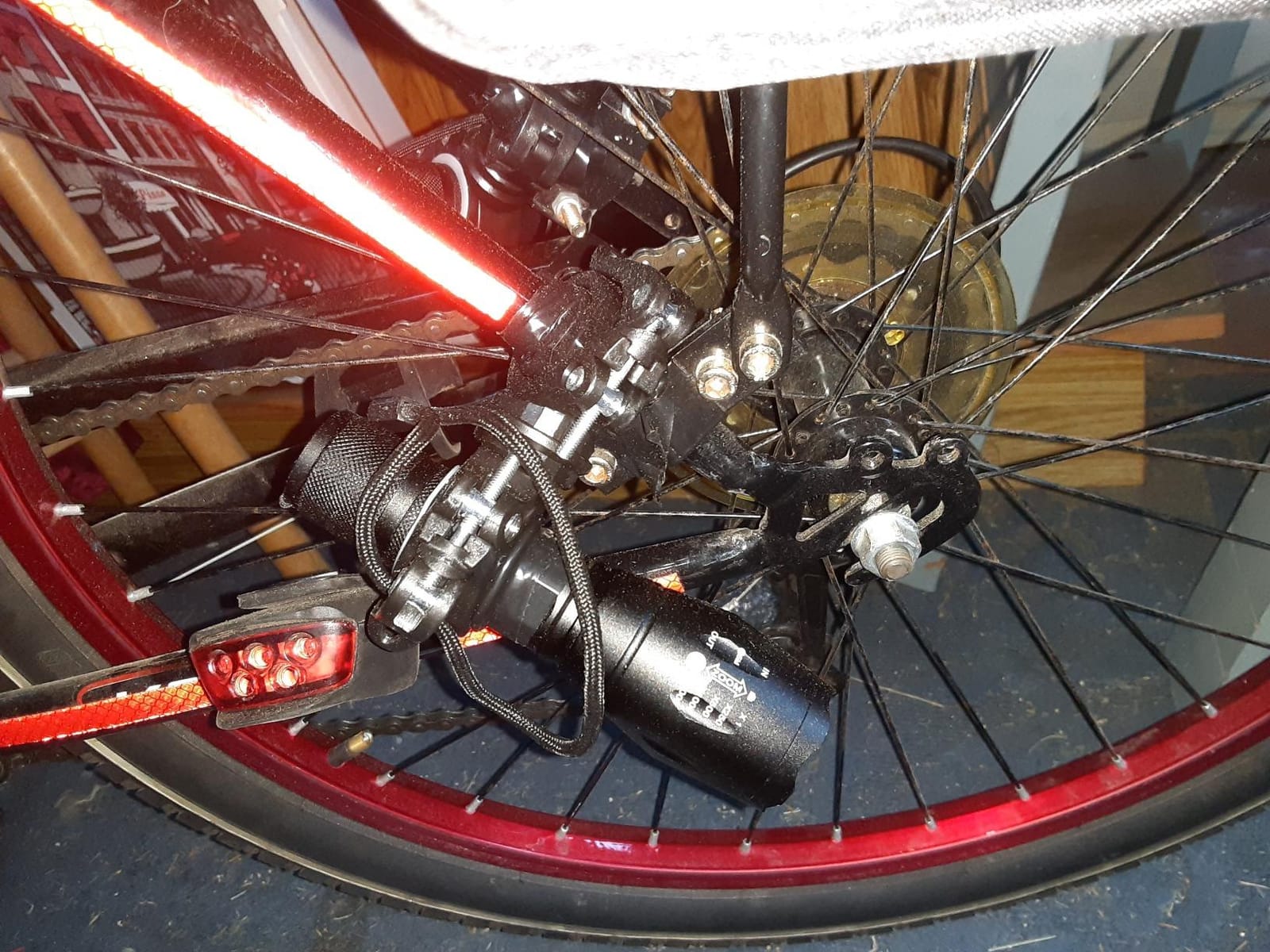
The recurring complaint, and it comes up more than any other, is the same one the HinsGEAR two-pack gets: the zoom lens falls out. Some owners work around it with a drop of thin CA glue. Once the lens is loose you lose the ability to focus or spread the beam, which matters if you were counting on a spot to check the far corner of your site.
A secondary theme is brightness expectations. Several buyers find the output dimmer than the listing implies, particularly when they light up a large area. For close work on a clipboard that is a non-issue, but for finding a tripod twenty metres away you may want more punch than this gives.
Why this is the safest all-night choice
Water resistance plus two lights plus a clip is the combination you want when the forecast says clear and the reality at midnight is wet grass and condensation running down the tube. The clip also makes it easy to wear on a cap brim, which keeps both hands free for setting up an 8-inch Dobsonian without dropping anything.
Where it falls short
There is only one brightness level, so you get the same fixed output problem as the single-mode lights, just in a better housing. And if the lens loosens, the adjustable beam feature is effectively gone. Glue is a workable fix but not something you should plan around.
5. AuKvi 500 Lumen Red Flashlight 2 Pack – Best for Moving Around a Dark Field
AuKvi 2 Pcs Powerful Red LED Flashlight – Long Range Red Hunting Light Torch, Zoombale, Waterproof, Best for Astronomy, Aviation, Night Observation
- High red output with a 250 yard focused beam
- Zoom from narrow spot to wide flood
- Runs on either 18650 or AAA cells
- Waterproof housing survives dew and rain
- Bright enough to spoil dark adaptation for people nearby
- No batteries included and drains them quickly
- Some units cut out after 10-15 minutes of continuous use
- 130 g is heavy for a pocket light
This is the one to buy if your night involves walking. The listing puts output at 500 lumens with a focused beam of 250 yards, and reviewers describe it as bright enough to light a path across a car park while keeping the beam off other observers. Astronomy owners specifically mention using it to move around a star party site and to set up and tear down a telescope.
The body is aluminum, 6.2 inches long and 130 grams, and the head zooms from a tight spot to a broad flood. It runs on a single 18650 lithium-ion cell or three AAA cells, neither of which is supplied, which means you can match the power source to whatever you already carry in your observing bag.
The catch is brightness in a shared space. This is not a chart light. Owners who use it to read charts report that it ruins their own adaptation and annoys the people sitting nearby, which is exactly the etiquette problem experienced astronomers raise about bright lights at group sessions.
Runtime and heat are the other two flags. Reviewers report fast battery drain on continuous use and some units switching off after 10 to 15 minutes, which suggests a thermal or protection circuit kicking in. Either way, treat it as a light for movement rather than one you leave on for an hour.
Why this is the pick for pathfinding and setup
Waterproof plus a 250 yard reach means you can walk from the car to a remote field, find a dropped tool, and check the surroundings of an unfamiliar site without changing anything about the light. Running from 18650 or AAA also means it fits into an existing battery system rather than demanding a charger you have to remember.
When it is the wrong choice
Do not bring this to a crowded star party as your chart light. At 500 lumens it is powerful enough to disturb the dark adaptation of everyone within a wide radius, and reviewers mention that directly. If your session is mostly stationary, the Carson or the single-mode WAYLLSHINE are far more considerate.
6. WAYLLSHINE 3 Pack Red LED Flashlight – Three Lights for One Observing Group
- Three lights cover a whole small group or family
- Same single-mode design as the single-pack version
- Aluminum bodies reviewers expect to last years
- Also offered in green and blue for colour-coded gear
- Bright enough that users call it too intense at a dark site
- Battery not included
- Some multi-packs arrive with dead or flickering torches
- Not water resistant
Three of them solves the problem no single light can: the group. At a star party the accepted rule is one light per observer, and three units means a family or a small trio can each have one without negotiating. Reviews specifically mention handing several out at a group observing session and being glad nobody had to borrow.
The design matches the single-pack WAYLLSHINE reviewed earlier in this list, so you get the same 200 lumens, the same 150 yard zoomable beam, and the same one-switch operation with no white channel. Each unit is 2.1 ounces, so three in a jacket pocket is not a burden.
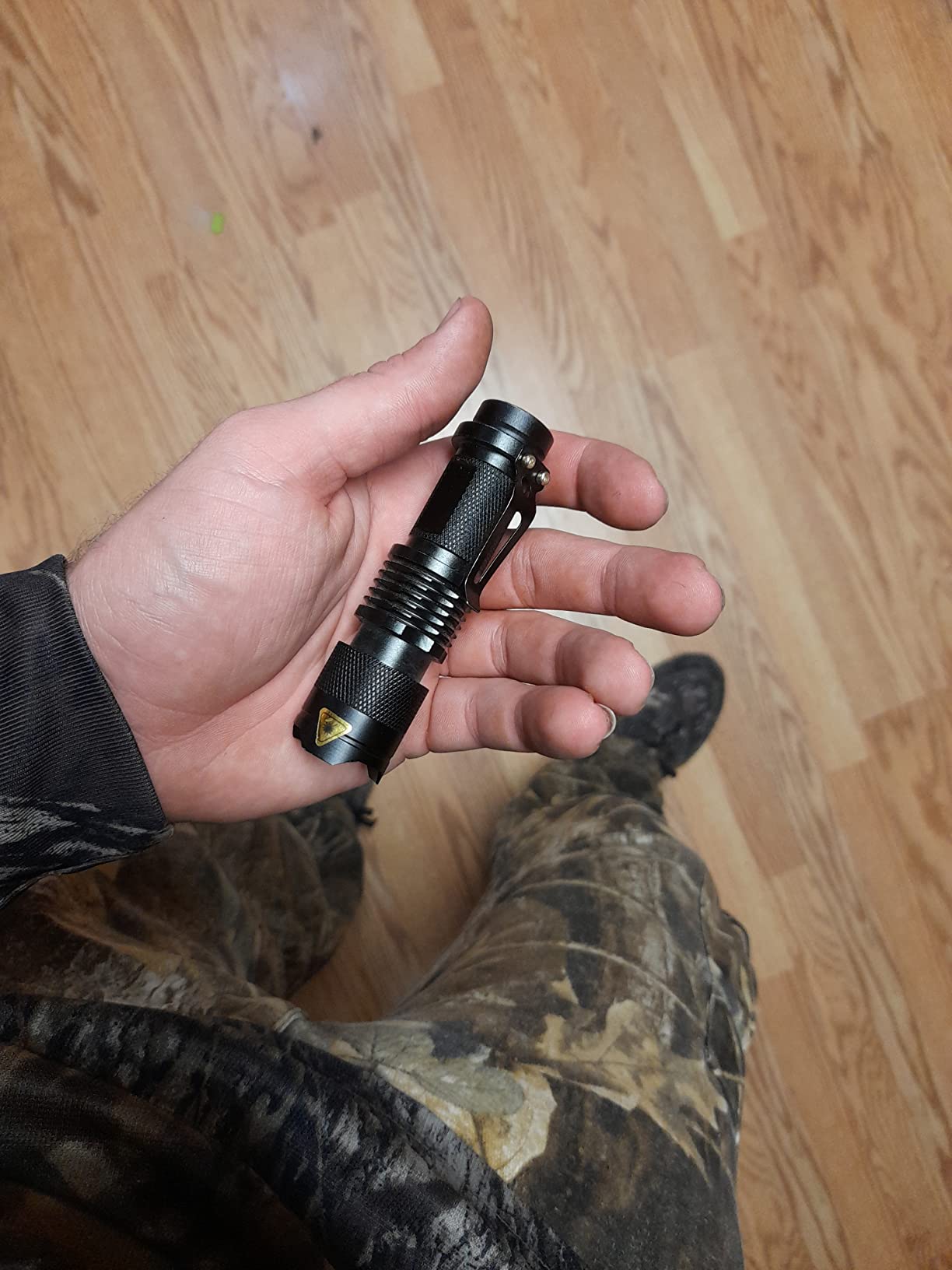
The most repeated criticism is that the light is too bright for the environment it is meant for. Astronomy users consistently describe the single fixed output as too intense for a real star party or for reading a chart, and there is no lower setting to fall back on. That is a design consequence of choosing simplicity over control.
Because it is a multi-pack, quality control is more variable. Some buyers report arriving with torches that flicker or do not work at all, so check all three before you leave. The bodies are not water resistant, and dew plus a plastic switch seal is a combination that only works so many times.
Why three lights is a genuinely different proposition
A single bright torch shared between two people is worse than two dim ones. The etiquette argument is simple: keep your beam pointed down at the ground and below chart level, and your neighbour keeps theirs. Three units make that possible, and the same reasoning applies to a family with children at a dark site.
What to watch out for
Test every torch with your own battery, because multi-packs are where dead cells hide. And if you intend to read charts rather than walk around, the fixed brightness is the limitation that will frustrate you, not the pack size.
7. ROUP 2 Pack Mini Red Flashlight – Three Modes Including Strobe
- Three modes including strobe for signalling in an emergency
- Zoom runs from spot to flood
- Belt clip keeps the light to hand at a star party
- Water resistant body suits outdoor sessions
- AA battery not included
- You must cycle modes to reach the higher setting
- Single battery tube limits output compared with dimmable lights
The ROUP mini is one of only two lights here with a strobe mode, and on a mini form factor that matters more than it sounds. If you are walking back to a car park alone, or you need to attract attention from a group across a dark site, a strobe is visible at distance without the continuous glare of a steady beam.
You get three settings in total: high, low, and strobe. The low setting gives you a usable level for close work, and the zoom adjusts the beam from a narrow spot to a wide flood. Each one is listed at 54 grams, small enough to live in a jacket pocket permanently.
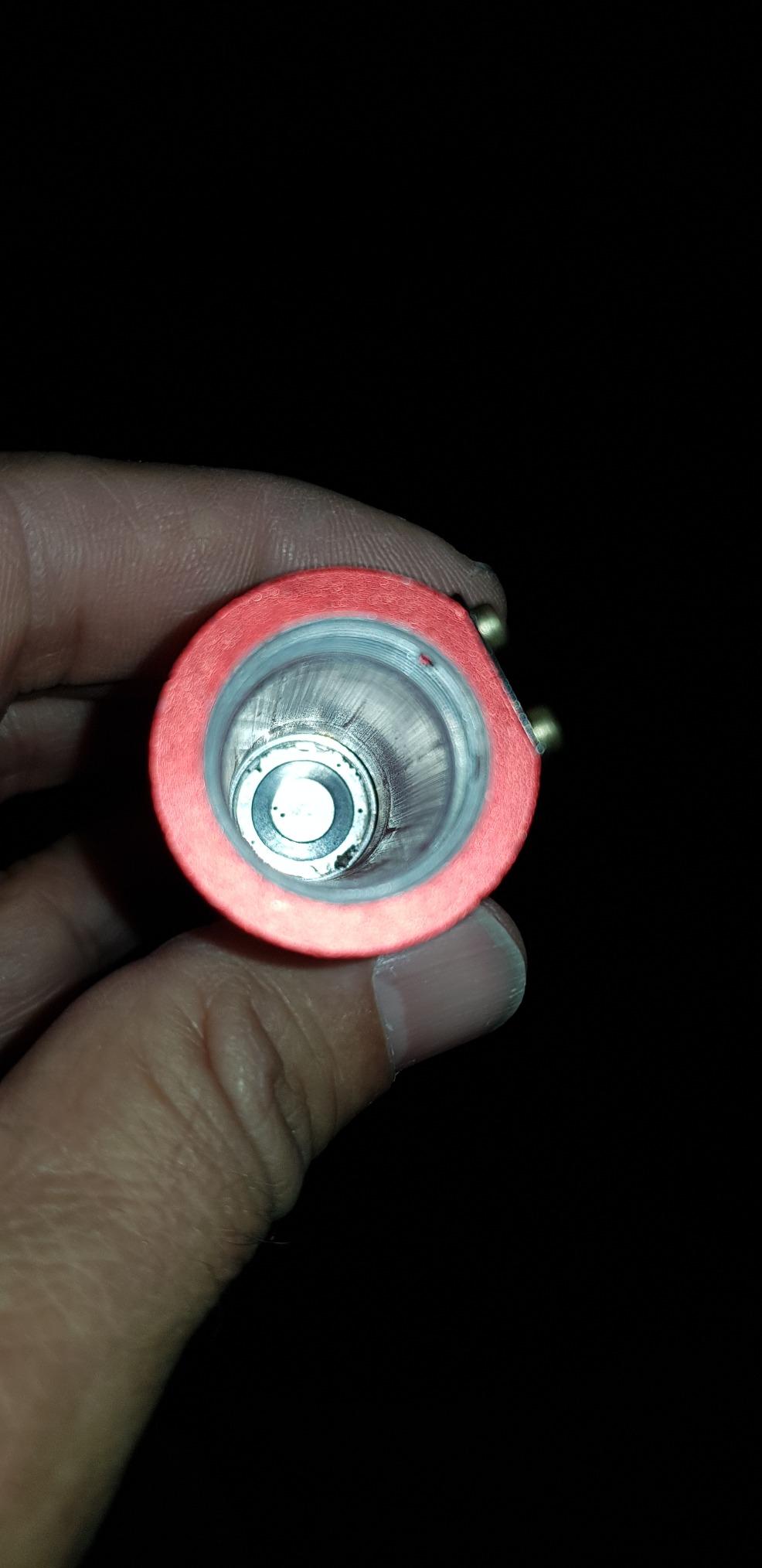
The catch is control. Unlike the Carson, which steps between two fixed levels, you have to cycle through the sequence to reach the setting you want, and that is exactly the fumbling behaviour that red-light users complain about. On an unfamiliar button in the dark, cycling is how you end up on a setting you did not intend.
Construction is better than the price suggests: aluminum alloy, skid-proof, and listed as water resistant, with a belt clip included. The battery is a single AA and is not supplied, which by now is the standard caveat across this entire category.
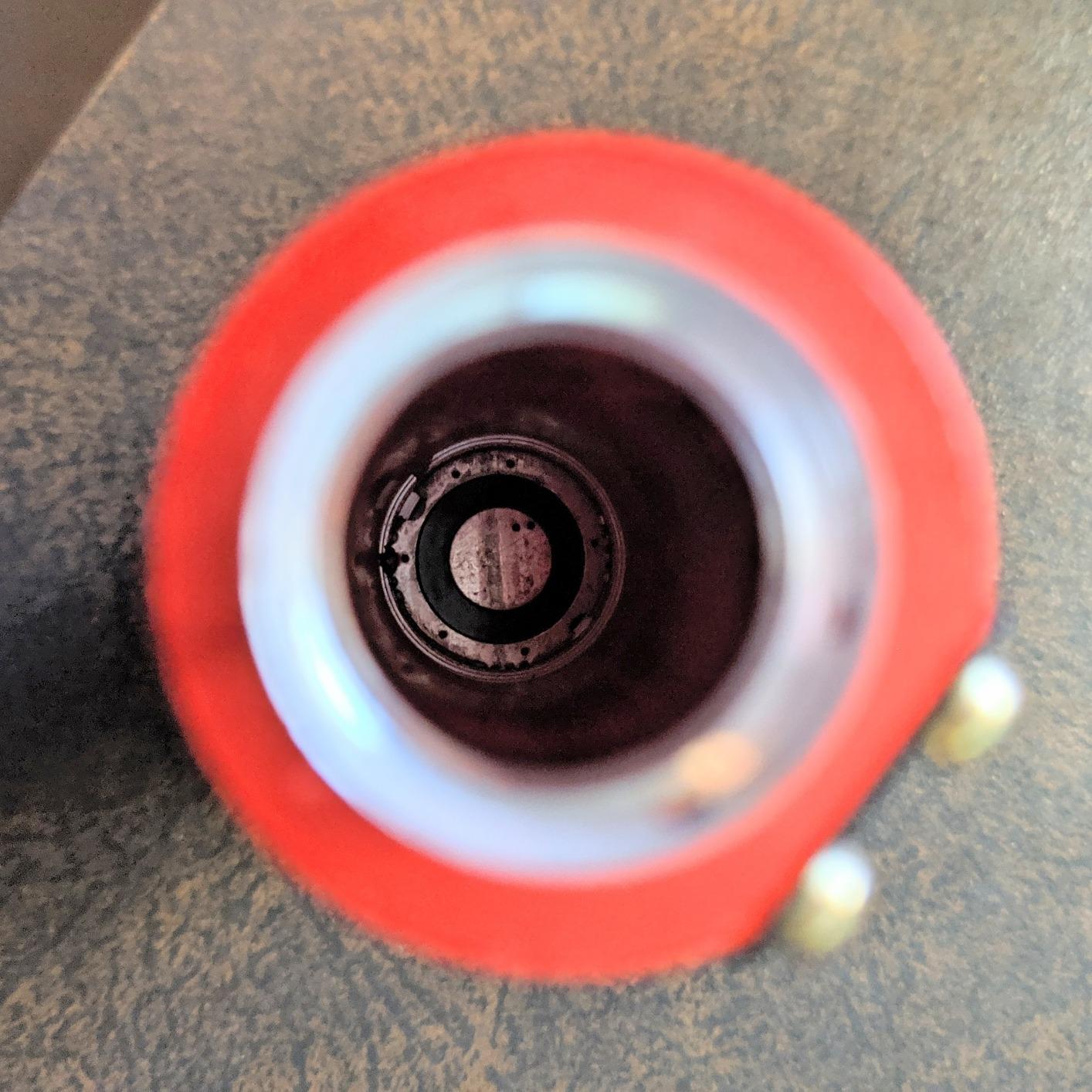
When the strobe is the reason to own it
Walking a dark path to the car alone, or signalling to another group spread across a large field, strobe visibility beats raw lumens. Reviewers highlight this mode specifically. The low setting also covers the ordinary chart case, so the extra modes do not purely cost you simplicity.
Why the mode cycling is a real drawback
The most common complaint is exactly that the modes must be cycled rather than selected directly. In a genuinely dark site with numb fingers, that is when you end up in strobe mode when you wanted low, or lose time cycling to turn the light off. It is a small thing that you will notice every single time.
8. GaiGaiMall Military Red Flashlight 2 Pack – Long Red Reach on AAA Cells
GaiGaiMall Military Red Light Flashlight Single Mode Tactical red Torch for Night Hunting Astronomy Aviation Observation, 2 Pack
- 250 yard red reach
- the longest listed throw in this roundup
- Single mode with no way to hit a white channel
- Water resistant body for field conditions
- Two pack covers a pair of observers
- AAA batteries not included
- Single fixed brightness with no low setting for chart work
- Listed dimensions are not meaningful
- Smaller review base than the leaders
This is the pick if throw distance is what you care about. The listed beam distance is 250 yards, matching the longest reach in this group, and it comes with adjustable focus so you can tighten the spot when you are checking something well away from your setup. Users describe it as a tactical red torch for hunting and astronomy, and the water-resistant aluminum body handles dew and drizzle.
Operation is single mode on and off, so the accidental white flash problem does not exist here. The two-pack format again suits a pair of observers rather than a single user, and the light runs on three AAA cells, which are the easiest batteries on this list to find at any petrol station or grocery shop on the way to a dark site.
Why reach matters more than it sounds
On a large field the difference between a light that reaches thirty metres and one that throws most of the way across a car park is the difference between walking to find your car and walking straight to it. It also helps you locate another group member’s red light without raising your own output. The 4.6 average is the joint highest on the list.
Where the fixed output costs you
There is no low setting. For a beam this strong, that is a real limitation at a chart or an eyepiece case, and it is the reason this is not our top pick despite the strong rating. The listing dimensions are also unusable as a size reference, so check the physical size before committing, and factor in that the AAA cells are not supplied.
9. AuKvi Deep Red 670nm Flashlight – The Enthusiast Deep-Red Pick
AuKvi Deep Red Light Flashlight 670nm Single Mode Long Range Red Hunting Flashlights Torch with Zoomable for Astronomy, Aviation, Night Observation-Black
- Only explicit 670nm wavelength specification in this roundup
- Described as 6061T aluminum rated waterproof and shockproof
- Can be rifle mounted or used handheld
- Zoomable beam on a single 18650 or three AAA
- Single fixed brightness with no dimming
- Single unit rather than a multi-pack
- Batteries not included
- Listing material field conflicts with the stated body alloy
This is the light for people who have already read the wavelength arguments. Where most red torches in this price range make no nanometre claim at all, this one states 670nm, the deepest red output here, which sits furthest from the blue end of the visible spectrum where rod sensitivity peaks. Deep-red enthusiasts on Budget Light Forum specifically look for this figure, and it is the closest thing in this roundup to a real specification.
The build is described as 6061T aluminum, listed as waterproof and shockproof, with the ability to be mounted to a rifle or carried handheld. It runs on a single 18650 lithium-ion cell or three AAA cells, neither included, and it weighs 130 grams.
Buyers like the deep red output, the zoomable lens, and the fact that single-mode operation means nothing to mis-press. The zoom is genuinely useful for the same reason as on the longer-throw lights, letting you shift from lighting a whole area to isolating a distant object.
Again, the weakness is control: one fixed brightness and no dimming. With 670nm output that is more forgivable than with a bright 620nm emitter, since deep red reads as less harsh, but it is still a fixed-output tool. At a listed 130 grams it is also a substantial object to carry for reading a chart.
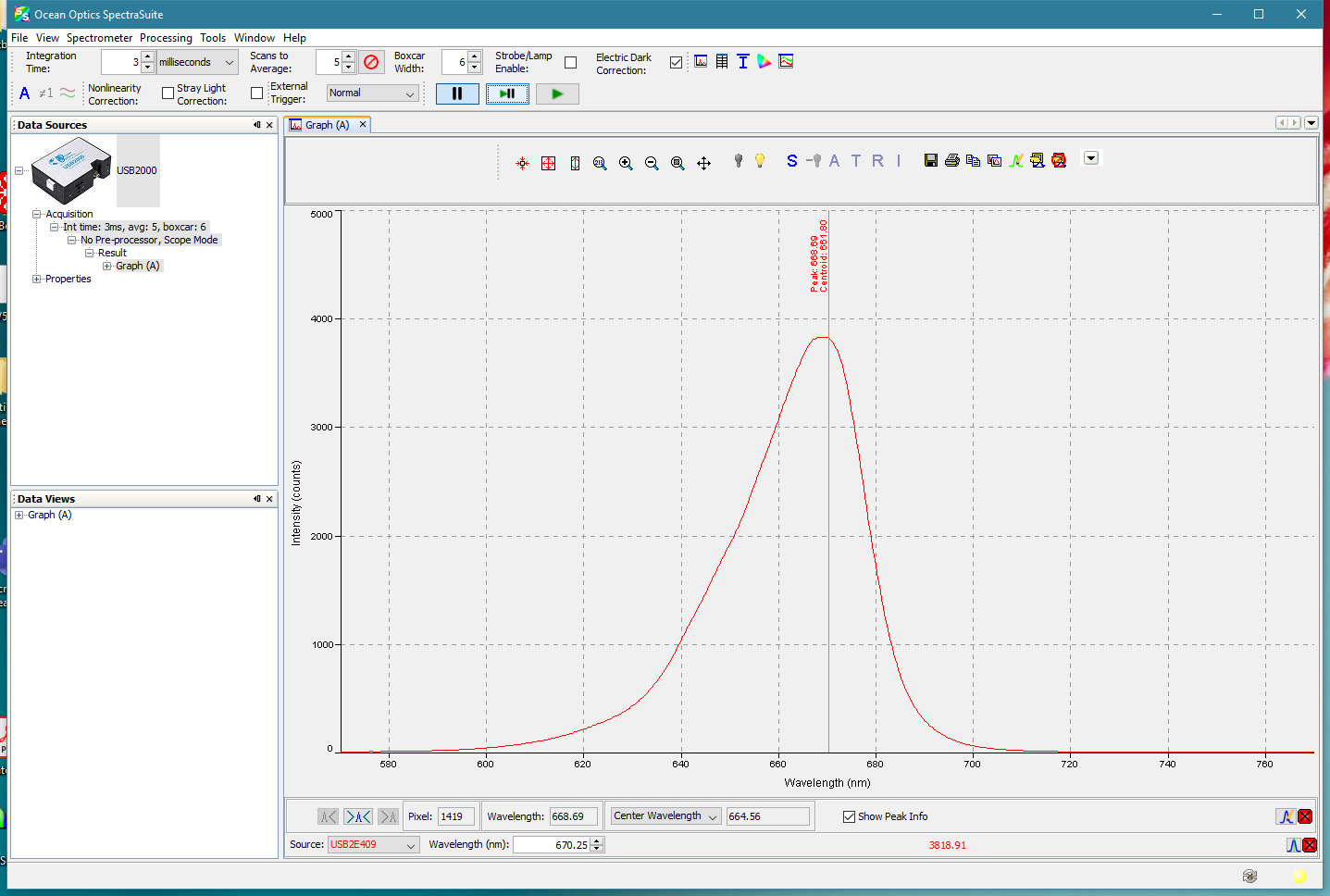
Why wavelength is the deciding spec here
If you care about the physics rather than the shopping, 670nm is the number to look for. Deep-red collectors argue that many lights advertised as red are actually filtered white emitters that leak blue and still cost you adaptation, and the only way to know is a stated wavelength. This is the one light in the roundup where that claim is checkable on the listing.
What you give up for it
A single unit rather than a multi-pack, so it is a personal light only. A fixed output with no low setting for close work. And a heavier, longer body than the small AA tubes it competes with. It is a specialist choice for someone who already knows what they want from a red emitter.
10. RECHOO Rechargeable Red Flashlight – Best for USB-C Recharging
- Built-in rechargeable Type-C battery removes disposable battery hassle
- Low mode runs up to 6 hours per the listing
- IPX4 rated and light at 0.24 lb with clip and lanyard
- Zoom adjusts easily with one finger
- Awkward charging port placement
- About 3 hours of stated runtime overall
- Shorter review history than most competitors
- Low mode is not a true low-output setting for close chart work
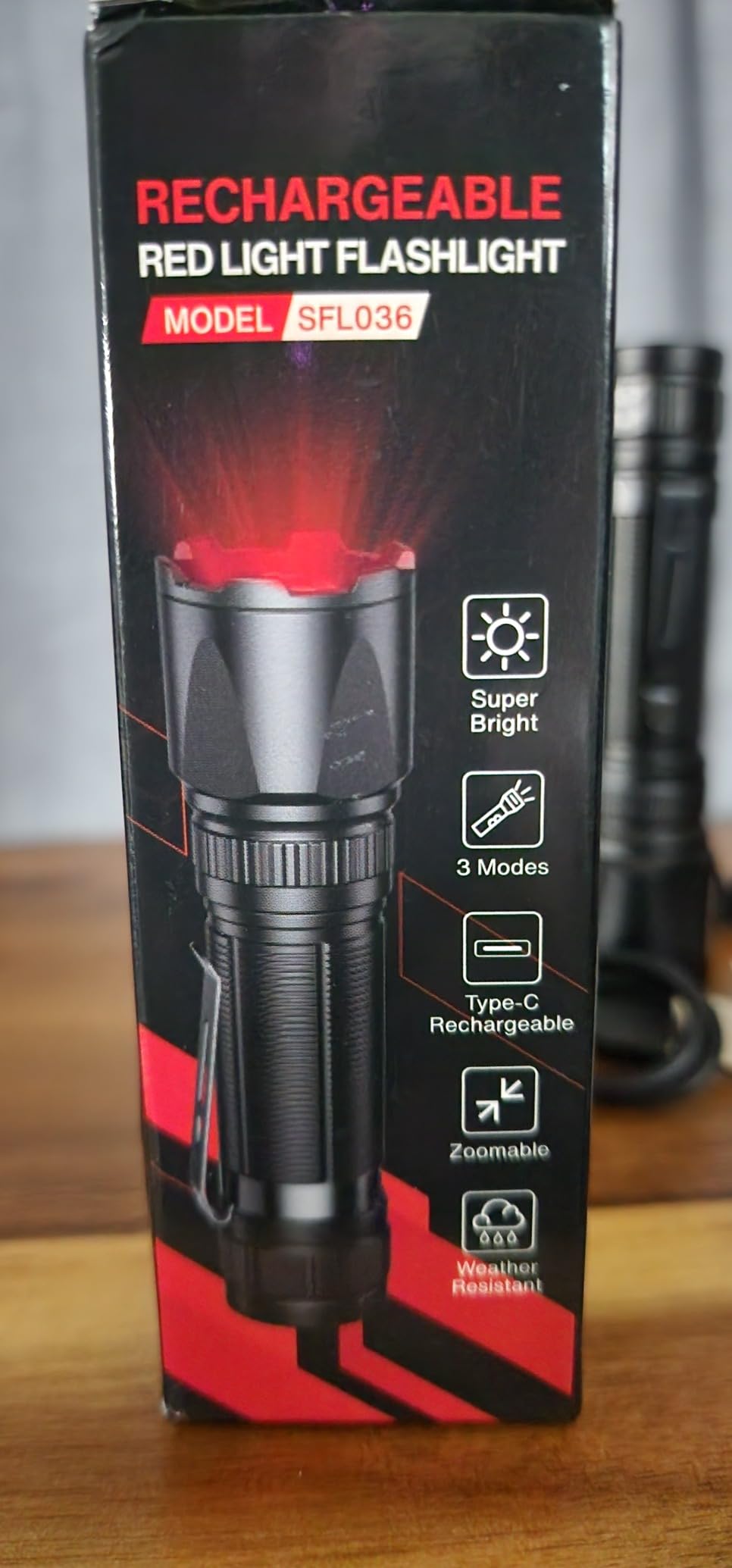
The RECHOO is the only light here with a built-in rechargeable battery, and that changes the logistics of a whole season. No hunting for AA cells at a remote site, no wondering whether the ones in your bag are fresh, and no disposable battery waste across a year of observing. It charges over Type-C with a cable included, alongside a lanyard.
It also offers three modes, high, low and strobe, with adjustable focus and a listed throw of 328 feet. The listing gives up to 6 hours on low with an LED lifespan of 50,000 hours, and the body is IPX4 rated, military-grade aluminum, 4.76 inches long and 0.24 pounds, with a pocket clip.
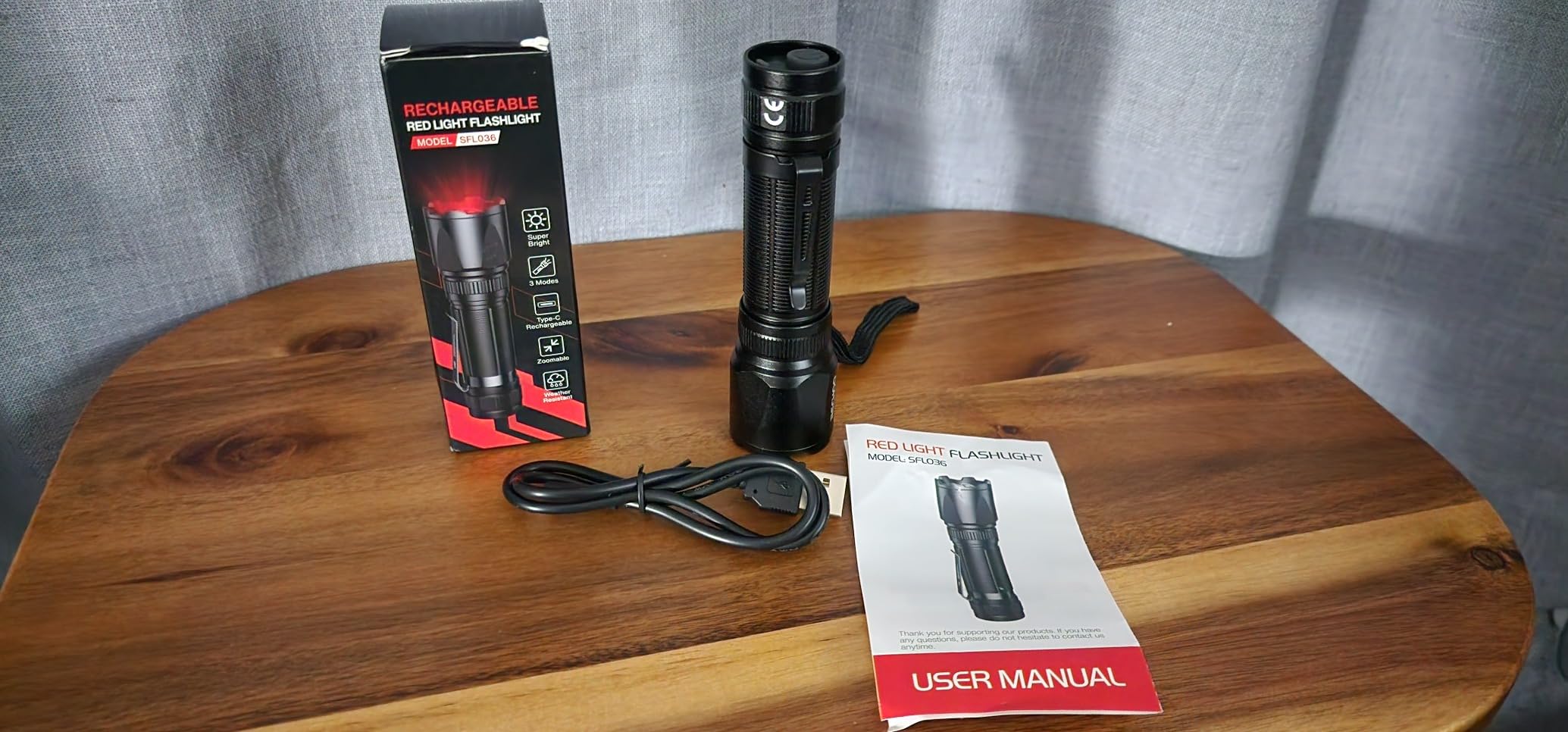
Several reviewers who use it for stargazing do so specifically at sites where only red light is permitted, and they note that the three modes are clearly differentiated rather than two that look the same. The one-finger zoom is a small quality-of-life detail you notice when you are wearing a headband or holding a chart.
The complaints are consistent: the charging port is awkwardly placed, and the overall runtime is around 3 hours rather than the 6 hours quoted for low mode only. At a three-hour figure, that is still enough for most sessions, but it means you will want to top it up before a long winter night rather than during one.
Why recharging beats spare cells for regular observers
If you observe more than a handful of times a year, a cell that tops up from the same cable as your phone removes a recurring small failure. Battery anxiety is a genuine complaint across this product category, and this is the light in the roundup where it is solved rather than managed. The low mode is also the one you will use most, and that is where the 6 hour figure applies.
Where it falls behind the AA lights
The review base is the thinnest here at 166, so you have less long-term history to lean on. The awkward port is annoying, and the practical runtime is closer to 3 hours than the headline suggests. If you prefer to carry loose AA cells as insurance and never think about a charger, the single-mode lights are simpler.
How to Choose a Red Flashlight for Astronomy?
Choose on four things, in this order: whether the emitter is genuinely red, whether you can control the brightness, whether it survives the night, and whether it suits the way you actually observe. Everything else is detail. Here is how to read the specs that matter, and how to tell the claims apart from the marketing.
Wavelength: 620-625nm, 630-660nm, and 670nm
Look for a stated wavelength in nanometres, and treat its absence as information. Rod cells are least sensitive to the longest visible wavelengths, so a deeper red does less to disturb your adaptation than a shallower one.
620-625nm: The common astronomy standard and what most red torches claim. High-purity red at this wavelength is effectively invisible to rods and is the sweet spot for general use.
630-660nm: Slightly deeper, marginally gentler on adaptation, and the range that deep-red enthusiasts point toward when they recommend 660nm emitters in quality hosts.
670nm: The deepest red widely available, sitting furthest from the blue-sensitive peak of rod vision. Harder to see by peripheral vision, which some observers dislike, and the hardest to verify on cheap listings.
The trap is the orange-tinted red. A light that looks warm orange rather than deep red is usually a white LED behind a red filter, and it leaks blue and green light that still knocks your adaptation back. If a listing shows no nanometre figure at all, treat the colour in the photos with suspicion rather than reassurance.
Brightness and dimming: why lumens mislead
The brightest red flashlight is rarely the best one for astronomy, because the whole point is to light a small area without resetting your eyes. Listed lumen figures for red emitters are not directly comparable to white ones and are widely distrusted by reviewers. A 500-lumen red and a 50-lumen red are not on the same scale of usefulness.
What matters instead is control. Stepless dimming beats stepped dimming, stepped dimming beats a single fixed output. A light with one fixed level forces you to choose between too bright for a chart and blocked-out by your own hand. In this roundup, only the Carson RedSight steps between two sensible levels, and none of the ten offer stepless control. That is the honest limitation of this category, and it is worth paying more to find better in a different price band.
Power source and realistic runtime
AA and AAA cells are the most common and the easiest to replace, and every light in this roundup except the RECHOO uses them without supplying any. A USB-C rechargeable light removes battery anxiety for regular observers but gives you a fixed runtime you cannot extend in the field.
Whichever you pick, treat the listed runtime as a high-output figure. Most of these lights will run longer on a low setting than the headline number suggests, but two of them are rated at only 2 hours on a single AA, which is not an all-nighter. A sealed bag of spare cells in your observing bag is the cheapest insurance in this whole guide.
Water resistance, dew, and what IPX4 actually means
Dew is guaranteed at most sites after midnight, and several lights in this roundup have no water resistance rating at all. IPX4 means splash resistant against water from any direction, which covers condensation but not immersion. Only the Honoson and the RECHOO carry a numbered IPX-style rating here, while the two 18650-bodied AuKvi torches are listed as waterproof.
If you sit on the ground for four hours, weight the rating more heavily than you would if the light stayed in your pocket. A rubber gasket and a body that sheds condensation matter more than any lumen figure on the page.
Headlamp versus handheld, by task
A headlamp frees both hands, which is what you want for telescope setup, collimation, and anything where you are carrying a second item. The trade-off is that it is harder to aim precisely at a chart, and it sits on your head where every accidental activation is broadcast. A handheld gives you a beam you can point at the ground and keep below other observers’ sightlines.
Most experienced observers treat these as different jobs rather than competing products. A handheld for reading a chart and finding an eyepiece, and a headlamp for setup and teardown when you need your hands. None of the ten lights here are dedicated headlamps, which is a genuine gap in this roundup, and it is why the Rigel Starlite and the Petzl Tikka keep getting named on Cloudy Nights even though neither appears in our lineup.
Cheaper paths before you buy anything
Two options cost less and are worth considering. A red flip-up filter that clamps over the bezel of a white flashlight is the standard budget recommendation on Candle Power Forums, and it costs a fraction of any light on this list. The downsides are real: output is dim, colour shifts, and fit varies by flashlight. Second, the red night mode built into almost every modern phone will get you through the short walk back to the car, provided you set the screen brightness to its lowest first.
Neither replaces a proper red torch for a full session. They just mean you do not have to solve the problem in a hurry.
Is Red Light Actually Necessary?
The honest answer is that it is one solution, not the only one, and experienced users argue about this openly. On Candle Power Forums, a long-standing position is that red lights are overrated and that a white light dimmed below one lumen is actually better, because it has usable colour and does not need dark adaptation to begin with. Others in the same discussions push back, pointing to military and helmet use where red worked for them.
Both sides have a real point. A sub-lumen white light does read better on a printed chart because your colour vision is intact, and it does not require the 20 minutes of re-adaptation after you switch it on. What it cannot do is be visible to other observers without ruining their night.
Our take is that red is the right default for anything involving other people or long sessions, and that a very dim white light is defensible if you are observing alone and mostly reading charts. If you go that route, the discipline matters more than the colour: dim it before you turn it on, point it below waist height, and keep it off for a few seconds after use.
Star Party Etiquette: One Red Light Per Observer
One light per observer is the rule that experienced observers care about most, and it is a courtesy rather than a technical requirement. The guidance that circulates on Cloudy Nights is blunt: red headlamps are solo observing lights, and they do not belong at a star party with multiple observers. That is about the people around you, not about you.
The reasoning is simple. Your dark adaptation resets when light hits your eyes, and so does everyone else’s within the beam’s path. A bright torch at a crowded field ruins the view for dozens of people for the 20 to 30 minutes it takes them to readapt, which is why the multi-packs in this roundup are genuinely useful rather than just a bulk discount.
Practical rules that keep everyone happy: keep the beam pointed down at the ground or below chart level, never sweep the horizon, avoid pointing at another observer’s eyepiece, and if you must use white light, do it briefly and away from the group. If you lose your light, walk back to your car rather than searching the grass with anything bright.
Frequently Asked Questions
Why do astronomers use a red flashlight for stargazing?
Red light sits at the long-wavelength end of the visible spectrum, where rod cells are largely insensitive. A white torch floods those rods and resets your dark adaptation, which takes 20 to 30 minutes to recover from. A red beam lights the same star chart or eyepiece case while leaving your ability to see faint deep-sky objects intact.
Which red light flashlight is best for night vision?
The best red flashlight for night vision is a true red-emitter light with a low brightness setting, ideally stepless dimming. Among the ten we compared, the Carson RedSight comes closest because its lower of two brightness settings is genuinely usable for close chart work, while most others offer a single fixed output you cannot reduce.
What are red light flashlights good for?
Red flashlights are good for reading star charts and atlases, finding dropped eyepieces and cables around a tripod, navigating an unfamiliar observing site on foot, and walking back to the car. Because animals are far less disturbed by red than white light, the same lights also serve for wildlife observation and night hiking.
What is the brightest red flashlight available?
The brightest is not the best choice for astronomy. High red output measured in hundreds of lumens is bright enough to reset dark adaptation for you and everyone nearby, so brightness alone is a poor guide. What matters is control: a light with a usable low setting beats a much stronger fixed-output light for almost every stargazing task.
How do I choose a red flashlight for astronomy?
Check five things. First, that the listing states a wavelength of 620-630nm or deeper rather than a filtered white emitter. Second, that you can dim the beam. Third, whether it is water resistant for dew. Fourth, headlamp or handheld, depending on whether you need both hands. Fifth, whether batteries are included, since most do not include them.
Final Verdict on the Best Red Flashlights for Stargazing
The WAYLLSHINE single mode red flashlight is the pick we would hand to most people. It has the largest review base we found, at more than 6800 ratings, an aluminum body, a 150 yard zoomable beam, and one switch that cannot produce a white flash in the dark. For most observers starting out, that combination of reliability and simplicity wins.
Read a chart often and you will want the Carson RedSight instead, because its lower brightness setting is the only genuinely usable low output in this group. For a group, take the three-pack; for a dew-heavy all-nighter, the water-resistant Honoson; for walking a large field, the 500 lumen AuKvi; for a stated 670nm emitter, the deep red AuKvi; and for no battery logistics at all, the USB-C RECHOO.
Whichever you choose, buy a spare set of cells the same day, check that it is genuinely red rather than filtered white, and keep the beam pointed down. That last habit is worth more to the people observing next to you than any specification on the listing. Our other red-light coverage, including red light therapy masks, covers a different use entirely.
Dark skies are worth protecting. The best red flashlights for stargazing in 2026 are the ones that let you read a chart without paying twenty minutes for it.