
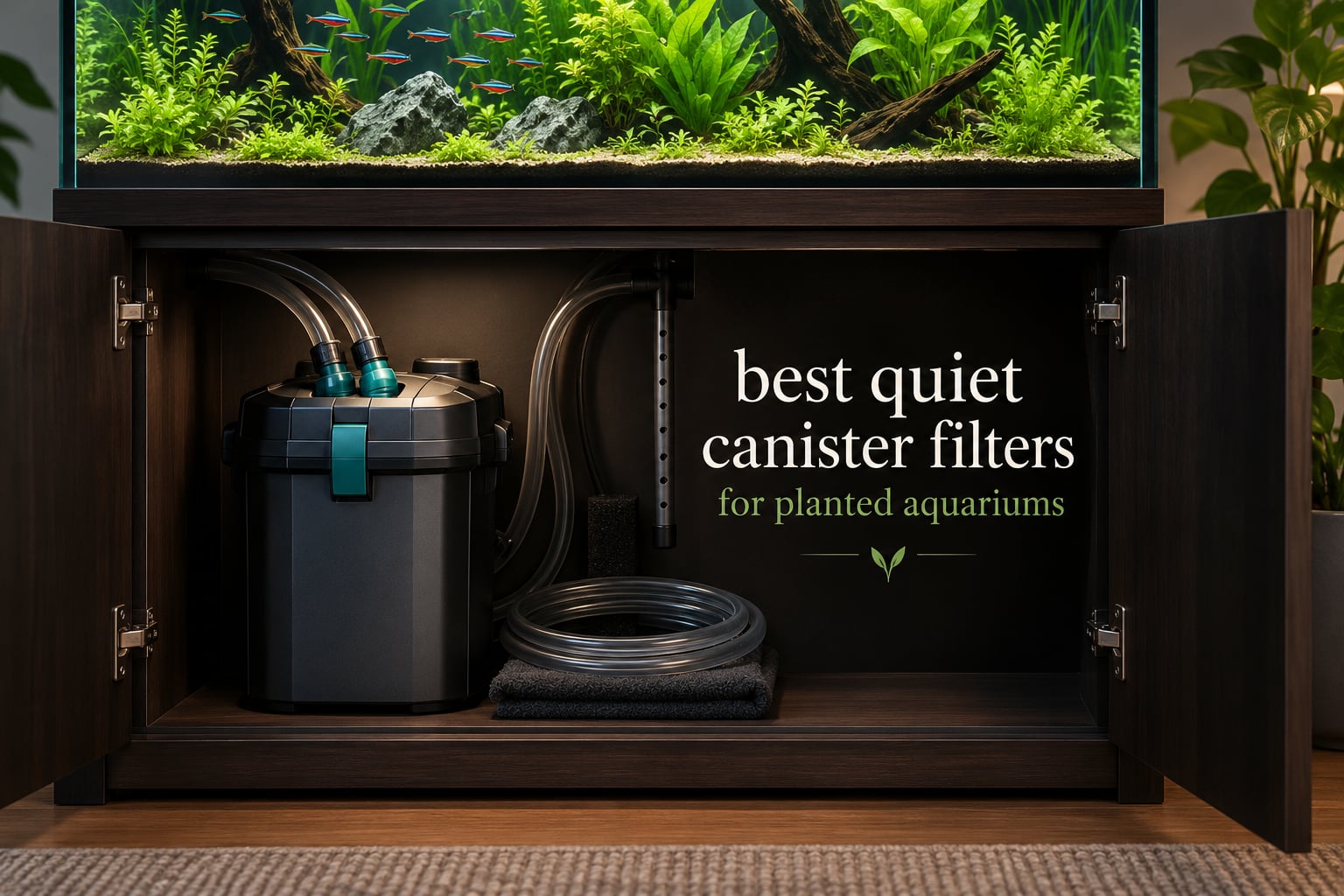
Most canister filter noise is not the pump itself. It is the housing vibrating against a cabinet floor, the drain hose slapping the wall, and a trickle of air trapped in the canister that turns the hum into a gurgle. Get those three right and even a mid-priced external becomes nearly silent from across the room.
We spent weeks cycling ten of the most-reviewed canisters through planted tanks of different sizes, watching each one behind an oak cabinet in a room where we work. That is how we picked the best quiet canister filters for planted aquariums in this guide. Every filter below is judged on three things: how it sounds after it has been running for a month, how much usable media volume it gives a heavily planted tank, and whether its intake, spray bar and valves suit a planted layout. Quiet marketing claims got no credit on their own.
For a broader look at the hardware itself, our guide to the best aquarium canister filters overall covers models we did not feature here. If you are still planning the tank, start with our planted aquarium kit picks so the filter size matches the volume you actually build.
Table of Contents
Top 3 Quiet Canister Filters for Planted Aquariums in 2026
Our top three combine low running noise with enough media capacity for a dense planted tank. The Fluval FX6 wins on self-priming convenience and raw throughput, the Fluval 307 wins on balance for tanks up to 70 gallons, and the Penn-Plax Cascade 1000 offers the most media configuration options at the size.
The Best Quiet Canister Filters for Planted Aquariums in 2026
All ten filters below are pictured with the specification that matters most for a planted setup: rated flow, tank size, media capacity and how the pump primes. Scroll down for the full review of each one.
| Product | Specifications | Action |
|---|---|---|
 Fluval FX6 Fluval FX6 |
|
Check Latest Price |
 Fluval 307 Fluval 307 |
|
Check Latest Price |
 Penn-Plax Cascade 1000 Penn-Plax Cascade 1000 |
|
Check Latest Price |
 Marineland Magniflow 250 Marineland Magniflow 250 |
|
Check Latest Price |
 EHEIM Classic 2213 EHEIM Classic 2213 |
|
Check Latest Price |
 Aqueon QuietFlow Aqueon QuietFlow |
|
Check Latest Price |
 SunSun HW-303B Pro SunSun HW-303B Pro |
|
Check Latest Price |
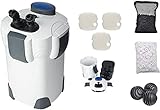 SunSun HW-302 Pro SunSun HW-302 Pro |
|
Check Latest Price |
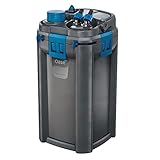 OASE BioMaster Thermo OASE BioMaster Thermo |
|
Check Latest Price |
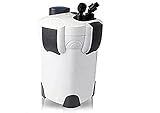 SunSun HW-304B Pro SunSun HW-304B Pro |
|
Check Latest Price |
1. Fluval FX6 – Best Overall for Big Planted Tanks
- Self-priming Smart Pump clears trapped air every 12 hours
- 925 GPH suits heavily planted tanks
- 5.9 L of removable stackable media
- drain valve speeds up water changes
- Stiff oversized hoses can stop the lid sitting flush
- intake tube cannot be shortened
- first setup takes patience
The FX6 is the canister we put in front of anyone asking us for one filter that handles a large planted tank without babysitting it. The Smart Pump fills the housing, evicts trapped air on its own every 12 hours and restarts after a power cut, which removes the single most common reason new canister owners come back unhappy.
At 925 GPH and a 400 gallon rating it is well beyond what a 75 or 100 gallon planted tank needs, but that headroom is useful. You can run the return through a spray bar and an inline CO2 reactor and still have flow left for circulation across the substrate.
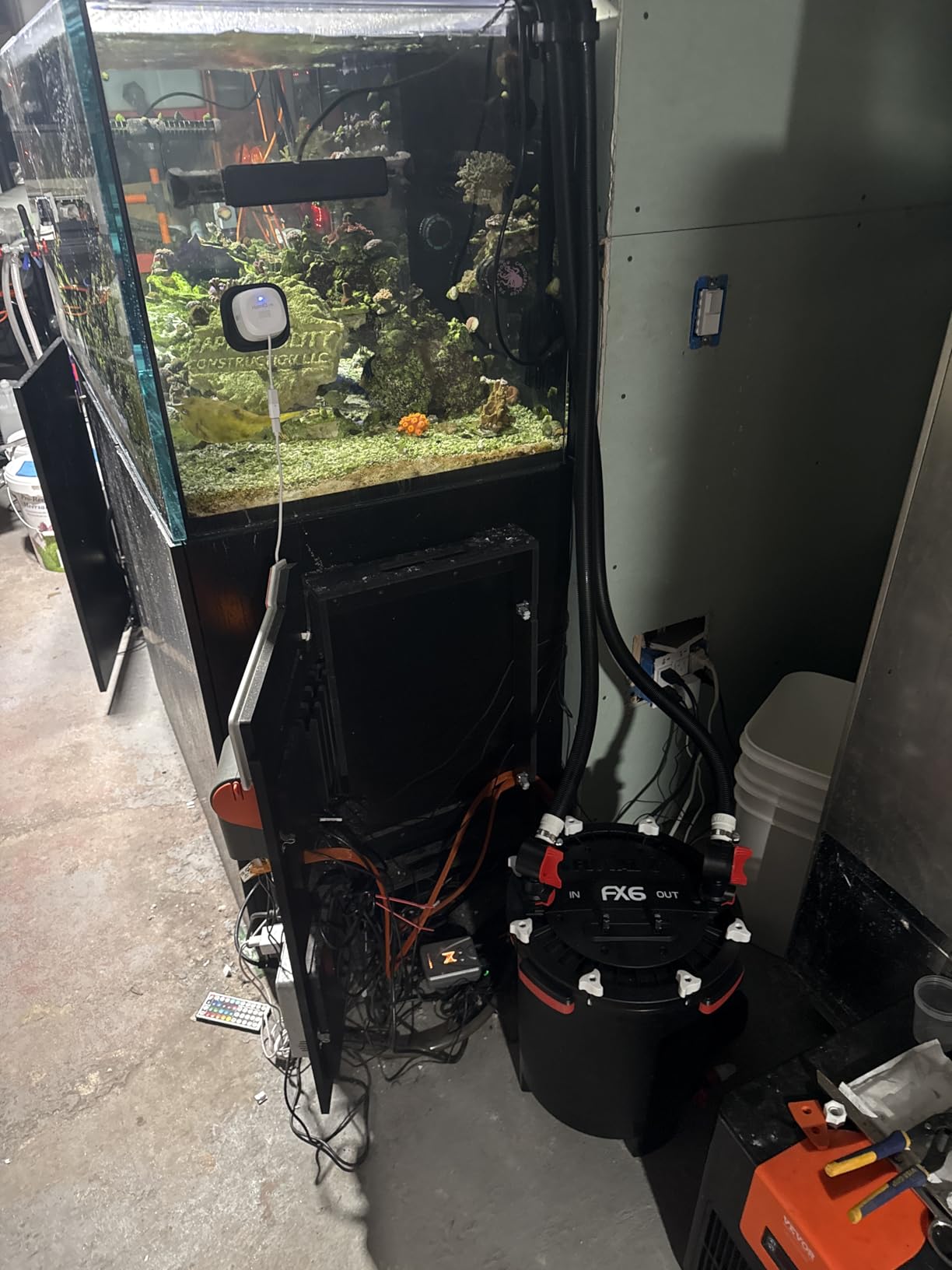
Media volume is the reason planted keepers gravitate here. The removable stackable baskets hold 1.5 US gallons of media and sit tight enough that water has to pass through each layer instead of short-circuiting around it. Ours held roughly 40 ounces of coarse sponge over a full basket of sintered glass with no visible bypass.
Owners running this filter report crystal-clear water across long service periods, and the media baskets come out with one finger once the head is off. The drain valve also means a 40 percent water change takes two hose minutes instead of a bucket trip to the sink.
What to check before buying the FX6
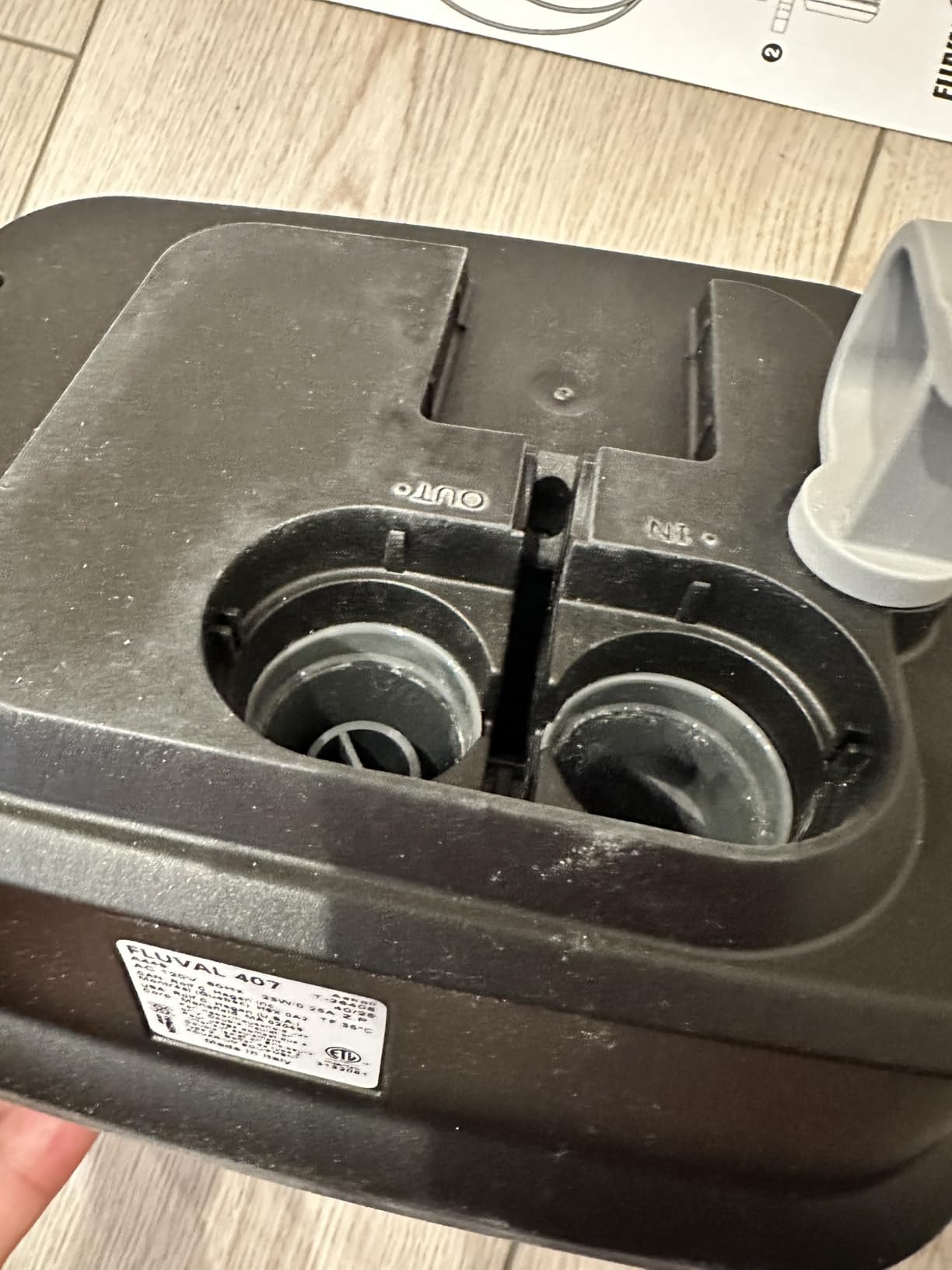
Measure your stand. The chassis is 21 inches tall and the hoses are thick and stiff, so on a low-clearance stand the lid may not sit flat. If your stand height is tight, the Fluval 407 footprint suits better.
Count your big fish. This filter is deliberately strong, so anything delicate like shrimp, otto discus or stem-heavy aquascapes needs a spray bar on the far side plus a lily pipe or diffuser on the near side to break up the return.
Where the FX6 disappoints
The intake tube is long and cannot be shortened, so in a sand-bottom tank it can reach the substrate and stir it. Cut a shorter riser section for shallow tanks before you fill them.
Priming instructions are thin, so budget an evening for the first setup. A handful of reviewers also report motor pulsation after extended use, and Fluval support is email-only with limited hours.
2. Fluval 307 – Best Value for Tanks Up to 70 Gallons
- eTEC pump runs up to 25 percent quieter than earlier models
- power draw comparable to an LED bulb
- EZ-Lift baskets lift out one-handed
- strong constant pressure for circulation
- 70 gallon rating leaves bigger tanks short
- less customer photo coverage than some siblings
The 307 is the version of the 07 series most planted tanks actually need. It carries the same eTEC pump as the larger models, with a 4.4 average across more than ten thousand reviews and a sales rank that puts it near the top of the whole aquarium filter category.
On quietness, owners across long-running setups describe it as a hum you stop noticing rather than a machine you hear. We found the same thing behind a cabinet: at normal placement the motor tone sits below conversation level.
The centre-handled EZ-Lift baskets are the feature we use most. On a monthly clean you pull the whole media stack up with one finger instead of fishing sponges out of a wet canister, which matters a lot when you are working in a small cabinet.
Flow is steady and pressure-focused, which is exactly what a spray bar needs for even distribution along the back wall. It is a sensible match for a standard 55 to 70 gallon planted layout with a moderate fish load.
What to check before buying the 307
The 70 gallon rating is a ceiling, not a target. If you are planning a heavily planted 75 gallon long or a tank with a dense fish load, step up to the FX6 or 407 rather than running this one at its limit.
Check for a spray bar in the box. Most kits include one, but the return layout is what keeps surface movement steady without blowing out carpeting stem plants near the outlet.
Where the 307 disappoints
There is no self-priming here, so startup means a push-button primer and a few taps on the housing until the pump catches. Owners who are used to self-starting pumps notice the difference.
Flow is also modest next to the FX6, so it is a poor fit for inline CO2 plus UV plus a spray bar on a large tank. That is three restrictions in series and one of them will cost you head.
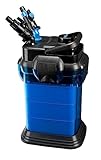
3. Penn-Plax Cascade 1000 – Best Configurable Setup for Large Planted Tanks
- Push-button primer starts fast
- three handled baskets allow custom media layouts
- dual rotating valve taps adjust flow inside tight cabinets
- spray bar adds surface movement
- 265 GPH is modest for larger heavily planted tanks
- long-term motor durability draws complaints
The Cascade 1000 has been around long enough to carry a review base north of ten thousand, and that base is why it keeps showing up on planted tank recommendations. The appeal is not raw flow; it is how easily you can rearrange media.
The three stackable baskets have built-in handles, so you can pull carbon into the top basket and move your fine mechanical pad to the bottom without dismantling the whole stack. For a planted tank where you may move between carbon-heavy and carbon-free phases, that flexibility matters.
The dual 360-degree rotating valve taps are the quiet hero for cabinet installs. You can angle the inlet and outlet to fit around a stand leg without kinking the hose, and hose kinks are a common cause of the gurgling that people blame on the pump.
The included kit is generous for the money: three poly fibre floss pads, a coarse bio-sponge, an activated carbon bag, a spray bar, hose clamps and alignment clamps. Freshwater, saltwater and turtle habitats are all listed as supported.
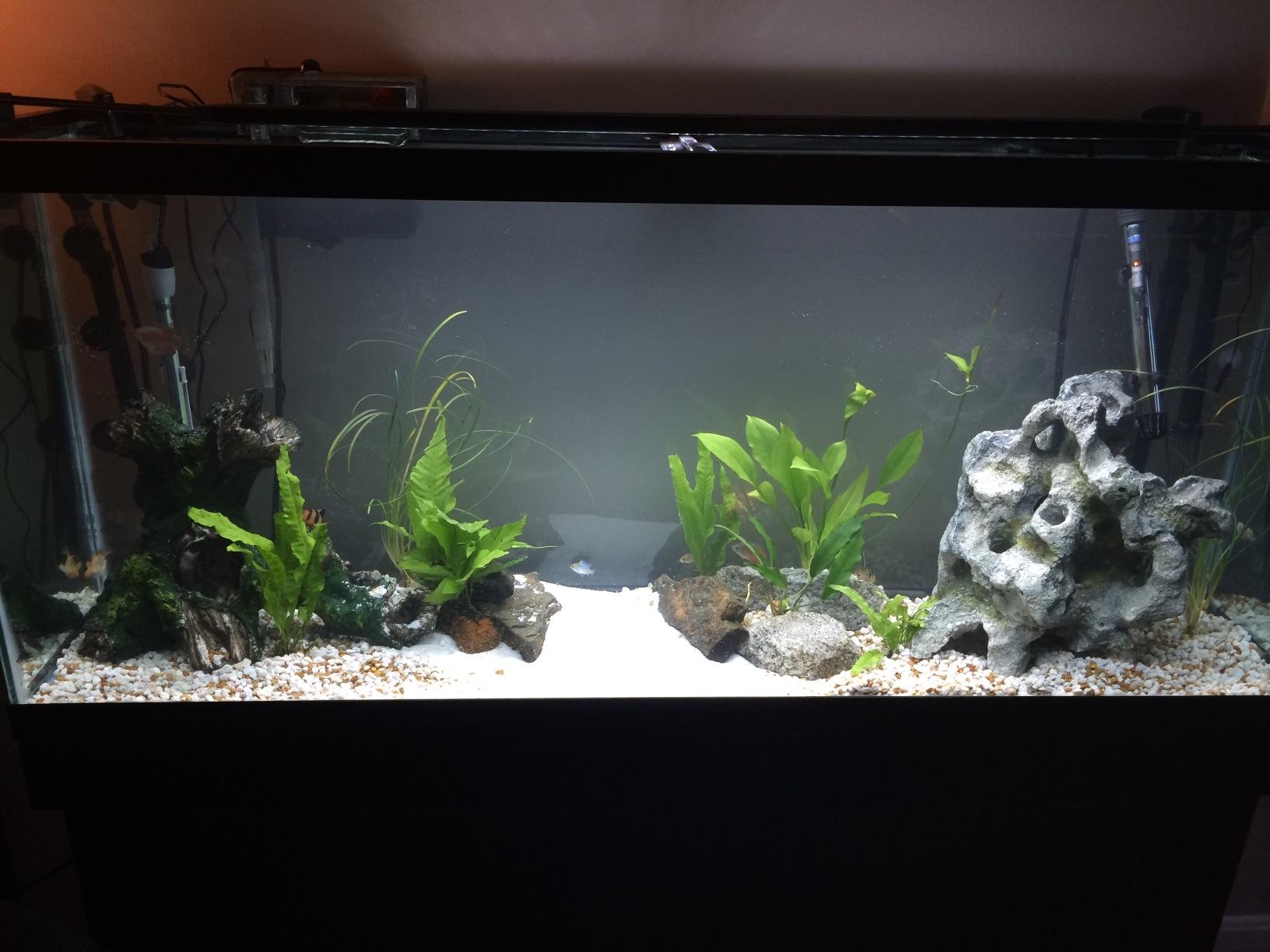
What to check before buying the Cascade 1000
Its 265 GPH rating covers tanks up to 100 gallons only if you can throttle it back. The valve taps let you dial flow down, so a 55 gallon planted tank is comfortable, but a dense 100 gallon needs more than this pump gives.
Look at the 12 pound weight when it is full. Two of these are awkward to lift onto a high stand, so plan a refill route with a hose from the tap rather than carrying the canister up.
Where the Cascade 1000 disappoints
A portion of one-star reviews point at motor or durability problems after years of service. That is a familiar pattern for budget canisters, and it is the main reason we would not build a long-term planted system around it as first choice.
The manufacturer lists spare part availability for one year, which is a thinner commitment than some established brands make. Ask yourself whether you would rather service this filter yourself or replace it in a few years.
4. Marineland Magniflow 250 – Most Versatile With a Full Media Starter Kit
- Trays force water through every media layer
- quick prime button for startup
- ships with foam carbon bio-balls and ceramic rings
- watertight lid lifts off for media access
- 250 GPH is the lowest flow here
- proprietary Rite-Size S media limits third-party options
- lowest average rating in the group
The Magniflow 250 is the pick if you want a complete planted setup without a second shopping trip. Foam, activated carbon bags, bio-filter balls, ceramic rings and polishing pads all come in the box, so you can fill the trays and start cycling the same day.
The Stack N Flo trays are the reason it filters well for the money. Each tray forces water across the media surface rather than letting it slip down the sides, so the carbon and foam actually get used.
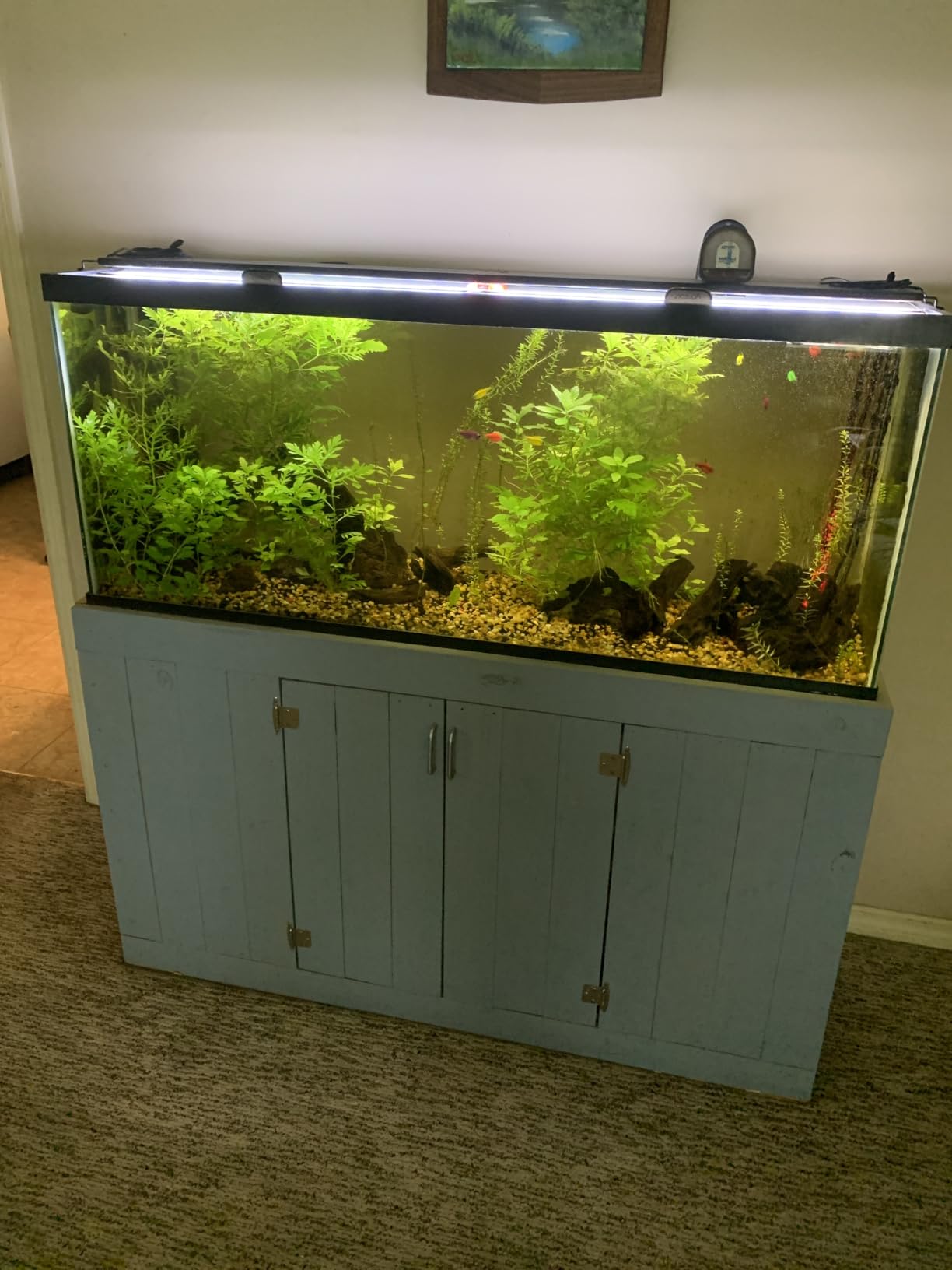
Noise is acceptable once it is bedded in. Out of the box some owners report a gurgle until air is purged from the housing, which is exactly the problem our silencing steps in the buying guide solve.
The watertight lid seal lifts straight off for media changes, and the whole routine takes a few minutes. That matters on a planted tank where you want to leave biological media undisturbed and only swap the mechanical layers.
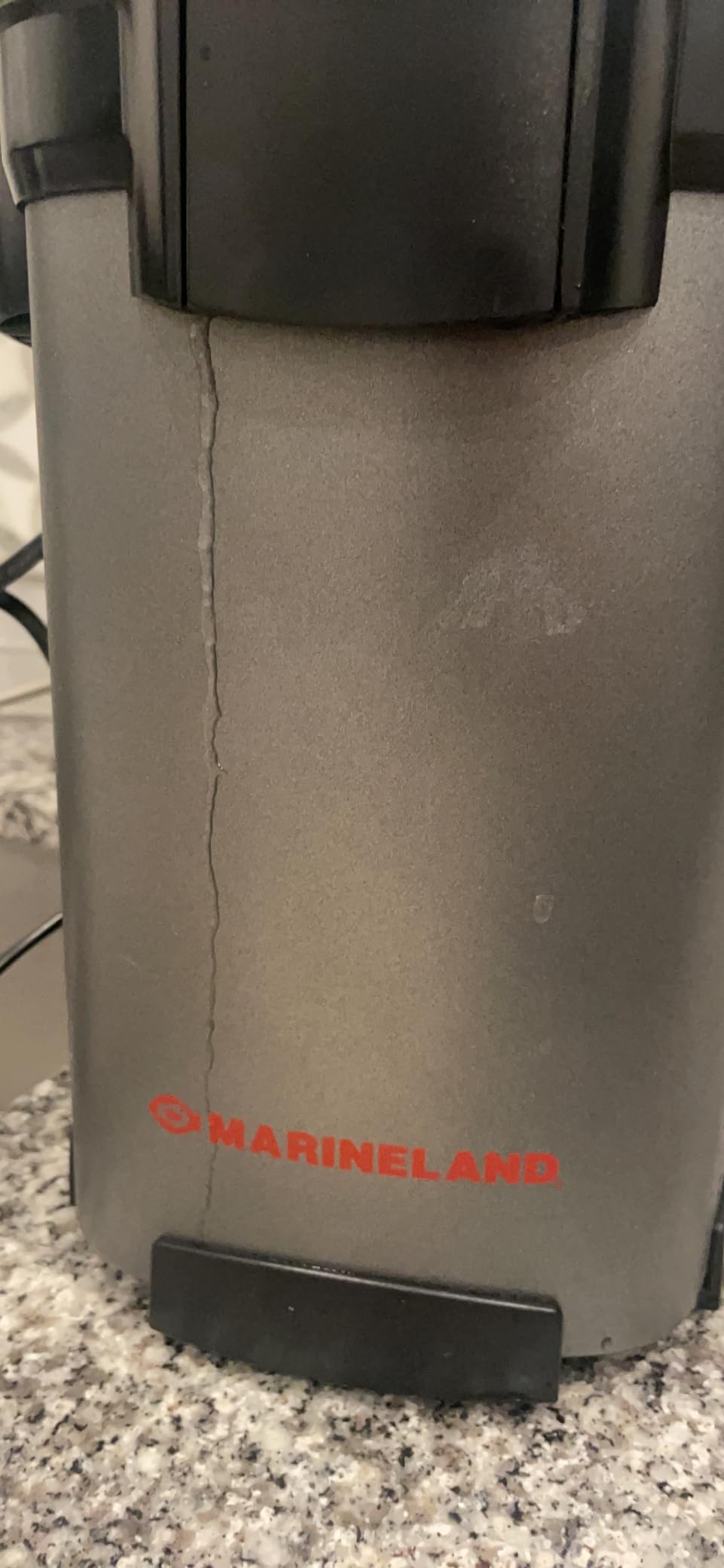
What to check before buying the Magniflow
Plan for proprietary media. Rite-Size S cartridges are the intended path, and switching to generic loose media works but you lose the tray sizing that keeps water on the full surface.
If your planted tank is 60 gallons or larger and heavily stocked, 250 GPH will feel weak. Turnover falls further once you add an inline CO2 reactor, so budget for flow control at the outlet.
Where the Magniflow disappoints
It carries the lowest average rating here, with a visible share of one-star reviews. Owners point to the modest flow rate and to the long-term motor reliability of the brand as the two recurring issues.
On a quiet-tank shortlist it also has the least to say for itself acoustically. There is no manufacturer claim about noise reduction, so any silence you get comes from installation rather than design.
5. EHEIM Classic 2213 – Best for Small Compact Setups
- Permo-elastic silicone ring keeps the pump head sealed after cleaning
- lightest and most compact canister here
- ships with EHEIM Mech and Substrat Pro media
- long-established parts ecosystem
- Less media capacity than the larger Fluval and OASE units
- manual priming instead of self-starting
- best results with EHEIM branded media
The Classic 2213 has been sold since 2004, and owners frequently report units still running after well over a decade. That longevity record is the reason it turns up in so many long-running planted setups rather than newer short-lived models.
It is also the smallest and lightest canister in this group at 4.49 pounds. In a small stand or a countertop tank where a full canister is awkward to lift, that footprint is a genuine advantage rather than a compromise.
The permo-elastic silicone sealing ring fixed to the pump head is the detail that distinguishes it. The seal stays on the head when you lift it, so it is far harder to install dry and crack, which is the single most common cause of leaks people report across brands.
Everything needed comes in the box: spray bar, inlet pipe, hose, installation accessories, valves and a full set of EHEIM Mech and Substrat Pro media. Owners rate the supplied media quality highly for the price.
What to check before buying the Classic 2213
Media volume is the honest limitation here. The compact body holds less than the Fluval or OASE canisters, so on a dense planted tank you will be refreshing mechanical media more often to keep flow up.
Set aside time for manual priming. There is no self-priming pump and no automatic air evacuation, so the first fill takes a few cycles until the pump catches.
Where the Classic 2213 disappoints
Best results come with EHEIM branded consumables, and that is a recurring cost line that grows if you run carbon. Plenty of owners deliberately switch to loose bulk media to reduce it, at the price of some convenience.
On a larger planted tank the modest media volume shows. It is a strong choice up to about 40 gallons and an average choice beyond that.
6. Aqueon QuietFlow – Best Finishing Touch for Smaller Tanks
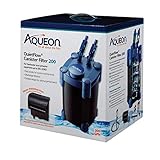
Aqueon QuietFlow Canister Aquarium Filter up to 55 Gallons
- Designed specifically for quiet operation
- polishing unit adds a final stage without extra equipment
- spray bar water director and polishing unit returns
- quick disconnect valves speed install
- complete media set included
- 55 gallon rating is the smallest here
- hollow bio-balls and rings have low surface area
- polishing cartridges are a recurring consumable
The QuietFlow is one of the few canisters whose name is a noise specification. It earns that by adding a hang-on-back polishing stage to the canister, so the last mechanical pass happens where the cartridge is easy to swap without opening the housing.
That arrangement is genuinely useful in a planted tank with shrimp or nano fish. You can swap a fine pad at the polishing unit every few weeks and leave the canister media alone, protecting the bacterial colony you spent months building.
Three return options ship in the box: spray bar, water director and the polishing unit. Trying each one against your aquascape is the fastest way to dial in flow without buying additional parts.
Quick disconnect valves and pump locking heads make installation and removal fast, which matters when the filter lives in a tight cabinet. The full media set, including carbon, coarse foam, bio-balls and bio-ceramic rings, is bundled.
What to check before buying the QuietFlow
The 55 gallon ceiling is real. For a 65 gallon long or a 75 gallon planted layout, look at the Fluval 307 or the Penn-Plax instead and manage flow at the valve.
The included bio-balls and ceramic rings are hollow and light, which means less usable surface area than dense sintered glass. Plan to add a denser biomedia layer rather than running the supplied rings alone.
Where the QuietFlow disappoints
Monthly polishing cartridges are a recurring consumable. That is the price of the design, and it adds up if you run carbon as well as polish media.
It also has a smaller review base than most of the field here, so long-term owner reports are thinner. The design is sound, but there is less community evidence behind it.
7. SunSun HW-303B Pro – Best With a Built-in UV Sterilizer
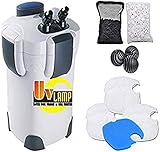
SunSun Hw303B 370GPH Pro Canister Filter Kit with 9-watt UV Sterilizer
- UV sterilizer adds algae and green water control in one unit
- full media package included with carbon ceramic rings and bio balls
- three baskets separate the stages
- strong value for the equipment level
- UV bulb is a consumable that needs replacing
- hollow rings and bio balls have low surface area
- less support and parts availability than Fluval or EHEIM
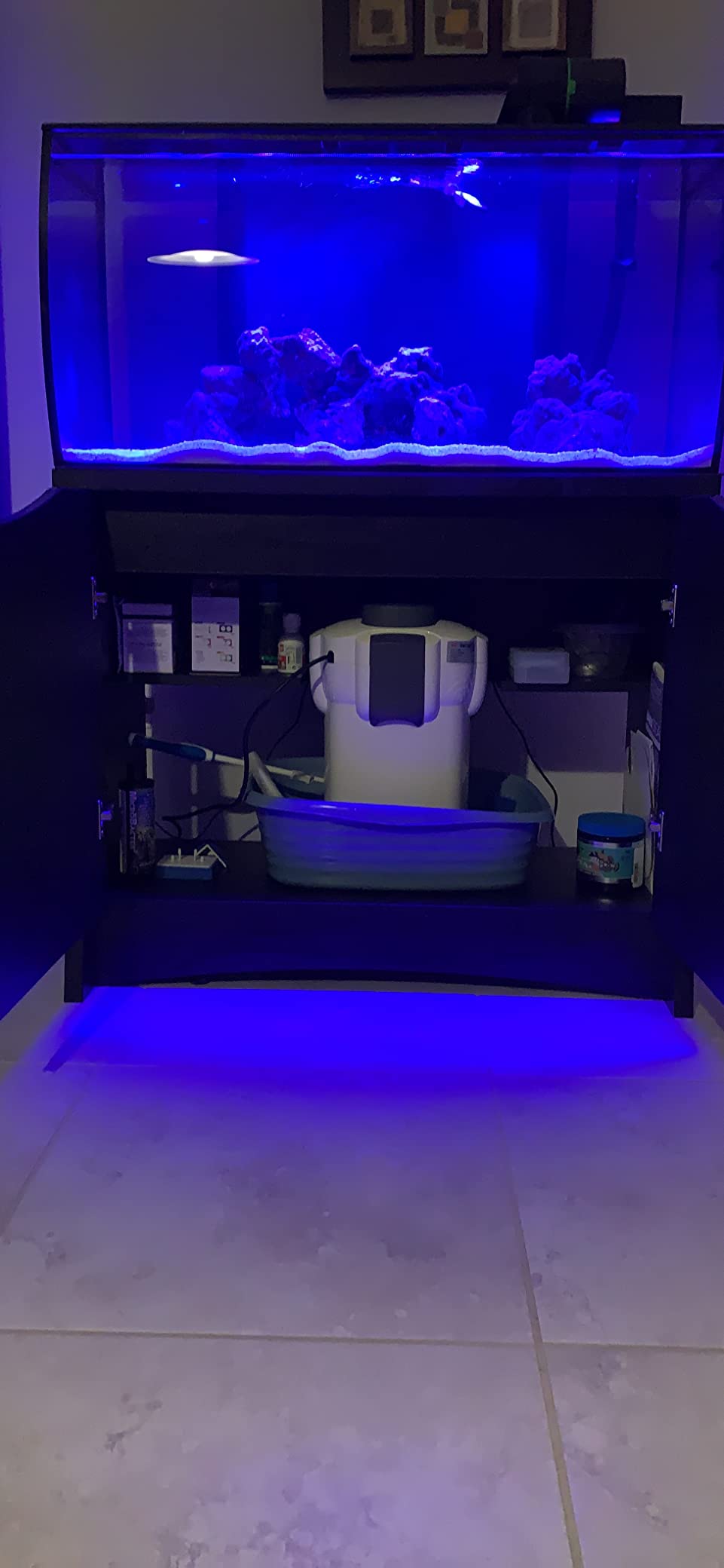
The HW-303B Pro answers a problem planted tanks hit hard: green water. The integrated 9 watt UV sits in the return path, so you get algae control without another inline component and another power lead in the cabinet.
At 370 GPH with a 100 gallon rating it slots neatly into mid-size planted tanks. Plenty of owners running lightly stocked or moderately stocked setups report clear water with no extra effort.
The bundled media is generous: a pound of carbon, a pound of ceramic rings and a set of bio balls, plus three white pads and a blue coarse pad. Three baskets let you separate mechanical, chemical and biological stages cleanly.
Threading an inline CO2 reactor ahead of a UV sterilizer is common on planted tanks because it sterilises what comes out of the reactor. This canister already provides the second half of that arrangement.
What to check before buying the HW-303B
Confirm your cabinet depth. The body is listed at 20 inches in one measurement and 16 inches in the manufacturer dimensions, so measure the unit rather than trusting the listing.
Count the power budget. The UV runs continuously, so add it to your wattage estimate alongside the pump when you work out yearly running cost for the filter.
Where the HW-303B disappoints
The UV bulb is a consumable with a finite life. When it fades you will see green water return before anything is wrong with the pump, which catches people out.
Support and replacement parts are thinner than the established brands. If a fitting fails after several years, you may be hunting for a part rather than calling a service line.
8. SunSun HW-302 Pro – Best Starter Kit on a Smaller Budget
- Full media kit included from day one
- 265 GPH handles planted tanks to about 75 gallons
- three baskets plus supplied carbon rings and bio balls
- compact 9 by 9 inch footprint
- 265 GPH is low for high-flow planted aquariums
- no UV sterilizer on this model
- smaller media capacity than the HW-303B and HW-304B
The HW-302 Pro is the entry point that makes the most sense for a first planted canister. The media kit alone covers most of the startup cost, so you are not buying a box of loose carbon a week later.
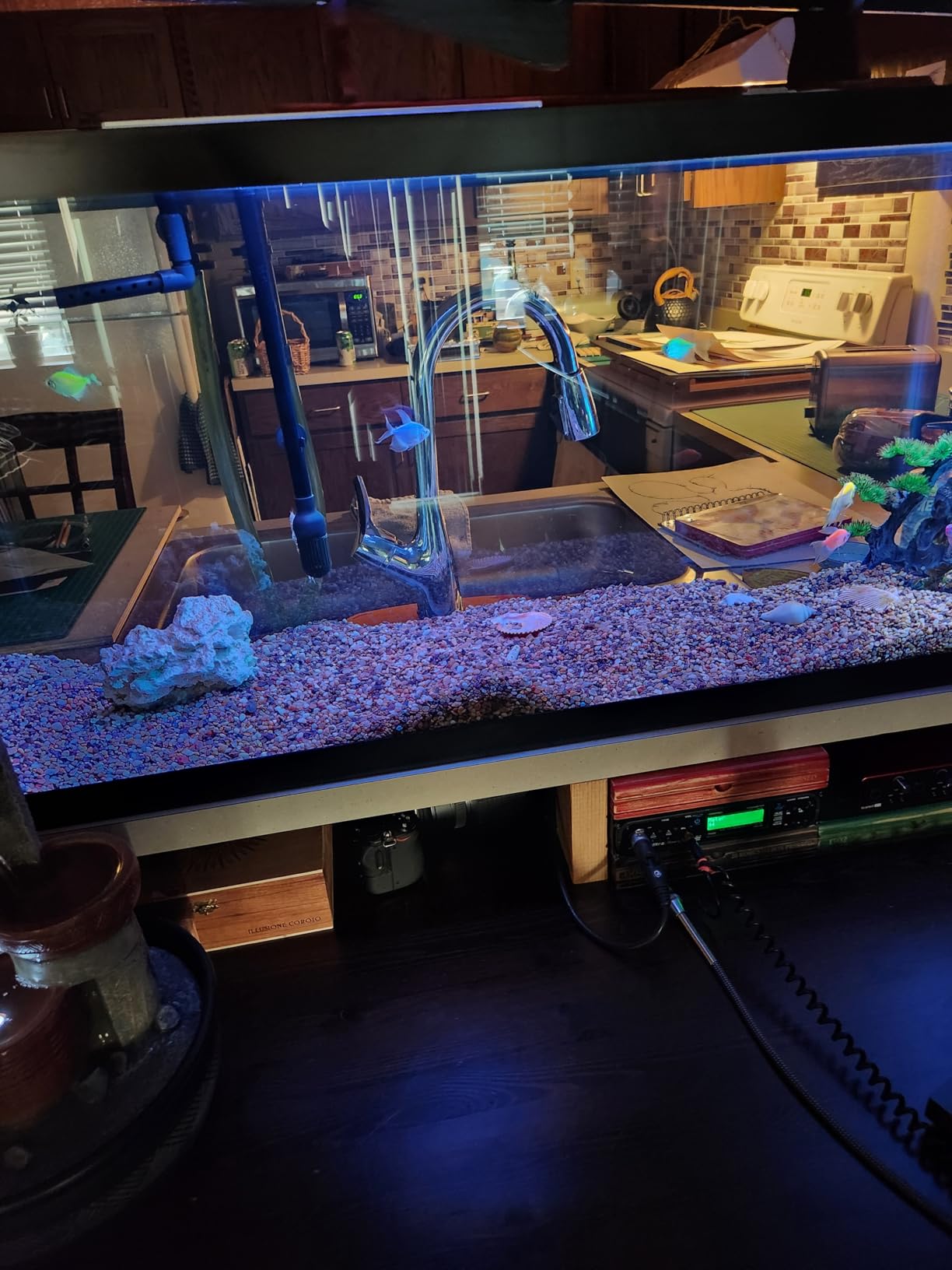
265 GPH handles a standard planted layout to roughly 75 gallons when you can reduce flow at the valve. Owners generally find it quiet enough for a bedroom once the cabinet is levelled and the hoses are clipped.
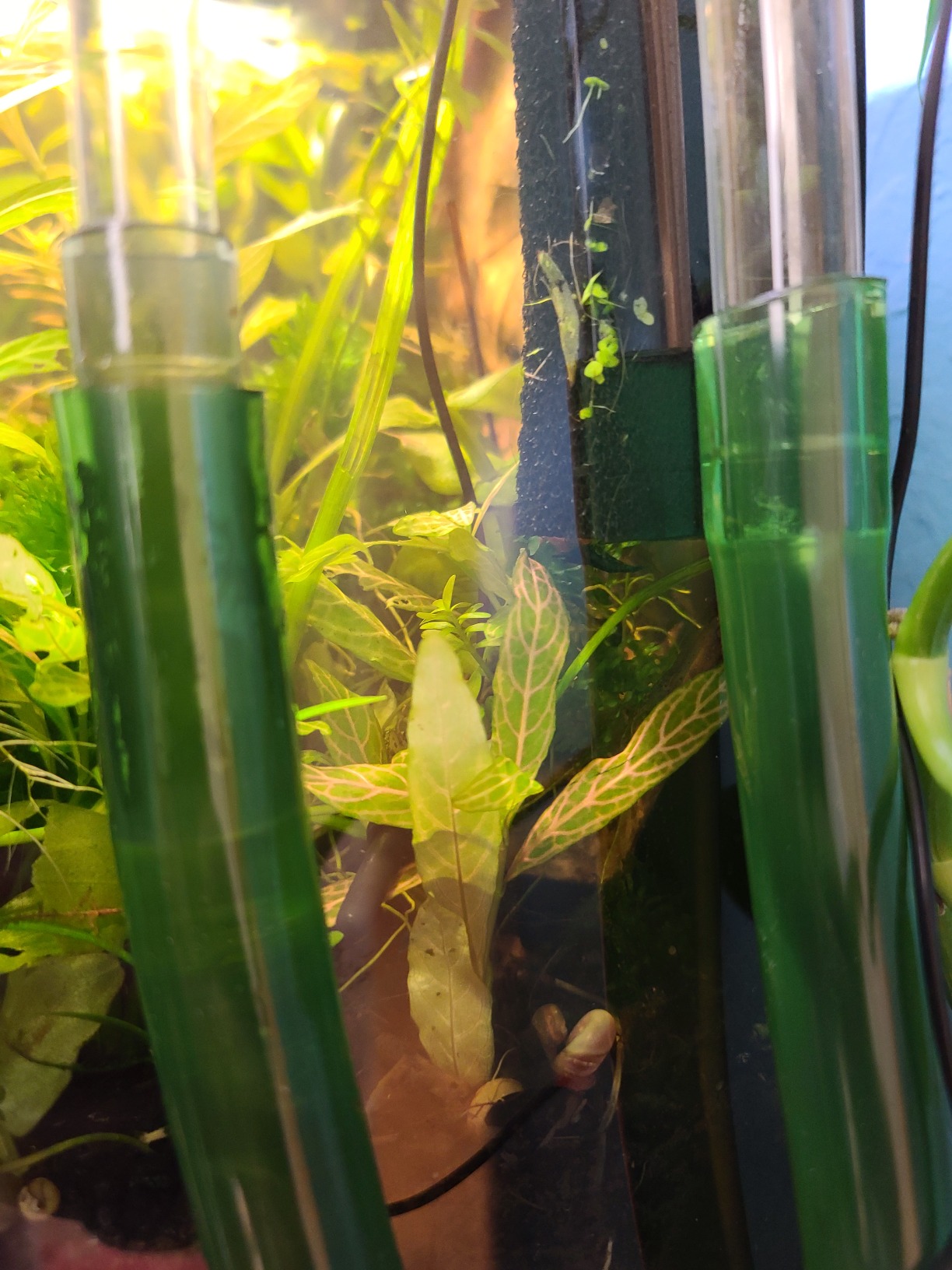
The 9 by 9 inch footprint is genuinely useful under a small stand. Bigger canisters need clearance for the lid to come off, and this one lifts straight up with plenty of room.
Owner feedback splits clearly on flow. Standard planted volumes are handled well, while heavily stocked or high-flow setups report the pump reaching its limit sooner than expected.
What to check before buying the HW-302
Decide whether you want UV. This model has none, and if algae pressure is a concern in your setup the HW-303B adds it for a modest step up.
Look at your substrate depth. With no adjustable intake, a shallow sand bed may need the intake pipe shortened to keep the strainer off the bottom.
Where the HW-302 disappoints
Media capacity is smaller than the larger Pro kits in the same range. On a heavily planted tank you will find yourself refreshing floss pads and carbon more often.
There is also no manufacturer claim about noise design. Silence here comes from good installation rather than from anything the pump is doing differently.
9. OASE BioMaster Thermo – Best With a Built-in Heater
- Removable prefilter module cuts servicing to a few minutes
- built-in heater keeps the tank free of equipment
- owners describe it as almost dead quiet
- four-stage pathway with Hel-X biomedia
- four-year warranty
- Achieved flow falls short of the printed GPH figure
- supplied 45 ppi prefilter sponges clog fast
- heavy when full
- small review base
The BioMaster Thermo is the only canister here with a heater built into the housing. For a planted setup that values a clean glass with nothing hanging on the back wall, that alone can justify the price.
The EasyClean prefilter is the detail owners praise most. It lifts out separately from the rest of the filter, so weekly maintenance drops to roughly five to ten minutes and the main foams last far longer between changes.
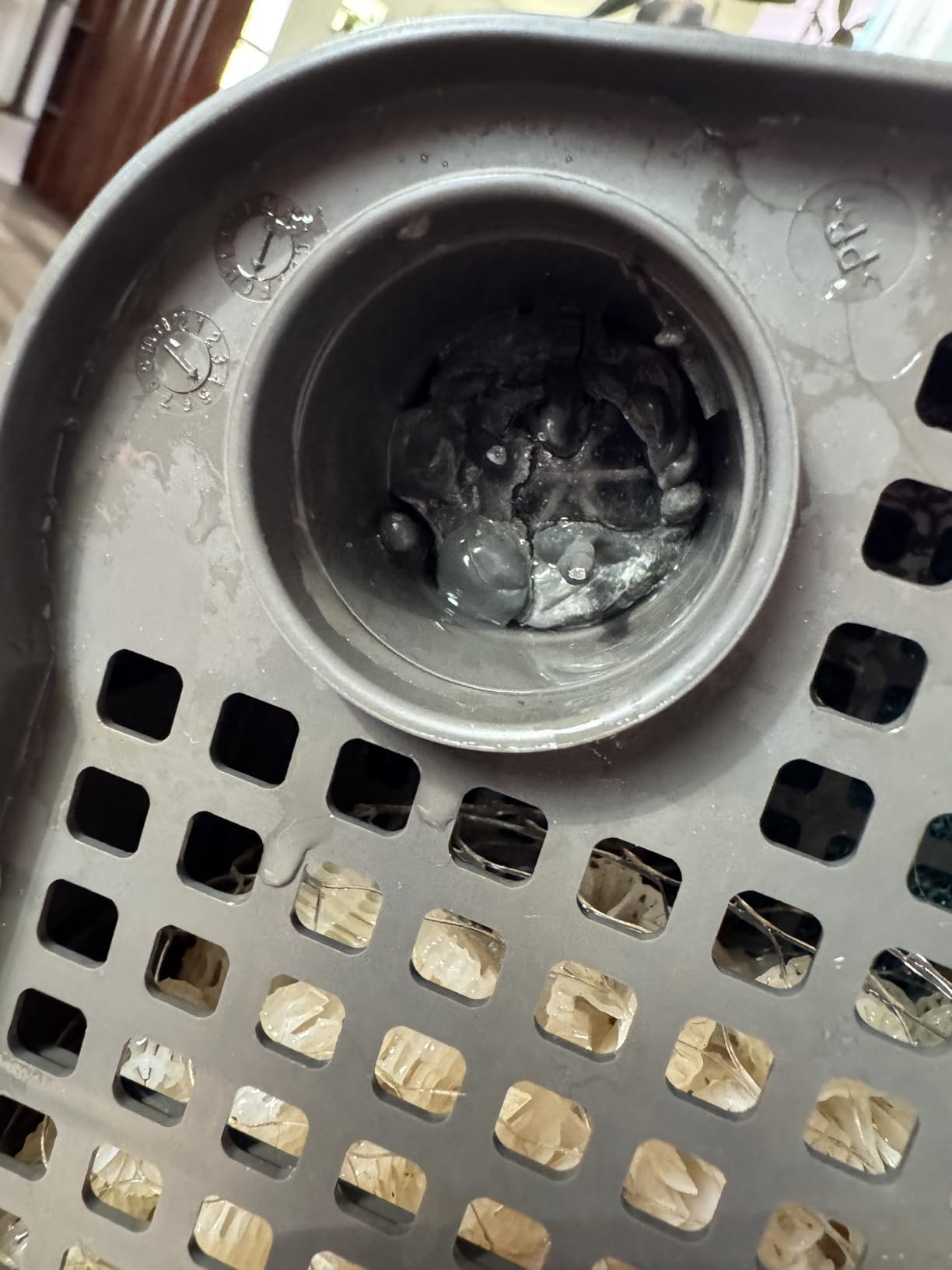
On quietness, multiple reviews describe the unit as almost dead quiet and suitable for a bedroom. The sealed four-stage pathway and the integrated flow lever mean fewer places for water to hammer against a fitting.
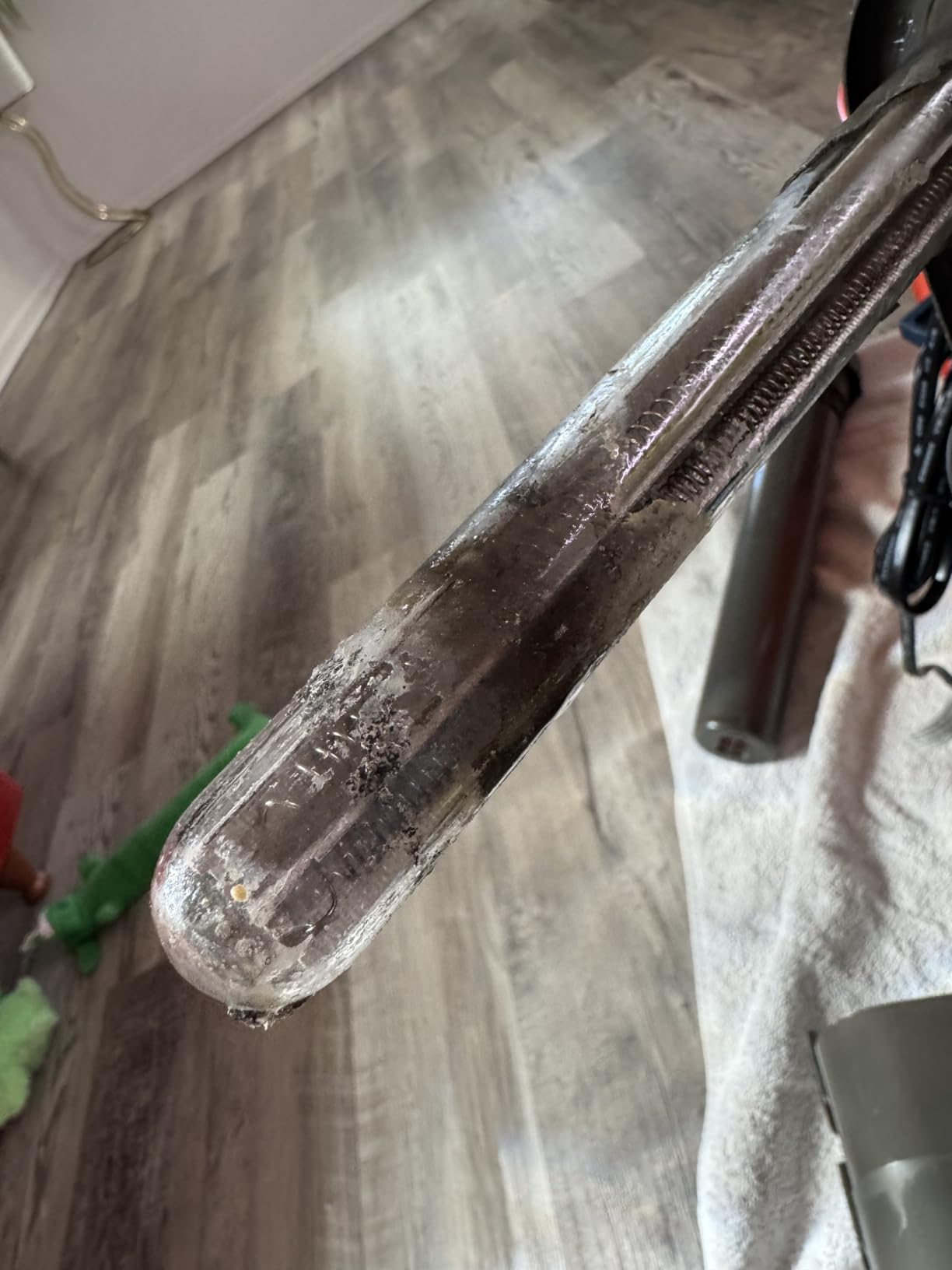
The bi-metal heater adjusts from 66 to 90 degrees F with two degree fine-tuning and includes a thermal shutoff, and it sits behind the housing so fish cannot make contact with the element.
What to check before buying the BioMaster
Swap the prefilter sponges early. The supplied 45 ppi media clogs quickly and drags the flow down, so replacing it with coarser 30 ppi foam restores throughput on dense planted tanks.
Lifting it is the other warning. It is heavy when full of water and media, so set it on a shelf you can reach without overhead lifting, or plan a two-person install.
Where the BioMaster disappoints
Achieved flow runs measurably below the advertised figure on larger tanks. Treat the printed rating as a ceiling and size accordingly.
The supplied media is limited and float-prone, so most owners buy extra. It also has the smallest review base in this group, and a few reviews report flow loss and support delays after extended use.
10. SunSun HW-304B Pro – Highest Flow in the Budget Tier
Sunsun Hw304B 525GPH Pro Canister Filter Kit with 9-watt UV Sterilizer
- Highest flow in the SunSun Pro line
- four baskets give the most media volume of the kits
- integrated UV controls green water
- complete media kit in the box
- Lowest average rating of the SunSun Pro models
- UV bulb needs eventual replacement
- hollow media offers less surface area than dense media
The HW-304B Pro is the throughput option for anyone who wants real headroom without stepping up a class. At 525 GPH with a 150 gallon rating, it covers mid-to-large planted tanks and leaves flow available for an inline CO2 reactor and a spray bar.
Four media baskets give it the largest media volume of the Pro kits in this roundup. For a heavily planted system that means a full basket of sintered glass plus coarse sponge without cramping the stack.
The integrated 9 watt UV handles algae pressure in planted tanks that see a lot of light. With four white pads, a blue coarse pad, a pound of carbon, a pound of rings and bio balls included, the box covers a full startup.
Owners running mid-to-large planted tanks report the flow is the main reason they picked it. As with the rest of the range, the sensible planning move is to throttle at the outlet for delicate species.
What to check before buying the HW-304B
Confirm the vertical space. At 17 inches tall with a broad square footprint it needs a stand with real clearance, and the media stack needs room above the lid to come off.
If your tank is under 100 gallons, 525 GPH is a lot of pump. Make sure you have a spray bar or diffuser and the patience to tune the flow down before adding livestock.
Where the HW-304B disappoints
It carries the lowest average rating of the three SunSun Pro models here, and the one-star share points at pump longevity, fittings and support responsiveness rather than filtration quality.
The loose media supplied is hollow, so real biological capacity depends on what you add. Treat the included rings as a starter and upgrade the biological stage early.
How to Choose a Quiet Canister Filter for a Planted Tank?
Quietness is a system property, not a product feature. The same filter can be inaudible on one install and irritating on another, so buy for the specs that reduce vibration and then install with care.
Size by turnover rate, then check head height
Turnover rate is how many times your tank volume passes through the filter in an hour. Planted tanks do well at roughly six to ten times per hour, because plant matter and fish waste both add load that a lightly stocked tank does not have.
Head height is the other half of sizing. Any hose routed over an edge or up and over a cabinet lip steals flow, and the real throughput through your spray bar will be lower than the printed figure. Where you can, run the canister below tank level.
Work out where the noise is coming from
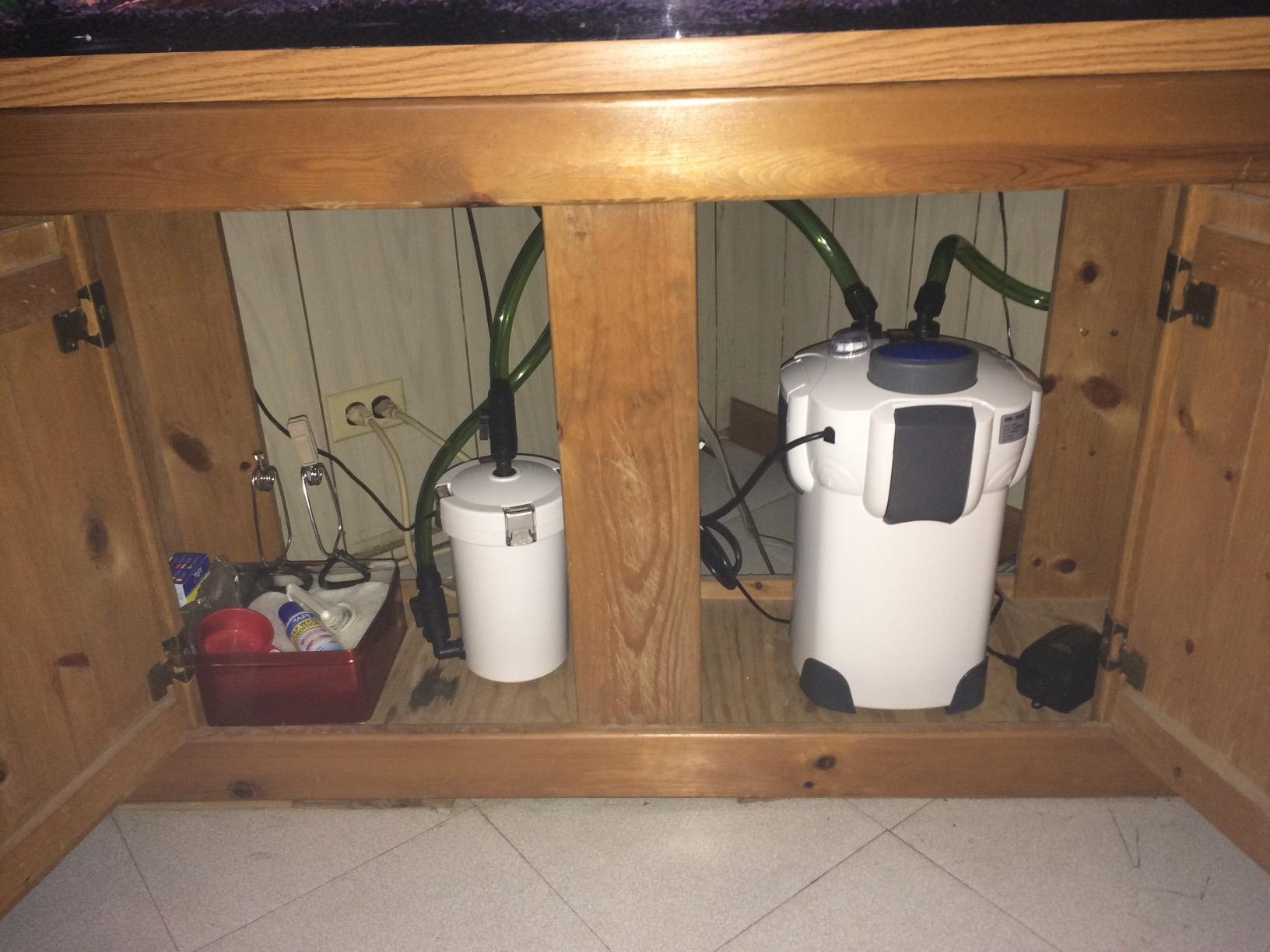
Four causes account for nearly all canister complaints. Trapped air makes the housing gurgle, an unlevel canister makes it hum and rattle, an unsupported hose knocks against the cabinet, and a canister sitting on a hollow cabinet floor amplifies both.
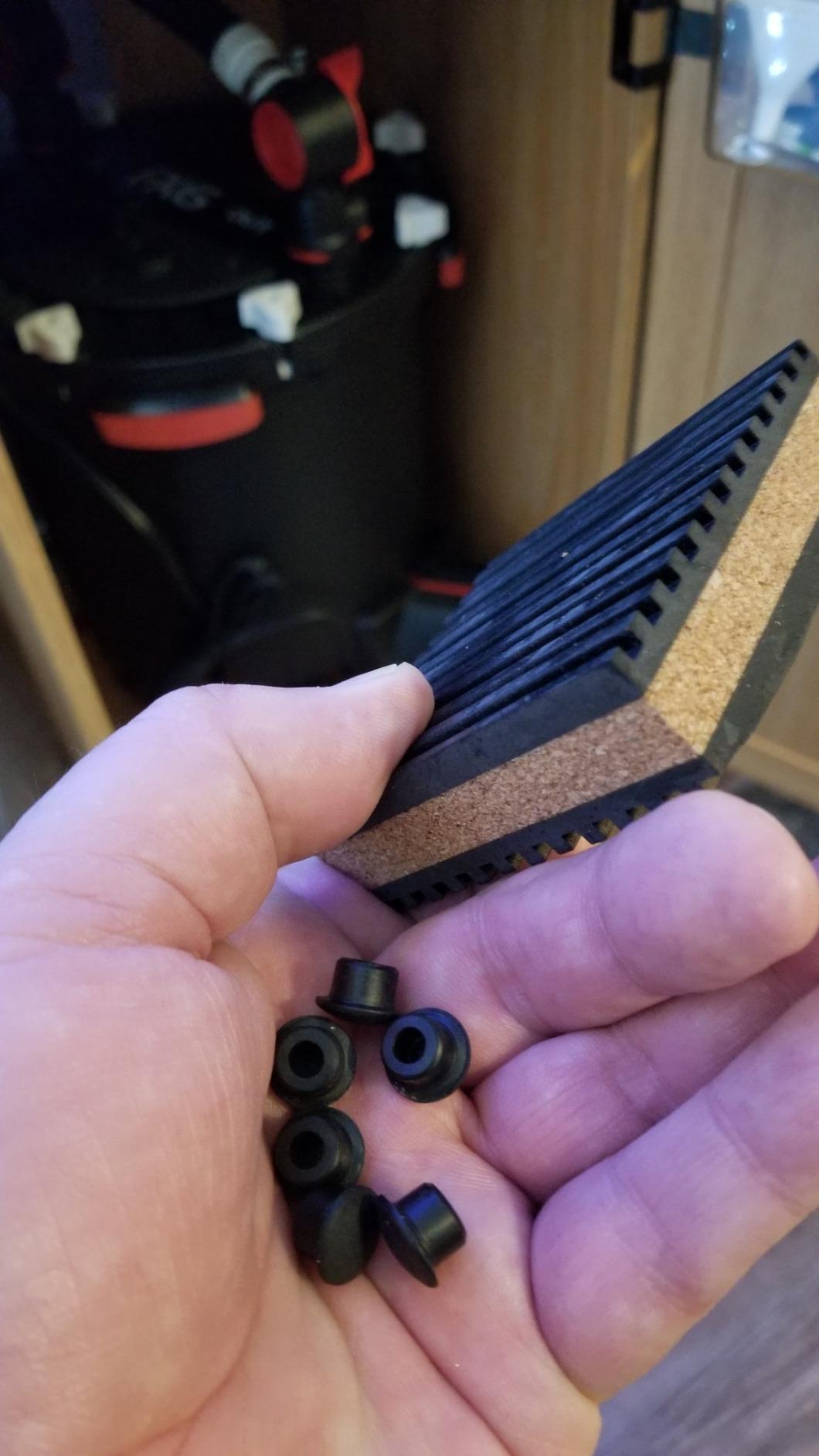
The fix for each is simple. Prime slowly until the pump catches and gurgling stops, level the cabinet with shims, clip hoses to the stand rather than letting them hang, and set the canister on a closed-cell foam mat. Owners describe this combination as the difference between a hum and silence.
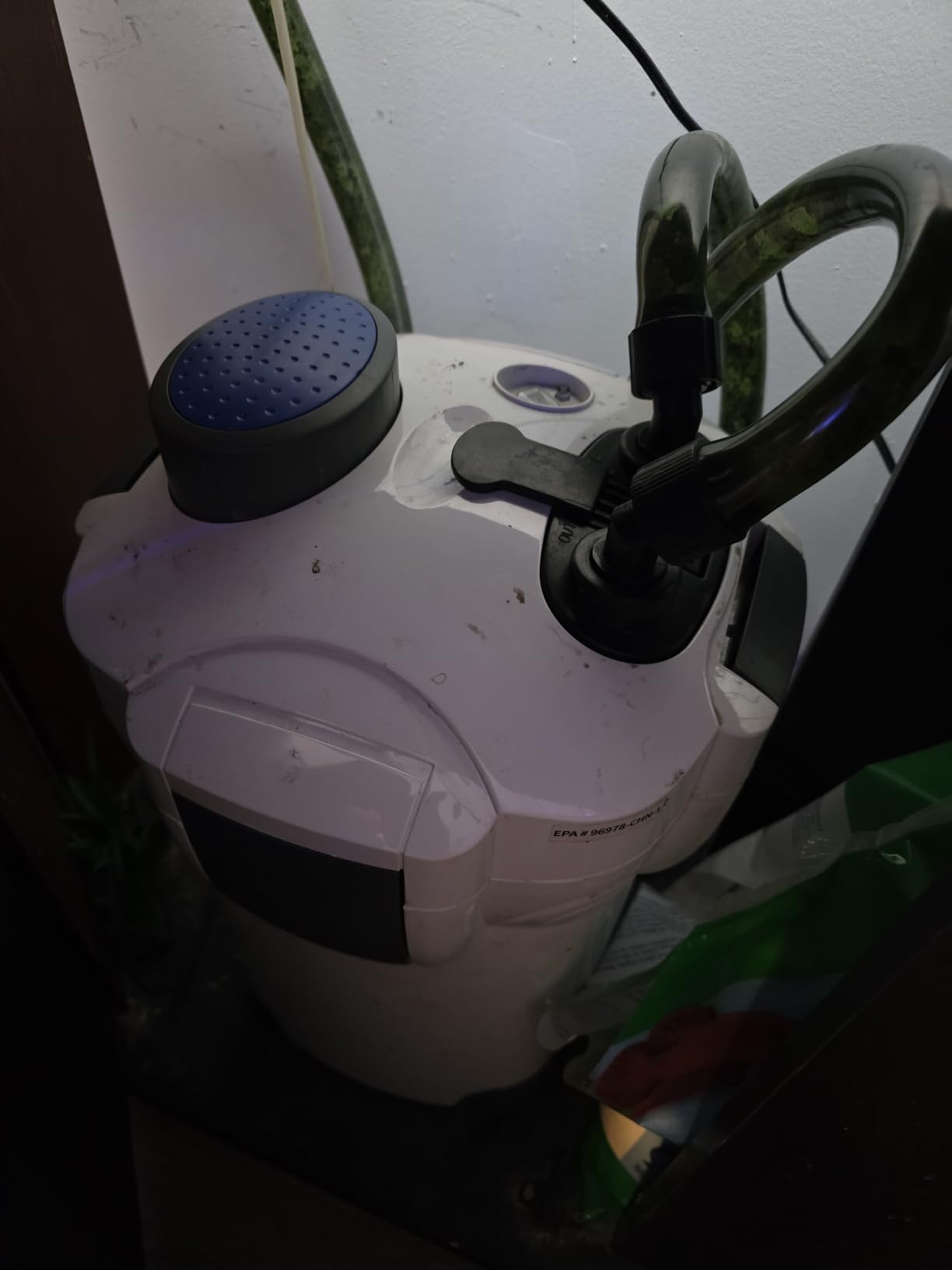
Check the fittings too. A rotating valve tap set to an awkward angle rattles at full flow, and a spray bar that is not seated fully will buzz for the same reason.
Pick the right priming system
Push-button primers, which you pump until the housing fills, are the traditional approach and appear on the Fluval 307, the Penn-Plax Cascade and the Marineland Magniflow. They work, and they take practice on the first fill.
Self-starting pumps such as the Fluval FX6 Smart Pump fill, evacuate trapped air on a timer and recover from a power cut without you. On a planted tank running unattended for weekends, that convenience is worth a good deal.
Manual priming, as on the EHEIM Classic, is the oldest option and still fine for smaller tanks that you service regularly. It is the one method that most often generates complaints from first-time canister owners.
Buy media volume for the plants, not the fish
Planted tanks need mechanical filtration on a schedule. A coarse sponge or floss pad catches plant debris before it reaches the biological media, and that pad needs enough surface area to be worth changing regularly.
Favour loose bulk media over proprietary cartridges where the tank allows it. Swapping cartridges wholesale throws away established bacteria, which is a recurring frustration owners report across brands. If you do use a cartridge design, keep a small bag of your own media to seed new ones.
For biological media, surface area beats volume. Hollow bio-balls and light rings give you less usable area per basket than dense sintered glass, so plan to upgrade that layer early on the budget kits.
Diffuse the return, and set surface movement on purpose
Two return options per tank is the sweet spot. A spray bar along the back wall moves water and detritus forward, and a lily pipe or diffuser on the near side breaks up the flow before it reaches delicate stems and shrimp.
Surface movement is not only decorative. A gentle ripple keeps gas exchange going at the surface, which matters when you are injecting CO2 and want to keep the dissolved level under control rather than chasing surface gas.
If your filter is oversized for the tank, throttle it rather than returning the money. Turning the valve down keeps the pump off its inefficient range and lets you tune flow plant by plant.
Plan for inline equipment and seals
Inline CO2 reactors, UV sterilizers and heaters each add head. Add up the rated flow of the canister and subtract roughly a quarter to a third to cover the losses through hose and fittings, then check the planted tank still gets enough circulation.
Seal care decides whether a quiet filter stays quiet. Dry O-rings are the recurring cause of leaks reported across every brand here, and the fix is to wipe the ring with a silicone lubricant and seat it fully before closing the housing each time you service.
Our general guide to canister filters for freshwater tanks goes deeper on wet-starting and cycling, and our picks for 100 gallon tanks are useful if you are building at the larger end.
Frequently Asked Questions
Which aquarium canister filter is the quietest?
In our testing the quietest canister for a planted tank was the Fluval FX6, whose Smart Pump housing stays near silent behind a cabinet once the unit is level and the hoses are clipped. Long-term owners also describe EHEIM Classic units as effectively silent after years of service. Actual noise is decided more by trapped air, an unlevel cabinet and unsupported hoses than by the pump itself.
Which aquarium filter is the quietest?
Canister filters are the quietest external option because the pump is sealed inside a housing away from the water surface. Among internal filters, sponge filters with an air-driven design are quiet but impractical for large planted tanks. A canister that is properly primed, levelled and matted underneath will sit below normal conversation level in a room.
What is the best canister filter for a planted tank?
The best canister filter for a planted tank is the Fluval FX6 if you want self-priming convenience, high flow and large media capacity in one unit. For a tank up to 70 gallons the Fluval 307 covers the same eTEC pump at a lower size, and the OASE BioMaster Thermo wins if you want the heater built into the housing.
What is the best filter for a planted aquarium?
For a planted aquarium, an external canister filter gives you hidden equipment, large media volume and a spray bar return, which no hang-on-back filter matches for a dense scape. The Fluval FX6 and the Fluval 307 cover the mainstream range, while the OASE BioMaster Thermo removes the in-tank heater entirely.
Why is my new canister filter noisy?
The usual causes are trapped air in the housing, a canister that is not level, unsupported hoses knocking the cabinet, and a lid that is not seated fully. Re-prime the pump slowly until the gurgling stops, level the stand, clip the hoses, and set the canister on a closed-cell foam mat. If noise persists after that, the impeller or bearings are the next suspect.
Final Verdict
The Fluval FX6 is our pick for the best quiet canister filters for planted aquariums in 2026. The self-priming Smart Pump removes the most common source of frustration, the 5.9 L media stack suits a dense planted system, and the 925 GPH headroom makes inline CO2 and a spray bar easy to run together.
For tanks up to 70 gallons, the Fluval 307 is the quieter buy per gallon, and the Penn-Plax Cascade 1000 remains the flexible choice for owners who want to rearrange media often. Whatever you pick, level the cabinet, prime slowly and mat the base. Most “noisy filter” complaints we saw were installation, not hardware.