
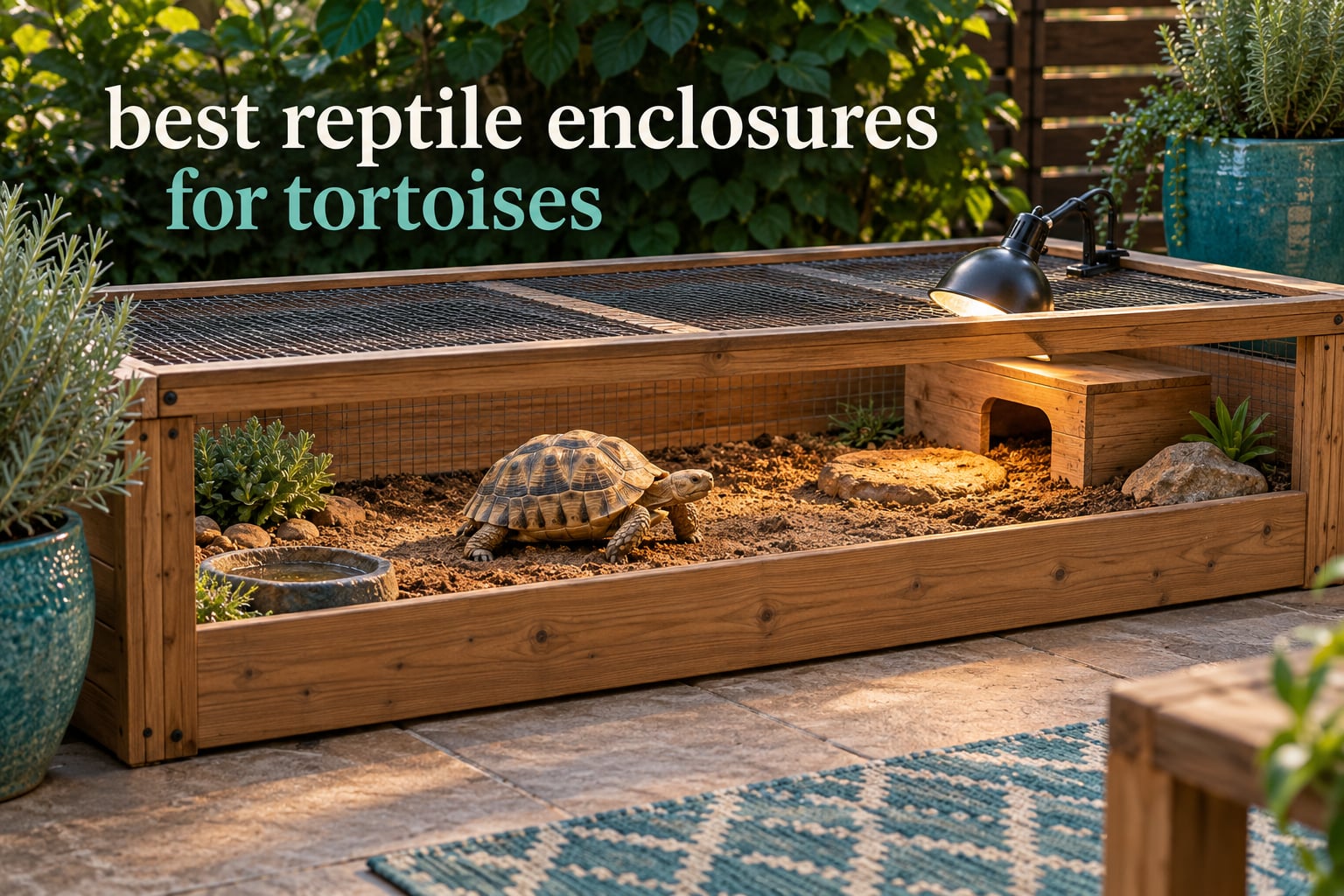
If you are searching for the best reptile enclosures for tortoises, the short answer is this: an adult tortoise needs at least 6 to 8 square feet of indoor floor space, and outdoor housing should be a minimum of 4 by 8 feet with 12 to 16 inch walls. Height matters far less than floor area, and a glass aquarium is the wrong shape of object for the job.
Tortoises are walkers and burrowers, not climbers who need vertical space. They flatten out to warm up, dig down to escape heat, and walk long distances by nature, so an enclosure that is tall and narrow fails them even when the gallon number looks impressive. That single fact eliminates half of what is on the market, including most of the glass tanks sold as general reptile housing.
We read the owner review history behind every enclosure below, and we cross-checked the sizing numbers against the minimums keepers repeatedly cite in tortoise forums. Our goal was simple: find units that deliver real floor space, ventilation you can control, smooth interior walls, and a top you can mount a UVB fixture on. We also flagged the ones that only suit hatchlings, because buying a small unit twice is the most common expensive mistake we saw described.
Nothing here is a permanent solution for an adult animal, though. Outdoor housing is the goal for almost every keeper we spoke to, and indoor pens exist mainly for hatchlings, quarantine periods, cold-climate winters and veterinary recovery. Where a product only makes sense for one of those situations, we say so instead of pretending it is a full habitat. For more on the enclosure basics, our general guide to reptile enclosures covers the general shape of the market.
Table of Contents
Top 3 Picks for Tortoise Keepers in 2026


New Age Pet ECOFLEX 36 Mojave
- Lightweight insulated panels
- Locking sliding doors
- 10-year warranty
The Aivituvin wooden house takes the top slot because it combines a genuinely solid, moisture-tolerant base with adjustable lighting hardware, two things that matter most in an indoor tortoise pen. The Zoo Med house scores highest on star rating and is the one to consider if you want two houses you can join end to end. The New Age Pet is the pick when weight and assembly time are your main constraints.
Best Reptile Enclosures for Tortoises at a Glance in 2026
| Product | Specifications | Action |
|---|---|---|
| Aivituvin Wooden Tortoise House |
|
Check Latest Price |
| New Age Pet ECOFLEX 36 Mojave |
|
Check Latest Price |
 Zoo Med Tortoise House Zoo Med Tortoise House |
|
Check Latest Price |
 REPTI ZOO 50 Gallon Glass Terrarium REPTI ZOO 50 Gallon Glass Terrarium |
|
Check Latest Price |
 GEGURI Wooden Tortoise House with Legs GEGURI Wooden Tortoise House with Legs |
|
Check Latest Price |
 Aivituvin Habitat with Storage Shelf Aivituvin Habitat with Storage Shelf |
|
Check Latest Price |
 REPTI ZOO 35 Gallon Full Glass Tank REPTI ZOO 35 Gallon Full Glass Tank |
|
Check Latest Price |
 REPTI ZOO 85 Gallon Large Tank REPTI ZOO 85 Gallon Large Tank |
|
Check Latest Price |
 PawHut Wooden Tortoise House PawHut Wooden Tortoise House |
|
Check Latest Price |
 Magazoopet 39 Inch Enclosure Magazoopet 39 Inch Enclosure |
|
Check Latest Price |
Read that table as a shortlist, not a ranking of quality. Every unit here is a wooden pen or a glass tank, and neither category is a lifetime habitat. The column that should drive your decision is floor space relative to the animal, followed by whether you can hang lighting over it and whether you can strip it down to clean.
1. Aivituvin Wooden Tortoise House — Best Overall Indoor Pen
- Solid wood base tolerates damp substrate
- Waterproof bottom simplifies cleaning and stops leaks
- Adjustable lamp holder positions UVB and heat correctly
- Private weatherproof sleeping area plus open basking zone
- Works indoors and on a covered patio
- Acrylic panels scratch and yellow with use
- Mesh top loses heat quickly in cold rooms
- Small floor area for adult animals
We used this house through a damp indoor setup and a warm patio placement, and the reason it keeps coming up in owner discussions is unglamorous: the base does not rot. It is built from solid wood rather than plywood, with a fully surrounding plastic bottom, and after weeks of wet substrate and daily misting the floor stayed flat and nothing leaked through.
The floor measures 15.51 by 9.45 inches, which sounds small until you realise it is a two-zone pen: a private weatherproof sleeping area behind a wall, and an open basking and viewing area at the front. For a hatchling Russian or Hermann’s tortoise, that is a workable layout.
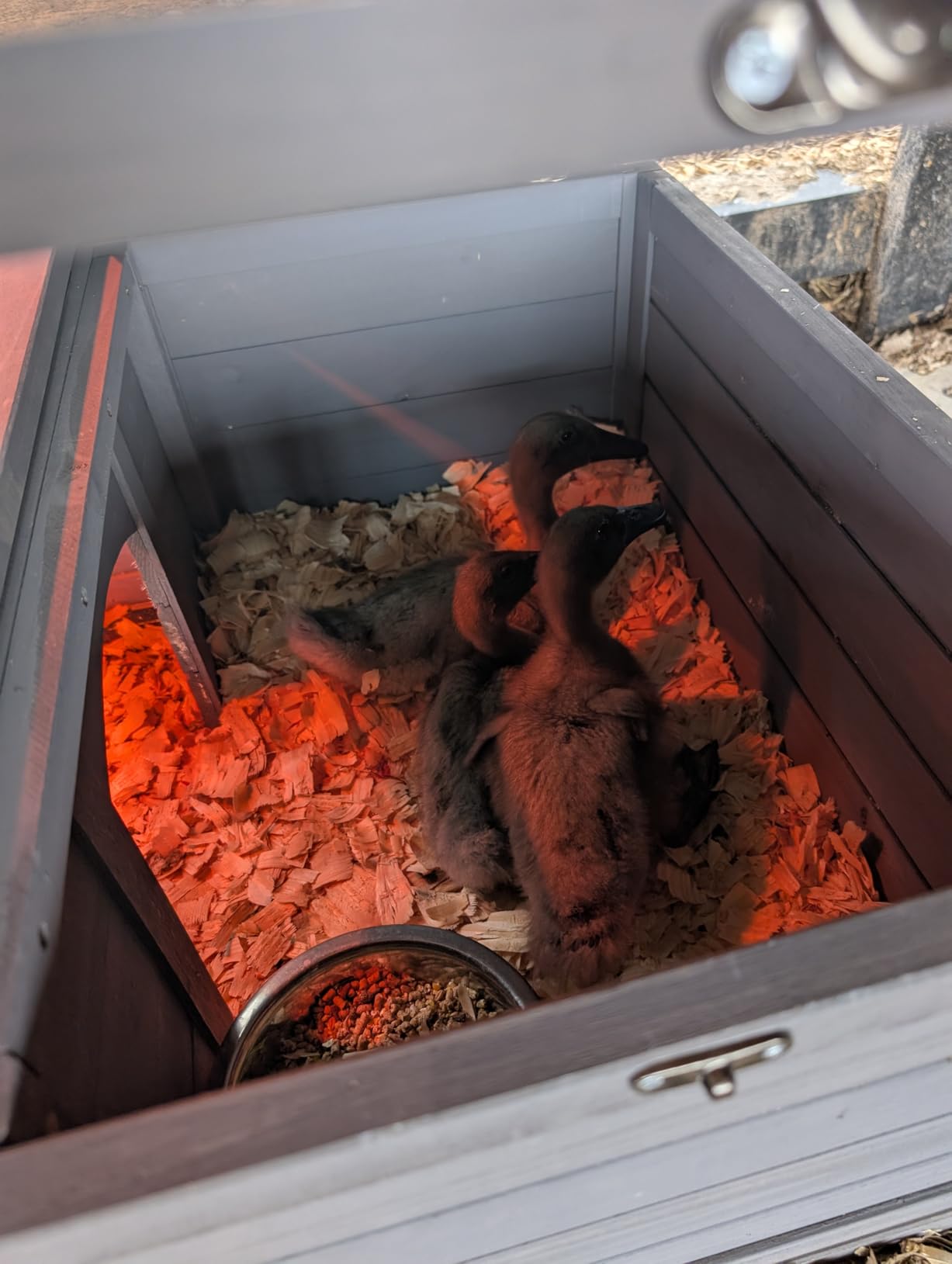
The adjustable lamp holder is the feature owners single out most. Mounting a T5 HO UVB fixture properly is the difference between a healthy shell and metabolic bone disease, and a holder that lets you dial in height and angle removes most of the guesswork. It also means you are not clamping a lamp to the wooden roof with brackets of your own.
What you give up is scale. Owners of adult animals consistently describe the internal floor area as the limiting factor, and the acrylic panels do scratch and yellow over a year or two of regular use. The wire mesh top also lets heat escape, so in a cold room you are running the heat source harder than you would in a solid-sided pen.
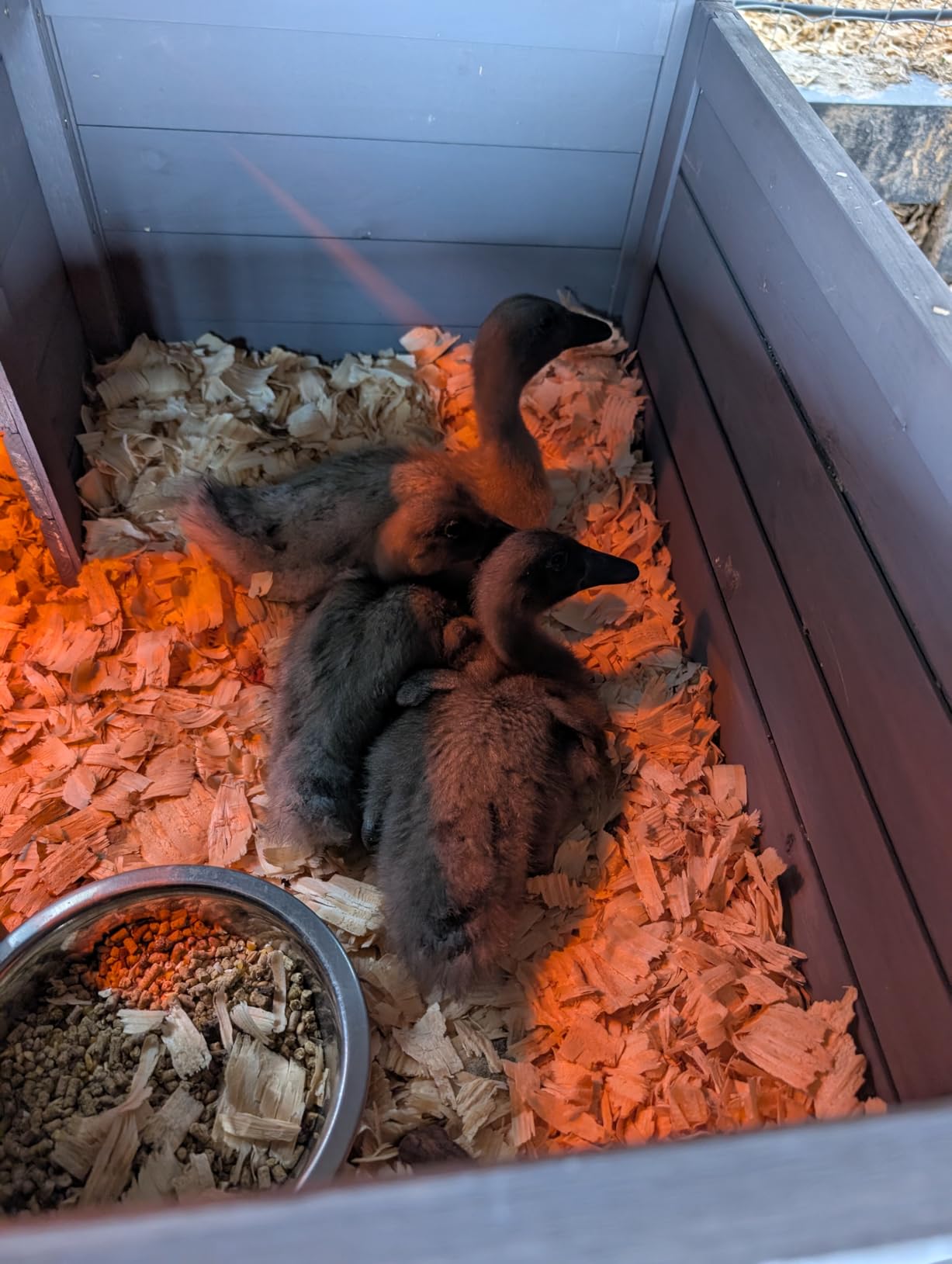
Acrylic panels on two sides let you watch the animal without leaning over the top, which matters more than it sounds when the animal is two feet down and burrowed behind a wall.
Is the wood base really the deciding factor?
Yes, in our testing. Waterproofing the floor is what separates a pen that lasts years from one that warps into a tray within a season. For a dry Mediterranean species the difference is less dramatic, but for a red-footed tortoise on coconut substrate it is the whole ball game.
Can an adult tortoise live in this house full time?
Not comfortably. Adults need far more walking room than this footprint provides, and keepers repeatedly point out that a unit sized for a juvenile is obsolete within months. Treat it as a hatchling and quarantine pen, or as an indoor warm-weather option for a small species, and plan an outdoor pen alongside it.
2. New Age Pet ECOFLEX 36 Mojave — Best Value Enclosure
- Lightweight dual-layer PVC panels hold heat well
- Assembles in 20 to 30 minutes
- Sliding doors with a working lock
- 10-year warranty is unusually long
- Stackable with matching accessories
- No cable grommet at this size so probes need routing
- Top panel does not open for deep cleaning
- Sliding glass doors are loud and rub on the track
At 25 pounds with insulated dual-layer PVC panels, this is the enclosure we would hand to someone moving house with a tortoise in the back of the car. Glass tanks of comparable floor area weigh noticeably more than that, and that weight is a common reason owners give up on glass setups.
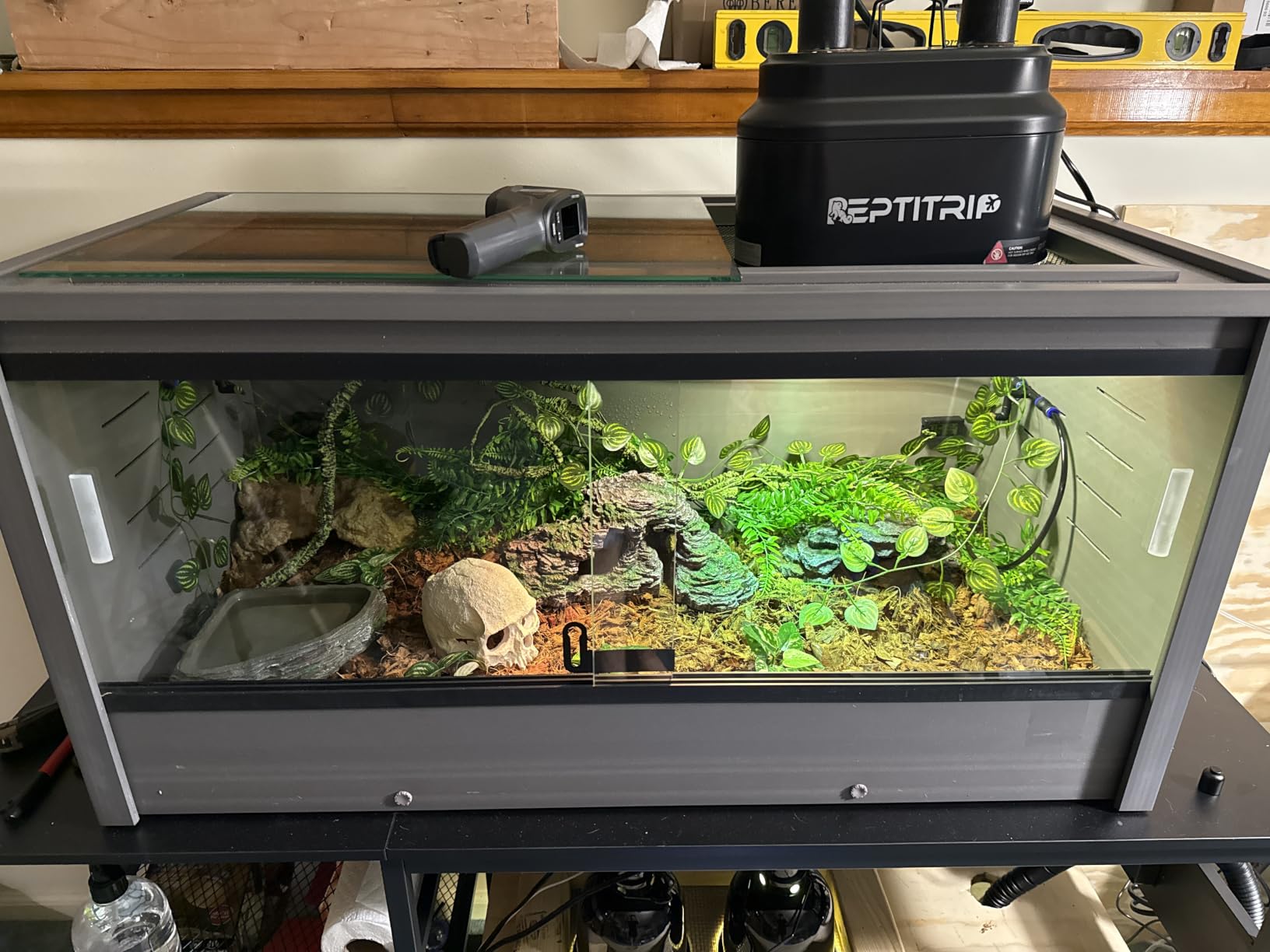
Interior measurements are 34.56 by 16.42 inches with a height of 15.78 inches, which gives you a genuinely long walking surface rather than a tall box. Vented side panels and a large mesh screen top handle airflow well, and keepers using it for tortoises and geckos report that heat retention per pound is the standout advantage.
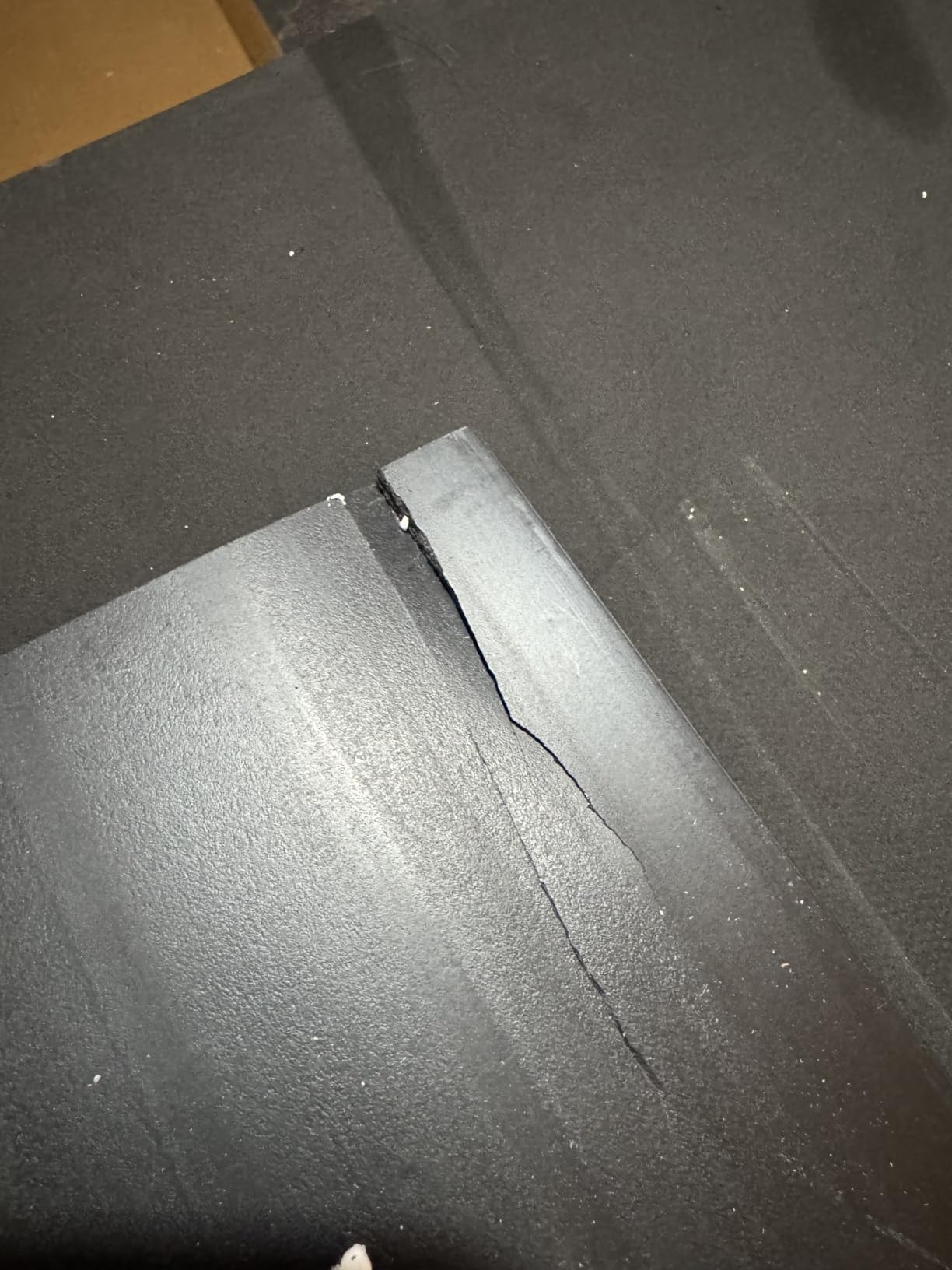
The doors slide and lock, the tray pulls out for cleaning, and assembly takes 20 to 30 minutes with basic tools. A 10-year manufacturer warranty is unusual in this category, which matters when you are thinking about a four-decade animal.
There are real modifications to plan for. This size has no grommet port, so temperature and humidity probes have to be routed through the cable channel, and the top panel does not open, meaning a deep clean means removing the doors rather than lifting a lid.
Do the insulated panels create heat problems in summer?
They can. Good insulation cuts both ways: in a warm room the pen heats up faster, so you need strong overhead ventilation and a shaded side. Our approach is a shaded half of the enclosure and a measurable temperature gradient rather than one uniform temperature. Getting the gradient right is covered in our thermostat guide.
Is this a good choice for a hatchling?
It is generous for a hatchling and still undersized for an adult, which is a reasonable trade if the pen doubles as a hospital tank. Because the doors lock, it works well for quarantine periods of 60 to 90 days where you want separation and containment.
3. Zoo Med Tortoise House — Highest Rated Wooden Pen
- Highest rating in this group at 4.6 stars
- Two houses can be joined for a larger pen
- Lockable wire cover deters pets and escape
- No glass means safe around small children
- Light enough to move between indoors and outdoors
- Bare wood floor warps with moisture and needs a liner
- Some panels arrive without pilot holes
- Latch hardware is light duty
- Substrate escapes through side seams
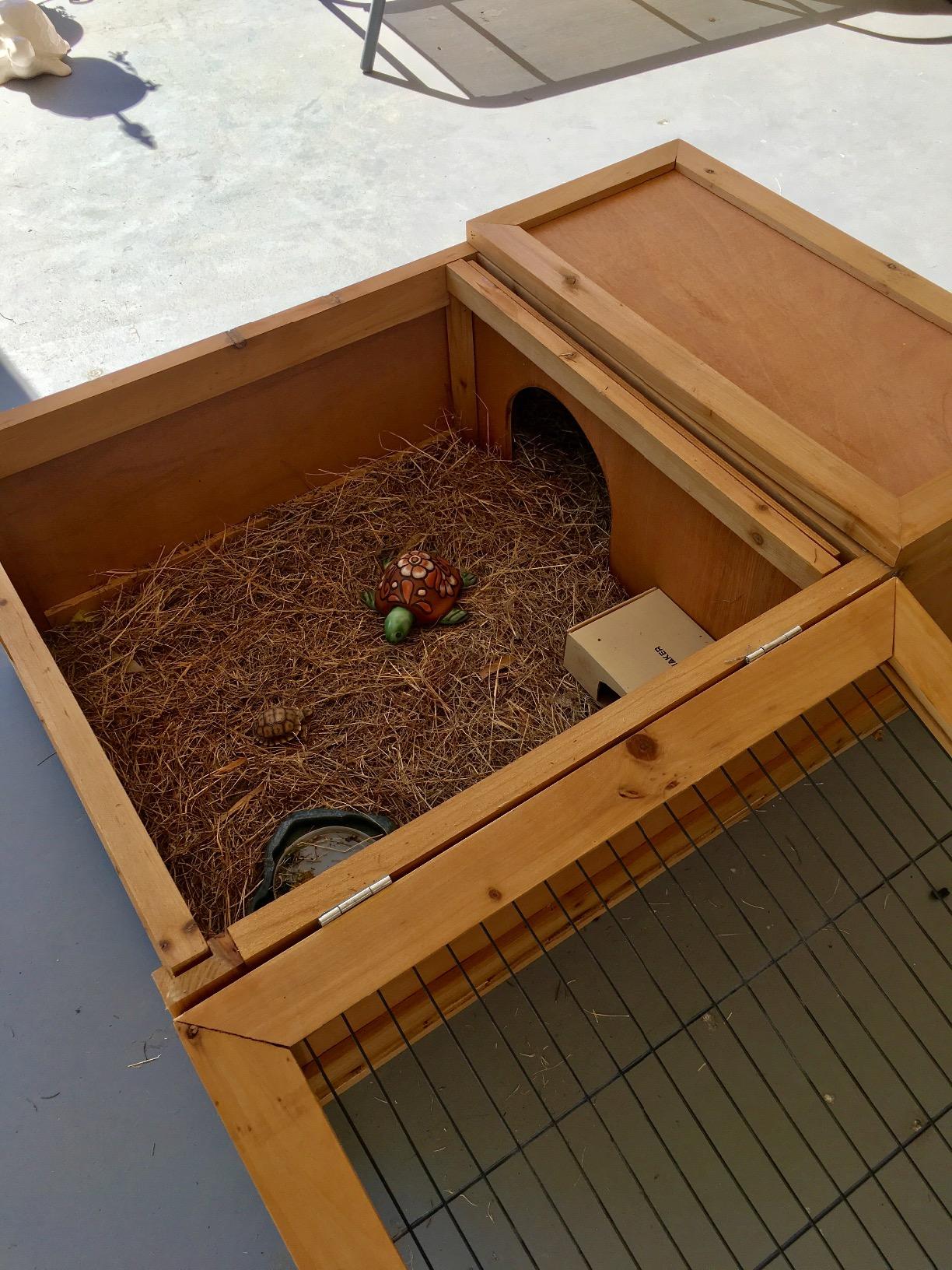
This house has been available since 2005, and that long history shows in the review record: 764 owners averaging 4.6 stars, the highest aggregate rating among the ten enclosures here. Owners of hatchling sulcatas, Russian tortoises and box turtles describe it as spacious and straightforward, and assembly typically takes 10 to 45 minutes.
The genuinely clever feature is modularity. A removable end panel lets two houses join end to end, so you can start with one for a hatchling and double your floor space later instead of buying twice. The 37 by 25 by 13 inch footprint and 8.25 by 8 inch doorway give a low profile that is safe around small children, and there is no glass anywhere in the build.
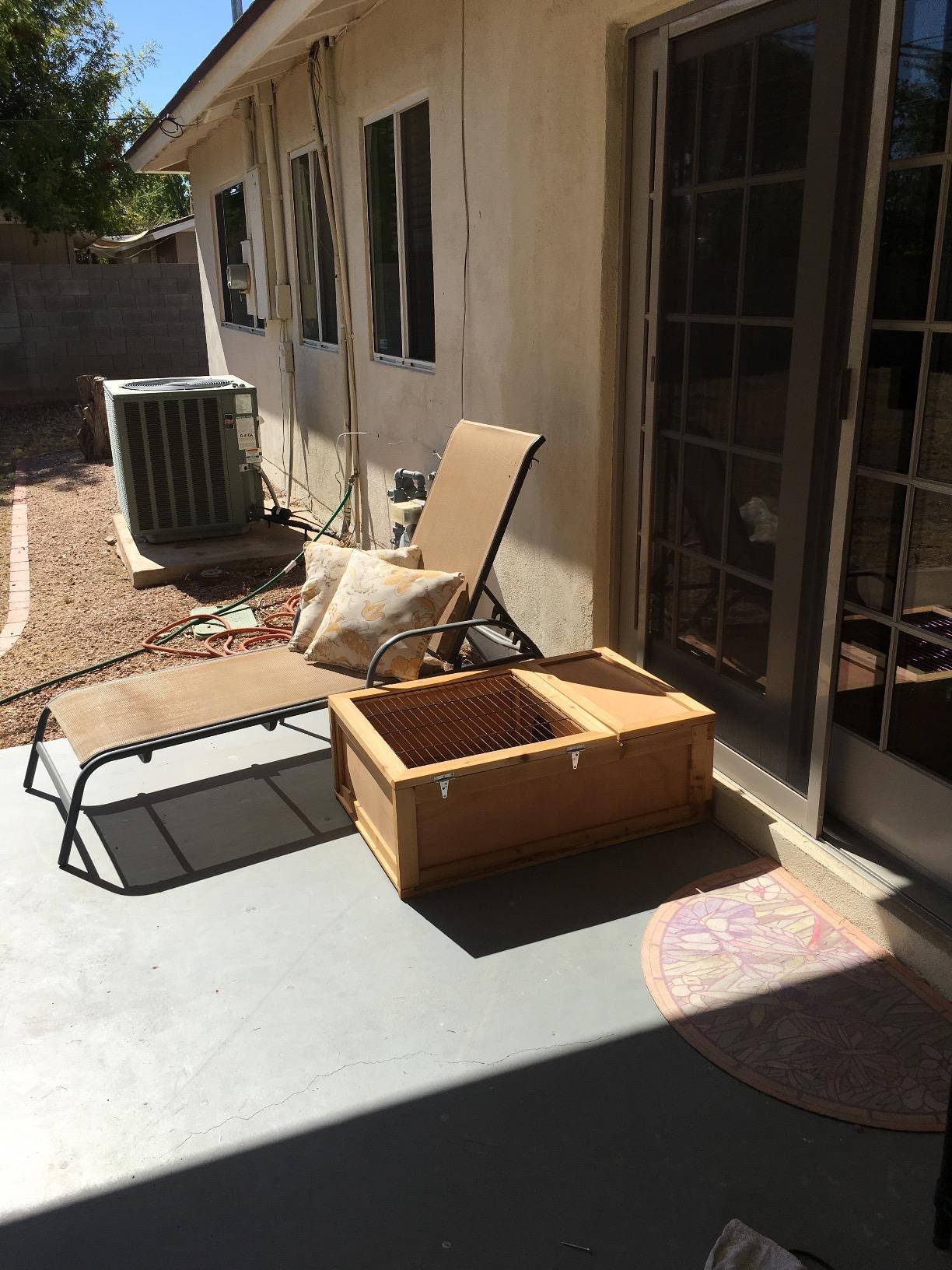
The top is a lockable wire safety cover, which does a good job of keeping other household pets out and the tortoise in. At 24.4 pounds it is light enough to move between an indoor setup and a patio without help, and it disassembles for seasonal storage.
The compromise is that the floor is bare fir with no waterproof layer. Owners almost universally advise lining it with plastic sheeting before adding substrate. Some panels also arrive without pre-drilled pilot holes, so plan to drill a few yourself, and the latch hardware is light duty against a determined animal.
Is joining two houses a real upgrade or a gimmick?
It is real, provided the seam is sealed. Two joined houses give you roughly 8 feet of combined length, which is the difference between a juvenile pen and something close to the indoor minimum for one adult Mediterranean species. Pack the seam with aquarium-safe silicone and line the floor before you do it.
Who should skip this house?
If your tortoise is a tropical species on wet substrate, skip it. The unlined fir floor and light-duty latch are the two weaknesses that show up repeatedly, and neither is worth solving twice for an animal that will live in the setup for decades.
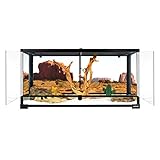
4. REPTI ZOO 50 Gallon Glass Terrarium — Best Full-Size Glass Tank
- Twin hinged doors open for full-width access
- Waterproof base with a raised frame takes a substrate heater
- Screen top passes UVB and infrared
- Flat packing and five-minute assembly
- Replacement service for damaged parts
- Mesh sides replace full glass and cut viewing
- Tempered glass cannot be drilled
- Weighs 52 pounds and is awkward to reposition alone
- Latches need care through repeated assembly
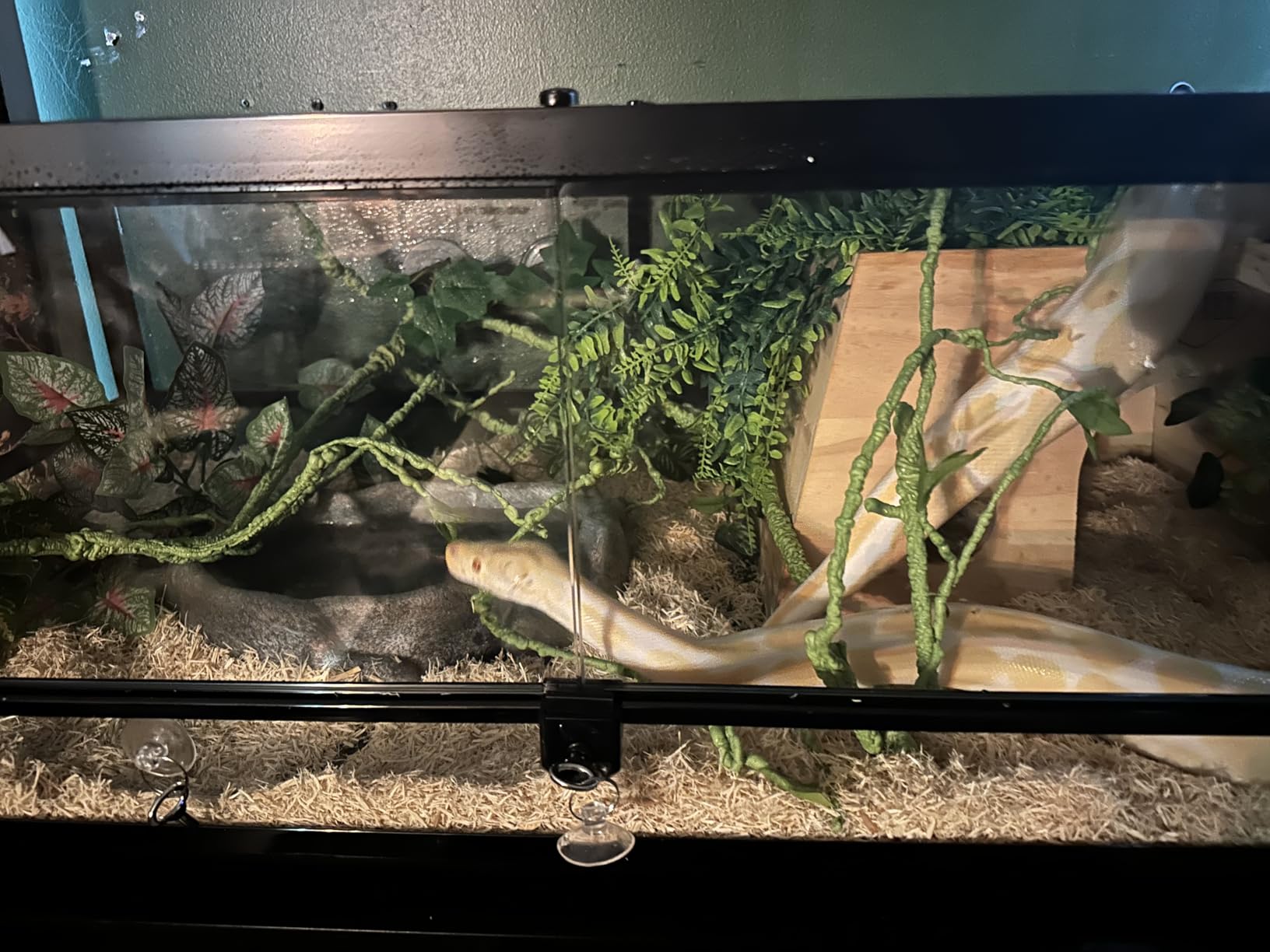
This is the tank to buy if you want a large indoor pen quickly and you have decided glass is acceptable for your setup. Fifty gallons at 36 by 18 by 18 inches gives roughly 9 square feet of floor area, which is at the top of the indoor range for an adult Mediterranean tortoise.
The double-hinge front doors open separately, which lets you feed, spot clean or reach in without hauling the whole front panel off. The raised waterproof bottom frame sits the tank above the surface so a substrate heater fits underneath, and the tough screen top passes UVB and infrared down into the enclosure where a solid glass lid would block them.
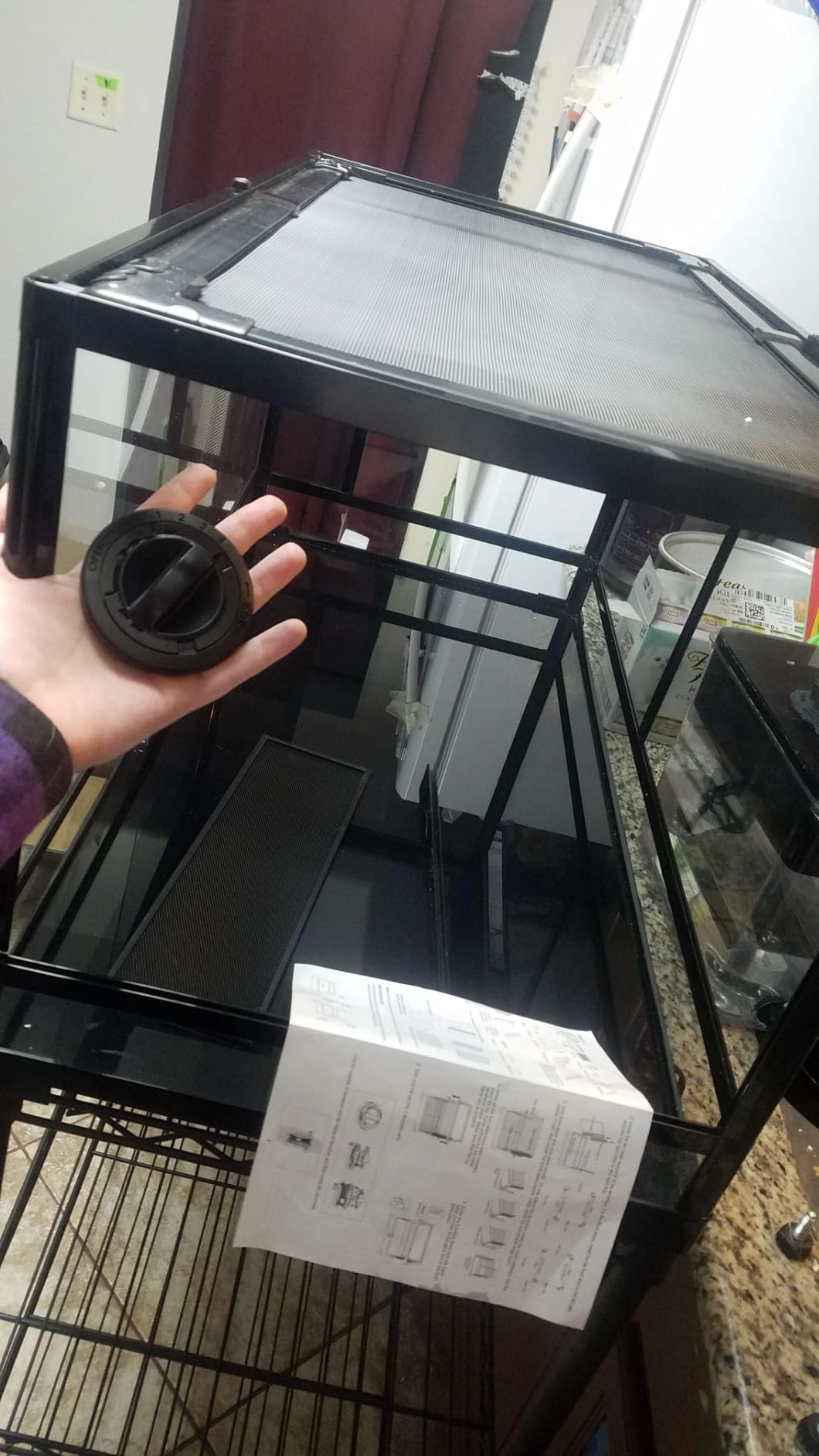
There are closable cable inlets on three panels, so probe wiring and lamp cords can be routed cleanly instead of pinched. Assembly takes about five minutes from flat packing, and the packaging includes a replacement service if a panel arrives damaged.
We will not pretend the glass is invisible to this decision. Tempered panels cannot be drilled, so adding a permanent grommet or vent is out. The sides are mesh rather than glass, which cuts the viewing surface, and at 52 pounds this is a genuinely awkward object to reposition alone.
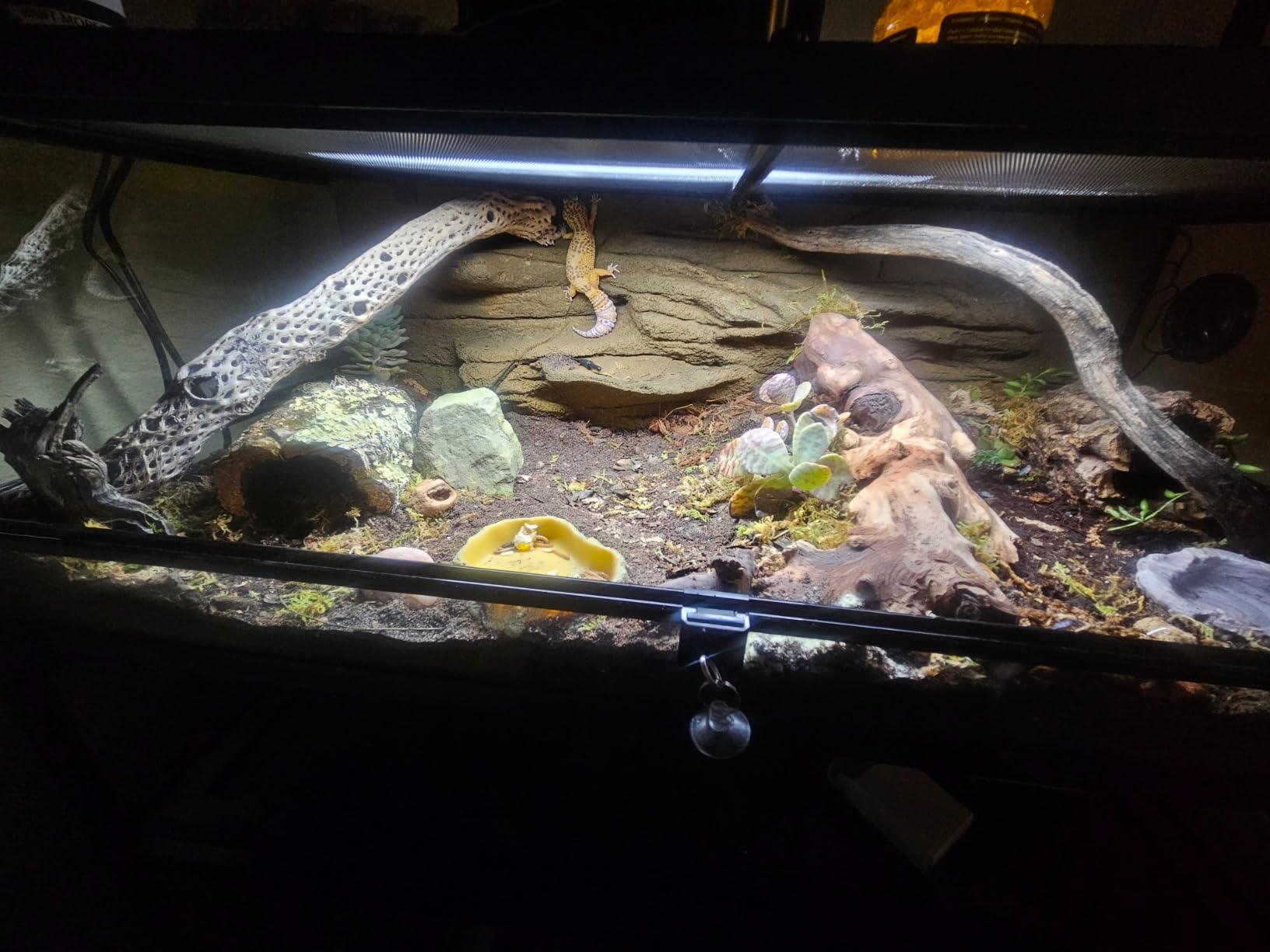
Does the screen top actually deliver usable UVB?
It does, provided the fixture sits above it rather than inside. Reviewers confirm the top passes both UVB and infrared, and the closable inlets are there specifically so you can run a lamp and probes into a sealed tank. Output still depends entirely on bulb quality and distance, so measure with an infrared thermometer rather than trusting the label.
Is a 50 gallon tank the right size for an adult?
It is adequate for one adult Russian or Hermann’s tortoise, and comfortably oversized for a hatchling or juvenile. It is not oversized for a sulcata, which will outgrow it, and keep in mind that a glass front means the animal sees its keeper walking past the barrier all day, which keepers on the forums consistently flag as a stressor.
5. GEGURI Wooden Tortoise House with Detachable Legs — Best for Flexible Placement
GEGURI Tortoise Habitat Indoor & Outdoor, Wooden Tortoise House with Detachable Legs, Reptile Cage for Small Animals
- Detachable legs allow table-top or floor placement
- Pull-out tray makes substrate changes quick
- Three-sided viewing windows
- Lightweight fir that resists warping
- Legs add height so you need overhead clearance
- Unfinished fir absorbs moisture outdoors
- Smaller sleeping area than full-length wooden houses
- No integrated lamp holder
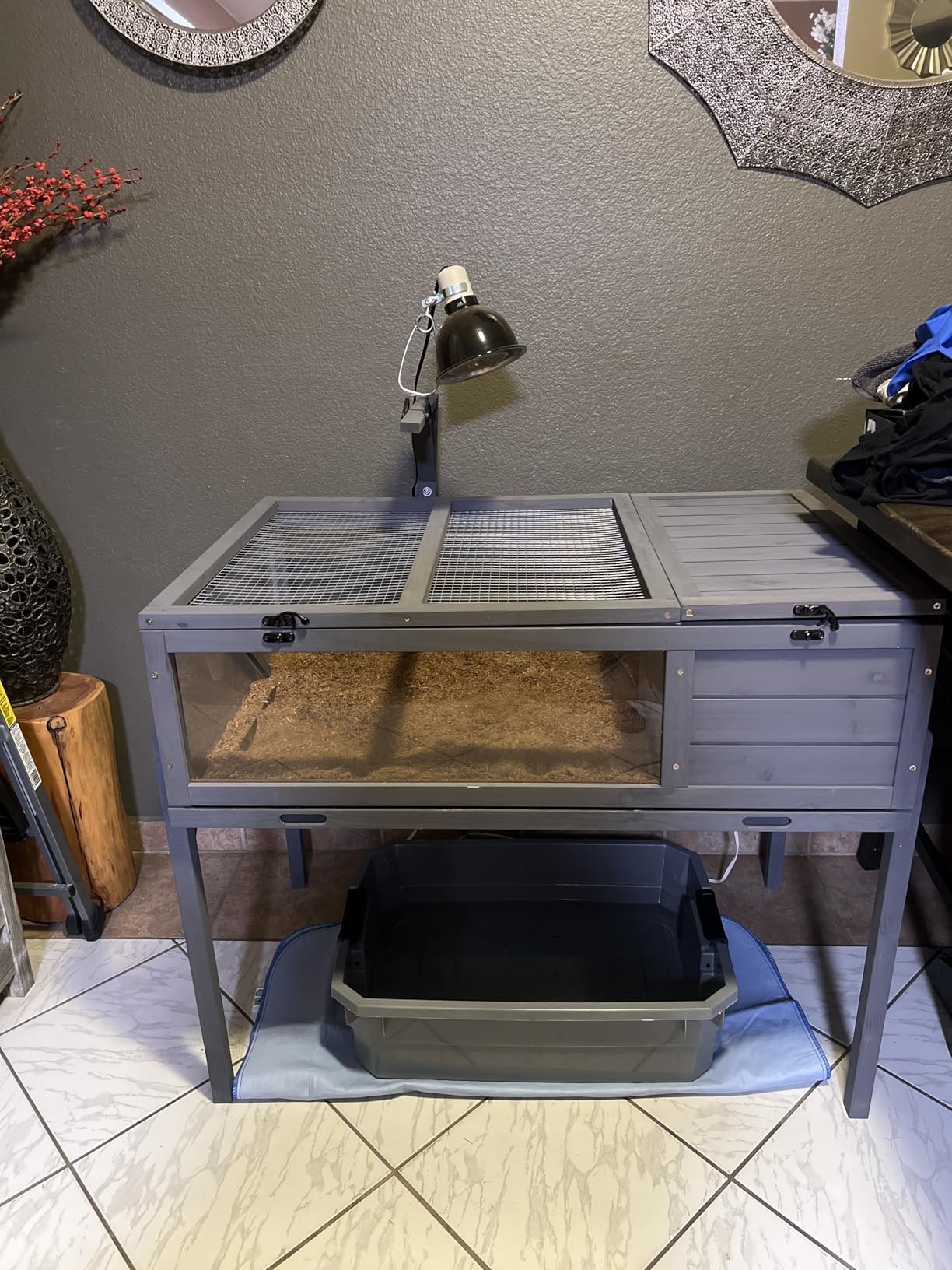
The legs are the reason this one earns a place. Detach them and the habitat sits on a table at a comfortable viewing height for a hatchling; leave them on and it stands on the floor as a floor-level pen. That flexibility is genuinely useful when the same animal moves between a warm room and a sheltered outdoor spot.
Measured at 38 by 23 by 32 inches including the legs, the footprint is among the larger in this group. The two-room layout gives a private sleeping space and an open viewing area, and three-sided windows mean you can watch the animal from most angles rather than crouching over the top.
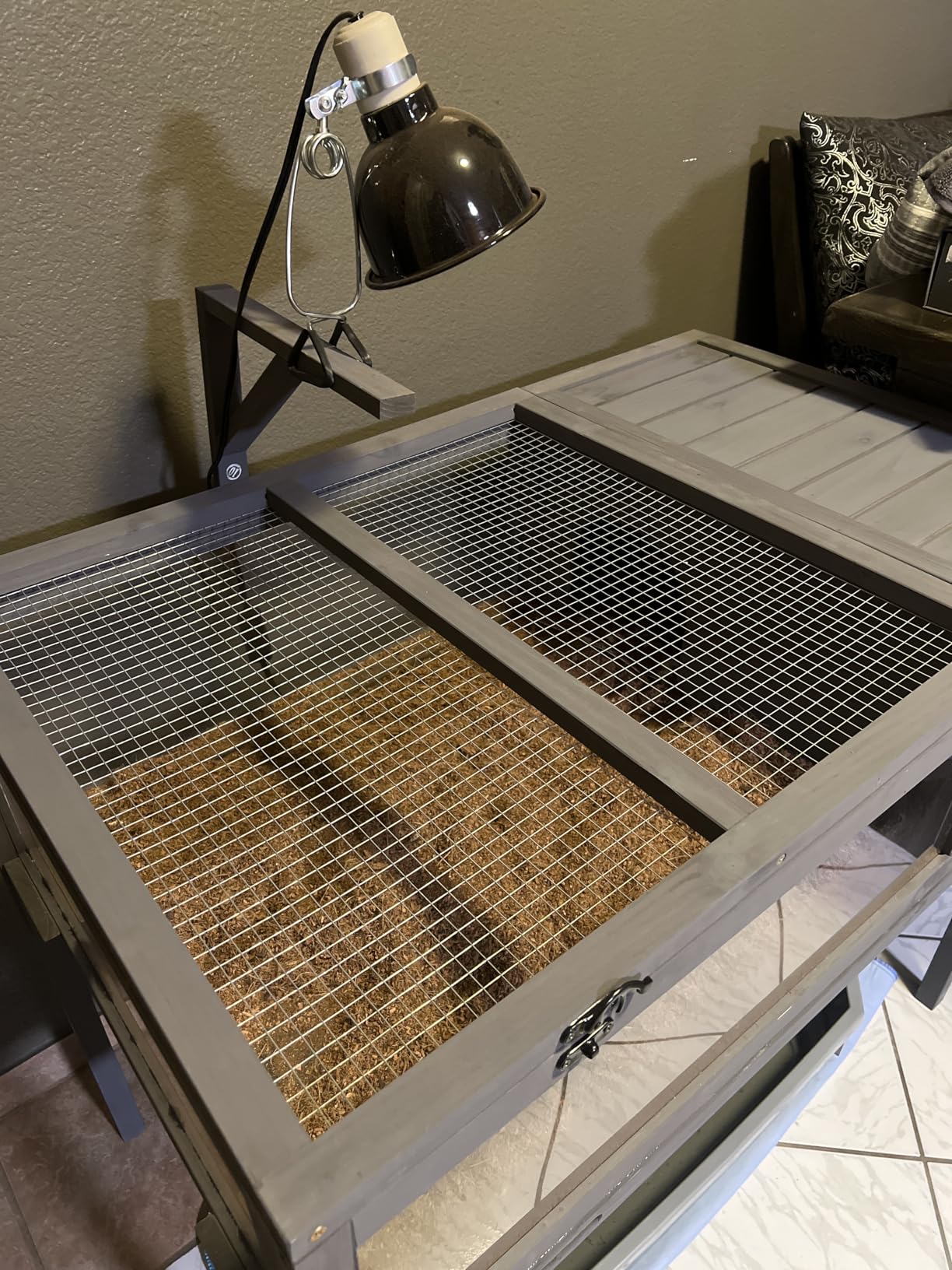
The all-surrounding base with a removable plastic pull-out tray is the feature owners mention most. Changing damp substrate weekly in a wooden box is miserable; sliding the tray out and swapping the liner takes a couple of minutes. At 17.86 pounds it is light enough to carry between rooms one-handed.
The catch is that legs plus habitat body means 32 inches of vertical space, so you need real clearance above it for a hanging UVB fixture. Unfinished fir will absorb moisture if it lives outdoors in humidity, and there is no built-in lamp holder, so lighting is entirely your problem to solve.
Is a two-room design right for a hatchling?
Very much so. A private sleeping area with a solid roof is how a young tortoise gets the darkness it needs to actually rest, and it also gives you a sheltered area during the day. Add a shallow water dish in the open half and a hide at floor level, and a hatchling has everything it needs.
What is the leg setup best used for?
Short setups indoors and a semi-permanent outdoor position on a covered patio. It is not predator-proofing on its own, so if it goes outside you still need mesh over the top and a buried wall skirt.
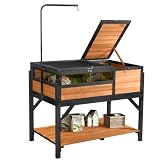
6. Aivituvin Habitat with Storage Shelf — Best Lighting Adjustment
- Lamp stand rotates 360 degrees and adjusts in height
- Large storage shelf keeps supplies off the floor
- Removable legs move the unit indoors and out
- Acrylic activity-area window gives a bright view
- Wooden top does not open so deep cleaning needs disassembly
- Acrylic panels scratch and yellow
- Acrylic rather than glass limits long-term clarity
The lamp stand is what separates this from its sibling at number one. It adjusts from roughly 11 to 31 inches high, spans lamp widths from 13 to 21.1 inches, and rotates 360 degrees, so you can dial the basking spot into the corner of the pen where you actually want it instead of where the bracket happens to point.
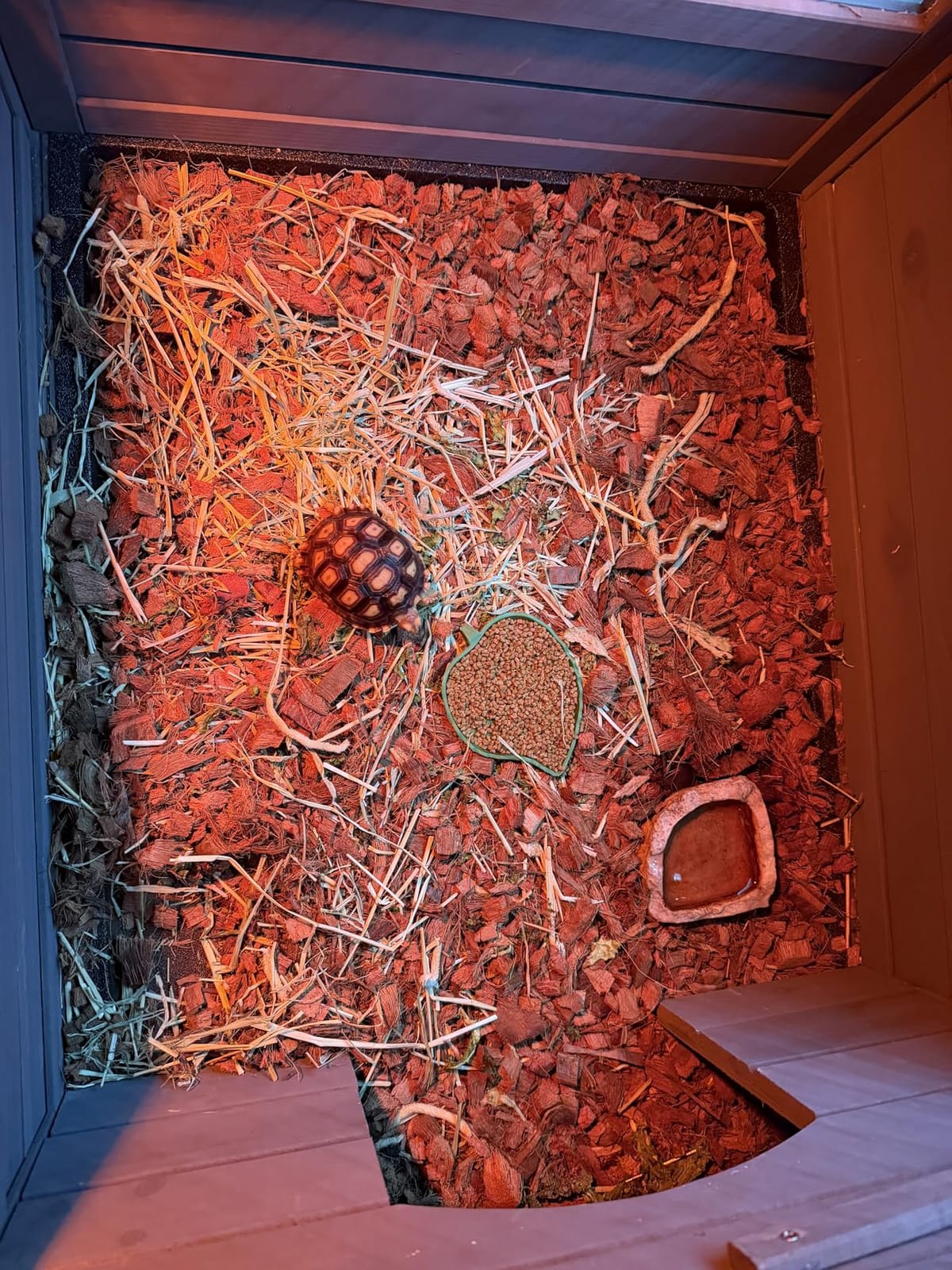
The storage shelf underneath is more useful than it sounds. Substrate, a spare UVB bulb, a hide, feeding tongs and a water dish all live under the habitat rather than scattered around the floor, which keeps the actual living space clear. The footprint is 39.4 by 22.5 by 31.5 inches with removable legs for table-top or floor-standing use.
This model launched in late 2025 and has around 320 reviews, so the feedback is newer and thinner than the older wooden houses. What reviewers consistently praise is the adjustable lighting, the shelf and the removable legs, and the two-bedroom layout with a weatherproof hiding area mirrors the design that works elsewhere in this group.
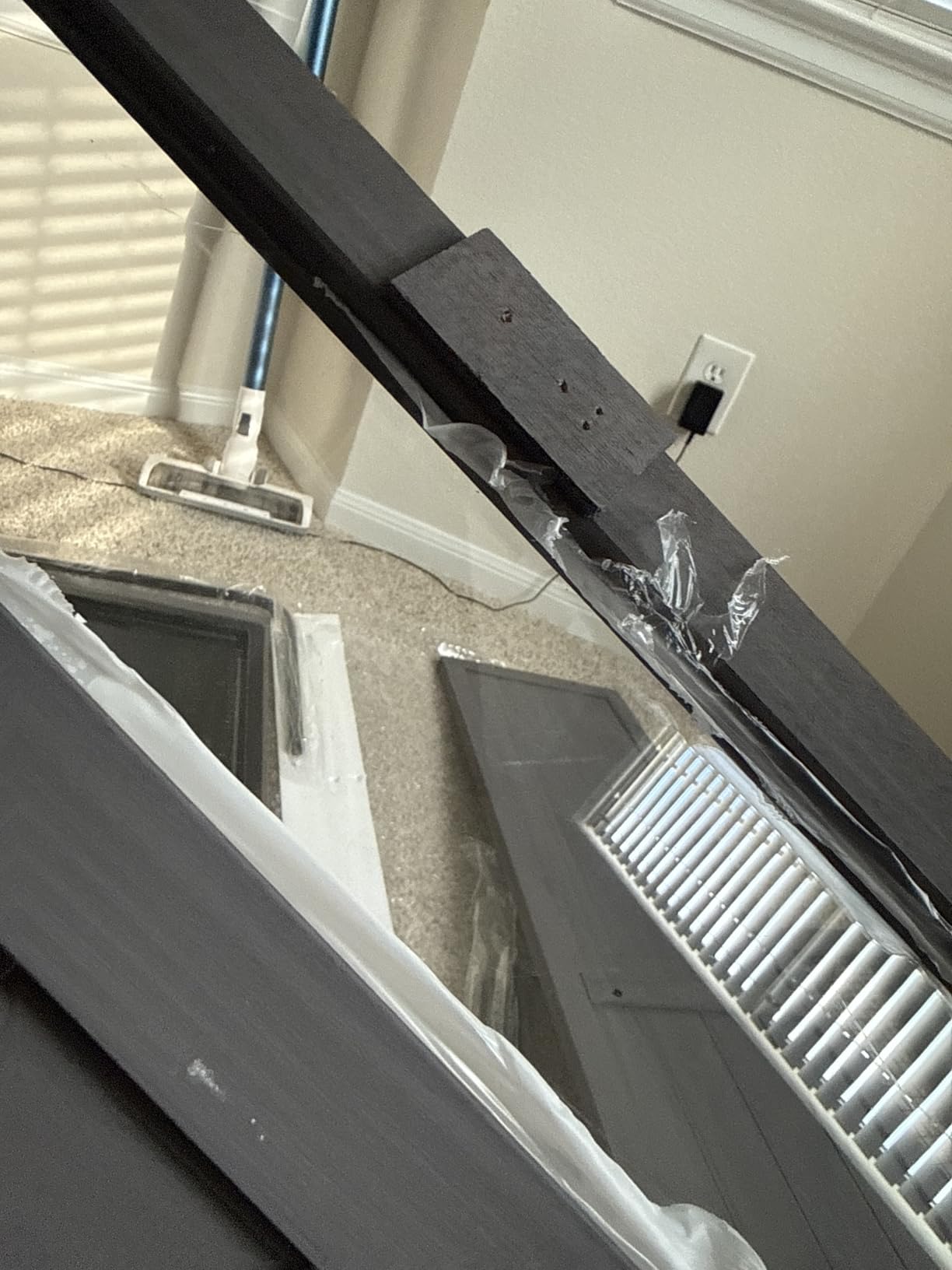
The wooden top is the practical drawback. It does not open, so deep cleaning means partial disassembly rather than lifting a lid, and acrylic panels yellow with regular use over a year or more. For a long-lived animal, that is a maintenance cost to weigh against the lighting convenience.
Does lamp stand adjustability really change husbandry?
It does. Basking surface temperature between 90 and 95 degrees Fahrenheit needs a consistent, repeatable distance between bulb and shell, and a stand that adjusts in both height and rotation lets you re-create that gradient after every deep clean rather than guessing at it.
Who should skip it?
Anyone who will deep-clean on a weekly cycle and hates disassembly. If access matters more than lighting precision, the openable top on our number ten pick is the better long-term tool.
7. REPTI ZOO 35 Gallon Full Glass Tank — Best Viewing for a Small Pen
- Full four-sided glass gives an unobstructed view of the animal
- Low wide profile suits walking and digging
- Cable pass-throughs keep wiring tidy
- Two front doors with a lock and buckle
- Reinforced packaging protects the glass in transit
- Single-piece top lid is awkward to remove
- Doors are hard to align until the frame is tight
- Locking mechanism feels inexpensive
- Metal rods are unlabelled during assembly
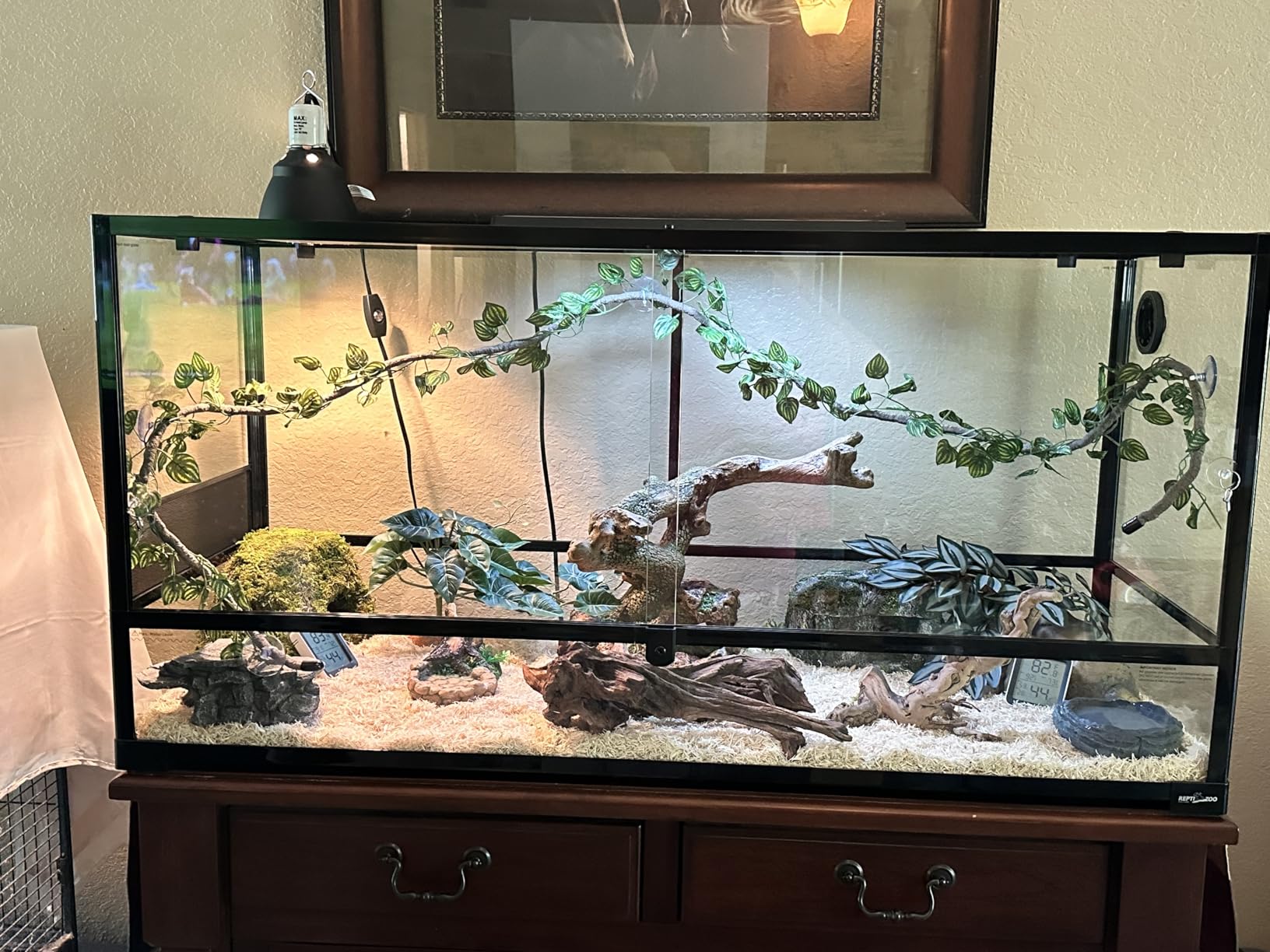
The wide-and-low profile is what makes this worth a look. At 36 by 18 by 12 inches you get a long, shallow floor rather than a tall box, and that shape suits walking and digging better than a tall tank of the same volume.
Full tempered glass on all four sides gives you an unobstructed view through every wall, with a thin wire screen top for ventilation and UVB and infrared penetration. The raised waterproof bottom frame accepts a substrate heater, and six cable inlet holes plus an extra pass for up to four wires keep probe and lamp wiring from being pinched.
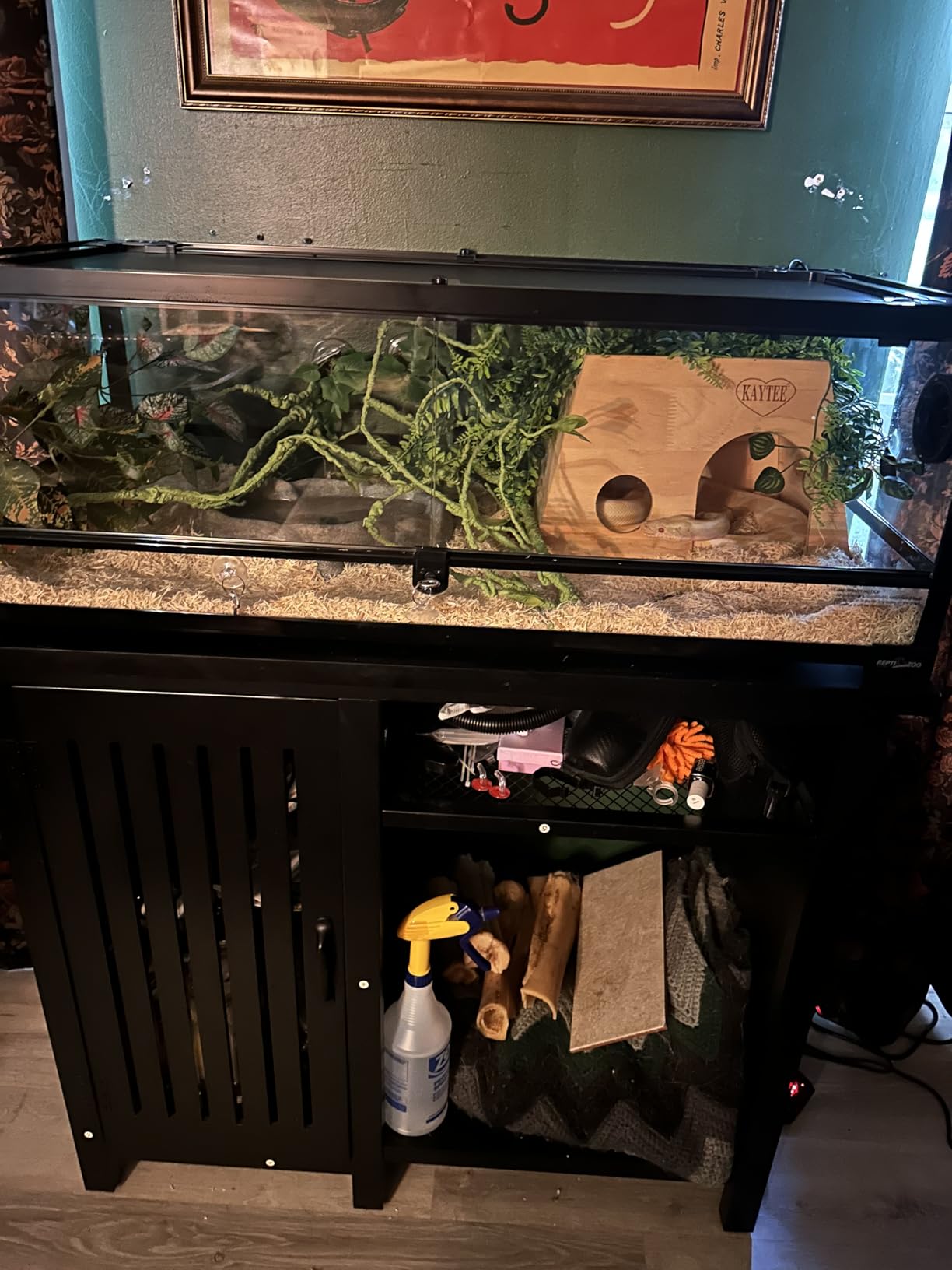
Security is handled with a lid buckle and a door lock, and two keys are included. Assembly takes about five minutes because the top frame is a metal support rod assembly, and at 30 pounds it is still light enough for one person to lift.
The top is a single panel, which several reviewers would prefer split in two for access. Doors can be frustrating to align until the frame is fully tightened, and the lock feels inexpensive, so treat it as a deterrent rather than an actual tortoise-proof fastener.
Is a 12 inch tall tank tall enough?
For a hatchling or small juvenile, yes, and it is one of the reasons this shape works. Keep in mind that height is the least important dimension for tortoises, so extra vertical space is mostly wasted unless it buys you substrate depth or hides. For more on that trade-off, we covered it in our larger enclosure guide.
Is glass acceptable at all?
For a young animal on a short-term indoor setup, most keepers accept it if there is a screen top and decent ventilation. For a long-term adult, we would still steer you toward an opaque-sided pen because glass alters behaviour even when the temperature is perfect.
8. REPTI ZOO 85 Gallon Large Tank — Best for Large Species
- 85 gallon footprint suits adult tortoises and large snakes
- Heavy tempered glass resists scratching
- Extra cable pass-throughs simplify lighting and probe routing
- Flat packing with clear labels
- Replacement service and spare key included
- No handles on the sliding doors
- 77 pounds is impractical to move alone
- Doors rattle and the lock engages in one position
- Tempered glass cannot be drilled
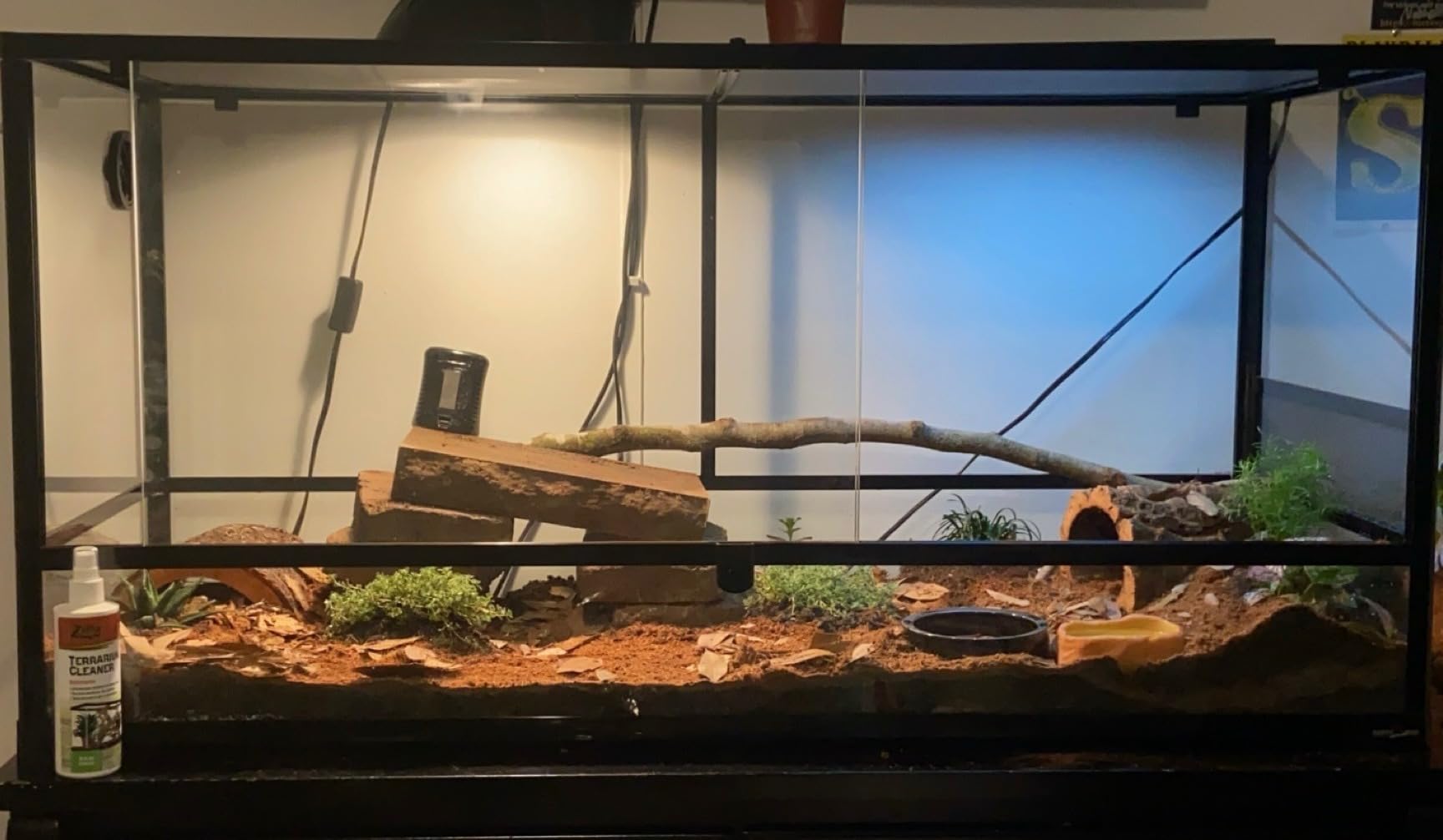
This is the one to consider if you have already skipped the small-pen stage and want a very large single unit. At 47.2 by 17.7 by 23.6 inches it holds 85 gallons, and breeding tortoise setups and large snake enclosures both start here in owner discussions.
Tempered glass on all four sides is noticeably more scratch resistant than acrylic, which matters over a decade of daily viewing. Front sliding doors open separately for feeding and cleaning, and ventilation on one side panel keeps moisture balanced. Six inlets across the top and one side, plus an extra pass for four more wires, make the lighting and probe routing straightforward.
Flat packing with labelled parts gets it assembled in under half an hour, and owners running breeding programs mention that the packaging survived rough delivery intact. A replacement service and a spare key are included, which is reassuring given the weight of the glass.
At 77 pounds this is not a tank you move alone or reposition while it is occupied. There are no door handles, so gloves or added handles are needed, and the doors rattle when closed and only lock in one position. As with the other glass units here, tempered panels cannot be drilled for custom cutouts.
Is an 85 gallon glass tank big enough for a sulcata?
It is the largest indoor footprint in this roundup, but large arid species such as sulcatas are outdoor animals and even this tank becomes temporary for them. Consider it a well-ventilated indoor holding pen for a big adult rather than a substitute for a proper outdoor enclosure.
What are the alternatives at this size?
For most keepers, a raised garden bed paired with a greenhouse is the more realistic route to that floor space, which is the arrangement endorsed by keepers on specialist tortoise forums when someone asked about PVC alternatives. That route also gives an animal real sunlight rather than a lamp, which no indoor setup can match.
9. PawHut Wooden Tortoise House — Best Budget Wooden Pen
- Large 35.75 inch floor area for the money
- Softwood assembles by hand without power tools
- Three windows plus pull-out side panels
- Light at 16.5 pounds for moving between setups
- Bare wood base molds or warps in humidity and needs a liner
- No pre-drilled holes so screws are started by hand
- Strong odor on arrival that needs days of airing
- Listings describe a removable floor that does not exist
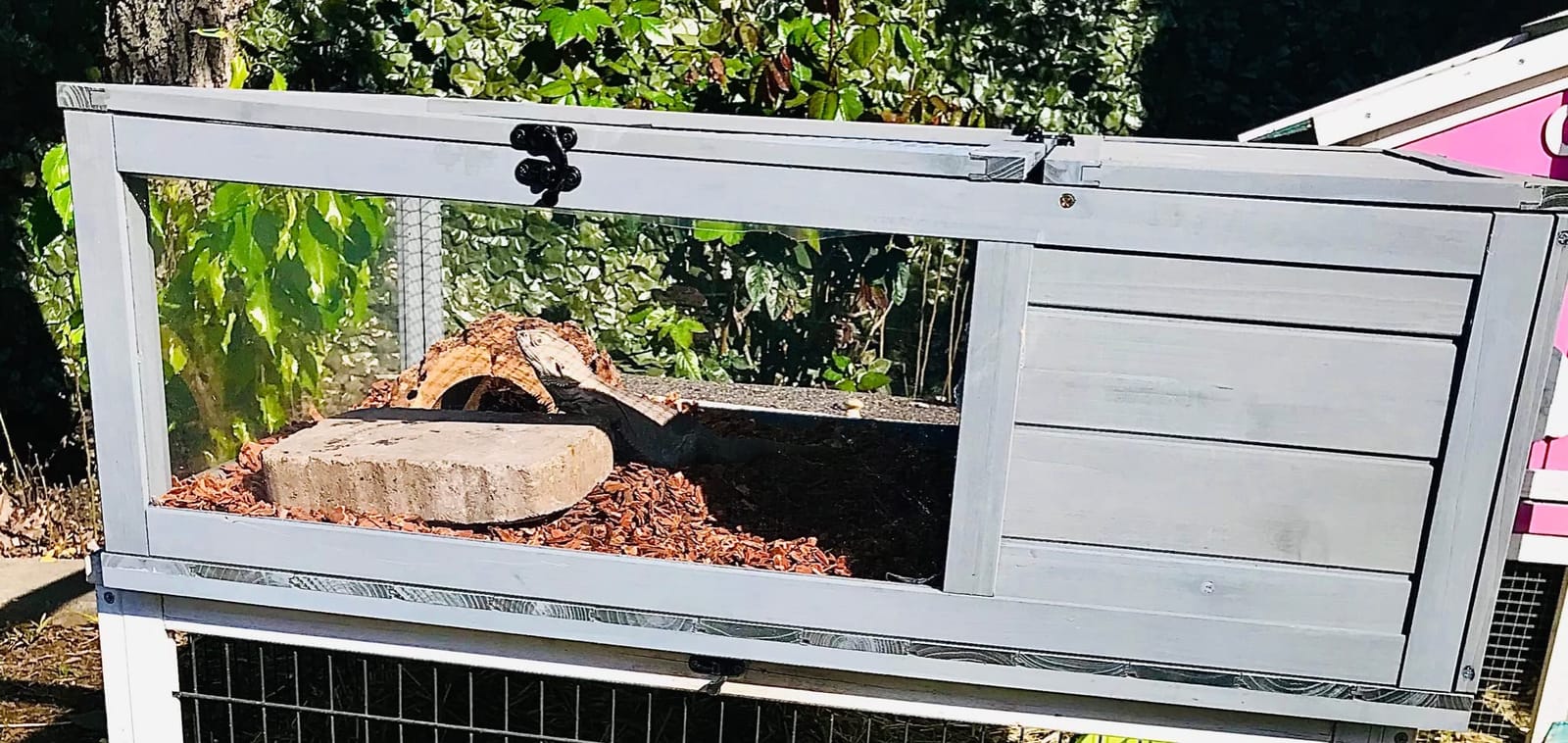
This is an affordable route to a genuinely long wooden floor, and at 35.75 by 23.75 inches it delivers more length than several units that carry a much higher ticket. Owners of box turtles, sulcatas and Russian tortoises value the light weight of 16.5 pounds, since it is easy to carry out to a covered area for a warm day.
The two-room layout gives a private sleeping area and a public viewing area, and the pull-out side panels in the run area expand the usable floor space when you want it. Three large viewing windows mean you are not constantly peering over the top. Lockable latches help when it is outside.
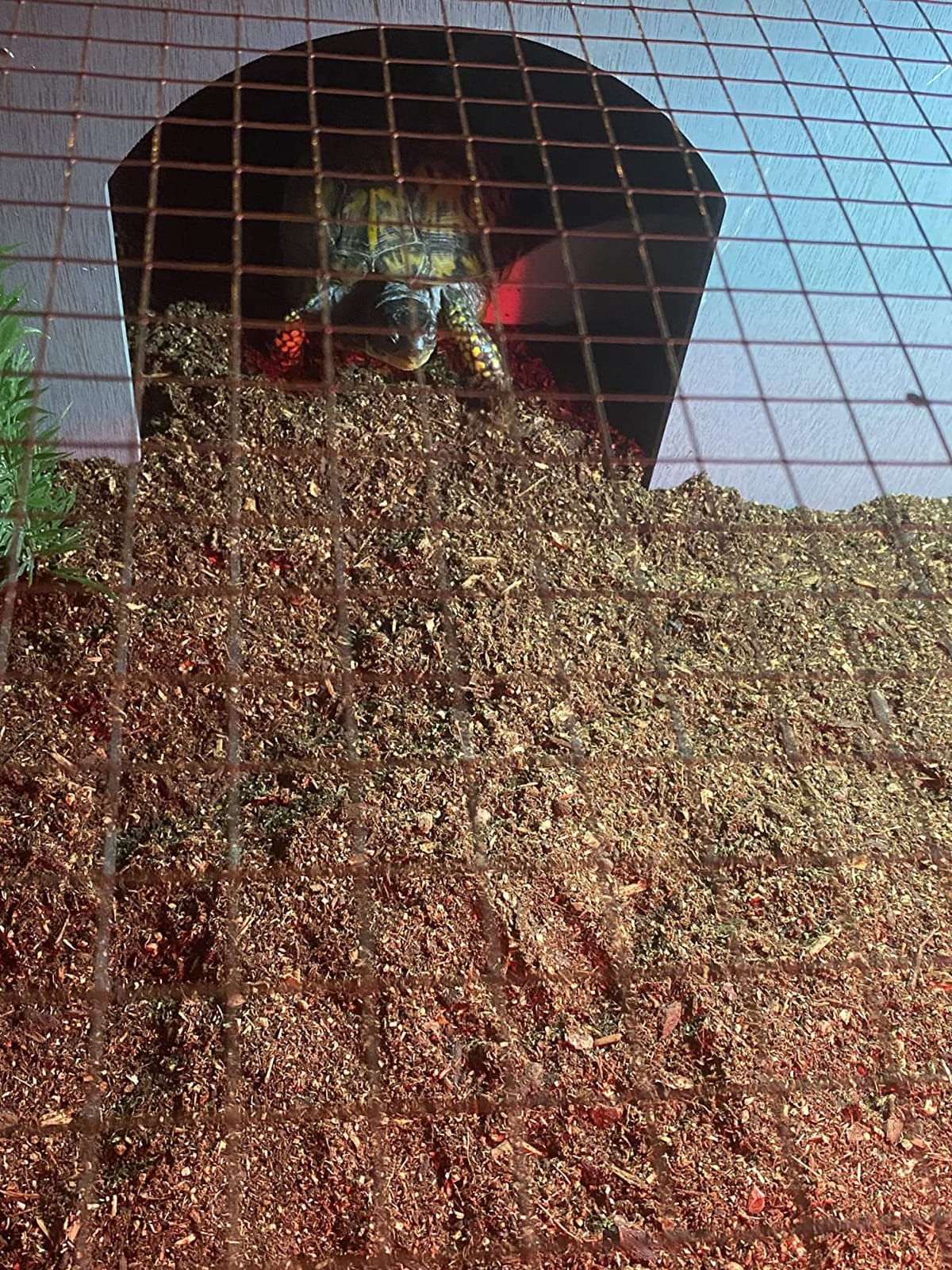
Moisture is the real problem here. Several reviewers report mould under coconut-fibre bedding and a warped, leaking base, so this unit suits a dry indoor setup far better than a humid one. Line the floor with plastic sheeting before adding anything wet, and treat the odour on arrival as a sign that the wood needs several days of airing in a ventilated room first.
Two smaller quirks to know about. There are no pre-drilled holes, so you start the screws by hand, and the product listing mentions a removable floor that does not actually exist, so bring your own liner.
Is unlined fir a dealbreaker for a tropical species?
For a dry Mediterranean tortoise in a heated indoor room, no. For a red-footed tortoise on damp coconut substrate, yes, unless you are prepared to line the base and reseal it. Once lined and maintained, most owners report the structure itself holds up fine.
How does the pull-out side panel actually work?
It extends the run area so you can give a growing animal more floor space without buying another unit. It is a short-term answer to the fast growth phase rather than a permanent enlargement, so keep the next size in mind.
10. Magazoopet 39 Inch Enclosure — Best for Easy Cleaning
39″ L Large Tortoise Enclosure, Wooden & Plastic Habitat with Storage Shelf
- Openable top makes feeding and deep cleaning far easier
- Removable tray speeds up substrate changes
- Lamp holder adjusts across five horizontal positions and height
- Top and bottom locks plus a metal mesh cover
- Removable legs for indoor or outdoor placement
- Only 100 reviews so long-term durability is thin
- Acrylic window scratches and yellows with use
- Wood and plastic build needs a liner in humid setups
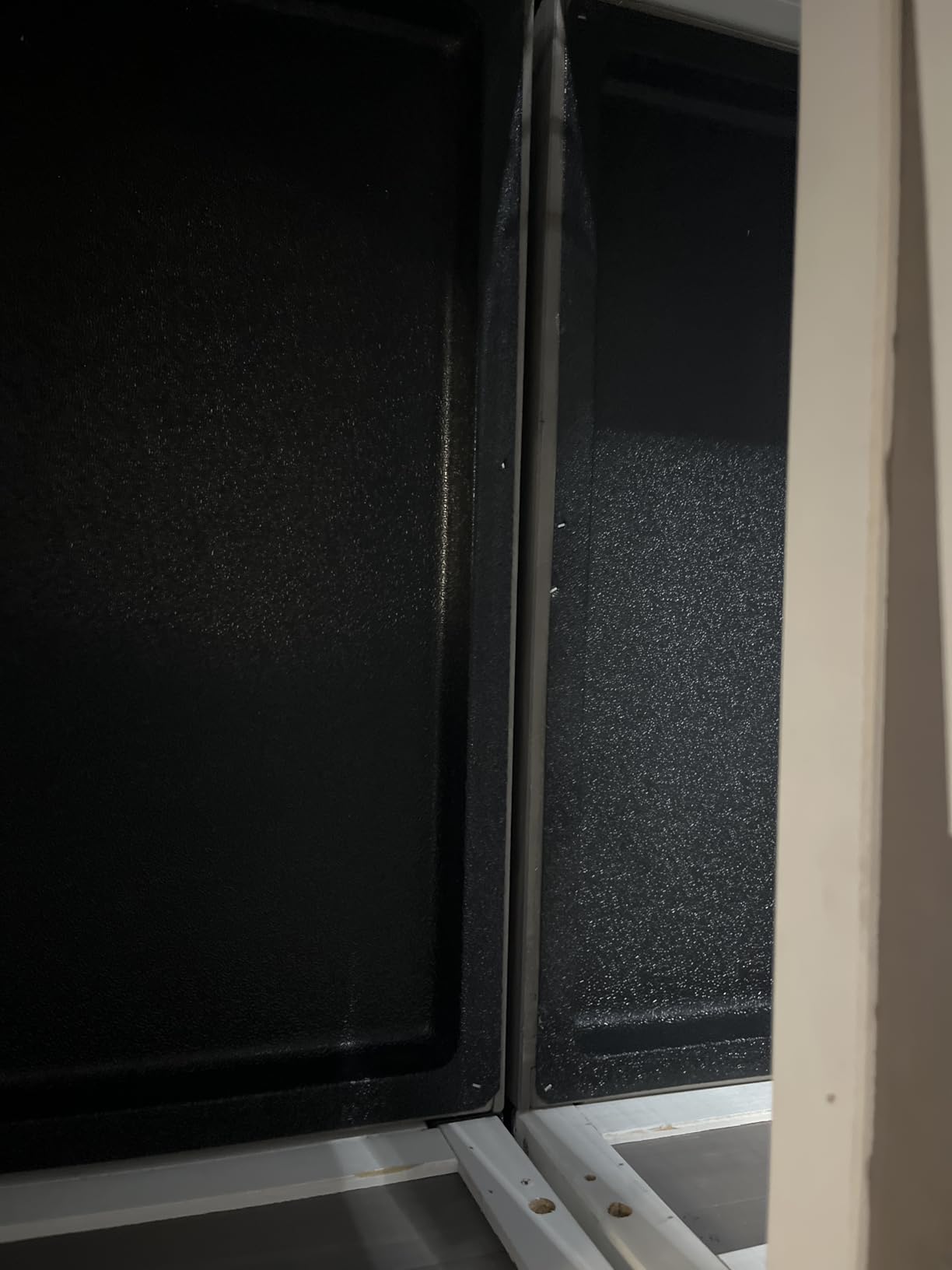
This is the newest listing here, with roughly 100 reviews at 4.4 stars, and it solves the problem that annoys us most in wooden pens: you can actually open the top. A support rod holds it steady for feeding and full access, which turns a weekly deep clean from a disassembly job into a two-minute task.
The removable bottom tray handles the rest of the routine. Substrate changes are the single most frequent reason tortoise enclosures go bad, and sliding a tray out rather than scooping by hand is a meaningful quality-of-life difference in a pen of this size.
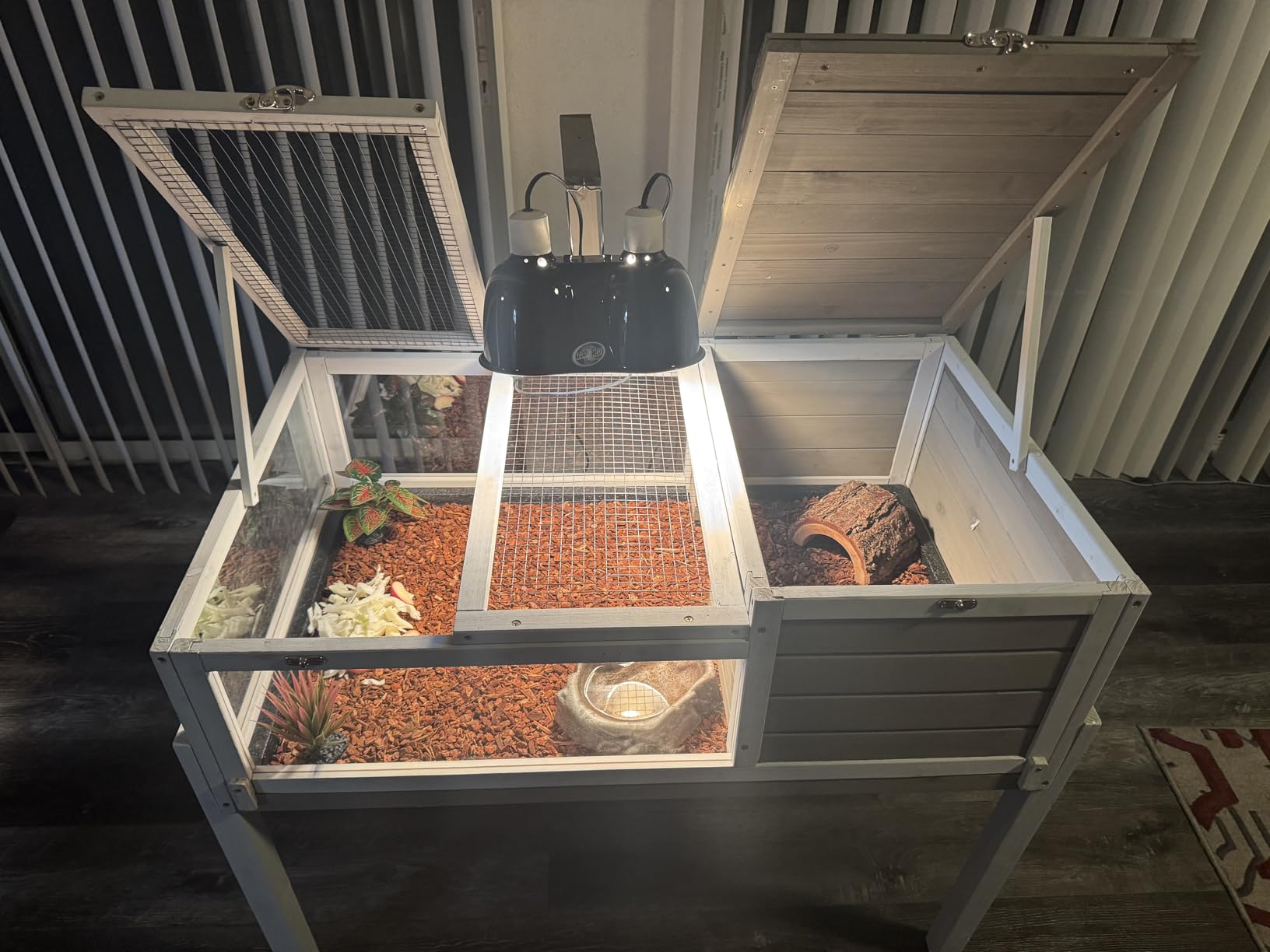
Lighting is well served too. The lamp holder offers five horizontal positions across a 14.6 to 22.4 inch span with height adjustment from 30.3 to 38.2 inches, so you can set a basking distance precisely. Top and bottom locks plus a durable metal mesh cover handle containment, and removable legs let you shift between table and floor.
Its footprint is 39 by 22.8 by 33 inches with a storage shelf underneath, so plan the clearance above it before you commit. With a short review history, long-term durability is less well documented than the older wooden pens, and the acrylic window will scratch and yellow as acrylic does.
Does the openable top solve the cleaning problem properly?
Mostly. You get full top-down access for removing substrate, scrubbing corners and checking the whole floor. The remaining chore is the substrate itself, which in any enclosure this size is a two-bag job regardless of access.
Is buying a new-listing model risky?
The design is conventional and nothing about it is untested, but with only 100 reviews you have less long-term data than a product available since 2005. We would treat it as a good fit for a hatchling or a second pen rather than the single enclosure housing an adult for the next decade.
Tortoise Enclosure Buying Guide
What Size Enclosure Does a Tortoise Need?
For one adult Mediterranean species such as a Russian, Horsfield’s, Hermann’s or Greek tortoise, we would not look at anything under 6 square feet of indoor floor space, and 8 square feet gives you a workable temperature gradient and a burrowable area. Outdoors, 4 by 8 feet is the accepted minimum, with 8 to 12 square feet per additional animal if you keep more than one.
Hatchlings are the exception. A 40-gallon clear plastic tub with coconut fibre and organic soil is a legitimate setup for the first several months, and a plastic tote is also the standard quarantine container. The problem is the growth rate: a unit that fits a hatchling is usually undersized within months, and that is why keepers keep buying enclosures twice.
Height sits near the bottom of the priority list. Extra vertical space only earns its place if it creates substrate depth for burrowing or a taller wall for containment, and otherwise it simply makes a pen harder to heat evenly.
Is a Glass Terrarium Better Than a Vivarium or a Tortoise Table?
A tortoise table is the right answer for indoor housing. It is long, low, open or mesh-topped, easy to heat in zones, and gives the animal an opaque barrier it can walk along rather than through. A vivarium, meaning a taller glass box with ventilation panels, is acceptable for a hatchling but wastes space and height. A glass terrarium is the least suitable of the three for a long-term tortoise.
The specific problems with glass are consistent across keepers and species guides: the floor area available is small relative to the tank’s footprint because of thick bases, ventilation through a screen top alone is limited, and the animal sees movement along every wall all day, which produces repeated escape attempts and stress. If you already own one, add a solid background panel on the front and keep the substrate deep.
Should the Enclosure Be Indoor, Outdoor, or Both?
Outdoor housing should be the goal wherever your climate allows it, and an indoor pen should be treated as the supporting cast. Most owners keep two setups, using the indoor unit for hatchlings, cold months, quarantine and veterinary recovery.
Build the outdoor pen with a frame of rot-resistant wood, chicken wire or hardware cloth over the top, and a wall skirt buried 6 to 12 inches underground, because tortoises burrow under walls rather than climb over them most of the time. Cover and shade matter more than people expect: a shaded retreat is what lets a tortoise stay outside through a hot afternoon. If you want a template, our enclosure build guide covers frame and mesh work in detail.
A raised garden bed combined with a greenhouse is the arrangement keepers recommend most often when someone asks about a PVC alternative, and it scales to a 4 by 8 footprint far more readily than any tank in this roundup. Breeders report that two tortoises sharing even a 4 by 8 pen is roughly half the space each should have, which is another argument for separate outdoor pens.
What Goes Inside: Substrate, Heat, UVB and Hides
Substrate first. Mediterranean species want 2 to 4 inches of a topsoil and sand mix; tropical species want closer to 4 to 6 inches of a coir-based blend. The point is burrowability, and a tortoise that cannot dig will overheat and stress.
Heat next. A ceramic heat emitter or radiant panel controlled by a thermostat keeps air temperature steady, and a separate halogen basking bulb delivers the surface temperature of 90 to 95 degrees Fahrenheit that shell health depends on. Measure with an infrared temperature gun, not with the bulb label.
UVB is non-negotiable indoors. A T5 HO 10.0 or D3 12 percent lamp suspended above the enclosure provides the ultraviolet exposure that prevents metabolic bone disease, and bulbs need replacing every 6 to 12 months because the output drops before the filament fails.
Then the furniture: a hide with a solid roof in the cool end, a second hide if you keep two animals, a shallow water dish refreshed daily, slate or flat stone for traction on ramps, and edible-safe planting for cover. A digital hygrometer and the infrared gun complete the kit, and enclosure choice only matters as much as the equipment you put in it.
How Do You Stop Escapes and Climbing?
Tortoises are more capable climbers than most new keepers expect, and species guides describe them as skilled climbers and diggers. Smooth the interior walls, remove any rim, seam or fixture that creates a toehold, and fit a mesh top with a lock. That combination, rather than height alone, is what keeps an animal inside.
Burrowing is the other route out, and walls alone do not solve it. Bury the wall skirt 6 to 12 inches, line the base of the pen with mesh or hardware cloth, and pack the corners where substrate tends to tunnel. Owners running outdoor pens report that this three-part approach ends escape attempts almost entirely, while height alone rarely does.
What Should You Avoid Buying?
First, pancake-style turtle enclosures. They are wide and shallow by design, they prioritise viewing over floor area, and they are the wrong shape entirely for a tortoise. Second, topless tanks with no plan for where a UVB fixture goes. Third, enclosures with textured or grooved interior walls that give a climbing purchase.
Fourth, cedar or pine substrate in an enclosed PVC pen, where the aromatic oils concentrate. Fifth, any enclosure listed without interior dimensions, since outer measurements hide the gap that matters. And sixth, buying the adult size too early on the assumption you will need it soon: juveniles grow fast, but they also grow out of oversized floor space badly, because a pen that is too big is hard to heat to a safe gradient.
Frequently Asked Questions
What type of enclosure is best for a tortoise?
An open-topped, well-ventilated pen is best: a tortoise table, wooden habitat or predator-proofed outdoor pen. It should give at least 6 to 8 square feet of indoor floor space for an adult, a solid floor holding 2 to 4 inches of burrowable substrate, smooth interior walls, and a mesh or open top you can mount UVB lighting over. Tall glass aquariums are the least suitable option.
What is the best indoor enclosure for a tortoise?
For indoor housing, a wooden tortoise table or pen with a waterproofed base and a mesh top is the right choice, because it is easy to heat in zones and keeps the animal away from glass walls. Our top pick is the Aivituvin wooden house, and the Zoo Med house is the highest rated option and can be joined to a second unit as the animal grows.
What is the best outdoor enclosure for a tortoise?
A predator-proofed pen of at least 4 by 8 feet with walls 12 to 16 inches high and a skirt buried 6 to 12 inches underground is the standard. Keepers most often recommend a raised garden bed combined with a greenhouse, with chicken wire or hardware cloth across the top, plus a shaded retreat so the animal can escape afternoon heat.
What is the best brand of reptile enclosures?
For indoor wooden pens, Zoo Med and Aivituvin carry the most owner feedback, with New Age Pet offering a composite alternative with a long warranty. For outdoor housing, keepers rarely buy a brand at all and instead build from a raised garden bed, a greenhouse and wire mesh. Specialist names frequently mentioned by keepers include Toad Ranch and Reptile Station.
What are common tortoise enclosure mistakes?
The most frequent errors are buying an undersized enclosure that an adult quickly outgrows, using a tall glass aquarium instead of a long floor space, failing to bury a wall skirt so the animal tunnels out, leaving textured interior walls that act as climbing holds, and skipping UVB lighting indoors. Overheating an unventilated tank in summer is another very common mistake.
Conclusion
The best reptile enclosures for tortoises are the ones that give floor space, ventilation and a top you can light. Our winner is the Aivituvin wooden house for its waterproof base and adjustable lamp holder, the Zoo Med house is the highest rated and can grow with the animal, and the New Age Pet is the practical pick when weight and warranty matter.
Pick a hatchling pen now if that is what you need, but plan the outdoor 4 by 8 pen as well. Most keepers run on that two-setup rhythm, and buying the indoor pen twice is the mistake worth avoiding in 2026.