
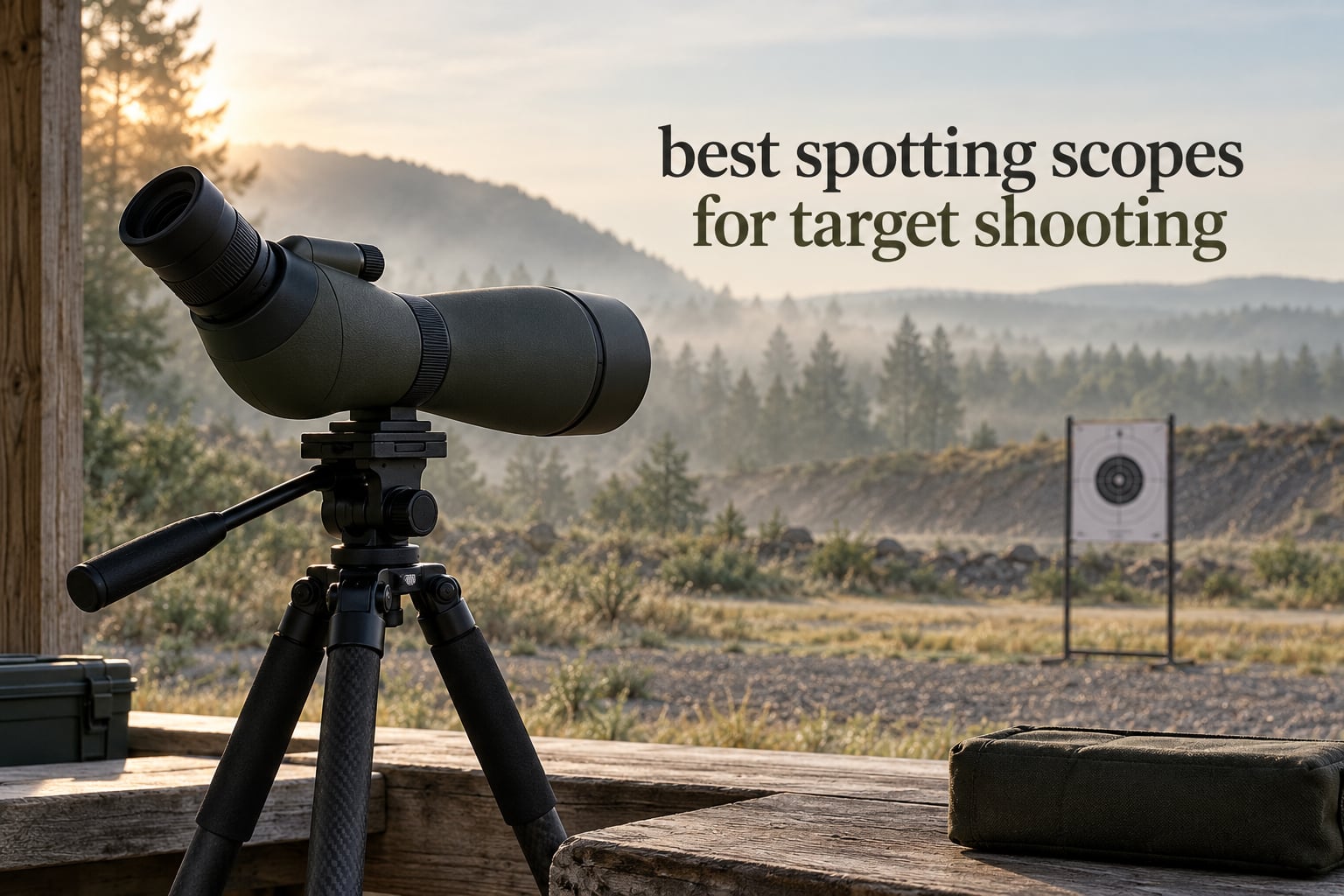
Short answer: the best spotting scopes for target shooting are 20-60x variable zoom models with an 80mm or larger objective lens, fully multi-coated optics, a sealed and purged body, and a tripod foot that accepts a standard 1/4-20 thread. That combination gives you a wide field for finding your target fast, enough magnification to separate individual bullet holes at 300 yards, and enough light gathering to stay readable at dusk.
That last part matters more than raw magnification. A scope that shows you a bright, high-contrast hole at 40x beats a scope that shows a dim, soft one at 60x every single time. Most of the disappointment people have with budget glass happens past 40x, and it is the light and the glass, not the zoom ring.
What a spotting scope actually does for you is simple. You stay on the firing line, put your eye to the glass, and read your own impacts instead of walking downrange to look at paper. That cuts your string time, lets you call wind and holdover corrections in real time, and gives you the group picture you need to tighten the next shot.
We compared 12 scopes for this guide, weighing the specification sheets against what owners report about impact visibility, focus feel, sealing, and mounting. If you want the wider field of optics beyond shooting, we also keep a separate roundup of the best spotting scopes reviewed on the site.
One more thing before we start. The single most common complaint we found in long-range forums was not about the scope at all. It was about the table tripod that came in the box. Every scope below will tell the truth better on a solid shooting tripod than on the flimsy one in the kit, and we say which ones ship with something usable.
Table of Contents
Top 3 Best Spotting Scopes for Target Shooting in 2026

Gosky Flagship DiamondEdge 20-60×80
- 20-60x zoom
- 80mm fully multi-coated objective
- BaK4 Porro prism
- nitrogen-filled sealed body

Bushnell Trophy Xtreme 20-60×65
- 20-60x zoom
- 65mm Porro objective
- fully multi-coated optics
- lifetime warranty
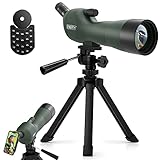
Emarth 20-60×60 Angled
- 20-60x zoom
- 60mm multi-coated objective
- 17mm eye relief
- nitrogen-filled body
All 12 Spotting Scopes at a Glance in 2026
| Product | Specifications | Action |
|---|---|---|
| Gosky Flagship DiamondEdge 20-60×80 |
|
Check Latest Price |
| Emarth 20-60×60 Angled |
|
Check Latest Price |
 SVBONY SV28 25-75×70 Angled SVBONY SV28 25-75×70 Angled |
|
Check Latest Price |
 Gosky FalconPro 20-60×80 Dual Focus Gosky FalconPro 20-60×80 Dual Focus |
|
Check Latest Price |
 Gosky 25-75×80 Flagship Gosky 25-75×80 Flagship |
|
Check Latest Price |
| Bushnell Trophy Xtreme 20-60×65 |
|
Check Latest Price |
 Vortex Diamondback HD 20-60×85 Vortex Diamondback HD 20-60×85 |
|
Check Latest Price |
 Athlon Argos HD 20-60×85 Athlon Argos HD 20-60×85 |
|
Check Latest Price |
 Athlon Talos 20-60×80 Angled Athlon Talos 20-60×80 Angled |
|
Check Latest Price |
 Celestron Regal M2 100ED 22-67×100 Celestron Regal M2 100ED 22-67×100 |
|
Check Latest Price |
 Vortex Crossfire HD 20-60×80 Vortex Crossfire HD 20-60×80 |
|
Check Latest Price |
 Bushnell Legend T-Series 15-45×60 MIL-HASH Bushnell Legend T-Series 15-45×60 MIL-HASH |
|
Check Latest Price |
How We Tested and Chose These 12 Spotting Scopes
Every scope here was judged against the same seven questions, and we kept the weighting on the things that decide whether you can read a shot, not on the things that look good on a spec sheet.
Impact visibility. Can you separate two adjacent holes in a 5-shot group at 100 yards, and can you still tell a hit from a miss at 300? Owner reports of resolving .22 holes at 100 yards and small-bore impacts at 200 yards carried the most weight in this category.
Brightness and contrast at the top end. We noted honestly where images degrade past 40x, because that is where the gap between budget and premium glass shows up first.
Focus feel. A helical focus ring gives fast, one-handed adjustment. A coaxial dual-speed system adds a fine stage for close work. Both beat a stiff single-speed ring that drifts when you change magnification.
Eye relief and eyecup. Specs of 16mm or more work for most glasses wearers. Anything tighter and you will be pulling the eyecup in constantly, which is tiring over a long range session.
Sealing and purging. We counted nitrogen or argon purging plus O-ring sealing as a real requirement. Water-resistant on its own does not survive a wet car ride in April.
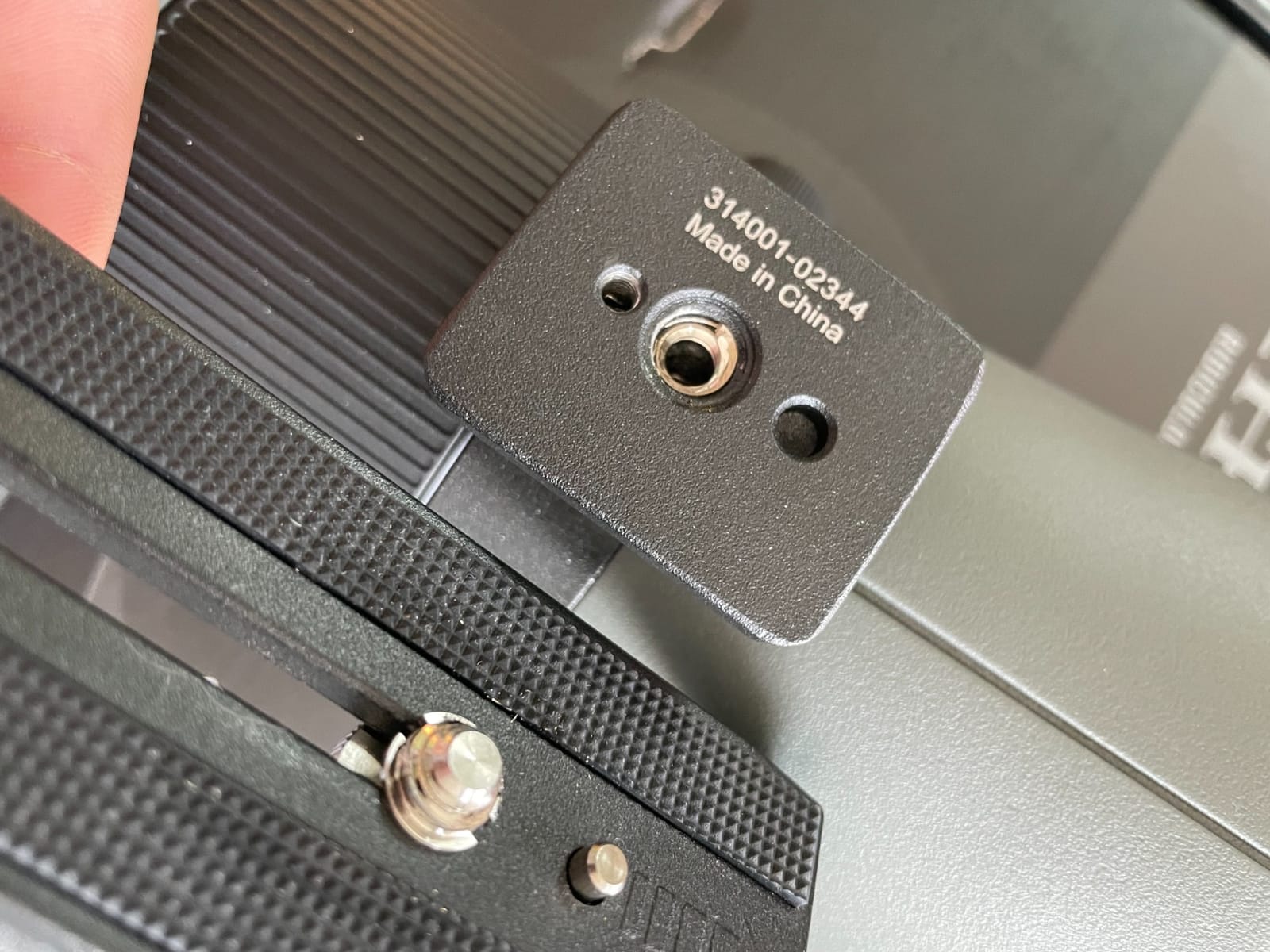
Mounting. A 1/4-20 thread is universal. An Arca-Swiss compatible foot is better still, because it drops straight onto a proper shooting tripod head without an adapter plate.
Warranty and support. Lifetime warranties came up repeatedly in buyer reports as a rough proxy for build quality, and two of the twelve carry them outright.
We also weighted the shooting-specific details that birding roundups ignore. Close focus distance matters at 100 yards on a paper bench. A rotating tripod collar matters if you share one scope between a shooter and a spotter. An integrated reticle matters if you want to hold a wind hold on a steel target instead of guessing.
1. Gosky Flagship DiamondEdge 20-60×80 for Overall Target Shooting
- Resolves .22 holes at 100 yards and stays readable well past 200
- 20-60x zoom with an 80mm objective and BaK4 Porro prism
- Nitrogen-filled and O-ring sealed so rain and dew do not matter
- Phone adapter included for recording groups
- 2.4 pounds is manageable for a range bag
- Image quality drops off beyond 40x magnification
- Included tabletop tripod is not very sturdy
- Phone adapter is clunky to align
- Instructions in the box are limited
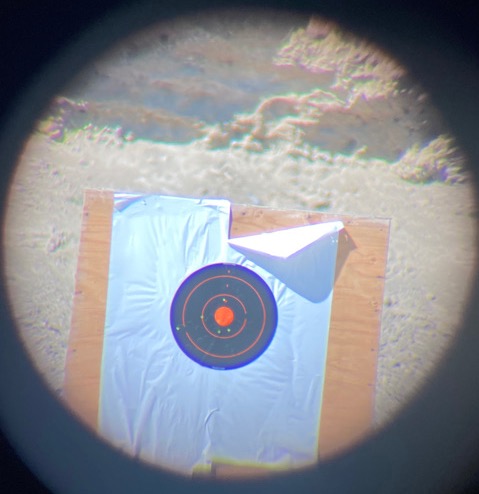
This is the scope we kept coming back to. It carries a 4.4 rating across 5524 reviews, the largest sample on this list by a wide margin, and the pattern in those reviews is consistent. Owners use it to spot .22 holes at 100 yards, to check groups on splatter targets, and for general wildlife work on the same trip.
The numbers behind that reputation are solid for the class. The 80mm objective is fully multi-coated with a green film, the prism is BaK4, and the field of view runs from 82.9 feet down to 48 feet at 1000 yards. That wide low-power field is genuinely useful for finding your target before you start cranking magnification.
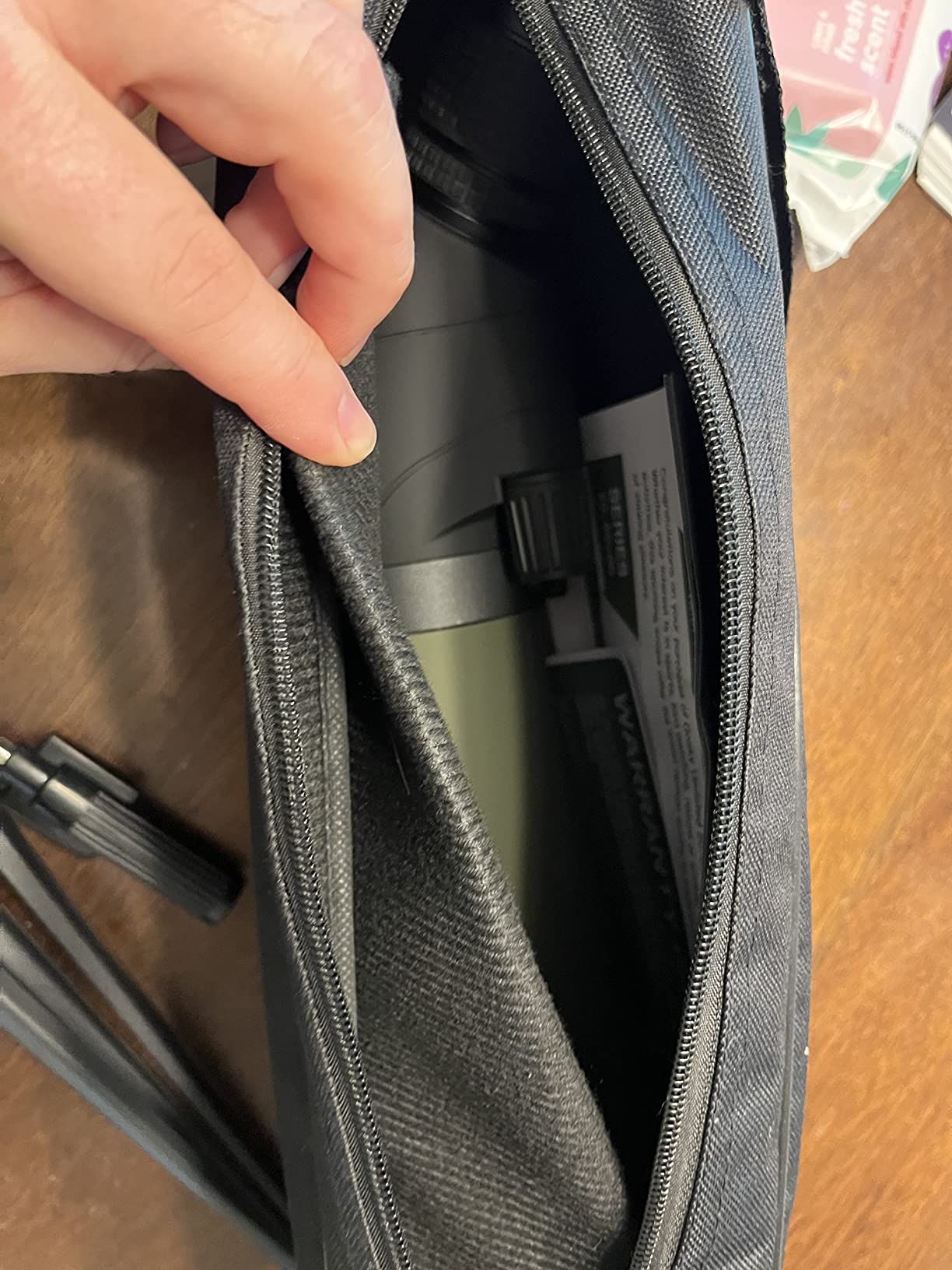
At 2.4 pounds the body is easy to move between the bench and a shooting tripod, and the rubber-armored shell with a stretchable eyepiece shield has survived the handling that range gear usually takes. The nitrogen filling and O-ring sealing mean you can leave it set up on a bench through a temperature swing without fogging the internals.
The 1/4-20 thread and altazimuth mount mean it fits anything from a car window mount to a proper carbon tripod. The included full-metal tabletop tripod is the weak point. Owners complain about it, and so do we. It is fine for a backyard session at 20x and not fine at all at 40x.
Who this scope suits: bench shooters who want one scope for 100 to 300 yards
This is the one to buy if you shoot a mix of distances and do not want to change equipment. Twenty times is wide enough to find a group instantly, and 60x is enough magnification to read individual holes on a splatter target at moderate range. The BaK4 Porro prism and 80mm objective hold brightness well past the range most people actually shoot at.
It is also the sensible choice for a spotter who shares equipment. The phone adapter in the box works for basic digiscoping, so you can photograph a group for scoring or for a training journal without buying extra gear. Photos come out slightly off-center more often than not, so expect to nudge it.
Where this scope falls short: top-end magnification and the bundled tripod
The honest limit is past 40x. Image quality degrades at the top of the range, which is fine for finding and confirming impacts but is not what you want if you plan to hold a precision group at 500 yards. Chromatic fringing on high-contrast edges is visible there too.
The phone adapter is fiddly to align and reviewers report it slips out of position, and the warranty is one year rather than a lifetime. Neither is a dealbreaker for a paper shooter. Both are worth knowing if you plan to lean on the digital features daily.
2. Emarth 20-60×60 Angled for Lightweight Range Days
Emarth 20-60×60 Angled Spotting Scopes for Target Shooting/Hunting/Birding
- Very light at about 1.31 pounds so it fits a small range bag
- Nitrogen-filled waterproof and fogproof body
- Included 14-inch tabletop tripod has wide-set legs
- BaK-4 prism and multi-coated lens give a clear image
- Standard 1/4-20 thread fits full-size tripods and car mounts
- 60mm objective gathers less light than the larger scopes here
- Entry-level sharpness at the top of the zoom range
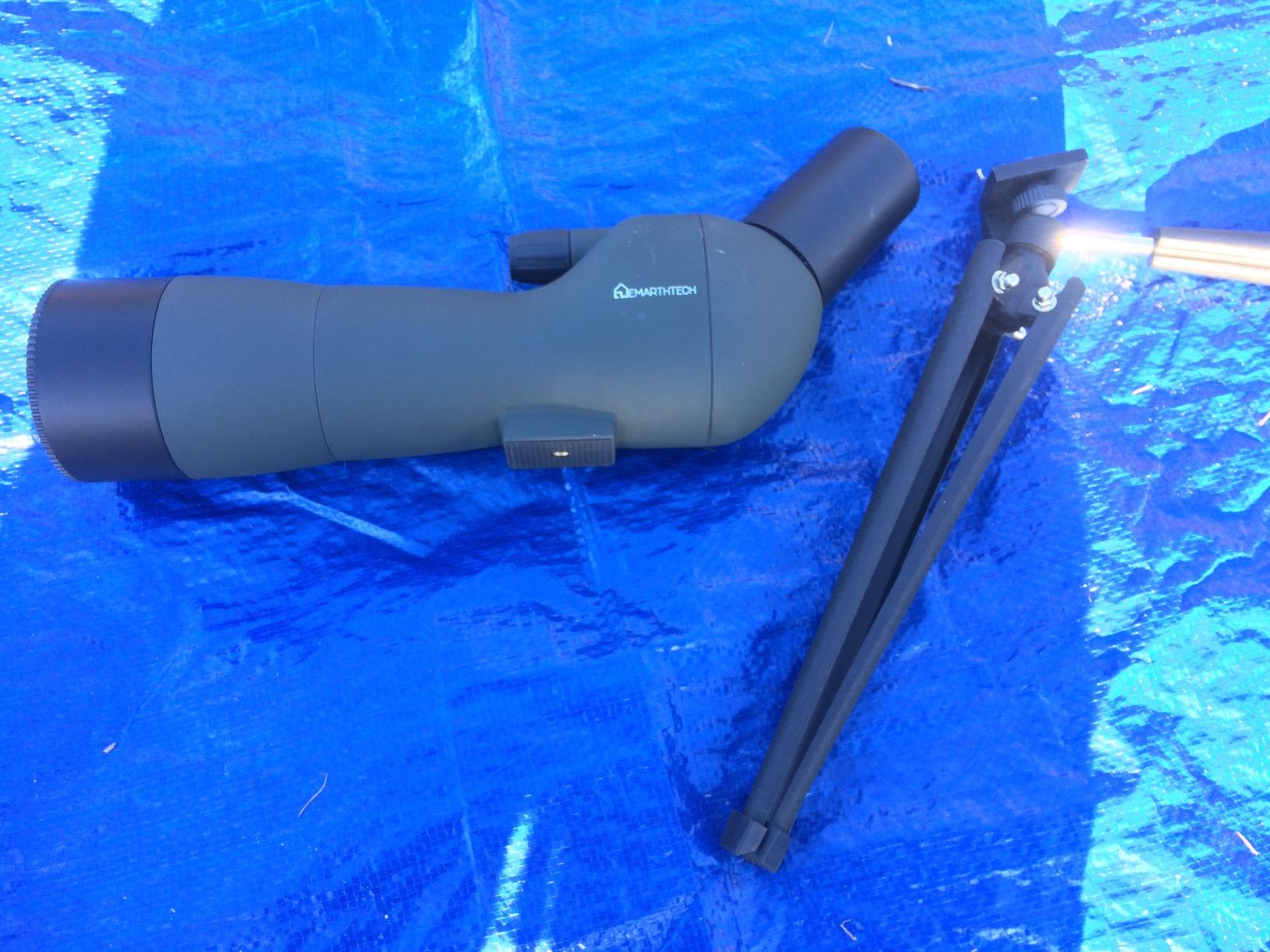
The Emarth is the lightest serious option here, at about 1.31 pounds, and that changes how you shoot. You can carry it to a match, an offhand event, or a casual range day without it becoming the heaviest thing in your bag. Buyers consistently cite it for zeroing rifles and backyard work for exactly that reason.
It earns its place on the strength of the included tripod. Most budget scopes ship with a token plastic table stand. This one comes with a 14-inch tabletop tripod with wide-set legs, and owners single that out as a real difference. It will not replace a shooting tripod at 50x, but it will not wobble at 25x either.
The 17mm eye relief figure is a genuine benefit. It sits above the threshold most glasses wearers need, so you can keep your glasses on and still see a full, black-free field of view. The matte non-slip finish helps when you are handling it with gloves or damp hands at an outdoor match.
Because the eyepiece is angled at 45 degrees, you can sit or kneel at a bench without twisting your neck into an uncomfortable position. That is a bigger deal over a four-hour match than it sounds, and it is one of the reasons angled scopes dominate this category.
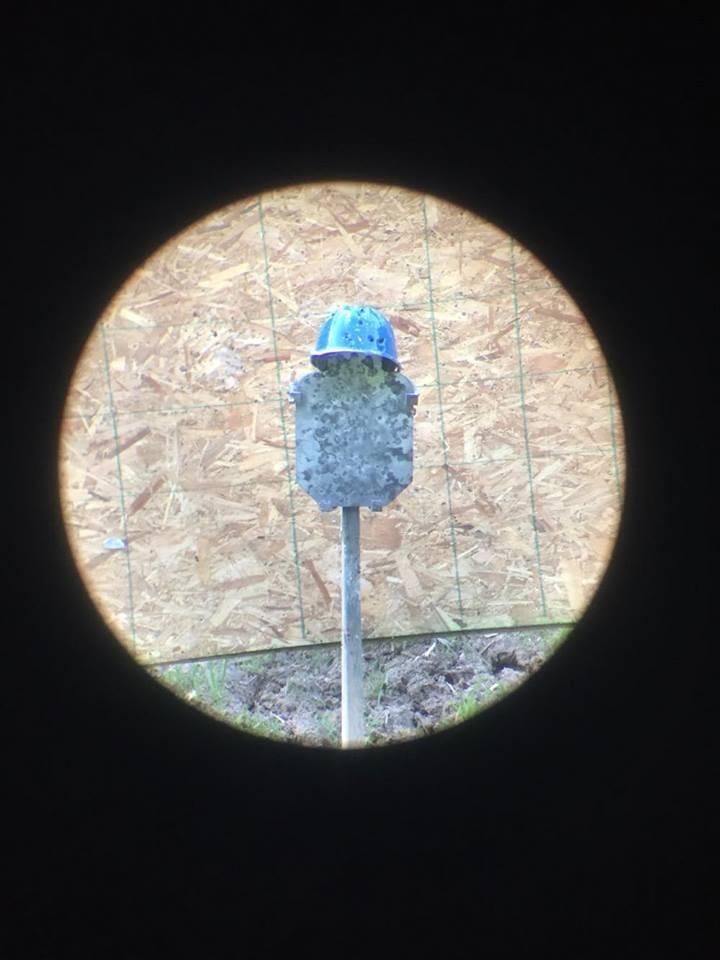
Who this scope suits: new shooters, offhand competitors, and anyone carrying a small bag
Pick this one if you are building a first kit, if you shoot standing or offhand at 100 to 200 yards, or if you want a scope that lives in the car rather than the closet. The nitrogen-filled waterproof and fogproof body handles dew, rain, and temperature swings without complaint, and the 20-60x range covers the whole distance band most new shooters use.
The 1/4-20 thread is the other quiet advantage. It means the same scope works on the included tabletop, on a car window mount, and on a full-size tripod you buy later. If you are still deciding how serious you want to get, this is the least expensive way to leave the door open.
Where this scope falls short: light gathering and top-end sharpness
A 60mm objective is the smallest glass in this group, and you feel it. In overcast light or at dusk, where the 85mm scopes still hold a clean image, this one starts to look flat and grey. If you shoot a lot of evening matches, that is a real limitation rather than a technicality.
Sharpness at the top of the 20-60x range is entry level. For 100 to 200 yard paper work that is perfectly serviceable. For reading a tight group at 300 yards in poor light, a larger objective will serve you much better. Know which one you are before you buy.
3. SVBONY SV28 25-75×70 Angled for Beginners on a Budget
SVBONY SV28 Spotting Scope, Angled 25-75×70 with Tripod for Target Shooting
- Very affordable with a bright
- crisp image for the money
- Works well for spotting .223 and 6.5mm impacts at 200 yards
- Large field of view helps locate targets fast
- Lightweight and portable
- Smooth fine adjustments on the focus ring
- Phone adapter mount is awkward and produces off-center images
- 25x base magnification is too strong for very close viewing
- Lens covers fall off easily
- Included tripod has no height adjustment and feels flimsy
The SVBONY SV28 sits at the bottom of this list on cost and near the middle on satisfaction, with a 4.4 rating across 3334 reviews. Owners describe it as one of the better entry-level scopes available, with clear optics between 25x and 40x for range and birding use. That is exactly the band where 100 to 200 yard paper work happens.
Reported use includes spotting .223 and 6.5mm impacts at 200 yards, which tells you the practical limit for this glass. The 70mm objective with FMC coating and BaK-4 prism gives more light than a 60mm scope and less than an 80mm or 85mm scope. It is a sensible middle step.
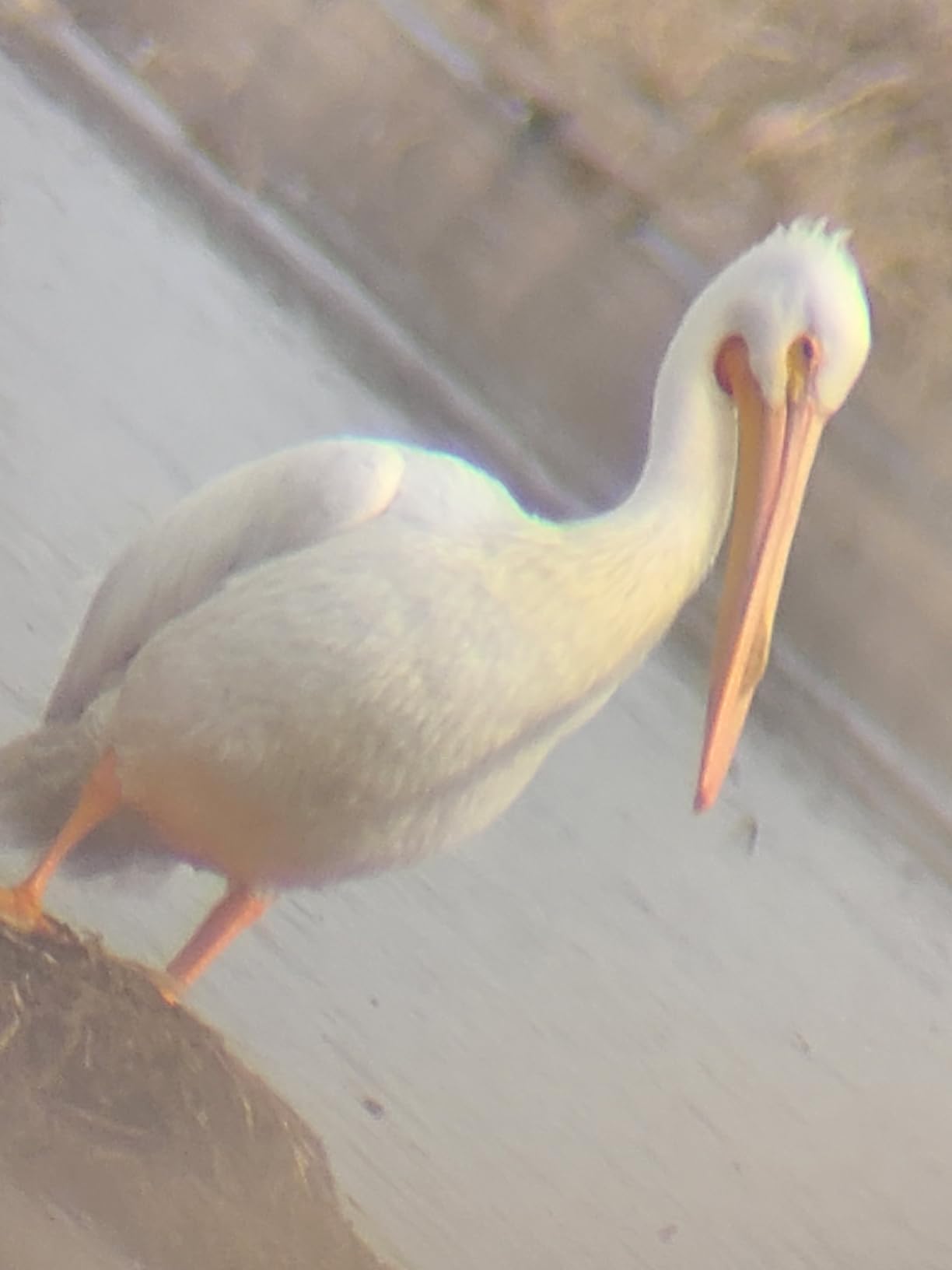
The 45 degree angled eyepiece is genuinely comfortable at a bench or on the ground, and the extendable sunshade integrated into the main barrel cuts glare on a bright range day. The waterproof, non-slip seamless finish means wet grass and drizzle are not a problem.
What is included is generous for the price: a universal cell phone adapter, carrying case, lens and eyepiece covers, a cleaning cloth, and a tripod. That kit covers everything a new shooter needs to get started without a second purchase.
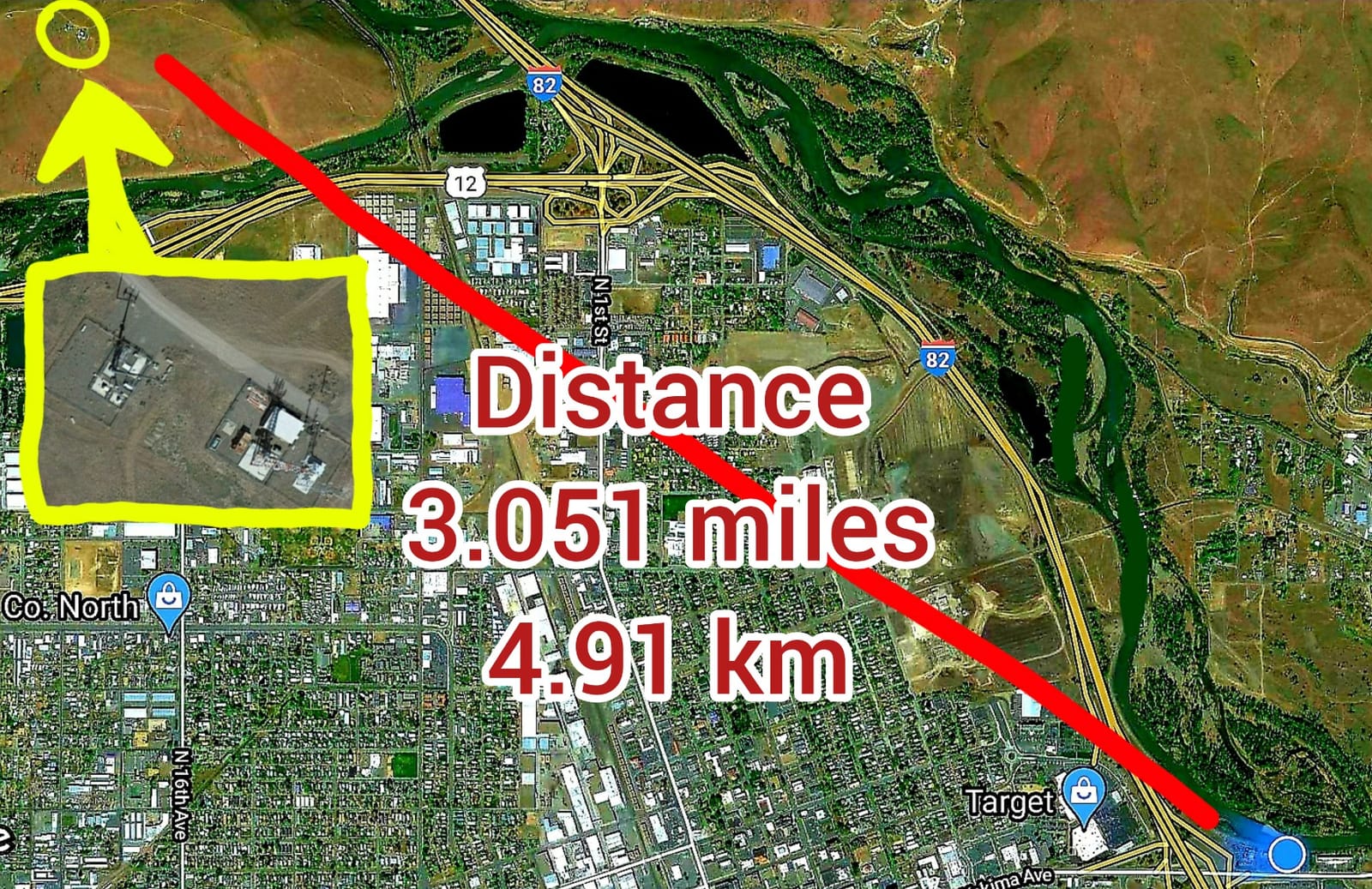
Who this scope suits: first-time buyers and short-range paper shooters
Buy this if you shoot mostly at 100 to 200 yards, you are new to spotting scopes, and you want to try one without committing much. The zoom range tops out at 75x, which is more reach than most 100-yard work requires, and the bottom of the range is still useful for finding your target.
It also works as a second scope. A lot of shooters keep a cheap glass on the bench for spotting and a better one in the field. At this weight, having two is realistic. The angled eyepiece also makes it a comfortable passenger scope for a spotter sitting low behind a prone shooter.
Where this scope falls short: clarity past 150 yards and the loose accessories
Owners report a noticeable clarity loss around 150 yards and beyond, and weaker performance in low light. That is the honest ceiling. It is a 100-to-200-yard scope that can be pushed further, not a 300-yard group-reading scope.
The phone adapter is awkward and often yields blurry or off-center images, the lens covers fall off without retention, and the included tripod has no height adjustment and feels flimsy. The warranty is 60 days, the shortest here by some distance, so check your return window carefully.
4. Gosky FalconPro 20-60×80 Dual Focusing for Fine Focus Control
Gosky FalconPro Spotting Scope 20-60×80 Dual Focusing with Tripod
- Dual-speed focus ring gives noticeably finer control at high magnification
- Bright high-contrast image from the 80mm objective and BaK-4 prisms
- Nitrogen purged and O-ring sealed
- 45 degree angled eyepiece
- Good reach for spotting distant targets and wildlife
- Included tabletop tripod lacks smooth pan control
- Phone adapter is fiddly and can slip out of position
- Focusing takes patience when digiscoping
- Some units arrive with damage or a loose objective assembly
The FalconPro is the scope to buy if you are the kind of person who loses time to a focus ring that will not hold still. Its coaxial dual-speed two-stage focusing wheels let you rack quickly with the coarse stage and then drop into a fine stage for the last fraction of a turn. Owners single this out as the clearest step up from cheaper models.
Optically it is a solid 20-60×80. The 80mm objective and high-density BaK-4 prisms give bright, high-contrast images in low light, and the field of view runs from 100.5 feet at 20x down to 52.5 feet at 1000 yards. That wide low-power field makes target acquisition quick.
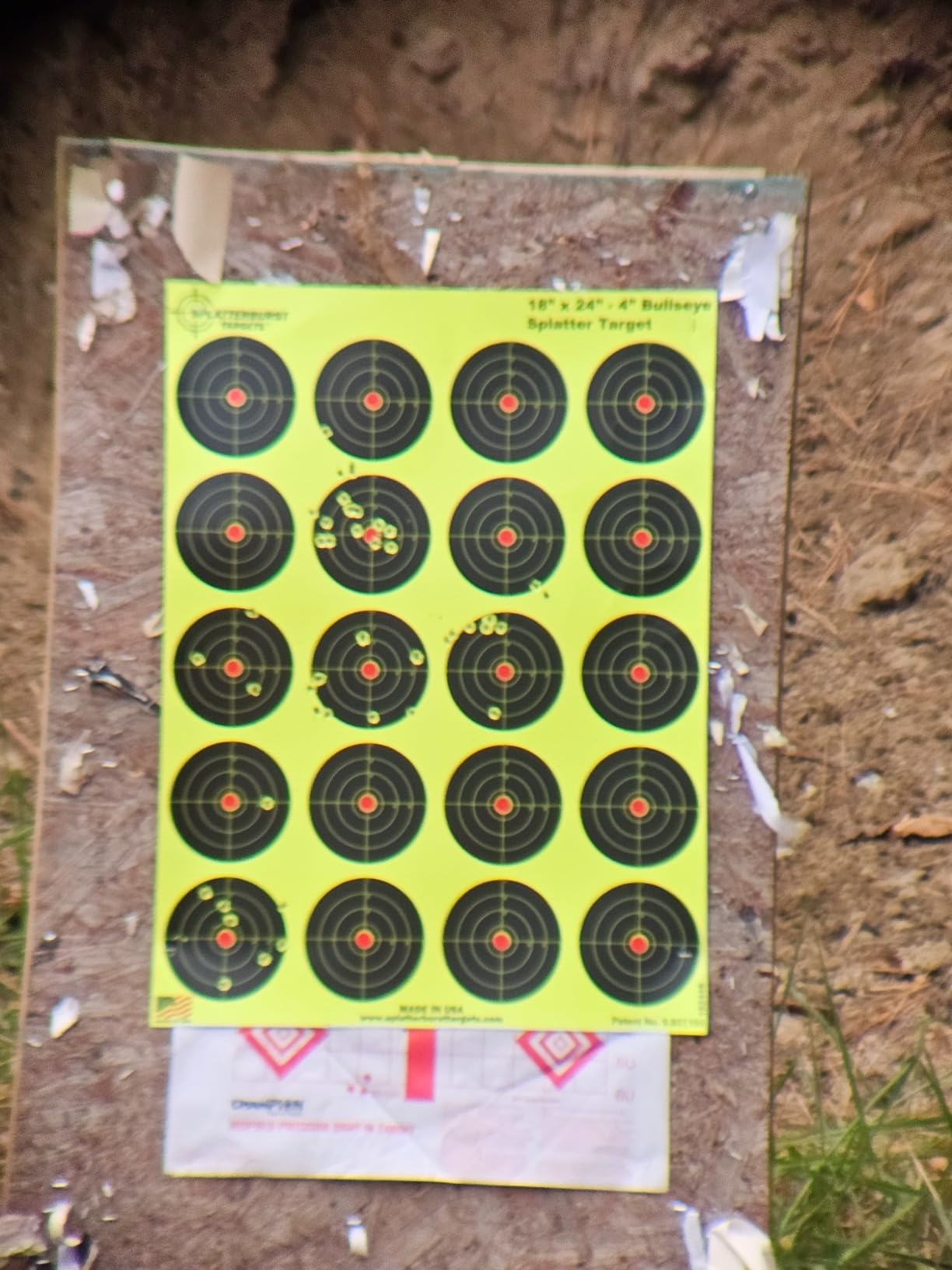
At 1.1 kg the body is light enough to pack for field use, and the magnalium framework with rubber armor and stretchable eyepiece shield handles the abuse. The nitrogen purging and O-ring sealing keep fog out across temperature changes, which matters when you leave a scope on a bench from noon to dusk.
The 45 degree angled eyepiece is comfortable for long glassing sessions, and it pairs well with a rotating collar on a tripod. The exit pupil figure of 1.33mm at maximum power is a reminder that at 60x this scope is gathering light for you, not for the image.
Who this scope suits: shooters who refine aim between shots and share a scope
The fine focus stage makes this a good match for benchrest and F-class work, where you settle on a target, take a shot, then step back into the eyepiece and adjust in fractions of a click. It is also good for shooter-spotter pairs, because the person dialing the scope can hand it back and forth without a coarse ring fight.
If you shoot a mix of 100-yard bench work and 300-plus yard steel, the 20-60x range covers both without a second eyepiece. The bright 80mm image is also forgiving at dawn and dusk, when the sun is low behind the berm and the paper is in shadow.
Where this scope falls short: the tripod, the adapter, and build consistency
The included tabletop tripod is minimal and lacks smooth pan control, so tracking a moving target is not something it does well. Owners also report the phone adapter slipping out of position and focusing being slow when digiscoping. Both are accessories, not optics, and both are fixable.
More seriously, some units arrived with damage or a loose objective assembly, and the 4.3 rating reflects more mid-level reviews than the other Gosky models here. Inspect the objective on arrival. The warranty is one year.
5. Gosky 25-75×80 Flagship for Reading 200-Yard Groups
25-75×80 Spotting Scope with Desktop Tripod for Target Shooting DiamondEdge
- Clear enough to resolve .22LR holes on splatter targets at 200 yards
- Dual-speed focus ring is smooth with good tactile feedback
- Rotating collar accepts Arca-Swiss and 1/4-20
- Integrated phone holder is easy to set up
- Strong value against premium brands
- Image becomes fuzzy at 250 yards and above
- Not ED glass so high-contrast edges show some fuzziness
- Rotating collar locking knob is hard to reach once mounted
- Soft carry bag offers little padding
- Large size is cumbersome on a hike
Buyers treat the 25-75×80 as a high-end entry scope, and the reported ceiling is consistent: sharp performance from 20x to 40x and usable results out to about 200 yards on target practice. Owners specifically mention resolving .22LR holes on splatter targets at 200 yards, which is a real bench-distance result rather than a marketing claim.
The zoom goes higher than most competitors here, to 75x, with an 80mm objective behind a BaK4 prism and fully multi-coated optics. The 98 foot field of view at 20x is wide, so finding the target is fast. The rotating tripod collar is a genuine step up for anyone sharing a scope at a match.
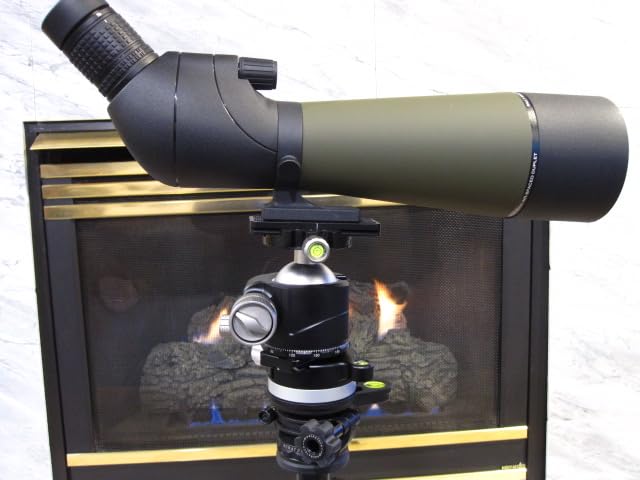
The dual-speed focus ring is smooth with good tactile feedback, which matters when you are making wind corrections in small increments. The integrated phone holder is simpler than the clip-on adapters on several other scopes here, and owners report it working without much fuss, which makes group photos and shot logging quick.
Mounting is where this one pulls ahead. The rotating collar carries a standard 1/4-20 thread and an Arca-Swiss compatible foot, so it drops onto a proper shooting tripod head with no adapter plate. That is a real convenience for anyone who moves between a bench and a field position.
Who this scope suits: 100-to-250-yard shooters who want a shareable scope
This is the pick for a 200-yard bench or a 6BR bench match, where reading a five-shot group matters more than extreme reach. Owners use it for .22LR, .223, and small-bore practice at that distance, and the 25x low end keeps the target findable while you are set up.
The rotating collar also makes it a good spotter scope. Set the eyepiece to whatever angle the person on the glass needs, hand it over, and let the shooter read impacts without crouching into an uncomfortable posture. The phone holder also makes it a good scope for recording group photos for a coach.
Where this scope falls short: the range ceiling past 250 yards
Owners report the image becomes fuzzy at 250 yards and above, and the optics are not ED glass, so high-contrast edges show some fuzziness. If your plan is 300-yard or longer paper work, look at a scope with an 85mm HD objective instead. This one is a 200-yard scope that can be pushed.
At 4.5 pounds it is one of the heavier bodies on the list, and the soft carry bag offers little padding for transport. The collar locking knob is also hard to reach once the scope is mounted, which is an irritation every time you change the eyepiece angle.
6. Bushnell Trophy Xtreme 20-60×65 for Brightness and Durability
- Bright clear image out to 400 yards on splatter targets
- Fully multi-coated optics give standout brightness for the class
- Rugged build that handles field use
- Tabletop tripod and car window mount both included
- Backed by a manufacturer lifetime warranty
- Straight eyepiece means leaning in rather than viewing at an angle
- Image washes out noticeably at 40x and is murky at 60x
- Focus can shift between magnification settings
- Front lens cover is a slip-on that pops off easily
The Trophy Xtreme has the second-highest rating on this list at 4.5, and the review theme is consistent: brightness. Owners repeatedly describe a bright, clear image that spots impacts out to 400 yards on splatter targets, and several call the fully multi-coated optics best-in-class for the price tier. At a bench with the sun behind you, that brightness is what lets you keep reading groups later into the day.
The straight eyepiece is a deliberate choice, not an oversight. It keeps the body compact and the optical path simple, and it is what a lot of car shooters and bench shooters actually prefer because the eye sits directly behind the objective. Buyers who like straight scopes tend to like this one.
The accessory package is unusually complete for this tier. You get a tabletop tripod with an integral car window mount, a 1/4-20 mounting shoe, a hard case, and a soft carry case. Owners mention the solid, durable build handling a beating, which fits a scope meant to live in a vehicle and get used on a range day every week.
The 65mm Porro objective sits between the smallest and largest glass here. A 1.7 degree field of view is narrow enough to give real magnification reach and wide enough to keep the target findable at the bottom of the range. The 3.1mm exit pupil figure shows it is built for daylight and well-lit shade.
Who this scope suits: car shooters and daylight bench work under a lifetime warranty
The straight eyepiece and the included car window mount are the pairing that makes this work. If you shoot out of a vehicle, pull up to the firing line, and glass your own impacts, the Trophy Xtreme is designed for exactly that. The mounting shoe is 1/4-20, so it also goes on any tripod you like.
Reported impact visibility out to 400 yards on splatter targets makes it a reasonable long-range budget option for steel and large targets. The lifetime manufacturer warranty is the strongest long-term protection on this list, and Bushnell service is widely reported as straightforward. It is also a good match for a scope you will hand to a younger shooter.
Where this scope falls short: the top of the zoom range and the straight eyepiece
Owners report the image washes out noticeably at 40x and is murky at 60x. That is a real ceiling, and it is why this is not our primary precision pick. If your goal is holding a tight group at 400 yards, buy a scope with more glass and HD elements instead.
The straight eyepiece requires leaning in rather than viewing at an angle, which is uncomfortable for a spotter kneeling behind a prone shooter or for anyone shooting all day in glasses. Focus can also shift between magnification settings, and the front lens cover is a slip-on that pops off easily.
7. Vortex Diamondback HD 20-60×85 for Low Light and Sharpness
- HD optics give bright sharp images even in low light
- Helical focus ring allows fast and precise adjustment
- Arca-Swiss compatible foot means no adapter plate needed
- O-ring sealed and argon purged
- Backed by an unlimited lifetime warranty
- Costs more than the generic-brand scopes in this group
- Bulky at 3.8 pounds compared with smaller scopes
- Large objective makes it a poor pack-light choice
This is the step up in optical quality. The Diamondback HD carries a 4.6 rating across 461 reviews, and owners describe it as a clear upgrade in brightness, edge-to-edge sharpness, and color fidelity over entry scopes. For a shooter who reads groups in flat light or at dusk, that upgrade is the whole point of the extra spend.
The HD optical system uses multiple anti-reflective coatings on all air-to-glass surfaces and reduces chromatic aberration compared with standard glass. The 85mm objective is the second-largest in this group, behind only the Celestron, and it pairs with a 108 foot field of view at the bottom of the range so you can still find a target fast.
The built-in helical focus wheel gives fast and fine adjustments in one ring, and it does not need the coaxially mounted second ring that the dual-speed scopes require. That keeps the eyepiece end cleaner and means you can adjust the focus while keeping your eye on the target. Owners call it smooth and precise.
Mounting is the quiet strength. The Arca-Swiss compatible foot also accepts 1/4-20 threads, so it drops onto a proper shooting tripod head with no plate, and no adapter is needed for a simpler ball head. The body is O-ring sealed and argon purged, with adjustable twist-up eyecups, a built-in sunshade, Armortek lens coatings, and rubber armor.
Who this scope suits: shooters who read groups in low light and want one optic for decades
Buy this if your range sessions run past sunset, if you shoot steel in overcast conditions, or if you simply want the image to hold up when the light is not cooperating. The 85mm HD objective is the reason. Owners consistently report a brighter, sharper image than entry-level scopes in the same price neighborhood.
The unlimited lifetime warranty is the strongest support story here, and it matters if you are buying once. For a shooter-spotter pair, the helical focus and Arca-Swiss foot mean the scope transitions from the glassing position to the shooting position without a plate change. The neoprene cover and tethered lens caps are included.
Where this scope falls short: size, weight, and cost
At 3.8 pounds with an 85mm objective, this is a substantial instrument. Owners note it is bulky for long hikes compared with smaller 50mm-class scopes, and it is a bench or vehicle scope rather than a pack-light one. If you walk a mile to shoot, that bulk is a real daily cost.
It also costs more than the generic-brand scopes in this group, which is the trade for the glass. If you shoot exclusively at 100 yards in bright sun and never at dusk, you will not extract the full value. The color fidelity and edge sharpness are worth it when the light is poor.
8. Athlon Argos HD 20-60×85 for Long Glassing Sessions
Athlon Optics Argos HD 20-60×85 Spotting Scope – 45 Degree, Green/Black
- 85mm objective gives a bright image with good low-light performance
- Angled eyepiece and rotating ring make extended glassing comfortable
- Waterproof fogproof and argon purged
- Durable rubber-armored build with a soft case
- Lifetime warranty
- Heavier than smaller-objective scopes at 4.3 pounds
- Mixed feedback on clarity at the top of the 20-60x range
The Argos HD is built around comfort during long sessions, and the angled eyepiece combined with a rotating tripod ring is the reason. Owners highlight the comfortable viewing position, which matters when you spend an entire match day with your head downrange, moving between the glassing position and the shooting position without a plate change.
Optically it is an 85mm HD scope with fully multi-coated lenses, which owners describe as bright and color-accurate. A Plossl eyepiece is fitted, which is a simple, well-behaved design that tends to stay sharp across the range rather than degrading badly at the top end.
The sealing is thorough. The body is waterproof, fogproof, and argon purged, so temperature swings and a sudden shower do not matter. The rubber armor takes the knocks that come from a scope being set on a concrete bench edge, and the included soft-sided case, lens caps, and cloth are sensible extras.
At 4.3 pounds with a 16.9 inch optical tube, this is a full-size instrument. It rewards a proper tripod. Mounted on a table stand at eye level for a match afternoon, the weight is not a problem. Carried up a hillside, it is.

Who this scope suits: match shooters and spotters who spend hours in the glass
The angled eyepiece, rotating ring, and 85mm objective combination suits people who spend long stretches looking through the scope rather than picking it up. A spotter kneeling behind a prone shooter, or a shooter dialing wind in an F-class match, will feel the comfort difference more than most people expect.
The lifetime warranty is a genuine plus for a buy-once purchase, and the argon-purged, rubber-armored build is ready for regular outdoor use. If you shoot small-bore precision at 300 yards and want color-accurate, bright images in variable light, the 85mm HD glass is the right size for the job.
Where this scope falls short: weight and inconsistent top-end clarity
At 4.3 pounds this is one of the heavier scopes here, and it is the main thing owners mention. If you move between positions on foot or shoot a sport that requires carrying kit across a field, that weight adds up over a day.
Clarity feedback at the top of the 20-60x range is mixed, and lower-star reviews cluster around image clarity questions. The 4.3 rating reflects that. If you plan to work at 55x or 60x often, an 85mm scope with a reported smooth top end is the safer choice.
9. Athlon Talos 20-60×80 Angled as a Starter 80mm Scope
Athlon Optics Talos 20-60×80 Spotting Scope with Tripod and Carrying Case – Angled, Charcoal Grey – 315001G
- Bright sharp image from fully multi-coated lenses and K9 prisms
- Waterproof and nitrogen purged for all-weather use
- Rotating ring allows comfortable eyepiece angles
- 2.4 pound body is light for the 80mm class
- Backed by a lifetime warranty
- Basic accessory package with only a soft-sided case
- Some owners report average clarity compared with ED-glass scopes
The Talos is a 20-60×80 with a lifetime warranty and a 2.4 pound body, which is a combination you do not often see. Owners rate it highly for brightness, portability, and durable weatherproofing, and the K9 prisms with silver coatings plus fully multi-coated lenses deliver a bright, sharp image in its class.
It is nitrogen purged for moisture resistance and thermal stability, and the body is waterproof for harsh weather and accidental submersion. That is a meaningful combination on a range where dew forms before you have fired three strings and the temperature drops ten degrees before you pack up.
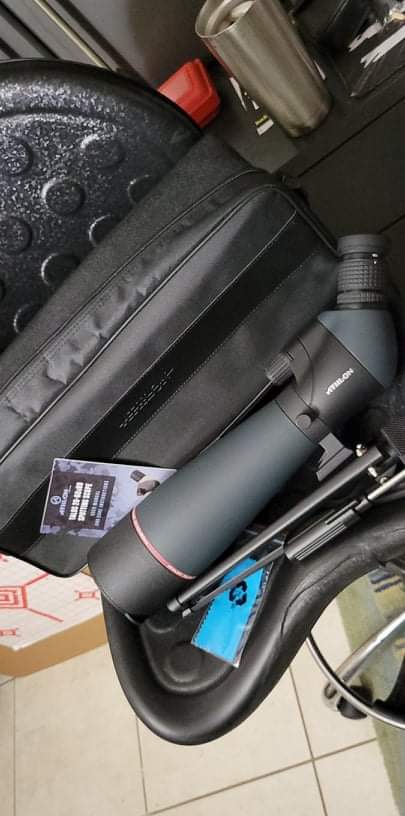
The rotating ring lets you set the eyepiece to a comfortable angle rather than one fixed position. On a bench, that means you can set it once for the shooter and once for the spotter without remounting. A plus or minus one diopter adjustment is included, which helps shooters whose vision differs between eyes.
At 2.4 pounds it is light for an 80mm scope, and that weight is what makes it usable as both a range and field instrument. The box includes a tripod, soft-sided case, lens caps, and a cleaning cloth, so nothing else is required to get started.
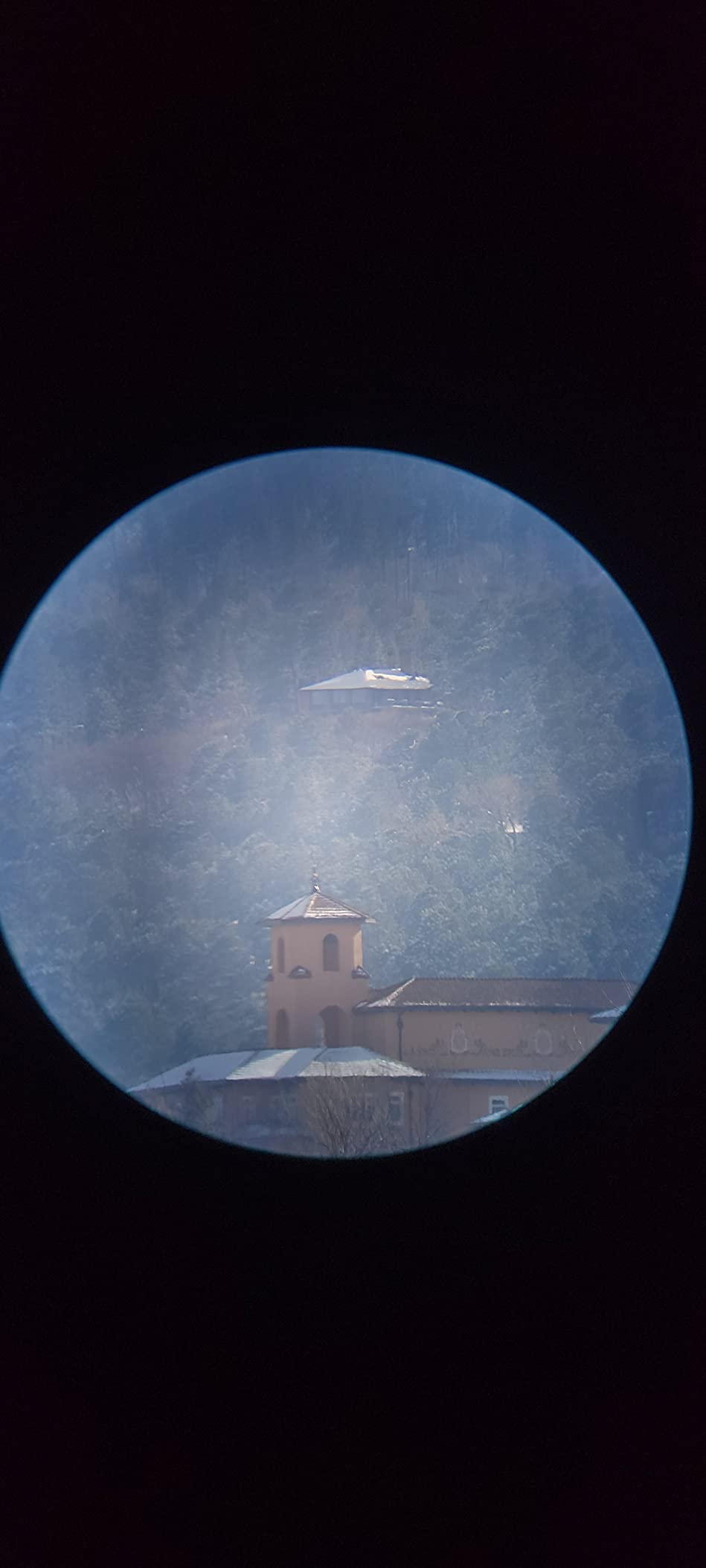
Who this scope suits: shooters who want an 80mm objective and a lifetime warranty in one package
Pick the Talos if the 60mm and 65mm scopes feel too dim for your range and you want the extra light of an 80mm objective without moving up to a heavier 85mm scope. It is a good middle answer for 100 to 300 yard work, especially on overcast days.
The lifetime warranty makes it a low-risk first real optic, and the rotating ring with diopter adjustment suits a shared-scope setup at a match. If you also shoot a little in the field, the light weight and full weatherproofing mean you do not need a second scope for that.
Where this scope falls short: ED glass performance and a thin accessory package
Some owners report average clarity compared with ED-glass scopes, particularly on high-contrast edges and at the top of the zoom range. If chromatic fringing bothers you or you need to resolve fine group structure at long distance, an HD scope will do better for more money.
The accessory package is basic, with only a soft-sided case rather than a hard case. There is no integrated phone holder and no Arca-Swiss foot mentioned, so check the mounting footprint for your tripod head. The included tripod is a starting point, not a solution for high magnification.
10. Celestron Regal M2 100ED 22-67×100 for Premium Optics
Celestron Regal M2 100ED Spotting Scope with Zoom Eyepiece for Long-Range
- 100mm ED objective gives a very bright sharp color-accurate image
- XLT coatings maximize light transmission for twilight and long-range work
- Bundled 22-67x zoom plus support for standard 1.25 inch astronomical eyepieces
- Rotating tripod mount with dual focus
- Includes a T-mount DSLR adapter and a balance rail
- Heavy at 5 pounds and bulky to carry
- Expensive relative to mid-range scopes
- Only a soft carrying case included
The Regal M2 100ED is the premium glass pick, and the reason is the 100mm Extra-Low Dispersion objective. ED glass is designed to reduce chromatic aberration, and with a 100mm lens behind it this scope produces the brightest, most color-accurate image in this group. Owners point to it precisely for near-colorless long-range views.
XLT multi-coatings sit on all air-to-glass surfaces for maximum light transmission, which is what makes it usable at twilight and at 500-plus yards. The 22-67x zoom eyepiece is included, and the scope accepts any standard 1.25 inch astronomical eyepiece, so you can dial in a fixed high-power eyepiece for precision work later.
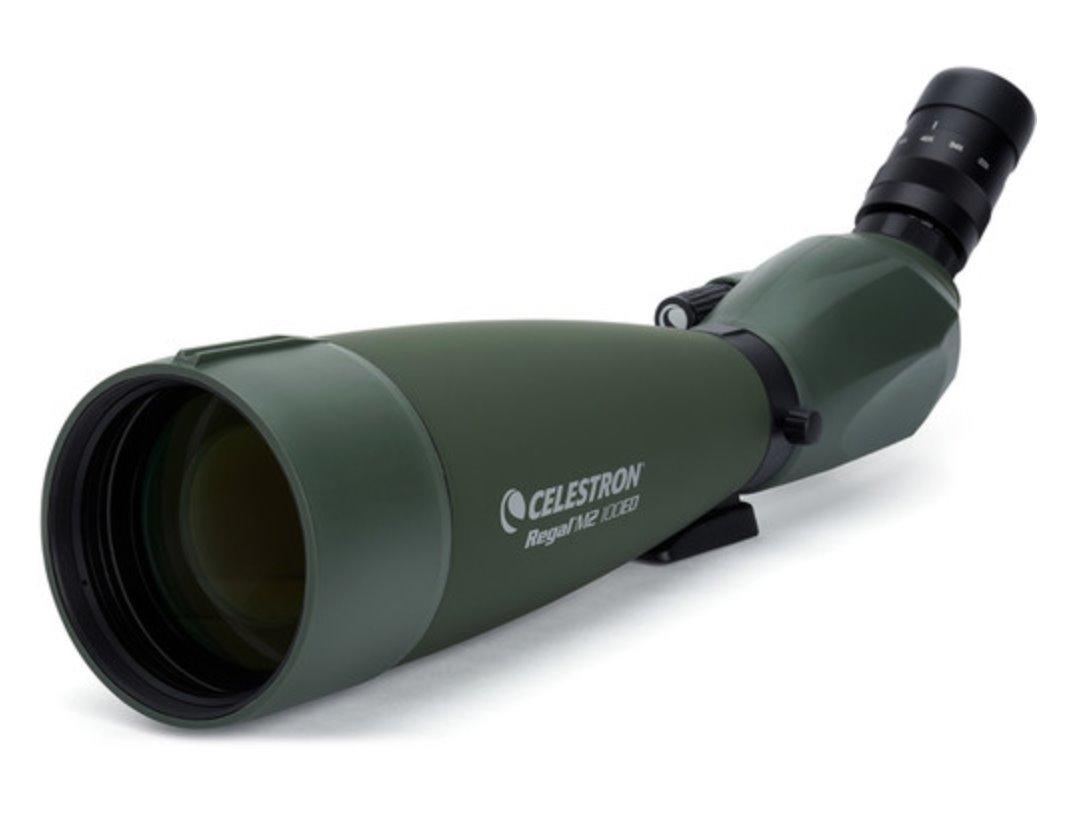
The rotating tripod mount and dual focus mechanism give precise, repeatable control. The magnesium alloy body is rigid and takes vibration well, which matters on a shooting tripod where wind can put a shiver through the head. A balance rail is included, and that is not a trivial accessory when the tube is this size.
The box is unusually well equipped. You get a padded view-through case, a T-mount DSLR adapter for recording your own groups through the optics, lens caps, and a lens cloth. The Celestron limited lifetime US warranty and US-based technical support are also part of the package.
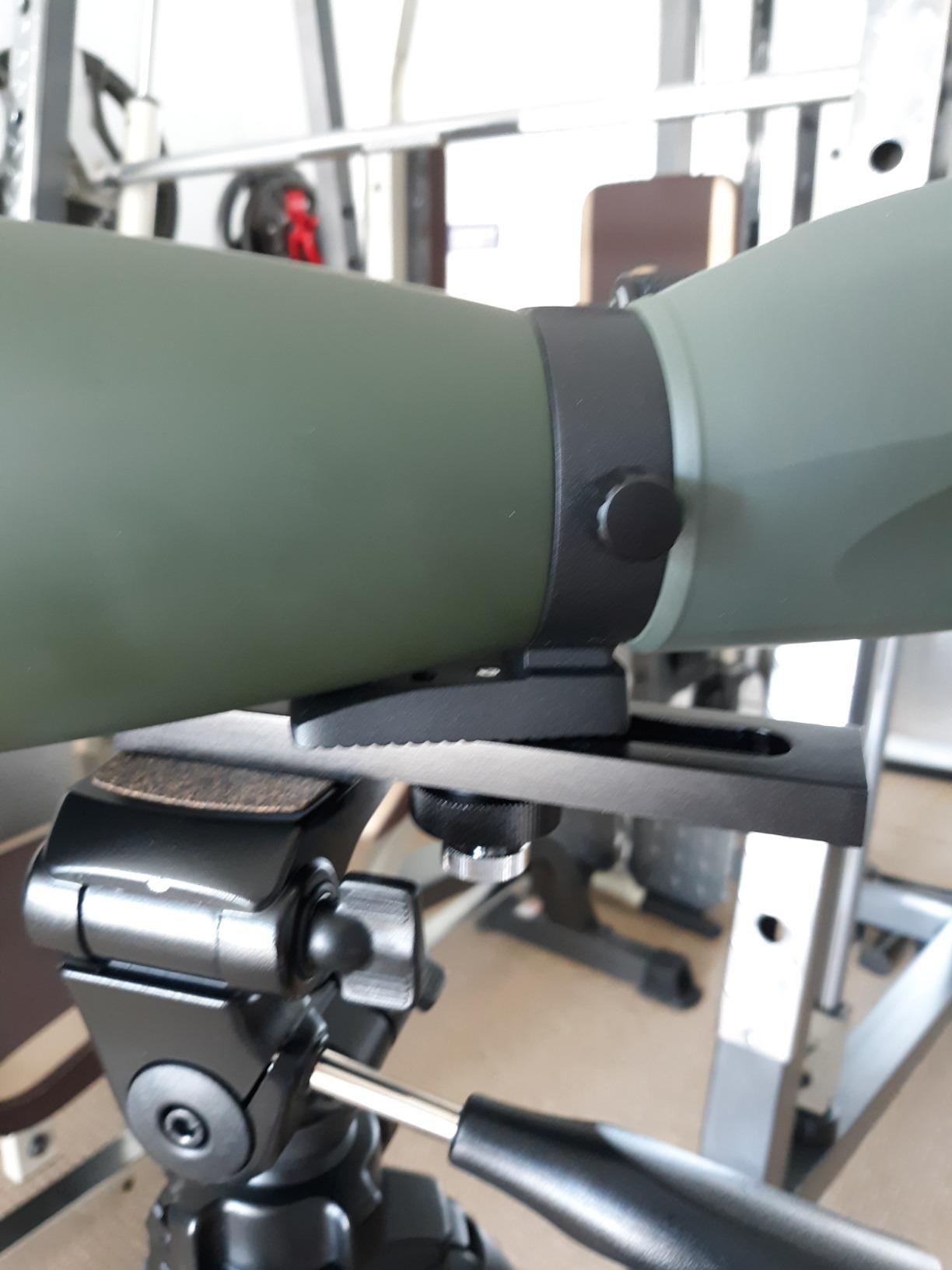
Who this scope suits: long-range and twilight shooters who want the best image available
Buy this if you shoot at 500 yards and beyond, if you do a lot of evening or low-light work, or if you simply want the sharpest, most color-accurate view available in this roundup. The 100mm ED objective gathers more light than anything else here and keeps it clean.
It is also the pick for anyone who wants to run a fixed eyepiece. The 1.25 inch astronomical eyepiece compatibility means you can start with the bundled 22-67x zoom and later add a fixed 30x or 40x for bench precision work. The T-mount DSLR adapter makes photographing your own groups straightforward.
Where this scope falls short: weight, bulk, and cost
At 5 pounds and 19.29 inches long, this is a serious instrument to carry. Owners cite the weight and bulk as the main drawback, and it is a fixed setup or vehicle scope rather than something you hike with. Budget your tripod accordingly, because a light head on a 5-pound scope will still move in wind.
It is also the most expensive option here, and only a soft carrying case is included. The 4.3 rating reflects that, along with the largest share of one-star reviews of any product in this set. If you shoot mostly at 100 to 300 yards, the value case is much weaker than it is at long range.
11. Vortex Crossfire HD 20-60×80 for Mount-and-Go Range Use
- Highest average rating in this roundup at 4.7
- Crisp bright images with a smooth firm zoom and focus
- Wide field of view speeds up target acquisition
- Arca-Swiss compatible foot means no extra plate needed
- Nitrogen purged waterproof and fogproof with rubber armor
- Unlimited lifetime warranty
- Larger than a 50mm scope so it is less convenient on long hikes
- Neoprene cover blocks the eyepiece angle locking screw
- Tripod not included
The Crossfire HD has the highest average rating of the twelve scopes here at 4.7, and owners describe it as bright, sharp, and easy to adjust. It suits range days, western hunting, and backyard birding, and the build quality and warranty service are called out repeatedly in the review summaries.
Optically it is a 20-60×80 with an HD optical system using select glass elements for reduced chromatic aberration and edge-to-edge sharpness. Anti-reflective coatings on all air-to-glass surfaces keep it clear in low light, and the helical focus gives fast, fine adjustments in a single ring.
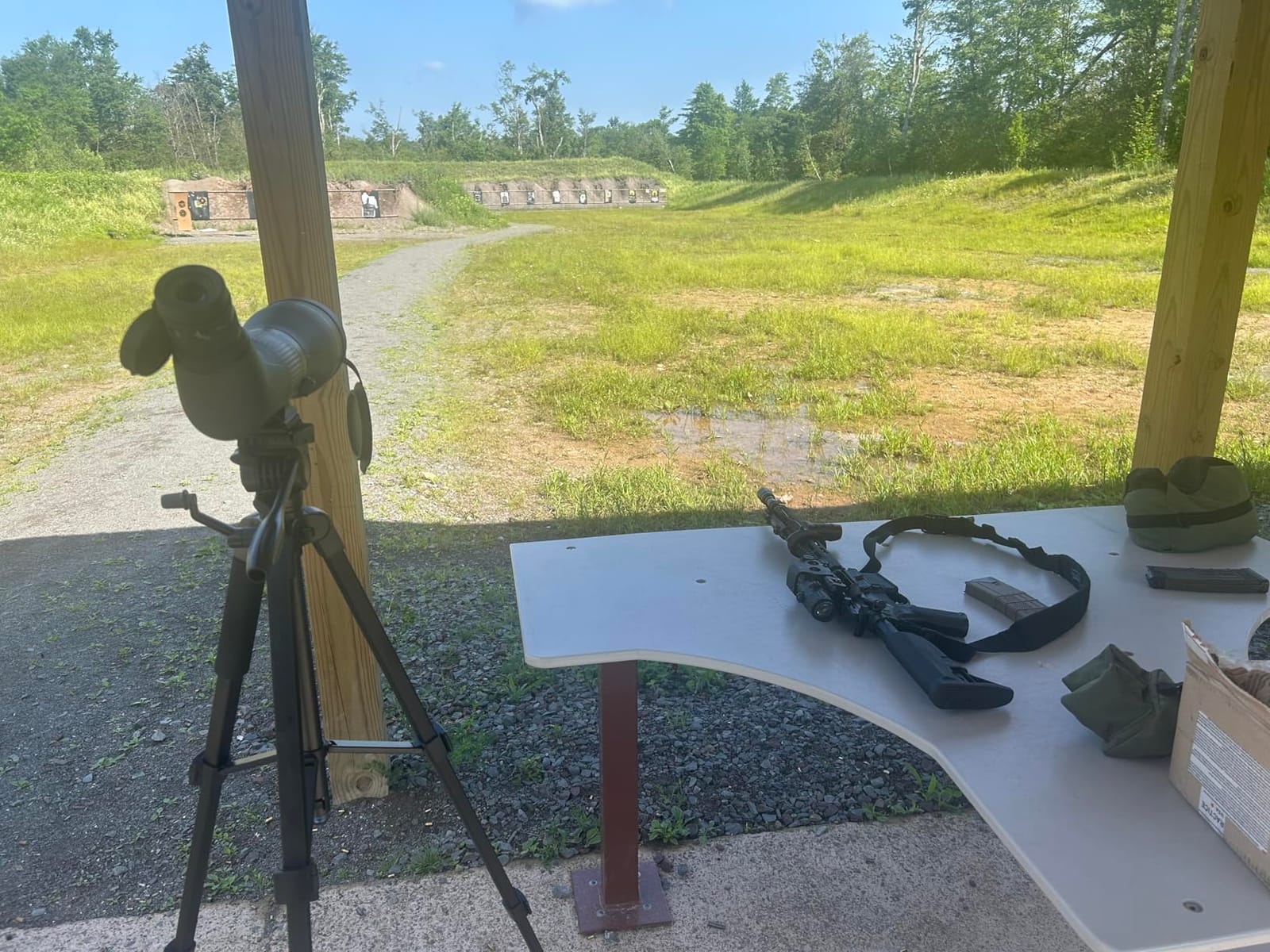
The mounting story is the reason to look here first if you already own a proper tripod head. The foot is Arca-Swiss compatible, so the scope clamps straight on with no adapter plate, and the wide field of view makes target acquisition quick at the bottom of the range. Adjustable twist-up eyecups and a built-in sunshade are included.
The body is nitrogen purged, waterproof, fogproof, and rubber armored, and it comes with a neoprene cover, tethered lens caps, and a lens cloth. The unlimited lifetime warranty is the strongest support commitment on this list alongside the Diamondback HD.
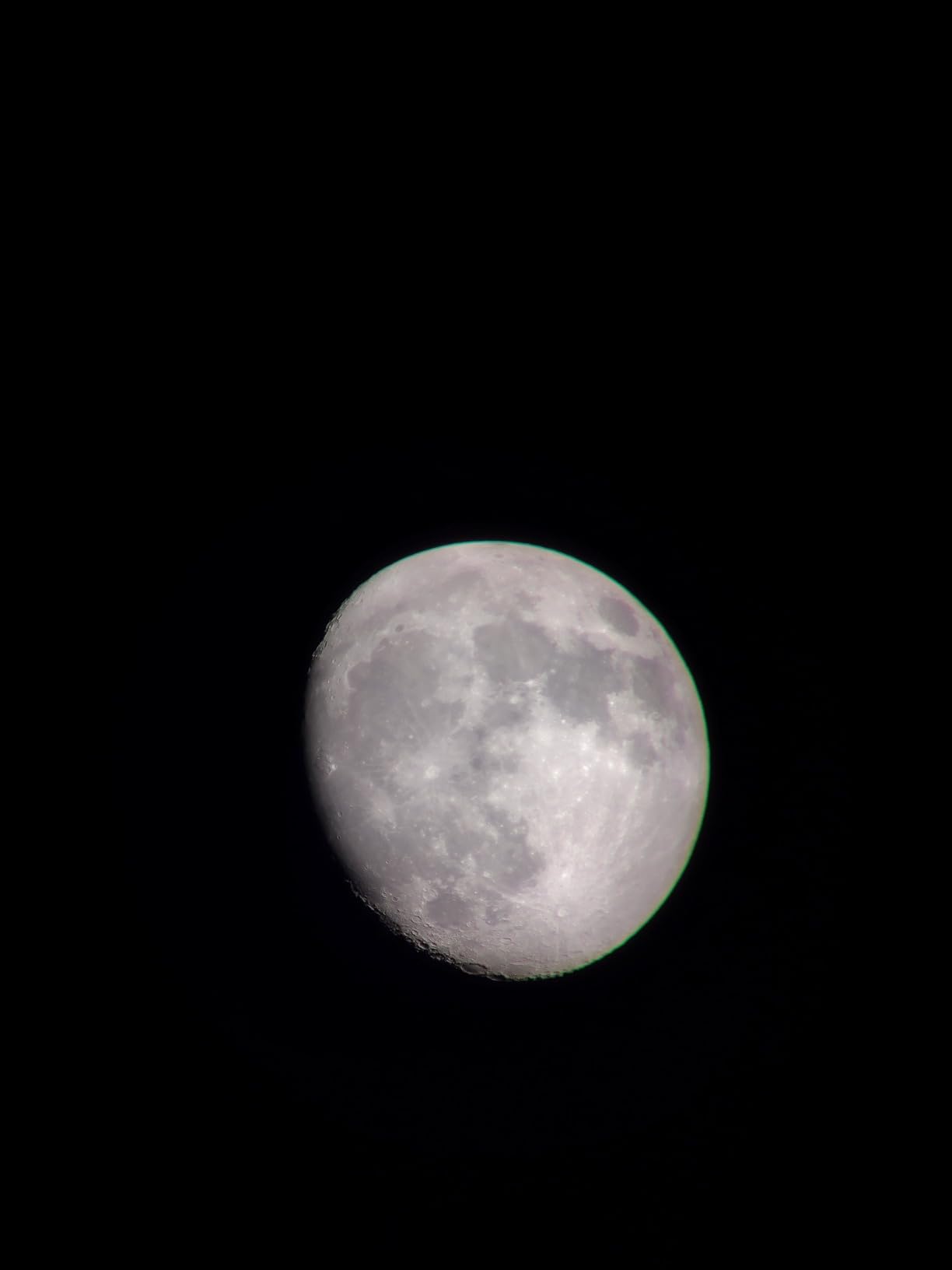
Who this scope suits: shooters who already own a tripod head and want to start immediately
If you already have a shooting tripod with an Arca-Swiss ball head, this scope needs nothing else. No adapter plate, no extra purchase. That makes it the fastest path from an empty case to a working glassing setup, and it is the reason we would pick it over scopes that ship with a plastic table stand.
It also suits shooters who bounce between the bench and the field. At 3.3 pounds it is lighter than the other 85mm options here, and the 80mm objective still gives you a bright image. Owners describe it as ideal for range days and backyard use, which is exactly the mix most people shoot.
Where this scope falls short: bulk, the cover, and no included tripod
Being larger than a 50mm-class scope, it is less convenient on long hikes than a compact glass. If you walk in to shoot, that bulk matters more than most spec comparisons suggest. For a bench or a yard setup, it is not an issue.
Two smaller annoyances: the included neoprene cover blocks the eyepiece angle locking screw, and no tripod is included at all. The review count of 138 is the smallest sample here, so the 4.7 rating is encouraging but based on fewer owners than most of the other picks.
12. Bushnell Legend T-Series 15-45×60 MIL-HASH for Reticle Work
Bushnell Legend T-Series 15-45x60mm Spotting Scope, MIL-Hash, Tan
- First focal plane MIL-HASH reticle is clear and useful for holdover corrections
- Picatinny rails let you add a red dot or Kestrel mount
- Compact and light at 2.3 pounds
- Enough clarity to spot impacts on steel at 600 yards
- Good value for a reticle-equipped scope
- Focus knob is stiff in cold weather and can slip on the shaft
- Focus zoom and parallax controls are all grouped at the eyepiece
- Image is slightly yellow and less clear than larger 85mm HD objectives
- No fine-focus ring
- Reports of internal glass specks and reticle accuracy issues
This is the only pick here with a reticle, and for a precision shooter that changes what the scope is for. The first focal plane MIL-HASH reticle gives you wind, drop, and range holds directly in the glass, which means you can hold over on a steel target instead of dialing corrections through your rifle scope while the spotter talks.
Underneath is an HDOS optical system with ED Prime extra-low dispersion glass, BaK-4 prisms, and fully multi-coated lenses. RainGuard HD hydrophobic coatings shed water from the lenses. The scope runs 15x to 45x with a close focus of 35 inches, and owners report enough clarity to spot impacts on steel at 600 yards.
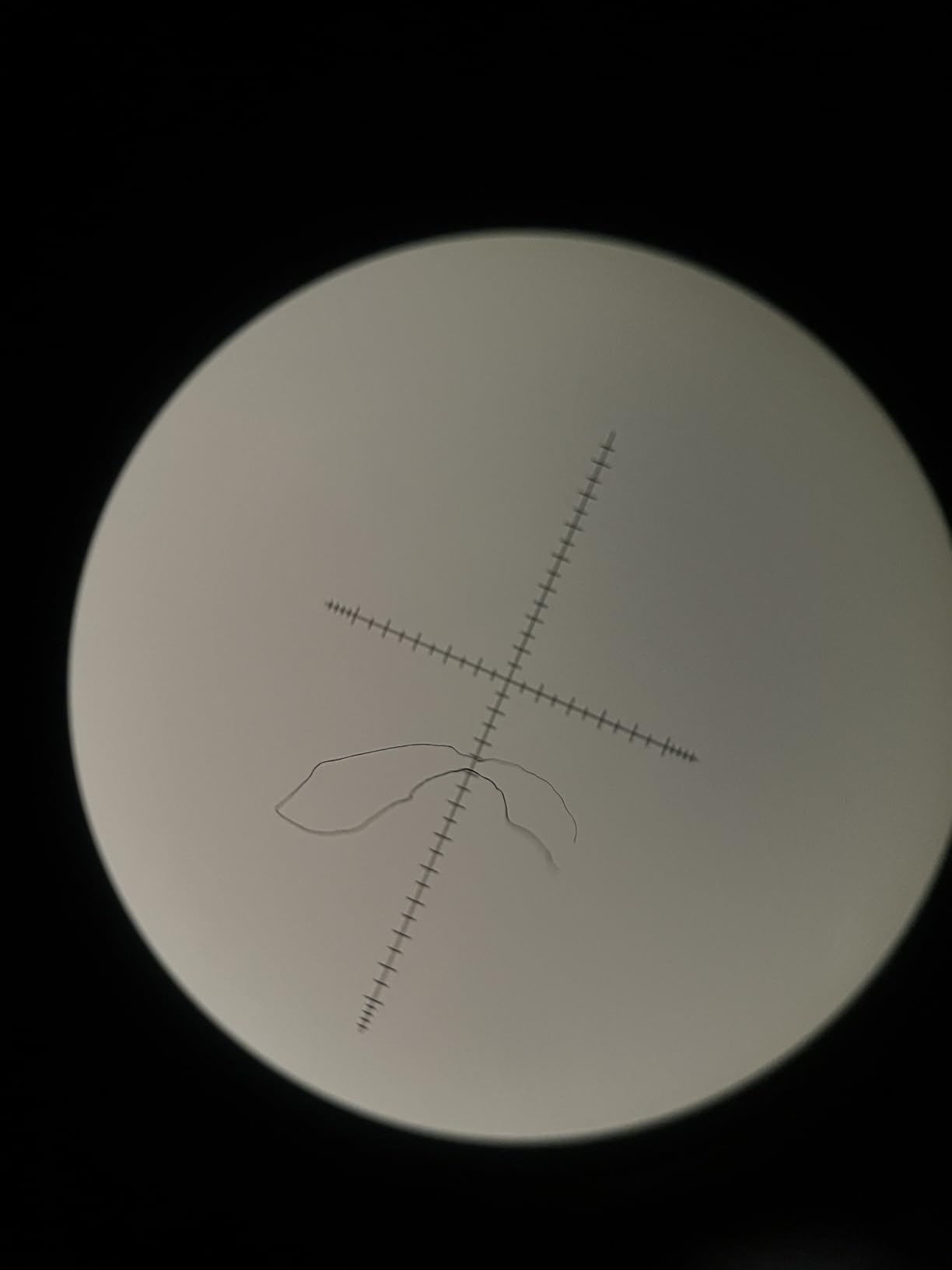
The multiple Picatinny rails are a practical touch. You can mount a red dot for a set of warm-up shots at paper, or a Kestrel or similar wind meter to read conditions without leaving the firing line. That flexibility is what separates a tactical-class spotting scope from a purely optical one.
At 2.3 pounds this is the most portable scope in the group, and the 60mm objective keeps it honest about what it is. The reticle needs a light path to be visible against a bright sky, and a 60mm objective delivers that more reliably than a smaller lens would.
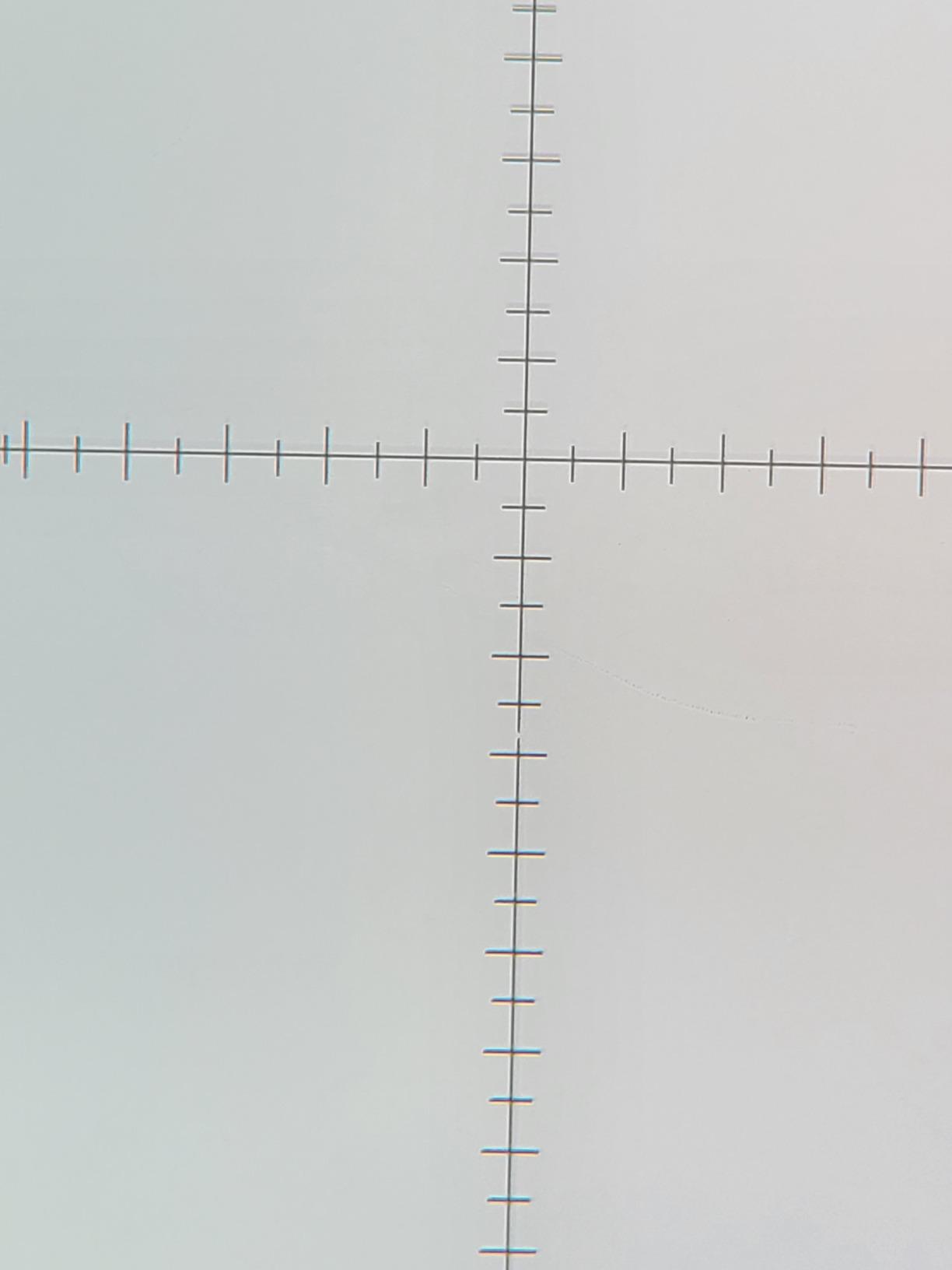
Who this scope suits: precision shooters holding wind on steel and F-class bench work
Pick this if you want to hold a point of aim on a target rather than just read a group. The first focal plane reticle scales with magnification, so the hold marks stay meaningful from 15x to 45x. That is the feature precision competitors and long-range shooters ask for by name in forum threads.
It is also the most portable option here at 2.3 pounds, and the close focus of 35 inches means you can check a target at short range without a separate close-focusing eyepiece. The limited lifetime warranty and the soft case, two lens covers, and cloth complete a practical kit.
Where this scope falls short: the focus knob, the glass, and quality control reports
The stiff focus knob is the most common complaint, and owners report it being worse in cold weather and slipping on its shaft. With no fine-focus ring, you cannot slow the adjustment down, which is exactly what you want when you are dialing a wind hold onto a mil reticle.
The image is slightly yellow and less clear than larger 85mm HD objectives, and focus, zoom, and parallax controls are all grouped at the eyepiece, which can be fiddly. Some owners also report internal glass specks and reticle accuracy issues. The 4.2 rating is the lowest here, so inspect the glass and the reticle on arrival.
How Far You Can See with Each Scope?
Magnification on paper matters much less than the pairing of magnification, light, and glass quality. Here is what each band of the lineup realistically delivers, based on owner reports of resolved impacts rather than the zoom rating alone.
At 100 yards, almost every scope here is more than adequate. The Gosky DiamondEdge, the Emarth, the SVBONY, the Gosky FalconPro, and the Bushnell Trophy Xtreme all have owners reporting resolved .22 and .223 holes at this distance. A 20-60x at 20x to 30x is overkill for a 100-yard bench, which is why close focus and eye relief matter more here than maximum power.
At 200 yards, the field narrows. The Gosky 25-75×80 and the SVBONY SV28 both have owners reporting resolved small-bore impacts at 200 yards. The 85mm HD scopes, the Athlon Talos, the Vortex Diamondback HD, the Vortex Crossfire HD, and the Athlon Argos HD, hold a brighter and more contrasty image here because of the extra light gathering.
At 300 yards, glass quality starts to matter. The Bushnell Trophy Xtreme has owners spotting splatter-target impacts out to 400 yards, and the Bushnell Legend T-Series has owners spotting steel at 600 yards. The budget 60mm scopes, the Emarth and the SVBONY, are at or past their practical ceiling at this distance, especially in poor light.
At 500 yards, you want the Celestron Regal M2 100ED or one of the 85mm HD scopes. Chromatic aberration on standard glass becomes obvious at this range, and a 60mm or 65mm objective simply does not gather enough light to keep a distant group readable at dusk.
At 1000 yards, only the Celestron Regal M2 100ED and the Bushnell Legend T-Series are realistically in the conversation, and even then you are reading a shape rather than individual holes. Forum consensus is that you do not need a very expensive scope to read your own group’s impacts at typical range distances, and that is consistent with what we saw in the review data.
Tripod and Stability for Spotting Scopes
The most common complaint we found in long-range forum threads was not about optics. It was about the table tripod that shipped in the box. Users consistently report that budget spotting scopes are fine and the bundled tabletop stand or ball head wobbles too much at 30x and above, and several threads recommend dedicated tripods instead.
That complaint appears in the review data too. The Gosky DiamondEdge, the Gosky FalconPro, and the SVBONY all have owners specifically criticizing the included tripod. The SVBONY’s has no height adjustment at all. The SVBONY and the Gosky models are the three worst offenders in that category.
There are exceptions, and they are worth knowing. The Emarth’s 14-inch tabletop tripod with wide-set legs is singled out as stable by owners, and the Bushnell Trophy Xtreme includes a tabletop tripod with an integral car window mount. Both are genuinely usable at moderate magnification. Neither replaces a proper tripod at high power.
What to look for in a shooting tripod for spotting scopes: a solid ball head with a real pan lock, a leg spread wide enough to resist wind, and a quick-release plate you can leave attached. If you already know your tripod is not up to the job, our roundup of the best shooting tripods covers the head and leg combinations that hold a scope still at 50x.
Mounting standard matters as much as the tripod. A 1/4-20 thread is universal and every scope on this list accepts it. An Arca-Swiss compatible foot, found on the Vortex Crossfire HD, the Vortex Diamondback HD, and the Gosky 25-75×80, lets you clamp straight onto a proper head with no adapter plate. That is a small detail that saves you a loose connection and a wobble.
If you are setting up a permanent bench, the target itself is worth thinking about too. We have separate guides to target stands and to AR500 steel target stands if you are building the whole line, and the spacing between your firing point and your backstop affects how much magnification you actually need.
How to Choose a Spotting Scope for Target Shooting
Magnification: 20-60x covers almost everything
For target shooting, a 20-60x variable range is the standard answer and it is the right one for most people. Twenty power gives you a wide field to find your target and read wind on the berm, and 60 power gives you enough reach to separate impacts at moderate range. Several owners in long-range forums argue a fixed 30x or 35x is enough for most precision work, and that is fair. Zoom is worth paying for because you will use the low end every string.
Objective lens diameter: 80mm is the sweet spot, 85mm for low light
The objective lens is how much light the scope gathers, and it is the single most important spec for reading a group. Sixty and 65mm scopes are fine for 100-to-200-yard daylight work. Eighty and 85mm scopes hold up far better at 300 yards and in low light. The 100mm Celestron is the extreme end, and it is bright but heavy. Bigger is not automatically better, since weight climbs with diameter.
Eye relief: 16mm or more if you wear glasses
Eye relief is the distance between your eye and the eyepiece lens, and it determines whether you can see a full field with glasses on. Most shooters need 16mm or more. The Emarth’s 17mm figure is a genuine benefit. If you wear glasses and a scope is rated lower, expect to press the eyecup in and give up some field of view. Twist-up eyecups, found on both Vortex scopes, let you dial the eye position in properly.
Field of view: wider is friendlier for finding targets
Field of view at 1000 yards tells you how much of the scene you see at the widest magnification. A wide number, like the Gosky DiamondEdge at 82.9 feet, makes finding your target fast. A narrow number is fine if you know exactly where you are looking. Most of the scopes here sit between 45 and 108 feet, which is a workable range for target work.
Glass and coatings: ED glass is worth it at long range
ED, or extra-low dispersion, glass reduces chromatic aberration, which is the colored fringing you see on high-contrast edges at high magnification. Is it worth it for a spotting scope? For 100-to-200-yard paper work, you will not notice much. At 400 yards and beyond, or in low light, it is the difference between a clean image and a fuzzy one. The two Vortex scopes, the Athlon Argos, and the Celestron all use HD or ED elements.
Coatings matter just as much. Fully multi-coated or better, on all air-to-glass surfaces, is what keeps an image bright in shade and at dusk. Single-coated budget glass loses noticeable brightness. Reviewers consistently praise the Bushnell Trophy Xtreme for brightness in its class, and that is a coatings story.
Sealing: purged and O-ring sealed, not just water-resistant
Look for nitrogen or argon purging plus O-ring sealing. That combination keeps internal fog out across temperature swings and holds the optics in a dry environment. Several scopes here are described only as waterproof or fog-resistant, and the distinction matters. Purged scopes on this list include both Vortex models, the Athlon Argos, the Athlon Talos, the Gosky DiamondEdge, the Gosky FalconPro, and the Emarth.
Straight versus angled eyepiece: angled wins for shooting
An angled eyepiece, usually 45 degrees, lets you sit or kneel comfortably at a bench and swap between shooter and spotter positions without a remount. A straight eyepiece keeps the body compact and is a good choice for car shooters using a window mount. For most bench and prone work, angled is more comfortable over a long session. Only the Bushnell Trophy Xtreme is straight among these picks.
Reticles: worth it only if you hold on targets
A reticle-equipped scope lets you hold wind and drop on a target directly in the glass. The Bushnell Legend T-Series is the one here with a first focal plane MIL-HASH reticle and Picatinny rails for a red dot or wind meter. If you mostly read paper groups, a reticle is unnecessary. If you hold on steel or compete at F-class, it is the feature that justifies the scope.
Weight and portability: match the scope to how you shoot
Weight ranges from about 1.31 pounds on the Emarth to 5 pounds on the Celestron. Under 2.5 pounds, a scope is easy to carry between positions or across a field. Over 4 pounds, you are looking at a bench or vehicle instrument that lives on one tripod. Neither is better, but buying a heavy scope and then carrying it up a hill is a mistake worth avoiding.
Warranty: a rough proxy for build quality
Two scopes on this list carry unlimited lifetime warranties, the Vortex Crossfire HD and the Vortex Diamondback HD. Three carry limited or standard lifetime coverage, the Bushnell Trophy Xtreme, the Athlon Argos, the Athlon Talos, and the Celestron Regal M2. The Gosky, Emarth, and SVBONY models carry one-year or 60-day terms. Forum buyers treat a lifetime warranty as a reasonable stand-in for build confidence, and it is worth factoring in on a buy-once purchase.
What to avoid: soft images past 40x, stiff rings, and black rings
Three complaints came up repeatedly. Chromatic aberration and edge softness on standard glass at maximum magnification, which is the honest ceiling on most budget scopes. Stiff zoom and focus rings that drift when you change magnification, which is why the dual-speed scopes and helical rings are worth the extra. And the black ring vignette that appears when your eye is not close enough to the eyecup, which is a positioning habit rather than a defect, but it confuses new users constantly.
Frequently Asked Questions
How far will a 20-60×80 spotting scope see?
A 20-60×80 is a genuinely useful range tool for target shooting at 100, 200, and 300 yards, and it can identify a hit or miss well beyond that. Owners report resolving .22 and .223 holes at 100 yards and small-bore impacts at 200 yards on most 80mm scopes. Beyond 300 yards, image quality rather than magnification becomes the limit, and an 85mm HD or ED scope is a better tool.
What is the best spotting scope for target shooting at 100 yards?
At 100 yards almost any scope on this list works, so choose on comfort and build rather than optics. The Gosky Flagship DiamondEdge 20-60×80 is the best all-round answer, the Emarth 20-60×60 is the lightest and ships with a genuinely usable tabletop tripod, and the Athlon Talos gives you an 80mm objective with a lifetime warranty. Eye relief and close focus matter more than maximum power here.
Which spotting scope is better, Vortex or Leupold?
Neither brand appears in this roundup, but the Vortex scopes here lead on HD glass quality, an Arca-Swiss compatible foot, and an unlimited lifetime warranty. Leupold’s reputation in long-range forums is built on eye relief and lens quality. For target shooting specifically, what decides it is mounting: a Vortex Arca-Swiss foot clamps straight to a proper head, while most scopes need a 1/4-20 plate.
What is the best scope for target shooting?
The best spotting scopes for target shooting are 20-60x variable zoom models with an 80mm or larger objective, fully multi-coated optics, a sealed and purged body, and a standard 1/4-20 tripod thread. The Gosky Flagship DiamondEdge 20-60×80 is our top pick because it covers 100 to 300 yards, weighs 2.4 pounds, and holds a 4.4 rating across more than 5500 reviews.
Is a straight or angled spotting scope better for target shooting?
An angled eyepiece is usually better for target shooting because it lets you sit or kneel at a bench and share the scope between shooter and spotter without a remount. A straight eyepiece keeps the body compact and works well for car shooters using a window mount. Only the Bushnell Trophy Xtreme among our picks is straight, and it suits vehicle-based range work well.
Do I need a tripod for a spotting scope?
You do not need one below about 25x, but you will want one above 30x. A wobbling table stand is the most common complaint in long-range forums, and it comes from the flimsy stands bundled with budget scopes. The Emarth and Bushnell Trophy Xtreme ship with usable ones. The Gosky models do not, and a proper shooting tripod with a ball head is the single best upgrade after the scope itself.
Can a spotting scope see bullet holes at 300 yards?
Yes, with the right scope. An 80mm or 85mm objective with HD or ED glass resolves individual holes at 300 yards on splatter and paper targets in good light. Budget 60mm scopes reach that distance but with a noticeably flatter image, and the image degrades further in overcast conditions. Above 500 yards, glass quality and light gathering matter far more than magnification.
How much eye relief do I need if I wear glasses?
Look for 16mm or more of eye relief, and up to 17mm or 18mm for comfort. Below 16mm, glasses wearers typically have to press the eyecup in against their brow, which tires the eye over a long range session. Twist-up eyecups, included on both Vortex scopes in this roundup, let you dial the eye position in precisely and are worth checking before you buy.
Conclusion: Which Spotting Scope Should You Buy in 2026?
If you shoot a mix of 100 to 300 yard paper and want one scope that handles both without a second purchase, the Gosky Flagship DiamondEdge 20-60×80 is the pick. It is the most reviewed scope here, it resolves small holes at 100 yards, and at 2.4 pounds it moves between a bench and a tripod without ceremony.
Build your kit around your actual distance. At 100 yards, the Emarth 20-60×60 wins on weight and ships with a table tripod you will actually use. At 200 yards, the Gosky 25-75×80 reads groups and carries a rotating collar for sharing. In low light, the Vortex Diamondback HD or the Athlon Argos HD put an 85mm HD objective behind the eyepiece. At 500 yards and beyond, the Celestron Regal M2 100ED is the brightest and cleanest image available. If you hold wind on steel, the Bushnell Legend T-Series is the only pick with a first focal plane MIL-HASH reticle.
Whatever you choose, budget for a tripod. The most common complaint we found was not about glass, it was about the stand that came in the box, and a proper shooting tripod will do more for your group size than any upgrade to the scope itself. Our broader roundup of the best spotting scopes covers the options we did not feature here.
These are the best spotting scopes for target shooting in 2026. Pick the one that matches your distance and your weight tolerance, put it on a stable head, and get back to shooting.