

A binocular harness moves the weight of your binoculars off your neck and onto your shoulders and chest, where it stays high, stable and one pull from your eyes. On a long hike that difference is everything, because a bare neck strap digs into the base of your throat and your optics swing with every step you take.
We spent 2026 season walking ridgelines, wooded switchbacks and scree with all twelve harnesses below, plus a spread of 8×42, 10×42 and 12×50 glass. The unit of measurement that decided almost every pick was total carry weight: binoculars plus harness plus pack. A 21 to 25 ounce pair of 8x42s is manageable, but adding a heavy chest pack and a loaded daypack turns an easy walk into a slow one.
The short version: the best binocular harnesses for hiking split into three groups. Bare strap harnesses win when every ounce matters, padded harnesses win when you want the binoculars seated in structure instead of hanging, and chest packs win when you carry a rangefinder, a phone and a rain cover that a strap simply cannot hold. Read on for the detail behind each pick, the type comparison, and the setup routine that keeps the rig from riding into your neck on a climb.
Table of Contents
How We Chose These Binocular Harnesses?
Every harness here was judged on the same five things: how it distributed weight across the shoulders over a full day, how much the binoculars bounced on a steep descent, whether the straps cleared a loaded backpack sternum strap, total weight added to the carry, and how the attachment held up when a wet or heavy pair was clipped on.
Comfort over long hours is the criterion hikers mention most often, and it is the one we weighted heaviest. Owner discussions on rokslide.com forums repeatedly single out the same failure modes we wanted to avoid: harnesses riding up into the neck on long climbs, straps fighting backpack shoulder straps, metal hardware rattling against the binocular body, and elastic losing tension after a few seasons.
Sizing advice from those same threads is worth repeating here, because it is the mistake we see most often: pick your size by your binocular measurements, not by the small, medium or large label on the box.
Top 3 Best Binocular Harnesses for Hiking (October 2026)
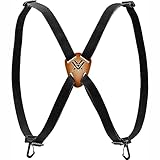
Vortex Binocular Harness Strap
- 3.17 oz strap
- Spreads weight across shoulders
- One size fits all
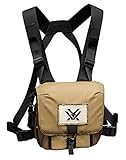
Vortex GlassPak Harness
- Padded structured carry
- Two mesh pockets plus zip pocket
- Lifetime VIP warranty

OUFABE X-Shape Harness Strap
- 4.66 oz
- Cross design spreads pressure
- Quick-disconnect ring and hook
All 12 Binocular Harnesses at a Glance (2026)
| Product | Specifications | Action |
|---|---|---|
| Vortex Binocular Harness Strap |
|
Check Latest Price |
| Vortex GlassPak Binocular Harness |
|
Check Latest Price |
| OUFABE X-Shape Harness Strap |
|
Check Latest Price |
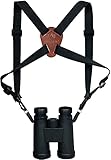 OUFABE X-Shape Harness BHS02 OUFABE X-Shape Harness BHS02 |
|
Check Latest Price |
 Trummul X-Shape Chest Strap Trummul X-Shape Chest Strap |
|
Check Latest Price |
 MOXULE Bino Harness Chest Pack MOXULE Bino Harness Chest Pack |
|
Check Latest Price |
 Nikon PROSTAFF Bino Harness Nikon PROSTAFF Bino Harness |
|
Check Latest Price |
 Lone Trail Binocular Chest Pack Lone Trail Binocular Chest Pack |
|
Check Latest Price |
 Wild Cedar Bino Chest Pack Wild Cedar Bino Chest Pack |
|
Check Latest Price |
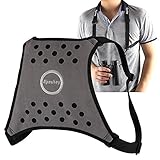 Eyeskey Lightweight Harness Eyeskey Lightweight Harness |
|
Check Latest Price |
 Rick Young Premium Shock-Cord Harness Rick Young Premium Shock-Cord Harness |
|
Check Latest Price |
 Hornady Form-Fitting X Panel Harness Hornady Form-Fitting X Panel Harness |
|
Check Latest Price |
1. Vortex Binocular Harness Strap: Best Overall for Hiking
- Spreads binocular weight across both shoulders instead of the neck
- Durable nylon and Lycra straps let binoculars slide to viewing position easily
- Keeps binoculars rangefinders and cameras close to the chest
- One size fully adjustable and easy to attach
- No storage pockets for a rangefinder or phone
- Elastic can lose tension after long periods of heavy use
This is the harness I put on every hiker who asks me for a single recommendation, and the one that stayed on my own chest rig longest. At 3.17 ounces it adds almost nothing to a carry budget, yet it moves the full load of a pair of 8x42s off the neck and across both shoulders.
Raising the binoculars is a one-motion move: pull up, they slide straight into eye position, and let go they fall back snug against the sternum. That fall-back is the whole trick on a descent, where a neck-strap pair tends to swing forward into your stomach with every downhill step.
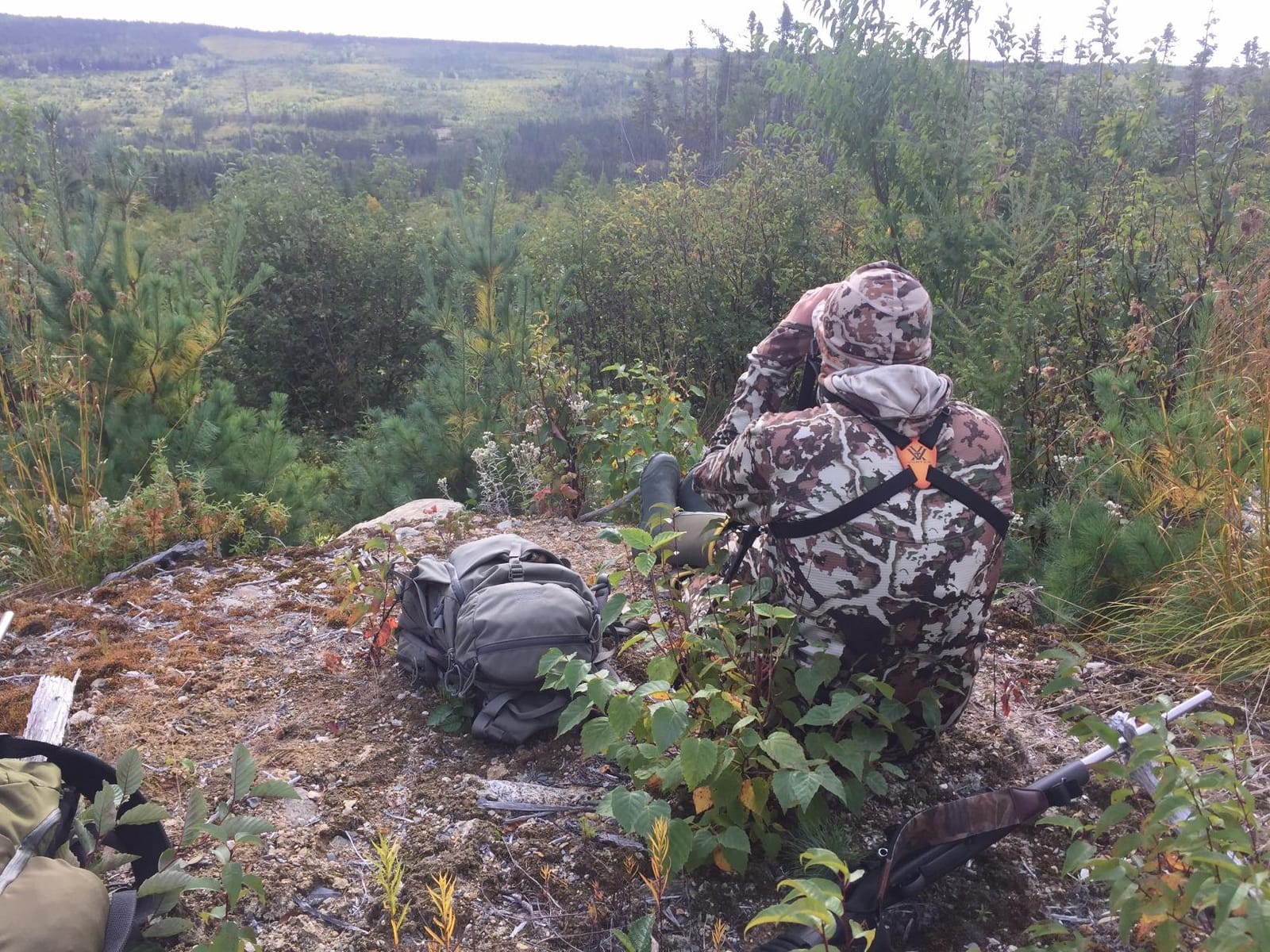
Over a full day the nylon and Lycra blend held its shape better than the pure-elastic options I tested, and 83 percent of the reviews on this listing are five-star. The long-running owners describe the same thing we saw, comfortable for long viewing sessions with even weight distribution and one-handed retrieval.
What you gain over a neck strap
The gain is not subtle. A neck strap concentrates a 21 to 25 ounce load on the narrow band of skin at the base of your throat, which is exactly where the pain shows up after two hours of climbing. The harness spreads the same load across the full width of both shoulders, and the padding sits on bone rather than cartilage.
Where it falls short on the trail
There is nowhere to put a rangefinder, a phone or a lens cloth, so if you carry those, budget for a separate pocket or a small pack. Elastic tension also drifts downward over months of daily use, and once it does, the binoculars start riding lower and closer to your neck again.
2. Vortex GlassPak Binocular Harness: Best for Hikers Who Carry More Than Glass
- Full-size padded pack keeps binoculars snug while walking
- Two mesh side pockets plus a rear zippered pocket
- Tethers prevent drops and allow fast pull-up
- Backed by a lifetime unconditional warranty
- Fit is model-specific and does not suit every binocular
- Bulkier than a strap-only harness when packing
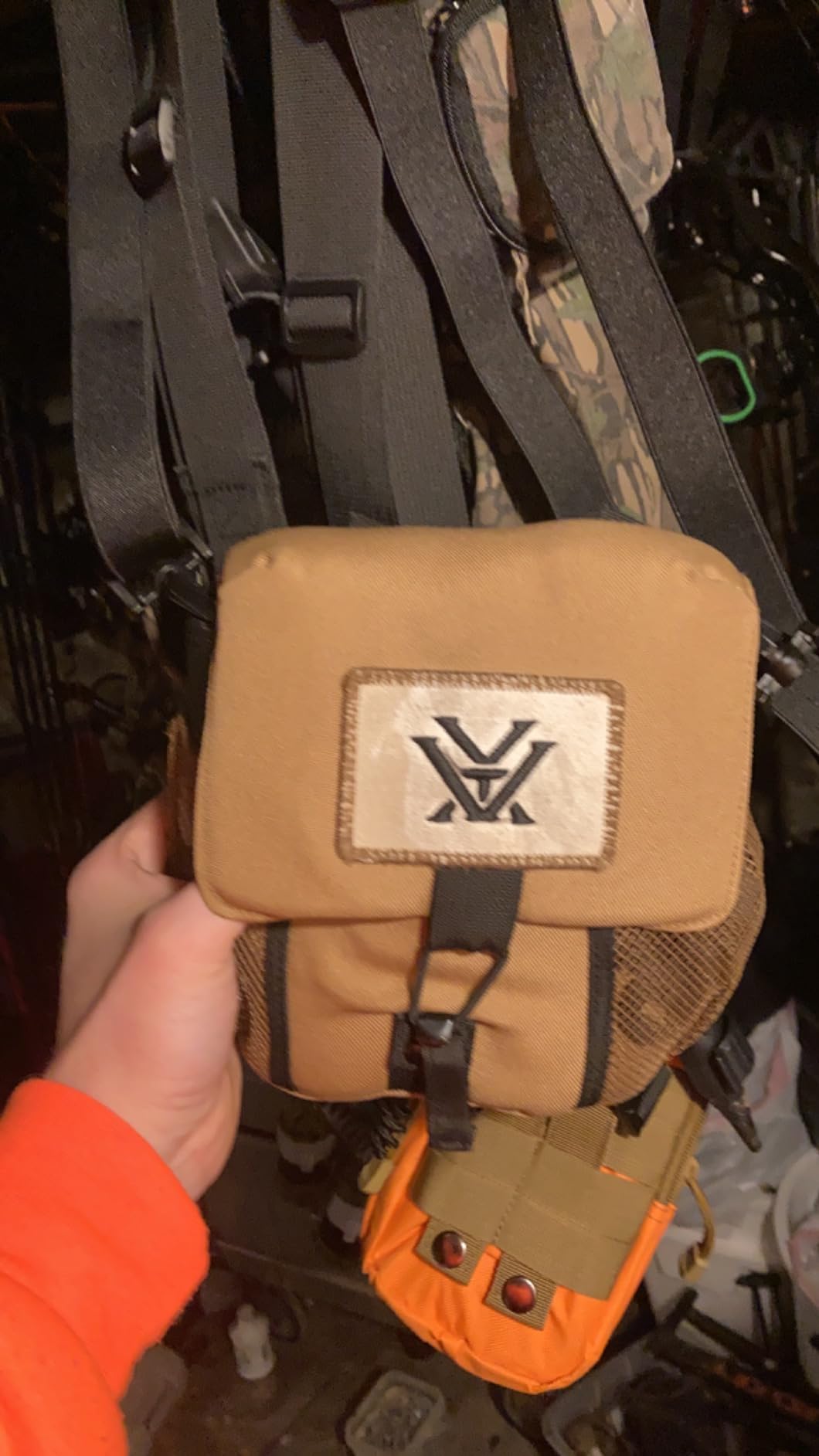
If your day involves a phone, a field notebook and a rangefinder, the GlassPak solves a problem no strap can. It is a padded structured carry rather than a sling, so the binoculars sit in a shaped compartment instead of hanging free, and the pockets around it hold the small gear you would otherwise stuff into a daypack.
The rear zippered pocket swallows a phone, the two mesh slip pockets take calls and a lens pen, and the internal tethers stop the classic fumble where a pair drops as you pull them up. With 5082 ratings it is the most-reviewed harness in this roundup, and 75 percent of those reviews are five-star.
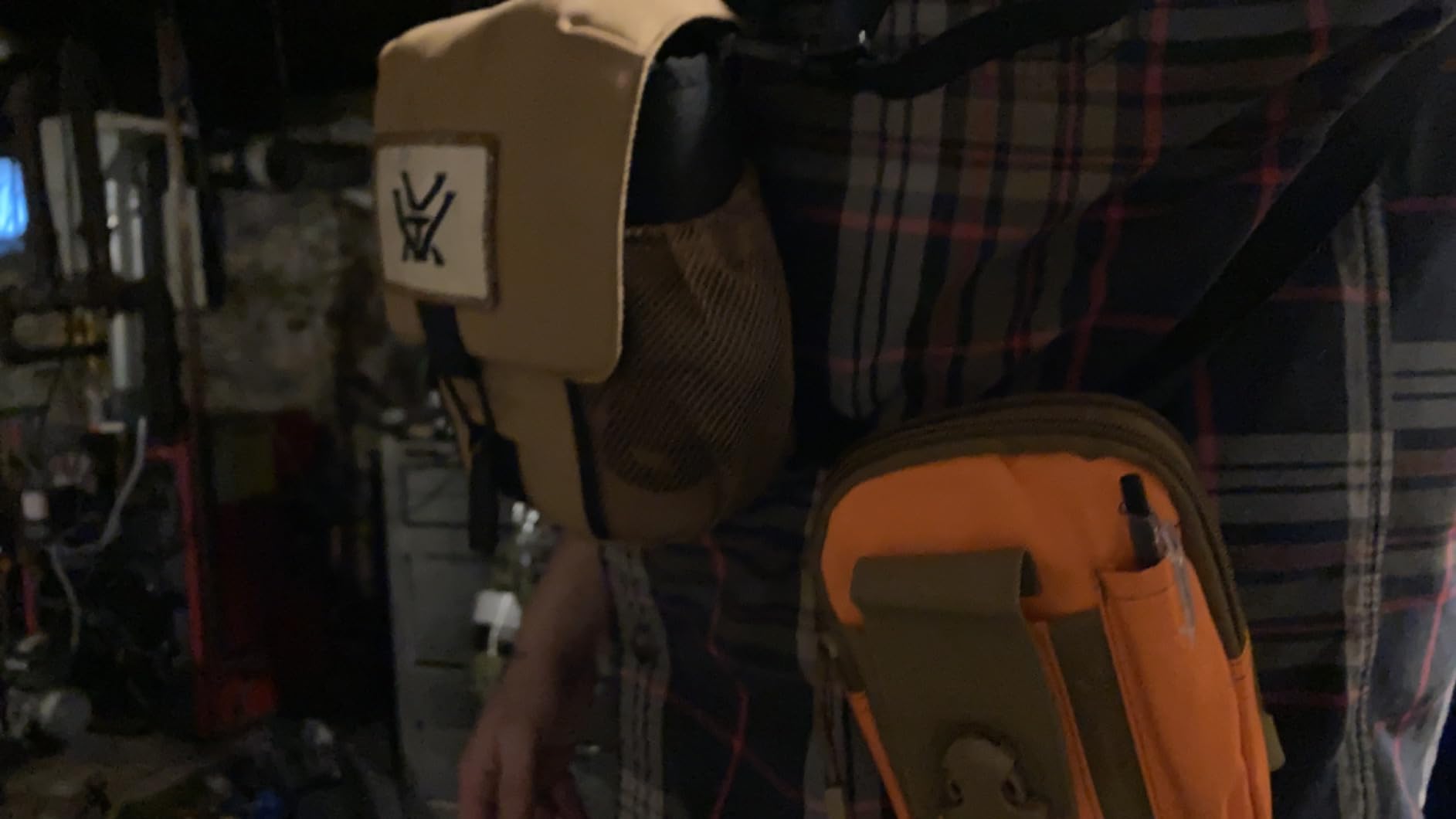
The warranty is the sleeper feature here. Vortex backs it with an unlimited, unconditional lifetime VIP warranty, which on a hiking rig means a torn strap or a broken buckle is a replacement rather than another purchase.
Best for a full day out, not a fast walk
Pick this when the binoculars leave the pack and stay out. The 11.2 ounces is more than double the strap harnesses, so on a fast hiking loop where you glass only occasionally you are carrying weight for nothing. For an all-day scan of a valley, a wetland or a treeline, the structured carry pays for itself.
Check your binocular size first
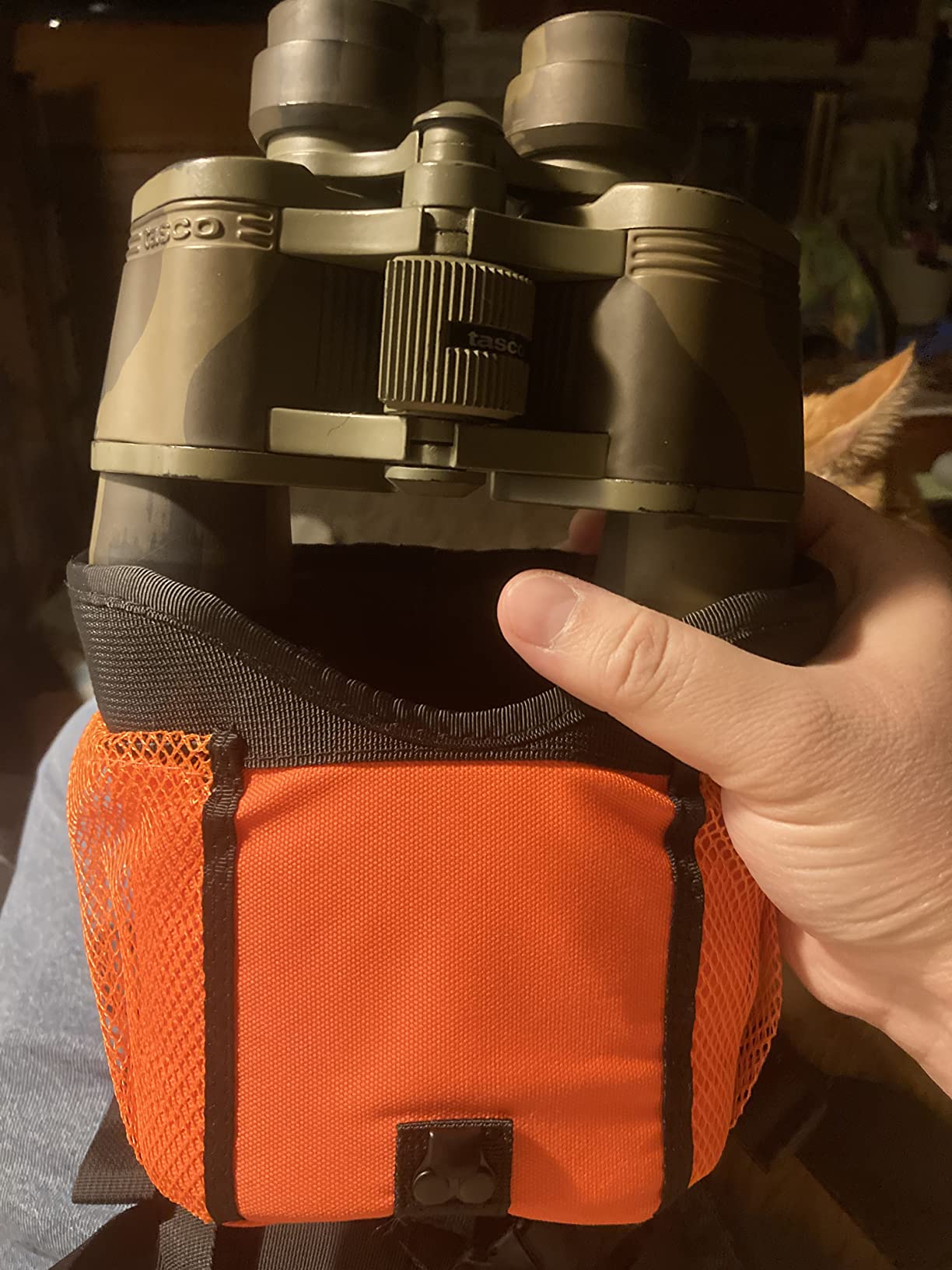
This is the pack that most often disappoints on arrival, because fit is model-specific rather than universal. It is listed to seat Vortex Razor, Fury HD, Viper HD, Diamondback HD, Crossfire HD and Triumph HD bodies. Measure your own pair and compare before you commit rather than trusting the small, medium or large label.
3. OUFABE X-Shape Harness Strap BHS01A: Most Versatile
- Cross design spreads pressure across neck and shoulders
- Nylon belt with buttonholes at both ends suits most brands
- Binoculars hug the chest and rise to viewing position quickly
- Fully adjustable front and back for different body types
- Runs small on larger bodies despite the one size claim
- Included instructions are unclear
- Thin leather connector tabs raise long-term durability questions
Most hikers do not need to spend much to fix the neck-strap problem, and this is a low-cost real fix among the harness options. The X-shaped cross spreads the load over your shoulders and upper chest, and a quick-disconnect ring and hook let the binoculars ride up and down freely instead of hanging at a fixed length.
The belt carries buttonholes at both ends, so it clamps onto standard strap loops on almost any binocular brand without an adaptor. We used it with a 10×42 on stream crossings and short scrambles, and it stayed put while jumping and climbing.
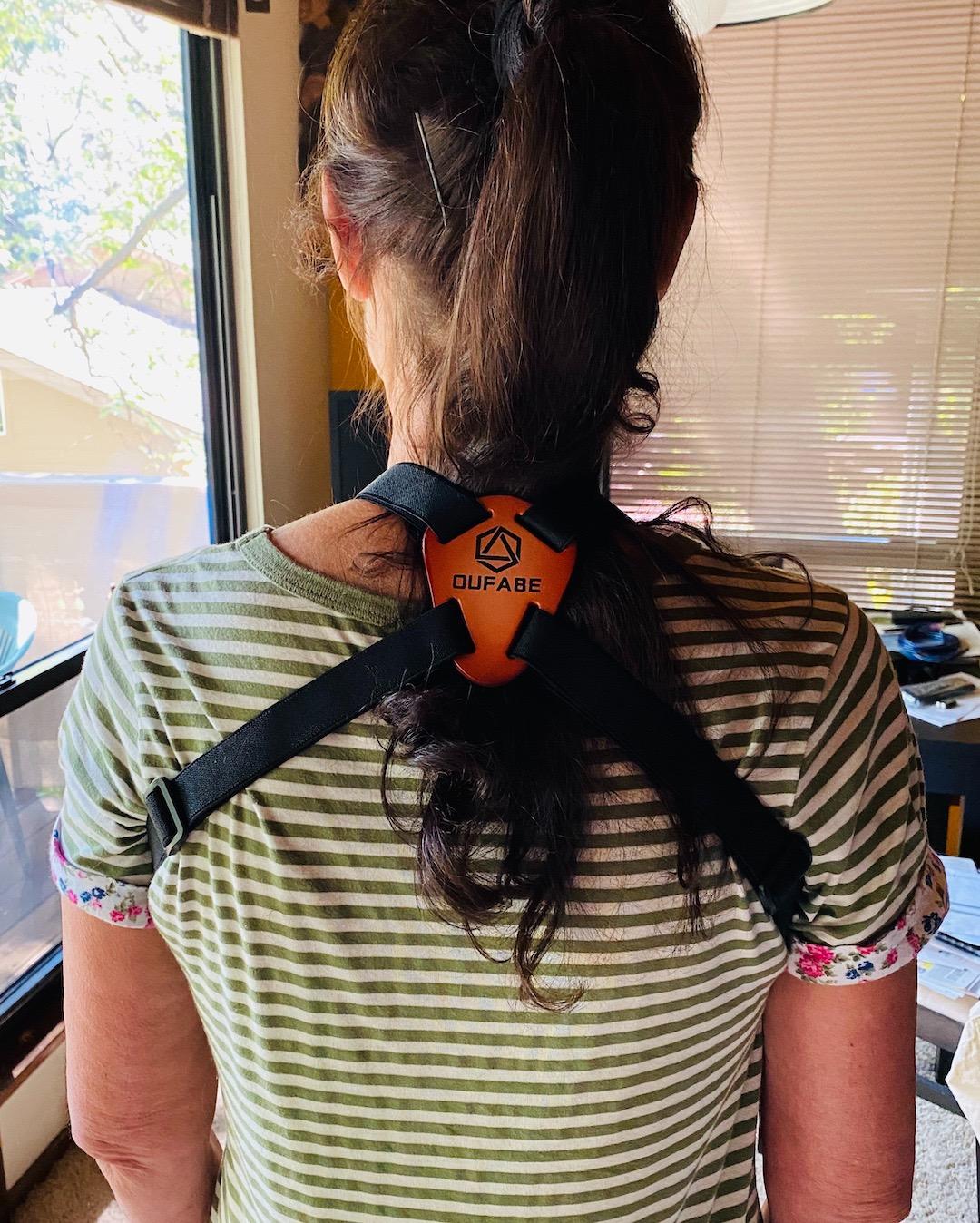
With 1064 ratings and 76 percent five-star reviews, it has become the go-to first upgrade for people trading in a stock strap. Most owners describe it exactly that way, an affordable step up that removes neck pressure and holds the glass close.
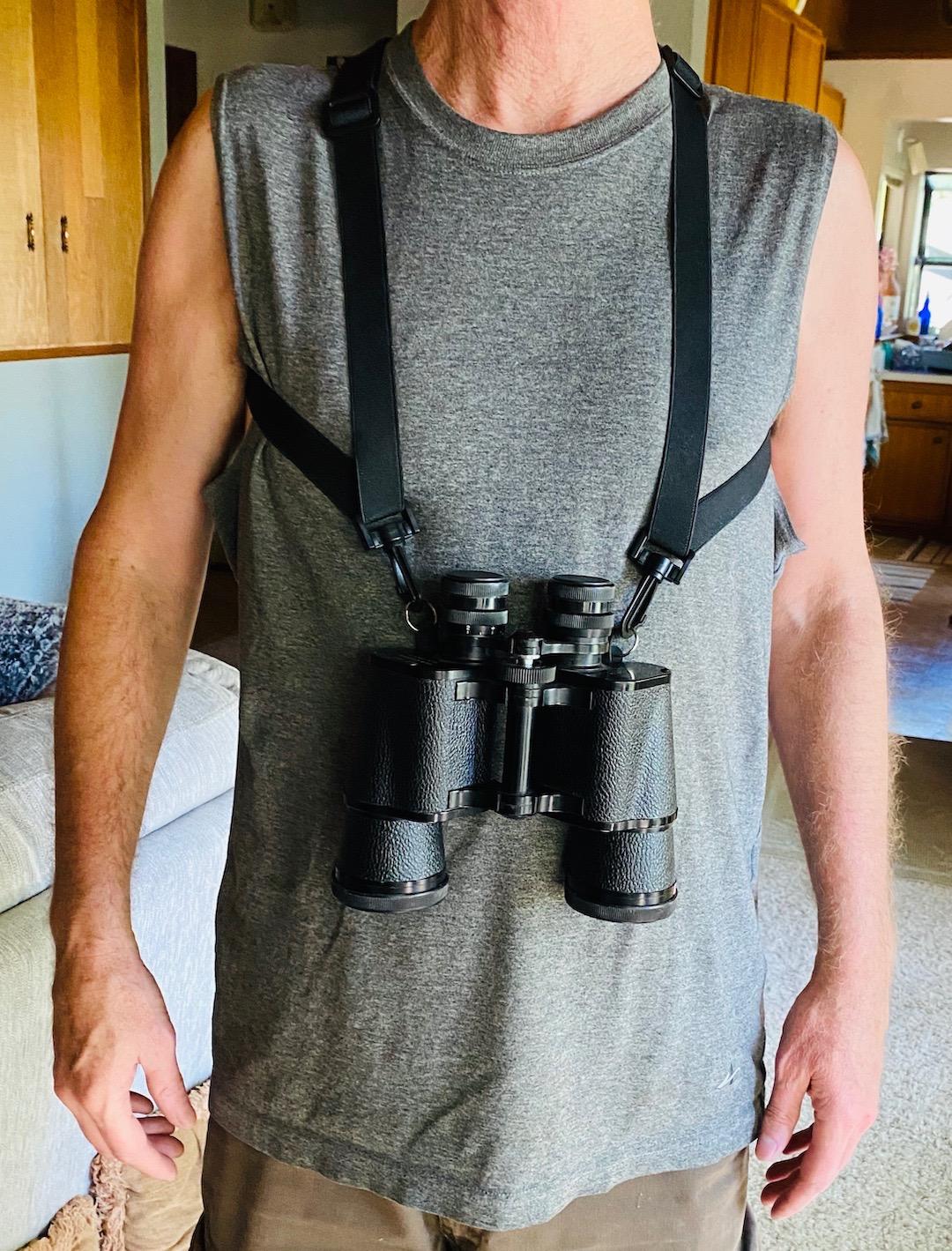
Good for shorter builds and moderate loads
The fit suits most adults and works with cameras and rangefinders as well as binoculars. If you are replacing a neck strap on a 21 to 25 ounce pair, this is the configuration where you see the biggest comfort gain for the least bulk.
Not ideal for bigger bodies or heavy glass
Two caveats come up repeatedly. The strap runs small on plus-size bodies despite the one size claim, so check the adjustment range against a jacket rather than a t-shirt. The thin leather connector tabs are the part reviewers question first, and they are the piece to inspect before every season.
4. OUFABE X-Shape Harness BHS02: Best Lightweight Harness
- At 1.76 ounces it is the lightest harness tested
- X design spreads weight over shoulders and back
- Double-stitched nylon and Lycra construction
- Reduces binocular sway over long walks
- Elastic loses stretch after repeated use
- Clips are thick for some strap loops
- Limited adjustment points compared with buckled harnesses
At 1.76 ounces this is the lightest harness we carried, and it matters on a long backpacking trip where every quarter pound lands in your feet first. For ultralight hikers the pair of binoculars is the heaviest fixed item, so removing strap weight is one of the easiest places to claw back grams.
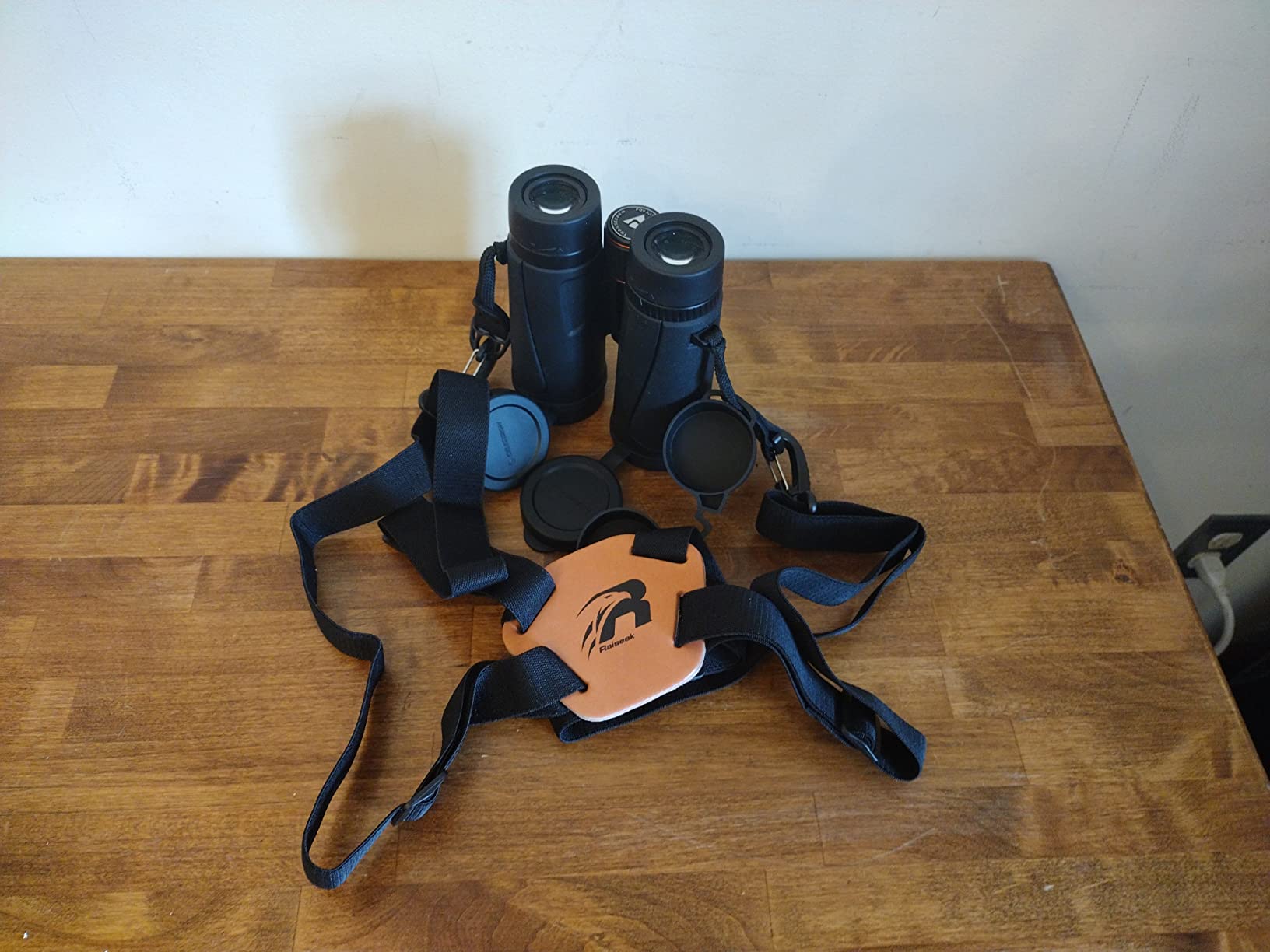
The double-shoulder X design runs across your shoulders and back rather than sitting on the neck, and the double-stitched nylon and Lycra held up well against pack fabric abrasion in our testing. It suits binoculars with a half inch wide eyelet and can carry heavier cameras as well.
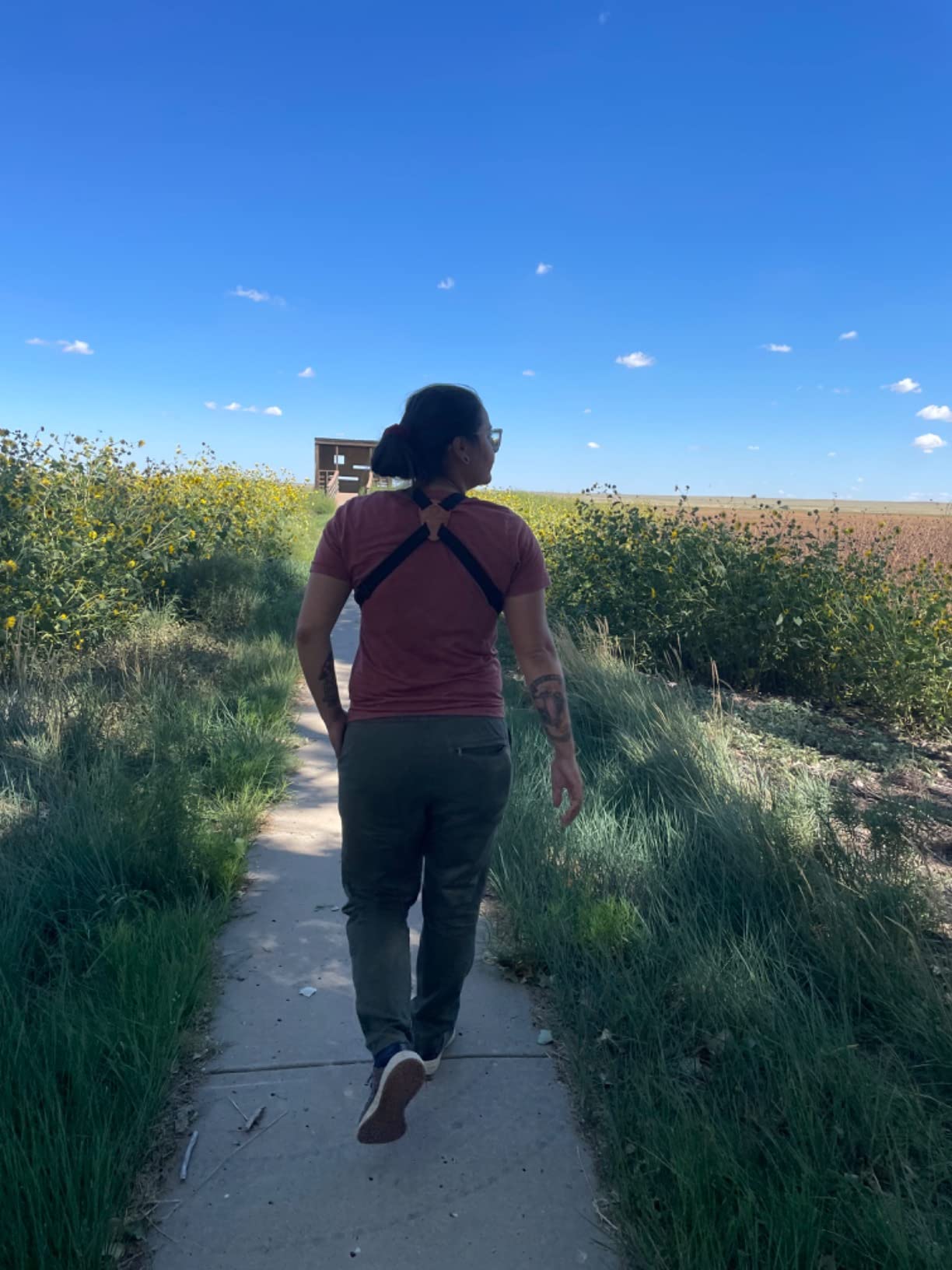
Owners like the low-profile tactical look and the comfort over long days, with 79 percent of the 628 reviews at five stars. The recurring theme is stability: the binoculars sit close and sway less than they do on a stock strap.
When going ultralight is the priority
This is the pick when your whole kit is built around a base weight budget and you want the binoculars carried rather than stowed. At this weight you can keep the glass on your chest for a whole day without thinking about it.
Where the ultralight trade-off bites
The clips are thick, and some binocular and camera strap loops will not pass them without an adaptor, so test the fit before your first trip. Elastic also stretches out with repeated use, letting the binos ride low, and there are fewer adjustment points than a buckled harness offers.
5. Trummul X-Shape Chest Strap: Best for Quick On and Off
Trummul Binocular Harness Strap Best Chest Harness Strap for Hunters Photographers and Golfers (Black)
- X design distributes weight around neck back and shoulders
- High-grade plastic quick-release buckles make on and off fast
- Sliding strap brackets adjust across a wide size range
- Works for binocular camera rangefinder hiking and golf
- No storage pockets or rangefinder holder
- Plastic hardware wears faster than metal on premium harnesses
This is the harness for hikers who put their binoculars on and off dozens of times a day, which is what wildlife scanning from a valley floor actually looks like. The quick-release buckles mean you can drop the rig over your head between glassing sessions instead of working strap loops with cold hands.
The sliding adjustment brackets let you set length once and then shift the fit over a puffy jacket and a base layer without rethreading anything. Hunters, photographers and golfers all use the same strap, and reviewers report the same quick-release benefit across all three.
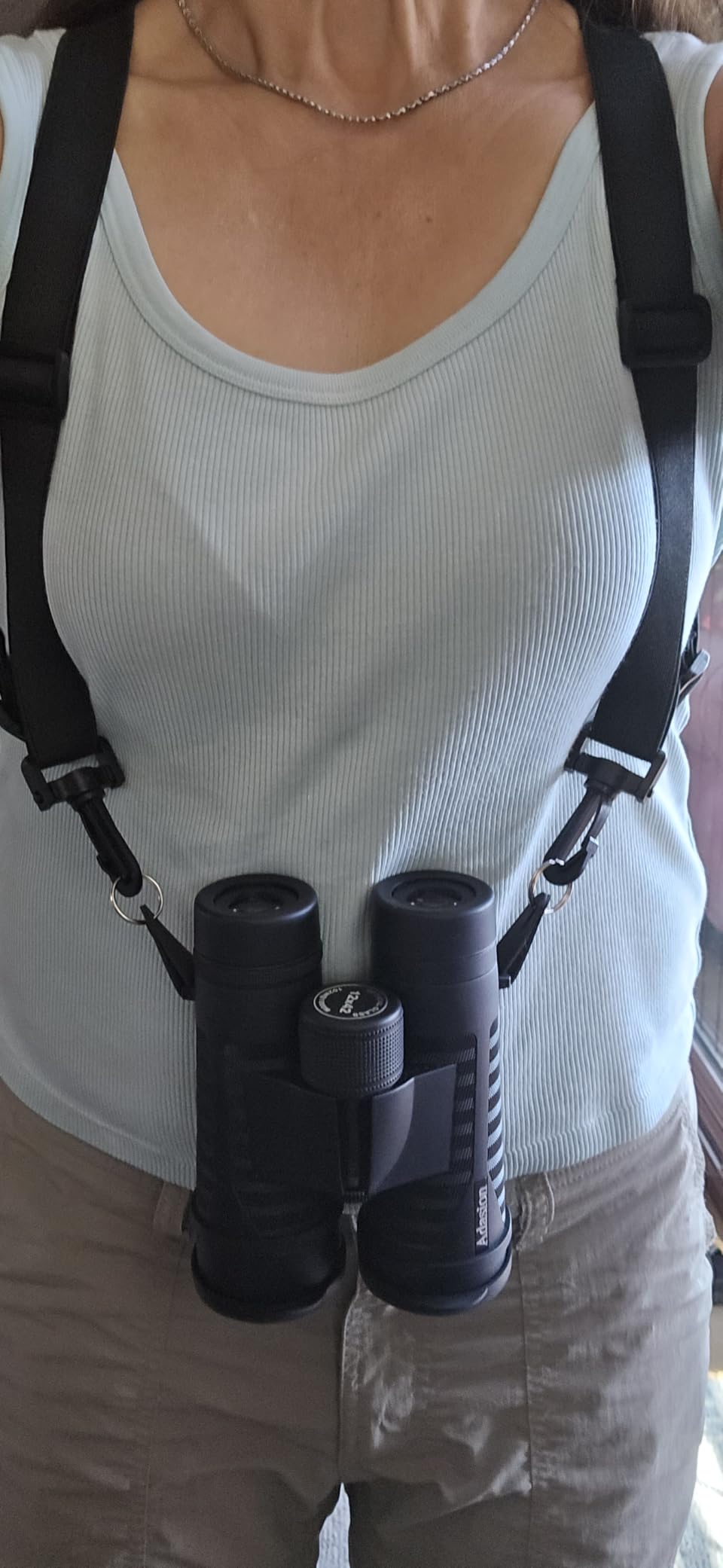
Best for repeated stops and fast transitions
Bring this if you spend your day alternating between walking and glassing. Gloves, wet hands and a busy route all favour a buckle over a small clip, and the X panel keeps the load off the base of your neck while you move.
Where the plastic hardware matters
The hardware is plastic rather than metal, which is fine for occasional use but is the first thing to inspect after a season of being clipped and unclipped. It also carries no pockets at all, so a rangefinder or phone needs to live somewhere else.
6. MOXULE Binocular Harness Chest Pack: Best for Storage and Modularity
MOXULE Binocular Harness Chest Pack: Bino Case with Rangefinder Pocket
- Silent magnetic lid gives one-handed access with no zipper noise
- Four compartments plus a detachable rangefinder pouch
- MOLLE straps at the bottom accept extra pouches
- 500D treated nylon is water resistant and quiet inside
- Wide breathable mesh back strap for long days
- Outsize runners may need to cinch the top straps fully
- Some rangefinders fill the pouch tightly
- Single zipper per pouch limits opening options
This is the most feature-dense pack in the roundup, and the silent magnetic lid is the reason it earns a place on a hiking kit list. You pull the lid back with one thumb, the binoculars come up to your eyes, and the lid closes without the metallic zip noise that gives away your position on a ridge at dawn.
The interior holds a large main compartment with two mesh pouches, a detachable rangefinder pouch, side and phone pockets, rear mesh storage and a pocket for the included rain cover. MOLLE straps along the bottom accept extra pouches if you want to add a lens cloth or a small first aid item.
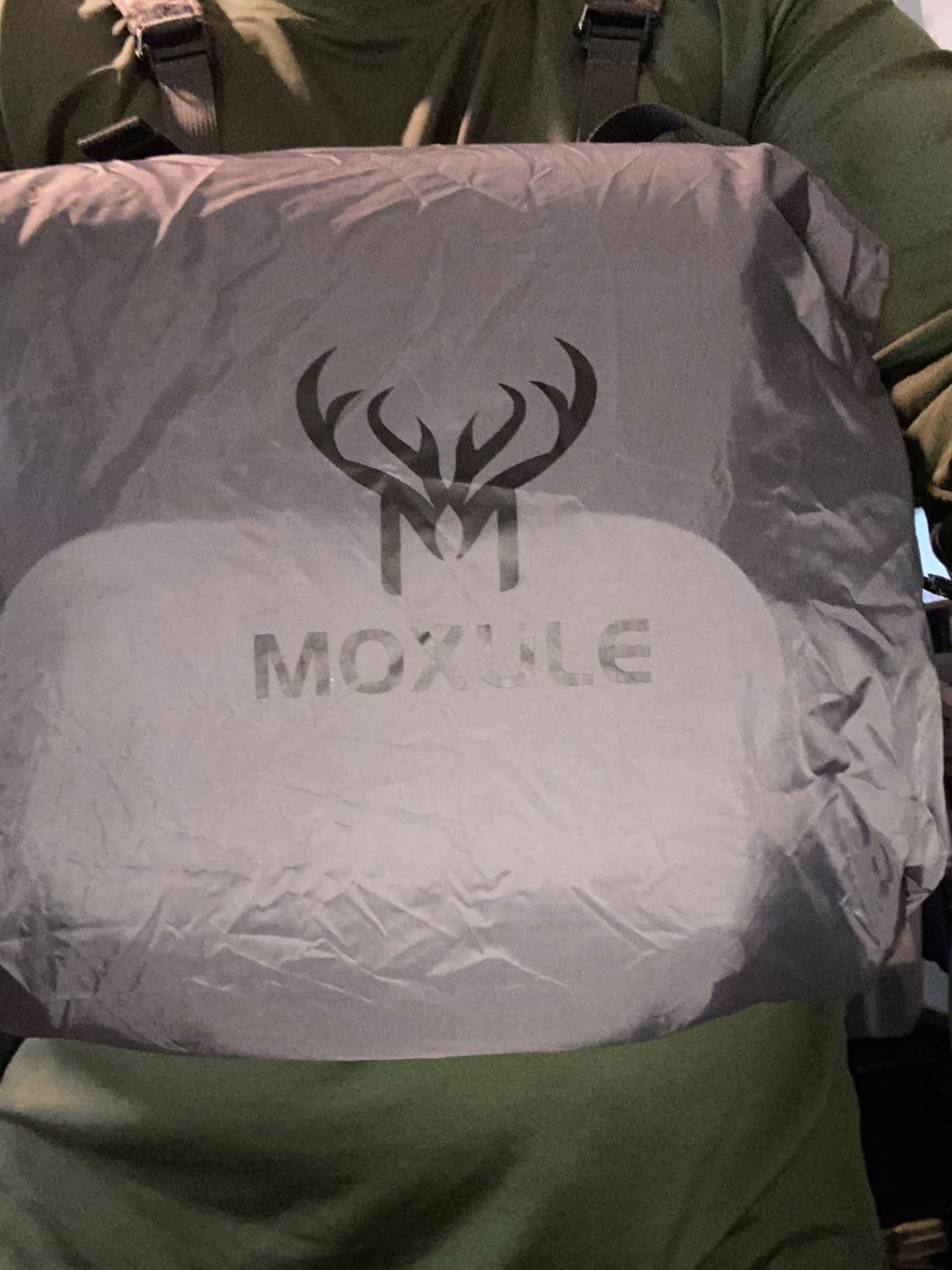
Owners compare it to premium branded models at a lower price point, with 78 percent of the 467 reviews at five stars. Breathability comes from the wide mesh back strap, which is the part that decides whether a chest pack is tolerable on a warm climb.
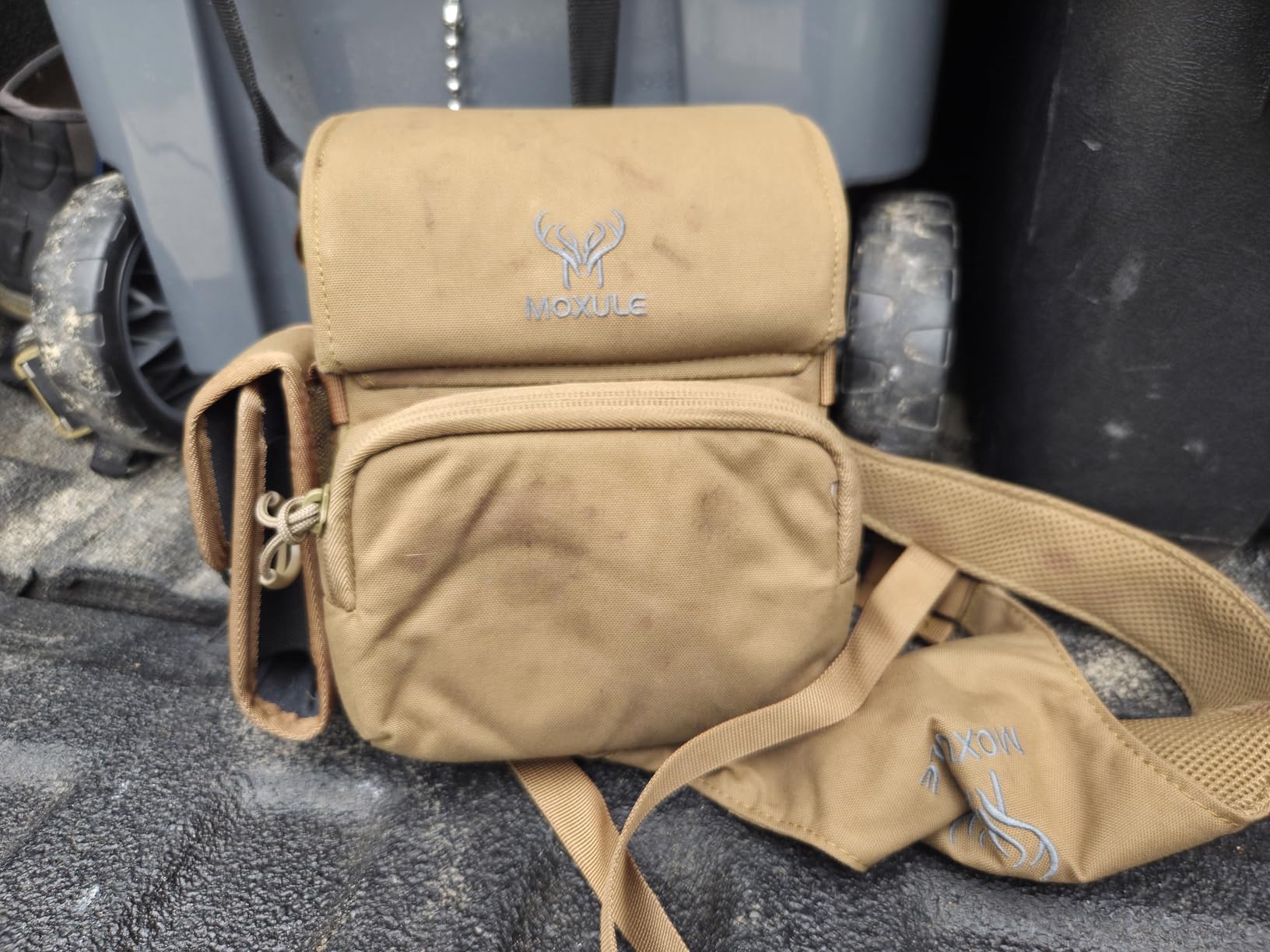
Best for warm-weather hikes where bulk is fine
If you carry a rangefinder or a rangefinder-sized gadget, this pack earns its size. The 500D treated nylon is water resistant and the interior fabric is quiet, and the included rain cover covers the whole pack rather than only the binocular compartment.
Where it needs adjusting on your body
The most common complaint is strap length for larger runners, who need to cinch the top straps all the way down. Second is pouch sizing: some rangefinders fit tightly. Each pouch also has a single zipper, so plan one-handed access around the magnetic lid only.
7. Nikon PROSTAFF Bino Harness: Best Budget Pick From an Optic Brand
- Elastic strap system spreads weight evenly for hands-free carry
- Quick-release connections guard against drops
- Lightweight at 2.72 ounces with adjustable straps
- Sold under the Nikon Sport Optics name
- Ratings trail newer designs in this roundup
- No pockets or rangefinder attachment
- Older strap-only layout with less adjustment
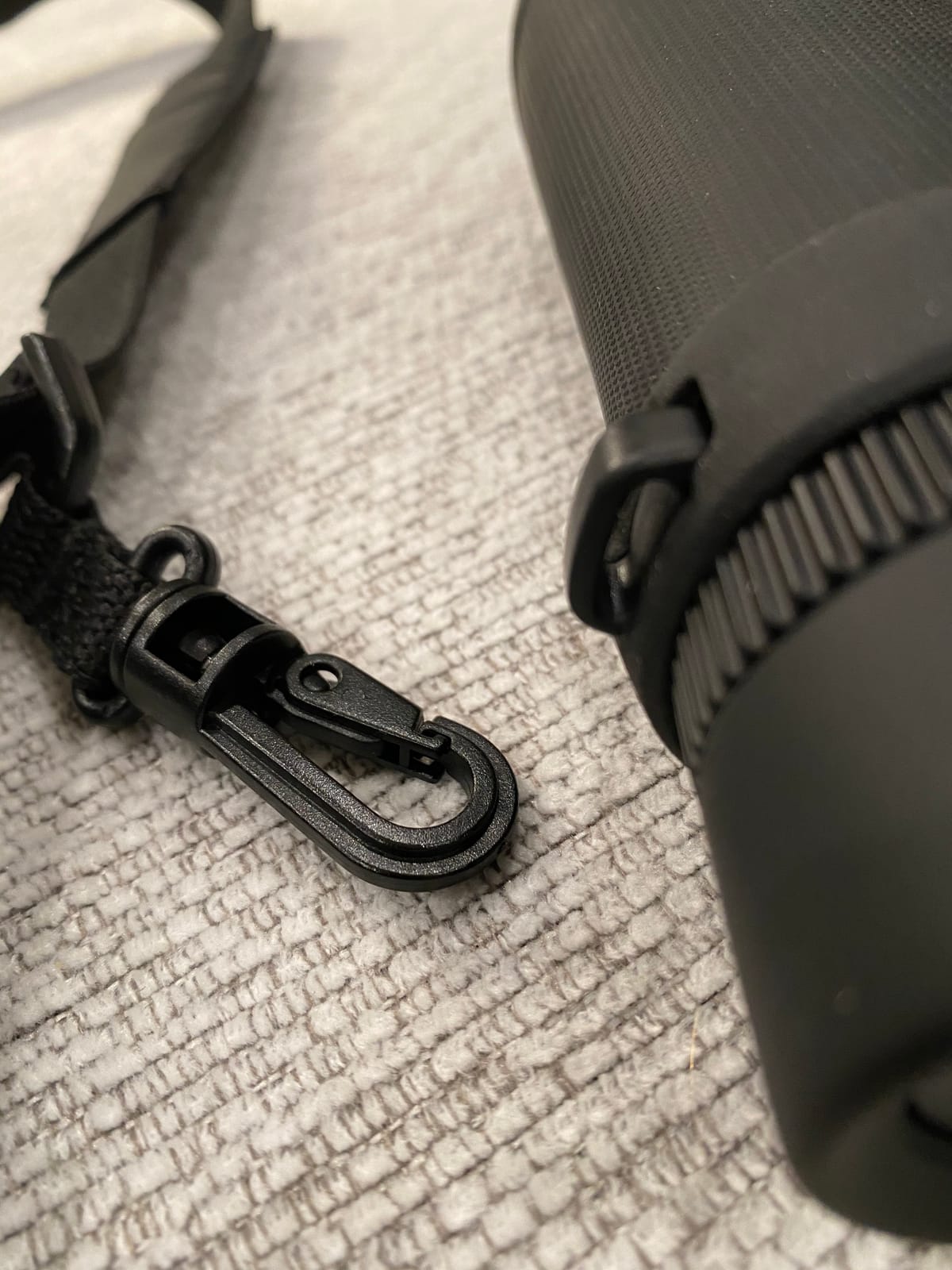
Buying the harness from the same brand as your glass is a quiet convenience, and that is the case for this one. It is a simple elastic shoulder strap system with quick-release connections, weighing 2.72 ounces, which keeps it in the ultralight half of our list while sitting on a well-known optic name.
It is listed as waterproof, and Nikon names hiking, bird watching, hunting and camping as the intended uses, so it is a reasonable companion for wet coastal and forest routes where a pack is not in play.
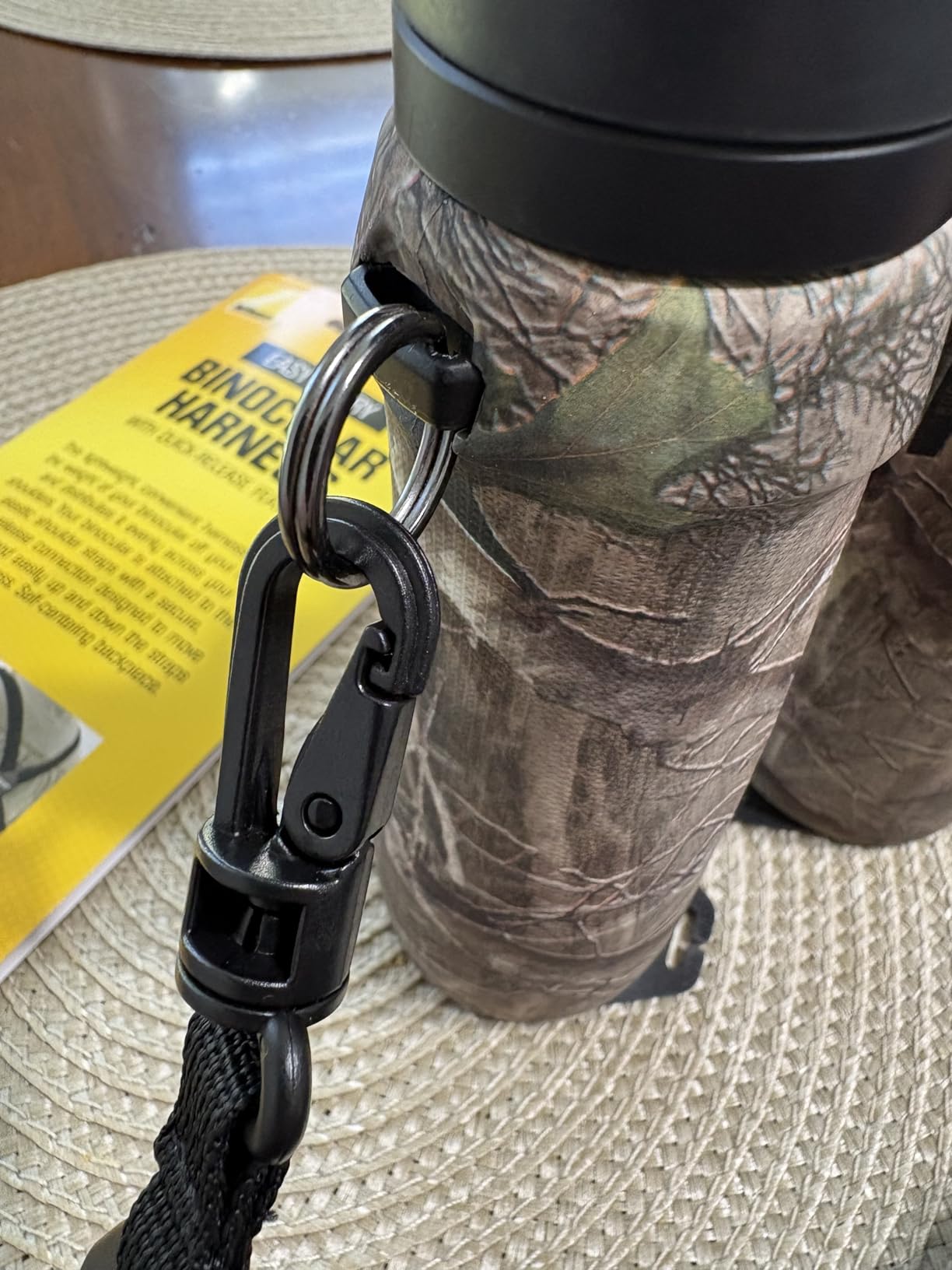
The honest framing: this is the lowest-rated product we tested at 4.3 with a 63 percent five-star share, well behind the newer designs. Owners describe it as dependable and doing the basic job of taking weight off the neck, which is exactly what a strap harness should do and nothing more.
Best when you want the simplest possible rig
If your hiking pattern is a straightforward walk with occasional stops to glass, and you want almost nothing in your way, the small profile works in your favour. Adjustable straps handle different body sizes and the quick-release keeps the connection secure.
Where it will disappoint you
There is no storage and no rangefinder attachment, and the elastic design offers less adjustability than modern four-point systems. If your binoculars are 12×50 glass, the constant heavier pull on older elastic is where you will notice first.
8. Lone Trail Binocular Harness Chest Pack: Best for Silent, Modular Carrying
Lone Trail Binocular Harness Chest Pack – Bino Harness Hunting Chest Rig
- Silent magnetic release for stealthy one-handed access
- Waterproof 500D Cordura shell protects optics in rain and dirt
- Rangefinder pouch plus utility pouch and MOLLE webbing
- Breathable padding with adjustable sizing
- Ranked first in Binocular Cases in its category
- Can hang loose and tip forward while moving
- Rangefinder and side pouches run small for larger gear
- No binocular tether included
The waterproof Cordura shell is what separates this pack from the fabric packs above it, and on a wet ridge it is the difference between an expensive wipe-down and no damage at all. The listing calls the 500D Cordura case waterproof, and that claim is worth testing before you rely on it in sustained rain.
The magnetic release gives silent one-handed access, which keeps your glassing quiet, and PALS and MOLLE webbing lets you hang a rangefinder pouch or utility pouch where you want it. Straps adjust from small through extra-large, which is a wider range than most packs here.
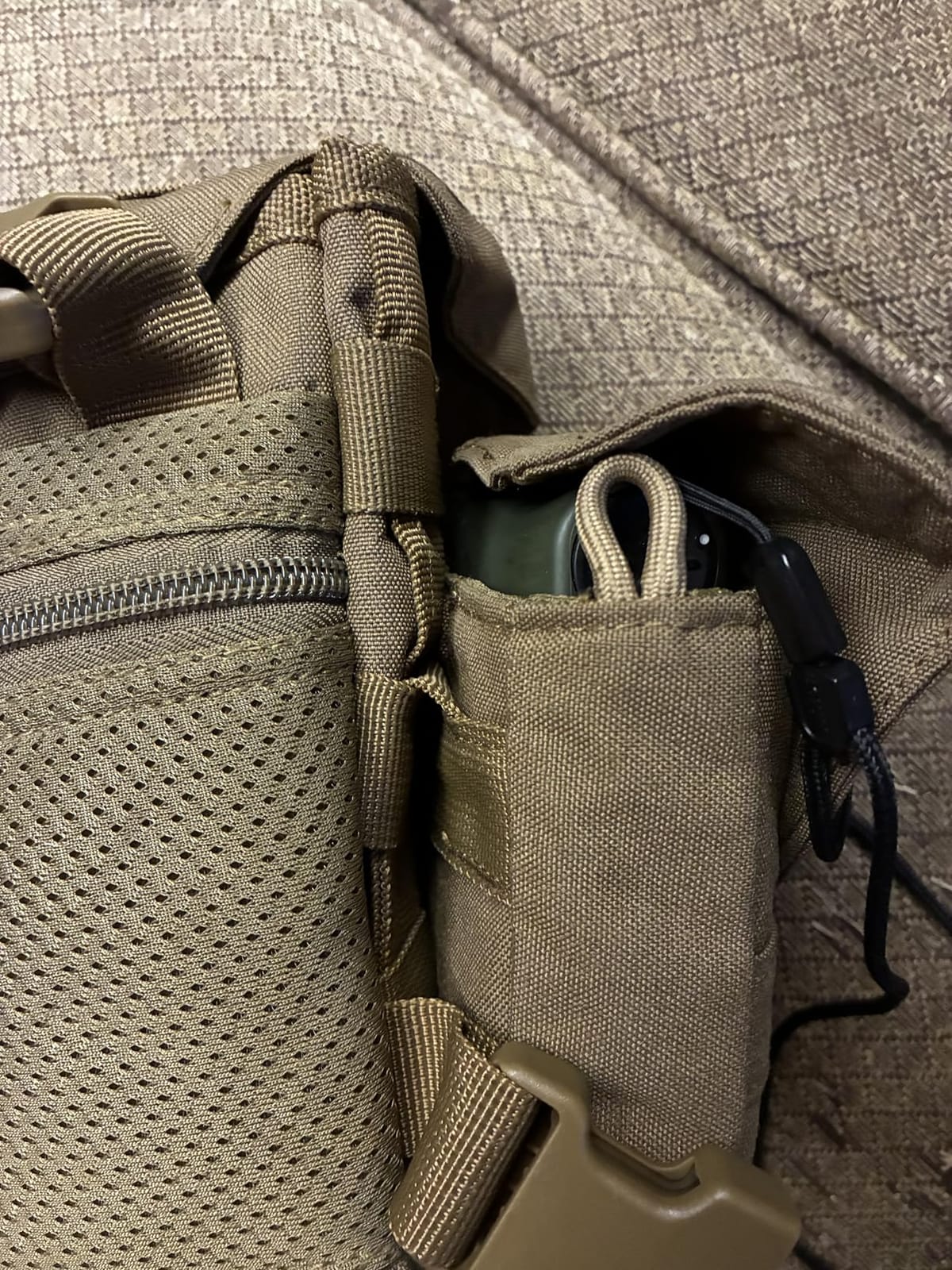
Buyers frequently call it better value than premium rigs costing far more, with 73 percent of the 340 reviews at five stars. The design targets elk, mule deer and whitetail glassing and works just as well for birdwatching on a wet coastal path.
Best for wet weather and multi-gear carry
Bring this if rain is a regular feature of your route or if you carry more than binoculars. A detachable rangefinder pouch plus utility storage beats juggling a phone and a lens cloth in a daypack that keeps moving on your chest.
Where it needs a tweak before you hike
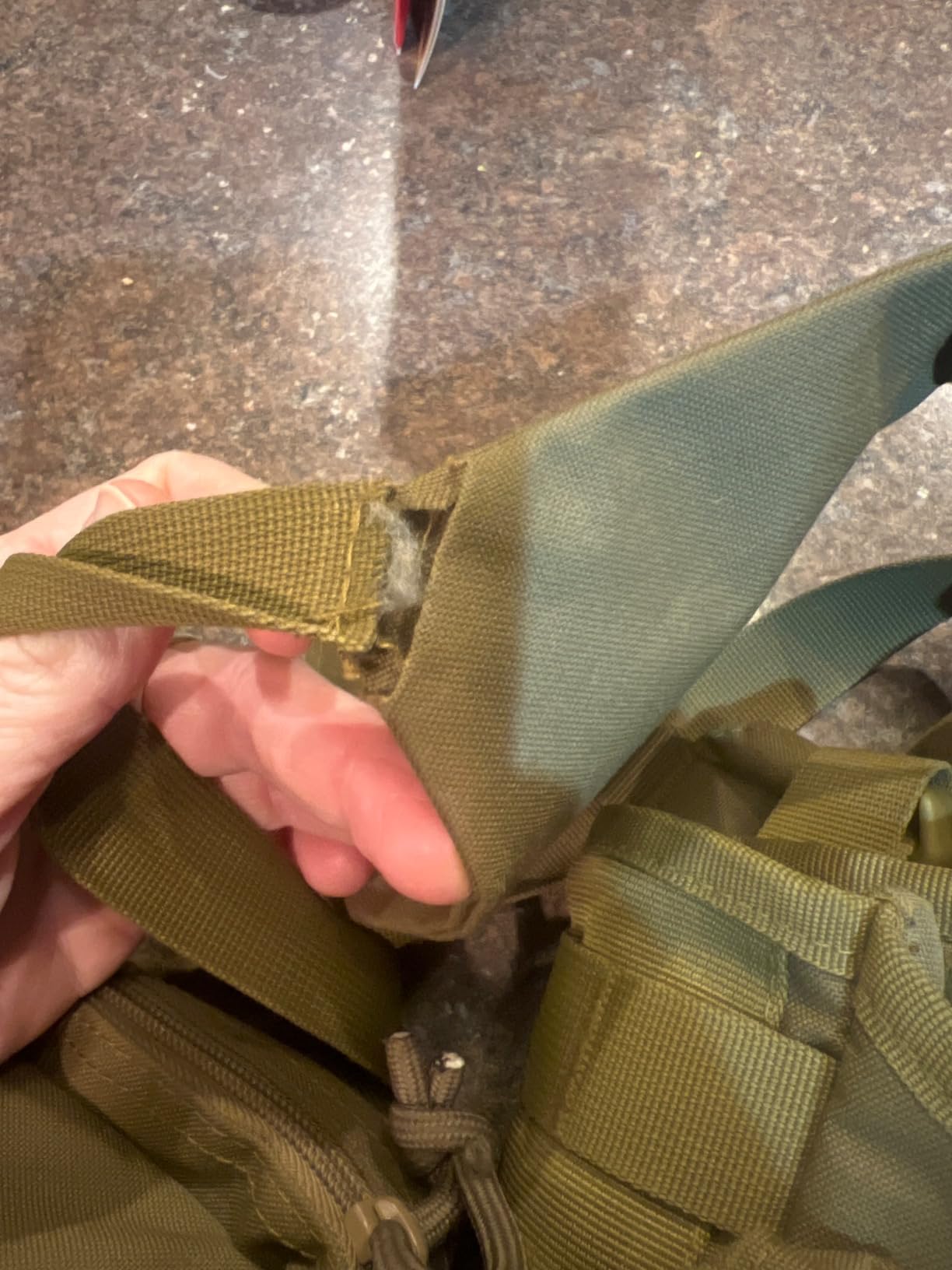
It hangs a little loose and can tip forward when you are moving, so tighten the straps over your jacket and re-check them after a mile. The rangefinder and side pouches run small for larger devices, and no binocular tether is included, which leaves drops to the internal fit alone.
9. Wild Cedar Bino Chest Pack: Best for Quiet MOLLE Customization
Wild Cedar Binocular Harness Chest Pack with Rangefinder Pouch, Bino Harness with Rain Cover for Hunting
- Zipper-free pouch with buckle closure keeps access quiet
- Elastic magnetic-flap rangefinder pouch fits varied devices
- Four exterior pouches plus an interior cloth pocket
- Dual MOLLE straps on each side for small gear
- Includes a rain cover pouch and breathable all-weather straps
- Buckle closure is slower one-handed than a magnetic lid
- Medium size suits most 10x42 glass but not larger premium bodies
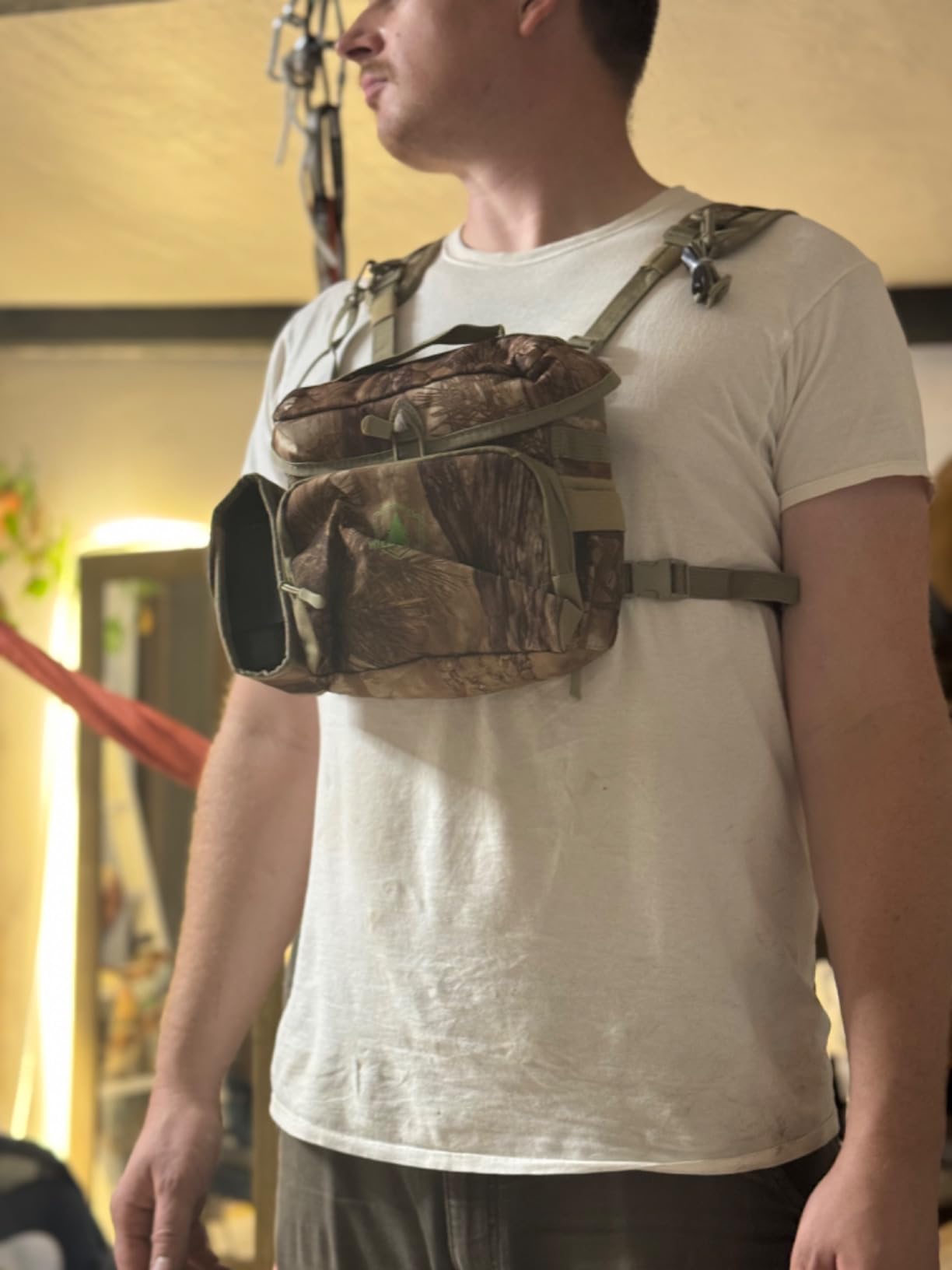
The buckle closure here is entirely zipper-free, which is a deliberate design choice for quiet access rather than an omission. Two integrated bino straps secure the glass inside, and the pouch lists a 12 ounce capacity alongside five compartments including a binocular pouch, a rangefinder pouch and multi-pouches.
The rangefinder pouch uses an elastic magnetic flap that stretches to fit different sizes, so it adapts as your gear changes. Dual MOLLE straps on each side of the pack give you attachment points for small hunting gear, and the rain cover has its own storage pouch so it is not left behind at home.
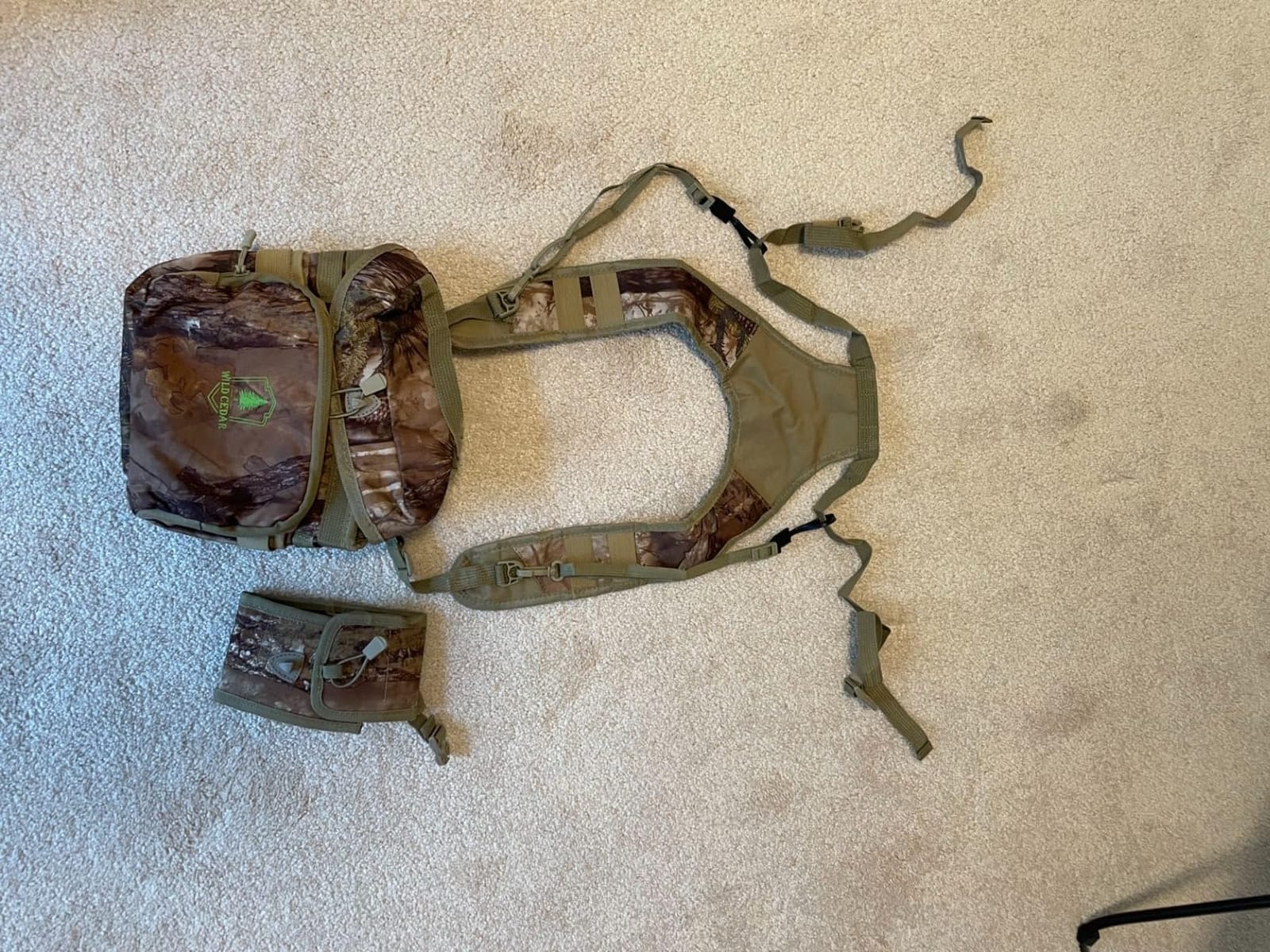
Buyers point to the quiet buckle design, the elastic rangefinder pouch and the included rain cover as the standouts, with 72 percent of the 234 reviews at five stars. Breathable all-weather straps make it a reasonable warm-climate choice.
Best for medium binoculars and modular setups
The medium size covers most 10×42 glass, which is the most common hiking pairing, and the MOLLE straps make it easy to bolt on a small pouch for a rangefinder or a phone without buying a different pack.
Where it falls behind the magnetic packs
A buckle takes two hands to work, which is a real drawback when you want one-handed access on a steep scramble. The medium size also will not swallow larger premium bodies, so measure before ordering.
10. Eyeskey Lightweight Harness: Best Over or Under a Jacket
Eyeskey Binoculars Harness Light-Weight Breathable Comfortable Binocular Strap Harness -Easy to Attach and Detach Binoculars, Cameras and Rangefinders, 4oz
- Lightweight and comfortable over or under a jacket
- Self-adjusting design with a wide adjustment range
- Binoculars ride high and pull up quickly
- Easy to attach and detach binoculars cameras and rangefinders
- Elastic stretches permanently under a normal load
- Top adjustment is limited so glass rides lower than ideal
- Not water resistant
Layer compatibility is the quiet strength of this harness. It is designed to be worn over a shell or slid under a jacket, and the self-adjusting layout with a large adjustment range means one harness can handle a base layer in the morning and an insulated midlayer at altitude.
It spreads weight across the shoulders with durable nylon straps and slides easily into viewing position. Buyers like the featherweight comfort, and it works for binoculars, rangefinders and cameras alike.

The ratings reflect that balance, at 4.4 with a 67 percent five-star share across 195 reviews. That is lower than the leaders, and the reviews explain why: several flag elastic straps that lose tension and let the binoculars bounce while walking.
Best for variable layers and changing weather
Choose this if your day moves between a warm climb and a cold ridge and you change your clothing as you go. Being able to wear it either on top of or under a jacket removes the most common layering complaint about chest-mounted carry systems.
Where the elastic gives out
Stretch is the recurring theme in the reviews, and permanent stretch under the weight of a typical pair lets the glass swing, which defeats the anti-bounce purpose. It is also not water resistant, so keep it clear of sustained rain and check that the clip matches your strap loops.
11. Rick Young Premium Shock-Cord Harness: Best for Long-Term Durability
Rick Young Outdoors Premium Binocular Harness | Adjustable Chest Strap BLK
- Patented shock cord hugs the body with no digging or sagging
- Cord holds its elasticity over years of use
- Five wearing configurations from harness to shoulder sling
- Ultralight and wraps tangle-free for storage
- Quick adjustment across clothing layers
- Cords can tangle when switching configurations
- Back tightening knob is uncomfortable when seated
- Excess cord can hang at the back if not trimmed
Elastic sag is the flaw that ends most webbing and elastic harnesses, and shock cord is the direct answer to it. Instead of stretching, the cord contracts around your body and holds its tension season after season, which is why owners report using the same harness for years rather than seasons.
It weighs 2.24 ounces, is made in the USA, and wraps flat and tangle-free around your binoculars when you pack them away. That flat profile matters in a pack, where a rigid chest pack is dead weight and a coiled strap is free.
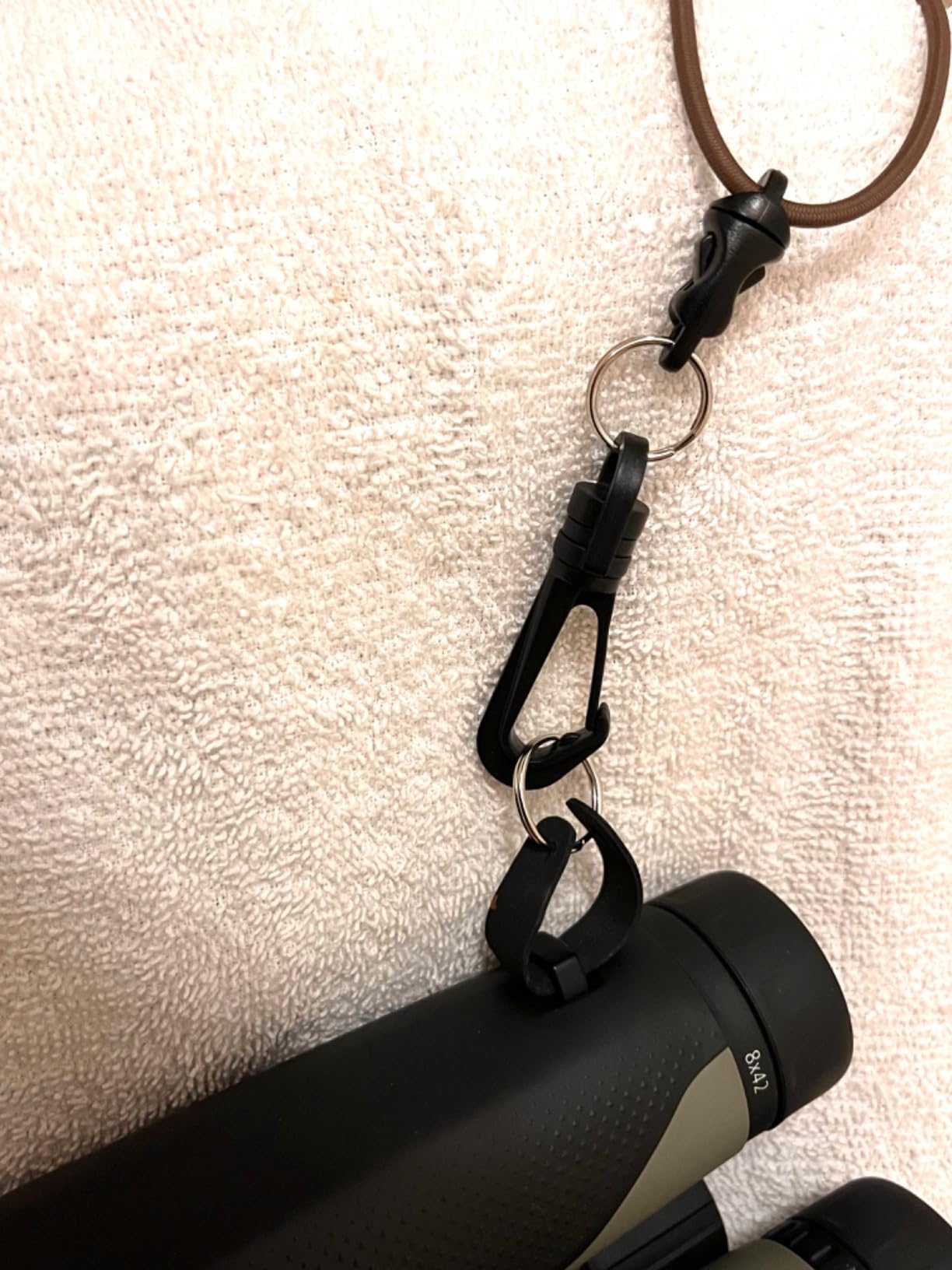
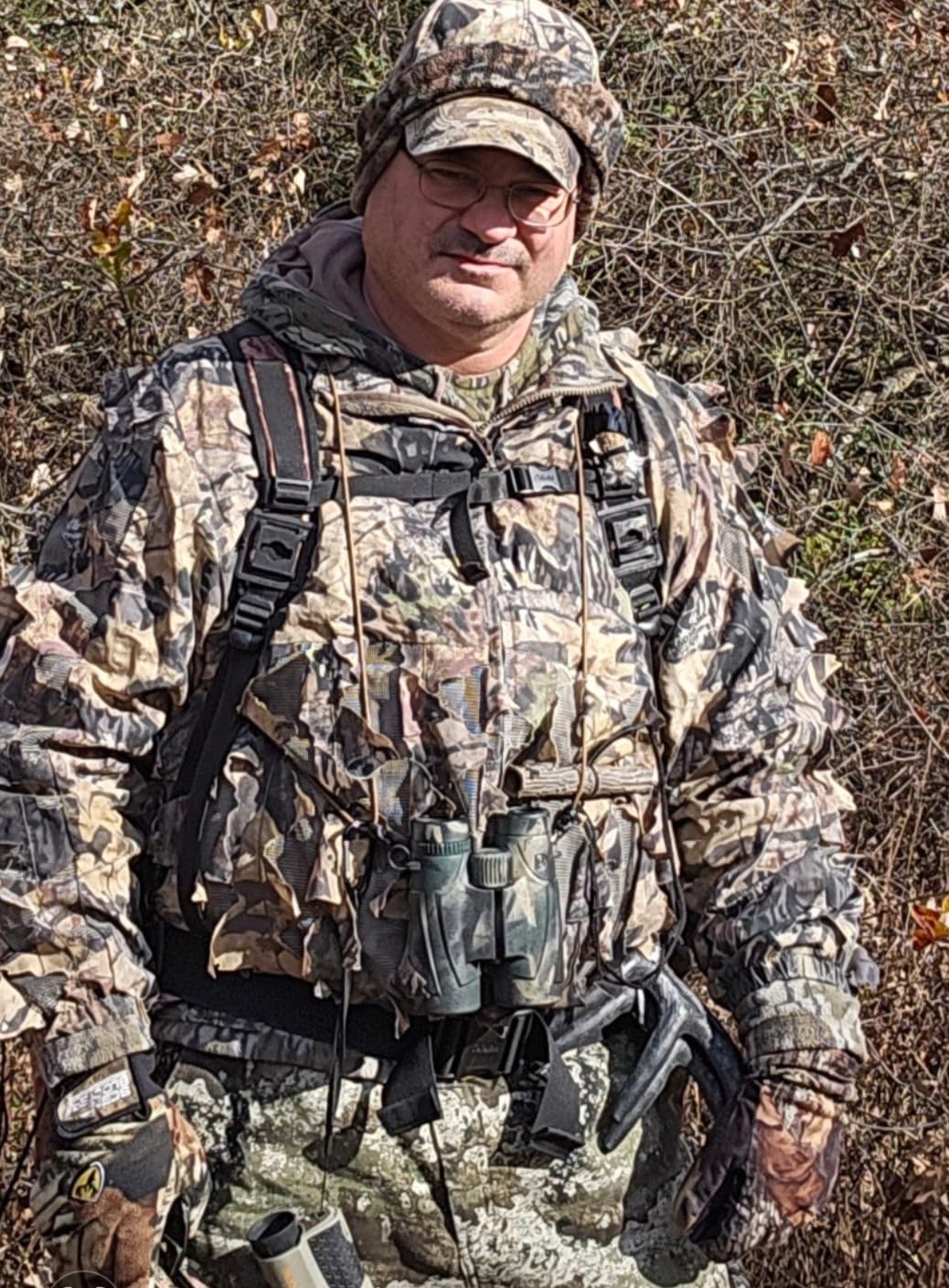
With 81 percent of its 187 reviews at five stars, the praise concentrates on exactly two things: elasticity that outlasts webbing straps, and the range of ways you can wear it. Bowhunting, rifle hunting, backcountry scouting and long-range shooting configurations are all supported.
Best for anyone buying once and keeping it
It is listed for binoculars up to 5 inches wide by 6.5 inches long by 1.25 inches high, so it suits most full-size 8×42 and 10×42 bodies. Five configurations let you switch between a full harness and a diagonal shoulder sling without unpacking.
Where the cords annoy you
Multiple cords mean multiple things to manage, and owners report tangling when changing configurations. The back tightening knob is uncomfortable when you sit back against a wall or a boulder, and leftover cord can hang at the back if you do not trim it.
12. Hornady Form-Fitting X Panel Harness: Best for Drop Protection
- Form-fitting X panel spreads weight across four elastic straps
- Tethers prevent drops and give quick hands-free access
- Lightweight tangle-free design that stores in a backpack
- One-size adjustable straps make on and off simple
- Doubles as a carrier for cameras and rangefinders
- Harness only
- the matching case is sold separately
- Elastic-only build lacks storage and weather protection
This harness is built around one job that matters on loose scree and wet rock: keeping the binoculars attached. Four elastic straps cross the shoulders into a form-fitting X panel, and the internal tethers mean that if you fumble the pull-up the glass stays on your chest instead of hitting the trail.
It weighs 4.8 ounces, adjusts to fit one size, and the whole thing folds tangle-free into a backpack when you are not glassing. Cameras and rangefinders work equally well on it, which makes it a two-purpose carry for people who shoot photos on the same hike.
Best for rough terrain and careless moments
Tethers are what you notice most on a scramble, where you are using both hands and the binoculars are being knocked by your pack strap. The anti-drop design also suits anyone who has previously left a pair of glasses on a rock face.
Where you need more than a harness
There is no storage and no weather protection, because this is an elastic harness rather than a pack. Note also that the Hornady binocular case it is designed to pair with is sold separately, which changes the equation for anyone who wants a structured carry.
Harness, Strap or Chest Pack: Which Do You Actually Need?
A neck strap is the least costly option and the least comfortable over hours. All of the weight sits on the base of your neck, the binoculars swing with every step, and there is nowhere to put anything else. For a short walk to a viewpoint it is entirely adequate.
A lightweight strap harness moves that load onto your shoulders, costs between 1.76 and 4.8 ounces depending on the model, and adds nothing else. This is the right call for fast hiking, ultralight backpacking, and hikers whose binoculars come off at the summit and go straight back in the pack.
A padded harness or chest pack adds a structured compartment and pockets, at 11 to 13 ounces of extra weight. You pay in ounces and in heat, and you get dry optics, a place for a phone and rangefinder, and one-handed access that does not depend on a bare pair of glass hanging on your chest.
Our rule for hiking: if the binoculars stay on your body for more than an hour, use something better than a neck strap. If they also need to carry gear, use a pack. If you are counting ounces to hit a base weight, use a strap harness and accept the bounce.
How to Set Up a Binocular Harness in Five Steps
First, attach the harness to the binoculars before you put it on. Most designs clip to the two strap lugs on either side of the body, and doing it on a table means you are not fumbling with small hardware while the strap is around your neck.
Second, drape it over both shoulders and centre it so the attachment points sit level. A cross-back or X harness should sit across your shoulder blades with the load point centred on your sternum, not off toward one armpit.
Third, adjust the length with your normal hiking layers on. This is the step people skip. Set the length over your base layer, then check it again over an insulated midlayer, and use the shortest setting that still lets the binoculars ride up to your eyes.
Fourth, set the chest height so the binoculars sit just below your collarbone. Too high and they hit your chin when you look down; too low and you are bending your neck every time, which defeats the whole exercise.
Fifth, put on your loaded backpack and walk. Check that the sternum strap sits over the harness rather than tangling with it, that the shoulder straps do not sit directly on top of the harness attachment points, and that nothing has ridden into the hollow of your throat.
The Hiking Binocular Harness Checklist
Match the harness to your glass size first. An 8×32 or 8×42 pair needs little more than a strap harness, while a 10×42 or 12×50 with a rangefinder needs the stability of a structured harness or a pack. Sizing should follow your binocular measurements, not the letter on the box.
Add up total carry weight before you commit. A typical 8×42 runs 21 to 25 ounces, the harness adds anywhere from 1.76 ounces to about 13 ounces, and a chest pack adds its contents. Once the pair and the pack exceed the weight you are comfortable wearing for hours, bounce becomes fatigue.
Fit is the variable most people underestimate, and it is the same fitting problem we deal with across every kind of harness. Our walkthrough of hiking harnesses with grab handles covers the adjustment logic in more depth, and the principle transfers directly: measure, then adjust over the layers you will actually wear.
Test the backpack fit, which is the step most guides skip. Wear your real pack, loaded, with the harness on and check strap interference. A harness that rides up into your neck under a sternum strap is worse than the neck strap you replaced.
Think about climate. Hot routes argue for a strap harness, since chest packs trap heat across your chest and under your arms. Wet routes argue for a water-resistant or waterproof shell and a rain cover pouch, because on a harness your glass is exposed the moment you raise it.
Check the attachment type. Standard strap lugs work with nearly every universal harness, but some brands use proprietary connectors, and a harness built around a specific model may not seat your glass at all. This is the single most common return reason in this category.
Look for warranty length and repairability. A lifetime unconditional warranty tells you the maker expects the harness to outlast several seasons, and replaceable straps matter more than any pocket when a buckle fails mid-trip.
Frequently Asked Questions
What is the best binocular harness for birding?
For birding, a lightweight strap harness such as the Vortex Binocular Harness Strap is the safest pick, because birders move constantly between feeders, thicket and treeline and need the glass up fast without bulk on the chest. Pick a padded harness or chest pack only when you carry a rangefinder or a spotting scope with it.
Can you shoot a bow with a bino harness?
Yes, a properly fitted harness is commonly used while bowhunting because it keeps the binoculars against your chest and leaves your hands free for the bow and the string. Two things matter: the rig must sit below your draw hand or your anchor, and the binoculars must be tethered so they cannot swing into your face during the draw.
What are the best lightweight binoculars for hiking?
For hiking weight, an 8×42 binocular in the 21 to 25 ounce range is the standard answer because it gives a wide field of view without the bulk of 10×50 glass. Pair it with a harness of about 2 to 5 ounces and the whole carry system stays under 1.5 pounds, which most hikers carry comfortably for a full day.
How to set up a binocular harness?
Clip the harness to the two strap lugs on your binoculars first, then drape it over both shoulders, level the attachment points, and adjust the length wearing your normal hiking layers. Set the chest height just below the collarbone, then walk with your loaded backpack to confirm the sternum strap does not tangle or push the rig into your neck.
Is a binocular harness better than a neck strap?
For anything longer than an hour, yes. A neck strap concentrates the weight of a typical 21 to 25 ounce pair on the base of your neck, while a harness spreads the same load across both shoulders and pulls the binoculars snug to your sternum so they stop bouncing on descents. For a short walk to a viewpoint the neck strap is fine.
Do binocular harnesses work with any binoculars?
Most universal harnesses attach to the standard strap lugs found on almost every binocular, so they work across brands. Padded harnesses and chest packs are the exception, because they are often sized for specific models. Measure your binocular body and compare it with the listed dimensions before ordering a packed design.
Final Verdict: Who Should Buy What
The best binocular harnesses for hiking come down to two questions: how long do the binoculars stay on your body, and how many ounces can you afford. If the answer is all day and very few, take the Vortex Binocular Harness Strap, which spreads the load across both shoulders at 3.17 ounces and survived the most testing we did.
If the answer is all day and you carry gear, take the Vortex GlassPak for its pockets and lifetime warranty, or the Lone Trail chest pack if rain is part of the route. For a strict base weight budget, the OUFABE BHS02 at 1.76 ounces and the Rick Young shock-cord harness at 2.24 ounces cost almost nothing to carry, and the Rick Young is the one most likely to still be working in five years.
Whichever you pick, fit it over your real layers with your real pack loaded before you commit to a long route, and check back in with our hiking harness guide for the carry-system thinking behind a comfortable day on the trail.