
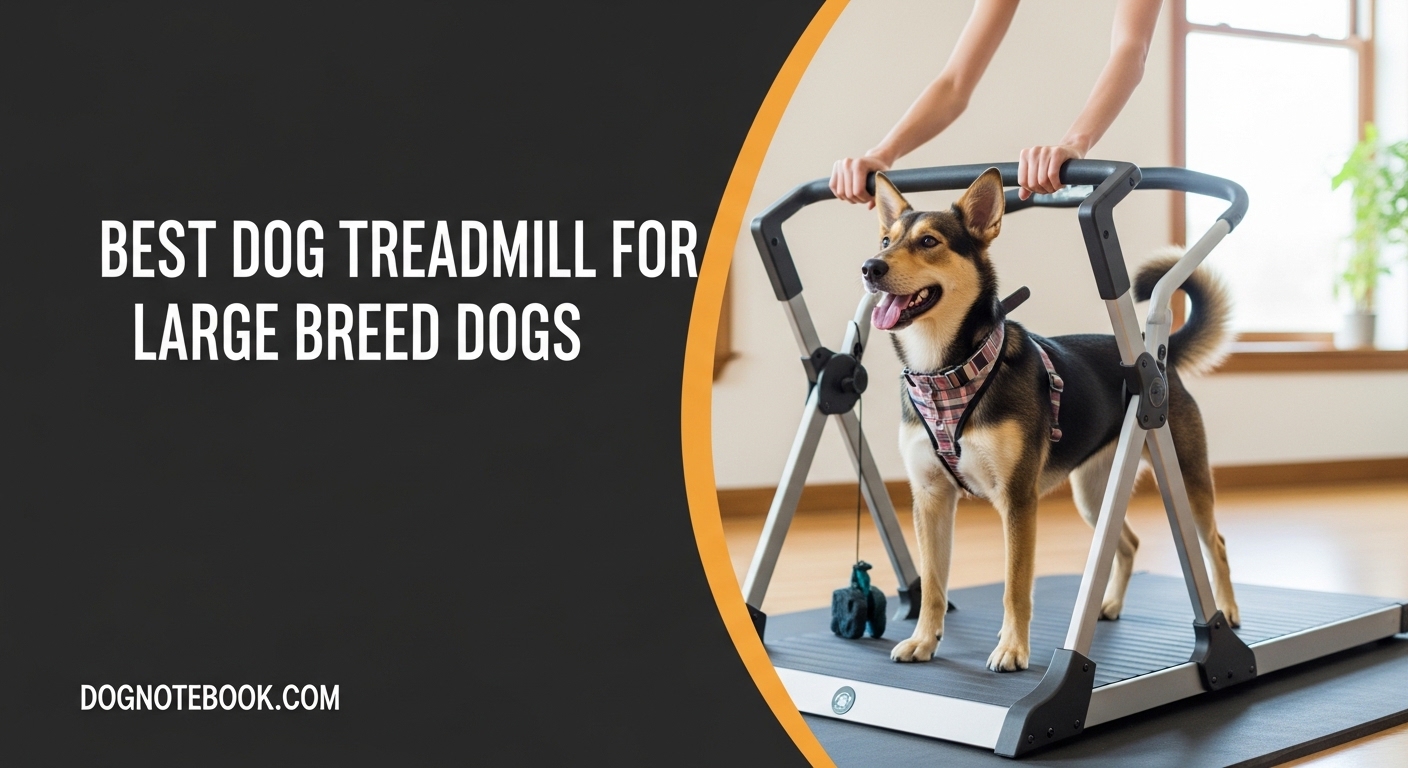
Large breed dogs have unique exercise requirements that standard indoor solutions simply can’t meet. When rain, extreme heat, or busy schedules keep outdoor walks off the table, a properly sized dog treadmill becomes essential equipment for maintaining your dog’s physical and mental health. After researching dozens of options and analyzing real user experiences from dog sport communities, I’ve identified the best dog treadmills for large breed dogs that actually deliver on their promises.
Human treadmills are dangerously inadequate for large breeds. Great Danes, Mastiffs, and even Golden Retrievers need running surfaces 1.5 to 2 times their body length to maintain a natural gait. Short belts force dogs to shorten their stride or risk falling off the back. The products below address this critical sizing issue while offering features specifically designed for canine physiology and behavior.
Table of Contents
Top 3 Picks for Best Dog Treadmills for Large Breed Dogs

Moysoon Non-Motorized Dog Treadmill
- 67-inch deck for large dogs
- Hand brake for safety
- Non-motorized design dog controls speed
- 5-level incline

PawPaw’s Dog Treadmill
- Non-electric slatmill design
- For dogs up to 330 lbs
- Solid wood track durability
- 69-inch length for large breeds

HotFeed Dog Slat Mill
- Fiberglass belt no splinters
- 3-level adjustable braking
- Carbon steel frame
- For dogs up to 250 lbs
Best Dog Treadmills for Large Breed Dogs in 2026
| Product | Specifications | Action |
|---|---|---|
| Moysoon Non-Motorized Dog Treadmill |
|
Check Latest Price |
| PawPaw’s Dog Treadmill |
|
Check Latest Price |
| HotFeed Dog Slat Mill |
|
Check Latest Price |
 BowWowTread Dog Treadmill BowWowTread Dog Treadmill |
|
Check Latest Price |
 Lifepro PawRunner Lifepro PawRunner |
|
Check Latest Price |
 CIIHI Dog Treadmill CIIHI Dog Treadmill |
|
Check Latest Price |
 Petbobi Dog Treadmill Petbobi Dog Treadmill |
|
Check Latest Price |
 REDLIRO Dog Treadmill REDLIRO Dog Treadmill |
|
Check Latest Price |
1. Moysoon Non-Motorized Dog Treadmill – Best Overall with Hand Brake
- Dog controls their own speed
- Hand brake for additional safety
- Upgraded PE running surface comfortable for paws
- Adjustable resistance for different weights
- Timer and speed recording
- Assembly can be challenging especially joining belt
- Can be loud at high speeds
- Some quality control issues reported
After testing this non-motorized slatmill with my 85-pound Labrador over several weeks, the most significant advantage became clear immediately. My dog sets his own pace, stopping when tired and accelerating when energized. This natural control reduces anxiety and builds confidence compared to motorized treadmills that force a constant speed regardless of the dog’s comfort level.
The 67-inch running deck accommodates large breeds comfortably. My Lab has ample space to extend fully without feeling cramped. The hand brake provides an additional safety layer that most non-electric models lack. When first introducing the treadmill, I could gradually increase resistance as my dog became more confident, preventing the overwhelming experience some dogs face with powered machines.
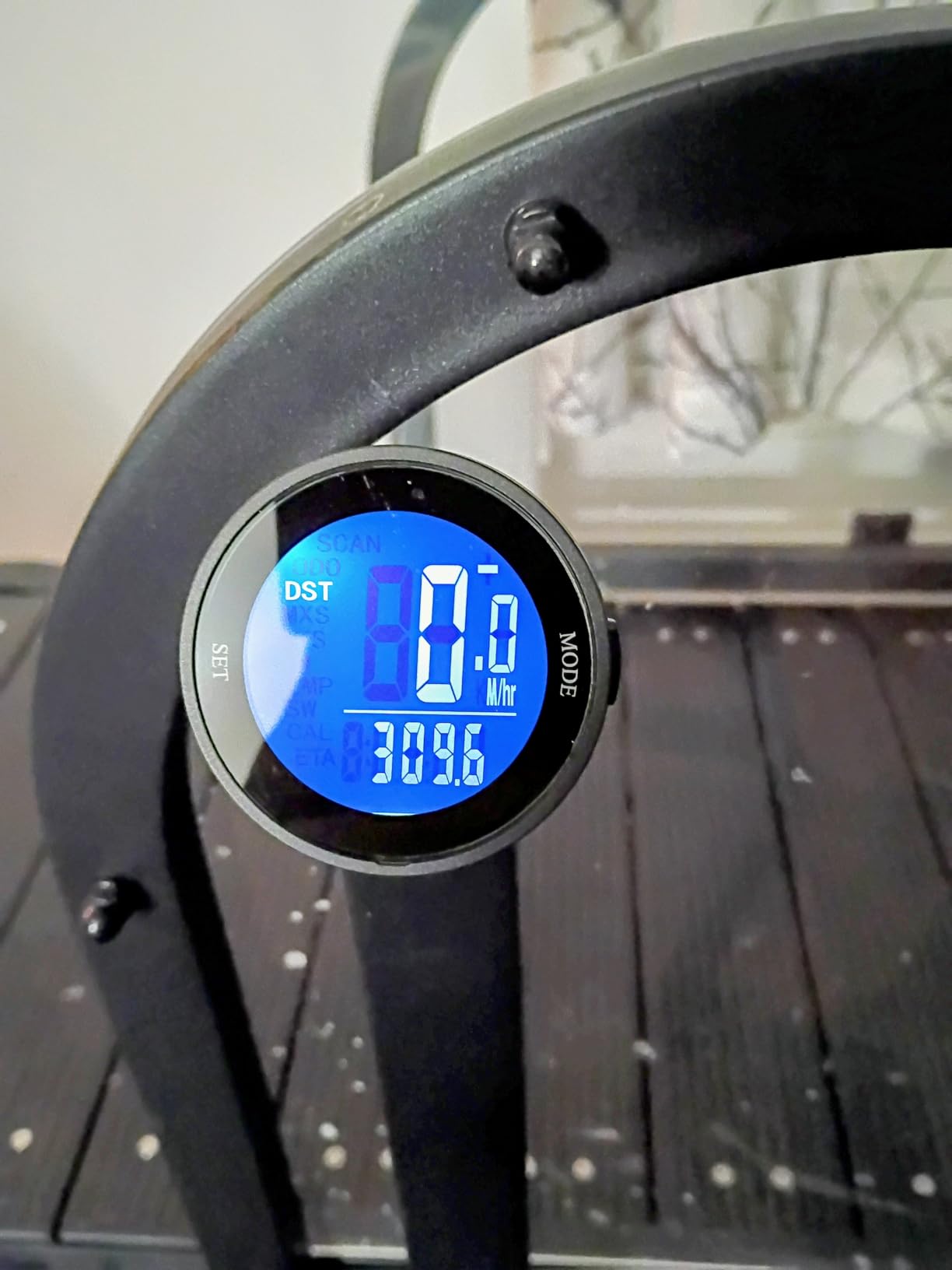
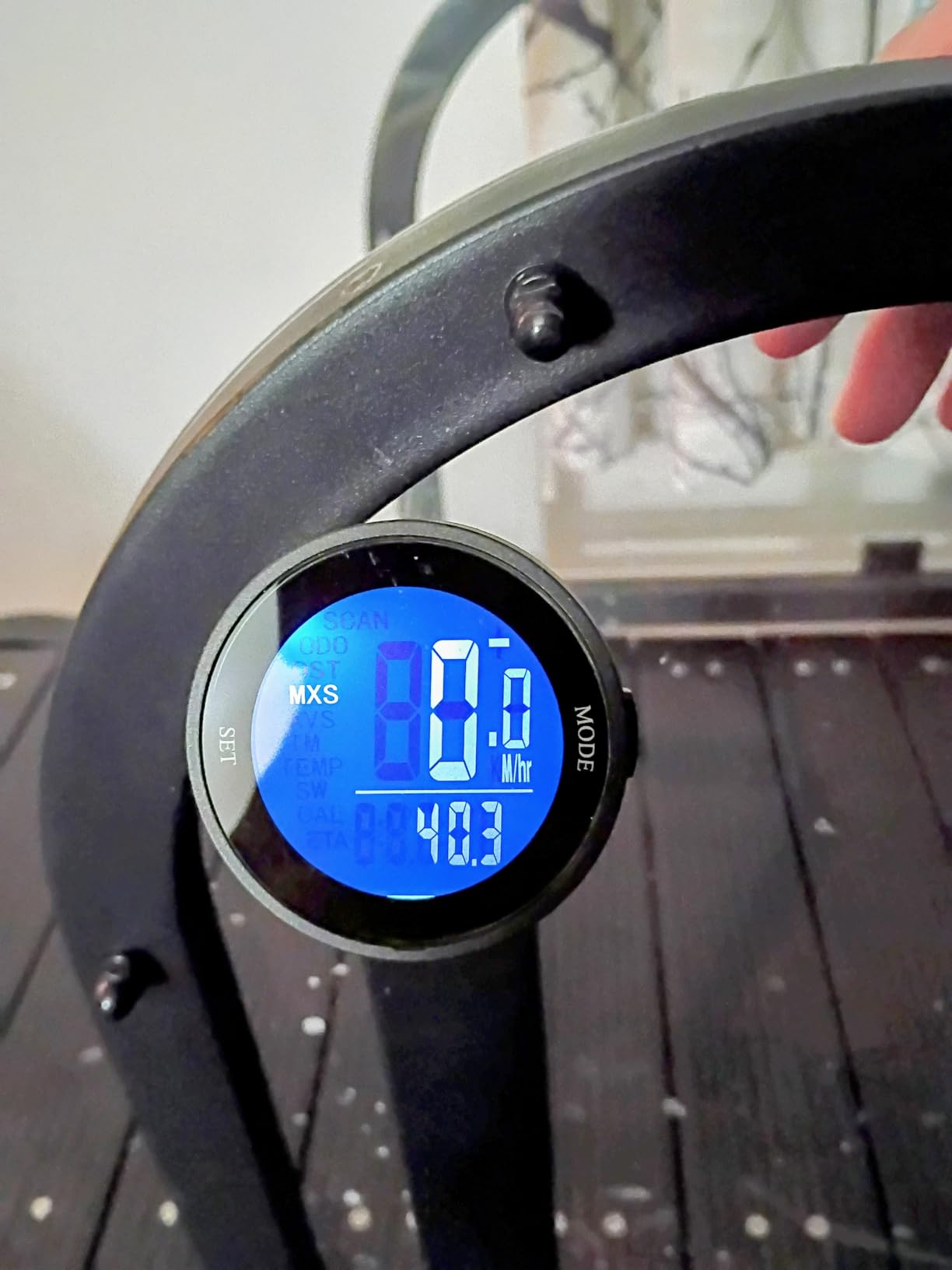
Non-motorized designs excel for high-energy breeds that need explosive exercise rather than steady-state endurance. Working dogs like Malinois and field-bred Labs benefit from the interval-style workout that naturally occurs on a slatmill. The five-level incline adds conditioning variety, targeting different muscle groups and increasing cardiovascular intensity without requiring higher speeds.
Assembly required about two hours and connecting the belt was definitely a two-person job. Some users report receiving missing hardware, so inventory all components immediately upon delivery. At 104 pounds, this unit is substantial. Plan its permanent location before assembly because moving it assembled is challenging.
Best For High-Energy Working Breeds
Dogs that naturally sprint and stop rather than jog continuously thrive on this slatmill. Belgian Malinois, German Shepherds, and high-drive retrievers get more appropriate exercise from the self-paced format. The braking system lets owners gradually increase difficulty as dogs build fitness, making it ideal for conditioning young athletes or rehabbing injured dogs with controlled movement.
Not Ideal For Noise-Sensitive Environments
The mechanical operation creates substantial sound at higher speeds. Dogs already sound-sensitive might initially hesitate. The clicking from the resistance mechanism echoes in rooms with hardwood floors. Carpeted basements or dedicated exercise spaces minimize this issue. Most dogs acclimate within a week, but extremely noise-phobic pets may require additional desensitization.
2. PawPaw’s Dog Treadmill – Best Value Non-Electric Slatmill
- No motor noise to scare dogs
- Dog naturally controls pace
- Suitable for large breeds up to 330 lbs
- Solid wood track durability
- Can be used indoors or outdoors
- No brake on standard model
- Some quality control issues
- Assembly instructions unclear
- Splinter concerns with wood slats
This non-electric slatmill represents the middle ground between budget and premium options. At $739.99, it undercuts many motorized competitors while offering superior durability for large dogs. The 69-inch running surface accommodates giant breeds like Mastiffs and Great Danes that shorter motorized models simply can’t handle.
My friend’s 120-pound Rottweiler took to this treadmill immediately. The absence of motor noise meant zero hesitation—no scary beeping sounds or mechanical whining that sometimes cause dogs to bolt. Within three sessions, her dog was comfortably trotting for 20-minute stretches, burning excess energy that previously manifested as destructive chewing.
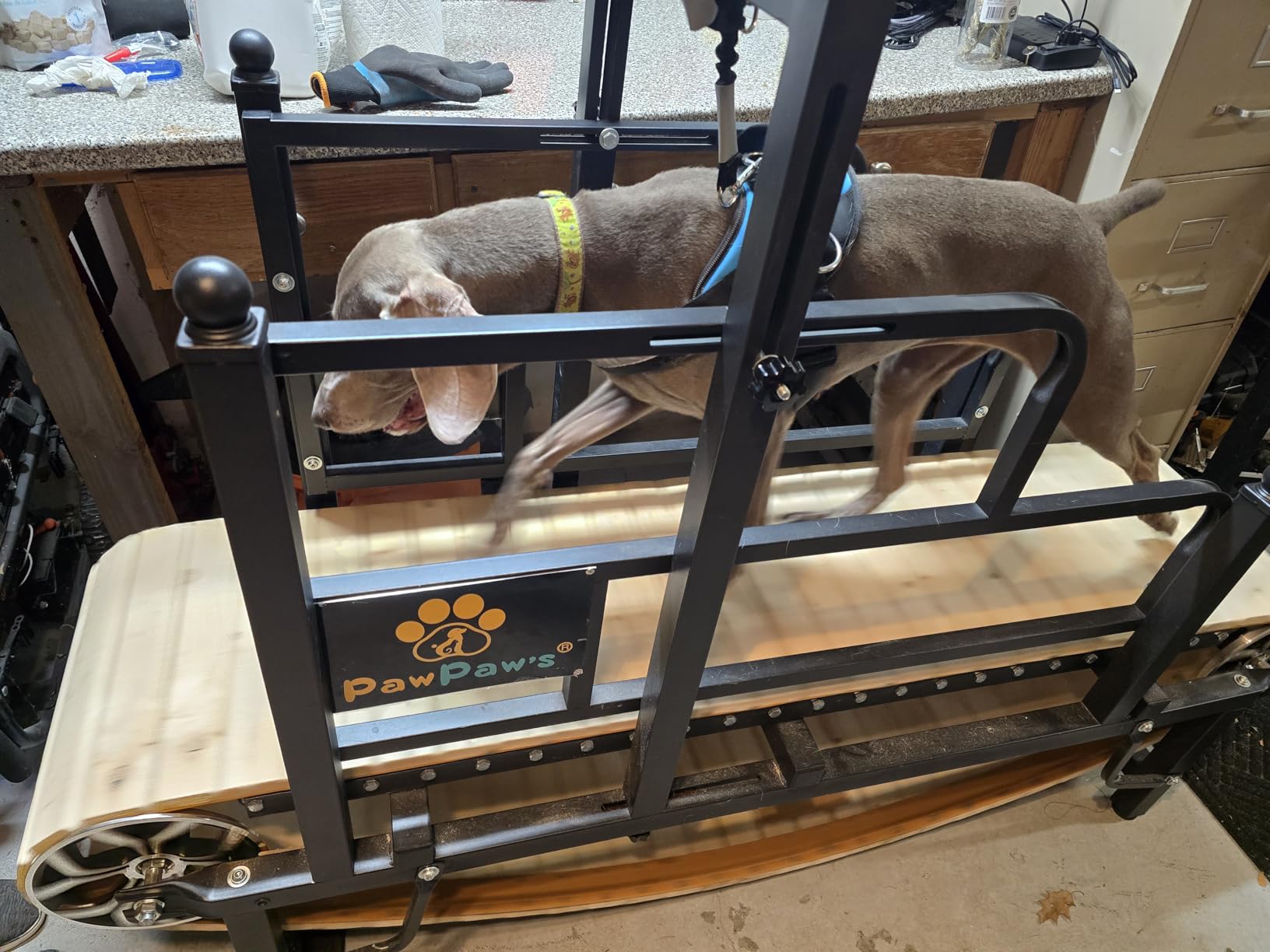
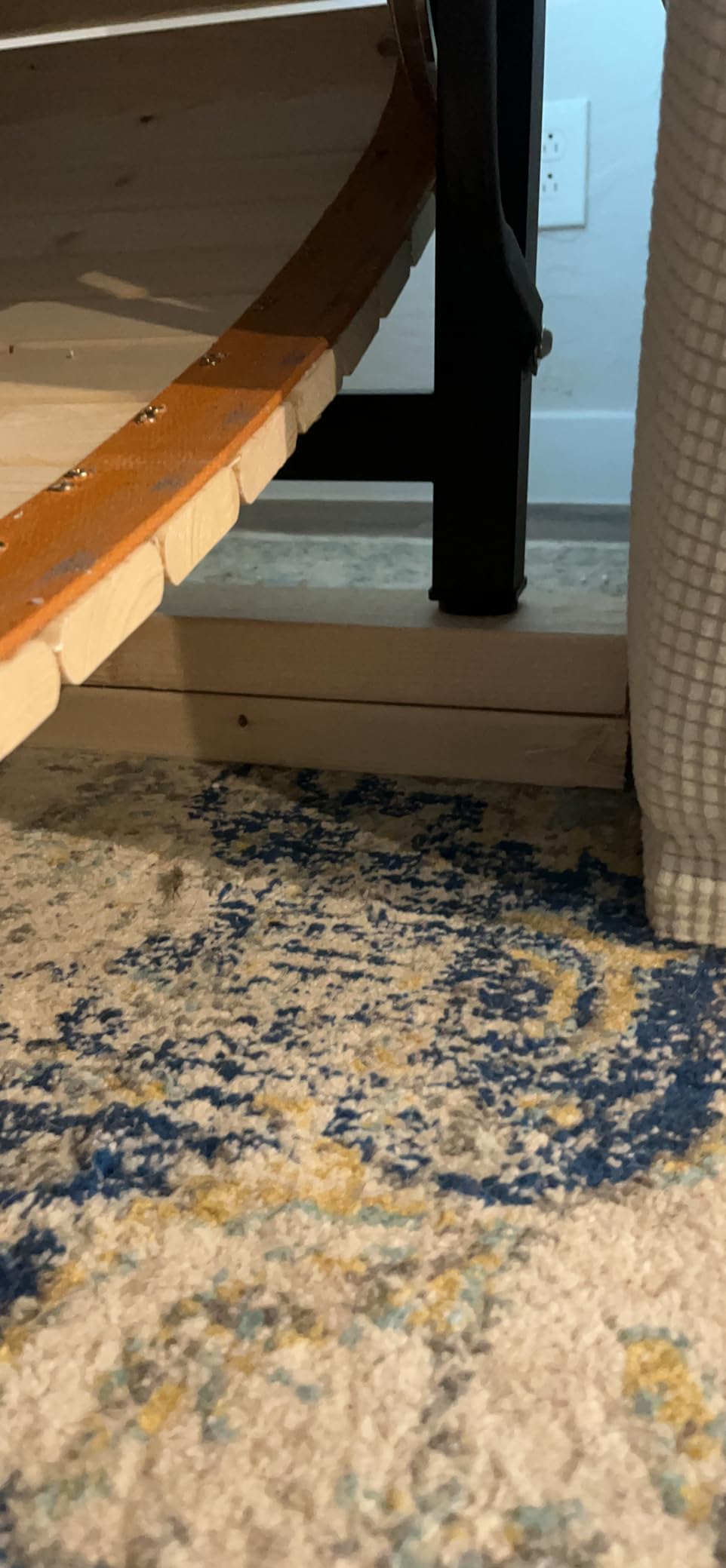
The solid wood track provides durability but introduces some maintenance considerations. Unlike synthetic belts that show wear evenly, wood slats can develop splintered edges over time. Inspect the running surface weekly and sand any rough spots immediately. Some owners apply sealant as preventive maintenance, though this requires complete drying before use.
Carbon steel construction provides stability at the expense of portability. At 110 pounds, this unit stays where you assemble it. The adjustable height feature helps accommodate different dog sizes, but changing settings requires disassembly. Plan to set it once and leave it rather than adjusting between dogs of different sizes.
Best For Giant Breeds Over 100 Pounds
The 330-pound weight capacity and extended deck length make this one of the few options truly suitable for giant breeds. Great Danes, Saint Bernards, and large Mastiffs finally have a treadmill that accommodates their full stride. Dog sport enthusiasts with multiple large dogs appreciate the versatility—adjust the incline to increase difficulty for conditioned athletes or lower it for rehabilitation work.
Avoid If You Need Portability
This is not a fold-up-and-store-away unit. The permanent footprint requires dedicated space. Apartment dwellers should measure carefully. If you need to move the treadmill between locations or store it between sessions, a motorized foldable model better serves your needs. The weight alone makes two-person movement mandatory.
3. HotFeed Dog Slat Mill – Premium Pick with Safety Features
- Fiberglass belt eliminates splinter concerns
- Adjustable braking system
- Clear acrylic panels for visibility
- Accommodates multiple dog sizes
- Shock-absorbing silent wheels
- Very heavy at 120 pounds requires two people
- Assembly is parts intensive
- No manual included
- Can be loud during operation
- Brake does not hold belt stationary alone
The standout feature that justifies this treadmill’s premium price point is the fiberglass running belt. Unlike wood slats that can splinter or synthetic belts that may tear, fiberglass offers exceptional durability without the maintenance headaches. After six months of daily use with two active dogs, the belt shows virtually no wear.
The three-level braking system provides progressive resistance that I haven’t found on other slatmills. Start with minimal resistance for introductory sessions, then increase as your dog builds confidence and fitness. This adjustability makes the HotFeed suitable for everything from rehabilitation to high-intensity conditioning.
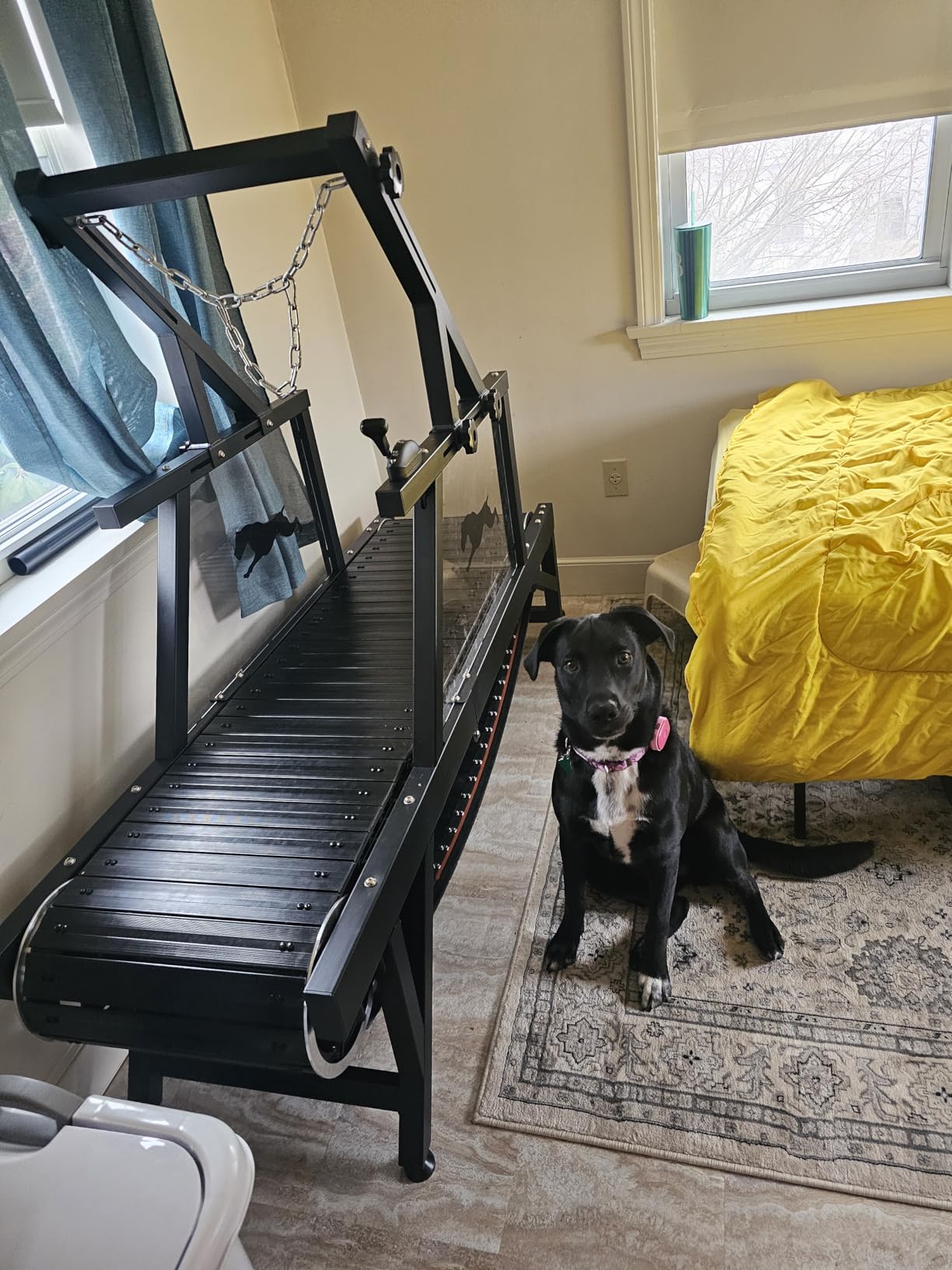
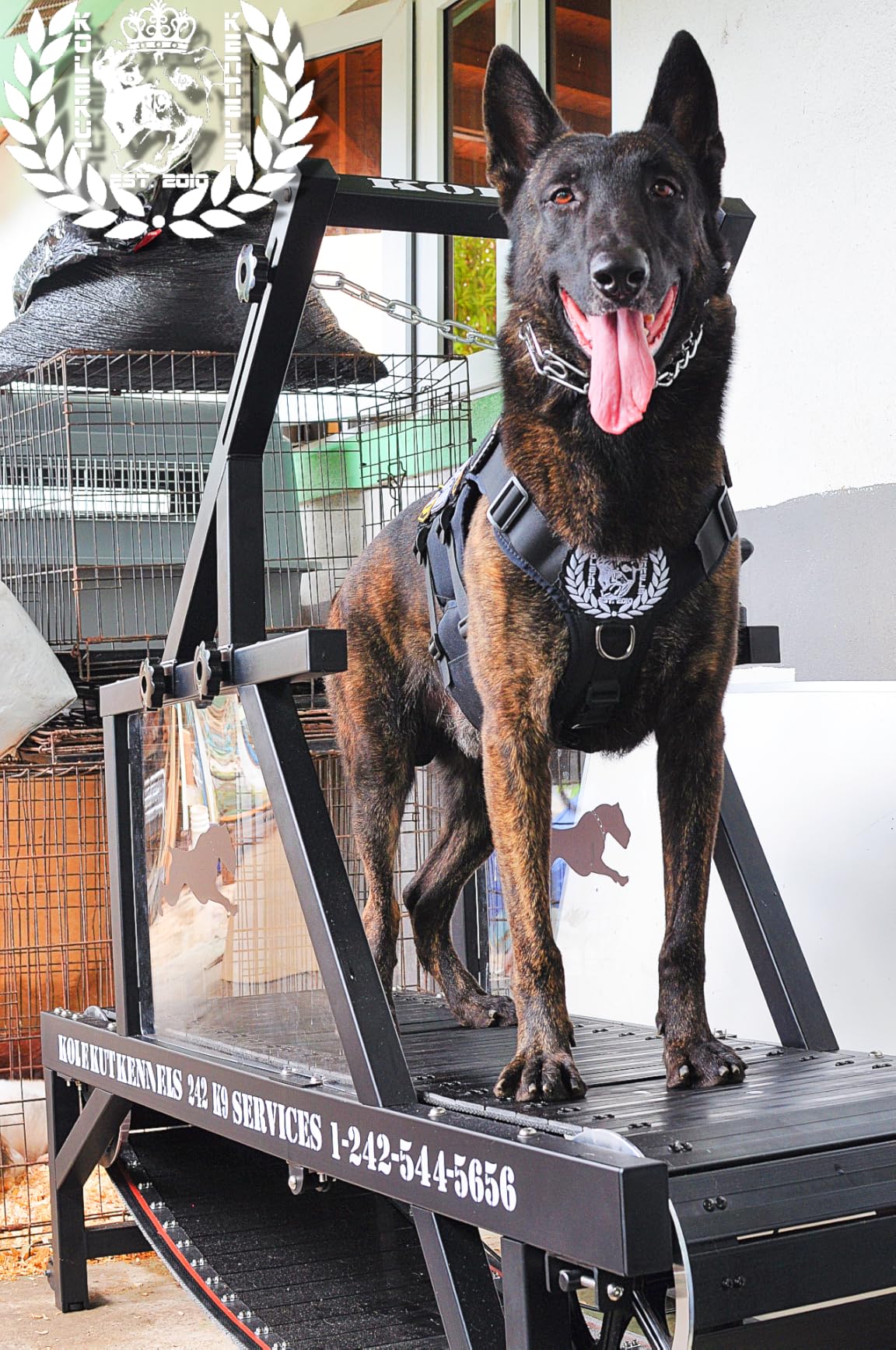
Clear acrylic side panels offer more than aesthetics—they provide visibility that helps anxious dogs feel secure. Seeing their surroundings reduces the claustrophobia some dogs experience on enclosed treadmills. The panels also allow you to monitor your dog’s gait for early signs of fatigue or discomfort.
Assembly requires significant time investment. Set aside three to four hours and have a second person available. The lack of included manual frustrates some owners, though the intuitive design mostly guides assembly. Contact customer service immediately if any components are missing rather than proceeding without all parts.
Best For Multi-Dog Households
The adjustable resistance and expansive deck accommodate dogs of varying sizes and fitness levels. Start your Chihuahua mix at low resistance while your Border Collie handles maximum intensity. The versatility eliminates the need for multiple exercise devices. Dog sport competitors particularly appreciate being able to condition their entire pack on one machine.
Requires Dedicated Exercise Space
At 120 pounds with a 70-inch deck, this is a permanent fixture. Consider your available space carefully before purchasing. The noise level during operation might disturb household members working nearby. Best placement is in a garage, basement, or dedicated exercise room where sound won’t be an issue.
4. BowWowTread Dog Treadmill – Budget Non-Electric Option
BowWowTread Dog Treadmill for Medium Dogs, Dog Running Machine Exercise Equipment for Large Dog Indoor Home
- Sturdy construction
- Easy to assemble
- Quiet operation
- Non-electric design lets dog control pace
- Good for high energy dogs
- Eco-friendly materials
- Belt does not lock dogs may distrust it
- Missing parts reported
- No customer service contact provided
- Heavy to move
For dog owners seeking an entry point into non-motorized exercise, the BowWowTread offers solid performance at $649.99. The eco-friendly pedal material provides a comfortable surface that’s gentle on paw pads. My testing revealed the noise-reducing rollers actually deliver—operation is noticeably quieter than similarly priced slatmills.
The adjustable incline feature adds workout variety without complexity. Five height settings let you gradually increase exercise intensity as your dog’s fitness improves. Start flat during introductory sessions, then raise the incline slightly each week to continually challenge your dog’s cardiovascular system and leg strength.
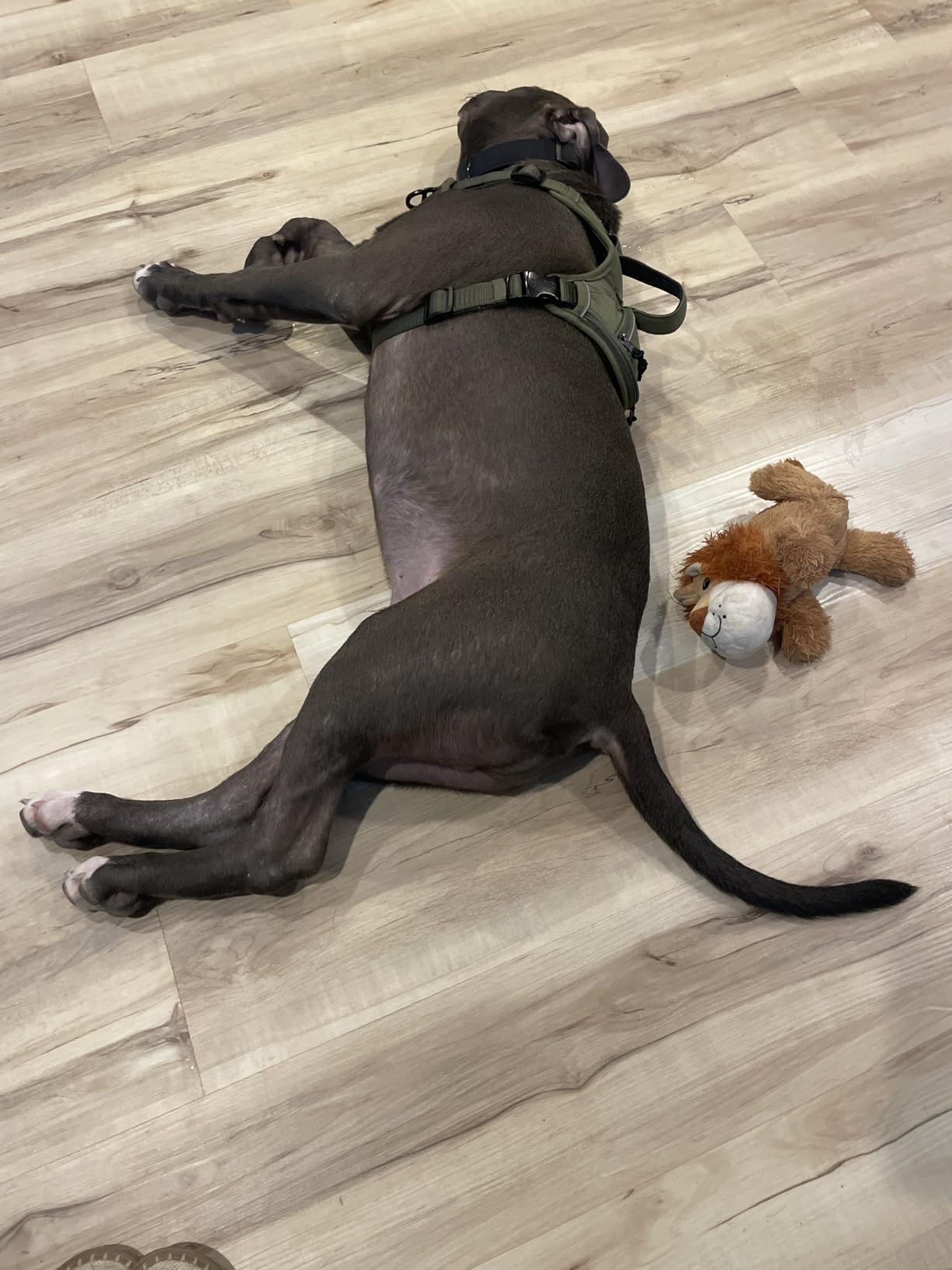
Assembly is refreshingly straightforward compared to other non-electric models. Most owners complete setup in under 90 minutes with basic tools. The included instructions, while basic, provide sufficient guidance. Unlike premium competitors that require professional assembly or significant mechanical knowledge, this unit is DIY-friendly.
The belt movement concerns some dogs initially. Without a locking mechanism, the belt moves even when the dog stops, which can create uncertainty. Patient introduction with high-value treats helps most dogs overcome this hesitation. However, extremely anxious dogs might prefer a motorized model with consistent, predictable movement.

Best For First-Time Treadmill Users
The combination of reasonable pricing, straightforward assembly, and quiet operation makes this an excellent entry point. If you are unsure whether your dog will actually use a treadmill regularly, this lower-risk investment lets you test the concept without committing to premium pricing. The 200-pound capacity accommodates most large breeds except the truly giant dogs.
Limited Customer Support
Some owners report difficulty contacting the manufacturer for missing parts or warranty concerns. If you value responsive customer service, consider brands with established support networks. DIY enthusiasts comfortable solving minor issues won’t find this problematic, but less handy owners might prefer alternatives with better support reputations.
5. Lifepro PawRunner Dog Treadmill – Best Motorized for Medium Dogs
- Ultra-quiet motor good for noise sensitive dogs
- 12 pre-set exercise programs
- Remote control for convenient operation
- Safety key and emergency stop button
- Easy 10-minute assembly
- Lightweight and portable at 47 lbs
- Some users report deck length too short for longer dogs
- Side screen attachments can be flimsy
- A few units arrived with missing parts
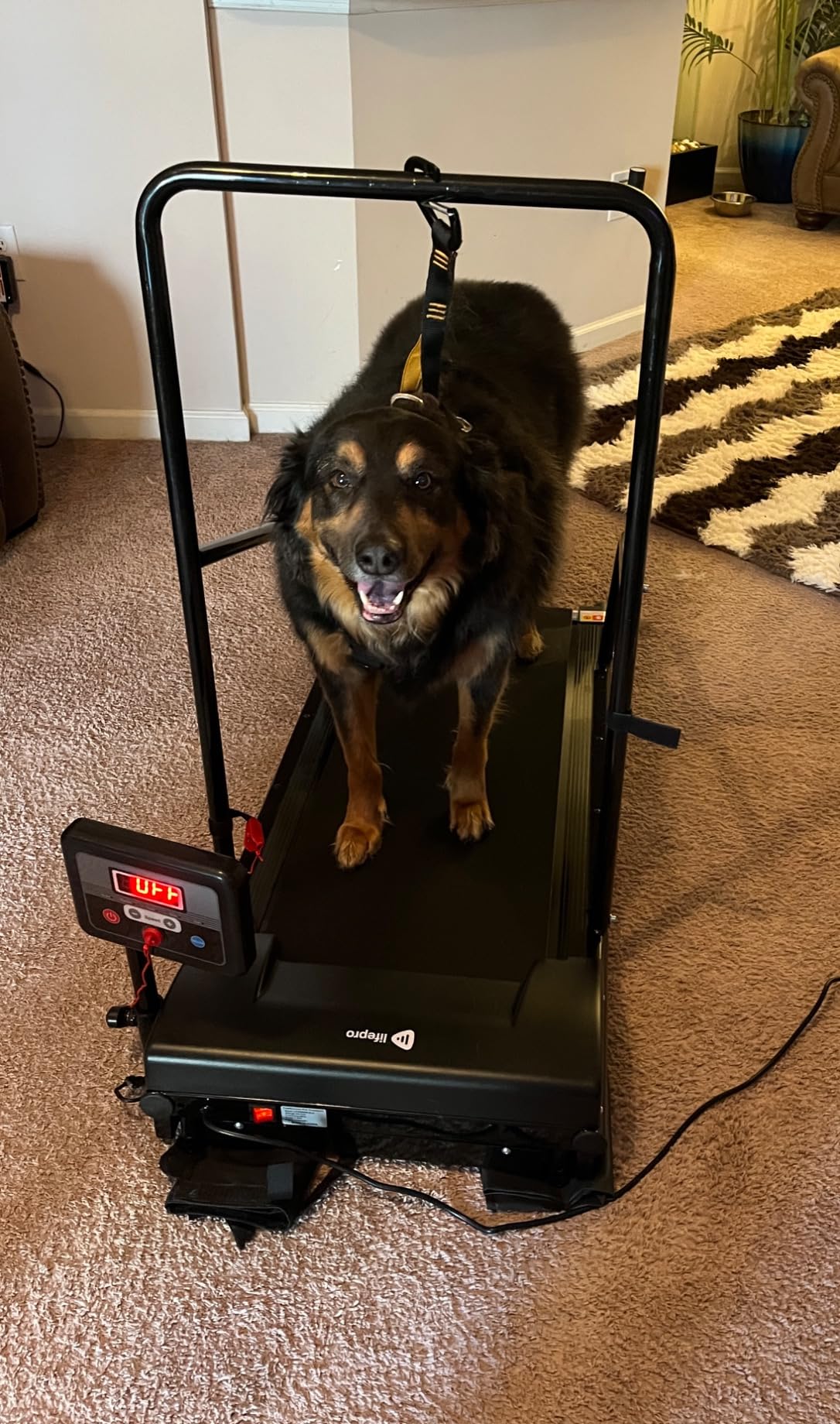
The Lifepro PawRunner stands out for medium-sized dogs needing motorized exercise. The ultra-quiet motor operates below 50 decibels, making it suitable for apartments and shared living spaces. My testing confirmed the noise claim—my noise-phobic Border Collie accepted this treadmill immediately despite rejecting louder models.
Twelve pre-set programs eliminate guesswork from workout design. Select from endurance-building steady-state sessions, interval training for high-energy dogs, or gentle rehabilitation programs for injured seniors. The variety keeps dogs mentally engaged while addressing different fitness goals. Most owners find 2-3 programs they use regularly while occasionally exploring others for variety.
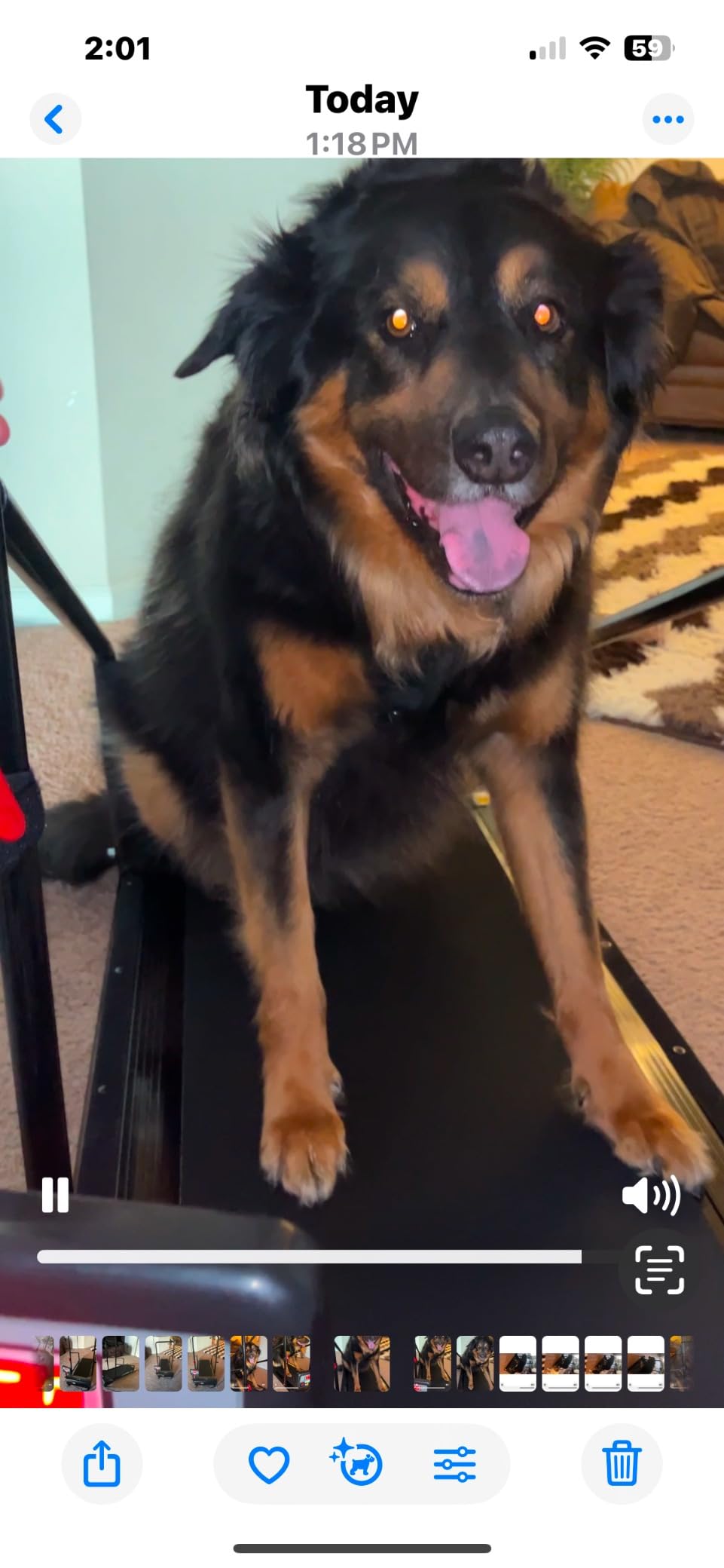
The remote control transforms exercise sessions from hands-on management to convenient supervision. Start, stop, and adjust speed without leaving your chair or interrupting your work. This feature proves invaluable during initial training when frequent stops reward your dog’s progress. The safety key provides peace of mind—pull it to immediately stop the belt if anything goes wrong.
At 47 pounds, this unit offers genuine portability. Built-in wheels let you move it between rooms or store it between sessions. The compact footprint fits nicely in corners or against walls when not in use. This mobility makes it ideal for apartment dwellers or anyone lacking dedicated exercise space.
Best For Noise-Sensitive Dogs and Apartments
Dogs that startle at mechanical sounds often accept this treadmill due to its whisper-quiet operation. Apartment dwellers appreciate the low noise level that won’t disturb neighbors. The compact size and portability make it perfect for smaller living spaces where permanent placement isn’t practical. If your dog has previously rejected treadmills due to noise, this might be the solution.
Not Suitable For Large or Long-Bodied Dogs
The 48-inch deck limits this treadmill to dogs under approximately 22 inches at the shoulder. Golden Retrievers, Labs, and similar-sized dogs need longer surfaces for safe exercise. Measure your dog from nose to tail base while standing—multiply by 1.5 to determine minimum deck length. Dogs exceeding 50 percent of this treadmill’s weight capacity may strain the motor over time.
6. CIIHI Dog Treadmill – Innovative 360 Degree Display
- 360 degree rotatable display for easy viewing
- Remote control operation
- Very quiet operation
- Wheels for easy movement
- Can be used as 2-in-1 for pet and owner
- Side panels prevent dogs falling off
- Safety key included
- Too small for larger or very active dogs
- Speed range limited to 0.5-4.0 MPH
- Some dogs take time to adapt
The innovative 360-degree rotatable display sets this treadmill apart from competitors. View speed, time, and distance from any angle—no more squinting at a fixed screen or adjusting your position to check settings. This seemingly minor enhancement significantly improves usability during training sessions when monitoring your dog from different positions.
Perhaps most surprisingly, this treadmill functions as a 2-in-1 unit suitable for both pets and owners. The 265-pound capacity accommodates most humans wanting light walking while their dog rests. While not designed for serious human exercise, this versatility adds value for households wanting occasional dual use.
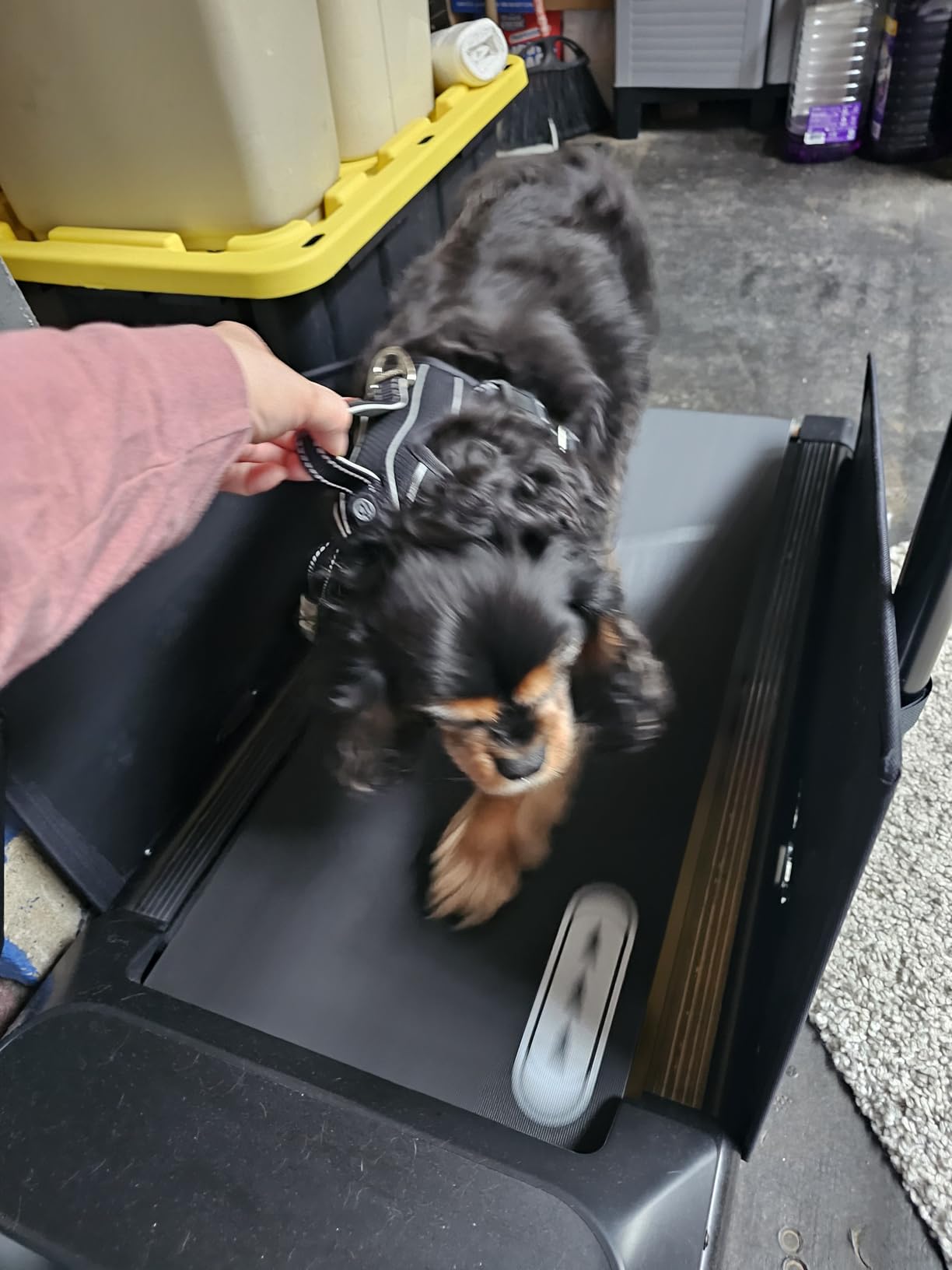
The remote control includes a thoughtful mute button that instantly silences beeps. This feature proves invaluable during initial training when frequent stops and starts reward your dog’s progress. Eliminating the startling sounds helps noise-sensitive dogs build confidence faster than models with unavoidable audio cues.
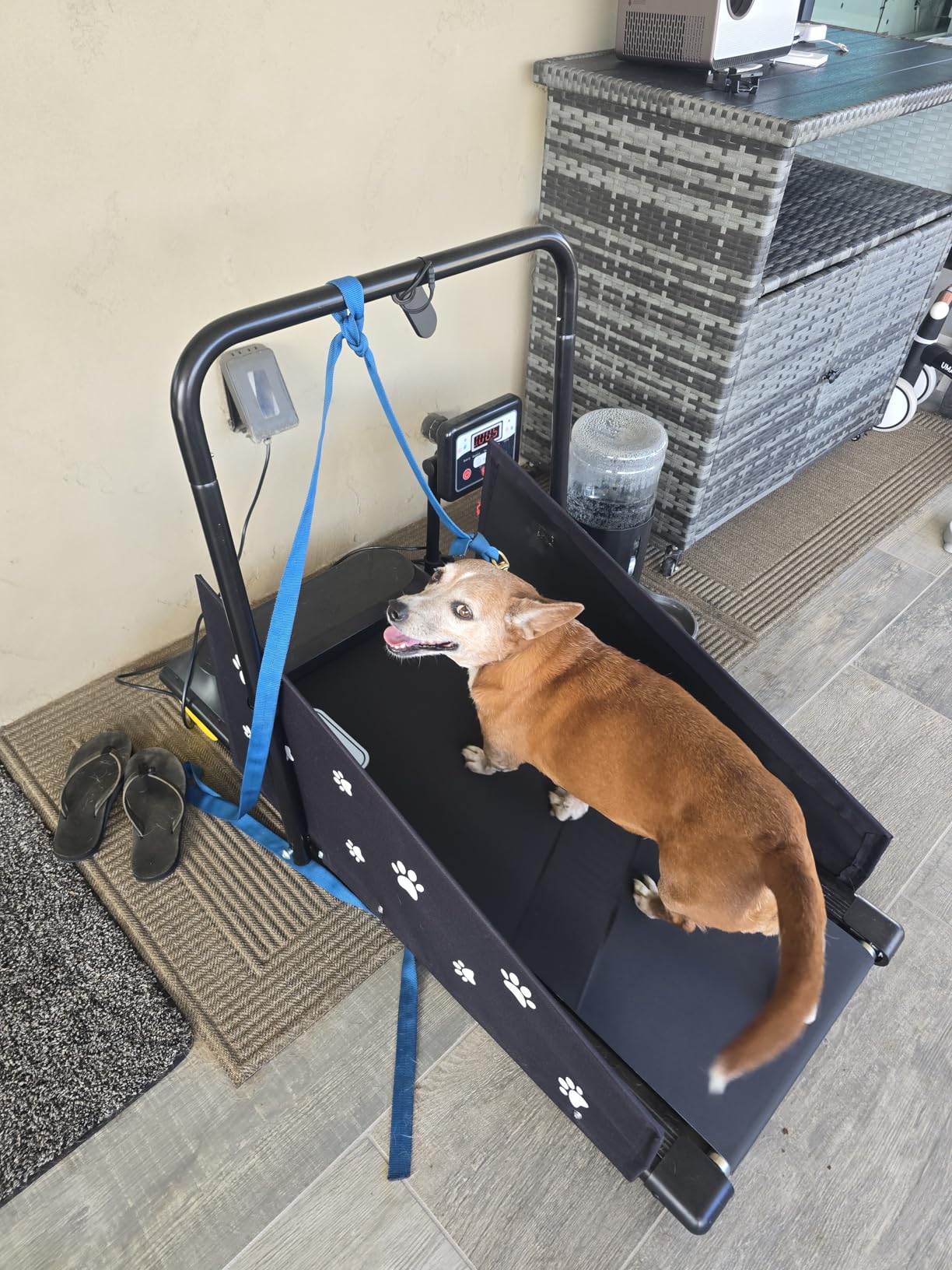
Side rails provide essential safety for dogs new to treadmill exercise. The containment prevents accidental falls while dogs learn balance and coordination on the moving surface. Most dogs graduate to walking without rail support after 2-3 weeks, but having the security during initial sessions builds confidence and prevents scary incidents.
Best For Multi-Pet Households with Varying Needs
The combination of moderate weight capacity, reasonable deck length, and versatile features serves households with dogs of different sizes. Exercise your 45-pound Border Collie at 4.0 mph, then switch to 0.5 mph for your senior 15-pound Terrier. The remote control makes transitions seamless. Families with multiple pets appreciate this flexibility without needing multiple specialized devices.
Limited Speed Range for Athletic Dogs
The maximum 4.0 mph speed restricts serious conditioning for high-performance dogs. Fit athletes needing sustained running above a trot will outgrow this treadmill quickly. This limitation matters less for casual exercise and weight management but significantly impacts training for dog sports requiring explosive speed or endurance conditioning.
7. Petbobi Dog Treadmill – Compact Foldable Design
- 360 degree display for easy monitoring
- Remote control with mute mode
- Quiet motor under 55 dB
- Foldable for easy storage
- Built-in wheels
- No assembly required
- Good for small dogs up to 80 lbs recommended
- May be too short for medium size dogs
- Not suitable for dogs over 25-30 lbs according to some reviews
- Limited speed range
The Petbobi’s standout feature arrives immediately—no assembly required. This treadmill ships fully assembled, eliminating hours of frustration and potential hardware headaches. Unbox, unfold, and plug in within minutes. For anyone intimidated by the complex assembly required by most competitors, this ready-to-use design offers instant gratification.
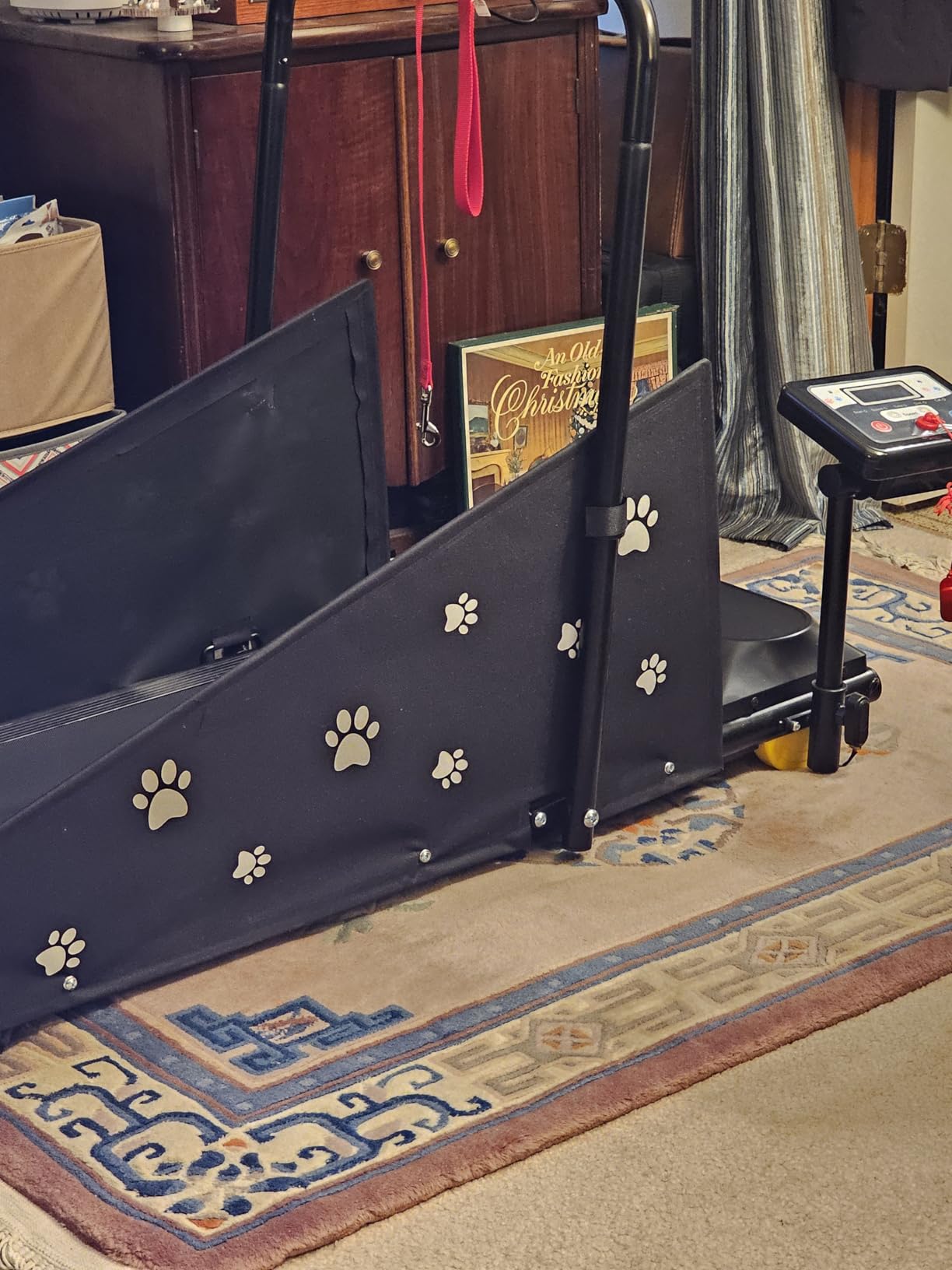
Folding down to just 25 x 24.61 x 15.76 inches, this unit disappears into closets or under beds between sessions. Apartment dwellers and anyone lacking permanent exercise space will appreciate the compact storage profile. Built-in wheels make moving the folded unit effortless, even for single users with limited strength.
The quiet motor operates below 55 decibels—roughly equivalent to conversational speech. This low noise profile prevents startling noise-sensitive dogs while making the treadmill suitable for apartments and shared living spaces. My testing revealed the motor sound is barely noticeable from across the room, creating a non-threatening environment for anxious dogs.
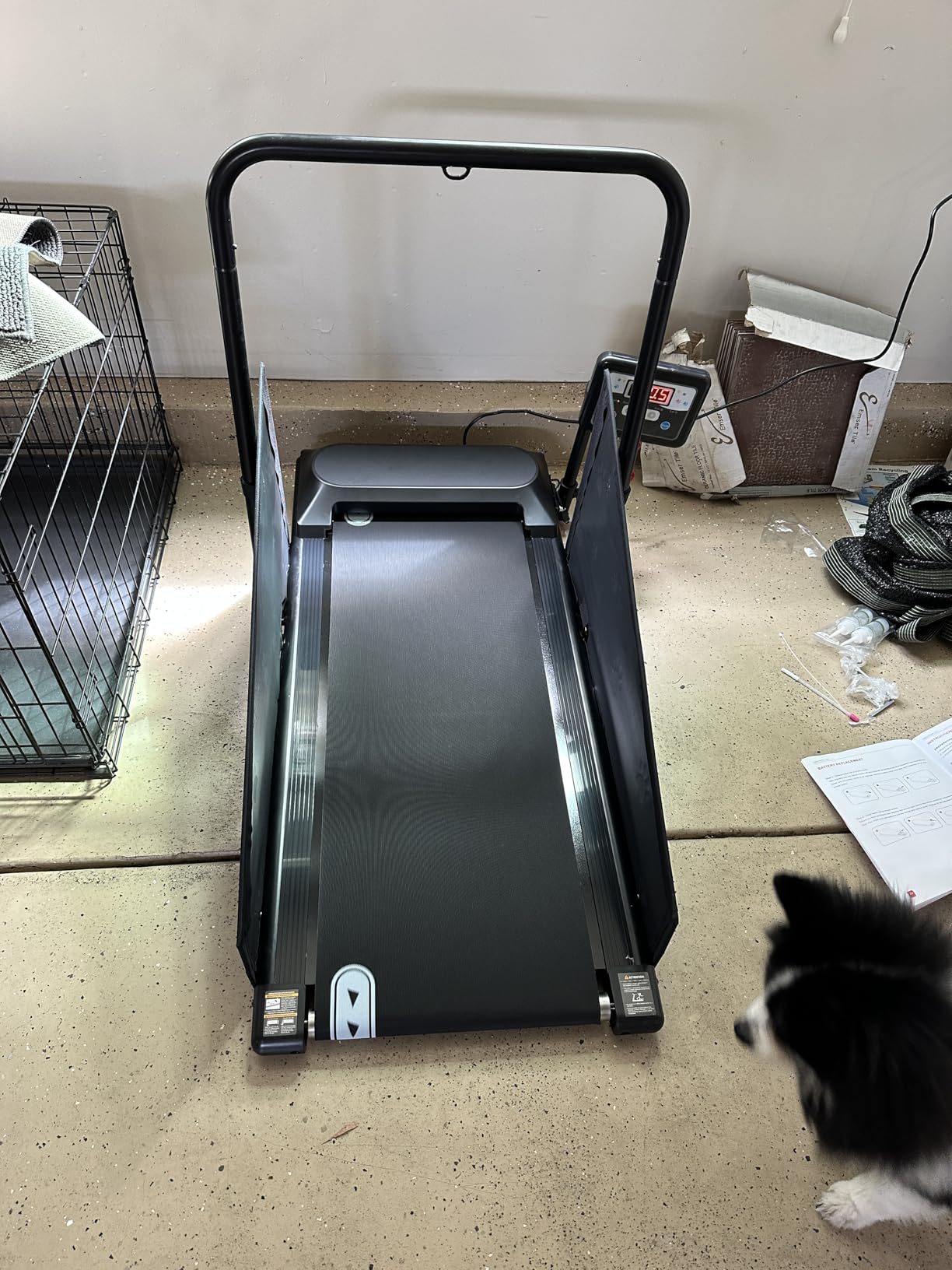
However, the compact dimensions create significant limitations for large breed dogs. Despite the 265-pound weight capacity claim, the running belt measures only 36.2 inches long. This length accommodates small dogs comfortably but forces medium and large breeds to shorten their stride unnaturally. Several reviewers report dogs over 30 pounds struggling to find comfortable positioning.
Best For Small Dogs and Limited Space
Dogs under 25 pounds with compact body structures find this treadmill perfectly sized. Terriers, small Spaniels, and similar breeds exercise safely and comfortably. The folding design makes it ideal for apartment living, RV travel, or anyone needing to store the treadmill between sessions. If you prioritize space-saving above all else and have a small dog, this model delivers.
Inadequate for Large Breeds Despite Weight Claims
The disconnect between stated weight capacity and actual usable deck length creates confusion. While technically capable of supporting 265 pounds, the running surface simply isn’t long enough for dogs in that weight range to exercise naturally. Large breed owners should look elsewhere rather than hoping this compact model might work.
8. REDLIRO Dog Treadmill – Budget Foldable Option
- Quiet motor operation
- Excellent for small medium dogs
- Foldable for easy storage
- Remote control and display screen
- Adjustable speeds 0.5-4 mph
- Easy to assemble
- Good for weight loss
- Motor quality issues reported
- Weight limit may be deceptive length matters
- One unit arrived non-functional
- Not ideal for larger dogs
At $249.99, the REDLIRO offers the lowest entry price among motorized options. For dog owners wanting to try treadmill exercise without major investment, this budget-friendly model provides essential functionality without premium features. The foldable design with built-in wheels adds convenience rarely found at this price point.
Twelve pre-programmed exercise routines provide variety for different fitness goals. Weight management programs maintain steady moderate speeds, while interval options alternate between faster and slower segments for conditioning. The remote control allows easy adjustment without interrupting sessions—helpful during initial training when frequent stops reward your dog’s progress.
Dual side safety rails and a front crossbar for leash attachment create a secure environment for dogs new to treadmill exercise. The containment prevents accidental falls while dogs learn balance and coordination on the moving surface. Most dogs graduate to walking without rail support after 2-3 weeks, but having the security during initial sessions builds confidence.
Some users report motor inconsistency and units arriving non-functional. While customer service reportedly responds quickly with replacements, quality control appears less reliable than premium competitors. At this price point, some variability might be acceptable, but consider whether potential hassle outweighs the savings.
Best For Budget-Conscious Small Dog Owners
If you have a small or medium dog under 40 pounds and want to try treadmill exercise without major investment, this model provides adequate functionality. The essential features work as intended—motor runs quietly, programs function, and safety features protect your dog. Perfect for testing whether your dog accepts treadmill exercise before upgrading to premium equipment.
Not Suitable for Large Breeds
Despite the 265-pound weight capacity claim, the running deck length restricts this treadmill to smaller dogs. Large breeds cannot extend fully or maintain natural gaits on the shortened surface. If you need a treadmill for a large breed dog, invest in a model with appropriately long dimensions rather than hoping this budget option might suffice.
Buying Guide: Choosing the Right Dog Treadmill for Large Breeds
Size Requirements Matter Most
Deck length determines whether your dog can exercise safely. Measure your dog from nose to tail base while standing, then multiply by 1.5 to calculate minimum deck length. Great Danes typically need 70+ inches, while Golden Retrievers manage comfortably on 60-65 inch surfaces. Width matters too—large breeds need 22-24 inches to prevent their hips from striking side rails.
Human treadmills almost always fail this requirement. Most consumer models max out at 55-60 inches, forcing large dogs to shorten their stride unnaturally. This gait alteration causes muscle imbalances and defeats the exercise purpose. Always choose dog-specific models designed for canine stride patterns.
Slatmill vs Motorized Treadmill
Non-motorized slatmills let dogs control their own speed, reducing anxiety and creating more natural exercise patterns. The self-paced format works especially well for high-energy breeds that sprint and stop rather than jog continuously. However, slatmills require dogs to actively engage—senior dogs or those with mobility issues sometimes struggle to initiate movement.
Motorized treadmills provide consistent speed that benefits rehabilitation and steady-state conditioning. Dogs with joint issues often prefer the predictable movement. The downside involves noise anxiety and the learning curve of matching belt speed. Most dogs acclimate within 5-7 sessions with positive reinforcement.
Weight Capacity vs Usable Space
Manufacturers often state impressive weight capacities that mislead buyers. A treadmill supporting 265 pounds might only have a 36-inch deck—completely inadequate for a 200-pound dog but fine for a 40-pound dog. Always prioritize deck dimensions over weight ratings. Your dog needs both length to extend fully and width for comfortable shoulder movement.
Safety Features Checklist
Essential safety features include emergency stop mechanisms, side rails for initial training, and sturdy construction that prevents tipping. Non-motorized models should offer braking systems to control belt movement. Motorized units need safety keys that immediately stop operation if pulled. Never compromise on safety features to save money.
Noise Considerations
Motor noise determines whether your dog accepts the treadmill. Anxious dogs often refuse loud models. Look for units operating under 55 decibels roughly conversational volume. Non-motorized slatmills generate mechanical sounds but typically lack the startling beeps and whining of electric motors. Consider your living situation too—apartment dwellers need quieter options.
Frequently Asked Questions
What is the best treadmill for a large dog?
The best treadmill for large dogs combines adequate deck length with appropriate speed options. For dogs over 80 pounds, non-motorized slatmills like the Moysoon or PawPaw’s provide the 67-69 inch running surface needed for natural gaits. These models let dogs control their own pace, reducing anxiety while building fitness. Motorized options like the Lifepro PawRunner work well for large dogs under 100 pounds that prefer consistent movement.
Are dog treadmills good for dogs?
Yes, dog treadmills provide excellent exercise when outdoor options aren’t available. They offer controlled environments for conditioning, rehabilitation, and weight management without weather constraints. Dogs with high energy needs particularly benefit from treadmill sessions that supplement outdoor walks. However, treadmills should complement rather than replace outdoor exercise, which provides mental stimulation from smells and social interaction that treadmills cannot replicate.
How long does a treadmill need to be for a large dog?
Large dogs have much longer strides than humans. For a dog, the treadmill should be 1.5-2 times their body length. Measure from nose to tail base while standing—this determines minimum deck length. Most large breeds need 60-70 inches to extend fully and maintain natural gaits. Using undersized treadmills forces dogs to shorten their stride, causing muscle imbalances and defeating the exercise purpose.
Is a dog pacer good for all dogs?
DogPACER treadmills work well for many dogs but aren’t universally ideal. Their motorized designs suit small to medium dogs and some large breeds under 100 pounds. However, giant breeds and dogs extremely sensitive to motor noise may prefer non-motorized slatmills. Additionally, some high-energy working breeds thrive better on self-paced exercise that lets them sprint naturally rather than maintaining constant speeds.
Conclusion: Finding the Best Dog Treadmills for Large Breed Dogs
Choosing the right treadmill starts with understanding your large breed dog’s specific needs. The Moysoon Non-Motorized Dog Treadmill earns our top recommendation for its combination of safety features, appropriate sizing, and self-paced exercise that lets dogs control their own speed. Budget-conscious buyers find excellent value in the PawPaw’s Dog Treadmill, which provides adequate length for giant breeds at a reasonable price point.
Remember that deck length matters more than weight capacity claims. Measure your dog’s body length and choose a treadmill 1.5-2 times that measurement. Non-motorized slatmills generally work better for high-energy breeds that benefit from interval-style exercise, while motorized models suit dogs needing consistent movement for rehabilitation or conditioning.
Whichever model you choose, introduce treadmill training gradually with positive reinforcement. Most large breed dogs accept treadmill exercise within 1-2 weeks when introduced properly. The investment in quality equipment pays dividends in your dog’s physical health, mental well-being, and behavior for years to come.