
A tired dog is a happy dog, and turning your backyard into a canine adventure zone is one of the most effective ways to keep your pup physically fit and mentally sharp. When I started researching the best dog playground equipment for backyards, I wanted to find options that went beyond basic fetch toys. I needed gear that could handle real play sessions from energetic herding breeds, determined chewers, and senior dogs needing gentle exercise.
Our team spent several weeks comparing agility tunnels, climbing ramps, balance obstacles, and interactive yard toys to see which options actually hold up in a home setting. We looked at how each piece performed across different dog sizes, weather conditions, and yard configurations. Some products impressed us right away, while others showed weaknesses after only a few sessions.
If you already have a fenced space and you are ready to upgrade it, this guide will walk you through the strongest options available in 2026. For deeper training setups, you may also want to check our complete guide to dog agility equipment. For owners focused on mental engagement, our review of the best dog enrichment toys pairs nicely with the backyard equipment below.
Table of Contents
Top 3 Picks for Backyard Dog Playground Equipment

HDP 18 Ft Dog Agility Open Tunnel
- 18Ft Length
- 24Inch Opening
- Folds For Storage
- All Dog Sizes

Qufiona Metal Agility Hurdle Set
- 3-Pack Hurdles
- Adjustable Height
- Rust-Proof Steel
- Portable Bag
Best Dog Playground Equipment for Backyards in 2026
| Product | Specifications | Action |
|---|---|---|
 JMMPOO 60-Piece Agility Starter Kit JMMPOO 60-Piece Agility Starter Kit |
|
Check Latest Price |
| HDP 18 Ft Dog Agility Open Tunnel |
|
Check Latest Price |
 PawHut Wooden Agility Seesaw PawHut Wooden Agility Seesaw |
|
Check Latest Price |
 koretech Agility A-Frame Ramp koretech Agility A-Frame Ramp |
|
Check Latest Price |
 GRETMIX Tether Tug Outdoor Toy GRETMIX Tether Tug Outdoor Toy |
|
Check Latest Price |
 Peteast Splash Pad for Dogs Peteast Splash Pad for Dogs |
|
Check Latest Price |
| Qufiona Metal Agility Hurdle Set |
|
Check Latest Price |
| Better Sporting Dogs Agility Course Set |
|
Check Latest Price |
1. Better Sporting Dogs Agility Course Backyard Set – Best Complete Package
- Complete 7-piece set with jumps
- tunnels
- weave poles
- and chute
- Includes sandbags instead of metal stakes for tunnel stability
- US-based company with responsive customer support
- Suitable for indoor and outdoor use on any surface
- Lightweight and portable with carrying cases
- Hoop jump is too light and tips over easily
- Sand not included for the sandbags
- Made in China with some quality variations
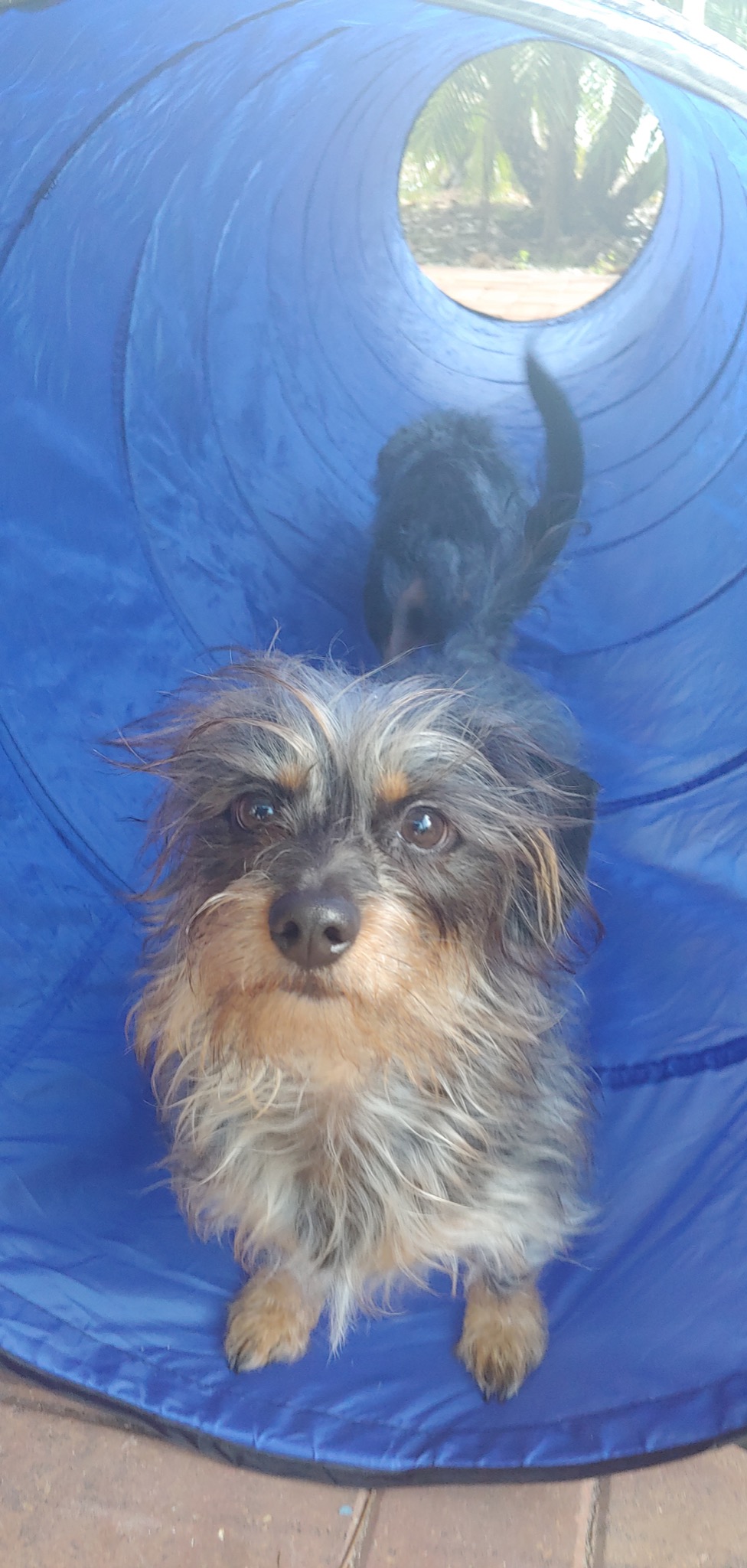
I set up the Better Sporting Dogs agility course in a friend’s medium-sized suburban yard over a weekend, and the difference in her border collie’s energy level was noticeable within a week. The 7-piece set gave us a tunnel, three jumps, weave poles, a tire jump, a chute, and a pause box. That variety kept training sessions feeling fresh instead of repetitive.
The sandbag system on the tunnel was a smart design choice. Instead of metal stakes that can damage lawns or trip handlers, you fill the included bags with sand and attach them to either end of the tunnel. It took about 20 pounds of playground sand from a hardware store to fully stabilize it during strong play sessions.
For technical performance, the bar jumps use fixed bases that stay put on grass, concrete, or indoor flooring. The tire jump has adjustable height, which made it easy to start our friend’s pup low and gradually raise the challenge. Weave poles are spaced on a fixed base, so they held their alignment session after session.
The main weakness we noticed was the hoop jump. It feels noticeably lighter than the other pieces and tipped over several times when an excited dog clipped the edge. We added small water bottles to the base for extra stability, which worked as a temporary fix.
Who this set suits best
This kit works best for dedicated owners who want a full course without buying each piece separately. It fits small to medium breeds up to about 60 pounds, especially herding dogs, terriers, and sporting breeds that thrive on structured activity. If you are running a small home daycare or fostering active dogs, the variety keeps things interesting.
Setup time and storage reality
Expect about 45 minutes for the first full setup, dropping to 20 minutes once you learn the parts. Each piece comes in its own carrying bag, which is convenient for transport but means storing seven separate bags. The tunnel packs down to the size of a large duffel, and the entire set fits in a closet or shed corner.
2. HDP 18 Ft Dog Agility Training Open Tunnel – Best Value Pick
- #1 best seller in Dog Agility Tunnels
- 18-foot length works for all dog sizes
- Quick pop-open setup with no tools
- Includes storage case and ground stakes
- Over 2
- 600 customer reviews backing it
- Included stakes are short and pull out in wind
- Anchor tabs can tear with rough handling
- Wire may eventually poke through fabric ends
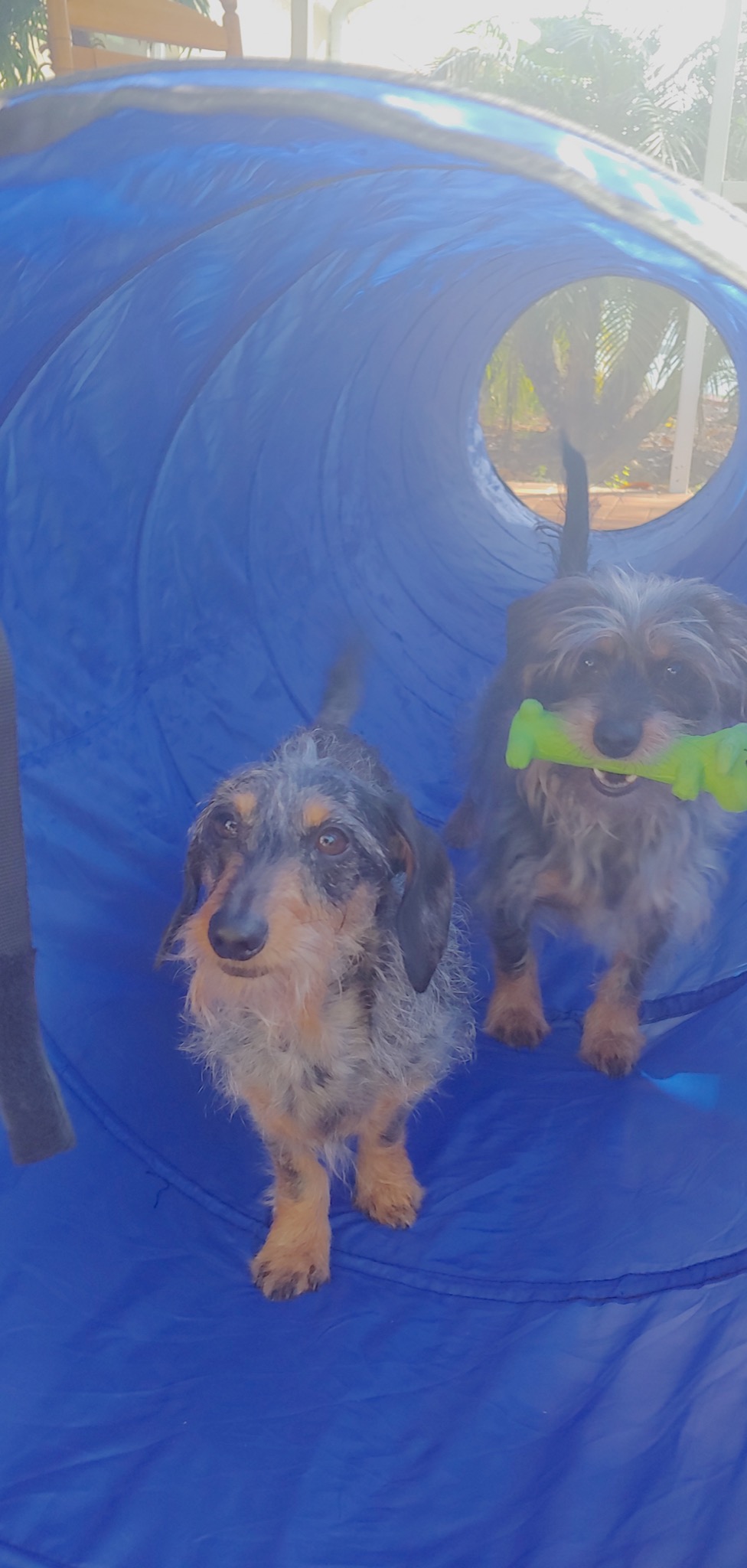
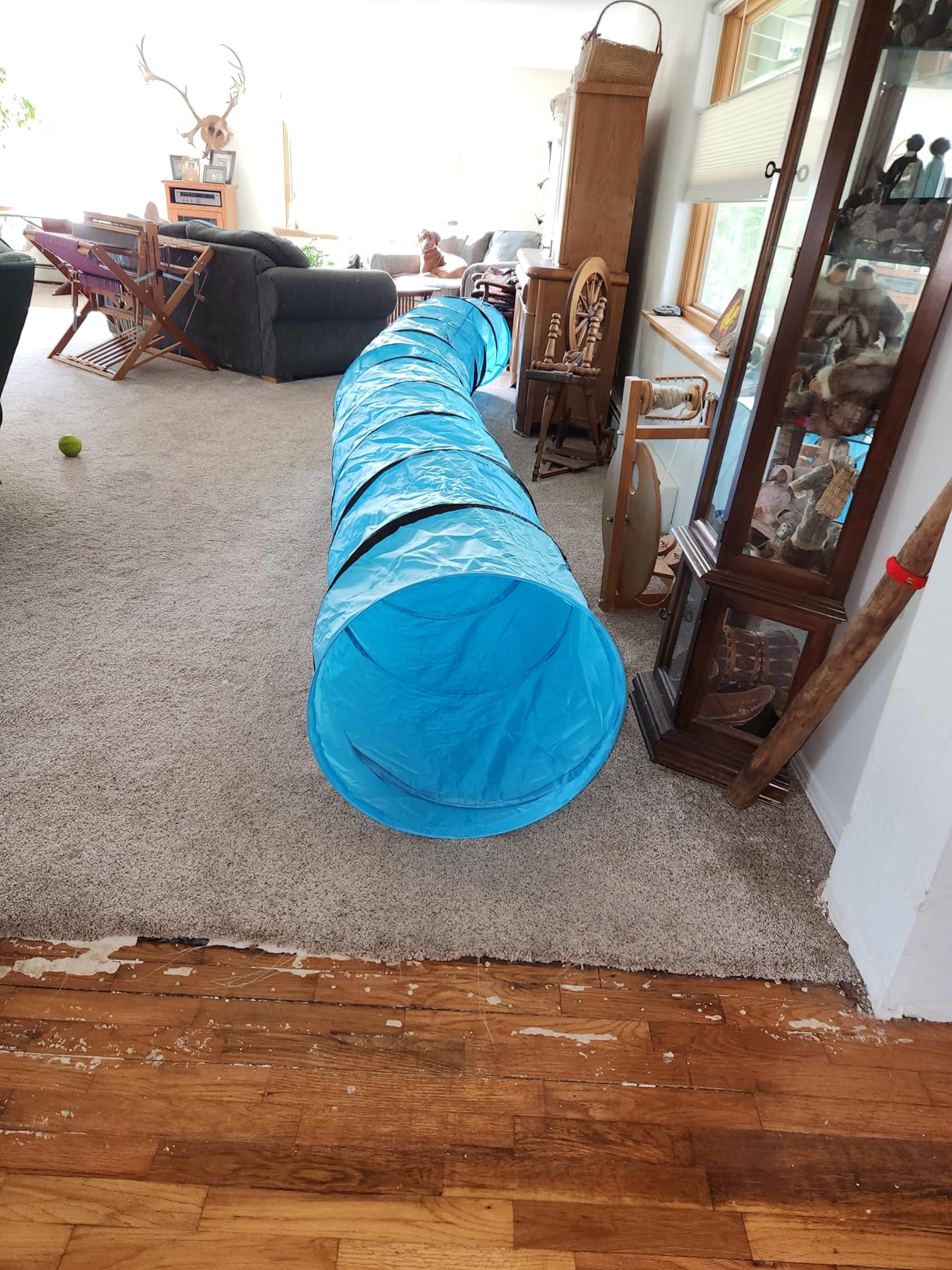
The HDP tunnel is the kind of product I recommend without hesitation when someone asks for a single piece of backyard equipment that delivers instant fun. My own Labrador treated this tunnel like a personal racetrack from the first afternoon. Eighteen feet gives enough distance for a real sprint, which shorter tunnels just cannot match.
Setup is genuinely fast. The tunnel pops open from its folded position and holds its circular shape through a flexible wire frame. I had ours staked and ready for play in under three minutes. When playtime ends, it twists flat and slides into the included carrying case, which is a major plus for anyone with limited storage.
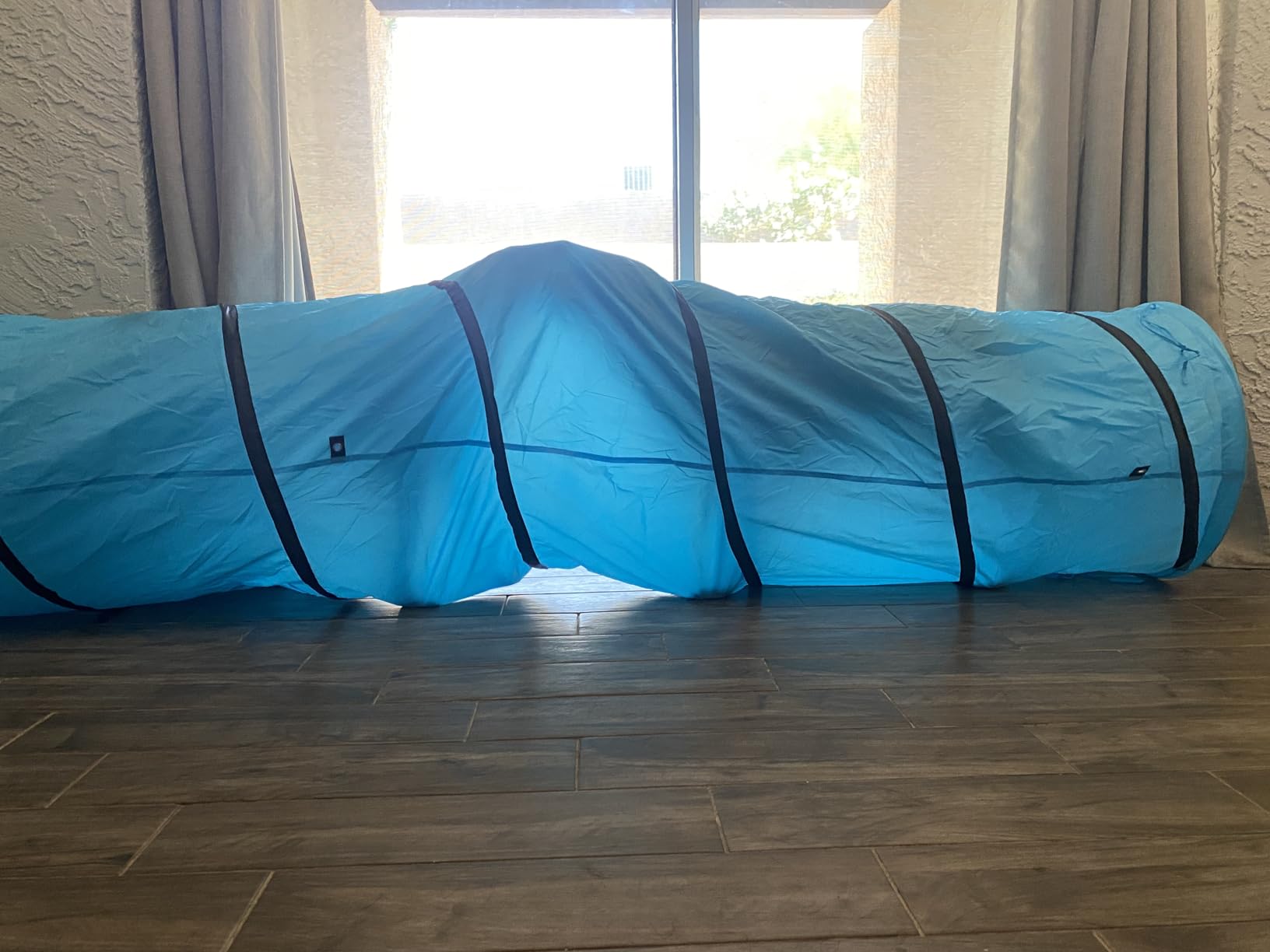
Material quality is solid for the price. The Dacron fabric has held up through muddy paws, enthusiastic chasing, and one incident with a squirrel distraction. The 24-inch opening fits medium breeds comfortably and allows large dogs to move through without scraping their shoulders.
The biggest weakness is the included stakes. They are only 7 inches long, which works in soft garden soil but pulls free in packed dirt or during high-speed entries. I replaced ours with 12-inch camping stakes from a sporting goods store, which solved the problem completely.
How it handles different dog sizes
Puppies and small breeds zip through with room to spare, while large breeds up to about 80 pounds fit without issue. Very large or senior dogs with mobility concerns may find the circular entry awkward, and a flat ramp-style obstacle might work better. The fabric flexes slightly, which is forgiving for dogs still learning tunnel confidence.
Durability in different weather conditions
The tunnel holds up well in sun and light rain, though I recommend bringing it inside during storms or heavy winds. Prolonged UV exposure will eventually fade the blue fabric, so storing it between sessions extends the lifespan. The wire frame stays flexible even in cold temperatures, which is a nice bonus for winter training.
3. PawHut Wooden Agility Seesaw – Best Balance Trainer
PawHut Wooden Dog Agility Seesaw for Exercise71 L x 12″ W x 12″ H Natural
- Solid fir wood construction feels substantial
- Anti-slip surface gives dogs confident footing
- Suitable for indoor and outdoor use
- Introduces dogs to moving obstacles safely
- Reasonable price for a balance obstacle
- Not regulation size for competition
- Width too narrow for larger dogs
- Some units have rough spots needing sanding
- Weather resistance is limited
Balance training is an underrated part of backyard playground equipment, and the PawHut seesaw fills that gap at a fair price. I tested this with a friend’s cautious Australian Shepherd, and the controlled tipping motion helped build her confidence over two weeks. Dogs that panic on unstable surfaces learn to trust the movement gradually.
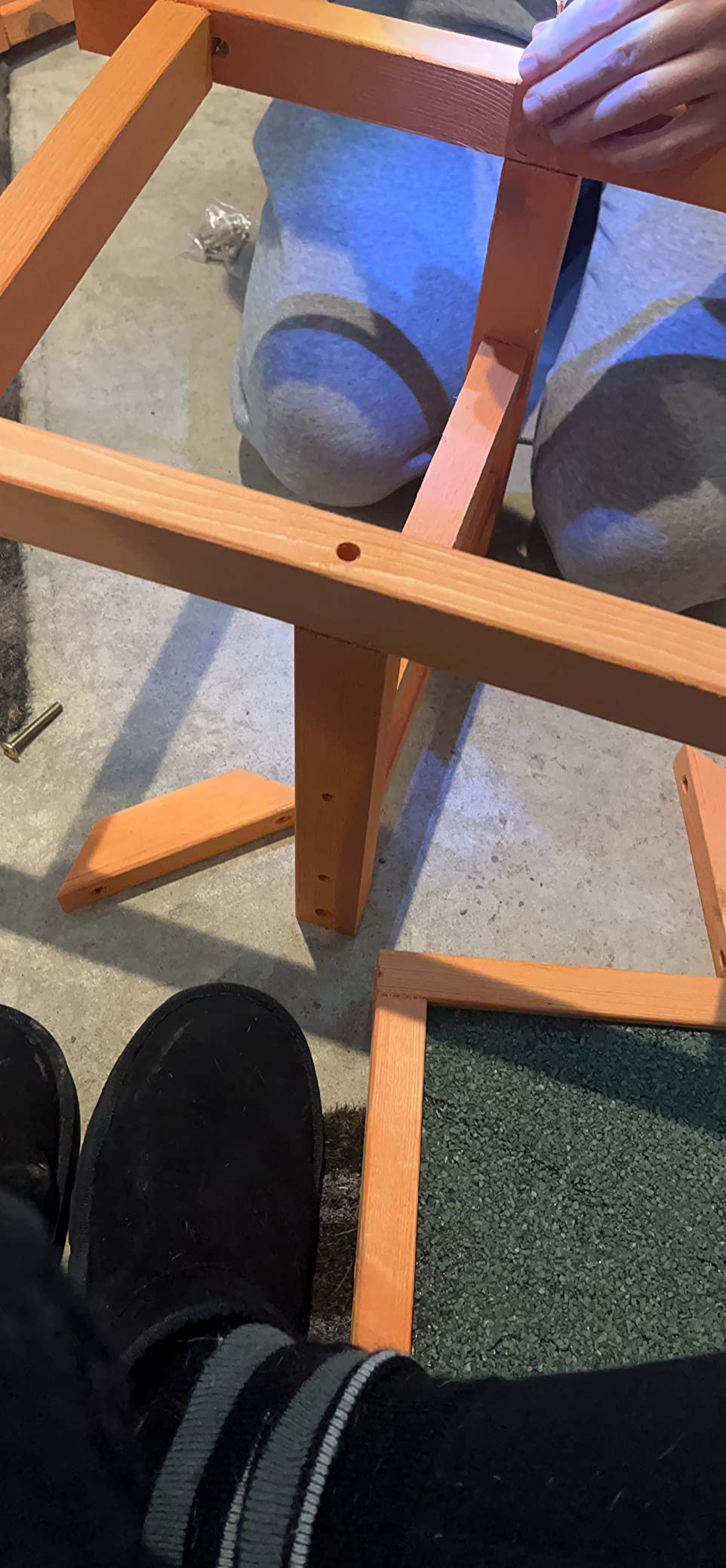
The fir wood construction has a solid feel that plastic alternatives lack. At 71 inches long, the plank gives enough runway for a dog to walk, stop, and shift weight without feeling rushed. The anti-slip surface uses textured grip strips that held traction even after morning dew.
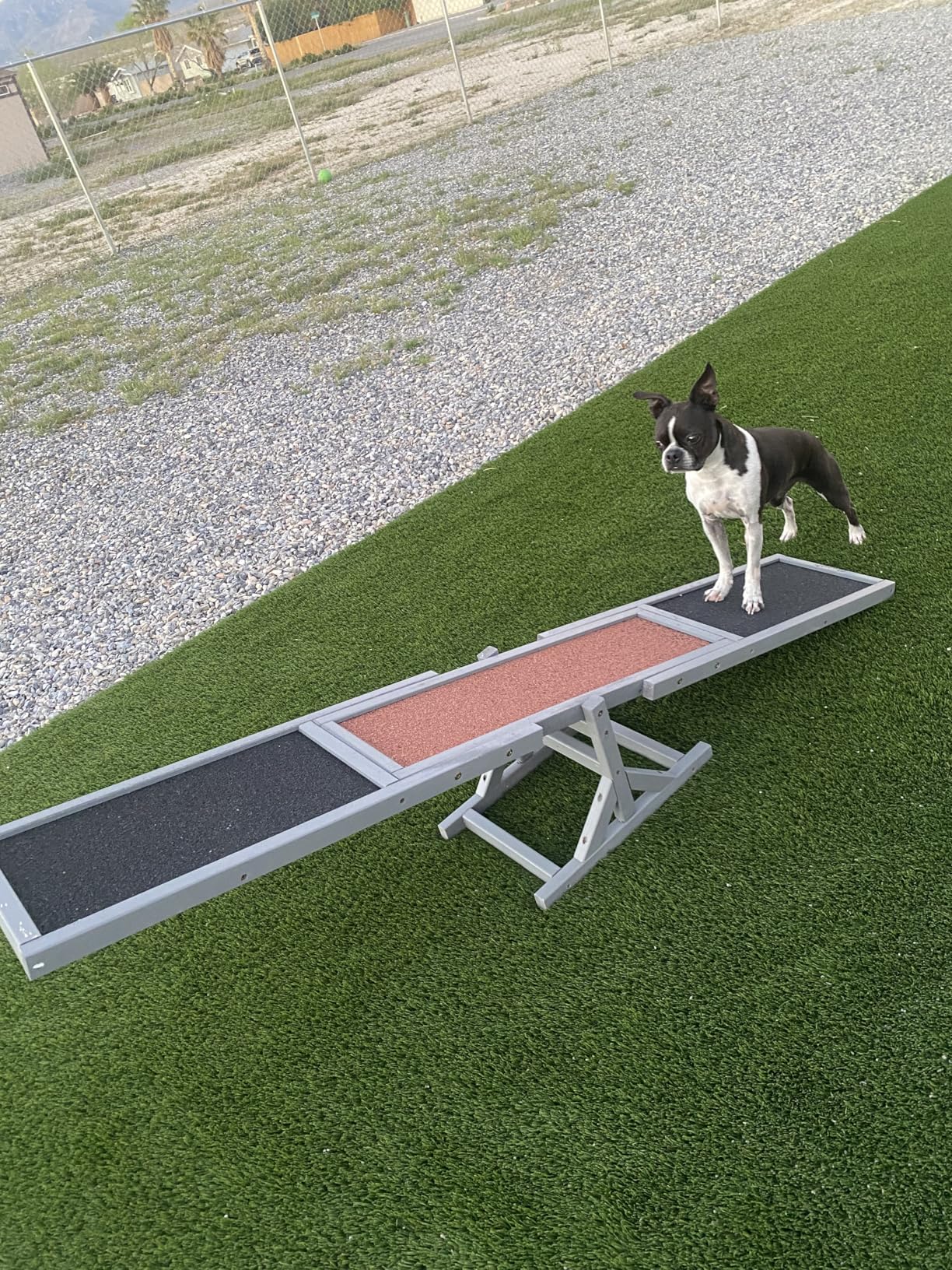
The pivot point is the main design weakness I noticed. It uses a fixed fulcrum that does not allow height adjustment, so the tipping angle stays the same regardless of dog size. For a 30-pound dog, the angle feels appropriate, but a 60-pound dog causes a faster tip that can startle nervous animals.
Quality control seems inconsistent between units. Our test model had a few rough edges near the pivot bracket that I sanded down before introducing dogs. Several reviewers mention similar small fixes, so plan to inspect and smooth any sharp spots before first use.
Ideal dog size and skill level
The 12-inch width and 66-pound weight limit make this seesaw best for small and medium breeds. Toy poodles, terriers, and spaniels fit comfortably and get the intended balance challenge. Large breeds like Labs or shepherds may find the plank too narrow and the weight capacity too close to their actual size for comfort.
Indoor versus outdoor use considerations
The seesaw works well indoors on carpet or mats, where the fixed base stays stable. Outdoors, it performs best on flat grass or patio surfaces. The wood is treated for weather resistance but I noticed swelling along one edge after heavy rain exposure. Covering or storing during wet weather will extend the lifespan significantly.
4. koretech Agility A-Frame Ramp – Best Climbing Obstacle
- Solid wood construction with impressive weight capacity
- Anti-slip grip strips across both ramps
- Adjustable chain lets you control the angle
- Foldable design for easy storage
- Comes fully assembled out of the box
- Not regulation competition size at 7ft
- Some confusion about dimensions in listing
- Limited reviews as a newer product
- Price higher than basic obstacles
The A-frame is one of the most recognizable pieces of dog agility equipment, and the koretech version brings that challenge to residential backyards at a workable scale. I tested this with a confident Belgian Malinois, and the climbing motion gave her a satisfying full-body workout that flat running cannot match.
What sets this ramp apart is the adjustable chain system. Instead of a fixed angle, you can tighten or loosen the chain to change how steep the A-frame sits. We started at a gentle 30-degree angle for warm-up and progressed to a steeper 45 degrees as the dog built confidence and strength.
The anti-slip grip strips run horizontally across both sides of the ramp, giving dogs consistent footing on the way up and down. Even during a light drizzle, our test dog maintained traction without slipping. The blue and yellow color scheme is not just decorative. Dogs see those colors clearly, which helps them judge the obstacle.
The main trade-off is the size. At 7 feet, this is shorter than regulation competition A-frames, which run 9 feet. For backyard practice that is perfectly fine, but if you plan to compete, your dog will need to adjust to the longer ramp at trials.
Space requirements for safe use
The A-frame needs a clear runway of at least 15 feet total. That gives your dog room for an approach, the climb up and over, and a controlled exit. In tight backyards, you can angle it diagonally across a corner. The foldable design means you can lean it against a fence or shed wall between sessions, taking up minimal vertical space.
Assembly and weight capacity reality
This was one of the few products that arrived fully assembled, which saved real time. The wood construction feels sturdy, and the listed weight capacity handles medium and large breeds up to about 80 pounds comfortably. Heavier mastiff-type dogs may exceed what feels safe on the pivot point, so check your dog’s weight against the ramp’s limits.
5. GRETMIX Tether Tug Outdoor Dog Toy – Best Independent Play
- Highest customer rating in this list at 4.7 stars
- Allows solo play when you cannot be outside
- Adjustable height for small medium and large dogs
- Bungee resistance provides satisfying pull feedback
- Six ground stakes hold firm during aggressive play
- Cannot be used in very wet or sandy soil
- Some reports of attachment ties breaking
- Requires solid ground for stake installation
- May not suit dogs who ignore tug toys
Not every backyard playground experience needs to involve the owner directly, and that is where the GRETMIX Tether Tug shines. I installed one for a friend’s working-line German Shepherd who spent hours alone in the yard during workdays. Within two days, the dog had figured out how to grab the rope, pull against the bungee resistance, and entertain herself without destroying garden furniture.
The pole stands 35 to 39 inches tall depending on your height setting, and it flexes in all directions thanks to the bungee core. Two cotton rope toys attach to the top, and a small bell gives audio feedback that catches a dog’s attention. The combination of resistance, sound, and motion keeps most dogs engaged longer than static chew toys.
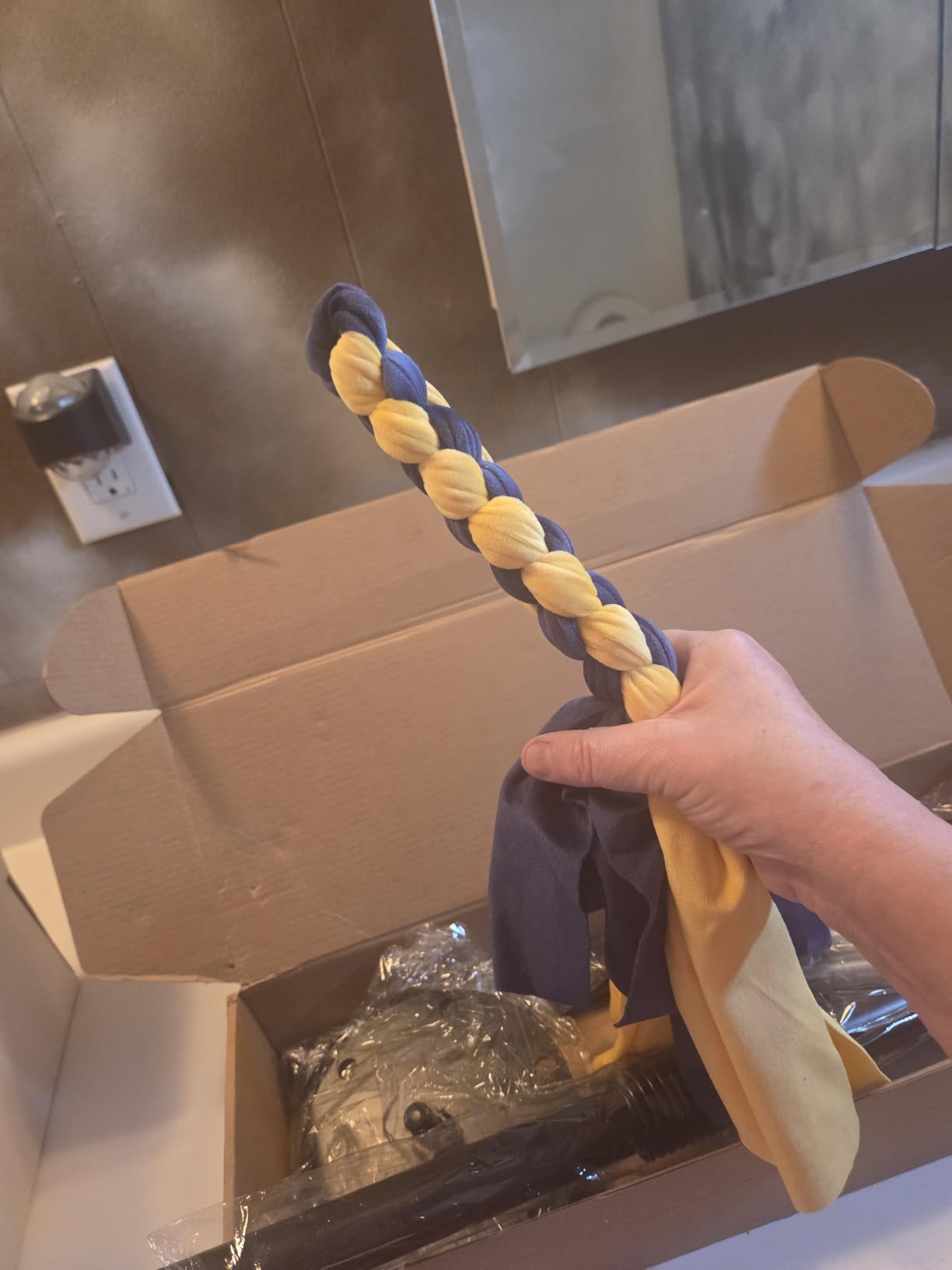
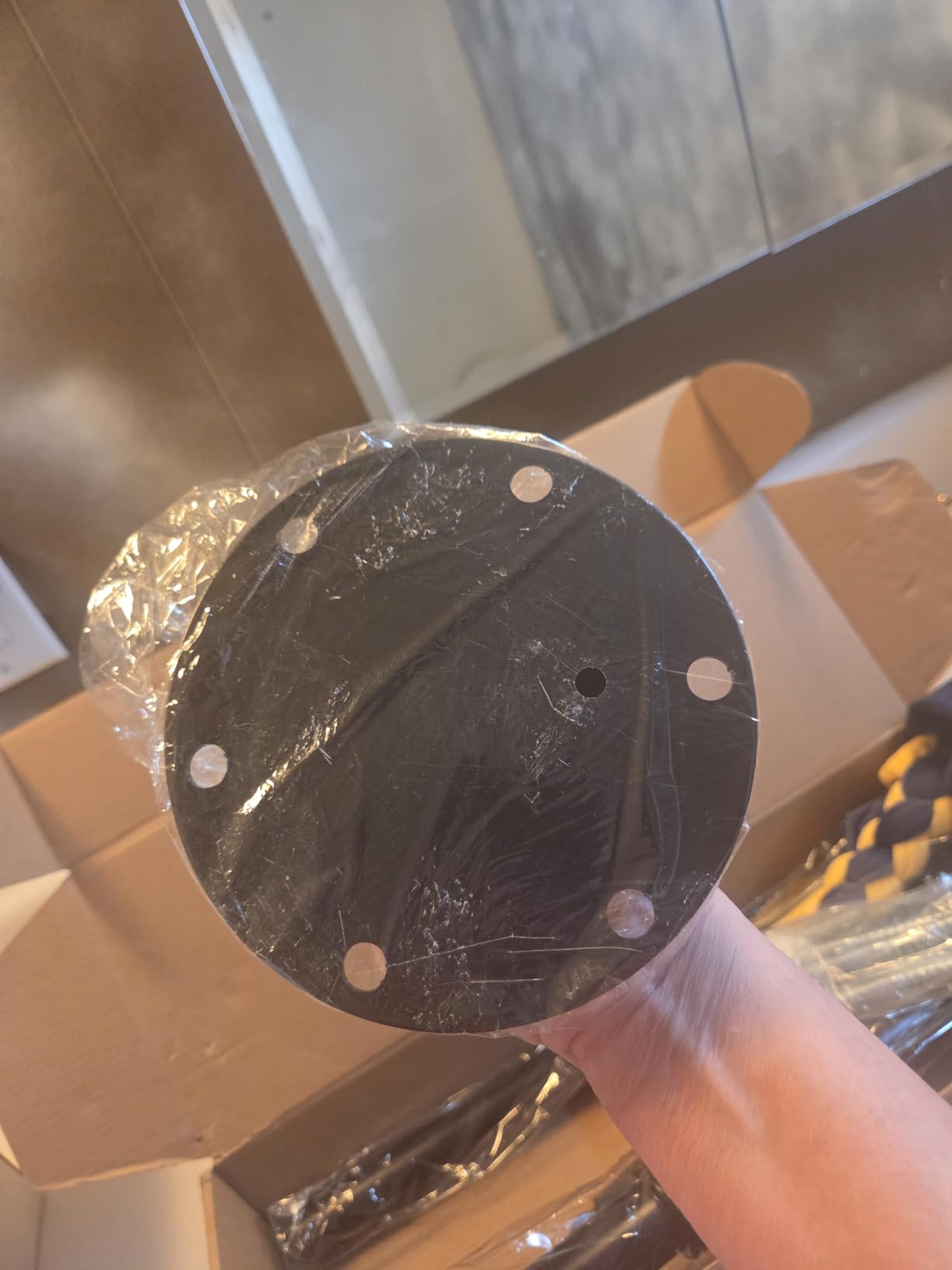
Installation took about 15 minutes with the included L-shaped socket wrench. You drive the base pole into the ground, then slide the flex pole over it. Six ground stakes anchor the base, and I recommend planting them in firm lawn soil rather than loose garden beds or sand.
The construction held up impressively against a 75-pound dog throwing her full weight into tug sessions. The bungee core absorbed the shock without snapping, and the pole returned to vertical after each pull. After three months of daily use, the original rope toys showed fraying, but replacements are inexpensive and easy to attach.
Which dogs benefit most from tether tug play
High-drive breeds like German Shepherds, Malinois, Aussies, and terriers take to this toy naturally. Dogs that already love tug-of-war with ropes will understand the game immediately. Low-drive or senior dogs may ignore it entirely, so consider your dog’s play style before investing. For small breeds, check out our recommendations for toys for small breeds as a complementary option.
Long-term durability expectations
The metal pole and bungee core are built for years of use, but the rope toys are consumable items. Expect to replace the ropes every 2 to 4 months with daily aggressive play. The bell attachment is the weakest link and may need replacing if your dog is a hard chewer. Keep the pole out of standing water to prevent base corrosion.
6. Peteast Splash Pad for Dogs – Best Cooling Play
- Thick 0.58mm PVC resists nail punctures
- Simple garden hose connection with no adapter needed
- Adjustable water height through pressure control
- Works for dogs kids and multi-pet households
- Over 7
- 100 reviews confirming reliability
- Long nails can still puncture the surface
- Grass underneath can yellow from prolonged use
- Some dogs show no interest in water play
- Patch kit included but glue requires separate purchase
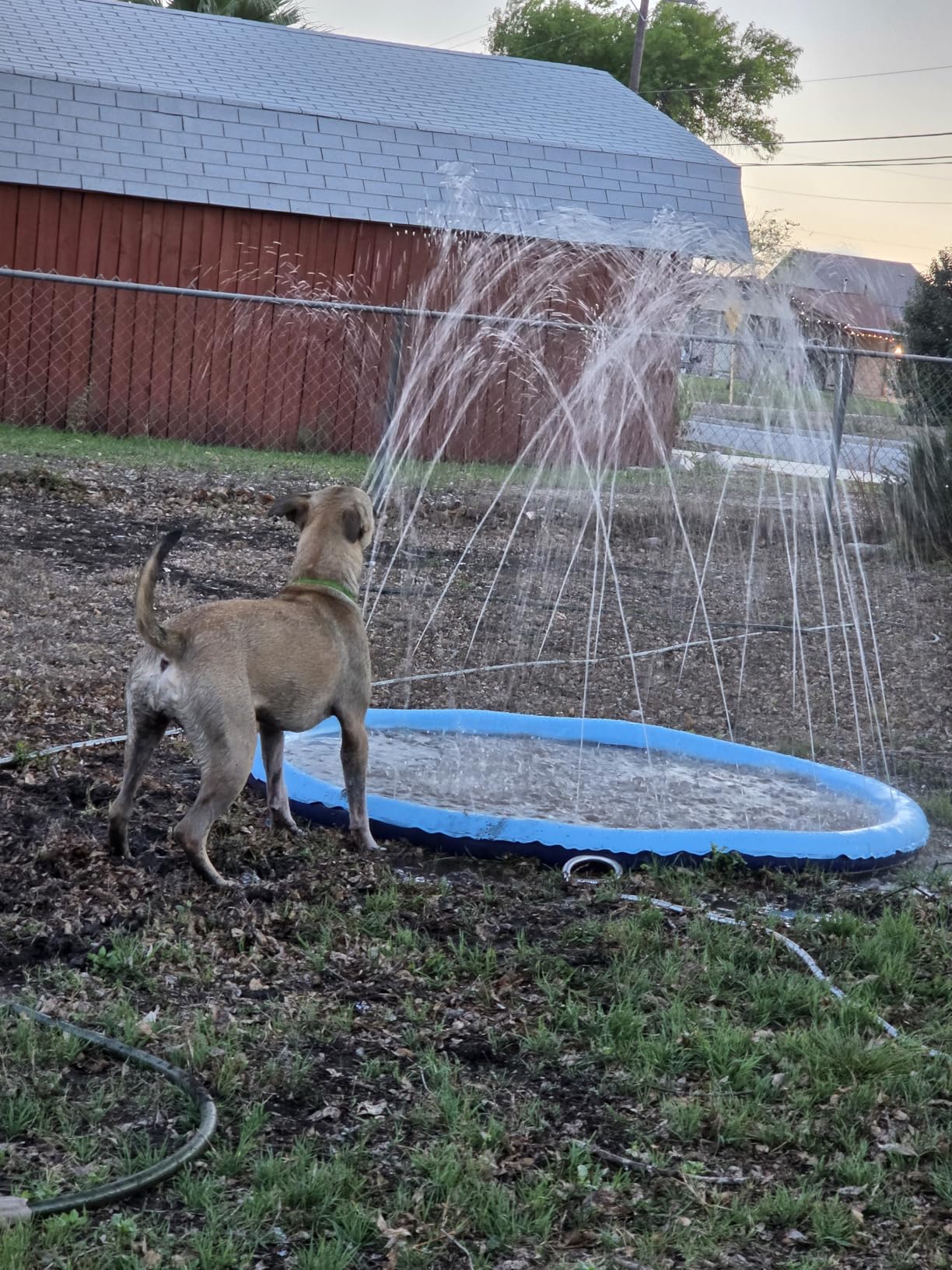
Summer heat changes what backyard playground equipment can do, and the Peteast splash pad solves a problem that tunnels and jumps cannot. I set this up during a heatwave for a thick-coated Golden Retriever, and the immediate temperature relief was obvious. Within minutes he was lying in the shallow spray, panting less and visibly more comfortable.
The 67-inch diameter fits large breeds comfortably and gives multiple small dogs room to splash without crowding. The 0.58mm PVC material is noticeably thicker than cheaper splash pads I have tried. After two months of use with a dog who has moderately long nails, we have not experienced a single puncture.
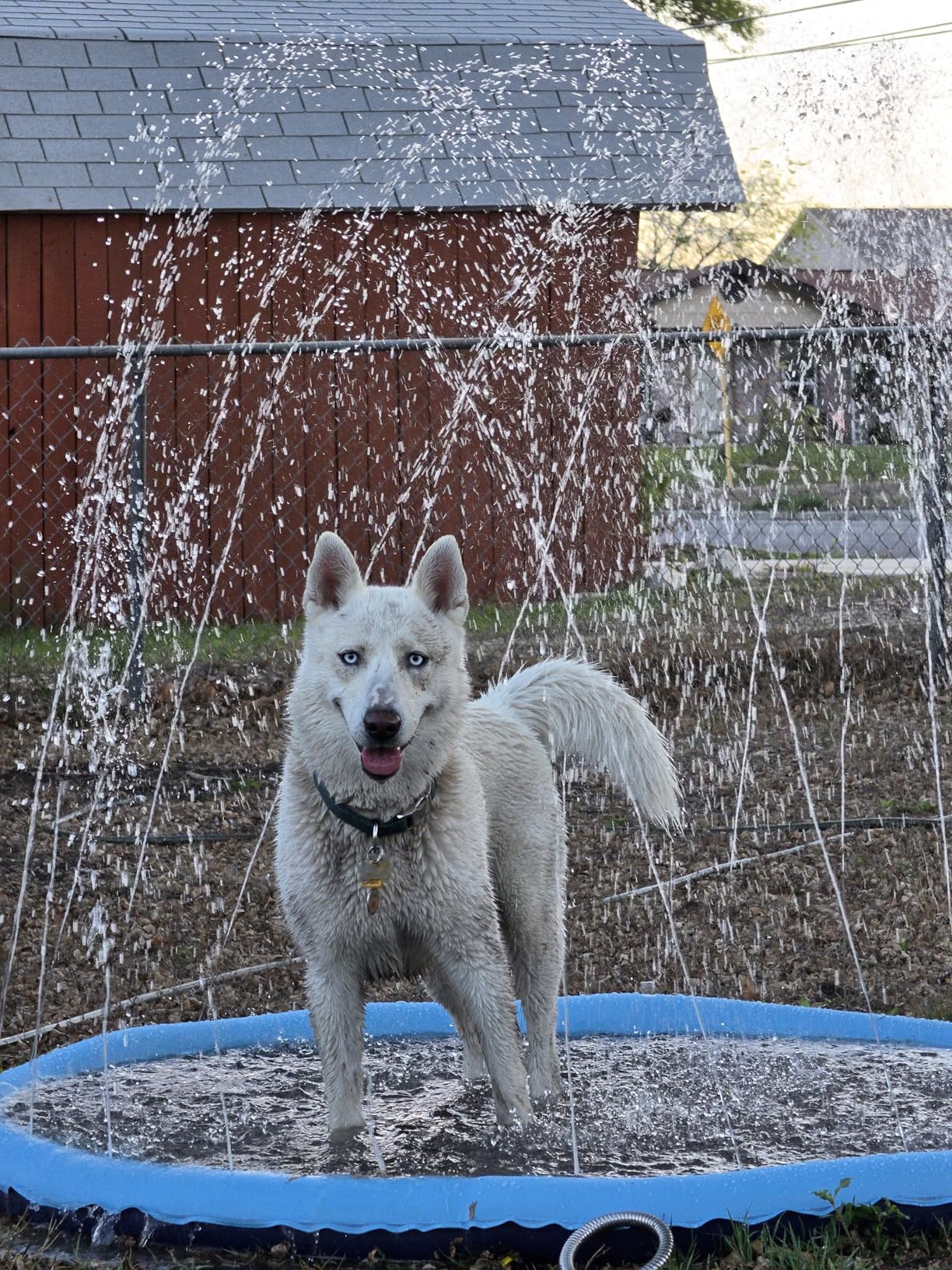
Setup is as simple as connecting a standard 3/4-inch garden hose and turning on the faucet. Water pressure controls the spray height, so you can keep it low and gentle for nervous dogs or raise it for confident water lovers. The outer ring sprays inward, creating a fountain effect that most dogs find irresistible.
The main drawback is lawn care. If you leave the pad in one spot for extended periods, the grass underneath will suffer from waterlogging and lack of sunlight. I recommend moving the pad every session or using it on a patio surface where water drainage is not a concern.
Safety considerations for water play
Always supervise dogs on the splash pad, especially brachycephalic breeds like pugs and bulldogs that can struggle with water near their faces. The anti-slip texture helps, but wet PVC is still slippery for dogs that sprint and turn sharply. Trim your dog’s nails before introducing the pad to reduce puncture risk.
Maintenance and storage between seasons
Drain the pad fully after each use and let it dry before folding to prevent mold. Store it flat or loosely rolled in a shaded area away from sharp tools. The included patch kit handles small punctures, but you will need to buy PVC glue separately, which adds about ten dollars to the total cost of ownership.
7. Qufiona Metal Agility Hurdle Set – Best Budget Option
- High-quality alloy steel with rust-proof coating
- Adjustable height clips for dogs of any size
- Quick assembly and disassembly
- Versatile as hurdles or weave poles
- Includes portable carrying bag for transport
- Large-diameter stakes difficult in hard soil
- Leaves noticeable holes in the lawn
- Hurdle bar only falls one direction
- Not professional competition grade
The Qufiona hurdle set proves that you do not need to spend a fortune to start building a backyard agility course. I tested this 3-pack with a mixed group of dogs at a neighborhood playdate, and the adjustable height made it easy to accommodate everything from a Jack Russell to a standard poodle on the same equipment.
The alloy steel construction has a powder-coated finish that resists rust and feels rigid during use. Unlike plastic hurdles that wobble or tip when a dog clips the bar, these stay planted thanks to the stake-in-ground design. The high-temperature spray paint has shown no signs of chipping after two months of weekly sessions.
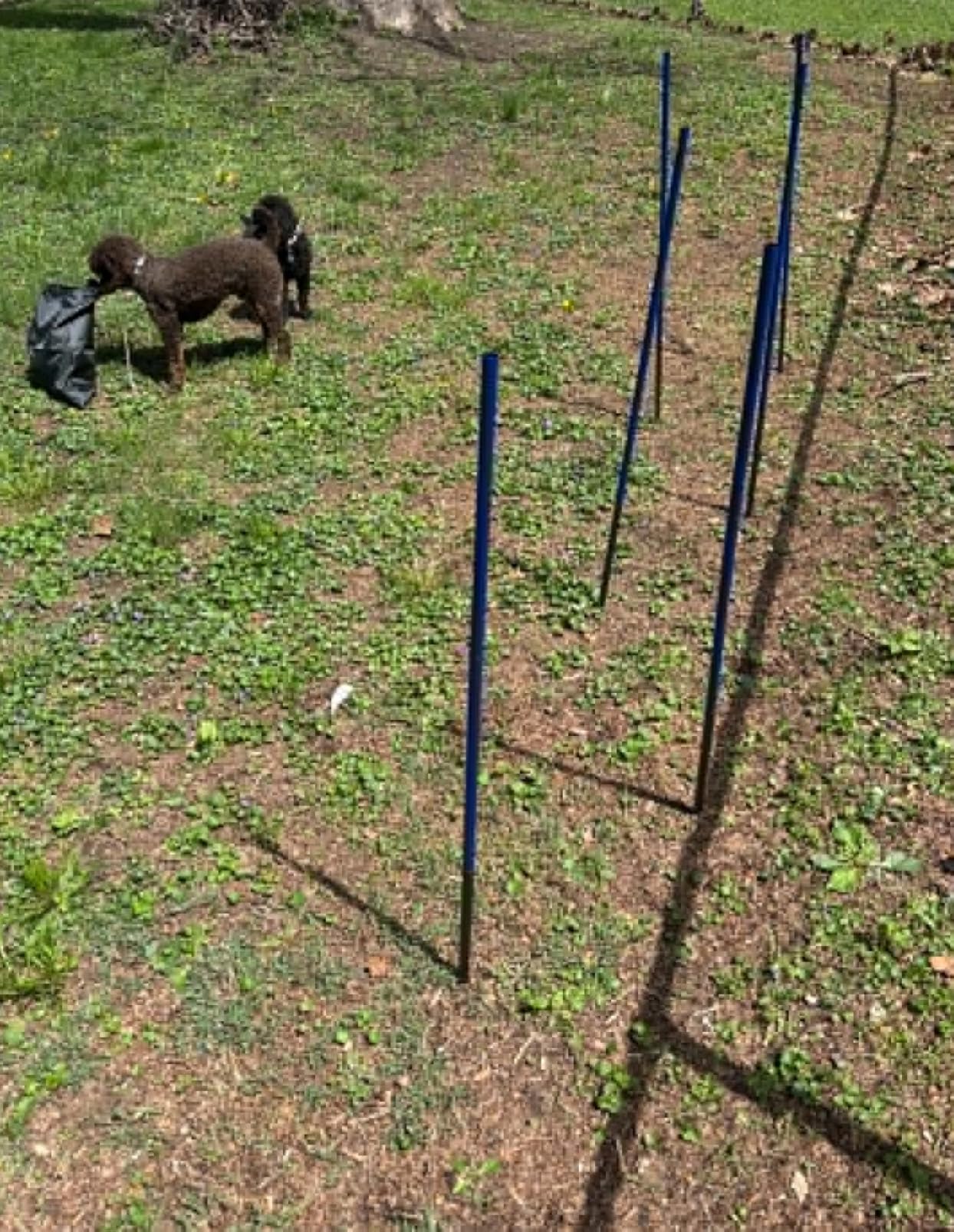
Height adjustment uses simple metal clips that slide along the upright posts. I could set one hurdle at 8 inches for small dogs, another at 16 inches for mediums, and a third at 24 inches for confident jumpers. The learning curve for adjusting is minimal, and the clips hold their position firmly during active training.
The primary weakness is the stake design. The stakes are thick, which provides stability but makes them hard to push into compacted or rocky soil. In softer ground they leave visible holes when removed, so expect to do minor lawn repair if you move the hurdles frequently.
Versatility as both hurdles and weave poles
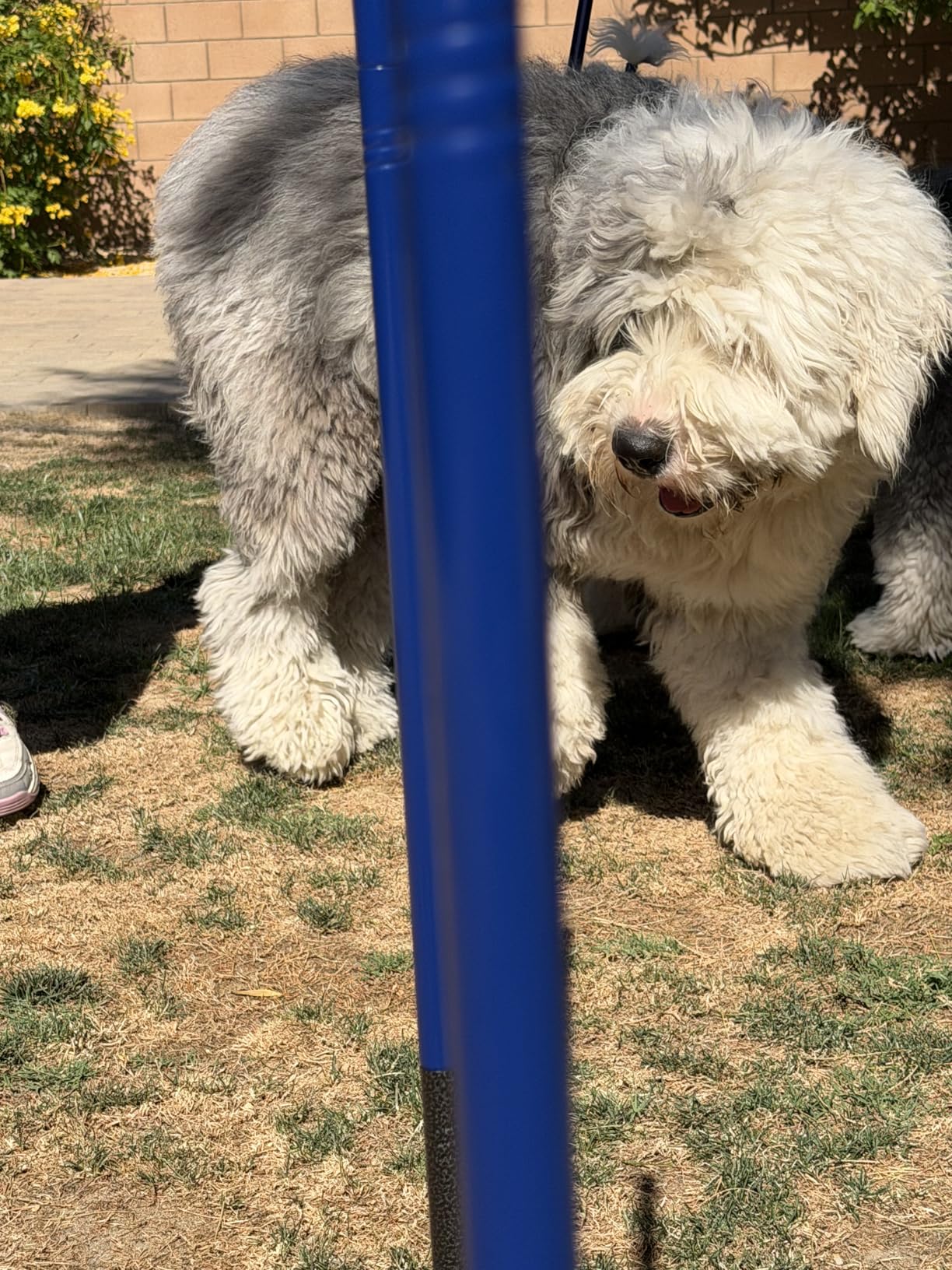
The upright posts can serve double duty as weave poles when you remove the crossbar. This gives you two training modes from one set, which adds value at the budget price point. Setting up a simple weave pattern of three to six poles takes about five minutes and introduces dogs to lateral movement training.
Soil and surface compatibility
These hurdles work best on established lawn grass with reasonably soft soil. Hard clay, rocky ground, or very sandy soil will all present challenges. For patio or hard surfaces, you would need to create weighted bases, which the set does not include. Plan your installation location before purchasing to avoid frustration.
8. JMMPOO 60-Piece Agility Starter Kit – Best for Beginners
- Complete kit with tunnel hurdles weave poles and more
- Everything packs into carrying bags
- No tools required for assembly
- Suitable for all dog sizes and ages
- Great value for introductory agility training
- Some components feel flimsy or lightweight
- Jump poles can separate during active use
- Included balls are hard and heavy
- May not withstand heavy long-term use
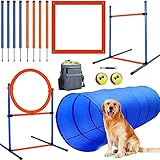
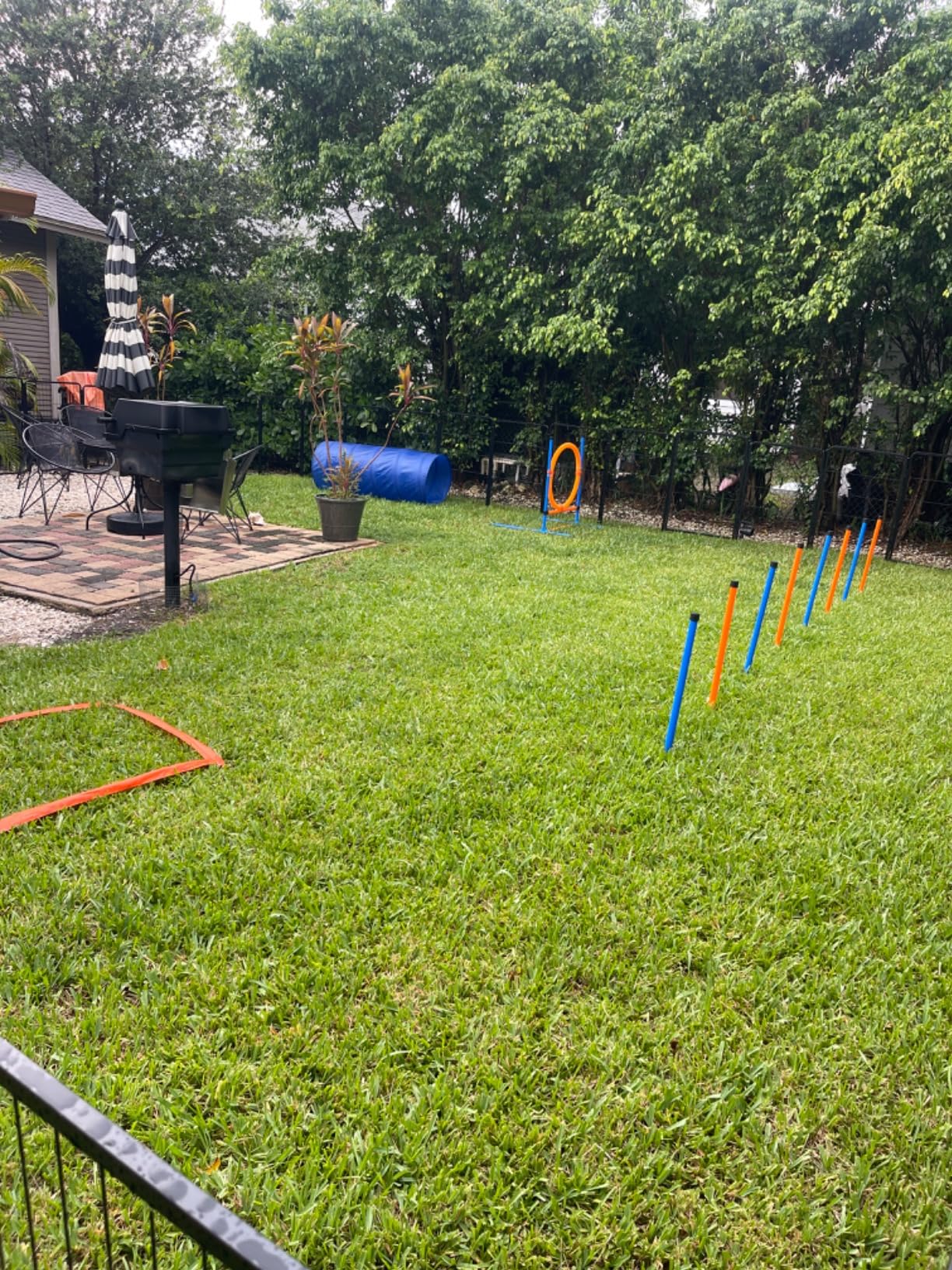
The JMMPOO starter kit is what I recommend to first-time dog owners who want to test whether agility training is right for them before investing in professional-grade equipment. The 60-piece set includes a tunnel, eight weave poles, adjustable hurdles, jump rings, a pause box, whistle, balls, and a treat pouch. That is a remarkable variety at this price point.
Our team tested this kit with a rescue beagle who had never done any structured activity. Within two weeks of short daily sessions, her confidence and coordination improved noticeably. The variety of obstacles kept training sessions engaging, and the lightweight design meant we could easily rearrange the course to keep things fresh.
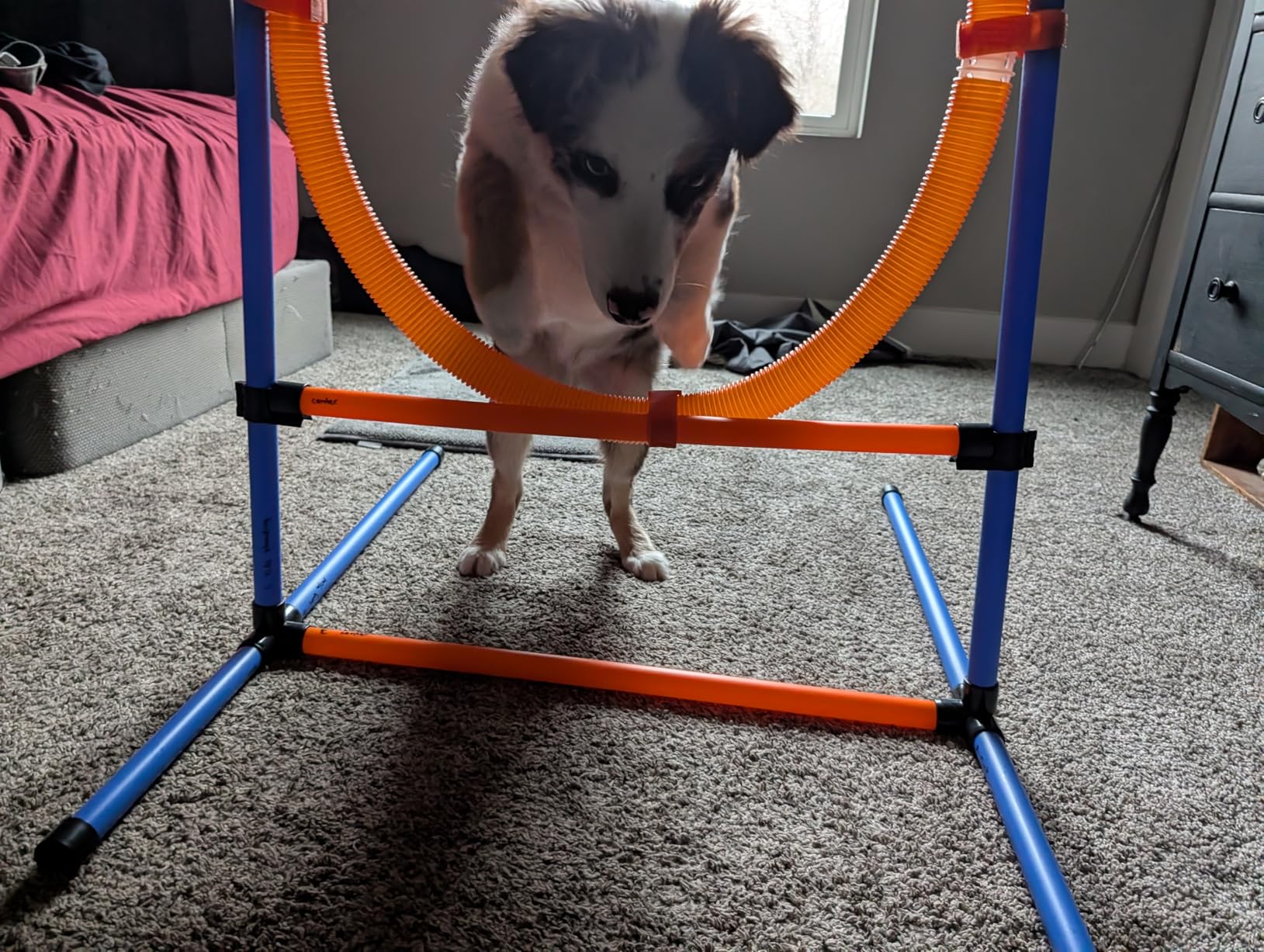
The ABS plastic construction is where the cost savings show. The weave poles are lighter than premium alternatives, and the jump poles occasionally separate at the connector during enthusiastic runs. These are not deal-breakers for casual backyard use, but they explain the lower price compared to metal or competition-grade equipment.
The tunnel is the strongest piece in the kit. Made from 190T tear-resistant polyester, it survived three weeks of daily use with a determined terrier who treated it as a personal hideout. The collapsible design makes storage simple, and the included ground stakes hold reasonably well in firm soil.
What makes this ideal for first-time owners
The included whistle and treat pouch show that this kit was designed for owners new to training. You get the basic tools to start reward-based agility work without buying accessories separately. For dogs that need both physical and mental outlets, this pairs well with enrichment toys for indoor days.
When to upgrade from this starter kit
If your dog shows genuine aptitude and you want to pursue agility seriously, plan to upgrade individual pieces after about three to six months. The tunnel and pause box hold up well enough to keep, but the jump poles and weave poles will benefit from sturdier replacements. This kit is a gateway, not a long-term competition solution.
Buying Guide: Choosing the Right Dog Playground Equipment for Your Backyard
Selecting backyard dog playground equipment comes down to matching the gear to three factors. Your available space, your dog’s size and energy level, and your budget all shape which products will work best. I have seen owners overspend on commercial-grade equipment that overwhelms small yards, and I have seen budget kits fall apart in a single weekend with powerful breeds.
The goal is finding the sweet spot where durability, safety, and value meet your specific situation. Here are the factors that matter most when making that decision.
Available yard space and layout
Measure your usable space before buying anything. Agility tunnels need at least 25 feet of clear runway for a proper approach and exit. A-frame ramps require about 15 feet of depth. Tether tug toys need a circle of roughly 6 feet around the pole for safe play. Small backyards under 400 square feet are better suited to compact options like hurdle sets and splash pads rather than full courses.
Consider how the equipment fits into your existing yard use. If children share the space, look for equipment with no exposed stakes or wires. If you entertain outdoors, choose foldable or portable options that store easily between sessions.
Dog size, age, and physical condition
Equipment that works for a 15-pound terrier may be unsafe for an 80-pound shepherd. Check weight capacities carefully, especially for climbing and balance equipment. Puppies under 12 months should avoid high-impact jumping to protect developing joints. Senior dogs benefit from low-impact options like flat tunnels and gentle balance beams. For larger breeds specifically, our guide to toys for large breeds covers additional considerations.
Energy level matters as much as size. A calm senior Labrador may need only a tether tug and splash pad. A working-line border collie will need a full agility course to stay satisfied. Match the equipment variety to your dog’s drive, not just their body size.
Material quality and weather resistance
Backyard equipment faces sun, rain, temperature swings, and enthusiastic dog use. Look for these material features:
Alloy steel or powder-coated metal for frames and hurdles resists rust and holds shape. Fir or cedar wood provides natural weather resistance but needs periodic sealing. PVC thickness of 0.5mm or greater prevents nail punctures in water toys. Rotomolded plastic offers the best durability for commercial-grade climbing equipment. UV-resistant coatings on fabric tunnels prevent fading and material breakdown.
Safety features to verify
Rounded edges on all contact points protect dogs from cuts and scrapes. Anti-slip surfaces on ramps and beams prevent dangerous falls. Stable bases that do not require metal stakes are safer for shared yards. Non-toxic materials matter because dogs chew on equipment during play. Always check for sharp protrusions or loose hardware before each session.
Budget considerations across price ranges
You can build a functional backyard playground at almost any budget. Under 35 dollars, single obstacles like the HDP tunnel or Qufiona hurdles deliver excellent value. In the 50 to 100 dollar range, individual premium pieces like the PawHut seesaw or GRETMIX tether tug offer durability. From 100 to 200 dollars, complete sets like the koretech A-frame or Better Sporting Dogs course give you multiple training options. Beyond 200 dollars, you are entering commercial-grade territory suitable for home daycares or training facilities.
Surface and ground preparation
The ground beneath your equipment affects safety and durability. Grass provides natural cushioning but wears down in high-traffic areas. Mulch offers impact absorption but needs regular refreshing. Decomposed granite creates a firm, drainable surface ideal for agility work but requires initial installation effort. Concrete or patio surfaces work for flat equipment but need rubber matting under jumps and landing zones.
For puppy owners setting up first play areas, containment matters too. Our guide to dog playpens covers options for creating safe boundaries around your equipment zone.
FAQs
What can I put in my backyard to entertain my dog?
The best backyard entertainment options include agility tunnels for chasing, hurdle sets for jumping, A-frame ramps for climbing, tether tug toys for independent play, and splash pads for cooling fun. Combining two or three different equipment types keeps dogs engaged longer than any single item alone.
How do I build a dog playground in my backyard?
Start by measuring your space and choosing 2 to 3 equipment pieces that fit your dog’s size and energy. Install a base surface like grass or mulch, set up equipment with proper stakes or sandbags, and create a clear path between obstacles. Always leave enough runway for safe approaches and exits.
What is the best thing to put on the ground for a dog run?
Grass works for light use, but decomposed granite or rubber mulch handles heavy traffic better. For high-impact zones under jumps, add rubber matting over any hard surface. Avoid gravel and sharp rocks that can injure paw pads during active play.
What outdoor toys are good for dogs to play alone?
Tether tug toys, durable chew stations, and treat-dispensing puzzle toys let dogs entertain themselves safely. Splash pads also work for solo water play in summer. Avoid leaving rope toys unattended with heavy chewers who could swallow strands.
How much space do I need for dog playground equipment?
A basic setup with one tunnel and two hurdles needs about 200 square feet. A full agility course requires 400 to 600 square feet. Always add 5 to 10 feet of clearance around each obstacle for safe approaches, and consider how the space functions when equipment is not in use.
Final Thoughts on Backyard Dog Playground Equipment
Building a backyard playground for your dog is one of the most rewarding investments you can make in their health and happiness. The best dog playground equipment for backyards combines safety, durability, and engagement in proportions that match your specific dog and space.
For most owners, starting with the Better Sporting Dogs complete agility set gives you the widest range of training options. If budget is the priority, the HDP tunnel and Qufiona hurdles deliver exceptional value. And for solo play during workdays, the GRETMIX tether tug keeps dogs active when you cannot be outside.
Whatever you choose, the time you spend introducing your dog to new equipment strengthens your bond and builds confidence that carries into every part of their life. Start small, observe what your dog enjoys most, and expand your backyard playground as their skills grow.