
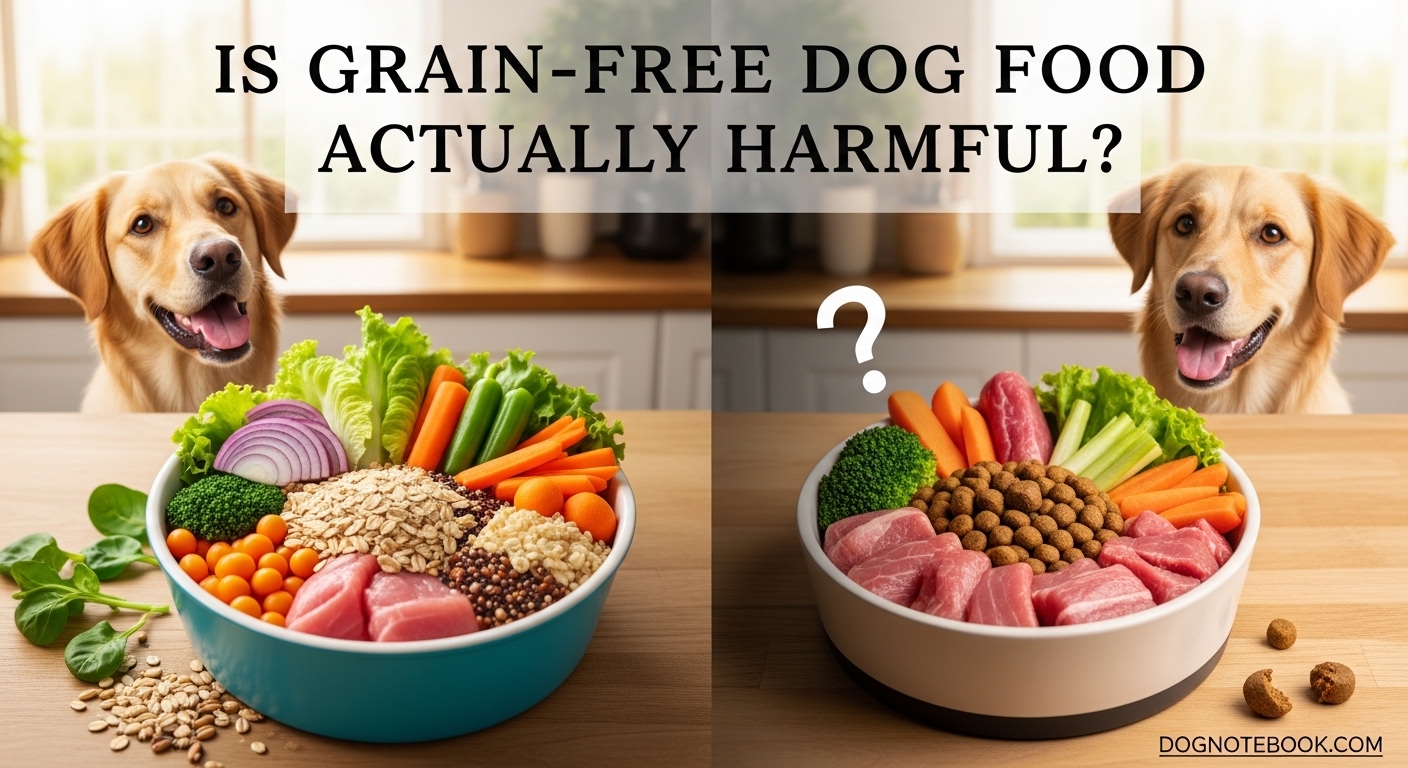
If you are wondering whether grain-free dog food is actually harmful, the short answer is: for most dogs, yes, it can be. Since 2026, the FDA has been investigating a link between grain-free diets and a serious heart condition called dilated cardiomyopathy, or DCM. Over 1,100 cases have been reported in dogs eating diets high in peas, lentils, other legume seeds, and potatoes as main ingredients.
I have spent months reviewing the scientific literature, FDA reports, and veterinary consensus on this topic. The picture is not simple, but the concern is real. Grain-free dog food was never designed with canine health in mind. It became popular because of clever marketing that made grains sound unhealthy. The reality is that most dogs digest grains just fine, and removing them may actually hurt your dog’s heart over time.
That said, grain-free food is not poison in a bowl. Some dogs with diagnosed grain allergies genuinely benefit from these diets. The problem is that millions of healthy dogs were placed on grain-free food for no medical reason, and that is where the risk lies.
In this guide, I will walk you through exactly what grain-free dog food is, the science behind the DCM controversy, what the FDA has found, and what you should do right now if your dog is eating grain-free kibble. I will also address the most common myths and give you a step-by-step plan for transitioning to a safer diet if needed.
Table of Contents
What Exactly Is Grain-Free Dog Food?
Grain-free dog food is any commercial dog food formulated without common grains like wheat, corn, rice, barley, oats, or rye. Instead of grains, these formulas use alternative carbohydrate sources, most commonly peas, lentils, chickpeas, potatoes, and sweet potatoes. Some brands also use tapioca, cassava, or various bean varieties.
It is important to understand that grain-free does not mean low-carb or high-protein. Most grain-free dog foods contain roughly the same amount of carbohydrates as grain-inclusive options. The carbs simply come from legumes and tubers instead of grains. This distinction matters because the specific substitute ingredients, particularly legumes, are what researchers believe may be causing problems.
Grain-free is also not the same as gluten-free. Gluten is a specific protein found in wheat, barley, and rye. A food can be gluten-free but still contain grains like rice or corn. Very few dogs actually have gluten sensitivities. The confusion between these terms has led many pet owners to buy grain-free food when they did not need to.
Why Grain-Free Became So Popular
The grain-free trend took off around 2026-12, driven by marketing that capitalized on human diet trends. Pet food companies promoted the idea that dogs are descended from wolves and wolves do not eat grain, so dogs should not either. This sounds logical on the surface but falls apart when you look at the science.
Dogs evolved alongside humans for thousands of years. During that time, they developed the genetic ability to digest starches far more efficiently than wolves can. A 2026 study published in the journal Nature found that dogs carry extra copies of the AMY2B gene, which produces amylase, the enzyme that breaks down starch. Wolves have 2 copies of this gene. Most dogs have anywhere from 4 to 30 copies. Dogs are not wolves when it comes to digestion. They have literally evolved to process grains.
Pet food companies also tapped into the “grains are fillers” myth, implying that corn, wheat, and soy were cheap, low-quality ingredients used to cut costs. In reality, grains provide essential nutrients including B vitamins, iron, fiber, and essential fatty acids. They are not fillers. They are nutritionally valuable components of a balanced canine diet.
What Ingredients Replace Grains?
Here is where the trouble begins. When you remove grains from dog food, you have to replace them with something. The most common replacements are:
- Peas and pea protein – Found in the vast majority of grain-free brands. Peas are cheap, high in protein, and easy to formulate with.
- Lentils – Another popular legume used as a carbohydrate and protein source.
- Chickpeas – Used less frequently than peas or lentils but still common in many formulas.
- Potatoes and sweet potatoes – These are tubers, not legumes, but they are also under FDA investigation.
- Tapioca and cassava – Root-based starches used in some formulas.
The common thread in the FDA investigation is that the foods most frequently associated with DCM cases contain high levels of legumes, specifically peas and lentils, listed among the first ingredients. This does not mean every dog eating these ingredients will develop heart problems. But the statistical correlation is strong enough that veterinarians and the FDA have taken it seriously.
The DCM Connection: Why Grain-Free Dog Food Raises Concerns
Dilated cardiomyopathy, or DCM, is a disease of the heart muscle. In dogs with DCM, the heart becomes enlarged and the walls of the heart chambers become thin and weak. The heart cannot pump blood effectively, which leads to fluid buildup in the lungs, lethargy, exercise intolerance, and eventually congestive heart failure. DCM is often fatal if not caught and treated early.
Historically, DCM was considered a genetic disease. Certain breeds, including Doberman Pinschers, Great Danes, Boxers, and Cocker Spaniels, were known to carry genetic predispositions to the condition. Veterinarians expected to see DCM in these breeds. But starting around 2026-19, cardiologists began seeing something unusual: DCM in breeds that had no genetic history of the disease. Golden Retrievers, mixed breeds, Labrador Retrievers, and other breeds not typically associated with DCM were showing up with enlarged hearts and reduced cardiac function.
When cardiologists started asking questions, a pattern emerged. A large number of these atypical DCM cases were eating grain-free dog food. Not just any grain-free food, but specifically diets where peas, lentils, other legume seeds, or potatoes were listed among the first ten ingredients. This was the beginning of what would become a major veterinary and regulatory investigation.
How Common Is DCM in Dogs on Grain-Free Diets?
The exact number of affected dogs is difficult to pin down for several reasons. The FDA’s reporting system is voluntary, meaning many cases likely go unreported. Some dogs may have subclinical DCM, meaning the disease is present but not yet causing visible symptoms. And many grain-free diets have been reformulated since the investigation began, making it harder to track outcomes.
What we do know is that between 2026 and 2026, the FDA received over 1,100 reports of DCM in dogs, and the vast majority of those dogs were eating grain-free diets. Some of these dogs showed improvement after switching to grain-inclusive food and receiving taurine supplementation, which strongly suggests a dietary cause rather than a genetic one. In fact, some dogs experienced partial or full reversal of their heart condition after dietary changes alone. This reversibility is one of the strongest pieces of evidence linking grain-free diets to DCM.
A study published in the journal PLOS ONE found that dogs eating grain-free diets had significantly lower blood taurine levels compared to dogs eating grain-inclusive food. Another study from the University of California, Davis, confirmed that some dogs with diet-associated DCM had taurine levels well below normal ranges.
Breed-Specific Risk Factors
While any dog can potentially develop diet-associated DCM, some breeds appear to be at higher risk. The breeds most frequently reported in FDA cases include:
- Golden Retrievers – By far the most commonly reported breed, likely because they are popular and may have a breed-specific taurine metabolism issue.
- Mixed breeds – The second largest group, showing this is not a breed-specific problem.
- Labrador Retrievers – Another commonly affected breed.
- French Bulldogs – Frequently reported in DCM cases.
- Doberman Pinschers – Already genetically predisposed to DCM, so grain-free diets compound their risk.
- German Shepherds, Cocker Spaniels, and Boxers – Also appearing in significant numbers in the reports.
If you own a Golden Retriever or any breed with known DCM history, most veterinary cardiologists recommend avoiding grain-free diets entirely. The risk simply is not worth it.
Symptoms of DCM in Dogs
One of the most troubling aspects of DCM is that it can progress silently for months before any visible symptoms appear. By the time you notice something is wrong, significant damage may already be done. Here are the signs to watch for:
- Exercise intolerance – your dog tires more quickly than usual or is reluctant to go on walks
- Coughing, especially at night or when resting
- Difficulty breathing or rapid breathing
- Lethargy and overall decreased energy
- Weight loss despite eating normally
- Fainting or collapsing episodes
- Swollen abdomen from fluid retention
If your dog is on a grain-free diet and shows any of these symptoms, see your veterinarian immediately. Ask specifically about DCM and whether an echocardiogram or blood taurine level test would be appropriate. Early detection makes a significant difference in outcomes.
The Taurine Deficiency Factor
Taurine is an amino acid that plays a critical role in heart function, vision, brain health, and immune system support in dogs. Unlike humans and cats, dogs can synthesize taurine internally from other sulfur-containing amino acids like methionine and cysteine. For a long time, veterinarians assumed that because dogs can make their own taurine, dietary taurine deficiency was not a concern.
The grain-free controversy changed that thinking. Researchers discovered that certain ingredients, particularly legumes like peas and lentils, appear to interfere with the body’s ability to absorb and utilize taurine. This can happen in several ways. Legumes contain compounds that may bind to bile acids in the intestine. Since taurine is conjugated with bile acids for excretion, increased bile acid loss means increased taurine loss. Essentially, the body is flushing taurine out faster than it can replace it.
Additionally, legume-based diets may be lower in the precursor amino acids, methionine and cysteine, that dogs need to synthesize taurine in the first place. So the diet provides less raw material for taurine production while simultaneously increasing the rate at which taurine is lost. It is a double hit.
Some dogs are genetically less efficient at producing taurine. Golden Retrievers, American Cocker Spaniels, and some other breeds have documented breed-specific taurine metabolism issues. When you combine a genetic predisposition with a diet that accelerates taurine loss, you get the conditions for diet-associated DCM.
Can Taurine Deficiency Be Fixed?
The good news is that in many cases, yes, taurine deficiency and even early-stage diet-associated DCM can be reversed. When affected dogs are switched to a grain-inclusive diet and given taurine supplementation, many show measurable improvement in cardiac function within weeks to months. Echocardiograms taken before and after dietary changes have shown hearts returning to more normal size and function.
This reversibility is actually one of the strongest arguments that grain-free diets are causally linked to DCM in some dogs. Genetic DCM does not reverse with diet changes. But diet-associated DCM often does. If you are concerned, ask your vet about a blood taurine level test. It is a simple blood draw that can tell you whether your dog’s levels are in the normal range.
However, not all damage is fully reversible. Dogs that have been on grain-free diets for years with advanced DCM may have permanent heart damage. This is why early detection and dietary change matter so much. The longer a dog stays on a problematic diet, the harder it becomes to undo the damage.
The FDA Investigation: What We Know So Far
The FDA’s investigation into grain-free dog food and DCM began in July 2026 and has been one of the most significant pet food safety inquiries in recent history. Here is what happened, what the agency found, and where things stand today.
Timeline of Events
In July 2026, the FDA issued its first public alert warning about a potential link between grain-free diets and DCM in dogs. The agency had been receiving reports from veterinary cardiologists across the country describing unusual cases of DCM in breeds not typically affected. The common thread was diet.
In June 2026, the FDA published an updated report naming 16 dog food brands most frequently associated with reported DCM cases. These brands were not being recalled or declared unsafe. The FDA was simply sharing data about which brands appeared most often in the reports. The list included several major grain-free and boutique brands.
Between 2026 and 2026, the FDA continued collecting reports and working with veterinary researchers to understand the mechanism behind the link. Studies at UC Davis, North Carolina State University, and other institutions provided growing evidence that legume-heavy diets were the primary concern.
In late 2026, the FDA updated its guidance to note that while the investigation was ongoing, the evidence continued to support a connection between certain diets and DCM. The agency stopped short of banning any products but urged pet owners to consult with veterinarians about their dog’s diet.
What the FDA Currently Recommends
The FDA has not issued a recall or ban on grain-free dog food. Their position is nuanced. They recommend that pet owners:
- Consult with a veterinarian before making diet changes
- Be aware of the potential risks associated with diets high in peas, lentils, potatoes, and other legume seeds
- Report any diagnosed cases of DCM to the FDA through their online reporting portal
- Consider switching to grain-inclusive diets if there is no medical reason for feeding grain-free
The FDA also encouraged pet food manufacturers to reformulate their products. Many companies have since reduced their reliance on peas and lentils or introduced grain-inclusive product lines. However, grain-free formulas remain widely available and heavily marketed.
Why Has Not the FDA Banned Grain-Free Dog Food?
This is a question I see frequently in online forums, and it is a fair one. The reason is that the FDA operates on evidence standards that require a clear demonstration of harm. While the correlation between grain-free diets and DCM cases is strong, proving a direct causal link in every case is complicated. Not every dog on a grain-free diet develops DCM. Genetic factors, breed predispositions, and individual metabolism all play roles.
The FDA also must balance public safety with market realities. An outright ban would remove food options for the small percentage of dogs that genuinely need grain-free diets due to diagnosed allergies. Instead, the agency has chosen to educate and inform, letting veterinarians and pet owners make case-by-case decisions.
Is Grain-Free Dog Food Actually Harmful?
Let me answer this directly since that is the question that brought you here. Grain-free dog food can be harmful for dogs that do not have a diagnosed medical need for it. The evidence linking high-legume grain-free diets to DCM is substantial. Veterinary cardiologists, the FDA, and major veterinary organizations including the American Veterinary Medical Association have all acknowledged the risk.
However, the word “can” is doing important work in that sentence. Grain-free food is not guaranteed to harm every dog that eats it. Many dogs have eaten grain-free diets for years without developing DCM. But the risk is real, it is documented, and most veterinarians agree it is an unnecessary risk for dogs without food allergies.
When Grain-Free Is Appropriate
There are legitimate reasons to feed grain-free food, but they are narrower than most people think. Grain-free diets are appropriate when:
- Your dog has a diagnosed grain allergy confirmed by a veterinarian. True grain allergies in dogs are rare, accounting for roughly 1% of all food allergies in dogs. Most food allergies in dogs are triggered by animal proteins like chicken, beef, or dairy, not grains.
- Your veterinarian has recommended a grain-free diet for a specific medical condition. This might include certain gastrointestinal conditions or as part of a controlled elimination diet.
- Your dog has been tested and confirmed to have sensitivities to multiple grains. This requires proper allergy testing or an elimination diet trial, not just guessing.
What is not a valid reason: “My friend recommended it,” “the pet store employee said it was better,” or “I read online that grains are bad.” These are how most dogs end up on unnecessary grain-free diets.
When Grain-Free Is Harmful
Grain-free food presents unnecessary risk when fed to healthy dogs with no medical need. This describes the vast majority of dogs currently eating grain-free food. A survey by the Pet Food Institute found that nearly 44% of dog owners had tried grain-free food, but only a small fraction of those dogs had any diagnosed grain sensitivity.
The risk is compounded for certain breeds. If you have a Golden Retriever, Doberman Pinscher, Great Dane, Boxer, Cocker Spaniel, or any breed with known DCM predisposition, feeding grain-free food is particularly inadvisable. These dogs already face elevated DCM risk from genetic factors. Adding a diet that may further stress their heart is stacking risk on top of risk.
Common Myths vs Facts About Grain-Free Dog Food
Misinformation about grain-free dog food is everywhere. Let me address the most common myths I encounter.
Myth: Dogs Are Wolves and Should Not Eat Grains
Fact: Dogs and wolves diverged genetically between 15,000 and 40,000 years ago. During thousands of years of domestication, dogs developed the ability to digest starches far more efficiently than wolves. Dogs produce significantly more amylase, the enzyme that breaks down starch, than wolves do. A dog’s digestive system is not the same as a wolf’s. This is settled science.
Myth: Grain-Free Means Higher Protein and Better Quality
Fact: Removing grains does not automatically increase protein content. Most grain-free foods replace grains with peas and lentils, which do add some protein, but it is plant protein, not animal protein. Dogs utilize animal protein more efficiently than plant protein. A quality grain-inclusive food with high animal protein content is nutritionally superior to a grain-free food loaded with pea protein.
Myth: Corn, Wheat, and Soy Are Just Cheap Fillers
Fact: Grains provide real nutritional value. Corn is a source of linoleic acid, vitamin E, and beta-carotene. Wheat provides B vitamins and fiber. Rice is highly digestible and gentle on the stomach. These ingredients contribute to a complete, balanced diet. “Filler” is not a scientific term. In veterinary nutrition, there is no such thing as a filler ingredient. Every ingredient in a well-formulated dog food serves a nutritional purpose.
Myth: Grain-Free Will Cause Heart Problems Immediately
Fact: DCM develops over time, sometimes over years. A dog that has been on grain-free food for a month is not in immediate danger. The risk accumulates with long-term feeding. This is why many dogs appeared healthy for years before developing symptoms. The damage was building slowly in the background. If your dog is currently on grain-free food, you have time to make a safe, gradual transition. There is no need to panic.
How to Safely Switch Away From Grain-Free Dog Food
If you have decided to transition your dog away from grain-free food, do it gradually. A sudden diet change can cause gastrointestinal upset, including diarrhea, vomiting, and loss of appetite. Here is the approach most veterinarians recommend.
The 7-to-10 Day Transition Method
Over the course of 7 to 10 days, gradually increase the proportion of the new grain-inclusive food while decreasing the grain-free food.
- Days 1-2: 75% old food, 25% new food
- Days 3-4: 50% old food, 50% new food
- Days 5-6: 25% old food, 75% new food
- Day 7 and beyond: 100% new food
Monitor your dog’s stool quality throughout the transition. If you notice loose stools or diarrhea, slow down. Extend each phase by an extra day or two. Some sensitive dogs may need up to two weeks to fully adjust.
Choosing a Grain-Inclusive Food
Look for brands that meet World Small Animal Veterinary Association, or WSAVA, guidelines. These brands have veterinary nutritionists on staff, conduct feeding trials, publish research, and maintain strict quality control. The brands most frequently recommended by veterinary nutritionists include:
- Purina Pro Plan – Widely recommended with extensive feeding trial data
- Royal Canin – Breed-specific and life-stage-specific formulas with strong research backing
- Hill’s Science Diet – Developed by veterinary nutritionists with decades of research
- Iams/Eukanuba – Established brands with published nutritional research
These brands are not exciting or trendy. They are not marketed with buzzwords or fancy packaging. But they have the science, the testing, and the veterinary backing that boutique brands often lack. When it comes to your dog’s heart health, solid science beats clever marketing every time.
When to Talk to Your Vet
If your dog has been eating grain-free food for more than a year, or if you have a breed that is predisposed to DCM, schedule a vet visit before making any changes. Your vet may recommend a baseline blood taurine level test or even an echocardiogram to check your dog’s heart function before transitioning diets. This is especially important for Golden Retrievers, Dobermans, and other at-risk breeds.
If your dog is already showing symptoms like exercise intolerance, coughing, or lethargy, do not wait. Seek veterinary care immediately. Mention the grain-free diet and ask specifically about DCM screening. Early intervention can make a significant difference in your dog’s prognosis.
FAQ
Why do vets not recommend grain-free dog food?
Veterinarians do not recommend grain-free dog food for most dogs because of the documented link between high-legume diets and dilated cardiomyopathy (DCM), a serious heart condition. The FDA has received over 1,100 reports of DCM in dogs eating grain-free food. Most dogs do not have grain allergies and receive no benefit from grain-free diets, making the cardiovascular risk unnecessary.
Is it bad for dogs to eat grain-free?
For dogs without a diagnosed grain allergy, grain-free food carries unnecessary risks. Diets high in peas, lentils, and other legumes have been linked to taurine deficiency and dilated cardiomyopathy. Dogs with confirmed grain allergies can benefit from grain-free food under veterinary supervision, but this applies to roughly 1% of dogs with food allergies.
What are the signs of DCM in dogs?
Signs of dilated cardiomyopathy in dogs include exercise intolerance, coughing especially at night, difficulty breathing, lethargy, weight loss despite normal eating, fainting episodes, and a swollen abdomen from fluid buildup. DCM can progress silently for months before symptoms appear, so dogs on long-term grain-free diets should be screened by a veterinarian.
Should I switch my dog off grain-free food immediately?
You should transition away from grain-free food gradually over 7 to 10 days to avoid gastrointestinal upset. Start by mixing 25% new grain-inclusive food with 75% old food, then adjust the ratios every two days. If your dog shows symptoms of heart disease, see your vet immediately rather than making a sudden diet change on your own.
Does grain-free dog food cause heart problems in all dogs?
No, not every dog on a grain-free diet will develop heart problems. However, the risk is documented and significant. Over 1,100 cases of DCM have been reported in dogs eating grain-free diets, and many showed improvement after switching to grain-inclusive food. Breeds like Golden Retrievers, Dobermans, and mixed breeds appear most affected.
Conclusion
Grain-free dog food is not inherently evil, but for the vast majority of dogs, it presents an unnecessary risk with no corresponding benefit. The FDA investigation, the veterinary consensus, and the growing body of research all point in the same direction: diets high in legumes like peas and lentils may contribute to taurine deficiency and dilated cardiomyopathy in dogs.
If your dog does not have a diagnosed grain allergy, there is no good reason to feed grain-free food. Quality grain-inclusive diets from WSAVA-compliant brands like Purina Pro Plan, Royal Canin, and Hill’s Science Diet provide complete nutrition backed by actual feeding trials and published research.
Talk to your veterinarian. Ask about your dog’s specific needs. If you are currently feeding grain-free, plan a gradual transition to a grain-inclusive diet. Is grain-free dog food actually harmful? For most healthy dogs, the evidence says yes, the risk is real and the benefit is not. Make the switch. Your dog’s heart will thank you.