
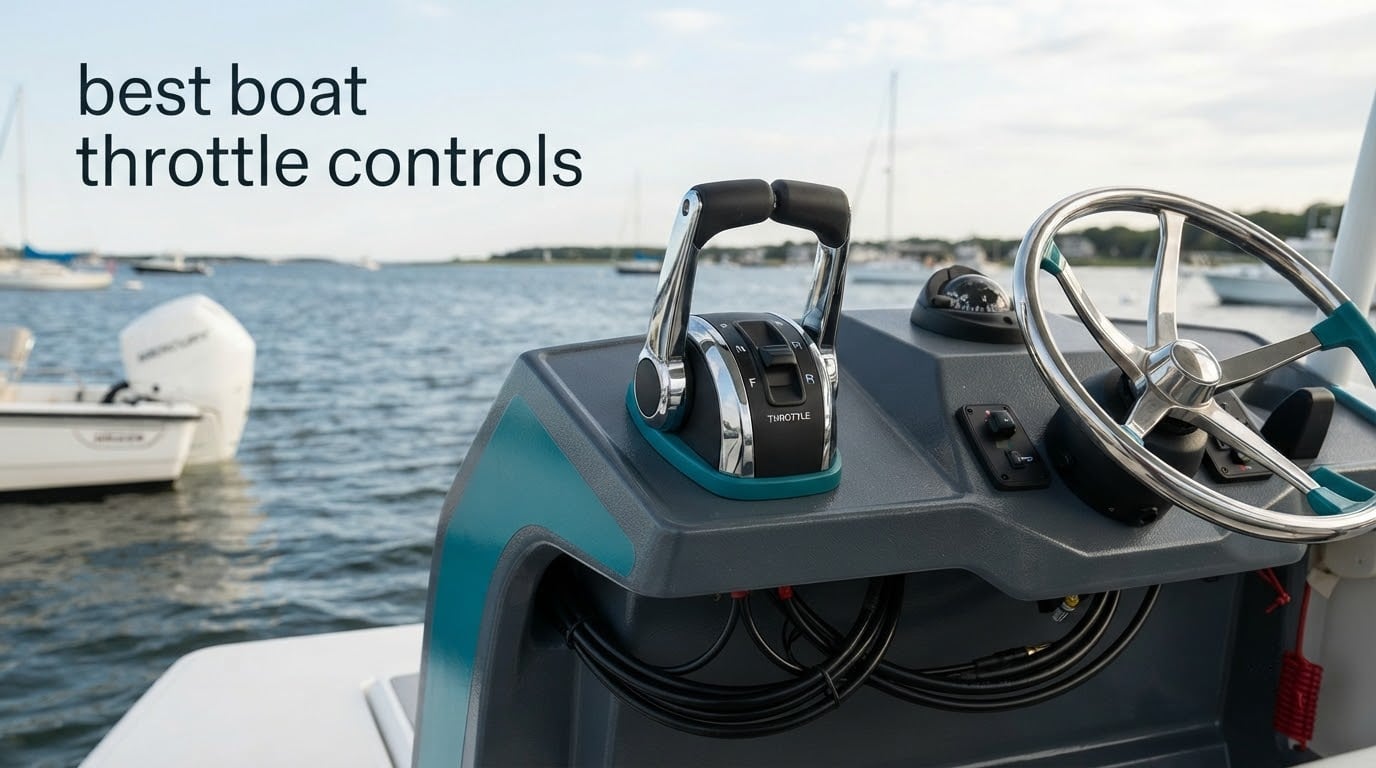
The throttle control on your boat is the single most-used piece of hardware at the helm. It is where your hand tells the engine what to do, and once it starts to slip, stick, or lose its neutral detent, every trip becomes a white-knuckle affair. After spending more time than we would like admitting on helm boxes that were one season past due, we pulled together the best boat throttle controls you can actually buy right now.
Most replacement searches start with the wrong question. People ask which brand is best, when the real question is which control matches the box that is already bolted to your console. A Yamaha 703 harness and a Mercury 8-pin Gen I plug are not interchangeable, and a push-to-open cable will not thread into a pull-to-open opening no matter how close the listing looks.
So this guide does two things. It walks you through how to identify the control you already own, then it reviews ten side mount, binnacle, single lever and twin lever options across Yamaha, Mercury, Evinrude, Johnson and universal fits. We leaned on verified owner ratings, the OEM part numbers stamped on real boxes, and the failure modes owners actually report rather than the marketing copy.
We also covered the adjacent gear that lives at the same helm, including the helm seating we rate for long days on the water and the boarding ladders worth having if you swim off the transom. Now, the controls themselves.
Table of Contents
Top 3 Best Boat Throttle Controls for 2026

Rupse Yamaha 703-48205 Push Open
- 10-pin 703 wiring set
- 16.7 ft
- Reversible handle
- adjustable friction
- Key switch with push-to-choke
- Handles 40-250 hp electric-start Yamaha

POWEROB TEC 881170A15 Gen I
- Fits 8-pin and 12-pin Mercury
- Fits 2-stroke Gen I setups
- 5m wiring set
- Integrated key switch
- Handle power trim switch

VEVOR 881170A15 Mercury PT
- Die-cast aluminum housing
- 8-pin and 4-pin plugs
- 16.3 ft wiring set
- Trim and tilt up/down control
- Emergency stop lanyard
Quick Comparison of All 10 Boat Throttle Controls
| Product | Specifications | Action |
|---|---|---|
| Rupse 703-48205 Push Open Yamaha |
|
Check Latest Price |
| POWEROB TEC 881170A15 Gen I |
|
Check Latest Price |
 POWEROB TEC 5006180 POWEROB TEC 5006180 |
|
Check Latest Price |
 Seachoice Twin Lever 28401 Seachoice Twin Lever 28401 |
|
Check Latest Price |
 Uflex B49 Two Lever Uflex B49 Two Lever |
|
Check Latest Price |
 POWEROB TEC 704-48205-P1 POWEROB TEC 704-48205-P1 |
|
Check Latest Price |
 SeaStar Xtreme CHX8051P SeaStar Xtreme CHX8051P |
|
Check Latest Price |
 SeaStar CH5200P Twin S SeaStar CH5200P Twin S |
|
Check Latest Price |
 Marpac 314295-111-1 Marpac 314295-111-1 |
|
Check Latest Price |
| VEVOR 881170A15 Mercury PT |
|
Check Latest Price |
How to Identify the Boat Throttle Control You Already Own
Almost every wasted marine purchase in this category starts with guessing. Spend ten minutes identifying the control you have and you can buy with confidence instead of rolling dice on a photo listing.
Start at the connector. Follow the wiring from the back of the control box to the engine plug and count the pins. A 10-pin plug points to the Yamaha 703 family of harnesses, an 8-pin Gen I plug points to older Mercury 2-stroke setups, and a 5-pin plug usually means a basic universal or an early OMC arrangement. The VEVOR box in our list at number 10 actually ships with both 8-pin and 4-pin plugs for exactly this reason.
Next, find the stamped part number. Most control boxes have an OEM equivalent number cast or printed on the underside or back plate. The common ones you will run into are 703-48205 and 704-48205 for Yamaha, 881170A15 for Mercury PT 2-stroke, and 5006180 for Evinrude and Johnson. The Marpac unit in this list is built around 314295-111-1, which covers a much wider spread of brands.
Then check the cable configuration, which is the detail most listings bury. A push-to-open box has a lever arrangement that opens the throttle as the lever moves forward, while a pull-to-open box does the opposite. Carbureted engines on specific brands are particular about this, and a mismatch shows up as an engine that will not hold a setting or will not start.
Finally, measure your console space and note how many engines you are controlling. Single-engine pontoons and center consoles are straightforward. Twin-engine boats and dual-station flybridge helms need a box rated for two engines or a selector, and that is a different product category from everything in our list of ten.
1. Rupse Outboard Remote Control Box for Yamaha 703-48205, Push Open
- Largest verified review base in this group at 119 ratings
- Drop-in for the Yamaha 703-48205 box
- Reversible handle for port or starboard install
- Adjustable throttle friction screw
- Key switch with push-to-choke
- Cable opening may need light filing to seat properly
- Handedness is not obvious from the listing
- Occasional early failures reported
This is the box we keep coming back to for Yamaha single engines, and the reason is simple: it is the most tested option in this group. With 119 verified ratings averaging 4.2 out of 5, it has a deeper owner history than anything else on this list, and that history is mostly positive. Owners describe smooth shifting, a throttle lever that feels properly damped, and an install that most of them finished in an afternoon.
It is built as an equivalent of the Yamaha 703-48205, which is the workhorse control on electric-start four-stroke Yamaha outboards from the T8 through the F225 range and beyond. The 10-pin wiring set measures 16.7 ft, which is long enough to reach the transom on most pontoons and center consoles without stretching the run. The key switch includes a push-to-choke position, so cold starts are handled from the helm.
The details that matter day to day are all present. There is a forward and reverse lever with a fast-idle position, a thumb-operated trim and tilt switch on the handle, a shut-off lanyard and clip for emergency ignition cut-off, and an adjustable throttle friction screw so you can tune the feel to your preference. The handle is reversible, so the same box handles a port or starboard console layout.
Two caveats come up repeatedly in owner feedback. First, the control cable opening occasionally needs a light file to seat the clamp properly, which is a five-minute fix with a round file but catches first-time installers out. Second, the listing does not spell out the handedness clearly enough, so confirm before ordering. A smaller group of owners report units failing after a few months of use.
Will the Rupse 703 control fit my Yamaha?
It fits electric-start Yamaha outboards running the 703-48205 harness, which covers a wide band of four-stroke engines from 40 hp through 250 hp. If your engine is a two-stroke with a different plug pattern, or if your boat has dual engines, this is not the box.
Check the connector before you order. If you count 10 pins at the engine end and your engine is electric start, you are looking at the right harness family. Bring the old control with you to a marine supply counter if you want a second opinion before spending a Saturday on the install.
Is the wiring set long enough for a pontoon?
At 16.7 ft, it covers the helm-to-transom run on most pontoons and single-engine center consoles without a splice. Longer center consoles and boats with a raised helm can push past that, which is the main reason to measure your route before ordering rather than after.
The harness tolerance is a good reason to replace cables at the same time if yours are more than a few seasons old. A control box is a mechanical improvement that gets partly cancelled by a stretched cable that will not hold neutral under power.
2. POWEROB TEC 881170A15-4000 Gen I Side Mount Control for Mercury 2-Stroke
881170a15-4000 side mount Gen I for mercury outboard engine throttle control box 2-stroke 8pin
- Direct fit for classic Gen I Mercury setups
- 107 verified ratings
- Side mount saves console space
- Adjustable shift lever placement
- Handle trim and tilt switch is the most common failure point
- Needs mechanical experience for cable setup
- 90-day manufacturer warranty
If your boat is a classic Mercury 2-stroke with a Gen I harness, this is the most direct replacement in our group and the price undercuts most of the field. It rates 4.0 out of 5 from 107 verified ratings, and the feedback pattern is consistent: buyers treat it as a functional swap rather than an upgrade.
The design is pull-to-open, side mount, and it works with both 8-pin and 12-pin Mercury harnesses, which widens the range of older boats it will serve. The wiring set is 5 m, roughly 16.4 ft, which again clears most transom runs. A key switch is built in, and the handle carries a power trim switch so you are not reaching for a separate panel control every time you want to lift the bow.
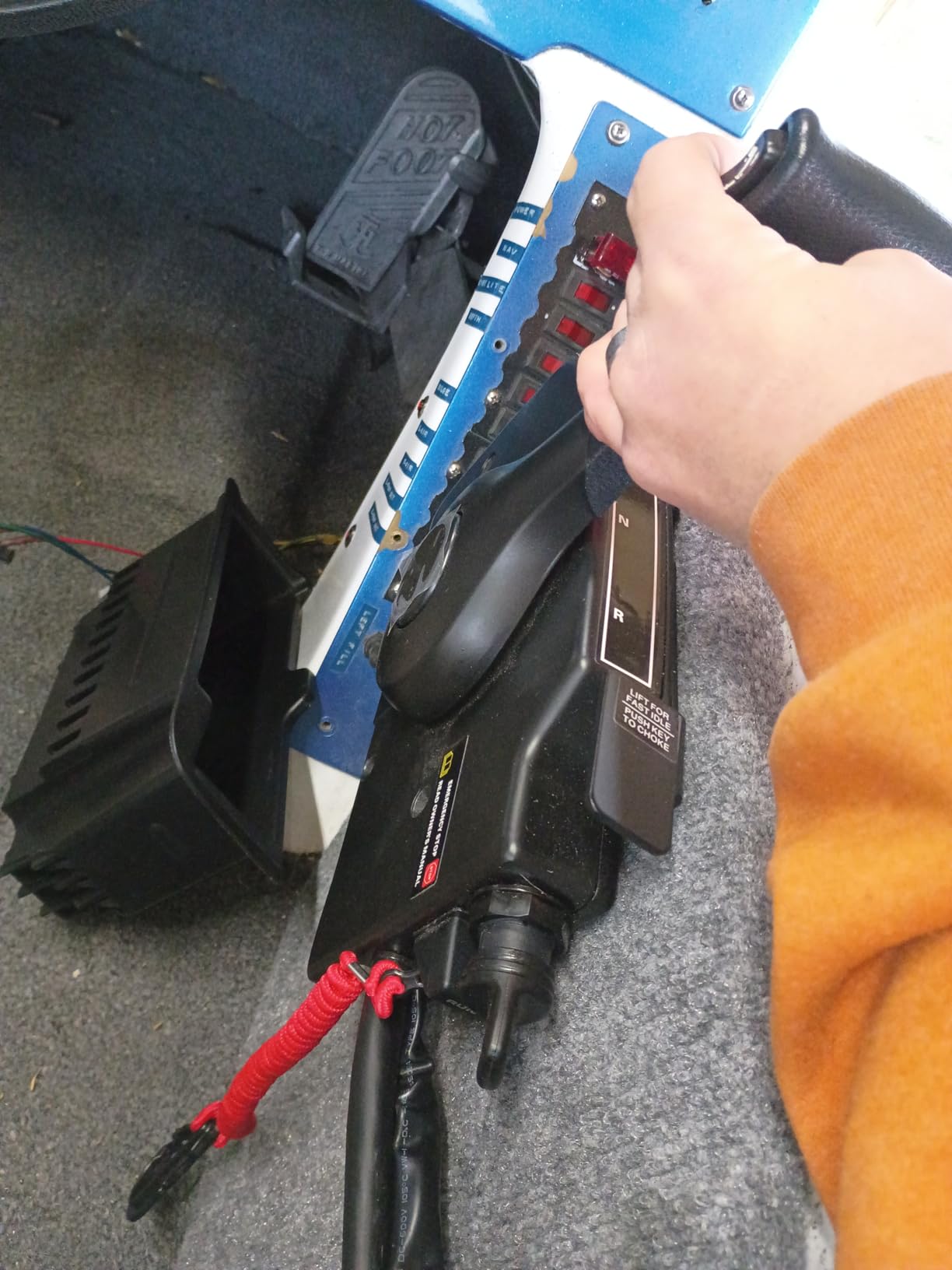
Side mounting is the practical win on tight consoles. The footprint is small, and the box sits out of the way rather than taking a full binnacle cutout. That matters on older center consoles where the original box is larger than the current dash layout wants to allow.
Two honest drawbacks. The handle trim and tilt switch is the single most common failure point in owner feedback, and several owners have replaced it themselves rather than returning the box. The manufacturer warranty is 90 days, which is short, and the cable and wiring setup does want some mechanical experience behind it.
Is this control a real 881170A15 replacement?
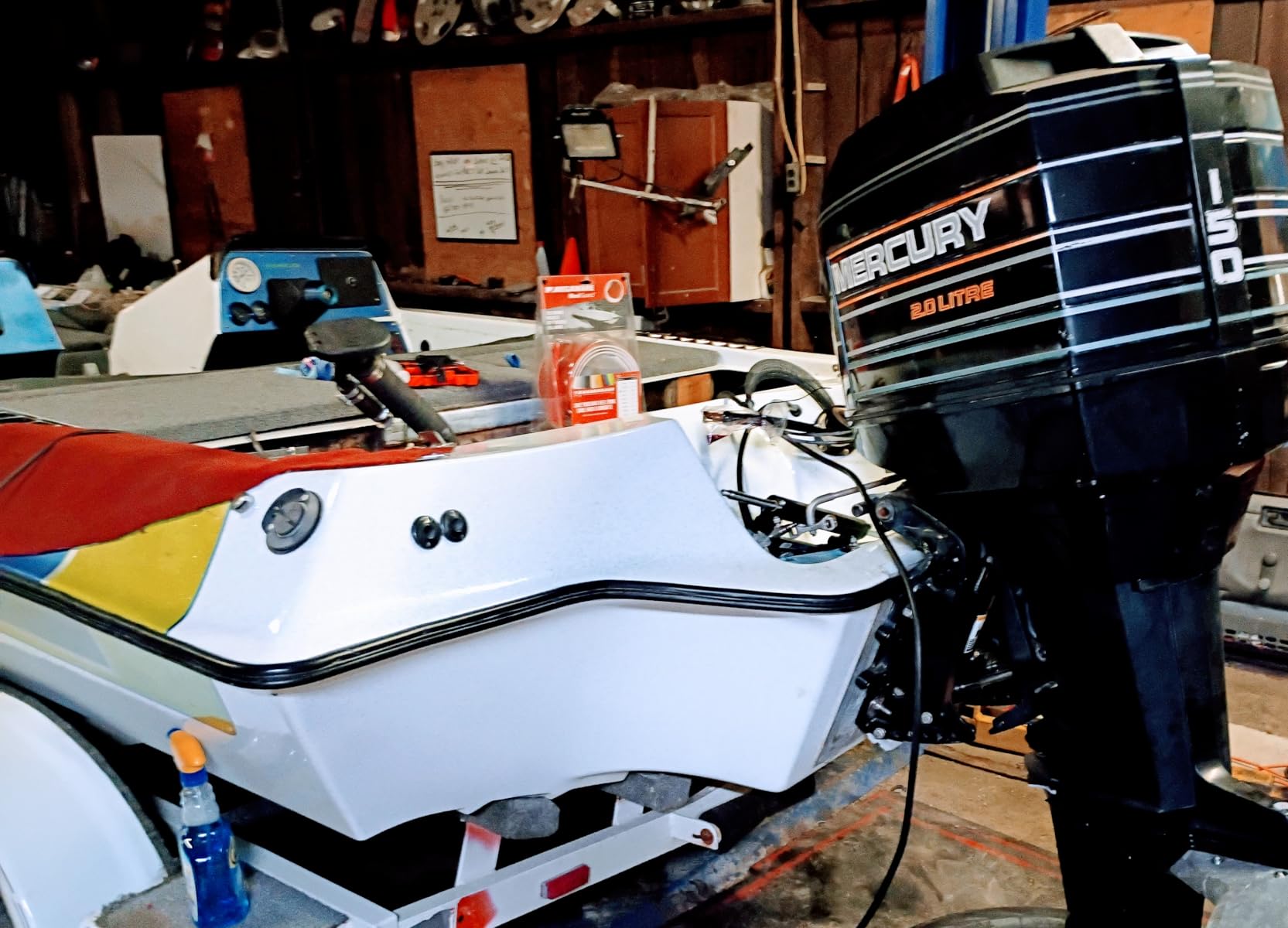
It is built as an equivalent of the 881170A15, the Mercury Gen I side mount control used on a lot of 2-stroke and early 4-stroke rigs. If your engine plug is 8-pin or 12-pin Gen I, the wiring side lines up. If you have a DTS engine or a later 10-pin arrangement, look elsewhere.
Because it is pull-to-open, match your existing cables. Owners running the wrong configuration report levers that feel correct but do not hold position, and that is a cable problem rather than a box problem.
How difficult is the installation?
Plan on a few hours with hand tools. The mechanical work is straightforward, but setting the cable travel so the neutral detent lines up with the transmission takes patience, and a mistake there means the engine starts in gear.
If you have never rigged a control before, budget a full day and read the forum consensus first. Owners on r/boating treat Morse and Teleflex as the reference standard for build quality, and they are the names most often recommended for a first-time rig because the documentation and neutral detent geometry are well understood.
3. POWEROB TEC 5006180 Side Mount Control for Evinrude and Johnson
Marine remote control box 5006180 with key switch suitable for Evinrude Johnson OMC BPR outboard engine side mounted Push to open
- Correct replacement for 5006180 boxes
- Bolts to existing Evinrude and Johnson cables
- Neutral lock plus warning horn
- Thumb-operated trim switch
- Key switch failures reported
- High-idle lever bushings can strip or loosen
- Reverse gate can stick if the linkage fails
This is the pick for anyone replacing a 5006180 on an Evinrude or Johnson, including OMC-era setups on outboards from 1996 onward. It holds a 4.0 rating across 90 verified reviews, and the fit, not the feel, is what owners talk about most.
Two features set it apart from a plain drop-in. The neutral lock holds the transmission in neutral so a wave or a bumped knee cannot shift it out, and a warning horn sounds when you engage it. The handle also carries a thumb-operated fine trim adjustment switch, which gives finer control than the older coarse rocker arrangement on many OMC controls.
Installation is a bolt-to-existing-cables job for anyone comfortable with a socket set. It mounts on either side of the console, so the same unit covers port and starboard layouts, and the body is aluminum, which matters more than people expect on a boat that lives in salt water.
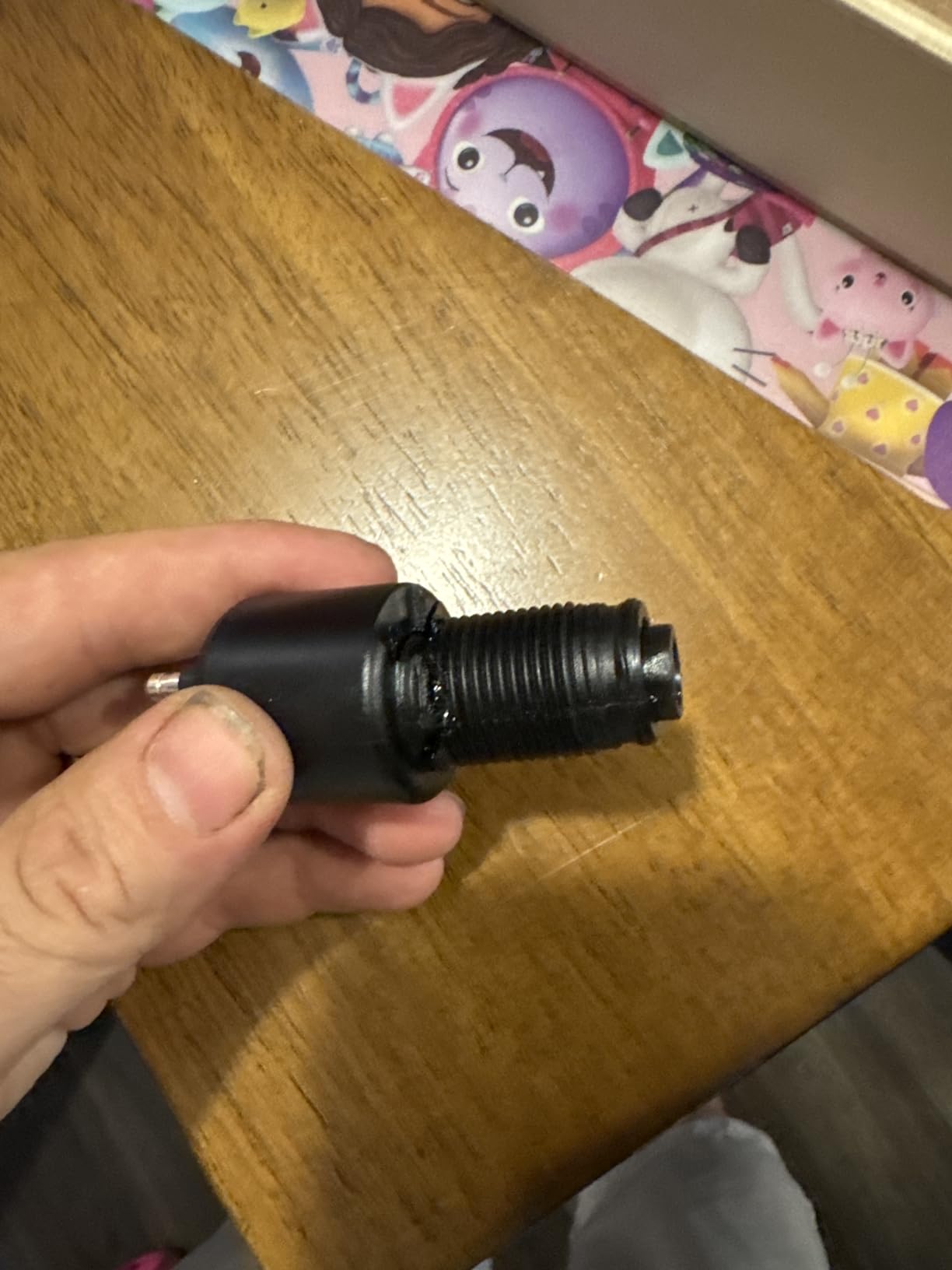
The complaint group is consistent enough to plan around. Key switch failures are the most cited, followed by high-idle lever bushings that strip or loosen with use, and a reverse gate that can stick if the internal linkage wears. A few of those reports describe being stranded until a tow got them home, so keep a spare key switch and a set of levers on hand if your boat is your only way off the water.
Will this work on my older OMC outboard?
It is rated for 1996 and newer outboards, which covers most OMC-era engines still in service. Older pre-1996 OMC controls used different cable geometry, so check the year of your engine and the shape of the existing shift cable opening before ordering.
Universal coverage in this category always has an edge. This one is honest about it, and for an Evinrude or Johnson owner the 5006180 equivalence is the whole value proposition.
What is the neutral lock actually for?
It is a mechanical detent that holds the shift lever in neutral until you deliberately pull it out. On a boat that slams into a wake, that is the difference between a control you consciously use and one that shifts on its own.
Combined with the warning horn, it gives you an audible cue when the control is being held out of neutral. On a small family boat with a new operator at the helm, both features earn their place.
4. Seachoice Twin Lever Control, Chrome-Plated Brass
Seachoice Twin Lever Control, Chrome-Plated Brass, Red and Black Knobs, 8-5/16 In. Tall
- Solid chrome-plated brass construction
- Works with standard 33C control cables
- Red and black knobs identify each engine
- Bolt-on upgrade path from single-lever controls
- Internal detent spring can rust over several seasons
- Installation directions are thin
- Not intended for dual-station use
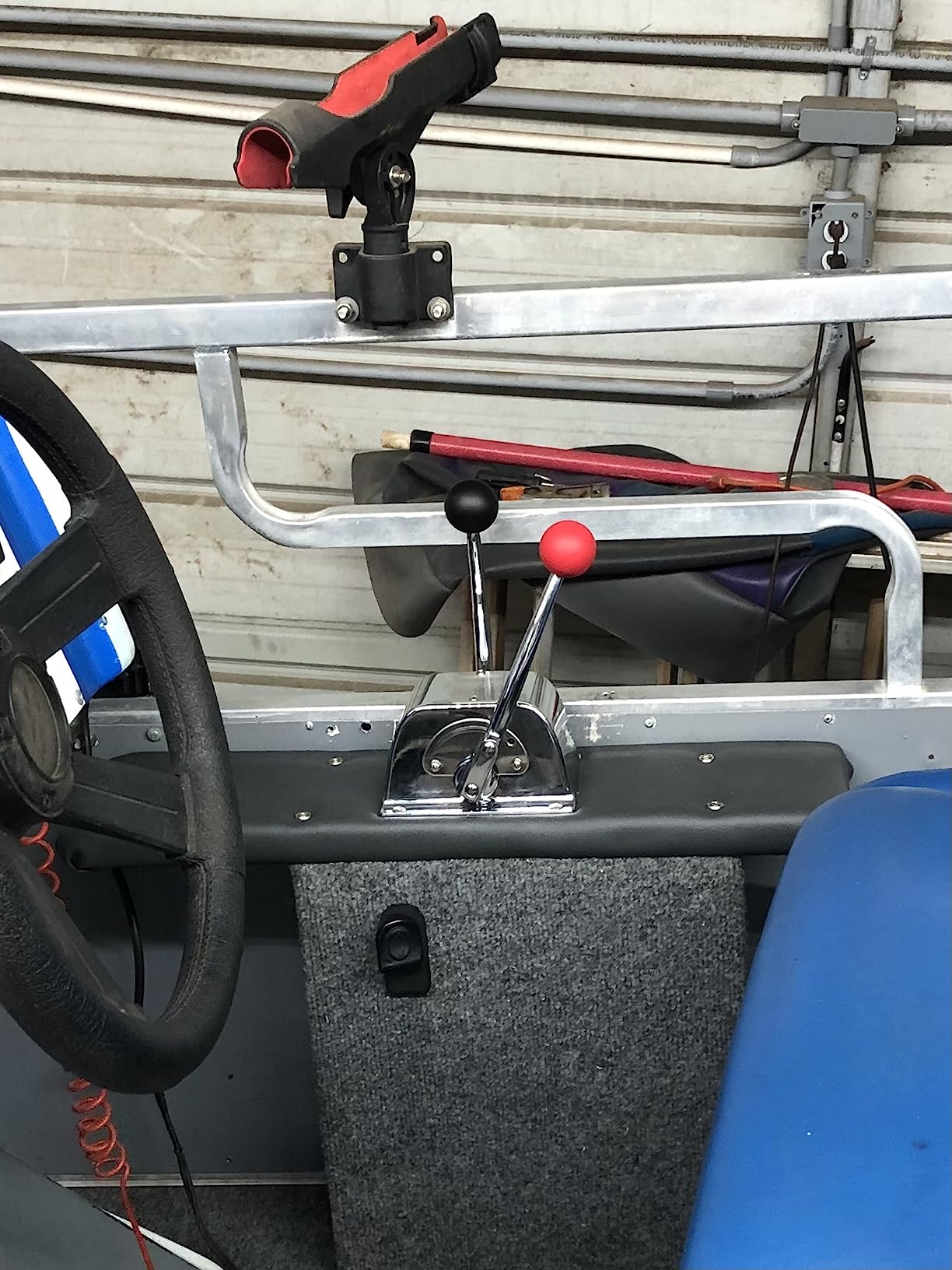
The Seachoice twin lever is the answer when you want separate clutch and throttle levers, a look that suits an older pontoon or runabout, and a control built from metal rather than plastic. It has been available since 2007, which means there is a long history of owners putting it on boats of every size.
Separate levers give finer control over launch and docking than a single lever can. You can feather the throttle while holding the clutch in, which is exactly the technique that makes backing a trailered boat easier. On single-screw inboard setups, the Downeast Boat Forum discussion puts the tradeoff plainly: twin levers are more work to master, but they give a finer clutch and throttle separation than a combined lever.
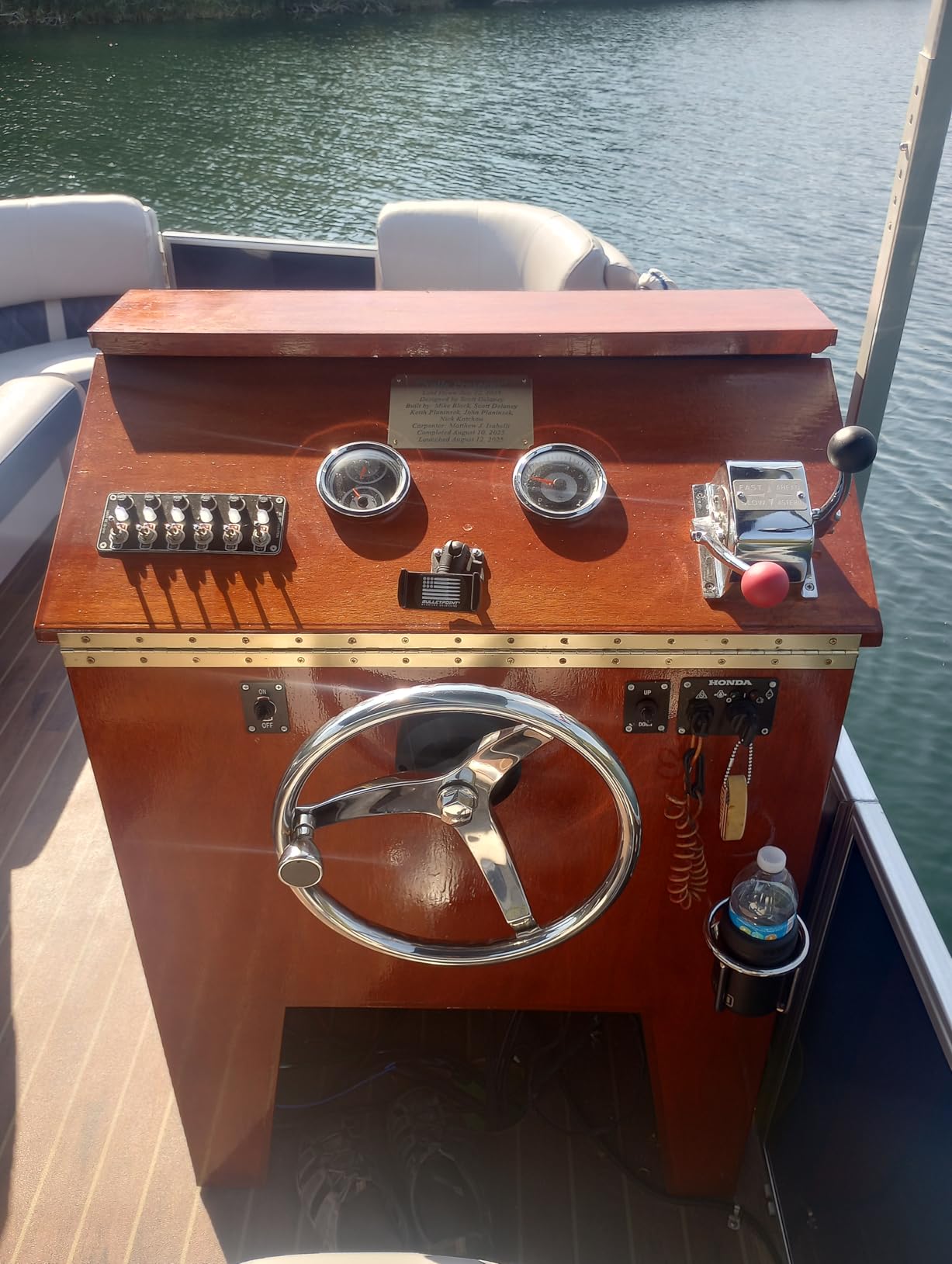
It is designed around 33C type control cables, which are the most widely available marine cable standard, so parts are easy to find. Brass shims and cable clamps come in the box. The body measures 8-5/16 inches tall with a base of 4-5/16 by 5-7/16 inches, and it is ambidextrous, so port and starboard mounting are both straightforward.
The red and black knobs are not decoration. On a twin-engine setup they let the helmsman identify port and starboard at a glance, which is a genuine safety improvement when you are backing down a ramp in low light. The one durable complaint is the small internal detent spring, which at least one reviewer found rusted out after several seasons of exposure.
Do I need 33C control cables to fit this?
Yes, the design is built for 33C type control cables. If your existing cables are 33C, you can reuse them and this becomes a straightforward swap. If they are Ultraflex or a proprietary brand, you will need a connection kit or new cables, which adds a step and a cost to the project.
Measure the cable run before you commit either way. Cable length is the most common reason an otherwise correct control fails to install cleanly.
Is chrome-plated brass a good choice for salt water?
Brass holds up well and does not feel cheap in the hand the way glass-filled nylon does, but bare brass will still bloom if it sits in salt spray without rinsing. Run fresh water over the control and dry it after every trip if your boat lives in salt water, and the finish will hold for years.
Pair it with a proper lanyard habit. A control like this can be seized and still make a boat run, so the kill cord is what stops an unattended boat.
5. Uflex B49 Two Lever Side Mount Control
- Works across many engine brands with the right connection kit
- Anodized aluminum levers on a solid body
- Light at 0.86 kg
- Long service life reported on older boats
- Poorly written assembly instructions
- Needs clearance on both sides of the console for cable routing
- Connection kit must match your cable type
The Uflex B49 is the flexible option in this group, and that is genuinely useful when your engine brand does not have a clean OEM equivalent. Owners use it as a way to revive an aging setup on older boats rather than hunting for a discontinued control.
The body is a nylon fiberglass composite with anodized aluminum levers, and at 0.86 kg it is the lightest control here by a wide margin. That matters on a flats boat or skiff where every pound on the console is felt. The levers mount above or below the pivot depending on whether your system needs a pull or a push, which is how the same unit covers different engine brands.
Cable compatibility is the key detail. It works with Ultraflex C14, C4, C2, C8 and CZero cables, and with 33C style cables using the matching connection kit. You choose the kit at order time: K23, K24, K25, or none for Mercury. Get that choice wrong and the box arrives unusable no matter how good it looks.
Which Uflex connection kit do I need?
Match the kit to the cable type already on your boat, not to the engine brand. K23, K24 and K25 cover different Ultraflex cable families, and Mercury setups generally run with no kit at all. If you are not sure what cable you have, look at the existing control and note the fitting shape before ordering.
The 12 by 12 inch footprint is generous, so check your console has room before committing. This is a control for boats with a real dash, not for the smallest side consoles.
Is the assembly difficult?
More than the price suggests, mostly because of the paperwork. Owners repeatedly describe the instructions as poorly written and note that the unit arrives largely unassembled, so expect to work from a diagram rather than a step-by-step guide.
The mechanical work itself is manageable if you have rigged a control before. Plan for cable clearance on both sides of the console, since the levers need room to travel and the routing has to pass cleanly through the dash.
6. POWEROB TEC 704-48205-P1 Top Mounted Binnacle Control
POWEROB TEC Remote top Mounted Binnacle Outboard Engine Control Box 704-48205-P1 Suitable for Yamaha Console704 Single
- Console-style top mount matches Yamaha 704 single setups
- Smooth lever action
- Serviceable control cable attachment
- Trim and tilt switch plus acceleration button
- Fitment limited to specific Yamaha 704 single configurations
- 60-day warranty coverage
- Narrower engine coverage than the side mount units
If your console has a top cutout rather than a side panel, this is the shape you need. The 704-48205-P1 is a top-mounted binnacle control built for Yamaha 704 single engine console setups, and it holds a 4.2 rating from 64 verified reviews, placing it among the better-rated boxes in this roundup.
It operates push-to-open and carries a power trim and tilt switch plus a separate acceleration button on the handle. The cable attachment is serviceable, which means a worn cable can be replaced without pulling the entire control out of the console. That is a small feature that saves real time several years down the road.
The tradeoffs are narrow compatibility and a short warranty. This is a single-engine Yamaha 704 box, not a universal unit, and the 60-day manufacturer coverage is the thinnest on the list. If your engine is outside the 704 single family, this one is simply not the answer.
What is the difference between a binnacle and a side mount?
A binnacle control drops down through a hole in the top of the console, so the levers come up through the dash surface and sit in front of you. A side mount bolts to the side or face of the console, which suits smaller dashes with no top cutout available.
Binnacle mounting usually looks better on a modern center console and keeps the dash face clear. If your console already has a circular cutout, a top mount is the natural fit.
Can I reuse my existing control cables?
Usually yes, provided they are the right length and the right configuration for a push-to-open 704 system. Reusing serviceable cables is the point of the design, and it is one of the reasons this style has stayed popular on Yamaha console boats.
Replacing cables at the same time is still worth considering if yours are stretched or the outer casing is cracked. A new control box will not fix a cable that has stretched under years of load.
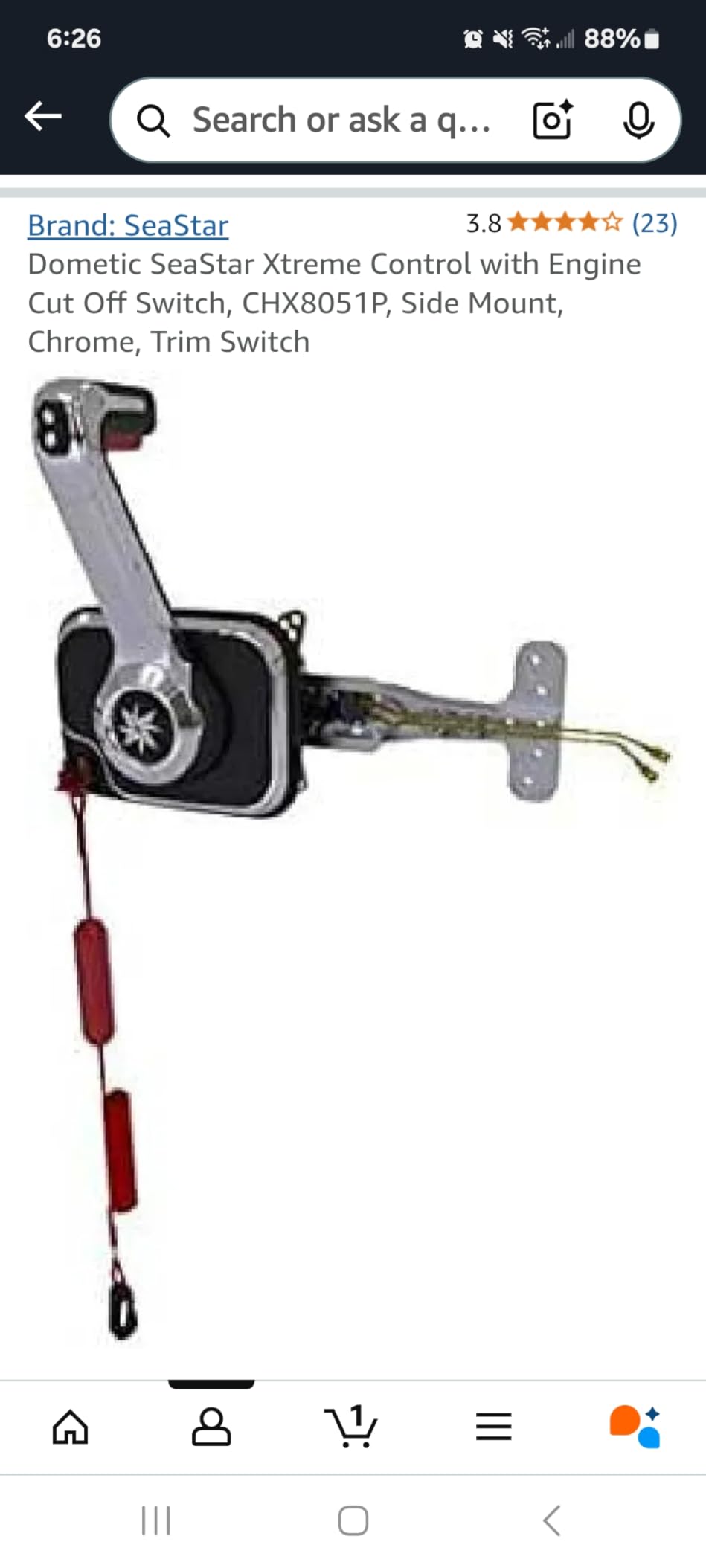
7. Dometic SeaStar Xtreme CHX8051P Side Mount Control with Cut-Off Switch
Dometic SeaStar Xtreme Control with Engine Cut Off Switch, CHX8051P, Side Mount, Chrome, Trim Switch
- Direct plug-and-play fit on many single-engine boats
- IP54 marine-rated enclosure
- Stainless steel contacts and blade terminals
- Integrated cut-off switch in the handle
- Units sometimes arrive missing bezel
- screws or kill switch parts
- Listing photos may not match the shipped configuration
- Higher cost than generic equivalents
The SeaStar Xtreme is the one to look at when you want a branded, sealed control and do not want to chase cables. It is a direct plug-and-play fit on many single-engine boats, which means in most cases you unbolt the old box, connect the same plugs, and bolt the new one into the same holes.
It carries an IP54 marine protection rating, the only ingress rating on this list, plus stainless steel contacts and blade connector terminals. The handle has a power trim switch, and the engine cut-off switch is integrated into the control rather than being a separate panel item. That integration is the reason this is our kill switch pick: fewer separate parts means one lanyard connection instead of two things to remember.
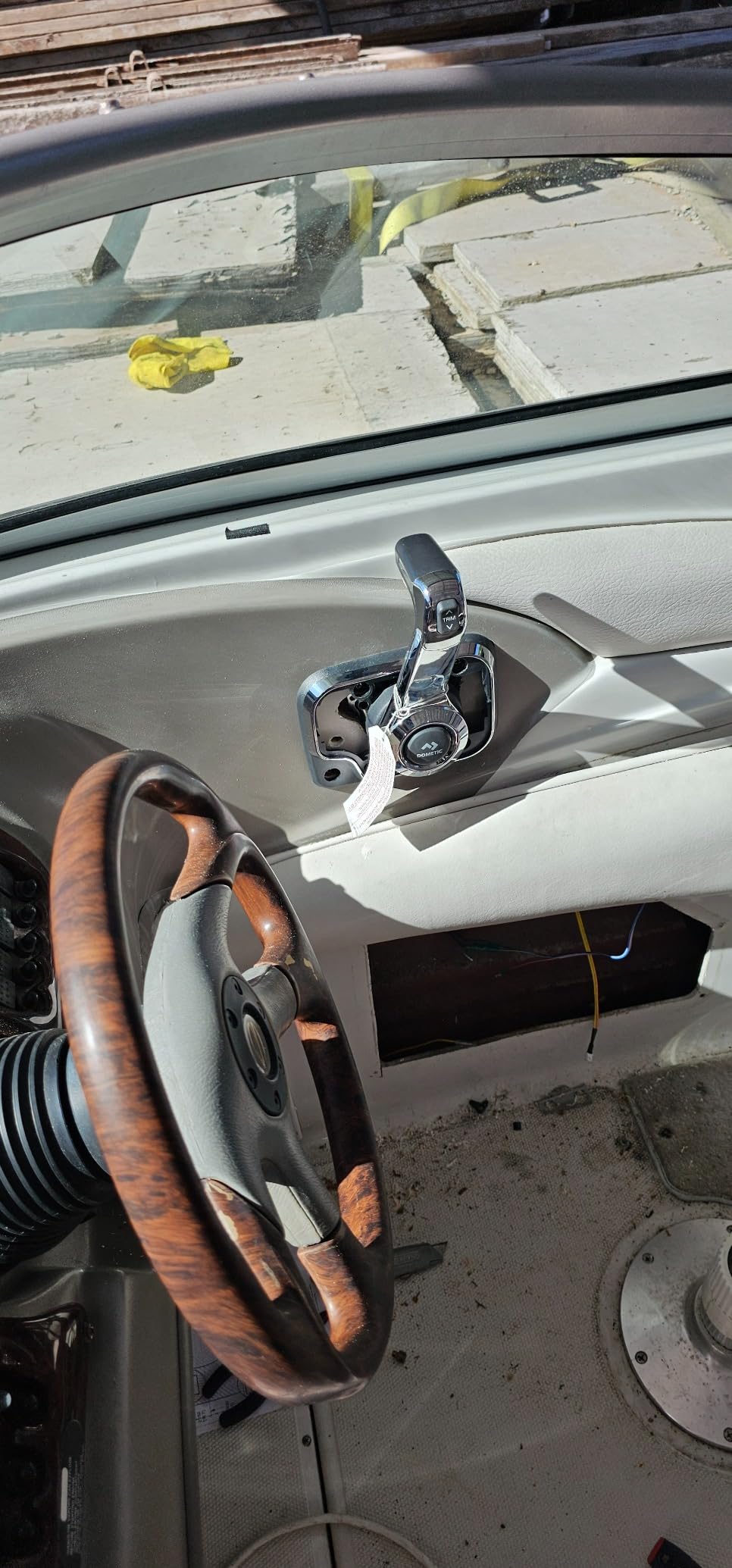
Reviews rate the finish and fit highly when the unit arrives complete. The recurring negative is packaging, not function. Buyers report arriving units missing the bezel, screws, or the kill switch hardware itself, and some had to return them. Listing photos have also been reported not matching the shipped configuration, so inspect the box the moment it lands.
The manufacturer does resolve defective shipments, which shortens the pain considerably if something is missing. It costs more than the generic aftermarket boxes, and that gap is largely what you are paying for the sealed enclosure and the known contact materials.
What does the IP54 rating actually protect against?
It covers protection against dust ingress and water splashing from any direction. In practice that means spray, rain, and a washdown hose, which is the level of exposure a helm control sees on most boats. It is not a submersible rating and it is not a reason to leave the console flooded.
For a boat kept in salt water, an IP54 enclosure is a real step up from an unsealed plastic box. It slows the corrosion that eventually seizes the switch contacts inside.
Will it fit my existing wiring?
On many single-engine boats it connects straight to the existing plugs without cable changes. If your engine brand is not one of the usual fits, treat the plug-and-play claim as a strong hint rather than a promise, and check the connector on your old control first.
Check the cut-off switch works as soon as it is installed. It is the safety feature you are most likely to trust without testing, so give it a deliberate pull on the water before you leave the dock.
8. Dometic SeaStar CH5200P Twin S Control, Medium
- Highest average rating among the twin-lever options
- Polished stainless cover for marine durability
- Adjustable throttle friction and shift detent feel
- Standard cable compatibility
- Smallest review base on the list at 28 ratings
- Premium cost relative to generic twin-lever boxes
- Compact footprint needs checking against console space
The CH5200P scores 4.4 out of 5, the highest average rating of any twin-lever control here, and the reason is build quality rather than clever features. It is a compact twin lever control with a polished stainless steel cover, and stainless is the right material call for a part that lives in a wet, salty console.
Both levers run a 2.77 to 1 mechanical advantage, which gives you meaningful leverage on the cable without the control feeling like it wants to snap through the detents. Throttle friction and shift detent feel are both adjustable, and for a twin lever setup that adjustment is what turns a stiff, vague control into one you can feather around a dock.
Cable compatibility is the easiest part. It works with 3300/33C and 4300 type control cables, which covers the common cable types found on older inboards, sterndrives and outboards. The unit is ambidextrous and ships as a medium size with a compact footprint.
Is a stainless steel control overkill for a freshwater boat?
No, it is simply durable. Stainless will not pit the way aluminum can and it will not crack the way a glass-filled plastic housing eventually does, and the polish is a visual match for a stainless hardware package on a newer console.
The only real argument against it is cost relative to a basic plastic twin lever, and the gap only makes sense to worry about if the control lives indoors and stays dry.
How few ratings is too few?
Twenty-eight ratings is a thin base, so treat the 4.4 as encouraging rather than proven. The feedback that exists is consistent and positive about stainless construction and lever action, and SeaStar is an established marine brand rather than a marketplace listing.
If you are nervous about a thin review history, buy from a seller with a straightforward return policy. A control that does not suit your console is a return, not a repair.
9. Marpac 314295-111-1 Side Mount Single Lever Control
Marpac Remote Control Box Shifter SideMount Trim Switch for Johnson Evinrude, Crusader, Mercruiser, Ford, Pleasurecraft, OMC, Volvo 314295-111-1
- Broad engine brand coverage including OMC and Volvo
- Single lever simplifies one-hand operation
- Neutral safety switch prevents starting in gear
- Integrated trim and tilt buttons on the handle
- Combined trim and tilt rocker differs from older OMC dual-button layouts
- Trim button failures reported by some owners
- Limited sales history
The Marpac control is the broadest single-lever unit here in terms of what it will bolt onto. It is listed for Johnson, Evinrude, Crusader, Mercruiser, Ford, Pleasurecraft, OMC and Volvo, which is a much wider net than any OEM-equivalent box, and it accepts any OEM control cable.
It is a surface mount, single lever design with a dual-function shift and throttle action, so one hand runs the boat and the other is free for a wheel. The handle carries integrated power trim and tilt buttons, and a neutral safety switch prevents the engine from starting in gear. That switch is not decorative; it is the interlock that stops the most common small-boat mistake.
Materials are a mixed bag in a good way. The enclosure is rated IP54, and the contacts are brass with screw terminals, so the electrical side is serviceable rather than potted shut. For a boat owner who plans to keep the boat a long time, screw terminals that can be re-terminated are a real advantage over sealed connector blocks.
Will a universal single lever work on my engine?
It will work mechanically on most of the brands listed, provided your control cables are the right length and configuration. Mercury and Mercruiser setups need a Uflex K35 connection kit, which is a known extra step rather than a surprise at install time.
The other thing to check is the neutral safety switch wiring. If your existing engine does not have the interlock circuit, the switch will not do anything, so confirm your harness carries it before you count on the feature.
Is the rocker layout the same as an old OMC control?
Not exactly. This unit uses a combined trim and tilt rocker, where older OMC controls used separate trim and tilt buttons in different places. Owners moving from an older OMC setup should expect a short learning period on the new layout.
Functionally the actions are the same, and having one control on the handle rather than two panel switches is more convenient once you get used to it. Budget ten minutes of practice at the dock before you trust it in a channel.
10. VEVOR Boat Throttle Control 881170A15 for Mercury PT 2-Stroke
- Strong 4.4 rating for a budget control box
- Die-cast aluminum housing with a crack-resistant ABS handle
- 16.3 ft set with both 8-pin and 4-pin plugs
- Adjustable lever friction and cold start air/fuel adjustment
- Fitment limited to Mercury PT 2-stroke harness pinouts
- Newer listing with a shorter review history
- Heaviest listed unit at 9.8 lb
This is the highest-rated control in our group at 4.4 out of 5, and it earns that on build quality rather than feature count. The housing is die-cast aluminum with an ADC2 plus ASA interior, and the handle is a crack-resistant ABS, which is a better material pairing than the all-plastic boxes that dominate the budget end of this category.
It is a side mount box built for Mercury PT 2-stroke engines using the 881170A15 harness pattern. The wiring set measures 16.3 ft, roughly 4970 mm, and ships with both 8-pin and 4-pin plugs, which makes it more forgiving than a single-config box. A neutral button switches between forward and reverse, and the handle carries a power trim switch with up and down tilt control.
There is also a low-temperature start air and fuel adjustment on the lever, which is a genuine feature on cold mornings rather than a spec-sheet line. An emergency stop lanyard is included, so the safety connection is present from the first day.
Is this only for 2-stroke Mercury engines?
Effectively yes. It is built around the Mercury PT 2-stroke harness pinouts, and the eight and four pin plugs it ships with match that pattern. If your engine is a four-stroke with a different connector, this is not the box, however good the hardware looks.
Check the plug on your existing control before ordering. That one check eliminates almost every compatibility problem we see in this category.
What do the 9.8 pounds mean for a small boat?
It is the heaviest listed unit, and on a flats boat or a lightweight skiff that is worth thinking about. Nine pounds of console hardware changes the handling feel more than most owners expect when the boat is light and the speed is low.
On a pontoon or center console of any real size, the mass is not an issue and the aluminum housing works in your favor by absorbing vibration without cracking.
How to Choose a Boat Throttle Control?
Side mount, top mount, or flush mount
Side mount bolts to the side or face of the console and is the most common arrangement on pontoons and older center consoles. Top mount, often called binnacle style, drops through a cutout in the top of the console and looks cleaner on a modern dash. Flush mount is a third style that sits level with the dash surface, chosen when console depth is tight. Measure the available space and pick the one that already matches your existing layout, since converting between styles means cutting or filling holes in the console.
Single lever or twin lever
A single lever combines shifting and throttle into one motion, which is simpler to install, simpler to use with one hand, and easier to find parts for. Twin levers separate the clutch and throttle so you can feather the throttle independently, which gives finer control in tight quarters. Inboard owners on the Downeast Boat Forum describe the same tradeoff: single levers are easier to live with daily, twin levers give finer control for a single-screw setup. Choose single lever for a new build or a pontoon upgrade, twin lever if you are restoring an older inboard or runabout where that feel matters to you.
Matching control cables and the 33C specification
Most cable-driven controls work with 33C, 3300 and 4300 type cables, and those are the easiest to find. The Seachoice and SeaStar twin lever controls in this list are built for 33C, the Uflex B49 handles Ultraflex and 33C with the correct connection kit, and the Marpac accepts any OEM cable. Match the cable type before the brand, and measure the helm-to-transom run while you are at it. Replace stretched or cracked cables at the same time as the control, because a new box on old cables will never hold neutral the way it should.
Materials and salt water
Aluminum and stainless housings hold up better in salt water than unfilled plastic. The IP54 enclosures in this roundup, the SeaStar Xtreme and the Marpac, add a real layer of protection against spray and washdown. Whatever you choose, rinse the control with fresh water after every trip on salt water and dry it before you put the cover on.
How hard is the installation?
Plug-and-play boxes like the SeaStar Xtreme are the easiest, where the harness plugs straight in. Side mount and binnacle boxes with manual cable attachment are a half-day job for someone who has done it before and a full day for someone who has not. Set aside a few hours for cable travel adjustment, because the neutral detent has to line up with the transmission or the engine will start in gear.
The kill cord is not optional
Every control in this roundup has a shut-off lanyard or an integrated cut-off switch, and the SeaStar Xtreme and the VEVOR box both ship with one. The lanyard clips to your wrist or belt and cuts ignition if you are thrown clear of the helm, which is the mechanism that stops a boat continuing at full throttle after a capsize. Attach it every single time. An unused lanyard is a cheap insurance policy that costs nothing to use.
Which brands have the best reputation
Owners consistently treat Morse and Teleflex as the reference standard for build quality, and that consensus shows up in forum threads whenever someone asks what to buy. SeaStar and Uflex are the modern names most often recommended for new single-lever installations. OEM Yamaha and Mercury boxes remain the safest choice when you want guaranteed direct fit, which is why the 703-48205 and 881170A15 patterns anchor this roundup. For value, the marketplace boxes built to the same OEM part numbers do a competent job when the harness matches.
What are the downsides of a throttle control replacement
There are four real drawbacks. First, you are usually locked to one engine brand or one harness pattern, so a cheap control is not a universal fix. Second, wiring instructions are frequently thin, and a wrong neutral interlock means the engine will not start at all. Third, the control adds failure points that did not exist before, including trim switches and key switches. Fourth, a salt-exposed plastic box will corrode from the inside out, which is why material and ingress ratings matter more than the feature list. None of these are dealbreakers, but they are the reason we read the failure reports before the specification sheets.
Common symptoms and what they mean
If the lever sticks in one position, the cable is usually stretched or the cable clamp has loosened. If neutral will not hold under power, expect a worn detent spring or a misadjusted cable travel. If the engine will not start but the controls feel normal, the neutral safety switch or the key switch is the place to look. If trim does nothing, the handle trim switch is the usual culprit, and on the Mercury Gen I box in this roundup it is the single most reported failure point. Work from symptom to cause before you replace a whole control, because most of these are a cable, a clamp, or a ten-dollar switch.
Frequently Asked Questions
Which throttle controller is best rated?
Among the controls we reviewed, the VEVOR 881170A15 for Mercury PT 2-stroke and the Dometic SeaStar CH5200P Twin S both hold 4.4 out of 5, the highest averages in our group. The VEVOR box has 51 ratings behind it and the SeaStar has 28. For pure confidence by review volume, the Rupse Yamaha 703-48205 leads with 119 ratings at 4.2. Rating alone is not a fit test, so confirm the harness pinout before choosing.
What are the downsides of using a throttle controller?
The main drawbacks are brand lock-in, thin wiring instructions, extra failure points and corrosion risk. Most boxes only work with one harness pattern, so a cheaper control is rarely a universal fix. Key switches and handle trim switches fail more often than the housing does. Cheap plastic boxes corrode from the inside in salt water, and a misadjusted neutral interlock will stop the engine starting at all.
What are the different types of boat throttle controls?
Boat throttle controls are classified along three axes. Mount style covers side mount, top mount binnacle and flush mount, which describes how the box attaches to the console. Lever type covers single lever, twin lever and single lever with a separate clutch. Actuation covers mechanical cable control, electronic DTS and wireless remote throttles for trolling motors. Most small outboard boats use mechanical cable controls.
How do I know which throttle control fits my boat?
Follow the wiring from your existing control to the engine and count the connector pins, then read the OEM part number stamped on the box. Ten pins points to the Yamaha 703 family, eight pins Gen I points to older Mercury 2-stroke, and five pins usually means a basic universal or early OMC. Check whether the cables are push-to-open or pull-to-open, and measure the console space before ordering.
Are boat throttle controls universal?
Mostly no. An OEM-equivalent box such as the 5006180 covers one brand only, and the 881170A15 covers Mercury PT 2-stroke harnesses. The broadest option we reviewed is the Marpac single lever, which is listed for Johnson, Evinrude, Crusader, Mercruiser, Ford, Pleasurecraft, OMC and Volvo, and it still needs the correct cable connection kit for your engine.
Do I need to replace control cables with a new throttle box?
Only if the old cables are stretched, cracked at the outer casing, or wrong length. If they are in good condition and the new box takes the same cable type, you can reuse them and save a large part of the job. Replace them if the control is much longer than the original, if the neutral detent will not line up, or if the cables are more than a few seasons old.
Our Verdict on the Best Boat Throttle Controls
For a Yamaha single engine running the 703 harness, the Rupse 703-48205 push-open box is our pick. It has the deepest review history of anything we tested, it covers electric-start engines from 40 hp to 250 hp, and the reversible handle covers either console side. If you have a console top cutout instead of a side panel, the 704-48205-P1 binnacle box fills the same role.
For Mercury PT 2-stroke owners, the VEVOR 881170A15 has the strongest rating and a die-cast aluminum housing that will outlast plastic alternatives, while the POWEROB TEC Gen I box is the better pick if you are on a 12-pin harness. Evinrude and Johnson owners should go straight to the 5006180 equivalent, with its neutral lock and warning horn. For twin lever setups, the SeaStar CH5200P gives the best stainless build and the most refined lever feel, and the Seachoice brass pair covers the classic 33C pontoon boat.
Whichever one you pick, identify the harness before you order, check the lanyard on every single trip, and give the console a fresh water rinse if your boat lives in salt. For the rest of your helm kit, our fender picks and boat lift remote control guide cover the gear that gets loaded and unloaded around the same boat. These picks reflect what we could verify for 2026, and the numbers above are the ones to check against your own helm.