
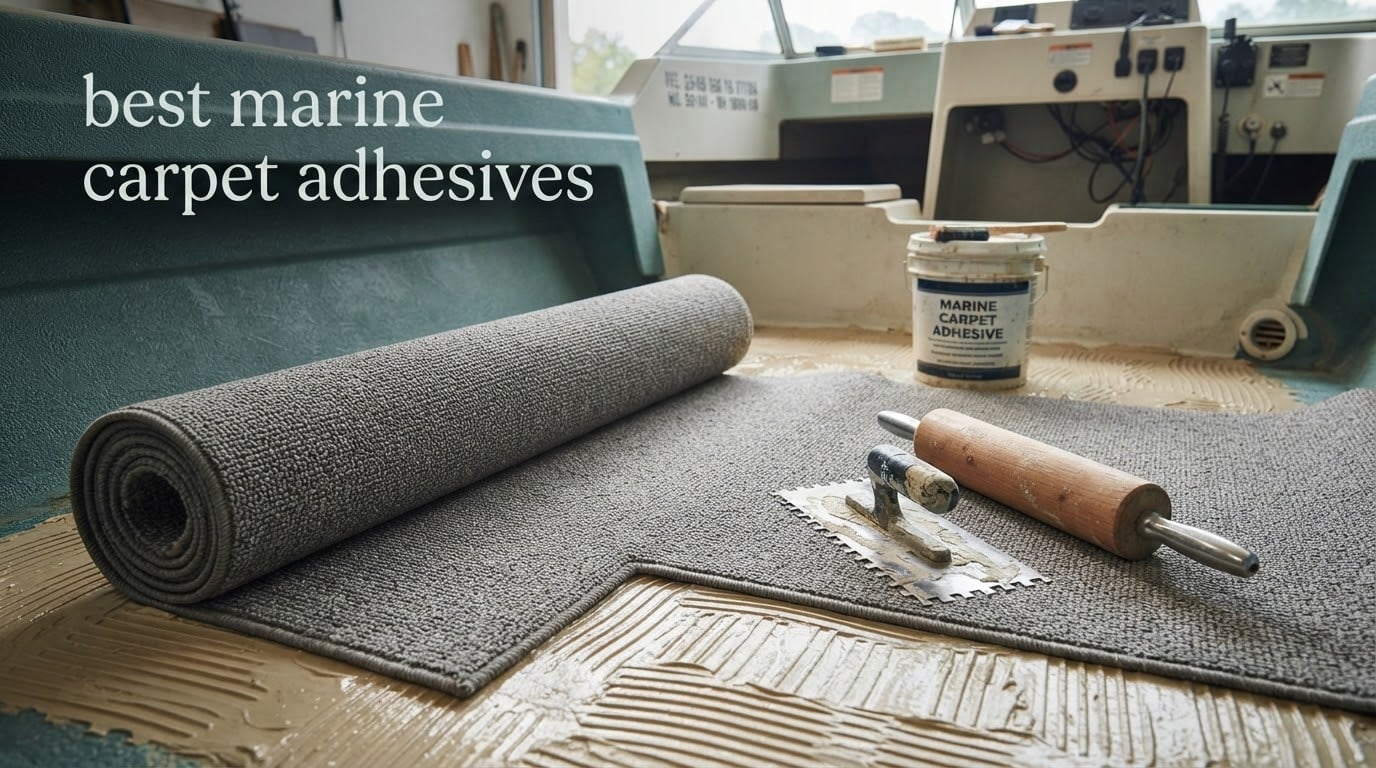
The best glue for marine carpet is a water-based marine-grade adhesive that bonds to marine plywood, aluminum and fiberglass while resisting standing water, sun heat and mold. Those three chemistry families — water-based, solvent-based and contact cement — behave very differently on a wet, moving deck, and choosing wrong is why so much boat carpet peels or bubbles within a season.
We spent weeks sorting through the specs, cure windows and failure reports for the eight adhesives below, focusing on the numbers installers actually argue about: coverage per gallon, cure time before launch, whether the glue is safe on aluminum, and how miserable it is to remove later. Every pick here comes with published substrate compatibility and a real review history, not just marketing adjectives.
One thing surprised us early. The strongest glue and the easiest glue are not the same product, and no forum thread we read pretends otherwise. Owners on iboats keep recommending solvent-based contact cement when the goal is carpet that never comes up, while accepting it offers no second chance once it grabs. Meanwhile most re-carpeting jobs go without incident on a water-based glue that costs less, cleans up with a rag and lets you reposition for a few minutes.
This roundup covers boat deck carpet, pontoon vinyl flooring, bass boat interiors, jon boat builds and trailer bunk carpet. If you have already picked your flooring, our notes on carpet blowers for drying damp sub-decks come into play before adhesive goes down, and once the boat is finished you may want to revisit the sound side with our marine speaker picks or marine subwoofer guide.
Here are the best marine carpet adhesives for 2026, ranked for real install conditions rather than lab benches.
Table of Contents
Top 3 Best Marine Carpet Adhesives for 2026

RecPro Marine Grade RV Floor Adhesive
- Water-based marine and RV formula
- About 100 sq ft per gallon
- 24-hour cure
- Wood and plywood substrates
DAP Weldwood Landau Spray Contact Adhesive
- Spray-grade contact bond
- Permanent and water resistant
- Interior and exterior use
- Handles foam and vinyl trim

DAP Weldwood Original Contact Cement
- Neoprene instant grab
- 15 minute set
- Bonds wood
- metal
- fabric and rubber
- 1 gallon brush can
Marine Carpet Adhesive Comparison for 2026
| Product | Specifications | Action |
|---|---|---|
| RecPro Marine Grade RV Floor Adhesive |
|
Check Latest Price |
 Value Carpets Marine Grade Boat Carpet Adhesive Value Carpets Marine Grade Boat Carpet Adhesive |
|
Check Latest Price |
 BoatCarpetCentral Marine Adhesive for Carpet and Pontoon Vinyl BoatCarpetCentral Marine Adhesive for Carpet and Pontoon Vinyl |
|
Check Latest Price |
 AAT-390 G Water-Based Carpet Adhesive AAT-390 G Water-Based Carpet Adhesive |
|
Check Latest Price |
 DAP Weldwood All-Weather Outdoor Carpet Adhesive DAP Weldwood All-Weather Outdoor Carpet Adhesive |
|
Check Latest Price |
| DAP Weldwood Landau Spray Contact Adhesive |
|
Check Latest Price |
| DAP Weldwood Original Contact Cement |
|
Check Latest Price |
 3M Hi-Strength Spray Adhesive 90 CA 3M Hi-Strength Spray Adhesive 90 CA |
|
Check Latest Price |
1. RecPro Marine Grade RV Floor Adhesive: Best Overall Water-Based Pick
RecPro RV Roll On Floor Adhesive | Marine Grade | Water-Based | 1 Gallon
- Water-based so cleanup needs no solvents
- Generous work time for repositioning before it sets
- Covers roughly 100 sq ft per gallon
- Dries and cures in about 24 hours
- Penetrates plywood for a secure bond
- Viscosity varies between pails
- Label is vague on coating one surface or both
- Occasional failures on difficult substrates
This is the glue we would hand a first-time boat owner. It is a low viscosity water-based roll-on adhesive rated for marine and RV flooring, and it does the boring thing well: it soaks into sealed plywood, grabs felt-backed vinyl or carpet, and cures to a hard, water-resistant film in about a day.
The practical detail that matters most is the 65 to 75 degree Fahrenheit application window. Outside that range the water carrier either flashes off too fast or stays open too long, and that is the difference between a clean lay-down and a lifted corner. Inside the window, reviewers report a working time long enough to slide a panel into position and nudge it before it sets.
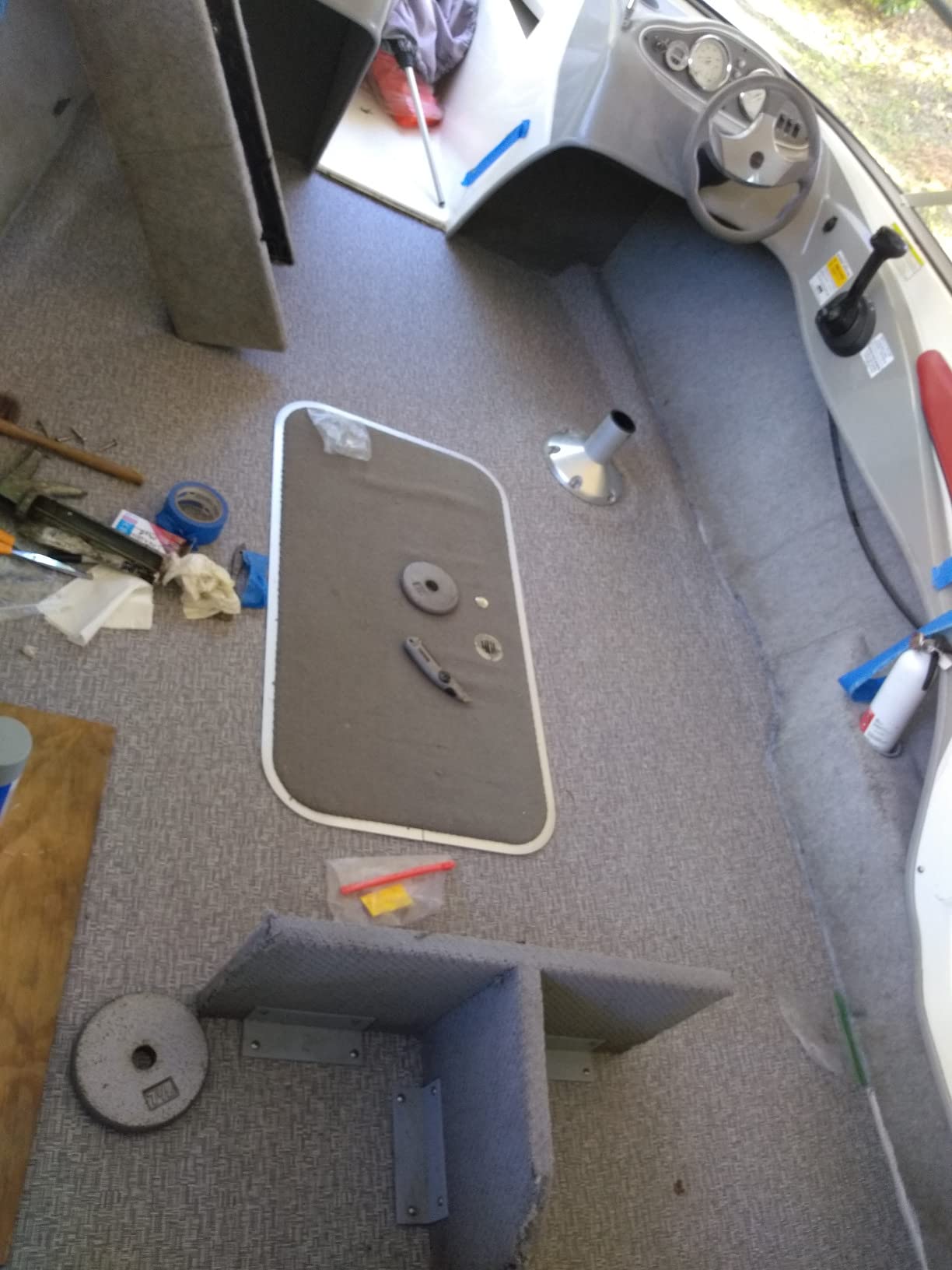
Coverage is listed at roughly 100 square feet per gallon, which lines up with what installers actually use on a typical bass boat sole. A 16-foot deck eats about two gallons once you account for trim and hatches, so plan on a spare quart rather than trusting the arithmetic on the label to the last square foot.
Two things kept this out of first place on raw numbers. Some installers report batch-to-batch viscosity differences, with a runnier pail spreading thinner than intended, and a few report adhesion failures on substrates other than clean wood. Neither complaint is common, but on a boat neither is free.
Where the water-based chemistry pays off
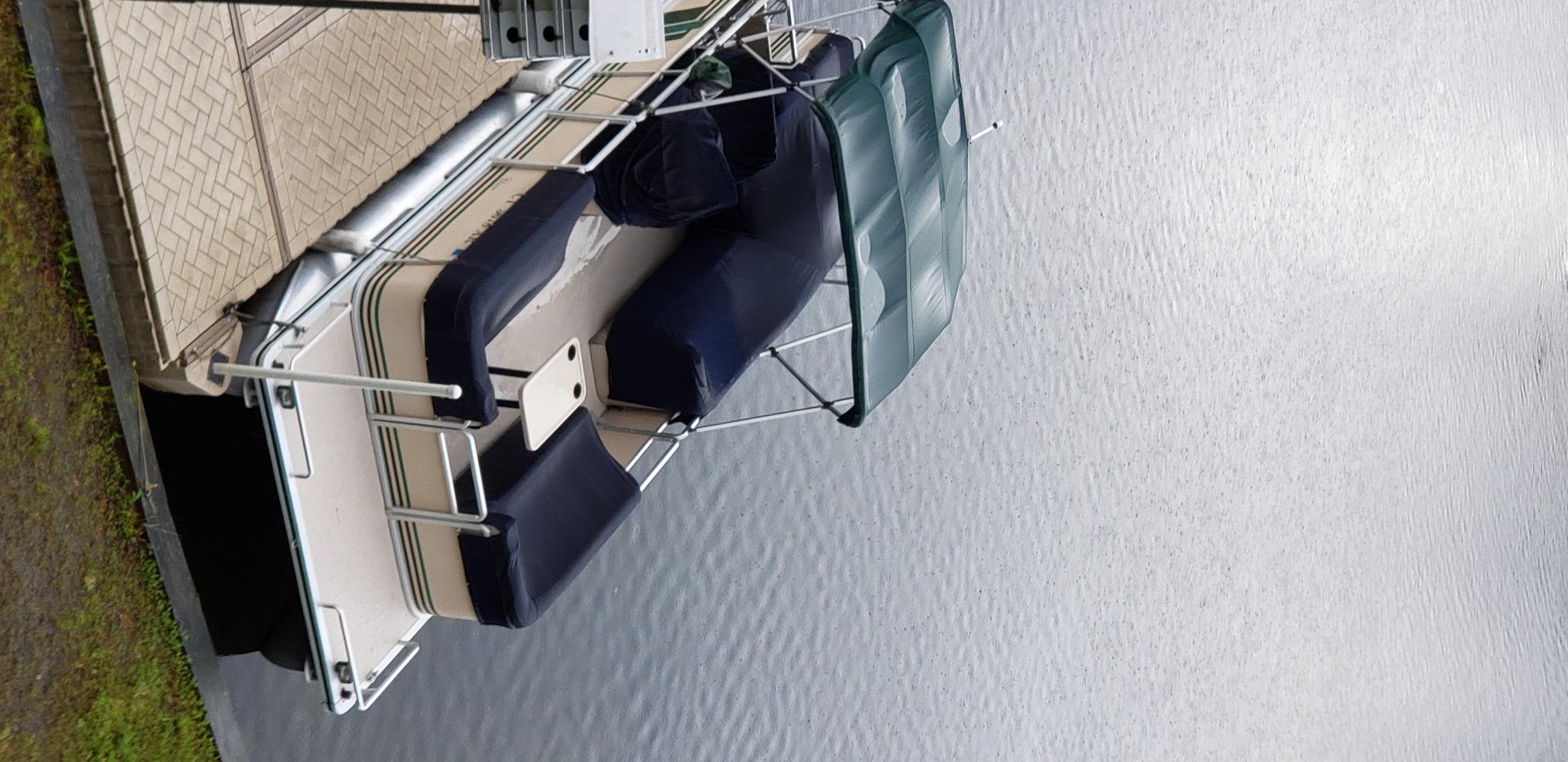
Because there is no solvent in the formula, this adhesive cleans up with plain water and can be worked in a garage or a cabin with the windows cracked instead of a fully ventilated shop. It will not attack rubber-backed carpet or pontoon vinyl, which matters if you are redoing a floor that already has a rubber floor underneath.
It is also the easiest of the eight to remove later. Water-based glues soften and let go with a scraper and a damp rag, which matters enormously if you ever resell the boat or change your mind about the flooring.
Where it falls short
The 24-hour cure is a real constraint for anyone with a launch date. The label allows walking on the floor after a full day, but owners who launched sooner have reported soft spots that later read as peeling at the seams. Budget a day of dry time for every day you did not plan on.
This adhesive is also listed for wood substrates only. On aluminum or bare fiberglass, pick a product that names those surfaces explicitly rather than assuming a marine label covers them.
2. Value Carpets Marine Grade Boat Carpet Adhesive: Best for Aluminum and Fiberglass
- Water-based and non-flammable for enclosed cabins
- Named for wood fiberglass and aluminum
- High viscosity gel fills small gaps
- Waterproof once cured
- Low odor during application
- Needs a full 24 hours before walking
- Label application guidance is sparse
The headline here is substrate coverage. This is one of the few products in the roundup whose listing names wood, fiberglass and aluminum together, which quietly answers the question most often asked about metal boat floor pans and stringer panels.
It is a water-based PVA formulated as a high viscosity gel rather than a thin roll-on. That thickness does two useful things on a boat deck: it bridges minor surface irregularity in a molded pan, and it stays where you put it instead of migrating into the carpet backing and leaving a stiff patch. Both of those failures are documented complaints elsewhere in this category.
Owners consistently single out the non-flammable, low odor profile as the deciding factor when working inside a cabin or a cuddy with no cross ventilation. Reviewers put the 4.3 average squarely on easy application and the substrate list rather than on raw bond strength.
Why the high viscosity matters on aluminum
Bare aluminum pans are smooth, slightly oily and unforgiving of thin spreads. A gel body adhesive sits in the low spots and holds a continuous film instead of bridging over them with a thin skin that later lets go. On fiberglass stringer panels the same thickness gives you the fill you need around weave texture.
The waterproof rating after cure is what earns it a place on decks that see standing water. Reviewers note it holds on wet interior soles and pontoon floors without the softening that general-purpose interior carpet glue shows after a rainy weekend on the lake.
Where the trade-offs sit
Twenty-four hours before the floor can be walked on is the headline cost, and this one does not offer a walk-on partial cure. Plan the install around a day with no trips.
The label is also thin on application guidance. If you are new to gluing carpet, the trowel notch and coverage numbers are not spelled out for you, so borrow the method in our step-by-step section rather than guessing at spread rate.
3. BoatCarpetCentral Marine Adhesive: Best for Rubber-Backed Carpet and Pontoon Vinyl
Marine Adhesive for Boat Carpet & Pontoon Vinyl Flooring – 2 Gallons
- Will not deteriorate rubber backing over time
- Works on plywood concrete aluminum and fiberglass
- Each gallon covers an 8 by 10 foot area
- Clear and low odor for pontoon installs
- 2 gallon pail suits a larger deck
- Heaviest pail in the group at 8 pounds
- Needs a full 24 hours before service
Rubber-backed marine carpet is a different problem from foam-backed carpet. Rubber needs an adhesive that will not attack the backing, and that is exactly the claim this product leads with: a water-based formula that will not degrade rubber the way alcohol-based glues can over a few seasons of sun and heat.
It is also the only water-based option here with an explicit two-gallon pail, which matters on a pontoon where the deck area is measured in the dozens of square yards. Each gallon covers an 8 by 10 foot area according to the maker, so one pail handles a good-sized section without a mid-job container swap.
The substrate list is the broadest in the group: marine plywood, particle board, concrete, aluminum and fiberglass. That makes it the safe pick when you are unsure what is under the carpet, which on an older boat is more common than people admit.
Matching adhesive to carpet backing type
Foam-backed carpet drinks adhesive into the foam, and enough of it turns the panel stiff and crunchy underfoot. Rubber-backed carpet does not, and pairing it with a water-based glue keeps the panel flexible for the life of the boat. Pontoon vinyl flooring falls into the same bucket — it is a flexible sheet that needs a glue that will not craze it.
If your boat mixes foam-backed carpet in the cockpit with rubber-backed vinyl over the bow, using one water-based glue for both is a reasonable compromise, but the rubber-backed area is where this product earns its keep.
Where it gives ground
At 8 pounds per two-gallon pail it is the heaviest container in the roundup, and that weight is awkward to carry down a narrow hull or up onto a pontoon deck.
The 24-hour service window applies again, and this adhesive sits at the bottom of the group on rating at 4.2. Buyers point to a lower five-star share than the other water-based options, with the pail size and cure clock drawing most of the criticism rather than the bond itself.
4. AAT-390 G Water-Based Carpet Adhesive: Best for Marine Plywood
Advanced Adhesive Technologies (AAT-390 G) Carpet Adhesive, 1 Gallon, 3003.4127
- Preferred by professional boat builders
- Water-based so it will not erode rubber backing
- Trowels easily and goes far per gallon
- Cleans up with water not mineral spirits
- Full cure listed at up to 7 days
- Hold on aluminum reported as inconsistent
- Not for vertical surfaces or folded trim edges
This is the adhesive boat builders reach for, and the one installers compare against big-box carpet glue when arguing about final holding power. AAT-390 G is a medium viscosity, water-based carpet adhesive rated for marine and RV carpet work, and it holds noticeably better long term than the budget options on a properly sealed plywood sub-deck.
Reviews comparing it directly against widely available carpet adhesives report better initial adhesion, a longer set time and substantially better final holding power. Wood is where it performs; installers who switched to it on aluminum report mixed results, which is the main caveat on an otherwise strong product.
Cleanup is with plain water. On a job where you may need to lift a corner and redo it, or where glue squeeze-out lands on a bare hull side, that alone removes an afternoon of solvent handling.
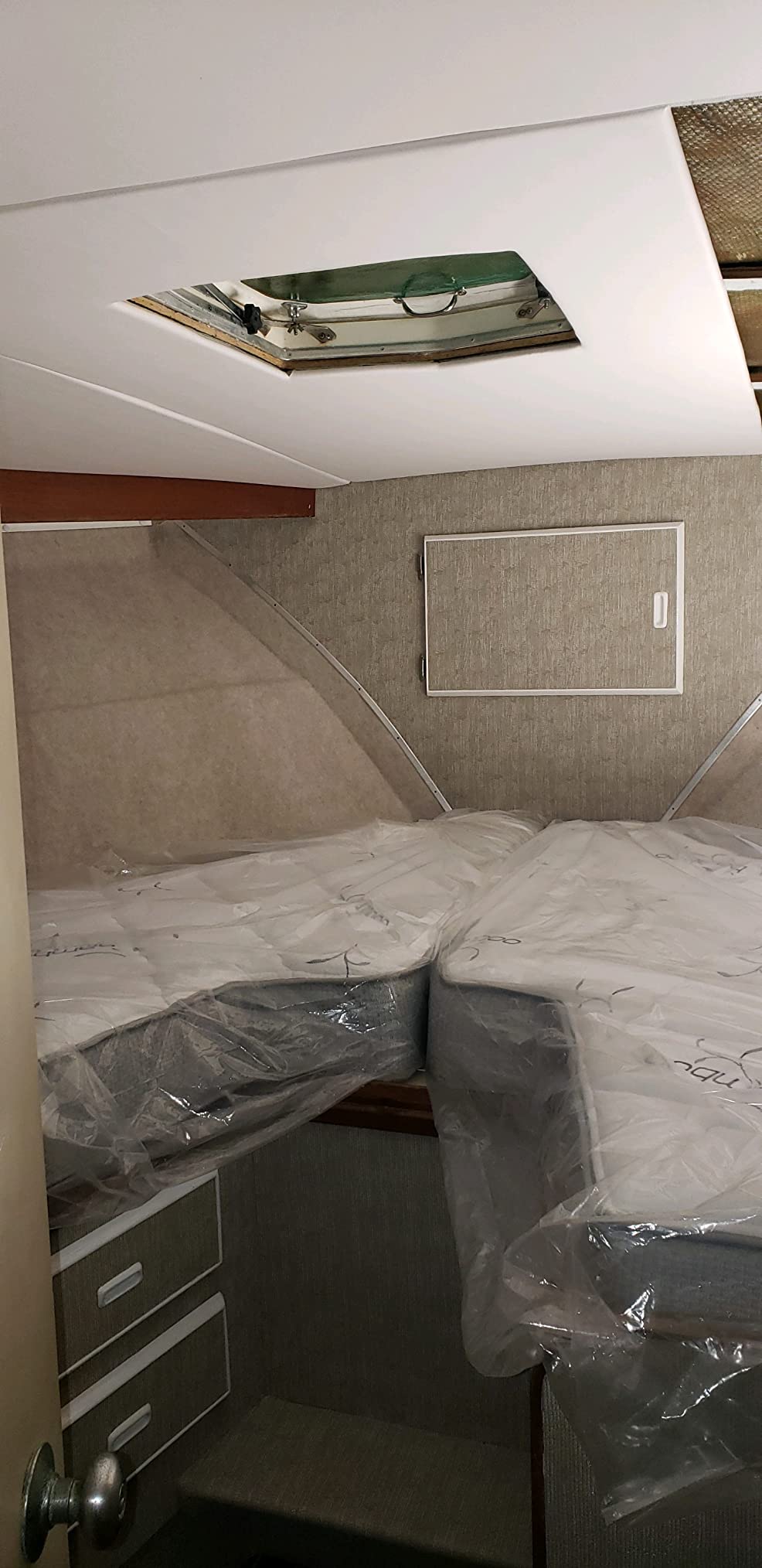
Be honest about the cure clock before you pick this. The listed full cure runs up to 7 days, which is the longest in this roundup by a wide margin. You can walk on it earlier, but the bond keeps building, and launching a boat the same week means launching it before the adhesive has finished.
The other limitation is scope. It is not recommended for vertical surfaces or for fold-over edges such as a lid underside, so vertical panels need a separate product and a mechanical fastener.
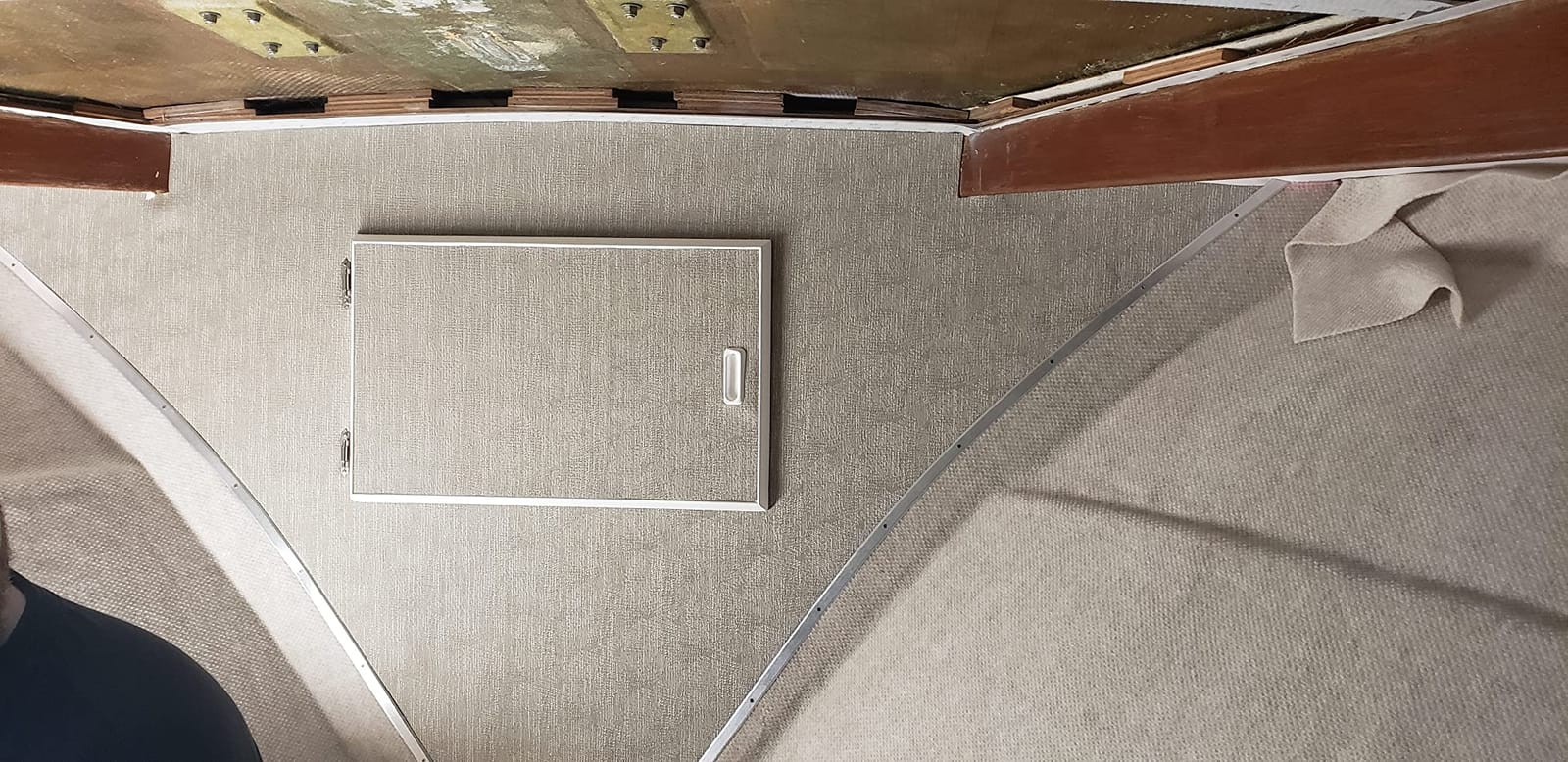
Why professionals wait for full cure
Water-based adhesives gain strength through water loss, and that process slows in cool or humid conditions. Boat garages in spring are rarely warm, which is exactly when a seven-day cure stretches toward two weeks. If your work happens indoors, plan the calendar backward from your first launch.
Installers who rushed it report the failure showing up as lifting at the seam or a corner that peels when soaked, not as a failure across the whole panel. That pattern is worth recognizing, because people tend to blame the surface rather than the timeline.
How it pairs with plywood sealer
Sealed marine plywood is the ideal substrate for this adhesive. A thin coat of spar urethane over bare marine ply closes the pores and gives the water-based adhesive something to key into, and owners on tinboats.net consistently recommend spar urethane over epoxy resin for the cost and the ten-minute application per coat.
Thicker build-up is where trouble starts. A heavy epoxy coat with a glossy, un-sanded surface leaves the adhesive with nothing to grab, and that is a documented cause of peeling in retrofit work. Sand any sealer to a dull finish and vacuum before you spread glue.
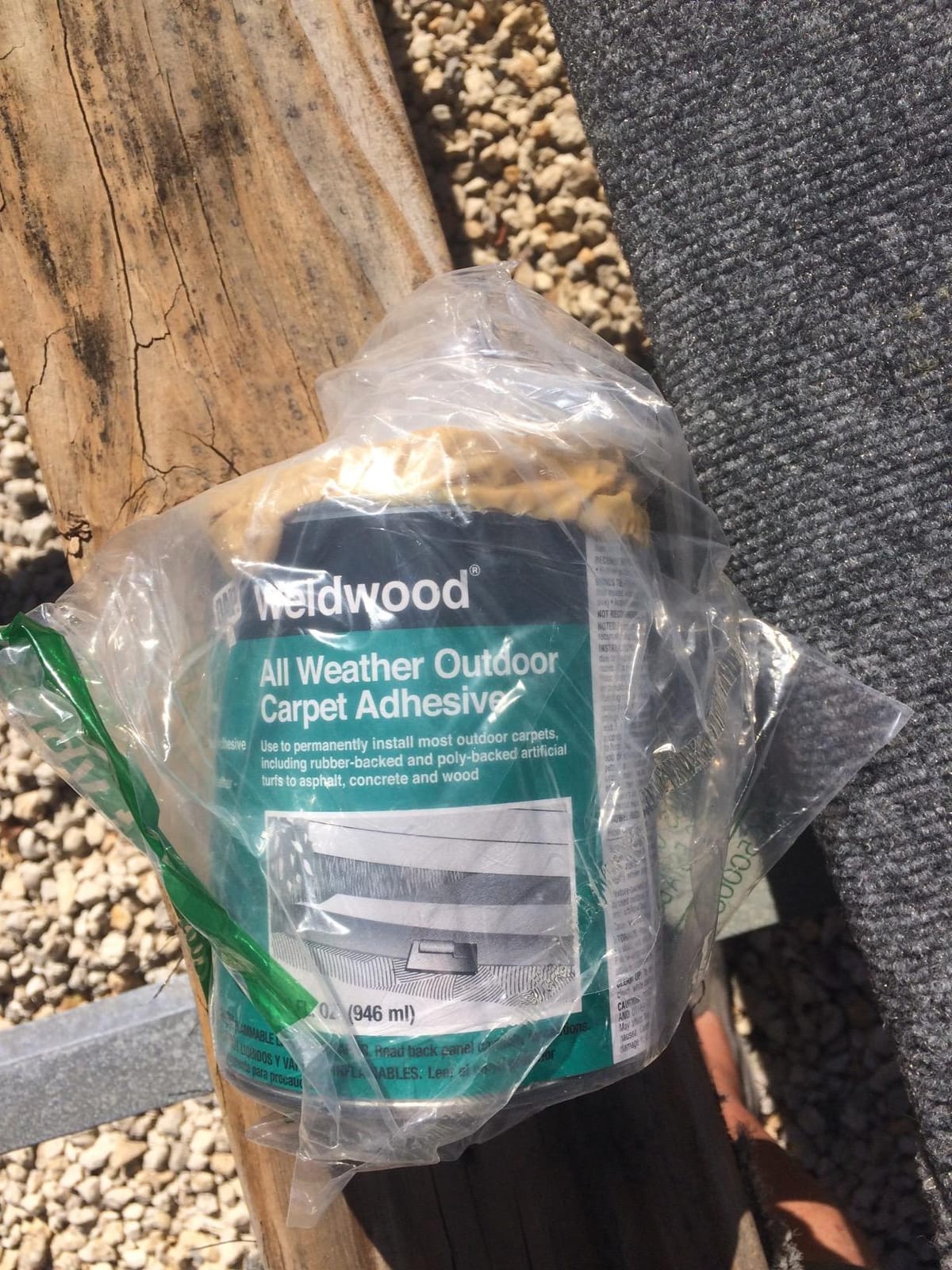
5. DAP Weldwood All-Weather Outdoor Carpet Adhesive: Budget Pick
- Lowest cost adhesive in this roundup
- Formulated for outdoor carpet and artificial turf
- Strong durable bond on synthetic fiber
- Quart size suits patch and repair work
- Solvent-based so cleanup needs solvents
- Low viscosity offers little gap filling
- Classified as a hazardous material and non-returnable
Weldwood All-Weather is the value entry here. It is a solvent-based outdoor carpet and artificial turf adhesive in a one-quart can, built for people redoing a trailer bunk, a small run deck or a patch rather than a full sole.
Reviewers treat it as a dependable budget exterior carpet adhesive with a 4.4 average across 453 ratings and 71 percent five-star feedback. The bond on synthetic fiber is the thing people come back to praise, and it is genuinely water resistant once it has dried.
It is also available in a gallon size under a different item number, so a bigger job does not force you into five quart cans. That flexibility is why we placed it ahead of several higher-priced picks.
The low viscosity is the real trade-off. A thin, fast-drying adhesive has little body to fill a rough aluminum pan or a sanded plywood joint, and it punishes anyone who spreads it too sparsely. On a properly prepared, reasonably flat surface it is fine. On a rough one, expect glue-starved corners.
Like all solvent adhesives it needs real ventilation, and it is not water cleanable. Spills on carpet or hull need a solvent, not a wet rag, and once it cures nothing lifts it.
Where this one earns its place
Small jobs. Trailer bunk carpet, side storage rack panels and repair patches are all places where a quart is the correct size and a contact cement would be overkill. The same job with a gallon of contact cement means paying for a bond you do not need.
It is also the easiest recommendation to source locally, which owners treat as a genuine purchase driver. Availability at a nearby hardware store beats a marginally better formula that arrives in five days, especially when the boat is already out of the water.
When to step up instead
If you are laying carpet over a full boat interior with curved surfaces, mismatched panels or a deck that sees a lot of standing water, move up to a water-based marine adhesive with more body and a longer working time. The savings here are not worth a repair you have to do twice.
One more caution. This adhesive is classified as a hazardous material, which shapes how it can be shipped and returned. Factor that into your planning rather than discovering it at checkout.
6. DAP Weldwood Landau Spray Contact Adhesive: Top Rated
- Highest rated in the group at 4.7 out of 5
- Spray can covers a large deck fast
- Permanent water and heat resistant bond
- Interior and exterior use
- Handles upholstery foam and vinyl trim
- Solvent-based so ventilation and a mask are needed
- Cleanup needs solvents not soap and water
This is the highest rated adhesive in the roundup, sitting at 4.7 out of 5 across 901 ratings with 85 percent five-star feedback. That is not a small sample, and it is the strongest consensus we found anywhere in this category.
It is a spray-grade contact adhesive in a one-gallon can, built for upholstery, foam and vinyl as much as for carpet. The permanent bond is water resistant and high heat resistant, and the listing rates it for both interior and exterior work, which makes it a genuine all-rounder rather than a deck-only product.
The practical advantage over brush contact cement on a boat is speed. A spray can lays an even film across a large deck in a fraction of the time a brush takes, and even film matters when you have to coordinate two hands and a roll of carpet.
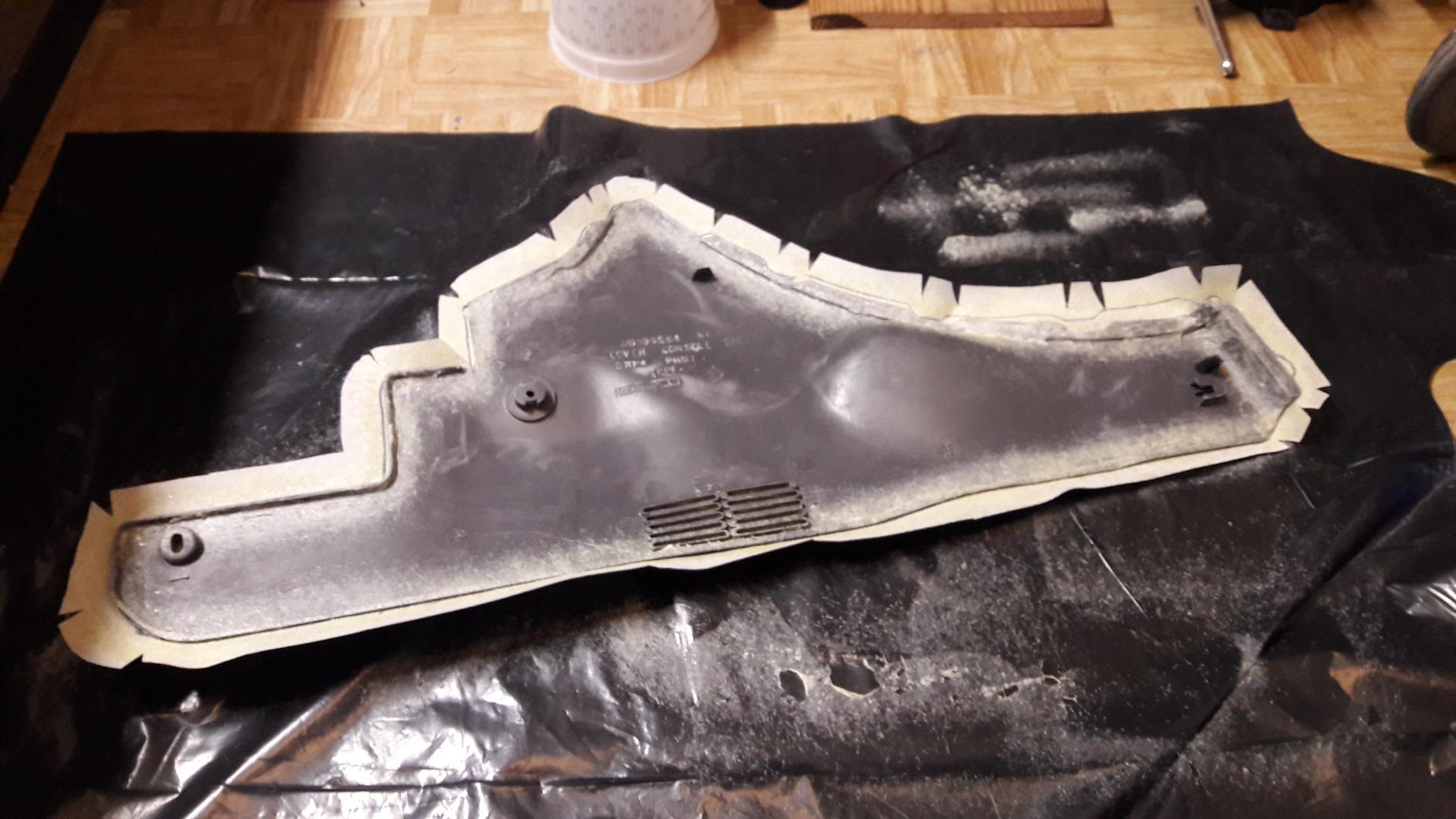
Spray application has its own discipline. You coat one surface, wait for the flash-off, and then you lay the carpet down immediately, because contact adhesives bond on touch and give you no repositioning window at all. Practise on a scrap panel before you spray the boat.
Ventilation is not optional with a solvent product, and inside a cabin that means doors open, fans running and time spent away from the enclosed space. Same applies to respiratory protection for anyone sensitive to fumes.
Where spray contact cement wins
Large horizontal panels with few cuts. If your boat has a full-width deck sole or long side racks, a spray can covers more square feet per minute than any troweled adhesive here, and the even film resists the bare patches that cause bubbling later.
It is also the natural pick for mixed projects. Owners use it for carpet, vinyl trim, foam panels and seat bases on the same trip, so one can covers the whole interior rebuild instead of forcing one adhesive to do every job.
What you give up for that bond
No second chance. Once the coated surfaces meet, they are together. That single fact is what drives most of the hesitation about contact cement in boat forums, and it is worth building your install around — measure twice, lay once, and have help ready.
Removal is the other cost. Contact cement bonds mechanically into the surface, so getting it off later means mechanical work rather than a solvent soak. Plan your project as if the carpet goes down permanently, because with this adhesive it very nearly does.
7. DAP Weldwood Original Contact Cement: Most Versatile
- Instant grab with no clamps needed
- Largest review base here at 1088 ratings
- Strong on carpet to deck and live well doors
- Works across wood metal fabric and rubber
- Solvent neoprene so cleanup needs solvents
- Brush grade is slower than spray on big decks
- No repositioning once surfaces touch
This is the brush-grade original, and it carries the deepest review pool in the roundup at 1,088 ratings with a 4.6 average and 82 percent five-star feedback. Neoprene contact cement, high viscosity, one gallon, tan.
Marine owners on iboats name this product repeatedly when the question is how to make carpet stay down for good. The reasoning is straightforward: a neoprene contact cement grabs instantly with no clamps and no temporary fasteners, and the resulting bond does not soften the way a water-based film can under sustained heat.
It also earns its keep on the fiddly parts of a boat. Live well doors, hatch covers and fold-over trim edges are exactly the vertical and fold-over applications where troweled adhesives are not recommended, and owners report reliable service there. The listed set time is 15 minutes.
Why contact cement behaves differently
Contact cement bonds to itself. Both surfaces get coated, both are allowed to flash off, and when they meet the adhesive films fuse chemically. There is no gap-filling and no wet-film leveling, which is why it needs a clean, flat, well-prepared surface.
That mechanism is also why removal is effectively permanent. A water-based glue can be softened and peeled; a fused neoprene film has to be ground, scraped or sanded off. That is the deal installers on iboats and tinboats are making when they accept the trade, and it is the one trade-off we ask you to think hardest about.
Where it earns the premium slot
Versatility across materials is the reason. It bonds laminates, veneers, paneling, leather, fabric, rubber and paper to wood, plywood, metal and concrete, so the same gallon handles a deck sole and the surrounding trim.
The brush grade is slower than the spray can on a large deck, and for a full-boat interior that is real time. For anything up to a couple of panels, the precision of a brush is worth more than the speed of an aerosol can.
8. 3M Hi-Strength Spray Adhesive 90 CA: Best for Patches and Template Work
3M Hi-Strength Spray Adhesive Glue 90 CA, Clear Color, 19.0 oz Net Wt Can
- Low VOC and GREENGUARD certified
- Adjustable nozzle for narrow or wide patterns
- Fast tacking and high strength
- Resists moisture and high temperatures
- Overspray needs rubbing alcohol to clean
- Nozzle clogs as the can empties
- Marked extremely flammable for occupational use
- Large jobs can use several cans
Spray adhesive is the odd one out in this list, but it earns its place for the jobs nothing else handles well: templates, odd-shaped cut pieces and small repair patches. The adjustable nozzle is the feature that keeps coming up, letting you switch from a fine lace pattern for a delicate edge to a wide fan for a flat panel.
This is the low VOC version, CARB and SCAQMD compliant and GREENGUARD certified, which makes it the least unpleasant aerosol to work around if you are doing a cabin job rather than a full deck. Reviewers rate it 4.5 out of 5 across 795 ratings with 77 percent five-star feedback.
It is also broad on materials, bonding laminate, wood, concrete, metal, plastic, fabric, polyethylene, polypropylene and SBR rubber. That makes it a good general workshop can for the boat, not only for the carpet line.
Where spray adhesive is the right tool
Small areas. A template traced onto carpet, a patch over a worn spot, a template for a locker lid or a non-slip pad in a wet locker — spray adhesive bonds fast enough to hold a shape and tacks quickly enough to work without clamps. Troweled glue is clumsy at that scale.
Inside panels and covered areas are the second fit. Because the spray pattern is controllable and the adhesive tacks fast, you can mount carpet on a bulkhead or under a seat where you cannot roll and press.
The cleanup catch nobody mentions
The listing advertises soap-and-water cleanup, and reviewers report that this works before the adhesive sets but not after. Once it cures, overspray comes off with rubbing alcohol and a lot of scrubbing — including off carpet fibers where it will not come off at all.
Mask everything, test your spray distance on scrap cardboard, and keep the nozzle clean. A can that clogs mid-pattern wastes material and produces an uneven bond, which is the fastest route to a lifted edge.
How to Glue Down Marine Carpet: Seven Steps
Getting a good bond out of any of these products depends more on preparation than on the label. The method below is the one owners describe most consistently on tinboats.net and iboats, and it works with any troweled adhesive in this roundup.
Strip everything back. Pull the old carpet, then remove every trace of old adhesive. A flat scraper gets most of it; a 7-inch grinder with a flap wheel finishes stubborn patches. Vacuum and dust off afterwards.
Seal bare plywood. Marine ply needs a sealer before carpet glue. Spar urethane is the common choice over epoxy resin — cheaper and far faster to apply. Sand any sealed surface to a dull finish and vacuum.
Dry-fit and stretch. Lay the carpet in place without glue, trim it, and re-roll it loosely. Marine carpet grows as it wets, so let it relax before you commit.
Mix the adhesive. Water-based products need a thorough stir with a power paddle or drill mixer. A settled gallon will not spread evenly, and that is the root of most thin-patch complaints.
Spread with a 1/8 inch V-notch trowel. Consistent ridges about 1/8 inch by 1/8 inch by 1/8 inch give the carpet backing something to sink into. Too fine a notch starves the bond and produces bubbles later.
Roll centre-out. Lay the carpet, then roll it with a wooden rolling pin or a weighted roller starting in the middle and working outward. This pushes air to the edges and levels glue globs.
Cure before you launch. Allow 24 hours before walking in warm dry conditions, longer in a cool garage. Full strength keeps building, and plenty of owners have launched too early and found out why.
One gallon of a water-based adhesive covers roughly 100 to 120 square feet; a solvent-based adhesive covers closer to 50 to 60 because the evaporating carrier leaves less solid behind. That gap is large enough to change how much you buy, so measure your deck before you open a pail.
Water-Based vs Solvent-Based vs Contact Cement: Which One Wins
There is no honest single answer, which is why this question generates more forum argument than any other in boat carpeting. What we can do is lay out what each chemistry gives you and what it costs.
Water-based
Water-based adhesives are solvent-free copolymers. They flow into the carpet backing and the sealed substrate, then cure into a flexible waterproof film as the water leaves. They cover the most area per gallon, clean up with water, work in enclosed spaces and let you reposition for a few minutes. The trade-off is a longer cure clock and a bond that takes time to reach full strength.
Solvent-based
Solvent-based products evaporate their carrier to grab faster and hold harder. You get roughly half the coverage per gallon, mandatory ventilation and solvent cleanup, and a bond that sets quickly. Coverage numbers from retailers put solvent-based adhesives at 50 to 60 square feet per gallon against 100 to 125 for water-based.
Contact cement
Contact cement is the strongest and the least forgiving. It bonds instantly on contact, fills nothing, allows no repositioning and is effectively permanent. On the strongest marine grade adhesive question, this is the honest answer — with the honest caveat that removal becomes a mechanical project.
Matching chemistry to carpet backing
Foam-backed carpet drinks adhesive, and too much turns a panel stiff and crunchy. Water-based products flow into foam, so spread carefully. Rubber-backed carpet and pontoon vinyl need a water-based adhesive that will not attack the rubber, which rules out alcohol-based and many aggressive solvent formulas.
Matching chemistry to substrate
Aluminum needs a product whose listing names metal, plus a clean, degreased and abraded surface. Fiberglass needs attention to the gelcoat and to any wax or mold release. Plywood needs sealing first. A glue that works on all three is convenient; a glue that names none of them is a gamble.
Choosing a Marine Carpet Adhesive by Substrate
The fastest way to pick the wrong product is to start with the glue instead of the surface. Work through this order instead: what is under the carpet, what is the carpet made of, how wet does it get, and how long can you leave the boat out of the water.
Marine plywood
Plywood is the friendliest substrate, provided it is sealed. Water-based adhesives are the natural fit because they key into a sealed, sanded surface without attacking the wood. The medium viscosity products in this roundup hold better on ply than the thin roll-on types, which is why builders reach for them.
Aluminum
Aluminum is where product claims get tested. Some water-based adhesives report inconsistent hold on bare aluminum even when the application was correct. Use a product that names aluminum or metal explicitly, abrade the surface to break the shine, and keep it clean of oils and wax until the adhesive grabs.
Fiberglass
Fiberglass and gelcoat accept most quality adhesives, but the surface has to be sanded and de-waxed. Mold release on new panels will defeat any adhesive, and it is the most common cause of a carpet job that peels off in sheets two months later.
Boat trailer bunk carpet
Trailer bunks take a beating from gravel, wet grass and repeated loading, and the surface is often a factory-applied coating you did not choose. A quart-sized outdoor carpet adhesive handles the small area well, and a staple kit gives you mechanical hold on the edges where peel starts. Stainless staples resist the corrosion that ruins mild steel fasteners within a season.
How to Remove Old Marine Carpet Adhesive Without Wrecking the Deck
Removal is the task owners dread most, and it is the one thing that should influence your choice of adhesive before anything else does. The method depends on the chemistry you are removing.
Water-based adhesive
Water-based glue lets go with a plastic scraper and a damp rag. Work in sections, keep the surface wet, and scrape at a low angle so you stay on the surface layer of the plywood rather than gouging it. A nylon pad on a buffer handles the last film.
Solvent-based adhesive
Solvent glue needs a solvent to soften first, then the same mechanical removal. Work outdoors with ventilation, wear a respirator, and test on a small area since some sealers and gelcoats haze under aggressive solvents.
Contact cement
This is the hard one. Contact cement has fused into the surface and there is no chemical shortcut. A 7-inch grinder with a flap wheel is the standard answer, and owners on iboats warn that disks plug quickly, so keep several on hand. On metal, expect to lose a little of the surface finish to the process and consider protecting what you do not want ground.
Once you know what you are dealing with, spending an extra hour on preparation is a bargain compared with finding cured contact cement under the new floor in five years.
Marine Carpet Adhesive Troubleshooting: Bubbles, Peeling and Stiff Carpet
Most complaints in this category come down to spread rate, surface condition or timing. The fixes are usually simple, and it helps to match the symptom rather than blaming the product.
Carpet bubbles or peels along seams
Usually a spread that was too thin. Too fine a trowel notch, a tired or low-viscosity pail, or an over-worked batch leaves bare patches with nothing to grab. Match the trowel to the adhesive body, keep consistent ridges, and roll centre-out to seat the carpet into them. A fixya thread on boat carpet glue failure notes that adhesives designed specifically for marine carpet prevent peeling and bubbling over time, which is really a statement about correct application rates.
Adhesive will not stick to aluminum
Almost always contamination. Waxes, polish, oil and mold release are invisible and fatal. Degrease, abrade to a matte finish, wipe with a clean solvent and keep handling to a minimum. If the product does not name metal in its listing, no amount of prep makes it the right choice.
Carpet is stiff, crunchy or rock hard
The glue soaked into the backing. Foam-backed carpet is the usual culprit and the fix is a thinner, more even spread with a properly notched trowel. Water-based adhesives are the main offender on foam. Once set, stiffness cannot be reversed, so the fix only applies on the next install.
The floor lifts after a rainy weekend
Either the cure was cut short or the adhesive was not rated for standing water. General-purpose interior carpet glue softens and releases when soaked, which is the whole reason marine-grade adhesive exists. Check the cure window against the ambient temperature before blaming the product.
Edge or corner will not stay down
Vertical surfaces and fold-over edges are outside the design range of most troweled adhesives, including the AAT-390 G. Add a mechanical fastener, or use a contact adhesive on those panels where instant grab is what the joint actually needs.
Frequently Asked Questions
What adhesive for marine carpet?
Use a water-based marine-grade adhesive for most boat carpet jobs. It bonds to sealed marine plywood, fiberglass and aluminum, covers roughly 100 to 120 square feet per gallon, cleans up with water and allows repositioning before it sets. Choose a solvent-based adhesive or contact cement only when you need a faster grab or a permanent bond that will not soften when wet.
What is the best glue to secure marine carpet to a boat?
The best glue for securing marine carpet is a water-based marine-grade adhesive such as the RecPro RV and marine floor adhesive or the AAT-390 G. Both are rated for marine carpet work, bond to wood, aluminum and fiberglass with the right prep, and cure to a waterproof film in about 24 hours to a week depending on the product and conditions.
How to glue down marine carpet?
Strip all old adhesive, seal bare marine plywood with spar urethane and sand it dull, dry-fit and trim the carpet, stir the adhesive thoroughly, spread it with a 1/8 inch V-notch trowel, lay the carpet and roll it centre-out with a wooden roller, then allow at least 24 hours before walking and longer before launching the boat.
What type of adhesive should I use to glue marine carpet to aluminum?
Use a product whose listing explicitly names aluminum or metal, and prep the surface by degreasing, abrading to a matte finish and removing all wax. Some water-based adhesives report inconsistent hold on bare aluminum. A high viscosity adhesive or a contact cement works better on smooth metal, but water-based options are easier to clean up and remove later.
How to attach marine carpet to marine ply?
Seal the marine ply first, since bare plywood absorbs adhesive and gives an uneven bond. Spar urethane is the common sealer, applied in thin coats and sanded to a dull finish. Then apply a water-based marine carpet adhesive with a 1/8 inch V-notch trowel, roll the carpet down centre-out and allow a full cure before loading the boat.
What is the strongest marine grade adhesive?
Solvent-based contact cement is the strongest option, bonding instantly on contact to a permanent, water-resistant film that does not soften when wet. The cost is that it offers no repositioning window, needs strong ventilation and is effectively permanent, so removal later requires grinding or scraping. Neoprene brush grade and spray grade contact cements are the strongest picks in this roundup.
The Best Marine Carpet Adhesives in 2026: Final Verdict
The RecPro RV and marine floor adhesive is our pick for most boats. It is water-based, non-flammable, forgiving during the working window and rated 4.3 out of 5 across 499 ratings, with a cure clock you can plan a weekend around.
Work on aluminum or fiberglass and want a single product that names those surfaces? The Value Carpets marine grade adhesive covers wood, aluminum and fiberglass in a non-flammable gel. Laying rubber-backed carpet or pontoon vinyl? The BoatCarpetCentral two-gallon pail is built for it and covers the most area per container.
Professional strength on sealed plywood goes to the AAT-390 G, accepting its long cure for the best final holding power. Small trailer and repair jobs fit the DAP Weldwood All-Weather quart. When you want carpet that will not move, the contact cements are the honest answer — the 4.7-rated spray can and the 4.6-rated original — with removal as the price of that certainty.
Whichever way you go, seal the plywood, spread it with a 1/8 inch V-notch trowel, roll centre-out and give it the full cure time before the boat goes back in the water.