
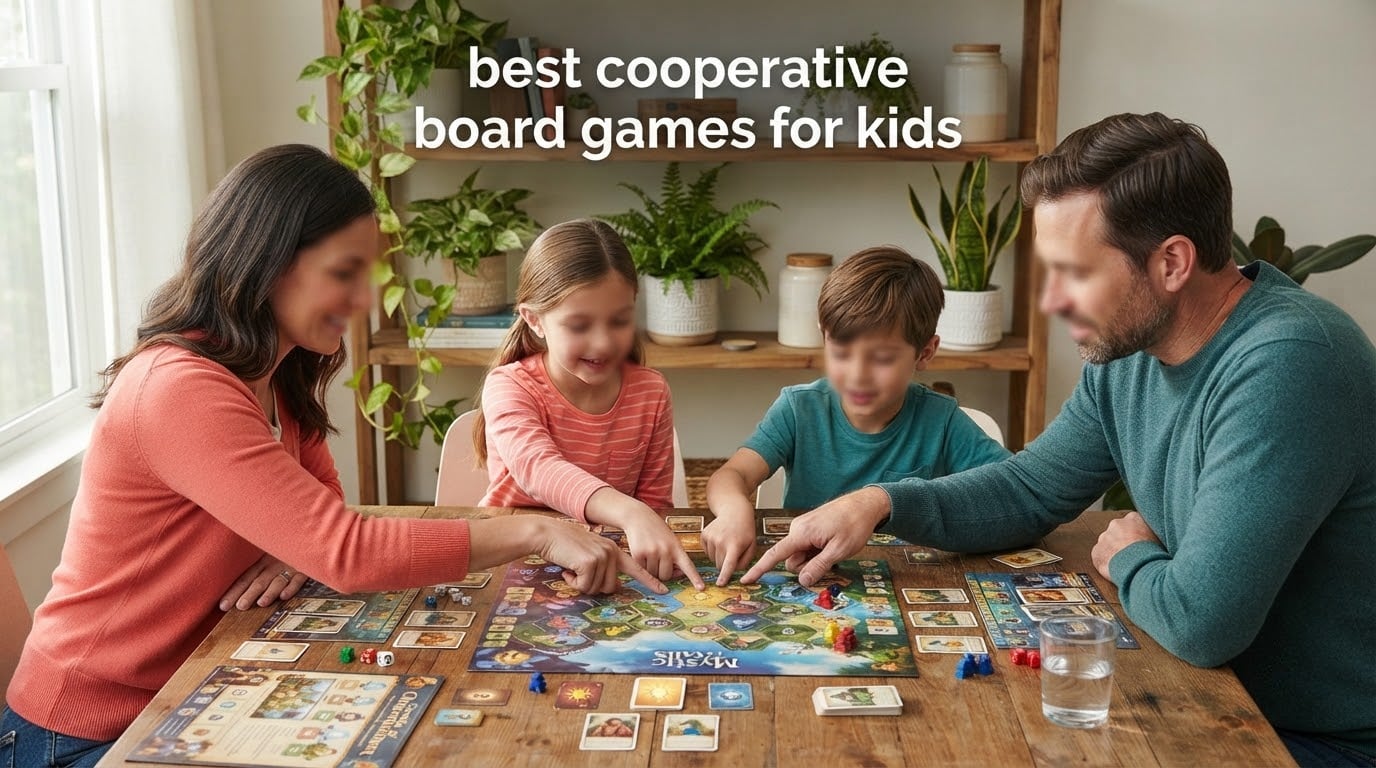
The best cooperative board games for kids solve a problem most families only notice at the end of a long game night: one child is crying, another is accused of cheating, and the adults are packing the pieces away early. In a cooperative game the whole table shares one win and one loss, so there is nobody to blame when things go wrong.
We assembled this list by working through manufacturer ratings, player counts, play times and thousands of buyer reviews for fourteen cooperative games, then sorting them into age bands. Every pick below carries the maker’s own minimum age, because the single most common mistake on other roundups is recommending a game rated eight-plus to a six-year-old.
If you only have a couple of minutes, jump to the strategy board game picks for older players and the age table further down, then come back. The rest of this guide walks the list from the youngest players upward, so a parent of a three-year-old can stop reading after the first four entries.
Table of Contents
What Is a Cooperative Board Game?a
A cooperative board game is one where everyone plays together against the game itself rather than against each other. The table shares a single win condition and a single loss condition, so there is no elimination, no winner’s cushion and no moment where a child is publicly beaten by a sibling.
The quick definition: a cooperative board game is a game where all players work toward one shared goal, such as escaping an island, curing a disease or getting owls home before sunrise, and the whole group wins or loses together as a single team.
That last part is what separates it from a friendly competitive game. In a competitive game the loser is still the loser, however warmly you say good game. In a cooperative game a bad decision belongs to the team, which is exactly the lesson parents say they want their children to absorb. It also means nobody gets knocked out mid-game and sits at the table feeling irrelevant for the rest of the evening.
The mechanics matter more than the theme. Most of the games below are built on shared information, set collection, memory or simultaneous play, and those are the things that force a group of children to actually talk to each other rather than take parallel turns.
Top 3 Cooperative Board Game Picks for Kids in 2026
These three cover the most common household situations: a mixed-age table that needs a game a five-year-old can genuinely play, a short after-school slot, and a toddler who has never held a game piece before.
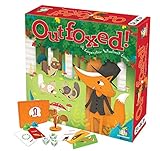
Outfoxed!
- Team deduction for 4 players
- 20 minute rounds
- Ages 4 and up
- Decoder ring mechanic

14 Best Cooperative Board Games for Kids in 2026
Every game in this table lists the manufacturer’s recommended age, the player count and the play time, so you can match a game to the children and the evening you actually have. Where a maker does not publish a play time, the cell says so rather than guessing.
| Product | Specifications | Action |
|---|---|---|
| Outfoxed! |
|
Check Latest Price |
| My First Orchard |
|
Check Latest Price |
 Bluey Scavenger Hunt Bluey Scavenger Hunt |
|
Check Latest Price |
 Hoot Owl Hoot! Hoot Owl Hoot! |
|
Check Latest Price |
 Race to the Treasure! Race to the Treasure! |
|
Check Latest Price |
 Dinosaur Escape Dinosaur Escape |
|
Check Latest Price |
 My First Castle Panic My First Castle Panic |
|
Check Latest Price |
 National Geographic My First Safari National Geographic My First Safari |
|
Check Latest Price |
 Baby Dinosaur Rescue Baby Dinosaur Rescue |
|
Check Latest Price |
 Wildcraft! Wildcraft! |
|
Check Latest Price |
 EXIT Kids Great Bee-Scape EXIT Kids Great Bee-Scape |
|
Check Latest Price |
 Minecraft Heroes of the Village Minecraft Heroes of the Village |
|
Check Latest Price |
 5-Minute Dungeon 5-Minute Dungeon |
|
Check Latest Price |
 Forbidden Jungle Forbidden Jungle |
|
Check Latest Price |
Quick picks for ages 3 to 5: Bluey Scavenger Hunt if your child cannot sit still, My First Orchard if this is genuinely a first game, and Outfoxed! once they can hold a decoder ring.
Quick picks for ages 6 to 8: Hoot Owl Hoot! for a fifteen-minute slot, My First Castle Panic for a first taste of real strategy, and Dinosaur Escape for the shortest possible round.
Quick picks for ages 9 to 12: 5-Minute Dungeon for pace and volume, Minecraft Heroes of the Village for franchise fans, and Forbidden Jungle when they want something that rewards planning.
1. Outfoxed! (Ages 4 and Up) – Best Cooperative Deduction Game for a Mixed Table
- No individual winner
- so nobody is the loser
- Decoder ring keeps every player involved
- 20 minutes fits an after-school slot
- Teaches deduction without lecturing
- Younger preschoolers need help reading clue cards
- Small parts and a choking hazard under three
- Interest can fade after several solved mysteries
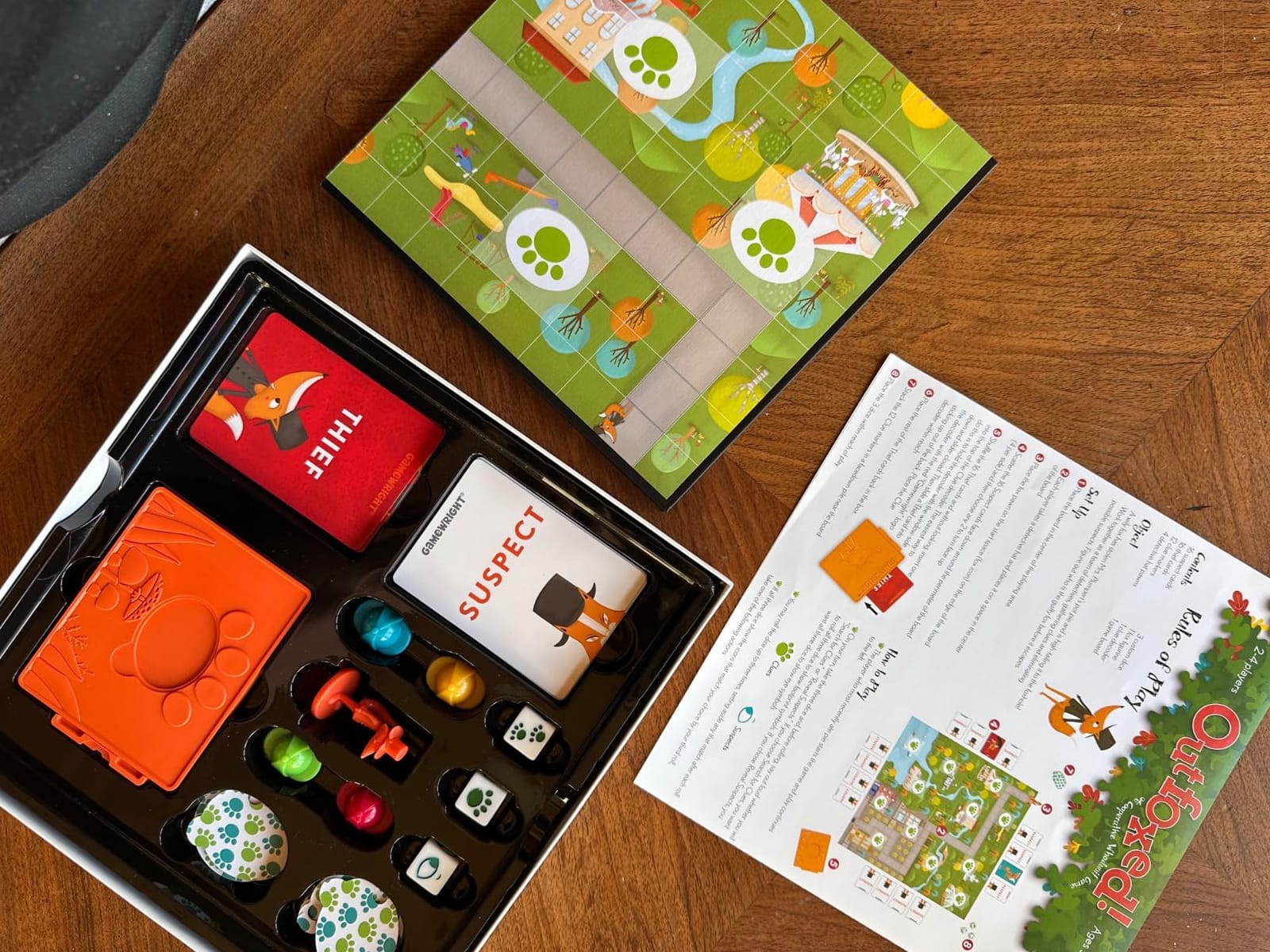
Outfoxed! is the game we would hand to a family whose children argue about who lost. Four players share one job: work out which animal stole the fox’s food, collect the matching clues and use a decoder ring to prove the answer before the fox slips away.
Because there is no individual win, a wrong turn belongs to the group rather than to the child who made it. That single design choice removes most of the table tension that makes competitive games fall apart in our experience.
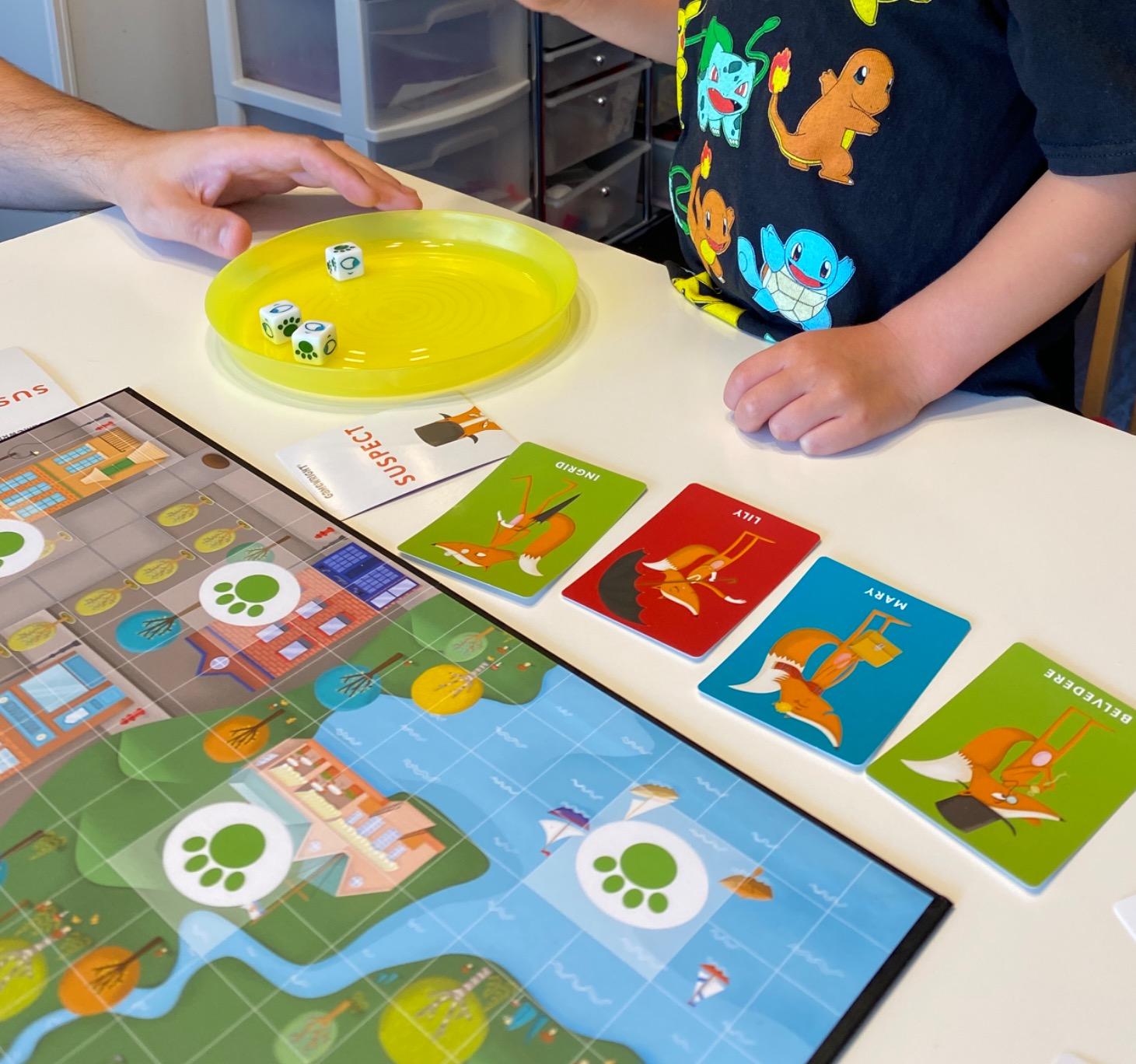
The spec sheet is unusually honest for a children’s game. It is rated from four to fifteen years, plays with four players, and a round runs about twenty minutes, which fits between homework and bath time without a fight.
It measures 9.5 by 9.5 by 2.25 inches and weighs 0.5 kg, and the components are paper, so it survives being played on a table rather than a carpet. Buyers rate it 4.8 out of 5 across more than 7400 reviews, with 89 percent giving five stars.
How hard is the deduction for a four-year-old?
Harder than the box implies, and parents should know it. The clue cards use printed words, so a pre-reader needs an adult or an older sibling to read them aloud, and the decoder ring takes practice to operate one-handed.
Once those two hurdles are cleared, a child of four or five can absolutely play. Many families in the reviews describe a four-year-old running the table within a few weeks.
What should you know before you buy it?
It carries a small parts choking caution, so it is not a toy for a child under three. Some children also lose interest once they have solved a handful of mysteries, and there is no campaign to keep a returning player hooked.
2. My First Orchard (Ages 2 and Up) – Best Cooperative Board Game for a Genuine First Game
- Highest rated game in this roundup
- Chunky wooden pieces survive rough play
- Very few rules so play starts immediately
- Teaches turn taking and colour matching
- Almost no strategy
- so older siblings age out fast
- Wooden pieces pack a punch if hurled
- Best suited to children under five
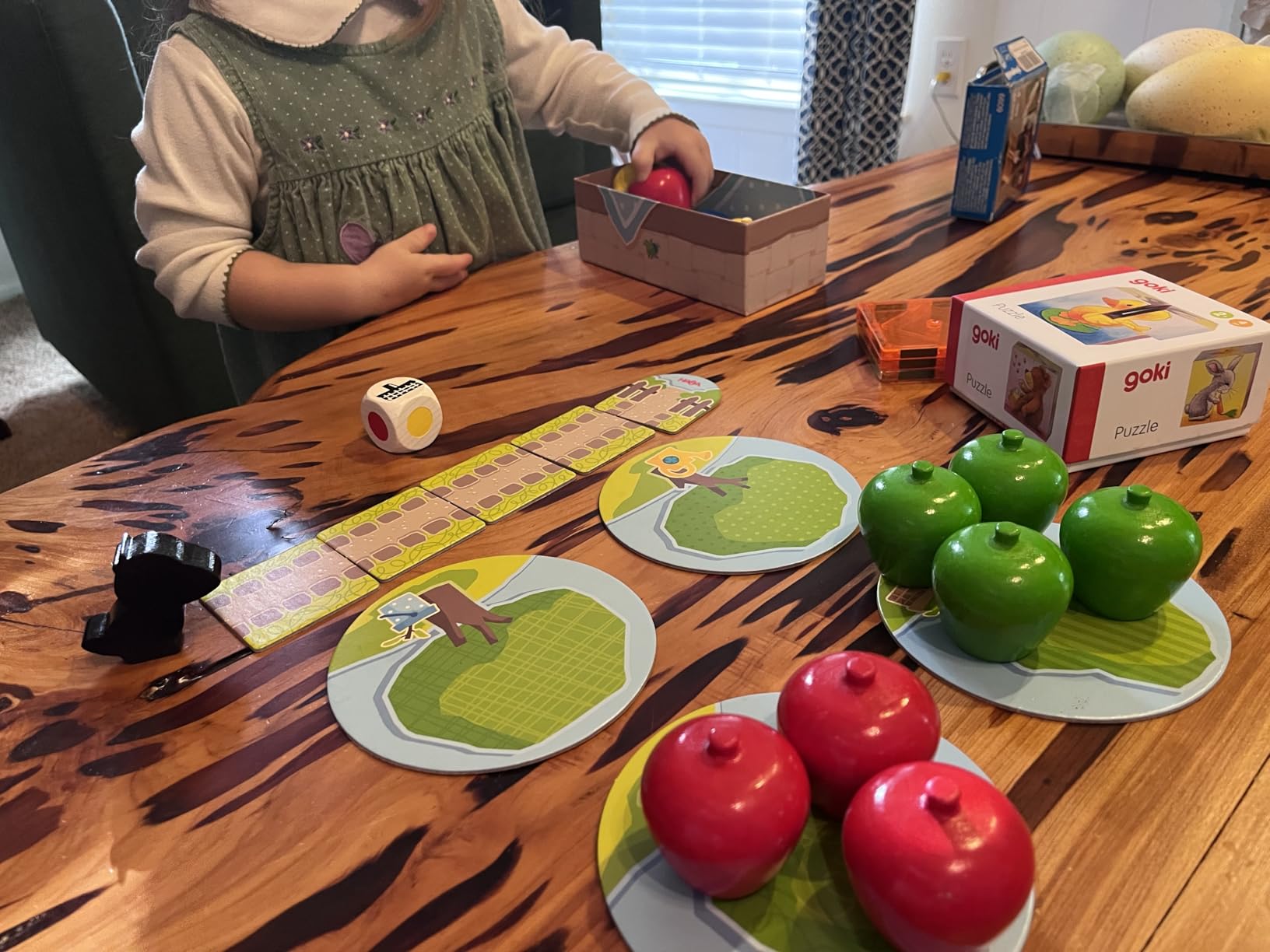
My First Orchard is the one to buy when the child has never played a board game. The whole family rolls a chunky colour die, collects matching fruit from the orchard tree and tries to fill the basket before the raven takes a piece.
It works with one to four players, and the maker rates it for children from 24 to 36 months, though plenty of families keep playing it until five. Sixteen large hand-painted wooden fruit pieces and a solid colour die are the only components that matter.

Buyers rate it 4.9 out of 5 across nearly 3000 reviews, the highest average in this roundup, with 92 percent handing over five stars. Reviewers repeatedly describe it as the perfect first game, and mention the wooden fruit lasting for years of weekly use.
The piece count and PEFC-certified wood matter more than they sound. Small plastic components get swallowed or lost; a solid wooden apple does not.
Can two children play it alone without an adult?
Yes, and it is one of the very few games here that genuinely works that way. With one or two players the turn structure is simple enough that a four-year-old can run the whole round independently.
There is no hidden information and no reading, so nothing has to be explained between turns. That makes it a good solo or one-on-one option for a parent who wants ten minutes of screen-free play with one child.
When should you move on to something else?
As soon as an older sibling is involved. The game has almost no decision making, so children past five tend to abandon it in a month, and the wooden pieces do become projectiles if a toddler is frustrated.
3. Bluey Scavenger Hunt (Ages 3 and Up) – Best Cooperative Game for Children Who Cannot Sit Still
Bluey Scavenger Hunt Board Game, Cooperative Play with 4 Exclusive Mini-Figures, Indoor Games for Kids Ages 5+, Fun Toy Token Collecting Game
- Gets children up and moving around the house
- One team
- which reviewers say cuts sibling rivalry
- Four exclusive mini figures included
- Movement cards have children dance and act
- Requires an adult to read the cards
- Trivia facts wear thin after several plays
- Heavier rule set than the age rating suggests
The Bluey Scavenger Hunt is the pick for a child who cannot stay seated. Instead of a table, the players move around the house hunting for twelve toy tokens while sharing clues, which turns a competitive sitting game into a moving team game.
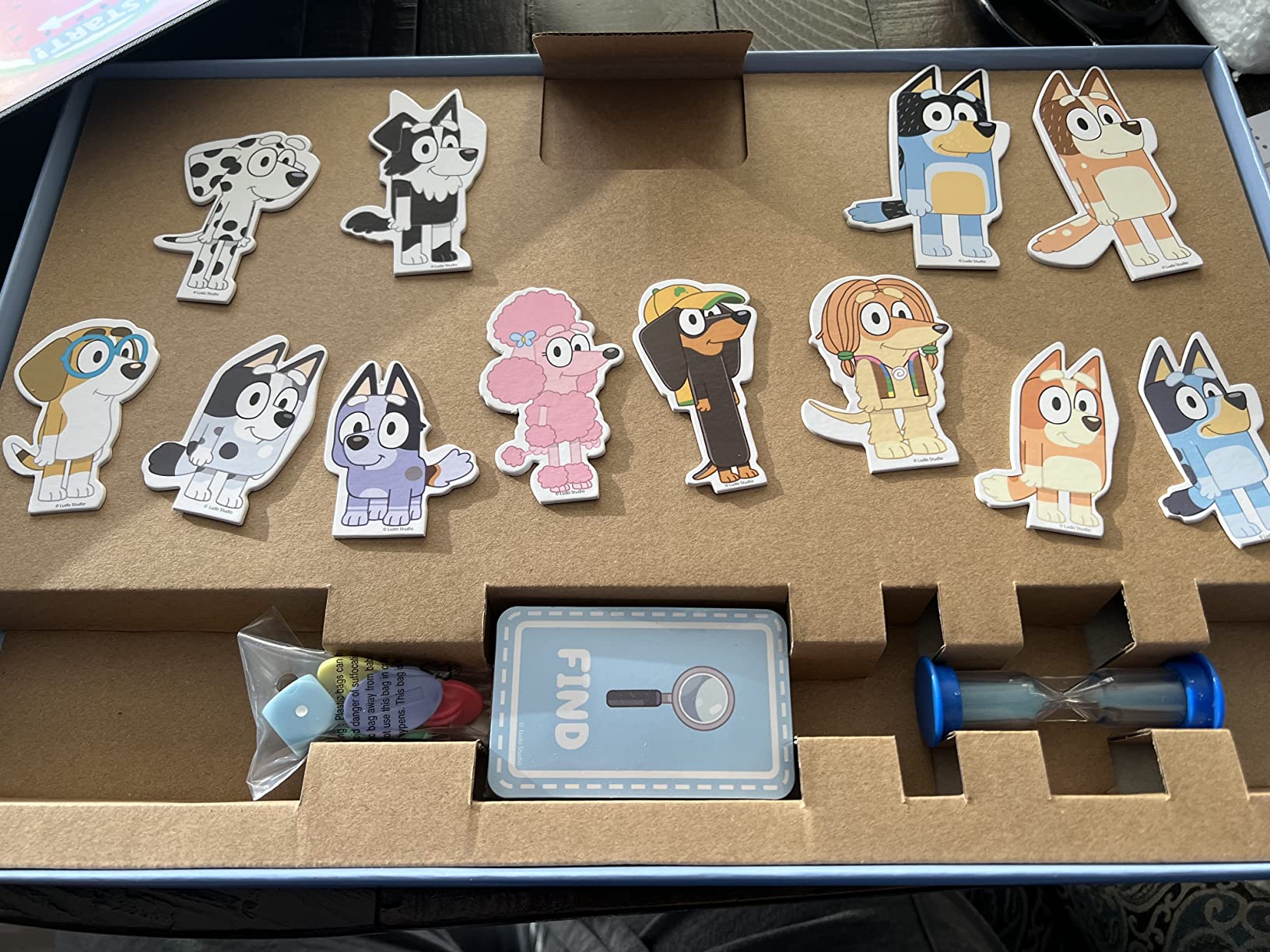
It plays with two to four players and is rated from 36 months to fifteen years. The box includes 20 find cards, 10 play cards, 35 toy tokens, a board and four character pawns, plus four exclusive mini figures of Bluey, Bingo, Bandit and Chilli.
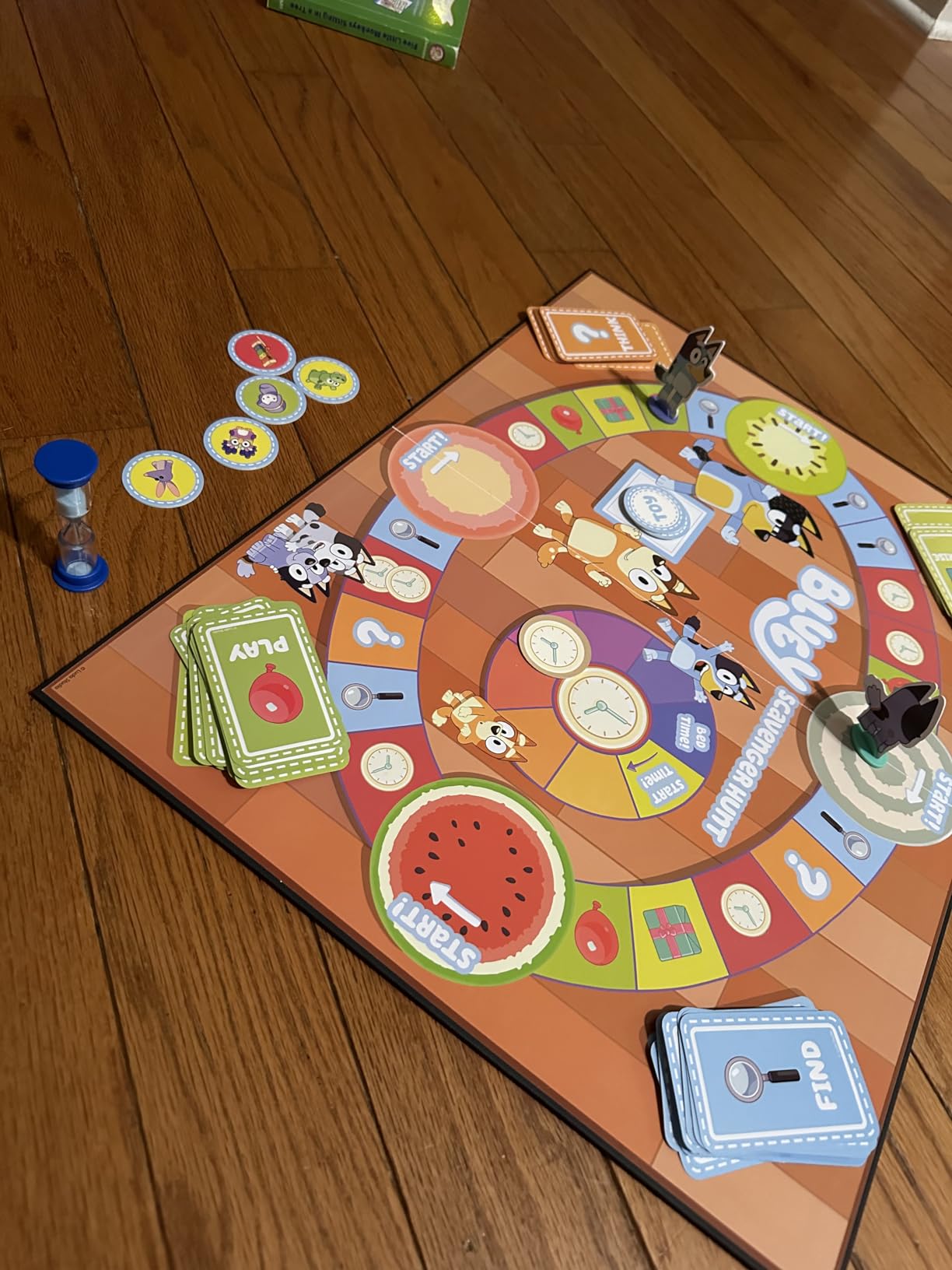
The play cards are the clever part. They ask the group to dance, act out a character or make a noise, so the children are physically committed to the game rather than watching it. Reviewers frequently describe it as a first board game for a wiggly preschooler.
It holds a 4.8 rating from more than 3200 reviews with 85 percent five stars, and the board is 20 by 15.25 inches, large enough to lay on the floor.
Does it really work across a wide age gap?
It does, and that is where the character theme pays off. Reviewers report three-year-olds and eight-year-olds playing happily together because the theme carries the older child while the physical hunt carries the younger one.
The catch is reading. The cards use printed text, so a pre-reader needs help, and international families find the English-only wording hard to follow.
Will it still be fun after a month?
Probably not, and this is a repeat-play game rather than a keeper. The trivia cards are limited and become predictable, and some families find the rule set heavier than they expected from the three-plus rating.
4. Hoot Owl Hoot! (Ages 4 and Up) – Best Cooperative Game for a Fifteen-Minute Slot
- Fits a bedtime or after-school window
- No reading required at all
- Colour matching builds planning and social skills
- Very large review base
- Matching decisions become repetitive
- Small parts
- not for children under three
- Rounds can end abruptly when the sun is drawn
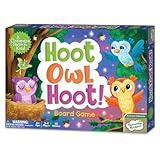
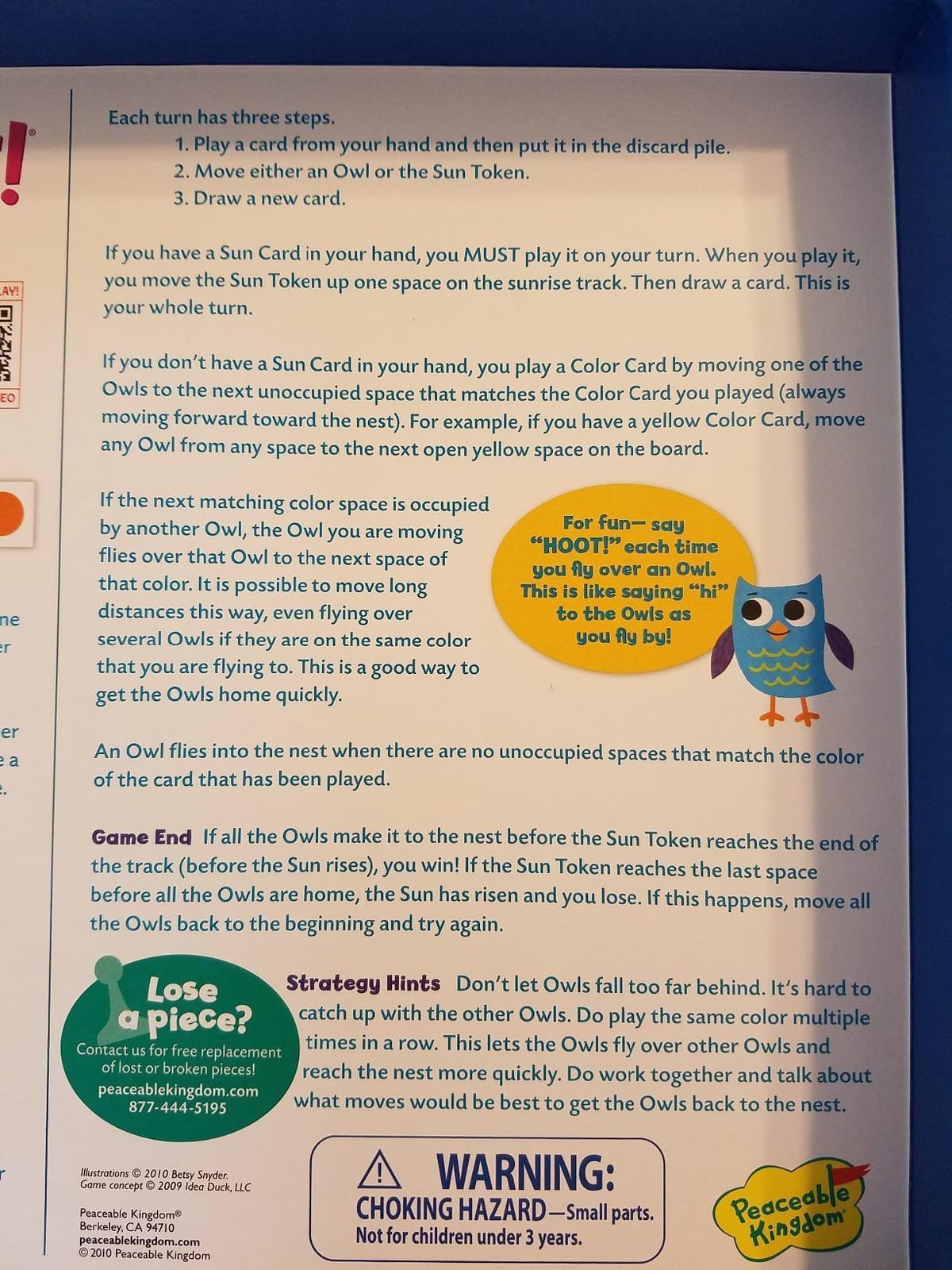
Hoot Owl Hoot! is the Peaceable Kingdom game that fits almost anywhere in an evening. The team flips colour cards looking for the right sequence to get three owls home before the sun rises, and a full round takes about fifteen minutes.
Two to four players can play, no reading is required, and the maker rates it from four years up. The box is 13 by 9 by 2 inches and comes with a printed rulebook and a 30 day warranty against defects.
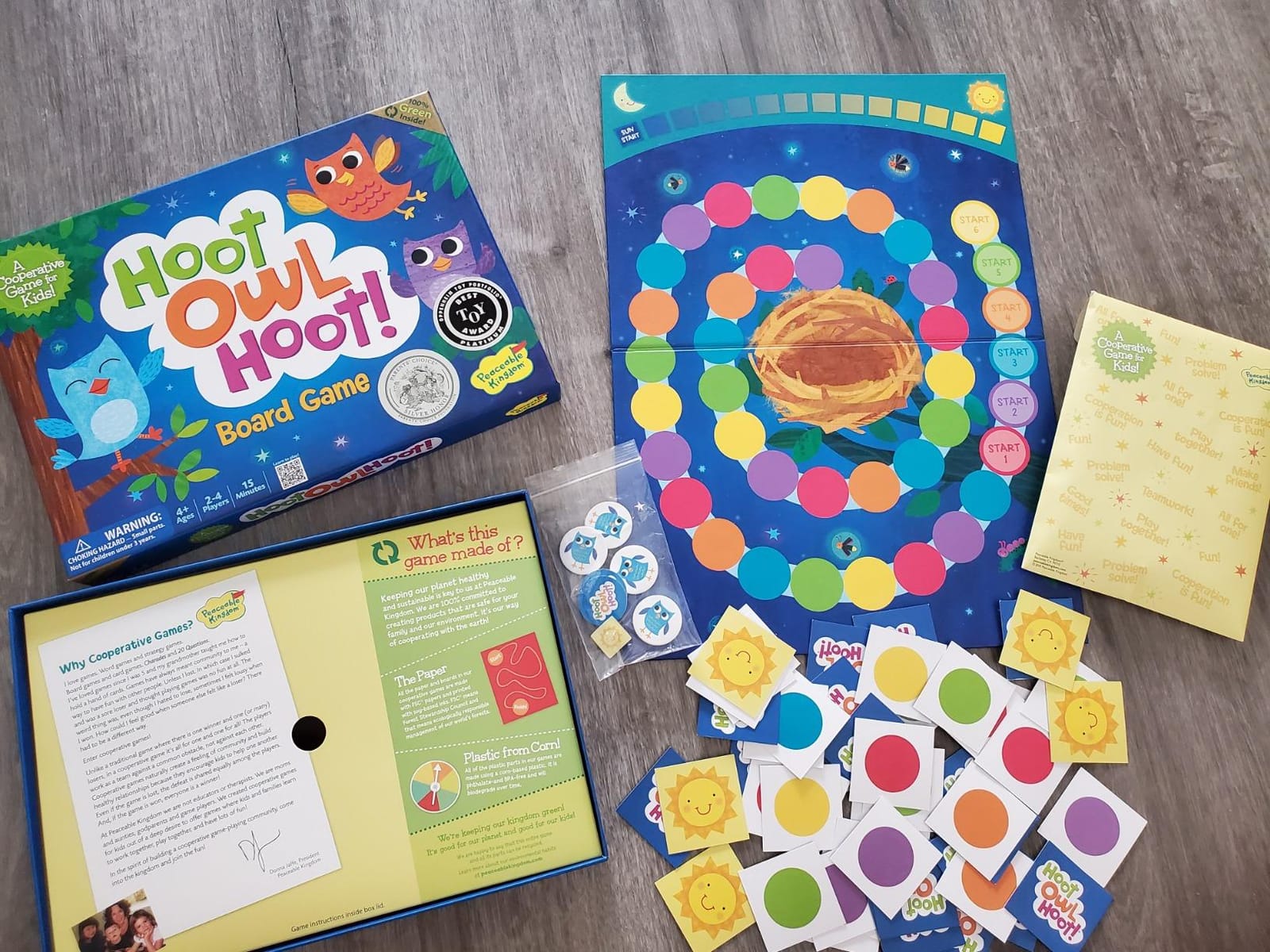
It has one of the largest review bases of any children’s cooperative game, at more than 4000 ratings averaging 4.8, with 86 percent five stars. That consistency matters, because a game this simple has nowhere to hide.
The design is deliberately frustration-free. There is no losing child, only a team that got close, and the colour matching is the kind of skill children practise at school without feeling taught.
Is fifteen minutes long enough for a full game?
Yes, because the game is designed around a single clock. The sun token moves each round and the session ends when it is drawn, so there is no long tail of setup and no waiting for one slow player.
The flip side is that some groups find the ending abrupt, particularly if the sun appears on the second turn.
How long before it feels too easy?
For most families it peaks somewhere in month two. Reviewers often note that the matching decisions become repetitive once everyone has internalised the card colours, so plan to move on around then.
5. Race to the Treasure! (Ages 5 and Up) – Best Cooperative Game for Siblings of Different Ages
Peaceable Kingdom Race to the Treasure! Cooperative Path Building Game for 2 to 4 Kids Ages 5+
- No reading required
- so younger players join fully
- Clear shared goal
- Compact and portable for travel
- Award-winning design
- Small path pieces are easy to lose or swallow
- Too simple for older children
- Dice randomness can feel out of the team's control
Race to the Treasure! answers the age-gap problem better than anything else in this roundup. The group lays path pieces to reach the treasure before the Ogre gets there, and if they succeed, everyone wins together.
Two to four players can take part, the maker rates it from five years up, and a round runs about twenty minutes. The board is 12.5 by 9 inches and the whole game weighs 16 ounces, so it fits in a bag for a trip.
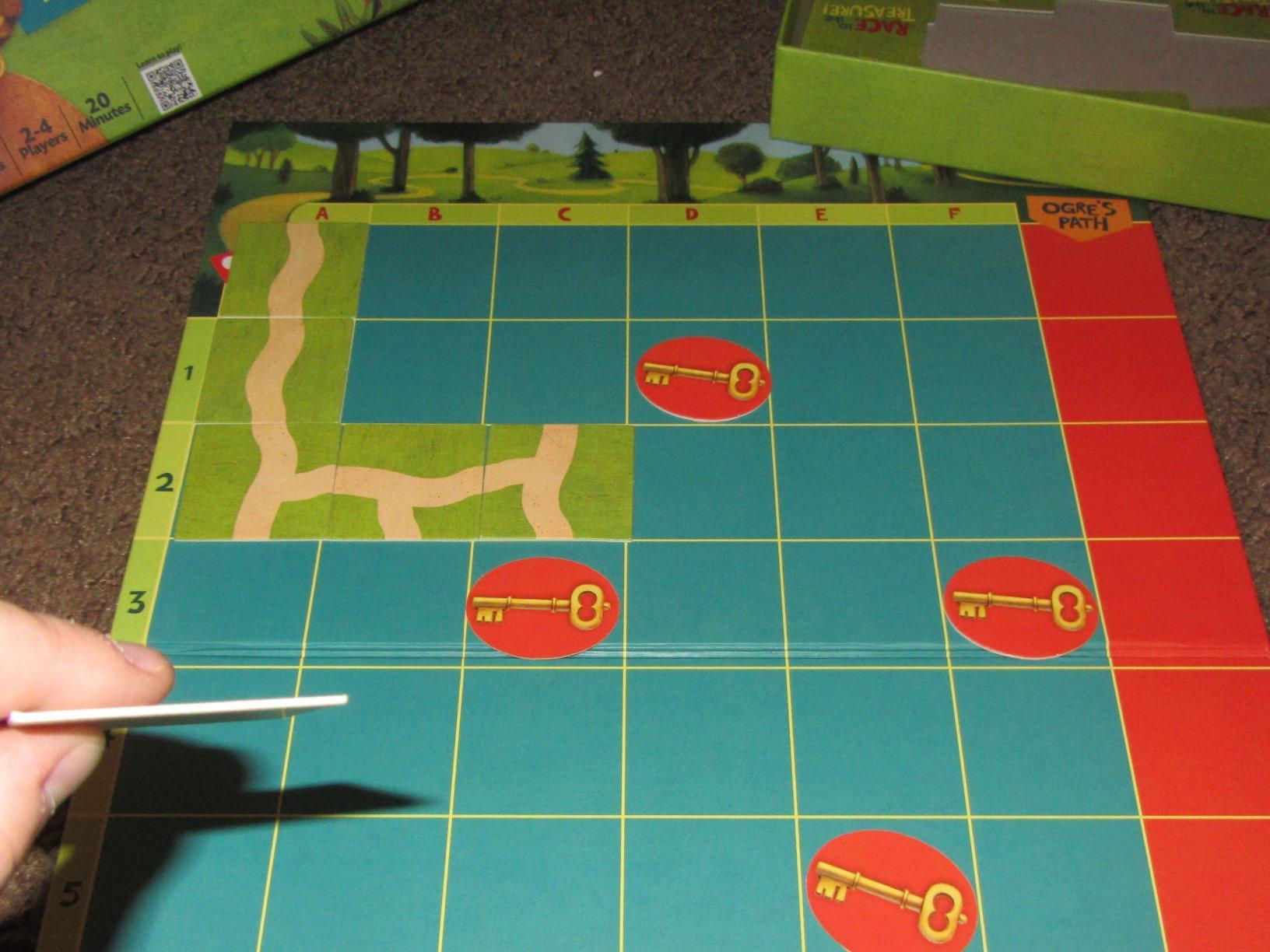
No reading is required at any point, which is what makes a five-year-old and an eight-year-old genuinely equal here. The product has won four awards, including an Oppenheim Toy Portfolio Platinum Award, and rates 4.8 across more than 3100 reviews.
Forum regulars name it as one of the games that works because everyone wins or loses together, which is the whole point. BoardGameGeek threads about cooperative games for children keep pointing at games with this shared-goal shape.
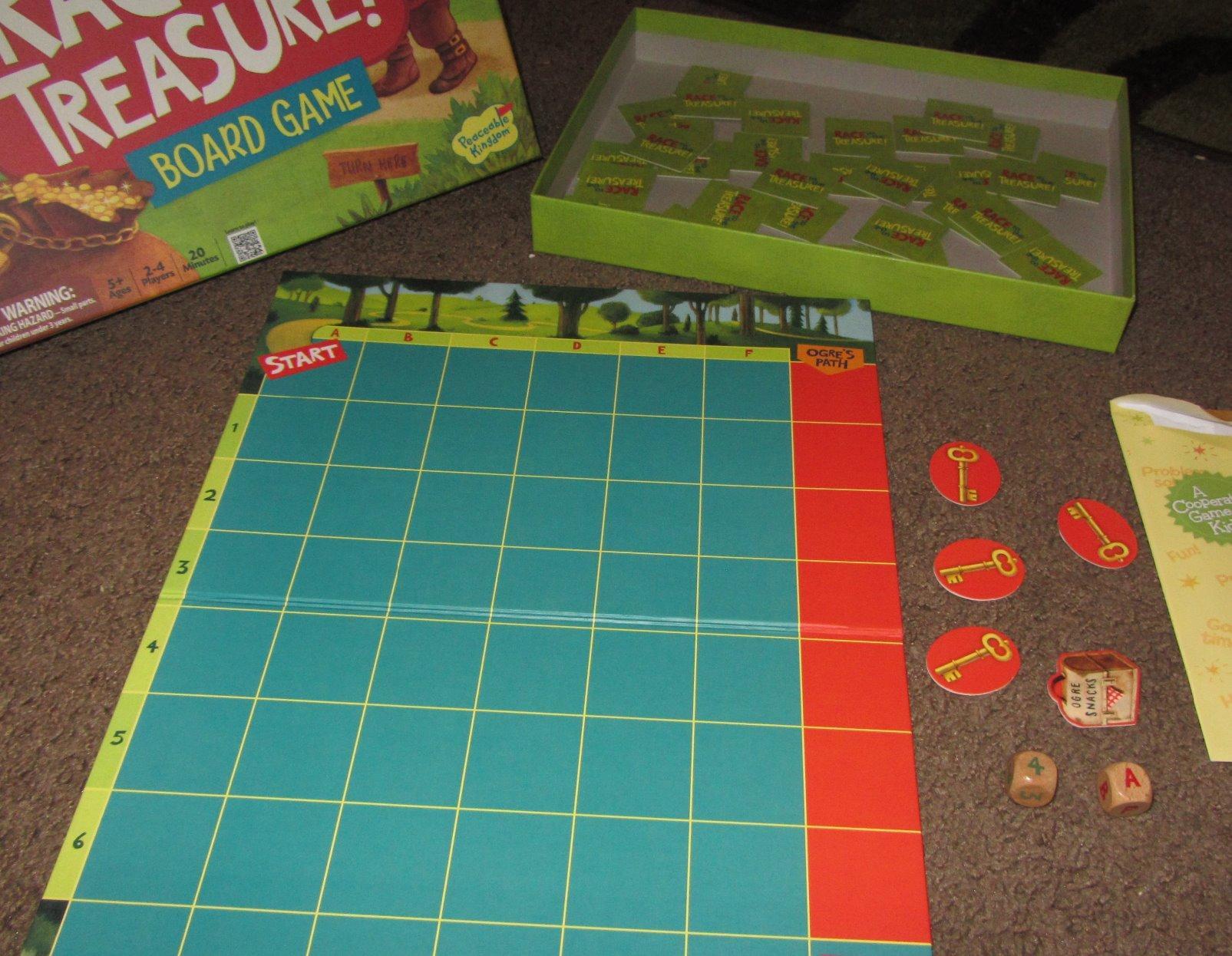
What are the pieces like in a house with a toddler?
They are the weak point. The path pieces are small and easy for a younger sibling to swallow or lose, so keep the box out of reach and do a quick count before putting it away.
If you have a child under three in the room, choose a wooden game such as My First Orchard instead and save this for after bedtime.
Does an eight-year-old get bored?
Some do. The decision-making ceiling is low, and the dice introduce randomness that can feel like the team had no influence over the outcome. It is a strong first cooperative game, not a long-term one.
6. Dinosaur Escape (Ages 4 and Up) – Best Cooperative Game for Ten-Minute Rounds
Peaceable Kingdom Dinosaur Escape Cooperative Memory Game of Logic and Luck for 2 to 4 Kids Ages 4+
- Shortest rounds in this roundup
- No winner or loser to argue about
- Volcano timer creates shared tension
- Bright dinosaur theme draws children in
- Small tokens are a choking hazard under three
- Memory element frustrates very young children
- Volcano mechanic can feel stressful
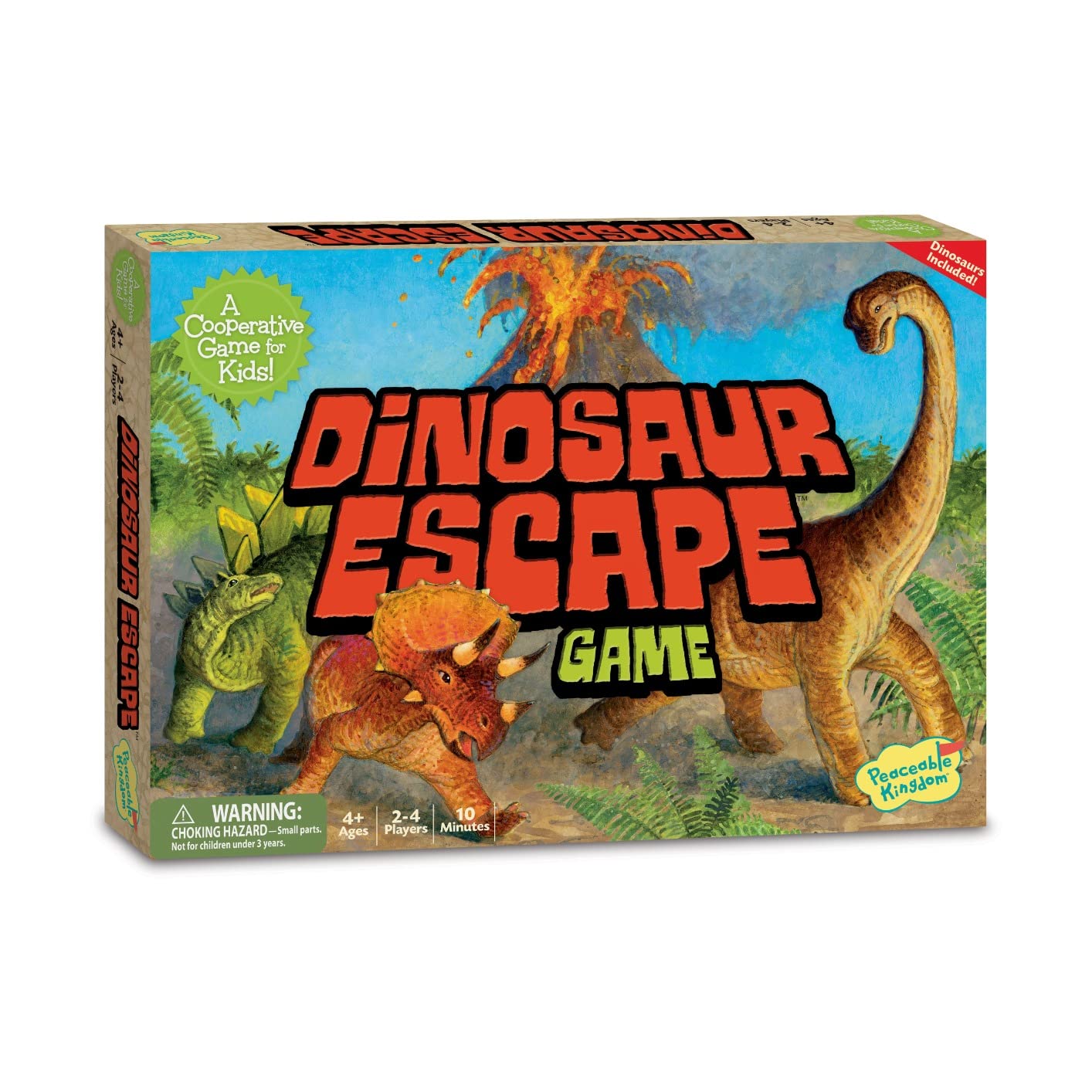
Dinosaur Escape is the game to reach for when a full round has to fit between one activity and the next. A round runs about ten minutes, and the group flips reversible fern tokens to uncover matching dinosaurs before the volcano puzzle assembles itself and erupts.
Two to four players can play, the maker rates it from four years up, and the components are a board, three plastic dinosaur movers, a die, 12 reversible fern tokens and five volcano pieces on a stand. No printed rulebook is included, which is unusual but rarely complained about.
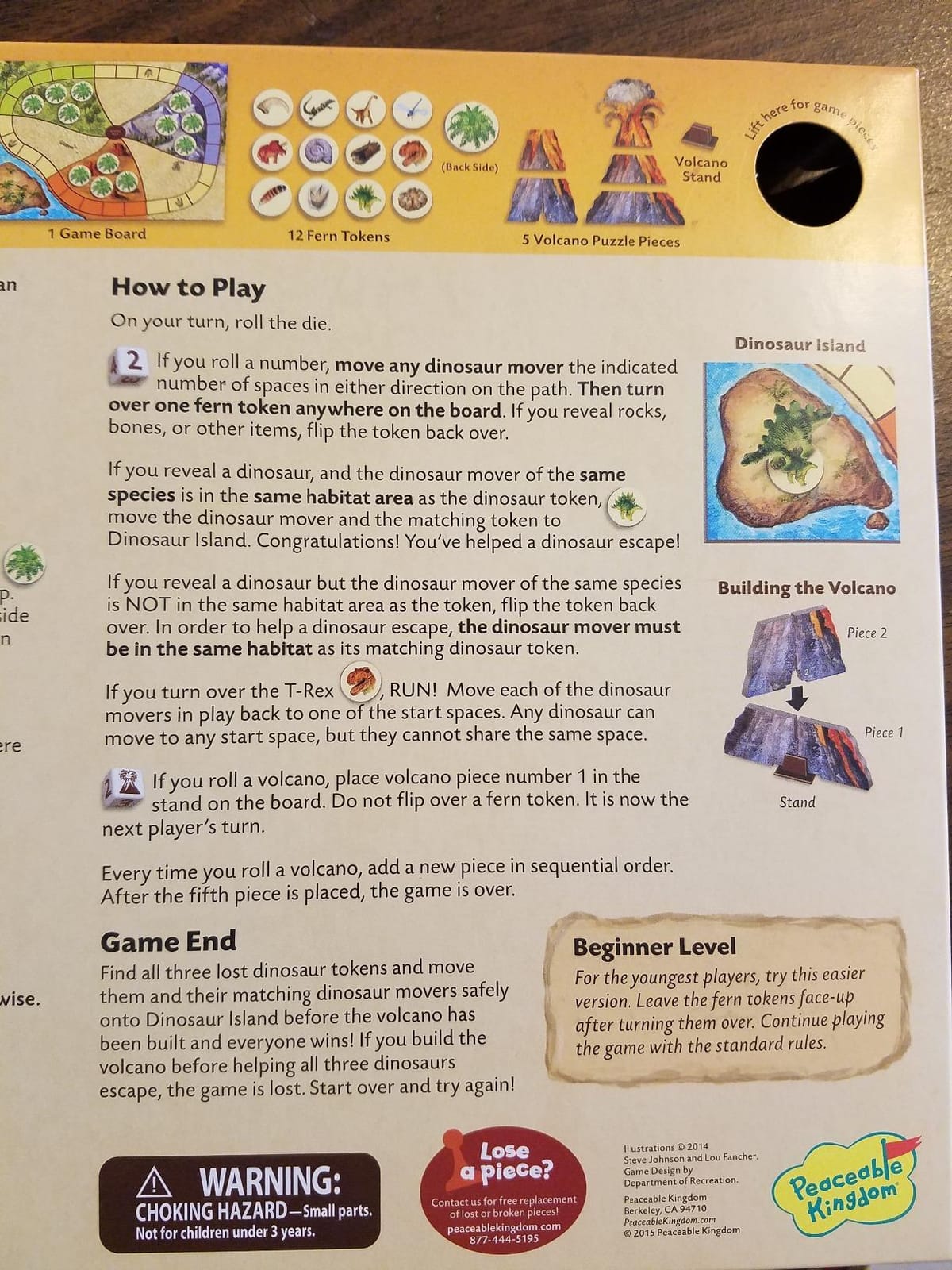
Buyers rate it 4.7 across more than 2200 reviews with 81 percent five stars. The volcano is a neat piece of design: the pressure builds for everybody at once, so nobody can be blamed for the eruption.
It also plays solo or as a duo without feeling thin, which is unusual for a game in this age range.
Is the memory component too hard for a four-year-old?
For some children, yes. Reviewers specifically mention that the recall element can frustrate a preschooler who is still building a memory for tile positions, and the small fern tokens are a choking hazard under three.
The fix is to let the youngest player handle the dinosaur movers rather than the tokens, which keeps them involved without the frustrating part.
How long does it stay interesting?
Shorter than the other preschool picks. Children past six often lose interest because the decisions are limited, and the volcano build-up can read as stressful rather than exciting for a sensitive player.
7. My First Castle Panic (Ages 4 and Up) – Best Cooperative Game for First-Time Strategists
- Genuine first taste of strategy
- Two support towers soften an early loss
- Icon cards mean no reading
- Standing castle and large tokens
- Card quality is described as lackluster
- Pieces are small and get misplaced
- Children around six may prefer standard Castle Panic
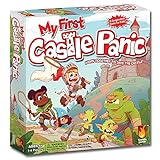
My First Castle Panic is the simplified version of the classic, and it is the first game on this list that feels like real strategy without asking a child to read. Players match colours and shapes to stop cartoon monsters reaching the castle.
It plays with four players, is rated from four years up, and a round runs about twenty minutes. The cards are icon-based rather than written, and two support towers give the team a second chance after an early loss, which does a lot to soften a bad start.
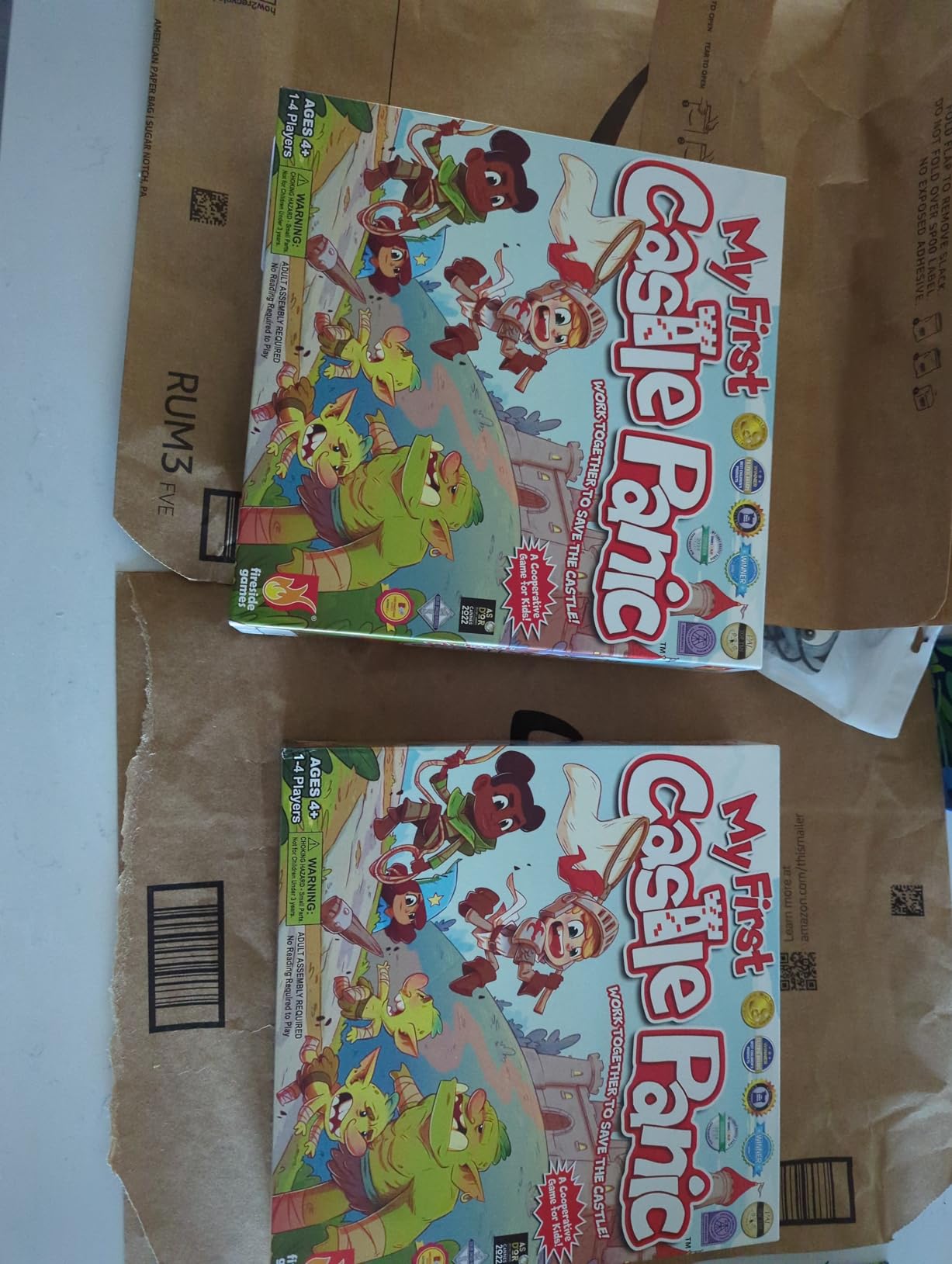
Reviewers describe it as a gateway game, and many parents in the reviews bought the full Castle Panic afterwards. The skills transfer directly, which is a good sign for a starter purchase.
It rates 4.8 across roughly 1450 reviews with 88 percent five stars, and it is built around a sturdy standing castle and thick wall pieces sized for small hands.
Do the cards and pieces hold up?
Not as well as the rest. Card quality is described as lackluster by several reviewers, and cards wear from rough handling, so buy card sleeves if you want the game to survive more than one term.
The small pieces are also easily misplaced and need auditing after every play. There is only one customer image at the time of writing, which is a thin photo record for a game with this many owners.
Is it too easy for a seven-year-old?
Quite possibly. Reviewers note that children around five to seven may be ready for the standard Castle Panic instead, and the game includes optional easier and harder rule variants if you want to stretch it.
8. National Geographic My First Safari (Ages 4 and Up) – Best Cooperative Game Where Learning Is the Point
National Geographic My First Safari Cooperative Board Game for Kids
- Three difficulty levels let the game grow
- Real facts on 21 animals included
- Every piece moves
- which is unusual
- Parents report noticeably less arguing
- Explorer figures bend in their stands
- Component quality is criticised
- Children outgrow the decisions quickly
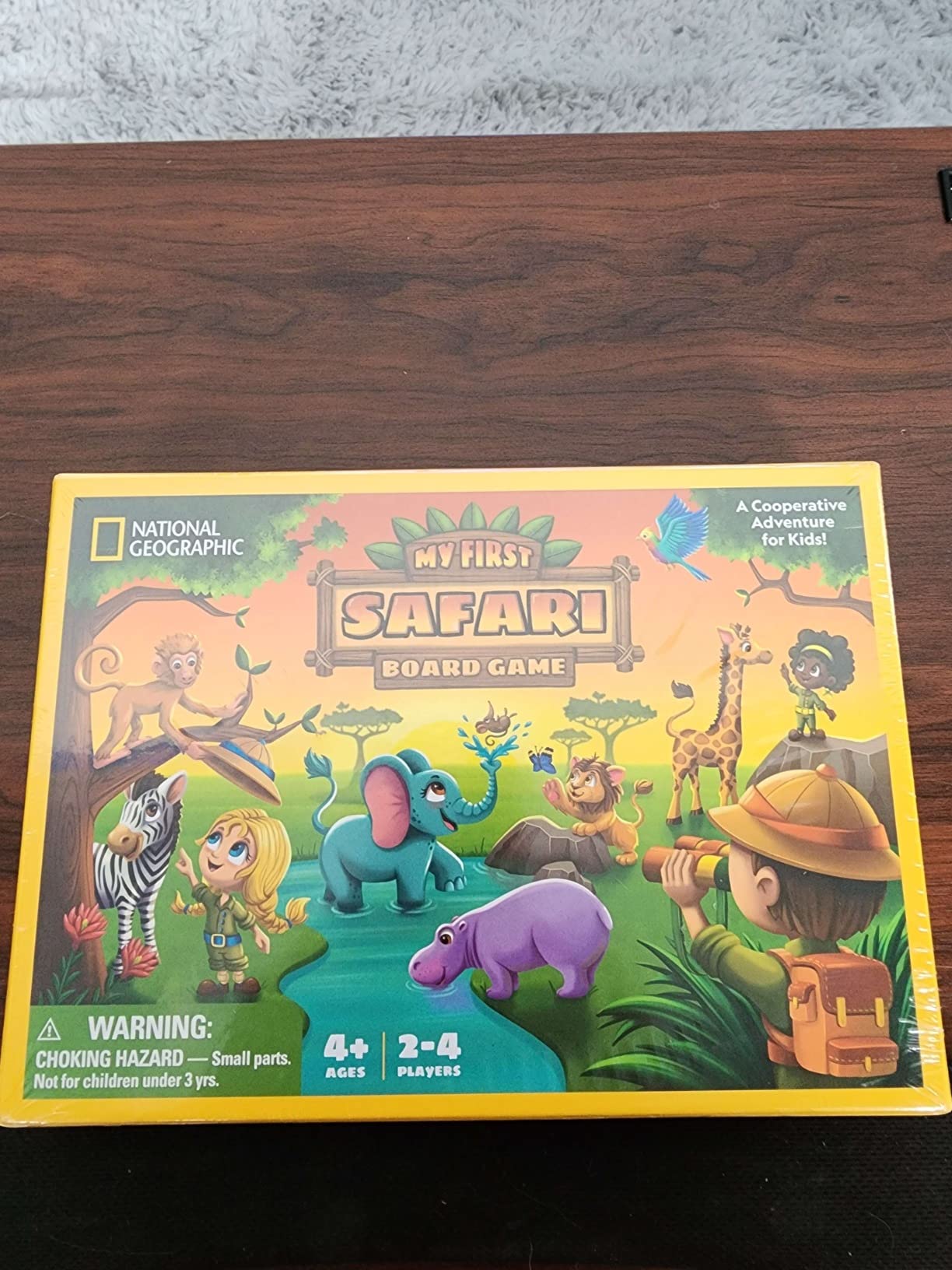
National Geographic My First Safari has an unusual goal: you have to move every playing piece on the board, not just one. The team covers the animals before the sun token runs out, and that single rule changes how the table talks.
It plays with four players and is rated from four years up. The box holds a game board, five safari explorers, a sun token, 36 item cards, 13 sun cards and a full-colour learning guide covering 21 animals.
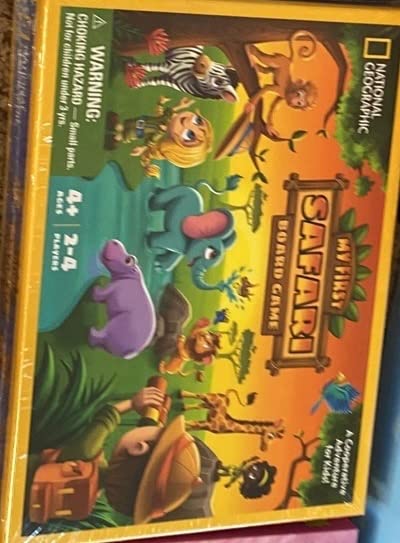
The learning guide is the real draw. It covers elephants, eagles, cheetahs, giraffes, hippos, hyenas and more, and parents say children pick up the facts without feeling taught because the cards drive the conversation.
Teachers and parents in the reviews highlight the cooperative design as the main benefit, reporting that it prompted siblings to work together rather than compete.
What are the weaknesses parents mention most?
The explorer figures. Several reviewers found them very hard to seat in their stands and reported bending or breaking during play, and some simply found the components poorly made overall.
Children also move past the decision-making quickly, and a child used to competitive games needs teaching that there is no individual piece to move.
Is the difficulty adjustable?
Yes, through three built-in difficulty levels that scale with the children’s skills. That makes it one of the few games here that can stay in the rotation for a second year rather than being outgrown in a month.
9. Baby Dinosaur Rescue (Ages 4 and Up) – Best Cooperative Game to Introduce Cards and Rules
Baby Dinosaur Rescue Cooperative Board Game for Kids Ages 4+, Family Fun
- No reading required anywhere
- Simple enough to teach in a minute
- Single lava token gives a clear shared threat
- Short playtime suits classrooms too
- Very simple
- so children outgrow it fast
- Small components are a choking hazard under three
- Listed dimensions and weight look inconsistent
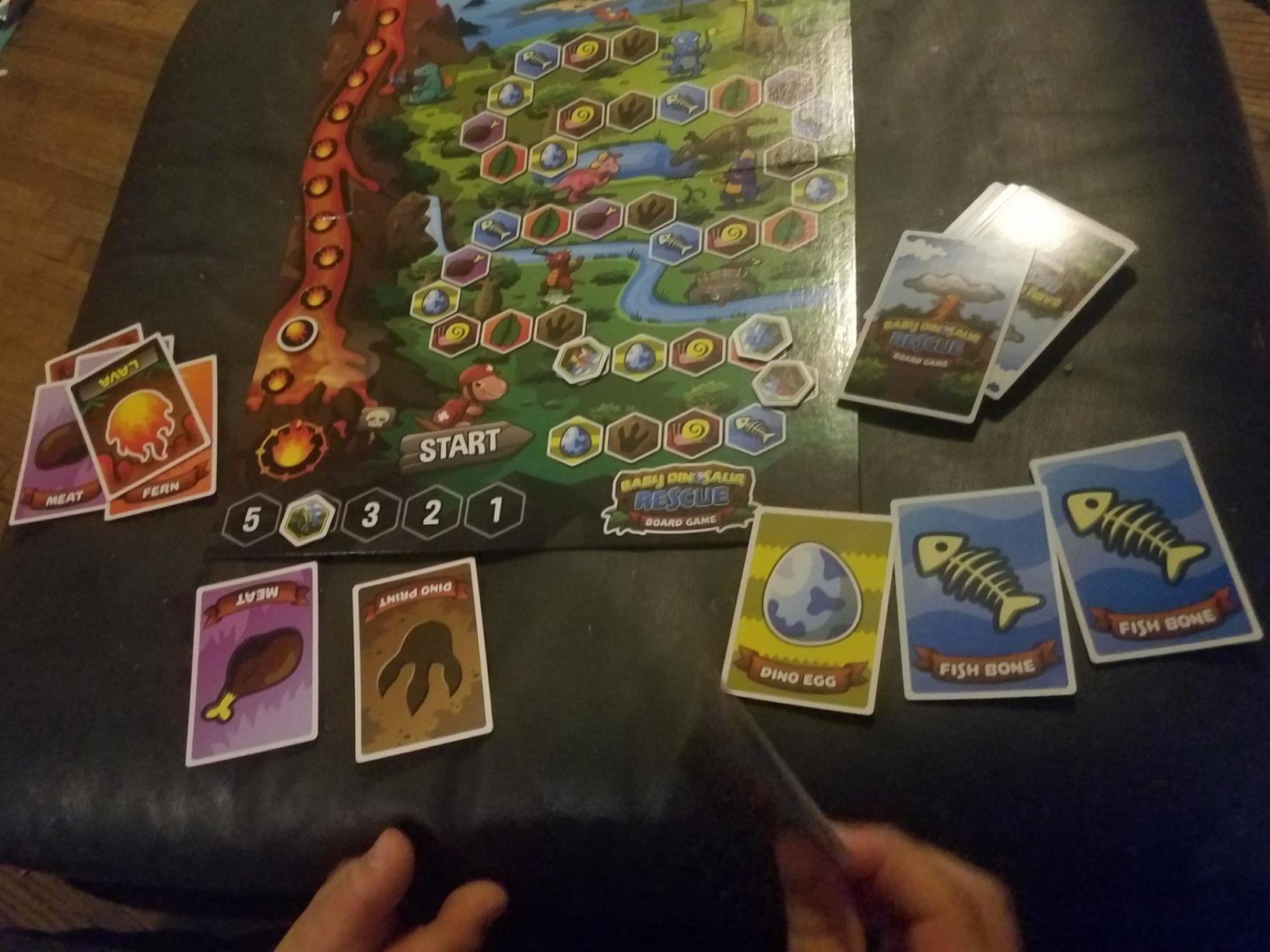
Baby Dinosaur Rescue is a clean, unfussy first cooperative game. The group moves baby dinosaurs across the valley toward safety using image cards, while a lava token creeps along the path behind them.
It plays with two to four players, is rated from four years up, and a round runs about twenty minutes. The components are a game board, dinosaur tokens, one lava token and a set of image-based cards, so nothing has to be read aloud.
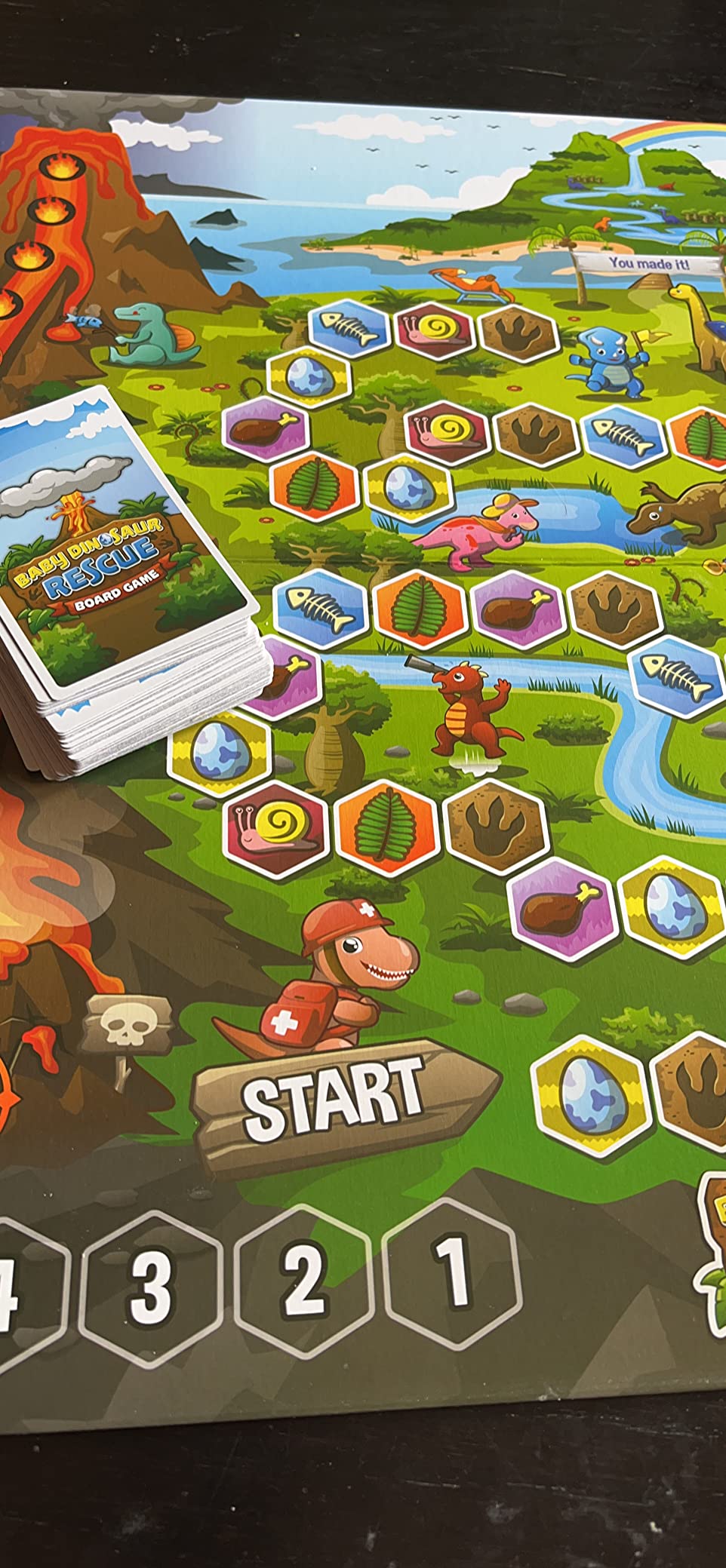
The single lava token is a good design choice. One shared threat is much easier for a four-year-old to understand than several, and it keeps the table talking about a common problem rather than four private plans.
It rates 4.7 from just under 1000 reviews with 80 percent five stars, and reviewers consistently frame it as a reliable first cooperative game for preschoolers.
Will the pieces survive small hands?
That is the question to ask before buying, because the listed board size of 9 by 6.5 inches and a stated weight of one gram suggest very light, thin components. Small parts also carry a choking hazard caution for children under three.
It is still a good teaching game, just check the box before you commit to a long-term purchase.
When does it stop being fun?
Rapidly. The decisions are limited, and reviewers note that children quickly outgrow the strategic content. Treat it as a bridge to something with more depth, not as a set-and-forget game.
10. Wildcraft! (Ages 4 and Up) – Best Cooperative Game for a Slower, Calmer Session
Wildcraft! Cooperative Board Game, Learn 25 Herbs, Family Game for Kids 4+
- Children learn 25 herbs without feeling taught
- Botanical artwork holds adult attention
- Visual cards work for pre-readers
- Players can drop in and out mid-game
- Pocket guide and colouring book must be printed
- A full game can exceed a four-year-old's attention span
- Light on strategy
Wildcraft! is the slower option on this list, and that is a feature if your evenings are calm rather than rushed. The group works together on a mission to bring herbs to Granny’s house, identifying plants from visual cards along the way.
It plays with one to four players, is rated from four years up, and a full game runs roughly forty minutes. Around 25 edible and medicinal herbs are covered, and the ailment cards use pictures so pre-readers can join in.
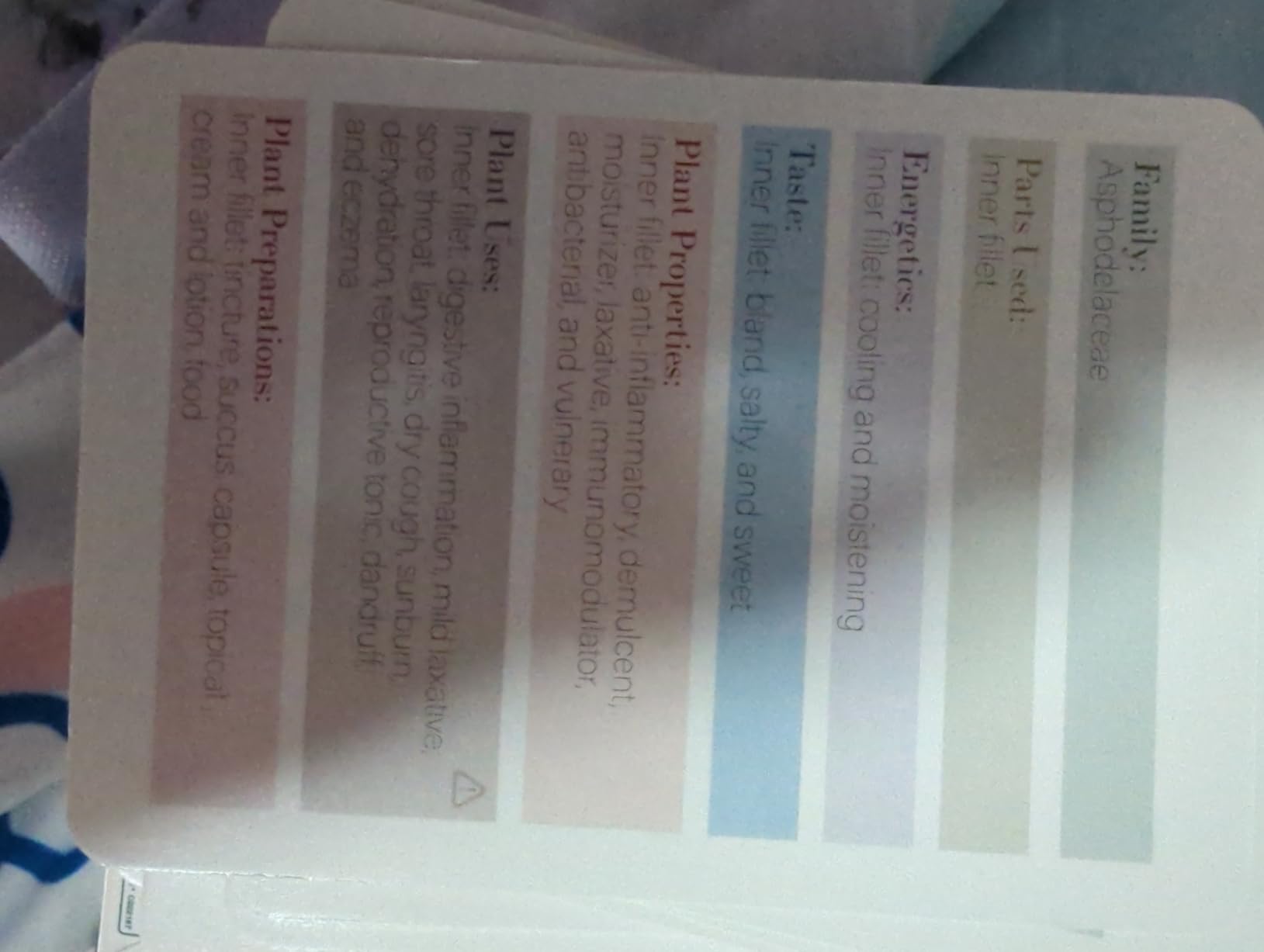
Reviewers describe it as genuinely educational without feeling like schoolwork, and a few parents report children becoming interested in real foraging afterwards. The botanical illustrations are unusual in that they hold an adult’s attention too.
It rates 4.7 across roughly 1540 reviews with 83 percent five stars, and it is made from recycled, recyclable, non-toxic materials.

What is actually in the box?
The board game, a printed rulebook and a set of herb note flashcards. Three printable PDFs are offered separately, including a storybook, a pocket plant guide and a colouring book, and those are the most common complaint in the reviews.
If you have no printer, you are missing part of what you paid for. Check that before buying.
Does it suit a child who likes a challenge?
Not really. It is light on strategy by design, and forty minutes is a long commitment for a four-year-old. It suits a calm household that wants a gentle activity rather than a competitive evening.
11. EXIT: The Game Kids – The Great Bee-Scape (Ages 5 and Up) – Best Cooperative Game for Young Puzzle Solvers
- Language-independent cards suit pre-readers
- Same decoder wheel as the adult EXIT games
- Pieces do not degrade with repeated play
- Plays solo or as a team
- Too easy for children around nine or ten
- Once a puzzle type is understood it repeats
- Key and picture reward feels lazy
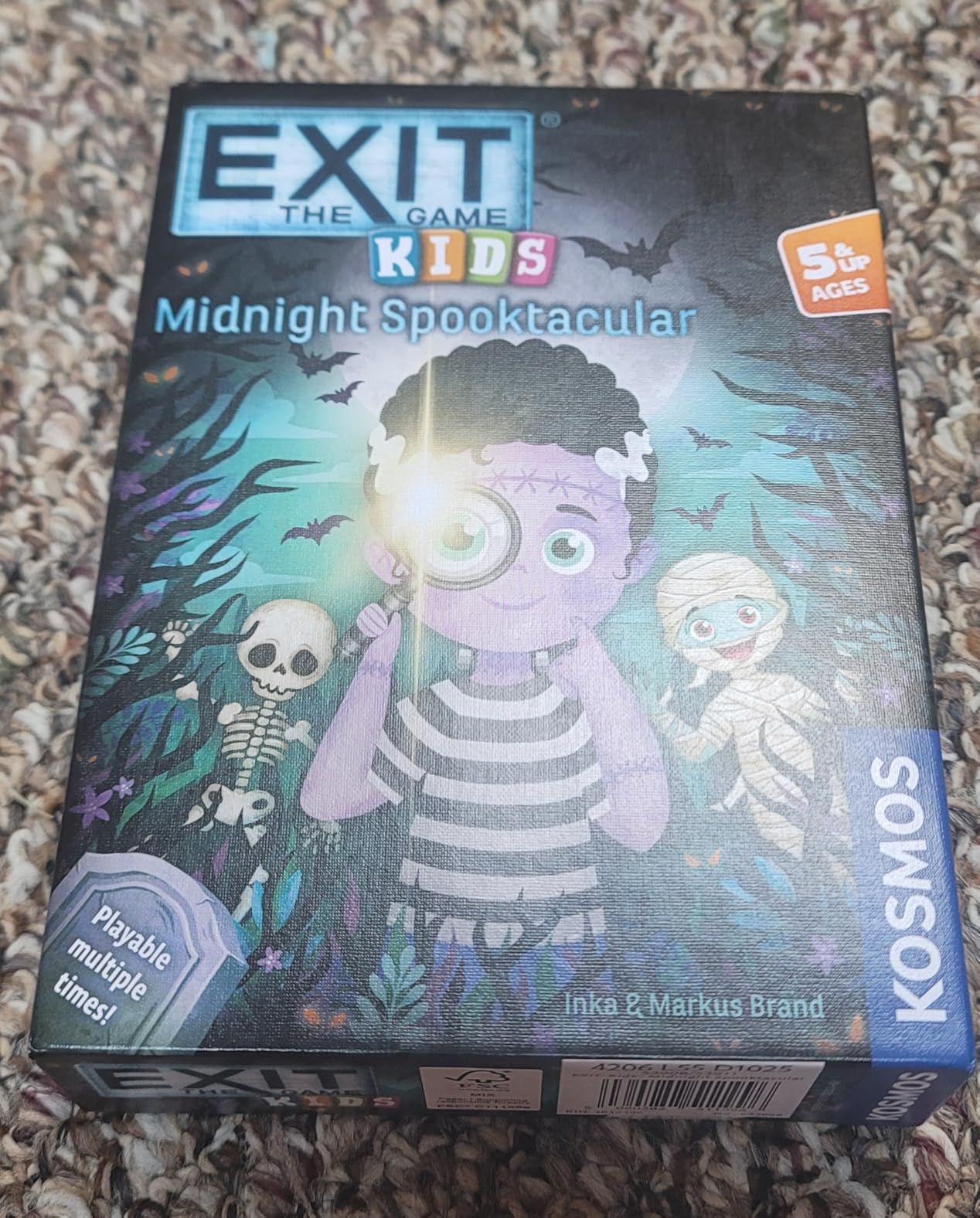
The Great Bee-Scape is a children’s version of the EXIT escape puzzle series, and the main thing it does well is durability. Adult EXIT games use paper props that get used up; this one is built from cardstock, so the box can be played again and again.
It is best with one to four players but works with more, and is rated from five years up. The cards are language independent, so no reading is required, and it measures 7.1 by 1.7 inches and weighs just 3.2 ounces.
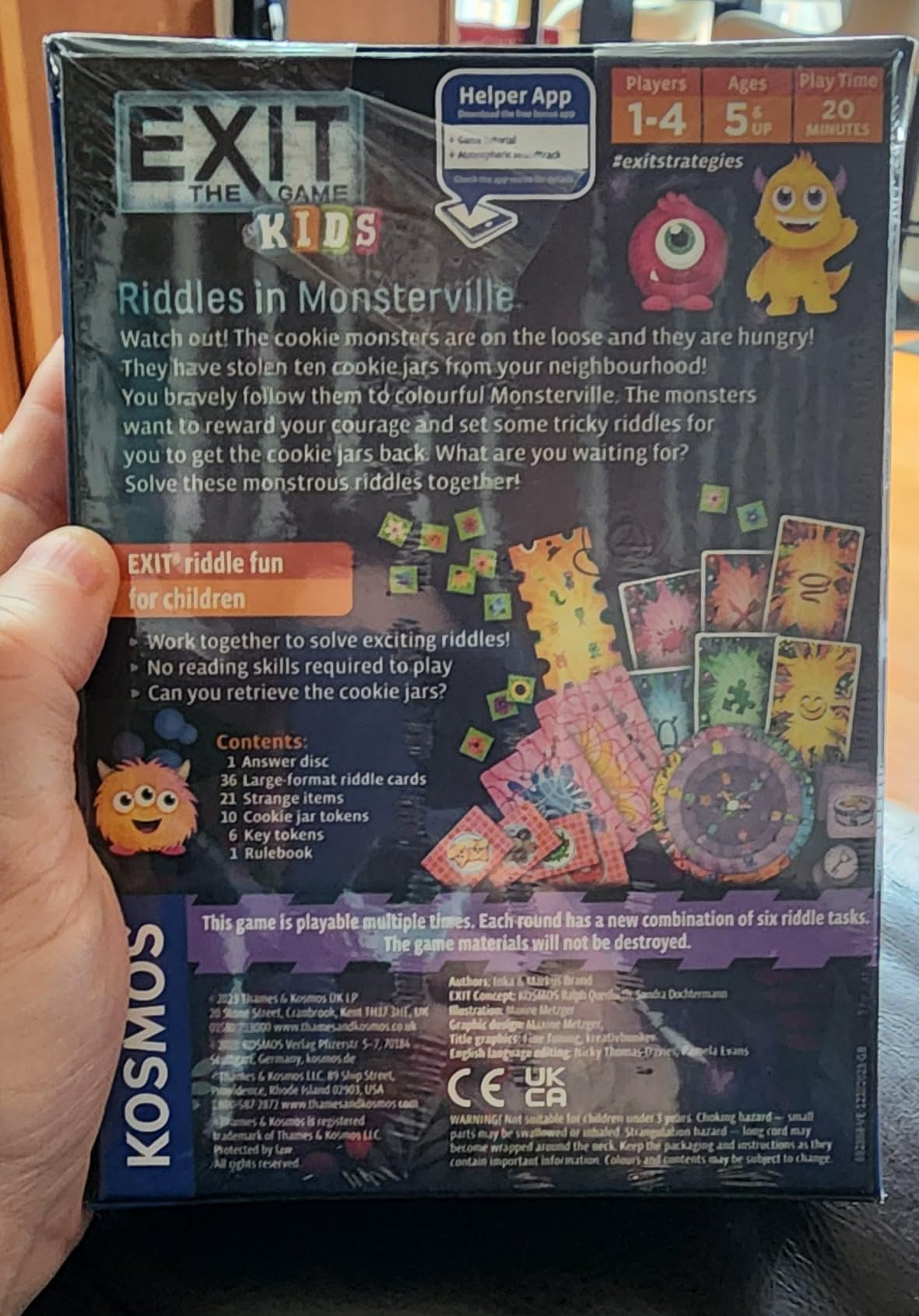
There are six different kinds of riddle, which is what gives it genuine replay value for younger children. It also uses the same decoder wheel as the adult series, so it works as a bridge to a harder game later.
It rates 4.6 from around 530 reviews, the lowest average in this roundup, with 76 percent five stars.
Is it too simple for a nine or ten-year-old?
Frequently, yes. Reviewers single out children around nine and up finding it unchallenging, and once a family understands one puzzle type they tend to repeat it.
It is a strong fit for five to eight-year-olds, and a poor fit for a tween who wants a real test.
Does the ending satisfy children?
Not always. Several detailed reviews describe the key and picture reward at the end as lazy and uninspiring, and children expecting a full escape-room experience are disappointed by a single short session.
12. Minecraft Heroes of the Village (Ages 7 and Up) – Best Cooperative Game for Franchise Fans
- Bridges a five-year-old and an adult at one table
- Map reshuffles every round
- Uses reading and strategy as a bridge game
- Ravensburger component quality
- Depends on knowing Minecraft
- Reading rules it out for pre-readers
- Random events can feel unfair to younger players
Minecraft Heroes of the Village is the pick when the game needs to do the persuading instead of the parents. If the child already plays the game, the theme removes the usual negotiation and gets straight to the table.
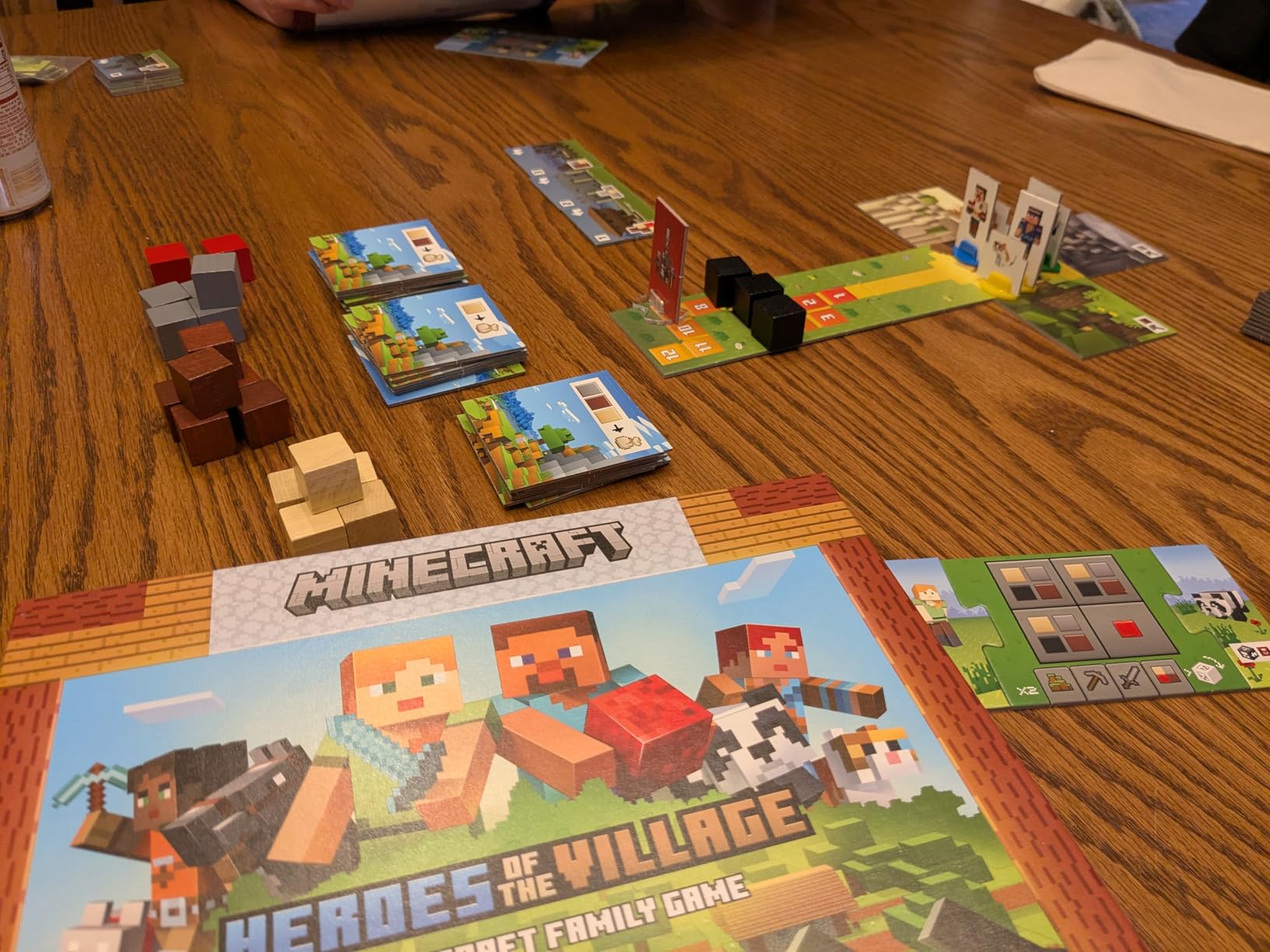
It plays with two to four players, is rated from seven years up, and a round runs about 25 minutes. The box includes 25 wooden blocks, 18 world tiles, four inventory cards, six pet tiles, nine buildings with three bases, 12 mob tokens, a starting tile, an Illagers piece and two dice.
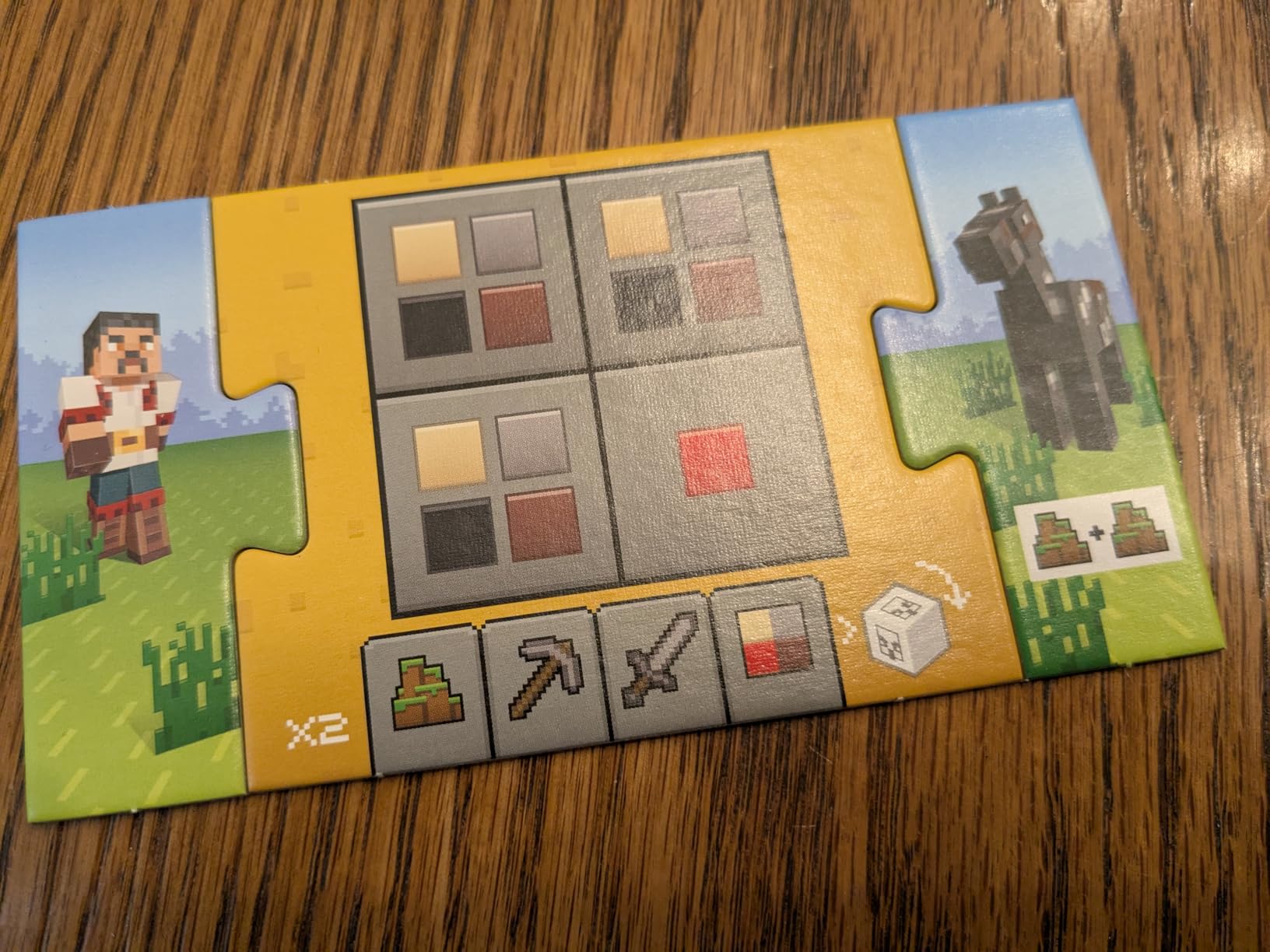
What makes it worth the recommendation is the map. It is rebuilt every round, so two games in a row feel genuinely different, which is the complaint most often aimed at simpler cooperative games.
It rates 4.5 from more than 1600 reviews with 74 percent five stars, the lowest average in this list, and the majority of that goodwill comes from existing fans of the game.
Does it need the child to know Minecraft?
Effectively, yes. The theme is the appeal, and reviewers note the branding is of limited interest to a child who has never played the game. Buying it for a Minecraft-averse child is a gamble.
It also depends on reading, which rules it out for pre-readers and makes it the wrong first cooperative game for a four-year-old.
Will a younger sibling enjoy it too?
At about five, maybe not for a whole round. Twenty-five minutes is long for a young attention span, and the random events that create unpredictability can read as unfair to the child who caused them.
13. 5-Minute Dungeon (Ages 8 and Up) – Best Cooperative Game for Short Attention Spans
Wiggles 3D 5-Minute Dungeon A Chaotic, Co-Operative, Real-time Card Game | Fast-Paced Board Game | for Families, Ages 8 & up | 2-5 Players
- Real-time play removes dead waiting between turns
- A loss can be reframed as we almost had it
- Quick to learn
- Plays with two or five
- Lots of shuffling between rounds
- Some cards need an adult to read
- Final boss is much harder
- Stressful for children who think slowly
5-Minute Dungeon solves the problem that turn-based games create with children: the dead air while one player decides. Everyone plays at once for a fixed five minutes, so nobody is sitting out and everybody is busy.
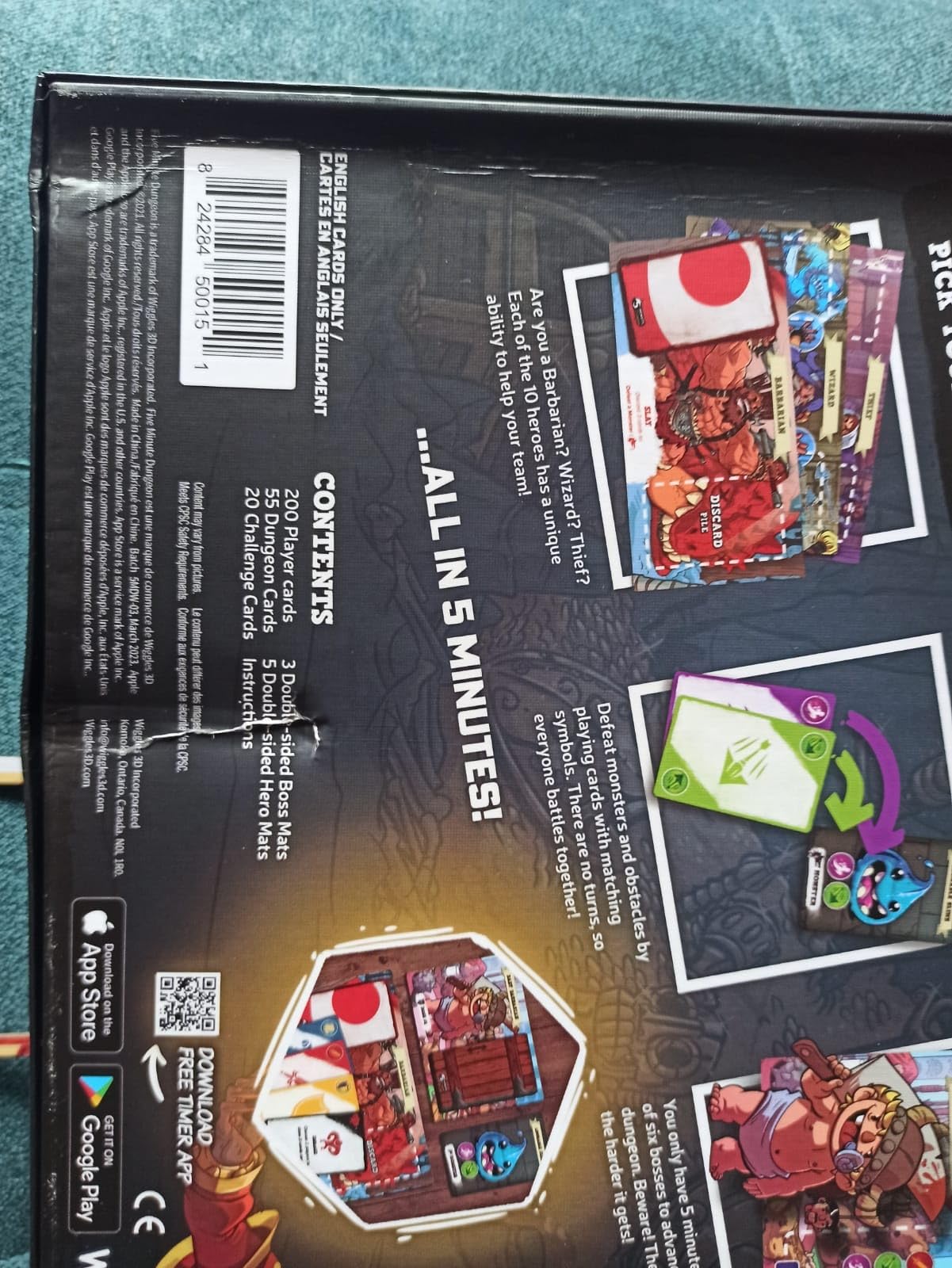
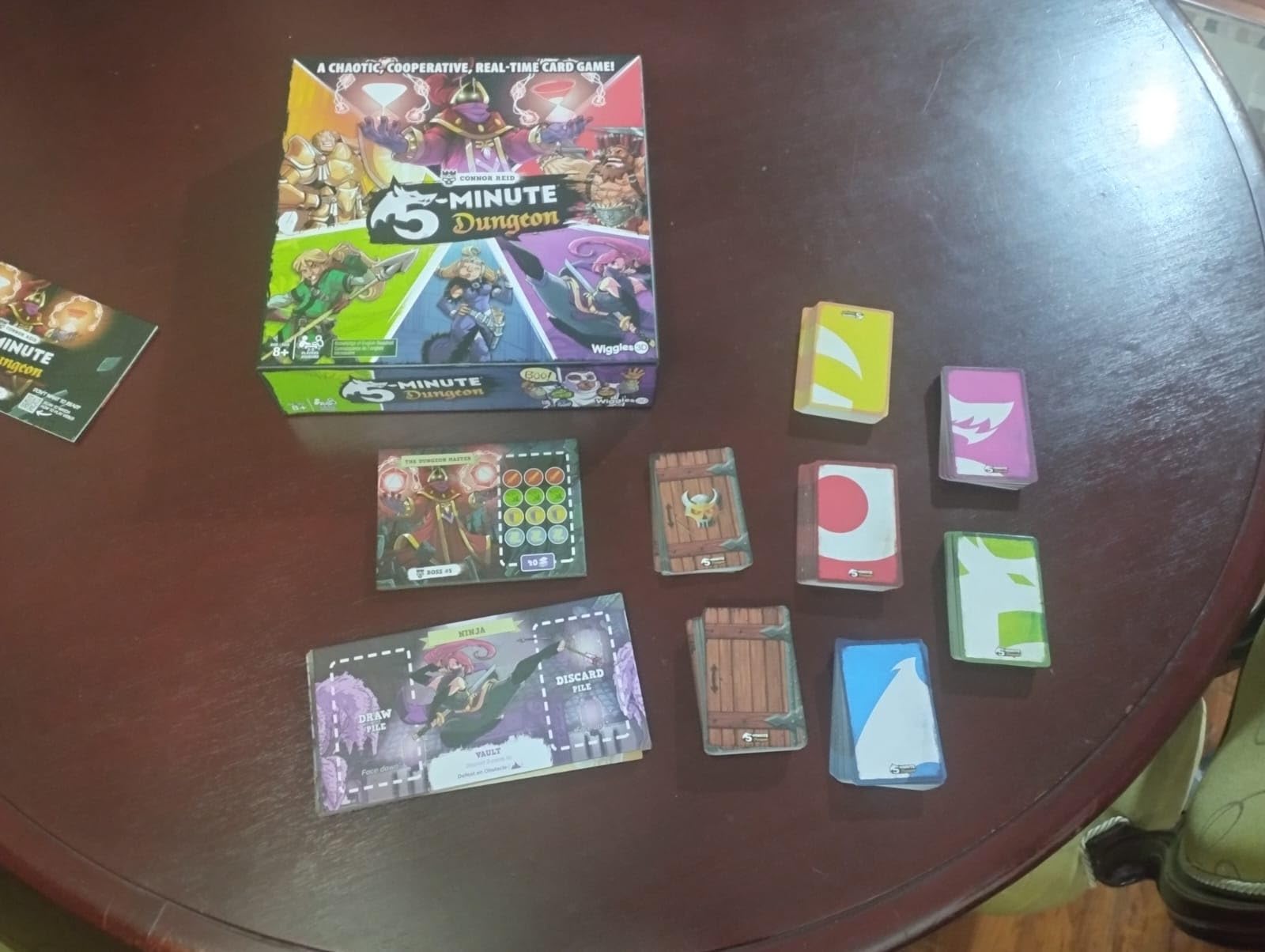
It plays with two to five players and is rated from eight years up. The box holds 275 cards, five double-sided hero mats giving ten heroes, and three double-sided boss mats giving six bosses, with a free timer app for phones.
The cooperative structure makes losing easy to reframe. A failed run becomes a story about the dungeon that beat you rather than a verdict on a decision a child made, and reviewers single this out as the main reason it works for families.
It rates 4.8 from around 790 reviews with 89 percent five stars, one of the highest five-star shares in this roundup.
Is the fast pace good for every child?
No. Real-time play is stressful for a child who likes to think at their own pace, and a few special cards contain sentences younger children cannot read alone, so an adult still has to be present.
BoardGameGeek threads about cooperative games for older children keep mentioning this title as a current favourite, and that is fair, but it works best with readers.
Is the difficulty curve fair?
It jumps. Reviewers describe the final boss as noticeably harder and easy to lose, which is fine as a goal but frustrating if it is the first thing a child plays. Start at an earlier dungeon.
14. Forbidden Jungle (Ages 10 and Up) – Best Cooperative Game for Real Strategy
- Adds tile shifting to the Forbidden formula
- Aliens mature from eggs to adults
- Each character has a distinct ability
- Solid plastic and tile components
- Steeper than Forbidden Island
- First games are confusing
- Many small parts
- Winning is not guaranteed
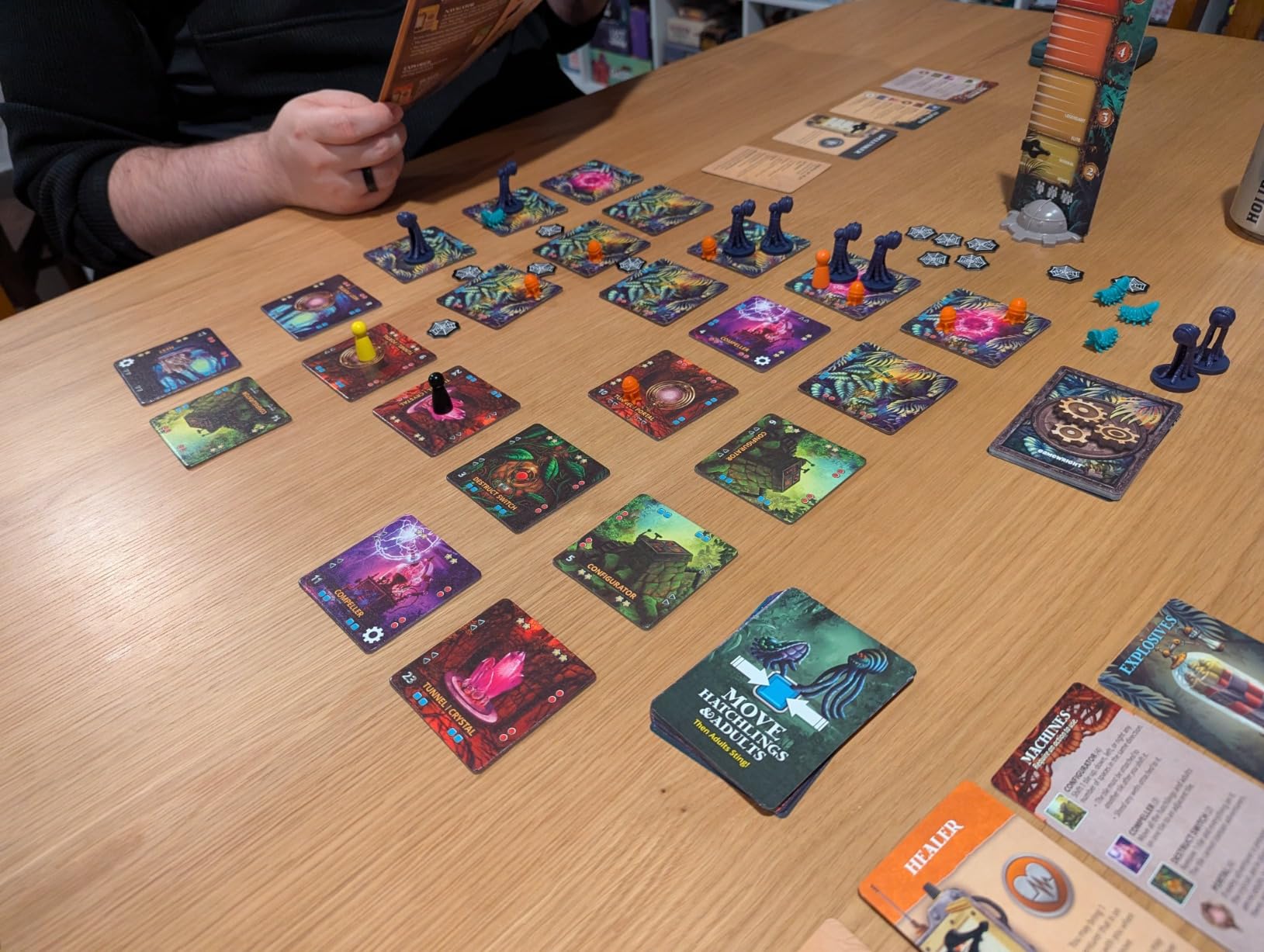
Forbidden Jungle is the oldest-kid option here and the one that behaves like a proper modern cooperative game. Designed by Matt Leacock, it puts a team in a jungle that grows more dangerous as the game goes on, with a starting threat level you can adjust.
It plays with two to five players, is rated from ten years up, and a session runs thirty to forty-five minutes. The component list is 44 cards and 47 miniatures, with tiles that shift other tiles and a portal the team can power up.
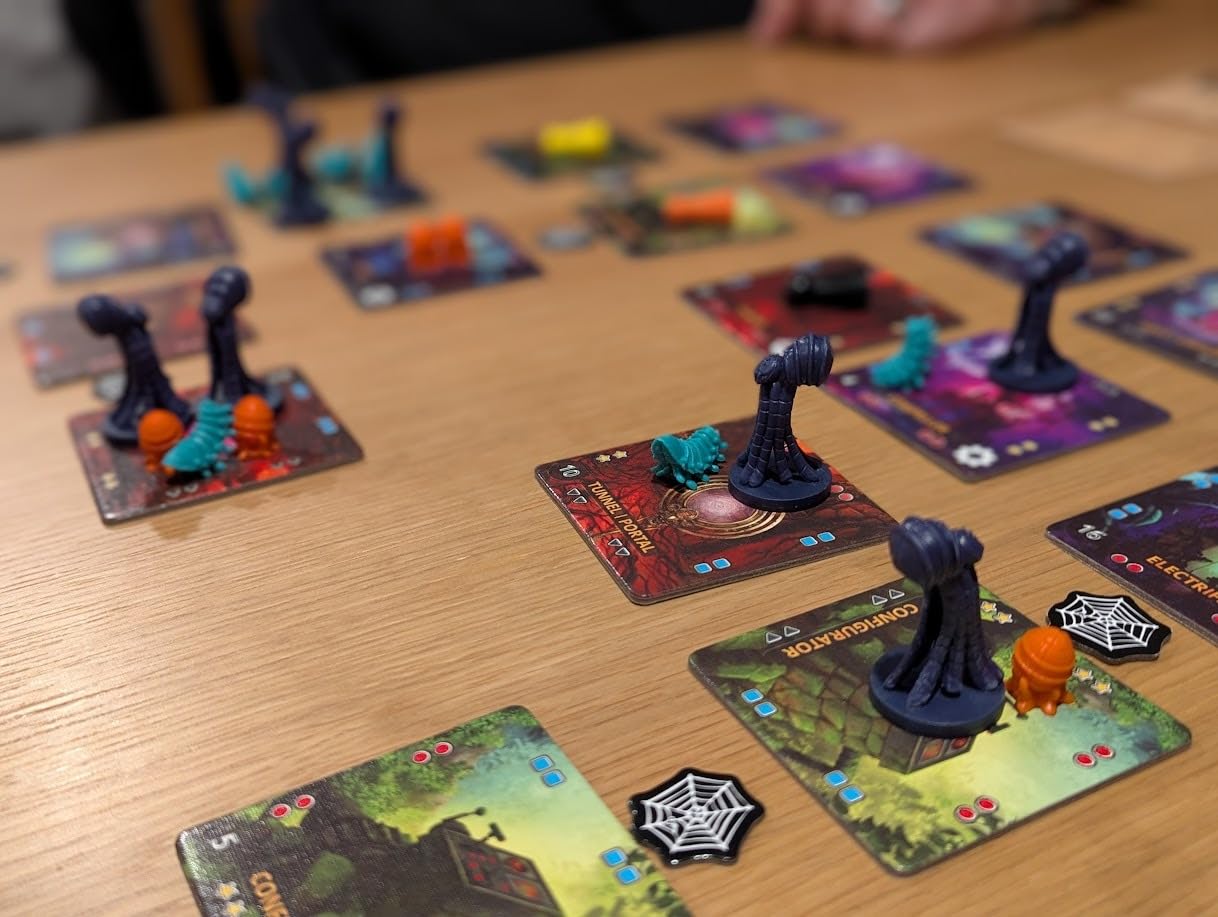
Two things make it hold up. Each character has a distinct ability, so a two-player game does not feel thin, and the aliens escalate from eggs to hatchlings to adults, which creates tension without anyone needing to be blamed.
It rates 4.7 across roughly 330 reviews with 83 percent five stars, a smaller review base than the rest of this list, so treat the consensus with slightly more caution.
Is it ready for a nine-year-old?
Only just. It is rated from ten and reviewers describe a steep learning curve where the first game or two are confusing before the rules click, so a bright nine-year-old can do it with a patient adult.
For a parent who plays modern strategy games themselves, the adult board game roundup is where the next step sits.
What are the practical drawbacks?
Many small parts, so the box needs auditing after every session. Winning is never guaranteed, which is the point of the genre but the first frustration for a younger player, and the difficulty gap between beginner and advanced settings is wide.
How to Choose a Cooperative Board Game for Kids?
Six checks will narrow fourteen games down to two or three, and every one of them is a number rather than a feeling.
Check the minimum age, and treat it as a floor. The manufacturer’s rating is the age at which a child can handle the rules unsupervised, not the age at which the game stops being fun. Outfoxed! carries a four-to-fifteen range, which tells you the real band is wider than the preschool label suggests.
Match the player count to your actual table. Several games here are fixed at four players, which is a problem in a family of three. Anything listed as two to four can absorb a smaller group, and a game that plays with one player is a bonus for a parent alone with one child.
Use play time as a hard filter, not a guideline. Anything rated ten minutes or under will get finished before the mood breaks. A forty-minute game will lose a five-year-old halfway through, however good the design is.
Look for no reading required. This is the single most useful line on a box for a family with a pre-reader. My First Castle Panic, Race to the Treasure! and Baby Dinosaur Rescue all work on pictures alone, and it removes the adult from every turn.
Check whether it needs a printout or an app. Wildcraft! includes downloadable extras that are not in the box, and 5-Minute Dungeon leans on a timer app. Fine if you have a printer, annoying if you do not.
Look for replayability and durable parts. Card games that use up paper props are finished after one session. Wood and cardstock survive years, and chunky wooden pieces are the safest thing in a house with a toddler. Our deck building roundup covers the other end of the component-quality spectrum.
Two habits also matter more than the game itself. Count the small pieces back into the box before it goes on the shelf, and expect the first two sessions to be rules practice rather than a real game.
Two Players, Mixed Ages and the Alpha Gamer Problem
For exactly two players, the honest picks are My First Orchard, Wildcraft!, The Great Bee-Scape, 5-Minute Dungeon and Forbidden Jungle, all of which work with one or two without feeling incomplete. My First Orchard is the only one designed to be played solo, which is what makes it the safest two-player choice for a parent and a four-year-old. If the second player is an adult rather than a child, our board game picks for couples are worth a look for the evening after the children are in bed.
For a wide sibling age gap, pick a game where the youngest child has a real job rather than a spectator job. My First Orchard lets the smallest player roll the die. Outfoxed! gives every player a clue card. My First Safari asks for every piece to move, so nobody is left out of the goal. Race to the Treasure! and Hoot Owl Hoot! both work from about five upward, and both need no reading.
The hardest constraint in a family game night is rarely age, it is the alpha gamer: one child, or one adult, who takes over the rules and the talking and leaves the rest of the table passive. Forum threads on r/Parenting and BoardGameGeek describe this as the single most common complaint, and a title of a top-ranking thread is itself the observation that the age range is usually the hardest part.
Three fixes cost nothing. Make the rulebook a job, handing it to the least confident player for the first round. Adopt an active-player-final-say house rule, so whoever’s turn it is gets the last word on a decision. And pick a simultaneous game such as 5-Minute Dungeon if possible, because shared real-time play removes the dead air that invites one child to take over.
For grandparents and cousins joining later, the same logic applies. Any game with drop-in-drop-out structure works, and Wildcraft! is explicitly praised in reviews for letting players join and leave mid-game.
Cooperative Games That Are Not Ready for Young Kids
Plenty of parents arrive searching for a co-op title that is simply too heavy, usually because a shopping carousel or an adult recommendation put it in front of them. Pandemic, Spirit Island, Robinson Crusoe: Adventures on the Cursed Island, Arkham Horror and Mansions of Madness are all excellent cooperative games, and none of them belong in front of a child under ten.
They punish small errors, take an hour or more to explain, and end in defeat often enough that a young child reads it as personal failure. That defeats the purpose of the format entirely.
The honest path is to move up the difficulty ladder inside this list instead: start with Hoot Owl Hoot!, step to My First Castle Panic or Minecraft Heroes of the Village, and only reach Forbidden Jungle once a child is ten and genuinely asking for a challenge.
Frequently Asked Questions
What is the best cooperative board game for kids?
The best cooperative board game for kids depends on age rather than a single title. For ages 4 and up, Outfoxed! is our pick: four players, twenty-minute rounds, a 4.8 rating from more than 7400 reviews and no reading required to enjoy it. Under four, start with My First Orchard. Ages 6 to 8 suit My First Castle Panic, and ages 9 and up suit 5-Minute Dungeon.
What are some good cooperative games for 4-year-olds?
My First Orchard, Dinosaur Escape, My First Castle Panic, National Geographic My First Safari and Baby Dinosaur Rescue all work for a four-year-old. Choose My First Orchard if this is a first ever game, Dinosaur Escape for a ten-minute round, and My First Castle Panic if you want a genuine taste of strategy. All five need no reading and have no individual winner.
What are some good cooperative games to play with a 5-year-old?
Hoot Owl Hoot!, Outfoxed!, Race to the Treasure! and My First Castle Panic are the strongest picks for a five-year-old. Hoot Owl Hoot! finishes in fifteen minutes with no reading at all, Outfoxed! turns clue-solving into a team job that a five-year-old can lead, and Race to the Treasure! is the safest of the three for a wide age gap at the table.
What are some good 4-player cooperative board games?
The fixed four-player designs in this roundup are Outfoxed!, My First Castle Panic and National Geographic My First Safari. Each of those works with exactly four. If your fourth player is an adult, all three are excellent, and if you may occasionally have three, pick a game rated two to four such as Hoot Owl Hoot! or Dinosaur Escape, which handle a smaller table without leaving anyone idle.
What are some good two-player cooperative board games for kids and parents?
My First Orchard, Wildcraft!, EXIT: The Game Kids The Great Bee-Scape, 5-Minute Dungeon and Forbidden Jungle all play with two. My First Orchard is the easiest to teach and the only one genuinely designed for solo play, while 5-Minute Dungeon suits an older child because real-time play keeps both players busy. Forbidden Jungle is the only one of the five with genuinely distinct character abilities per player.
How do cooperative games teach kids to lose?
A cooperative game reframes a loss as a shared event rather than a personal one. Because everyone wins or loses together, a child who made a bad call is not the reason the team failed, which removes the blaming, the sulking and the arguments about cheating that normally end a competitive game. The lesson lands without a parent having to say anything about good sportsmanship, and it is the reason most families stay with the format after the first game.
The Best Cooperative Board Game for Your Family
Outfoxed! is our first pick overall because it balances four things nothing else on this list manages at once: a real deduction mechanic, a twenty-minute round, a four-to-fifteen age range and a review base large enough to trust. If the table is younger than four, My First Orchard is the correct answer, and if nobody in the house can read yet, Hoot Owl Hoot! removes that problem entirely.
Match the game to the youngest child at the table rather than the oldest, and pick a round length you can actually finish. A game that gets abandoned halfway through teaches a child nothing except that board games are boring.
Whichever of these cooperative board games for kids you choose, expect the first two sessions to be about learning the rules together rather than winning. That part is the point.