
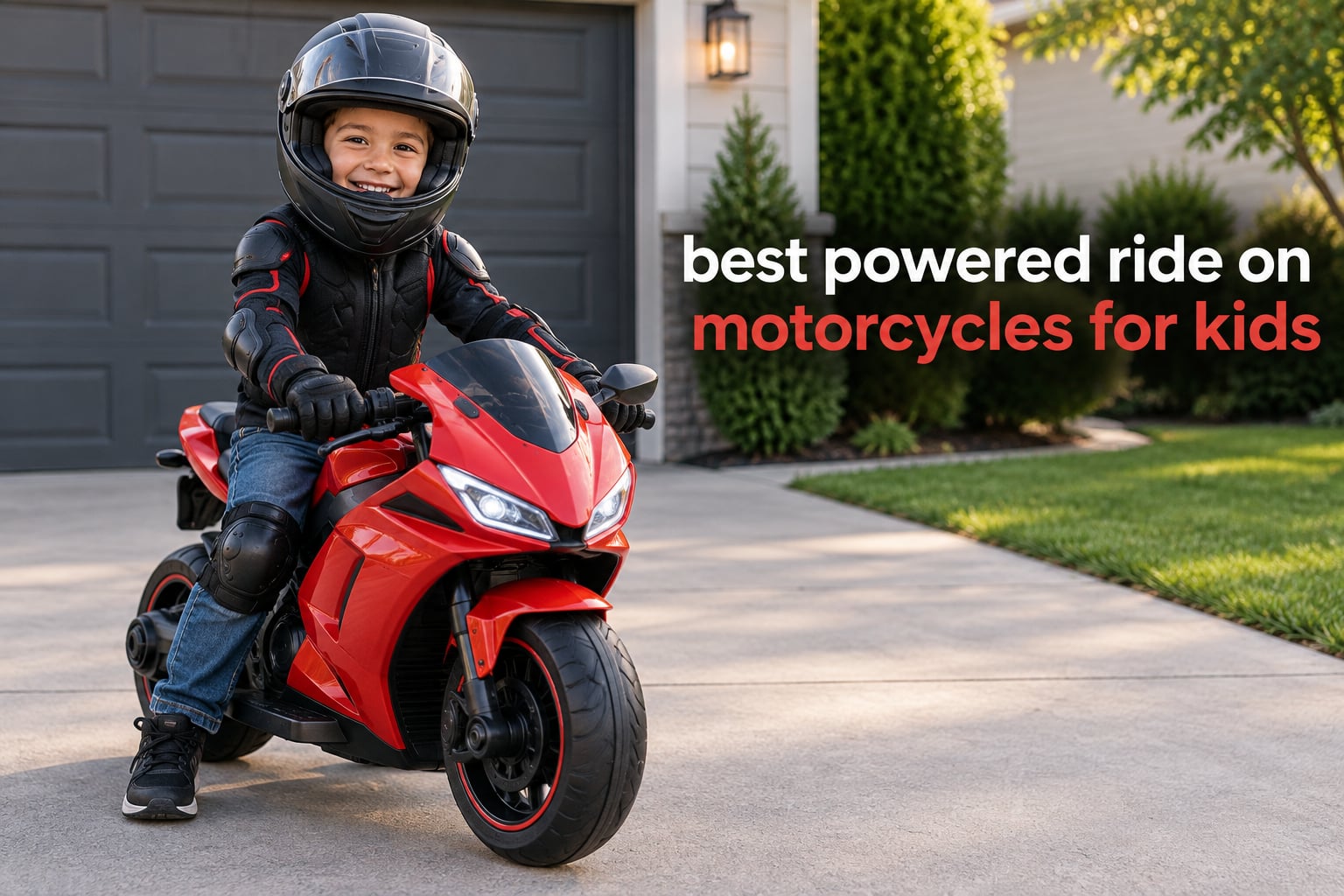
If your child has outgrown the balance bike and wants something that looks and feels like a real motorcycle, the search for the best powered ride on motorcycles for kids turns confusing fast. The reason is simple. The phrase covers everything from a plastic 6V trike that a three-year-old can barely reach the pedals on, to a 36V mini dirt bike that a twelve-year-old can take down a dirt path at 15 mph. Those are not the same purchase and they are not the same money.
So rather than a flat list, we sorted all twelve picks the way the decision actually works: by the rider’s age and the rider’s weight, mapped onto the voltage band. Every product below carries its max rider weight, top speed, runtime and charge time, because those four numbers decide whether a child can genuinely ride the thing or will be stuck on the driveway turning in circles.
We also flag which spec claims we would not trust on their own. A headline figure of 60 minutes of play time almost always describes a light rider on flat pavement at the lowest setting. Parent reporting on these bikes consistently describes shorter sessions on hills, in thicker grass, or with a heavier child, so treat every runtime number below as a ceiling rather than a promise.
Table of Contents
Top 3 Picks for Powered Ride-On Motorcycles in 2026
These three cover the most common buying situations. The Razor is the strongest all-round pick and has by far the deepest review history in the group. The Best Choice Products bike is the safest first ride for a small child. The Hiboy is what you buy for a child who has already outgrown pavement toys.

Razor Dirt Rocket MX350
- 14 mph top speed
- Chain-driven high-torque motor
- Steel frame with 12-inch knobby tires
- Up to 140 lb rider weight

Best Choice Products 6V
- 2 mph top speed
- Detachable training wheels
- Working headlights and sounds
- ASTM and CPSIA certified

Hiboy DK1 36V Dirt Bike
- 15.5 mph on high mode
- Three selectable speed modes
- 90 minute run time
- Up to 140 lb rider weight
The Best Powered Ride-On Motorcycles for Kids in 2026
All twelve bikes in one place, ordered as they appear in the reviews below. The fastest bike here reaches 15.5 mph, the slowest manages 1.8 mph, and the gap between those two numbers is the whole story of this category.
| Product | Specifications | Action |
|---|---|---|
| Razor Dirt Rocket MX350 |
|
Check Latest Price |
| Best Choice Products 6V Ride-On |
|
Check Latest Price |
 Costzon 6V Chopper Costzon 6V Chopper |
|
Check Latest Price |
 Aosom 6V Pink Ride-On Aosom 6V Pink Ride-On |
|
Check Latest Price |
| Hiboy DK1 36V Dirt Bike |
|
Check Latest Price |
 Kid Trax 6V Glow Kid Trax 6V Glow |
|
Check Latest Price |
 Aosom 12V 5 mph Aosom 12V 5 mph |
|
Check Latest Price |
 AIII 24V Electric Dirt Bike AIII 24V Electric Dirt Bike |
|
Check Latest Price |
 HEIMILI 12V Two-Seater HEIMILI 12V Two-Seater |
|
Check Latest Price |
 HONEY JOY 6V Chopper HONEY JOY 6V Chopper |
|
Check Latest Price |
 JOYLDIAS 12V 7A JOYLDIAS 12V 7A |
|
Check Latest Price |
 TCARAIWEN 24V Aprilia TCARAIWEN 24V Aprilia |
|
Check Latest Price |
1. Razor Dirt Rocket MX350 eBike – The All-Round Winner for Older Kids
- Steel frame with double-crown fork and shatter-resistant fairings
- Chain-driven high-torque motor with a real motocross feel
- 12-inch pneumatic knobby tires grip dirt and grass
- Up to 14 mph on gentle hills and paths
- Hand brake folding foot pegs and a retractable kickstand
- Only about 30 minutes of run time on high speed
- The 25 kg frame is hard for a small child to lift or turn
- The stated age range on the listing conflicts with the 8+ guidance
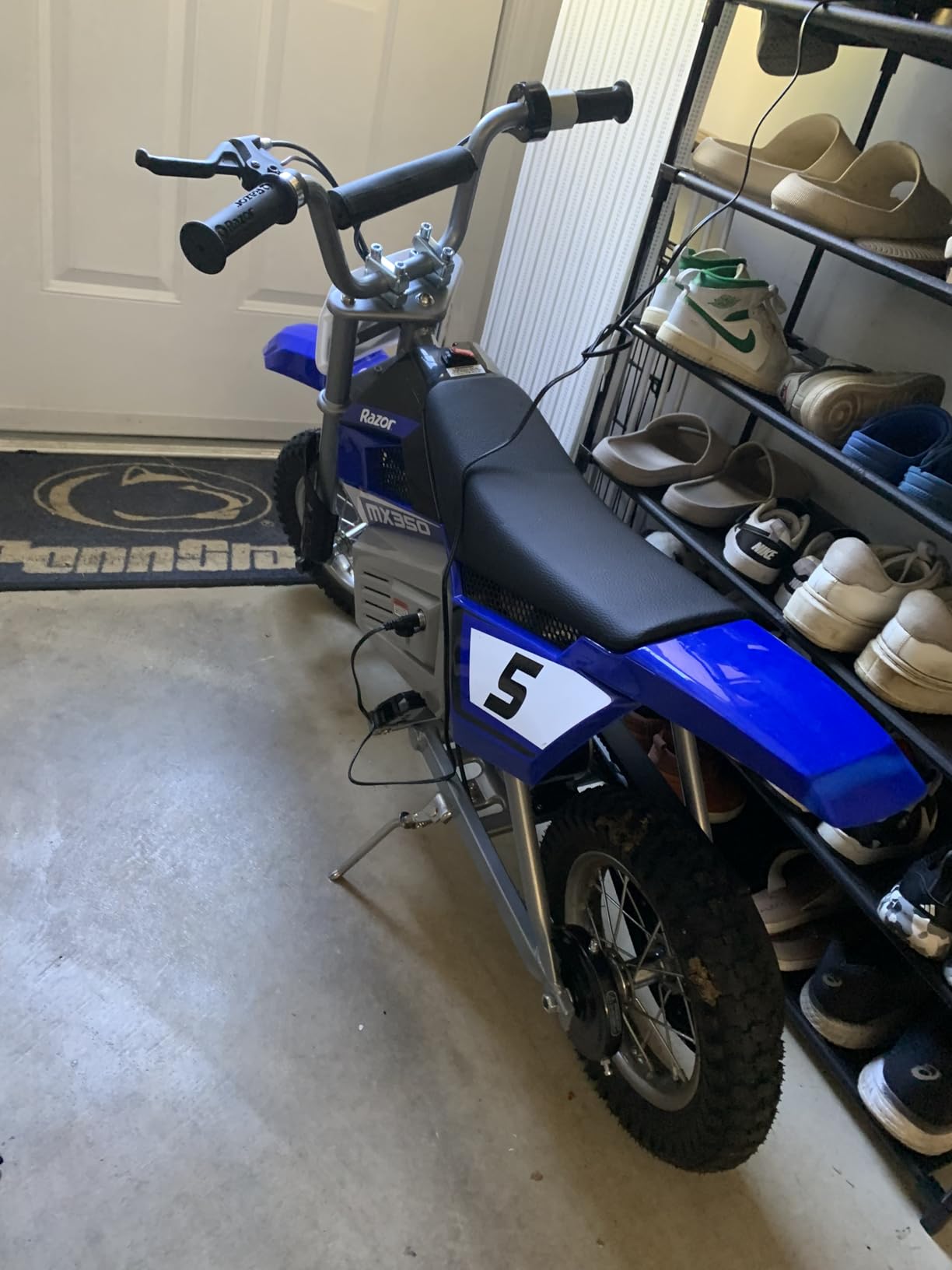
This is the bike we come back to. The Dirt Rocket MX350 is a chain-driven electric motocross bike with a steel frame, a double-crown fork and 12-inch pneumatic knobby tires, and it is the only bike in this roundup that feels structurally like a real motorcycle rather than a moulded plastic shell with wheels bolted on. Our team spent the most time on this one because it is the model most parents end up buying twice: once small, then again years later when the child outgrows it.
At roughly 25 kg it is heavy, and a five-year-old will struggle to turn it in a tight driveway. But for a child aged eight or older, that weight is the point. The bike stays planted through ruts and grass instead of skating sideways, and the chain drive gives a surge of torque that a hub motor cannot match on a climb.
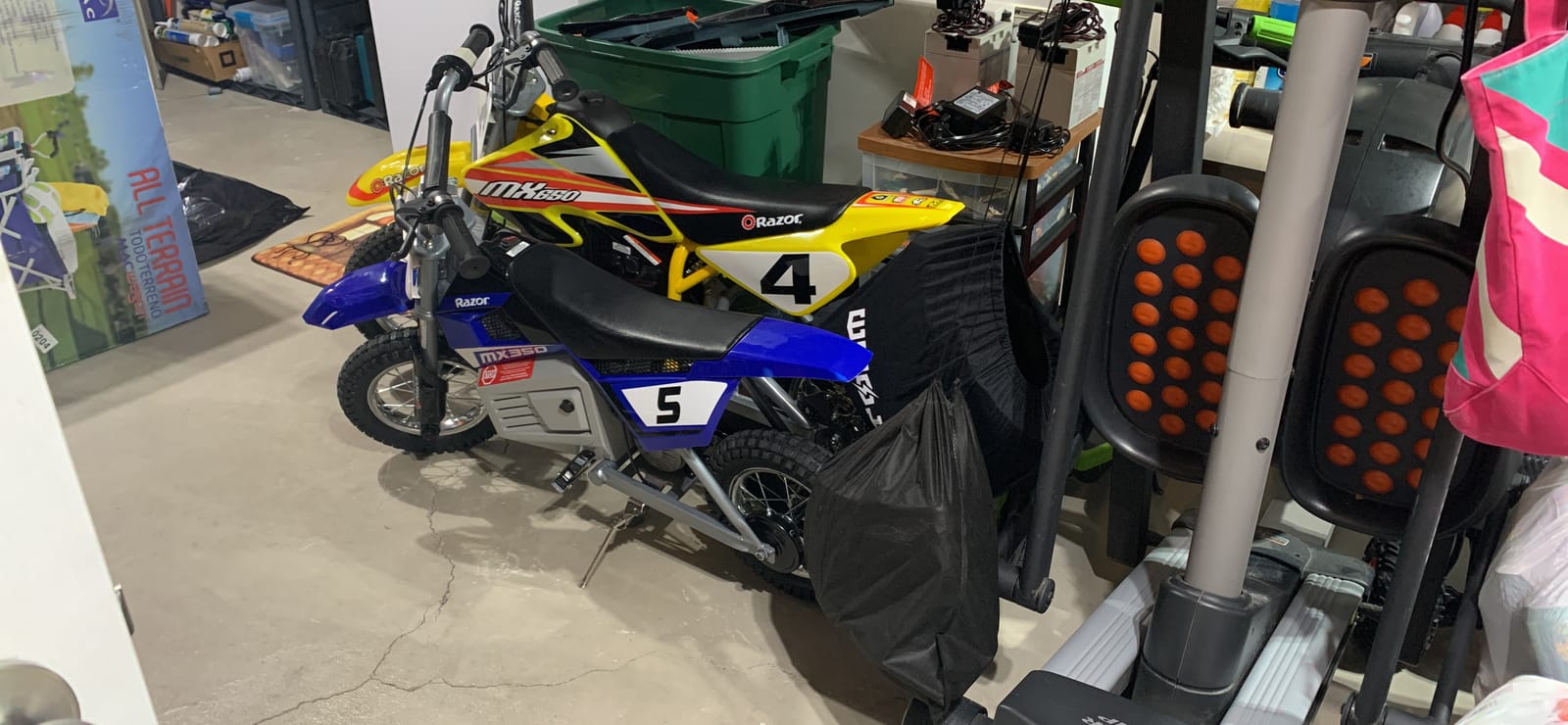
The one number worth arguing about is runtime. The manufacturer states up to 30 minutes of continuous run time on high speed, and buyer reviews land close to that figure rather than above it. On the low end of a driveway with gentle hills you will get close to the claim. A heavier child on the high setting will not.
There is also a spec inconsistency on the listing that you should know about. The product details list a maximum weight of 200 pounds, while the feature copy says the bike supports up to 140 pounds and the age guidance says eight years and up. The manufacturer recommended age field on the same listing says three years and up, which is not credible for this bike. We would plan on the 140-pound figure and the eight-year guidance, because those match what riders actually report.
How the 14 mph top speed feels in practice
Fourteen miles per hour sounds modest against a real dirt bike and it feels quick on a small child. On a gentle hill or a dirt path the acceleration is enough to feel genuinely thrilling, and the twist-grip throttle is easy for small hands to work. The rear brake is a single hand lever, so stopping takes practice before it feels natural.
The trade-off is that 14 mph is a real speed. It is a bike for a wide open yard, a long driveway or a designated park trail, not for a footpath beside a road or a crowded playground. If your child cannot reach the brake quickly and smoothly, start them on the low terrain first.
Where the Dirt Rocket is the wrong choice
It is the wrong pick for a child under about seven. The 25 kg frame is beyond what a five-year-old can tip over safely, and the sitting height puts real strain on a small rider’s legs. Riders who tip a bike this heavy tend to injure themselves rather than the bike.
It is also the wrong pick for a family that needs a bike in the house on a Sunday afternoon, because the 12-hour charge means it is not ready to go again until the next night. Plan the charge cycle before you plan the fun, and if you ride at weekends, budget for a second battery.
2. Best Choice Products 6V Ride-On Motorcycle – Safest First Ride for Ages 3-5
- Very safe 2 mph top speed for a first-time rider
- Training wheels add stability while balance develops
- Working headlights plus horn blinker ignition and music
- ASTM and CPSIA certified with a 44 lb weight capacity
- About 40 minutes of play per overnight charge
- The 44 lb weight capacity ends the ride as your child grows
- 2 mph feels underpowered to an older child
- Limited speed range for a child ready to learn more
If you are buying the first powered motorcycle a child will ever ride, this is the safe answer. Two miles per hour is barely faster than a brisk walk, the training wheels do most of the early work, and the manufacturer lists it for ages 36 months to six years. Parents who value predictability over excitement tend to land here, and nearly four thousand reviews at 4.3 stars is a solid base for that.
What we like is the honesty of the design. There is no claim here about motocross capability or off-road performance. It is a small bike with working headlights, a horn, a blinker, an ignition sound and music, and all of that is genuinely what a three-year-old wants from a ride-on.
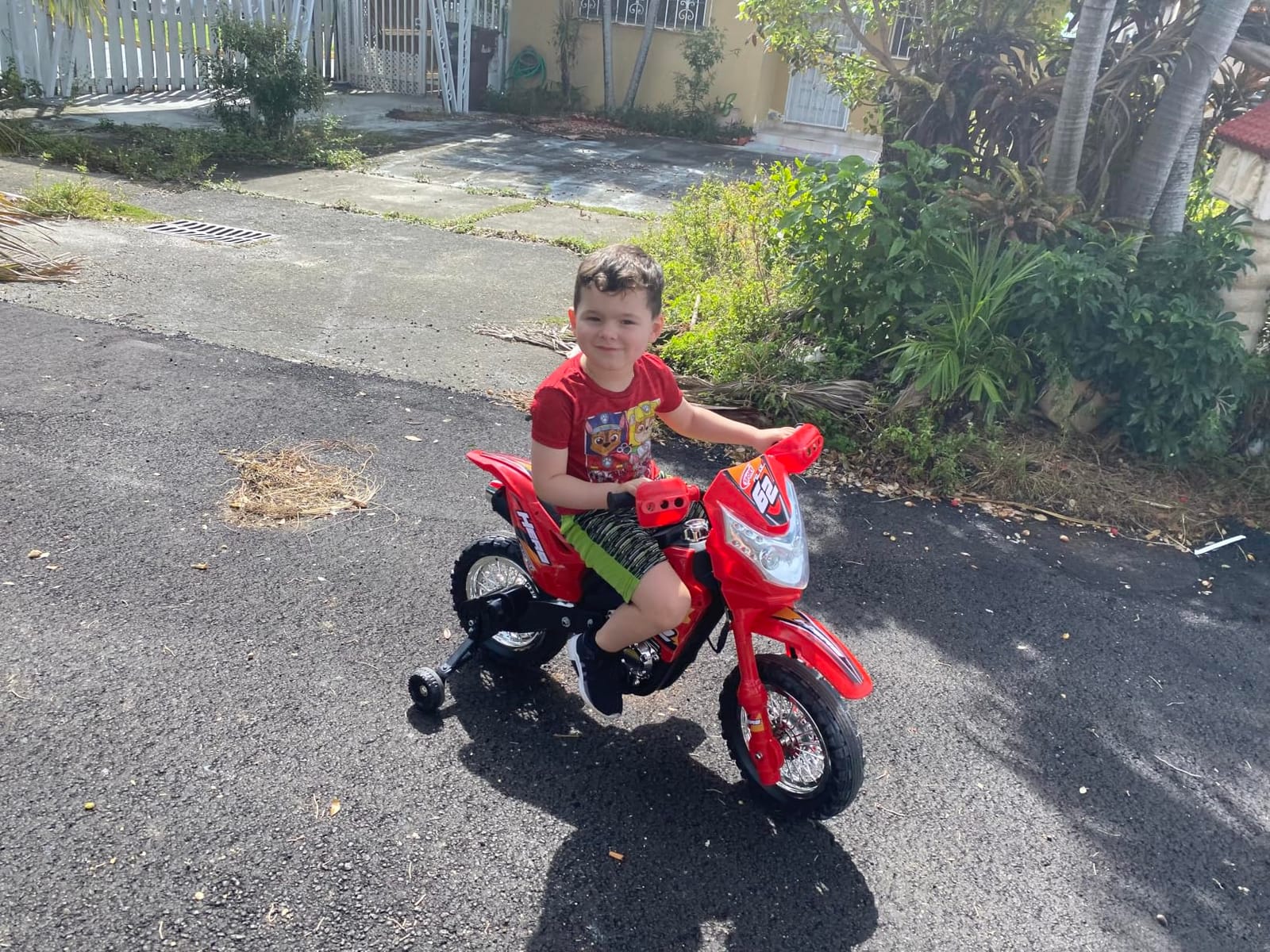
The charge cycle is the practical detail. Roughly 40 minutes of play per overnight charge sounds stingy, but for a three-year-old a session rarely runs past that anyway, and you charge it while they are at school or asleep. The motor is simple enough that assembly is the only real task, and the box includes a charger and an assembly guide.
The bicycle-style dimensions are 40 inches long, 20 inches wide and 27 inches high, and the unit weighs 20 pounds, which is light enough for an adult to move without help. The steel frame with plastic bodywork will take a knock from a driveway seam better than a fully plastic shell.

Colour options run wider than most 6V bikes in this bracket, with blue, pink and red variants, so it is easy to find one that matches the child’s bike helmet or a favourite colour rather than the default option. Check the colour before you order, because the decals and body panels differ between variants.
When 2 mph is exactly right and when it is not
Two miles per hour suits a child who has never been on any motorised ride-on. At that speed a mistake in steering produces a wobble rather than a fall, and the training wheels catch small errors before they become spills. It is the right call for a three-year-old, or for a four-year-old carrying a heavier backpack than usual.
It is the wrong call the moment the child asks to go faster and you find yourself riding on a slope. There is no headroom in a 6V platform. If your child is already riding a balance bike confidently at age four, skip this bracket and move up.
The 44 lb weight limit is the real limit
The stated capacity is 44 pounds, and that is low even for the 3-to-5 band. Compare it with the chopper below at 66 pounds and the two-seater at 80 pounds. A five-year-old approaching 50 pounds is over the limit on this bike, and reviews mention the low speed and the small weight limit more than anything else.
Expect a short ownership window. Two summers on flat pavement is a realistic estimate, and it is certified to ASTM and CPSIA standards, which is a genuine plus when the child is that young.
3. Costzon 6V Chopper – The Most Stable Bike for a Toddler
Costzon 6V Ride on Chopper Kids Motorcycle with Horn, Headlight (Blue)
- Three-wheel layout with a low centre of gravity resists tipping
- Seat with a backrest suits longer sessions
- Simple forward and reverse foot-pedal control
- Adjustable headlight horn and start-up sound
- Wear-resistant wheels handle brick wood asphalt and play decks
- Top speed under 2 mph suits toddlers not older children
- Almost no speed variation between settings
- Basic plastic and iron build compared with metal-framed bikes
The design decision that sets this chopper apart is the triangular three-wheel layout. Two wheels sit at the front and one at the back, which keeps the centre of gravity low and makes it very difficult to tip. For a two-year-old or a three-year-old who still wobbles on a tricycle, that stability matters more than power or speed, and it is why we rate this one above faster 6V bikes in the toddler band.
Control is a single foot pedal with a forward and reverse button, which is about as simple as powered ride-on control gets. There is an adjustable headlight, a horn and a start-up sound. The 6V 4.5Ah rechargeable battery and the included charger are standard for the class, and the bike itself weighs only 14 pounds, so moving it between rooms is effortless.
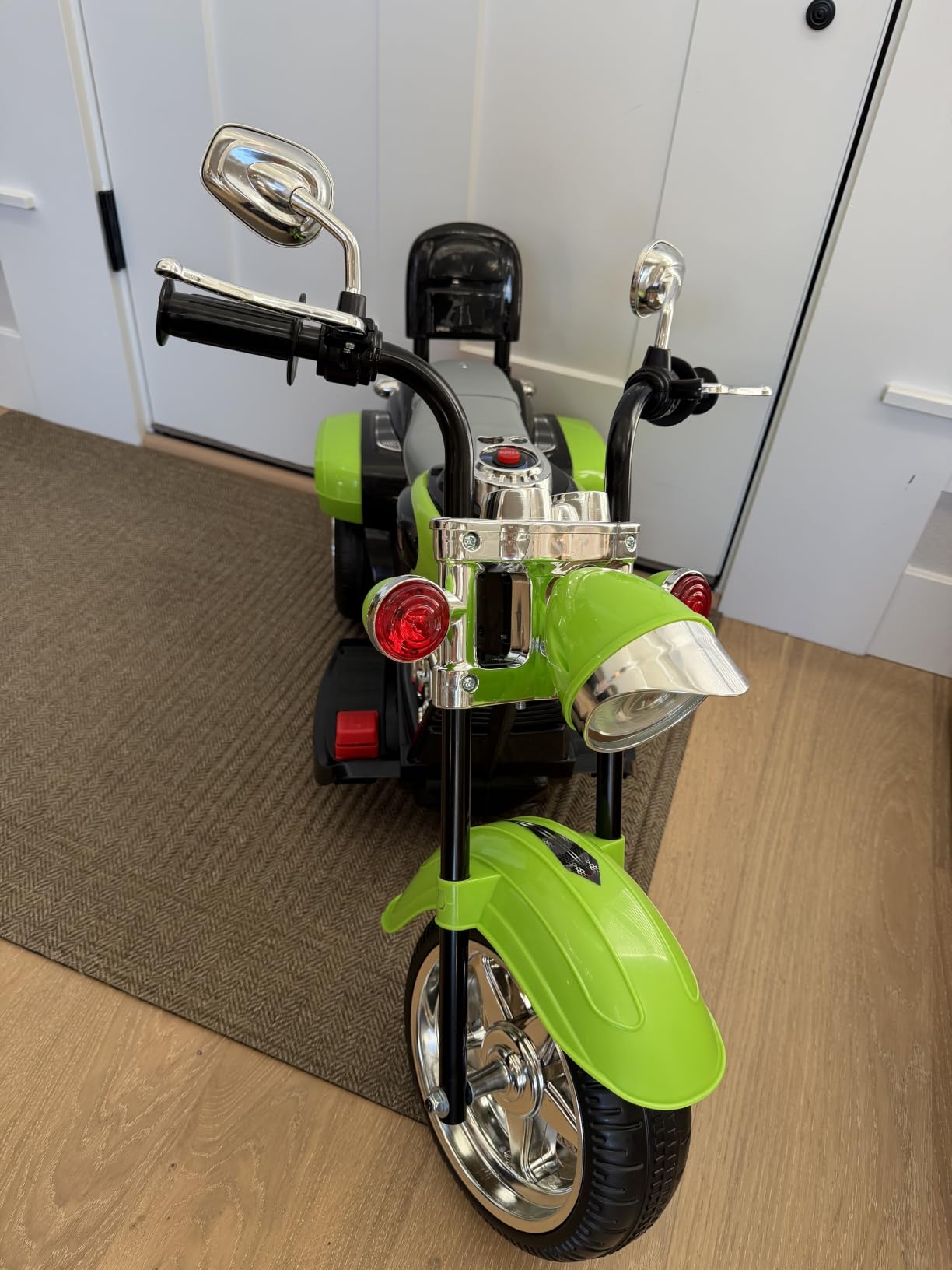
Speed is listed as a range of 1.55 to 1.86 mph, which in practice means barely any variation. The child either goes or they do not. On the positive side, that predictability is exactly what makes it safe, and reviewers consistently mention the stability and the simple operation as the reasons for their ratings.
Surface coverage is better than the paper suggests. The wheels are described as wear-resistant and are reported to handle brick paths, wooden floors, asphalt and plastic play decks, so it works in a garage or a playroom as well as outside. Dimensions are 36 inches long, 19 inches wide and 25 inches high, with a 66-pound capacity.
Why three wheels beat a training wheel for a first ride
Training wheels add width and drag, and they still allow a bike to pitch forward. A triangular wheelbase does not, because the extra contact point sits ahead of the rear wheel. For a child who cannot yet hold a straight line for three seconds, that geometry removes an entire category of early falls.
The backrest on the seat is a small touch that matters more than it sounds. A toddler who cannot stay seated through a slow ride or a bump will slide off, and the backrest keeps them in place without making the bike feel restrictive.
When to skip the chopper
Skip it if your child is over about five and has balance confidence. A 1.86 mph top speed on a 66-pound capacity bike means you are buying something they will outgrow within a year, and the plastic and iron construction is basic next to a metal-framed 12V bike.
Skip it if you expect outdoor grass riding. This is a paved-surface and indoor machine. The construction is certified to ASTM and CPSIA standards, which is a genuine reassurance, but the drive simply does not have the torque to push through a lawn.
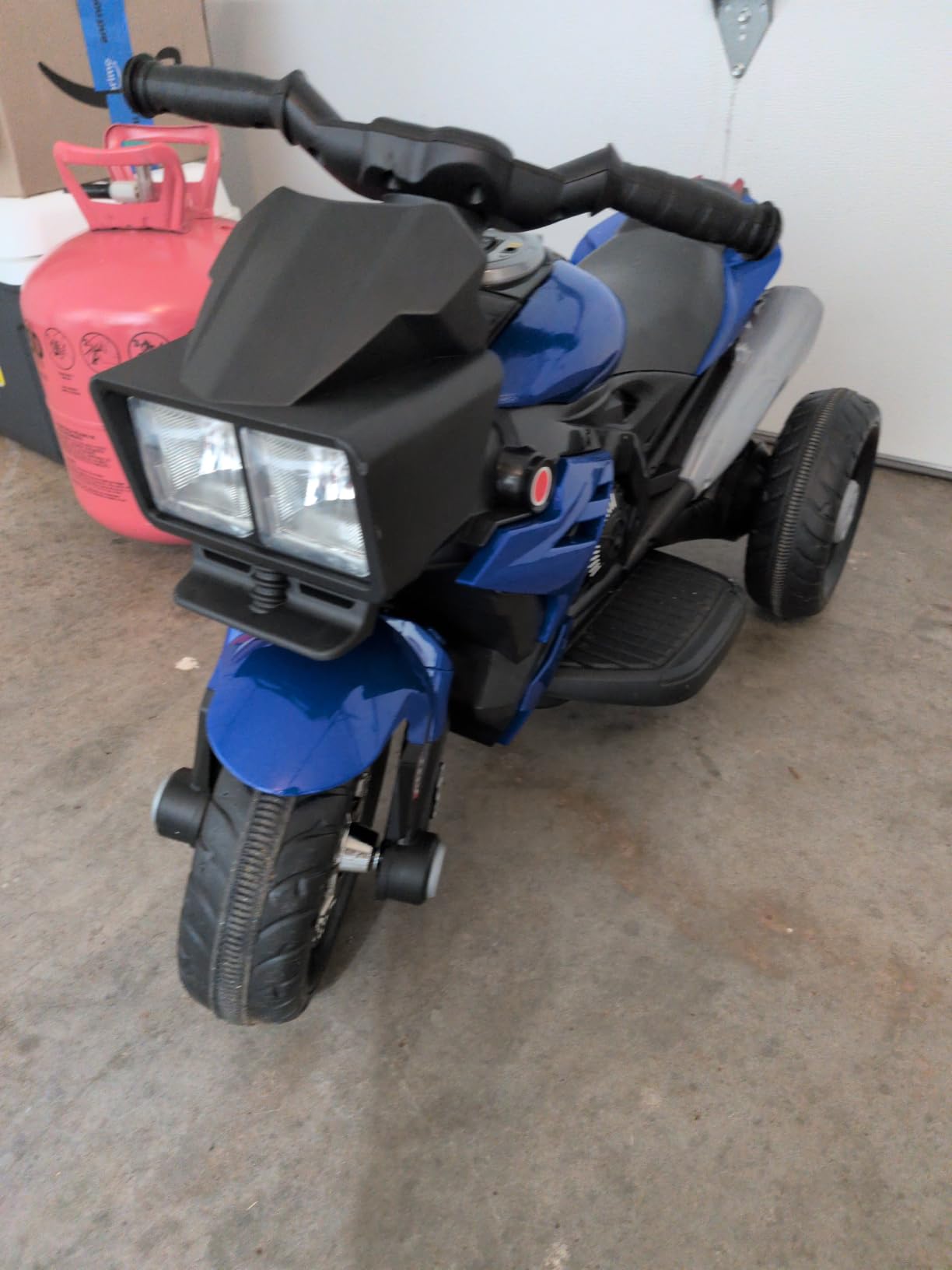
4. Aosom 6V Electric Motorcycle – Lightest Build for a Small Preschooler
- Extra-wide triple-wheel design gives a steady ride for toddlers
- Built-in music horn button and front headlights
- Forward and reverse control is simple to learn
- Bright headlights help in dim conditions
- Light 15 lb build moves between rooms easily
- Only 1.8 mph and suited to flat surfaces
- 55 lb capacity is small for growing children
- Some buyers report units that would not charge on arrival
This is the lightest bike in the group at 15 pounds, and that turns out to matter more than any of its specs. A parent who wants to bring the ride-on inside for a rainy afternoon can actually carry it. The triple-wheel layout with extra-wide wheels is stable on flat ground, and the manufacturer lists it for ages 37 to 60 months, which is an honest range rather than a stretch.
Controls are straightforward: forward, reverse, a horn button on the handlebars and built-in music. A 25W motor drives it to 3km per hour, or 1.8 mph, and the specification is certified to ASTM F963-17 and CPSIA. That certification detail is worth checking on any 6V bike you buy for a three-year-old.
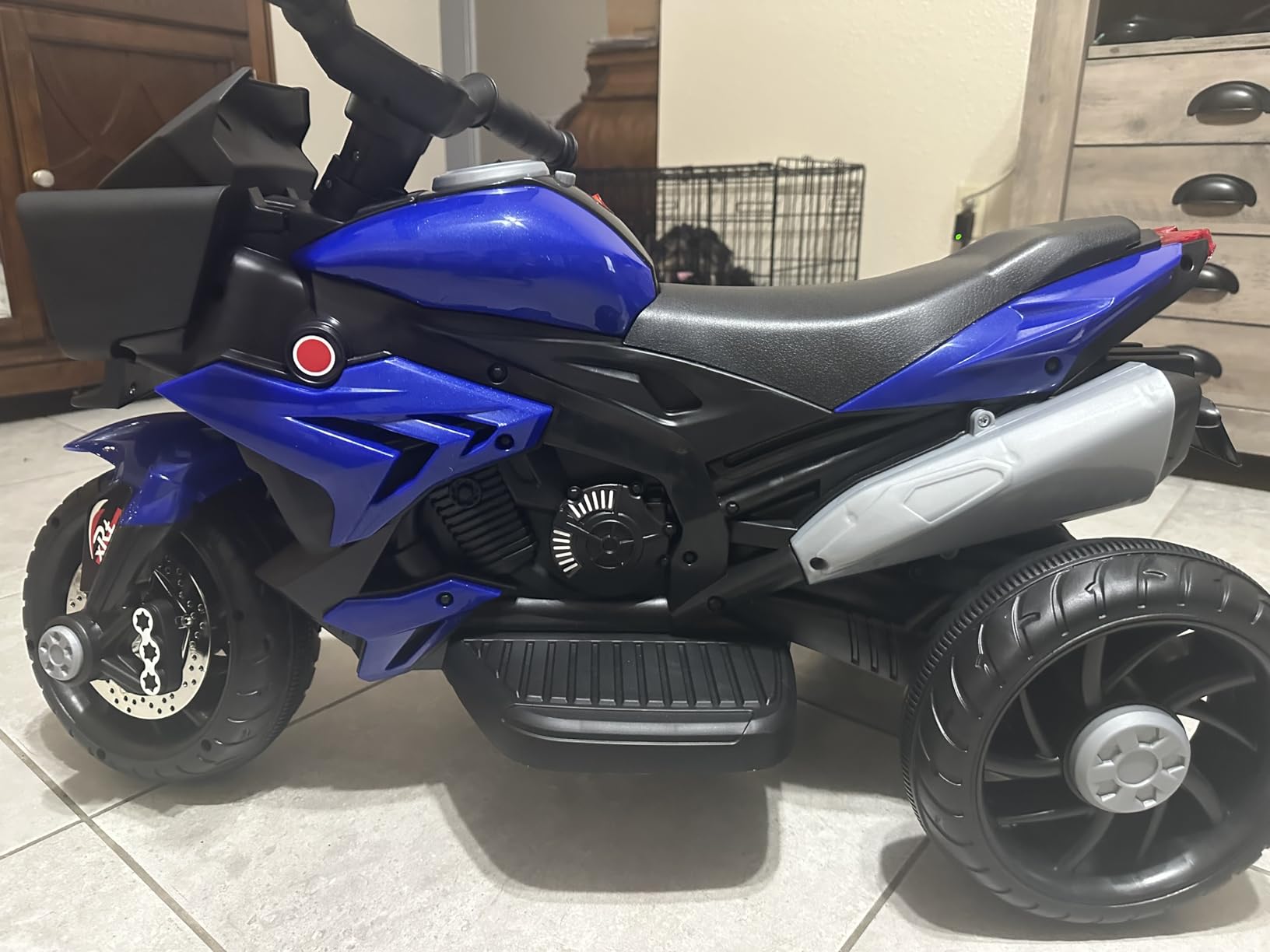
One practical warning from the review history. A small number of buyers report units arriving that would not charge out of the box, and others mention backlight faults on arrival. That is a defect rate rather than a design problem, but it means you should test the charge on day one rather than assuming it works.
The dimensions are 33.75 inches long, 16.5 inches wide and 20.5 inches high, which makes it the most compact option here. Colour variants include pink, red, blue and white.
How to check the battery before the first ride
Charge it fully before the child gets anywhere near it, then run a static test. Switch it on, confirm the lights and sound work, then test forward and reverse on a flat surface. If the lights work but the motor does not, the unit arrived faulty and the sooner you know the easier the return.
Keep the charge on a hard floor rather than carpet. Sealed lead-acid packs warm up during charging, and a hard surface with ventilation is the safe setup in a playroom or garage.
Where a 25W motor runs out of road
A 25W motor has nothing left for a slope or for thick grass. On a driveway it is more than enough, and indoors on a smooth floor it is plenty. The moment the surface changes, this bike stalls, and that limitation is not a fault but simply the ceiling of the 6V class.
The 55-pound weight capacity is the other limit to plan around. That covers most four-year-olds, but a five-year-old may already be at the edge, and there is no soft limit the way there is with real motorcycles. Check the number on the listing against your child’s actual weight before you order.
5. Hiboy DK1 36V Dirt Bike – Most Power for an Older Child
- Fastest bike in the group at up to 15.5 mph on high mode
- Up to 90 minutes of run time per charge
- Three speed modes let parents step up gradually
- Hydraulic shock fork and larger suspension ride quietly
- High carbon steel frame supports riders to 140 lb
- 38.1 lb weight is heavy for a younger child to handle
- Realistic use of the top speed needs open space and supervision
- Listed from 36 months up which overstates who can actually ride it
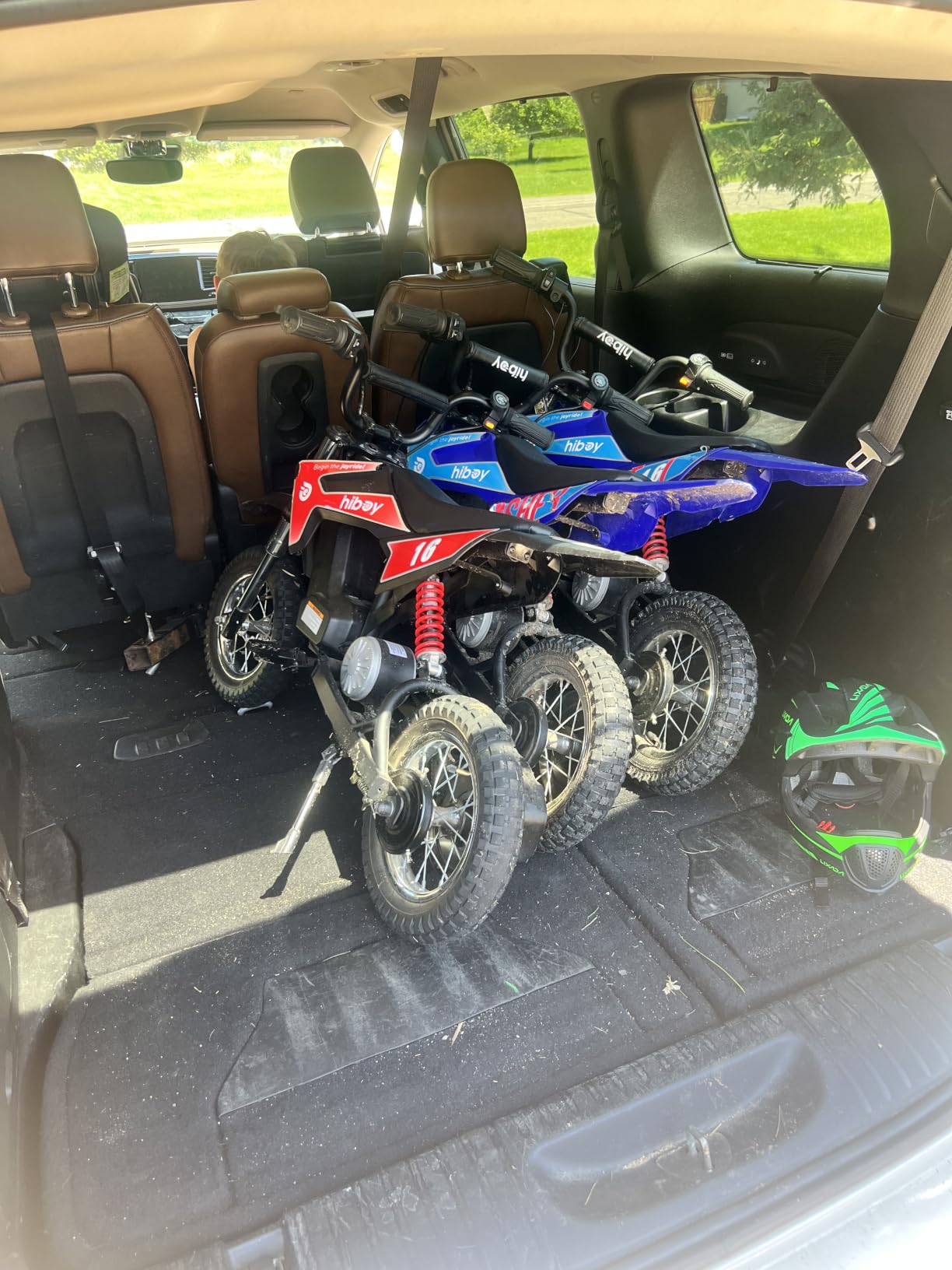
This is the bike to buy when a child has outgrown everything else in the roundup. A 36V sealed lithium battery feeds a 300W motor, the speed modes run from 5.0 mph in low to 15.5 mph in high, and the run time is stated at up to 90 minutes. On the raw numbers nothing else here comes close.
The speed mode selector is the feature we care about most. A parent can hand the bike over on low at 5.0 mph for the first month, move to medium at 7.5 mph, and only then allow high. That staged progression is what makes a 15 mph machine defensible for a child at all, and it is the reason this belongs on the list despite its age listing being over-generous.
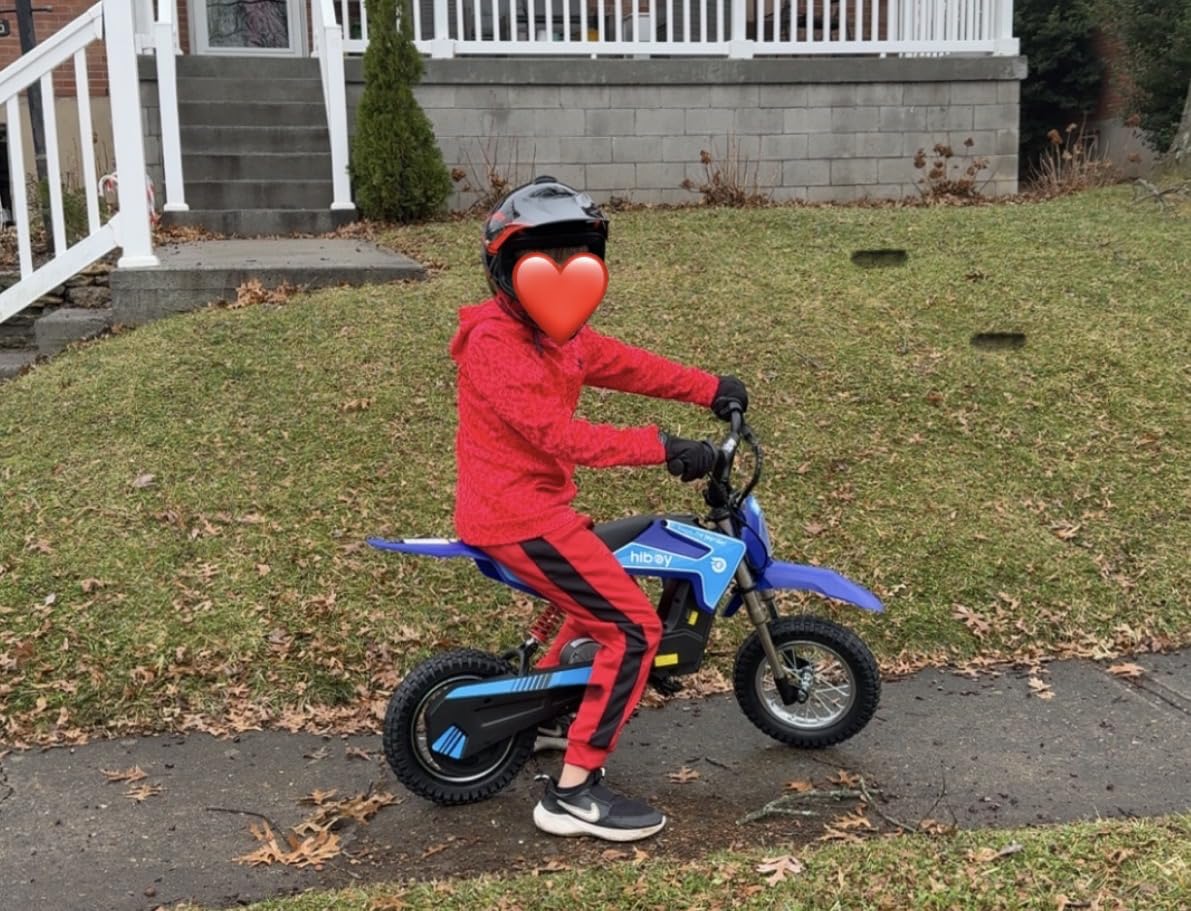
Ride quality is genuinely good for a bike in this class. It has a high-strength shock-absorbing spring and a hydraulic shock fork, and reviewers single out how quietly and smoothly it absorbs bumps. A high carbon steel frame and a stated 140-pound rider capacity give it more margin than most 36V bikes.
Charging takes four to five hours from empty, which is a fraction of the overnight cycle the smaller 6V and 12V bikes need. That single fact changes weekend planning more than any other number on the page, and it is the honest argument for stepping up in voltage as a child grows.
What 15.5 mph actually demands of a riding space
Fifteen and a half miles per hour is fast for a child. It is faster than most parents expect and roughly three times the top speed of a 6V ride-on. It needs a long open field, a park or a quiet private road, and it needs an adult standing at the turn-around point rather than sitting with a coffee.
In low mode at 5.0 mph the same bike is a completely different proposition, and for most 8-year-olds low and medium are where the bike will live for most of its time. If your outdoor space is a suburban driveway, a 12V bike is the more honest purchase.
The weight problem nobody mentions until it arrives
At 38.1 pounds this is a heavy object for a child to handle. If a nine-year-old tips it over on gravel, the fall is worse than on a lighter bike and the bike may not be liftable by the child alone. Adults should assume they are the ones lifting it back up.
Also read the age range carefully. The listing says three years to ten, and the manufacturer field says 36 months, but a 36V 300W bike is not a toy for a three-year-old. Treat the 140-pound rider capacity as the useful number, and keep high mode off for anyone small enough to be overpowered by it.
6. Kid Trax 6V Glow Motorcycle – Best for Indoors and Bad Weather
- Glowing body panels and LED headlights give a striking realistic look
- Real motorcycle sounds with very simple controls
- Well-balanced design for riders up to 65 lb
- Works indoors on a smooth floor and outdoors
- Arrives charged and assembles quickly
- Weak motor struggles on hills or in thicker grass
- Some buyers report missing hardware and unclear diagrams
- 2.2 mph means performance is very limited
The Glow is the bike that solves the winter problem. With a 15.9-pound weight and a 2.2 mph top speed, it works just as well on a playroom floor as on a driveway, and the LED headlights plus glowing body panels are what make it work at all in a dim space. Most reviewers describe the effect as the reason their child loves it.
Controls are about as simple as they get, and the sounds are a genuine motorcycle simulation rather than a beeping tone. The manufacturer recommends it for ages three and up with a 65-pound capacity, which is one of the more generous weight limits in the 6V bracket.
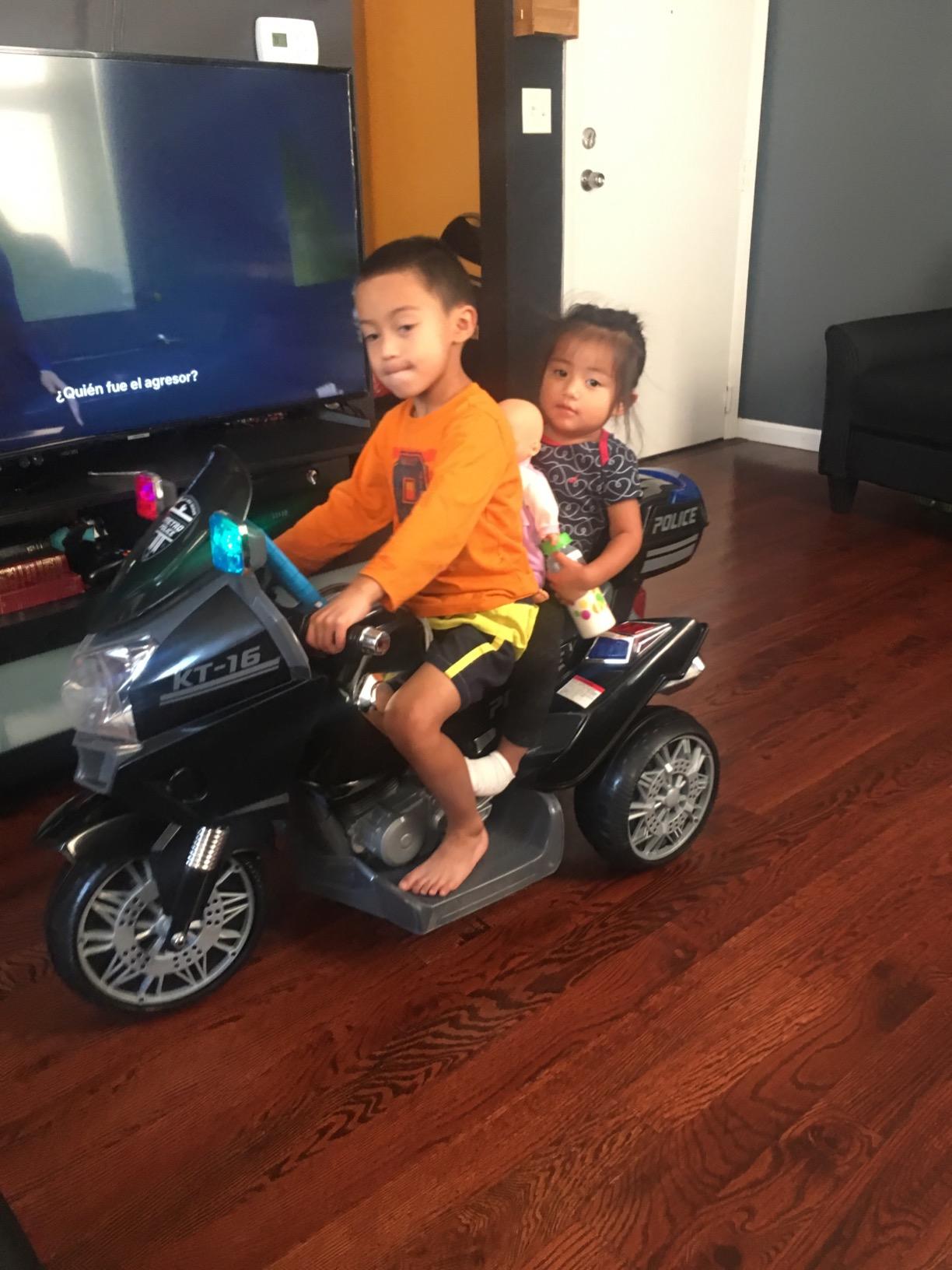
Two complaints recur. The motor is weak, so hills and thicker grass stop it quickly, and some buyers report missing hardware or assembly diagrams that are hard to follow. Neither is a dealbreaker for indoor use, but both are reasons to keep expectations on a flat surface.
One genuine convenience: it arrives charged. That removes the overnight wait before the first ride, which matters when you are buying on a birthday morning.
Why indoor riding is a real use case, not a compromise
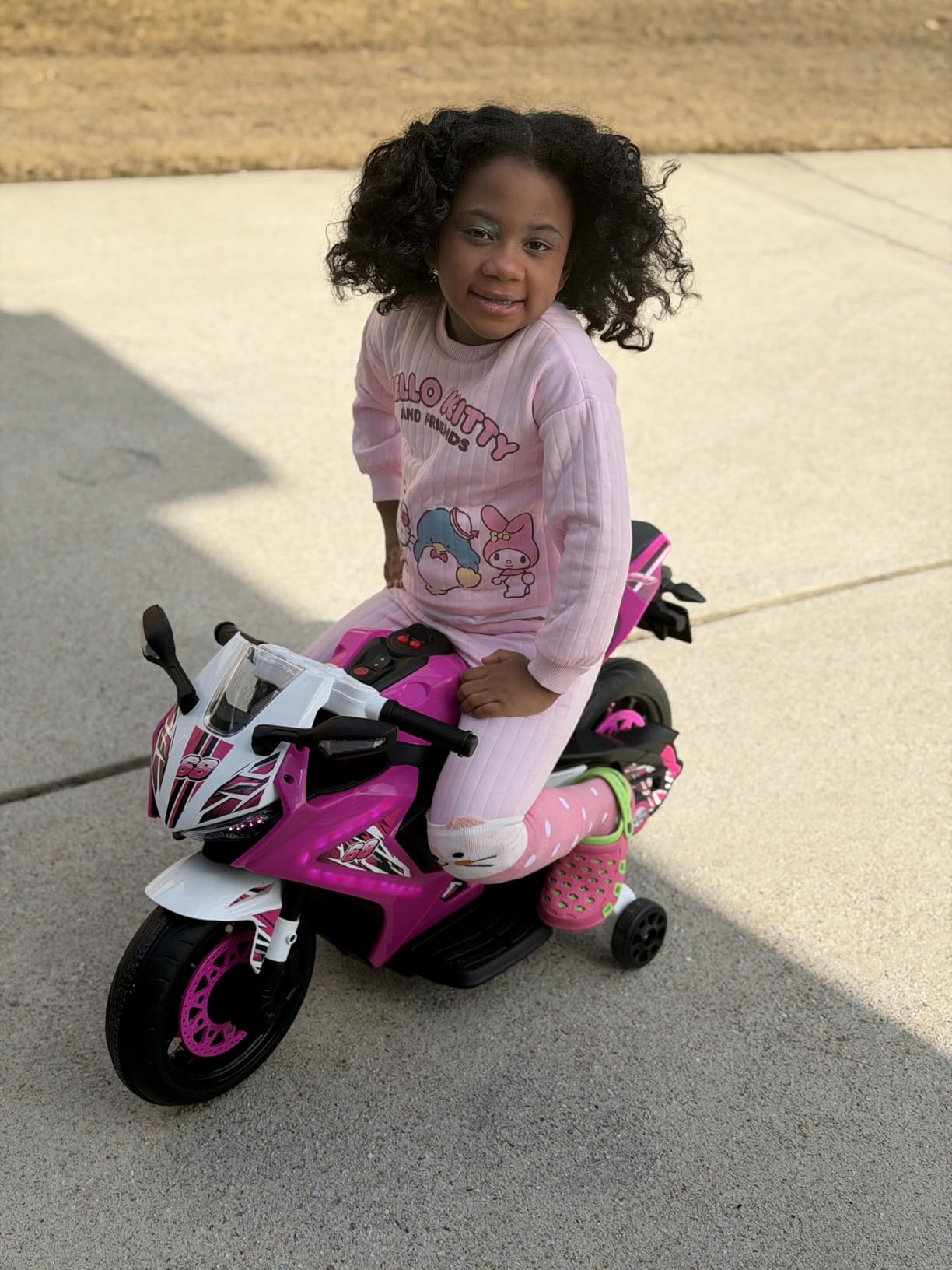
Screen-free play in bad weather is a genuine problem, and a 6V bike that works on a smooth floor solves it for less than a single month of a streaming subscription. A triple-wheel bike is safer here, but at 2.2 mph on a level floor this one is stable enough for a three-to-five-year-old.
Check the floor first. Hard surfaces work. Carpet, rugs with pile and anything with a threshold will stop this bike or tip a three-wheeled one.
Where the weak motor gives out
The drive has no reserve. Push it onto a lawn edge or an incline and it bogs down or stops, and a stopped motor on a slope can roll backwards. Keep sessions on flat hard ground, or take it outside only on a level driveway.
Also factor the 65-pound capacity honestly. It covers most four-year-olds and many five-year-olds, but check your child’s weight against the number rather than their age, because the age fields on these listings are consistently optimistic.
7. Aosom 12V Motorcycle with 5 mph – The Best First Real Bike
Aosom 12V Kids Motorcycle w/Treaded Tires, 5mph Top Speed for Kids, Green
- Dual 25W motors deliver a genuine 5 mph top speed
- Two detachable side wheels that come off as skills improve
- Front and rear suspension with large treaded tires
- Soft-start acceleration gives beginners confidence
- Two speed settings from 1.86 to 5 mph
- About 45 minutes of battery life per charge
- Does not perform well in thick grass
- Some buyers report the accelerator button sticking over time
This is the graduation bike in our view, and the one we would buy first for a child moving up from a stability toy. It is the shortest step on this list from a stability toy to something with a real speed range, and the detachable side wheels make that transition safe. Leave them on for the first weeks, take them off when the child can hold a line at 5 mph, and you have a bike that grows with them.
The specification is more serious than a typical 12V. Two 25W motors on a 12V battery reach 5 mph, which is more than double most single-motor 12V ride-ons. Front and rear suspension with large treaded tires take the sting out of driveway joints, and a soft-start ramp means a beginner does not get launched from a standstill.
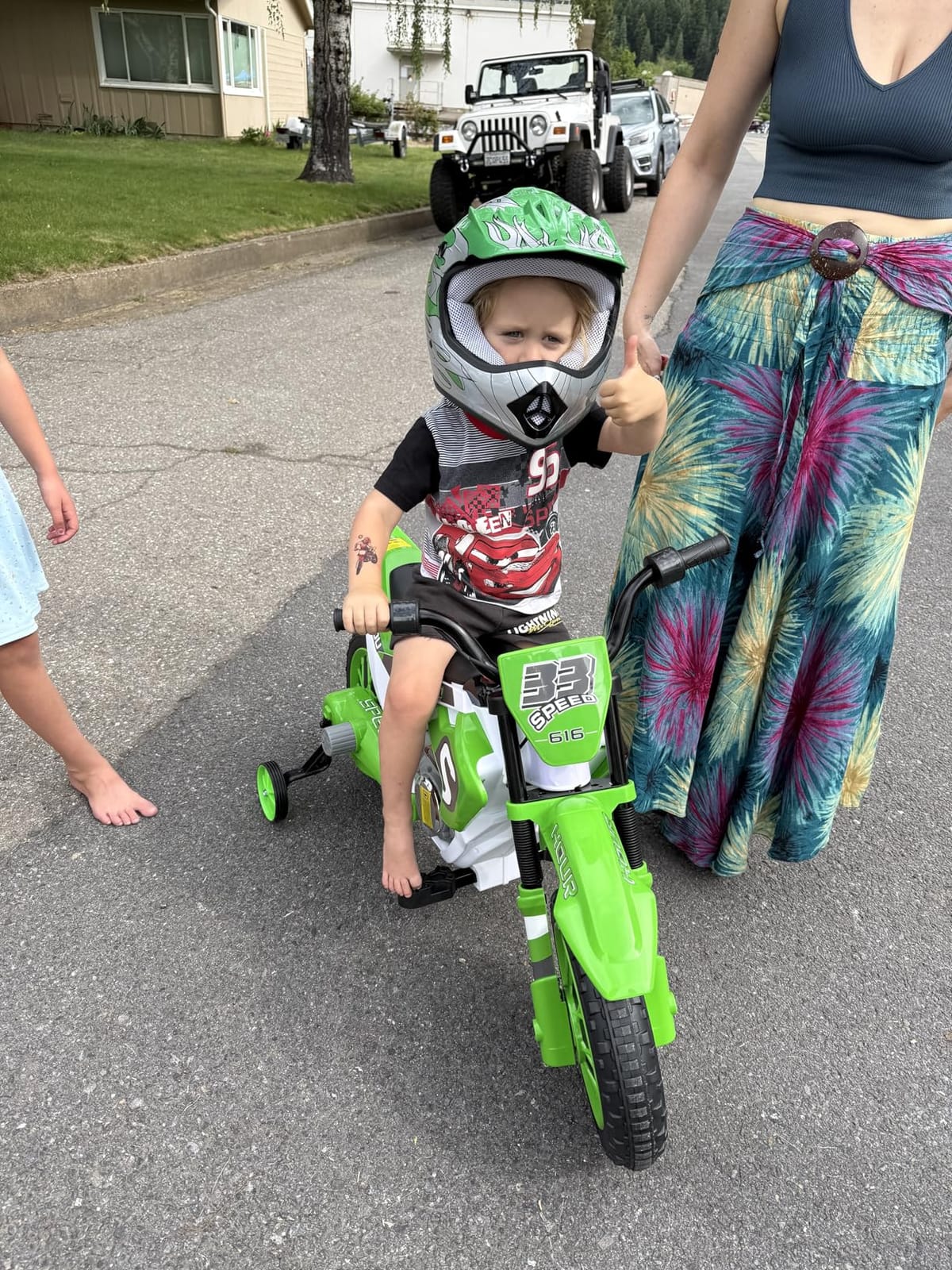
The high and low settings span 1.86 to 5 mph, and the lower setting gives you a sensible first gear on the same bike. That is the difference between buying one bike twice and buying one bike once.
Weight and size are honest at 22 pounds and 42 by 20.25 by 26.75 inches, with a 66-pound capacity. Listing age is three to five, which we would read as a floor rather than a ceiling given the speed range.
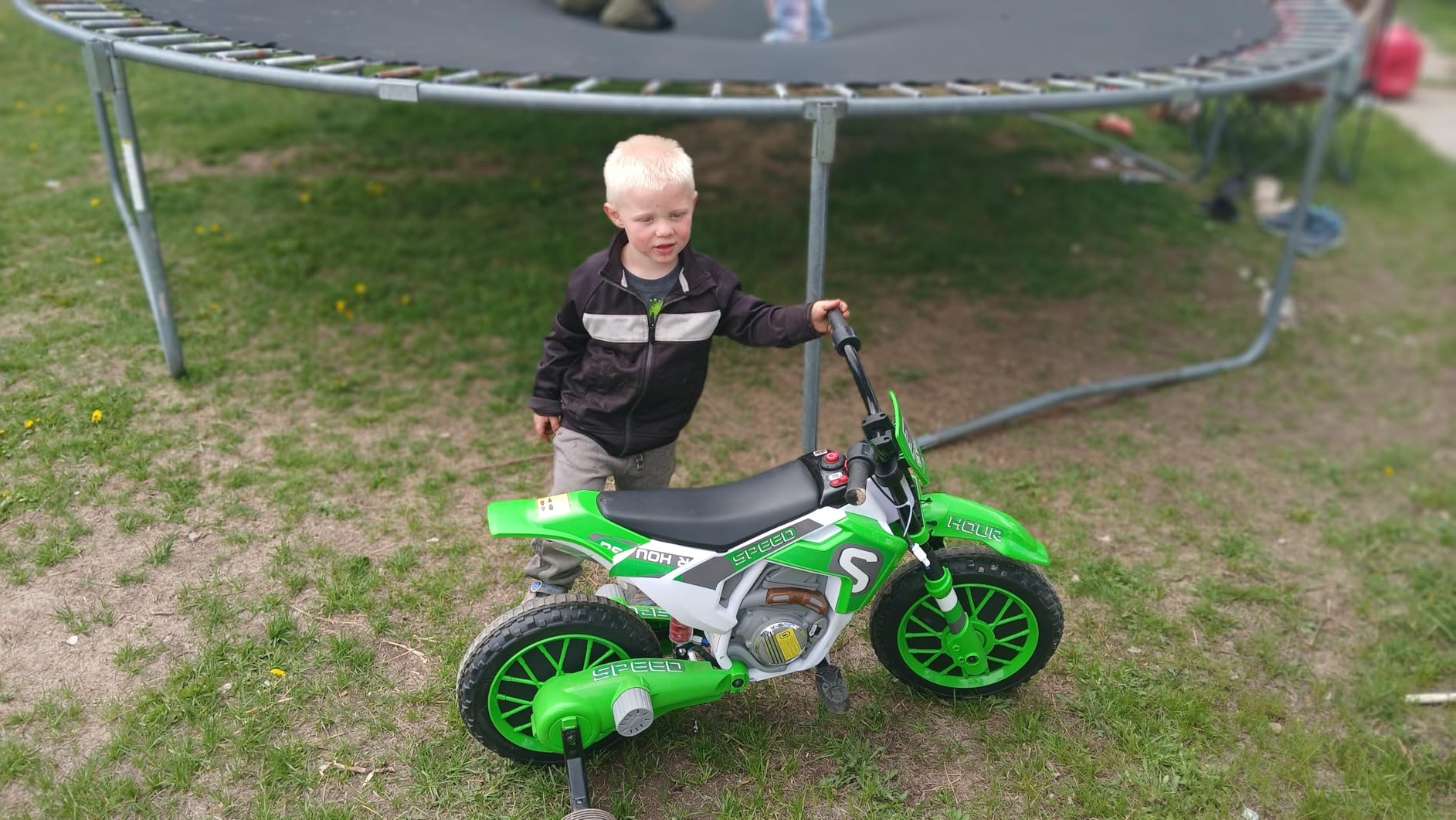
Why detachable training wheels beat a fixed pair
Fixed support wheels are a compromise. The child is either permanently held up and riding with a shuffle, or the wheels come off and the first real ride happens on the same day. Detachable wheels let you set the timetable yourself, which is the only sensible approach for a 5 mph machine.
Watch the transition carefully. Take the wheels off on a flat, wide surface, not a slope, and expect a few wobbles in the first session. Keeping the low speed setting for that week is the difference between a confident rider and a frightened one.
Where 5 mph needs a boundary
Five miles per hour is a real speed in a small body. It is fine on a driveway, a quiet cul-de-sac or a yard, and it is not fine on a footpath, a car park or anywhere with parked vehicles. Set that boundary at the same time you hand over the bike, because a five-year-old will not invent one.
The thick-grass complaint is consistent across reviews, and it is a power limit rather than a fault. The accelerator sticking is a wear issue reported by a minority of owners, so keep the speed on low for younger riders where the button is pressed constantly.
8. AIII 24V Electric Dirt Bike – Best for a Child Who Outgrows 12V Quickly
- Aluminum alloy frame feels solid at a fraction of branded dirt bike cost
- Beginner 5 mph mode and advanced mode up to 10 mph
- Detachable 24V battery swaps in about a minute
- 24V 150W brushless motor with transmission chain drive
- Adjustable seat height plus a number and name board kit
- 23.2 lb weight is difficult for small children to lift
- 10 mph advanced mode is fast for a 3 to 5 year old
- Some buyers report battery capacity dropping after several months
Most children blow through a 12V bike in a single season, and this is the answer for the ones who do. The 24V 150W brushless motor with a transmission chain drive gives it an adult-bike drivetrain feel that hub-motor 24V models lack, and the aluminium alloy frame is lighter and more rigid than the stamped steel on most of its rivals.
The other detail we would not compromise on is the detachable battery. It comes out in about a minute, which means a second pack can extend a session rather than ending it, and it solves the charging problem for anyone with a garage. Parent advice in this category repeatedly recommends buying the spare pack, and this bike is one of the few here where that advice is actually practical.
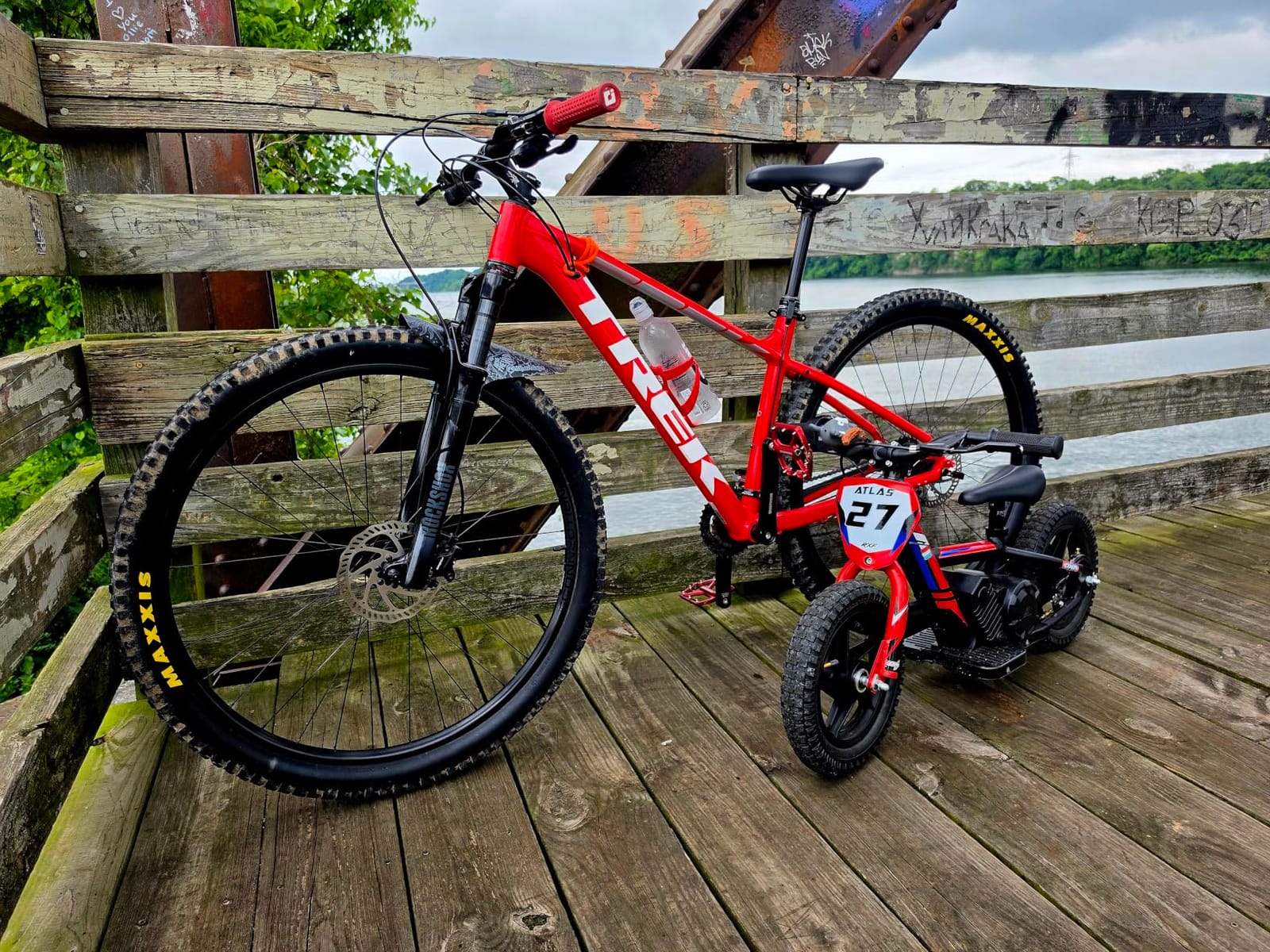
Two modes are provided: a beginner mode at 5 mph and an advanced mode up to 10 mph. Run time is stated at 40 to 60 minutes with a charge time of one and a half to two hours, which is the shortest charge cycle of any bike in this roundup. Twelve-inch inflatable rubber composite tires take out the harshness of pavement seams.
The adjustable seat height and the included number and name board kit are nice touches for a child who is visibly growing. The bike weighs 23.2 pounds and measures 38.5 by 24.8 by 24.8 inches, and a faster 340W version is also offered in the range.
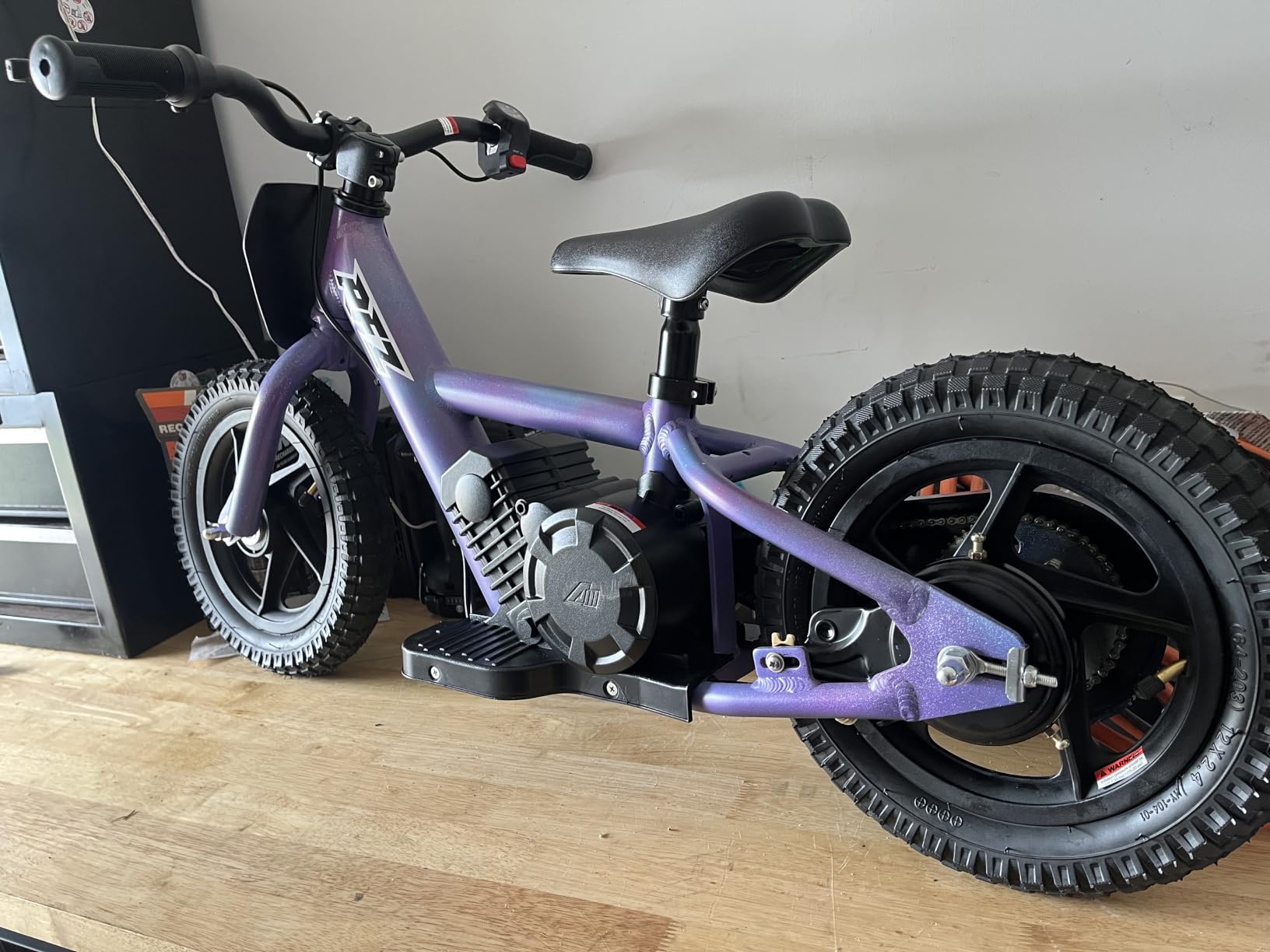
Why the detachable battery changes the buying decision
Almost every ride-on in this category charges for 8 to 12 hours, which means one session a day at best. A removable pack that changes in a minute means the second ride of the day does not have to wait for the charger. Over a weekend that is the difference between a bike that gets used and a bike that does not.
There is a durability caveat to weigh. Reviewers report battery capacity declining after around six months of use, which is common for lithium cells at this level. The replaceable format matters here, because a bike you cannot open the battery compartment on is a bike that dies when the pack does.
Who should not buy a 10 mph mode bike
Skip the advanced mode for a child under about seven. The bike is listed from three years, and while the beginner mode makes it manageable, a 10 mph top speed in a small body is not something a parent hands over on the first weekend. Treat mode two as something a child graduates into, not as a starting point.
The 23.2-pound weight is also a factor. A 24V bike of this size is beyond a five-year-old to lift, so assume adults handle every tip-over. The brushless drive is quiet and smooth, which is a genuine benefit in a residential setting.
9. HEIMILI 12V Two-Seater – Best When Two Children Want to Ride
- The only two-seater here so siblings ride together
- Reinforced three-wheel frame with a soft start
- Dual 50W motors outperform single-motor 12V ride-ons
- Bluetooth and MP3 streaming plus engine sounds
- 80 lb weight capacity and styling aimed at younger riders
- One reviewer reported loose handlebars and drive failure after about five months
- A wire connection under the seat must be secured during assembly or it will not power on
- Audio volume cannot be turned down
The two-seat layout is the entire reason to buy this one, and for a family with a four-year-old and a six-year-old it solves a problem no single-seater can. The widened bench takes both children, the reinforced three-wheel structure resists tipping, and the soft start keeps the launch gentle enough for a small passenger.
Underneath it is a stronger drivetrain than most 12V ride-ons. Two 50W high-torque motors handle grass, dirt and pavement better than a single motor in the same class, which matters if your outdoor space is not purely paved. Bluetooth and an MP3 port are included along with LED headlights and engine sounds, and the audio volume cannot be adjusted, so that is worth knowing in advance.
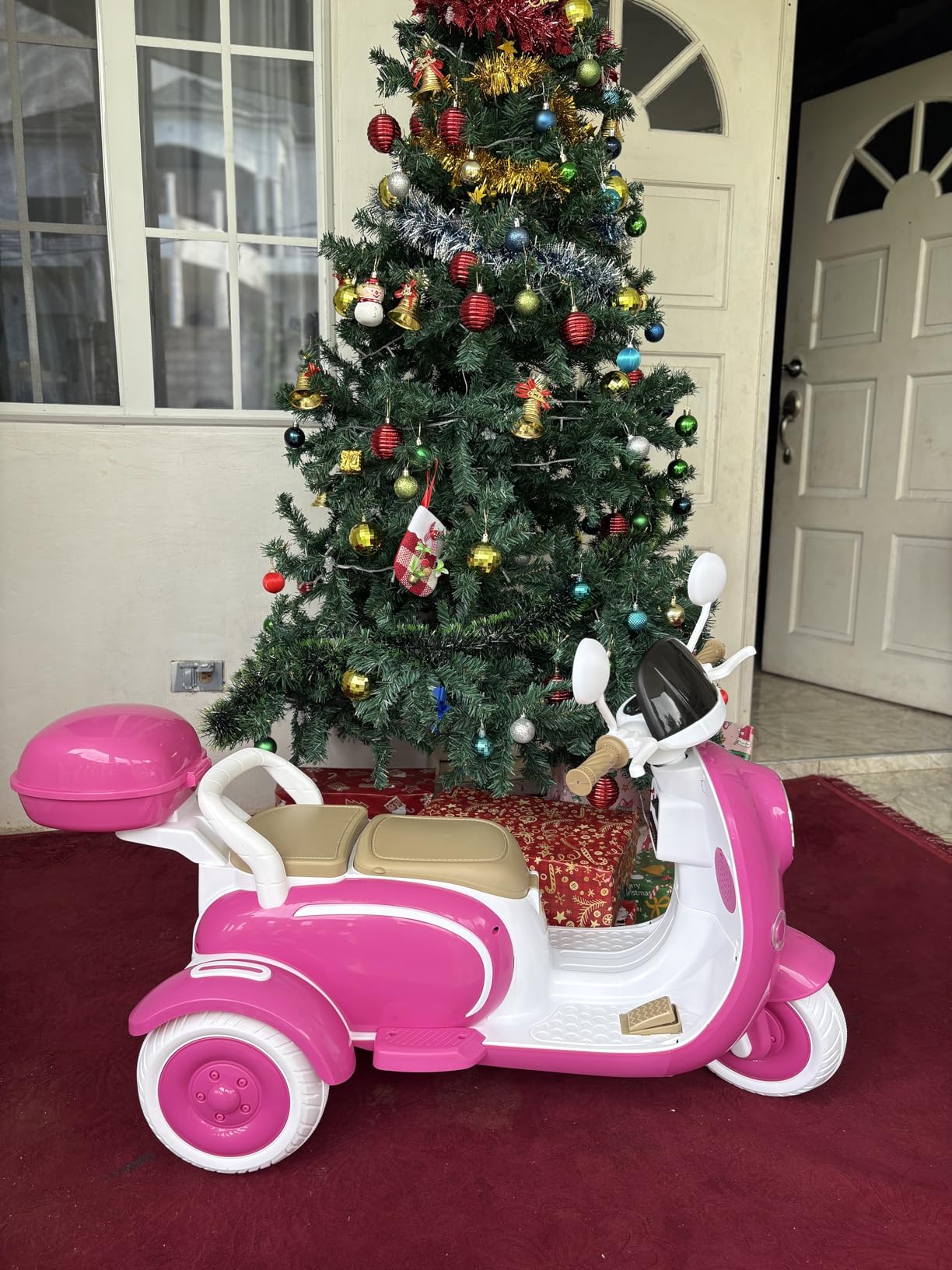
Reviewers report the strongest five-star share of any bike here, and the recurring theme is siblings riding together. The 80-pound weight capacity is generous for the age range listed, three to six years, and the styling is pitched at younger riders.
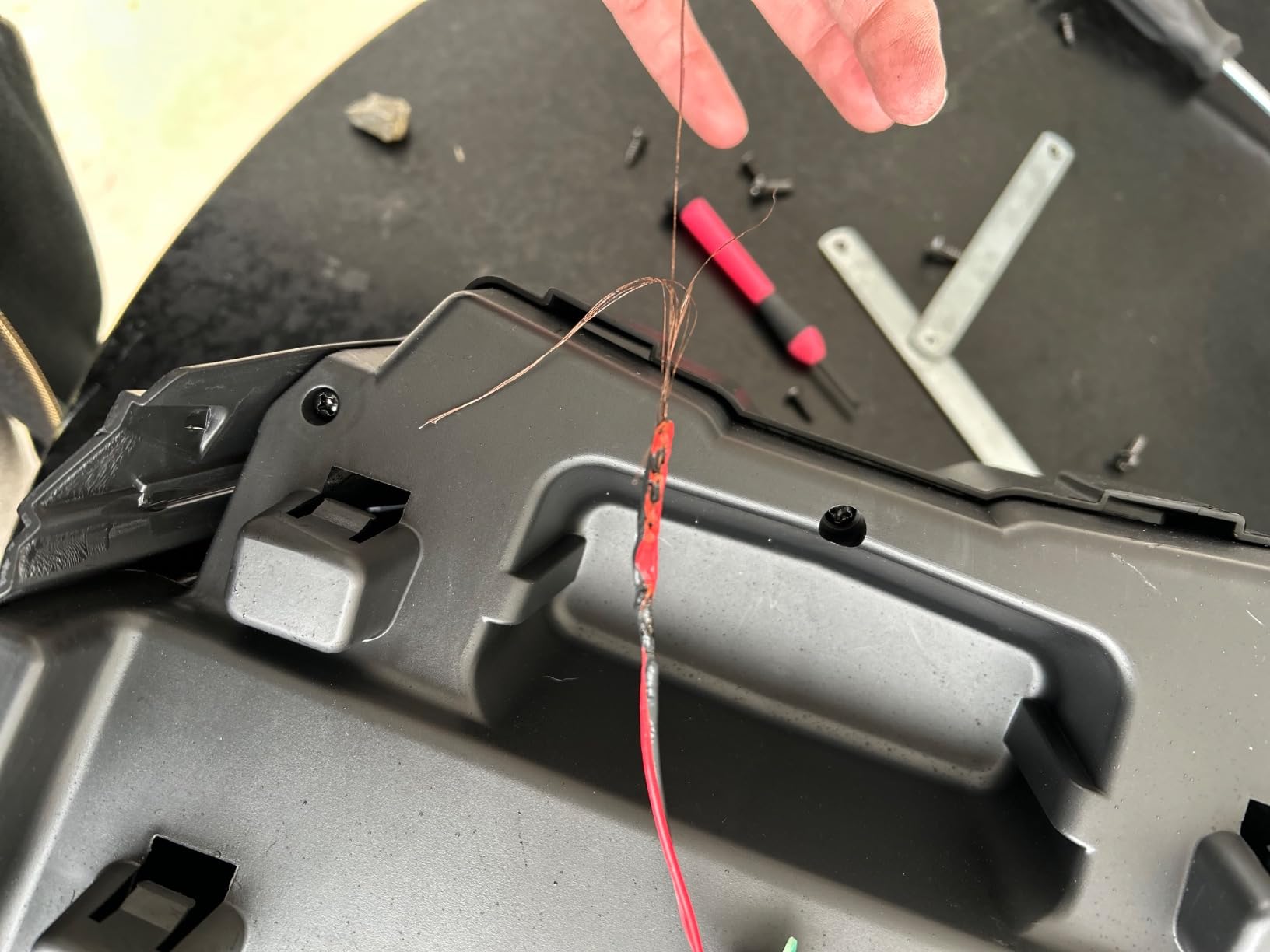
One assembly detail catches people out. A wire connection inside the seat has to be secured at the end of assembly or the bike will not power on at all. It is a small thing, but if you are building it for a birthday present, check it before you hand it over.
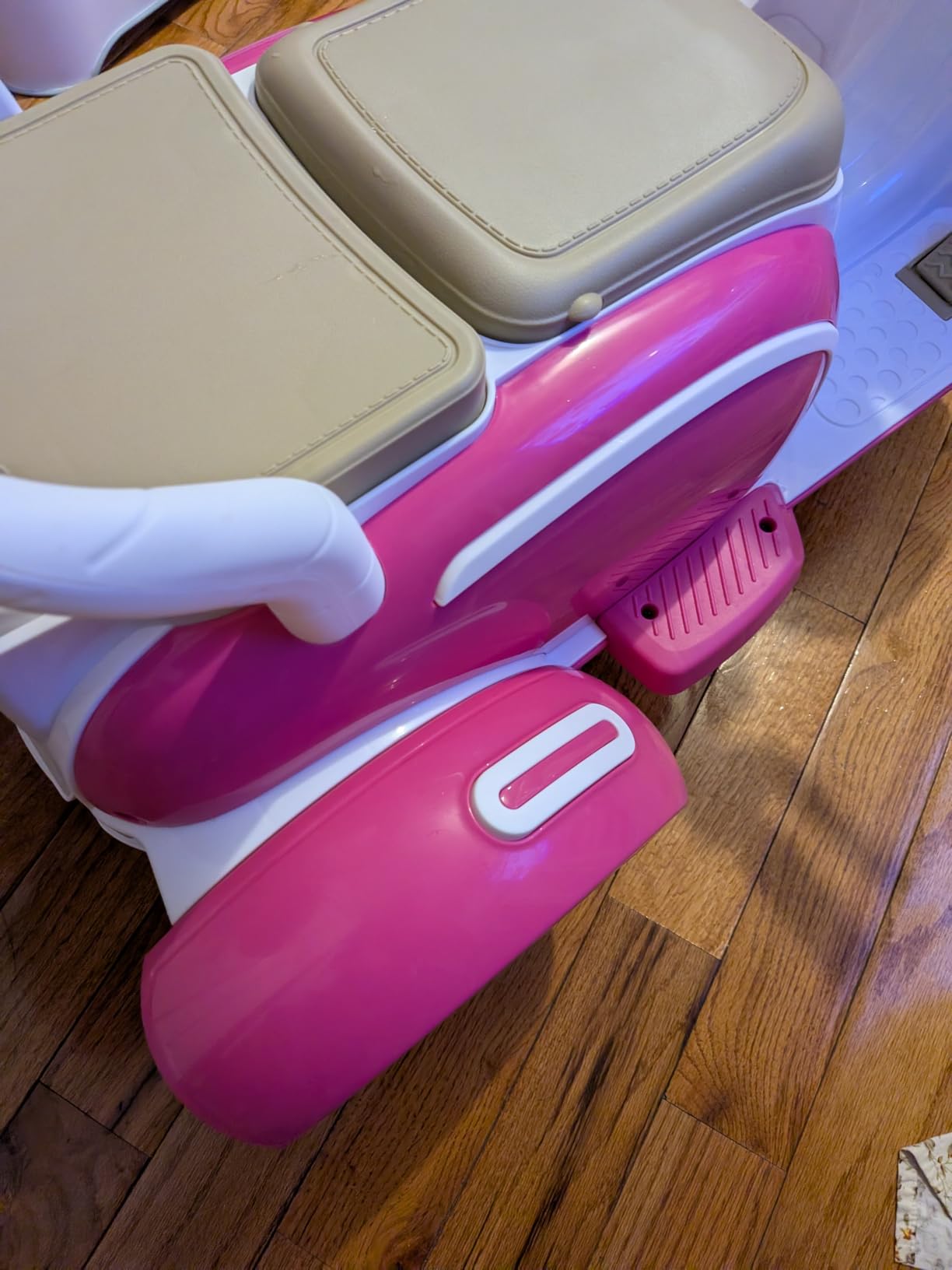
Is a two-seater ride-on actually worth it
Usually the answer is no, because a second child on the back usually refuses to be a second child on the back. The exception is a close age gap of about two years where the older child is a confident rider and the younger one simply wants to be along. In that case the two-seat format turns a disagreement into a shared game.
The cost of the two-seat is usually the third wheel, which makes the bike wider and less stable in a turn than a two-wheeler. That trade is worth it for a 3-to-6 bracket and not worth it for an older child who wants to lean into a corner.
Where durability could disappoint
At least one reviewer reported the handlebars loosening and the drive failing after around five months, which is a shorter life than the ratings suggest. Assembly quality on plastic ride-ons of this size is the weak point, so tighten every fitting before the first ride and check them again after the first month.
Also weigh the children. Two children plus a plastic body has to stay under 80 pounds combined, and a heavier older child on the back will use up the capacity the front rider needs.
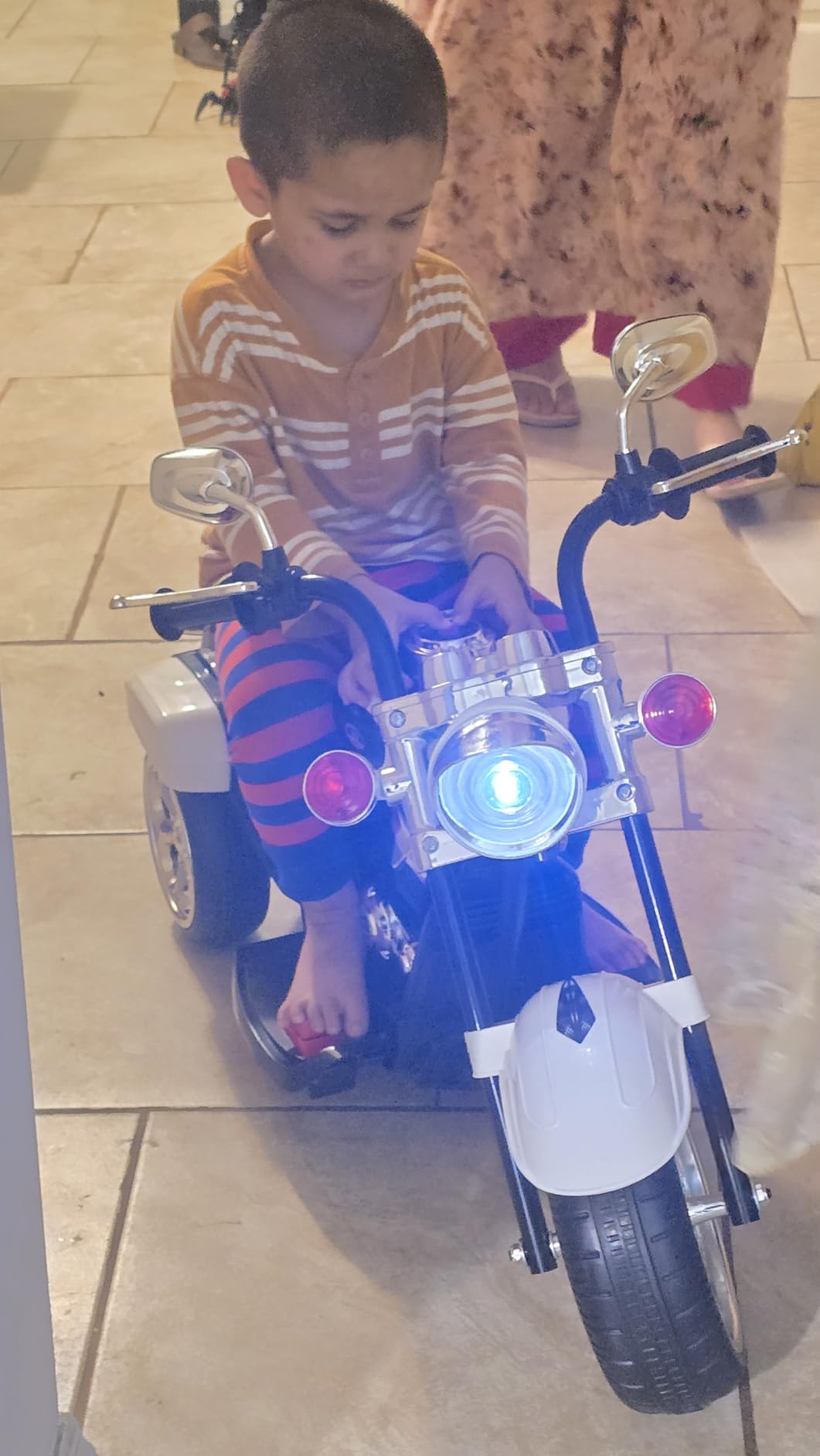
10. HONEY JOY 6V Chopper – Most Realistic Styling in the 6V Class
- Chopper styling with rear view mirrors looks very realistic
- Triangular three-wheel layout is a safe balance platform
- Rear-wheel drive with a shock absorber spring moves smoothly
- Foot pedal with a forward and reverse button suits toddlers
- Iron frame with a curved body-hugging seat
- 6V class means very low speed and short sessions
- Best suited to younger riders despite the 3 to 8 listing
- Basic feature set against Bluetooth-equipped rivals
Style is the differentiator here. The rear view mirrors, chopper profile and a curved seat that wraps around the rider make this look like a miniature cruiser rather than a generic ride-on, and for a three-year-old choosing between identical-looking plastic bikes, that appearance is not a trivial factor.
Underneath, it is a well-behaved 6V machine. The triangular three-wheel layout gives the same tip resistance as the chopper above, the rear-wheel drive works through a shock absorber spring, and a foot pedal with a forward and reverse button is straightforward to explain to a toddler. It weighs 14 pounds, which makes it easy to move.
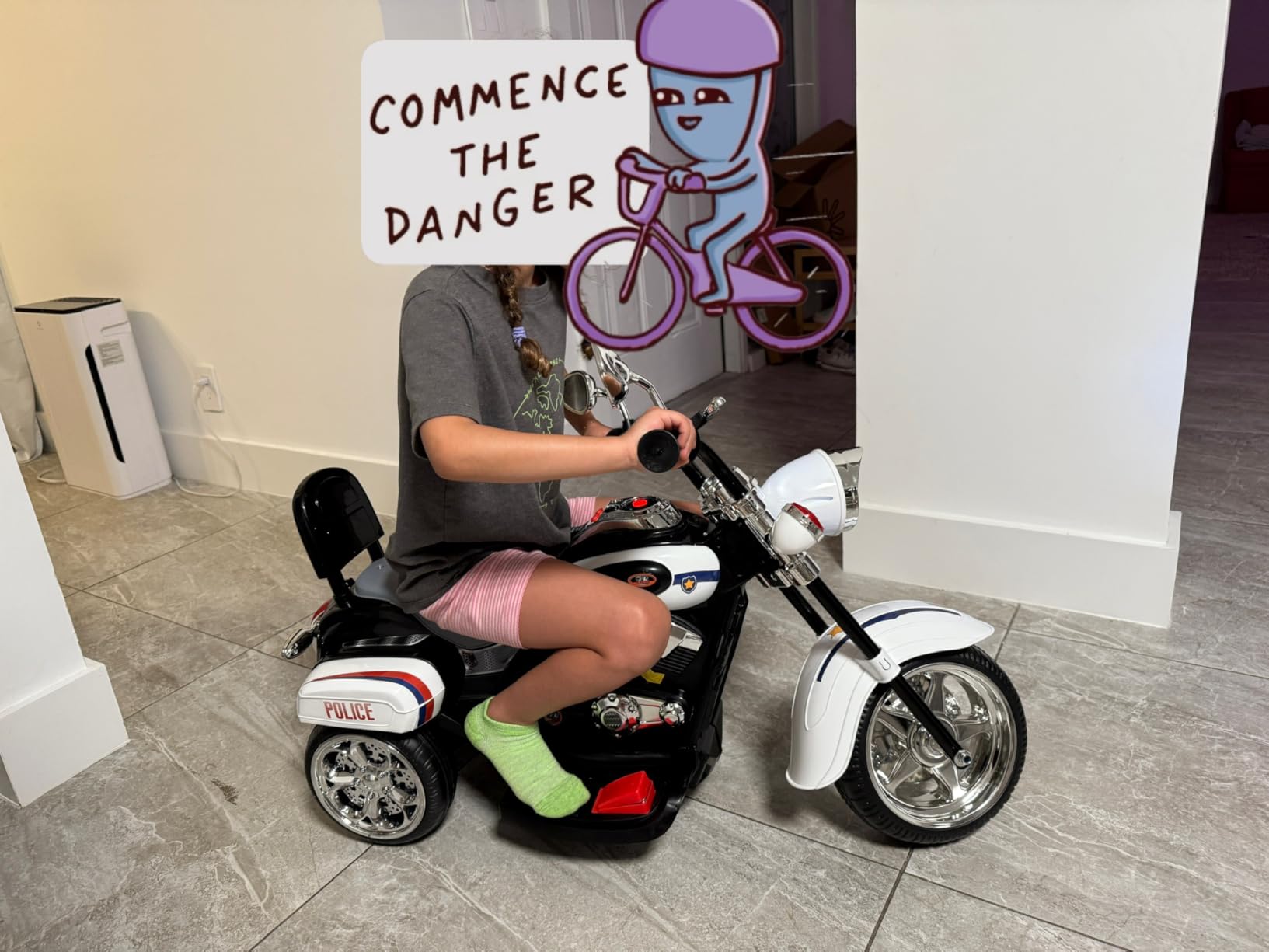
The listed age range says three to eight years, and we would treat the top of that as generous. Reviews are consistent that it suits younger riders, and the 6V power class and short sessions are the limiting factors rather than the styling.
Colour choice is unusually wide for the category, with police white, fire engine red and several other options, so it is easy to find one that looks intentional in a garage rather than toy-shop bright.
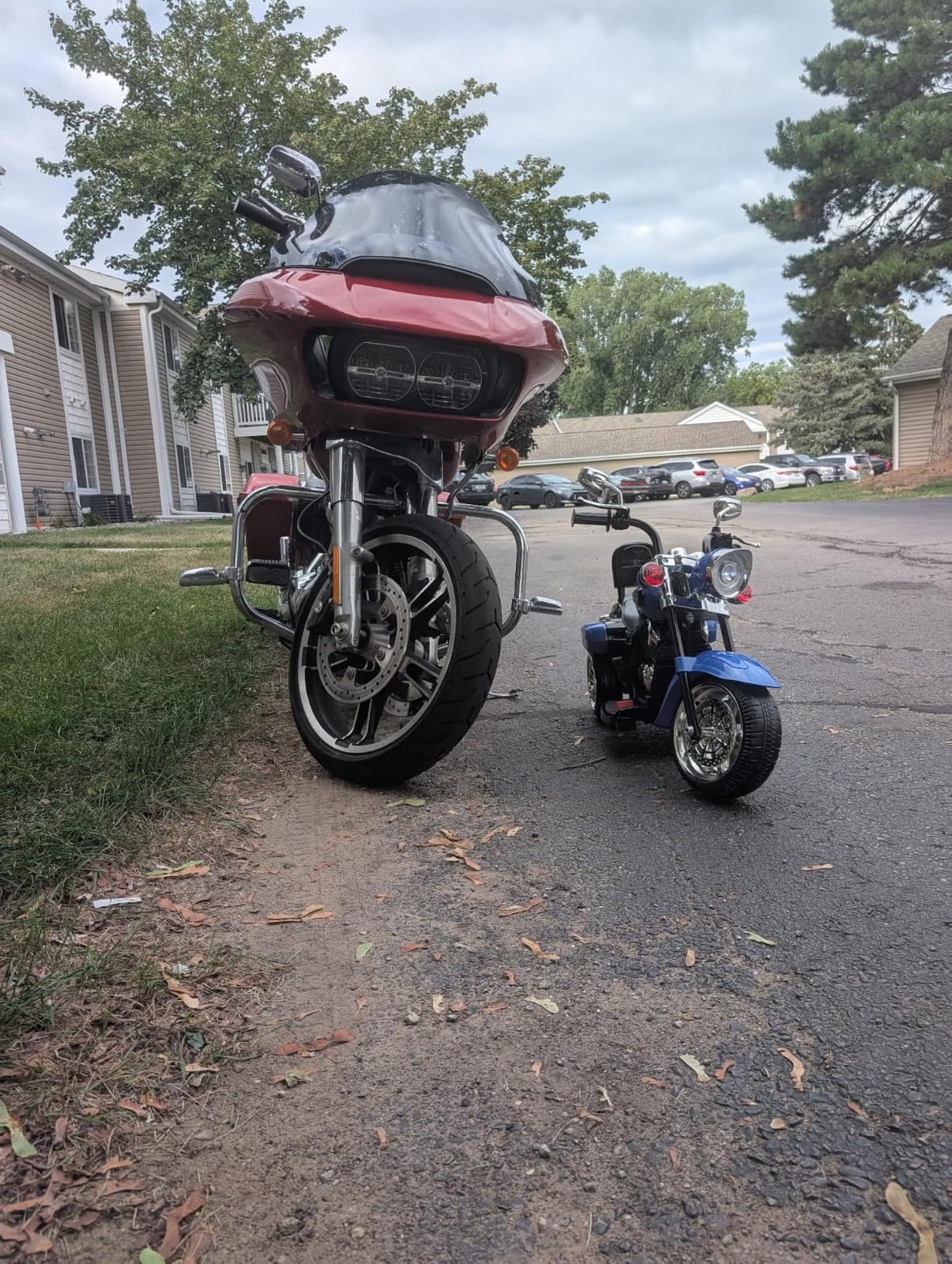
Does styling matter for a three-year-old
More than most buyers expect. At this age the child is choosing the bike, not you, and a bike that resembles a real motorbike gets ridden more willingly. A plain plastic scooter shape gets abandoned, while a chopper with mirrors gets insisted upon, which is a small daily friction point that costs nothing to solve.
The mirrors are also functionally useful early on. They encourage the child to check behind them before turning, a habit that carries over to the real 12V and 24V bikes they will move on to.
When to move up instead
Move up when the child is bored by the top speed rather than when they are too old. A 6V bike has no headroom, so boredom here is terminal: there is no faster setting, no second gear and no mode to unlock. That is the signal to step up to a 12V, not to wait for a birthday.
Skip it if the feature list matters to you. There is no music player, no Bluetooth and no remote, and those are the things that add hours of play on the 12V bikes further down this list.
11. JOYLDIAS 12V 7A – Longest Battery Life for Weekend Riding
JOYLDIAS Kids Motorcycle, 12V7A Battery-Powered Ride On Motorcycle for Kids
- 60 to 80 minutes of run time from the 12V 7A battery
- Training wheels and a low speed mode make it a good learner bike
- MP3 player and Bluetooth add entertainment value
- Spring suspension and a large frame handle road surfaces
- PP plastic construction meets ASTM and CPSIA standards
- Even the high mode is slow and some buyers call it snail speed
- Several reports of failure after short periods of use
- 25 lb weight is heavy for the power it delivers
- Training wheels can catch on obstacles and cause a tip-over
Runtime is the reason to consider this bike. A 12V 7A pack is stated at 60 to 80 minutes per full charge, which is longer than anything else in the roundup and roughly double a typical 12V. For a family that rides at the weekend and wants one long session rather than two short ones, that is a real advantage.
The size is also substantial at 41.9 inches long, 20.3 inches wide and 26.8 inches high, with a 66-pound capacity, and it is one of the few 12V bikes here with both a low and a high speed setting. Training wheels, spring suspension, an MP3 player and Bluetooth are all included, which is a lot of equipment at this level.
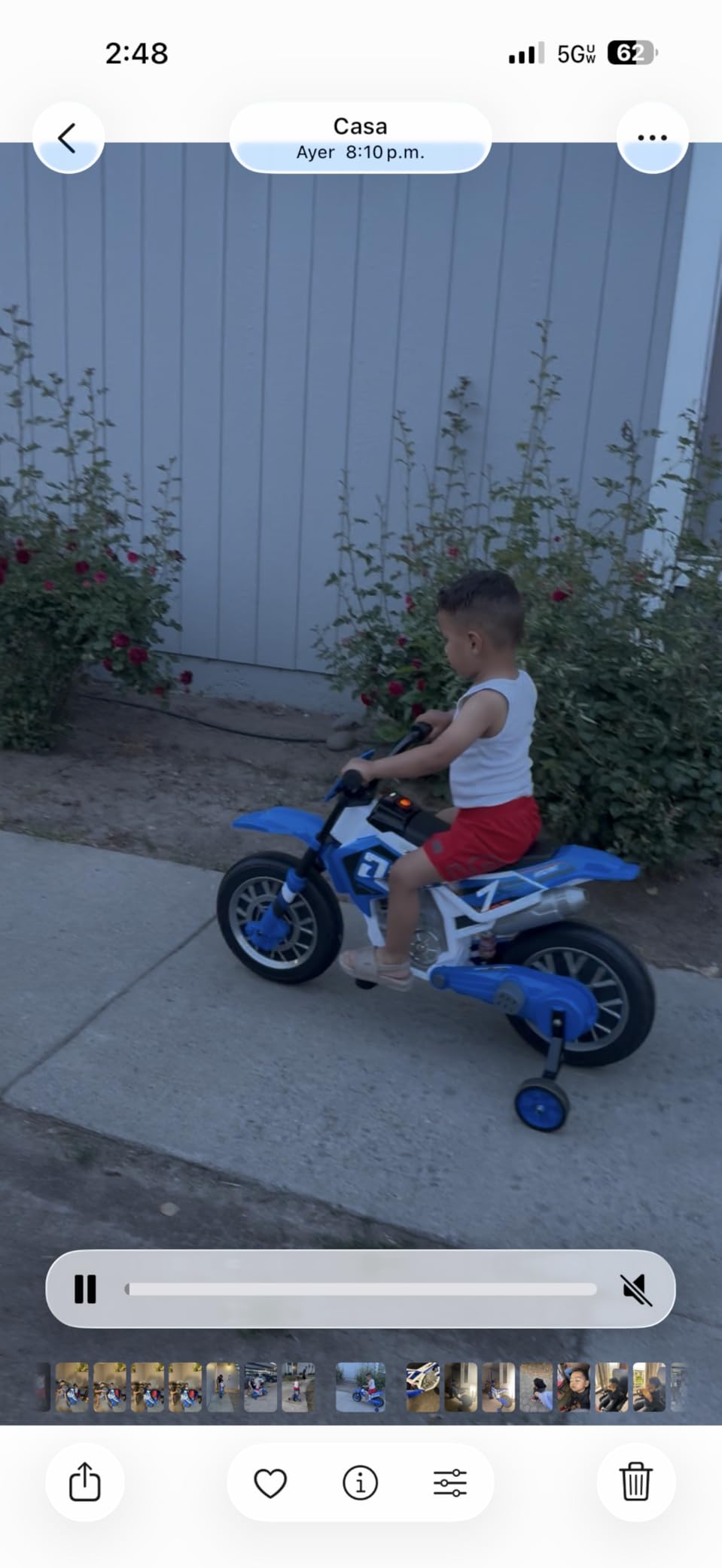
We have to be straight about the weakness. The speed range is 3 to 5 km per hour, so even the high setting is about 1.5 to 3 mph, and reviewers describe it as slow in plain terms. You are buying endurance and size, not performance.
Durability is the other concern. A number of owners report failures after short periods of use, and the 4.1-star rating with the lowest five-star share in this group reflects that. The 25-pound weight is also heavy for the power it delivers.
When a long battery beats a fast bike
Runtime wins when the child is young and the sessions are about play rather than performance. A five-year-old at 2 mph for 70 minutes is having a great time, and a five-year-old at 5 mph for 30 minutes is often halfway through a fall. Longer and slower is the safer pairing for a beginner.
It also wins for households with a single usable charging window. If you can only charge overnight, one charge per weekend is a genuine constraint that a bigger battery answers better than a faster motor.
The training wheel snag worth knowing
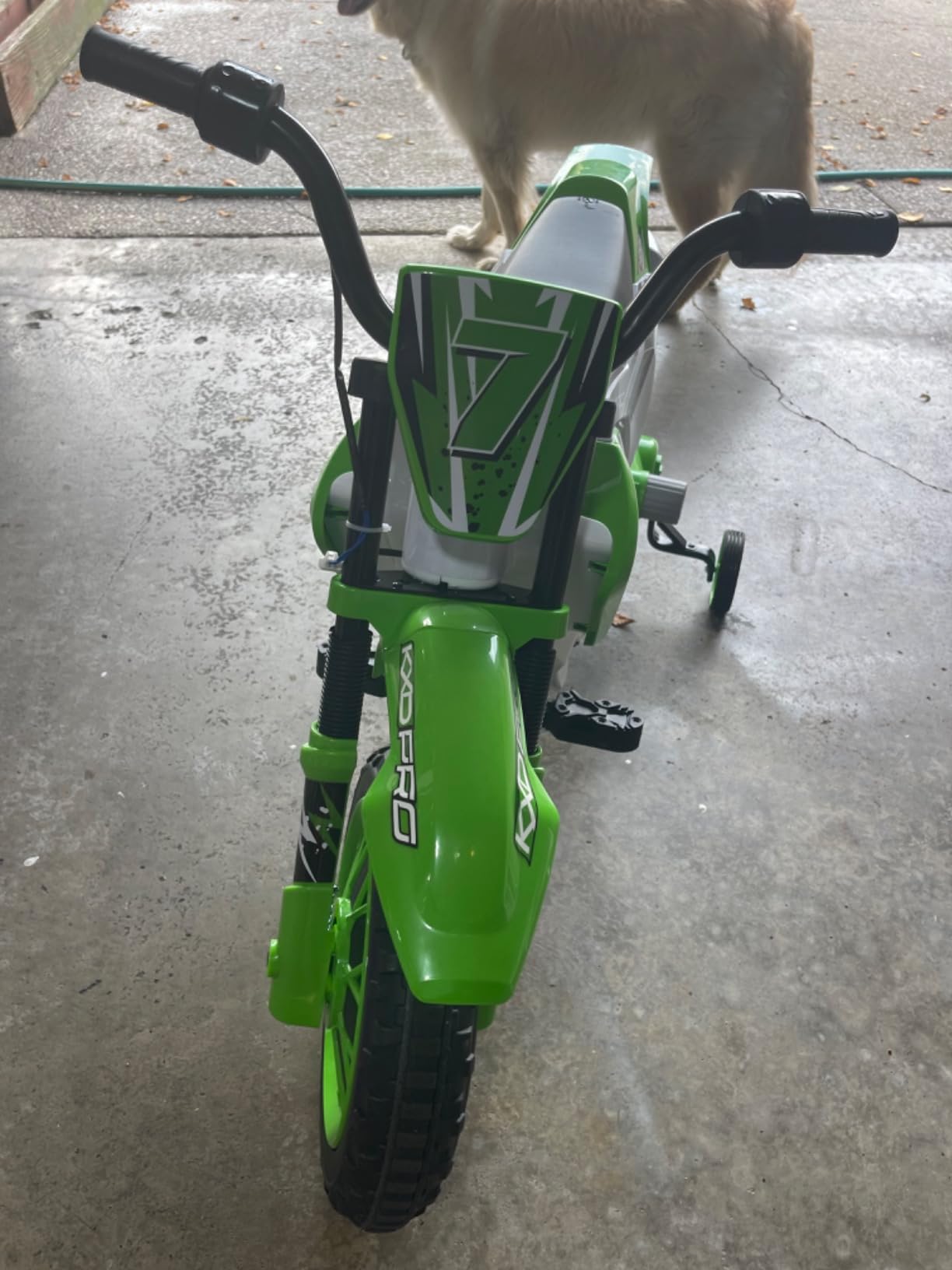
Reviewers specifically flag that the training wheels can catch on obstacles and cause a tip-over, so the bike is best used on smooth pavement rather than gravel or anything with a raised edge. This is a geometry problem inherent to the design, not a maintenance issue.
Given the reported failures, we would buy this one with the return window firmly in mind and test the drive early. The ASTM and CPSIA plastic construction is a genuine positive for a bike meant for young children.
12. TCARAIWEN 24V Aprilia – Most Room for Bigger Children
TCARAIWEN 24V Electric Motorcycle for Kids, Ride On Toys for 4-10 Years Old
- Officially licensed Aprilia RSV4 styling that appeals to older kids
- Largest footprint in the group at 51 inches so children are not outgrown quickly
- A padded leather seat that takes two children
- 120 lb weight capacity
- Training wheels plus Bluetooth and MP3 audio
- 40 lb weight is the heaviest of the plastic builds and hard for small riders to control
- The 6 to 10 year recommended age makes it a poor fit for a 3 to 5 year old
- Assembly takes time given the size
This is the bike for a child who is already too big for everything else. At 51 inches long it is the largest footprint in the roundup, and the 120-pound weight capacity means a ten-year-old can ride it comfortably rather than perched. The padded leather seat is unusual in a plastic-bodied ride-on and stays comfortable on longer sessions.
The styling is officially licensed Aprilia RSV4, which matters more than it sounds for a nine or ten-year-old. A child who will not sit on a generic bike will happily sit on a replica of a real sportbike, and that is often the difference between a bike that gets ridden and one that sits in a garage.
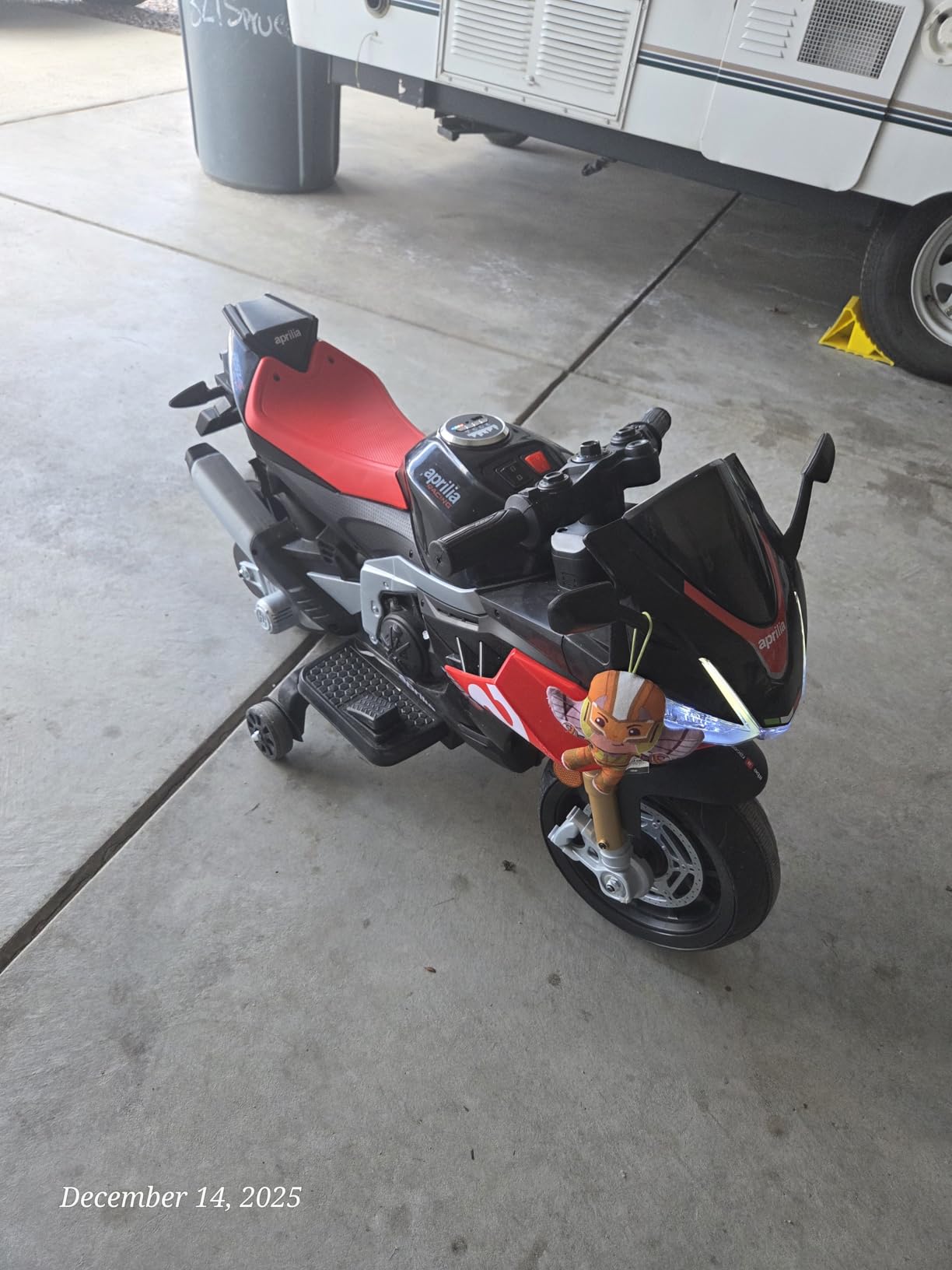
A standard 24V motor reaches up to 10 mph, with a metal frame and wear-resistant wheels over a plastic body. Training wheels are included, Bluetooth and an MP3 player handle the audio, and the seat takes two children, which extends its usefulness across a wider age spread.
The 40-pound weight is the honest drawback. It is the heaviest of the plastic builds here and it is not something a six-year-old can lift or easily right after a tip-over, so the recommended age of six to ten years is a sensible floor rather than a formality.
Why a larger frame beats a more powerful motor
Once a child is around eight, the binding constraint is rarely power. It is whether their feet reach the pegs properly, whether they can reach the bars from the seat, and whether they can tip the bike back up. A 51-inch frame with a 120-pound capacity answers all three in a way a compact 24V bike cannot.
That is also why the seat takes two children. An older sibling on a 51-inch bike has room to stretch out, and a younger one can sit behind, which delays the point at which the family outgrows the machine.
Where the licensed styling helps and where it does not
Licensed branding does real work on appearance and almost none on the ride. The body is still plastic, the motor is a standard 24V unit rather than the 300W unit in the 36V bike, and the weight reflects the size of the shell. Buy it because your child will want it and because it fits them, not because of the badge.
Keep the training wheels on for the first month given the 10 mph top speed, and treat that speed as an advanced setting rather than a starting one. Plan the assembly for an evening, because a 51-inch frame does not go together in twenty minutes.
How to Choose a Powered Ride-On Motorcycle by Age and Weight?
Two numbers decide almost everything: the rider’s age and the rider’s weight. Age sets the control style and the size of the machine. Weight decides whether the bike has enough power and capacity to move them. Ignore either one and you will end up with a bike that is too small to control or too weak to climb a slope, and those are the two most common complaints in this category. We applied the same weight-first rule when we covered large ride-on machines built for other jobs, as in our picks for the best ride-on floor sweepers.
Before any powered ride-on, a readiness check saves a lot of disappointment. Can the child sit and reach the bars without slouching? Can both feet touch the ground flat when stopped? Can they stop on command when told to? If any of those three fail, a balance bike or a pedal toy is a better first step than more power.
Next comes the voltage band, and the short version is straightforward. Under about 40 pounds and aged three to five means 6V. Around 40 to 70 pounds and aged five to seven means 12V. Above 70 pounds, on grass, or on any slope means 24V or 36V. A 6V bike tops out near 2 mph and cannot climb, a 12V with dual motors reaches about 5 mph, 24V machines run to 10 mph, and 36V youth dirt bikes reach 15 mph or more.
Max rider weight is the spec most parents skip and the one that matters most. A 44-pound limit on a five-year-old means the ride is over in months, and a bike that is too small leaves the child hunched, unable to shift weight or reach the brake. Always check the stated capacity against your child’s current weight, and expect to grow past it rather than into it.
Runtime is the second thing to read carefully. Headline figures are measured on flat ground with a light rider at the lowest setting. Real sessions on a driveway with a five-year-old and occasional hills land closer to the bottom of the claimed range. The two exceptions here are the JOYLDIAS at a stated 60 to 80 minutes and the Hiboy DK1 at up to 90 minutes, and both charge far faster than the overnight cycle the smaller bikes need.
On training wheels, the useful distinction is simple. A three-wheel or triangular layout will not tip at all, which suits a toddler. A detachable side wheel is better for a five or six-year-old who is ready to learn balance but not ready to commit. A fixed pair of support wheels is the worst of both, because the child either leans on them forever or they are removed on the wrong day.
Think about the charge cycle before you buy, not after. Most 6V and 12V bikes charge for 8 to 12 hours, so the practical pattern is one ride per night or one long weekend session. A detachable battery, as on the 24V AIII, or a second pack, is the single best upgrade for play value in this whole list.
The graduation path is worth planning rather than reacting to. A 6V at three, a 12V with detachable support wheels at five, a 24V or 36V at eight, and a real petrol bike when the child is tall enough to reach the pegs and stand over the seat properly. Parents who buy one step ahead of that curve report far less frustration than those who wait for a bike to fail.
Finally, check the certification and the parts. Look for ASTM F963 and CPSIA compliance, which several of the bikes here carry explicitly, and confirm the charger is UL listed. Then check whether a replacement battery and charger are sold separately, because on a plastic ride-on those two parts decide the product’s working life.
Safety: Helmets, Gear and Supervision
Is it safe for a child to ride on a motorcycle? A powered ride-on is safe when it is treated as what it is: a low-speed motorised machine that needs the same supervision as a bicycle, plus more. The US Consumer Product Safety Commission publishes bicycle helmet standards, and the American Academy of Pediatrics advises against a used helmet because the protective liner is compromised after a single impact, whether or not the shell looks damaged. Buy new, and replace after any fall.
Helmet on, then the rest. Gloves, knee pads and elbow pads cost a fraction of the bike and prevent the most common injuries on these machines, which are scrapes from a hand or knee meeting pavement at 5 mph. Closed shoes matter as much on these bikes as on a real motorcycle, because the foot pegs and footrests sit exactly where an open toe ends up.
On the product itself, three checks are worth making before the first ride. Confirm the bike carries ASTM F963 and CPSIA certification, which are the US toy safety standards covering small parts, lead content and mechanical requirements. Confirm the charger is UL listed, since it runs unattended for hours. And confirm the brakes work from a standing start before anyone mounts.
Supervision is the third layer, and it is the one that prevents most injuries. A sensible first session is: flat pavement, low speed setting, training wheels on, ten minutes of slow riding, then stop and check the child can stop on command. Only then move to open space. Parents on enthusiast forums raise supervision constantly, and the advice is always the same: a 5 mph or 10 mph machine is governed entirely by where the child is allowed to point it.
Set the boundary before the handover. A driveway, a yard or a quiet park is fine. A road, a car park, a footpath or a public playground is not, and no speed setting makes those safe. For anyone who also carries cargo on a ride, our guide to motorcycle backpack carriers covers the load and balance questions that come with a heavier machine.
Frequently Asked Questions
What is the best electric motorcycle for kids?
It depends on the rider’s age and weight rather than on any single model. For a child aged three to five the safest choice is a 6V ride-on with training wheels or a three-wheel layout, such as the Best Choice Products 6V or the Costzon 6V chopper. For a child aged five to seven, a 12V model with detachable support wheels, such as the Aosom 12V, is the right step up. For children aged eight and up, a 24V or 36V mini dirt bike with selectable speed modes, such as the Hiboy DK1, is the right answer.
What is the best electric motorbike for a toddler?
A three-wheel or triangular-layout 6V ride-on is the best choice for a toddler, because those designs are very difficult to tip. Look for a stated weight capacity above your child’s current weight, a soft start, and ASTM F963 and CPSIA certification. Top speed on any toddler bike should be under 2 mph.
What age range are toy motorcycles for?
Most powered ride-on motorcycles are aimed at ages three to six, with 6V models covering three to five and 12V models covering five to seven. 24V mini dirt bikes are generally suitable from about six, and 36V youth dirt bikes from about eight with an adult present. The age fields on listings are frequently optimistic, so check the max rider weight and seat height instead.
What is the best first motorcycle for a child?
Check four things before any powered bike: the child can sit and reach the handlebars without slouching, both feet touch the ground flat at a standstill, they can stop on command when asked, and they can already balance on a pedal bike or balance bike. If any of those fail, start with a balance bike and revisit powered models in about a year.
What is the best starter motorcycle for kids?
A 12V ride-on with detachable support wheels and two speed settings is the most useful starter bike for a child aged five to seven. The Aosom 12V in this roundup reaches 5 mph on its high setting and 1.86 mph on low, with side wheels that can be removed once the child can hold a straight line. Budget roughly 45 minutes of play per overnight charge.
How fast is a 6V motorcycle?
A 6V ride-on motorcycle typically reaches between 1.8 and 2.2 mph, which is a little faster than a brisk walk. That speed is appropriate for a child aged three to five because a steering error produces a wobble rather than a fall. A 6V bike cannot climb a slope or cut through thicker grass, so it is a flat-surface machine.
Is it safe for a child to ride on a motorcycle?
It is safe when the bike is ASTM F963 and CPSIA certified, the charger is UL listed, the child wears a properly fitted new helmet with gloves, knee and elbow pads, and an adult supervises every session. The American Academy of Pediatrics advises against used helmets because the liner is degraded after one impact. Choose a bike with a low speed setting and training wheels for beginners, and set clear boundaries about where the child may ride.
What is the fastest motorcycle for kids?
Among the bikes reviewed here, the Hiboy DK1 reaches 15.5 mph on its high speed setting, with medium at 7.5 mph and low at 5.0 mph. That speed is only appropriate on open ground with an adult positioned ahead of the rider, and it should be a mode a child graduates into rather than a setting they start on. A 24V bike typically tops out at 10 mph.
Should I buy a two-seat ride-on motorcycle for kids?
Only if you have two children within about two years of each other, both of whom will ride. The only two-seater in this roundup is the HEIMILI 12V, which uses a widened bench on a three-wheel frame with an 80-pound combined capacity. A third wheel makes the bike wider and less stable in a turn, so it suits younger riders rather than children who want to lean through corners.
How long does a 12V ride-on motorcycle battery last?
Most 12V ride-on motorcycles deliver 40 to 60 minutes of play per charge, and the charge itself takes 8 to 12 hours, which is why these bikes are usually ridden in one evening session or one weekend session. Longer figures exist: the JOYLDIAS 12V in this roundup claims 60 to 80 minutes from a 12V 7A pack. Real runtime on hills, thick grass or with a heavier rider lands nearer the bottom of the claimed range.
Our Final Verdict
There is no single best powered ride-on motorcycle for kids, because the honest answer depends entirely on the two numbers most product pages bury: rider age and rider weight. For a first ride at three to five, the Best Choice Products 6V with training wheels is the safe, well-certified choice. For a child ready to learn balance, the Aosom 12V with detachable support wheels is the best step up from a stability toy.
For older children, the Razor Dirt Rocket MX350 is our top pick for a reason: it has the deepest review history, the most reviews to learn from and a steel frame that holds up on real terrain. The Hiboy DK1 is the choice when a child has genuinely outgrown everything else and has open ground to ride on, and its three speed modes make that jump survivable. Match the band to the child, check the max rider weight, and buy the spare battery.