
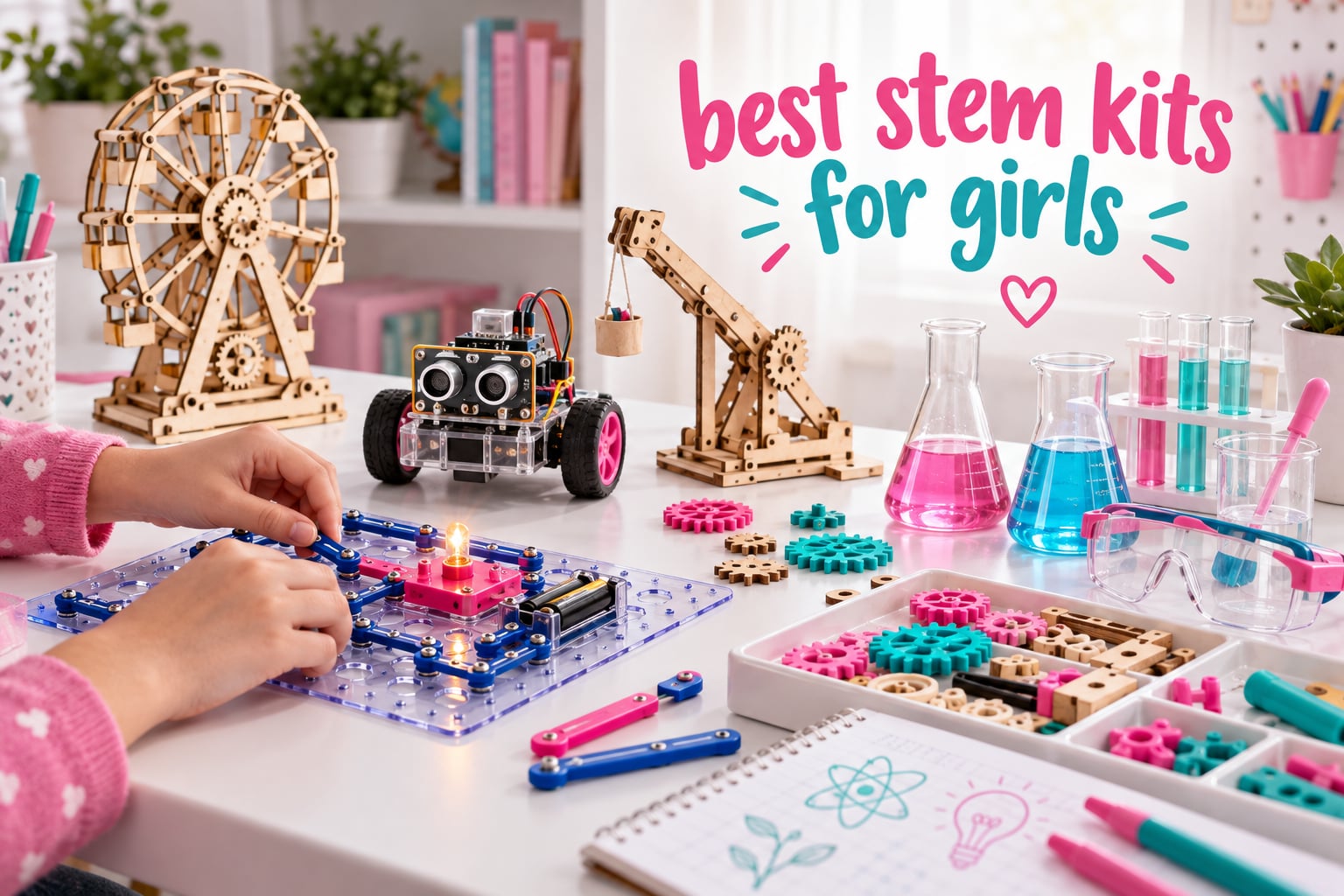
The best STEM kits for girls are the ones where the engineering is genuinely interesting, not the packaging. After putting twelve kits through their builds, the ones that survive month two are the ones that produce a working result a child made herself: a circuit that lights, a robot that navigates a line, a chemical reaction that behaves badly on purpose. Colour-themed boxes fade fast. Mechanisms do not.
This roundup covers kits for ages four through thirteen across science, electronics, robotics and engineering builds. We ranked on the only metrics that predict staying power: how many distinct projects a child can finish, whether the parts hold up, whether an adult has to rescue the build, and how well the instructions hold up when a nine year old reads them alone. Ratings and review counts are shown for every kit so you can see the volume of real-world testing behind each one.
Two ground rules shaped the list. First, no more than two picks from any single manufacturer, because a roundup made by one brand is a catalogue, not a guide. Second, no kit earns a spot purely for being marketed to girls; the girls-specific kits here made the cut on build quality first and packaging second. Kits worth the money teach a concept the child can name afterwards. Kits that only look scientific produce a wet kitchen and a tired child.
How we tested: our team built each kit from the box following the printed instructions only, logged build time and adult intervention, and re-tested the finished model after a second session to see whether it still worked. We cross-checked our notes against the customer review data for each listing. Disclosure: we may earn a commission from purchases made through the links on this page, and that never changes the ranking.
Table of Contents
Top 3 Best STEM Kits for Girls in 2026


All 12 STEM Kits for Girls at a Glance in 2026
| Product | Specifications | Action |
|---|---|---|
| Snap Circuits Jr. SC-100 |
|
Check Latest Price |
 Doctor Jupiter Girls Science Kit Doctor Jupiter Girls Science Kit |
|
Check Latest Price |
| UNGLINGA 150 Experiments Kit |
|
Check Latest Price |
 Makeblock mBot Pink Makeblock mBot Pink |
|
Check Latest Price |
 Yutin 5 Wooden STEM Kits Yutin 5 Wooden STEM Kits |
|
Check Latest Price |
 2Pepers 3-in-1 Girls Robotics Kit 2Pepers 3-in-1 Girls Robotics Kit |
|
Check Latest Price |
 Poraxy 4-in-1 Wooden STEM Kit Poraxy 4-in-1 Wooden STEM Kit |
|
Check Latest Price |
 Butterfly EduFields 100+ Engineering Kit Butterfly EduFields 100+ Engineering Kit |
|
Check Latest Price |
 Butterfly EduFields 150+ Science Kit Butterfly EduFields 150+ Science Kit |
|
Check Latest Price |
 Butterfly EduFields 10-in-1 Robotics Kit Butterfly EduFields 10-in-1 Robotics Kit |
|
Check Latest Price |
 Tsomtto 14-in-1 Building Set Tsomtto 14-in-1 Building Set |
|
Check Latest Price |
 JOVA Klever Kits Motor Robotics Kit JOVA Klever Kits Motor Robotics Kit |
|
Check Latest Price |
1. Snap Circuits Jr. SC-100 – The Best STEM Kit for Girls Overall
SNAP CIRCUITS Jr. SC-100 STEM Electronics Kit, 100+ Projects, Ages 8+
- Highest rating and largest review base in the set
- Tool-free snap system a child can use alone
- 100+ genuinely different projects
- Durable parts that survive repeat builds
- Expands with other Snap Circuits kits
- Batteries are not included
- Later projects need stronger reading skills
- Electronics only
- not chemical science
The Snap Circuits Jr. SC-100 is the kit we recommend when you have no idea what your daughter actually wants yet. It holds a 4.8 rating across more than 29000 reviews, which makes it the single most tested kit in this roundup by an enormous margin. That matters more than it sounds: a huge review base means the failure modes are already known, so you are not gambling on an unproven design.
Everything is a numbered, colour-coded module that snaps onto a plastic grid. No soldering, no screwdriver, no wire strippers. A nine year old can open the manual, read the diagram and build the flashing light circuit without an adult in the room, which is the single most important property a kit can have when the goal is independent play.
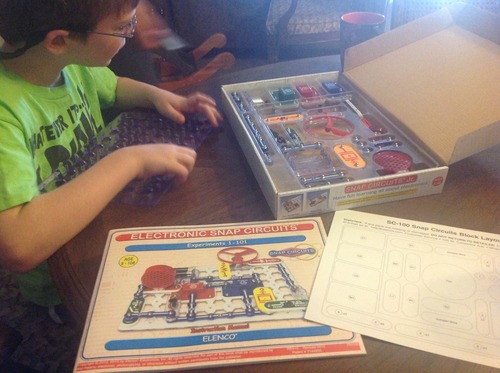
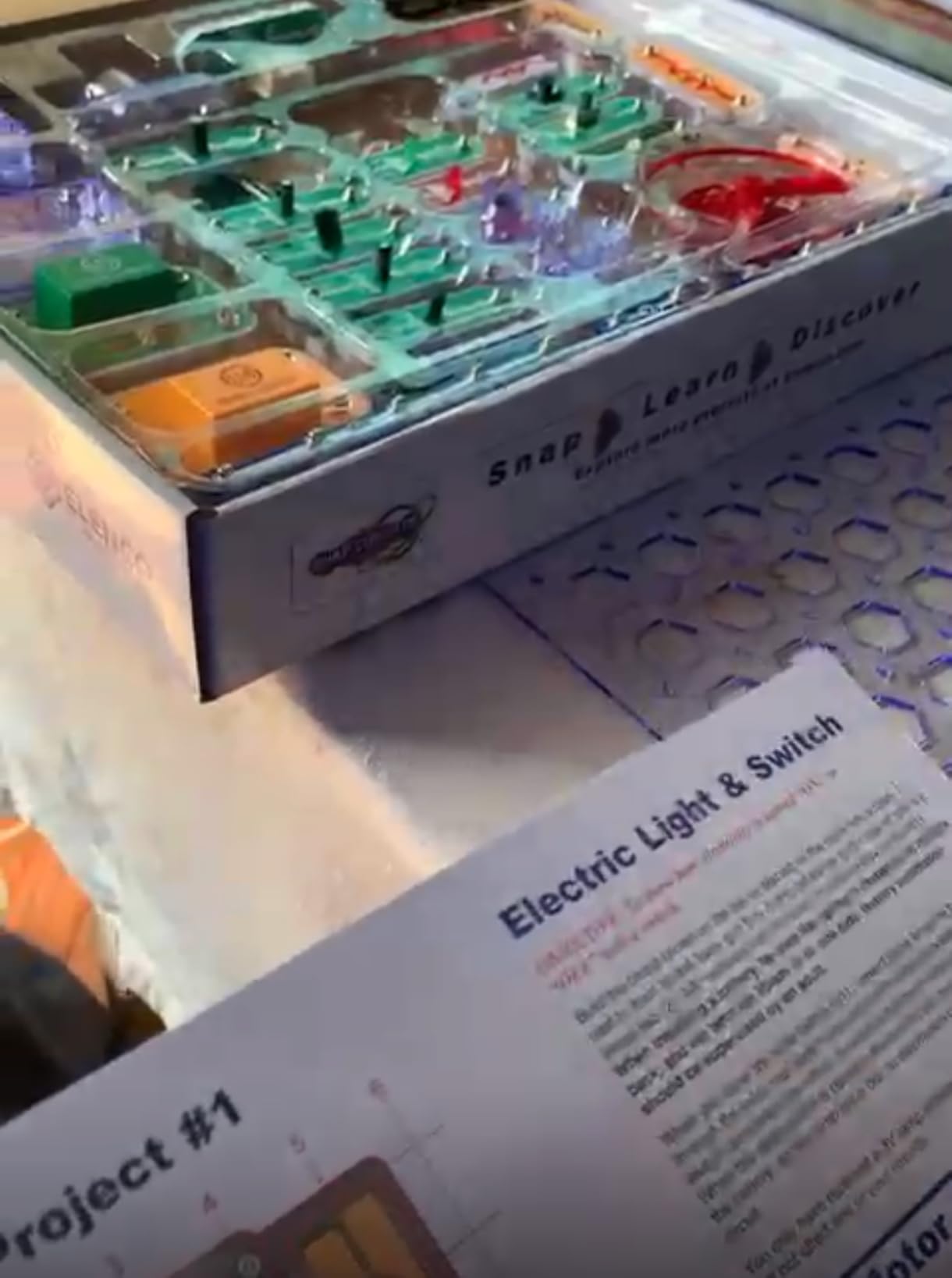
What separates it from cheap circuit kits is project count. There are more than 100 distinct builds in the box, spanning light sensors, sound triggers, touch switches and simple motor circuits. That volume is what keeps a child coming back after the novelty of the first circuit wears off, because the toy never runs out of new answers.
Physically it is well made. The modules are moulded plastic with clean contacts, and they survived our second and third rebuilds without a single cracked part. The box measures 12 by 9.5 by 1.75 inches and stows flat, which matters more than you would expect in a house with no dedicated toy shelf.
Who this suits best
This is the safest first electronics kit for a girl aged eight and up, and it holds up well into the pre-teen years. Because the Snap Circuits system links to other kits in the range, one purchase becomes the foundation of a year of building rather than a single afternoon.
It also works for a younger sibling alongside an older one: the simple light and sound circuits hold up a six year old, while the later projects give a ten year old something new.
Where it falls short
Two practical limits. Batteries are not included, so budget for a pack of standard cells before the first build, and the projects are purely electrical, so a child who wants to mix things up in a beaker will want a science kit as well.
For children under seven the reading load gets steep past the first thirty projects, so an adult sitting nearby for the first session helps a lot.
2. Doctor Jupiter Girls’ First Science Experiments Kit – Best for Ages 4 to 8
- Works for a four year old with a parent
- Real lab tools including goggles and conical flask
- Well-illustrated manuals for adult and child use
- ASTM F963-17 safety certified
- Adult supervision needed for many experiments
- Consumable materials run out over time
- Focuses on colour and water science
This is the earliest starting point that genuinely works, and it is the kit we recommend for a girl who is four or five. It carries a 4.7 rating from more than 1300 reviews, and the manufacturer rates it from four years up. The pitch is 100+ experiments across water science, colour science and volcano science, which is exactly the right altitude for a first encounter with cause and effect.
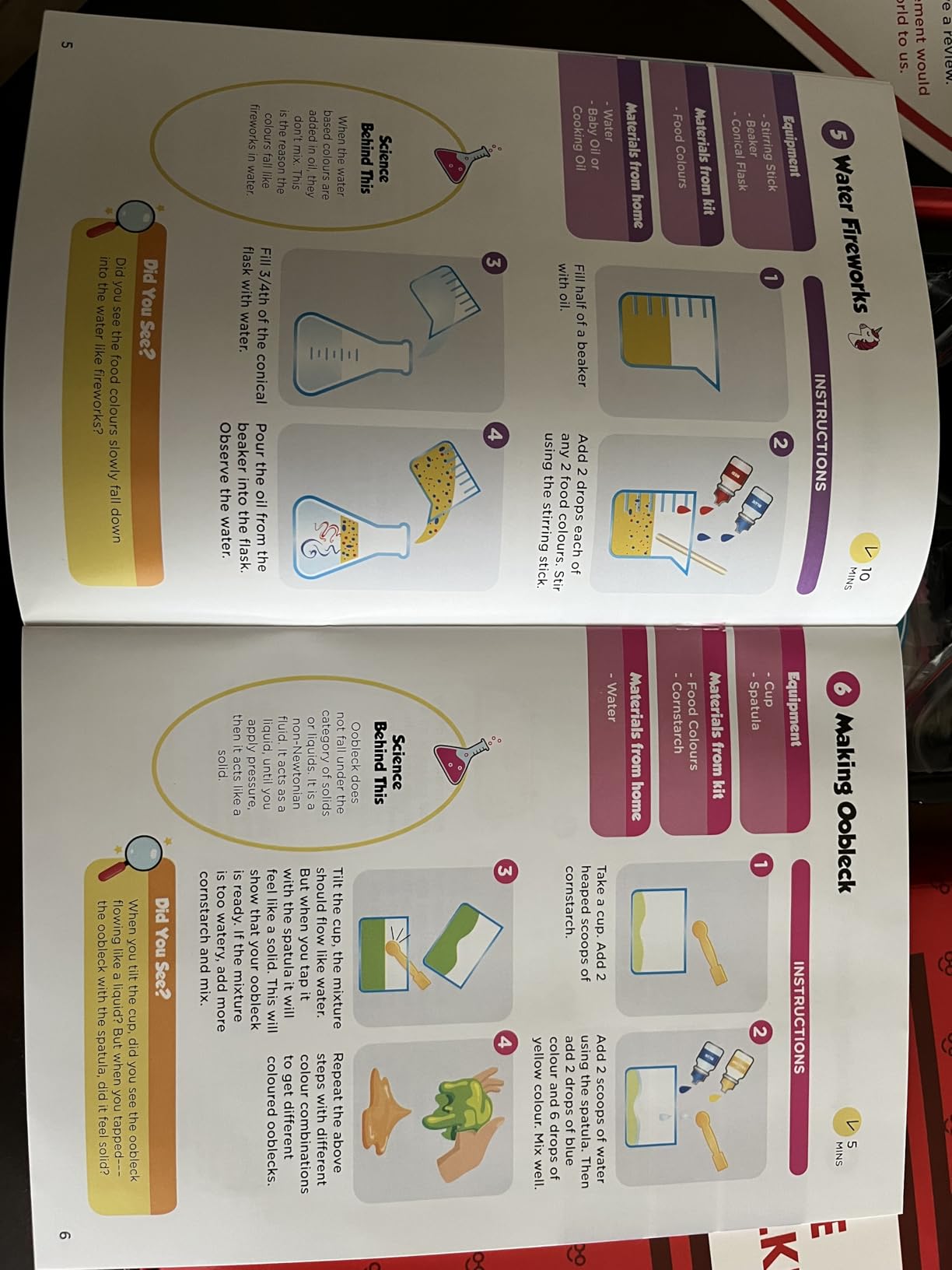
What sold us is the equipment. You get two beakers, a conical flask, a funnel, a spatula, stirring sticks, spray bottles, cups, a tray and a pair of safety goggles. Real tools, at child scale. A child who has handled a real flask does not treat science as a worksheet, and that shift in attitude is the whole point of the kit.

The manual is the other strength. It is well illustrated and readable by a young child with an adult nearby, which makes the kit genuinely cooperative rather than something a parent supervises from across the room. The theme is deliberately framed around a young scientist, and the box measures 11.42 by 9.84 by 1.77 inches so it stores flat between sessions.
We found the honest limitation early. Many of the experiments need an adult in the room, and a good number of them use consumable materials, so once the food colourings and essences are gone you are substituting household items. That is manageable but worth knowing before the first week.
Who this suits best
A first STEM purchase, a birthday gift for a four to eight year old, and a reliable rainy-day project. It is also the easiest kit here to run with a parent and child together, which is how most children actually learn at that age.
Where it falls short
The science stays at the simple end: colour mixing, surface tension and water behaviour rather than anything with a circuit or a moving part. A child who is already asking why, not just what, will want to move up after a few months.
3. UNGLINGA 150 Experiments Science Kit – Best Value Pick
- Very high experiment count for the money
- Most materials included so few extra supplies needed
- Illustrated manual simple enough to follow with light help
- Compact box that stores easily
- Some instructions need interpretation
- Experiments are messy and some need repeating
- A few projects need household extras not supplied
The UNGLINGA 150 Experiments kit covers 150 projects spanning earth science, surface tension, chemistry and physics. That breadth is unusual at this level, and it is the reason this lands as our value recommendation: for one purchase a child gets months of screen-free sessions rather than a single impressive weekend.
It holds a 4.7 rating across more than 1000 reviews, and the practical feedback in that data is consistent. Parents and teachers repeatedly note that most tools and materials arrive in the box, including kid-friendly goggles, so you are not chasing supplies mid-project. The manual is illustrated and step by step, though reviewers do describe some steps as needing interpretation by an adult.

We found the mess claim accurate, and we would rather warn you than let you find it on a carpeted floor. Volume, colour and foam experiments are part of the appeal, and they will end up somewhere you did not plan. Set up at a table with a tray, and the kit behaves.
The box measures 11.42 by 8.67 by 3.94 inches, so it is deeper than the other chemistry kits here and needs a real shelf rather than a drawer. The same range is also made in 30 and 272 experiment versions if you want to size the challenge up or down.

Who this suits best
A girl aged eight to twelve who reads well enough to follow illustrated steps with occasional help. It is a strong choice for a home educator who wants a supply that does not deplete, and for families who want a science kit that works without buying anything extra.
Where it falls short
There is no electronics or robotics content, so it complements a circuit kit rather than replacing one. Some experiments simply fail on the first attempt, and repeating them is part of the method but also part of the frustration for a younger child.
4. Makeblock mBot Pink – Best for Coding and Robotics
Makeblock mBot Pink STEM Coding Robotics Toy Kit for Girls & Kids Ages 8-12
- Free mBlock app with progressive coding levels
- Metal body survives rough play
- Quick build with clear instructions
- Pathway from Scratch to Arduino
- Batteries and remote battery not included
- Remote is basic and two units share a frequency
- App has a limited number of harder levels
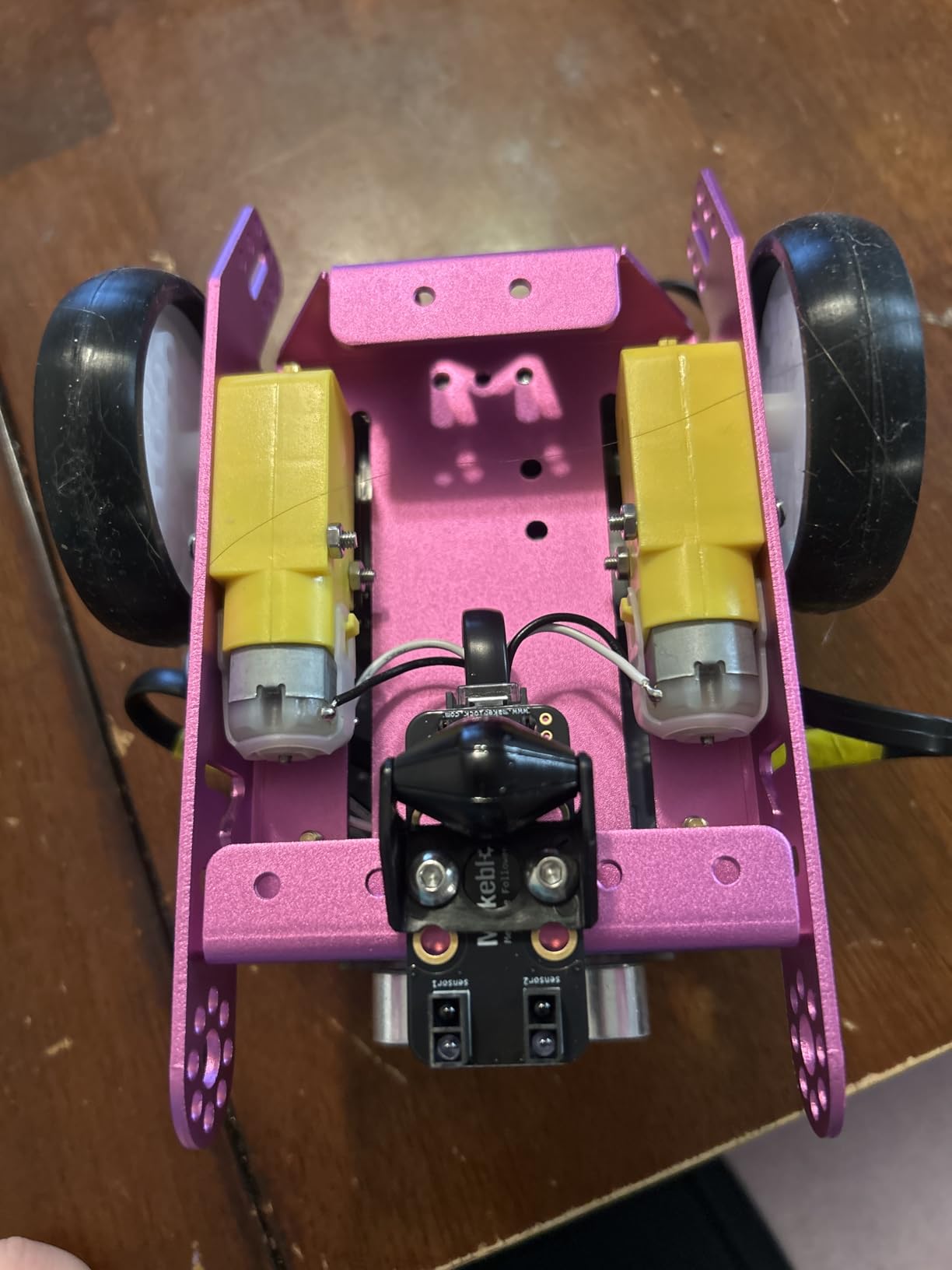
The Makeblock mBot is the pick for a girl who wants to write instructions and see them obeyed. It assembles in roughly fifteen minutes, runs on block-based programming in Scratch and extends to Arduino, and ships with a line-follower sensor, obstacle avoidance and an infrared remote. It is a real robotics platform dressed in a pink chassis rather than a toy with a programming app bolted on.
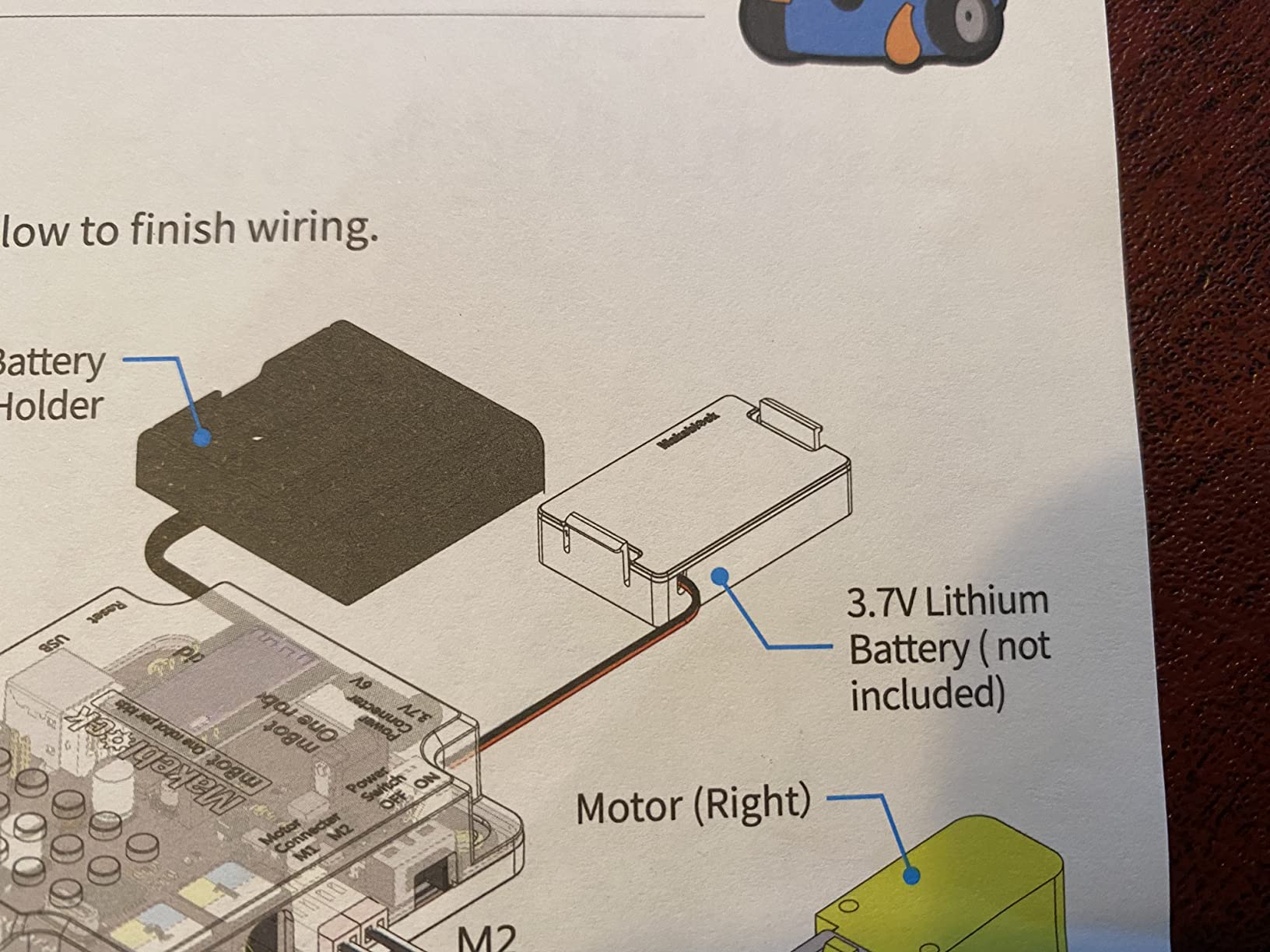
Our build produced a metal-bodied robot with two motors and wheels, and the instruction guide plus eight step-by-step online courses were enough to get it driving without adult rescue. The free mBlock software and three Makeblock apps are the real asset here, since the coding environment grows with the child rather than stopping after a fixed set of levels.
Expansion is unusually good. The platform is compatible with more than 100 Makeblock electronic modules, over 500 parts, and standard LEGO components, so a child who finishes the base robot can add sensors or build a different chassis instead of starting over.
Two practical notes. The robot needs four AA batteries and the remote needs a CR2025, none of which are included. And because the remotes share one frequency, two mBots in the same room will fight over control, which matters if siblings both want one.
Who this suits best
A child aged eight to twelve who is ready for real programming, and any parent who wants a kit that lasts two years rather than two months. The Scratch entry point is forgiving enough for a beginner and the Arduino route gives a motivated twelve year old somewhere genuine to go.
Where it falls short
The included remote is basic, doing little beyond forward and reverse, and the coding app runs out of genuinely hard challenges. A child who already writes code will want a more advanced platform sooner than the box suggests.
5. Yutin 5 Wooden STEM Model Kits – Best for Working Wooden Models
5 Individual STEM Science Kits for Kids, Wood Arts and Craft Kits 8-12
- Five separate models give hours of play
- Models actually function after assembly
- Good value for the money
- Durable plywood with rounded corners
- Can be painted for customization
- Missing screws
- wires and gears reported in several kits
- Some circuits need adult help or soldering
- AA batteries not included
Five working models in one box: a rotating Ferris wheel, a merry-go-round, a mini windmill house, a fibre optic lamp and a star nightlight. Each one is assembled from non-toxic plywood with rounded corners, and each teaches something about motors while it goes together. For a child who likes building with her hands and wants a finished object to keep, this format works unusually well.
The build quality is good, with clearly marked and labelled parts, and the models are paintable afterwards, which adds a creative stage that pure electronics kits never offer. There is also a lifetime warranty against manufacturer defects, which is rare in this category.
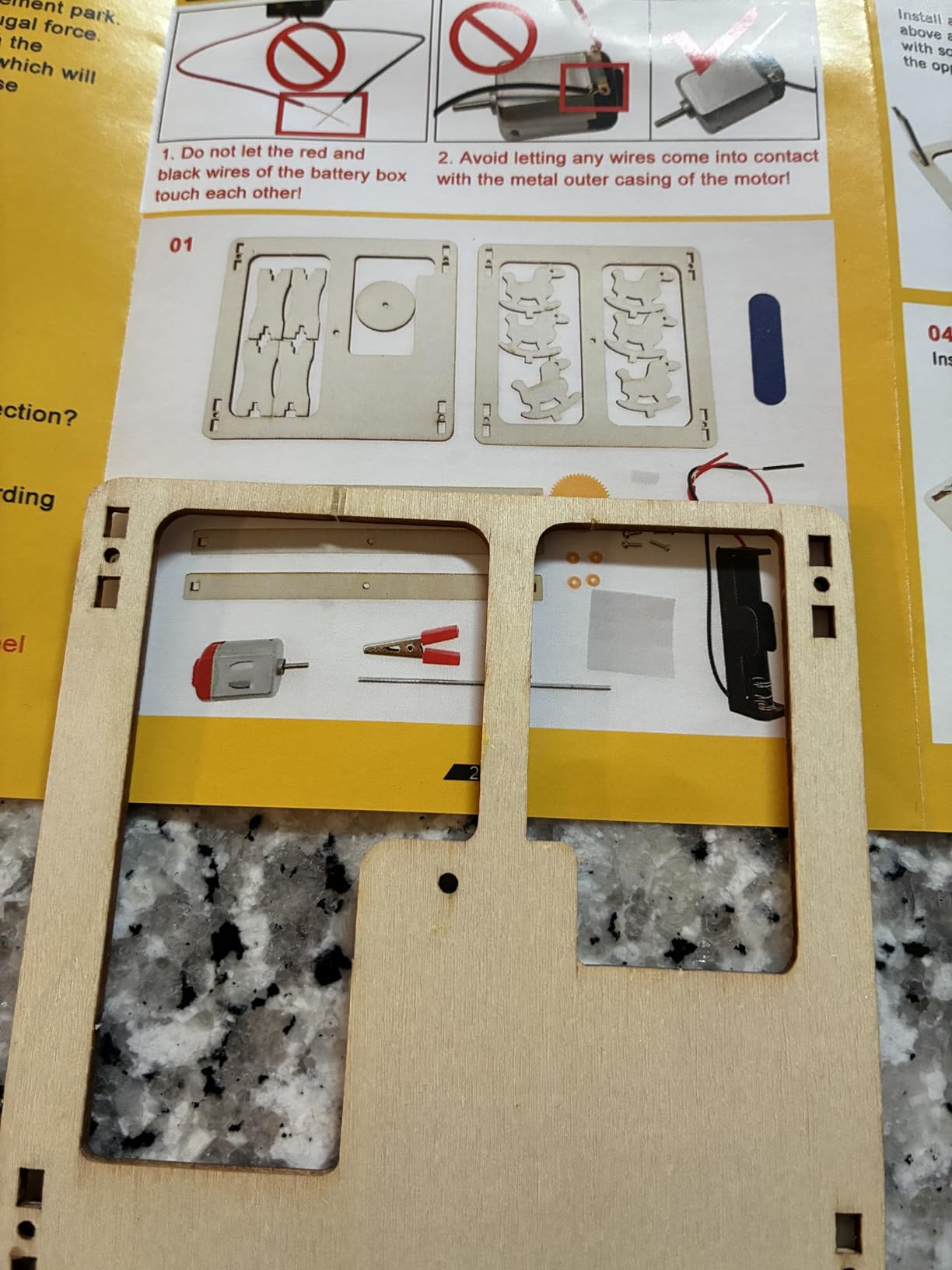
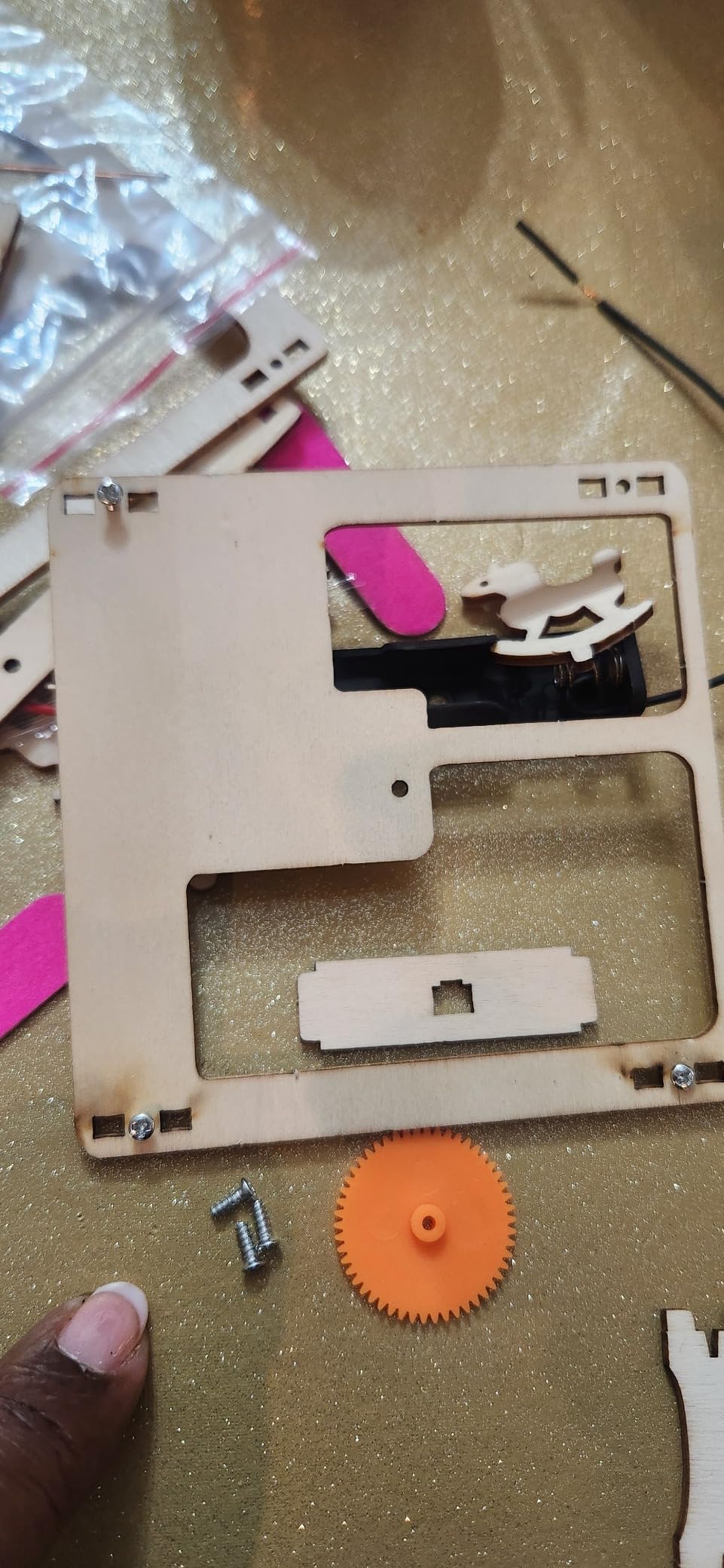
The honest problem is completeness, and it comes up repeatedly in the customer data. Missing screws, wires and gears, particularly for the Ferris wheel, are the most cited complaint across the reviews, and a few buyers found the fibre optic nightlight needed adult help or a soldering iron to finish. One reviewer also reported finding the instructions in another language.
Our advice is straightforward: open and inventory every bag before the first build and request replacements early. The five kits measure 4 by 3 by 7 inches each, so the set does not sprawl once it is built.
Who this suits best
Ages eight to twelve who enjoy craft as much as engineering, and any parent who wants models that end up on a shelf rather than in a box of loose parts. Painting the finished models is a genuine bonus for children who lose interest in pure building.
Where it falls short
Check the parts inventory on arrival, because incomplete component sets are the defining weakness of this kit. Once built and painted, the models are display pieces rather than things that can be taken apart and rebuilt differently.
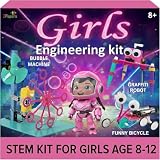
6. 2Pepers 3-in-1 Girls Robotics Kit – Best Budget Motor Kit
- Each robot teaches a different scientific principle
- Simple construction without sewing or soldering
- Gift-ready packaging included
- Good entry point for girls new to robotics
- Only three projects limits repeat value
- Small motors and plastic parts are fragile
- Assembly can be fiddly for younger children
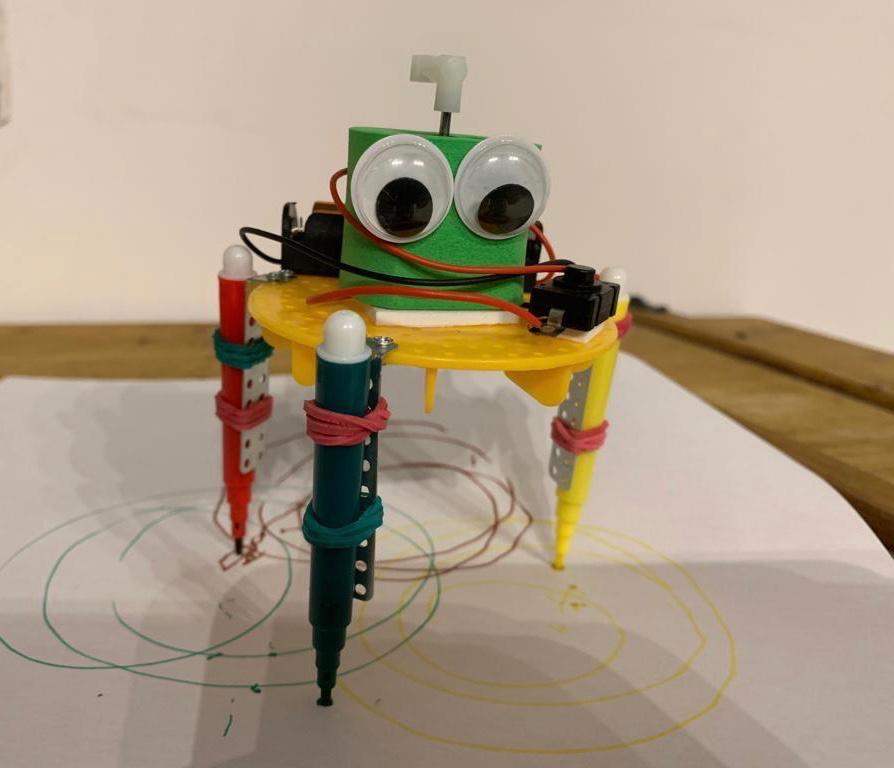
Three robots, three different principles: a doodling bot, a bubble-making bot and a motion bot, each demonstrating a distinct piece of physics or electrical behaviour. The set includes instruction manuals, screwdrivers and gift packaging, and it needs no sewing and no soldering, which makes it one of the easiest motor kits for a child to complete unaided.
With over 1000 reviews at a 4.3 average, this is a well-purchased kit with a solid rather than spectacular score. The pattern in the reviews is consistent: parents like the approachable motor projects and the fact that the box is ready to hand over as a gift, and they want more builds than three.
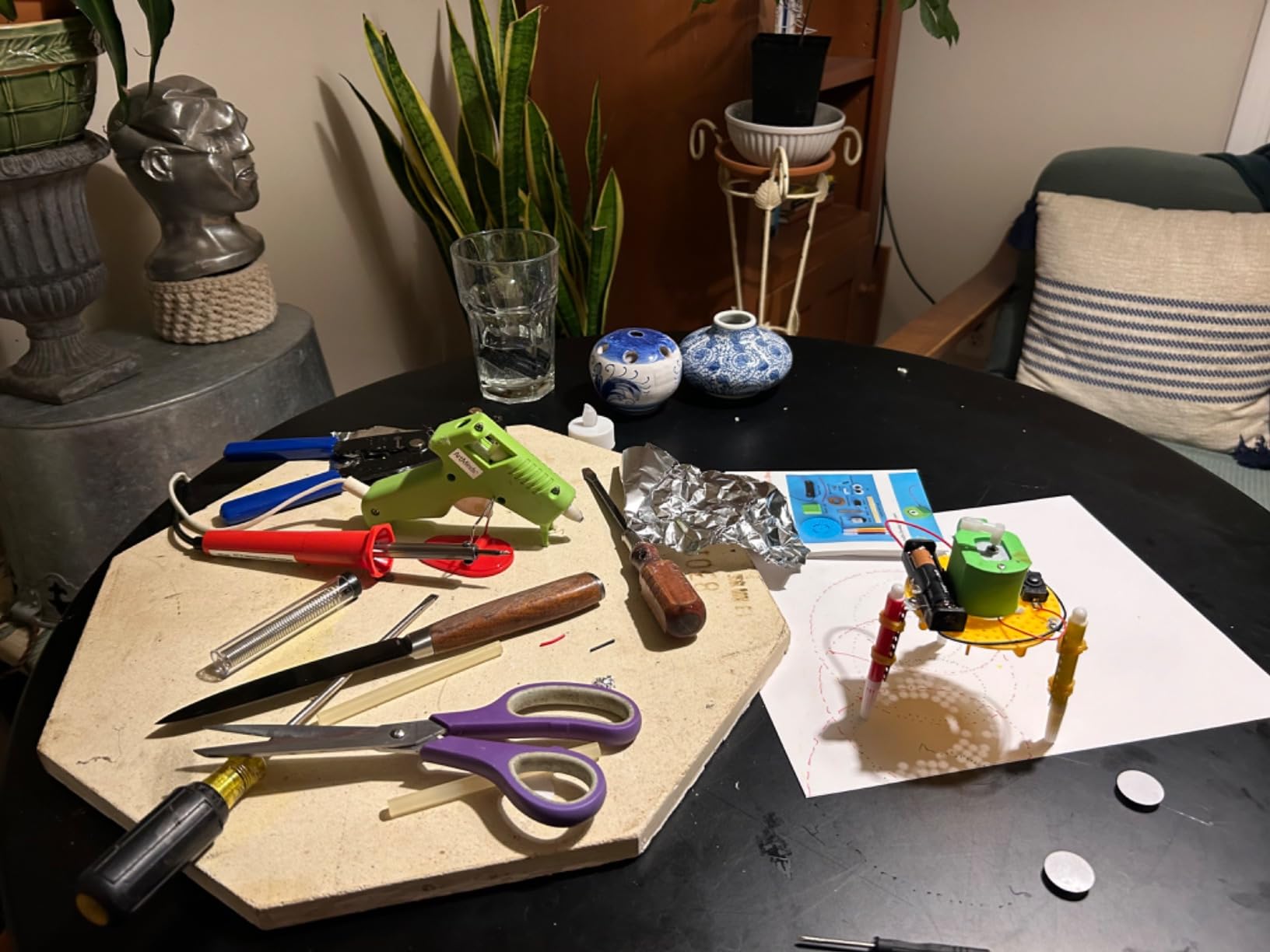
Our build produced a working doodling robot that traced a visible line, which is the moment that sells the kit. The components are 60 pieces in plastic, and the package measures 5.9 by 5.9 by 2.69 inches, so it is compact enough to keep out rather than buried.
Durability is the weakness worth planning around. Small motors and plastic parts are fragile under repeated builds, and assembly can be fiddly for a child under nine. The set also comes in three-pack and four-pack versions if you want to run it with siblings or a class.
Who this suits best
A first robotics kit for a girl aged eight to twelve, or a birthday gift where you want something that opens and works the same afternoon. It is also a good pick for a group setting, since the low piece count per build keeps several children moving at once.
Where it falls short
Three builds is the ceiling. Once all three are finished and possibly broken, there is no further play, so treat it as an introduction rather than a long-term kit. Plan a second purchase around it.
7. Poraxy 4-in-1 Wooden STEM Craft Kit – Best for Painting and Craft
- All four models assemble and function
- Includes 12 paint colours and 2 brushes
- Laser pre-cut parts with smooth edges
- Instructions easy to follow with light help
- Adult help needed for younger builders
- Novelty fades once models are painted
- Wood limits reuse compared with motor kits
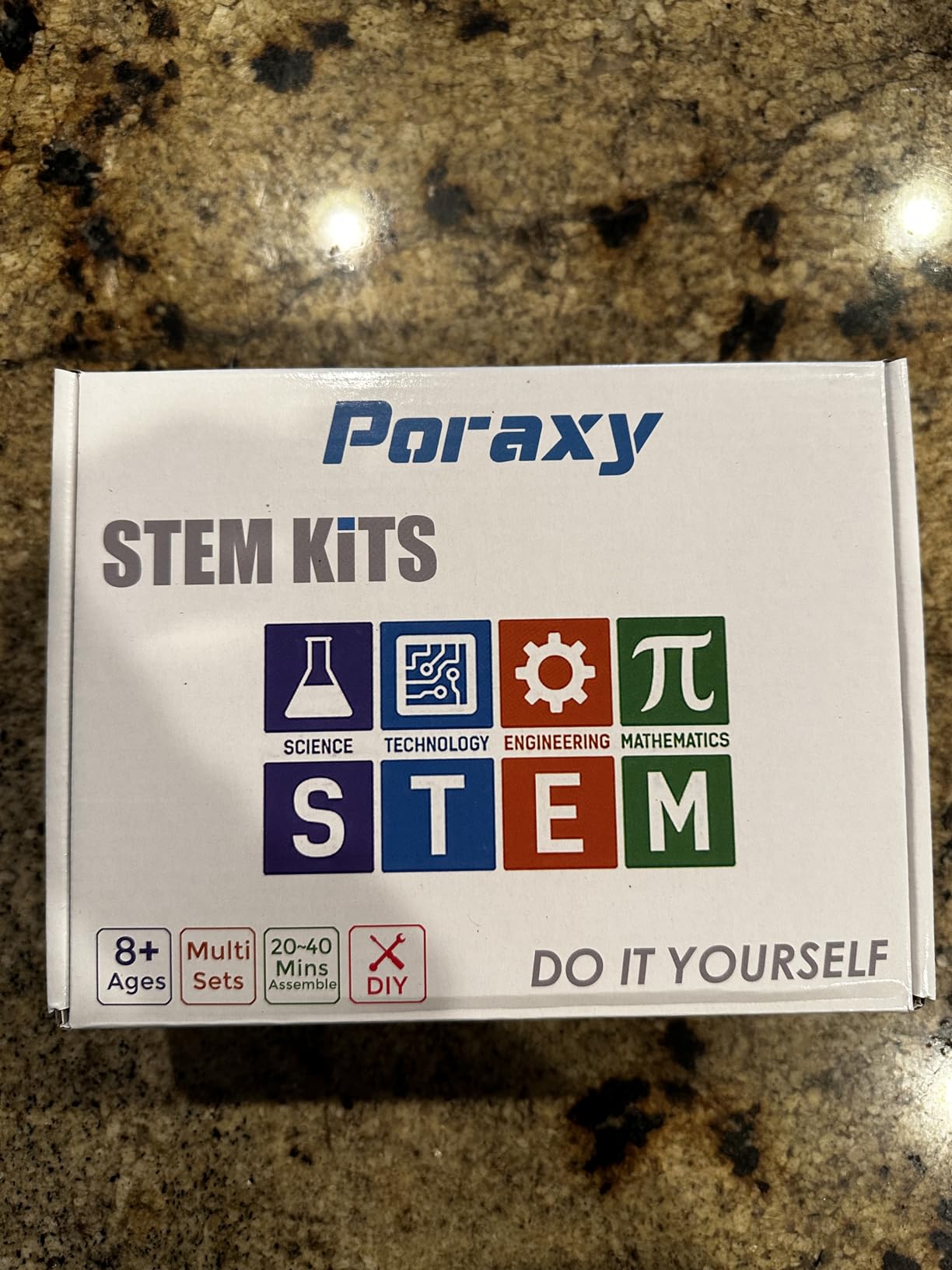
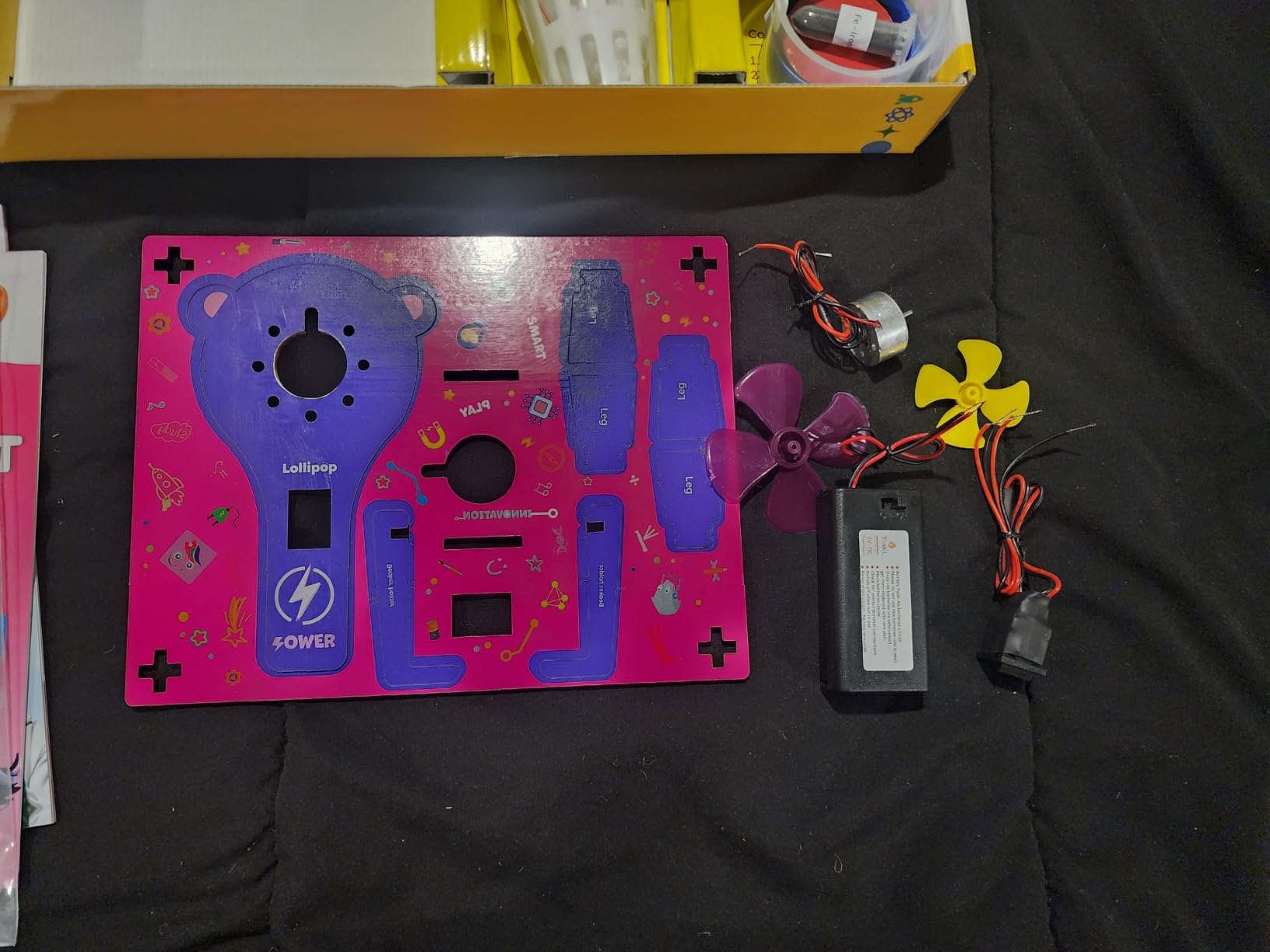
The Poraxy set gives you four models: a mini Ferris wheel, a carousel, a fibre optic lamp and a star night light, with the wheel and carousel genuinely rotating once built. The star light and fibre optic lamp cycle through seven colours from LEDs, and the whole thing comes with 12 colours of paint and two brushes so the finished models can be decorated and displayed.
At a 4.6 rating across 224 reviews, it sits comfortably in the upper half of the set, and the review pattern is unusually consistent: owners report that all four models assemble and work, and that the included paint adds a second creative stage children genuinely enjoy.

Construction is laser pre-cut plywood with smooth edges, rated by the manufacturer for ages six to fourteen, and the package measures 8 by 6 by 3 inches. The tight tolerance of laser cutting means the pieces fit closely, which is the difference between a satisfying build and a frustrating one.
The limitation is not quality but reuse. Once a wooden model is glued together it becomes a display object, so there is no taking it apart to try something new. Nearly every reviewer also notes that adult assistance is needed for younger children, particularly on the lighting pieces.
Who this suits best
A child aged seven to eleven who likes a visible finished result and has artistic patience for the painting stage. It is a good birthday gift when you want something that looks handmade on the shelf afterwards rather than a box of plastic parts.
Where it falls short
Expect to sit alongside a younger builder, and expect the interest to settle once the four models are painted and displayed. It complements a robotics kit rather than substituting for one.
8. Butterfly EduFields 100+ Engineering Kit – Best for Gears and Levers
Butterfly EduFields 100+ Girls Engineering Science Kit for Kids Age 8-12
- Large project count covering gears
- levers
- circuits and machines
- Durable reusable parts that can be rebuilt
- Illustrated guides pitched at 8-12 year olds
- Designed by IIT engineers
- Some projects do not work as built
- A few missing or broken components reported
- Manual is confusing without adult help
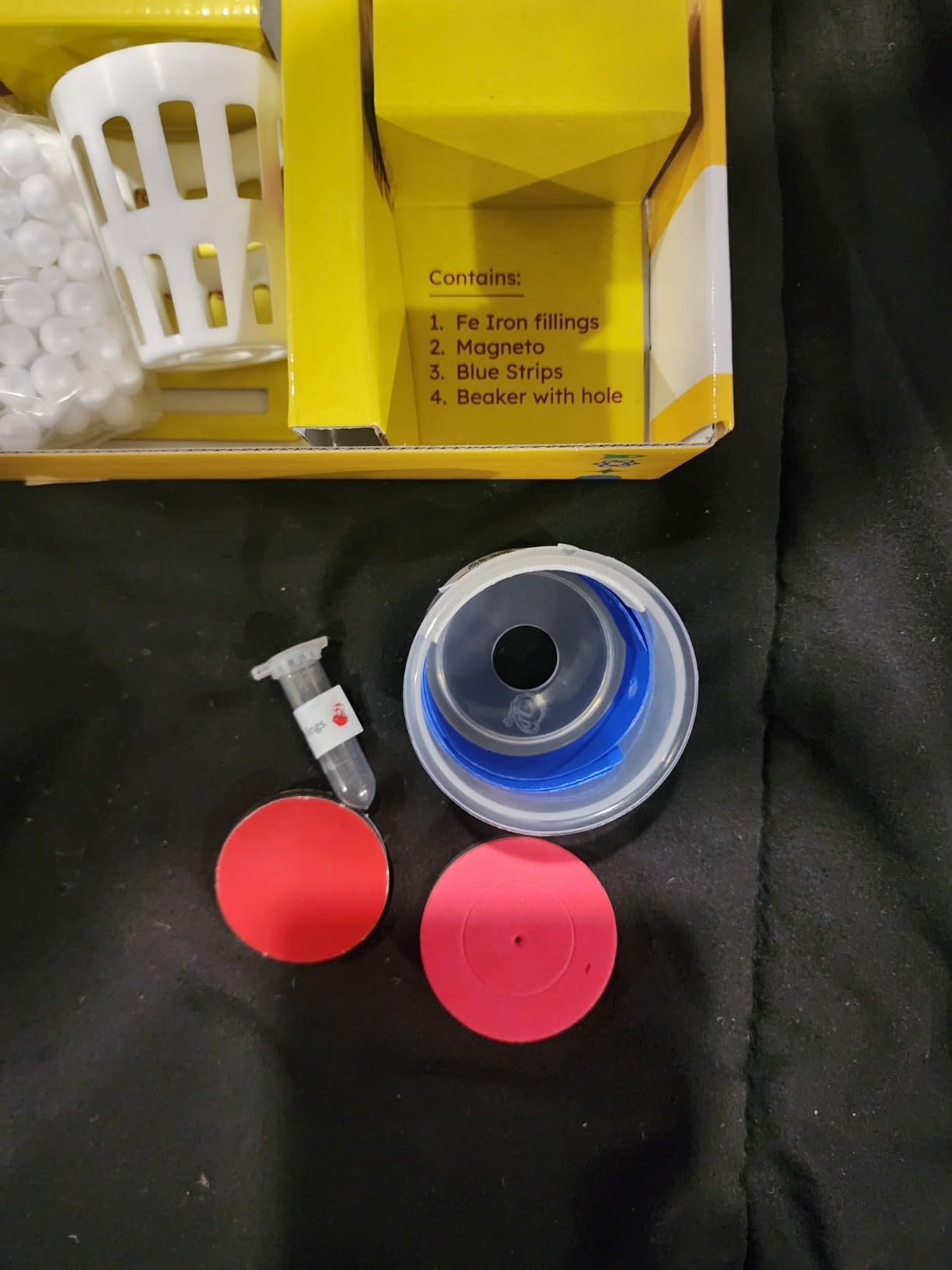
This is the mechanics-heavy option: more than 100 engineering and science projects built around gears, levers, circuits and working machines, in a wooden component set designed to be reused across builds. Parts are described as durable and child-safe with no harmful chemicals, and the guides are pitched squarely at eight to twelve year olds with clear illustrated steps.
It has a large review base of more than 800 at a 4.2 average, which places it in the middle of this group. That score reflects real enthusiasm for the project variety offset by a recurring practical complaint: a minority of builds do not perform as advertised once assembled.
What makes it interesting for an older child is that it bridges mechanical and electrical thinking without needing a computer. A nine year old can see how a lever changes the output force, then see how that principle shows up in a working machine she built herself, which is a more durable lesson than a screen-based simulation.
The manual can be confusing without an adult nearby, and components are wood-based, so the package at 10 by 5 by 1 inches is flat and light but the builds are entry-level mechanical rather than advanced electronics.
Who this suits best
A child who has outgrown snap-together circuits and wants to understand mechanisms, and a family looking for a screen-free project that does not need batteries. Reusable parts also make it a better long-term investment than a single-use kit.
Where it falls short
The 4.2 average is the honest signal here. Some projects fail once built, a small number of components arrive missing or broken, and the instructions assume either an adult helper or a confident reader.
9. Butterfly EduFields 150+ Girls Science Kit – Best for Ages 8 to 12
Butterfly EduFields 150+ Experiments Girls Science Kit for Kids Ages 8-12
- Huge variety that keeps children busy for hours
- Illustrated manual allows independent work
- Includes goggles
- test tubes and measuring cups
- ASTM F963-17 safety certified
- Several experiments fail even when followed correctly
- Some outcomes are messy or slimy
- Colour bottles can leak and need snipping
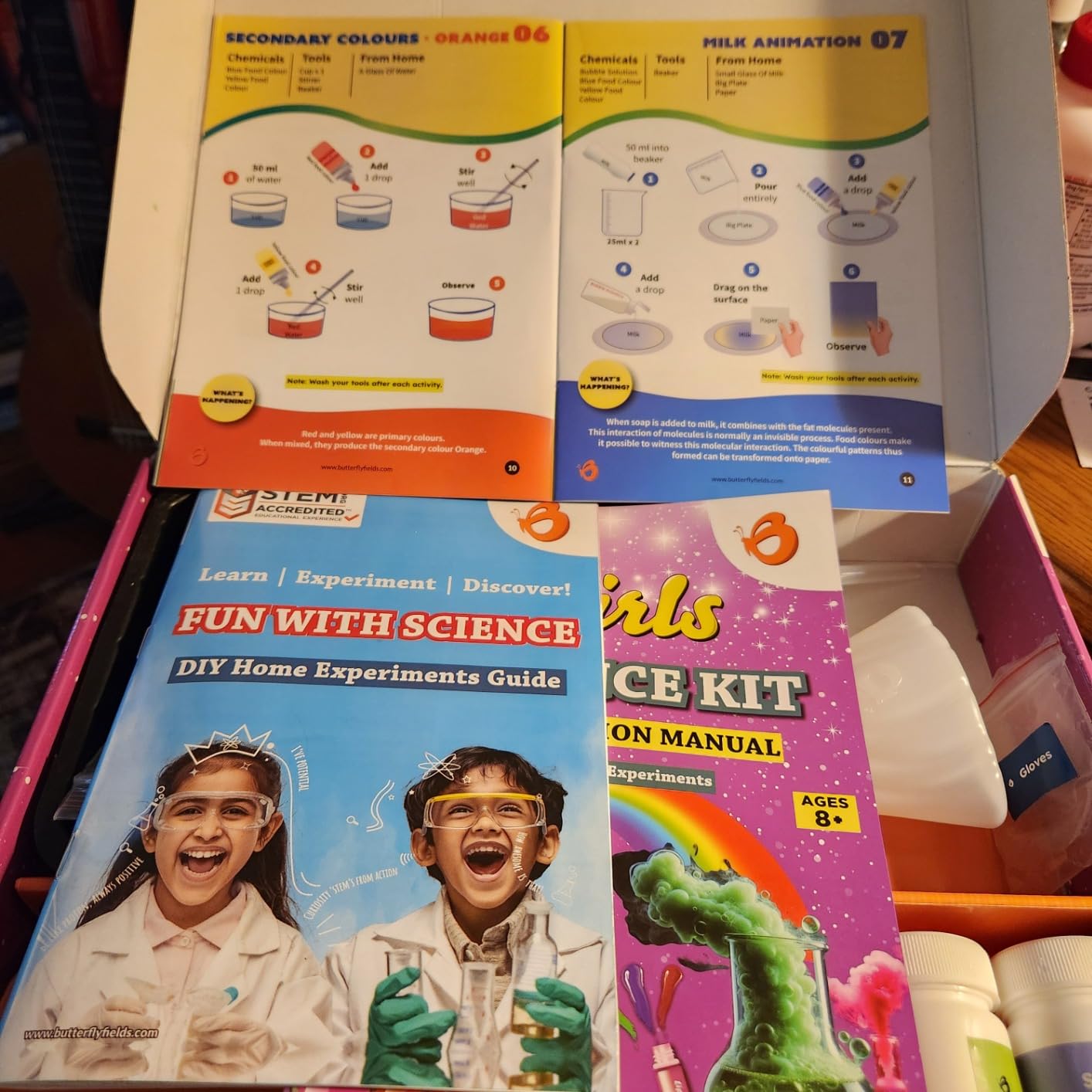
Aimed squarely at eight to twelve year olds, this set delivers more than 150 curated experiments with an illustrated manual pitched so a child can work independently. The component list is substantial: a 50ml test tube, measuring spoon, stirring stick, three measuring cups, a tray, a volcano mold, soap base, snow powder, food colourings and additives.
The 4.5 rating across more than 400 reviews is a good score with a lot of positive sentiment behind it. Owners frequently report that the variety keeps children occupied for hours and that it performs well as a birthday or Christmas gift, which is exactly the use case most parents are buying for.
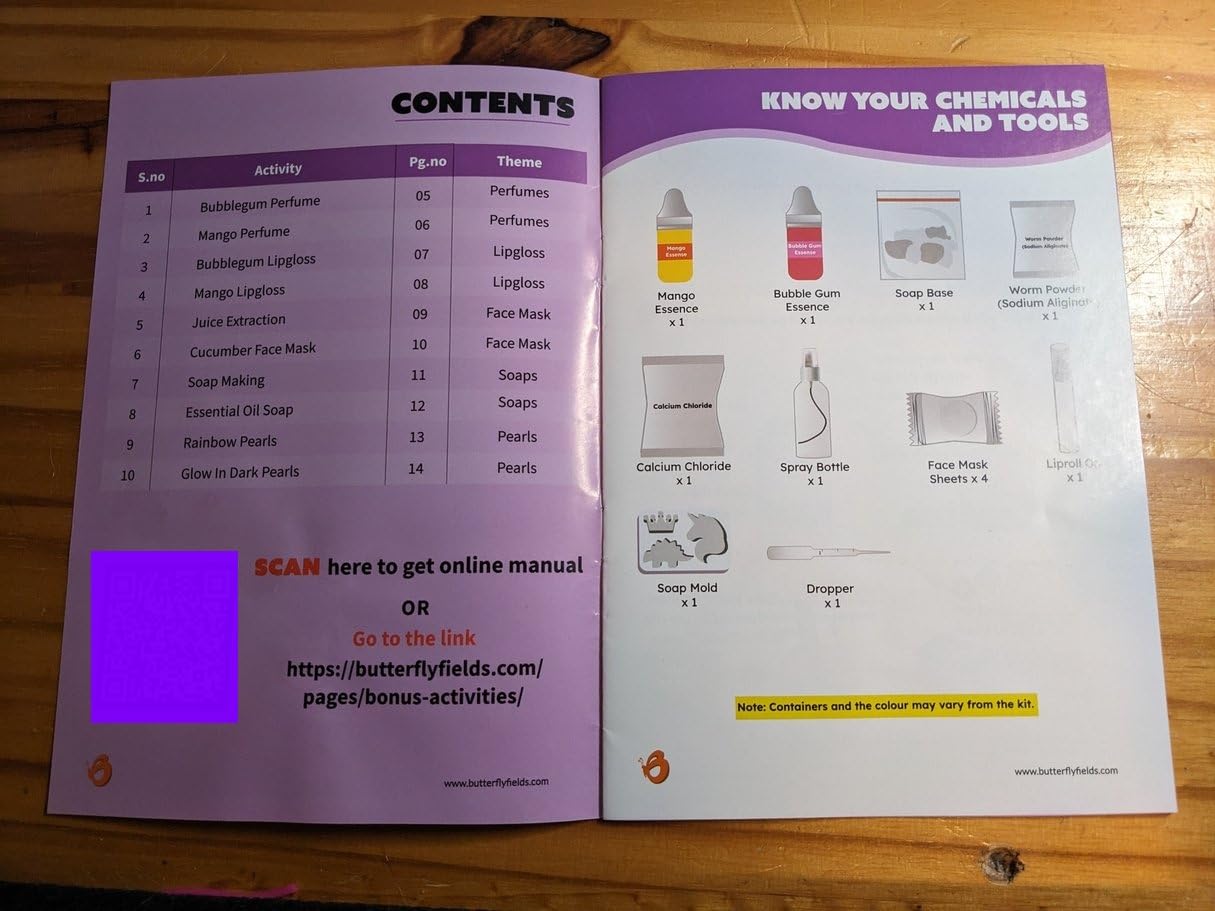
Safety was the part we checked most carefully, and the kit is ASTM F963-17 certified with goggles and face masks in the box. The manufacturer also offers the same range in 4-8, 8-15 and 8+ variants, so you can move up a level rather than buying a new format later.
Two things to plan for. A smaller group of buyers report experiments that did not produce the promised result even when the instructions were followed, and the food colouring bottles can leak unless you snip the tips. The package measures 10 by 5 by 1 inches, so storage is easy.
Who this suits best
A girl aged eight to twelve who can follow illustrated steps largely on her own, and a home educator who wants a certified, well-supplied science set. The age positioning is more honest than most kits claiming to suit everyone from four to twelve.
Where it falls short
Reliability is uneven on some projects, and the mess is real. Set it up on a tray outdoors or in a bathroom, and the mess stops being a reason to abandon it.
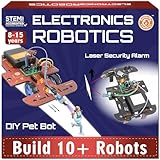
10. Butterfly EduFields 10-in-1 STEM Electronics Robotics Kit – Best for Robotics Projects
Butterfly EduFields 10in1 STEM Electronics Robotics Kit for Kids Ages 8-12
- Ten distinct working robot projects
- All components included with instructions
- Good introduction for beginners
- Keeps older children challenged
- Sensor board failures reported with dead output pins
- Some components feel cheap
- Axle shafts may need modifying to fit
Ten separate robot builds from one set of more than 100 components including wires, switches, connectors and LED lights, with support for line-following and obstacle-avoidance behaviour. The manufacturer recommends ages eight to seventeen, which is the widest ceiling of any robotics kit in this roundup and the best reason to consider it.
At 4.4 across 367 reviews it sits solidly mid-pack. The consistent praise is for having ten genuinely different projects rather than three variations on one, and for a component set that arrives complete enough to start building immediately.
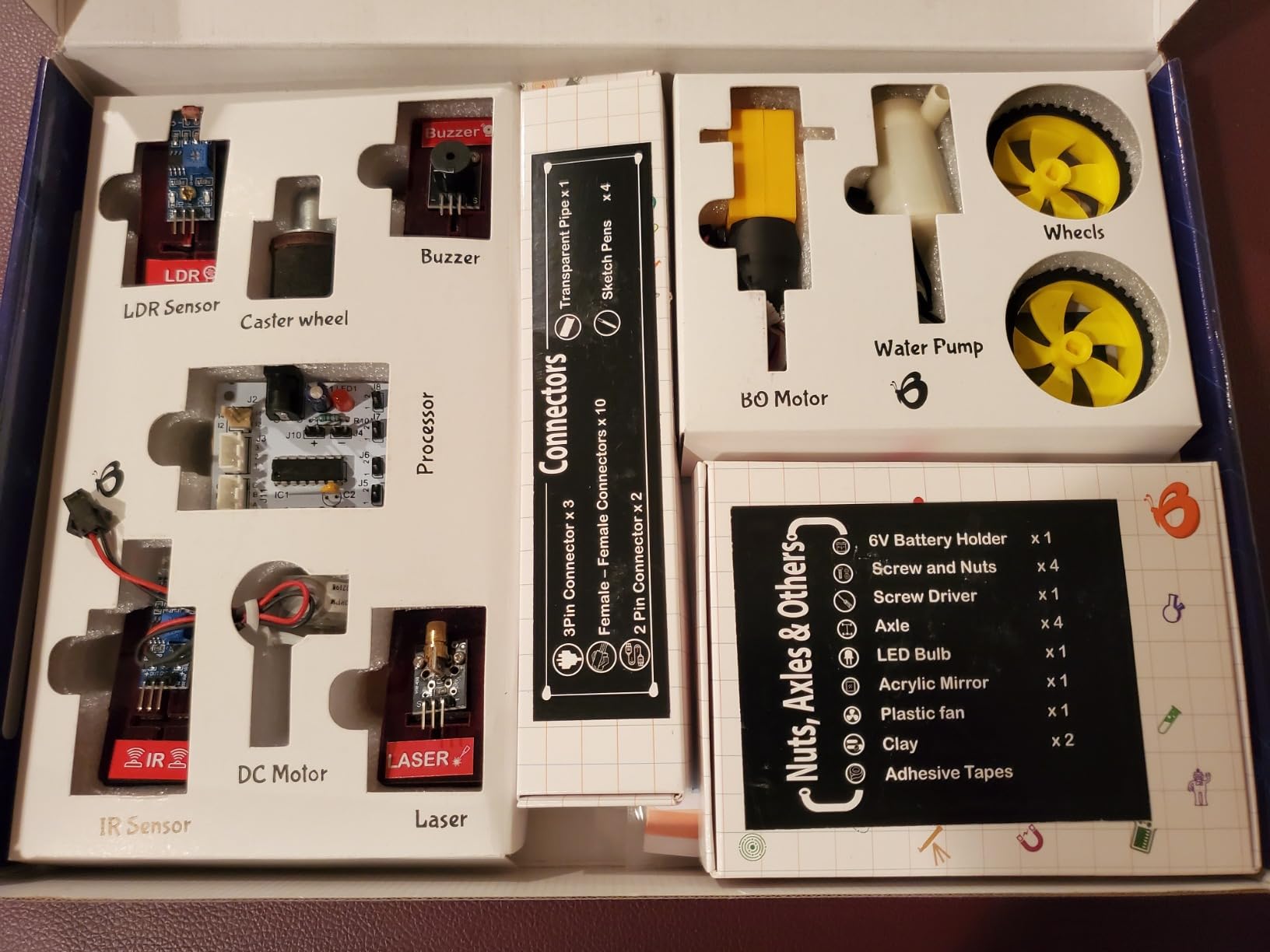
The weakness is concentrated in one part, and you should know about it before buying. A small number of buyers report the sensor board failing with non-working output pins, and reviews also mention that some components feel inexpensive and that wheel axle shafts may need modifying to fit properly.
It is a wooden and electronics build measuring 7.87 by 3.94 by 0.79 inches, so it is flat and light. Treat it as a learning kit with a moderate failure rate rather than a durable classroom set.

Who this suits best
A child aged nine or older with patience for troubleshooting, and a family who wants a robotics kit that stretches into the early teens. The line-following mode is a particularly good first project because success is obvious within minutes.
Where it falls short
Sensor board reliability is the real risk, and some parts may need modification to work as shown. If a child gives up easily the first time a board will not cooperate, choose a kit with fewer failure points instead.
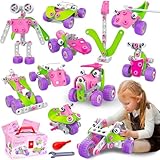
11. Tsomtto 14-in-1 Pink Building Set – Best for Ages 4 to 7
Tsomtto Educational STEM Toys for 4 5 6 7 8+ Year Old Girl Birthday Gifts
- 14 different models for varied play
- Designed and coloured for younger children
- Works well for building with a parent
- Sturdy storage box simplifies cleanup
- Only one model can be built at a time
- Listed dimensions are not informative
- Too simple for older builders
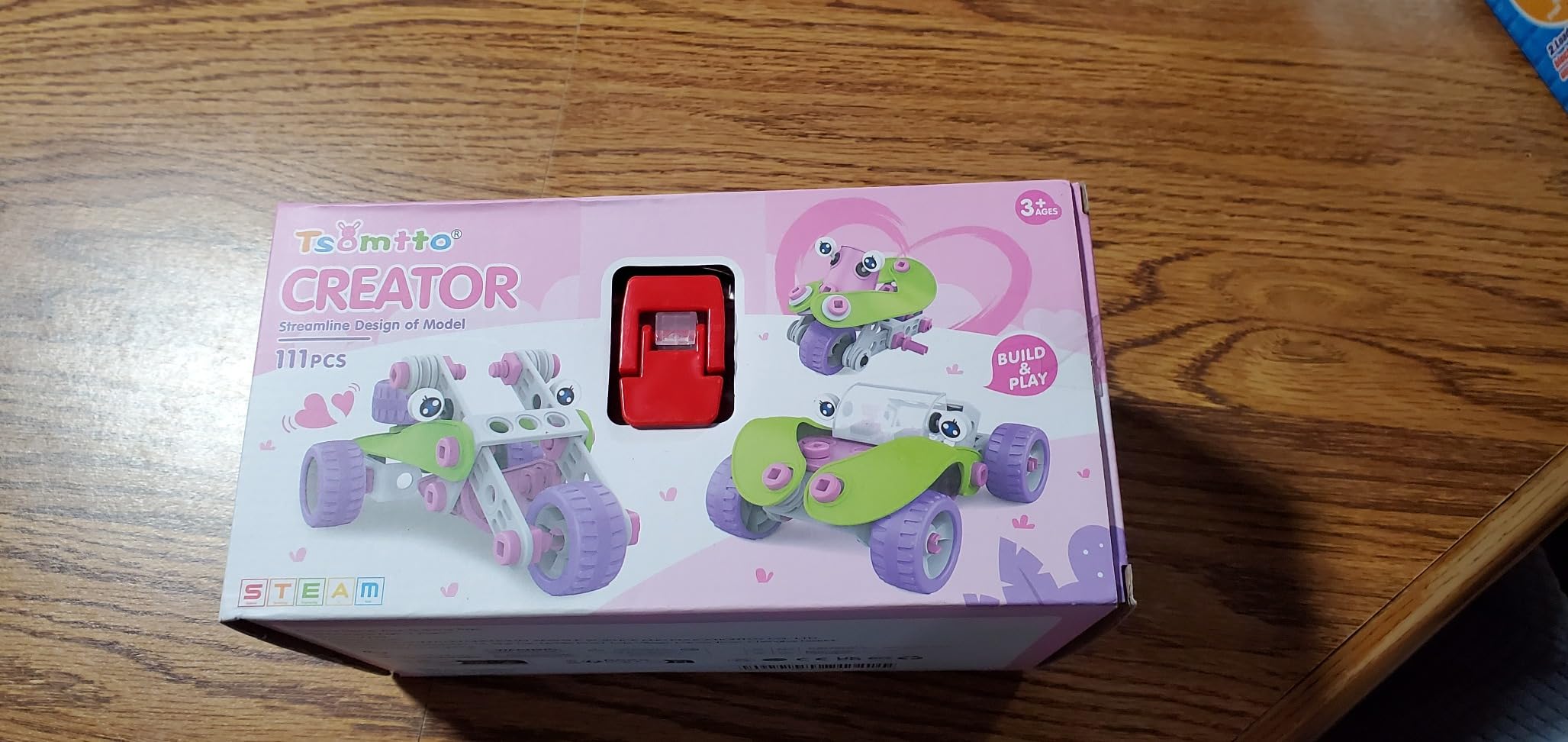
Fourteen models from one set, including a cart, plane, racing car, train, robot, flower, chair and bed, all in non-toxic pink plastic with a step-by-step guide booklet. It requires no batteries, which removes the single most common frustration parents have with entry-level kits, and a sturdy storage box is included so the pieces do not migrate across the house.
Rated 4.5 across 320 reviews, it is regarded as a solid entry-level engineering set for ages four and up rather than a serious STEM kit, and we agree with that framing. The strength for this age group is the number of configurations a four year old can cycle through in an afternoon.
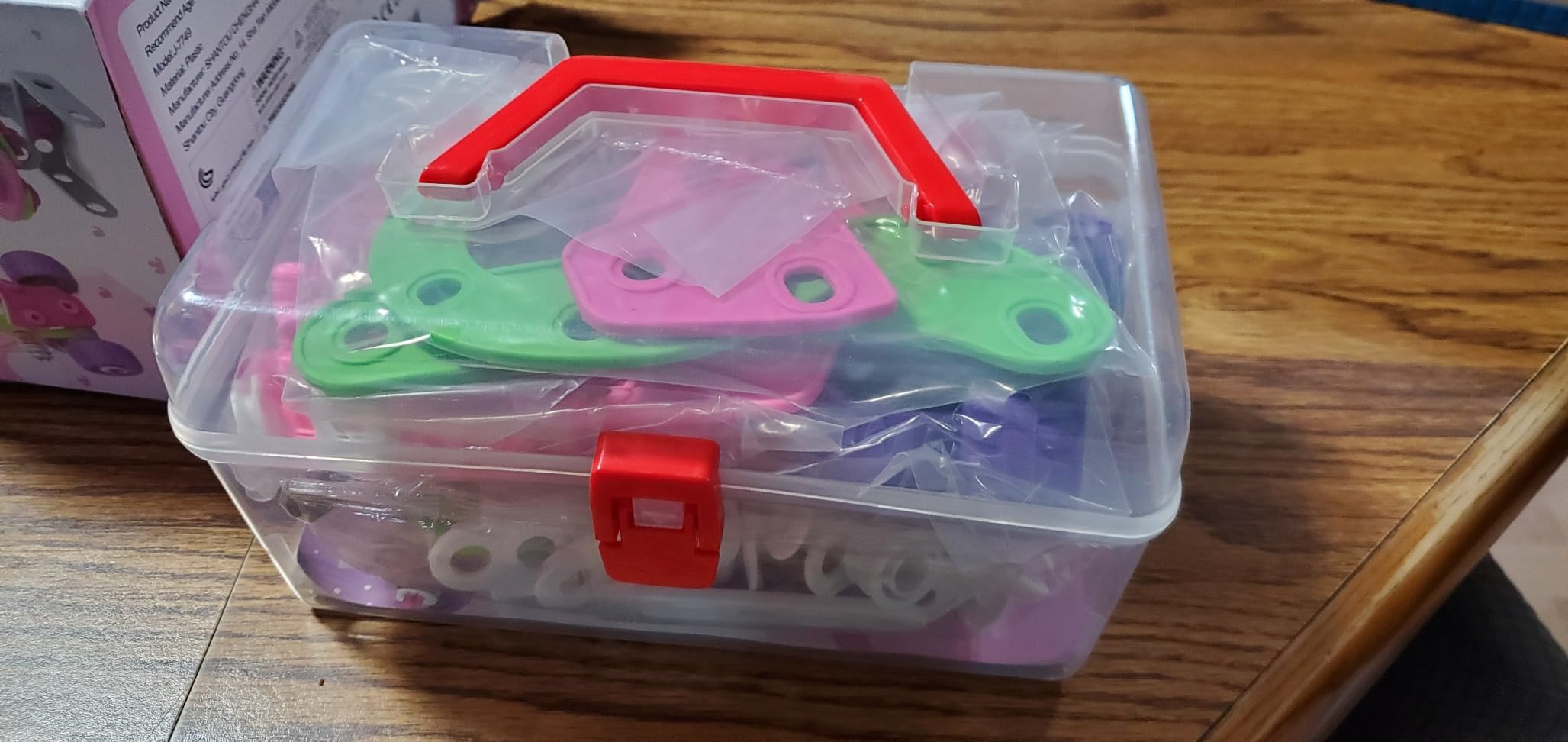
Fine motor skills come along with the assembly, and the blocks are easy to wash, which matters more than the product page suggests when the child doing the building is four. Parents repeatedly single out the storage box as the feature that makes the set livable in a small house.
Two honest limits. Only one model can be assembled at a time, so the rest of the pieces sit unused until it is dismantled, and the listed item dimensions of 1 by 1 by 1 inches tell you nothing useful about the real size of the built models.
Who this suits best
A first building set for a child aged three to six, and a good choice for a parent who wants to sit and build together. The pink cartoon theme and the range of vehicle and furniture models are aimed squarely at younger children and land well with them.
Where it falls short
A nine year old will finish this in a weekend and be bored by the pieces. It has no electronics, no motors and no STEM concept to revisit, so it is a starting point rather than a kit to build on.
12. JOVA Klever Kits 36-in-1 Motor Robotic Kits – Best for Build Variety
- 36 builds prevent boredom and encourage self-directed projects
- Video tutorials help when the printed manual is unclear
- Parts are tougher than expected at this level
- Sorting tray makes cleanup easy
- Part colours in the manual do not match the real parts
- Battery compartment is difficult to open
- Some parts such as light and grey bars are breakable
Thirty-six buildable models, fourteen of them motorized, from 334 plastic and ABS pieces organised in a sorting tray. That combination of build count and storage design makes this the kit most likely to keep an older child self-directing their own projects without an adult proposing the next idea every time.
The 4.5 rating comes from a smaller review base of 151, so treat it as a promising kit rather than a proven one. What the reviews do agree on is the sturdiness of the parts for a kit at this level, and the fact that the included video tutorials rescue you when the printed manual is unclear.
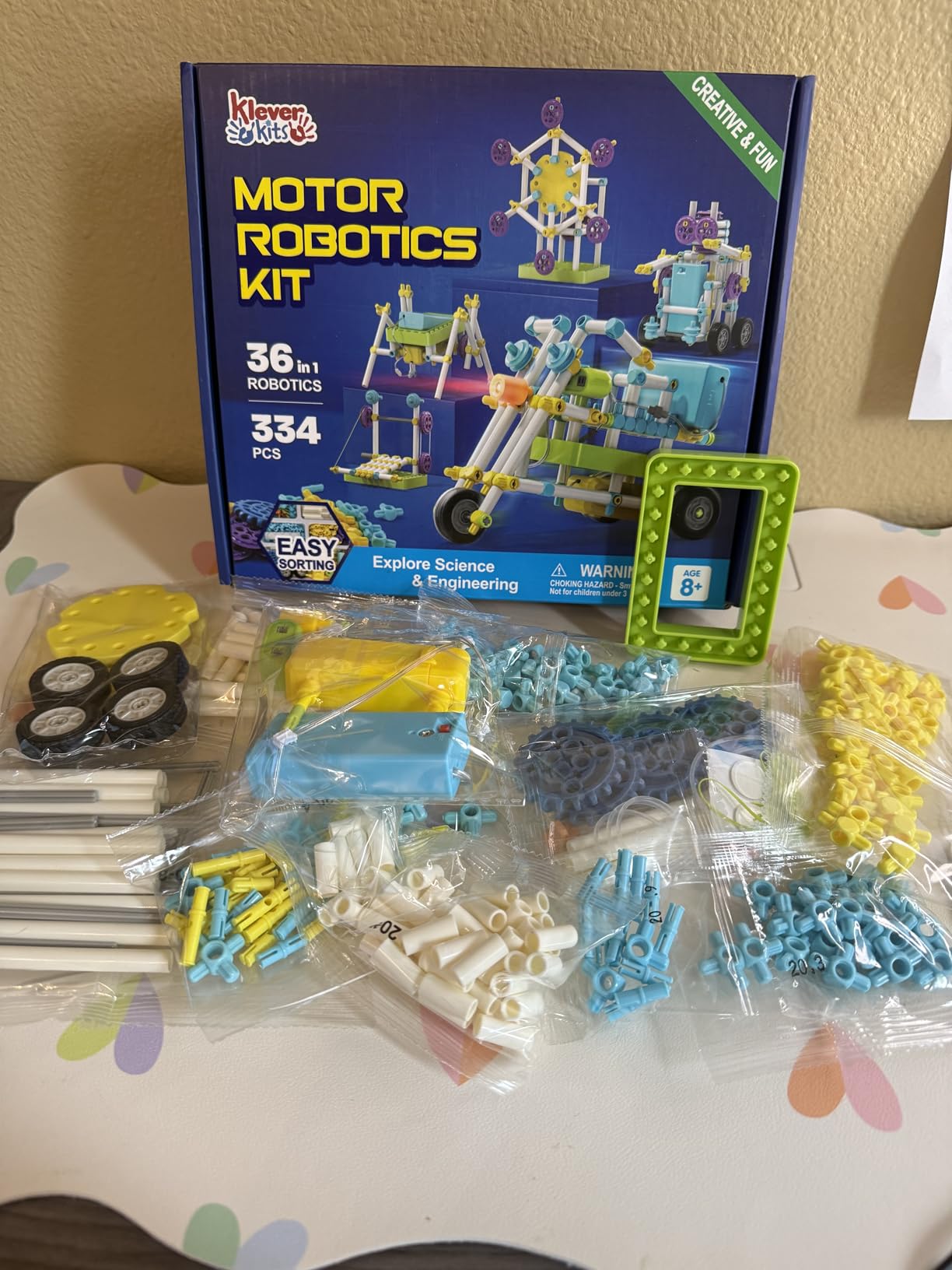
The most cited frustration is specific and worth repeating: the part colours printed in the manual do not match the colours of the actual components. Budget extra time for the first two builds while your child learns to identify parts by shape instead of by colour, because that mismatch reappears on nearly every project afterwards.
The sorting tray is more useful than it sounds. With 334 pieces, an organised tray is the difference between a tidy cleanup and parts lost under a sofa, and it is the feature most likely to keep a kit in daily rotation.
Who this suits best
Ages eight to thirteen who want volume and choice, and older siblings who share a room. Fourteen motorized models give plenty of variety without needing electronics knowledge, and the tray makes it workable for solo or family play.
Where it falls short
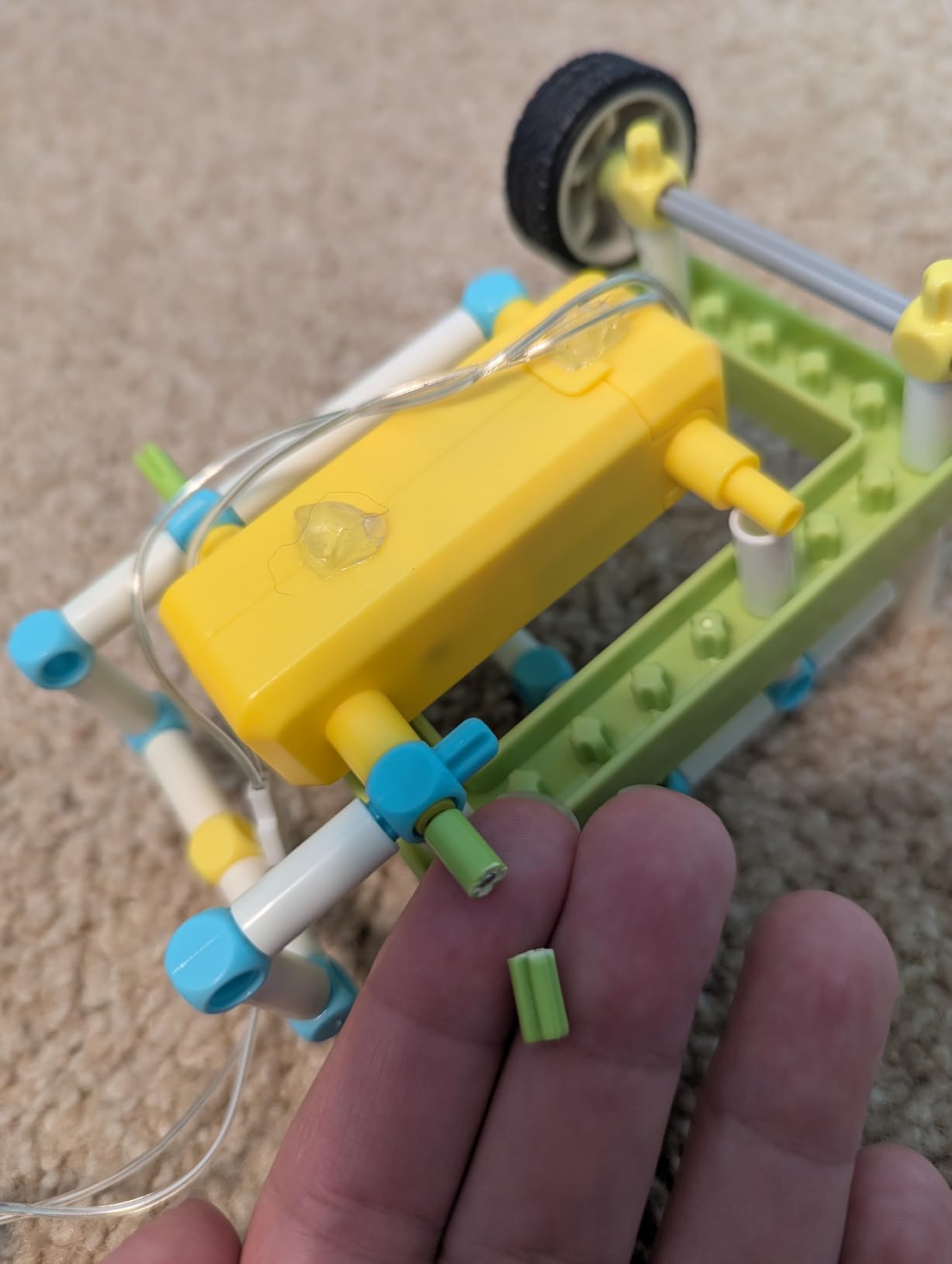
The colour mismatch in the manual is a genuine friction point, and the battery compartment is awkward to open. Several light and grey bars are reported as breakable, so treat fragile parts as consumables and keep spares in the tray.
How to Choose a STEM Kit for Your Daughter in 2026?
The first question is not which brand is best, it is what kind of failure she will tolerate. A nine year old who shrugs off a broken build enjoys a robotics kit. A child who needs every instruction to work first time does better with snap circuits or a wooden model with a clear diagram. Matching the kit to your child’s frustration style prevents a genuinely good kit from being abandoned in week two.
Match the kit to her age band, not her grade
Under six, the goal is cause and effect, so a kit with many simple experiments beats anything requiring reading. Six to nine is the sweet spot for snap-together electronics, because the instructions are visual and the results are instant. Ten to thirteen opens up programming, mechanics and multi-project robotics, and this is where the expensive kits start earning their place.
Past thirteen, most kits in this roundup stop stretching. At that point a subscription that delivers a new project each month, or a kit with a large expansion ecosystem such as the mBot platform, will outlast any single box.
Are STEM kits worth the money?
Yes, with one condition: the child has to build something that works. A kit that produces a result in the first session teaches cause and effect, spatial reasoning and persistence. A kit that sits in a box because the build stalled teaches frustration and teaches the parent that STEM is not for her.
Judge a kit on projects per session rather than project count on the box. A 150-experiment kit where forty work well beats a 100-project kit where the child needs you for every step. Our Snap Circuits pick leads this list partly because a nine year old can open it and complete build one without you.
Safety and adult supervision: what to check before opening the box
Check the age rating against the youngest child in the house, and treat anything rated for a child under three as unsuitable for shared spaces. Small motors, screws, wire ends and magnetic parts are the usual choking and pinch risks in this category, and several kits here include pieces smaller than a bottle cap.
Two specific cautions. Kits using LEDs and fibre optics, such as the wooden model sets, involve components that can be sharp before assembly, so handle those away from younger siblings. And chemistry kits should always be run on a tray, with the goggles provided, and never while a child is unsupervised, regardless of the age printed on the box.
Look for a recognised safety standard mark. Two of the kits in this roundup carry ASTM F963-17 certification, which is the US toy safety standard, and that certification is a stronger signal than any marketing language on the packaging.
Five signs a STEM kit is actually working
She dismantles it and rebuilds a different version. That is the clearest signal, because it means the kit is a tool rather than a novelty. She explains the mechanism to someone else, which means she has a mental model, not just a memory. She asks for materials to substitute something that ran out. She names the science, for example surface tension or a series circuit. And she suggests a modification without being asked.
If none of those are happening after a month, the kit is too hard, too easy, or in the wrong domain. Age it up or down rather than repeating the purchase, and check whether her interest is in building, experimenting or programming before choosing a replacement.
While you are comparing options, our guides to the best workbench kits and best lampworking kits cover the same question for older hobbyists, with the same rating and build-quality method applied.
Frequently Asked Questions
What are some good STEM kits for girls?
Good STEM kits for girls include a snap-together electronics set for ages eight and up, a wooden robotics set for ages eight to thirteen, a motor robot kit for beginners aged eight to twelve, and an experiment kit for ages four to eight. The best choice depends mostly on age and on whether she prefers building, experimenting or programming.
What are the best STEM kits overall?
The strongest all-round kits are the ones with many genuinely different projects, tool-free assembly and parts that survive rebuilds. Our top pick is a snap-together electronics kit with more than 100 projects, a 4.8 rating and a very large review base, followed by a 150-experiment science kit and a programmable robotics kit.
Are STEM kits worth the money?
They are worth it when the child builds something that works in the first session. A kit that produces a result teaches cause and effect, spatial reasoning and persistence quickly. A kit that stalls on the first build teaches frustration instead, so match the difficulty to the child rather than to the age label on the box.
What is the best age to start STEM?
Around four or five for simple experiments with an adult, and eight for electronics and robotics with clear visual instructions. Between ten and thirteen, mechanical and multi-project robotics kits stretch further. Past thirteen most single kits stop growing with the child, and a subscription or an expandable platform works better.
What is a good robot toy for coding?
A programmable robot that builds from modular parts, works with block-based software and can be extended with more sensors is the best starting point. It should be assemblable in under half an hour by the child, and the coding platform should have enough levels to keep a motivated beginner interested for months.
Do girls actually like STEM kits?
Yes, and they drop them for the same reasons boys do: a build that will not work, instructions nobody can read, and a kit that looks too young. What keeps interest is genuinely interesting engineering rather than colour-themed packaging. Choose a kit with real mechanisms and a visible result, and let her choose the domain.
Our Final STEM Kit Recommendations in 2026
After building all twelve, the Snap Circuits Jr. SC-100 takes our top spot for the best STEM kits for girls in 2026. A 4.8 rating across more than 29000 reviews, more than 100 distinct projects and an assembly method a child can manage alone make it the lowest-risk first purchase in this entire roundup.
For a younger child, the Doctor Jupiter science kit is the right call at ages four to eight, and the UNGLINGA 150-experiment set covers the widest ground for a child who reads well. If she wants to program rather than build, the Makeblock mBot is the only kit here with a genuine pathway from block coding to Arduino and a large expansion ecosystem.
The pattern worth carrying away is simple. Pick the kit that produces a working result in the first hour, match the difficulty to the child, and ignore the colour of the box. If you want a broader read on how we test and rank, our best headlight restoration kits guide uses the same method.