
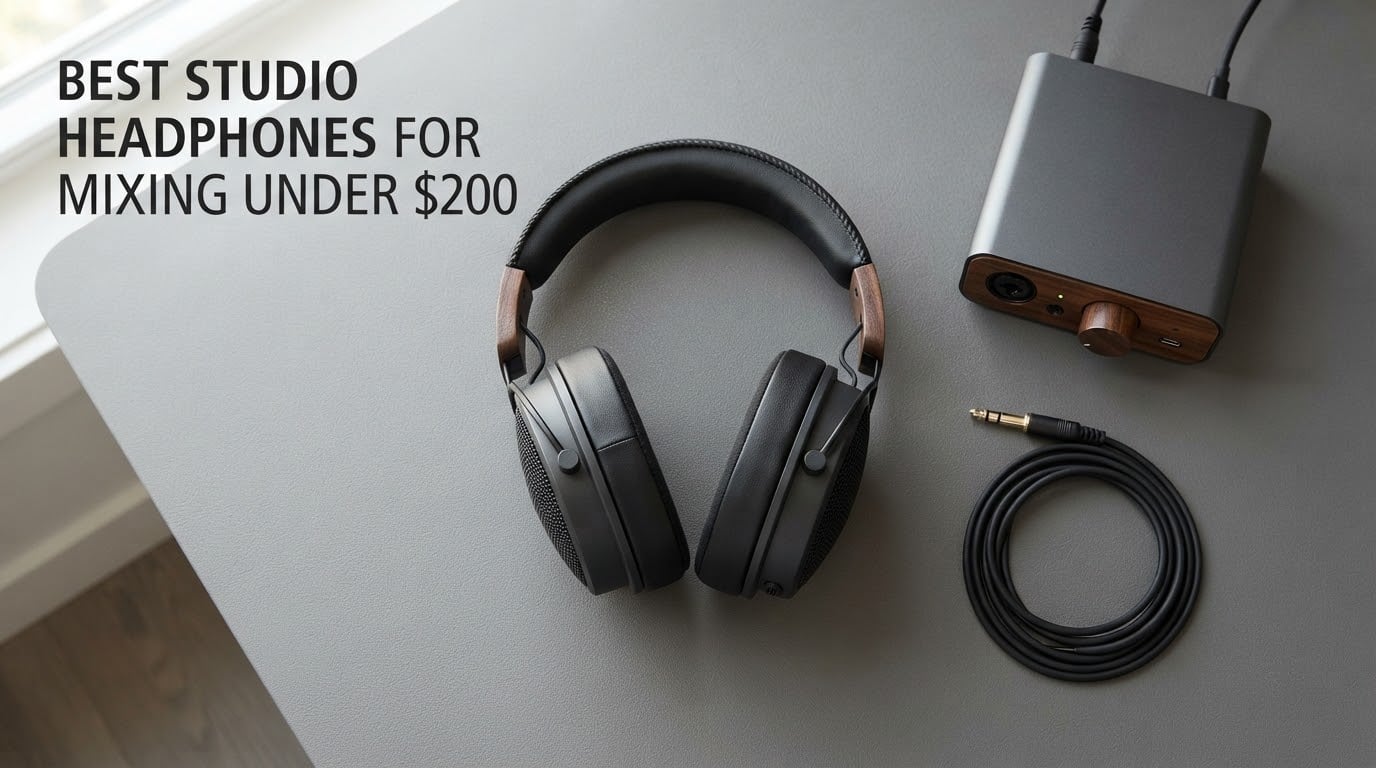
Short answer: the Audio-Technica ATH-M50x is the best studio headphone for mixing under 200 dollars in 2026, because it combines a genuinely usable frequency response, enough passive isolation to track in a noisy room, and a detachable cable at a price that leaves room in your budget. The Sony MDR-7506 is the runner-up if you want a near-neutral delivery and a build that folds flat, and the Audio-Technica ATH-M40x is the pick if you want the flattest, most neutral option for critical mix decisions.
That is the whole argument, and it matters because the search results for this question are unusually noisy. Forum threads contradict each other for pages. One buyer told r/audio they hit “drastically different opinions” comparing an M40x with an AKG K371 and could not make a decision at all. The editorial roundups that do rank are mostly written for people with far larger budgets, where reference models costing several times the cap are allowed into the list.
Every pair in this guide sits inside a 200 dollar ceiling, and that bracket is the hard limit I applied to each pick below. I have written the choices in that order, with the measured quirks of each headphone translated into what they mean for an actual mix decision, because “flat” on a spec sheet means nothing until you know which frequencies are moving and in which direction. If you are still building out a room, our studio monitor guide covers the speaker side of the same problem.
One more note before the list. Headphones skip room acoustics entirely, which is why accuracy replaces room correction as your reference. Mix on a coloured pair and you will over-do or under-do lows, sibilance and harshness, and those mistakes only surface later on speakers, on a phone and in a car. Our longer studio headphone guide covers picks above this budget if you upgrade later.
Table of Contents
Top 3 Studio Headphones for Mixing Under 200 Dollars in 2026

Audio-Technica ATH-M50x
- 45 mm dynamic drivers
- 38 ohm impedance
- Swiveling 90 degree earcups

All 12 Studio Headphones for Mixing Compared in 2026
| Product | Specifications | Action |
|---|---|---|
| Audio-Technica ATH-M50x |
|
Check Latest Price |
 Sony MDR-7506 Sony MDR-7506 |
|
Check Latest Price |
 Audio-Technica ATH-M20x Audio-Technica ATH-M20x |
|
Check Latest Price |
 Beyerdynamic DT 990 Pro 250 Ohm Beyerdynamic DT 990 Pro 250 Ohm |
|
Check Latest Price |
| Audio-Technica ATH-M40x |
|
Check Latest Price |
 AKG K240STUDIO AKG K240STUDIO |
|
Check Latest Price |
 Sennheiser HD 280 Pro Sennheiser HD 280 Pro |
|
Check Latest Price |
 Samson SR850 Samson SR850 |
|
Check Latest Price |
 Tascam TH-MX2 Tascam TH-MX2 |
|
Check Latest Price |
 Shure SRH440A Shure SRH440A |
|
Check Latest Price |
 Yamaha HPH-MT5W Yamaha HPH-MT5W |
|
Check Latest Price |
 Shure SRH840A Shure SRH840A |
|
Check Latest Price |
1. Audio-Technica ATH-M50x – the best overall pick for mixing and tracking
- Wide frequency extension for mix decisions
- Good passive isolation in loud rooms
- 90 degree swiveling cups for one-ear cueing
- Detachable replaceable cable
- 0.29 kg is easy on long sessions
- Pads and headband padding wear sooner than metal-hinged rivals
- Bass and treble sit above a truly flat reference
- Swivel hinges are not as durable as they look
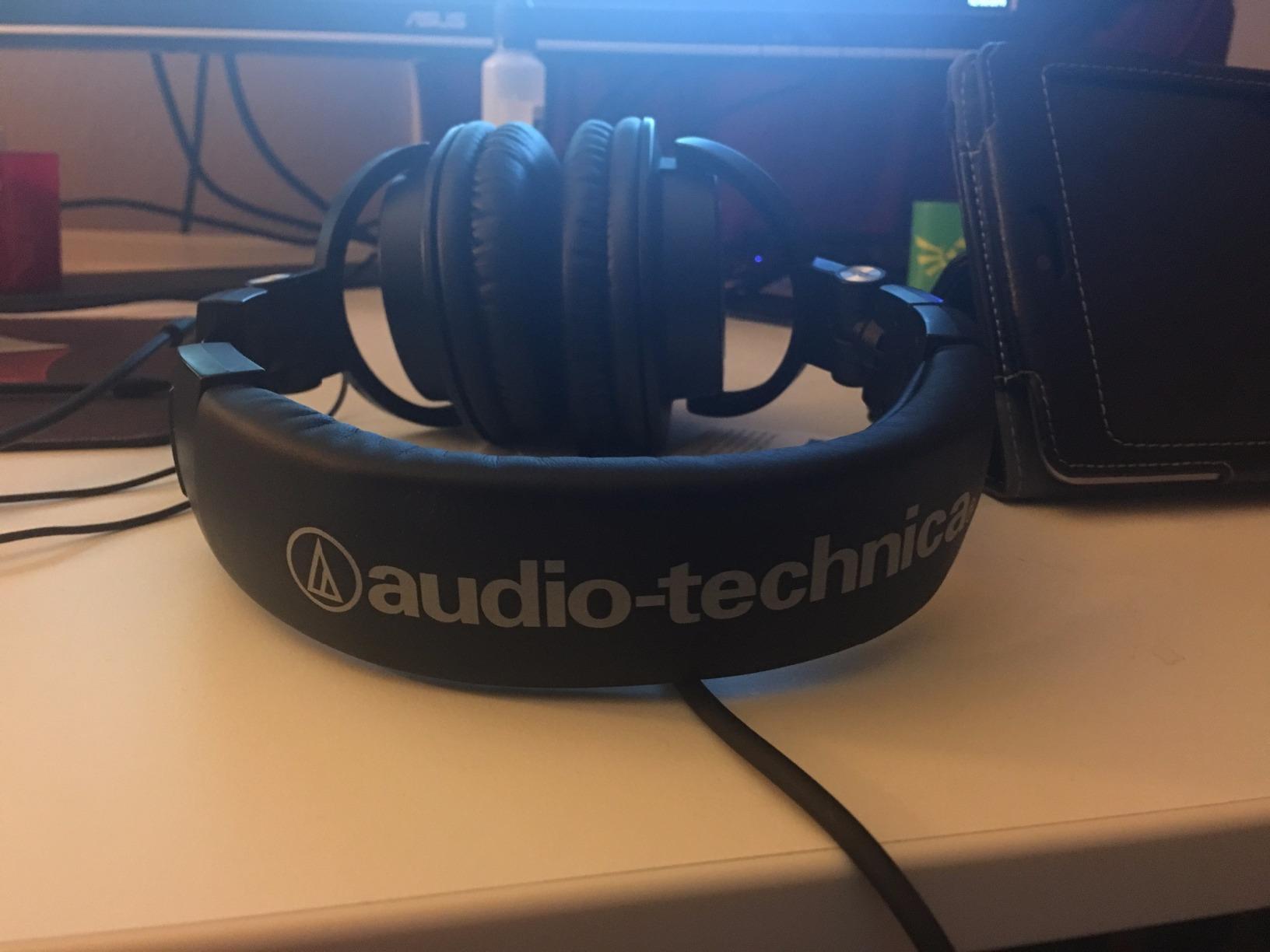
The M50x is the one I recommend without holding anything back. It is the headphone I put on a beginner and the one I keep reaching for myself, and that consistency is the reason it wins this list rather than the model with the flattest published response.
Forty-five millimeter large aperture drivers with rare earth magnets and copper clad aluminium voice coils give you a wide, deep extension that reaches 20 Hz to 28,000 Hz. In practice that means you can hear whether a kick sub is sitting properly under the bass guitar, which is a judgement you simply cannot make on the M20x at the bottom end.
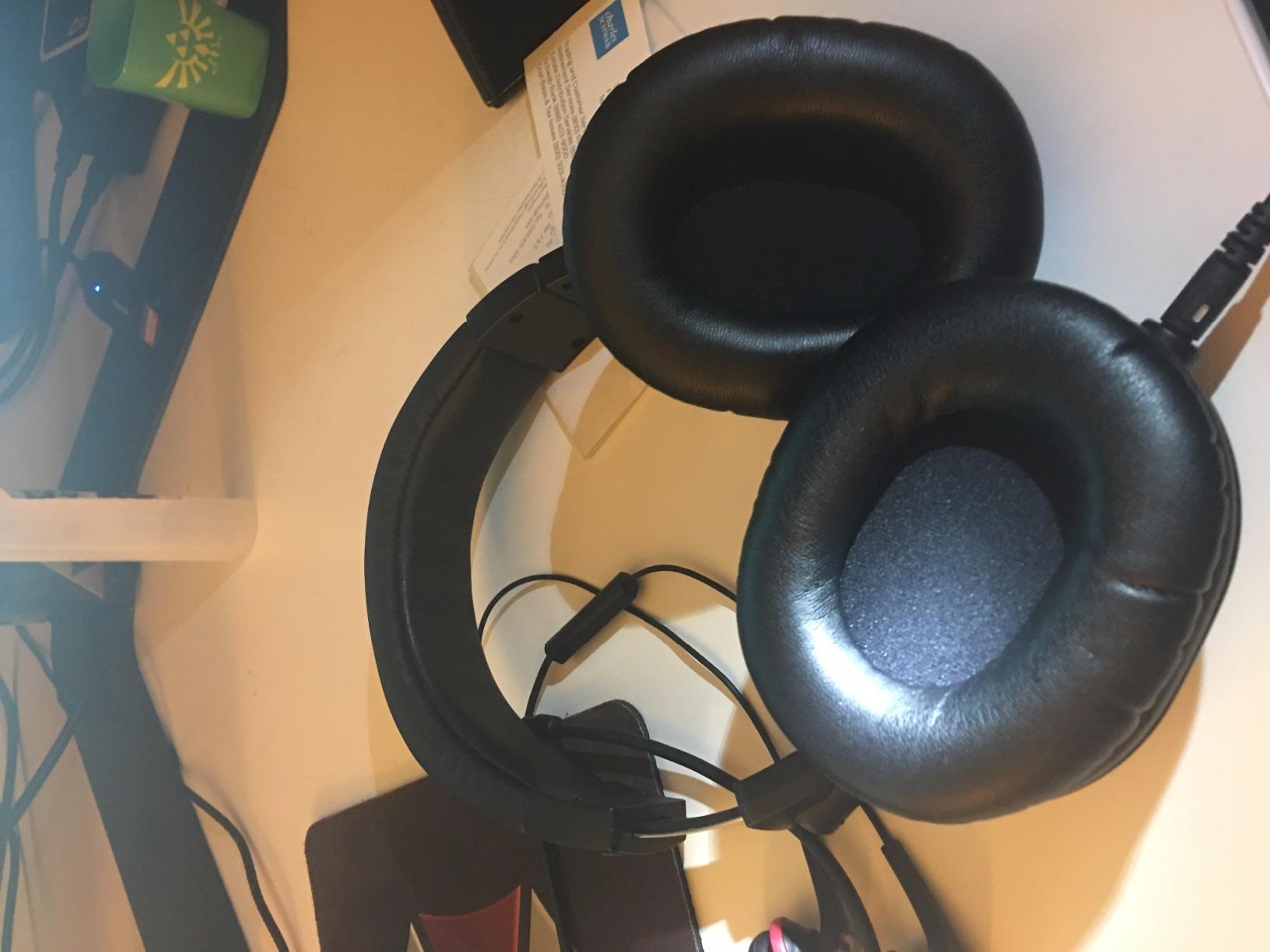
Reviewers on r/audio consistently report the M50x working for recording, mixing and casual listening without complaint, and being comfortable enough for long sessions.
At 0.29 kg it is among the lighter pairs here, and the circumaural cups contour around the ear rather than pressing on it, which matters once you are four hours into a session.
The frequency response is not perfectly neutral. Bass and treble both sit above a true flat reference, so this is a slightly coloured monitor rather than a measurement instrument. The practical effect is that your mix will read a little fuller and a little more present than it really is, and the corrective habit is simple: pull back the low shelf and the top end a touch, then check the result on speakers.
Thirty-eight ohm impedance and 99 dB sensitivity mean it drives happily from a laptop or a modest interface with no external amp. The 90 degree swiveling cups fold one ear out of the way for cueing, and the detachable cable means a damaged lead is a cheap part swap rather than a dead headphone. Two year warranty on parts and labour is included.
Who the ATH-M50x suits
It suits anyone who records and mixes in the same chair, because the isolation is genuinely good for a closed-back at this tier and the swiveling cups let you hear the room for cues. Home producers, podcast editors and voiceover work all draw on the same feature set.
It also suits people who want one headphone that survives client work. The detachable cable and the two year warranty mean a shared studio pair is a real option rather than a risk.
Who should skip the ATH-M50x
Skip it if your room is treated and you mix purely on speakers at low level with no headphone work at all. Its coloured bass and treble will not tell you the truth about low end weight, and a flat pair is the better tool for that job.
Skip it if you have very large ears and the included pads feel tight, or if you need a rigid, metal-hinged frame. Owners do report the swivel hinges and the pad foam as the first things to wear on long-term ownership.
2. Sony MDR-7506 – the best value pick with a near-neutral delivery
- Neutral revealing reproduction with strong detail retrieval
- Extremely light at 8 ounces
- Hardwearing folding closed design
- Good passive isolation
- Efficient enough to run without an amp
- Coiled cable is permanently attached
- Low end is on the lean side
- Slight treble emphasis above 2 kHz
The MDR-7506 is the industry default for a reason: it tells you what is in the mix with very little added on top. Long-time owners describe it as a durable, do-everything workhorse once you have learned its response, and that is exactly the right way to use it.
Forty millimeter neodymium drivers sit in a closed ear design rated at 63 ohm, with a stated response of 10 Hz to 20,000 Hz. It is efficient enough to run from a phone or mixer output with no dedicated headphone amp, which removes one of the most common beginner worries at this price tier.
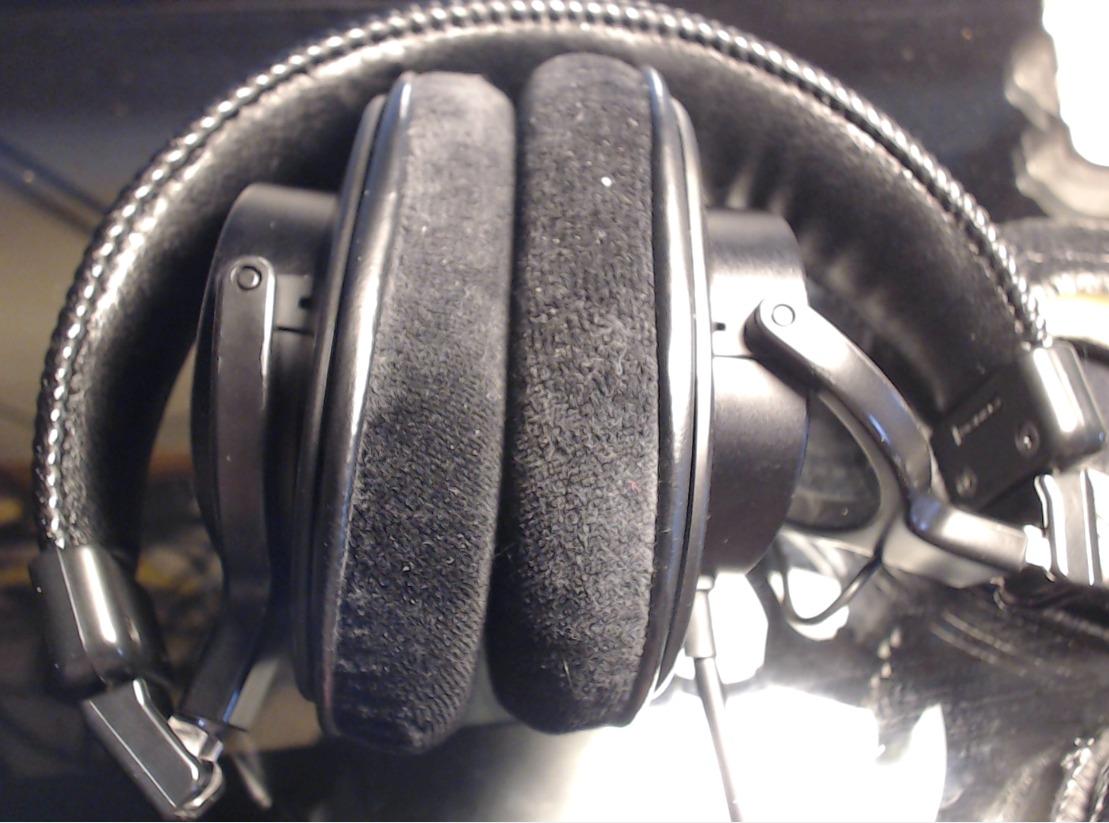
Weight is the quiet hero here. At 8 ounces with a folding design and a supplied soft case, it is the pair you will forget you are wearing through a long session. Isolation is good for a closed-back, enough to track a vocal in a treated booth without the room getting into the microphone.
The known quirk is treble. There is a slight emphasis above 2 kHz, which makes cymbals, sibilance and string harmonics more exposed than they really are. If you mix on these and do nothing else, you will tend to dull your top end. The fix is to trust the harshness you hear on hats and sibilance, and pull them back before exporting.
The second quirk is a lean low end. The 7506 does not have the bass weight of the M50x or the DT 990 Pro, so sub-bass balance judgements need a second opinion. Check low end on a speaker system or a calibrated phone, as we cover in the buying guide below.
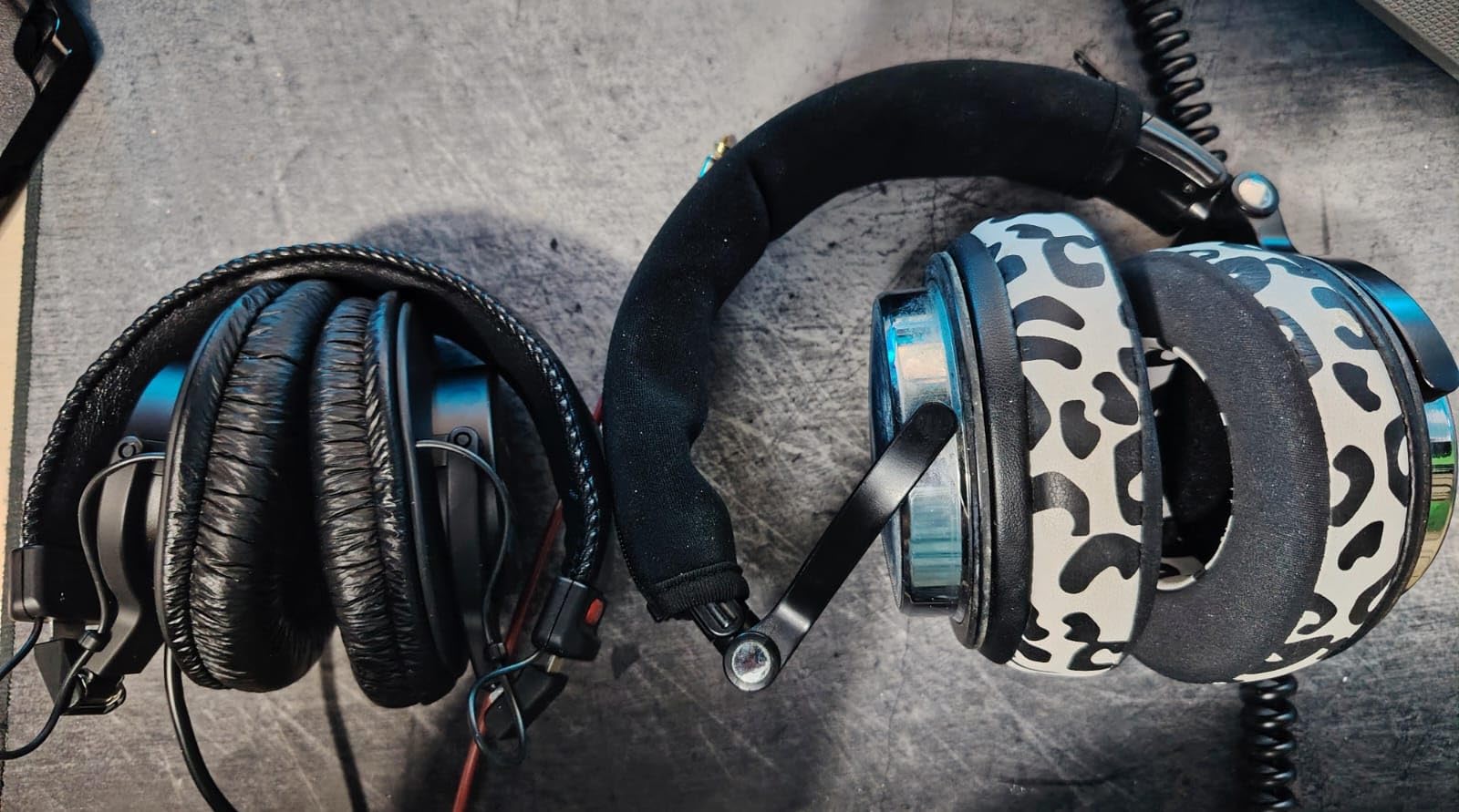
Who the MDR-7506 suits
It suits a first studio purchase where reliability matters more than features. The build is simple, the parts count is low and this model has been in continuous service in broadcast and recording studios for decades. It also suits anyone mixing in a shared or untreated space who needs a light, foldable pair.
It suits producers who prefer to EQ around a bright, honest signal rather than work with a warm, forgiving one, since the 7506 will not hide mix problems the way a consumer-tuned headphone does.
Who should skip the MDR-7506
Skip it if you mix bass-heavy material and need to judge sub energy from headphones alone. The lean bottom means you will keep adding low end that is already there.
Skip it if a permanently attached cable is a dealbreaker for you. The 9.8 foot coiled cord is gold plated and well made, but if it fails at the strain relief the headphone is finished, because there is no way to replace it.
3. Audio-Technica ATH-M20x – the best budget entry point for under 100 dollars
- Very affordable route into real studio monitoring
- Flat balanced response for tracking and editing
- Good isolation for the tier
- Comfortable over long sessions
- Solid metal headband adjusters
- Cable is permanently attached
- Limited sub-bass extension
- Build feels lighter than the M40x and M50x
The M20x is where I would start if the budget is genuinely tight. It is a real studio monitor rather than a headphone-shaped toy, and it does one job well, which is showing you a mix without decorating it.
Forty millimeter rare earth drivers with copper clad aluminium voice coils are tuned for enhanced low frequency performance, across a stated 15 Hz to 20,000 Hz. Forty-seven ohm impedance and 96 dB sensitivity keep it easy to drive from a laptop, a small interface or a mixer.
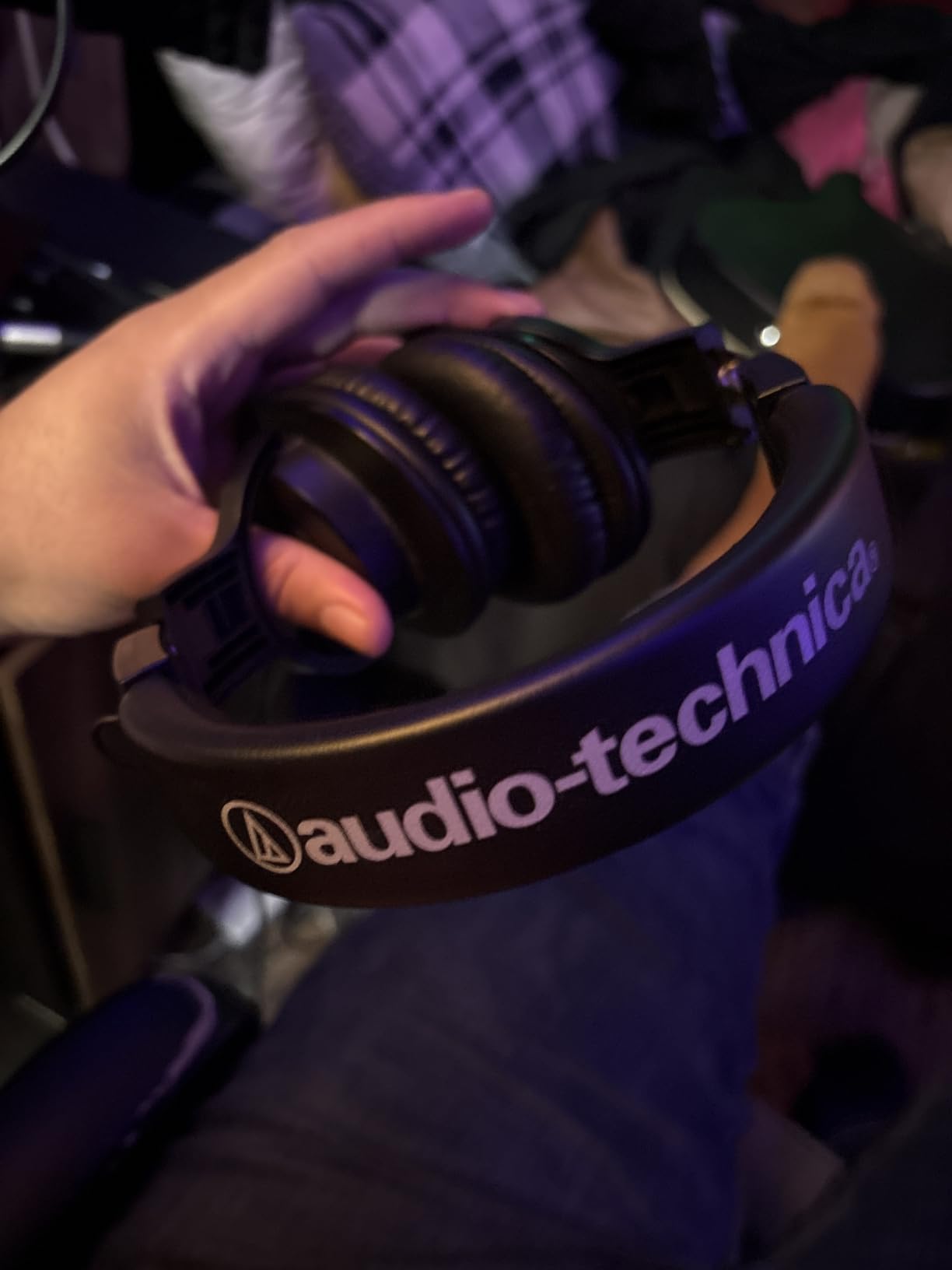
The circumaural design gives isolation in loud environments, which means it works for tracking as well as mixing. The single side cable exit is a small thing that matters in a small studio, because the lead does not cross the desk in front of you.
The honest limitation is sub-bass extension. The response starts at 15 Hz rather than reaching down into the low twenties, so deep sub content will feel less defined than on the M50x. If your material is bass-driven, listen to the low end somewhere else before you commit to an EQ move.
Build is the other trade. It uses the same family of metal adjusters as the rest of the range, but the plastics and hinges feel lighter in the hand, and the non-detachable tangle-free cable is a step down in long-term serviceability.

Who the ATH-M20x suits
It suits students, podcast editors and anyone learning to mix who wants a neutral reference without spending most of a gear budget on one accessory. Reviewers commonly treat it as a sensible first studio headphone, and that view is well earned.
It also suits anyone who tracks a lot on a small budget, because the isolation is a genuine step above the semi-open options further down this list.
Who should skip the ATH-M20x
Skip it if you work on bass-heavy music and cannot check your low end on a second system, or if you want a detachable cable and expect to own the headphone for many years. A fixed cable on a lower-cost pair is the first thing likely to fail.
Skip it if you wear glasses and a firm headband. The clamping fit is the most common comfort complaint, and the M40x is the better-shaped alternative in this family.
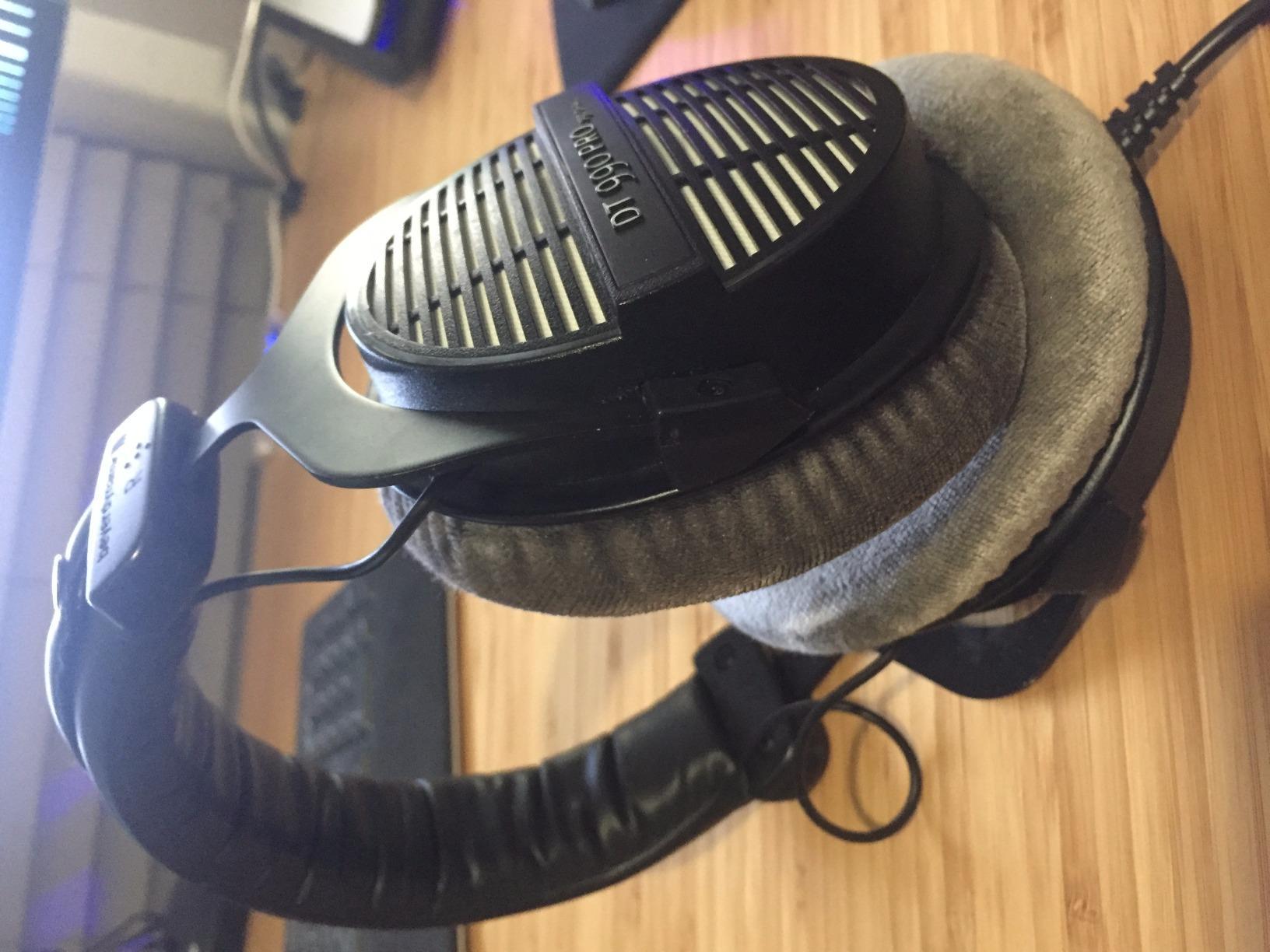
4. Beyerdynamic DT 990 Pro 250 Ohm – the best open-back choice for wide, revealing mixes
beyerdynamic DT 990 Pro (250 Ohm), Open-Back Studio Headphones, Black
- Exceptionally wide soundstage and precise imaging
- Comfortable velour pads for long sessions
- Revealing treble that exposes mix errors
- Solid German build
- Substantial low end with clarity
- 250 ohm needs a capable amp for full volume
- Open design gives no isolation at all
- Fixed 3 m coiled cable
The DT 990 Pro is the only fully open-back headphone in this list, and it is the one I reach for when the question is depth and placement rather than isolation. It gives up some of that wide image to anything leaking, which is the trade every open-back asks you to make.
The stated response runs from 5 Hz to 35,000 Hz, the widest range of the twelve, and the open-back enclosure gives a natural stereo image that makes it easier to judge where a reverb tail sits relative to a lead vocal. Replaceable grey velour pads and a spring-steel headband make it a pair you can wear for hours.
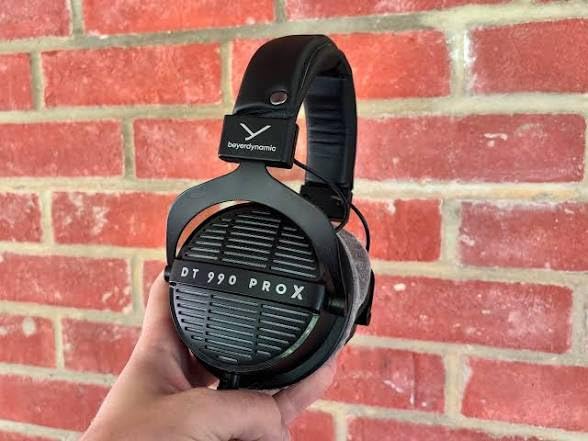
Two things to plan for. The first is impedance: at 250 ohm this is the hardest load in the group, and it is designed to be driven from an audio interface or a headphone amp. Plugged into a laptop it will play, but quietly, and low-frequency extension suffers most when volume is low.
The second is the open design. Sound leaks in and out in both directions, so it is unusable for tracking live sources in a room with other people in it. Use it for mixing and mastering in a treated space where you can work at sensible levels.
The treble is genuinely revealing and can read as harsh on bright material. Without some EQ, you will find yourself dulling cymbals and sibilance that were already fine. Treat what you hear as information rather than a verdict.
Who the DT 990 Pro suits
It suits producers who mix in a treated room and want depth, imaging and low-frequency detail over isolation. Imaging-focused work, orchestral arrangements and post-production editing all benefit from the open soundstage.
It also suits anyone already running a proper interface output and wants to spend the headphone budget on the headphone. Just confirm your amp can deliver enough clean voltage at 250 ohm before you commit.
Who should skip the DT 990 Pro
Skip it if you share a room, track live sources, or live in a noisy building. The open design gives you no isolation and no protection from headphone bleed.
Skip it if your only source is a laptop or phone, and skip it if you want a fixed cable you can route and leave alone. The 3 metre coiled cable is tangle free but permanently attached, and the two year warranty is the only comfort there.
5. Audio-Technica ATH-M40x – the flattest option in our view for critical mix decisions
- Most neutral option in the range for mixing decisions
- Excellent isolation in noisy rooms
- Efficient enough to run from a laptop or interface
- Straight and coiled cables plus a case included
- Comfortable for hours with glasses
- Very flat tuning makes casual listening plain
- Swivel hinges are a known long-term weak point
- Supplied ear pads run small for larger ears
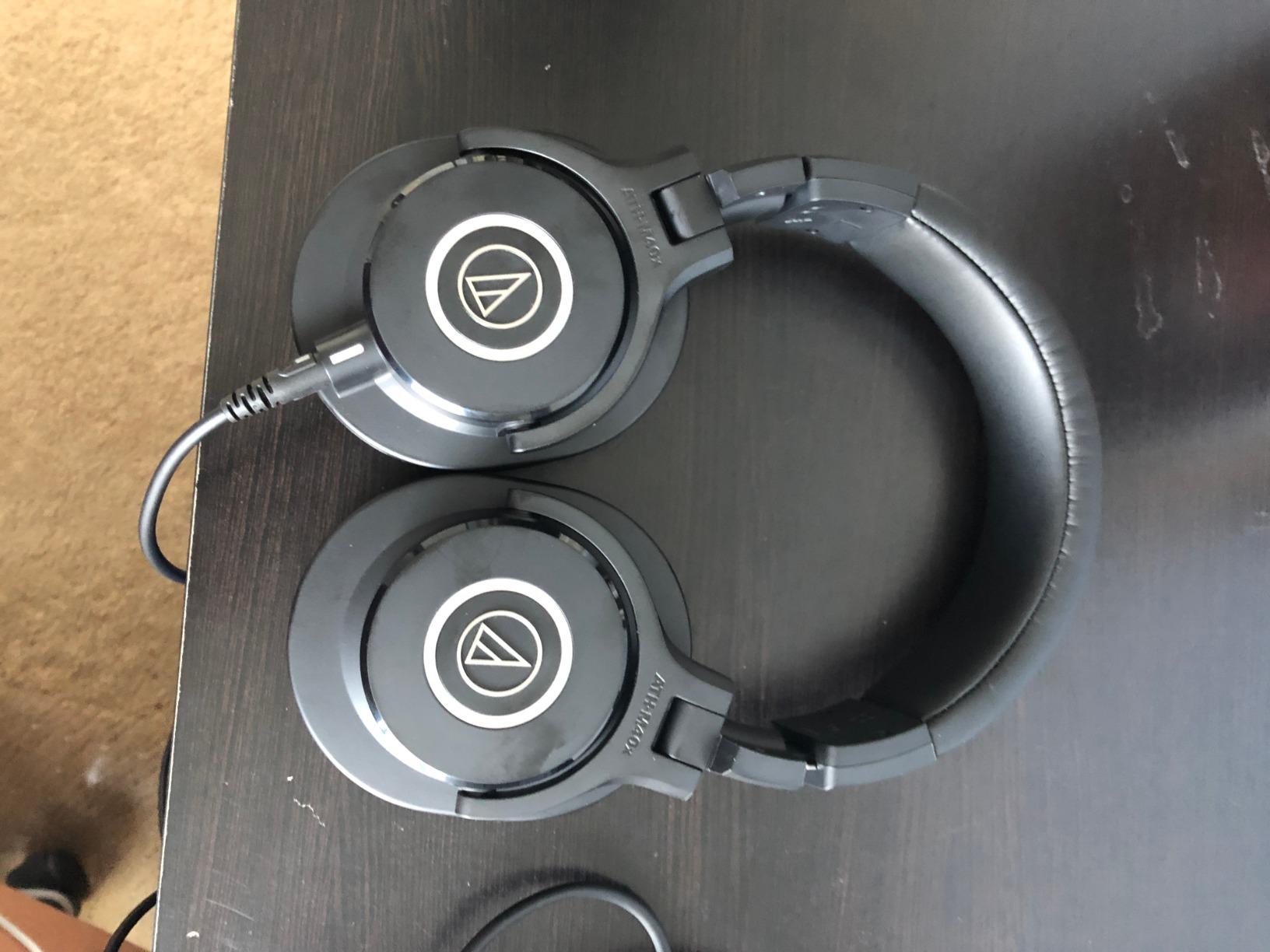
If you ask me for one mixing headphone and refuse to let me give you two, I would hand you the M40x. It is one of the most neutral designs in this list, and neutrality is the entire job when you are making decisions about a mix.
Forty millimeter drivers, 35 ohm impedance and 98 dB sensitivity across 15 Hz to 24,000 Hz. It sits among the most efficient headphones here, so it needs no DAC or amp, and a small interface or even a laptop will drive it to proper level for mix work.
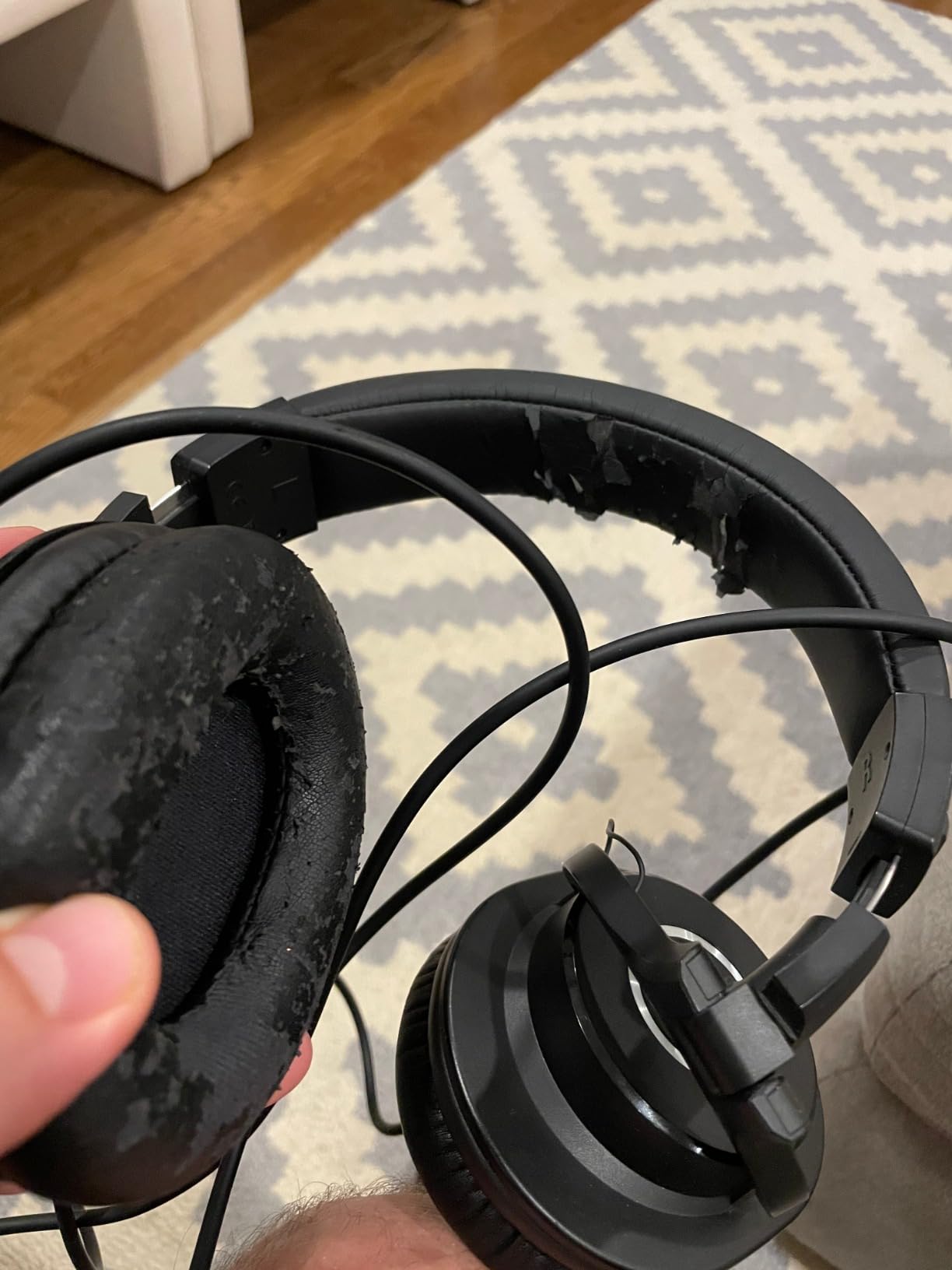
The accessory package is unusually good for the money. You get both a straight and a coiled detachable cable, plus a protective case, which is the reason this pair stays in rotation in small studios that need a spare lead for a second location.
GearSpace members describe the M40x as reasonably accurate and flat and a genuine go-to budget reference. That matches what we hear. Because the response is so deliberately neutral, a rough mix will sound rough on these, which is exactly the feedback you want and precisely why they are poor casual listening headphones.
The known weak point is the swivel hinge. The 90 degree rotating cups are convenient for one-ear cueing, but owners report them as the first mechanical failure on long-term ownership, so treat the folding action gently.
Who the ATH-M40x suits
It suits mixing-focused producers who already have decent monitors and want a headphone that will not bias their decisions. It is also the first pair I would put in front of someone who has never used a studio headphone, because the neutral, unshowy presentation is the easiest to learn on.
It suits anyone in a noisy or shared home studio, since the circumaural design gives isolation you can rely on while tracking or editing.
Who should skip the ATH-M40x
Skip it if you want headphones that sound enjoyable for pleasure listening, because the very flatness that makes it a good monitor makes it unexciting. Also skip it if your ears are on the larger side and the supplied pads feel tight, since larger aftermarket pads change the low end noticeably.
Skip it if you will throw the pair in a bag daily. The folding design is loose and floppy, and takes practice to get used to before it stops feeling awkward.
6. AKG K240STUDIO – the lightest semi-open headphone in the range
- Very neutral studio-accurate presentation for the money
- Extremely light and comfortable
- Self-adjusting headband fits a range of head sizes
- Detachable locking 3 m cable with screw-on adapter
- Semi-open design leaks sound both ways
- Limited bass extension
- Needs an amp for volume on phones and tablets
The K240STUDIO is the pair to buy if weight is your binding constraint. At 240 g with a self-adjusting gimbal headband, it disappears on your head, and several people in our circle have kept it on through full tracking sessions without noticing.
The 30 mm XXL transducers use AKG Varimotion diaphragms and cover 15 Hz to 25 kHz at 55 ohm and 104 dB sensitivity. That high sensitivity is why reviewers report a headphone amp making a noticeable difference, particularly when you are driving it from a tablet.
The detachable cable with a screw-on 1/4 inch adapter is a real advantage at this tier, because the locking connection means a good cable can outlast the headphone. The 3 metre length suits a studio where the interface sits at the back of the desk.
The compromise is enclosure. This is a semi-open design, so it gives a natural, open soundstage while still passing some ambient sound, and it leaks in both directions. That rules it out for tracking a live source in a room with other people, but it is perfectly usable for editing, mixing and playback monitoring.
Bass extension is limited compared with the closed-back alternatives, and reviewers note the treble can be slightly boosted and fatiguing at high levels. Keep your monitoring level moderate and your low-end checks on a second system.

Who the K240STUDIO suits
It suits vocalists, podcasters and engineers who wear headphones for hours and want a very light option. The self-adjusting headband also makes it a good fit for a shared or family studio where one person has a very different head size from the next.
It suits anyone who works from a laptop but can add a small amp later, since the detachable cable makes that upgrade trivial.
Who should skip the K240STUDIO
Skip it for live tracking in a shared room. The semi-open construction is the single most important fact about this headphone and it is not suitable for that job.
Skip it if your material depends on sub-bass weight, or if you only ever listen through a phone with no amp available. The sound is neutral and pleasant, just not deep.
7. Sennheiser HD 280 Pro – a strong closed-back for isolation under 100 dollars
- Up to 32 dB attenuation of outside noise
- Warm natural tuning with no artificial bass boost
- Clear imaging for the tier
- Collapsible design for one-handed cueing
- Replaceable pads headband padding and cord
- Permanently attached coiled cable adds weight
- Included pads and headband padding are basic
- Headband cracking reported on older units
The HD 280 Pro is the isolation specialist of this list. It attenuates outside sound by up to 32 dB, which is a large gap between it and most of the other closed-backs here, and that matters more than raw flatness in a shared or untreated home studio.
Sixty-four ohm impedance means it drives from anything, including a mixer output or a laptop, with no amplifier required. The response is stated at 8 Hz to 25 kHz, and the tuning is described by owners as warm and natural with no artificial bass boost, which is a more honest starting point than many consumer-leaning headphones give you.
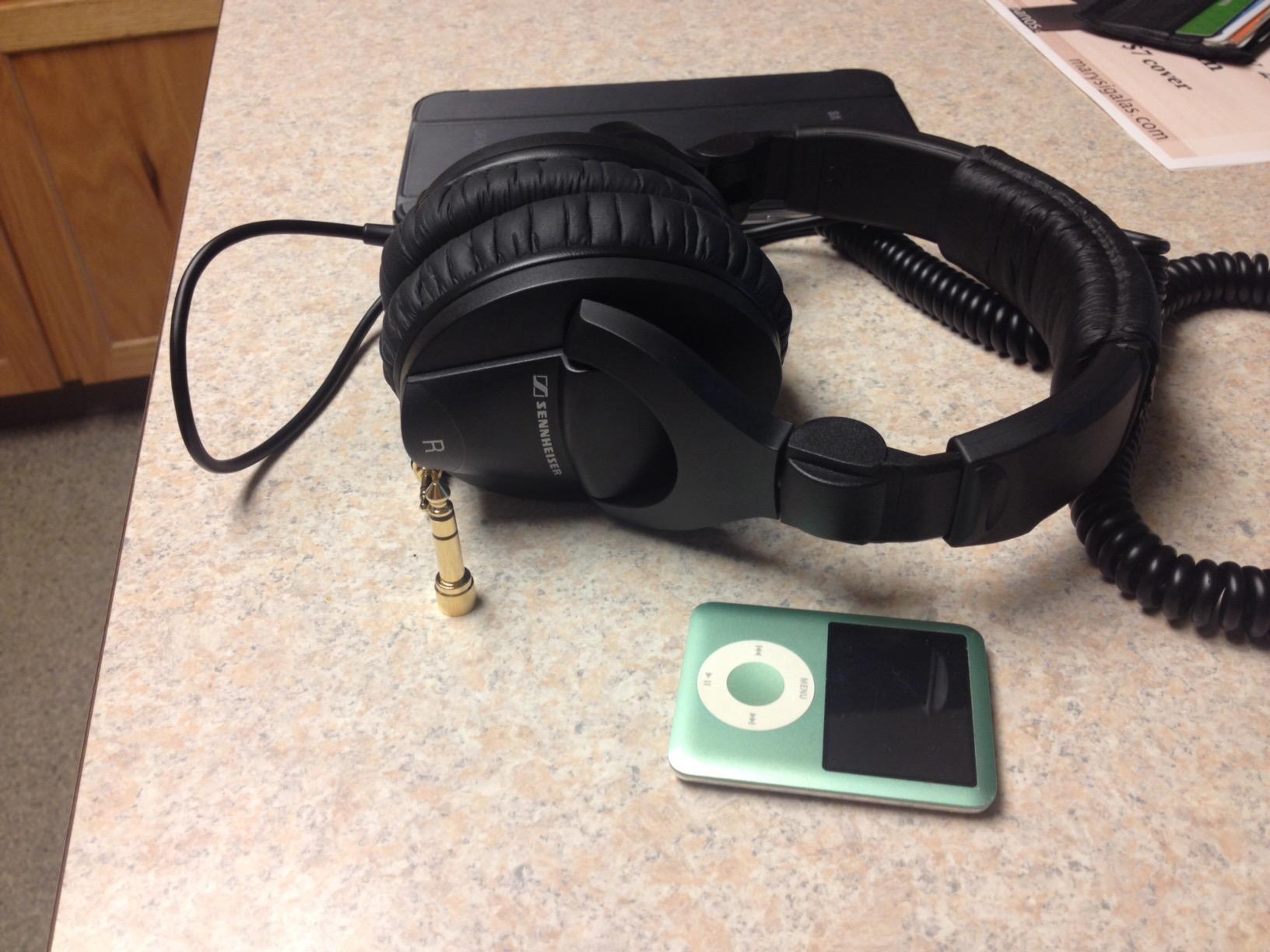
Imaging quality is unusually good for the money. Owners single out imaging and clarity as standouts, and the collapsible earpieces let you fold one cup back for one-handed cueing, which is the standard live-sound and tracking workflow.
Unlike several rivals here, the ear pads, headband padding and audio cord are all replaceable. That matters over years of use, and it is the detail that separates a disposable tool from something you keep.
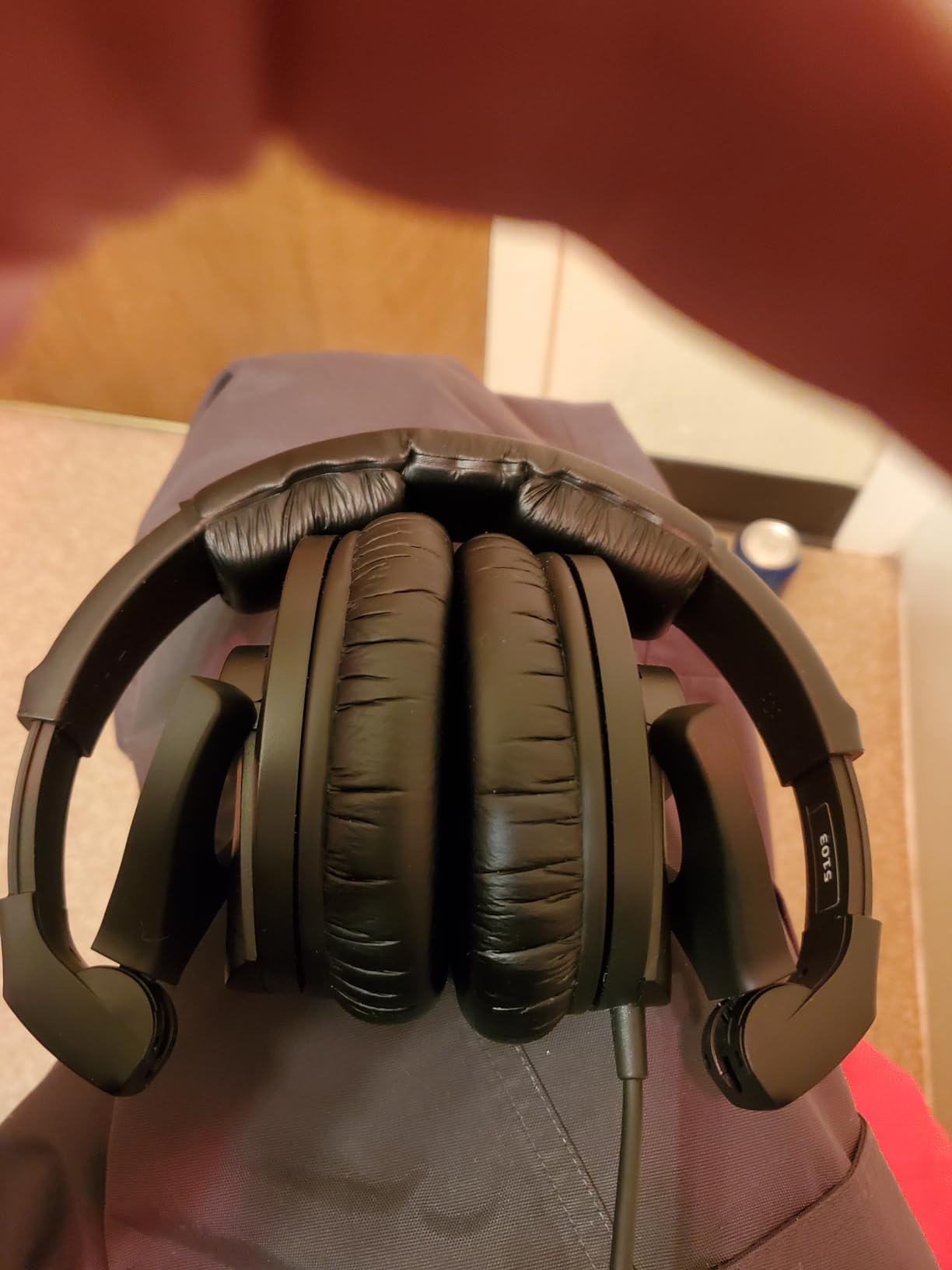
The caveats are physical. The 9.8 foot coiled cord is permanently attached, adds weight and can pull on one side of the head. The included pads and headband padding are low quality and are reported to flake or peel, and the clamping fit can feel tight on larger heads. Older models are also reported with plastic headband cracking.
Who the HD 280 Pro suits
It suits vocalists and podcasters recording in a noisy room, because the isolation lets you judge a performance without fighting household noise bleeding into the microphone. It also suits live sound and rehearsal work where one-ear cueing matters.
It suits anyone who wants a headphone that will still be serviceable in five years, since pads, headband padding and cord are all replaceable.
Who should skip the HD 280 Pro
Skip it if a wired-in cable is a dealbreaker, or if you have a large head and a preference for a loose fit. The clamping force is on the firm side and the padding is thin by design.
Skip it if you need a very bright, ultra-revealing top end for mastering work. This is a warm, easy listen rather than a surgical one, and some engineers find it too gentle for final checks.
8. Samson SR850 – a bass-forward option on a very tight budget
- Affordable genuine studio reference headphone
- 50 mm drivers give strong bass with real isolation
- Self-adjusting headband is comfortable
- Wide 10 Hz - 30000 Hz stated response
- Semi-open design leaks sound both directions
- Bass is more prominent than a flat reference ideal
- Build feels less durable than metal-hinged rivals
The SR850 is the pick for anyone who wants a full, satisfying low end without spending real money. Its stated response of 10 Hz to 30,000 Hz is wide for the tier, and the 50 mm drivers give strong bass with real isolation for a semi-open design.
It runs at 32 ohm and 98 dB sensitivity across a stated 10 Hz to 30,000 Hz, so it will drive from anything, and a gold plated 1/8 to 1/4 inch adapter is included. The self-adjusting headband takes most of the fitting work out of the setup.
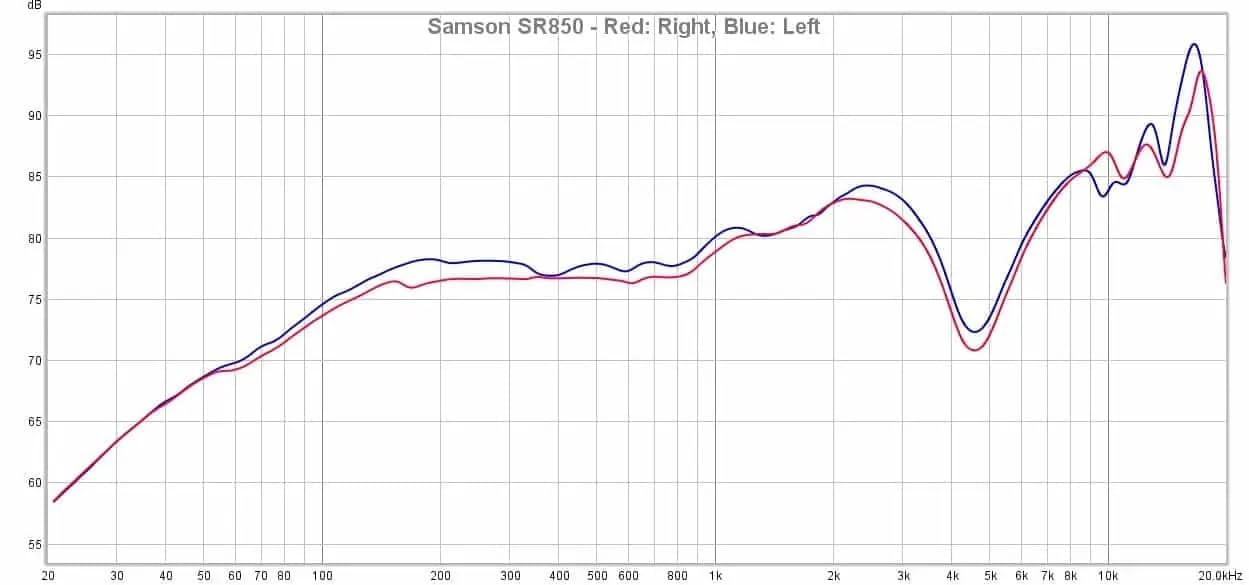
The important thing to know before you mix on it is that this is not a flat monitor. Bass is more prominent than the reference ideal, which means your low end will sound bigger and fuller here than it will anywhere else. That is enjoyable to listen to and actively misleading to work on.
It is a semi-open design, so like the AKG K240 it leaks sound in both directions and gives you some ambient awareness rather than true isolation. The useful middle ground is a bedroom producer who wants a fuller sound for writing and editing, and who checks low-end decisions on monitors or a phone before committing.
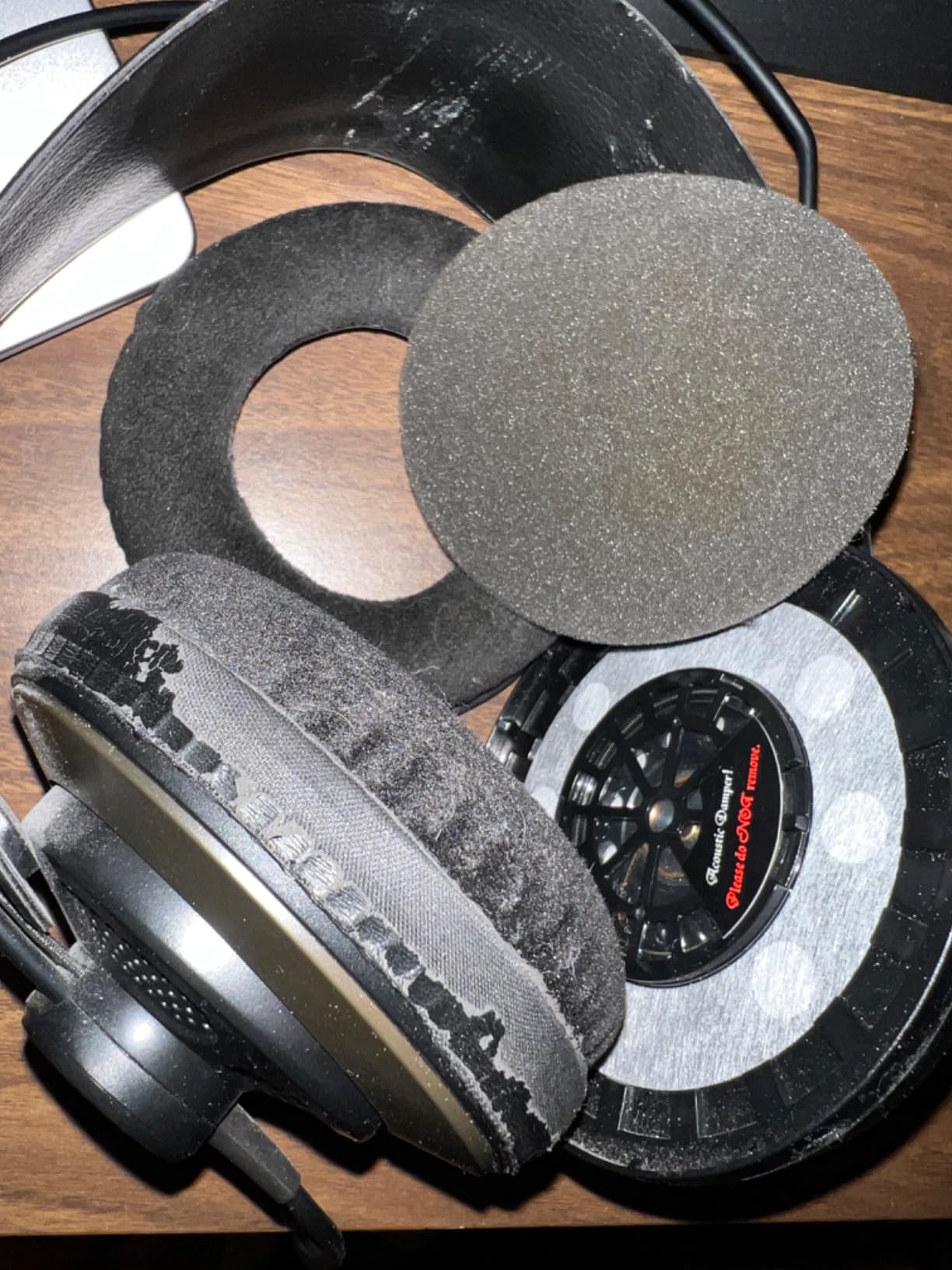
Build is the practical limit. The lightweight construction feels less durable than the metal-hinged rivals here, and there is no detachable cable, so plan on replacing the whole headphone rather than the lead if something fails.
Who the SR850 suits
It suits bedroom producers, podcast editors and video editors who want a comfortable headphone with a full low end for the first stages of a project. If you are writing and arranging rather than doing final mix decisions, the bass-forward tuning is a feature.
It suits anyone on a very tight budget who still wants large drivers and a wide stated response rather than a bare-bones entry headphone.
Who should skip the SR850
Skip it if your mixes will be judged on accuracy. A pronounced bass bias is the hardest kind of coloration to train yourself out of, and most engineers who cut teeth on a headphone like this end up over- or under-doing low end for months.
Skip it for live tracking in a shared room, and skip it if long-term durability is your priority, since the light build and fixed cable are the two things most likely to disappoint.
9. Tascam TH-MX2 – a simple closed-back for first projects
- Very low-cost closed-back for tracking and mixing
- Lightweight and comfortable over long sessions
- Includes a screw-on adapter and carrying pouch
- 32 ohm impedance drives from laptop and mixer outputs
- Limited detail compared with dedicated monitors
- Basic soundstage and imaging
- Padded headband and ear bands feel plain
The TH-MX2 exists to do one job cheaply, and it does it. If you are recording voice, editing podcast episodes or learning the basics of mixing and you need a closed-back that costs almost nothing, this is a legitimate choice.
Forty millimeter neodymium magnet drivers at 32 ohm impedance will run from a laptop or a mixer output without an amp. The tightly stitched, padded headband and ear bands make it comfortable for long sessions, and the whole thing weighs 298 g.
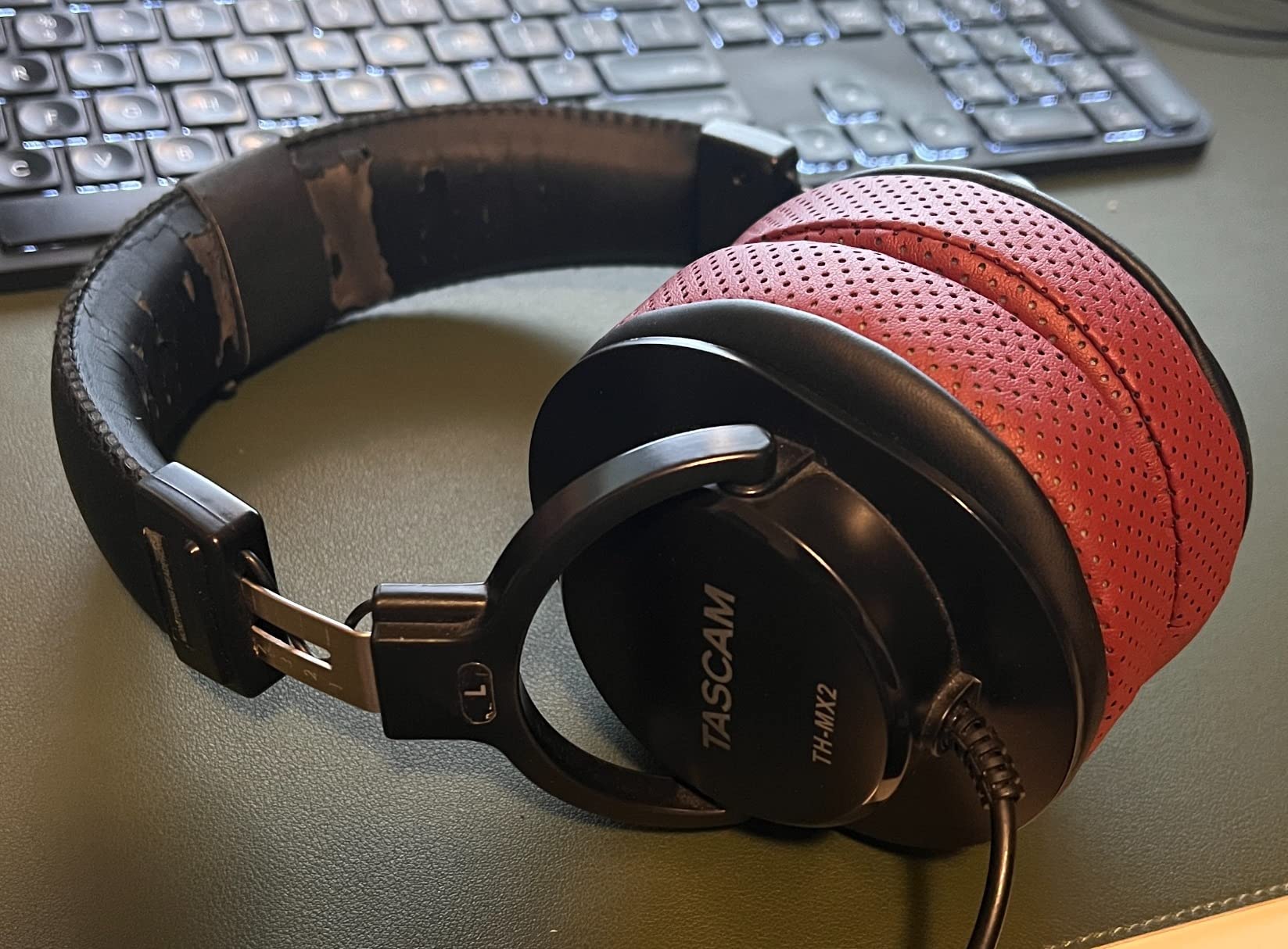
Accessories are better than the price suggests. A screw-on 1/8 inch to 1/4 inch adapter and a leatherette carrying bag are both in the box, and the 9.8 foot coiled cable reaches across a desk without a long straight run.
Where the limits are, owners are consistent. Detail, soundstage and imaging are all described as basic compared with dedicated monitors, and frequency response extension is limited. That is fine for rough decisions and useless for fine ones.
Use it for tracking, rough editing and level checks. Before you commit to a mix, move to a more revealing pair, because this headphone will not tell you about sibilance balance, low-end weight or spatial placement.
Who the Tascam TH-MX2 suits
It suits first-time project owners, students working in a college booth and anyone who needs a spare tracking headphone for a friend or a second location. At this tier, the included adapter and bag make it a complete package.
It suits people who want a closed-back they can wear on while they record, without investing in a reference pair yet.
Who should skip the Tascam TH-MX2
Skip it if the headphone will be your only mixing tool and you expect to release finished music through it. The lack of detail and imaging makes it a poor judge of a final mix.
Skip it if build feel matters to you. The padding is functional rather than refined, and at 298 g it carries noticeably more weight than the AKG or the Yamaha.
10. Shure SRH440A – a newer build with a detachable locking cable
Shure SRH440A Over-Ear Wired Studio Headphones for Recording
- Accurate transparent sound with a pleasant balance
- Comfortable circumaural fit that avoids pressing on the ear
- Locking detachable cable can be pulled without damage
- Solid construction and durability
- Well balanced for spoken word work
- Less raw resolution than higher-tier models
- Cups are large and visually bulky
- No carrying case or coiled cable included
The SRH440A is the newest design in this group, and it solves several of the annoyances that define older studio headphones. The detachable cable uses a locking connector, so you can pull it free safely instead of yanking on the socket until something breaks.
Forty ohm impedance and 102 dB sensitivity across 10 Hz to 22,000 Hz make it easy to drive from interfaces, mixers and laptops alike. At 8.96 ounces with a collapsible design, it is light and portable, and the closed-back circumaural design gives focused monitoring.
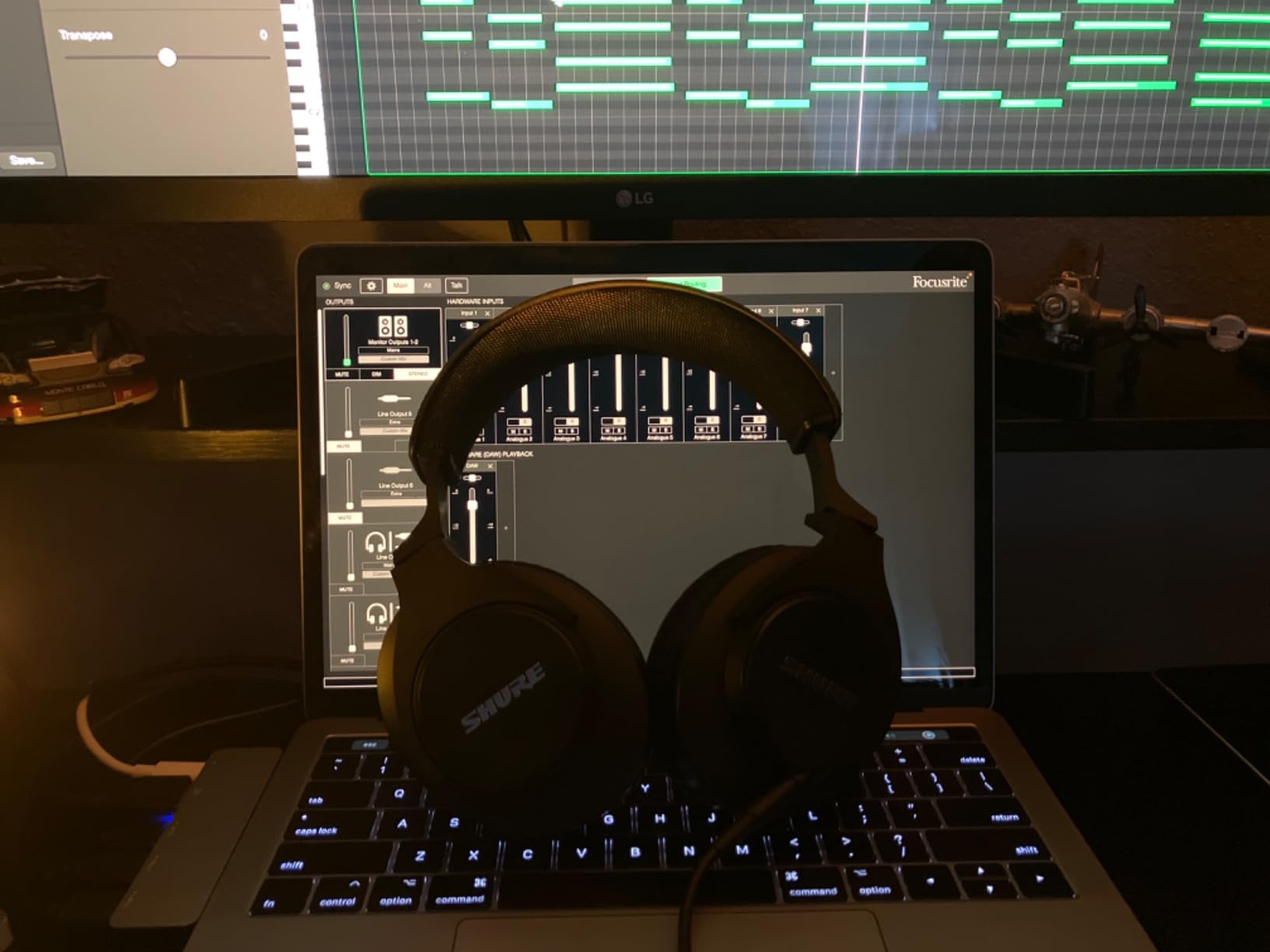
The sound is the main argument. Owners describe accurate, transparent reproduction with a balanced, detailed signature, and a tuning that works as well for podcast and spoken word editing as it does for music. For a headphone you will also use for voiceover work, that versatility is worth a lot.
Comfort is handled by the circumaural fit, which sits around the ear rather than on it, so long sessions do not create pressure headaches. The padded headband and cushioned cups do a lot of work here.
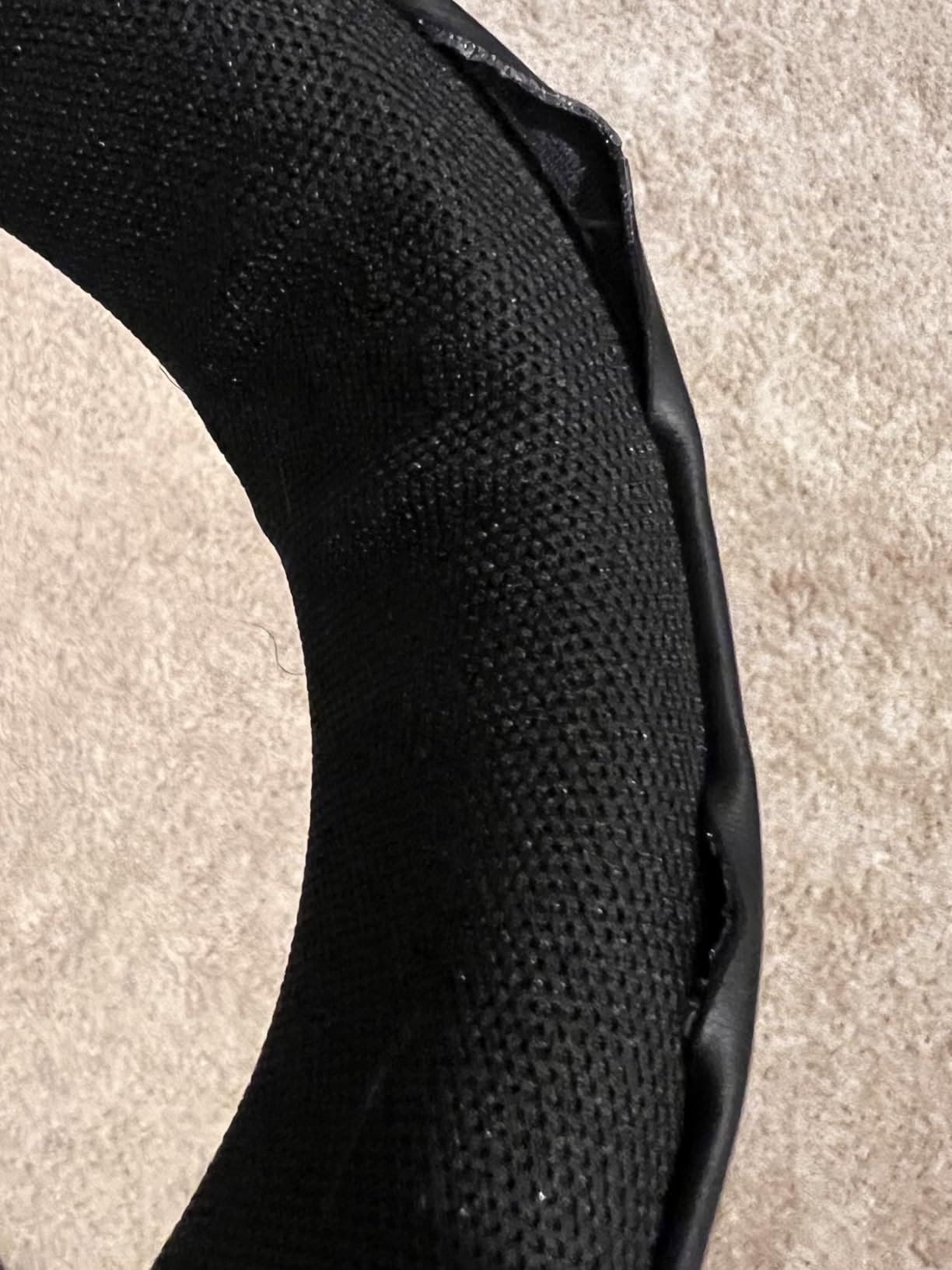
The trade-offs are modest. Resolution does not match higher-tier models at the top end, the cups are large enough to be noticeable on your head, and there is no case or coiled cable in the box. Isolation is good rather than outstanding, so the HD 280 Pro has the edge there.
Who the Shure SRH440A suits
It suits podcasters, voiceover artists and streamers who need one headphone for both spoken word and music. The balanced tuning does spoken word well without making a music mix sound harsh.
It suits anyone who has previously been annoyed by a permanently attached cable, and anyone who moves between locations with a laptop and wants a pair that packs down small.
Who should skip the Shure SRH440A
Skip it if you need maximum passive isolation in a very noisy room, or if you want the finest possible treble detail for mastering decisions at high volume.
Skip it if you travel without a separate pouch. The collapsible design saves space but the box does not include a case, and the cups are bulky enough to be worth protecting.
11. Yamaha HPH-MT5W – a very light headphone for long sessions
- Balanced accurate sound that stays faithful to the source
- Very light at 250 g for all-day wear
- Good closed-back isolation
- Detachable cable with carrying bag included
- Sensitivity suits phones laptops and amplifiers
- Lightweight build feels less solid in the hand
- Bass is light next to most studio monitors
- Included ear pads are thin
- Mids and highs can read forward out of the box
The HPH-MT5W is built around one idea: disappear on your head. A 250 g housing is among the lightest things in this guide, and for someone doing eight-hour editing days that is a bigger deal than a flatter curve.
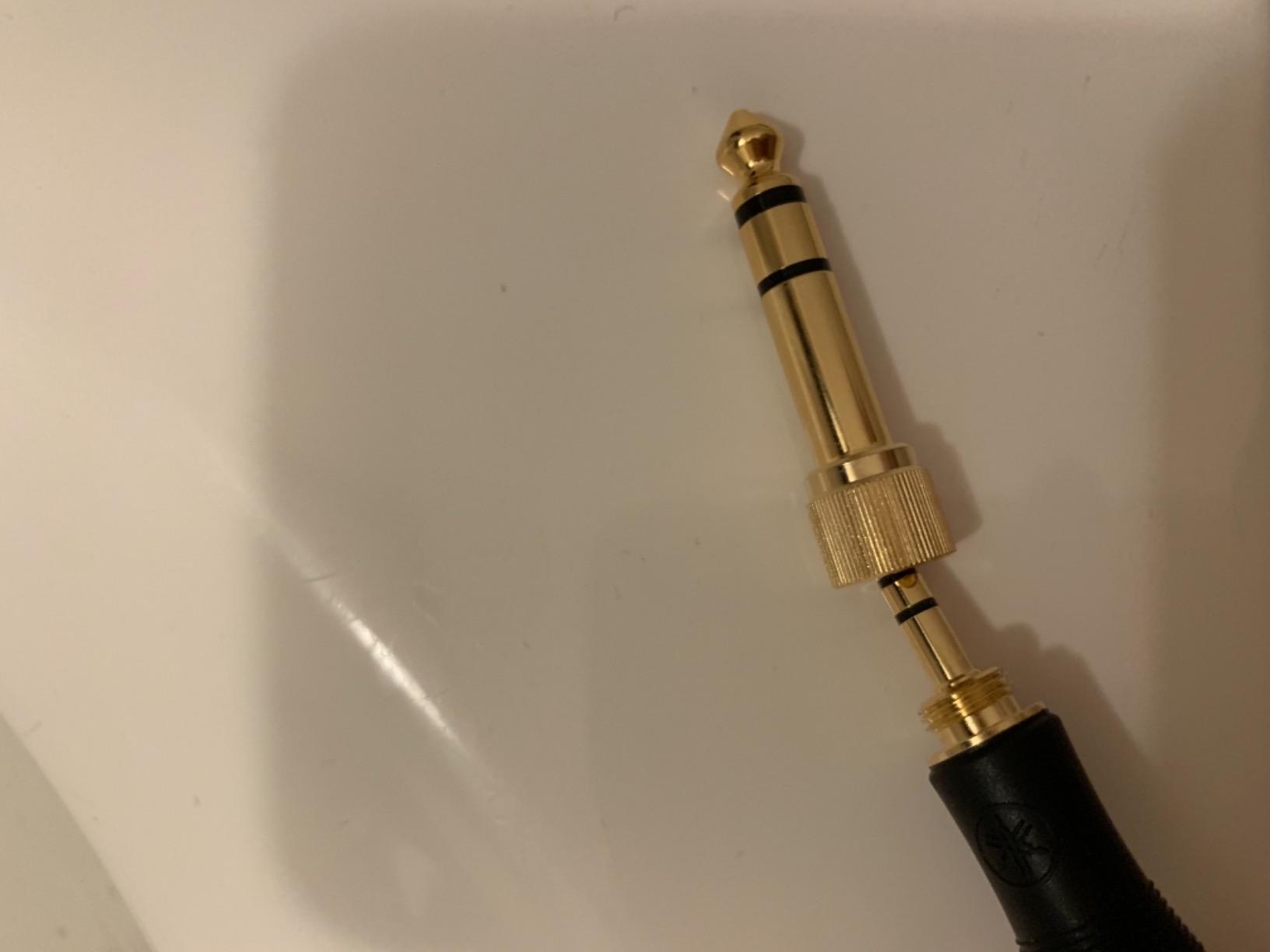
The custom 40 mm drivers with copper clad aluminium voice coils cover 20 Hz to 20 kHz at 51 ohm. The closed-back circumaural design gives solid isolation for the weight, and Yamaha includes a detachable 3 metre straight cable, a gold-plated 6.3 mm adaptor and a carrying bag.
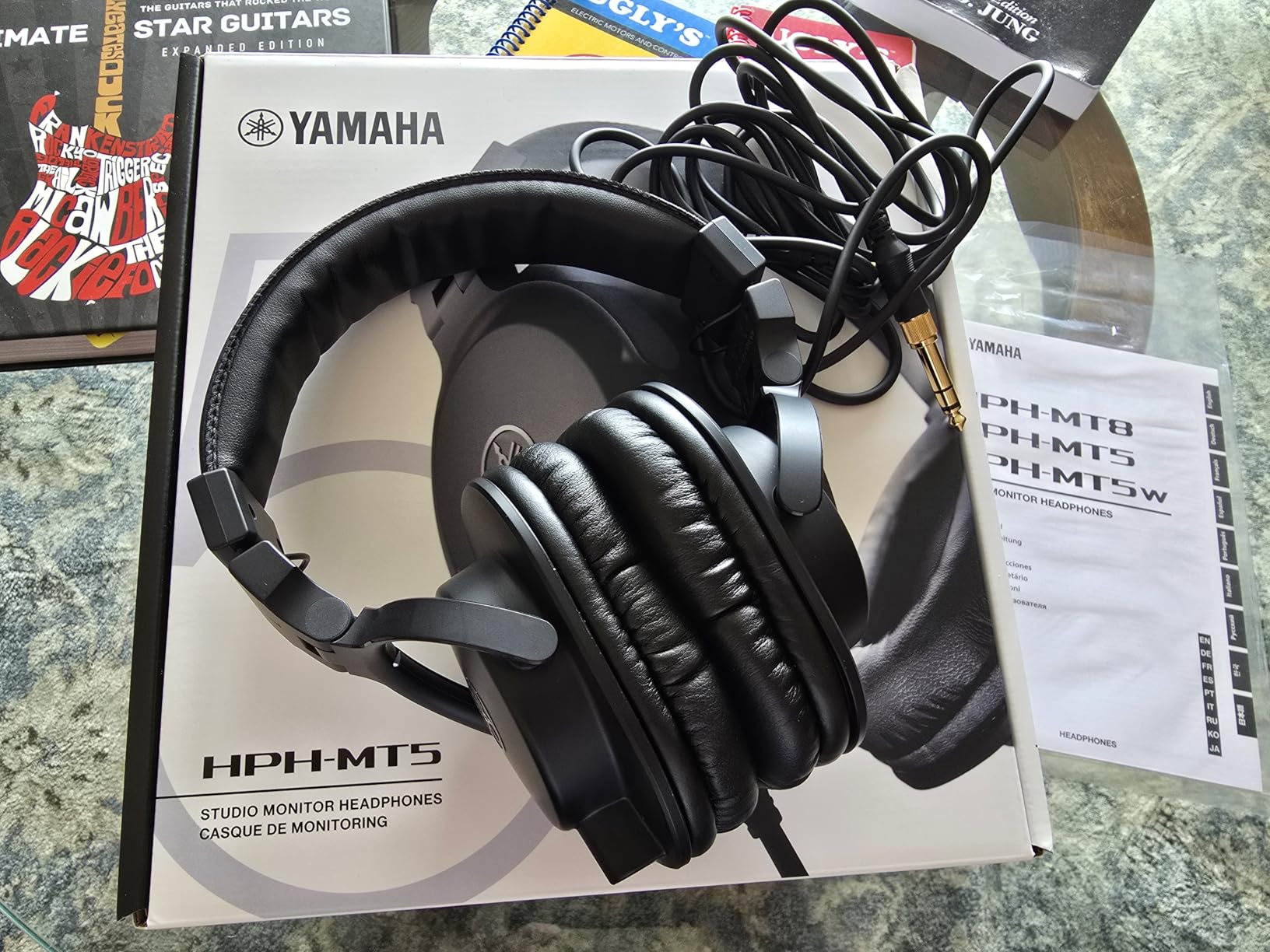
Sonically the pitch is balance and resolution that stays faithful to the source. The characteristic complaint is that the low end is light next to most studio monitors, so if you are working on bass-heavy material you will want a second reference for weight judgements.
Some users also find the mids and highs read slightly forward out of the box, which on vocal and acoustic material can make a mix seem a little present. That is an easy fix with a small dip, but it is worth knowing before you start moving faders.
The included ear pads are thin, and plenty of owners replace them early for a better seal and more low end. Lightweight construction also means it feels less solid in the hand than the metal-hinged Shure and Audio-Technica pairs, so handle the cups gently.
Who the Yamaha HPH-MT5W suits
It suits video editors, podcast producers and anyone who mixes in short bursts throughout the day and never wants a headache at the end of it. It also suits people who need to move between a studio and a laptop, since the bag and detachable cable are included.
It suits anyone sensitive to clamping force, since this sits looser on the head than most of the range.
Who should skip the Yamaha HPH-MT5W
Skip it if you produce bass-driven music and cannot verify low end elsewhere, or if you like a beefy, substantial low end when writing. This is a monitor, not a lifestyle headphone.
Skip it if you want the highest build quality available at this budget, since the construction prioritises low weight over rigidity. Our broader mixing headphone picks cover the heavier alternatives.
12. Shure SRH840A – the best build quality within the budget
- Extremely well balanced crisp and detailed sound
- Excellent build materials throughout
- Comfortable for hours of listening
- Detachable replaceable 3 m cable
- Carrying case and 1/4 inch adapter included
- Bass is on the weak side for some material
- Ear cups feel large and bulky
- Cable stiffness reported by some owners
The SRH840A is the most carefully finished object on this list. The materials, the stitching, the padding and the case all feel like gear built to be handed to a client, and it is one of only two pairs here that include a proper case as standard.
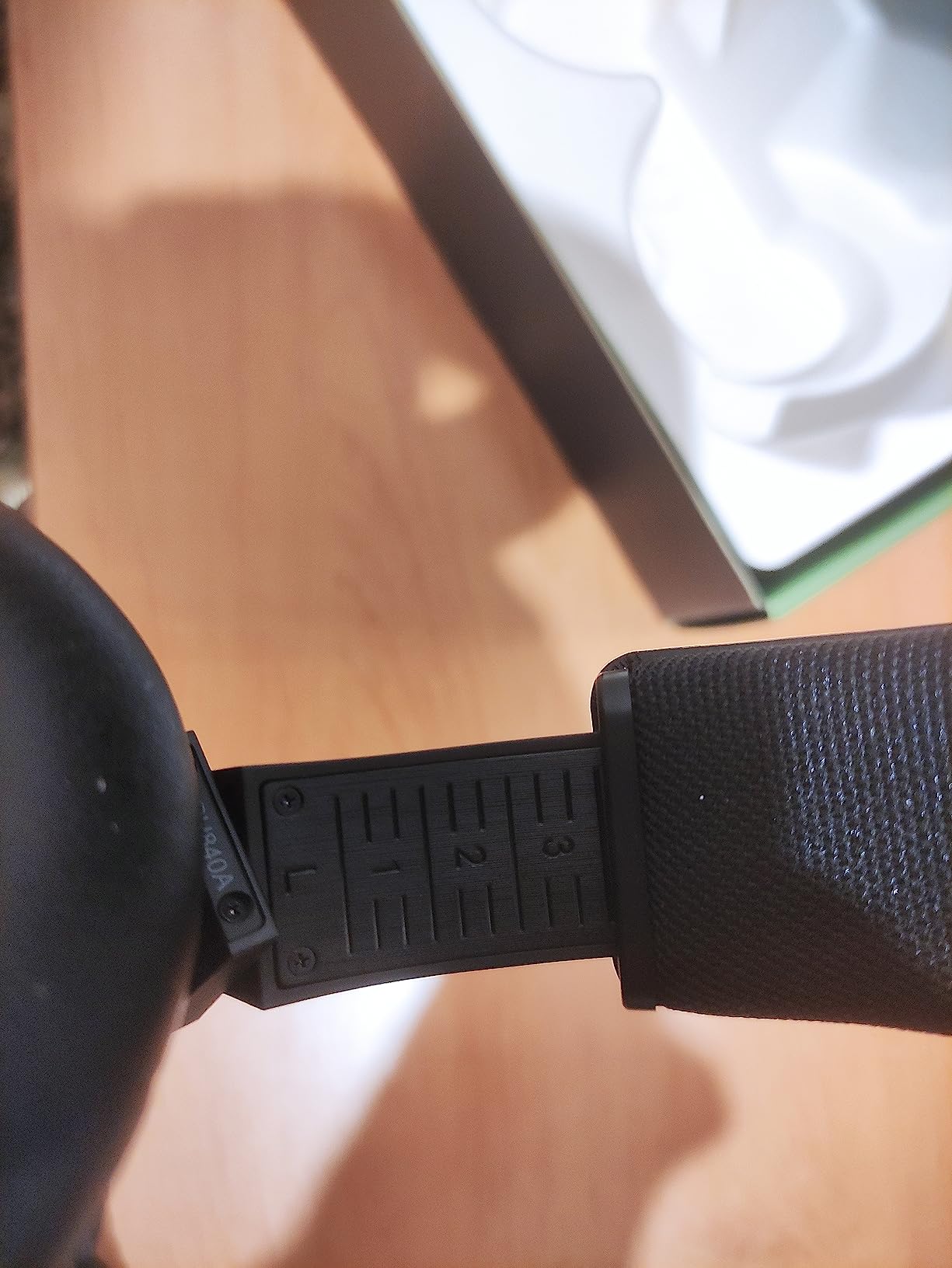
Forty ohm impedance and a stated response of 5 Hz to 25,000 Hz make it an efficient, easy-to-drive closed-back. The detachable locking cable with a 1/4 inch threaded adapter is included alongside the case, so nothing needs buying to get started.
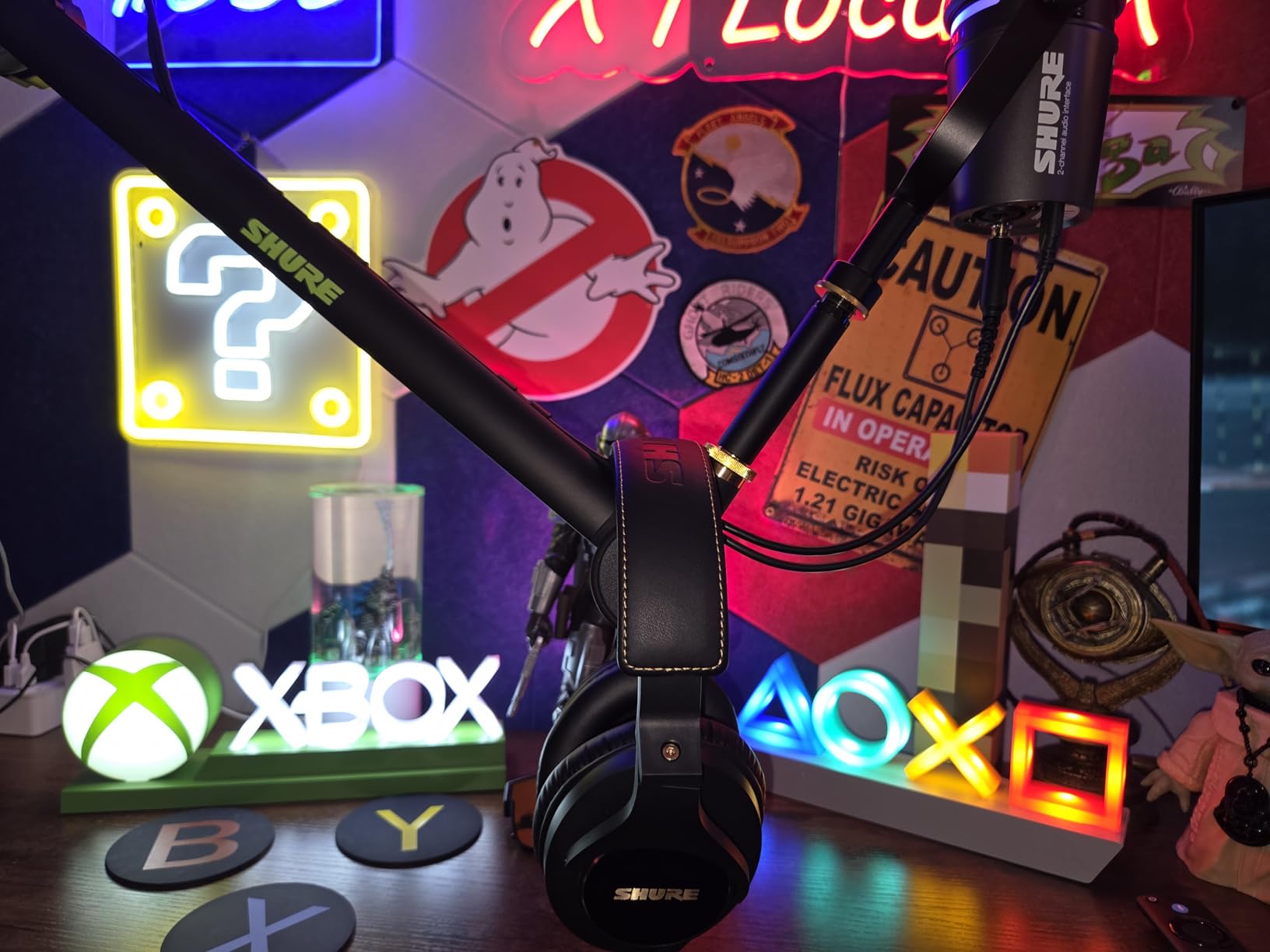
The sound is described by owners as extremely well balanced, crisp and detailed, with controlled bass, detailed mids and extended highs. For mixing, that combination is a good working profile: nothing is exaggerated, and detail is there when you go looking for it.
Comfort holds up over hours, with a wide padded headband and plush ear cushions. The lightweight collapsible design is easier to live with than the bulk suggests, though the cups are large enough to be noticeable.
Two consistent criticisms. Bass weight is on the weak side for some material, so it is a poor sole judge of sub energy. And the included cable is long, thin and reported as stiff by some owners, which is a small annoyance in a studio where the cable moves a lot.
Who the Shure SRH840A suits
It suits producers who work in a professional room and want gear that looks and feels the part when other people are in the space. Build quality at this budget is genuinely unusual.
It suits anyone who wants a balanced, detailed monitor with a detachable cable, and who does not need heavy bass weight or the very best isolation.
Who should skip the Shure SRH840A
Skip it if bass weight drives your mix decisions and you do not have a second reference. Several owners note the low end is modest for certain styles.
Skip it if you have a very small head or dislike large circumaural cups, because the size is a real factor in fit and in the profile the headphone sits on your desk.
How to Choose Studio Headphones for Mixing on a 200 Dollar Budget
Closed-back or open-back is the first decision, and it is simpler than most guides make it sound. Closed-back headphones give you passive isolation, contain your own sound so it does not leak into a microphone, and work in any room. Open-back headphones give you a wider, more natural soundstage and a more revealing treble, and they leak in both directions, so they are only appropriate in a treated space where you are not recording anyone.
For most home studios, the answer is closed-back. Eleven of the twelve pairs here are closed or semi-closed, and the DT 990 Pro is the open-back exception we kept in because its imaging is genuinely valuable for placement decisions. If your ceiling is firm, spending it on an open-back means spending part of it on an amplifier as well.
Impedance and whether you need an amp
Impedance is how much electrical resistance the headphone presents to your source, and it decides how hard your interface has to work to reach a comfortable level. The practical grouping is straightforward. Anything at or below 50 ohm will run at full level from a laptop or a basic interface with no extra hardware, which covers the M50x, M40x, M20x, SR850, TH-MX2, SRH440A and SRH840A.
Between 50 and 70 ohm sits an easy middle group. The MDR-7506, AKG K240STUDIO, Sennheiser HD 280 Pro and Yamaha HPH-MT5W all live here, and they will play well from a mixer or a laptop, though the AKG benefits noticeably from a small amp. At 250 ohm the DT 990 Pro is a different category, designed for an interface output or a dedicated headphone amp, and it will be quiet and bass-poor from a phone.
That answers the question that comes up most often in buying threads. At this budget you almost never need to spend money on an amp, with one exception: a high-impedance open-back. If you are building out a home studio, our studio microphone guide covers the other end of the capture chain.
Flat, neutral or coloured: what to listen for
A flat response means the headphone reproduces frequencies at roughly equal level, so what you hear is close to what you put in. Coloured means a deliberate deviation, usually extra bass or extra treble, added to make music sound exciting. For a flat reference, the Audio-Technica M40x and the Sony MDR-7506 are the two clear examples here.
Coloured is not automatically bad, it is just something to correct for. The M50x sits slightly above a flat reference at both ends, the 7506 leans forward above 2 kHz, the Samson SR850 is bass-forward, and the Yamaha reads slightly forward in the mids. Each has a predictable corrective move: pull the shelf, cut the presence band, cut the sub, or dip the low mids.
The professional habit is to write down your correction once, set it in your monitoring chain, and then stop touching it. A hardware EQ or a room-correction tool can hold a permanent correction for a headphone, which turns a coloured pair into a workable one.
Where the rest of your money should go
Under a hard ceiling, the money you do not spend on the headphone is often better spent elsewhere. A small headphone amp, a replacement pair of larger ear pads, or a proper second monitoring path will improve your mixes more than a modest step up in headphone tier will.
Ear pads deserve special mention because they are the cheapest real upgrade in audio. Pads change seal, and seal changes both bass extension and isolation. If a pair feels light in the bass or lets sound in, the pads are often the problem rather than the drivers, and larger third-party pads are the first thing we try.
Finally, no headphone should be your only reference. Check every mix on at least two other systems: your studio monitors if you have them, a phone, a cheap Bluetooth speaker, and ideally a car system. Speakers in particular catch balance problems that no headphone reveals, which is why our guide to studio monitors under 200 dollars pairs naturally with this list.
Frequently Asked Questions
What are the best headphones for mixing under 200 dollars?
The Audio-Technica ATH-M50x is our top pick for mixing under a 200 dollar ceiling, with a wide frequency range, good passive isolation for tracking, 38 ohm efficiency that needs no amp, and a detachable cable. The Audio-Technica ATH-M40x is the flattest option in our view, and the Sony MDR-7506 is a near-neutral, highly revealing pair if you want a signal that needs little correction.
What type of headphones are best for mixing?
Closed-back headphones are best for most mixing situations because they isolate you from room noise and keep your own audio from leaking into a microphone. Open-back models give a wider, more natural soundstage and are better for imaging and mastering in a treated room, but they leak sound in both directions and cannot be used for live tracking. All picks in this guide sit at or below a 200 dollar ceiling.
Are the Audio-Technica ATH-M50x good for mixing?
Yes. The ATH-M50x is the pair we recommend for most people mixing on a budget. Its 45 mm drivers cover 20 Hz to 28,000 Hz, 38 ohm impedance means it drives from a laptop or interface with no amp, and the 90 degree swiveling cups support one-ear cueing. The one thing to know is that bass and treble sit slightly above a flat reference, so a small correction helps.
Are the Sony MDR 7506 good for mixing?
Yes. The MDR-7506 is a long-standing studio standard with a neutral, revealing presentation, strong detail retrieval and a very light 8 ounce build that suits long sessions. Two things to know: the low end is on the lean side, so check sub-bass balance on a second system, and there is a slight treble emphasis above 2 kHz that will make sibilance and cymbals sound more exposed than they are.
What are the best studio headphones for mixing and mastering?
For mixing on a budget, the M50x and the flat M40x are the strongest all-round choices. For mastering, where you need the most resolving and least coloured response, the Shure SRH840A offers the best build and a well balanced, detailed signature, while the Audio-Technica M40x stays closer to flat. The open-back Beyerdynamic DT 990 Pro reveals plenty of treble detail but needs a headphone amp.
What are the best headphones for recording and mixing music?
For recording and mixing in the same chair, the Audio-Technica ATH-M50x is the clear answer, because its circumaural isolation and swiveling earcups let you monitor a performance and the room at the same time. The Sennheiser HD 280 Pro offers very strong passive isolation in this range for noisy rooms. Avoid open-back and semi-open models such as the DT 990 Pro, AKG K240STUDIO and Samson SR850 when tracking live sources.
What are the best audiophile headphones under 200 dollars?
Most audiophile-leaning closed-backs at this budget are tuned warmer or brighter than a mixing monitor, which is not what you want for mix decisions. The Shure SRH840A is the most carefully finished option, with balanced, detailed sound and premium build. The Audio-Technica M40x and Sony MDR-7506 are the better choices if your priority is accuracy over musical embellishment, since both stay close to a neutral reference without sounding clinical.
What are the best headphones for live sound mixing?
Live sound mixing needs fast cueing and durability more than reference accuracy. The Sennheiser HD 280 Pro is a strong pick because it attenuates outside sound by up to 32 dB, folds down for transport, and has replaceable ear pads, headband padding and cord. The Audio-Technica M40x and M50x are also excellent cueing headphones thanks to their 90 degree swiveling earcups.
Final Verdict: The Best Studio Headphones for Mixing Under 200 Dollars in 2026
The Audio-Technica ATH-M50x takes the top spot in 2026. It pairs a wide frequency range with real isolation for tracking, a detachable cable and a 4.7 rating across more than 33k reviews, and the 38 ohm load means you can use it today with whatever interface you already own.
Buy the ATH-M40x instead if you want the flattest signal possible in our view and you work purely on mix decisions. Buy the Sony MDR-7506 if you want a near-neutral, highly revealing delivery with a folding build. Buy the Beyerdynamic DT 990 Pro only if you are in a treated room, already have a capable amp, and need a wider soundstage for placement work.
Whichever you choose, learn its response and correct for it once. That habit, not the model, is what separates a producer who can mix on headphones from someone who just listens to them. When you are ready to move past this tier, our full studio headphone reviews cover the reference models above the cap.