
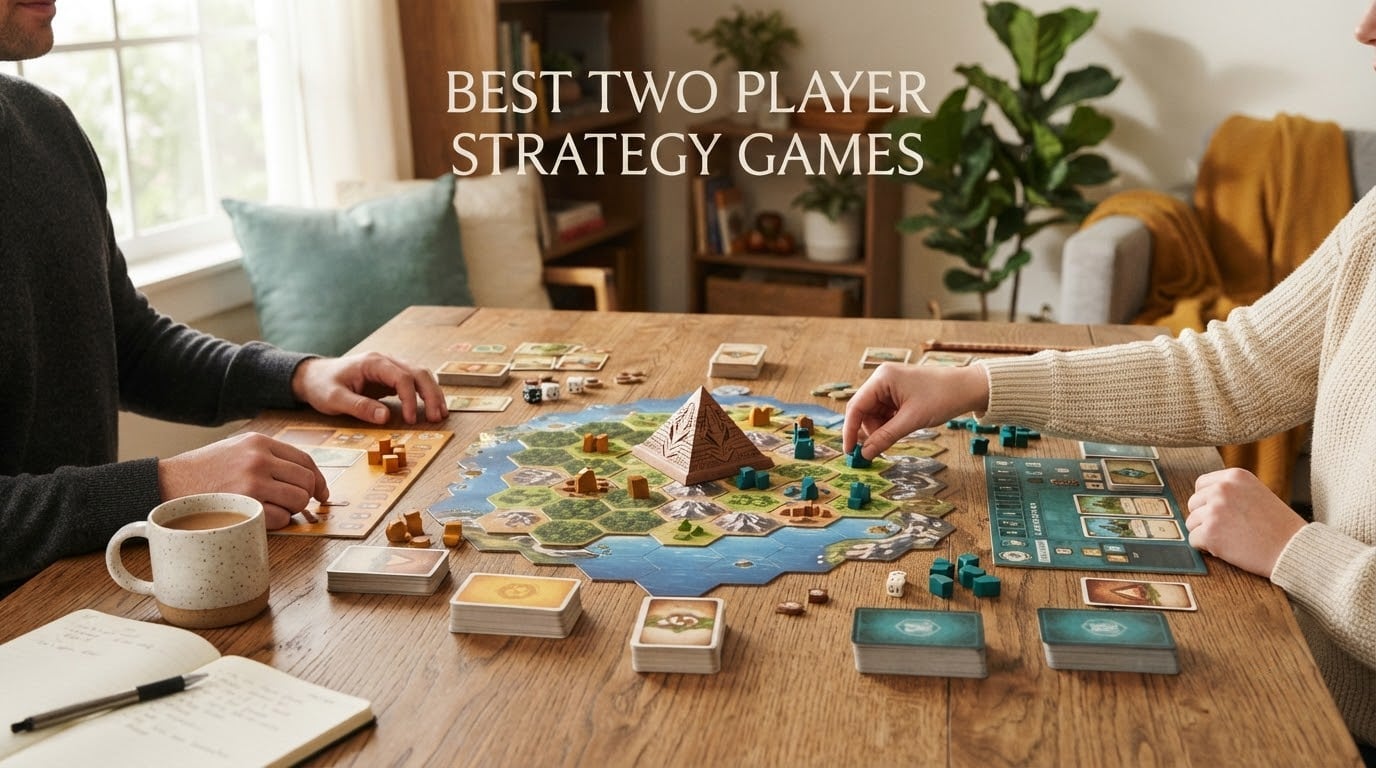
A two player strategy game is a tabletop game built for exactly two players where the result is decided by decisions rather than dice. The better prepared player usually wins, and after a loss you can trace the turns that cost you. That is the test I used across every pick below, and it separates a real duel from a game that merely allows two players.
That distinction matters more than it sounds. Plenty of big box games accept a two player count as an afterthought, with an empty third seat and a rulebook written for five. The best two player strategy games are designed around the pair, with mechanics that only work because there are exactly two of you. Our team played through this list over several weeks, tracking play time, rules overhead and how much of each game was luck.
So which one should you actually buy? It comes down to three questions: how long do you want a game to last, how much do you want to study before your first turn, and how much luck can you tolerate losing to. Answer those and the list narrows fast. If you want a broader sweep first, our picks of the best 2 player board games cover the lighter, more social end of the shelf.
Table of Contents
Quick Picks: The Best Two Player Strategy Games Right Now
7 Wonders Duel – the all rounder, three win paths and card drafting in about 30 minutes.
Othello – the fastest rules to learn here, playable competently within a couple of minutes.
Jaipur – pure two player negotiation, a 30 minute merchant duel with almost no table space.
Hive – a portable zero luck abstract, a full game in 10 to 20 minutes with no board.
Fox in the Forest – trick taking in a tiny travel box, rounds often over in 10 to 15 minutes.
Onitama – chess energy with a shared card twist, roughly 10 to 15 minutes per game.
Pente – the one pick here that plays just as well with three or four players.
Stratego – hidden information classic with zero luck, about 45 minutes a round.
Top 3 Two Player Strategy Games (October 2026)
Three picks carry almost any pair to the right game. 7 Wonders Duel takes the editor’s choice for depth and pacing, Othello wins for teaching a new player, and Jaipur wins for anyone who wants a clean negotiation duel in a small box.

Jaipur draws on more than 3400 ratings from owners who call it the game they reach for when a third person is not available. That combination of review volume and a near perfect score is why it takes the third slot rather than a heavier card game further down this list.
All 15 Picks at a Glance in 2026
Here is every game in the roundup side by side, so you can narrow the field before reading the detail. Play times come from the manufacturers and the fastest and slowest sessions we logged.
| Product | Specifications | Action |
|---|---|---|
| 7 Wonders Duel |
|
Check Latest Price |
 Othello Othello |
|
Check Latest Price |
 Jaipur Jaipur |
|
Check Latest Price |
 Fox in the Forest Fox in the Forest |
|
Check Latest Price |
 Onitama Onitama |
|
Check Latest Price |
 Hive Hive |
|
Check Latest Price |
 Deluxe Pente Deluxe Pente |
|
Check Latest Price |
 Stratego Stratego |
|
Check Latest Price |
 Rivals for Catan Rivals for Catan |
|
Check Latest Price |
 Quarto Mini Quarto Mini |
|
Check Latest Price |
 Splendor Duel Splendor Duel |
|
Check Latest Price |
 BOOP BOOP |
|
Check Latest Price |
 Pylos Pylos |
|
Check Latest Price |
 Mandala Mandala |
|
Check Latest Price |
 Caper Europe Caper Europe |
|
Check Latest Price |
1. 7 Wonders Duel – The All-Round Two Player Strategy Game
- Three genuine win paths
- Fast 30 minute setup and play
- Engine building softens losing
- Card pyramid creates constant tension
- Beautiful card art and box insert
- Rulebook assumes you already know the game
- Resource price math is heavier than expected
- Eurosize cards are fiddly during pyramid setup
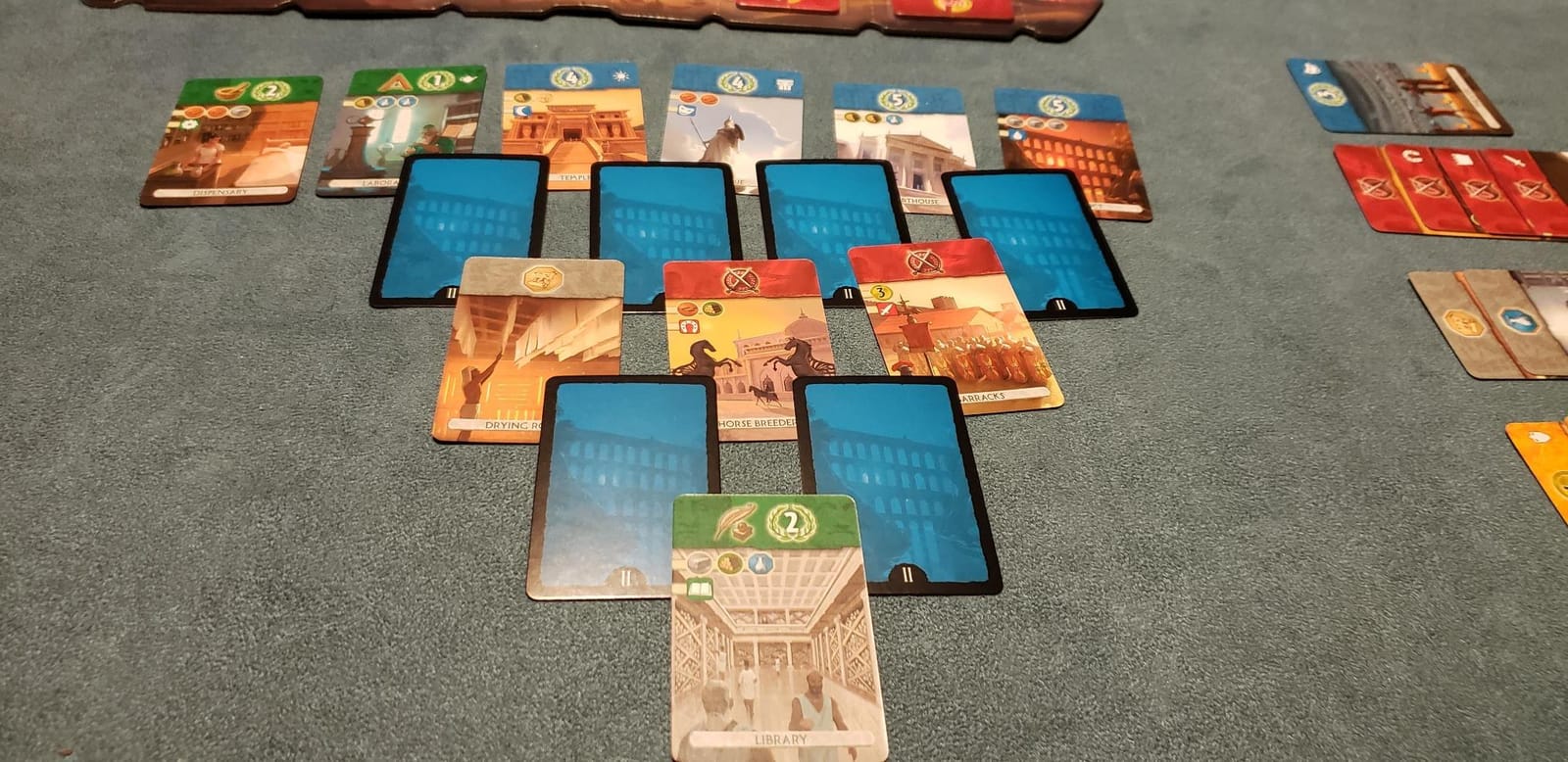
Two players sit at opposite ends of a card pyramid and draft face down cards into three different eras, building a civilisation one building at a time. You can win by invading the opponent’s capital, by locking scientific symbols, or by simply out scoring them, and that three way choice is what keeps a 30 minute game from feeling decided in ten.
We played this more than any other game in the roundup, and the reason it keeps coming back is that the engine building structure means a bad turn is rarely fatal. You are laying groundwork for several turns before the payoff lands, which keeps a losing player engaged all the way to the final era instead of writing the game off early.
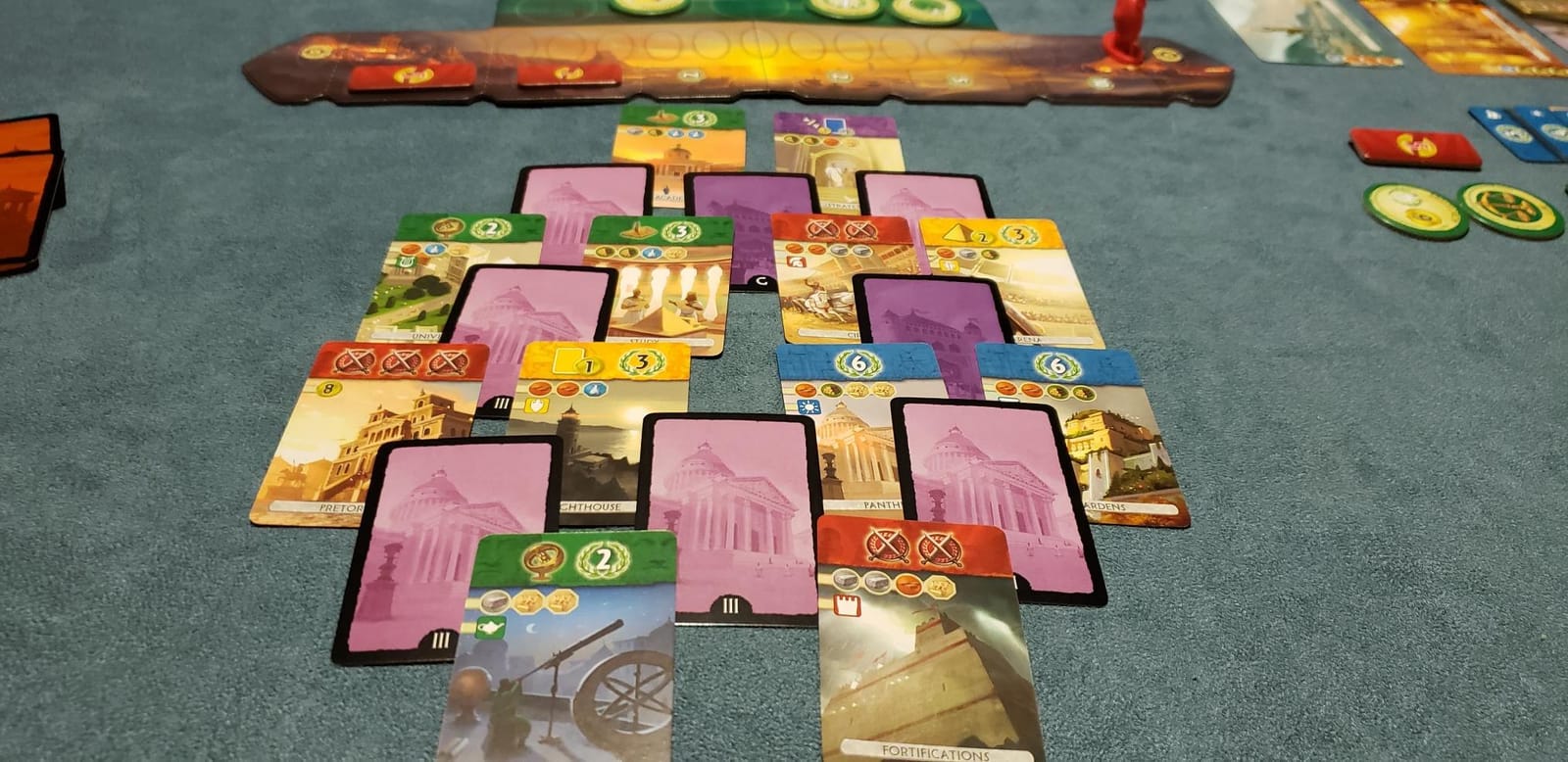
The honest weakness is the rulebook. Reviewers consistently describe it as written for people who already know the system, and the constant resource price math plus a long list of card exceptions produces a heavier cognitive load than the 30 minute runtime suggests. Budget an extra teaching game before you judge it, or let your partner read the overview cards aloud while you set up.
Two smaller irritations: the cards are Euro sized and genuinely fiddly to handle while you build three separate pyramids, and the wonder cards tend to warp with use. Neither breaks the game, both nag at you on a table you will use often.
What you need to know before the first turn
Know that this is a drafting game before the first turn, not a placement game. The card you pass to your opponent is a decision with a real cost, and players who understand that are ahead within two rounds.
Also know that the three win paths mean there is no single dominant opening. A player who only builds military every turn can still lose to a science lockdown, which keeps aggressive play honest.
Who 7 Wonders Duel suits and who it frustrates
It suits pairs who want a real game without a two hour commitment, and it survives an expansion later if you both decide you want more. Our recommendation is to buy the base game and judge it on three plays, because the first session is mostly rules overhead.
It frustrates players who want a game with a theme to disappear into. There is no narrative here, just a card pyramid and a score sheet, and anyone hoping for a story will be disappointed by how austere it is.
2. Othello – The Simplest Rules and the Fastest Games
- Learned in a couple of minutes
- Slide out drawers make setup fast
- Smooth reversible disks on felt
- Every match plays differently
- Works across a wide age range
- Depth drops once the flip mechanic is mastered
- Instructions are not in Spanish
- Component quality is average for the price
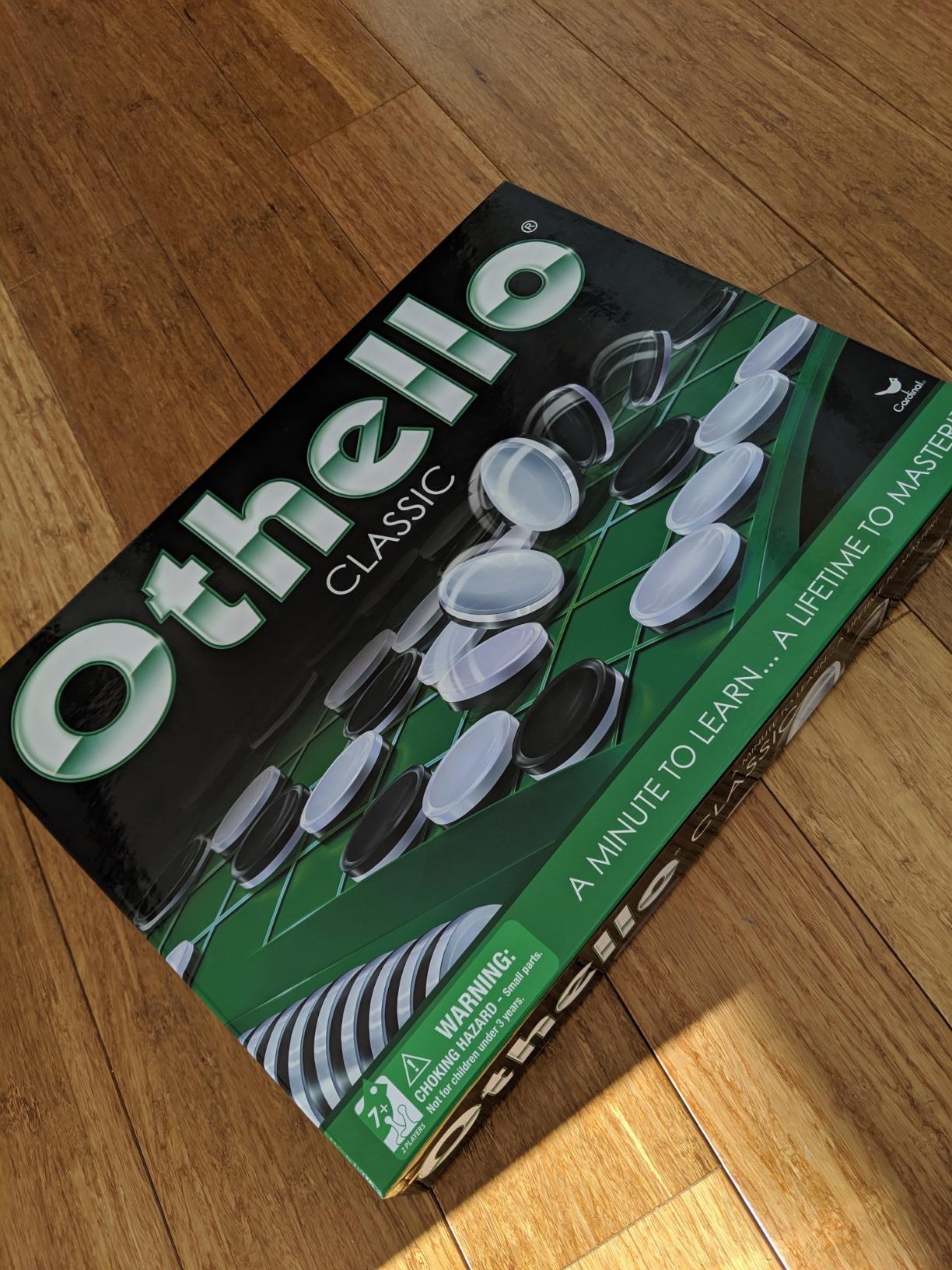
Every move places a disk and flips a run of opposing disks, and you can trace a loss all the way back to a single badly placed piece two moves earlier. That legibility is why it holds up in our testing even though the game itself is decades old and about a minute to explain.
The build on this listing is the reason it earns a slot. Reviewers point to a compact board with slide out storage drawers on each player’s side, a felt playing surface that actually holds pieces in place, and smooth reversible disks that feel noticeably better than the thin plastic in older sets. Setup and cleanup take seconds, so it plays well on a coffee table rather than needing a dedicated surface.
It is also the most generous pick here on age. Manufacturers list it for ages 8 and up, and in our sessions younger players were scoring competitively inside two games, which makes it one of the few real strategy titles that survives a family table rather than sitting on a shelf next to the adults.
The criticism is about the ceiling rather than the floor. Once players know that corners and edges matter more than the middle, the strategic depth flattens, and reviewers are candid that it is not a game you will be studying years from now. The instructions are also not printed in Spanish, and a few buyers rate the components as average for what you pay.

What you need to know before the first turn
Passing is legal, and passing at the right moment is often the strongest move available to you. New players almost never do it early enough, and watching someone recognise a forced pass is usually the moment the game clicks.
Plan for edge occupation. Disks in the corners cannot be flipped by the opponent, and our tracked games were decided far more often by corner control than by the centre of the board.
Who Othello suits and who it frustrates
It suits a pair where one or both partners are new to modern board games, and it works with a child and an adult on equal footing. It is the game I hand to anyone who says they do not like games.
It frustrates players who want a long campaign of improvement. There is no unlock here, and if the two of you already play a dozen heavy games a month, this will not hold your attention for more than a few sessions.
3. Jaipur – Two Players and Almost Nothing Else
- Rules learned in about 15 minutes
- Plays in 30 minutes or less
- Compact box travels easily
- Buying and selling forces constant adaptation
- Card draw gives real session variety
- Cannot be played with more than two players
- Written directions are clumsier than the game
- Setup is slightly longer than some prefer
Two rival merchants take cards, buy sets of goods and sell them for a bonus multiplier, with one private camel card changing the calculation whenever a player is low on options. The whole design is a negotiation: your opponent’s hand is visible, their motives are not, and every price decision is made with the assumption that they will read it correctly.
What makes this a genuine two player design rather than a shrunken three player one is the trading. Every card you want becomes a card your opponent can deny you, because the only way to get the bonus multiplier is to sell before they corner the market. We found the same thing, with grandparents and grandchildren both competitive after one game.
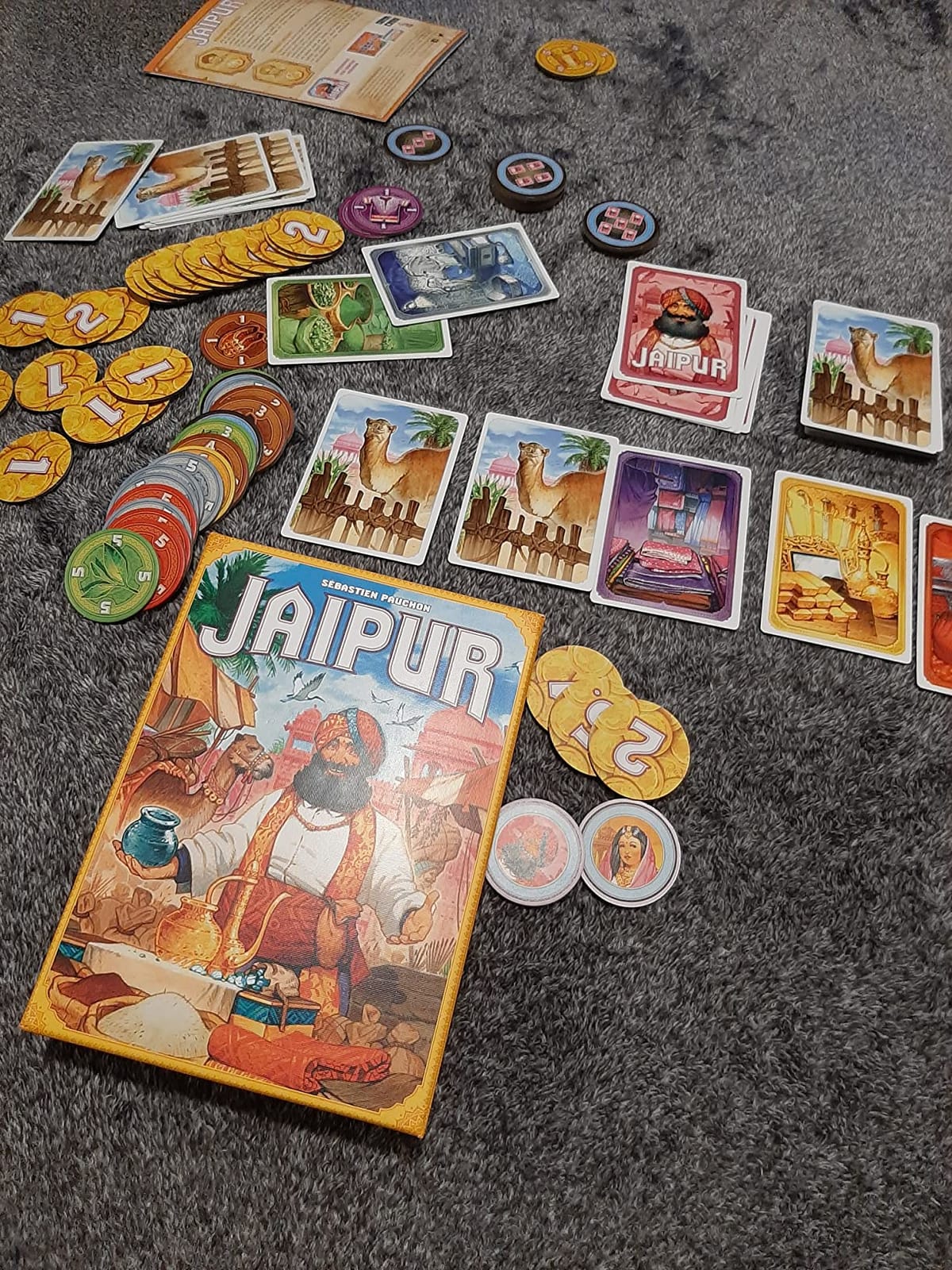
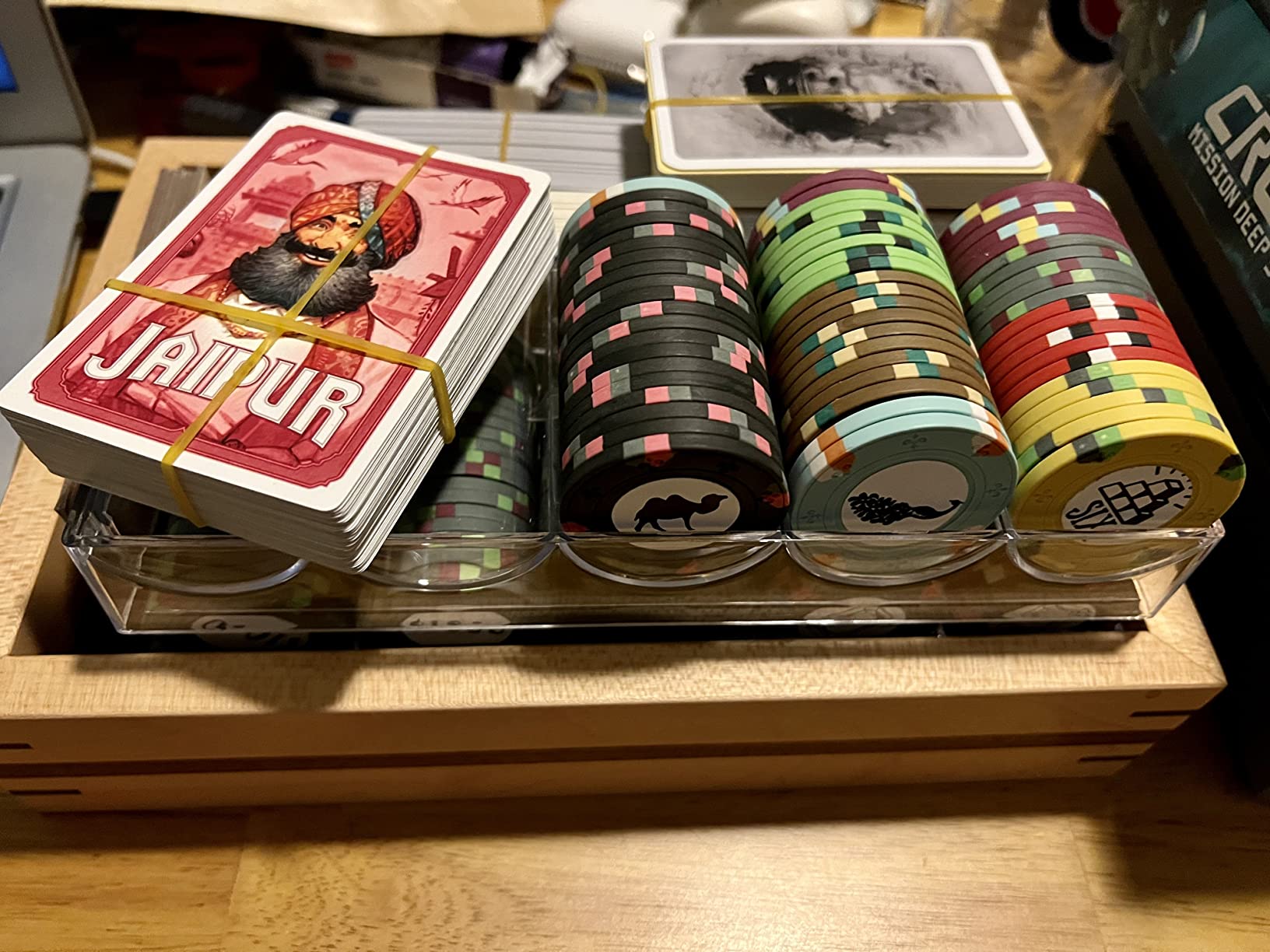
Session variety is another strength. The card draw means no two games feel identical, and a market that looked dead in round one was profitable in round three of the same evening. At 231 grams and a box barely larger than a paperback, it is also the pick that travelled best in our testing, fitting a laptop sleeve without a dedicated bag.
The tradeoffs are real but narrow. This is strictly a two player game, and buyers who expected a family title are disappointed. The written directions are described as harder to parse than the game itself, and setup runs a touch longer than some reviewers prefer. A handful of buyers also felt the component quality did not match the box contents.
What you need to know before the first turn
Understand the camel card before you start, because a single camel can swing a whole turn. It sits in your hand, and most new players treat it as a dead card rather than the pressure release valve it is.
Watch the bonus token market as carefully as your own goods. Selling into a crowded market at a low multiplier is often better than holding a hand you cannot move, and patience is the skill this game actually tests.
Who Jaipur suits and who it frustrates
It suits pairs who want a clean duel with no downtime, and it works particularly well on a date night because the box opens and plays with no fuss. If you only have one other person to play with regularly, this is the game we would bet on.
It frustrates anyone who wants the purchase to cover a group. There is no three or four player version of this particular box, so a household with more than one regular opponent needs a second game. It also asks players to hide their own intentions, which does not suit every personality.
4. Fox in the Forest – Trick Taking That Fits in a Coat Pocket
- Often finished in 10 to 15 minutes
- Scoring rewards deliberately losing hands
- Detailed fairy tale card artwork
- Tiny box fits in a bag
- Balanced for exactly two players
- Rules take a few plays to internalize
- Theme is thin next to the artwork
- Essentially replaces a standard deck
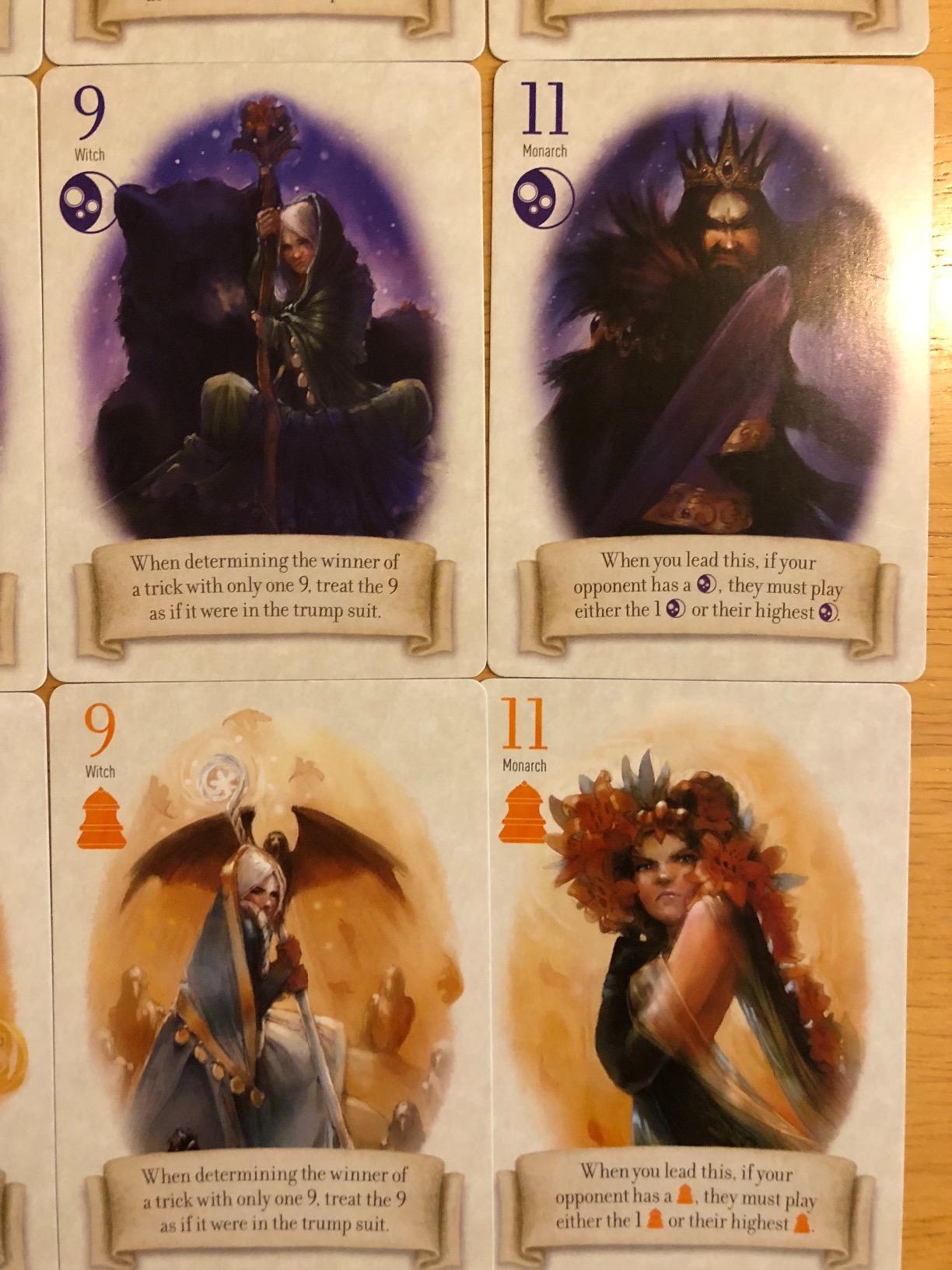
This is a trick taking game with a twist that changes the usual target. Certain special cards let you change the trump suit, lead again after losing a trick, or take an otherwise unwinnable hand, and the scoring rewards intentionally losing low hands. That inversion is what keeps it from being a reshuffled standard deck in practice.
The practical case is hard to argue with. Reviewers repeatedly call it an excellent coffee break game, with rounds often over before the kettle boils, and a box small enough to live permanently in a bag. In our testing it was the game we reached for on a train and in a cafe, both times without setup complaints.

The artwork is a genuine selling point that survives close inspection. Intricate botanical detail and elegant brushwork on the character cards make it feel more like an object than a game component, and several buyers single that out as a buying reason on its own.
The complaints cluster around transparency. Reviewers say the full rules take a few plays to internalise, and first timers get confused about whether they are trying to win or lose a hand. Some also find the narrative framing underdeveloped relative to how good the cards look, and a few consider buying it purely as a playing card replacement a modest proposition.
What you need to know before the first turn
Read the special card list before the first hand rather than during. Knowing which four cards you hold and what each one does is the difference between playing the game and reacting to it.
Do not treat losing a trick as failure. The scoring range here includes a shoot the moon outcome that only happens when a player deliberately dumps a hand, and that is where the real points come from.
Who Fox in the Forest suits and who it frustrates
It suits players who like card games but not long ones, and it is the pick for anyone whose two player sessions are often interrupted. It also works well with older children who can handle a full deck.
It frustrates strategy players who want each session to teach something new. Once both players know the deck, the tactical variety drops, and reviewers note there is not enough theme depth to justify long repeated play for a dedicated strategy shelf.
5. Onitama – Chess Energy in About Ten Minutes
- Elegant abstract on a compact grid
- Shared cards reshape options every turn
- Two clear win conditions
- Fast setup and intuitive rules
- Distinct master and student pawns
- Abstract theme gives little to latch onto
- Forward planning can feel cerebral
- Thin rulebook benefits from a quick demo
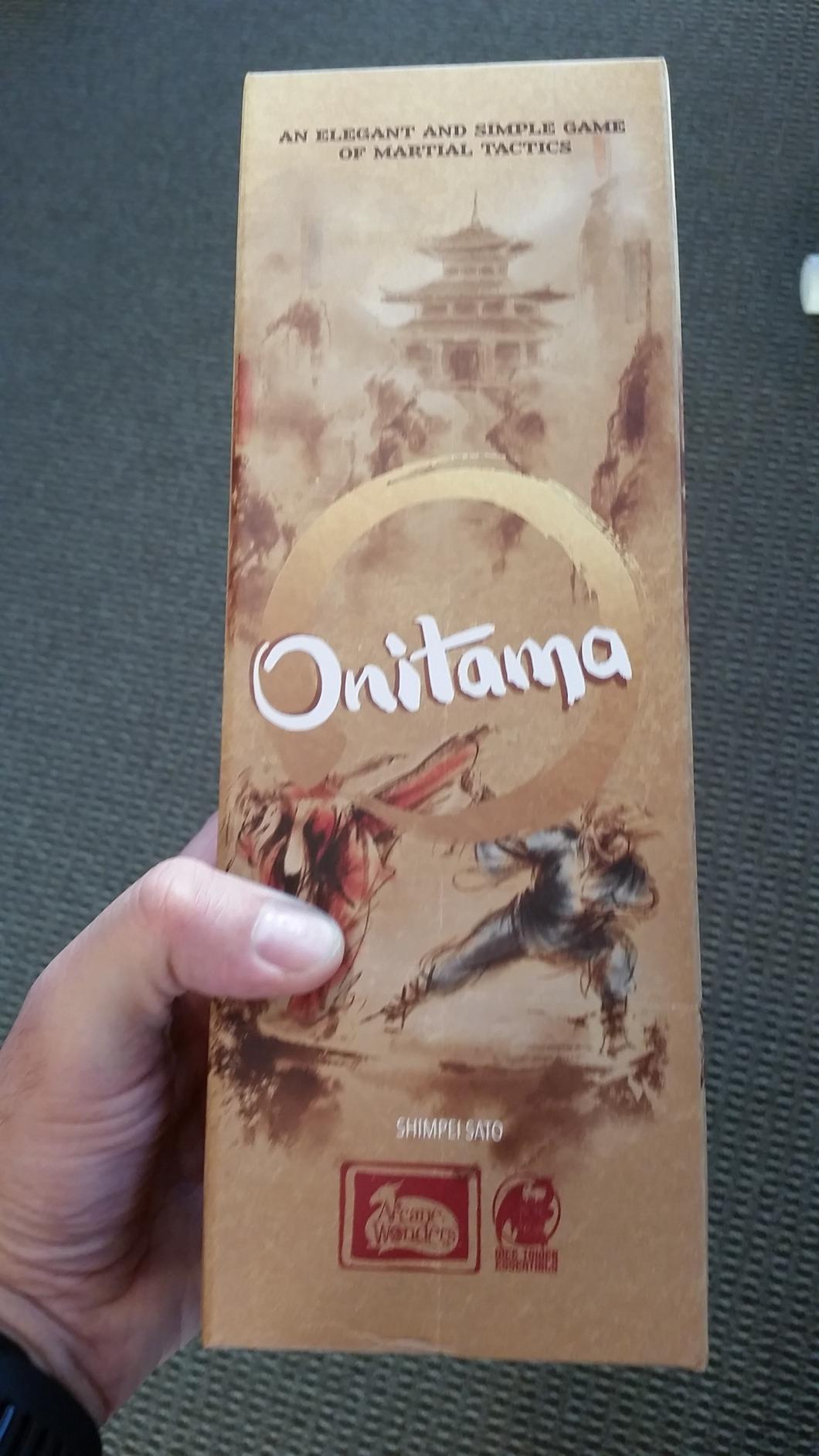
Two masters and two students occupy a 5 by 5 board, and each turn both players choose from the same open pair of movement cards before trading cards to the top of a shared five card deck. Because the cards are shared, the position you inherit next turn depends on what your opponent just decided, which is a clever way to keep a small game feeling fresh.
You win by capturing the opponent’s master pawn or by guiding your own master into their temple. Two clean win conditions produce very different games from the same board, and reviewers consistently credit that as the reason for the high replay value we also logged across repeated plays.

Components help here in a way that is easy to underestimate. The 5 by 5 board is sturdy, and separate master and student pawns mean every position is readable across a table at a glance. The technical listing recommends ages 14 and up, though the product highlight notes a younger workable range, so treat 14 as the honest figure for a first game.
The main limitation is thematic. Reviewers describe it as beautifully engineered but cerebral, and players who need a narrative hook to stay interested often disengage. The rulebook is also thin enough that a quick in person demonstration is worth more than reading it twice.
What you need to know before the first turn
Understand that the movement cards are shared, not private. The strongest players are the ones who pick a card knowing they will be forced to trade up to a random third card, because that makes their next turn partly predictable.
Temple wins are real and not a consolation. A player who reads a direct capture threat as a race to the arch often wins, and that is where most of our first time losses came from.
Who Onitama suits and who it frustrates
It suits players who like chess or Go but want a game that fits a coffee break, and it travels as well as any pick in this list. It is a strong bridge for a partner who finds chess too slow.
It frustrates players who want interaction during play. This is a quiet game, with most of the thinking happening silently before a move, and reviewers note it can feel cerebral rather than social. It is also a two player design with no scaling option.
6. Hive – A Portable Abstract With Real Depth
Smart Zone Games Hive- A Game Crawling With Possibilities, (5525890)
- Short play time for the depth
- About 10 minutes from rules to playing
- No board needed and fully portable
- Sturdy painted tiles
- Deterministic and skill based
- Base set stagnates once strategies are known
- Expansions sold separately
- Going first is an advantage
- Intimidating for casual players
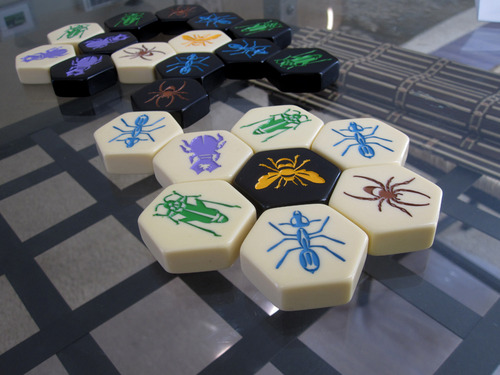
There is no board. The hive itself is the board, built piece by piece on any table, and five bug types move by rules simple enough to teach in a single sentence each. The result is a fully portable zero luck duel that plays in 10 to 20 minutes, and families report getting from rules to playing in roughly ten minutes.
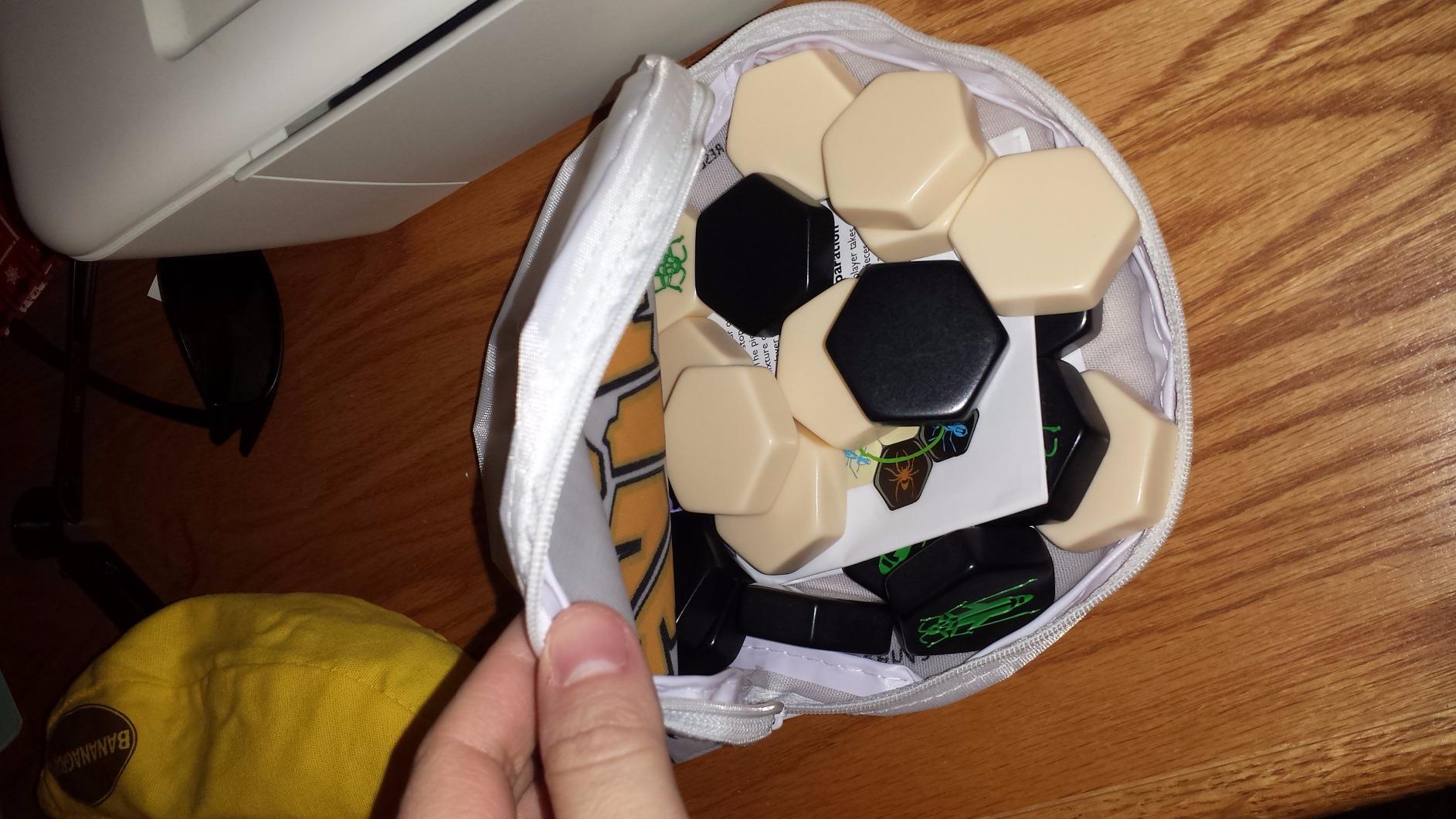
What separates it from a simple abstract is the interaction. Placing a piece shapes your own options and your opponent’s, so the second player is never idle, and reviewers describe the base game as deterministic and skill based enough that a stronger player reliably wins. The included pouch of 22 hexagonal tiles is thick, well painted and genuinely portable.
It also carries two recognisable marks of quality, being a Mensa Select winner and a Dr. Toy Product of Excellence award winner, and the listing is honest about the format: 2 players, ages 8 and up, travel size. Both awards are the kind of signal that moves an abstract to the top of a shortlist quickly.
The caveats are the ones serious players already know. Once the core strategies are memorised, the base game can stagnate, and expansions are sold separately with tile colours that do not perfectly match the base set. The player going first also has a noticeable advantage, and draws can occur when both queens are encircled.
What you need to know before the first turn
Know the win condition before you play, because surrounding the opponent’s queen is easy to attempt and easy to get wrong. Reviewers note that encirclement draws are the most common way first games end in a stalemate.
Decide together early whether to play the base set only or to budget for an expansion. We played a long base game stretch and the repetition showed up sooner than the runtime suggested.
Who Hive suits and who it frustrates
It suits a pair who wants a serious abstract without a 90 minute commitment, and it works with children and adults at the same table. It is the pick we recommend when someone asks for a game that travels and still has depth.
It frustrates players who avoid abstract strategy, and reviewers call that out plainly. The second player also faces a real first move disadvantage, so if you are testing the game fairly with a beginner, let them take the second turn for a while.
7. Deluxe Pente – The One Pick That Scales Beyond Two
Deluxe Pente, Abstract Family Strategy Game, by Winning Moves Games USA
- Learns like tic tac toe but rewards depth
- Matches run 15 to 30 minutes
- Glass stones and a roll up rubber backed mat
- Plays one on one or with three or four
- Rule variations add challenge
- Glass stones vary in size
- Some sets arrived with duplicate colors
- Mat is smaller than the tube version
- Stones can shift on the roll up mat
Pente is capture plus connection. Place one stone, get five in a row, or surround two opposing stones to flip them to your side, and the whole board can change hands mid game. It plays with two players, with three, or as teams of two, which makes it the only pick here whose purchase does not become dead when a fourth person shows up.
The deluxe listing is the version to look at. It includes a roll up rubber backed mat, four sets of coloured glass stones and four cloth drawstring bags, and the historical detail is a nice touch: the game was invented by Gary Gabrel while working as a dishwasher in Stillwater, Oklahoma, and became a Parker Brothers seller in the 1980s.
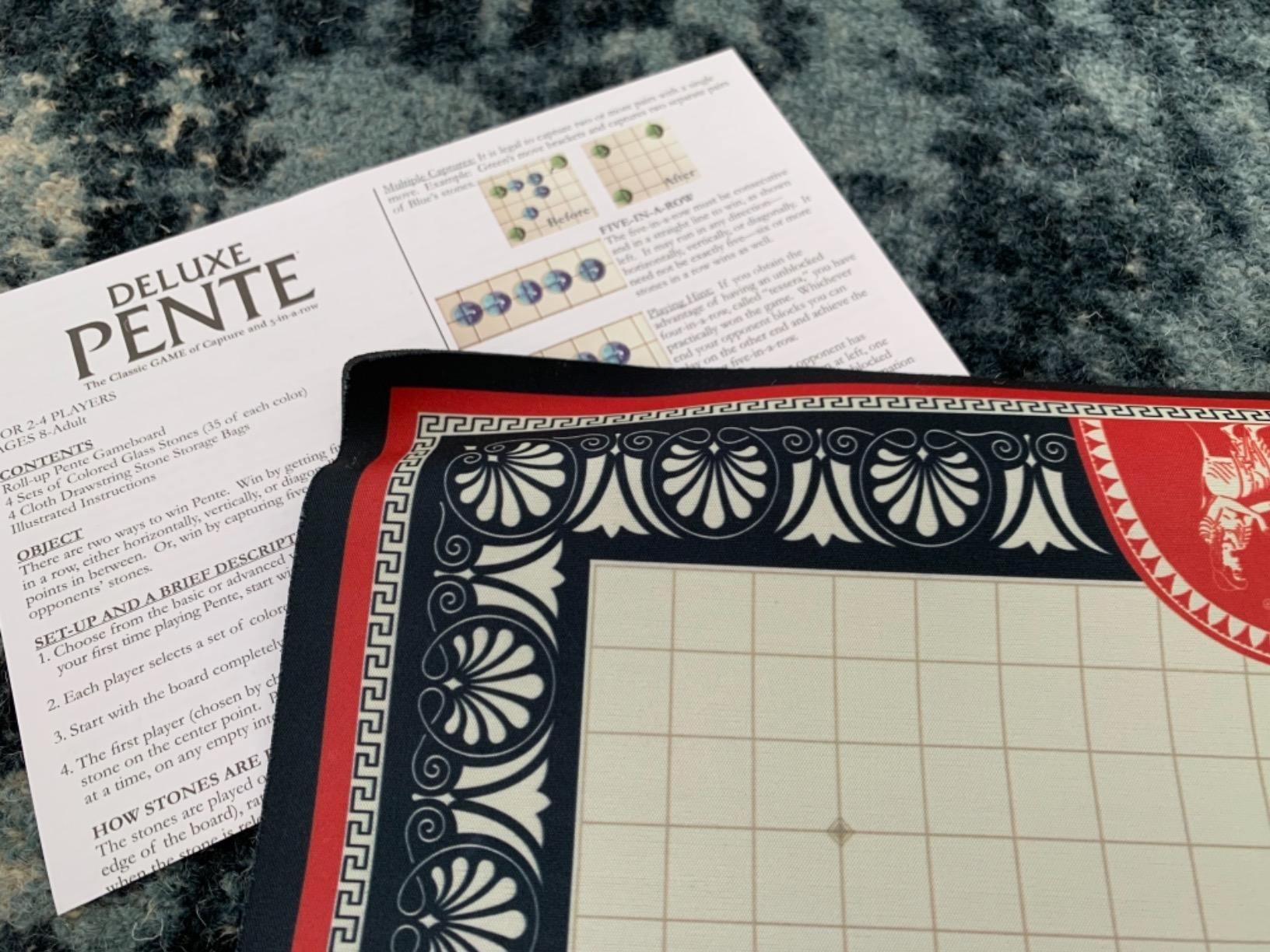
Reviewers love the components almost universally, describing the coloured glass stones as beautiful and the soft mat as easy to carry. Matches of roughly 15 to 30 minutes make it a good tournament or filler game, and the included rule variations give more experienced players a way to add challenge without new purchases.
Quality control is the weak point. Buyers report noticeable size variation in the glass stones, which makes lines and captures harder to read, and some sets arrived with matching colours instead of the advertised four. The roll up mat is also smaller than the original tube version, its grid lines are tan rather than black, and without the grooves of the original board the stones can shift.

What you need to know before the first turn
Decide whether you are playing the five in a row win or the capture win, because they pull the game in different directions and mixing goals produces mushy games. Most players settle this after a couple of rounds.
If your group ever grows past two, read the team rules before you start. Teams of two change the capture maths completely and reviewers of the three player version like it more than most two player abstractions do.
Who Deluxe Pente suits and who it frustrates
It suits households and couples who want one game that covers a variable player count, and it suits players who like their abstracts to have a history behind them. The portability of a roll up mat is a genuine bonus for travel.
It frustrates players who need precision components in a competitive setting, because the stone variance is real and visible. If lines and captures reading clearly matters to you, inspect the stones on arrival and set aside any outliers before your first serious game.
8. Stratego – Hidden Information With No Luck
Jumbo, Stratego – Original, Strategy Board Game, 2 Players, Ages 8 Year Plus
- Simple rules with deep tactical play
- No luck in the outcome
- Sturdy pieces and a folding board
- Good for teaching kids to plan ahead
- Screen and sorting trays included
- Longer than most two player fillers
- Only supports 2 players
- Younger children struggle with rank and bombs
- Some copies had less crisp printing
Each of the 40 pieces per side has a hidden rank, and the strongest piece beats the weakest until a bomb removes it. You deduce what is on the other side of a fog screen while remembering what has already moved, and the winner takes the opposing flag. Hidden information is the entire game here, so the memory load runs longer than anywhere else in this roundup.
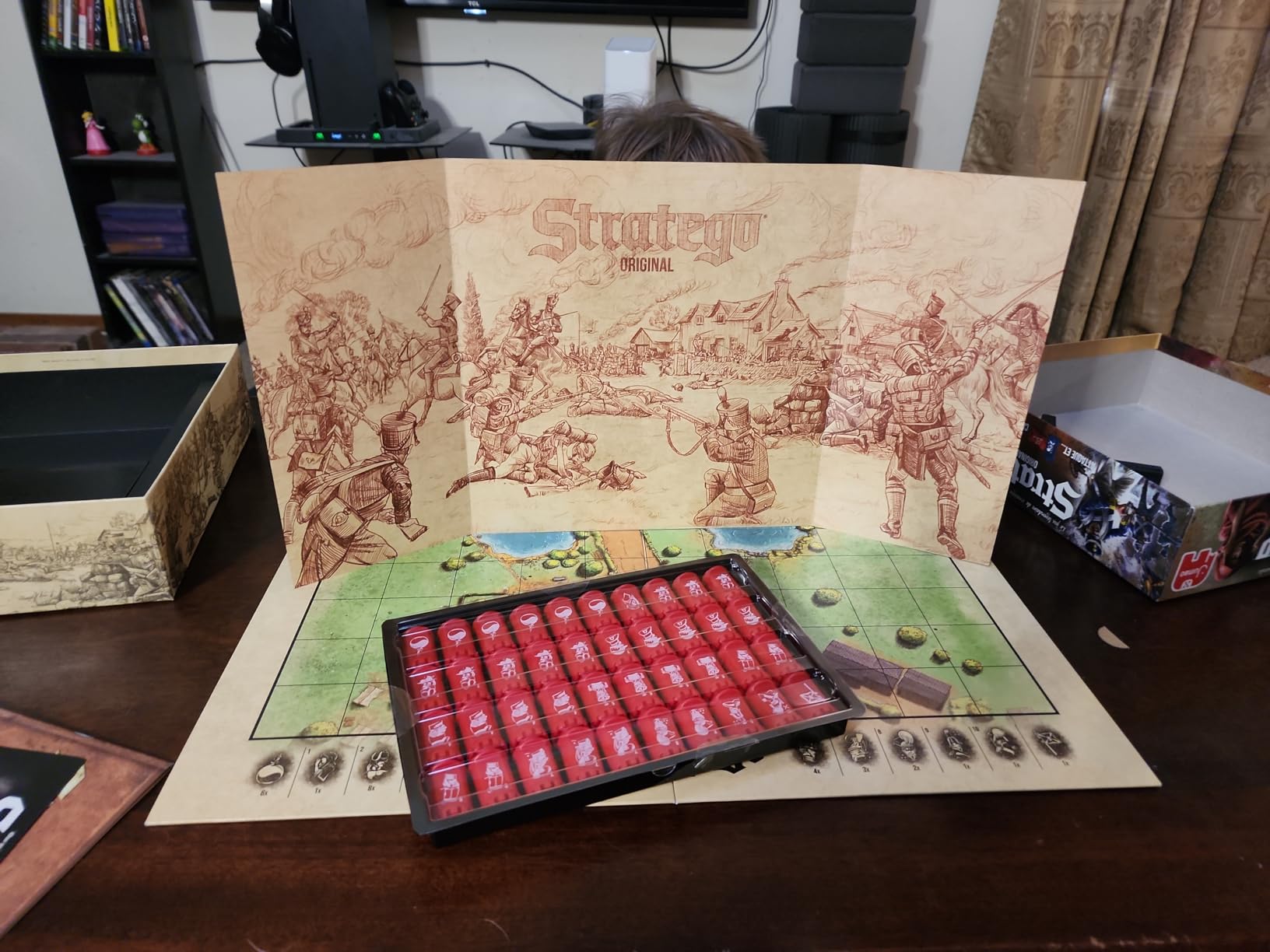
Two things make this listing a durable buy. Reviewers point to sturdy, well made pieces and a board that folds flat for storage, and the box includes 2 x 40 pre printed playing pieces, a screen and two sorting trays so pieces stay concealed. Ages 8 and up is a fair figure, with adults picking it up as fast as children do.
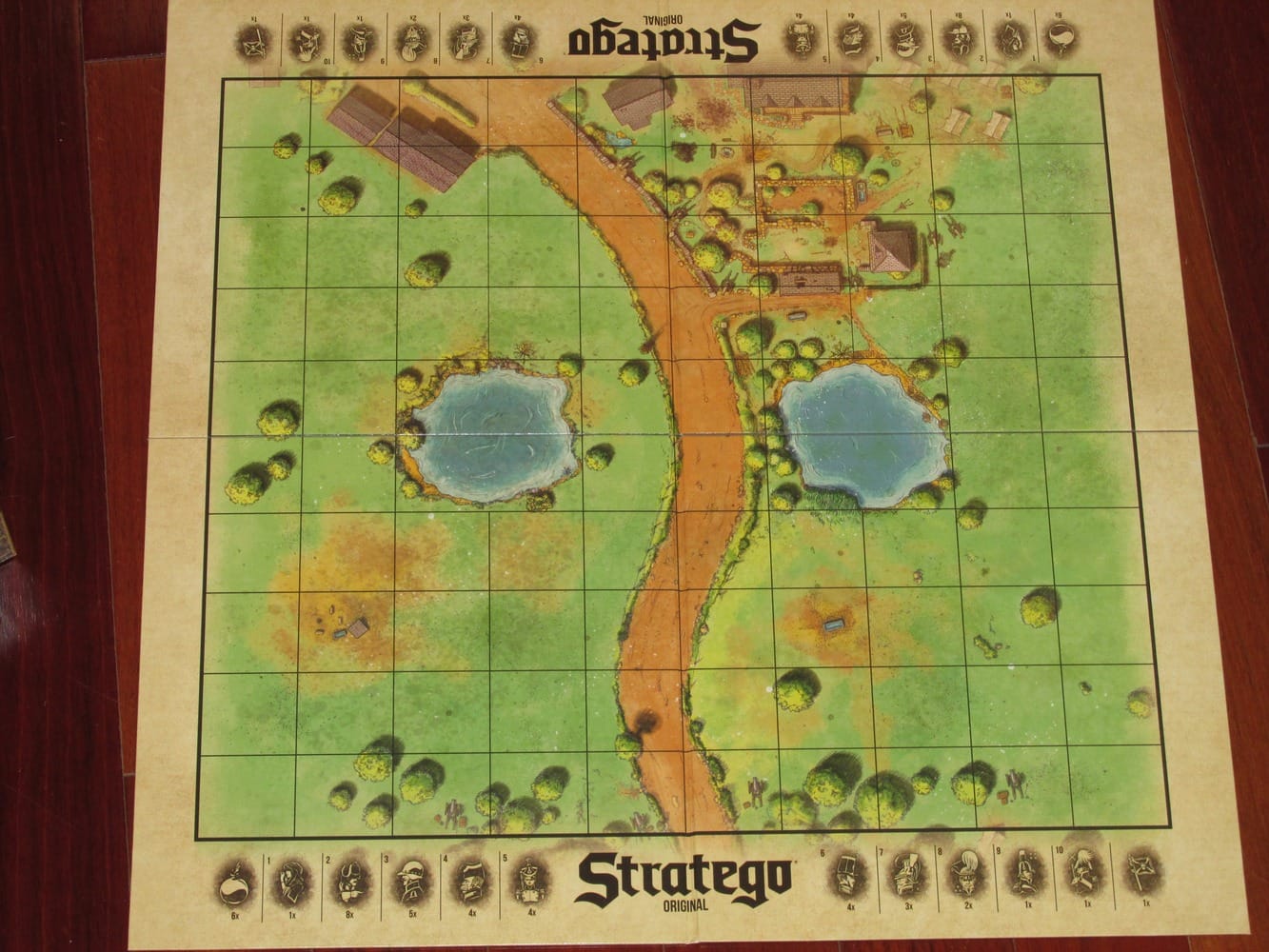
The deeper benefit is teaching. The listing describes it as excellent for developing strategic thinking and planning skills, and in our sessions the hidden rank and bomb rules gave younger players a reason to think two turns ahead without any heavy rules. There is no luck anywhere in the outcome, which is a quality many reviewers single out as rare.
What to expect: this is not a filler. Sessions run around 45 minutes or more, longer than most two player games here, and it supports only two players, which limits it for family game nights. Younger children can also lose interest quickly once the guessing phase starts, and a few buyers found the piece printing on their copy less crisp than expected.
What you need to know before the first turn
Understand the capture hierarchy completely, because the piece relationships catch out almost every new player. The ranks do not follow a single strength scale, and a piece that looks safe is often bait.
Set a memory discipline early. Writing down what has moved and what has been revealed is legitimate, and it removes most of the exchanges you lose to a guess.
Who Stratego suits and who it frustrates
It suits pairs who want a longer duel and do not mind a 45 minute commitment, and it is one of the few games here that genuinely engages a child and an adult on equal terms. It also plays well on a table where two players want to talk to each other between moves.
It frustrates players who want a quick session or a game that scales to a group. The two player limit is strict, and younger children who lose a few games running often lose interest entirely, so expect to sit down with a beginner more than once.
9. Rivals for Catan – The Two Player Catan Fix
- Captures the Catan feel for two
- Three theme games add replay value
- Many viable winning strategies
- Resource exchange lowers the luck factor
- Shorter than the original board game
- No trading between players
- Rule book references elements out of order
- Not suited to players new to Catan
- Square cards are awkward to shuffle
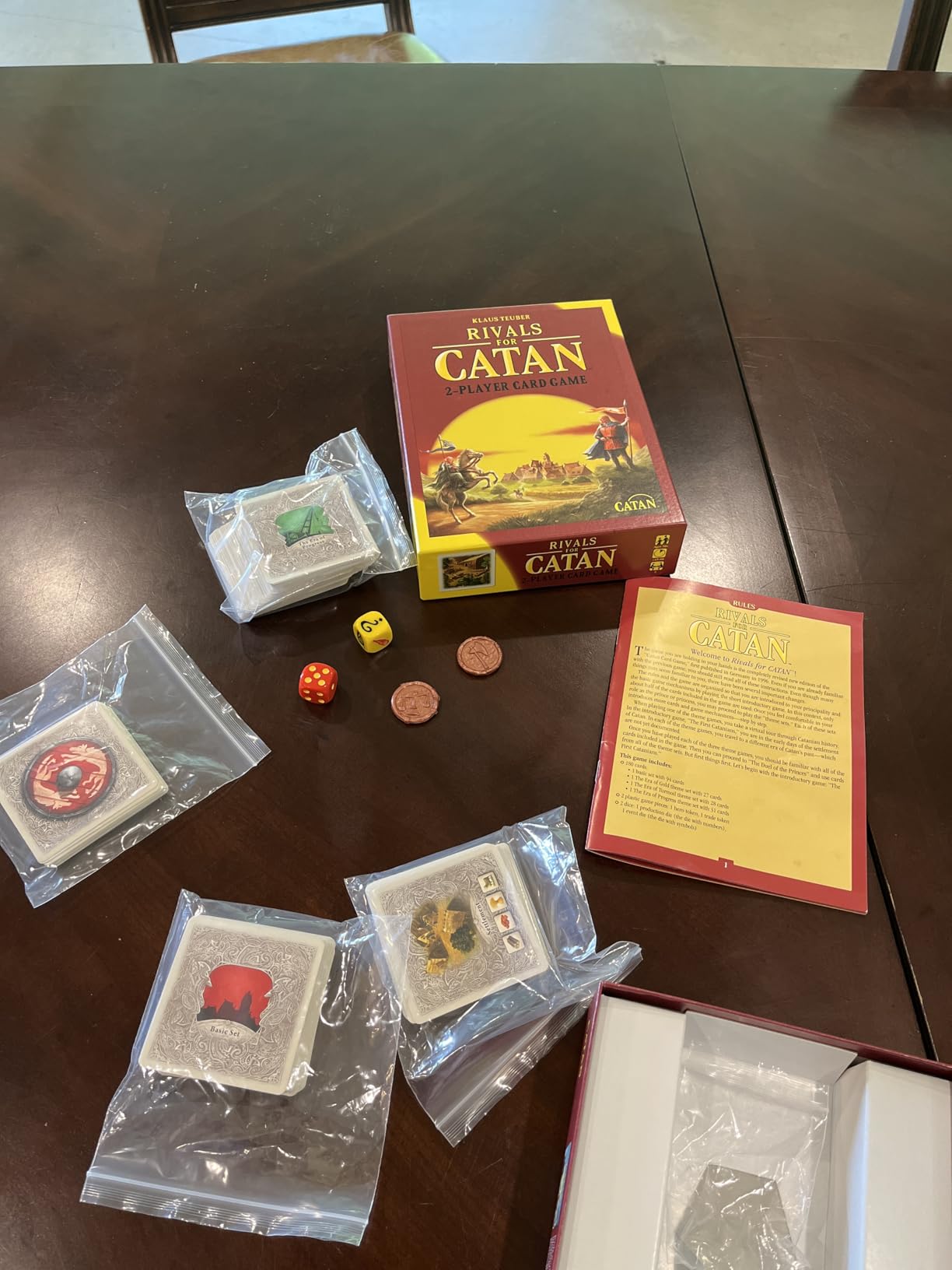
This is the settlement and building engine of Catan rebuilt for two. You take a faction, explore uncharted territories, acquire resources through card play and try to outbuild your opponent, and the two player version compresses the original board game into something you finish in well under an hour.
Three included theme games, The Age of Gold, The Age of Turmoil and The Era of Progress, each present different challenges, and reviewers credit them as the main reason the box does not go stale. Owners also note that many winning strategies exist, from trading strength to hero cards to wide expansion, so no single opening dominates.
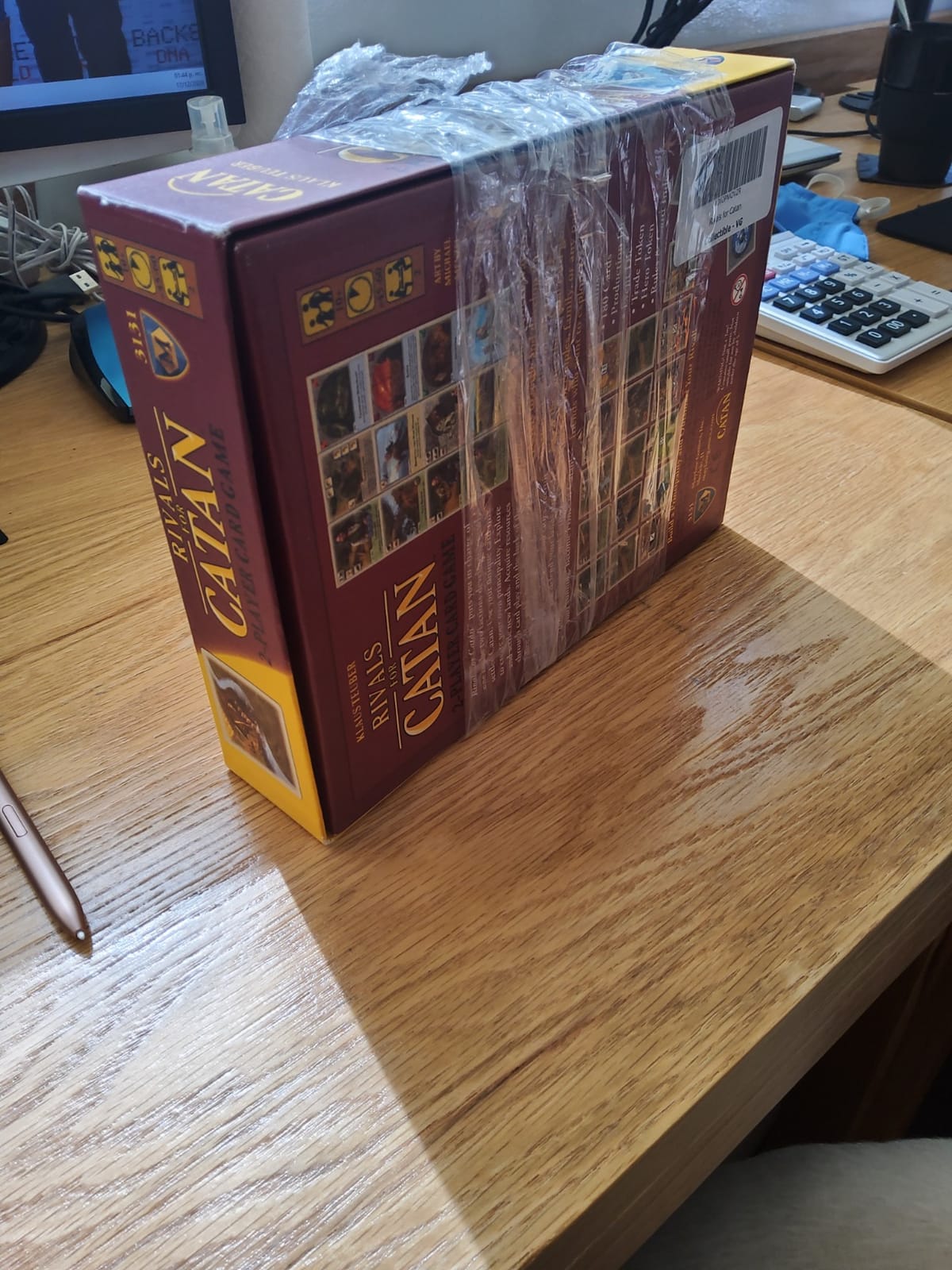
Luck is more contained than the original game because resources can be exchanged and produced each turn rather than left to a single dice outcome, and reviewers frequently remark that the balance of skill and luck is better than expected for a Catan spin off. Practical details are fine too, at 0.5 kg with an estimated 60 minute play time from the manufacturer and closer to 30 to 45 minutes once learned.
The recurring criticism is that trading between players is removed, and that mechanic is core to the original experience. The rule book also references elements out of order, which slows the first game, and it is not recommended for players unfamiliar with Settlers of Catan. Square cards are awkward to shuffle and feel slightly flimsy, and the box does not secure the cards.
What you need to know before the first turn
Read the rule book cover to cover once before playing with a newcomer, because the out of order references mean you cannot learn it by skimming a section. One clean read saves an hour of confusion.
Decide which of the three theme games to start with, because each one changes the balance of the session. Pick it before you sit down rather than reading three sets of rules at the table.
Who Rivals for Catan suits and who it frustrates
It suits a household that already plays Catan and wants a version for two, and it suits players who want resource management with a moderate rules load. The theme games give it a longer shelf life than a single scenario card game.
It frustrates players completely new to Catan, who will miss the trading dynamic and the reference material in the rule book. It also needs more table space than a card box game, and reviewers mention that the box does not keep the cards shut, which matters in a bag.
10. Quarto Mini – Your Opponent Picks Your Piece
- Rules learned in a couple of minutes
- Opponent chooses the piece you place
- Compact 70 percent travel edition
- Solid wooden pieces that display well
- Mensa Select winner
- Smaller board can feel cramped
- Light components limit long travel play
- Small parts for very young children
Quarto looks like a four in a row game until you notice who chooses the tile. You place pieces, and your opponent hands you the next one, so you are never free to complete your own line because someone else decided the piece in your hand. That single inversion turns a two minute game into a genuine tactical duel.
Scoring comes from four in a row sharing height, colour, shape or solidness, and the shared tile pool means a tile your opponent refuses to give you is a decision being made about you. Reviewers consistently credit that hook as the reason the game feels much deeper than its rules suggest, and it is a Mensa Select winner for its rules and depth.

This is the mini edition, at 70 percent of the original board size, and the smaller format is a deliberate trade. The listing includes one board, one cloth bag, one rulebook and 16 wooden pieces, and at 168 grams the whole set is light enough to genuinely travel, with wooden tones that reviewers say double as coffee table decor.
The criticisms are all about that size reduction. Owners say the reduced board and pieces can feel cramped, and that very light weight and small components mean a long travel game is not really the use case. The wooden balls and pieces are small parts, so the manufacturer carries a choking hazard statement, which matters if the table includes younger siblings.

What you need to know before the first turn
Realise that the game is about declining a move, not taking one. The most common beginner mistake is playing the best tile in hand, when the strongest play is often to give your opponent a piece that does nothing for them.
Count what the pool is about to look like. Late in a round, the remaining tiles constrain both players, and the player who notices the constraint first wins the block.
Who Quarto Mini suits and who it frustrates
It suits pairs who want a game that is over before the kettle boils, and it works with children and adults. It is also the pick for anyone who wants one game to keep in a bag permanently.
It frustrates players who want components built for long term play at a table rather than a pouch, and reviewers note the small format is the reason for most of the lost stars. If you want the full size version and only play at home, the mini is the wrong box.
11. Splendor Duel – Gem Collecting, Head to Head
- Streamlined head to head rework of Splendor
- Easy to learn with real drafting tension
- About 30 minutes with varied development cards
- High quality cards and tokens
- Compact box travels well
- Cards are small across the table
- Some players prefer the original Splendor
- Two pearl tokens can feel overpowered
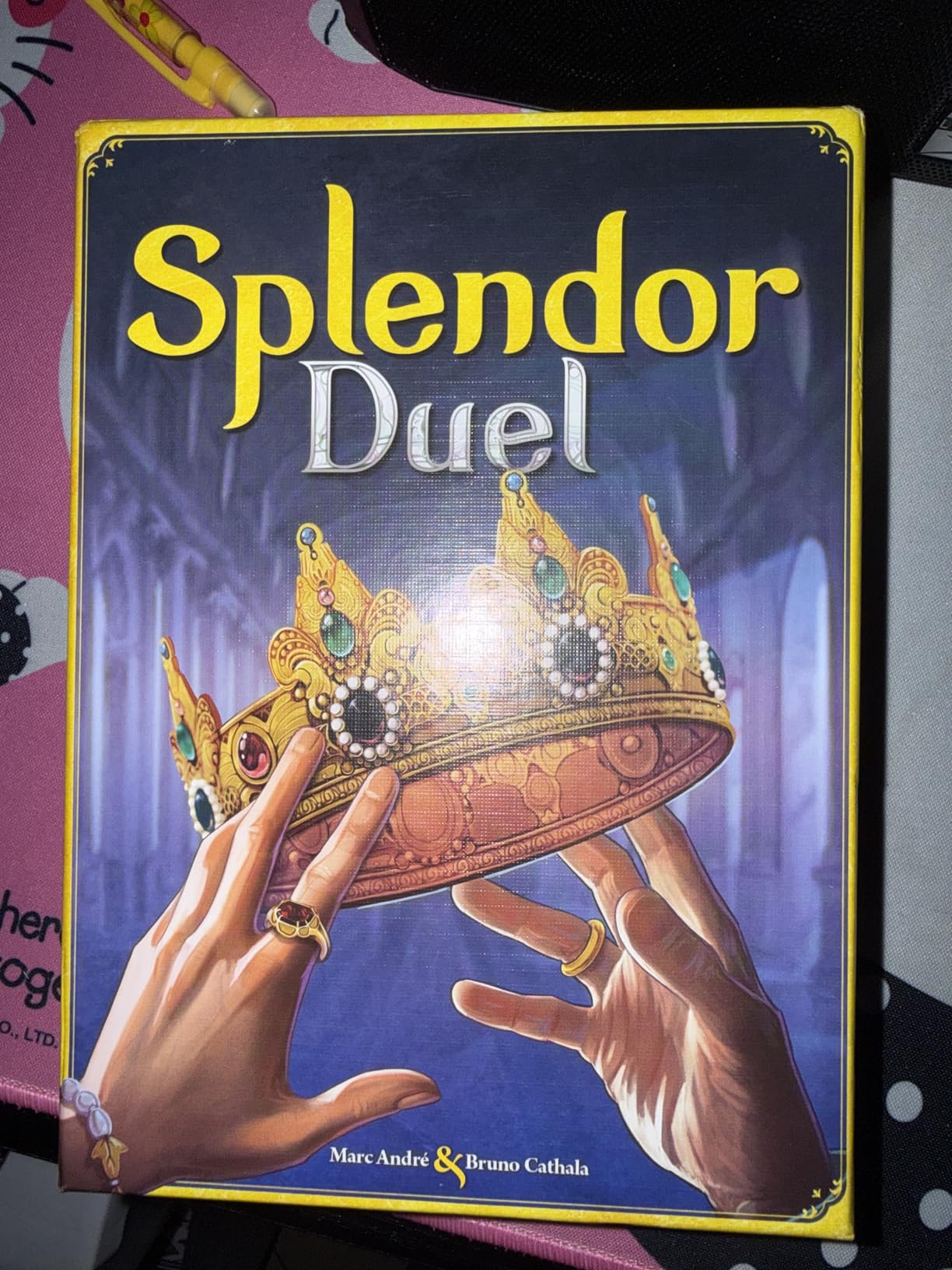
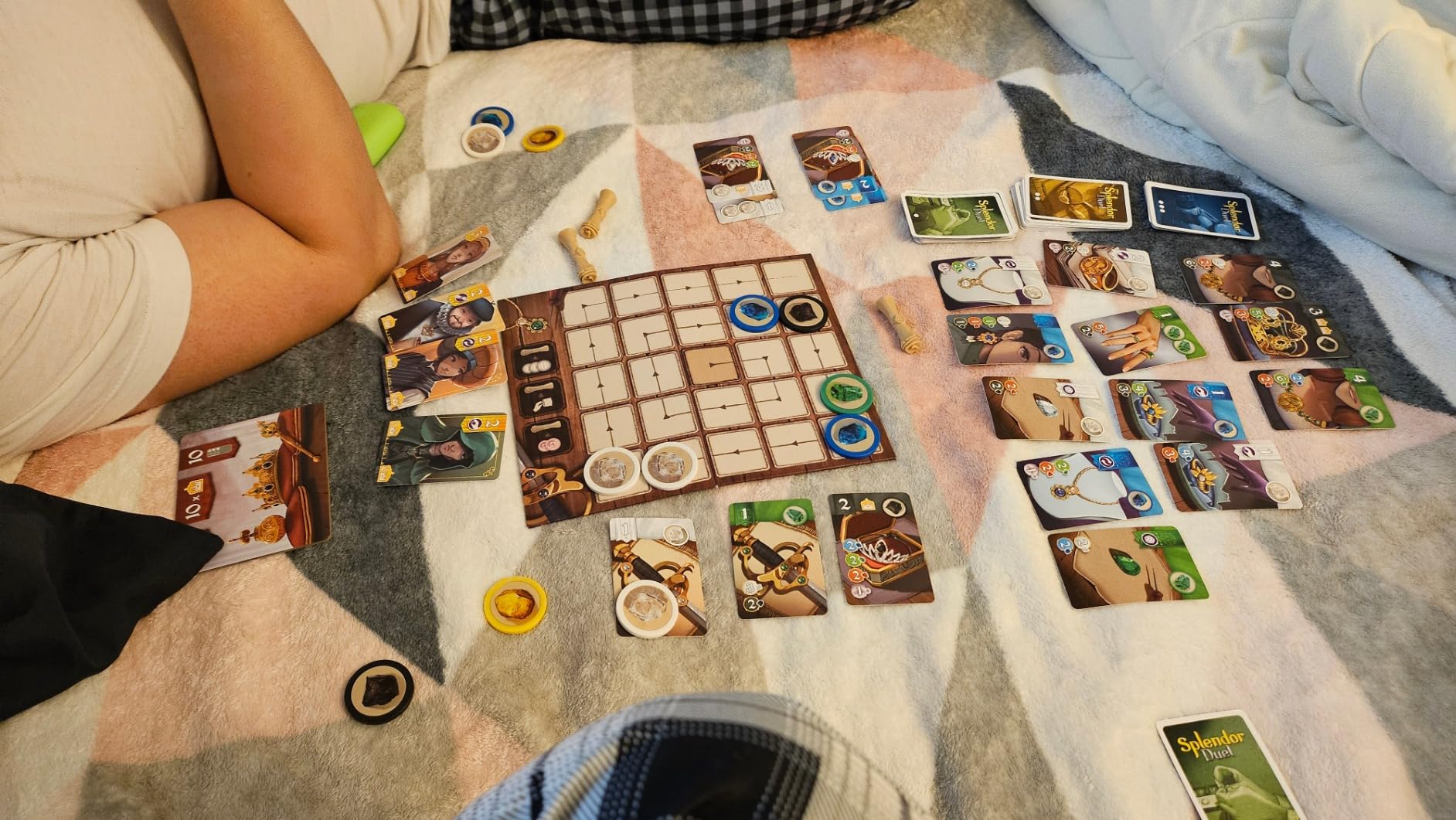
This is Splendor rebuilt as a duel. Instead of racing quietly to prestige points, you draft gemstones, use development cards and compete over a shared board, with privilege scrolls and gem stealing powers that make the interaction direct rather than incidental. Owners frequently say they enjoy it more than the original for exactly that reason.
The box is small and the table footprint is small, which suits a couple playing on a coffee table after dinner. The listing includes 67 jewel cards, 25 plastic gem tokens, 3 privilege scrolls, 4 royal cards, 1 victory tile, a common board, a bag and a rules booklet, and reviewers single out the artwork and component quality as a highlight.
Replay value comes from the development card pool and different starting setups, and the 30 minute runtime means we played it several times in one session without fatigue. At 0.42 kg the box travels well, and reviewers note it works with children as young as 6 to 8 alongside an adult.
The most common complaint is card size. Reviewers describe the cards as small and difficult to see across a table, which is worth knowing before you buy for a large dining table rather than a close one. Some players also simply prefer the original Splendor, and a few think the two pearl tokens are slightly overpowered.
What you need to know before the first turn
Understand that the scrolls and gem stealing powers are the point, not a side mechanic. Skipping those cards turns it into a slower copy of the base game, because the direct taking from your opponent is the duel.
Plan your first turn around gem limits rather than prestige. The drafting is the tight part of the game, and a player who over commits early spends the rest of the game unable to buy what they need.
Who Splendor Duel suits and who it frustrates
It suits couples and pairs who want something friendly looking that still has real decisions, and it works as a first strategy purchase for players who shy away from heavy components. It also suits mixed age tables.
It frustrates players who dislike taking cards or tokens away from their opponent directly, because that interaction is unapologetic here. It also frustrates anyone whose table is wide, given the small card size complaint, and it will not replace a full box game in terms of table presence.
12. BOOP – Chain Reactions With Wooden Cats
- Learns and plays in under 30 minutes
- Chain reactions shift the board
- 32 crafted wooden pieces
- Works for couples and older kids
- Cute theme with competitive play
- Manufacturer age is 14 while the box says 10 plus
- Small pieces are a choking hazard
- Some games feel chaotic rather than strategic
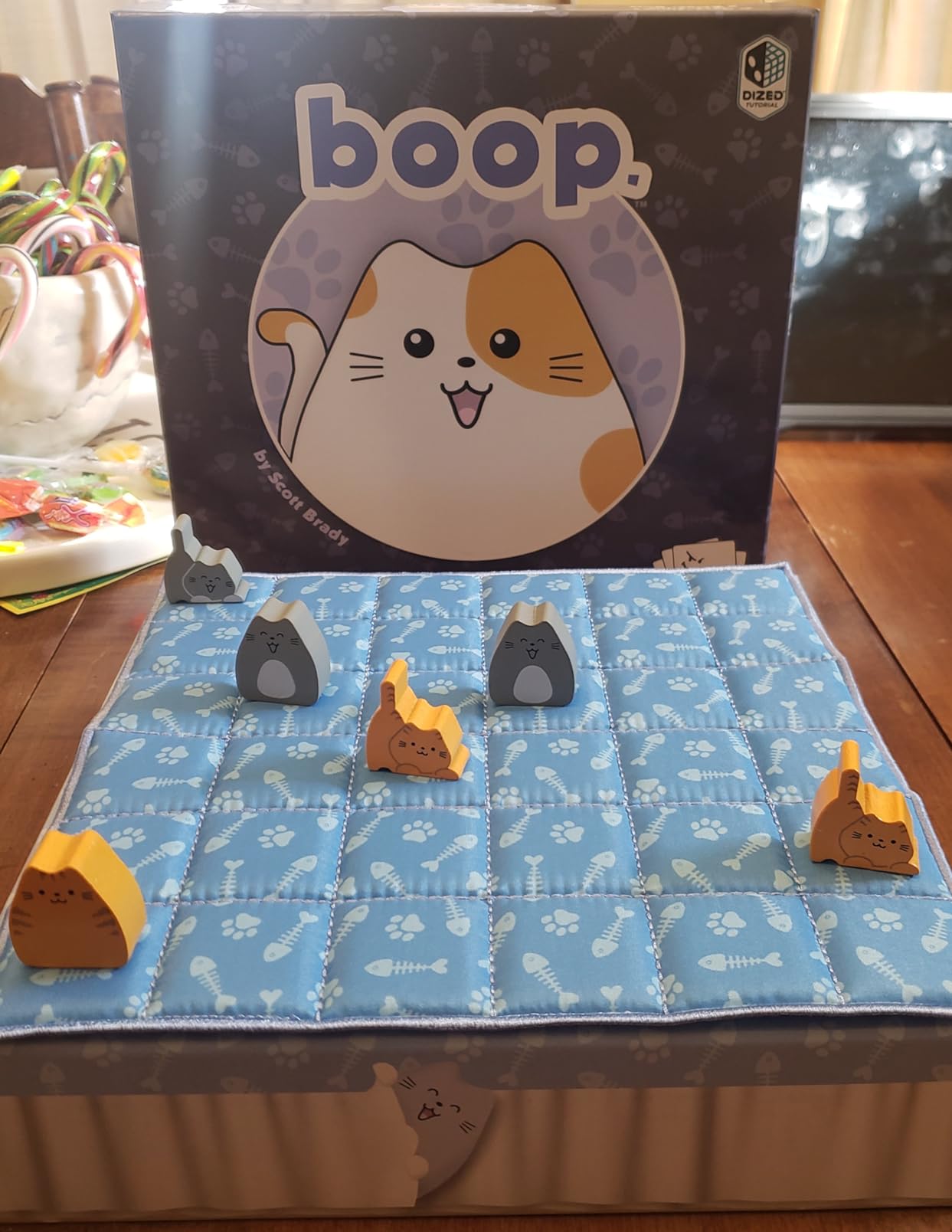
You place kittens on a quilted bed board, and each placement shoves adjacent pieces one space, which can trigger another placement and start a chain. Bouncing your own pieces off the board scores points, so every turn changes the shape of the whole board rather than adding one mark to a grid. It plays in 20 to 30 minutes and the rules take minutes to explain.
Reviewers highlight the satisfying domino like chain reactions and the craftsmanship, with 32 crafted kittens and cats on a soft quilted bed board. The theme is doing real work here, and owners who do not care about cats still tend to describe the components as genuinely charming rather than merely cute.

It fits the couples and family slot well. Buyers describe it as a strong pick for couples and older children, and the fast runtime means a bad game does not end the evening. The box carries a choking hazard statement for small parts, which is standard for wooden component games at this size.
There is an inconsistency worth flagging. The manufacturer recommended age is listed as 14 while the box states 10 plus, so younger children will need guidance in practice. Reviewers also say that luck and piece placement can make some games feel more chaotic than strategic, which is the honest version of what this design is doing.
What you need to know before the first turn
Understand that placement order decides everything. Because every placement displaces others, a set up move at the start can create the chain that scores for you three turns later, and the order is entirely under your control.
Watch your own pieces, not just your opponent’s. Bouncing your own pieces off the edge is the scoring mechanic, and new players consistently under value it for the first two games.
Who BOOP suits and who it frustrates
It suits pairs who want a light, fast, good looking game and it works particularly well with a partner who is not a strategy hobbyist. It also travels easily and needs almost no table space.
It frustrates players who want pure control over outcomes, because reviewers are candid that some games tip into chaos. If you are buying this to teach a non gamer, that is a feature. If you are buying it to study, look further down this list.
13. Pylos – A 3D Pyramid Stacking Duel
- Simple to learn and quick to play
- Stained wood board and balls
- Three rule levels
- Resource conservation has real depth
- Multiple game of the year awards
- Tracking several levels taxes younger players
- Fair play often needs 3 of 5 rounds
- Size naming across listings is confusing
- Wooden balls are small parts
Pylos is a 3D abstract built on a simple idea. You take a fixed number of spheres, place them to build the pyramid, and win by getting your ball to the top, using your opponent’s placements as scaffolding and as obstacles. Learning it takes minutes, and a game runs about 15 minutes.
The strategic layer is resource conservation. You do not have unlimited balls, so moving an existing ball can cost you a turn, and every placement reduces what you will have available for the summit later. Reviewers describe it as simple to learn and complex to master, which is exactly the teaching profile we want when a partner is new to abstracts.
The components get repeated praise. The stained wood board and 30 wooden balls are described as gorgeous and as a piece of coffee table decor, and the design has taken multiple game of the year awards plus a Mensa Select Top 5 pick. The box includes one cloth bag, one pyramid board, 30 wooden balls and the game rules.
The two practical notes are first that winning a fair game often means playing three of five rounds, which lengthens an otherwise quick session, and second that tracking several pyramid levels at once can be taxing for younger players. Reviewers also mention confusing size naming across listings when comparing versions, so check the box dimensions before buying.
What you need to know before the first turn
Decide which rule level you are playing first. The game includes beginner, standard and advanced layers, and starting at the beginner level with a new partner buys you a much better first session than starting at the top.
Count your remaining spheres constantly. The game is not about where you build first, it is about whether you can still afford the summit after the moves you already made.
Who Pylos suits and who it frustrates
It suits a pair who wants an abstract that looks as good as it plays, and it suits players teaching a non gamer because the three rule levels let you start gentle. The wooden set is also the one you will leave out on the table rather than put away.
It frustrates players who want a single decisive game, since best of three or best of five turns a 15 minute round into a 45 minute session. Younger players who struggle to track multiple board levels also tend to lose interest faster here than in flatter abstracts like Othello.
14. Mandala – A Sharp Abstract Duel With a Gentle Wrapper
- Unique abstract duel with a ritual theme
- Easy to learn with real tactical depth
- Colorful artwork and a cloth play mat
- Compact and light for travel
- Scaling color values make it cutthroat
- You actively take cards from your opponent
- Square deck needs a proper wash shuffle
- Only plays with two players
- Sharper than most games on this list
Two players build mandalas out of coloured sand across a shared central area and their own private fields, and then they destroy them. Cards are laid to create and break the patterns, and scoring rewards collecting the highest value colours before the ritual ends. The theme is unusually strong for an abstract, and the 1950s ritual artwork is the most striking thing in this roundup to look at.
It is easy to learn in minutes and develops real tactical depth over repeated plays, which is the combination we look for. Reviewers also point out the cloth play mat that helps with setup, and the compact, light box as a genuine travel option for a game with 108 cards and real decision density.
What the same reviewers warn about is tone. This is not a friendly or passive game, because you actively take cards to deny your opponent points, and it is described as a sharp, competitive, even cutthroat scoring dynamic. The square card deck also does not shuffle well and needs a proper wash shuffle between games, which is the most repeated practical complaint in the reviews.
What you need to know before the first turn
Accept that you are going to attack your opponent, repeatedly. If that interaction is unappealing, this is the wrong game, and finding out after a full 30 minute round wastes an evening.
Learn the colour scaling before the first game. Value tiers change as the shared mountains build, and early players consistently misprice a colour that has just become more valuable.
Who Mandala suits and who it frustrates
It suits experienced abstract game players who have run out of obvious gateways, and it suits anyone who wants a competitive duel presented beautifully. It also suits pairs who like games that look as good as they play.
It frustrates casual players and very young children, since reviewers are clear it is better suited to experienced players. It also only works for two with no expansion for larger groups, and anyone who does not enjoy card removal should pass.
15. Caper Europe – A Heist Draft Across Four Cities
- Fast paced 30 minute heist
- Four city decks add real variety
- 1950s inspired artwork and wooden parts
- Travel ready box with custom trays
- Works well for couples and date nights
- Rulebook leaves some card symbols unexplained
- Better suited to ages 12 and up
- Hidden scores make the winner hard to gauge
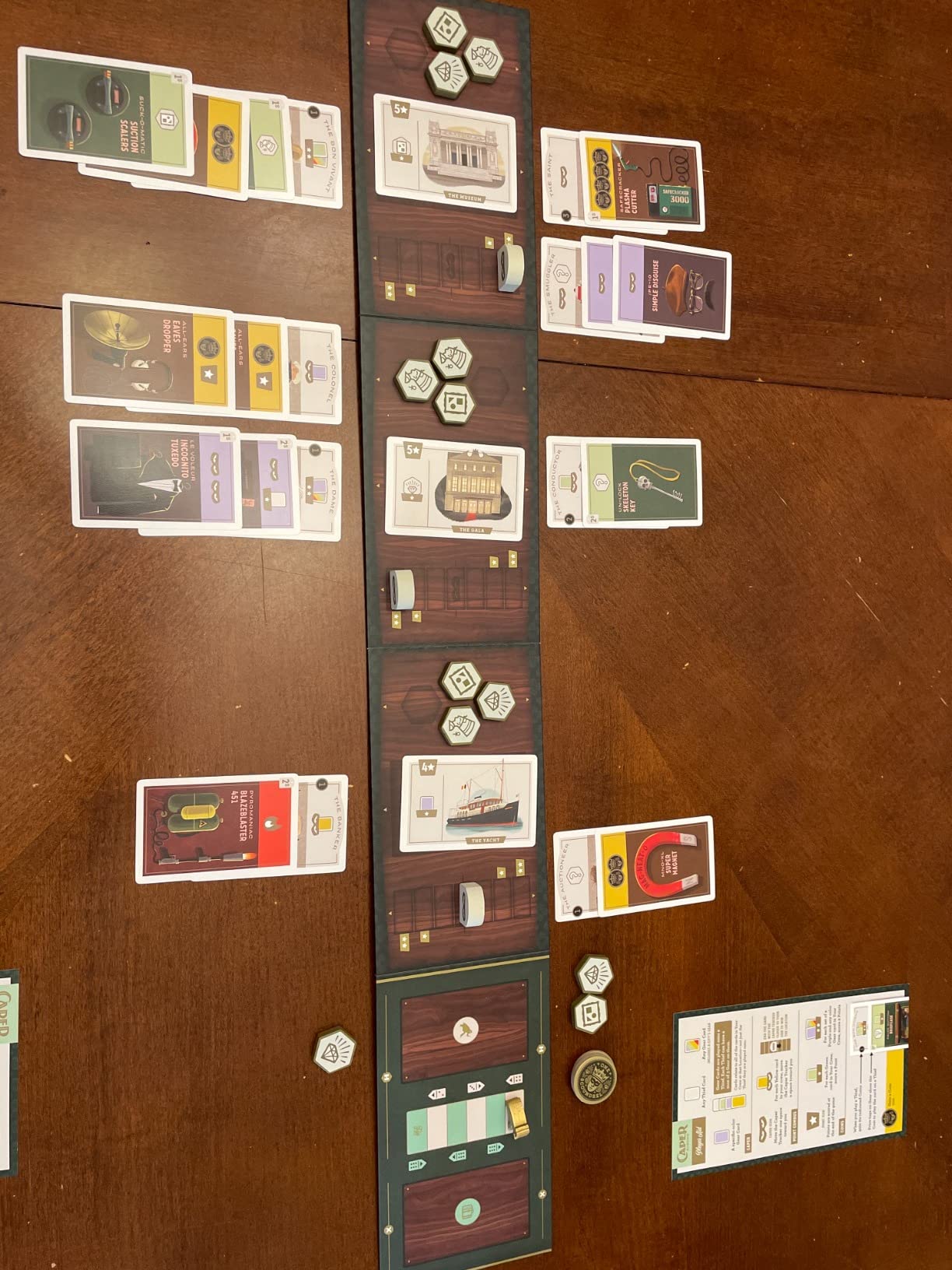
Two rival crews draft thieves, gear and locations across four European cities, and the aim is to claim high value spots before your opponent does. Only three of the four city decks are in play at a time, so the same box produces different heists depending on the setup, and reviewers credit that as the main source of its replay value.
Production is the headline here. The listing describes 1950s inspired heist visuals with high quality cards, punchboard and wooden components, in a compact travel ready box with custom trays for quick setup anywhere. At 0.8 kg it is a solid weight in the hand, and the tray system is the reason it still sets up in under a minute.
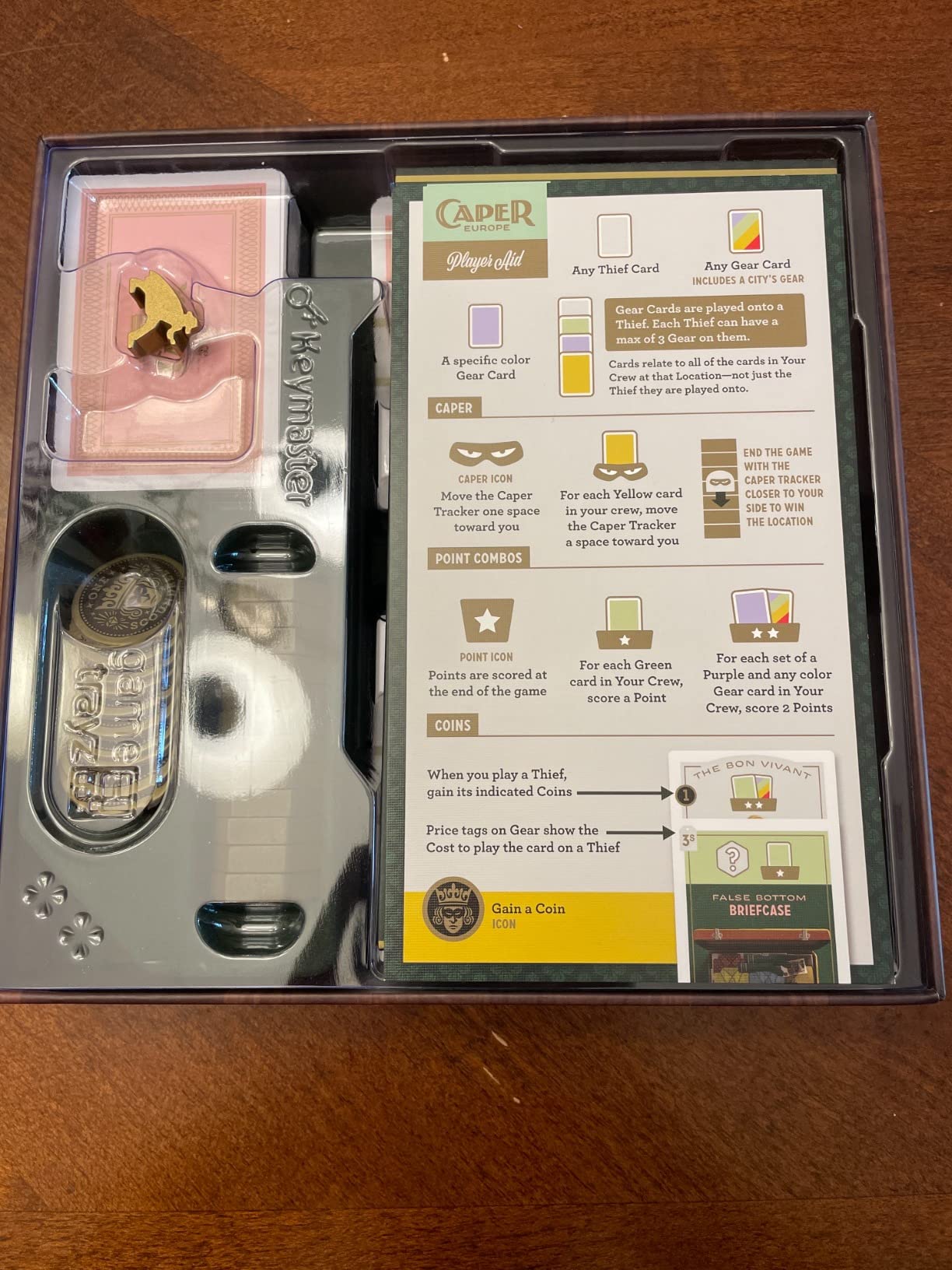
Every decision carries weight, which is what separates a drafting game from a card game that merely involves drawing cards. Reviewers find it fast to learn, genuinely competitive and highly replayable, and several describe it as a good fit for couples and date nights where a 30 minute structure matters.
The consistent critique is the rulebook. Owners say the instruction manual and player aids do not fully explain all the card symbols, which slows the first few turns, and the game is really better suited to ages 12 and up despite the 10 plus rating. A second practical note is that scores stay hidden, so the winner can be hard to gauge until the end.
What you need to know before the first turn
Ask your opponent to read the card symbols out loud on turn one. It is the fastest fix for the rulebook gap that owners complain about, and it clears the first two turns faster than any other habit we tried.
Do not chase a single big location early. The scoring only pays out on completed sets, and a draft built on one high value card loses to a balanced one far more often than the board suggests.
Who Caper Europe suits and who it frustrates
It suits pairs who want a game with strong production value and a theme that carries, and it works for date nights where a 30 minute runtime and a travel ready box both matter. It also suits players who like drafting but want something less abstract than Mandala.
It frustrates very young players, since the amount to track suits older children and adults better than the box rating suggests. It also frustrates anyone who likes to know the score as they go, and the hidden scoring is the wrong fit for a player who prefers a visible race.
How to Choose a Two Player Strategy Game?
Pick your complexity band first, because it is the decision people regret getting wrong. BoardGameGeek community weight runs from 1.0 to 5.0, and most players misread it as a difficulty score. It is a measure of how much the game asks you to hold in your head while deciding, and a weight of 2.5 does not mean the game is hard, it means the decision space is wide.
Under 2.0 is the true beginner band, and Othello, Quarto and Pente all sit there with rules you can explain while pouring drinks. Between 2.0 and 2.9 is the largest and safest band for most couples, holding Jaipur, Splendor Duel, 7 Wonders Duel, Fox in the Forest and BOOP. Above 3.0 the game is asking you to study, and only buy there if both players enjoy that.
The second question is play time, and it should be honest about your evening. Under 30 minutes covers Othello, Quarto, Onitama, Pente and BOOP. The 30 to 60 minute band holds 7 Wonders Duel, Jaipur, Fox in the Forest, Splendor Duel, Mandala, Caper Europe and Rivals for Catan. Stratego sits above that at around 45 minutes or more.
If your sessions are frequently cut short, do not buy a heavy game to be saved for someday. In our testing the sub 30 minute picks reached the table far more often than the long ones, and play frequency matters more than depth when you only have two players.
Third, decide how much luck you can tolerate. Zero luck games here include Hive, Othello, Pente, Quarto, Onitama and Stratego, where no dice or blind draw can decide the result and a stronger player reliably wins. Jaipur, Rivals for Catan and BOOP sit at the other end, where the draw is part of the texture. That is a real quality difference, not a defect, but only one player in a pair can be relaxed about it.
Fourth, check whether the purchase survives a third person. Most picks on this list are strictly two player, and Pente is the one that plays with three or four or as teams of two. If your household regularly has more than two players, that flexibility is worth more than a small amount of depth.
Fifth, think about how you will teach. A new player will not come back after a first session that was three hours of rules overhead, which is the single most common complaint we found in community threads. The cleanest fix is to start with something like Othello or Quarto, then move up to 7 Wonders Duel or Jaipur once the partner is ready for a real decision. The rule of thumb we use is to play three games before judging a system, since the second game is always worse than the first and the third is when the strategy starts to surface.
Sixth, decide what a themed game has to do for you. If you want a story, take 7 Wonders Duel or Rivals for Catan. If you want the decision itself, take Hive, Onitama or Mandala. If your partner is a non gamer, lean toward Splendor Duel, BOOP or Stratego, where the theme and the components do some of the persuading for you.
Finally, if you would rather not compete at all, none of the fifteen picks here is the right answer. Cooperative two player strategy games are a genuinely different category, and the community recommendation pattern is consistent: pick a co-op game with a scaling difficulty system and a short campaign so you can stop after one session. Our wider strategy coverage sits in our picks of the best strategy board games, which covers the cooperative and multiplayer end of the shelf.
Frequently Asked Questions
What is the best two player strategy game?
7 Wonders Duel is the best all-round two player strategy game, offering three genuine win paths, a 30 minute play time and an engine building structure that keeps a losing player engaged to the end. For the easiest entry point, Othello teaches in minutes, and for pure negotiation with almost no table space, Jaipur is the pick.
Are there two player strategy games without luck?
Yes. Hive, Othello, Pente, Quarto, Onitama and Stratego have no dice or blind draw that can decide the outcome, so a stronger player reliably wins. If you want zero luck and real depth in a short game, Hive is the strongest choice in that group.
What are some good two player strategy card games?
Jaipur and Fox in the Forest are the strongest pure card picks, both built for two and both finished in 30 minutes or less. Rivals for Catan adds resource building with three included theme games, Caper Europe adds a four city draft, and Splendor Duel handles drafting on a board.
How do I choose a two player strategy game?
Decide in this order: complexity band, play time, luck tolerance, player count flexibility, then teaching time. Pick a complexity weight under 2.0 for a true beginner, match the play time to how long your evenings actually run, and check whether the box scales past two players before buying.
What is a good first strategy game for two players?
Othello is the clearest answer because the rules take about a minute to explain and a child can play it competently almost immediately. Quarto and Pente are the other beginner friendly options, and both have enough hidden depth to still be interesting after twenty plays.
What are some good 2 player co-op games?
None of the fifteen games in this roundup is cooperative, since every one is a head to head duel. Co-op strategy for two is a separate category and a better choice on a night when one of you does not want to compete, so look for a co-op game with a scaling difficulty system and a short campaign you can stop part way through.
What is the 3 game rule?
The 3 game rule is a community shorthand for judging a game after three plays rather than one. The first game is rules overhead, the second is always the worst, and the third is where the real decisions start, so a single bad session is not evidence that a game does not work.
The Verdict on the Best Two Player Strategy Games
7 Wonders Duel is the best all-round buy in this roundup, and it wins because three genuine win paths plus a 30 minute runtime solves the two problems most two player games have, which is length and one-note tedium. If one of you is new to the hobby, start with Othello and graduate to it. If the two of you already play heavy, add Hive for depth with no luck and Pente for the nights a third person turns up.
Whatever you choose, give it three games before you decide. That single habit, more than any list, is what turns a box into the game you still reach for in 2026. For lighter, more social two player options and a wider look at the shelf, our strategy board game guide is the natural next read.