
Audio quality is the single biggest factor in whether a podcast sounds professional, and the microphone is where that quality is won or lost. A laptop or headset mic captures a narrow slice of your voice, and the thin, compressed result is baked into every episode you publish. A USB condenser microphone fixes that with one cable and no extra hardware. We spent six weeks recording with the ten mics below to find the best USB condenser microphones for podcasting in 2026.
The reason we narrowed the list to USB condensers is simple. These mics convert your voice to digital inside the body and send it straight to your computer, so there is no audio interface, no driver and no gain chain to learn. That makes them the right starting category for a solo podcaster who wants to publish this month rather than rebuild a studio first.
What a condenser cannot do is ignore your room. These capsules are sensitive by design, which is what gives a voice its detail and warmth, and the same sensitivity picks up traffic, fans and reverb. We scored every mic on both halves of that trade, and we say plainly where a cheaper mic wins and where a pricier one earns its place. If you want a wider look at the category first, our guides to the best USB microphones for podcasting and the best USB microphones overall cover the wider range of options.
Table of Contents
Top 3 Picks for Best USB Condenser Microphones for Podcasting in 2026


Elgato Wave:3 MK.2
- Auto Gain and Clipguard
- Tap-to-mute multifunction dial
- Wave Link software
All 10 Best USB Condenser Mics at a Glance
| Product | Specifications | Action |
|---|---|---|
| Logitech Blue Yeti |
|
Check Latest Price |
| FIFINE T669 |
|
Check Latest Price |
| Elgato Wave:3 MK.2 |
|
Check Latest Price |
 Audio-Technica AT2020USB+ Audio-Technica AT2020USB+ |
|
Check Latest Price |
 Samson G-Track Pro Samson G-Track Pro |
|
Check Latest Price |
 Razer Seiren V3 Mini Razer Seiren V3 Mini |
|
Check Latest Price |
 AKG Lyra C44-USB AKG Lyra C44-USB |
|
Check Latest Price |
 Sennheiser Profile Sennheiser Profile |
|
Check Latest Price |
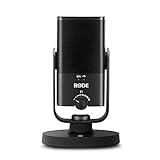 Rode NT-USB Mini Rode NT-USB Mini |
|
Check Latest Price |
 Razer Seiren V2 X Razer Seiren V2 X |
|
Check Latest Price |
How We Picked These Mics
Most roundups in this category are catalog lists. We used the same six criteria for every mic, in the same order, and recorded the same spoken script through each one at the same desk position.
Speech clarity on a voice read at a natural pace
Background pickup from a fan, keyboard and a person moving in the room
How much untreated room reverb ends up in the recording
Monitoring quality and whether latency gets in the way of delivery
On-body control, meaning gain and mute without opening software
Whether a single cable gets a new podcaster recording in under a minute
Long-term owner feedback mattered as much as our own sessions. We weight review volume heavily in our ordering, which is why a design like the Blue Yeti still leads this list.
1. Logitech Blue Yeti – the most flexible USB condenser for a solo show
- Four selectable patterns cover solo interview group and instrument work
- Onboard gain mute and headphone volume controls
- Long-running owners report years of continuous use
- Sturdy metal build
- Very sensitive capsule picks up room noise across a space
- Large desktop footprint
- Ports sit on the bottom so boom use needs a shock mount
The Blue Yeti is the mic I recommend when someone asks which USB condenser microphone to buy with no further detail. It has been the default choice for years, and the reason is pattern switching. One mic can take a solo monologue in cardioid, a two-person conversation in bidirectional and a roundtable in omnidirectional without any other hardware.
In practice, the cardioid setting gave me noticeably clean speech, with a signal-to-noise figure of 100 and a 20 Hz to 20 kHz response. The onboard gain knob, mute and headphone volume are all reachable without leaving the mic, which matters more than it sounds when you are reading an intro and a dog decides to sit on your keyboard.
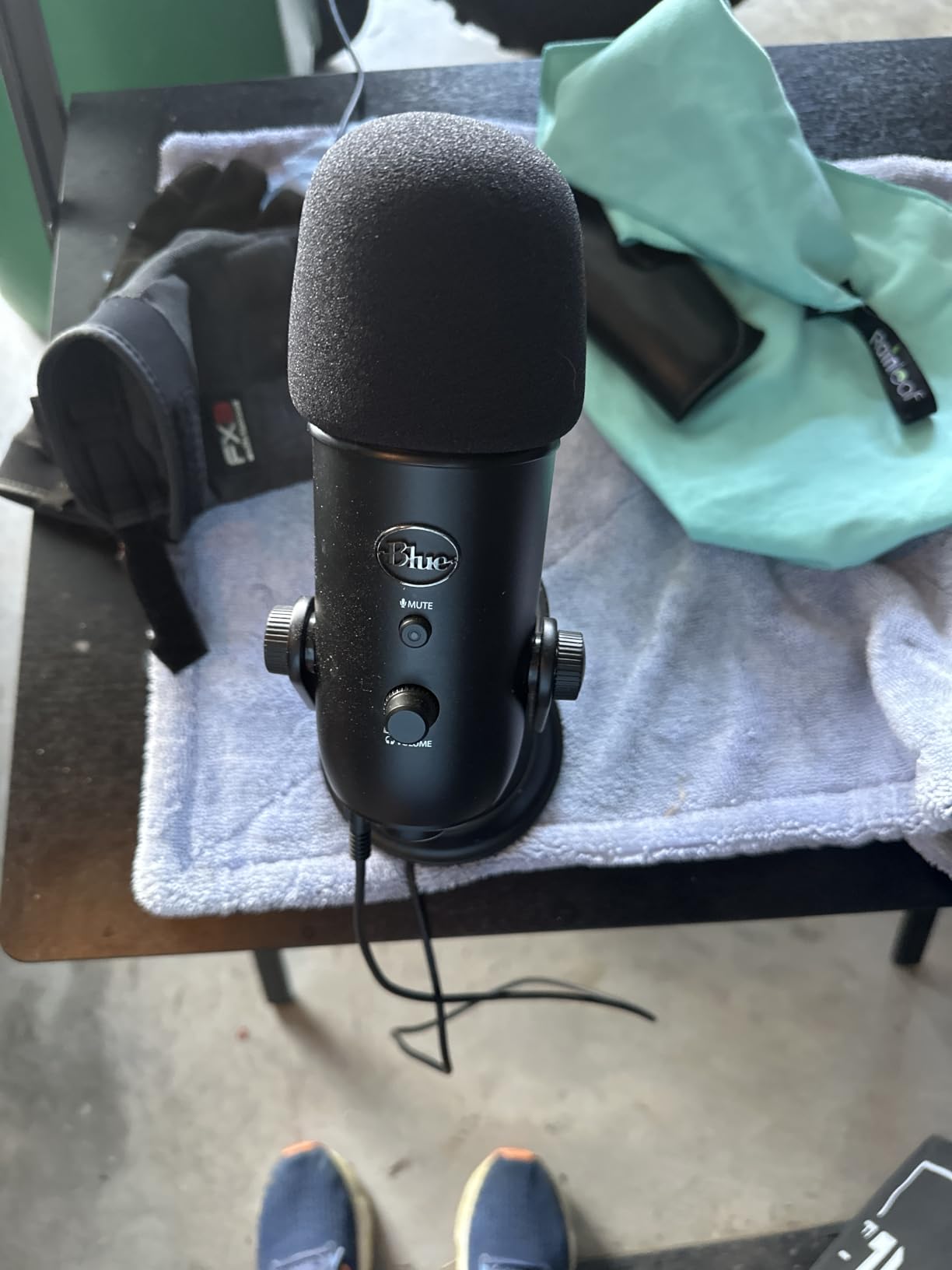
The weaknesses are the same ones every reviewer repeats. This is an extremely sensitive capsule, so a fan across the room or a passing car is plainly audible in the track, and the body is genuinely large at nearly 3.5 pounds and almost 12 inches tall. The ports sit on the underside, which means going on a boom arm also means sourcing a shock mount separately.
Close-miking it demands a little technique. Breathe slightly off-axis rather than straight down the capsule, and add a pop filter if plosives show up in your waveform.
Why it wins for podcasting
Pattern flexibility means your next format change does not mean new hardware. A solo show today, a guest interview next season, a music intro later, all on the same body and the same cable.
When to skip it
Skip it if your room is loud or your desk is small. The body is one of the larger desktop models here, and in a shared apartment the sensitivity works against you. A USB dynamic is the better tool for that situation.
2. FIFINE T669 – the best complete starter kit for a first podcast
- Complete kit with mic boom arm shock mount pop filter and cable
- Warm clear voice that beats laptop mics
- Plug-and-play with no drivers
- Sturdy all-steel scissor arm
- Holds position without sagging
- No hardware mute button
- Pop filter grip slips or twists
- Condenser sensitivity picks up room noise
- Limited boom reach for off-axis positioning
The T669 is the answer to the question I see most often in podcast communities, which is what a new podcaster should actually buy on day one. You get the microphone, a scissor boom arm with a C-clamp, a detachable desktop base, a shock mount, a double pop filter and an 8.2 foot detachable USB cable in a single box. There is nothing else to buy before your first episode.
Cardioid capture gives a warm, clear voice that is a genuine step up from a laptop or display microphone, and it was recognized instantly by my recording software with no driver install. The all-steel arm holds the mic where you put it, which matters more than the spec sheet suggests because a sagging arm ruins the mouth-to-mic distance.
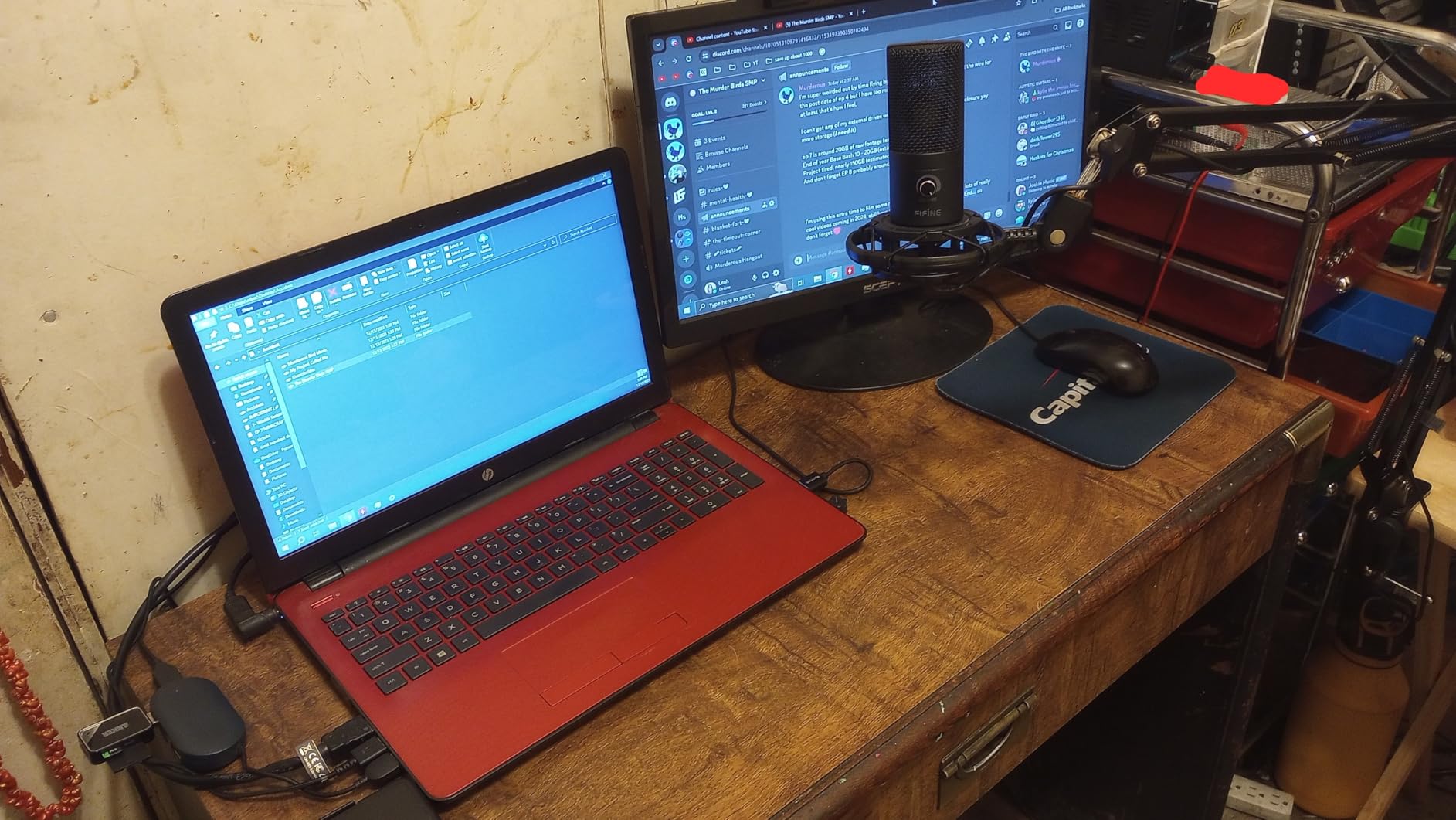
Three things held it back in my sessions. There is no hardware mute, so muting means turning the gain knob down, which is easy to forget on a hot mic. The pop filter attaches to the arm with a weak grip that tends to slip or twist under its own weight. And the arm’s reach limits how far off-axis you can place the mic when you want to soften the room pickup.
Owners also report occasional USB connection drops, though the detachable cable means a replacement fixes it. The one year warranty is shorter than the two year terms several models here carry, a real consideration for anyone recording for years.
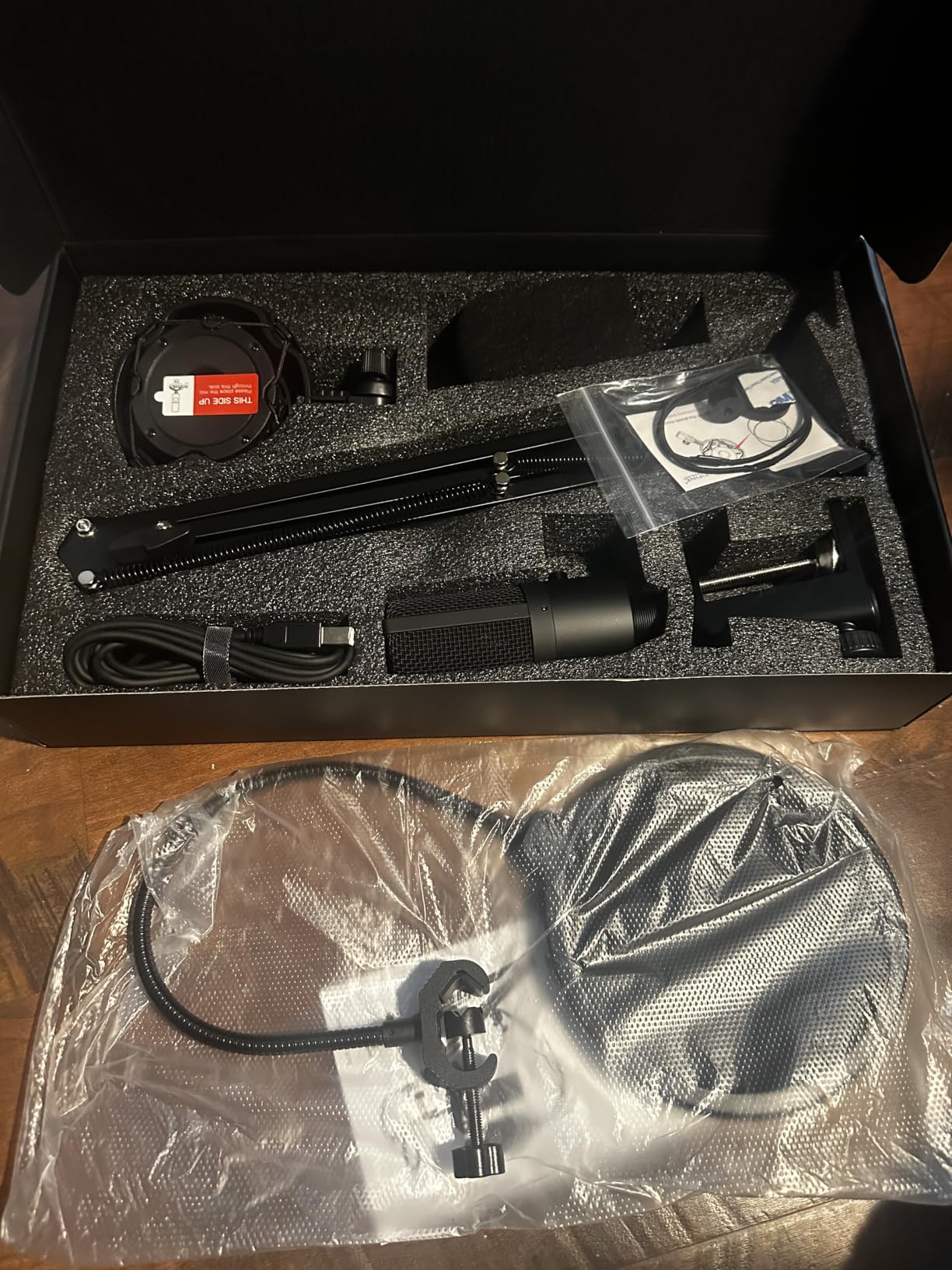
What comes in the box
Everything a podcast needs. A boom arm, a shock mount, a pop filter, a clamp, a base and the cable are all included, which is why the total cost of ownership is lower than it appears compared with a bare mic bought alone.
When to spend more
Upgrade once you want hardware gain control, a mute you can hit without looking, or a quieter noise floor. If you are committed to podcasting past the first twenty episodes, the accessories here are a starting point rather than a destination.
3. Elgato Wave:3 MK.2 – the best microphone for software control
- Clear studio capture with strong background rejection
- Free Wave Link software replaces a physical mixer
- Reliable hardware mute and multifunction dial
- Compact USB-C footprint
- Wave Link has a learning curve
- Condenser sensitivity still picks up background noise
- Single cardioid pattern only
The Wave:3 MK.2 is the pick for a creator who would rather shape the sound in software than hunt for physical controls. Its free Wave Link application acts as a virtual mixer, routing multiple inputs into one track and hosting a set of effects. Podcasters on the r/podcasting forum frequently single it out for exactly this reason, because software control replaces a hardware mixer.
Clipguard 2.0 anti-distortion protection and Auto Gain calibration handled the level setting in my sessions faster than any manual gain riding. The multifunction dial handles gain, headphone volume and mix, and the capacitive tap-to-mute gave a reliable click with clear LED feedback. Owners report five-plus years of consistent performance from the same unit.
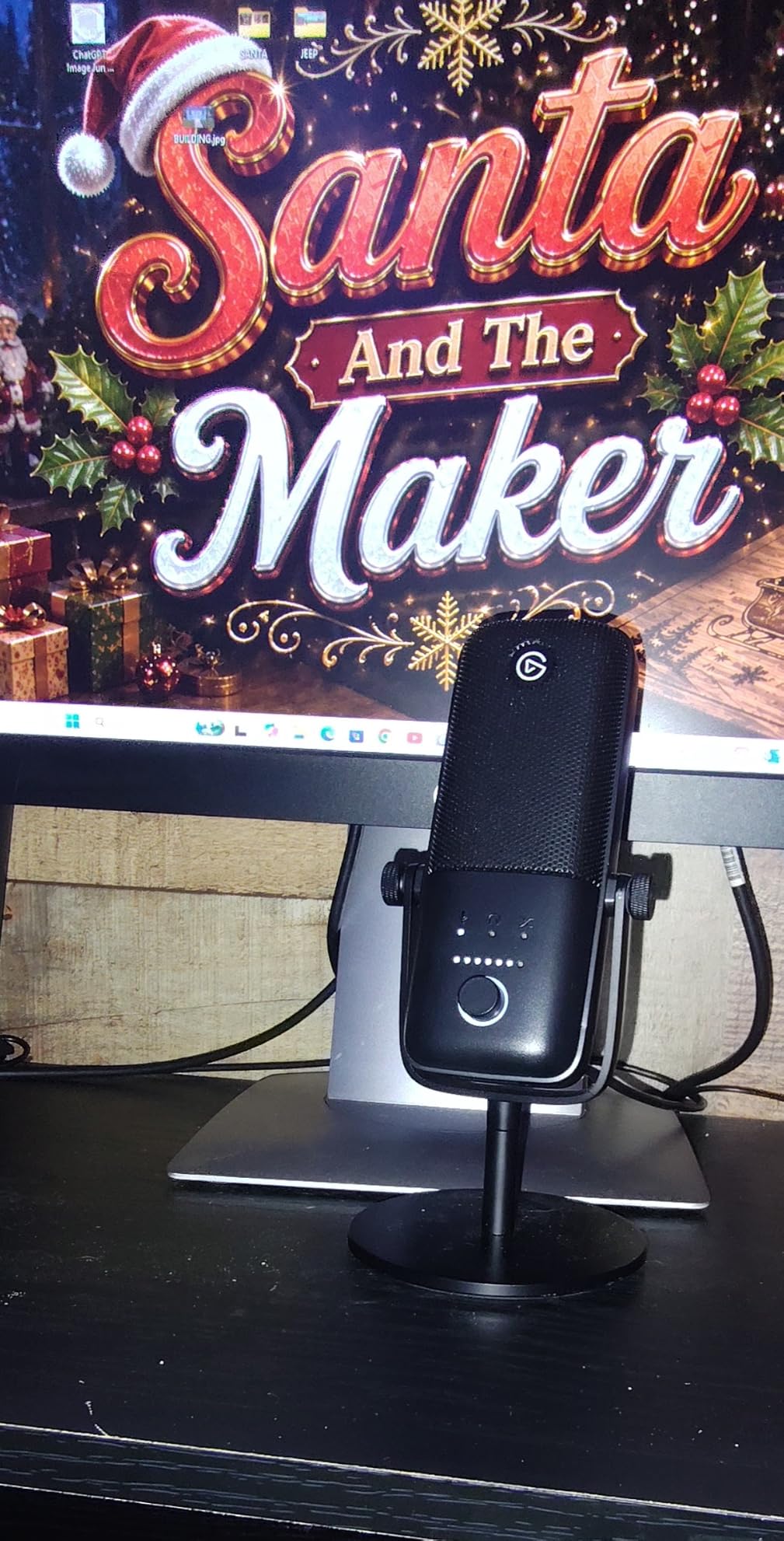
Pattern choice is the trade-off. This is a super cardioid mic with a single pattern, so no interview or group configuration is available, and that narrower focus is also where the strong background rejection comes from. The signal-to-noise figure of 110 dB is matched by the Seiren V3 Mini, and voice quality stayed clear even slightly off-axis at moderate distance.
Two practical notes. The shock mount and pop filter are sold separately, which adds real cost to the setup. And the tall body can block a portion of a monitor depending on your stand height.
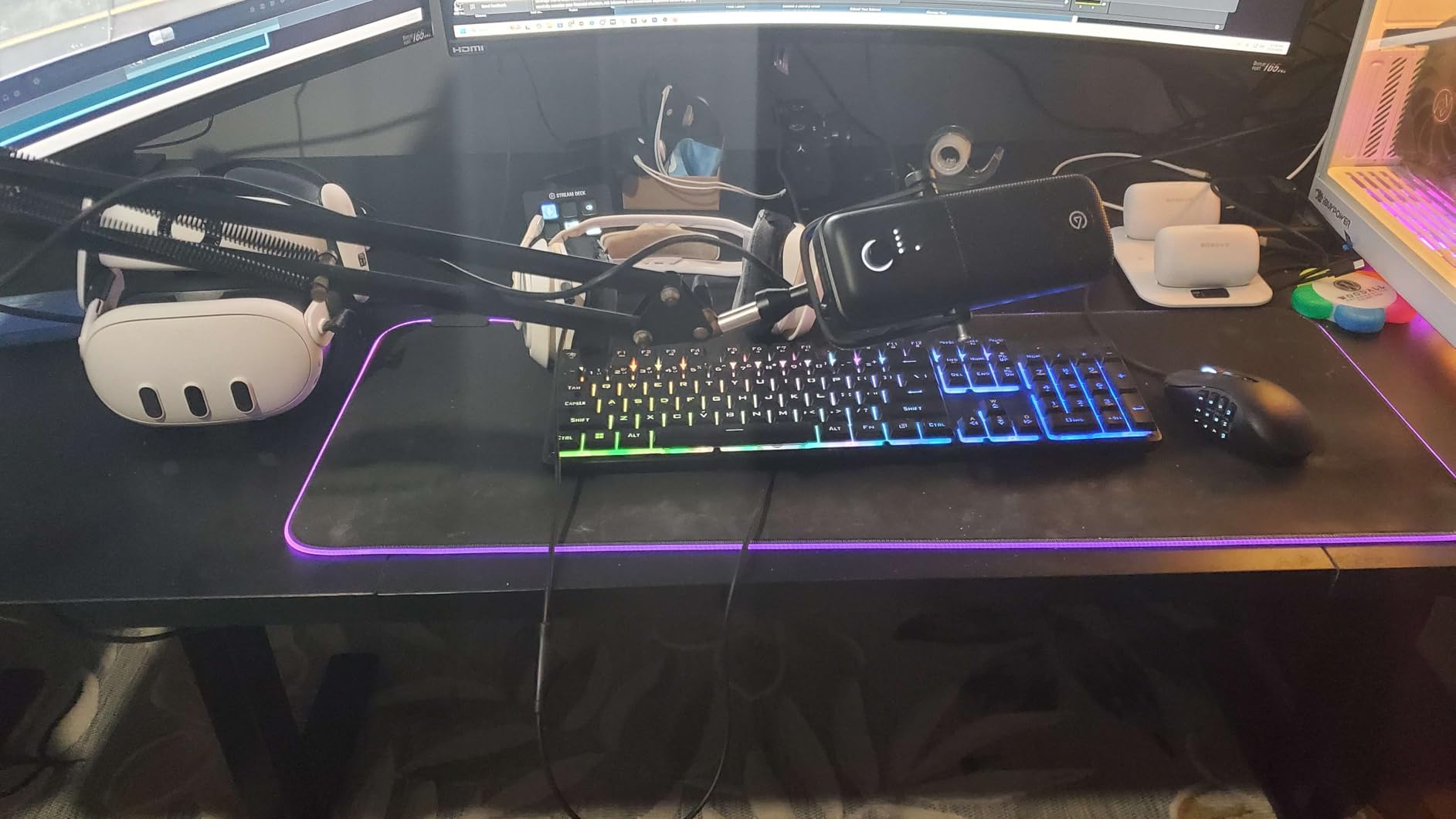
What the software actually does
It routes, mixes, and applies onboard voice enhancement, compression and EQ, with VST plugin support. That is enough control to improve a mediocre room in software, though it will not outrun a genuinely bad one.
When to choose something simpler
Choose a hardware-controlled mic instead if software setup feels like a chore. The learning curve is real, and the install bugs some owners hit are enough to derail a first recording session.
4. Audio-Technica AT2020USB+ – a low noise floor for an untreated room
Audio-Technica AT2020USB+ Cardioid Condenser USB Microphone, with Built-in Headphone Jack & Volume Control, Perfect for Content Creators (Black)
- Exceptionally low self-noise with no hiss near a fan-cooled PC
- Less sensitive than typical condensers
- On-body mix slider blends mic and playback
- Zero-latency monitoring with a strong headphone output
- No on-body mute button
- No on-body gain control
- Included tripod stand is easy to knock over
The AT2020USB+ is the pick for anyone recording in a room nobody has ever treated. Where most condensers amplify everything in earshot, this one is noticeably less sensitive, and owners consistently report the reason: an exceptionally low self-noise with no hiss even next to a PC with fans running. That 74 dB signal-to-noise figure sits below most of the condensers here, which sounds like a weakness on paper and behaves like an advantage in practice.
The on-body mix slider is the feature I miss on every other mic here. It blends your live mic signal with computer playback audio in real time, and the built-in headphone amp has real headroom, so you can monitor properly without a separate interface.
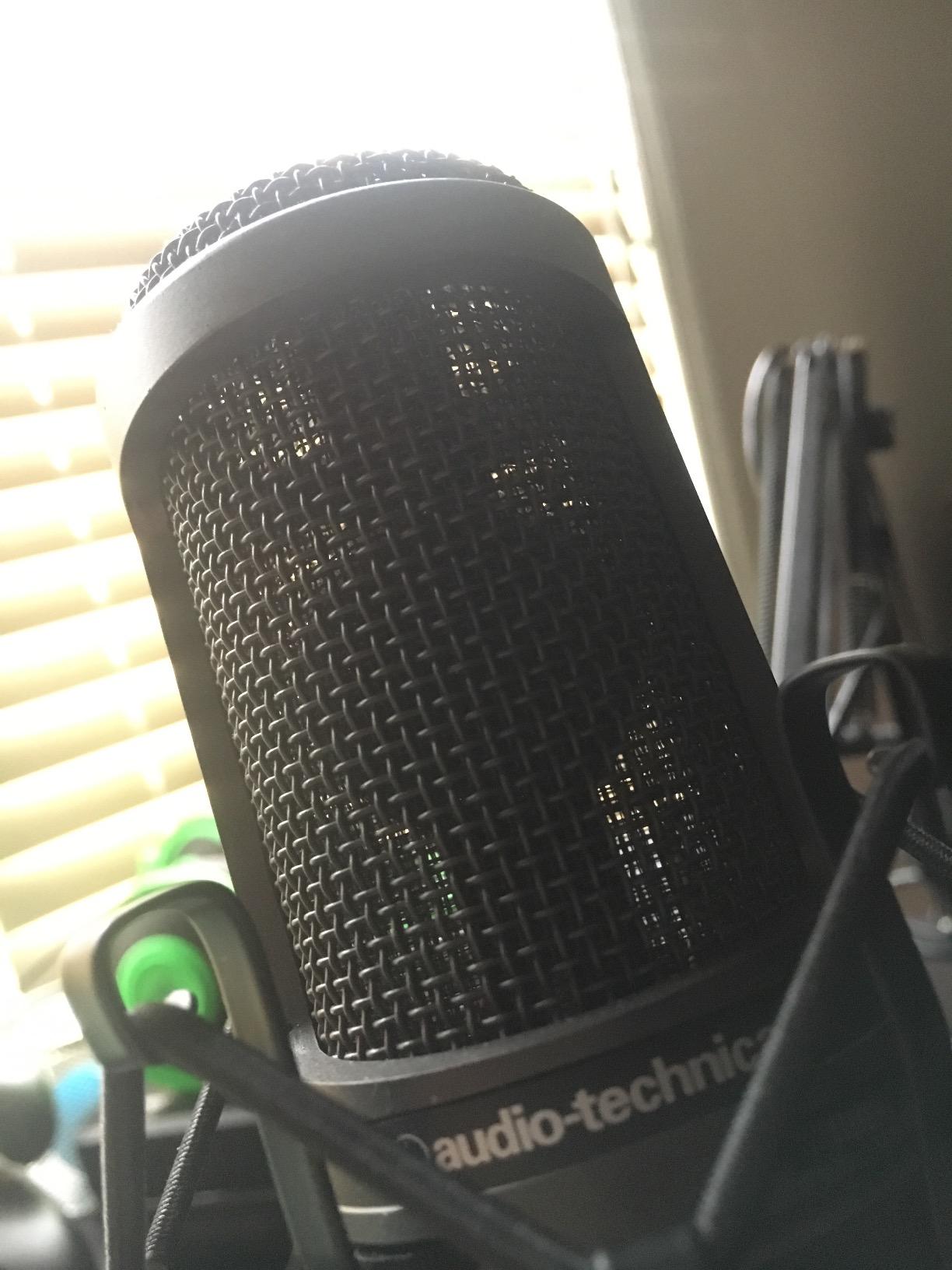
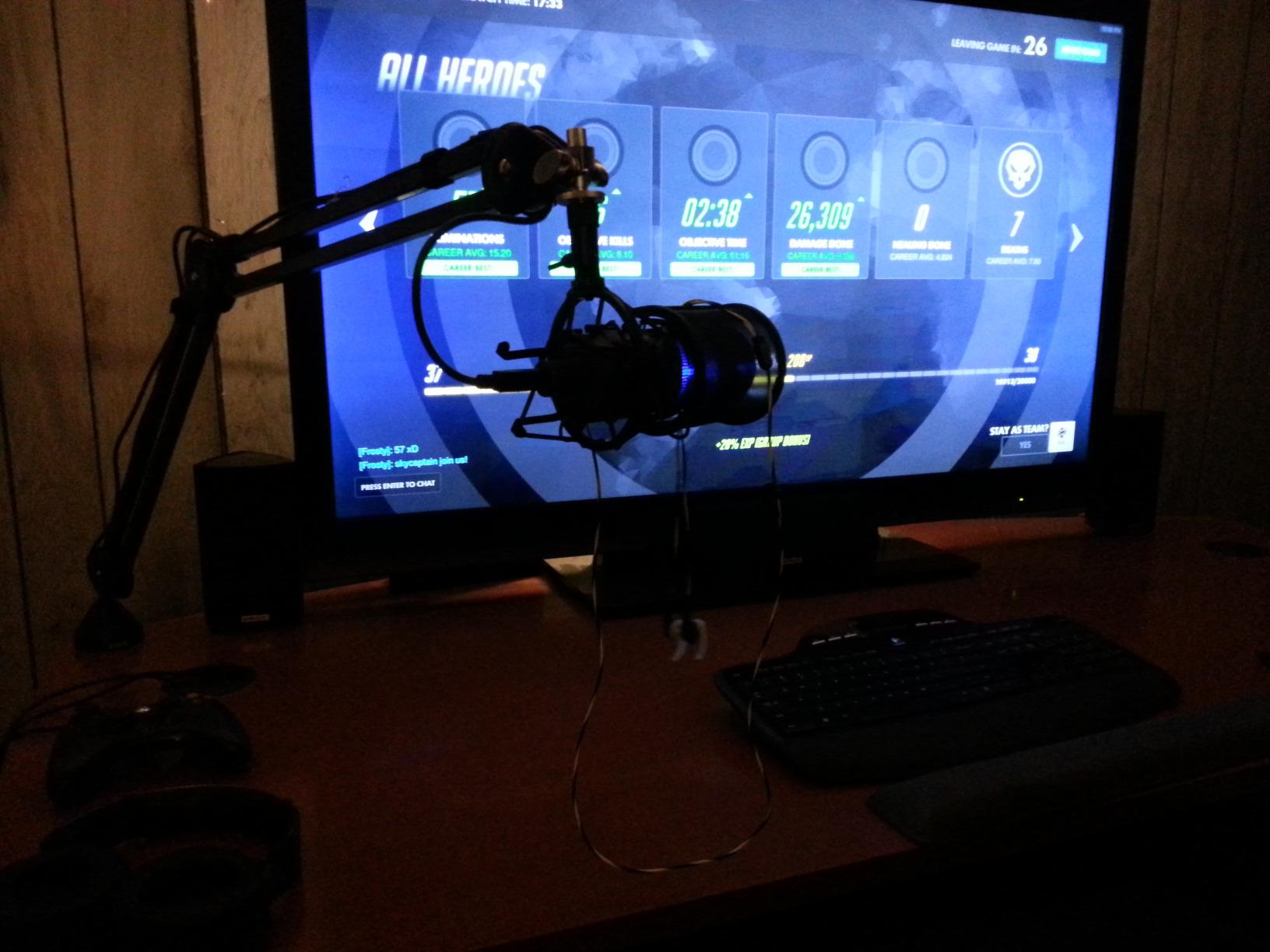
The frustrating part is that all of that control lives on the headphone side, not the input side. There is no on-body mute and no gain knob, so levels are set in software and muting is a click in your recording app. The included tripod stand is small enough to be knocked over by a cable pull, and a boom arm plus shock mount is where I would spend first.
It is also a side-address design, marked by a front-facing blue LED, so the capsule points at you from the side. Align it carefully or the tone changes noticeably. A 16-bit A/D converter at 44.1 and 48 kHz is fine for speech, though 24-bit gives you more headroom to edit later.
Why the low self-noise matters
A low noise floor is the part of a condenser you cannot fix in post. Everything you record on a noisy floor keeps that noise floor, and quiet passages are where listeners hear it first.
Where it gives ground
You give up hardware mute and hardware gain, and the included stand does not stay put. Treat this as a mic you will mount properly on day one rather than leave on a tripod.
5. Samson G-Track Pro – one USB mic for two people in one room
SAMSON G-Track Pro Professional USB Condenser Microphone with Audio Interface
- Built-in instrument input adds an audio interface
- Three selectable polar patterns
- 24-bit 96 kHz conversion
- 120 dB max SPL handles loud sources
- Solid zinc body on a stable base
- Heavier and bulkier than most USB condensers
- Condenser sensitivity means untreated rooms need treatment
- Smaller review base than competing mics
The G-Track Pro answers a question most roundups skip: can two people record on one USB mic? Yes, and the bidirectional pattern is the mechanism. Point the capsule at the pair of you and reject from both ends of the room. A 3.5 mm headphone output with volume control lets each host monitor, which is why this mic turns up in group-format recommendations.
There is also a genuine 1/4 inch instrument input built into the mic, which makes it a small audio interface as well as a microphone. That is useful if your show has a music bed or you want to capture an instrument directly, and the 120 dB maximum SPL handles loud sources without flinching.
Conversion runs at 16 or 24-bit up to 96 kHz, well above the 48 kHz entry point on mics like the AT2020USB+. The trade is weight and bulk. At around 4 pounds it is heavier than most USB condensers, and condenser-level sensitivity means an untreated room still shows up in the recording.
What two people need from one mic
Bidirectional capture plus a headphone output for each host. Neither is standard on a USB condenser, and together they let a two-host show record in a single room without an interface.
When a single host should pass
One person alone gains nothing from bidirectional or the instrument input, and you carry the weight. Solo creators should look at a cardioid-only body instead.
6. Razer Seiren V3 Mini – the best condenser for a small desk
Razer Seiren V3 Mini USB Microphone, Supercardioid Condenser Mic, Black
- Supercardioid pattern genuinely isolates the voice
- Ultra-compact footprint leaves desk space clear
- Silent tap-to-mute with LED status
- Tiltable stand holds its angle
- Razer Synapse prompts and setup add friction
- Integrated shock absorber is less effective than a shock mount
- Short included USB cable may need an extension
The Seiren V3 Mini solves a problem the big desktop condensers create: they take over the desk. At 8.32 ounces and roughly 3.6 inches square, this one sits in a corner and leaves your mouse and screen clear.
Its super cardioid pattern is a genuine noise rejection tool, not a marketing line, and users notice the voice staying clear while typing continues. The tap-to-mute sensor on top is silent, unlike a mechanical switch, and the LED status is bright enough to check from across the desk.
Two frictions show up repeatedly. Razer Synapse adds prompts and setup steps to what is otherwise a driver-free product. And the integrated shock absorber in the detachable stand is thinner than a proper shock mount, so mechanical keyboard noise can still reach the capsule.
What the supercardioid pattern buys you
Isolation from anything to the sides and rear of the capsule. That is why the voice stays intelligible while a keyboard is being hammered next to the mic, and it is why a small supercardioid body can hold up in a busy room where a wide-pattern condenser struggles.
What you trade for that footprint
No on-body gain control, a cable that may be too short, and a shock absorber that is not a substitute for a proper shock mount. Budget for a longer cable if your desk is deep.
7. AKG Lyra C44-USB – the best for ultra-high-resolution capture
- Camera-ready retro styling
- 24-bit 192 kHz ultra-HD conversion
- Four-capsule array with several capture modes
- Zero-latency monitoring with gain and mute on the body
- Retro shell uses more desk space than slim mics
- Bundled Ableton Live 10 Lite is dated
- Higher self-noise than some comparable condensers
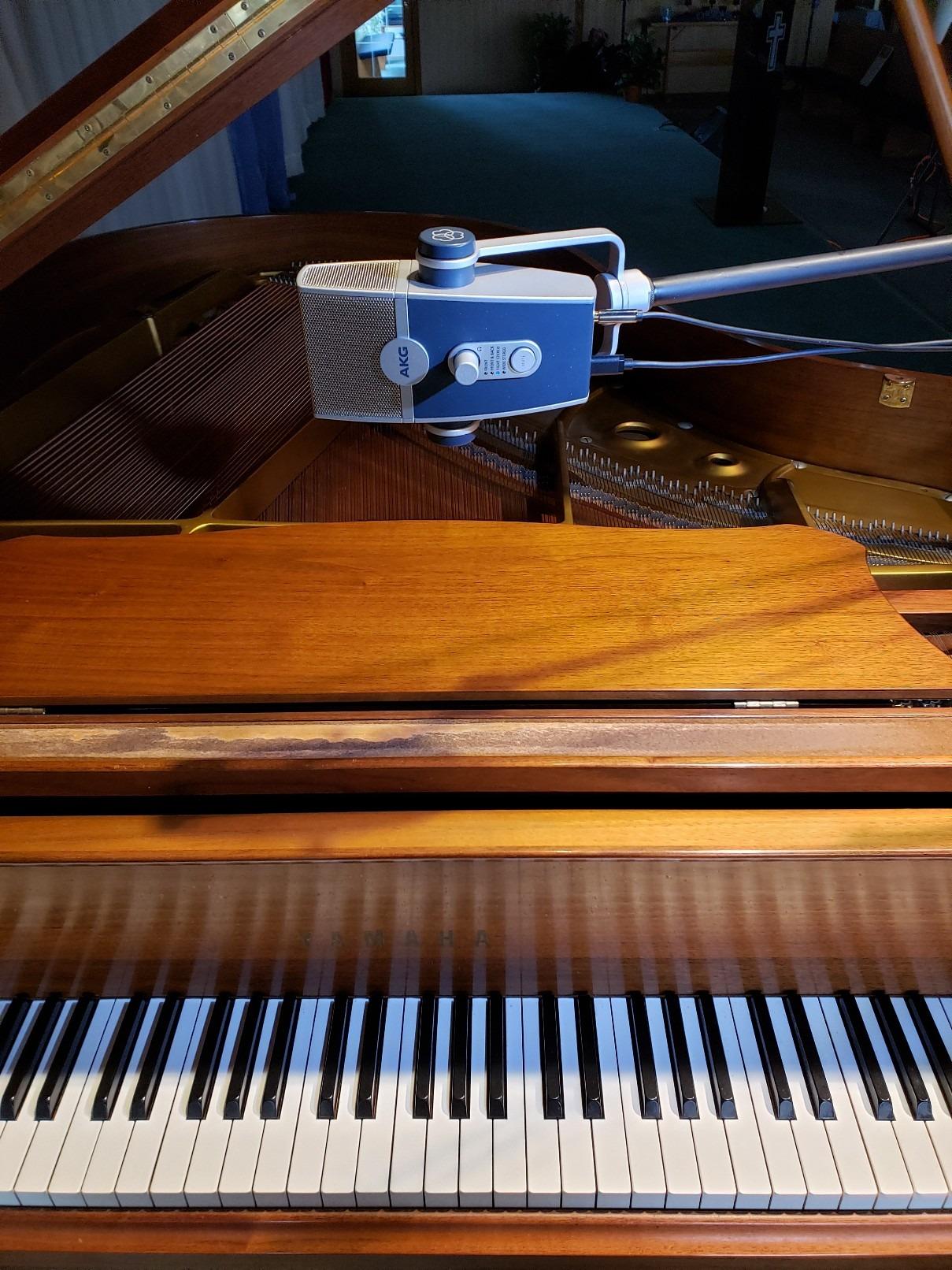
The Lyra is the one here that also looks like an object you want on camera. The retro blue and silver shell is distinctive in a video frame, and if your show is recorded rather than only heard, that is not a trivial factor.
Underneath, a four-capsule adaptive array gives you multiple capture modes rather than a single fixed pattern, and the 24-bit 192 kHz converter has a higher resolution ceiling than the 96 kHz conversion on the Samson G-Track Pro. The output has gain and mute controls on the body, plus zero-latency headphone monitoring, and a single USB-C cable works with Mac, PC, iOS and Android.
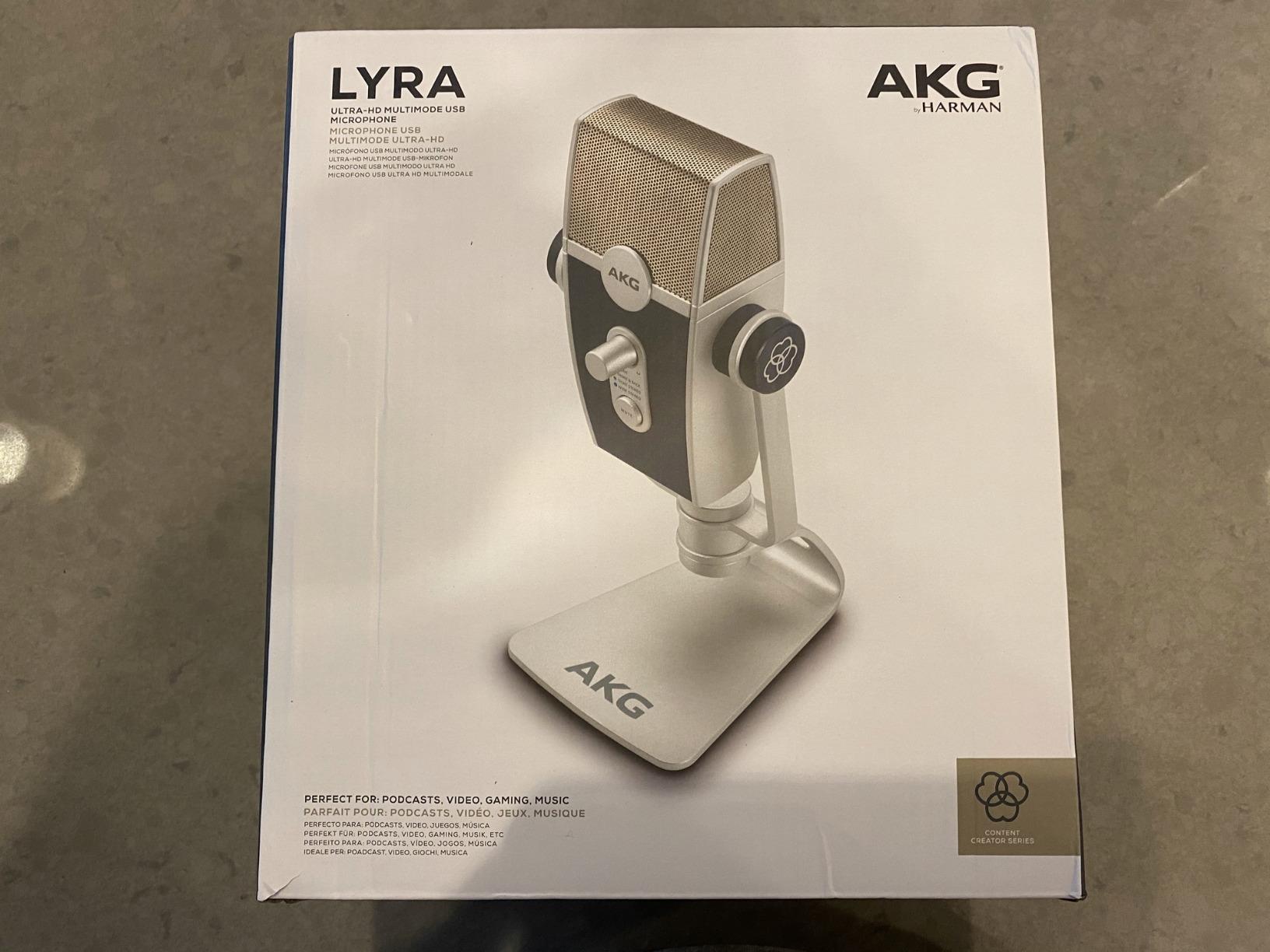
The compromises are honest ones. The shell takes more desk space than a slim modern condenser, the self-noise is higher than some comparable mics at a 78 dB signal-to-noise figure, and getting a consistent sound means learning the mode switching rather than just pointing it at you. The bundled Ableton Live 10 Lite is an older version with limited value for most creators.
When the sample-rate ceiling pays off
192 kHz capture matters if you take a mic to a service that masters for vinyl, a broadcast spec or a video mix. For a spoken-word podcast delivered as a download, the practical difference is minimal.
When to choose a slimmer body instead
Choose a slim cardioid-only mic if desk space is the constraint, or if the retro look is not for you. The shape here is a deliberate statement, and some desks have no room for it.
8. Sennheiser Profile – the warmest spoken-word tone
- Warm natural vocal tone suited to spoken word
- One dial gives quick hands-on control
- Reliable hardware mute easy to reach
- Metal housing built to a high standard
- Cardioid-only pattern gives no interview or group options
- Condenser sensitivity means untreated rooms need treatment
- No shock mount or pop filter in the base configuration
The Profile is built around a single idea: one dial, one mute, no software. The multi-function dial handles gain, mix and headphone volume, and the hardware mute is a real button that works reliably mid-sentence. For a narrator or an interview host who wants to reach over and adjust without looking, that is a more tactile experience than a software-driven mic.
Tone is where it earns the name. Owners describe the vocal character as warm and natural, which is exactly the register podcasting wants, and the cardioid capsule sits in a metal housing that feels like studio equipment rather than a peripheral.
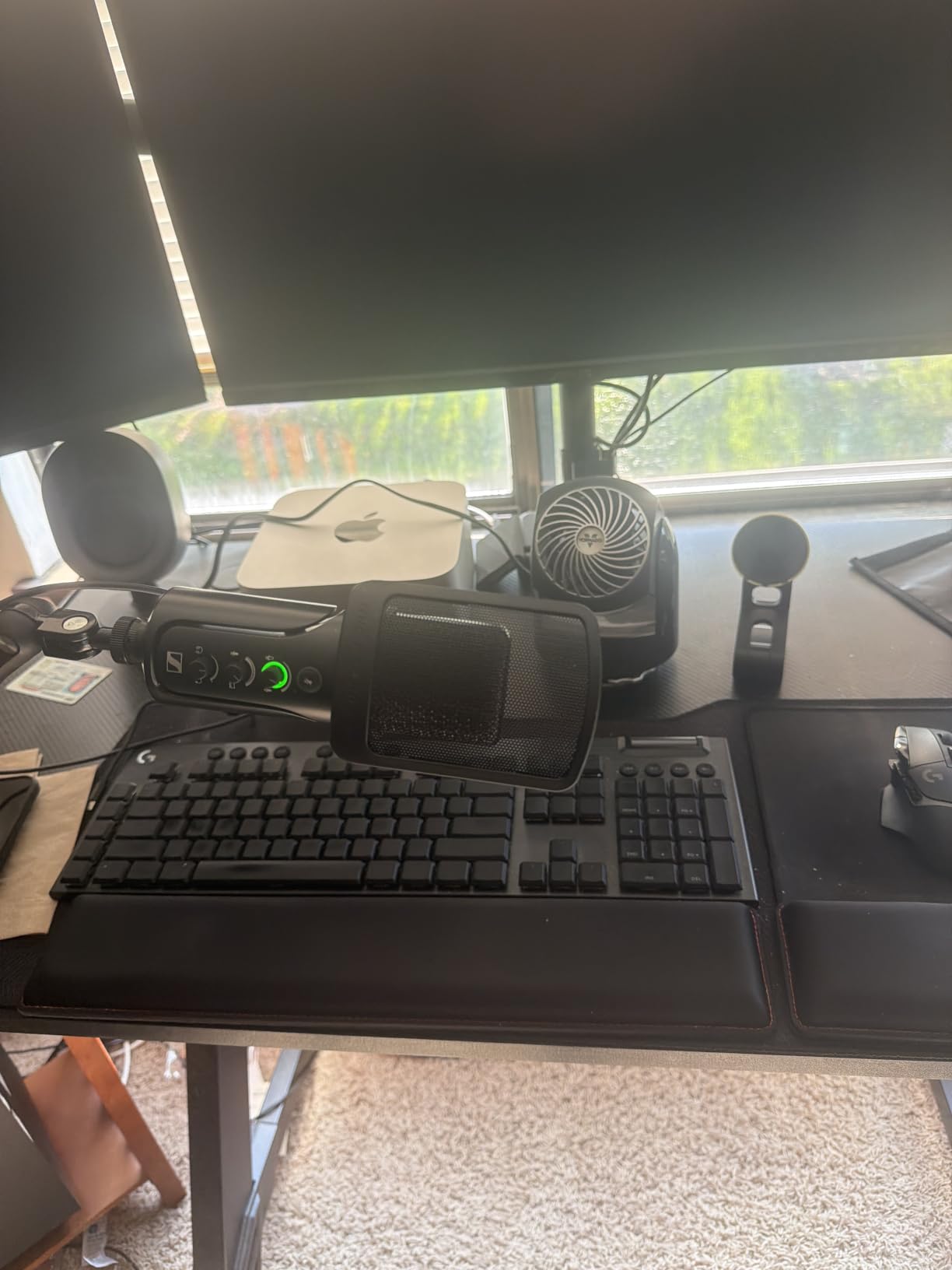
The limits are equally clear. It is cardioid only, so there is no interview or group configuration, and as a condenser it needs a treated room. The base configuration includes no shock mount and no pop filter, so budget for both, and the 60 dB signal-to-noise figure is the weakest of the ten mics we tested.
Where the warm tone comes from
That register holds up without heavy EQ when a host reads from a script, and it sits under a music bed without competing with it.
Where one dial becomes a limitation
You adjust gain, mix and headphone volume in sequence on the same control. That is a feature if you never move them mid-show, and a nuisance if you change level every time a guest’s voice shifts.
9. Rode NT-USB Mini – a portable option for a first podcast
- Studio-quality Rode voice in a compact body
- Built-in pop filter means no extra accessory
- Magnetic stand detaches to a threaded arm
- Zero-latency monitoring with on-body volume
- Condenser sensitivity picks up room noise
- No onboard mute button
- No gain control on the body
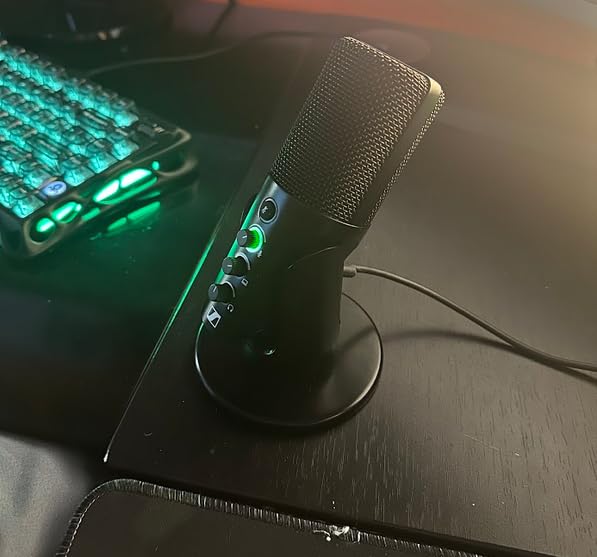
The NT-USB Mini is the studio-brand answer for a creator who records in more than one place. It connects to a Mac, a PC or an iPad over USB-C with no drivers, and the magnetic desk stand detaches straight onto a standard threaded arm when you want it on a boom instead. That flexibility is the whole point of the design.
What surprises people is the built-in pop filter. Rode tuned the capsule with one in mind, so plosives are handled without buying a single accessory, which for a first podcast removes a decision most beginners get wrong. Zero-latency headphone monitoring with on-body volume control is included at this size, which is not a given in a compact body.
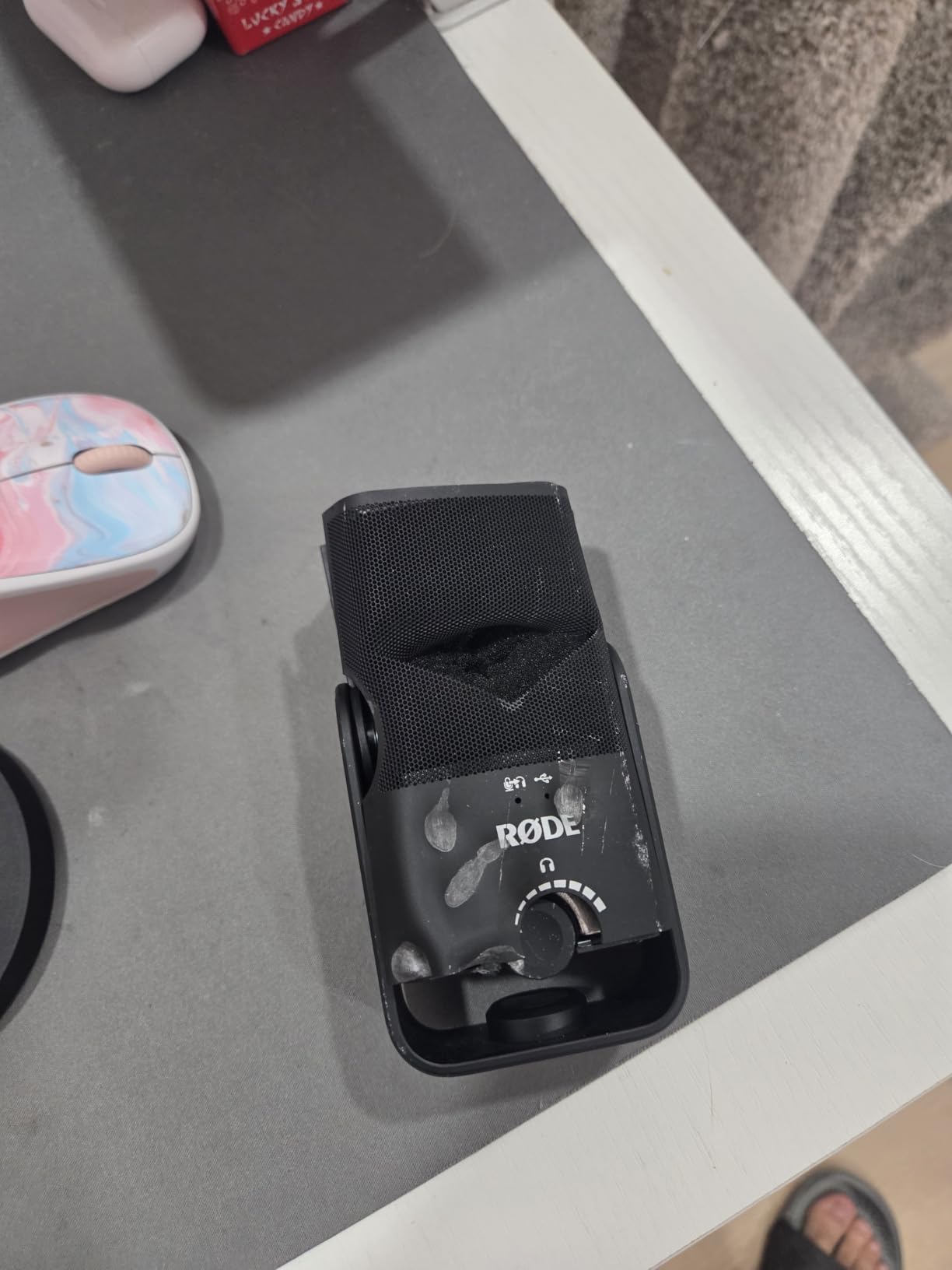
Against that, the mic has no hardware mute and no gain knob, so levels live in software and the capture is fixed cardioid. It is also a condenser, so untreated rooms are audible. And on a low desk the small footprint can leave the mic sitting a little far from your mouth, which costs both clarity and room sound.
What the built-in pop filter saves you
A purchase and a positioning problem. You do not need a separate filter, and a mic that ships with one is already engineered to handle plosives at spoken-word distances.
When the desk distance hurts
A small stand on a low desk pushes the capsule away from your mouth, and distance is the single biggest lever on both clarity and background pickup. A boom arm solves it, and the magnetic mount makes that a one-minute change.
10. Razer Seiren V2 X – a budget supercardioid built for streaming
- Supercardioid pattern isolates the voice from typing
- Digital limiter prevents clipping without manual gain riding
- Hardware mute with a clear color indicator
- Mic monitoring pass-through checks levels in real time
- Razer Synapse installs unprompted and adds little
- Gain knob has no level marking
- Some units reported cable or connector faults
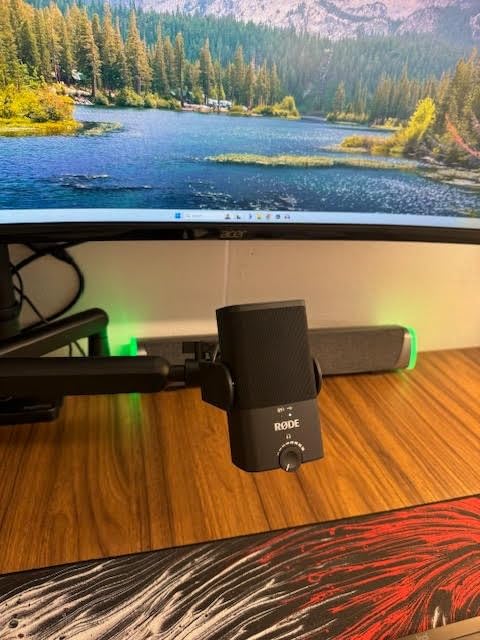
The Seiren V2 X is the pick when your show is also a stream. The integrated digital limiter is the feature that matters most there, because it prevents clipping automatically instead of relying on you to ride gain live, and the on-body gain, volume and mute buttons mean nothing changes hands when a donation alert fires.
The supercardioid pattern suppresses rear and side noise, which is why owners say the voice stays clear while typing continues. The mic monitoring pass-through lets you check your level and cue music in one place, and at 10 ounces the body puts almost no strain on a budget boom arm.
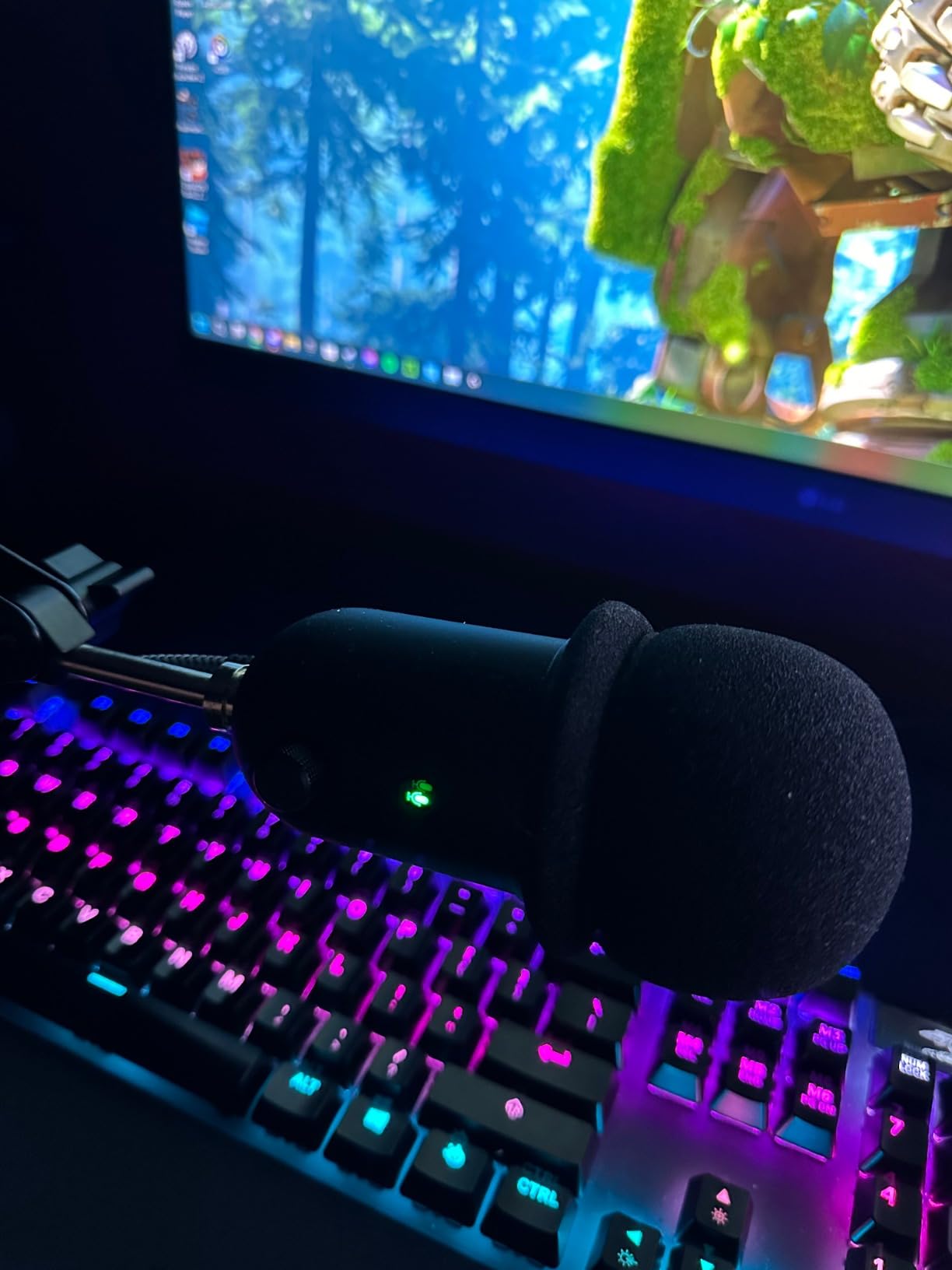
The friction is the software. Razer Synapse installs unprompted, the gain knob is free-spinning with no level marking so you cannot set gain by feel, and the streamer-mix features have been reported to conflict with Windows audio routing. A handful of owners also report cable or connector faults, and the review base here is the thinnest on the list, so long-term confidence is lower than the rating alone suggests.
Why the digital limiter matters live
It catches peaks before they clip, so a sudden laugh or a raised voice does not ruin a take. On a recording-only podcast that is a convenience, while on a live stream with no second take it is the feature that matters most.
When to spend more instead
Its 838-review base is thinner than anything else in this lineup. If you are recording weekly for years, a mic with a longer owner history and a cleaner noise floor is a safer long-term buy.
USB Condenser vs USB Dynamic: When a Dynamic Wins
Podcast communities argue about condenser versus dynamic constantly, and the honest answer is that a condenser wins on detail while a dynamic wins on forgiveness. A condenser capsule is extremely sensitive and records the low-level texture of a voice, plus everything else in the room. A dynamic capsule is built to reject sound arriving from the sides and rear, which is why broadcast and stage mics have used that design for decades.
If your recording space is a quiet, treated or at least well-furnished room, a condenser captures more of what makes a voice sound like a voice. If your space is a shared apartment with traffic outside, a desktop fan and a washing machine in the next room, a USB dynamic is the better purchase at any price. The top discussion in podcast forums right now is microphones for a noisy room, and the consensus there is that room noise is fixed with positioning and gain staging before it is fixed with hardware.
Our list is deliberately all condenser, because a condenser is right for the majority of home setups. Know that the exception exists, and choose it deliberately.
The Noisy Room Problem: What a Condenser Cannot Fix
No microphone makes a bad room good. A condenser will faithfully record the reverb, the hum and the traffic that are already in the space, which means buying a more expensive mic for a noisy room often buys you a clearer recording of the same noise. Five fixes solve most of it, and none of them require new hardware.
Get closer. Every extra inch between your mouth and the capsule lowers room pickup. Four to six inches with a pop filter handles plosives and cuts background sound dramatically.
Point the back at the noise. A cardioid pattern rejects sound behind the capsule, so aim the rear of the mic at a window, a door or a wall.
Kill gain creep. Set the gain so your loudest phrase peaks around -6 dB. Over-gaining amplifies the noise floor along with the voice.
Add soft surfaces behind and beside you. A wardrobe, a curtain, a duvet on a rack and rugs on hard floors absorb reflections that a bare room bounces back.
Record when the building is quiet. Early morning and late evening usually beat the middle of a day for traffic and neighbours.
After those five, if noise is still the problem, that is the signal to move up to a USB dynamic or to a mic with a multi-pattern capsule such as the Samson G-Track Pro. Position first, hardware second, in that order.
How to Choose a USB Condenser Microphone for Podcasting
Five specifications actually change your result. Everything else on a product page is decoration.
Polar pattern decides who you can record
Cardioid captures one speaker in front and rejects the rest, which covers solo shows and single-host interviews. Omnidirectional picks up the room evenly, which suits a round-table conversation but collects every noise in the space. Bidirectional takes two people facing each other. Multi-pattern mics like the Blue Yeti and the Samson G-Track Pro let you change the answer later instead of committing now.
Sample rate and bit depth decide how much you can fix later
24-bit recording captures roughly sixteen times more dynamic range than 16-bit, which means the hiss between words is stored below your voice instead of beside it. Set your recorder to 24-bit wherever the software allows it. Sample rate matters less for speech: 48 kHz is the practical standard, and the 96 kHz and 192 kHz figures on the Samson and AKG are resolution headroom rather than audible podcast quality.
The headphone jack decides how you deliver
Zero-latency monitoring means you hear yourself with no delay, which is the difference between confident delivery and constant second-guessing. Mics with a mix control, like the AT2020USB+ and the Sennheiser Profile, go further and let you hear playback and your mic together, which matters when you are recording against music.
On-body control decides whether you stay in the flow
A hardware mute and a gain knob let you handle a cough, a door or a second speaker without opening software mid-sentence. The Sennheiser Profile and the Elgato Wave:3 MK.2 have both. The Blue Yeti has both. The Rode NT-USB Mini and the Audio-Technica AT2020USB+ have neither, and you will set levels in software instead.
What is actually in the box
This is the most-missed purchase factor and the biggest real cost. Only the FIFINE T669 bundles a boom arm, shock mount, pop filter and cable together in one purchase. The Rode NT-USB Mini is the only one with a built-in pop filter. The Elgato Wave:3 MK.2 and the Sennheiser Profile include no pop filter or shock mount at all, so add those to your plan before you buy. A bundled kit is not automatically better, but it does remove accessory shopping from day one.
Port and platform compatibility
Connector types vary across the list, so check before you order. The Elgato Wave:3 MK.2, the AKG Lyra and the Rode NT-USB Mini all use USB-C, and the Razer Seiren V3 Mini uses USB-A, while the FIFINE T669 includes a detachable cable for either. Everything here is class-compliant, so no drivers are needed, which is the single biggest reason to buy USB rather than XLR.
Mic placement: the 3-to-1 rule and other distance tips
The 3-to-1 rule states that the total distance from your microphone to every reflective surface in the room should be at least three times the distance between the microphone and your mouth. It exists because reflections arriving from a wall at the same time as your direct voice are what create the echo and reverb a condenser records so faithfully. Keep the mic-to-mouth distance at four to six inches, then push the walls further out or cover them with soft material. This one habit does more for your sound than upgrading the microphone.
Our wider guides cover the format differences in more detail if you want to compare against non-USB options: the best condenser microphones, the best condenser microphones for vocals, and the best condenser microphones for streaming.
Frequently Asked Questions
What is the best USB condenser microphone?
The Logitech Blue Yeti is the best USB condenser microphone for most people, because its four switchable pickup patterns cover solo recording, two-person interviews, group conversations and instruments with one body and one cable. It pairs a 20 Hz to 20 kHz response, a 100 dB signal-to-noise ratio and onboard gain, mute and headphone volume. It is also the most sensitive to room noise here, so a treated or quiet space matters.
Which microphone is best for podcasts?
It depends on the format. A solo host in a quiet room does well with any of the cardioid condensers on this list. A two-person interview in the same room needs a bidirectional pattern, so the Samson G-Track Pro or the Blue Yeti in bidirectional. A show recorded in a noisy apartment should skip condensers and use a USB dynamic instead. A remote guest recorded on separate tracks does not need a special mic at all.
What is the 3 to 1 rule for microphones?
The 3-to-1 rule says the total distance from your microphone to the reflective surfaces in your room should be at least three times the distance between the microphone and your mouth. It reduces the reflections that arrive at the same time as your direct voice, which is what a condenser records as echo and reverb. Practically, keep the mic four to six inches from your mouth and push the nearest wall at least a foot or two further out.
Are USB condenser microphones good for podcasting?
Yes, for speech in a reasonably quiet room they are the easiest way to get a broadcast-sounding voice. They connect with one cable, need no drivers, and most models here record 24-bit audio with zero-latency headphone monitoring. The limitation is sensitivity: a condenser records the room as clearly as it records you, so a noisy or untreated space will be audible in the finished episode.
What mic does Joe Rogan use for his podcast?
Large professional podcasts of that scale record in a treated studio with broadcast dynamic microphones, not USB condensers. The reason is the same one behind the USB dynamics on the market: a dynamic capsule handles a live room and a moving host more reliably than a sensitive condenser. That is also why a USB dynamic beats a USB condenser for a home recordist in a noisy apartment, though at a much smaller scale.
Do USB condenser microphones need an audio interface?
No. That is the point of the USB format. The preamp, gain stage and analog-to-digital converter are all built into the mic body, so it appears to your computer as a standard audio input. The only exception is if you want to record a guitar or another instrument at the same time, where the Samson G-Track Pro includes a 1/4 inch instrument input for exactly that reason.
Final Verdict and Where to Start
Start with the Logitech Blue Yeti. It is our pick for the best USB condenser microphones for podcasting in 2026 because four switchable patterns, onboard gain, mute and headphone volume, and the deepest long-term owner history in this roundup make it the safest single purchase for a show that will change shape over time. One body handles a solo show, a guest interview and a roundtable.
If you are recording your first episodes this month, the FIFINE T669 is the better economic decision. The boom arm, shock mount, pop filter and cable are in the box, so nothing else needs buying before you publish. If your room is untreated rather than quiet, move up to the Audio-Technica AT2020USB+, whose low self-noise is the reason it records cleaner in real rooms. If you want to control the sound in software, the Elgato Wave:3 MK.2 replaces a hardware mixer with a free application.
Whichever you choose, set your gain so your loudest phrase peaks around -6 dB, get four to six inches from the capsule, and remember that no microphone makes a bad room good. Positioning and gain staging come before any upgrade. All ten models are class-compliant, so you will be recording within a minute of plugging in.