
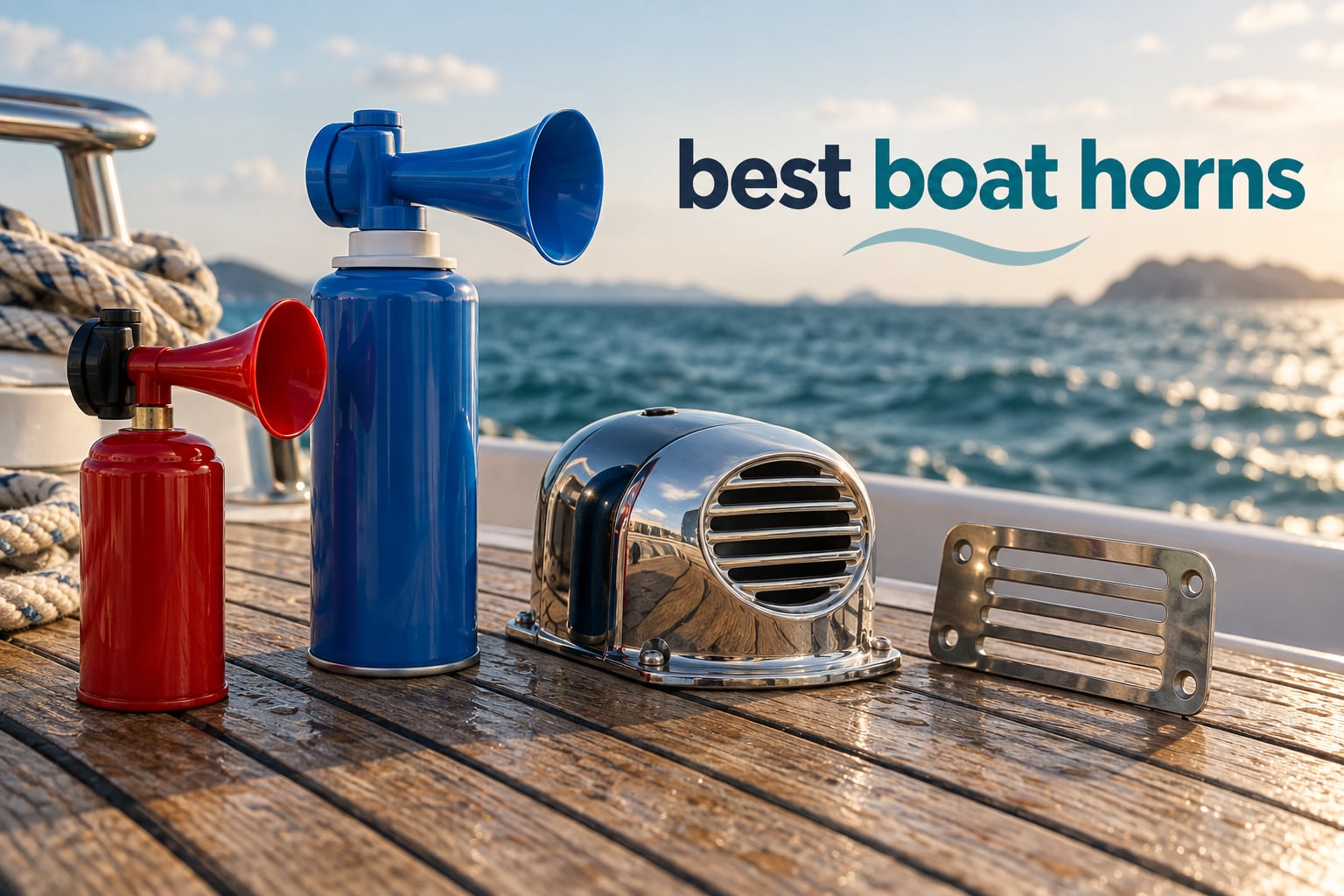
The best boat horn depends on three things: how big your boat is, how much room you have at the helm, and whether you would rather wire something in or carry something in your hand. There is no single winner for everyone, and the loudest horn on the market is not automatically the right one for a 16 foot runabout.
What matters more than most buyers expect is the type of signal device. A handheld compressed-gas canister needs no wiring at all and works the moment you pick it up. A hidden electric horn tucks below the deck, survives spray, and stays on your helm button permanently, but it draws real amperage and needs a cutout. A wired trumpet horn is the loudest option and the most work to install.
We went through the ten marine signal devices on this list spec by spec, focusing on the numbers that actually predict performance on the water: measured output, physical size, power draw, and whether the housing is built for salt air. If you are also outfitting your boat, our picks for the best boat fenders and the best boat ladders cover the rest of the safety kit.
Table of Contents
Top 3 Picks for the Best Boat Horns in 2026

Better Boat 1.4 oz Air Horn
- 120 dB output
- No wiring needed
- Approved to 65 feet
- Half-mile range


FIAMM 5190512 Marine Horn
- 125 dB at 4 inches
- Stainless steel grill
- ABYC and NMMA
- OEM drop-in fit
If you want the single most useful horn in this list, the Better Boat 1.4 oz has the deepest review history here at more than eight thousand ratings and a 120 dB output that reviewers consistently say cuts through engine and wind noise. It disappears into a jacket pocket or a dry bag, which is exactly what you want from something you might need in a hurry.
If raw output is the priority, the SeaSense Jumbo at 127 dB is the loudest canister here, with the highest average rating among the canisters at 4.6 stars across nearly two thousand ratings. And if your factory horn is dead or weak and you want a permanent replacement rather than a handheld, the FIAMM 5190512 is the one owners install most often, meeting ABYC and NMMA standards with a stainless grill built for salt water.
Quick Comparison of the Best Boat Horns in 2026
| Product | Specifications | Action |
|---|---|---|
| Better Boat 1.4 oz Air Horn |
|
Check Latest Price |
 SeaSense Air Horn 3.5 oz SeaSense Air Horn 3.5 oz |
|
Check Latest Price |
 Better Boat 3.5 oz Air Horn Better Boat 3.5 oz Air Horn |
|
Check Latest Price |
| SeaSense Jumbo 8 oz Air Horn |
|
Check Latest Price |
 Guard Dog Security Air Horn Guard Dog Security Air Horn |
|
Check Latest Price |
 Super Blast 8 oz Air Horn Super Blast 8 oz Air Horn |
|
Check Latest Price |
 Shoreline Marine 8 oz Air Horn Shoreline Marine 8 oz Air Horn |
|
Check Latest Price |
 Marinco 12V Drop-In Hidden Horn Marinco 12V Drop-In Hidden Horn |
|
Check Latest Price |
 Seachoice Hidden Boat Horn Seachoice Hidden Boat Horn |
|
Check Latest Price |
| FIAMM 5190512 Marine Horn |
|
Check Latest Price |
Read the type column before the decibel column. A 120 dB canister and a 105 dB hidden horn are not competing products, because one lives in your hand and the other lives under your deck.
1. Better Boat 1.4 oz Air Horn – Best All-Round Portable
Air Horn 1.4 oz 120 dB, Compact Emergency Signal Horn for Boating Safety
- 120 dB blast cuts through engine and wind noise
- Approved for vessels up to 65 feet and 20 meters
- HFC-152A propellant holds pressure in cold conditions
- Small enough for a jacket pocket or dry bag
- Aerosol can is single-use and cannot be refilled with this unit
- No mounting hardware for permanent helm installation
This is the horn we keep within reach on every boat we have worked on. The 1.4 oz canister is genuinely pocketable at 5.2 x 1.4 x 3.5 inches, and that changes how you use it. A horn bolted to the console is a signal device you remember to use, while a horn in your pocket is one you can reach in two seconds.
Reviewers describe the 120 dB output consistently: it does not compete with a compressor-driven trumpet, but it punches through outboard noise and wind in a way that surprises people. More than eight thousand ratings sit behind it, and the strongest recurring comment is that it is audible from roughly half a mile away.
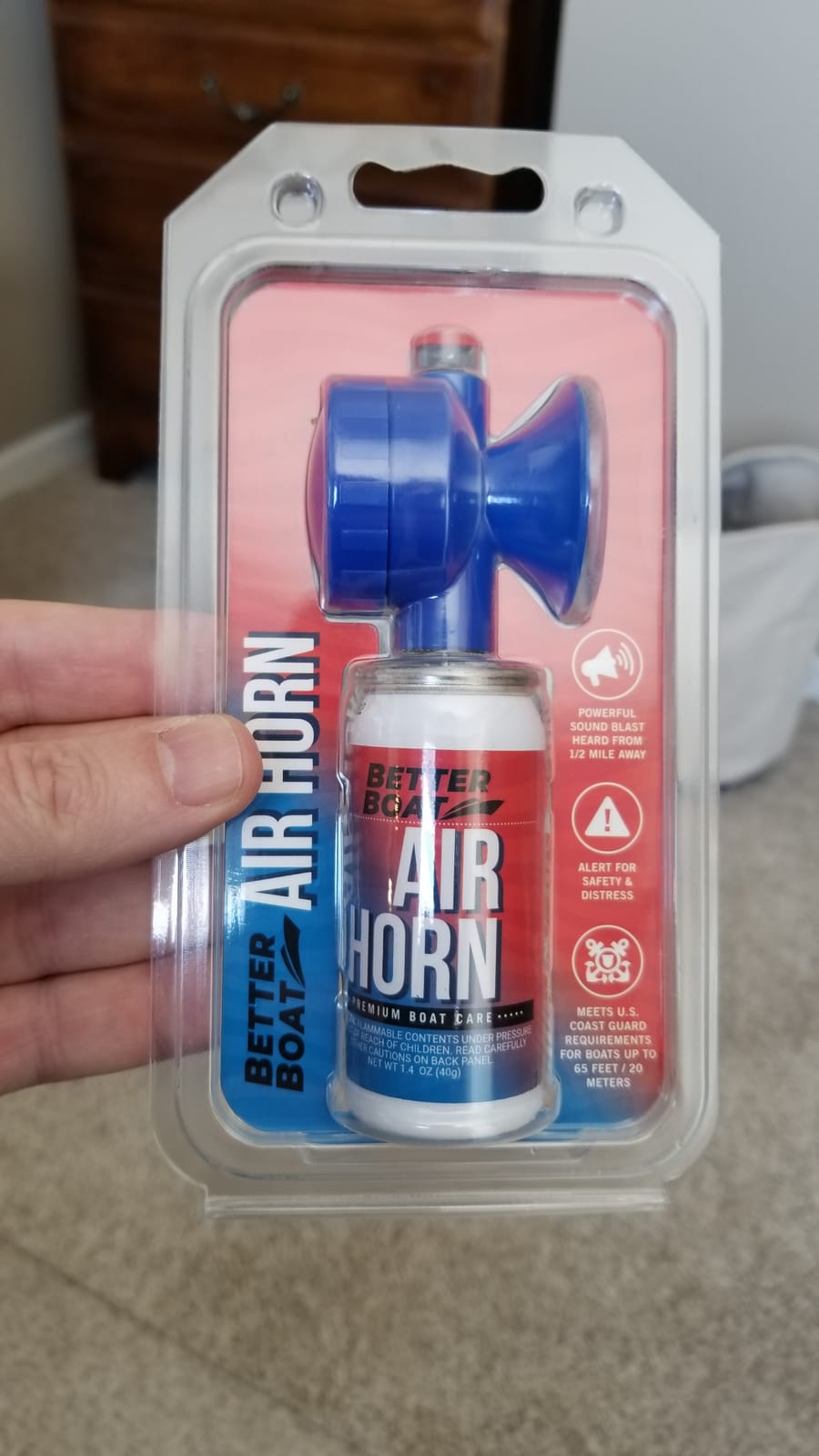
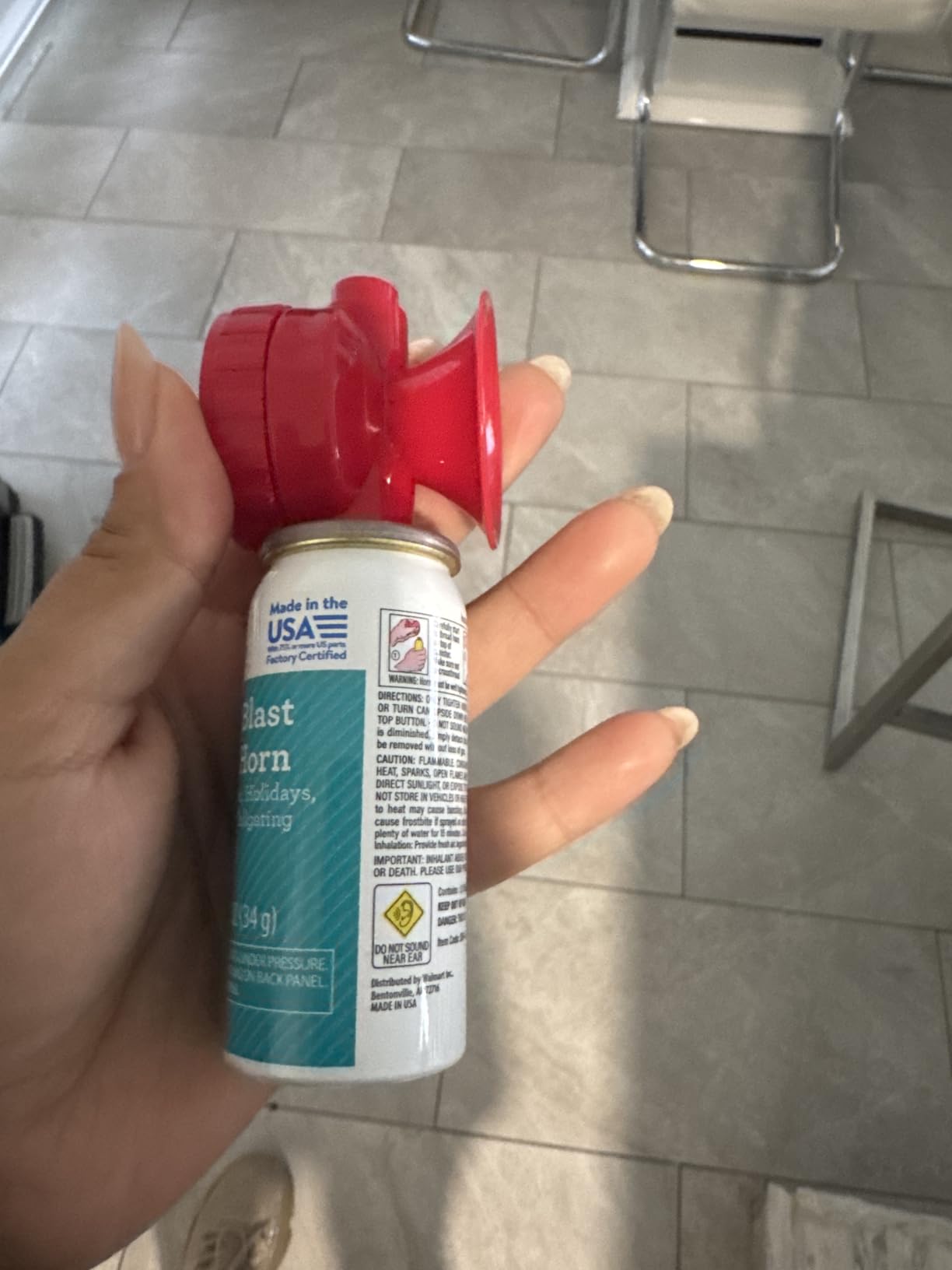
The propellant choice matters more than most listings admit. This one runs HFC-152A, which holds its pressure in cold conditions, so it still works on a freezing January morning when a weaker canister gives up. It is also made in the USA and carries a manufacturer satisfaction guarantee.
The main limitation is structural rather than electronic: it is a single-use aerosol can, and this unit cannot be refilled. Budget for replacements across a season rather than expecting one can to last a full year of signalling. If you want the same performance with more blasts per purchase, the SeaSense 3.5 oz carries roughly two and a half times the propellant.
What makes it worth carrying
It needs no wiring, no relay, no fuse, and no mounting hardware. That means you can hand it to a guest, clip it to a life jacket, or stow it in a dry bag without thinking about electrical load on the boat.
It is also approved for vessels up to 65 feet and 20 meters, which covers the range where federal sounding-device rules start to matter. For anything smaller than that, it is still the backup we would want in the locker.
Where it falls short
A canister has a finite number of blasts, and if you blow it in a panic the replacement has to be within reach. We keep two stowed rather than one for that reason.
It also does nothing for the compliance side of things on its own in some states, because a permanently mounted horn may be what the local rule asks for. Check your state requirement before you rely on a handheld alone.
2. SeaSense 3.5 oz Air Horn – Best Value
- 118 dB output with roughly one mile of audible range
- Push-button removable top and strong diaphragm
- Meets EPA and US Coast Guard standards
- Impact and weather resistant aluminum trumpet
- Some reviewers report intermittent or weak blasts
- Bulkier than a pocket-sized mini horn
The SeaSense 3.5 oz is the middle of the three sizes and, in our view, the sensible default for anyone who wants one canister that handles both collision avoidance and general signalling. At 118 dB it sits just under the 120 dB cans, and the difference is far smaller on the water than the numbers suggest.
What we like is the physical construction. The trumpet body is aluminum and described as impact and weather resistant, and the push-button top releases at defined safety points so it cannot fire by accident inside a locker. It is made in the USA and carries a one year warranty from Unified Marine.
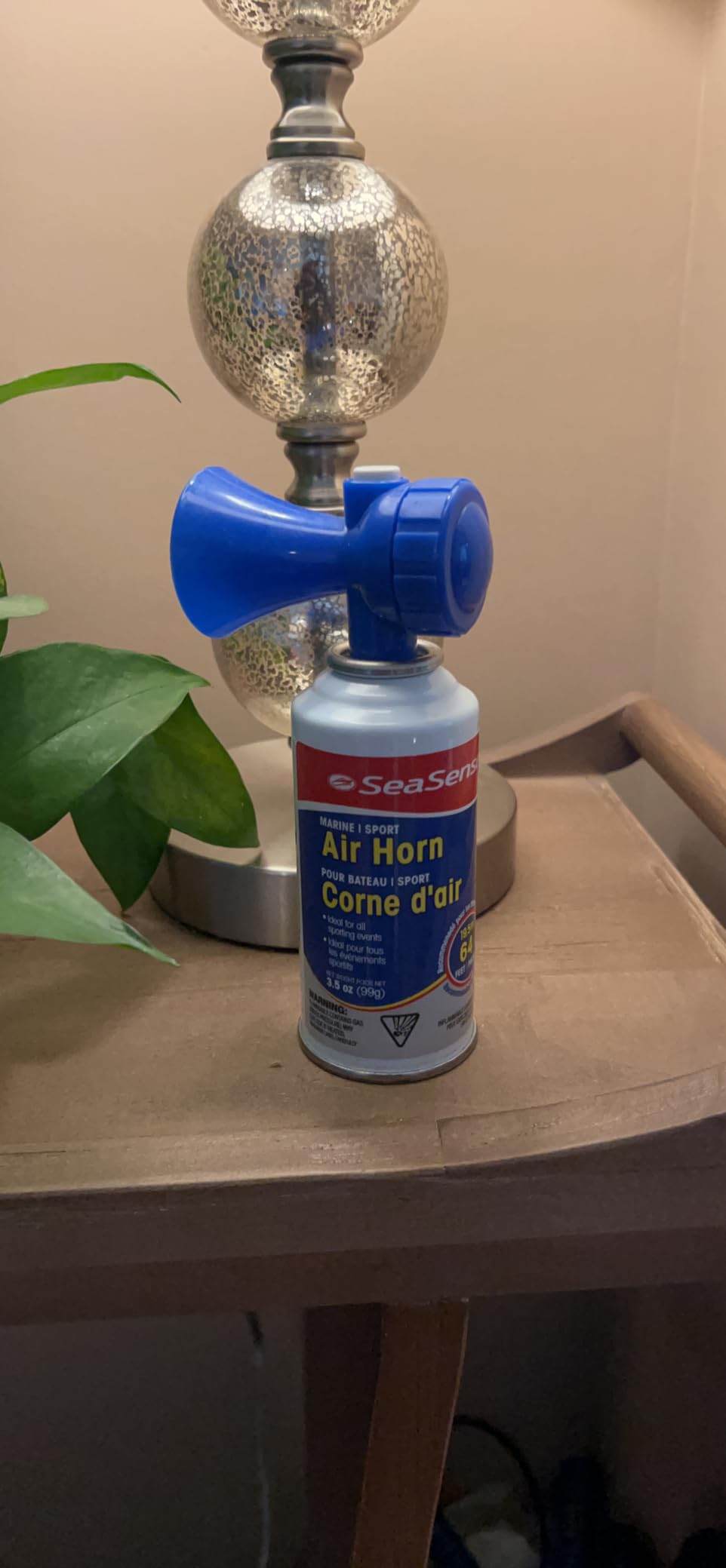
The honest weakness is consistency rather than output. A minority of the six thousand ratings we reviewed describe intermittent or weak blasts, and a few owners note the canister is larger than they expected. That is a small minority, but on a signal device, intermittent behaviour is the one failure mode you cannot plan around.
The stated range is roughly one mile, which lines up with what owners report when they use it to scare off animals or warn a trespasser. For collision avoidance on a boat you are actively driving, most owners pair it with something permanent rather than relying on the canister alone.
Where it earns its place
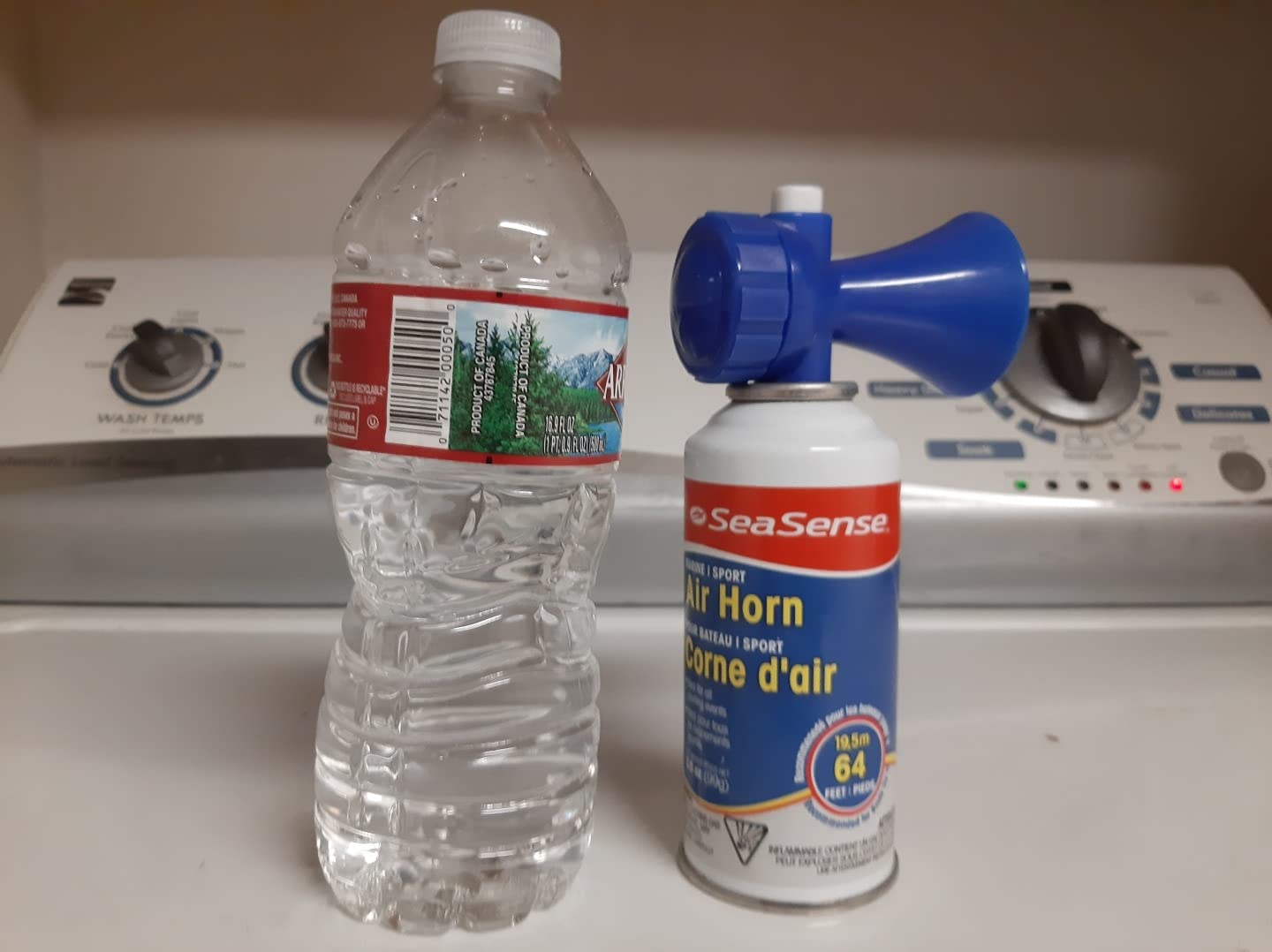
The 3.5 oz size suits a boat between roughly 16 and 30 feet, where you want real output without a canister that will not fit in a console locker. Stowing two, one at the helm and one in a grab bag, covers the case where the first one goes off in a hurry.
It meets EPA and Coast Guard standards, which matters if you are asked about compliance by an inspector or another vessel.
Where it falls short
It is not pocketable. At 4 ounces and a larger body than the mini models, it lives in a locker or on a hook rather than on your person.
If your boat already has a working wired horn, this is an addition rather than a replacement. If it does not, be realistic about whether you want to depend on a consumable for your primary signal.
3. Better Boat 3.5 oz Air Horn – Most Versatile for Bigger Boats
- 120 dB blast cuts through engine noise and ambient sound
- Approved for boats up to 65 feet and 20 meters
- HFC-152A retains pressure in cold weather
- Larger size suits bigger boats and extended use
- Listing shows 115 dB while the title states 120 dB
- Single-use canister with no refill option
This is the same canister format as our top pick at double the propellant, which means noticeably more blasts before you need a replacement. If you are running a boat in the 25 to 40 foot range and want a single handheld that lasts, the extra volume is worth it.
The 4.3 star average across a little over two thousand ratings is slightly below the 1.4 oz model, and reading the reviews explains why. Owners are not unhappy with the sound; they are annoyed that the listing contradicts itself, with the product details page stating 115 dB while the title says 120 dB.
That discrepancy is worth taking seriously rather than dismissing. When two numbers from the same manufacturer disagree, we plan for the lower one. Even so, most reviewers describe the blast as cutting through engine noise, which is the performance characteristic you actually need.
Why pick this over the 1.4 oz
Propellant capacity. A bigger boat burns through a mini can fast, and the 3.5 oz roughly two and a half times the volume means you replace it far less often across a season of weekend use.
It is also approved for vessels up to 65 feet and 20 meters, and uses the same HFC-152A propellant that we rate well for cold-weather pressure retention.
Where it falls short
The listing inconsistency is a real drawback on a safety product. If accurate specification matters to you, the SeaSense options in this list publish their output more cleanly.
It is still a consumable. Nothing about this design fixes the problem of a boat whose only sound signal runs out at the worst moment.
4. SeaSense Jumbo 8 oz Air Horn – Top Rated and Loudest Canister
- 127 dB output
- the highest of the canisters here
- Meets EPA and US Coast Guard standards
- Impact and weather resistant aluminum trumpet body
- 81 percent of reviews are five-star
- 8 oz can is large relative to pocket-sized mini models
- 30 day manufacturer warranty
At 127 dB this is the loudest canister horn in the list, and at 4.6 stars across a little under two thousand ratings it also has the highest average rating among the canisters here. Roughly 81 percent of those ratings are five star, which is unusually consistent for a safety accessory.
The 8 oz format is what makes that number possible. The trumpet body is aluminum and rated impact and weather resistant, the removable push-button top has defined safety release points, and the listed audible range is about a mile. It is made in the USA.
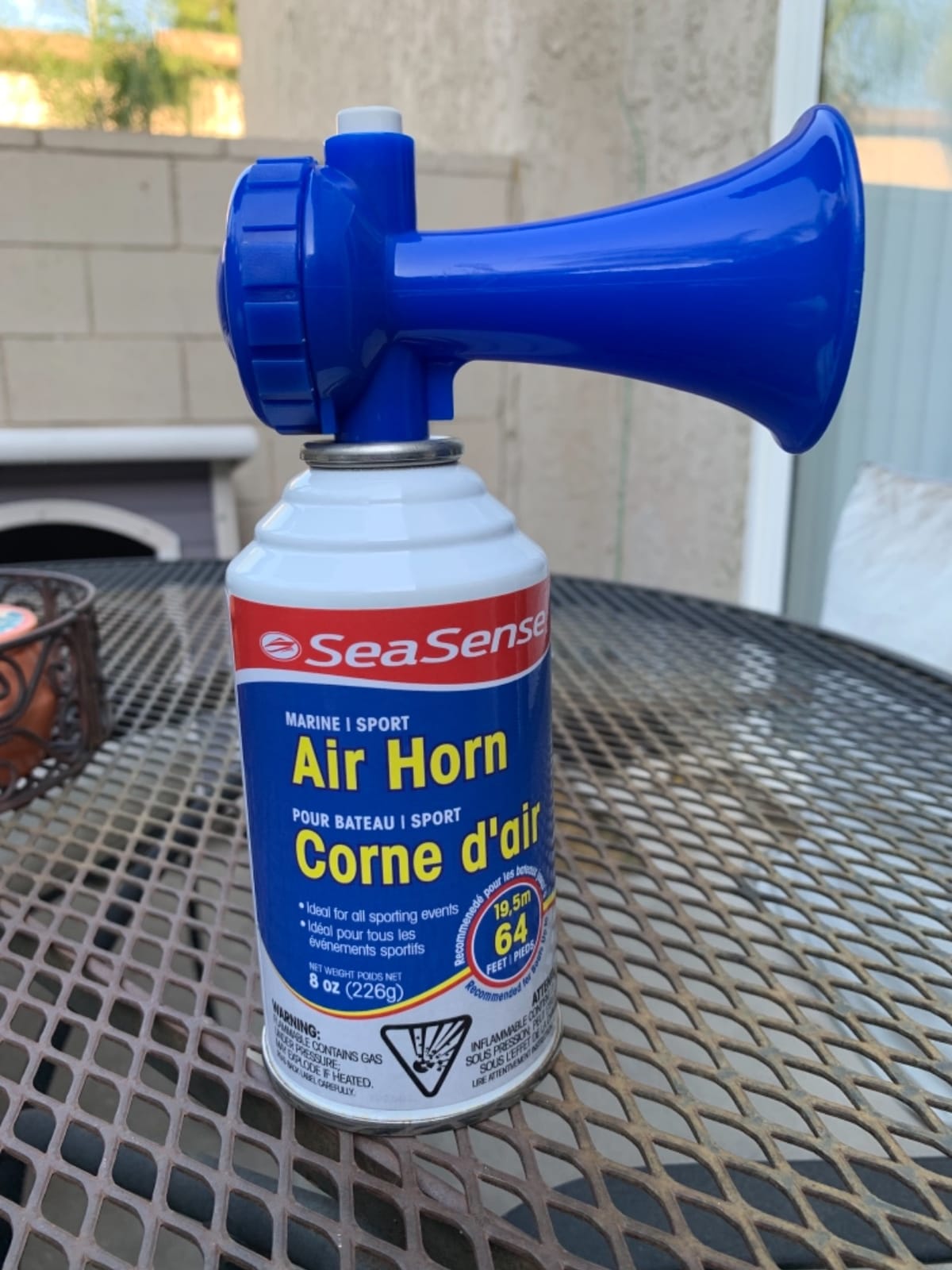
Owners describe it as the one they reach for when something matters, whether that is deterring animals near a campsite, warning someone on shore, or sounding out in fog. Several reviewers mention it working equally well for boating, kayaking, and officiating sports, which is exactly the use case its size supports.
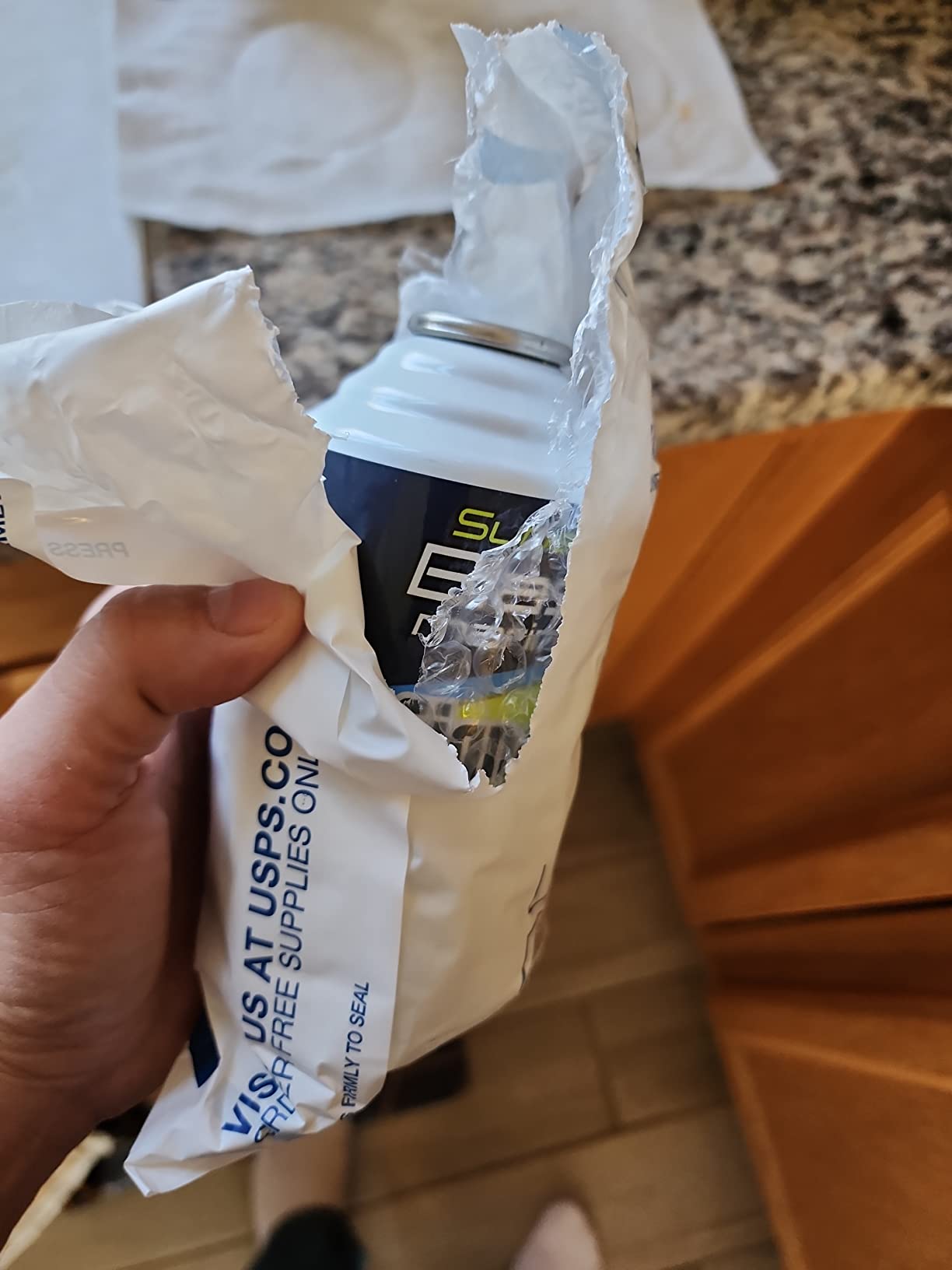
The trade-off is obvious and physical. At 8 ounces and 5.75 x 3 x 10 inches, this is a two-handed object. It lives in a locker, not a pocket, so plan the stowage before you buy it or you will find it under a seat cushion six months later.
When 127 dB is the right call
On larger boats, in open water, or in fog where you need the signal to carry, the jump from 120 dB to 127 dB is meaningful. Combined with the one mile stated range, this is the strongest handheld option here when you need long-range warning.
It meets EPA and US Coast Guard standards, and its rating consistency suggests the output is delivered consistently rather than occasionally.
When it is more than you need
If your boat is under about 20 feet and operates in protected water, a 127 dB canister is more output than the situation calls for, and you are carrying the extra weight for no benefit.
The manufacturer warranty listed for this model runs thirty days, so treat it as a consumable from day one rather than something you would expect to keep for seasons.
5. Guard Dog Security Air Horn – Best with Wall-Mount Stowage
- 120 dB advertised at up to a 1 mile range
- Compact 1.4 oz size fits pockets and bag compartments
- Includes a wall-mount bracket for stowage and quick access
- Manufacturer lifetime warranty offered
- Lowest average rating in the group at 4.0 stars
- Some owners find the output weaker than the 120 dB claim
- Isolated report of an end cap blowing off
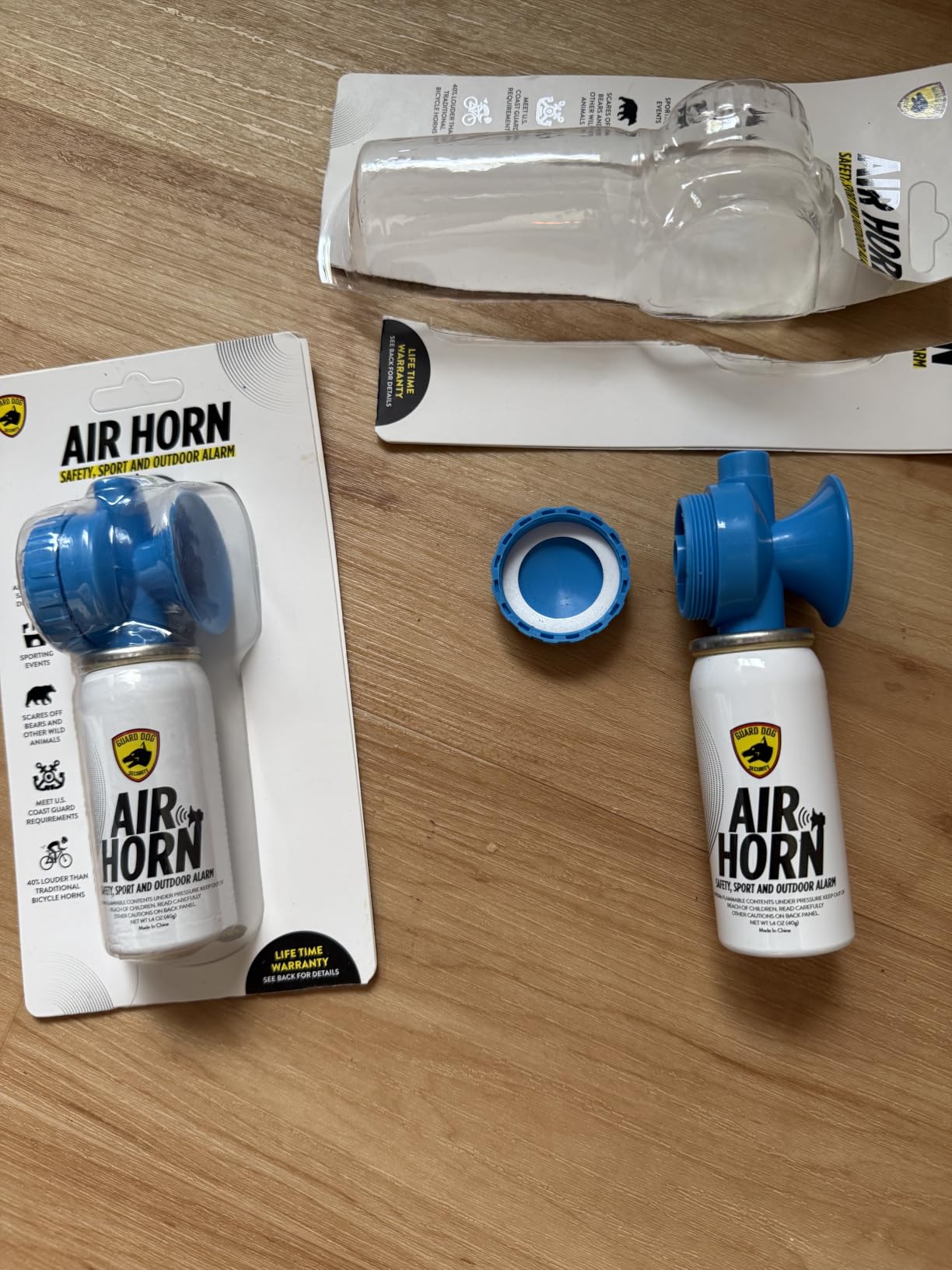
What separates this one is the included wall mount. Every other handheld here is a loose object, and this one gives you a fixed bracket so the horn lives in a specific, reachable place rather than migrating to the bottom of a console. For that reason alone it is the one we recommend for boats where quick access matters more than raw output.
It is also available in two, four, and six packs, which makes it a practical choice if you want one at the helm, one in each cockpit, and one in a life jacket. The body is 3.98 x 7.28 x 1.5 inches and the trumpet is aluminum.
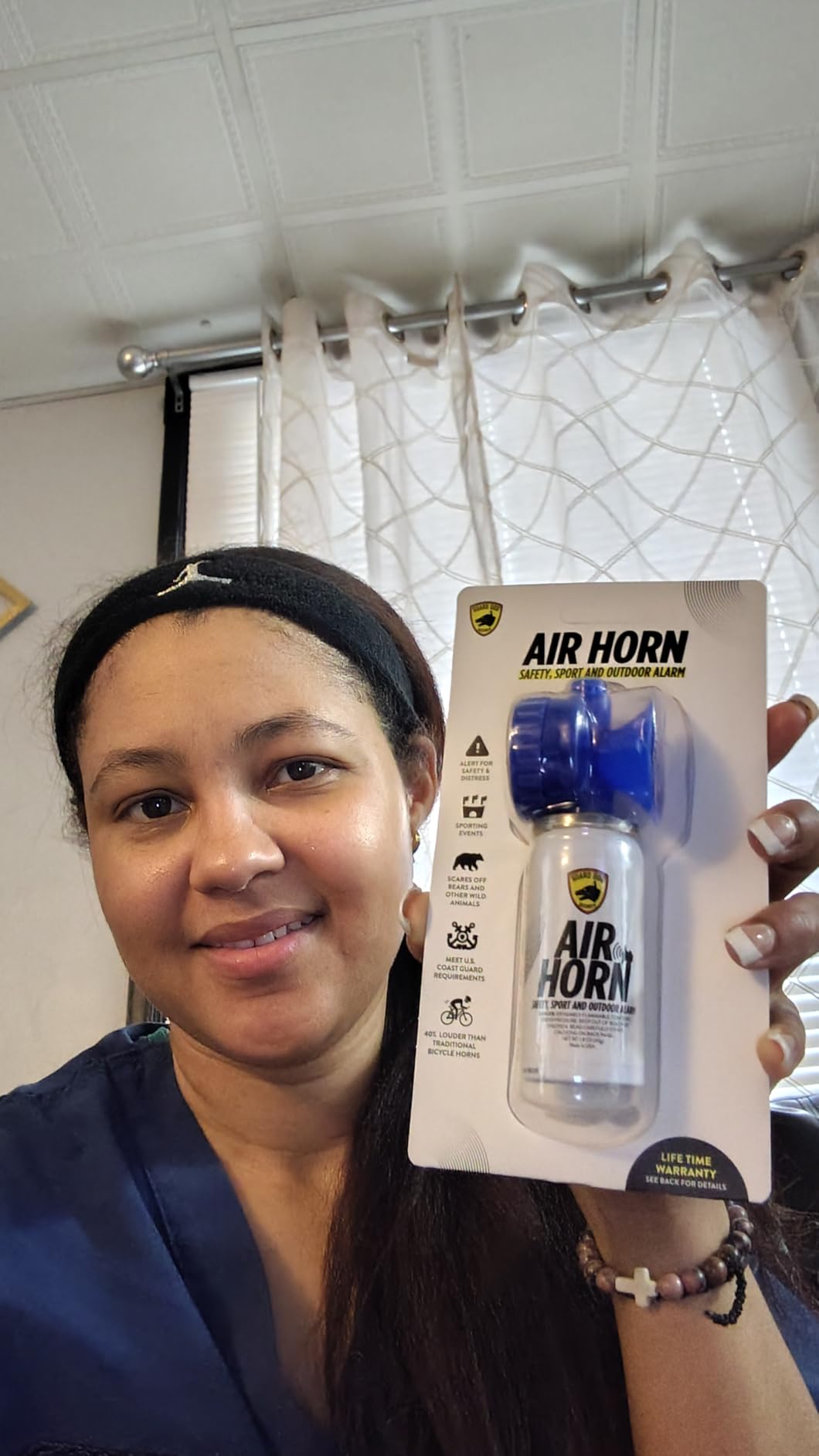
The rating tells the honest story: 4.0 stars across a little over fourteen hundred ratings is the lowest average here, and 16 percent of reviewers gave it one star. The most common criticism is not size or build quality but output. A fair number of owners feel the blast is less forceful than the advertised 120 dB, and one review reports an end cap that blew off under pressure.
We want to be clear that this is an isolated durability report rather than a pattern. But it is the kind of thing that changes how you store the unit, and we would not leave it in direct sun on a hot console.
Why the wall mount matters
A horn you cannot find is not a horn. The bracket turns a loose canister into a designated piece of safety equipment with a known location, which is the same logic behind stowing a whistle in a reachable spot.
The multi-pack options make populating several locations cheap, and the lifetime warranty from the manufacturer is unusual for this category.
Where it falls short
The output gap versus the SeaSense options is the honest drawback. If maximum decibels is your priority, this is not the one to pick.
The 4.0 star average also means a higher share of dissatisfied buyers than anything else in this roundup, so treat it as the value option rather than the safe one.
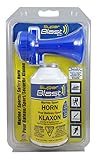
6. Super Blast 8 oz Marine and Sports Air Horn – Best for Sports Events
- Joint-highest average rating in the roundup at 4.7 stars
- 82 percent of reviews are five-star
- 8 oz marine and sports format described as easy to use
- No decibel rating or USCG compliance detail published
- Very limited specification detail in the listing
This one scores 4.7 stars across a little over a thousand ratings, with 82 percent five star, which puts it at the top of the ratings here. If you judge by owner satisfaction rather than published specs, nothing here compares.
The practical problem is that the listing tells you very little. It confirms an 8 oz marine and sports format with simple push-button operation and positions itself as an economical choice, but it publishes no decibel figure and no Coast Guard compliance statement. That is a meaningful gap for a safety device.
What we like about it
The consistency. An 82 percent five star share suggests the unit does the same thing every time you press it, which is the property you want most from a signal device and the one hardest to verify in a listing.
Owners consistently describe it as easy to use, and the 8 oz size gives you meaningful blast duration without the bulk of a jumbo can.
What we would want to know first
If you need a documented output figure or a compliance claim for your state or vessel length, this listing will not give you one. Asking the manufacturer, or choosing a model that publishes its numbers, is the better route.
The listed size of 3 x 3 x 1 inches and the listed weight of 0.01 ounces do not match an 8 oz canister, so treat those listing figures with suspicion and judge the physical size from the propellant weight instead.
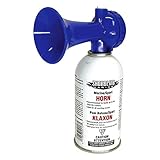
7. Shoreline Marine 8 oz Air Horn – Best Large-Boat Canister
- 120 dB with roughly one mile of audible distance
- Meets US Coast Guard requirements for audible signalling devices
- Aerosol powered so no wiring or battery is needed
- 81 percent five-star rating across 819 reviews
- Only one product image published in the listing
- Limited specification detail beyond output and range
The Shoreline Marine 8 oz is one of the better-documented wired-free options here for a larger boat. It states 120 dB, roughly one mile of audible distance, and that it meets US Coast Guard requirements for audible signalling devices.
Its 4.7 star average across 819 ratings matches the Super Blast for the highest average here, and 81 percent of those ratings are five star. The trumpet body is aluminum and the unit is aerosol powered, so there is no wiring, no relay, and no battery to fail on a boat that sits in salt air all week.
Why it suits a larger boat
Eight ounces of propellant is the practical size for boats in the 30 to 45 foot range where you might signal for a while during a fog bank rather than a single alert. The stated one mile range matches that role.
The Coast Guard compliance claim is the deciding detail for owners who need to show their signalling device meets a standard, because it removes the guesswork.
Where it falls short
The listing is thin on everything except output and range. There is no material detail beyond aluminum, no warranty description worth relying on, and a single published product image.
It is also a consumable with no refill path, so your seasonal cost is simply the number of cans you go through.
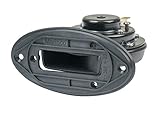
8. Marinco 12V Drop-In Hidden Horn – Best Retrofit Install
- Below-deck hidden design keeps the horn protected in extreme weather
- Exterior mounting allows retrofit into existing cutouts
- 12V DC with 3 amp maximum draw and 440 Hz tone
- Stainless steel construction
- Snap-on grille must be ordered separately
- 105 dB output is lower than the aerosol options here
This is where the conversation changes completely. The Marinco is a permanent 12V horn designed to sit inside a cutout below the deck, protected by a grille, where spray and UV cannot reach it. On a boat that lives outdoors, that protection is worth more than raw decibels.
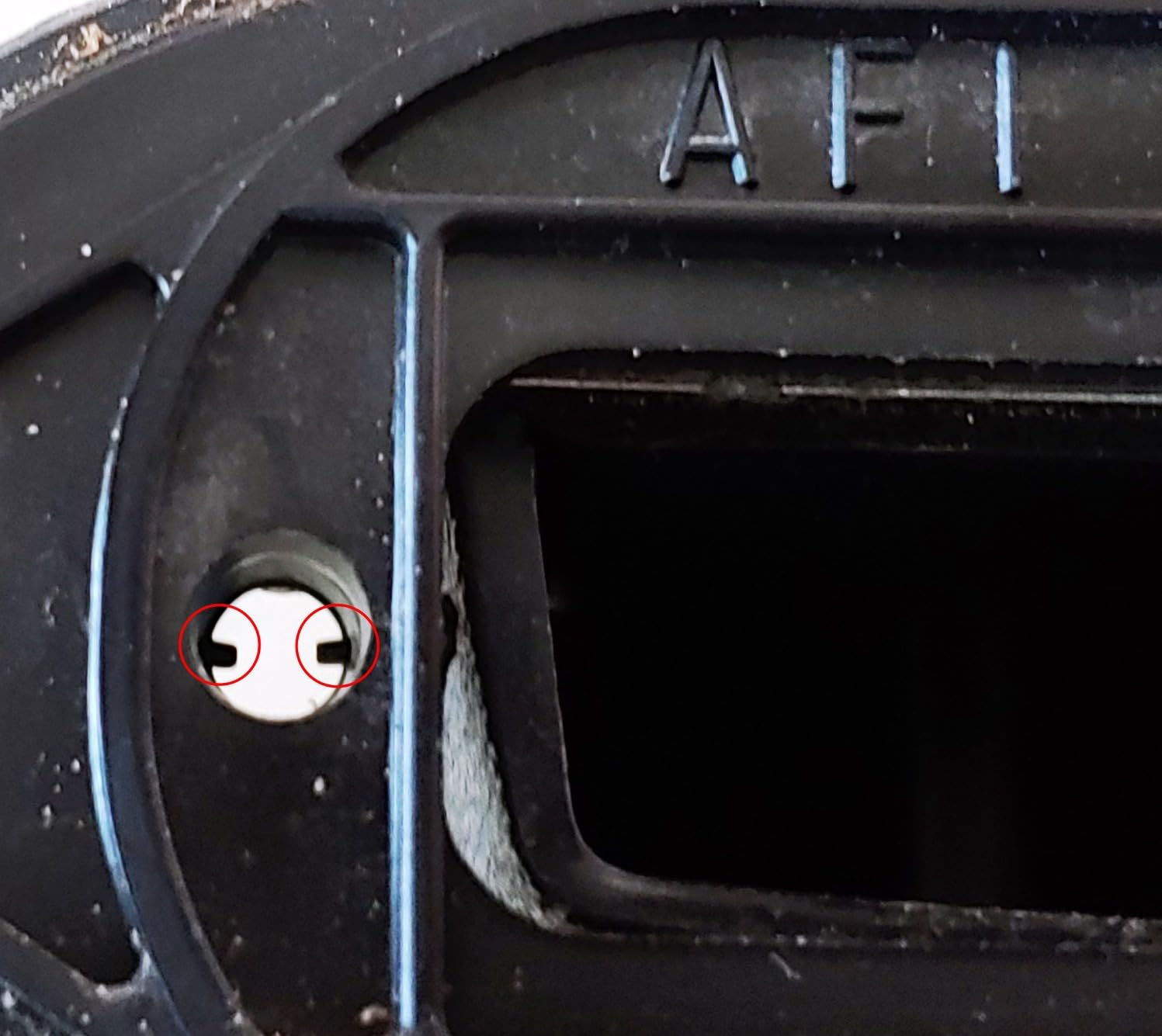
The specification detail here is unusually complete for a hidden horn. It states 105 dB at one meter, a 3 amp maximum draw, and a fundamental frequency of 440 plus or minus 20 Hz. The required internal space is 2.25 inches high by 3.625 wide by 3.5 deep, which is small enough to fit behind most console panels.
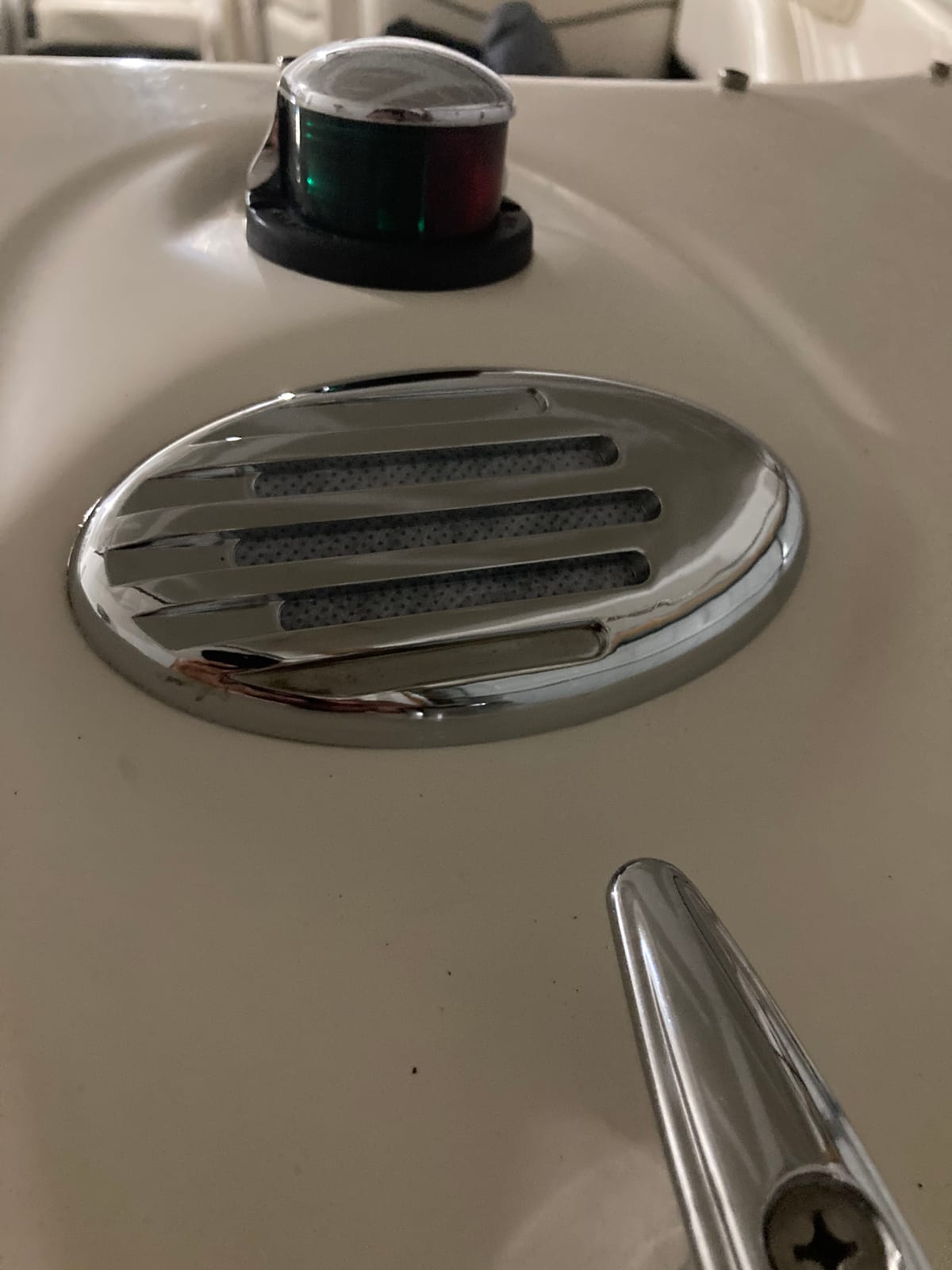
Owners value two things above the loudness figure. First, the retrofit path: because it mounts externally through the cutout, it replaces a failed factory horn without opening up the deck. Second, the 3 amp draw, which is modest enough that most existing horn circuits can carry it with a relay in the line.
That 3 amp figure is the number to check before you buy. A horn that draws 3 amps will not drain a cranking battery in any meaningful way, but it will not run all day either. We treat a permanently mounted horn as a signal to be used deliberately, not a device to leave on.
Why the 440 Hz tone matters
The 440 Hz figure is the note this horn produces. Mid-range frequencies like this cut through engine noise and wind better than very low notes, which is exactly what you want for collision avoidance. Owners chasing a deeper, more imposing tone tend to end up in air horns instead.
The stainless steel construction is the other reason this one ages well. Salt air will pit a plastic housing, but stainless holds up to years of spray and can be rinsed with the rest of the boat.
Where it falls short
105 dB at one meter is genuinely quiet next to the 120 to 127 dB canisters here. That gap is partly an artifact of measurement, since a fixed horn projects in one direction while a canister fills a small space around you, but it is real.
The grille is sold separately, so budget for it. Buying the horn without it leaves you with an exposed unit that defeats the entire point of a hidden mount.
9. Seachoice Hidden Boat Horn – Best for Standards-Compliant Helms
Seachoice Hidden Boat Horn, ABYC and NMMA Standard, Stainless Steel Cover
- Hidden design suits exposed and space-limited mounting locations
- Meets ABYC and NMMA specifications
- Stainless steel cover with two electrical connectors
- Standard cutout makes matching to existing installs easy
- Costs more than the other hidden horns in this roundup
- 105 dB output is lower than the aerosol alternatives
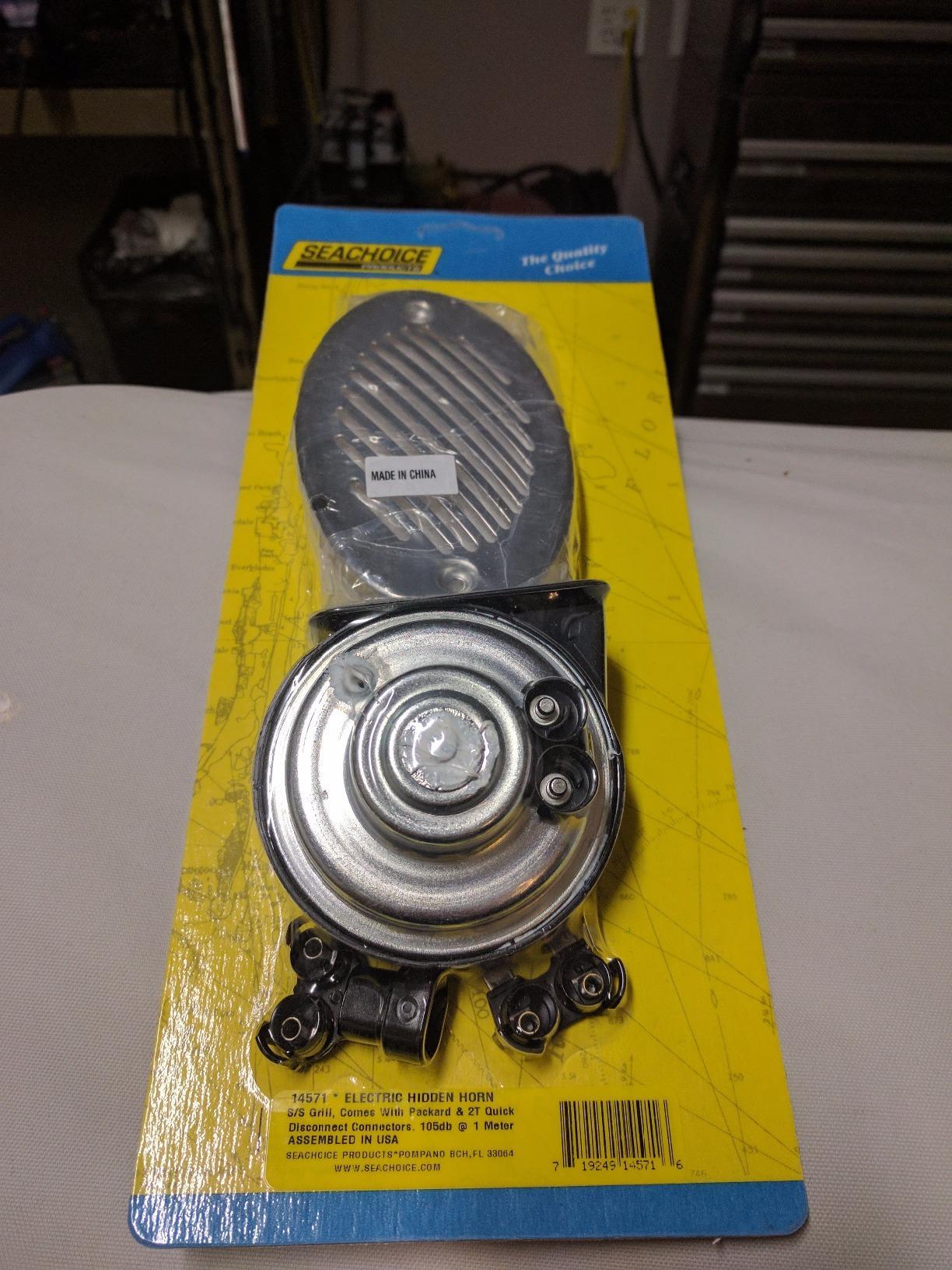
The Seachoice exists for a specific reason: specification conformance. It meets ABYC and NMMA standards, which are the two bodies whose recommendations most boatbuilders and surveyors work from. If you are refitting a boat to an existing spec or want paperwork-consistent equipment, that claim is the feature.
Mechanically it is a conventional hidden horn. The body measures 3.1 x 5.6 x 3.6 inches and requires a 3.5 x 2.5 inch cutout, which is a common enough dimension that it lines up with many existing factory installations. The cover is stainless steel and there are two electrical connectors for the wiring run.
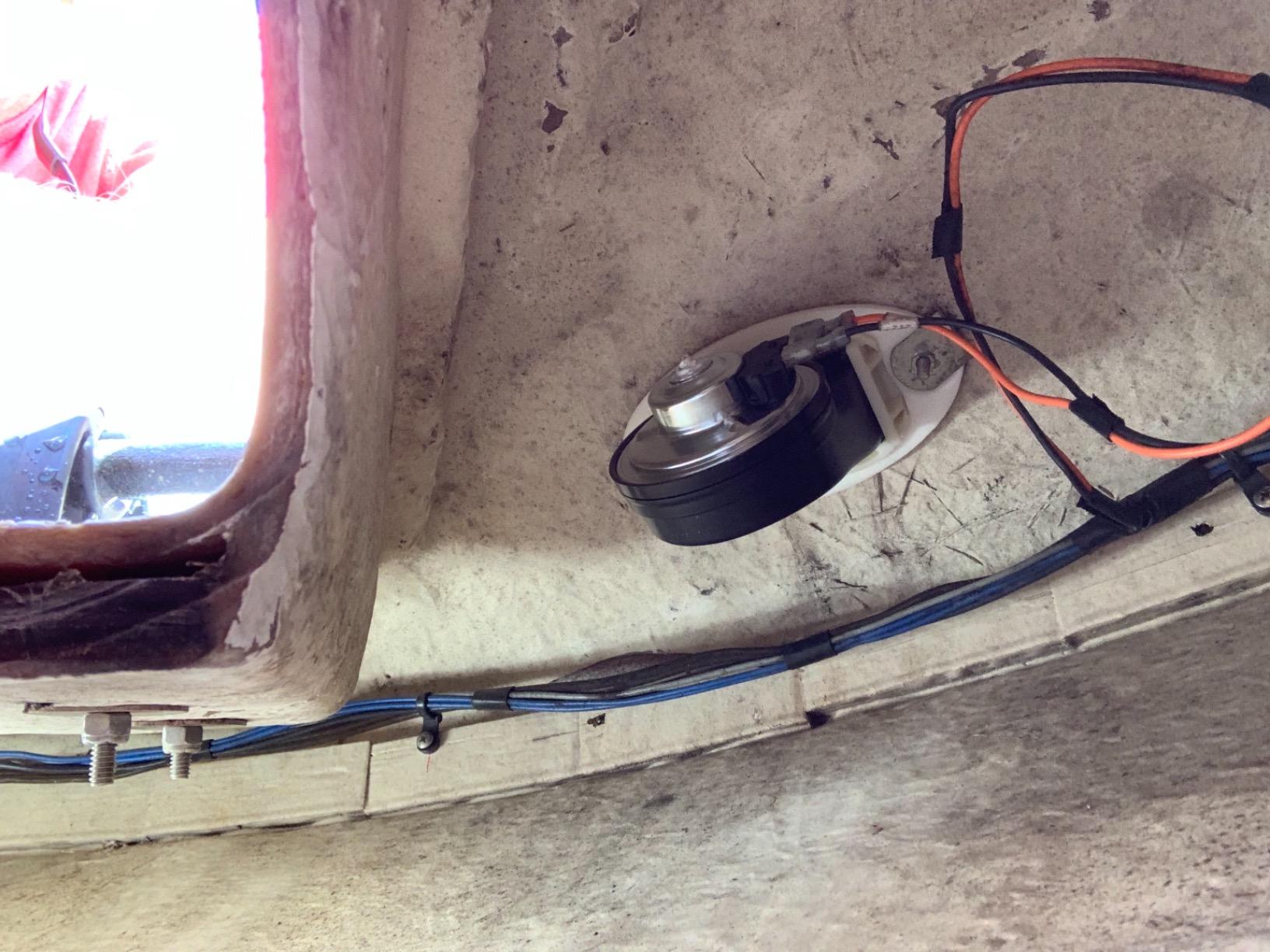
Output is 105 dB, the same figure as the Marinco, so the two are close siblings in terms of how hard they work. The listed weight is 13.6 ounces, slightly heavier than the Marinco, and the whole unit is a straightforward 12 volt install.
Owners accept the higher cost because it solves a problem that generic replacements do not. If your boat builder specified ABYC-conforming equipment, or your insurance surveyor asks, having the standard printed on the box ends the conversation.
When the standards mark matters
On a boat that came with ABYC-specified equipment, matching that standard keeps the electrical and safety layout consistent with how the boat was built. That is the strongest argument for this horn over a cheaper generic replacement.
The standard 3.5 x 2.5 inch cutout is the practical argument. If your existing horn came out through a hole of that size, this is close to a drop-in.
Where it falls short
One drawback is that you are paying for the standards mark as much as for measurable performance. The Marinco in this roundup offers similar output and draw for less.
105 dB will not satisfy you if your concern is being heard over open water at distance. That is a compressor-driven trumpet job, not a hidden horn job.
10. FIAMM 5190512 Marine Horn – Best Wired Upgrade
- 125 dB output
- the highest of the wired horns here
- Meets or exceeds ABYC
- NMMA and Coast Guard requirements
- Stainless steel grill resists rust in fresh and brackish water
- Frequently reported as an exact OEM replacement for existing cutouts
- Mounting fasteners are not included
- Body is larger than some original OEM horns and may need trimming
- Needs a steeply angled mount so water does not pool in the housing
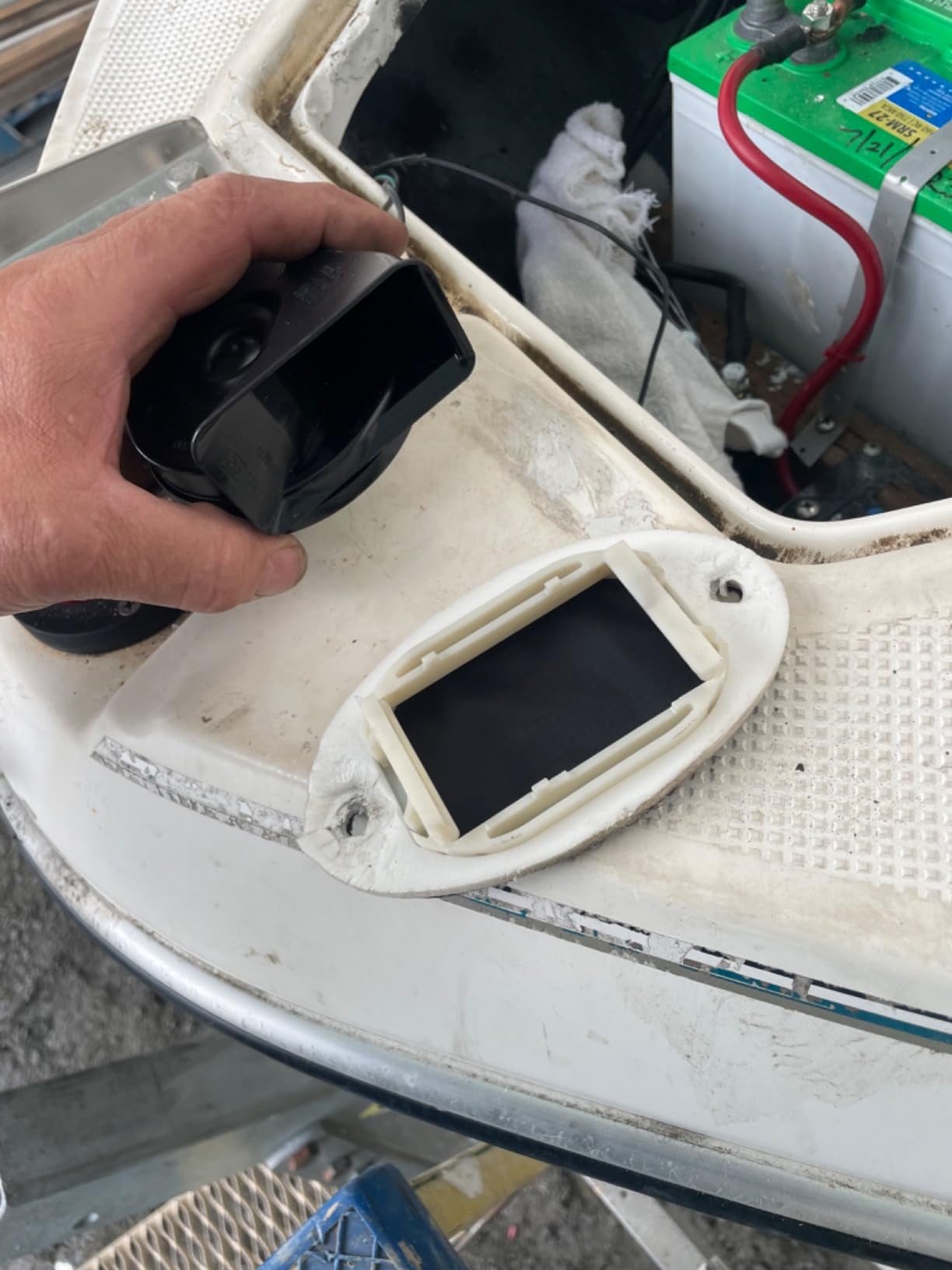
If your factory horn is faded or dead and you want a real upgrade rather than a handheld to carry around, the FIAMM 5190512 is the wired horn owners in this roundup install most often. It has more than thirteen hundred ratings at 4.5 stars, and the dominant theme in those reviews is that owners drop it straight into the hole their old horn came out of.
The output is stated as 125 dB at 4 inches, which is a different measurement point from the 105 dB at 1 meter figures used for the hidden horns in this list. Read carefully: this unit is louder in absolute terms, and the measurement distance explains only part of the gap.
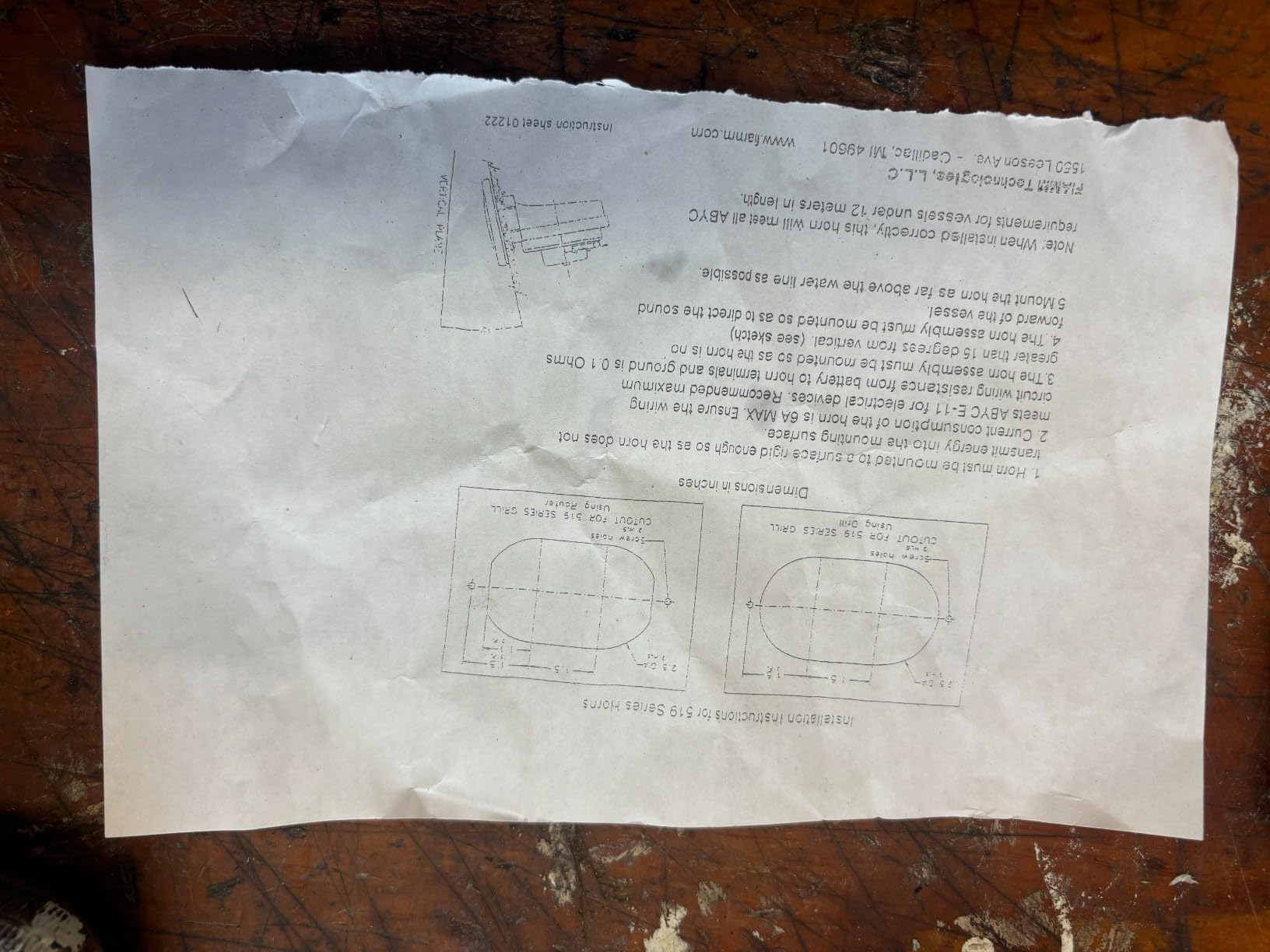
It meets or exceeds ABYC, NMMA and Coast Guard requirements, and the stainless grill is the material that makes it last. Owners note that the grill resists rust in both fresh and brackish water, and that the sealing membrane has been upgraded relative to older 2004-era units of the same style. Installation commonly takes ten to fifteen minutes with spade connectors.
Two practical warnings from owners are worth repeating. The mounting fasteners are not included, so add those to your install kit. And the body is larger than some original equipment, which on certain boats means trimming a fiberglass opening before it will fit.
When this is the right upgrade
If your boat already has a wired horn on a relay circuit, this is a same-circuit swap. The 12 volt supply and spade connectors match what most factory installations used, so you are replacing a unit rather than building a new system.
The 125 dB output and stainless grill combination is what owners who wanted a bigger, more insistent blast ended up with. It is louder than either hidden horn in this roundup by a clear margin.
Where it falls short
It needs a steeply angled mounting surface. Mount it flat or low and water collects inside the housing, which is the single most common complaint about hidden horn installs of this type.
You also need existing wiring and a working relay. If your boat never had a horn, this is not a weekend DIY job without basic electrical experience.
How to Choose the Best Boat Horn for Your Boat?
The wrong horn is usually wrong because it was picked by decibel number rather than by boat. Work through these questions in order and the answer tends to fall out on its own.
Match the horn to your boat length
Boat length is the starting point because it determines both the regulatory floor and the practical need. Under about 20 feet, the requirement is usually a sound-producing device you can reach quickly, and the output a canister provides is more than sufficient. Between 20 and 38 feet, a permanently mounted horn becomes worth the wiring. From 39 to 65 feet, federal rules require a sound-signaling device capable of producing an adequate navigational signal, so choose a documented, compliant unit rather than the loudest thing you can find.
Above 65 feet, the conversation moves toward compressor-driven air horns and genuine ship horns, which is a different category of product and a different installation. If you are still working through the rest of the fit-out, our best boat seats guide covers the helm side of the setup.
Electric, air-driven or portable canister
Electric hidden horns are the simplest permanent option. They draw modest amperage, install through a cutout, and disappear out of sight. Their weakness is raw output, with the hidden models here sitting at 105 dB, which is enough to be heard nearby but not enough to carry across open water.
Compressor-driven air horns reach higher output than any electric unit. They use an onboard air system to push compressed air through one or two trumpets, and they are what owners mean when they describe a blast that makes nearby skiffs look for a tug. The cost is space and complexity: a compressor, an air tank, solenoids, and tubing, all of which need a dry, enclosed locker.
Portable canisters need none of that. The trade is that they are consumables, they are not permanently mounted, and their output depends on where you are standing when you press the button.
What the decibel number does not tell you
Published decibel figures are measured at a fixed distance, usually one metre, in a controlled environment. That is a repeatable number, which is why every manufacturer can quote one, but it does not describe what the horn sounds like from another boat a quarter mile away in a following sea.
Three things matter more than the number in practice. The first is tone: a mid-range note around 440 Hz, like the Marinco’s, carries through wind and engine noise better than a very low note. The second is direction: a fixed trumpet horn projects out of its opening, so it is much weaker behind the boat than in front of it. The third is whether you can hear it at all over your own engine, which is why so many owners describe tone character as more important than raw output.
Amp draw, relays and wire gauge
This is the part most product listings skip entirely. A hidden electric horn in the range of the Marinco draws about 3 amps at maximum, which most existing horn circuits handle comfortably with a relay in the line. The number to look for is the maximum amp draw, and anything that pulls much more needs heavier wire than the small gauge typically used for an accessory circuit.
The practical rule is simple: run the horn on a dedicated circuit with an appropriately sized inline fuse, and put a relay between the helm switch and the horn. That way a short in the horn wiring blows a fuse instead of a battery. If you are adding a horn to a boat that never had one, plan for a new run rather than tapping an existing accessory circuit, especially if anything else high-current shares that wire.
Marine materials and salt-water corrosion
Salt spray kills electronics and dulls metal faster than most buyers expect. Stainless steel is the material we look for first on any permanently mounted horn, because it holds up to repeated rinsing and does not pit the way painted steel does. The Marinco and Seachoice hidden horns and the FIAMM wired horn all use stainless in the housing or cover.
Chrome plating looks better on a cruiser and is the reason several owners mention appearance when comparing marine horn brands. Plated parts do eventually pit in salt air, so plan to rinse them down with the rest of the boat. Plastic covers and grills are the other common choice: inexpensive and UV stable in some formulations, but they crack and yellow over time, which several owners specifically complain about.
A rinse routine matters as much as the material. Hose the horn, the grille, and the surrounding mounting area with fresh water after every trip in salt water, and pay attention to the fasteners, which corrode faster than the horn they hold.
US Coast Guard and state sounding-device rules
The federal rule is the one most people know about: boats from 39 to 65 feet must carry a sound-signaling device capable of producing an adequate navigational signal. Smaller vessels are not covered by that specific requirement, which is exactly the confusion that shows up in owner discussions when new small-boat owners ask what they actually need.
State and local rules fill the gap, and they vary. Some states require a sound-producing device on boats below the federal threshold, and the device may need to be permanently mounted rather than handheld. Check your state’s boating regulations for your vessel length before you decide a canister is enough, and check them again if you move your boat to a different state.
On the question of whether a whistle counts, treat it as a supplement rather than a substitute. A whistle is a sensible always-to-hand backup, but it is not a substitute for a device that meets a documented output standard.
Common problems and how to fix them
A horn that sounds weak or dead is usually an electrical problem rather than a horn problem. Check the inline fuse first, then the relay, then the connection at the horn itself. Salt water in a connector is the most common cause and the easiest to fix with a contact cleaner and a dry reseal.
A rattling horn is usually a loose mounting or a failed gasket that is letting water into the housing. Loose it and dry the cavity completely before reassembling.
Intermittent blasts from a canister usually mean the propellant is low or the button is not seating properly. Clean the nozzle and check the safety release points are not partially engaged. If a wired horn cuts out intermittently, look for water in the spade connectors before you replace the horn itself.
Before winter lay-up, disconnect the horn wiring, rinse the horn and grille with fresh water, and check the terminals for corrosion. That short routine is what keeps a horn working seasons later.
Frequently Asked Questions
What is the best brand of boat horn?
It depends on the job rather than the brand. For a permanently mounted horn that meets a documented standard, Marinco, Seachoice and FIAMM are the names owners install most often, with FIAMM offering the highest wired output in its class. For portable canisters, Better Boat, SeaSense and Super Blast cover the size range from pocket-sized to jumbo. We would pick a brand that publishes its output and its standards clearly, which SeaSense and FIAMM both do.
What is the loudest boat horn available?
Among the units in this roundup, the SeaSense Jumbo 8 oz canister is the loudest at a stated 127 dB, and the FIAMM 5190512 is the loudest permanently mounted horn at a stated 125 dB at 4 inches. Compressor-driven air horns with twin trumpets go louder than either, but they need an onboard air system. Because published decibel figures are measured at a fixed short distance, treat the numbers as a guide rather than an on-water promise.
What does 3 blasts of a ship horn mean?
Three short blasts is a recognised sound signal rather than a distress call. In the traditional signal code, one short blast warns of a course alteration to starboard, two short blasts warn of a course alteration to port, three short blasts indicate that the vessel is operating astern or backing up, and five or more short and rapid blasts indicate doubt or uncertainty. One prolonged blast warns of danger or that a vessel is making an unusual manoeuvre, while one short then one prolonged signals a sailing vessel in doubt or uncertain of its actions. A prolonged blast used alone is a danger signal. None of these are a substitute for a proper distress call, which in the United States is five short and rapid blasts repeated about once a minute.
What are the common problems with boat horns?
The most common problems are electrical rather than acoustic. A weak or dead horn is usually a blown inline fuse, a failed relay, or a connector corroded by salt water. Rattling usually means a loose mount or a failed gasket letting water into the housing. Canister horns that sound intermittent are usually low on propellant or have a button that is not seating cleanly. Weak blast can also come from a trumpet that is partly blocked. We would also add a mismatched fit to the list, since a replacement horn that is physically larger than the opening may need trimming before it works at all.
Do I need a horn on my boat?
Federal rules require a sound-signaling device capable of producing an adequate navigational signal on boats from 39 to 65 feet. Below that range there is no single federal requirement, but most states set their own minimum, and some require the device to be permanently mounted rather than handheld. Practical advice is to carry a canister horn and a whistle regardless of length, because the situations they cover, an unseen skiff in fog or a signal you need to make immediately, do not care how short your boat is.
The Best Boat Horns to Buy in 2026
The best boat horns depend on your boat and not on a spec sheet. For most skiff, pontoon, and runabout owners the answer is a canister, and our pick is the Better Boat 1.4 oz for its balance of 120 dB output, pocketability, and cold-weather propellant. Step up to the SeaSense Jumbo 8 oz if you want more output and the most consistent owner satisfaction among the canisters. If your boat has a wired horn circuit and you are replacing faded factory equipment, the FIAMM 5190512 gives you a marked step up in presence over a hidden-mount unit. Whichever type you choose, check your state requirement before you fit it, and pair it with a whistle in a reachable locker. Once that is sorted, our best boat generators guide covers the other piece of kit that keeps a boat running safely offshore.