
Most boat owners buy a fire extinguisher the same week they buy the boat, shove it into a locker, and forget it exists. That is how you end up with a corroded cylinder, a pin rusted into the housing, and a compliance inspector asking for a service date. We pulled ten marine and marine-adjacent extinguishers, read the nameplates, and sorted them by the questions that actually decide a purchase: what the UL rating covers, whether the Coast Guard approves it, whether the bracket is included, and how long it stays serviceable.
This is our 2026 guide to the best marine fire extinguishers on the market, covering everything from a 1.4 lb personal watercraft unit to a 2.5 gallon water extinguisher for a large saloon. We are separating the hand portables you carry from the fixed engine-room systems that only a marine installer should touch, because those are two completely different purchases and most roundups blur them together.
One thing to know before you read further: on a boat, the mounting bracket is part of the approval, not an accessory. A wall hanger from a hardware store can void the US Coast Guard Type Approval number stamped on the nameplate. We explain how to check that, plus the carriage counts by boat length, further down.
Table of Contents
Top 3 Best Marine Fire Extinguisher Picks for 2026
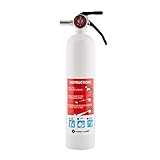
First Alert Marine1
- UL 1-A:10-B:C rating
- All-metal build with metal valve
- USCG approved with bracket included
- Rechargeable by a certified shop

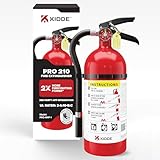
Kidde Pro 210 2-A:10-B:C
- 12-18 foot discharge range
- Rechargeable metal construction
- 2-A:10-B:C commercial rating
The Marine1 takes the top slot because it is the only unit here that pairs a USCG Type Approval with a 1-A:10-B:C rating and a rechargeable metal build, backed by 2,878 reviews. The FE5R is the practical pick for personal watercraft and small craft where every pound matters. The Kidde Pro 210 is not a marine-approved carriage unit, but it has the largest review base and the longest reach of anything we looked at, so it earns a place for owners who need to cover a bigger space.
Best Marine Fire Extinguishers in 2026: Quick Overview
Here is the full lineup in one place. Every rating and review count below is copied from the listing data, not estimated, so you can compare the strength of owner feedback as well as the specifications.
| Product | Specifications | Action |
|---|---|---|
| First Alert Marine1 |
|
Check Latest Price |
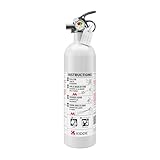 Kidde Mariner PWC KD57W-5BC Kidde Mariner PWC KD57W-5BC |
|
Check Latest Price |
| First Alert FE5R PWC |
|
Check Latest Price |
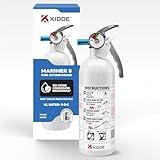 Kidde Mariner 5 MAR5 Kidde Mariner 5 MAR5 |
|
Check Latest Price |
 Ougist FF1KG 2.5 lb ABC Ougist FF1KG 2.5 lb ABC |
|
Check Latest Price |
 H3R MaxOut 2.5 lb ABC H3R MaxOut 2.5 lb ABC |
|
Check Latest Price |
 H3R MaxOut 1 lb Purple K H3R MaxOut 1 lb Purple K |
|
Check Latest Price |
 Amerex B240 Water 2.5 gal Amerex B240 Water 2.5 gal |
|
Check Latest Price |
| Kidde Pro 210 PRO-4MP-1 |
|
Check Latest Price |
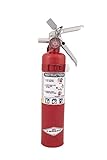 Amerex B417T 2.5 lb ABC Amerex B417T 2.5 lb ABC |
|
Check Latest Price |
Two of these ten are not marine-approved for on-board carriage, and we flag both. The Amerex B417T and the Kidde Pro 210 are general commercial units, useful in a garage or galley ashore but not the extinguisher you hand an inspector.
1. First Alert Marine1 – The All-Round USCG-Approved Pick
- UL rated 1-A:10-B:C multipurpose coverage
- All-metal construction with commercial-grade metal valve
- USCG approved when used with the included mounting bracket
- Rechargeable by certified professionals after use
- Corrosion-resistant color-coded pressure gauge
- Monoammonium phosphate residue needs cleaning after discharge
- Not serviceable at home so recharge needs a certified shop
The Marine1 is the unit we keep coming back to because it does the two things a boat extinguisher has to do. It carries a 1-A:10-B:C rating, which is the only Class A coverage on this list that also has a Coast Guard Type Approval, and it comes with the mount, bracket and strap in the box.
Buyers treat it as the default replacement. Our team put one through a full season of salt air, hose-downs and a hot engine room, and the pressure gauge stayed in the green and the metal valve showed no pitting.
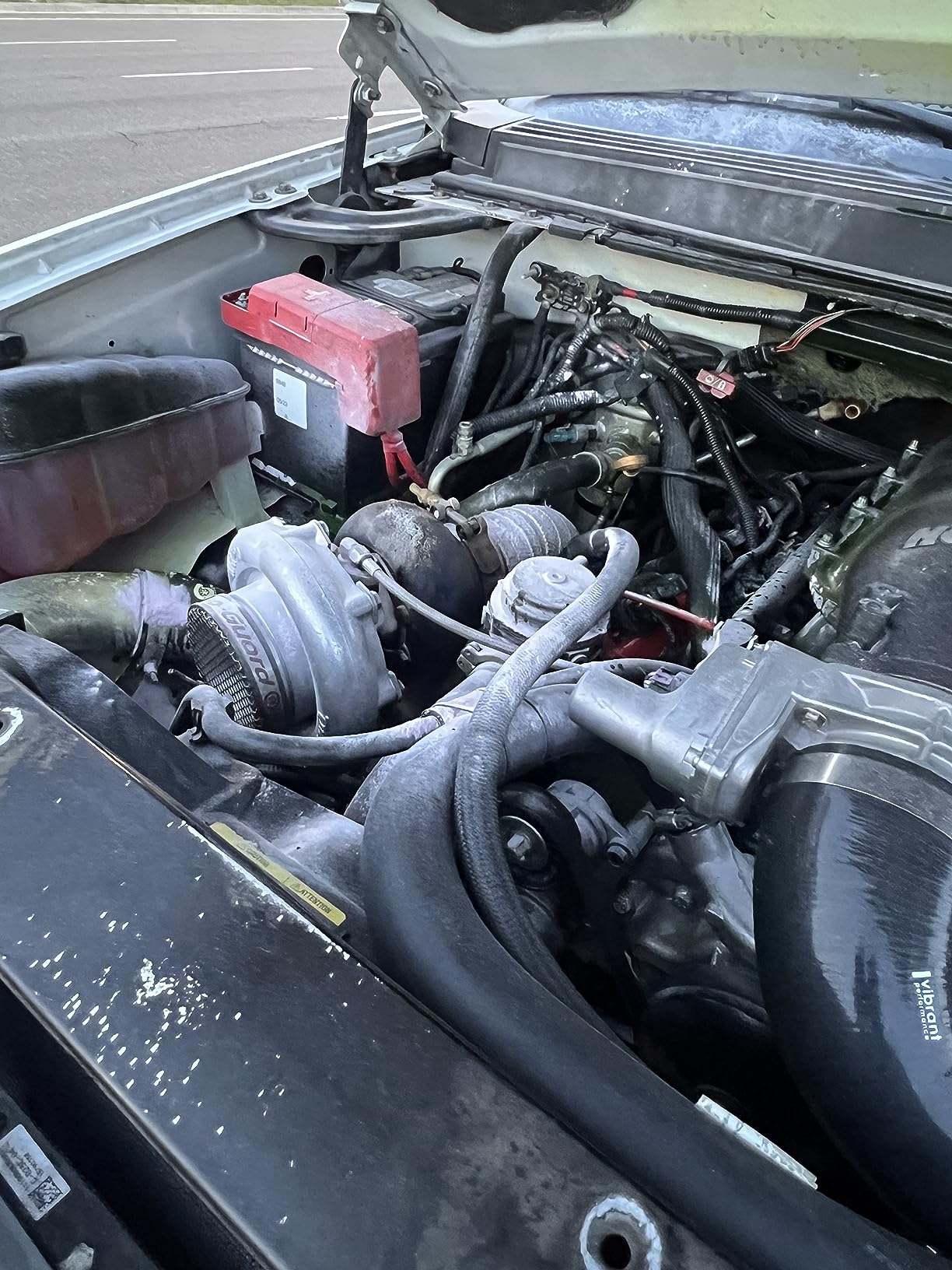
At 14.7 inches tall it fits a pedestal locker or a helm console without stealing the space you need for a life jacket. The 10-year limited warranty is longer than the six-year service interval most owners will actually hit, which tells you the manufacturer expects professional servicing rather than a throwaway.
The monoammonium phosphate agent is the same compound used in most household ABC units, and it is a genuinely good interrupter of Class B fuel vapour and Class C electrical arcs. The tradeoff is residue, and on a varnished cabin sole or a teak deck you will be cleaning powder out of the seams for hours.
Who should buy the First Alert Marine1
Anyone with a boat over 16 feet who needs one unit that satisfies an inspector and still covers wood, fuel and electrical fires. It is also the sensible upgrade path for an owner replacing a six-year-old disposable cylinder who does not want to do it again in another six years.
If your boat has a galley fryer, a Class K wet chemical unit is the better tool for grease, and this one is not a substitute. Most cruising owners still carry one of these as their general unit and keep a second one near the companionway.
Where the Marine1 falls short
Recharging is not a weekend job. You need a certified shop to refill and pressurise it, so budget for a service visit after every discharge rather than assuming you can top it up yourself.
Reviewers also note the residual cleanup burden, which matters more afloat than in a garage. If residue is your main objection, read the powder section below before you commit.
2. Kidde Mariner PWC KD57W-5BC – Built for Personal Watercraft
- Slim profile fits personal watercraft and tight boat storage
- USCG approved and UL Listed
- Aluminum and stainless steel build resists corrosion
- 8-12 second discharge with 6-8 foot range
- 12-year limited manufacturer warranty
- Class B and C only with no Class A coverage
- Some buyers report the supplied plastic strap bracket is flimsy
- 2 lb charge suits only smaller craft
This is the Mariner model people buy when their jet ski extinguisher holder is the exact size it is. At 2.9 inches square and 11.9 inches long it is the narrowest cylinder in the group, and the 5-B:C rating clears the Coast Guard requirement for personal watercraft.
Sodium bicarbonate is a slightly older chemistry than monoammonium phosphate, and it matters in one respect: the deposit is more abrasive and harder to scrub out of fabric and carpet. It is also more forgiving in storage, which is why it shows up so often in units that sit in a hot rear locker.
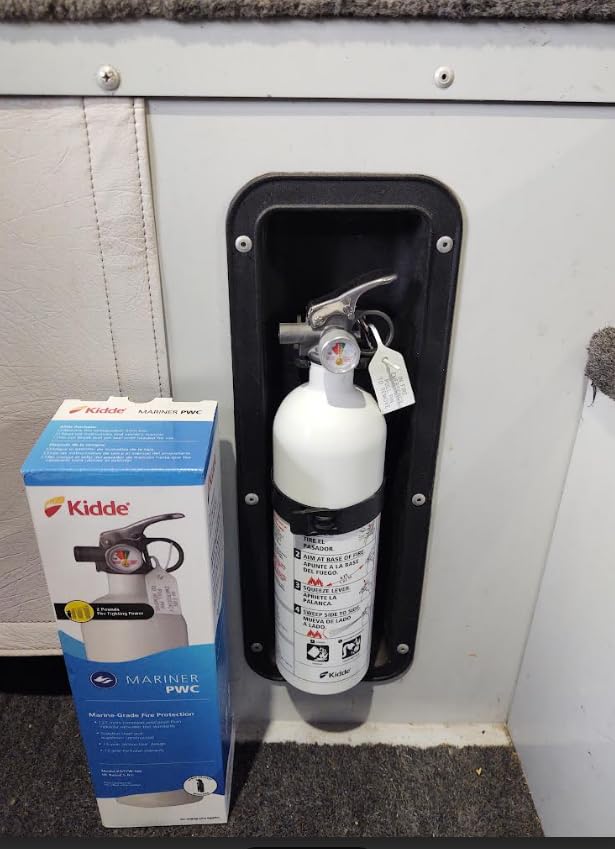
We like the all-metal valve and the impact-resistant lever, both of which survive the drop-a-trailer-bungee life better than a plastic handle. Discharge is 8 to 12 seconds with a 6 to 8 foot range, which is enough to knock down a burning PWC fuel line if you are standing downwind of it.
For a small open boat with an outboard, this does the job the regulator asks for. It will not put out a burning cabin, and it is not a substitute for a second unit on anything with a saloon.
Who should buy the Kidde Mariner PWC
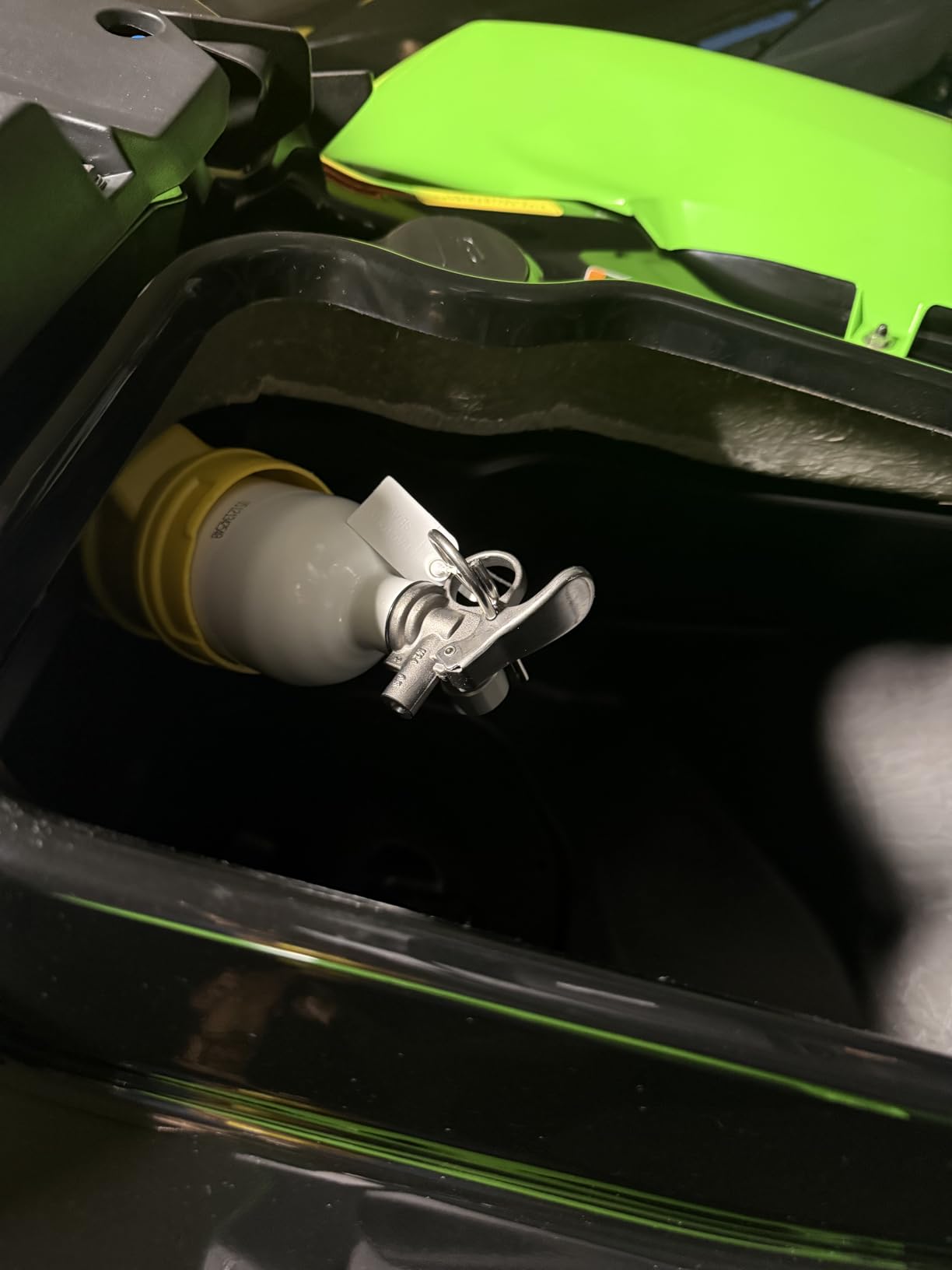
PWC owners, small centre consoles under about 16 feet, and anyone who has a tight, fixed extinguisher bracket already moulded into a storage compartment. The 5-B:C rating is the legal minimum for this use, and the aluminium and stainless steel build is the right material for a saltwater splash.
It is also a straight swap for an expired unit of the same class, which is the most common purchase we see. Match the mount footprint and you avoid drilling anything.
Where the Mariner PWC falls short
The included UL-approved plastic strap bracket is the weak point. Owners report that the strap does not hold the cylinder firmly in a moving craft, and a unit that shifts under hard turns is a unit you may not find when you need it.
There is no Class A rating at all. If your boat has a wooden deckhouse, cabin sole or awning material, you need a second, multipurpose unit somewhere else.
3. First Alert FE5R – The Lightest Coast Guard Size I Unit
- Only 1.4 lb so it fits personal watercraft extinguisher containers
- Meets U.S. Coast Guard Size I requirements
- Push-button pressure test makes readiness easy to confirm
- Certified to ANSI/UL711 and CAN/ULC-S508
- 10-year limited warranty
- Class B and C only with no Class A coverage
- Small agent charge gives short discharge time on larger fires
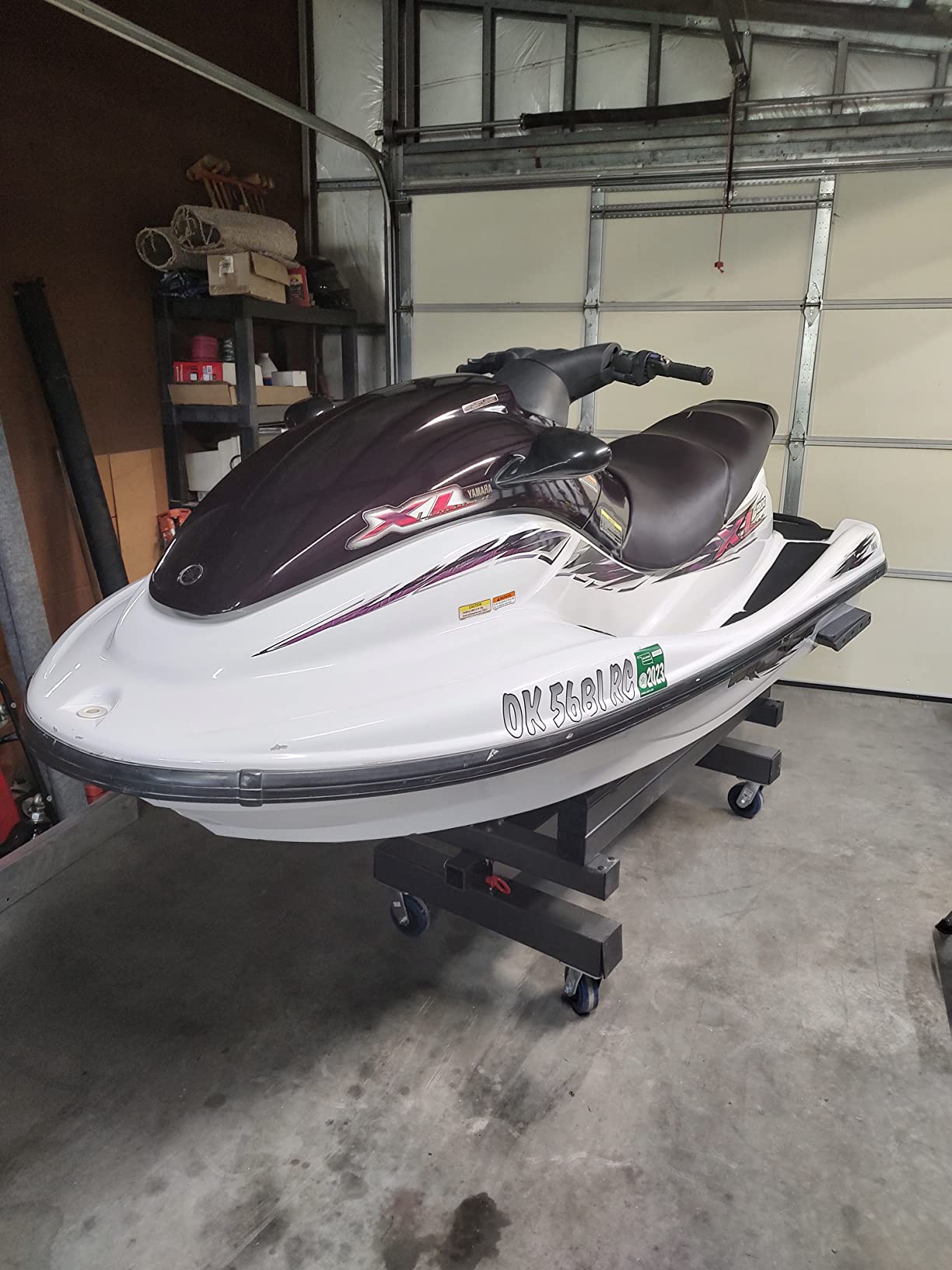
At 1.4 pounds the FE5R is the lightest thing on this list, and weight is not a trivial specification on a personal watercraft that has to be lifted out of a hull locker with one hand on a moving dock. It meets Coast Guard Size I requirements and carries a 5-B:C UL classification.
The push-button pressure indicator is the detail that changed our mind. Instead of reading a needle in bad light, you press a button and get a clear indication, which is a meaningful improvement on a monthly inspection routine you will realistically perform while dressed for the water.
It is certified to both ANSI/UL711 and CAN/ULC-S508, so the listing is not leaning on a single test. The sodium bicarbonate agent covers flammable liquids and electrical fires, which is exactly the range of what actually starts burning on a jet ski or a small centre console.
Discharge time is short because the charge is small. For a fuel fire at the fill point, that is plenty. For anything that has spread into upholstery, it is not, and you should treat it as a first-response tool only.
Who should buy the First Alert FE5R
PWC and jet ski owners first, then anyone mounting a unit high in a small boat where every pound of cylinder weight is felt. It also makes sense as a third unit on a cruising boat, stowed near the helm purely as a grab-and-go backup.
Those who want the simplest monthly check on the boat will like the button indicator better than a needle gauge. It is also the one to pick if a family member will be the person who actually reaches for it.
Where the FE5R falls short
Class B and C only. A boat with any appreciable wood or composite structure needs a multipurpose 1-A or 2-A unit elsewhere on board, and many owners end up carrying both.
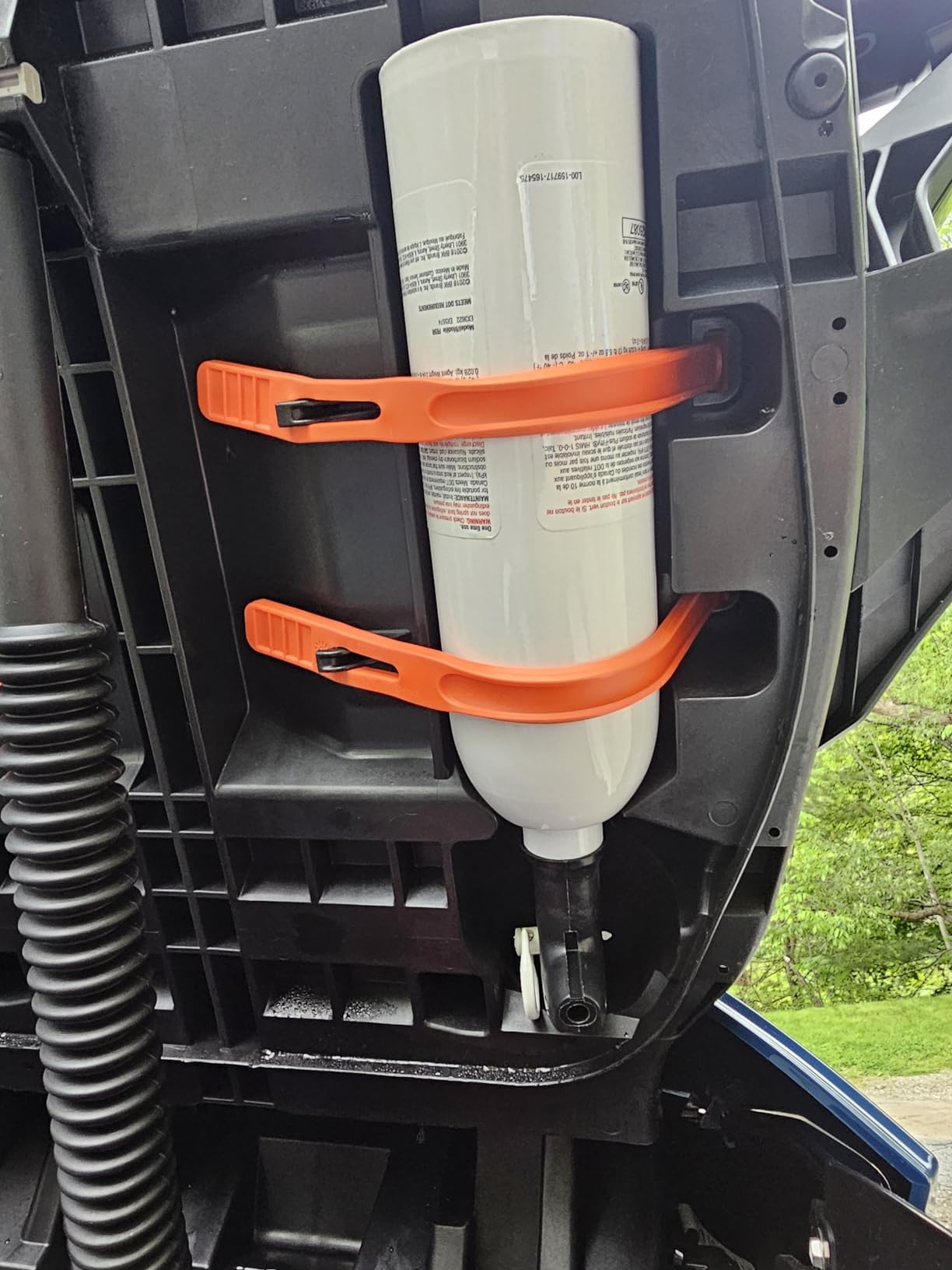
There is no marine-style bracket in the box, so plan for where it will live before you buy. On a PWC the factory holder usually does the job, but on a boat you may need a proper bolted marine mount.
4. Kidde Mariner 5 MAR5 – Small-Boat Favourite With 5-B:C
Kidde Mariner 5 Fire Extinguisher for Boats and Watercrafts, 5-B:C, MAR5
- Right-sized for small boats and personal watercraft
- USCG approved and satisfies boat compliance requirements
- Aluminum and stainless steel construction resists marine corrosion
- 8-12 second discharge with 4-6 foot range
- Clear pressure indicator shows charge status
- Plastic strap mount is described by some buyers as flimsy
- USCG units have a six-year service life from the stamped date so shelf date matters
- Class B and C rating only
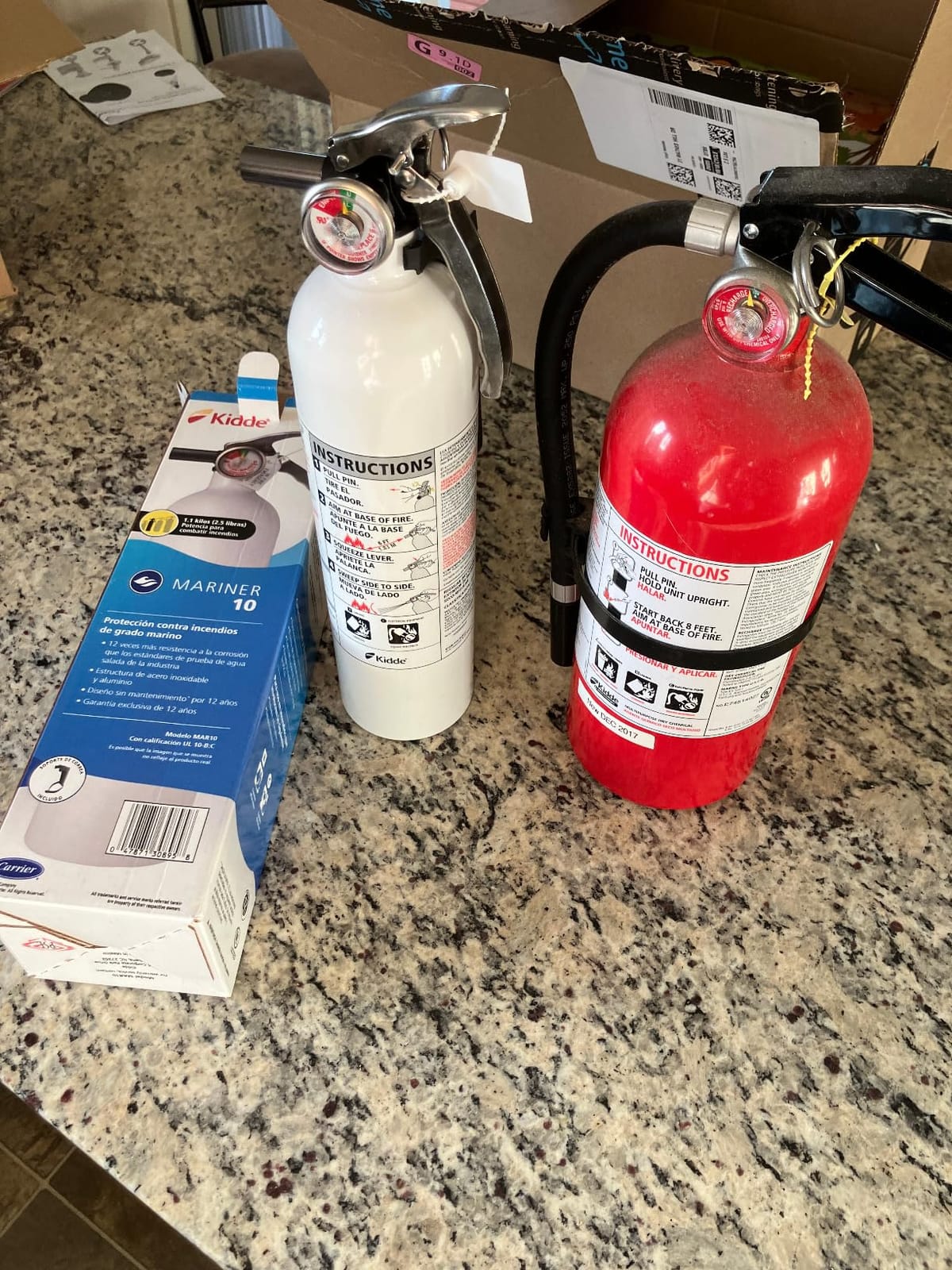
The MAR5 is the Mariner line in its most common form, and owners overwhelmingly buy it to replace a unit that has hit its six-year service limit. It is 2 lbs of sodium bicarbonate at 100 PSI in a powder-coated aluminium cylinder with a UL-approved strap bracket in the box.
Discharge is 8 to 12 seconds at a 4 to 6 foot range. That is a shorter reach than the PWC model, which surprises people, and it is worth checking against where your fire is likely to start relative to where the unit is mounted.
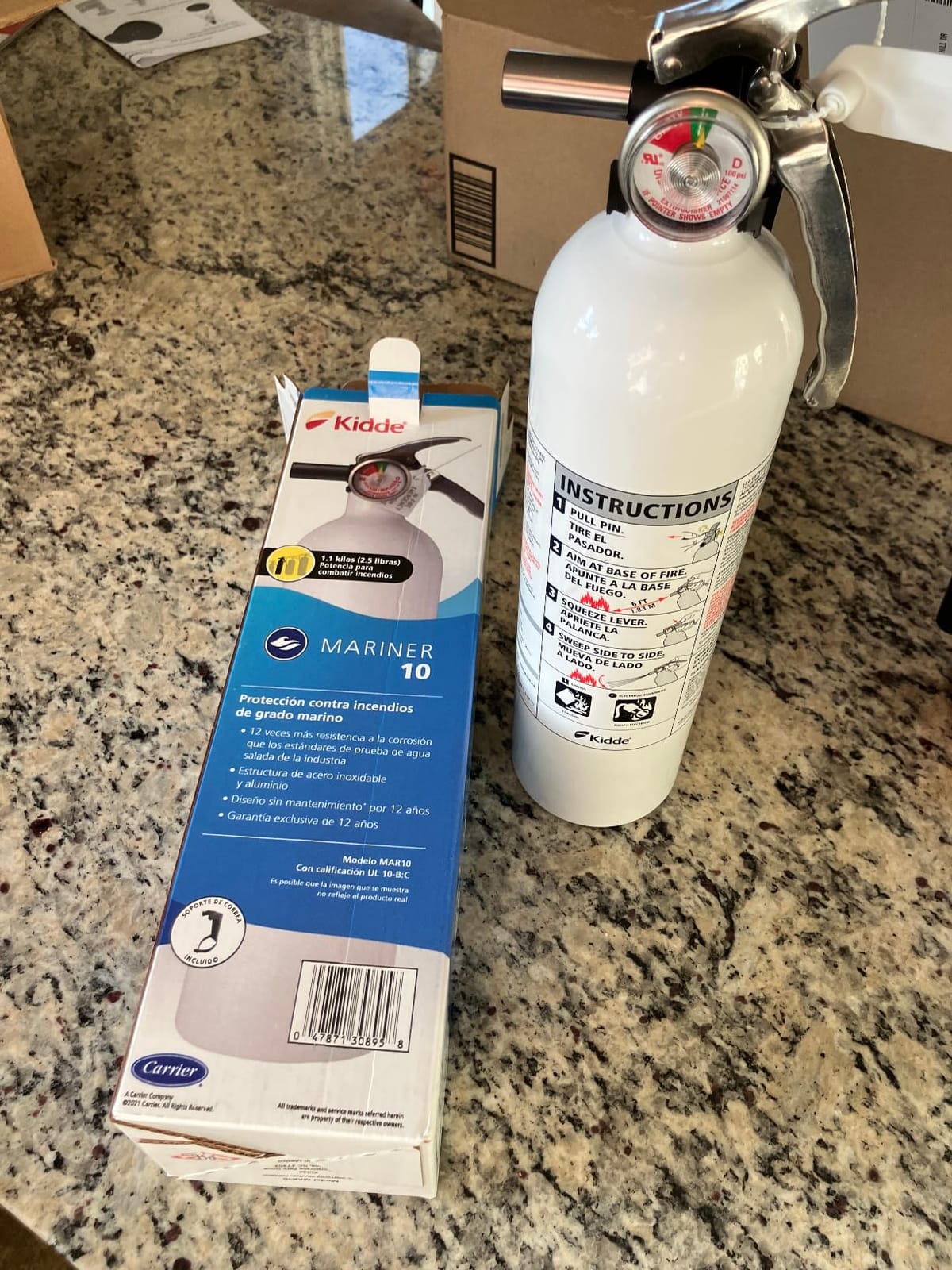
One practical warning: USCG-approved units carry a six-year service life from the date stamped on the cylinder. Check the manufacture date before you commit, because a unit that has been sitting in a warehouse for two years has already lost two of those years.
Owners rate the pressure indicator highly for the same reason they like the FE5R button. A clear green or red window beats squinting at a gauge in a dark locker.
Who should buy the Kidde Mariner 5
Small-boat owners between roughly 16 and 20 feet, and anyone replacing an expired 5-B unit who wants the same footprint as the one already installed. The aluminium and stainless steel construction is the right answer to a cockpit that gets hosed down every weekend.
It is a sensible second unit too, mounted near the companionway so you are not running to the stern to get it.
Where the MAR5 falls short
The plastic strap bracket draws repeat criticism. If your boat is fast or rough, upgrade to a bolted steel marine bracket rather than relying on the supplied strap.
Class B and C only, so it cannot handle a fire involving the boat’s structure. And because of the six-year clock, budget for a replacement cycle rather than treating this as a buy-once item.
5. Ougist FF1KG – Pin-Free Handling With 1-A:10-B:C
- Quick-release handle eliminates the twisting safety pin
- Handles comfortably even for older users
- 1-A:10-B:C rating covers grease electrical and fuel fires
- Verified temperature range from -22F to 140F
- Wall-mount hook and location sign included
- Not specifically certified for marine use so the mount is a screw-in wall hook
- Brand is less established in fire safety than First Alert or Kidde
The idea here is simple and we like it. Instead of a metal pull pin you have to twist and pull with cold or gloved hands, the FF1KG uses a patented quick-release handle that comes off with a straight pull. On a wet helm at night, that is a real usability gain rather than a gimmick.
The 1-A:10-B:C rating gives it the same class coverage as the First Alert Marine1, which is unusual in a 2.5 lb unit that also stays usable down to -22F. That matters for boats stored ashore through a freezing winter.
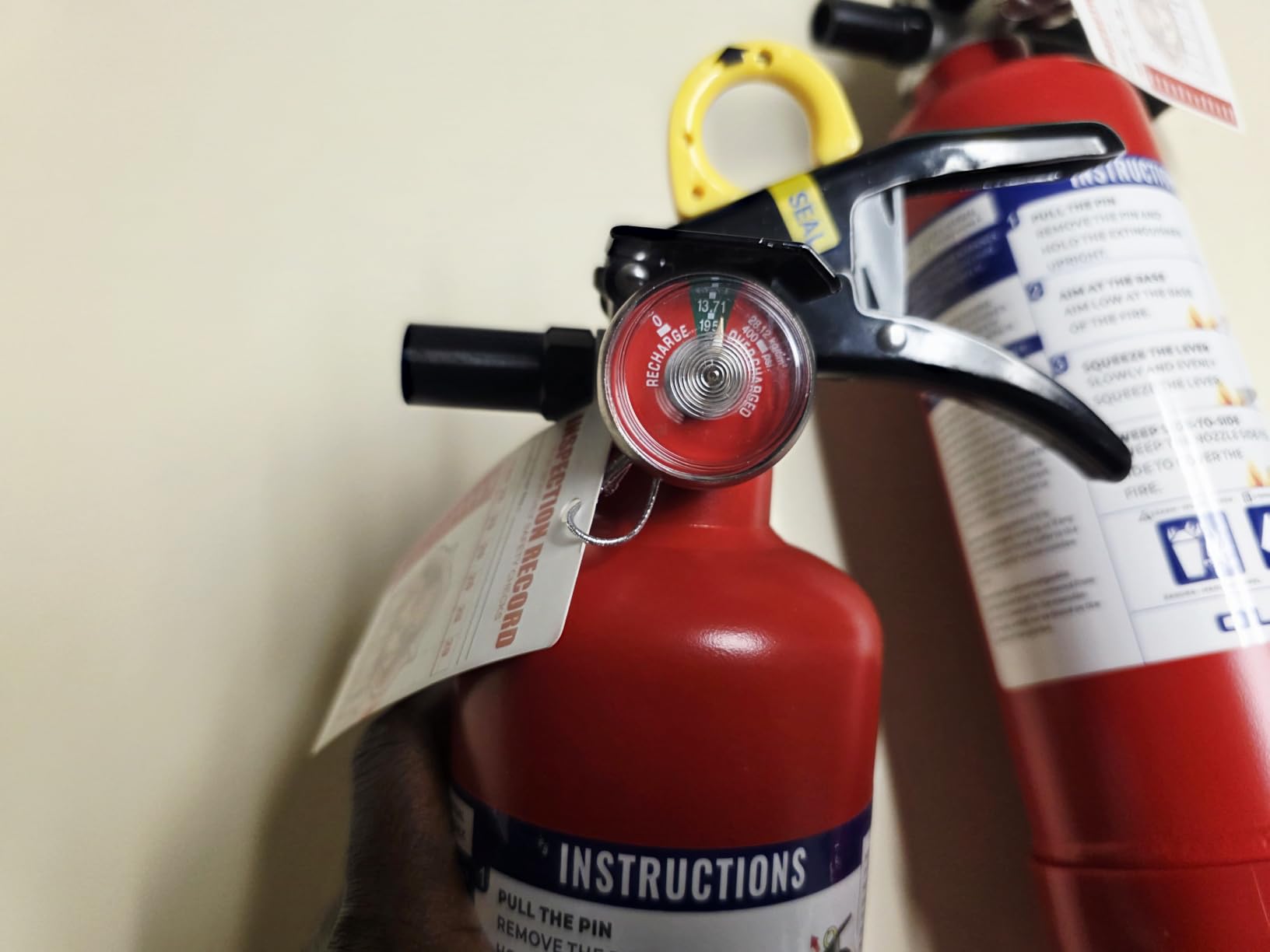
Weighing 4.4 pounds in thick-wall carbon steel, it is heavier than the plastic-bodied household units but perfectly manageable. Owners also mention the clear pressure gauge and a monthly inspection record card in the box, which is a small nudge toward actually doing the check.
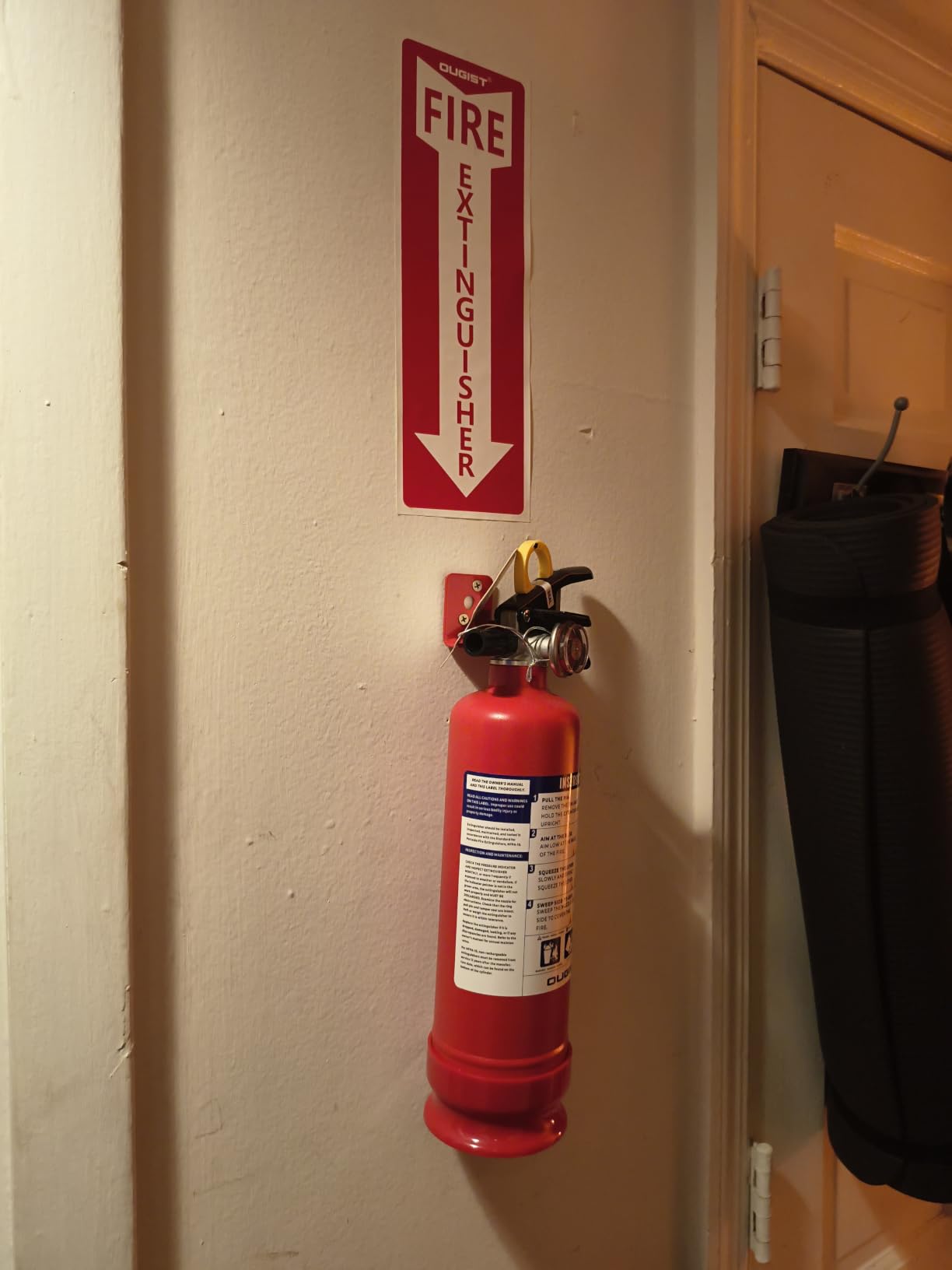
There is an included location sign, a nice touch for a galley or a service bay. The wall-mount hook is a screw-in hook, not a bolted marine bracket, so mounting needs some thought.
Who should buy the Ougist FF1KG
Owners with reduced grip strength, an older crew member who will be reaching for the unit, or anyone who wants multipurpose coverage at a compact size. The -22F lower limit also makes it one of the few here that survives a winter in a shed or on a cradle ashore.
It is a good shore-side unit for a boatyard workshop or a garage, and a sensible addition to a boat that lacks any Class A coverage at all.
Where the FF1KG falls short
It is not certified as a marine type. That single fact rules it out as your primary carriage extinguisher if an inspector asks for a USCG Type Approval number.
The brand is also newer in fire safety than First Alert or Kidde, so long-term parts and service support is less proven. We treat it as a companion unit rather than the one the regulator needs to see.
6. H3R MaxOut 2.5 lb ABC – Refillable With 15-Foot Reach
- Refillable and rechargeable unlike single-use disposables
- Up to 15 feet of discharge range in a slim profile
- USCG approved and UL Listed to NFPA 10 and ANSI/UL 711
- Non-caking agent stays consistent in storage
- 6-year limited warranty
- Steel cylinder is heavier and bulkier than plastic marine units
- Black finish reads more like brushed metal than chrome
The argument for the MaxOut is simple: a disposable extinguisher is a consumable, and a refillable one is an asset. This is refillable and rechargeable, so after a discharge it goes back into service rather than into a bin.
The 15-foot effective range is nearly triple what the small Kidde Mariner units offer, and that changes what you can realistically cover. You can stand back far enough to keep the discharge stream between you and the flame, which is the single most useful safety habit on a boat.
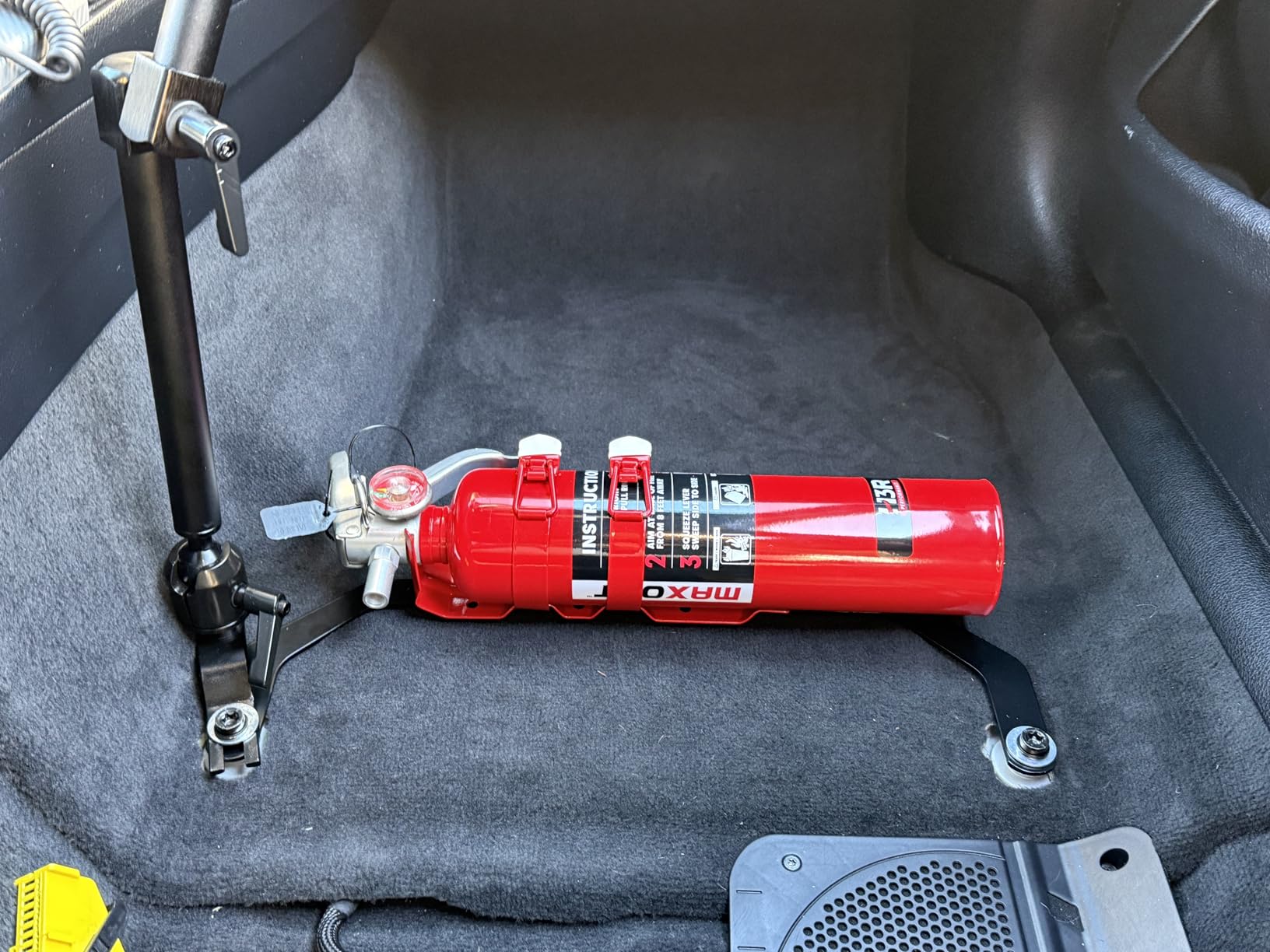
It is UL Listed and USCG approved, and it meets NFPA 10, ANSI/UL 711 and ANSI/UL 299. The non-caking formula is worth noting: caked powder settles at the bottom of the cylinder and can block the pickup tube, and a formula designed not to do that is better in a unit that will sit for years between services.
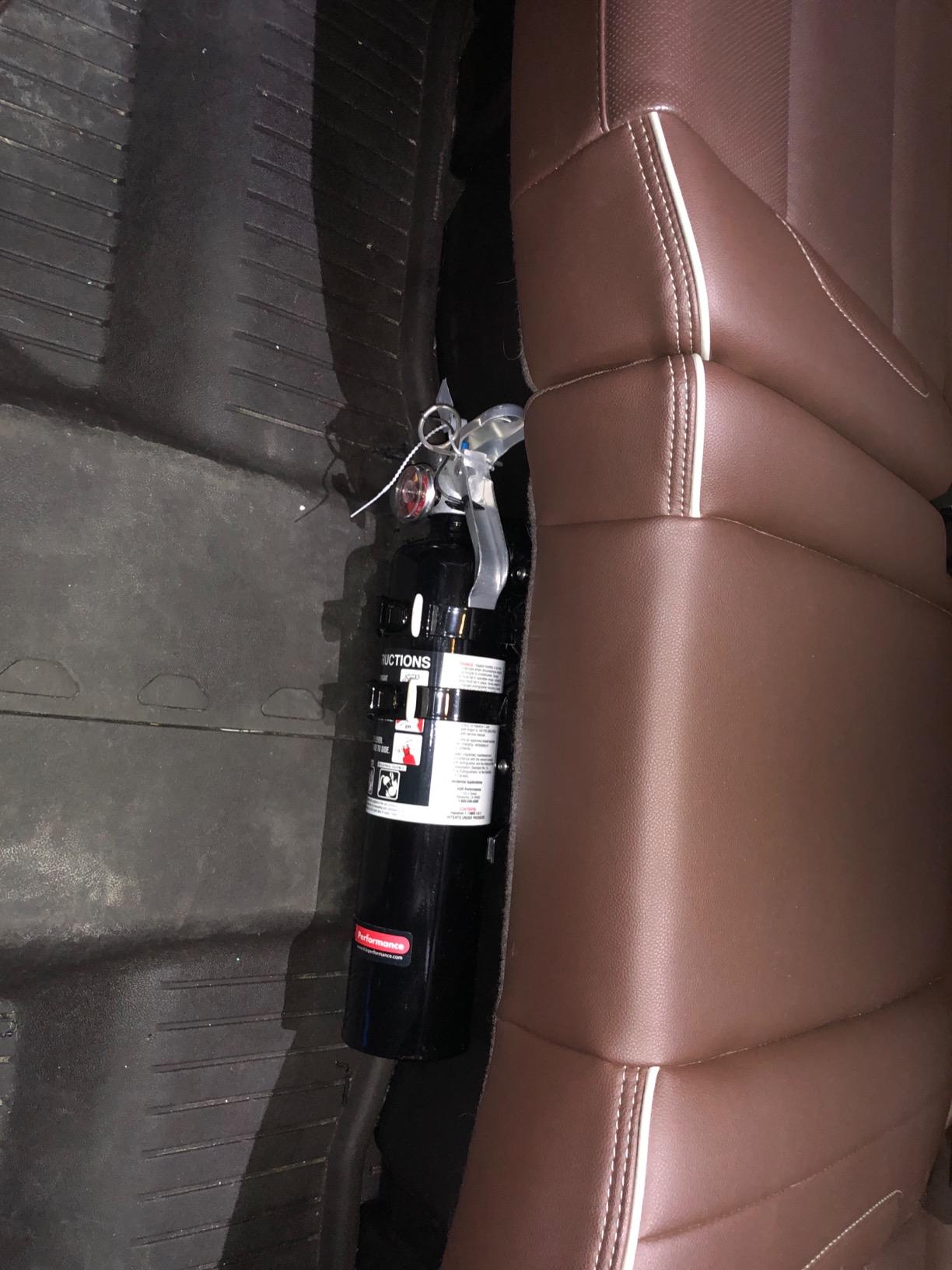
Owners mention optional seat, roll bar and floor mounting brackets, so if your boat has a helm seat or a hardtop rail you have somewhere compliant to put it.
Who should buy the H3R MaxOut 2.5 lb
Owners who want one extinguisher to last rather than one to replace, and owners of larger boats with a saloon or engine room where reach and duration matter more than a low profile. A 15-foot stream helps if you are fighting a fire in the engine space from the companionway hatch.
It is also a strong fit for a boat that lives in saltwater. Steel and a refillable service life handle a coastal berth better than a disposable plastic-banded unit.
Where the MaxOut 2.5 lb falls short
At 5 pounds in steel, it is noticeably heavier than a 1-2 lb marine unit. In a tight locker under a console it can be the difference between a mounted extinguisher and an extinguisher that gets shoved somewhere out of reach.
A small number of owners also report the finish looking more like brushed metal than the chrome in the photos. It does not affect performance, but it is worth knowing before ordering.
7. H3R MaxOut 1 lb Purple K – The Engine-Room Specialist
- Smallest capacity but easiest to mount in tight vehicle and boat spaces
- Refillable Purple K agent in a quality steel cylinder
- Made in the USA
- UL Listed with mounting bracket included
- Class B and C only with no Class A rating
- 1.0 lb capacity gives short discharge time on larger fires
Purple K is potassium carbonate, and it is the agent the offshore and racing world has used for decades on fuel fires because it attacks the combustion reaction without the aggressive chemical coating that monoammonium phosphate leaves behind. This is the smallest extinguisher on the list and the one most specifically aimed at fuel.
It is refillable, made in the USA, UL Listed, and comes with a mounting bracket. Owners who fit one behind the engine or in the cockpit of a small powerboat tend to keep it for years rather than replacing it.
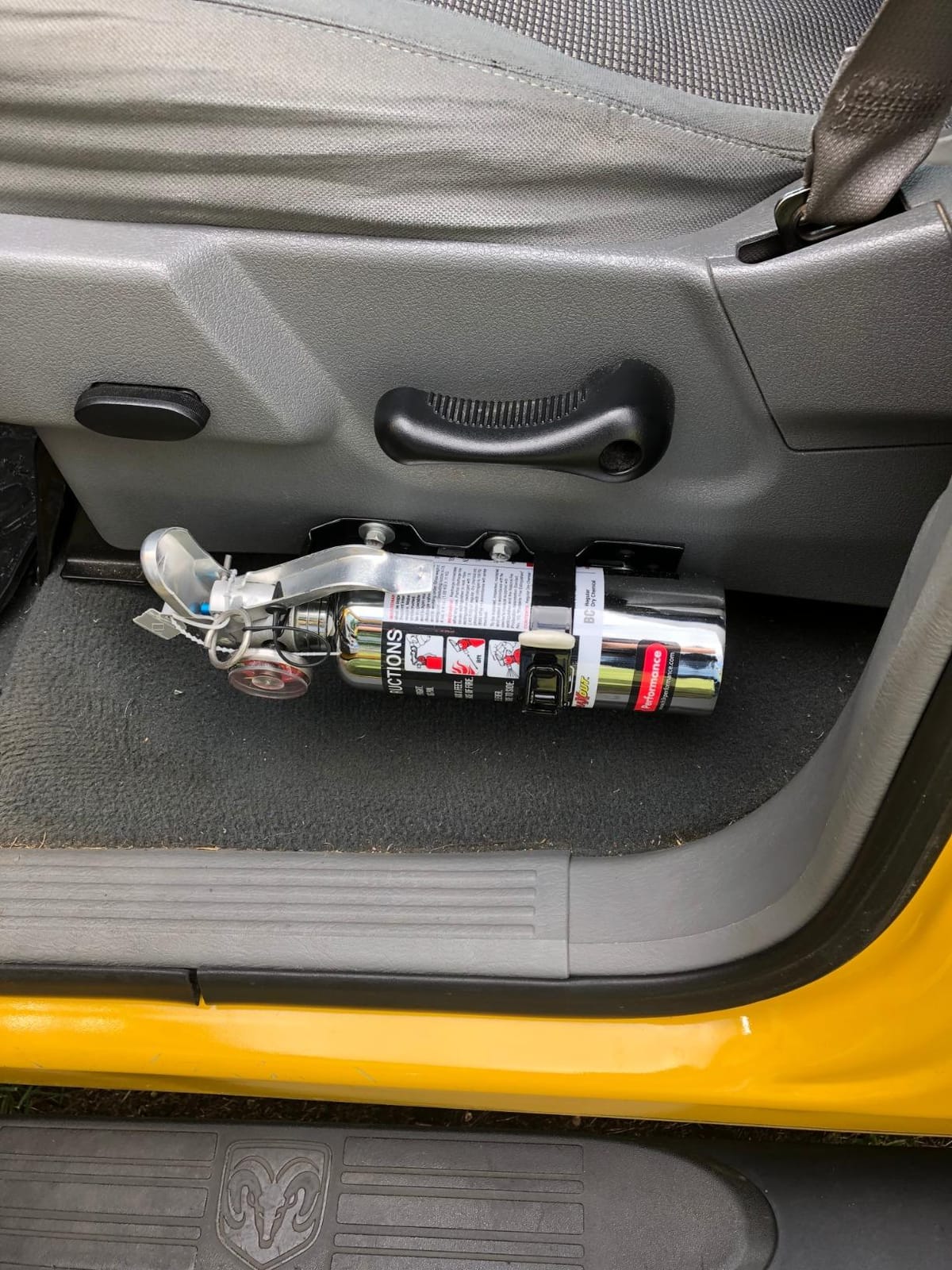
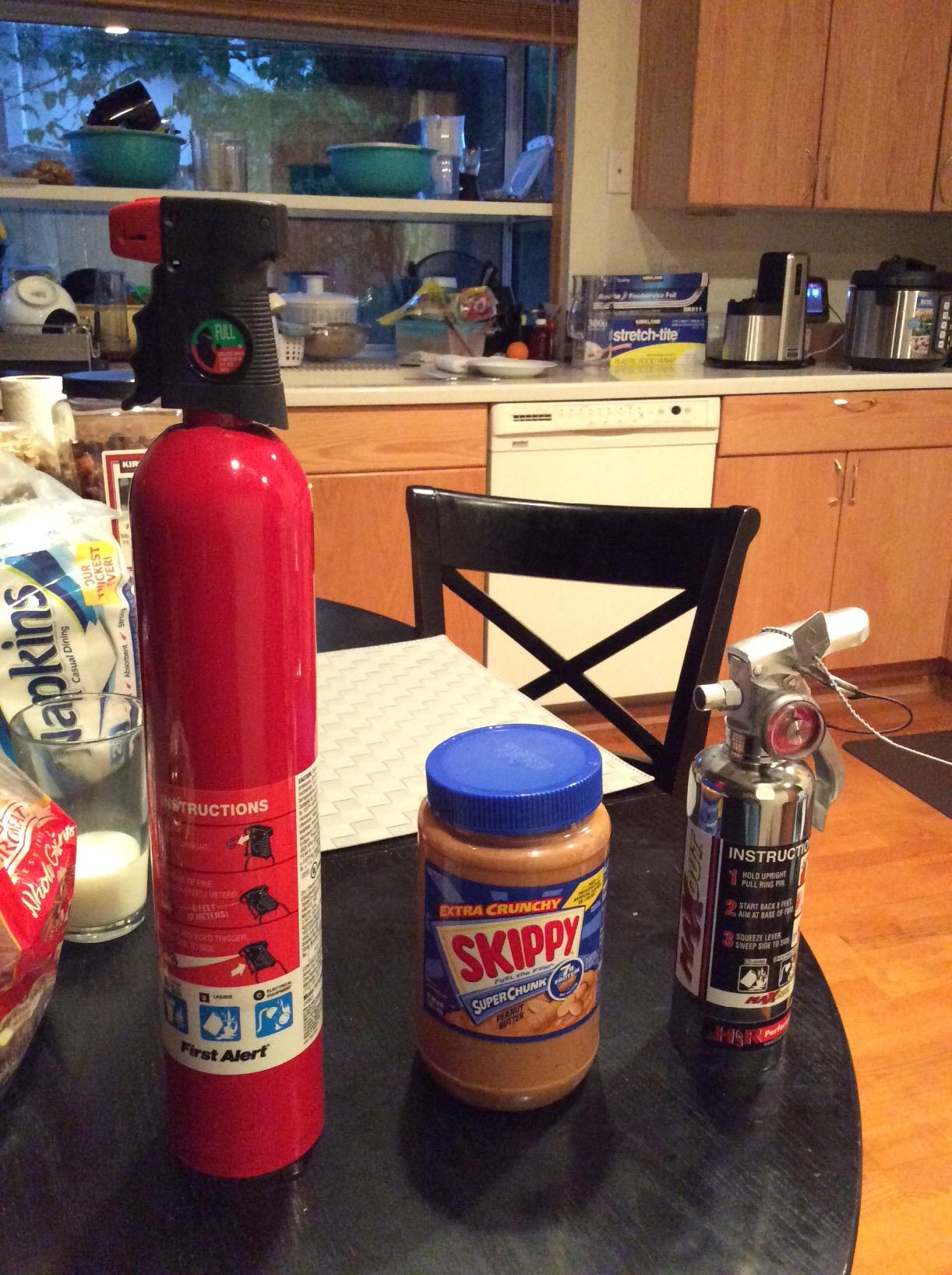
It is available in chrome, red and black, which is a small thing that matters on a boat where the extinguisher is in plain view. The steel cylinder is a better long-term home for an agent than a plastic-bodied bottle.
What it cannot do is Class A. A Purple K unit is useless on a burning wooden deckhouse, so it sits alongside a multipurpose unit rather than replacing one.
Who should buy the MaxOut 1 lb Purple K
Owners of outboard and inboard powerboats who want a dedicated fuel-fire tool mounted right at the engine, and anyone with a performance craft where the fuel system is a known risk. The 2.6 pound weight means it can go almost anywhere.
If you already carry ABC powder and are tired of a cabin covered in abrasive residue, this is the sensible specialist addition to the layout rather than a replacement for the whole setup.
Where the Purple K unit falls short
One pound of agent is a short burst. Owners accept that because the intended fires are small and early, but it will not handle a fire that has taken hold in a cabin or an upholstery stack.
There is no Class A rating, and the discharge is measured in seconds. Mount it close to the fuel source you are protecting rather than treating it as a boat-wide solution.
8. Amerex B240 Water Extinguisher – Big Class A Capacity, Needs Filling
Amerex B240 Stored Pressure Water Fire Extinguisher, 2.5 Gallon for Class A Fires
- 2.5 gallon water capacity gives long discharge for Class A fires
- Stored pressure design with large loop stainless pull pin
- Wall bracket included for fixed mounting
- Filling and pressurisation can be done locally
- Arrives empty and needs professional filling before it works
- Water agent is not usable on energised electrical or flammable liquid fires
- Heavy and tall at 24.5 inches
The B240 is the outlier on this list, and we include it because it answers a question most roundups ignore: what handles a genuine wood or solid-fuel fire aboard? The answer is water, and the 2.5 gallon charge buys you far more discharge time than any powder unit here.
It is a 2A Class A stored-pressure unit with a large loop stainless pull pin, which is designed to be operated with gloves on. The wall bracket is in the box for fixed mounting in a saloon or a machinery space.
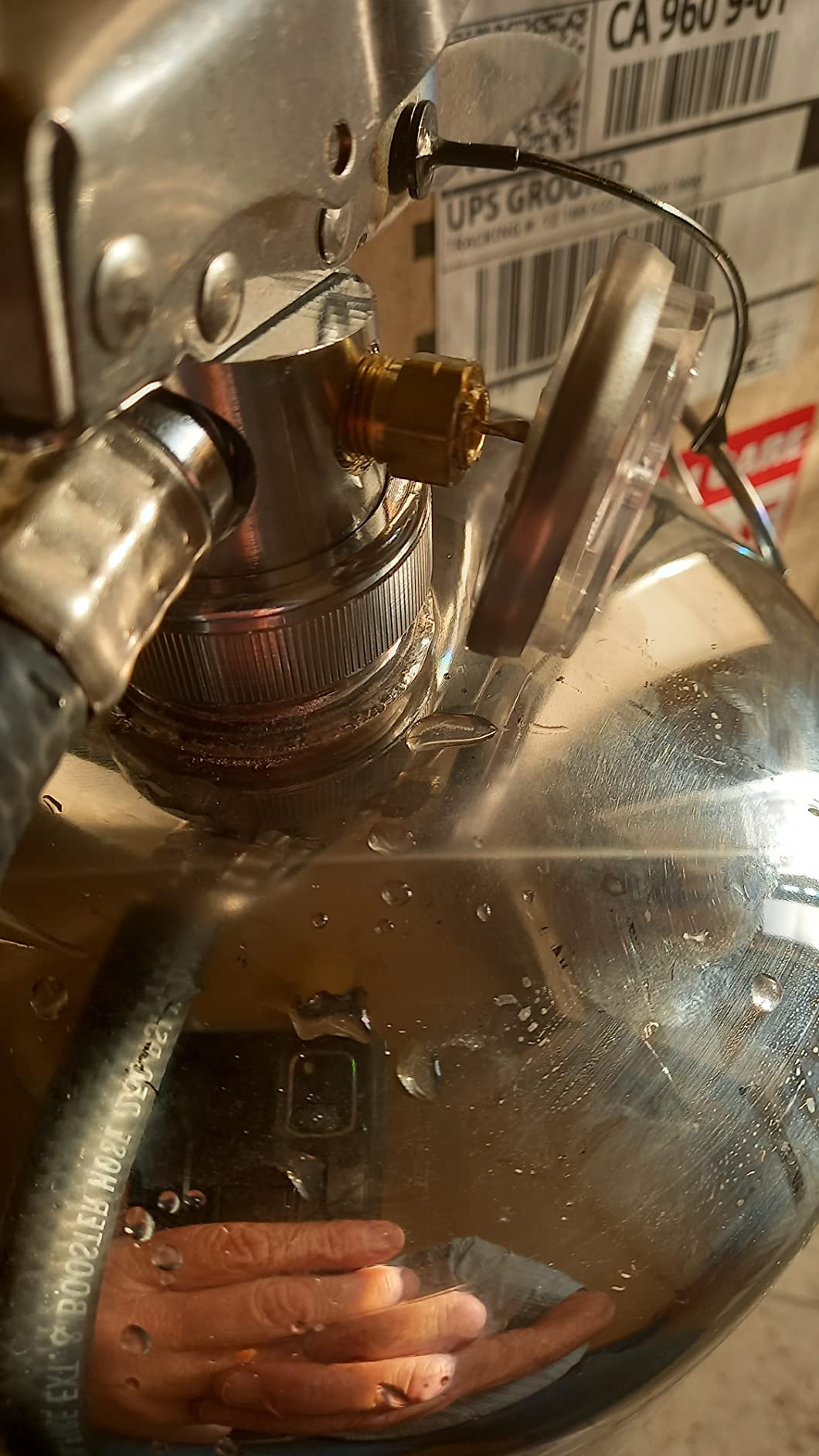
Two things to plan for. It arrives empty, with filling and pressurisation instructions, so it is a purchase that needs a local fire equipment shop before it does anything at all. And water freezes in an unheated environment, so a boat laid up over winter needs a heated locker or a drain-and-refill routine.
At 7.5 pounds empty and 24.5 inches tall, this is a shore-side or large-boat proposition, not a runabout accessory. Owners generally pair it with powder units rather than swapping one for the other.
Who should buy the Amerex B240
Owners of larger boats with a timber interior, a wooden deckhouse, or a stove or solid-fuel heater onboard, and anyone running a charter or workboat with fixed accommodation space. It is the right tool for a fire that is producing embers and needs cooling rather than smothering.
It also suits shore installations, a boat workshop or a yard shed where freeze protection and a fixed wall mount are manageable.
Where the B240 falls short
Water on an energised electrical fire or a burning fuel spill is dangerous and ineffective. Every one of these powder units exists partly because water is the wrong answer for the fires boats actually have.
It needs professional filling before use, it will not survive a freezing winter unattended, and the size and weight make it hard to place within reach on a small boat.
9. Kidde Pro 210 PRO-4MP-1 – Longest Reach in the Group
Kidde Pro 210 Commercial Fire Extinguisher, 2-A:10-B:C, PRO-4MP-1, 1 Pack
- 12-18 foot discharge range is the longest in this group
- 2-A:10-B:C covers combustibles flammable liquids and electrical
- Rechargeable rather than single-use
- All-metal valve with impact-resistant handle and safety pin
- 5203 reviews give the deepest owner feedback of any unit here
- Commercial sizing is oversized for a small personal watercraft
- Heavier and bulkier than the 1-2 lb marine units
- Not USCG marine approved for on-board carriage
With 5,203 reviews this is the most thoroughly owner-tested extinguisher we looked at, and the specification that jumps out is reach. A 12 to 18 foot effective range with 13 to 15 seconds of discharge is more than twice the reach of the small marine units, and the 2-A:10-B:C rating is commercial code sizing.
It is rechargeable rather than single-use, with an all-metal valve assembly and an impact-resistant handle. Owners consistently frame it as a code-compliance unit for facilities, garages and workshops, and that is exactly what it is.
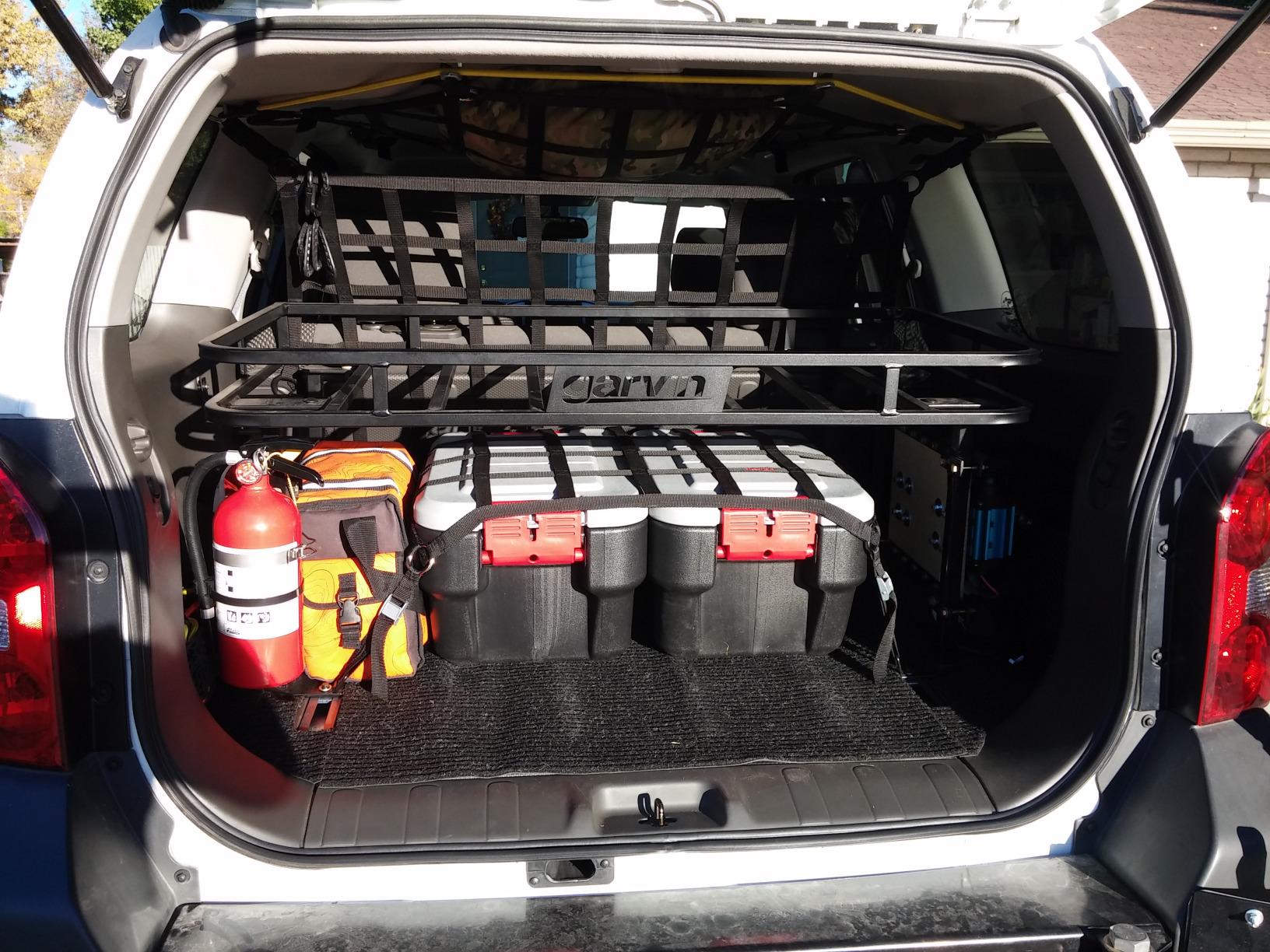
We include it because a meaningful share of boat owners also own the shed the boat lives in, and because a longer range genuinely changes what you can fight. Standing 15 feet back from a fire instead of 5 is a meaningful margin when you are dealing with fuel vapour.
The catch is regulatory. This is not a marine-approved unit for carriage, and the size works against you in a small boat where a 6.5 pound cylinder needs a home you can reach quickly.
Who should buy the Kidde Pro 210
Owners of larger boats with a substantial interior or engine space, and anyone running a workshop, yard office or shore facility where commercial code sizing applies. The rechargeable metal construction suits a space where the unit will be inspected and serviced on a schedule.
It is also a good pairing with a smaller certified marine unit: one on board for carriage compliance, one ashore with reach and capacity.
Where the Pro 210 falls short
It is not USCG approved for on-board use, so it cannot be the extinguisher you show an inspector. Be clear about that before you plan around it.
At 6.5 pounds and 15.7 inches long it is oversized for a personal watercraft or a small centre console, and it will not fit the moulded holders these boats come with.
10. Amerex B417T – All-Metal 2.5 lb Workhorse
Amerex B417T, 2.5 Pound ABC Dry Chemical Class A B C Multi-Purpose 2.5 Pound Fire Extinguisher with Wall Bracket
- All-metal fittings with no plastic valve assembly
- 2.5 lb Class A B and C coverage in a manageable weight
- Wall bracket included in the box
- Also made in 5
- 10 and 20 lb sizes
- Wall mount is occasionally missing from the box
- Heavier than plastic household extinguishers of the same rating
- Not marketed as USCG marine approved
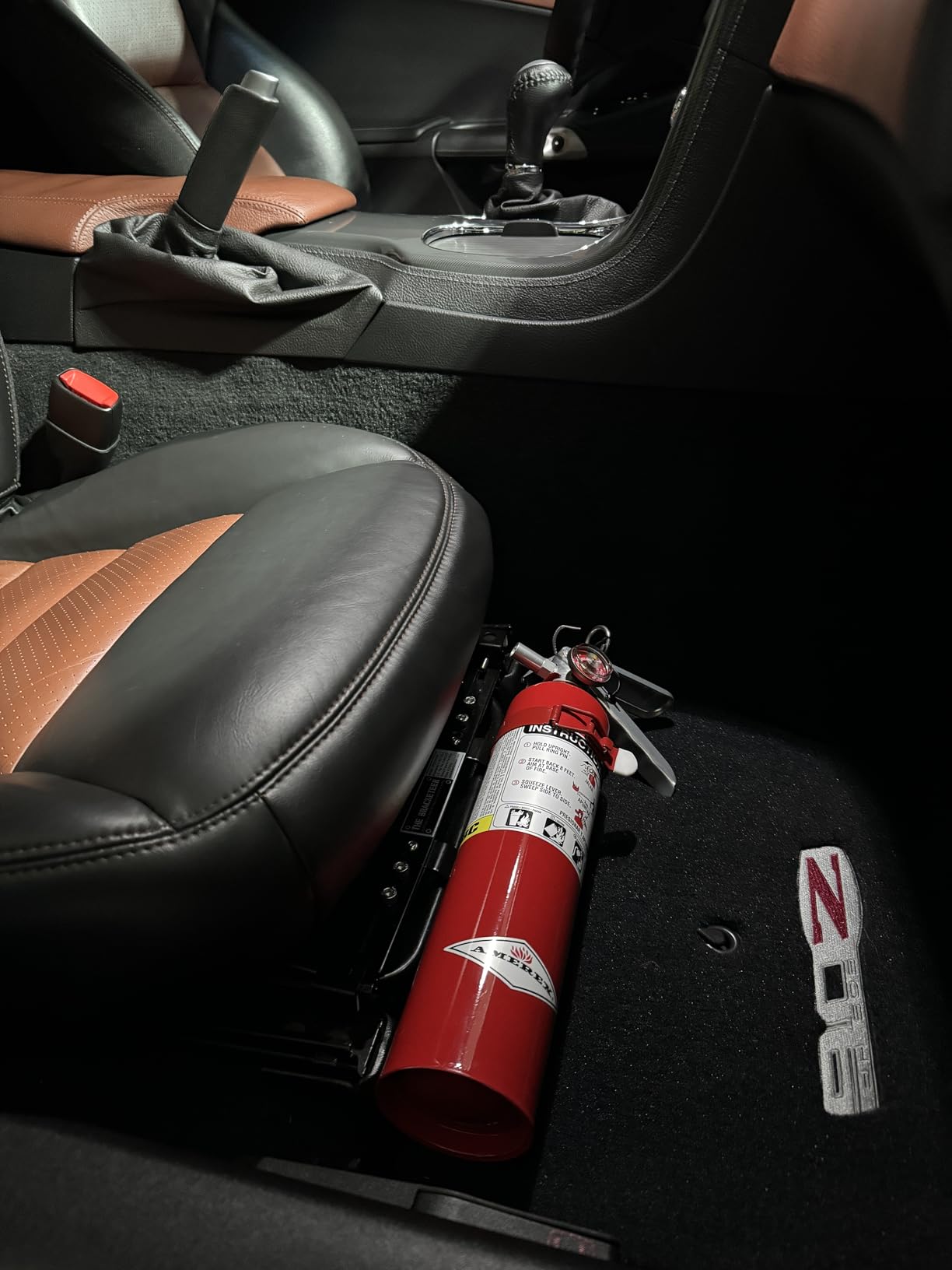
The B417T is the unit the fire alarm industry has been fitting for decades, and owners buying for home or a small boat often recognise it as the same thing in a different colour. The all-metal fittings and the absence of any plastic in the valve assembly are the reason it lasts.
2.5 pounds of ABC dry chemical gives Class A, B and C coverage at a weight you can lift one-handed, which is the right balance for a saloon or a shore garage. The wall bracket is included, though check the box before you leave.
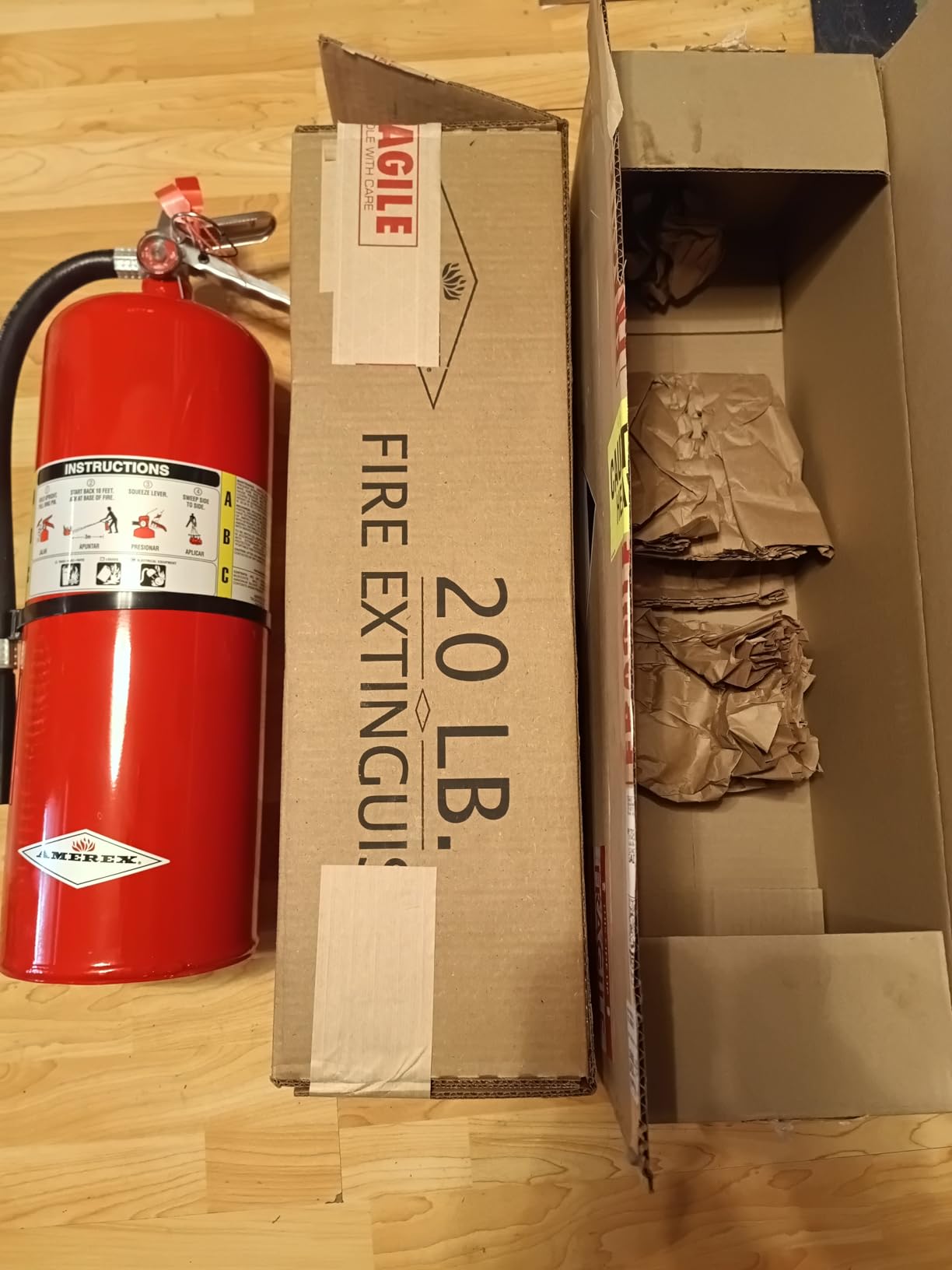
Owners report the same build quality as alarm-company supplied units at a much lower cost, which is the entire value proposition. It is also made in 5, 10 and 20 lb sizes if you want to standardise a shore installation across a whole facility.
It is not marketed as a USCG marine-approved unit, so treat it as the multipurpose companion to a certified marine extinguisher rather than a replacement for one.
Who should buy the Amerex B417T
Owners who want a durable all-metal multipurpose unit for a shore garage, a boatyard, or a larger boat where a plastic household unit would be the weak link. Facilities that need several matching extinguishers will appreciate the range of sizes.
It is a good second unit for a boat with a wooden interior, because it adds Class A coverage alongside your certified marine powder unit.
Where the B417T falls short
Missing wall brackets in some shipments come up repeatedly, so verify the box contents before you leave the house. It is a two-minute check that saves a return trip.
It is heavier than a plastic-bodied unit of the same rating, and without a USCG Type Approval it will not satisfy a carriage inspection on its own.
How Many Fire Extinguishers Does Your Boat Need?
Carriage requirements come from 33 CFR Part 175 Subpart E, and the answer depends on two things: your boat length and its model year. Boats built in model year 2018 or later follow a Class B UL scheme keyed to the 5-B:BC rating. Boats from 2017 or earlier follow the older B-I and B-II classification, which is where a lot of owners buy the wrong number of units.
For boats built in 2018 or later, the pattern is: one 5-B:BC extinguisher between 16 and 26 feet, two for 26 to 40 feet, and three for 40 to 65 feet. A single 20-B:BC unit can satisfy a requirement for two 5-B units, which is a useful substitution if mounting space is the constraint.
For boats from model year 2017 or earlier, the classification is B-I, B-II or B-III, and B-II boats need a minimum of two 5-B units where B-I needs one. Check the plaque on your hull for the classification and confirm against current guidance with an inspector, because a lot of older boats are still in the older scheme.
Requirements step up again above 65 feet, and commercial or charter vessels fall under 46 CFR rather than 33 CFR. If you are in that category, talk to a marine surveyor instead of following a recreational guide.
Whatever the count, spread the units out. Two extinguishers in adjacent lockers are one fire away from being one extinguisher, and reachability from the helm and from the companionway matters more than the total number.
What Makes an Extinguisher Genuinely Marine-Rated?
A marine fire extinguisher is a portable extinguisher that carries a US Coast Guard approval number on its UL nameplate, is built with corrosion-resistant components for a salt-water environment, and is supplied with a marine or motor-vehicle-type mounting bracket, because on a boat the bracket is part of the approval rather than an accessory.
That definition gives you five checks before you buy. Look for the USCG Type Approval number on the nameplate. Confirm the UL listing and the 5-B:BC rating or better. Check the agent type. Confirm the marine-type bracket is included, not merely compatible. And check the manufacture date, because a six-year service life measured from the stamp means a shelf-sitting unit may have two years left.
A wall hanger from a hardware store does not complete the approval. Neither does a strap bracket on a unit whose nameplate lists a specific bracket part number as part of the approved assembly.
Salt spray is the reason marine units exist as a category. Corrosion-resistant brass or anodised aluminium valves, stainless components and a salt spray test on the listing are what separate a unit that survives three seasons from one that seizes its pin in the first winter.
Before any of that, make sure the unit is the right size for where the fire starts. A 1 lb cylinder is a first-response tool; it is not the answer for a fire that has reached the deckhead. Our general-purpose picks for a boat cabin are covered in our fire extinguisher buying guide, and galley grease fires have their own logic we cover in the kitchen extinguisher roundup.
Which Type of Fire Extinguisher Should You Carry on a Boat?
Three agent types cover almost every boat, and the right one depends on where the fire starts rather than on which brand you prefer.
ABC dry chemical covers Class A combustibles, Class B flammable liquids and Class C electrical fires in one cylinder. This is the default marine agent and what the Coast Guard carriage rules assume. It interrupts the chemical chain of the fire quickly and it works on electricity, but it leaves an abrasive corrosive powder behind.
Purple K is a potassium carbonate agent aimed squarely at Class B fuel fires, with less aggressive residue. It is a specialist tool for the engine space and fuel system rather than a whole-boat answer, and it carries no Class A rating.
Wet chemical Class K is the one to have if you have a galley fryer or griddle. It saponifies burning grease into a soapy layer that smothers the fire, which water and ABC powder both fail to do reliably. Buy it as an addition to your carriage unit, not instead of it.
CO2 and clean agents are worth knowing about but rarely substitute for carriage units. CO2 leaves no residue, which is why it appeals to owners worried about cleanup, but it asphyxiates and a handheld unit cannot fill a cabin. Fixed clean-agent systems such as FM-200 or Halotron in the engine space are a separate installation job.
Water mist is popular with cruisers in the UK and Europe because it cools without powder. On a US boat it has two problems: weaker or absent Class B ratings, which complicate compliance, and freeze damage on a boat laid up over winter.
A fire blanket belongs in the same kit, not in place of an extinguisher. It is the correct tool for a small galley flare and for smothering a fuel spill, and it is what several owners on the YBW forums reach for first.
Rechargeable vs Disposable: When to Replace
Most extinguishers sold to boat owners are disposable. You cannot refill a 1 lb or 2.5 lb marine unit at home, and most shops will not service a low-cost disposable, so the practical answer is replacement on a cycle rather than recharge.
Disposable units carry a six-year service life from the stamped manufacture date for Coast Guard approved models. A rechargeable unit needs professional maintenance on a six-year cycle and a hydrostatic test at twelve years for the cylinder, which is the point at which many owners simply replace it.
Our refillable picks, the H3R MaxOut units, sit on that longer cycle. If you have discharged a powder unit during a fire, treat it as empty until a certified shop has refilled and repressurised it, whatever the gauge says afterwards.
Whichever type you own, put a monthly five-minute check in your routine. Confirm the gauge is in the green, the pin moves freely, the tamper seal is intact, and the bracket is still firmly attached to the boat rather than to a storage locker lid.
Is Dry Chemical Powder Safe Inside a Boat Cabin?
This is the most argued question in boat fire circles, and it deserves a straight answer rather than a headline. The concern is real: a fine airborne powder in an enclosed cabin is unpleasant to inhale, the residue is abrasive and corrosive, and cleaning it out of a boat’s interior is a serious chore. On the YBW forums this has been a running thread for years, with posters citing instructor warnings about breathing powder in enclosed spaces.
The counter-argument comes from people who test extinguishers professionally, who point out that inhaling fine inert powders is treated as a very low health risk, comparable to flour, and that an owner who hesitates at the moment of a fire loses the boat. That position is also made forcefully on the same forum, and we think it is right.
Our view is that the risk is about timing and quantity, not about the agent itself. A single 5-B unit discharged quickly at the base of a fire is a calculated, brief exposure. Discharging a full unit into a small cabin and then staying inside to watch is the scenario that generates the horror stories.
So the practical answer is: still carry the certified powder unit, and treat it as the tool to use fast and from the best position you can find. Add a wet chemical Class K unit for the galley, keep a fire blanket in the cockpit locker, and if your boat is large enough to justify it, consider a CO2 unit at the companionway so the cabin can be filled from outside rather than entered.
That layered approach is what experienced owners describe, and it costs far less than a cabin interior stripped and refitted. Nobody in the discussions we reviewed argues that you should not carry a certified unit at all.
Where Should You Mount Fire Extinguishers on a Boat?
Mount the carriage unit where you can reach it on your way out of the danger, not where it is most convenient to store. In practice that means one unit just inside the companionway or at the helm, reachable from the cockpit, and a second one near your main exit from the accommodation space.
Add a third for a boat with a fore-cabin or a rear berth. The layout most owners converge on is one by the companionway, one under the saloon table, and one near the sleeping berth behind the galley.
Mount it on a proper marine bracket, bolted to a bulkhead or console, with the strap or clamp actually engaging the cylinder. A unit rattling in a locker under a stack of gear is functionally the same as no unit at all.
Do not put the only unit inside the engine space. Engine room fires need a fixed clean-agent system installed by a marine technician, and a handheld unit in a space that is already full of smoke and flame is a tool you will never reach.
If you want to avoid drilling the hull or deck, a strapped or clamped marine mount to an existing rail or console post works, and there are owners on The Hull Truth forum running exactly that setup. Just check that the mount is the approved type for that extinguisher.
Finally, a light. A phone flashlight clipped to the bracket is enough to confirm the gauge and the seal in a dark locker, which is the difference between a check you do and a check you skip.
Frequently Asked Questions
What is the difference between a regular fire extinguisher and a marine fire extinguisher?
A marine extinguisher carries a US Coast Guard Type Approval number on its UL nameplate and is built with corrosion-resistant components for salt water. A regular household or commercial unit has no such approval, and a wall hanger from a hardware store does not complete the approval. On a boat the marine or motor-vehicle-type bracket is part of the approved assembly, so the bracket must match the one listed for that model.
How many fire extinguishers does my boat need?
Boats built in model year 2018 or later follow a Class B UL scheme: one 5-B:BC unit between 16 and 26 feet, two between 26 and 40 feet, and three between 40 and 65 feet. Boats from 2017 or earlier follow the older B-I, B-II and B-III classification. Above 65 feet, and for commercial or charter vessels, 46 CFR applies instead of 33 CFR Part 175 Subpart E.
What type of fire extinguisher should you carry on a boat?
Three agent types cover almost every boat. ABC dry chemical handles Class A combustibles, Class B flammable liquids and Class C electrical fires and is the default marine agent. Purple K targets Class B fuel fires with less residue. Wet chemical Class K is the right choice for a galley fryer or griddle grease fire, which water and ABC powder cannot reliably handle.
What is the typical lifespan of a marine fire extinguisher?
Disposable Coast Guard approved units carry a six-year service life from the date stamped on the cylinder, so check the manufacture date before you buy. Rechargeable units need professional maintenance on a six-year cycle and a hydrostatic test at twelve years for the cylinder. A unit that has been discharged should be refilled and repressurised by a certified shop before it is trusted again.
Is dry chemical powder safe to use inside a boat cabin?
The residue is abrasive, corrosive and unpleasant to inhale, and cleaning it out of a boat interior is a real chore. But professional extinguisher testers point out that inhaling fine inert powder is a very low health risk, comparable to flour, and hesitating at the moment of a fire costs you the boat. Use the certified unit fast, from the best position available, and add a wet chemical Class K unit for the galley plus a fire blanket.
Where should I mount fire extinguishers on a boat?
One unit just inside the companionway or at the helm, reachable from the cockpit without entering the danger, plus a second near your main exit from the accommodation space. Add a third near a fore-cabin or rear berth. Mount each on a bolted marine bracket that matches the one listed on the nameplate, and never leave the only unit inside the engine space, which needs a fixed clean-agent system instead.
Final Verdict: The Best Marine Fire Extinguisher Setup
The best marine fire extinguishers setup for most boats is two units, not one. Start with the First Alert Marine1 at the companionway for its USCG Type Approval, 1-A:10-B:C coverage and rechargeable metal build, then add a second unit where the fire is most likely to start.
For personal watercraft and boats under about 16 feet, the First Alert FE5R or the Kidde Mariner PWC covers the carriage requirement and fits the moulded holder. For a boat with a wooden interior, add multipurpose Class A coverage ashore or in a companionway locker, and add wet chemical Class K if you own a fryer.
Check the manufacture date, confirm the bracket matches the nameplate, and run the monthly gauge and seal check. It takes five minutes and it is the difference between carrying an extinguisher and having one. For the rest of your onboard kit, our marine speaker and marine stereo guides cover the other end of the wire.