

Paddling is one of the few outdoor sports you can pick up at 65 and still be genuinely good at a year later. The stroke is low impact, the balance work is real, and a morning on flat water does more for a stiff hip than a whole week of stretching on a living room floor.
The problem for older paddlers is almost never the paddling. It is the three things that happen on shore. Getting in, getting out, and carrying the boat from the car to the water. Sit inside kayaks ask you to lower yourself through a hole in the deck and pull your legs in after you, which is exactly the motion that bothers a bad knee or a stiff lower back. Then you lift 50 pounds of hull onto a roof rack by yourself. That is where most people over 60 quietly give up, and it has almost nothing to do with their ability to paddle.
So the best kayaks for seniors are not the fastest or the most capable boats on the market. They are the ones with a wide open deck you step onto instead of climb into, a hull light enough for one pair of hands, and a seat that holds your back up for three hours. I spent weeks working through ten sit-on-top and inflatable models with those three barriers in mind, and what follows is the shortlist. If you want the wider field first, our general best kayaks guide covers the full category including touring and fishing boats.
Table of Contents
Features to Look For in a Senior-Friendly Kayak
A senior-friendly kayak is a wide, open-deck sit-on-top design with a 30 inch-plus beam, a capacity of at least 300 pounds, and a hull light enough for one person to lift, built so you step onto the deck rather than lower yourself through a spray skirt. These seven criteria decided every pick below.
Beam width of 30 inches or more. Width, not length, is the single strongest predictor of how a boat feels under an older paddler. Thirty inches is the comfort threshold; 32 inches and up is where nervous beginners stop correcting constantly.
An open sit-on-top deck. No spray skirt, no cockpit rim to straddle, no contortion. You step up onto the deck and sit down, which is the whole difference between a boat you use and a boat you look at.
Hull weight under 50 pounds, ideally under 40. Anything heavier and you need a second person or a kayak cart every single time. See our broader kayak comparisons for weight across the category.
Weight capacity of 300 pounds or more. Keep your body weight plus gear under 80 percent of the rating. A boat loaded to its maximum is not a stable boat.
A padded seat with an adjustable or high backrest. Framed seats that recline and lumbar-style padding beat thin plastic shells every time for anyone over an hour on the water.
Molded-in footrests and a stable footwell. Feet do the work of keeping you level. Fixed footrests that match your leg length matter more than most buyers expect.
Side and bow carry handles, plus scupper holes. Handles moulded into the hull rather than rope loops, and scuppers that drain splash water so you are not sitting in a puddle all afternoon.
Quick Picks: Three Standouts for Older Paddlers (October 2026)
Ten boats made the cut. These three came out ahead for different reasons, and each one solved a different version of the same problem.

Pelican Argo 100X
- 36 lb rigid 10 ft hull
- Large easy-entry cockpit
- 275 lb capacity
- Ergoform padded backrest
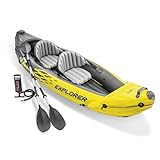
Intex Explorer K2
- 36 inch wide deck
- 400 lb capacity
- Carries as a packed bag
- Paddles as a two-person boat

Perception Tribe 9.5
- Reclining high-back frame seat
- 300 lb capacity
- Easy entry from standing depth
Best Kayaks for Seniors at a Glance in 2026
Every boat below is listed with the numbers that actually decide whether an older paddler can use it comfortably. Beam width, hull weight and weight capacity matter more than length or speed in almost every case.
| Product | Specifications | Action |
|---|---|---|
| Pelican Argo 100X |
|
Check Latest Price |
| Intex Explorer K2 |
|
Check Latest Price |
| Perception Tribe 9.5 |
|
Check Latest Price |
 Pelican Sentinel 80X Pelican Sentinel 80X |
|
Check Latest Price |
 Intex Challenger K1 Intex Challenger K1 |
|
Check Latest Price |
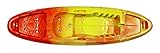 Perception Zip 9.5 Perception Zip 9.5 |
|
Check Latest Price |
 Lifetime Lotus Lifetime Lotus |
|
Check Latest Price |
 Pelican Seek 100X Pelican Seek 100X |
|
Check Latest Price |
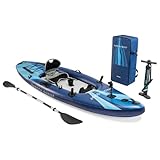 Intex Dakota Quest Intex Dakota Quest |
|
Check Latest Price |
 Lifetime Lockport 94 Lifetime Lockport 94 |
|
Check Latest Price |
1. Pelican Argo 100X: Best Overall Kayak for Seniors
Pelican Argo 100X – Recreational Sit-in Kayak – 10 ft – Fade Deep Blue/White
- Only 36 lb so one person can shoulder and carry it
- Large cockpit is genuinely easy to enter and exit
- Flotation foam and flatter hull add margin if the cockpit floods
- Adjustable padded backrest works for a range of back conditions
- Paddle sold separately
- Spray skirt sold separately and needed for open water
- Pursuit-style tracking is not its strength
I picked this one first because it solves the weight problem better than almost anything else in this group while still being a rigid hull that tracks predictably. Thirty-six pounds is genuinely shoulderable for a lot of people, and it is the only boat here that is a hard shell without being the heaviest thing on the beach.
The cockpit is unusually tall and open for a ten-foot sit-in, and that matters enormously. Pelican designed it so you can sit down on the seat first and then bring your legs in, rather than lowering yourself through a hole with your legs already in front of you. For anyone with hip or knee limits, that single design decision is worth more than any hull feature.
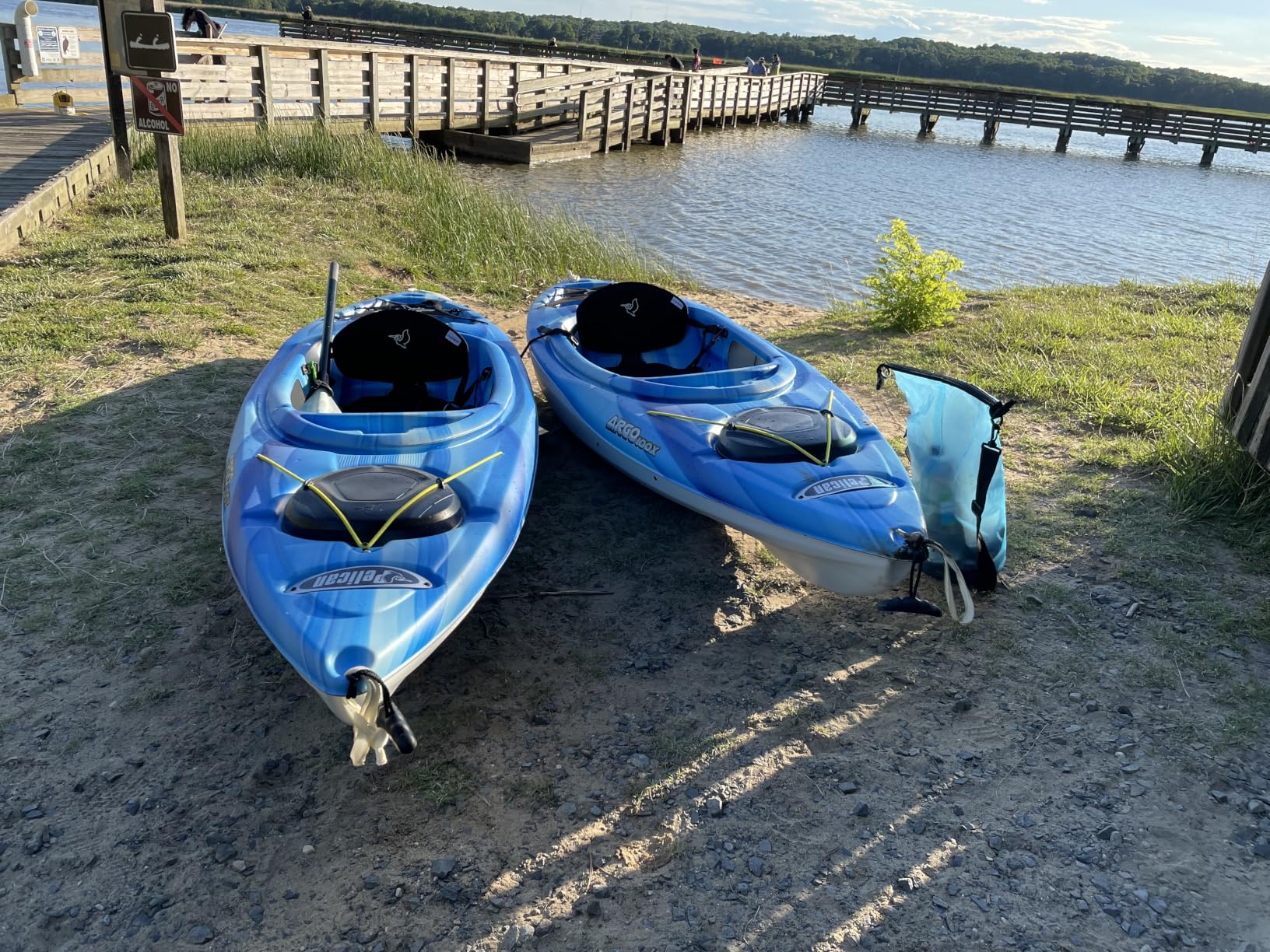
Reviewers who upgraded from cheaper or inflatable boats describe it as the sweet spot between them: rigid, light and predictable. Owners also report the twin-arched multi-chine hull stays upright when something bumps the beam, which is the behaviour that builds confidence over a season of paddling.
The storage is real storage. A front hatch, a rear tank with a mesh cover, bungee cord and bottle holders mean you can carry a full day of water and food without strapping bags to the deck where they catch your paddle.
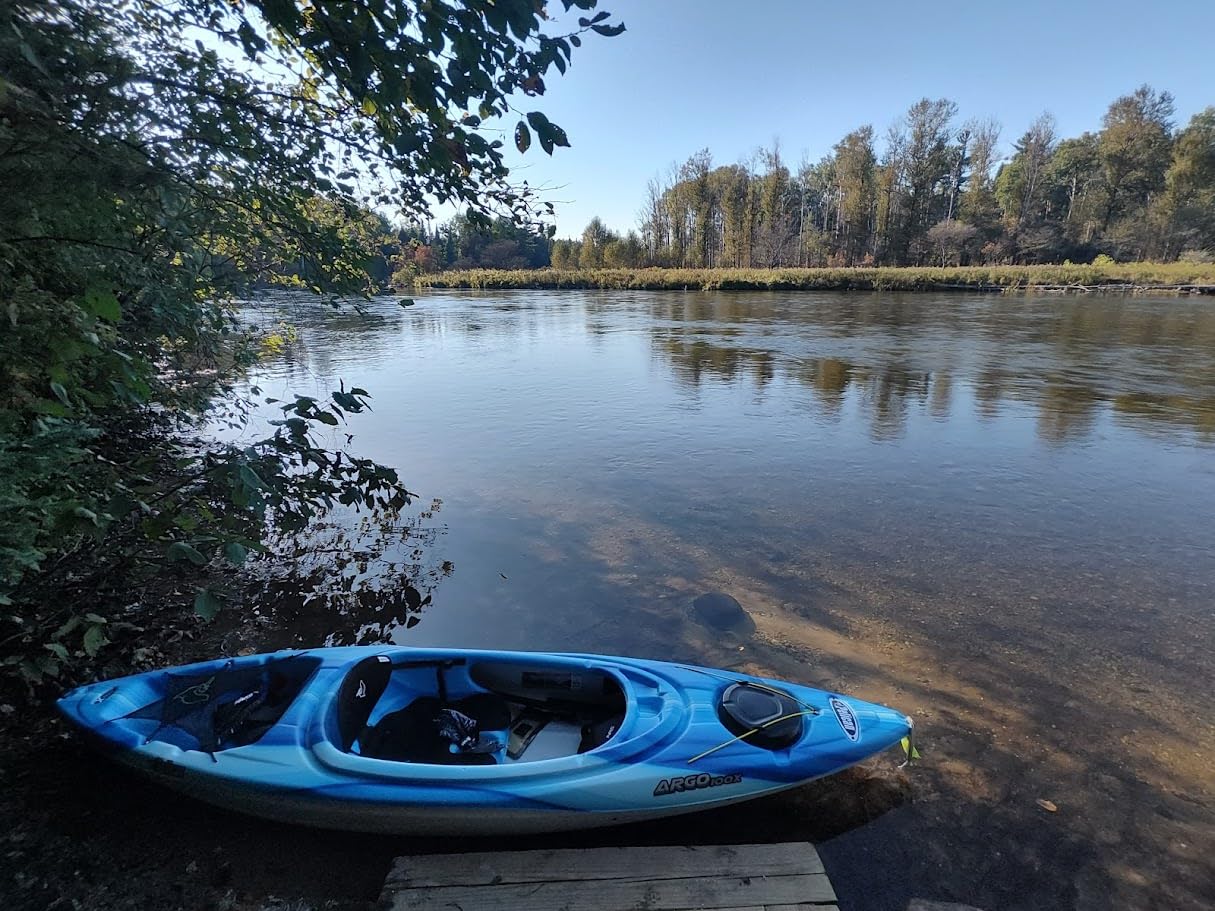
How the Argo 100X handles a bad back
The adjustable Ergoform backrest with a seat cushion is the reason this boat works for paddlers with lower-back trouble. It reclines enough to rest between strokes and firms up when you want to paddle harder, so you are not locked in one position for three hours.
Reviewers report comfortable real-world sessions of three to four hours before wanting a change. That is the honest number, and it is longer than most hard shells at this level.
Where the Argo 100X falls short
The paddle is not in the box, and the spray skirt is a separate purchase too. Budget for both before the first trip rather than discovering it at the launch.
It is also a sit-in, so you will get wet in a capsize and cold in early spring. For flat lakes and mild rivers in 2026 that is a fair trade. For cold water or open coastal surf it is the wrong boat.
2. Intex Explorer K2: Best Value Inflatable for Seniors
INTEX Explorer Inflatable Kayak 2-Person Portable Set with Paddles and Pump
- Widest deck in this group at 36 inches
- 400 lb capacity leaves lots of headroom
- Carries as a packed bag so no roof rack is needed
- Bright yellow hull is easy for helpers to spot
- Inflatable seats feel thin and sit close together
- Included 86 inch paddles are short for adults
- Vinyl seam rubs the hands in a long session
This is the boat I recommend to anyone whose real constraint is not balance but arms and back. At thirty-five pounds packed, it goes from the car to the water in one trip, inflates in about five to ten minutes with the included pump, and then disappears back into its bag.
Thirty-six inches of beam is the widest deck here, and the I-beam floor with high-buoyancy side chambers makes it feel planted. You can lean over the side to look at something without the panic most beginners feel in a narrow boat.

With thirty thousand reviews behind it, the pattern is consistent. Owners treat it as the entry point for beginners, families and travellers: quick to inflate, easy to carry, surprisingly hard to puncture and stable on calm water. Nobody describes it as fast.
One seat lifts out, so the same boat works solo or with a spouse, an adult child or a dog. For companionship on the water that is a real advantage, and our tandem kayak picks go deeper on two-person setups.
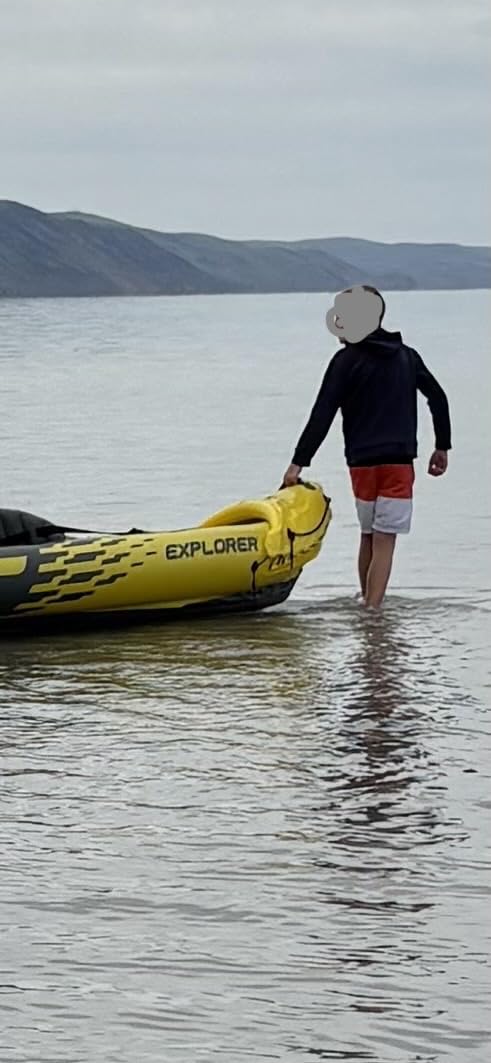
Why the wide deck matters more than the material
Inflatable boats get dismissed because people assume they wallow. The Explorer K2 does not, on flat water. The combination of a 36 inch width, a low-profile deck and a removable skeg gives it a steady feel that surprises first-time paddlers.
The practical advantage for seniors is that there is no hard edge to bang a hip against while getting in, and no rigid shell to drop on a foot when you climb aboard.
When to skip the Explorer K2
It is slower than any hard shell here and it will not hold a line in wind or current. On a lake on a still morning it is a joy. On a breezy lake it becomes a lot of corrective strokes and tired shoulders.
The included 86 inch paddles also feel short and cheap for adults, and most owners replace them. Buy a proper paddle of a length matched to your height when you order the boat.
3. Perception Tribe 9.5: Best for Bad Backs and Joints
Perception Tribe 9.5 – Recerational Kayak Sit on Top – Large Rear Storage with Tie Downs – 9.5 ft – Déjà Vu
- High-back frame seat with adjustable recline and heavy cushioning
- 300 lb capacity with room for gear
- Step-in entry works from standing depth water
- Made in the USA with a five year hull warranty
- Heaviest hull here at 46 lb and needs two people to load
- Higher seat back trades some stability
- Not fast
- rear dry storage is too small to trust
If your main worry is your back rather than your grip strength, this is the boat. The Tribe 9.5 has a framed seat with a tall back, multiple recline positions and heavier cushioning than anything else here, and paddlers with knee replacements specifically credit the step-in entry.
It is a sit-on-top, so you sit down on an open deck from standing depth in shallow water. There is no cockpit rim to straddle and no skirt to push against. That is a genuinely different experience for anyone whose knees do not like being bent to the deck.
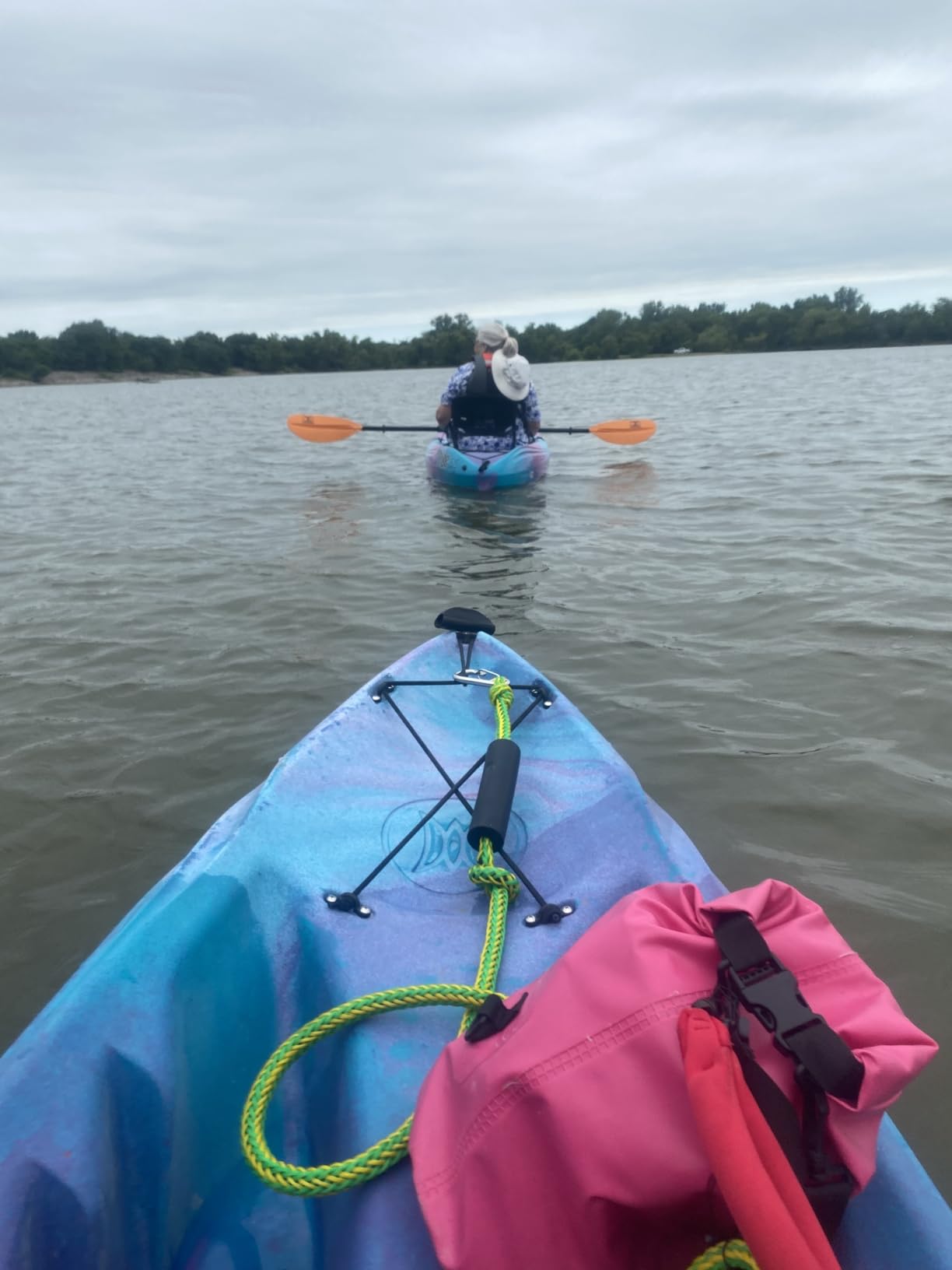
Reviewers consistently pair that comfort with the 300 pound rating, which means a larger paddler plus water, lunch and a dry bag still sits well inside the limit. Our Perception kayak guide covers where this brand fits in the wider lineup.
Solid side handles plus bow and stern grab points make it easier to carry than the weight suggests, and the self-bailing design keeps water out of the cockpit on a choppy day.
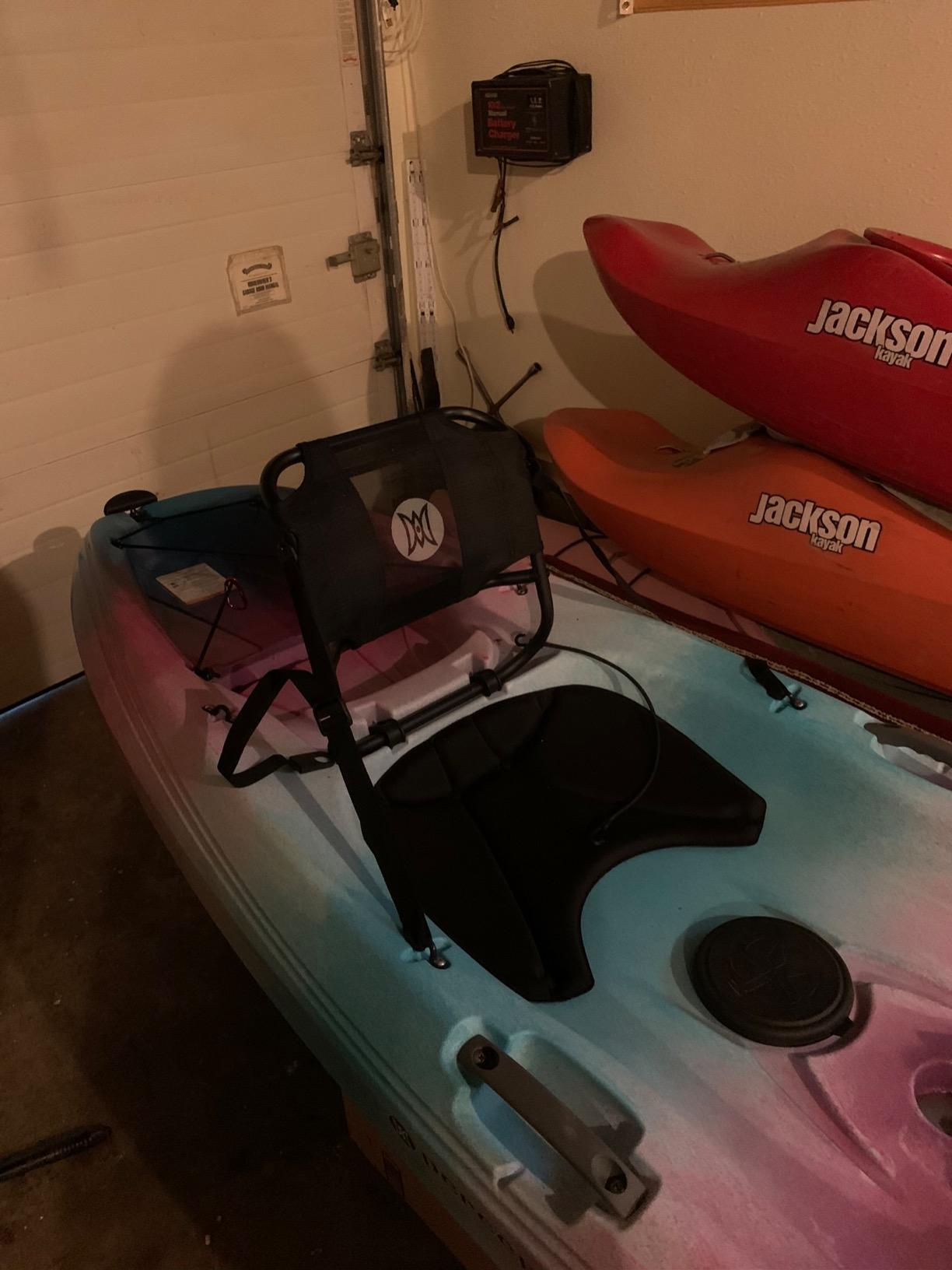
What the high seat back costs you
Seat height and stability trade against each other. A taller seat back raises your centre of gravity, so this boat leans a little more than a low-profile sit-on-top when you shift weight hard. It still feels planted on flat water, but it is not the boat to take into wind or chop.
Reviewers also note it is built for comfort and capacity rather than speed. If your goal is covering distance, you will be disappointed. If your goal is two unhurried hours on a lake, that is exactly the trade you want.
Who should not buy the Tribe 9.5
The weight is the honest problem. At forty-six pounds it is the heaviest hull in this roundup, and most owners say two people are needed to get it onto a roof rack. Without a helper or a kayak cart, that is a real barrier.
The rear dry storage is also widely considered too small and not watertight enough to trust for electronics. Carry a dry bag instead.
4. Pelican Sentinel 80X: Most Compact Short-Length Pick
- Highest average rating among these ten boats
- 34 lb is easy to lift onto a rack alone
- 8 ft length fits inside most SUVs for transport
- Ergoform backrest adds real cushioning and adjustability
- 225 lb capacity is the lowest here
- Light-gauge plastic draws durability questions
- Paddle not included on some variants
This boat carries the highest average rating of the ten we rated, at 4.7 across 33 reviews. That is a small sample, but the praise is consistent: owners like that it is small enough to carry and store alone while still feeling solid and stable once afloat.
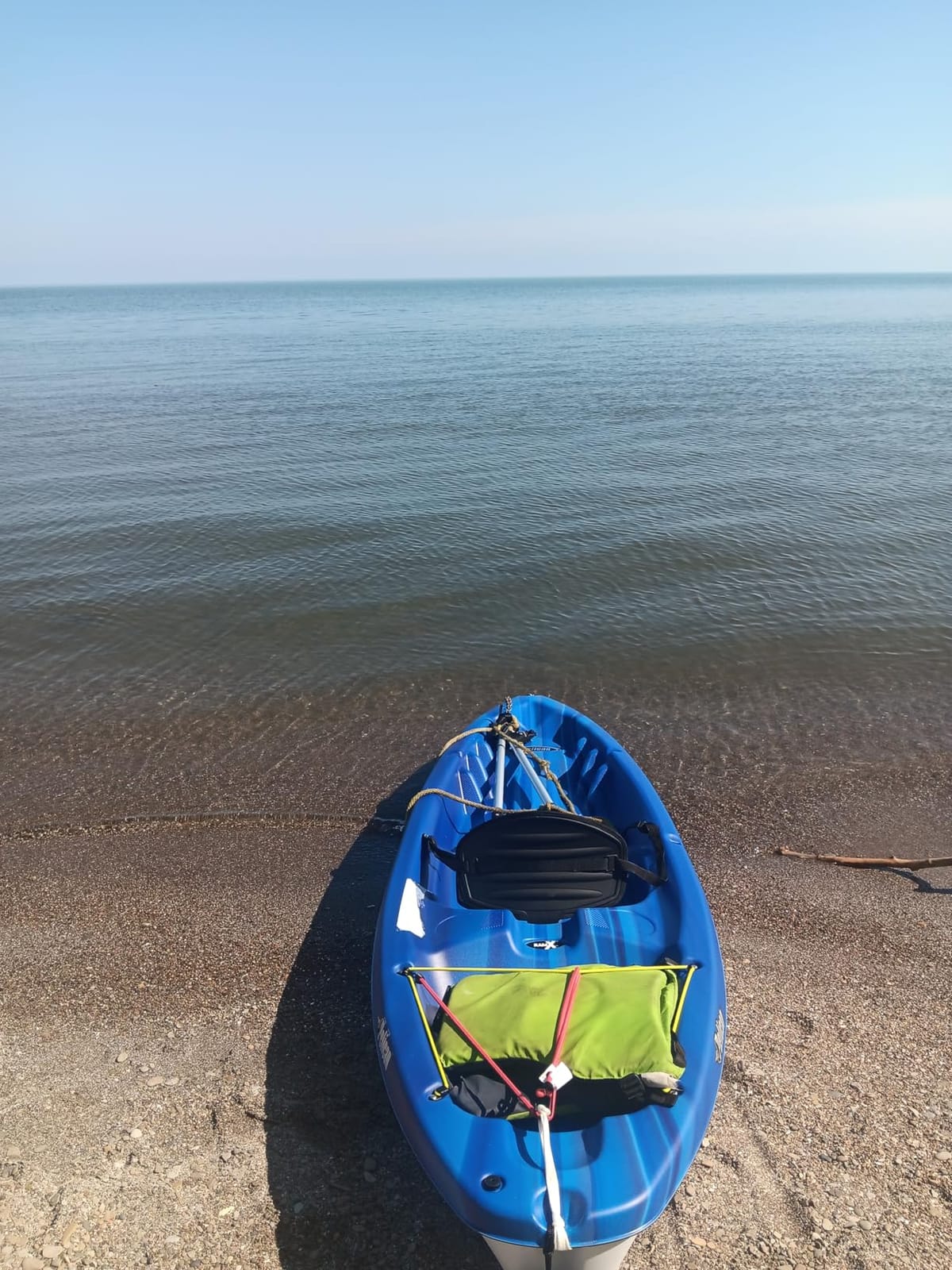
Thirty-four pounds and an eight foot footprint change how transport works. It fits inside most SUVs without a roof rack, and it can be loaded solo by a single person. For paddlers who never want to lift a boat over their head again, that solves the transport problem outright.
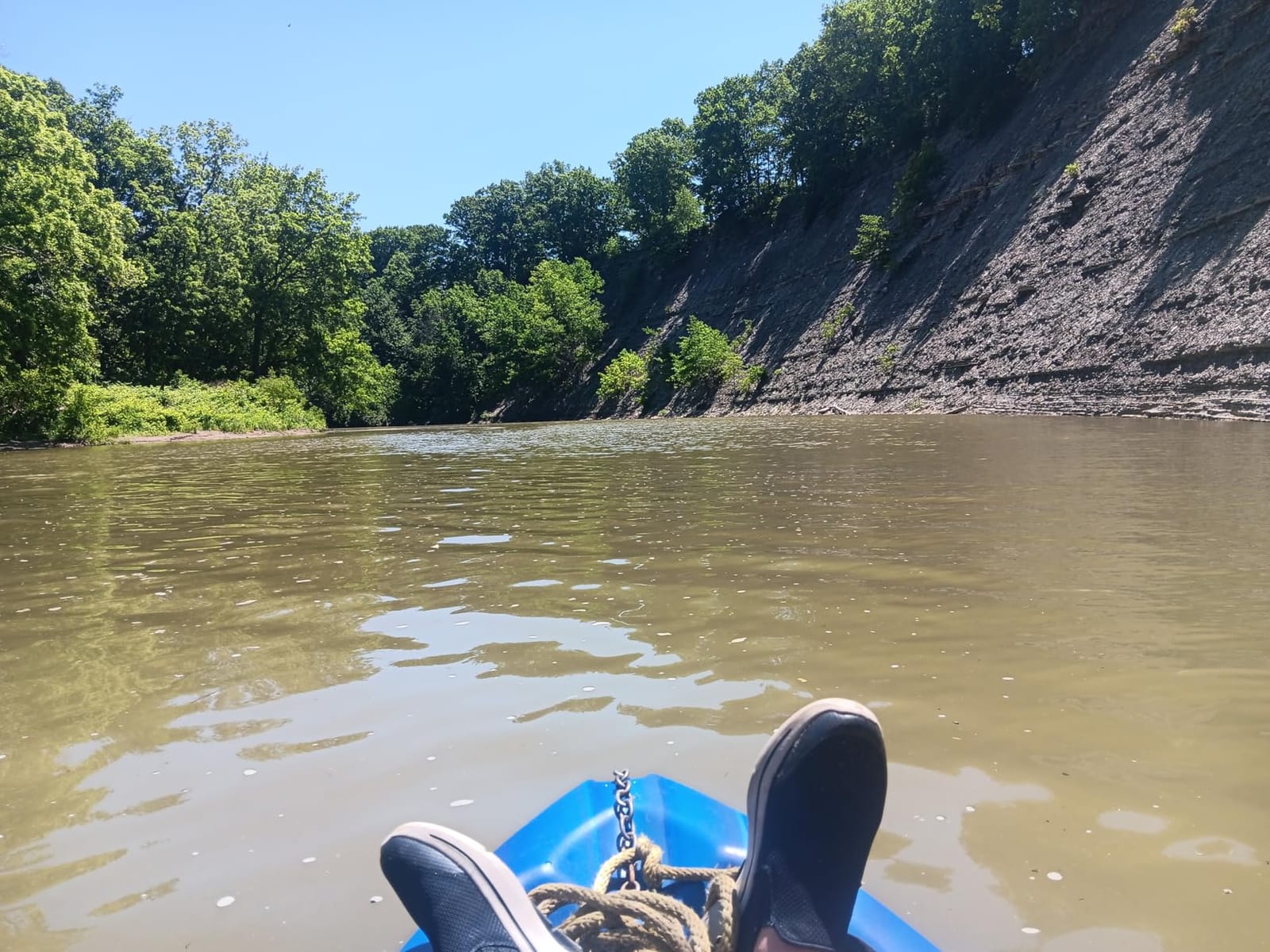
The twin-arched multi-chine hull increases the contact area with the water, which shows up as a stable, confident ride for a boat in this size class. The added buoyancy foam block inside is a sensible safety margin if you do go over.
One reviewer pattern worth flagging: the sizing suits shorter paddlers, roughly four foot ten to five foot six. If you are taller, the leg room will feel short before the boat feels unstable.
When a shorter hull is the better answer
An eight foot boat turns quickly, which is genuinely useful near docks and in weedy shallows. It also loses some tracking and cargo space compared with nine and ten foot models, so you carry less and you will drift a little more when you stop paddling.
For short day trips close to a launch, that is a good trade. For long paddle-ins with a full picnic load, it is not.
The capacity limit is the real constraint
At 225 pounds, this has the lowest rating of the group. That is fine for a single paddler of moderate build with a light day pack, and it becomes a problem the moment you add a second person, a cooler or a lot of water.
Several owners also question the gauge of the plastic, and the paddle is not included with every variant. Check what is in the box before you order.
5. Intex Challenger K1: Best Lightweight Solo Inflatable
- Listed at just 26 pounds so one person can carry and portage it
- Inflates in five to ten minutes
- SuperStrong PVC survives rocks and brush
- Removable skeg improves straight-line tracking
- Included paddle is short and not durable
- Slow and hard to steer in current or wind
- Seat backrest valve opens easily when leaned on
- Repacking after deflation is tedious
Twenty-six pounds is the lightest hull listed in this roundup, and it changes what is possible. Owners report carrying it solo over downed trees and down uneven shorelines without needing a second person. No other boat here travels that easily.
It inflates in roughly five to ten minutes with the included pump and folds into the carry bag. If your knees or shoulders make carrying a rigid shell impossible, this removes the objection entirely.
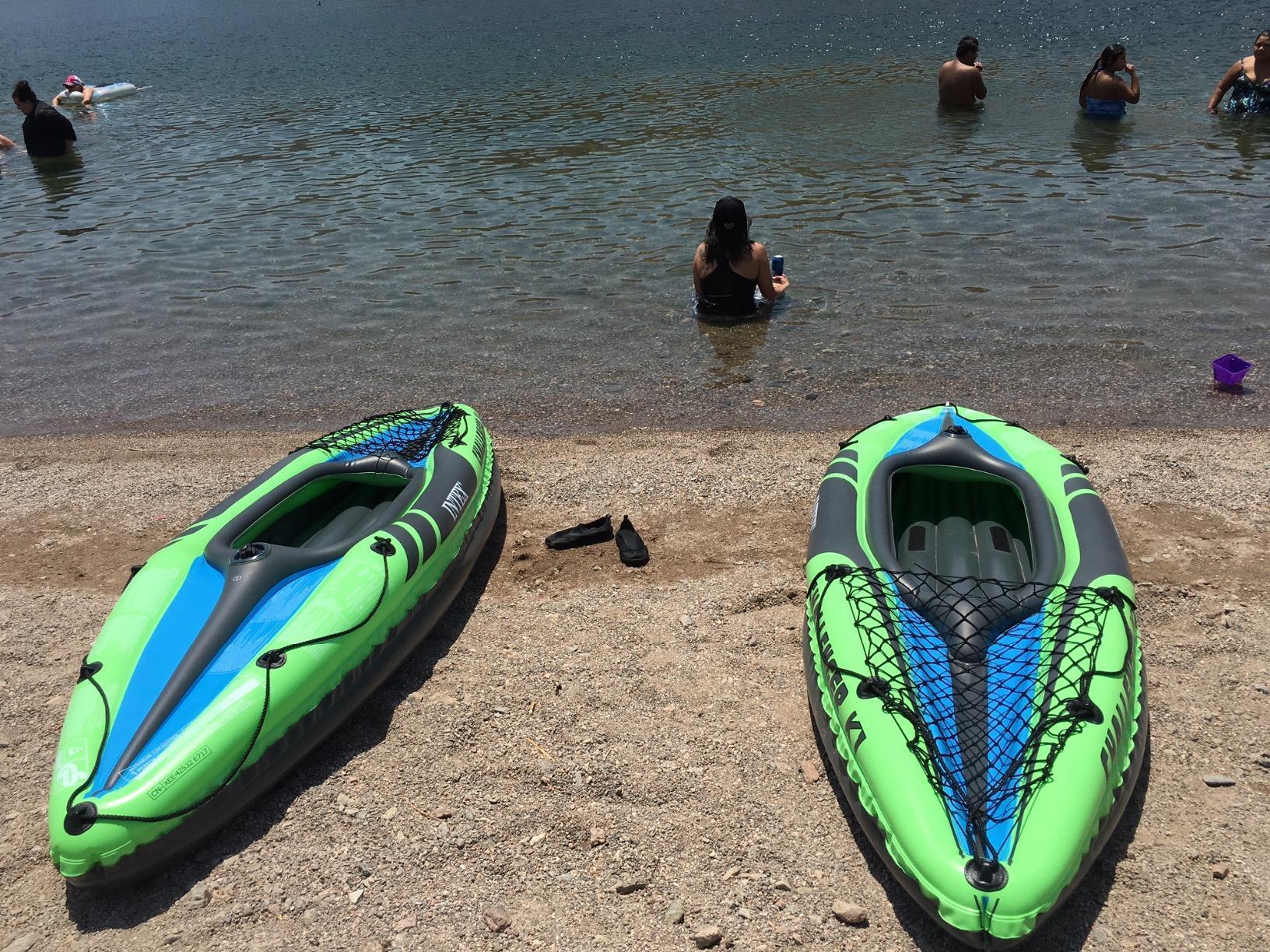
With nearly twenty thousand reviews, the durability story is well established. SuperStrong PVC shrugs off rocks, brush and repeated outdoor storage that would damage cheaper boats, and the removable skeg noticeably improves tracking.
Reviewers also confirm the inflatable seat with a backrest is comfortable enough for multi-hour trips, and the front cargo net holds a tackle box, poles and a soft cooler.
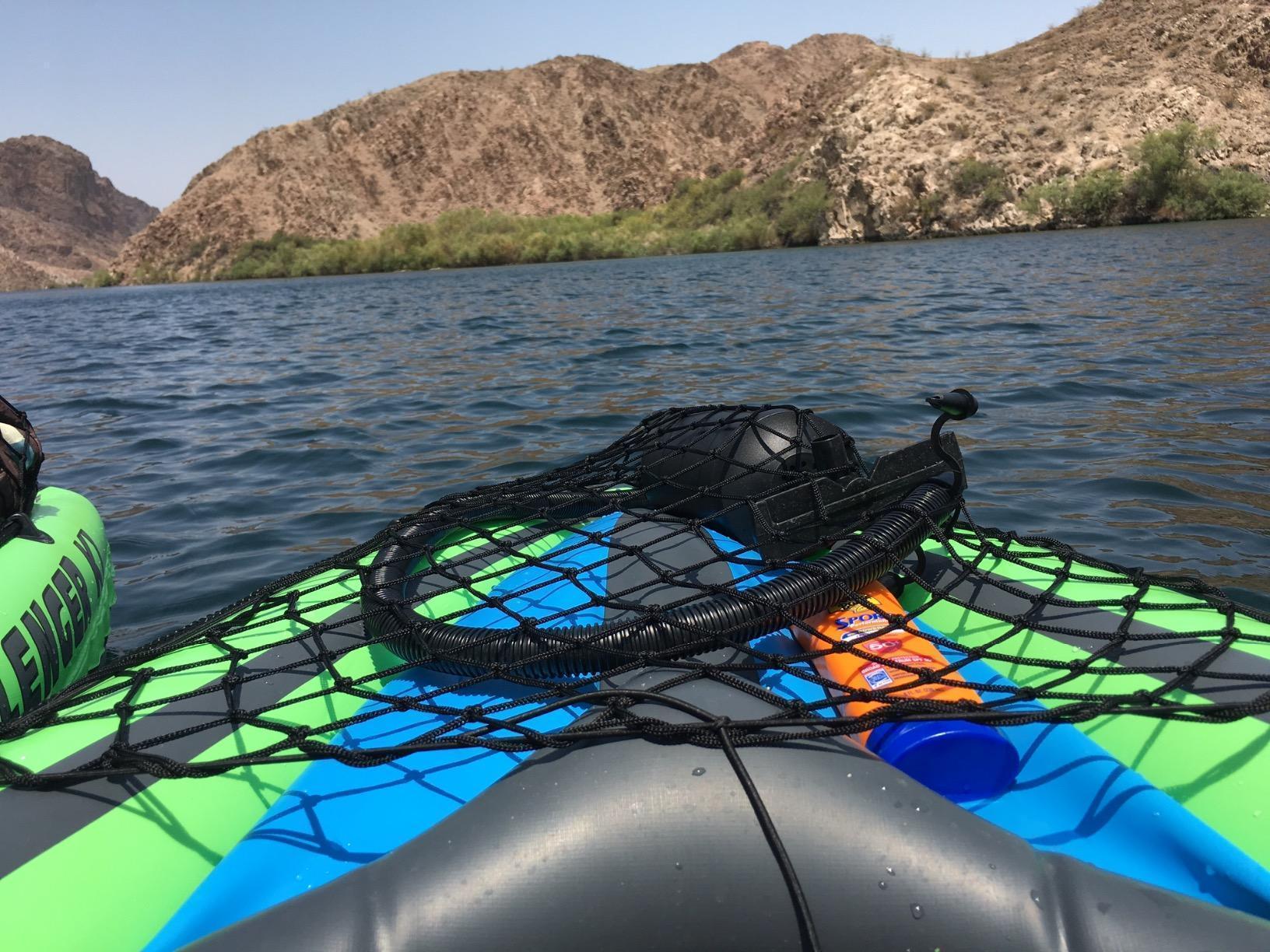
What you give up for 26 pounds
You give up speed and directional control. Reviewers consistently describe it as slow and hard to steer in current, wake or wind, which is exactly the combination a nervous older paddler does not want on moving water.
The 220 pound capacity also sits below the 300 pound figure we treat as the comfort threshold, so the boat is really a solo boat for a paddler of moderate build with light gear.
The details that annoy owners
The included paddle is short and not very durable, so most owners replace it. The seat backrest valve can also be knocked open by leaning against it, letting the support deflate mid-trip.
Repacking after a day out is the least enjoyable part. Owners report the folding and bagging routine is tedious, and the removable skeg can pop off in use, so check it before you set off.
6. Perception Zip 9.5: Best for Larger Paddlers
Perception Kayaks Zip 9.5 | Sit on Top Kayak | Stable and Fast | Multiple footrests | 9′ 6″ | Blaze
- 325 lb capacity with a 32 inch beam gives the widest sit-on-top deck here
- Stable on choppy water where sit-ins feel twitchy
- Moulded bow
- stern and cradle handles
- Large rear storage with bungee lash
- Sold without a seat or back support
- Tracking is mediocre so it wanders when you stop
- Awkward to shoulder-carry to a roof rack
If your body weight plus gear pushes you toward the upper end, this is the boat to look at. A 325 pound rating and a 32 inch beam give you real margin, and owners consistently describe it as stable on choppy water where narrower sit-ins feel twitchy.
It also glides well for a nine and a half foot boat. Reviewers note it is relatively quick for its size, so you cover ground without working hard.
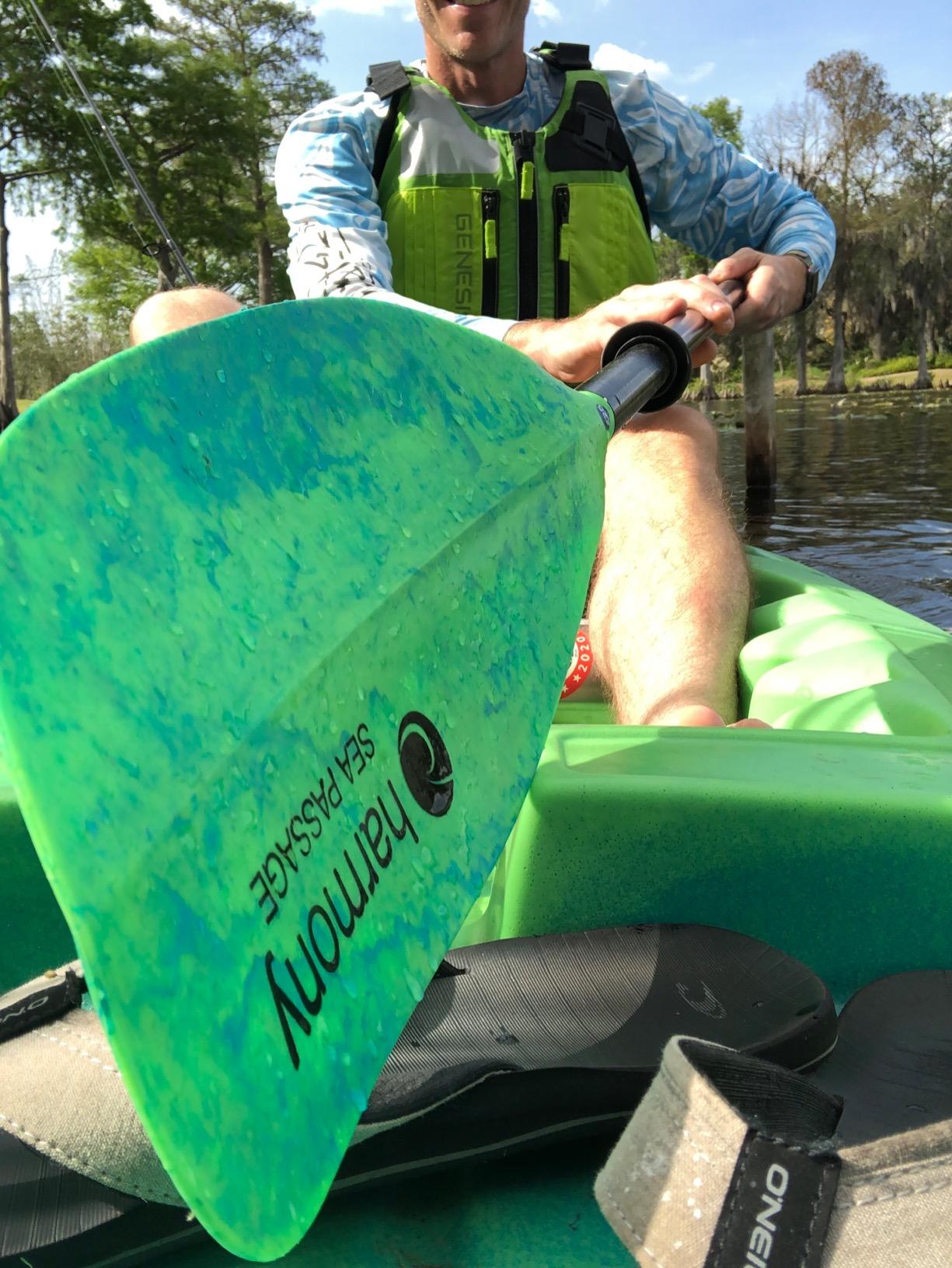
The self-draining scupper holes sit in the leg area, the seat and the rear tank well, which matters on an open deck where splash water otherwise pools around your thighs all afternoon. There is also a built-in centre cup holder, a small but real comfort win on longer outings.
The handles are moulded into the hull at bow, stern and the cockpit cradle rather than being rope loops, which is a detail that shows up immediately when you try to lift the boat.
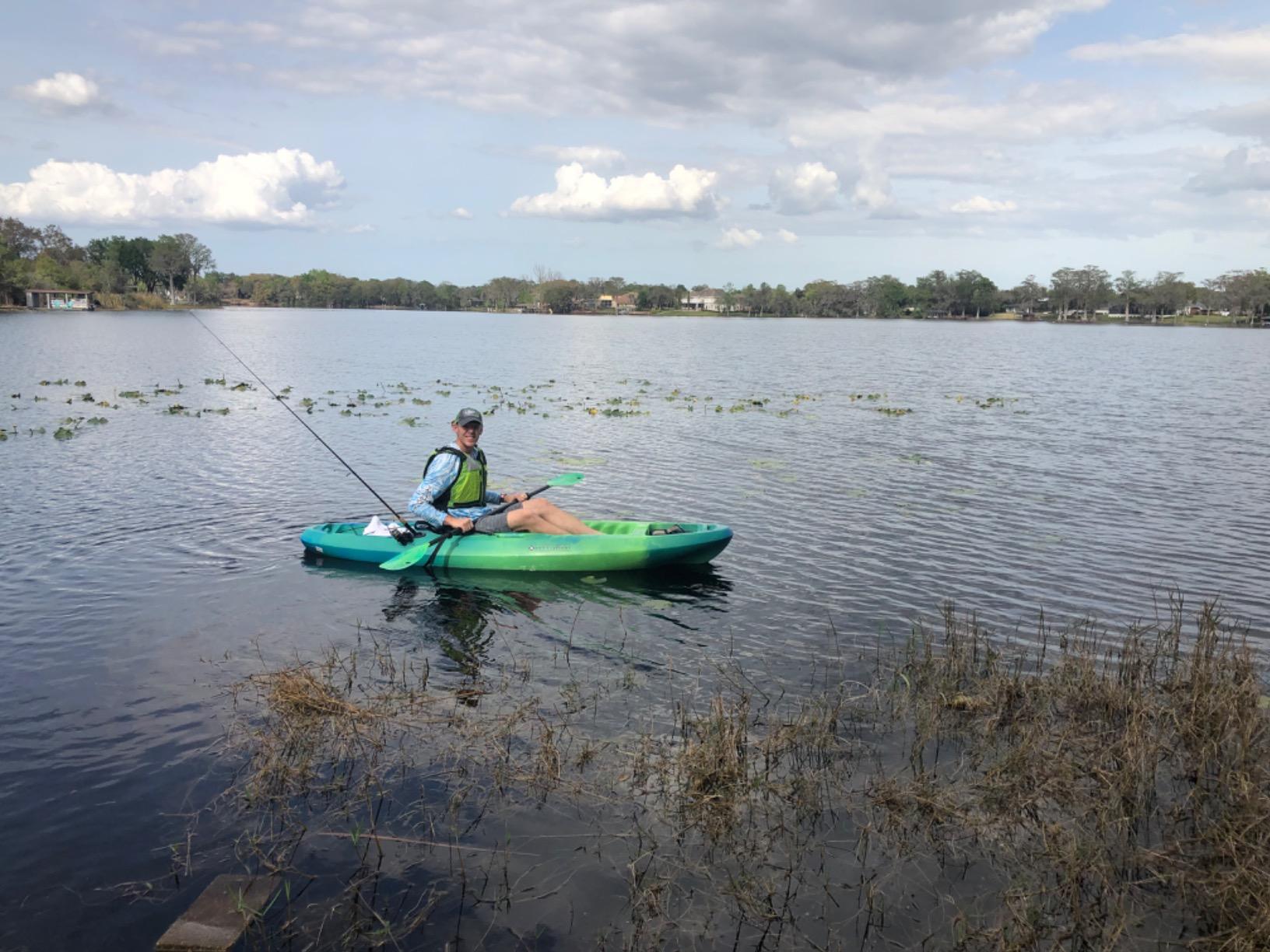
Why capacity is the number that matters most
Rated capacity is not a suggestion. Paddlers who load themselves near the limit spend the day correcting, and constant corrective strokes are what wear out shoulders over a season. Staying under 80 percent of the rating keeps the boat flat and quiet.
At 325 pounds, a 230 pound paddler with a full day pack still has generous headroom, which is why this boat appears on so many shortlists for larger paddlers.
Two purchases to budget for
The seat and back support are both extra. That is the most common complaint in the reviews, and it is a strange omission for a boat aimed at comfortable all-day use. Budget for a padded seat with a backrest.
Tracking is mediocre, so the boat wanders when you stop paddling, and the hull shape is awkward to shoulder-carry to a roof rack. A kayak cart handles both problems.
7. Lifetime Lotus: Best Budget Hard Shell
- Paddle and adjustable backrest included in the box
- Three carry handles for one-person transport
- UV-protected HDPE resists fading and cracking
- Self-bailing scupper holes drain the cockpit
- Eight foot length limits tracking and cargo space
- Seat back support is basic rather than padded
- Not a fast boat
Sometimes the most practical choice is the one where everything you need is in the box. The Lotus arrives with a double-sided paddle and a hard adjustable backrest, so there is nothing to add before your first trip.
It is a hard shell at thirty-nine pounds, which is far easier to paddle than a similarly sized touring kayak, and the three handles at the front, rear and centre make one-person transport realistic.
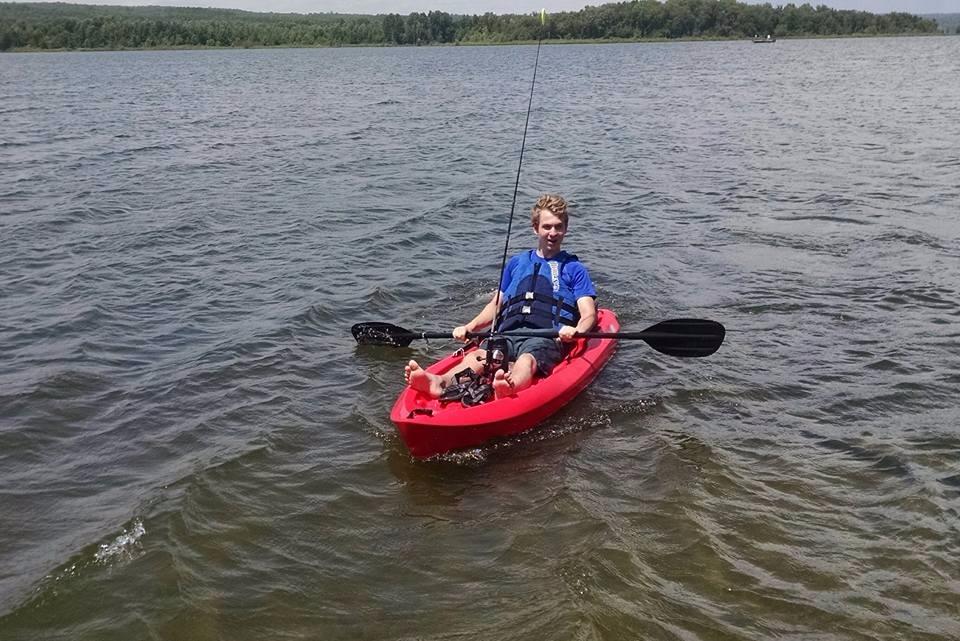
Reviewers describe it as a dependable, uncomplicated recreational boat. The UV-protected high-density polyethylene resists fading and cracking in sun, which matters on an open deck where your arms and shoulders take hours of direct exposure every trip.
Multiple footrest positions and a quick-release adjustable seat let you set the fit once and stop thinking about it, and the scupper holes drain the cockpit and tank well automatically.

What eight feet buys and costs
Shorter means more maneuverable near a dock and cheaper to carry, but it caps how straight the boat tracks when you stop paddling and how much gear you can carry. Compared with the nine and ten foot models here, it feels noticeably more affected by wind.
For a paddler putting in at a small local lake and staying close to shore, that is an acceptable trade. For long crossings, it is not.
Who gets the most out of it
The 250 pound rating suits a single paddler of average build with a light day pack. Add a second person or a large cooler and you are at the ceiling, where the boat stops feeling settled.
The seat back support is basic rather than heavily padded, so add a kayak cushion if you plan to be out past two hours. That single accessory fixes most of the comfort complaints.
8. Pelican Seek 100X: Best for Dock Entry and Exit
Pelican Seek 100X – Recreational Sit on top Kayak – Aquamarine – Lightweight smart Design – Adjustable Ergoform™ Seating System – 10 ft
- Removable entry bars sit clear of the paddle stroke and simplify getting in and out
- Textured slip-resistant standing floor adds usable deck area
- Adjustable Ergoform seating with soft cushioning
- Good storage for a boat at this level
- Paddle not included
- The get-in bar can pop loose and is not for lifting
- Heavier than the shorter Pelican models
- A few owners report a scratched hull on arrival
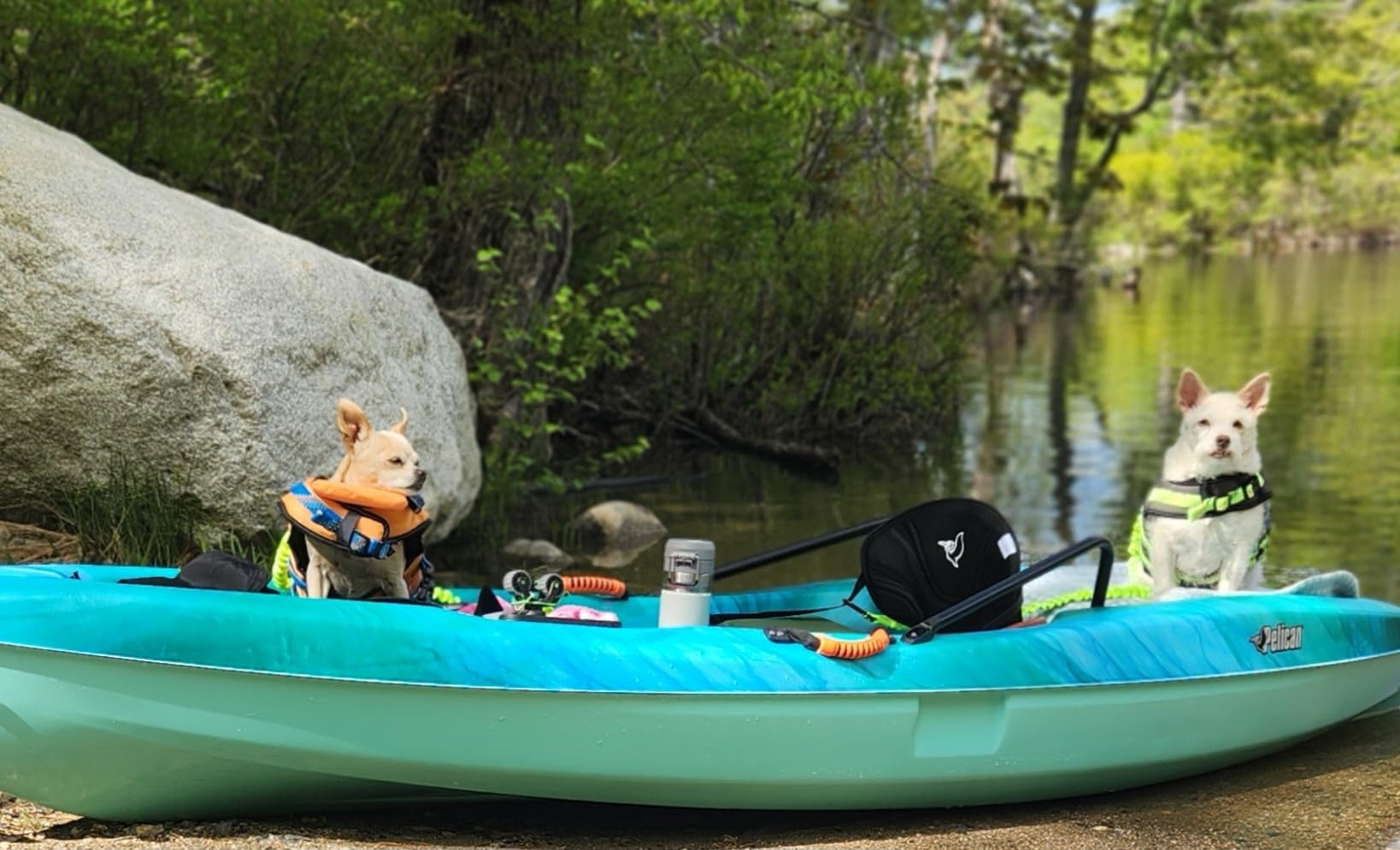
This boat is built around a specific problem: getting in. The three-piece removable Ergobar system gives you a handhold and a step structure that sits clear of your paddle stroke, so you can pull yourself onto the deck without the bar interfering with your next stroke.
The textured slip-resistant standing floor adds usable deck area around the seat, which means you can shift position to reach gear or adjust your legs without stepping into the cockpit.
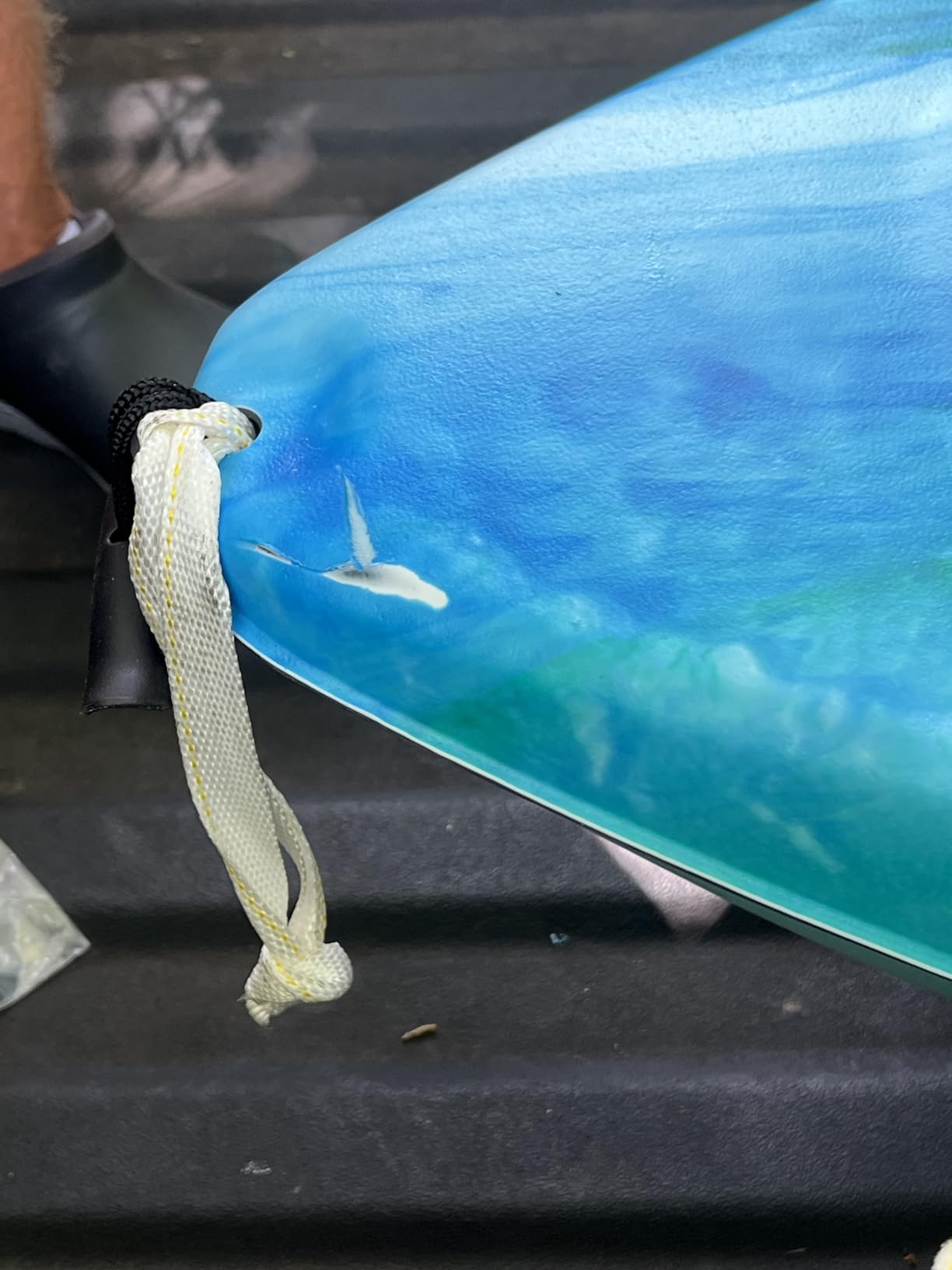
Reviewers like the adjustable Ergoform seating system, which is soft and easy to set to personal preference, and they rate the storage generously for the money: a ripstop tankwell cover, a bow ripstop bag and a dual-position bottle holder.
On the water the twin-arched multi-chine hull gives a smooth, stable ride, and owners find it easy to move on land and maneuver once afloat.
Why entry bars beat a fixed frame
A permanent frame either gets in the way of your stroke or becomes the thing you catch your foot on when climbing aboard. Removable bars solve both problems. You take them out when you are paddling hard and put them back when you are climbing in from a dock.
That flexibility is why this boat suits dock-based paddlers specifically, where entry and exit happen ten times a session.
The bar is not a lifting handle
The most common complaint is that the get-in bar pops loose if it is not seated firmly, and it is never strong enough to lift the boat with. Treat it as a step and a handhold only. Lift the hull by the proper carry handles or the bow and stern.
At 43.1 pounds this is one of the heavier hulls here, the paddle is not included, and a few owners report scratches or cracks on arrival. Inspect the hull before you head to the water.
9. Intex Dakota Quest: Best Packable Wide-Deck Inflatable
INTEX 68245EP 10.5ft Dakota Quest Sit-On-Top Inflatable Kayak, Kayak Folds into Backpack, 352lbs Capacity, Hand Air Pump, Paddle, Phone/Action Camera Holder Included
- Packs into the included backpack so one person can carry it to the launch
- Inflates to a rock-hard feel at about 12 psi
- Wide deck feels stable even when leaning over the side
- Large detachable skeg for straight tracking
- Supplied pump gauge is hard to read and instructions unclear
- Drying before folding is essential or it mildews
- Rod holder and phone mount sit too far forward
- Some experienced paddlers report poor tracking
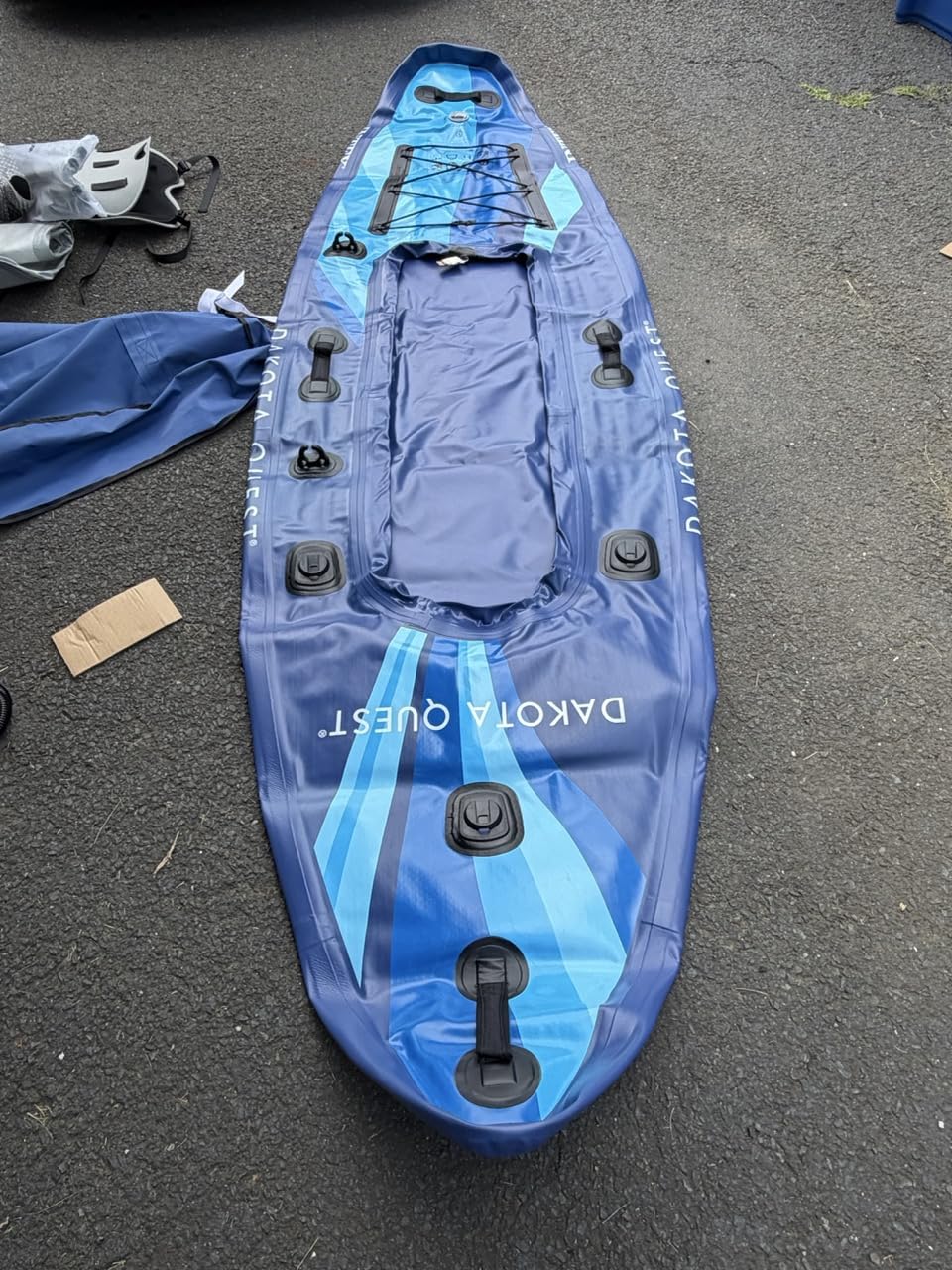
This is the boat for a paddler who cannot carry a hard shell at all. It packs into the included backpack, so one person carries the whole kit from the car to the launch, and it inflates to a genuinely firm feel rather than the slack surface that gives inflatables a bad name.
The deck is ten foot six by two foot eleven, which is 35 inches across, and the 352 pound capacity gives you real headroom. Owners report it feels stable and secure even when leaning over the side.
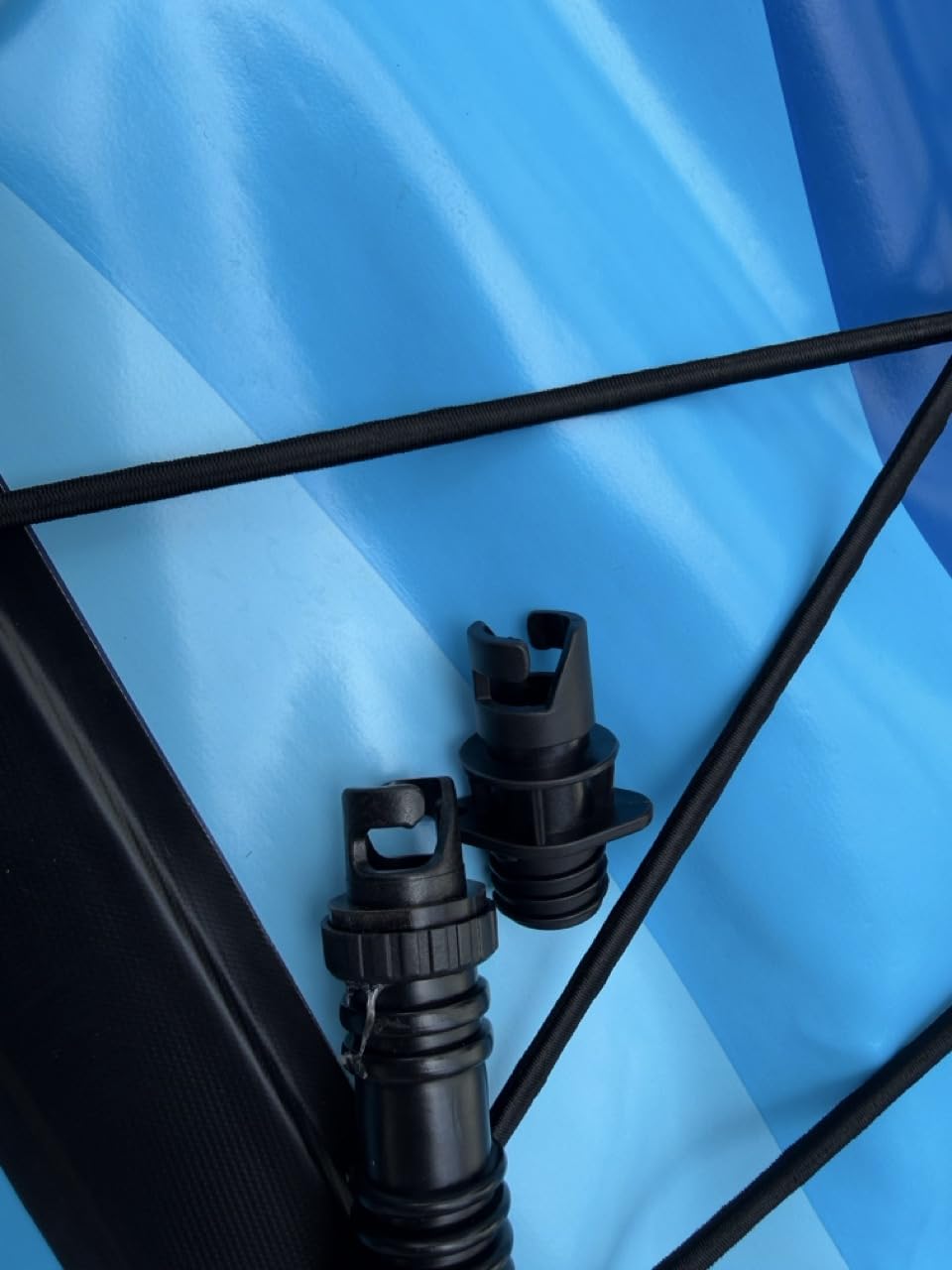
The elevated back-support seat raises you above the waterline and the three-position footrest takes pressure off longer outings, which is exactly the combination a stiff lower back wants.
Reviewers also praise heavy-duty PVC that shrugs off branches, hooks and shoreline rocks, plus the accessory layout: two detachable rod holders, a phone or action camera mount and bungee tie-downs.
The raised seat is the feature to notice
Most packable inflatables put you low in the water with your legs bent up. This one lifts the seat so you sit with normal posture, and that single change reduces the strain on hips and knees across a whole afternoon.
The three-position footrest lets you match your leg length once the boat is inflated, which is a better arrangement than a one-size foam block.
The routine nobody mentions
You have to dry it thoroughly before folding or it will mildew, and owners report the weight and bulk make repacking harder than packing up. Budget ten extra minutes at the end of each trip.
The pump gauge is hard to read and the instructions are unclear, so many owners switch to an electric inflator. Accessories are mounted further forward than is comfortable from the seat, and some experienced paddlers report it pulls to the sides.
10. Lifetime Lockport 94: Best for Car and Garage Storage
Lifetime Lockport 94 Modular Sit-on-Top Kayak with Paddle, Two-Piece Design with SlideLock System, Rod Holders, Adjustable Seat
- Two-piece design nests in an SUV or minivan without a roof rack
- SlideLock joint needs no tools and stays secure
- 30 inch hull with molded skeg and chine rails
- Angler-ready rod holders and bungee tankwell
- Each half is about 24 lb and needs one person per section
- Seat is unpadded and most buyers add a cushion
- No rudder and molded footrests cannot be adjusted
This solves the storage problem rather than the lifting problem, and for some people that is the bigger win. The hull separates into two halves that nest and stack, and the tool-free SlideLock joint reconnects them on the water in a couple of minutes.
Owners consistently treat the Lockport 94 as a practical hard-shell upgrade over inflatables, praising the quick assembly, the durable molded polyethylene and the fact that it fits in a minivan or SUV without a roof rack.
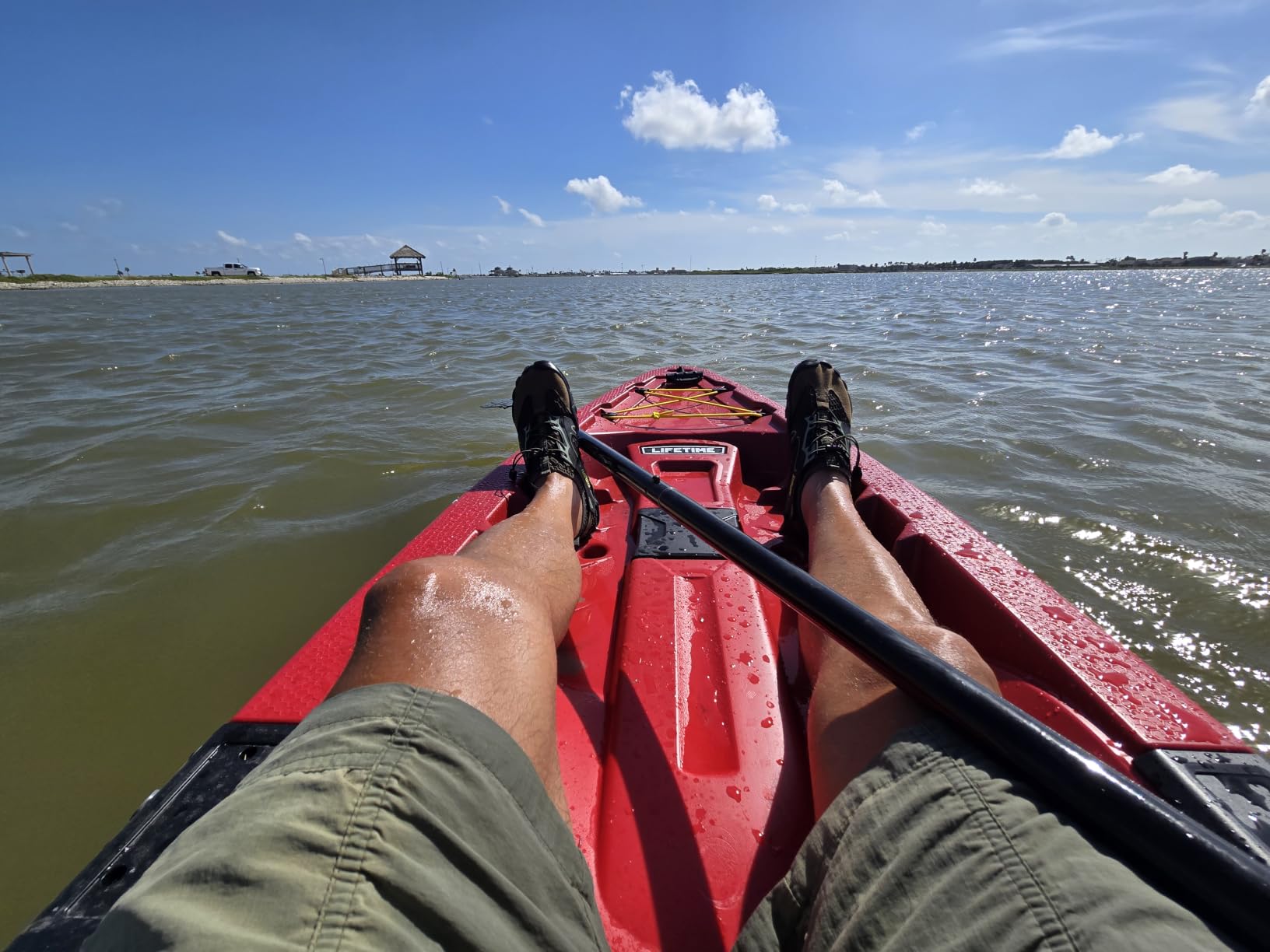
The 30 inch hull with molded-in skeg and chine rails tracks well for a boat in this class, and the deck is angler-ready with two flush-mounted rod holders, a bungee tankwell, a water bottle holder and a paddle keeper.
The adjustable padded seat back and multiple footrest positions add leverage for paddling, and a five year limited warranty covers the hull.
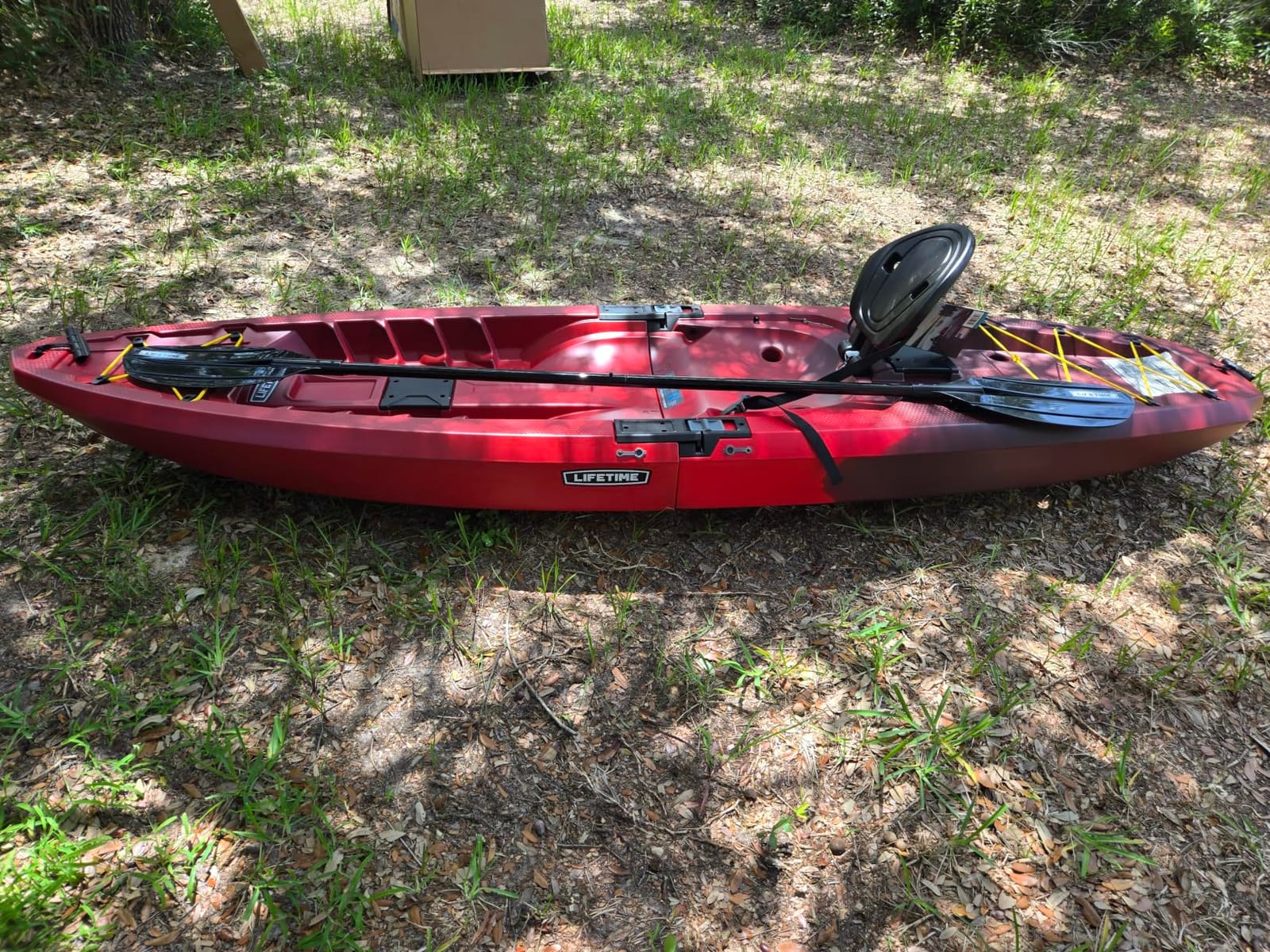
Two halves is a real transport trade
Forty pounds total does not mean forty pounds in one hand. Each half is around twenty-four pounds, so you carry one section at a time. For most paddlers that is manageable, and for anyone who cannot lift a forty pound lump in one go, splitting it in two is a genuine improvement.
Owners report the connection stays secure on the water and the molded handles at the centre, front and rear make each piece manageable.
Where it stops working for older paddlers
The 250 pound rating is modest, and the unpadded seat is the most common comfort complaint. Reviewers report adding a kayak cushion, which is a cheap fix that solves it.
There is no rudder and the molded footrests cannot be adjusted, so if you need a specific leg angle this is the wrong boat. It is also slow to turn and not designed for speed.
Buying Guide: Sit-On-Top vs Sit-Inside, Length, Capacity and Stability
Sit-on-top or sit-inside for an aging body
Choose a sit-on-top if your knees, hips or lower back are the limitation. You step up onto an open deck instead of lowering yourself through a cockpit opening, your legs stay straighter, and a capsize is a five second recovery instead of a swim. The cost is wetness, sun exposure and a slight loss of secondary stability.
Choose a sit-in if you paddle in cold weather, want dry storage and prefer the security of being enclosed. Forum veterans describe upgrading from a small ten foot sit-in precisely because of the enclosed feeling, so if that sounds familiar, a wide sit-on-top is the fix.
Length: 8 foot, 10 foot or 12 foot
An eight foot boat turns quickly and carries well but wanders when you stop paddling and holds little gear. A ten foot boat is the balance point and the best default for older paddlers. A twelve foot tandem tracks better and carries two people but weighs considerably more.
Length affects tracking and glide. Beam affects stability. For an older paddler, buy the width and save the length.
Comfort weight and the 80 percent rule
Stay under 80 percent of a boat’s rated capacity when you add yourself, your gear, water and any dog. A 325 pound rating gives a 260 pound paddler a realistic working load. This also answers the two most common capacity questions directly: yes, a 300 pound person can kayak comfortably, provided the boat is rated well above that and the hull is wide.
Primary and secondary stability in plain language
Primary stability is what happens the first second you stop moving. Wide hulls are excellent at it, and it is why a 32 inch beam feels planted. Secondary stability is how the boat behaves when you lean or shift your weight far over. Narrow touring hulls are excellent at that, wide sit-on-tops are not.
For most older paddlers, primary stability is the one that matters. Nobody tips over by sitting still. They worry about capsizing, and a wide hull is the direct answer. Fall off a sit-on-top rarely happens unless you lean deliberately; if it does, climbing back aboard is quick. If you want to explore the wider categories, our touring kayak guide covers the narrow-hull end of the spectrum.
The 120 rule for kayaking
The 120 rule is a rough loading guideline: your body weight plus gear should stay under about 120 percent of what the boat is designed for, which is another way of saying to leave the rating a margin. Treat it as a sanity check rather than a specification.
Solo lifting and when a kayak cart is non-negotiable
Boats under 40 pounds are generally carryable by one person over a short distance. Above that, assume you need either a second pair of hands or a kayak cart with balloon wheels, which handles uneven ground far better than small wheels. If you cannot lift one section of the Lockport 94 solo, buy a cart before you buy the boat.
When not to buy a kayak
Skip paddling entirely if you have a history of dizziness on boats, are within a few months of hip or knee surgery, or cannot swim. Wait for clearance, then start with a calm flat lake and a guide. Avoid cold water and open surf on any open-deck boat, because immersion is the real danger, not the fall.
On an open deck you will get sun on your arms and shoulders for hours. Use a long sleeve rash layer, a brimmed hat and sunscreen you reapply every two hours, then read our pedal kayak picks if you want propulsion without shoulder effort.
And rent before you buy. One afternoon in a rental sit-on-top tells you more about your shoulders and knees than any spec sheet. That is the single best advice in this guide.
Frequently Asked Questions
How do seniors get in and out of a kayak?
Paddle alongside the dock, brace both hands flat on it, swing one leg up, then the other, then stand in two slow stages. Launching from shallow water uses the same motion in reverse: straddle the seat with a hand on each gunwale, lower yourself onto it, then bring both legs in at once.
Are sit-on-top kayaks more stable?
Yes, for most paddlers. Their wider beams and open decks give stronger primary stability, which is the feel that matters when you first stop moving. Sit-inside hulls are usually better in secondary stability when you lean far over, which matters more to touring paddlers.
Which sit-on-top kayak is the most stable?
Among the ten boats reviewed, the Perception Zip 9.5 at 32 inches wide and rated to 325 pounds combines the widest sit-on-top beam with the highest capacity. The Intex Explorer K2 is wider at 36 inches, but it is an inflatable rather than a hard shell.
What is the easiest kayak to get in and out of?
A wide open sit-on-top with no spray skirt. Among these picks, the Intex Explorer K2 and Perception Tribe 9.5 offer the lowest, most open boarding, while the Pelican Seek 100X adds removable entry bars that sit clear of the paddle stroke.
Which kayak is most comfortable for people with bad backs?
The Perception Tribe 9.5, because its framed high-back seat has adjustable recline positions and heavier cushioning than the alternatives. The Pelican Argo 100X runs a close second with an adjustable Ergoform padded backrest and a tall, open cockpit.
Can a 300 pound person kayak comfortably?
Yes, in a boat rated well above 300 pounds. Aim for a 325 pound rating or higher, keep your body weight plus gear under 80 percent of that number, and choose a hull at least 32 inches wide. The Perception Zip 9.5 fits that profile.
Is it hard to fall off a sit-on-top kayak?
Not in normal use. Capsizing almost always comes from leaning too far or shifting weight suddenly, and a wide hull resists both. If you do go over, an open deck makes climbing back aboard a short task rather than a swim to shore.
What is the 120 rule for kayaking?
It is a loading guideline suggesting your combined body weight and gear should stay under roughly 120 percent of a boat’s comfortable load. It is a rough sanity check rather than a specification, so use the manufacturer’s capacity rating as the real number.
The Verdict on the Best Kayaks for Seniors
The Pelican Argo 100X is the best kayak for seniors overall. It weighs 36 pounds, its cockpit is genuinely easy to enter, and the adjustable backrest holds up a bad back for three hours. The Intex Explorer K2 is the best value if carrying the boat is your real problem, and the Perception Tribe 9.5 wins for bad backs and joints.
Start by renting the type you think you want. Then measure your budget for weight, not speed, and buy the widest hull you can carry. The best kayaks for seniors in 2026 are not the most capable boats on the water. They are the ones that get you onto it without hurting you first.