
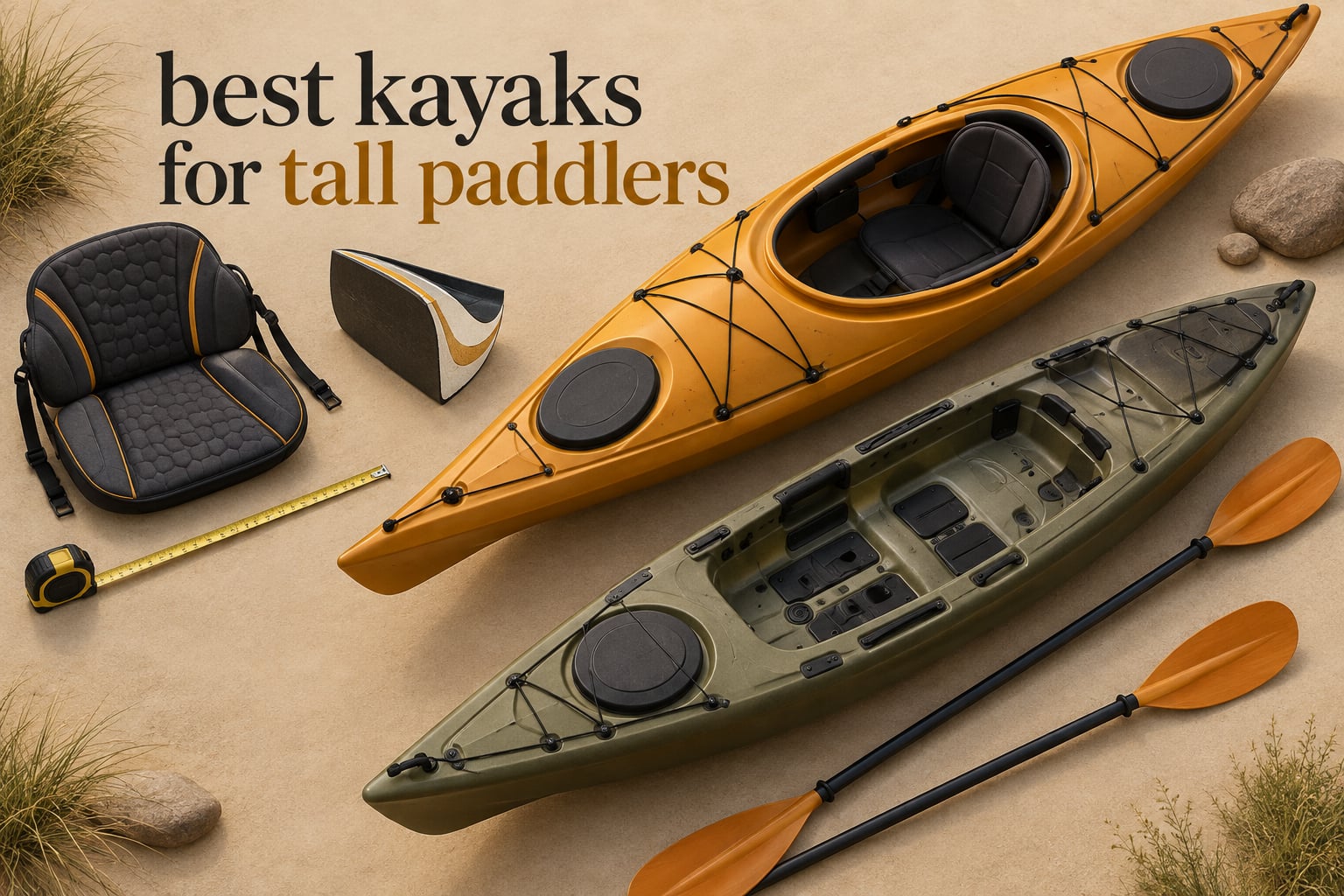
If you are six foot two or taller, the number that decides whether you like a kayak is almost never the weight capacity on the sticker. Weight capacity answers a question almost every boat can answer. Height is answered by only four things: cockpit length, seat depth, seat height and the range of the foot braces. Get those right and the same hull feels like a different boat.
That distinction matters because most kayaks are engineered around a paddler somewhere in the middle of the size range, and a taller person in one of those boats ends up with knees pressed into the cockpit sides, numb feet after an hour, and a hunched stroke that burns out before the trip ends. It is the single most common reason tall beginners quit paddling, and it has nothing to do with their strength.
Our team spent the last few months working through the current crop of kayaks with an eye on leg room rather than marketing language, and this is our list of the best kayaks for tall paddlers. We picked boats across categories because no single hull solves the problem for everyone: some tall paddlers want to fish standing, some want to cover distance on a lake day, some need a boat that fits in a closet between trips. If you want the wider picture on the boats themselves, start with our overall kayak roundup, then come back here for the fit details.
One note before we start: tall and heavy are different problems needing different answers. You can be six foot four and a hundred and forty pounds and still be too long for a ten-foot recreational sit-in, and you can be five foot seven and two hundred and eighty pounds and fit a boat that a six-foot-four person would find cramped. Every boat below is judged on whether the legs fit, with capacity listed as a separate line.
Table of Contents
Top 3 Picks for Tall Paddlers (October 2026)
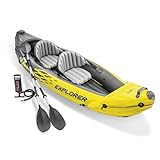
Intex Explorer K2 Inflatable Kayak
- 36 inch beam
- 400 lb capacity
- Removable seats
- 35 lb pack weight

Pelican Argo 100X Sit-In Kayak
- Widest stable sit-in here
- 36 lb carry weight
- Molded footrests
- 275 lb capacity

Pelican Catch Mode 110 Fishing Kayak
- 34.5 inch beam
- Seat folds up 6 inches
- 375 lb capacity
- Cast from standing
The Explorer K2 takes the top slot because it solves the width problem outright: 36 inches of beam is the most in this group, and there are no fixed cockpit walls to jam a long leg against. The Argo 100X takes the rating crown and is the sit-in to buy if you want a hard shell that one person can lift. The Catch Mode 110 is the angler choice, with the widest fishing hull and the only seat here that folds up to add six inches of height.
The 12 Best Kayaks for Tall Paddlers at a Glance in 2026
| Product | Specifications | Action |
|---|---|---|
| Intex Explorer K2 Inflatable Kayak |
|
Check Latest Price |
 Intex Excursion Pro K2 Inflatable Kayak Intex Excursion Pro K2 Inflatable Kayak |
|
Check Latest Price |
 Lifetime Tamarack Angler 100 Lifetime Tamarack Angler 100 |
|
Check Latest Price |
 Pelican Sentinel 100X Angler Kayak Pelican Sentinel 100X Angler Kayak |
|
Check Latest Price |
| Pelican Argo 100X Sit-In Kayak |
|
Check Latest Price |
 Wilderness Systems Pungo 120 Wilderness Systems Pungo 120 |
|
Check Latest Price |
 Lifetime Tamarack Pro 103 Sit-On-Top Lifetime Tamarack Pro 103 Sit-On-Top |
|
Check Latest Price |
 Perception Tribe 11.5 Sit-On-Top Perception Tribe 11.5 Sit-On-Top |
|
Check Latest Price |
 Reel Yaks Raptor Modular Fishing Kayak Reel Yaks Raptor Modular Fishing Kayak |
|
Check Latest Price |
| Pelican Catch Mode 110 Fishing Kayak |
|
Check Latest Price |
 Perception Rambler Tandem Sit-On-Top Perception Rambler Tandem Sit-On-Top |
|
Check Latest Price |
 BKC Brooklyn 12.5 Tandem Fishing Kayak BKC Brooklyn 12.5 Tandem Fishing Kayak |
|
Check Latest Price |
Two columns in that list deserve a note before the individual reviews. Beam width runs from 29 inches on the Pungo 120 to 37 inches on the Excursion Pro K2, and that eight-inch spread changes how much room your knees have on every stroke. Overall length runs from 9 feet 6 inches on the Sentinel 100X to 13 feet 6 inches on the Rambler, but on sit-on-top boats most of that length sits ahead of and behind you rather than beside your legs, which is why beam matters more than length there.
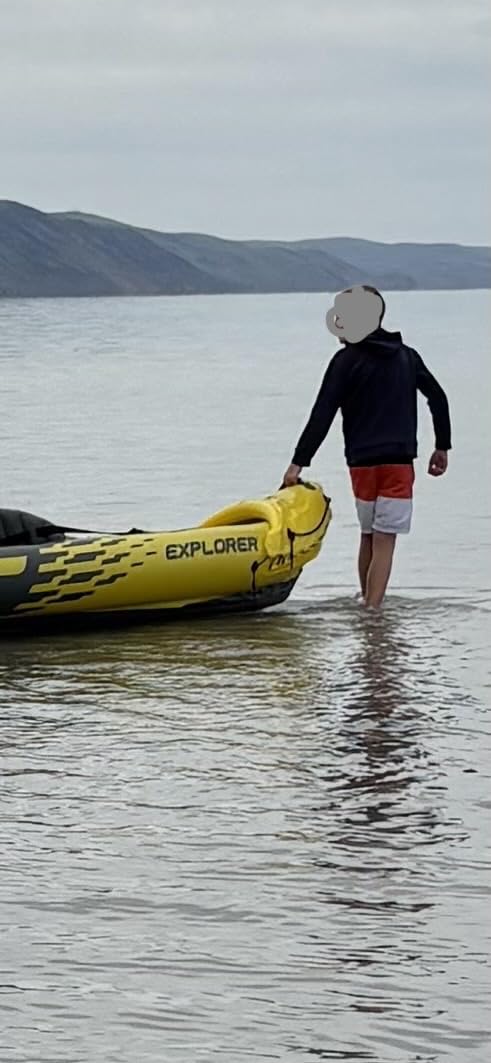
1. Intex Explorer K2 Inflatable Kayak – the Widest Platform in the Roundup
INTEX Explorer Inflatable Kayak 2-Person Portable Set with Paddles and Pump
- Widest beam in the group at 36 inches
- so nothing pinches a long leg
- Inflates in about 5-10 minutes with the included high-output pump
- Removable seats let you paddle solo or tandem
- Light at 35 pounds and it packs into a bag that fits a small trunk
- Included 86 inch paddles run short for larger paddlers
- Vinyl seam along the side chambers can rub your hands
- Does not track or glide like a hard shell
I kept coming back to this one while testing because the problem it solves is simple. At 36 inches wide with an inflatable side wall rather than a hard cockpit rim, there is no hard edge for a knee to find. Owners consistently describe it as stable on calm lakes and mild rivers, and the removable seats are what make it a real option for a solo tall paddler rather than a boat you have to share.
The trade is honest: you give up glide. It does not move the way a hard-shell touring boat does, and the bow wanders when you stop paddling. For a paddler who wants flat water, short trips and a boat that lives in a closet, that is a good trade. For covering miles, it is not.
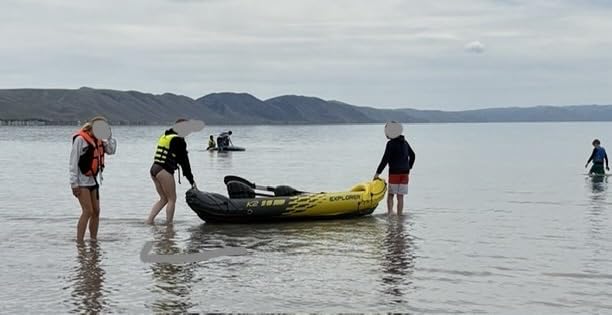
The detail that catches out tall paddlers most often is the paddle, not the boat. The included 86 inch shafts are short for anyone over roughly six feet, and a short paddle forces you to sit up straighter and reach further, which undoes the comfortable position you paid for. Budget for a longer shaft.
Owners also flag the tandem seating as close together, so a second paddler will knock blades. Solo use solves it completely, and that is how most tall owners end up using it.
Who this boat suits
This suits a tall paddler on flat water who wants room to move and does not care about covering distance fast. It suits a beginner, because there is no hard cockpit rim to climb over, and it suits anyone whose storage situation rules out a roof rack.
Who should skip it
Skip it if you plan multi-day trips with heavy gear behind a bulkhead, or if you are moving into moving water where a soft hull has no argument. It is also the wrong pick for anyone who is tall, strong and impatient, because the boat simply will not go fast.
2. Intex Excursion Pro K2 Inflatable Kayak – the Longest Inflatable in the Set
- Longest and widest boat here at 151 by 37 inches
- Three-ply laminate holds higher inflation pressure for real rigidity
- Spring-loaded valves make setup and pack-down quick
- Comes fishing-ready with rod holders and a phone mount
- Heavier at 44.7 lb so solo carrying is a two-person job
- Included 86 inch paddles are short for bigger paddlers
- Tandem bulk makes solo paddling less nimble
Where the Explorer K2 gives you width, this one gives you both width and length. At 151 by 37 inches there is more interior volume than anything else in this group, and that is the single most useful thing you can hand a paddler with a long stride. You can sit with your legs extended forward rather than tucked.
The three-ply laminate is the real upgrade over a cheaper inflatable. Owners consistently report that the higher working pressure translates into noticeably better rigidity, which is what stops the hull from deforming when a tall paddler shifts weight or stands up to adjust something.
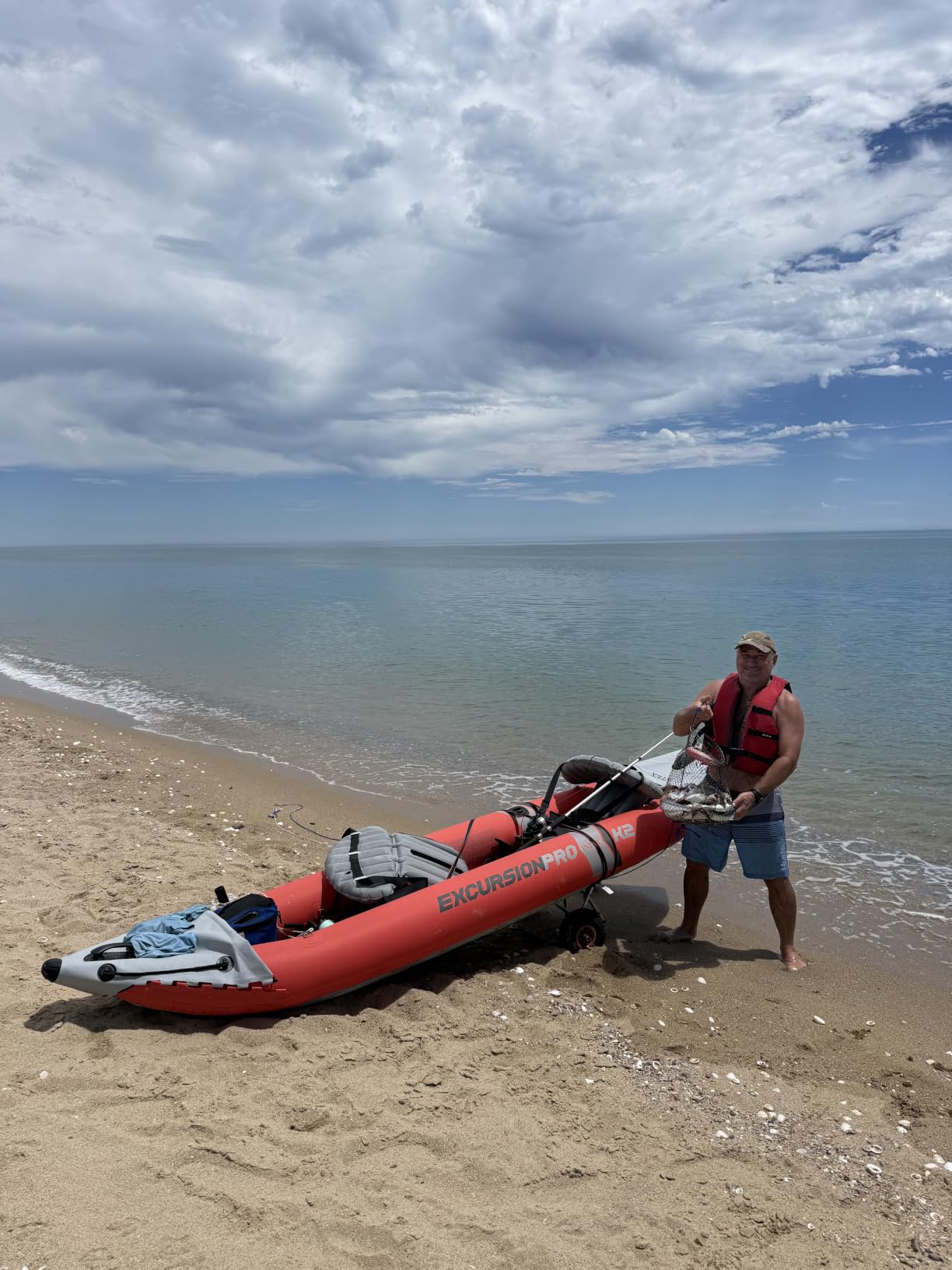
Storage is a real strength: stainless D-rings let you clip dry bags, and there is extra bow and stern space for gear. Two removable skegs handle shallow and deep water better than the single skeg on the smaller model.
At 44.7 pounds, this is a two-person carry, and the bulk makes it noticeably less nimble solo. The 400 pound total rating also means two large paddlers have almost no cargo allowance left.
Who this boat suits
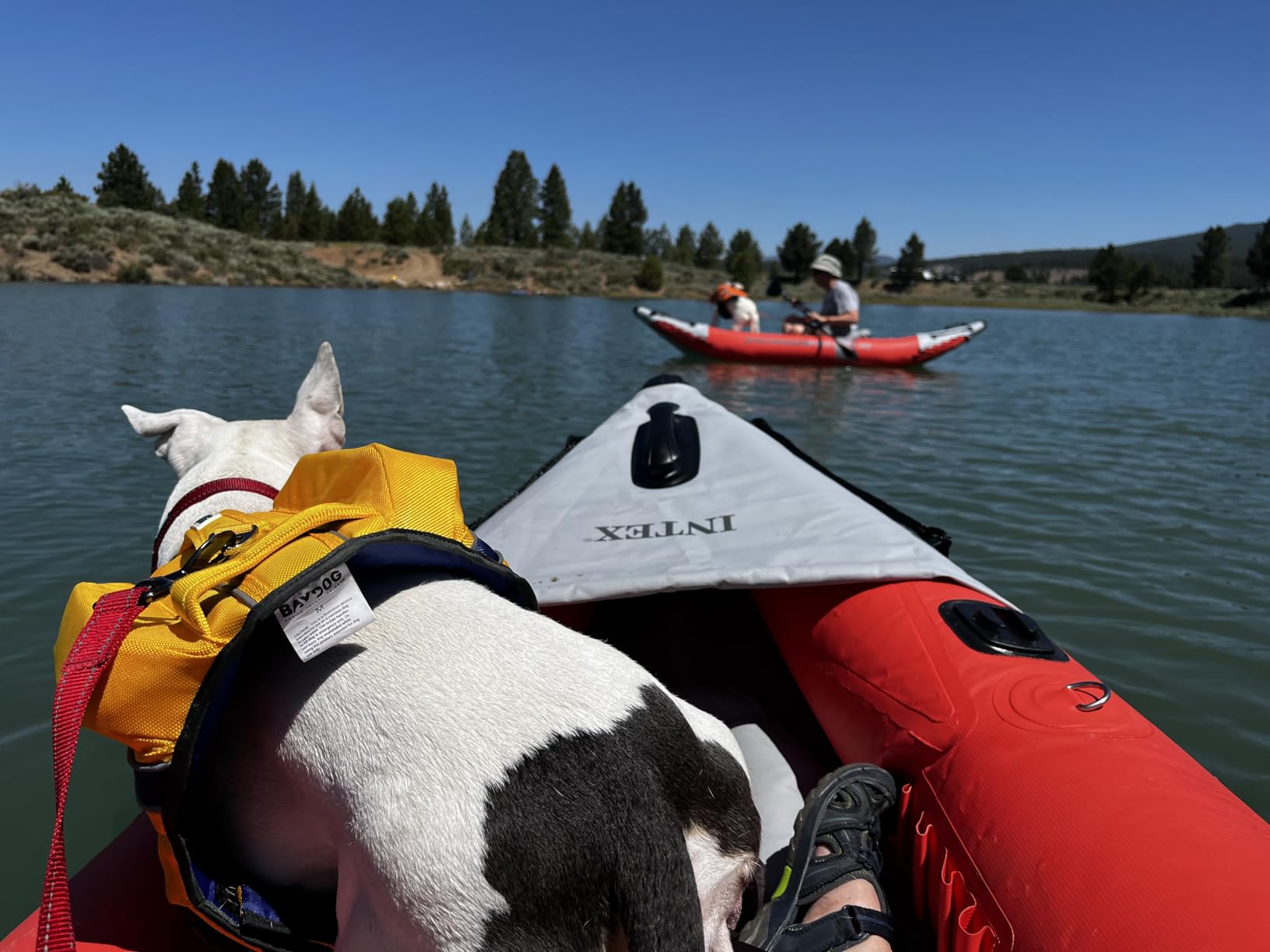
This suits a tall paddler who wants the most space available without moving to a hard shell. It works well for two people on calm water, and for anyone paddling with a dog who needs a rear platform area.
Who should skip it
Skip it if you carry it alone regularly, or if you need a boat that tracks straight in wind. An inflatable this size needs calm, flat water to feel good, and it will not hold an edge on a moving river.
3. Lifetime Tamarack Angler 100 Fishing Kayak – the Simple First Fishing Kayak
Lifetime Muskie Angler Sit-On-Top Kayak with Paddle, Tan, 120″
- Wide flat-bottom hull that holds steady in chop and light offshore water
- UV-protected polyethylene shrugs off rocks
- trees and stacking
- Multiple footrest positions so paddlers of different sizes can fit it
- Light enough at about 51 lb for one person to roof load
- Molded seat bracket clips bend and many owners upgrade to an aluminum seat
- Included paddle is short and flimsy
- Scupper holes let water in without plugs
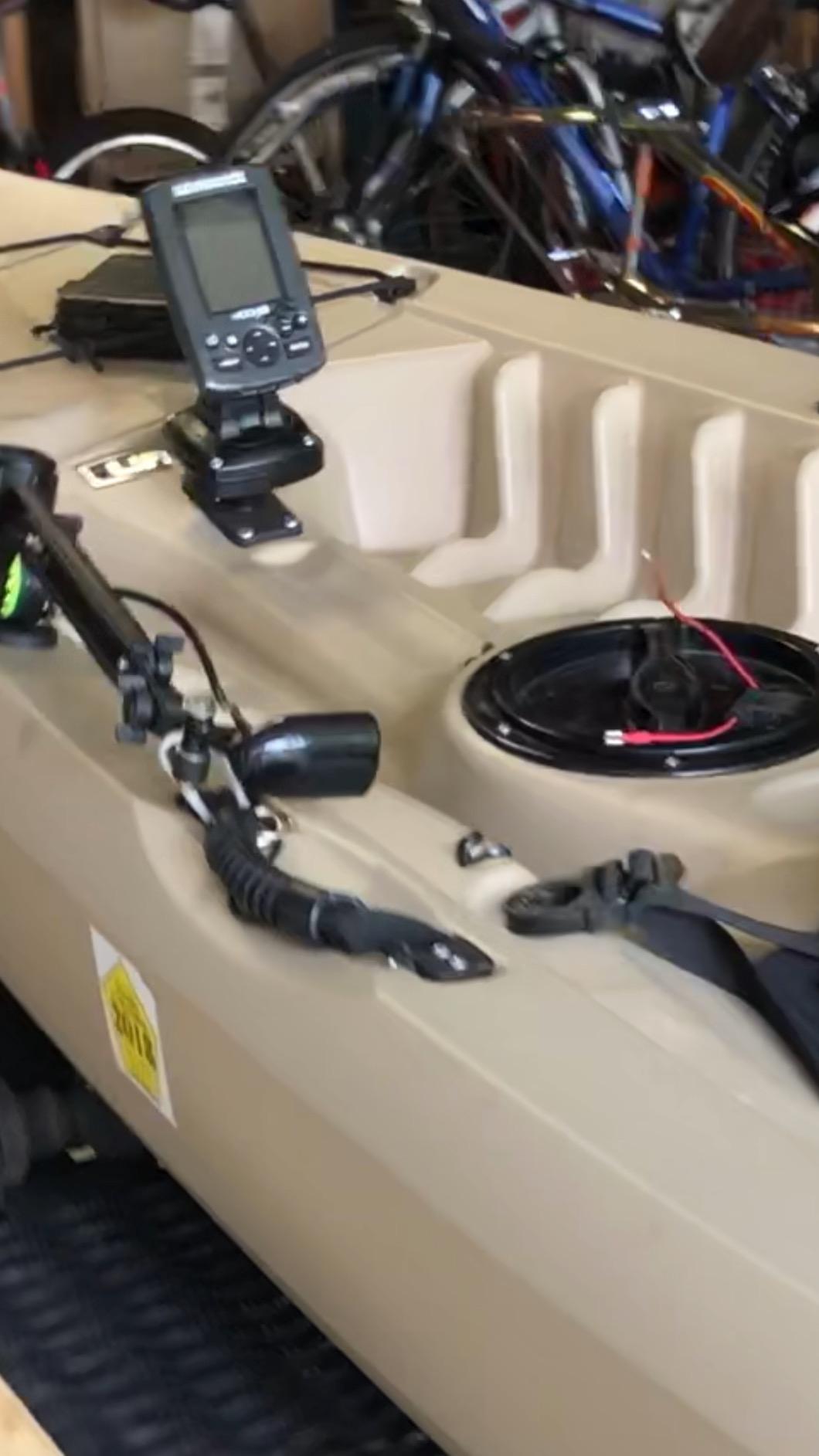
This is the boat we would put a tall beginner in. The flat bottom and 31 inch beam give a wide, planted platform, and there are multiple footrest positions, which is the feature that actually determines whether a six-foot-four paddler can reach the pedals or sits with legs half-dead after an hour.
High density polyethylene with UV protection is genuinely durable. Owners describe it shrugging off rocks, trees and being stacked without damage, which matters if the boat lives on a rack in the sun year round.
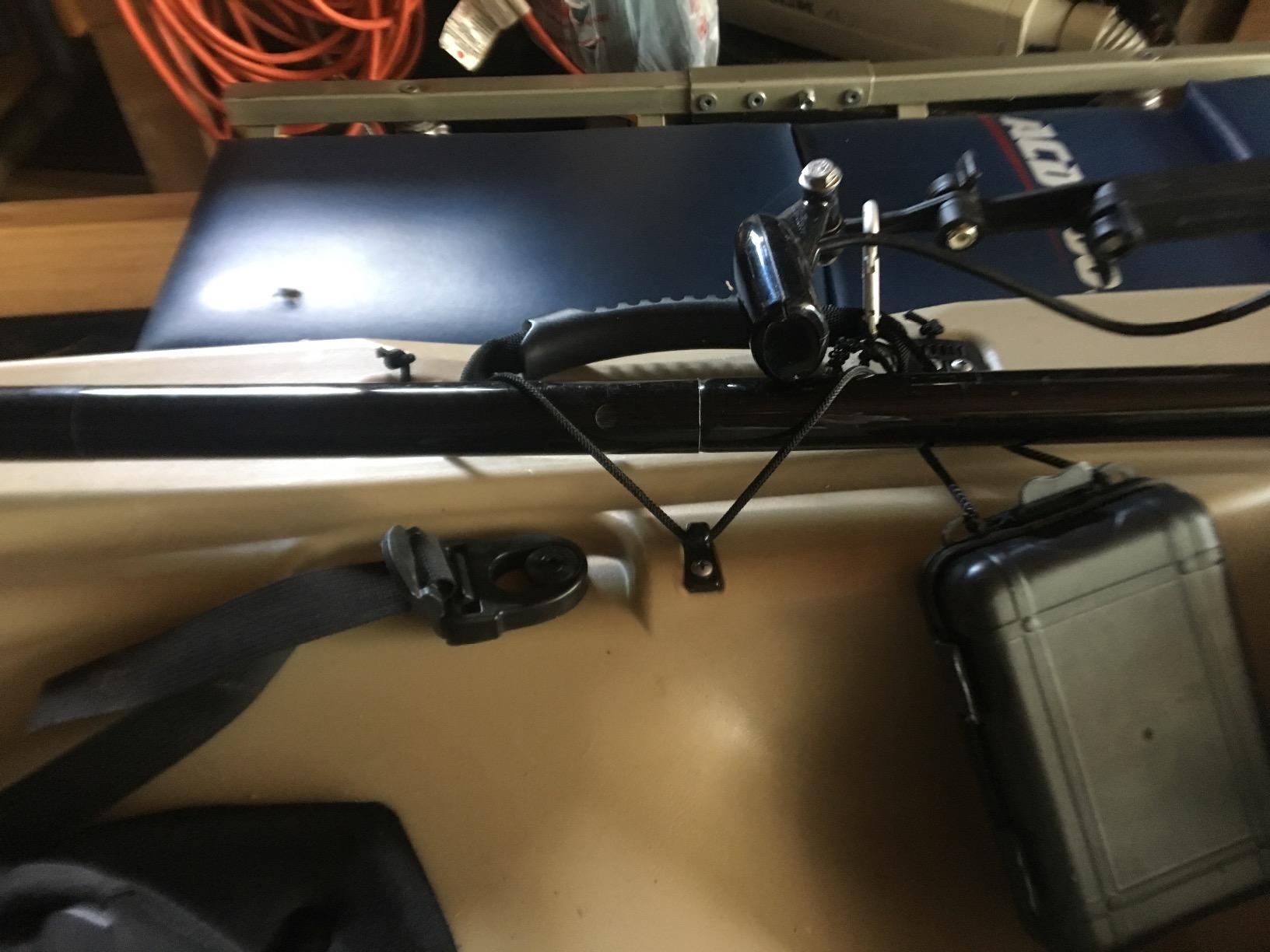
Fishing hardware is more than adequate for a first boat: two flush-mounted rod holders, one top-mount, and storage compartments in the rear and center. Sharp bow lines and a skeg give it better tracking than its length suggests.
The seat is the weak point and almost every owner treats it as a first upgrade. The molded plastic bracket clips bend out of their slots, and swapping to an aluminum stadium seat is the standard fix. The stock paddle is also short and light, so replace that too.
Who this boat suits
This suits a tall beginner who wants to fish from a stable platform and can accept a wet seat. It is a good first hard shell because one person can lift it onto a roof rack unaided, which is a bigger deal than it sounds.
Who should skip it
Skip it if you plan to stand to cast regularly, since a flat deck with no raised casting platform is not built for that. It is also tight on capacity for a paddler over roughly 250 pounds once gear is loaded.
4. Pelican Sentinel 100X Angler Kayak – the Tallest Backrest Under Ten Feet
Pelican Sentinel 100X – Angler Sit on top Fishing Kayak – Forest Mist – Lightweight – Ergolounge™ Seating System – 10 ft, Sentinel 100X Angler Fishing Kayak
- Ergolounge seat has a tall wide padded backrest that supports a long torso
- Lightest angler hull here at 44.6 lb with molded-in side handles
- Under 10 ft so it fits most roof racks without a bed extension
- ExoPak removable storage box lets you pack at home and drop it in
- 275 lb capacity is low for a big paddler plus gear
- Short 9 ft 6 in length means less tracking and less cargo room
- Storage depends on the removable ExoPak box
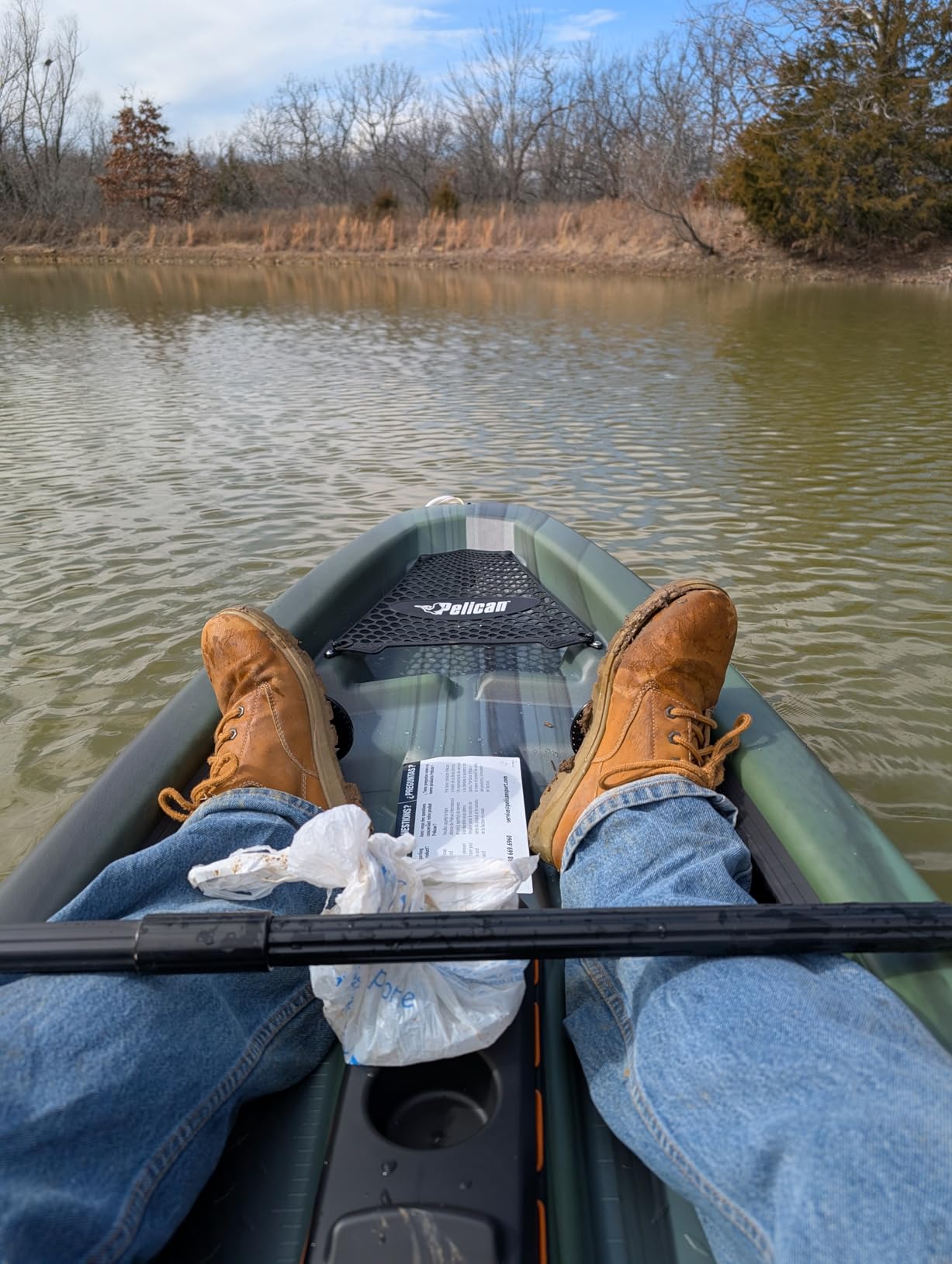
Seat height is the piece of the fit puzzle most people forget, and this boat addresses it in a way the others do not. The Ergolounge backrest is tall and wide with extra-thick cushioning, so a long torso gets support instead of a gap at the lower back. Reviewers single it out above everything else on the boat.
For tall paddlers that is genuinely useful. A seat that sits you higher lengthens the effective distance to the footrests without changing the hull, and it takes pressure off knees that are already working hard.
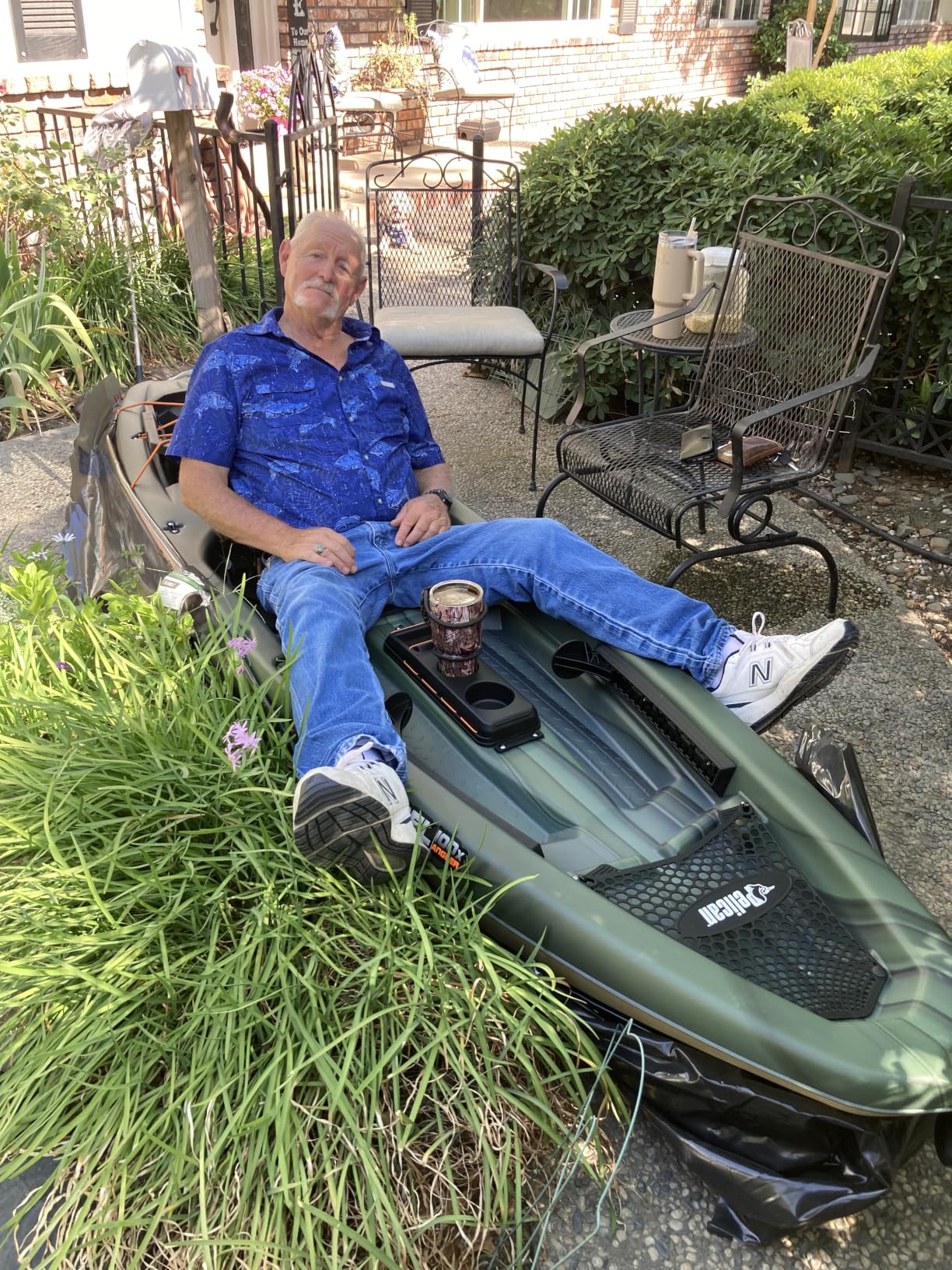
Portability is the second argument. At 44.6 pounds and 9 feet 6 inches, it stores in a garage, fits most roof racks without a bed extension, and carries with molded-in side handles. That combination is rare.
The ExoPak removable storage compartment is a clever piece of design: you pack it at home and drop it in at the water. Four rod holders come as standard, two flush and two vertical on the box.
Who this boat suits
This suits a tall paddler whose biggest frustration is lumbar support after an hour, and anyone whose garage or roof rack cannot take a twelve-foot boat. It also works well for a paddler who fishes from a seated position in protected water.
Who should skip it
Skip it if you want to cover ground, because a sub-ten-foot hull of this width tracks modestly. It is also a poor match for a heavier paddler, since the 275 pound rating leaves little room once gear is aboard.
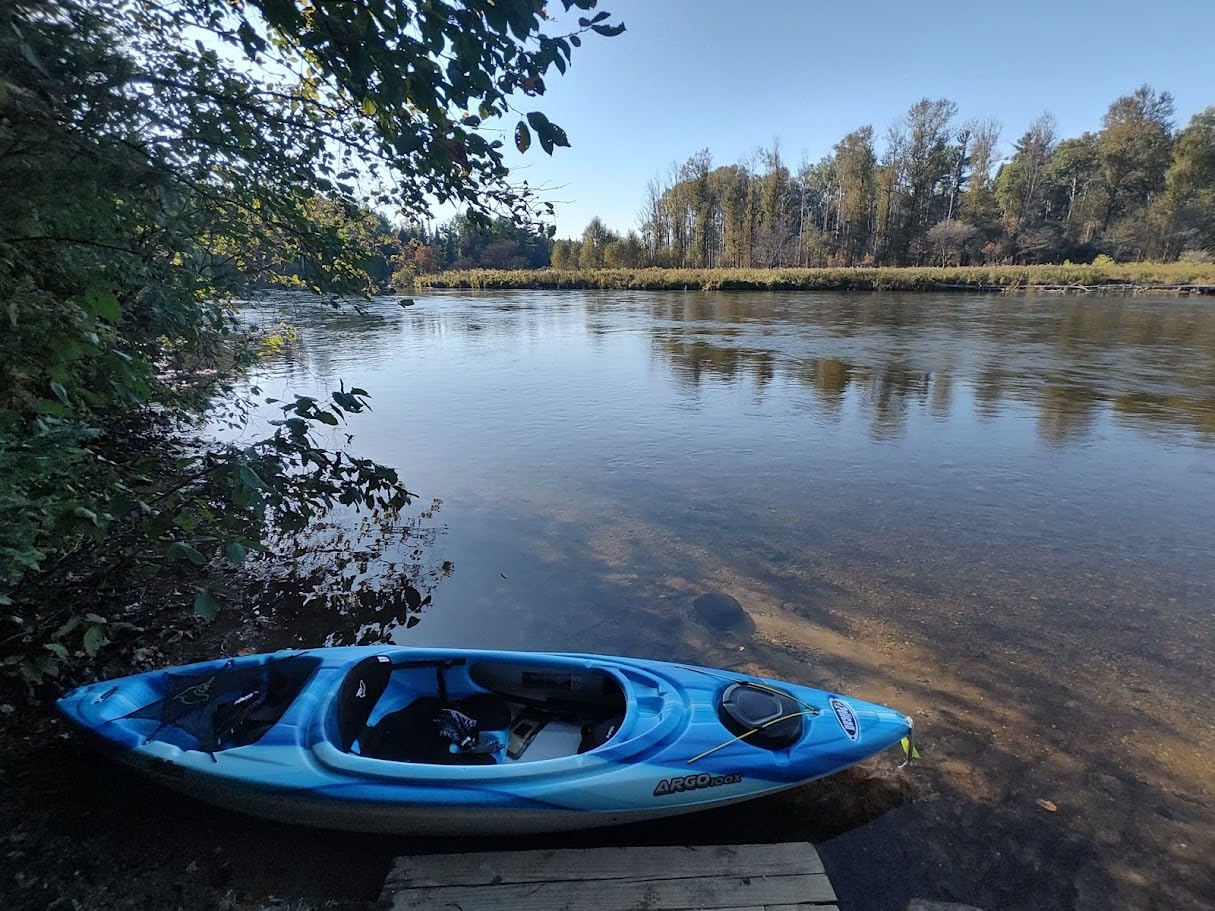
5. Pelican Argo 100X Recreational Sit-In Kayak – the Most Stable and Lightest Hull
Pelican Argo 100X – Recreational Sit-in Kayak – Lightweight, Safe and Comfortable – 10 ft – Vapor
- Highest rated boat in this group with 84 percent five-star reviews
- Twin-arched multi-chine hull puts more hull in the water for a very planted feel
- Only 36 lb so one person can carry and load it unaided
- Molded footrests suit a wide range of paddler sizes with no adjustment
- 10 ft length is short for longer tours or heavy gear
- 275 lb capacity limits the usable load
- Sit-in means more wetness in chop
This has the highest rating of anything we evaluated, and for a tall paddler worried about capsizing it is the easiest recommendation in the list. The twin-arched multi-chine hull spreads the boat wide in the water, and owners consistently describe it as planted and confidence-inspiring even for beginners.
The molded footrests deserve credit in a height-focused roundup. They are not adjustable, which normally would be a warning, but their range fits paddlers of very different sizes without anyone needing to fiddle with hardware.
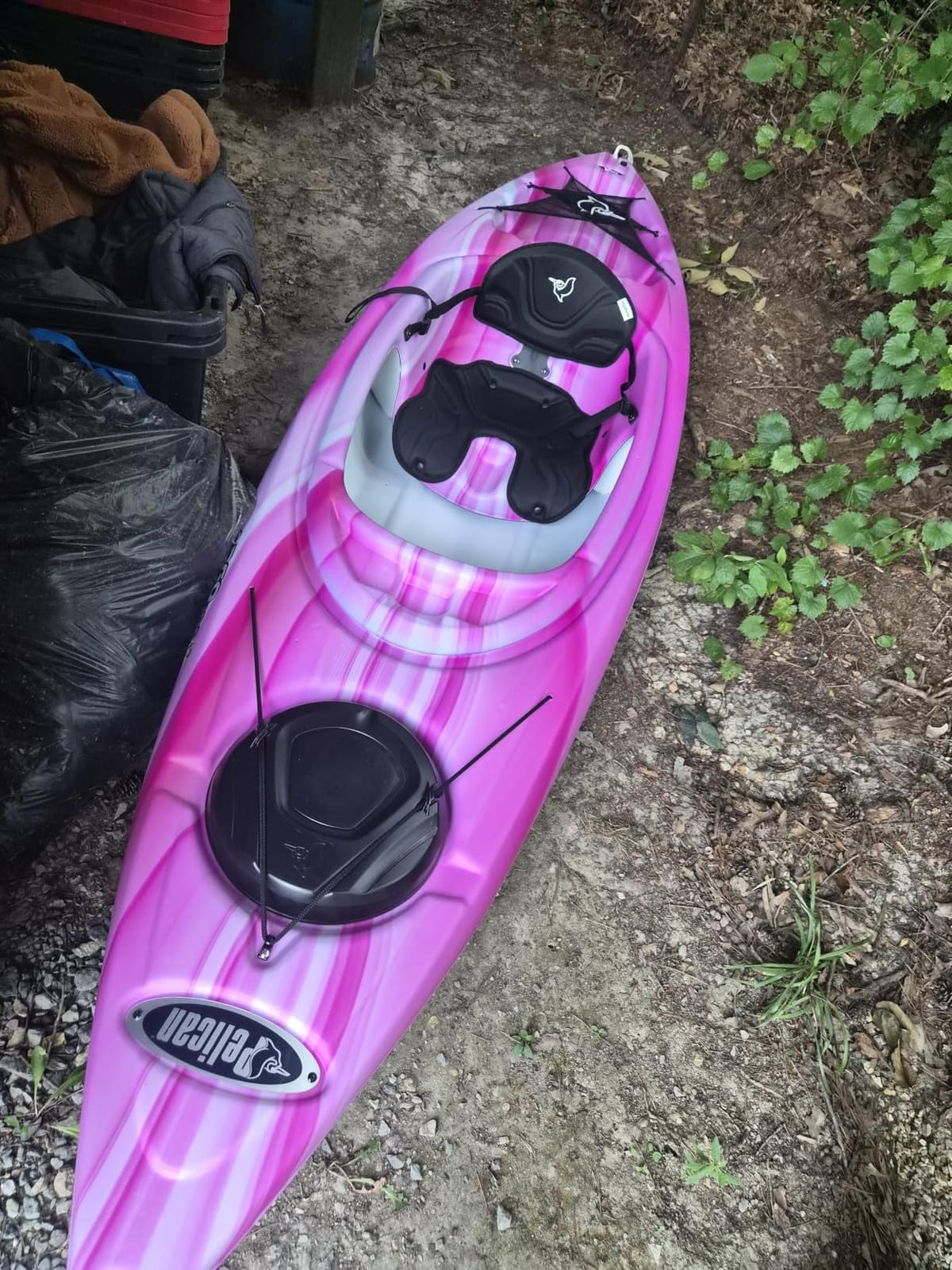
At 36 pounds it is the easiest hard shell here to manage alone. Carrying a boat to a shoreline, lifting it onto a rack solo, or carrying it across a launch carryport are all straightforward.
The 24.5 inch cockpit is where you need to think carefully if you are tall. That is a measured cockpit dimension, and for someone over six foot three you should assume a test fit is essential before committing.
Who this boat suits
This suits a tall paddler who wants a hard shell, values confidence in the water over speed, and needs a boat one person can handle. It also suits anyone learning on flat water who wants spray-skirt fit and dry storage rather than an open deck.
Who should skip it
Skip it if your legs run past about 40 inches and you cannot test-fit it in person, because the fixed molded footrests cannot be moved to compensate. It is also short for multi-day trips with heavy gear behind the hatch.
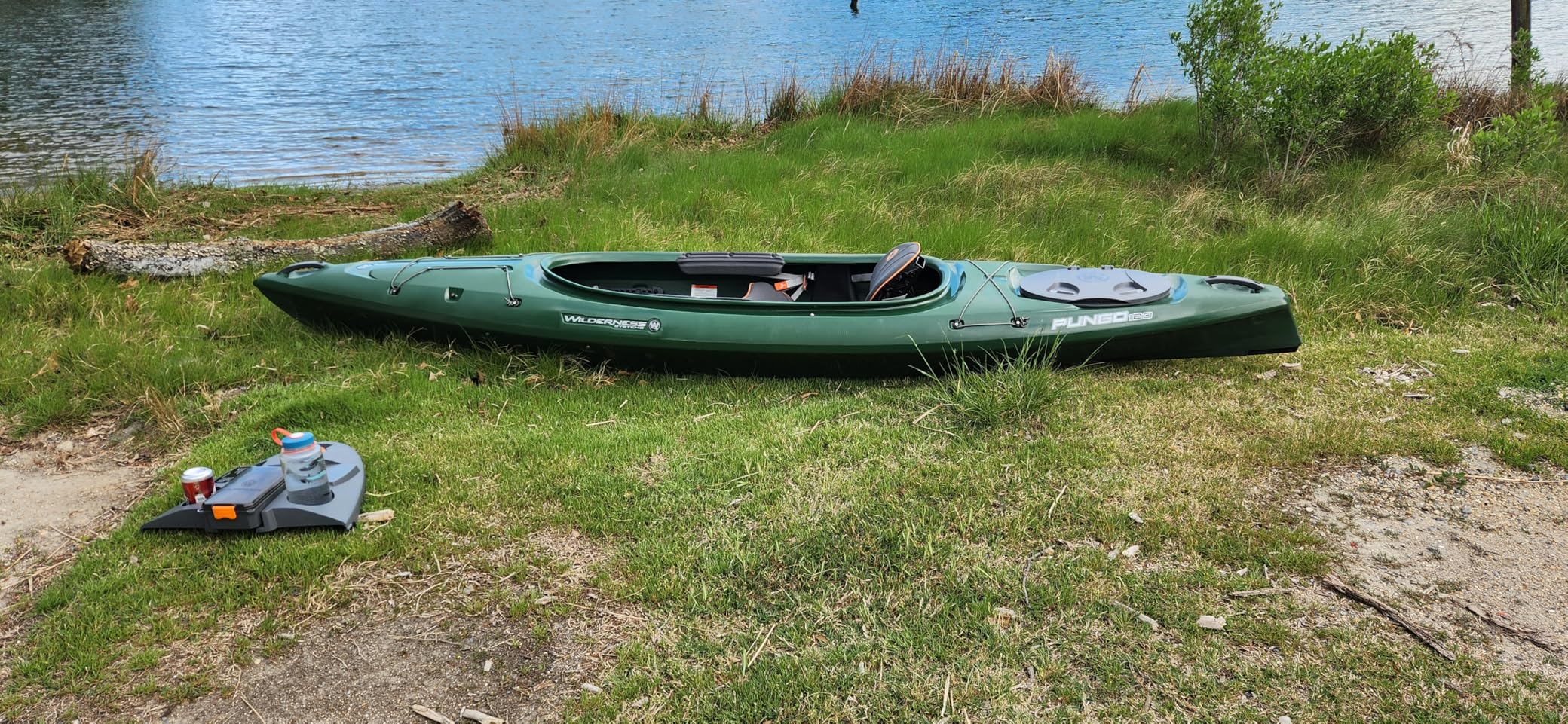
6. Wilderness Systems Pungo 120 Recreational Kayak – the Fastest Glide and the Most Adjustable Fit
Wilderness Systems Pungo 120 Recreational Kayak – Sit Inside – Phase 3 Air Pro Comfort Seating – 12.2 ft – Mango
- Best-in-class speed and glide for its length
- Phase 3 Air Pro seat is fully adjustable with lower-back support
- Adjustable footrests and thigh pads let you dial in the fit precisely
- Orbit hatch with sealed bulkhead protects gear and adds buoyancy
- Narrow 29 in beam feels less stable than the wider boats here
- Premium pricing against entry-level recreational kayaks
- Some owners report spray over the deck in chop
If your height problem is that you cannot get your knees into a boat at all, this is the one to look at first. The Phase 3 Air Pro seat is fully adjustable, and owners single it out along with the adjustable footrests and thigh pads as the features that make the boat work for them.
Thigh pads are the underrated part. They let you brace your legs under the cockpit rim, which is what stops a long-limbed paddler from sliding forward and having to hold themselves in position with core tension for two hours.
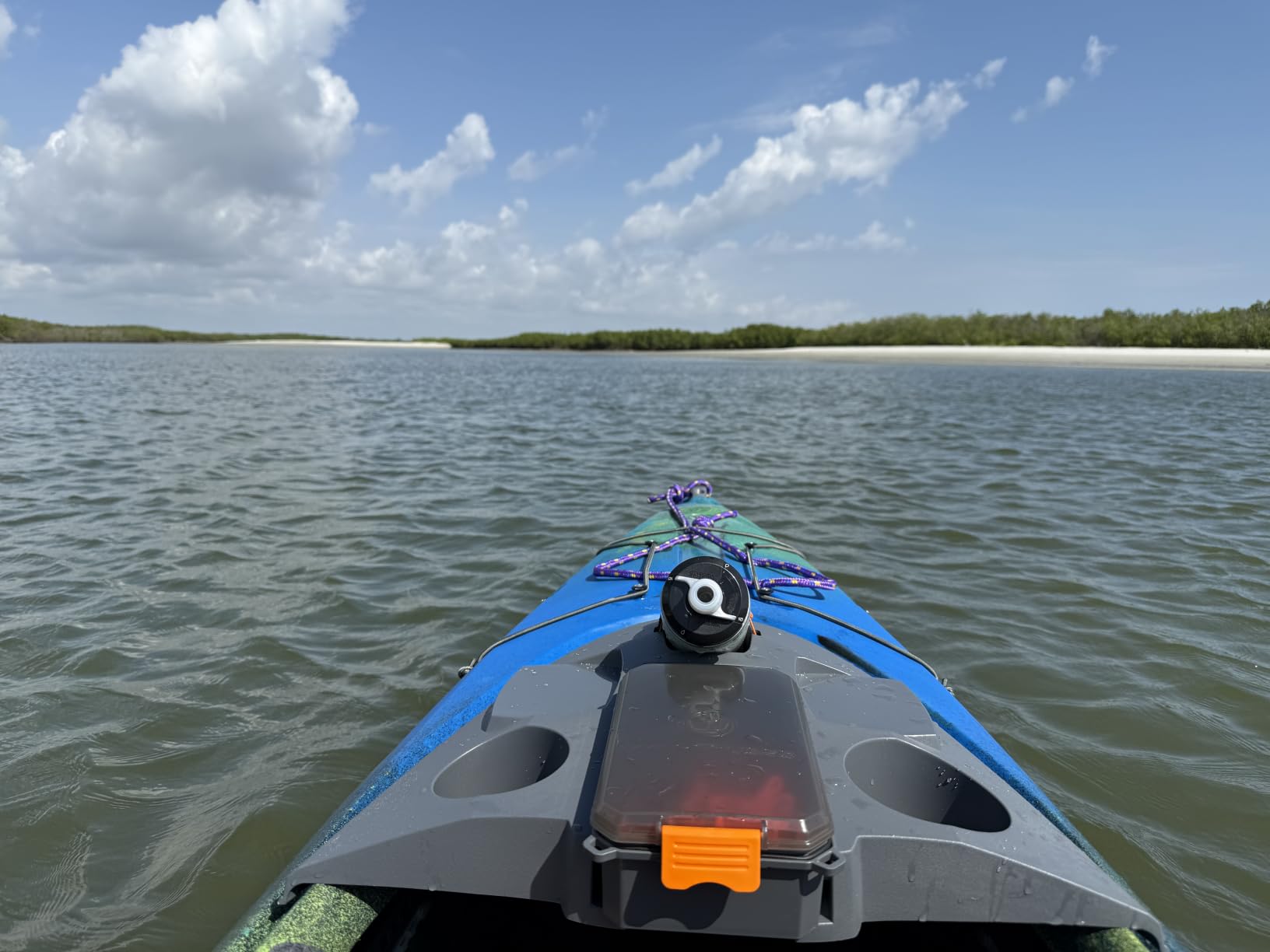
The hull is the fastest thing in this group by a wide margin, and the 325 pound rating gives real headroom for gear. The rear Orbit hatch sits behind a sealed bulkhead, so dry gear stays dry and the compartment adds buoyancy.
The dashboard is unusually well equipped: a removable dry box, two cup holders, a Slidetrax accessory rail and a battery recess for a light or a small sonar unit.
Who this boat suits
This suits a tall paddler who wants to cover real distance on lakes and calm rivers and who will adjust the seat and thigh pads until the fit is right. It is the fit-correctable option in a list where most boats are fit-fixed.
Who should skip it
Skip it if stability is your priority over speed, because 29 inches is the narrowest beam in the group. Beginners who want to stand up or pivot should look elsewhere. It is also one of the priciest ways to solve a leg room problem here.
7. Lifetime Tamarack Pro 103 Sit-On-Top – the Most Adjustable Fishing Rig
Lifetime Tamarack Pro 103 Sit-On-Top Kayak, Lightning Fusion, 10 ft. 3 in.
- Fully adjustable framed seat and adjustable footrests give tall paddlers room
- Deep hull channels and chine rails deliver solid tracking
- One adjustable and two flush-mounted rod holders plus accessory mounts
- Center storage hatch with bucket and a deeper tank well for larger gear
- Heaviest of the Lifetime models at 57.5 lb so solo roof loading needs two people
- Sit-on-top means you get wet in chop or rain
- Seat and footrest mechanisms can feel stiff or plastic-fragile
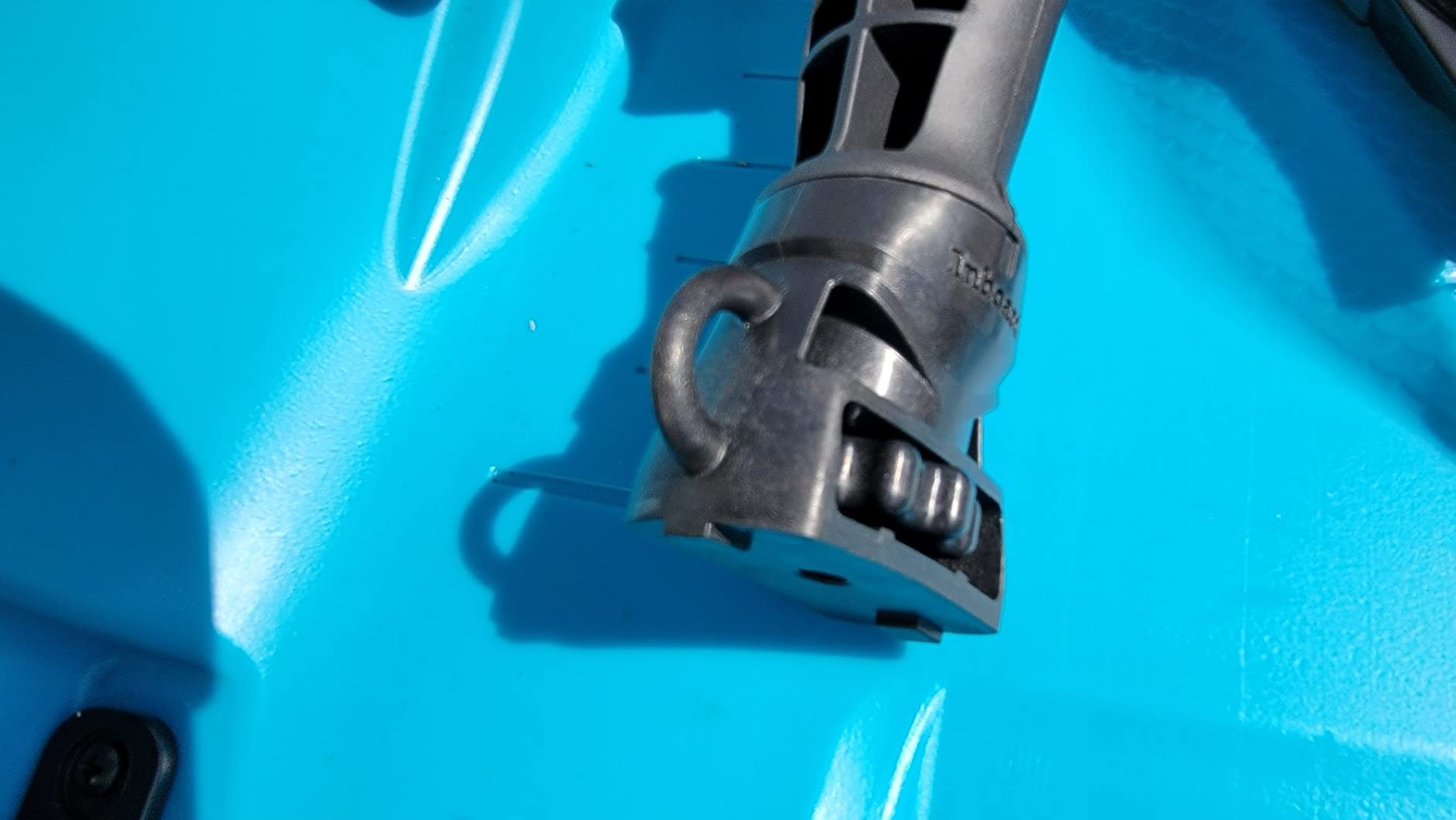
Reviewers of this boat specifically call out the adjustable framed seat and footrests as helping taller paddlers settle in, and that is the reason it earns a place on a height-first list rather than just being another fishing hull.
The chassis tracking is genuinely good for a sit-on-top. Deep hull channels and chine rails give it a straighter line than the shorter Tamarack 100, and the 31 inch beam keeps it steady when you shift weight to cast.
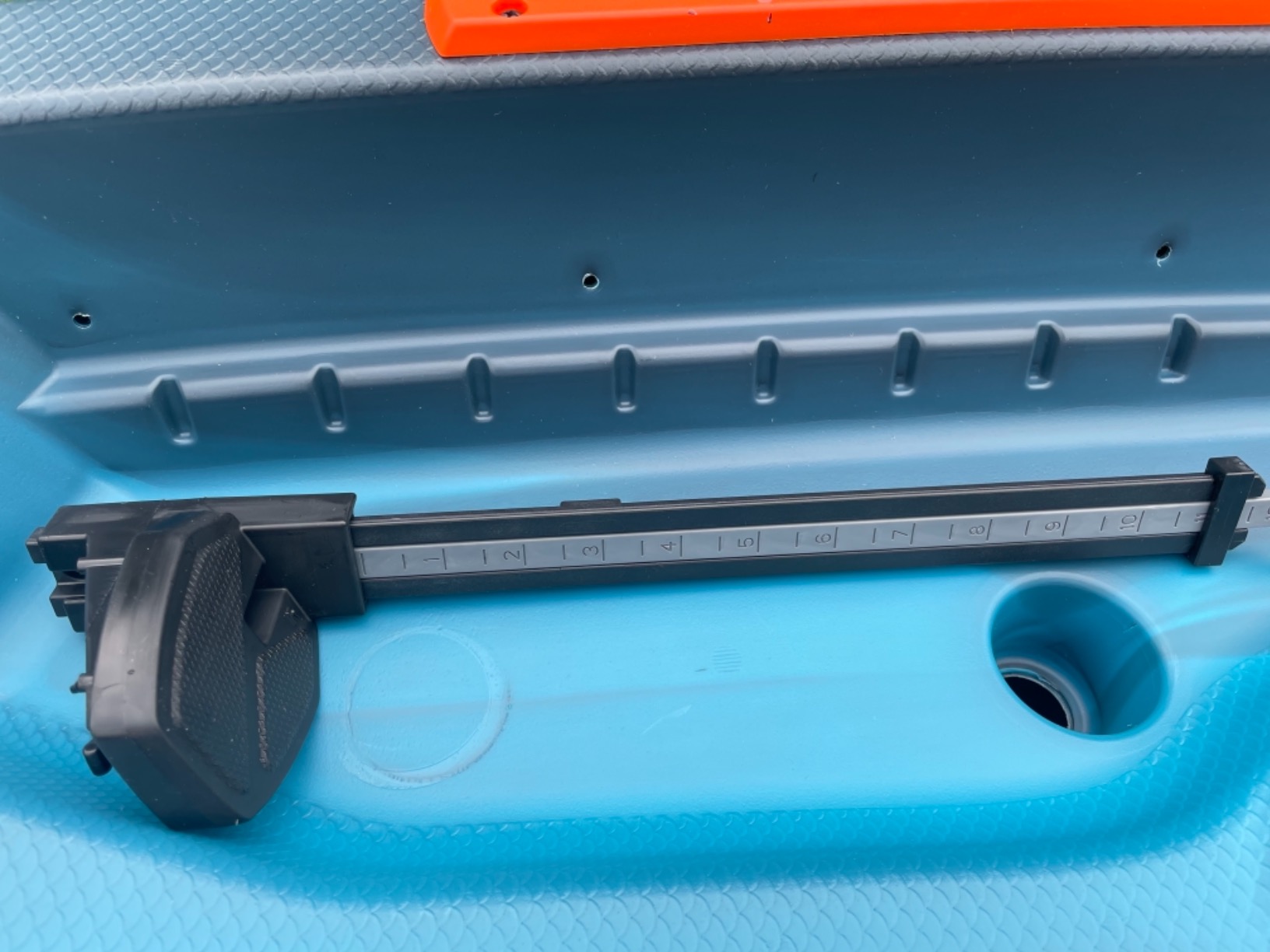
Fishing hardware is where it separates: one adjustable and two flush-mounted rod holders, accessory mounts, tackle box storage, a catch ruler, front and rear bungee cords and a paddle keeper. For the money, more owners get more rigging here than anywhere else in the group.
Storage runs to a center hatch with a bucket and a deeper tank well, which is where you put the cooler and the wet gear. The 300 pound rating is workable but not generous.
Who this boat suits
This suits a tall angler who fishes seated and wants their legs set where they want them. It is also a strong choice for anyone moving up from a small fishing kayak and needing more rigging without moving up a tier.
Who should skip it
Skip it if you load your vehicle alone regularly, because 57.5 pounds is a two-person job on a roof rack. It is a poor cold-water boat too, since an open deck and rain have no comfortable answer.
8. Perception Tribe 11.5 Sit-On-Top – the Best Beginner Boat With a 350 Pound Rating
Perception Tribe 11.5 | Sit on Top Kayak for All-Around Fun | Large Rear Storage with Tie Downs | 11′ 5″ | Déjà vu
- Integrated footrests and molded knee and thigh areas suit paddlers of all sizes
- 350 lb rating is higher than most angler kayaks in this group
- Adjustable framed seat back with a cushy padded seat pan
- Front and rear tank wells plus a center storage hatch with drink holder
- 30.25 in beam feels twitchy for some in wind or current
- At 52 lb it still needs a cart for car-top loading
- Sit-on-top means getting wet in waves and heavy rain
The molded knee and thigh areas are the feature to understand here. Rather than a flat foot deck with pads bolted on, the hull is shaped where your legs sit, and reviewers consistently say it accommodates a wide size range including taller paddlers. That is a different solution from a bigger cockpit and it works.
At 11 feet 6 inches it is longer than most of the sit-on-tops in this list, which gives better tracking on lakes and slow rivers without becoming unwieldy.
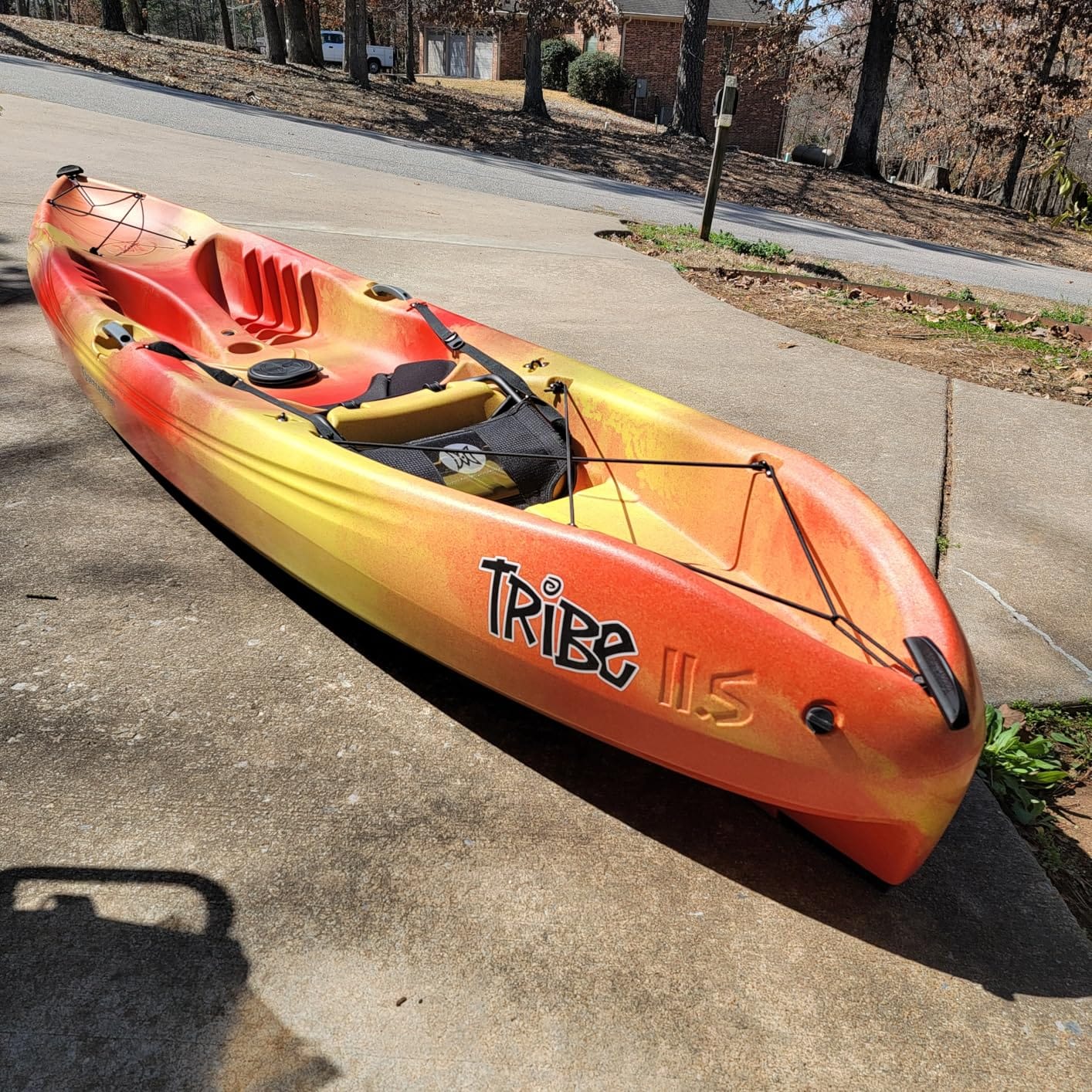
The 350 pound rating gives a tall paddler more headroom than most fishing boats in this price bracket, and owners rate the build as sturdy for what it costs. Bow and stern toggle handles make solo transport more manageable than the weight alone suggests.
Storage is well laid out: front and rear tank wells with bungee tie-downs and a center hatch with a drink holder, plus scupper holes for drainage. Our Perception kayak roundup covers the rest of the brand’s sit-on-top range.
Who this boat suits
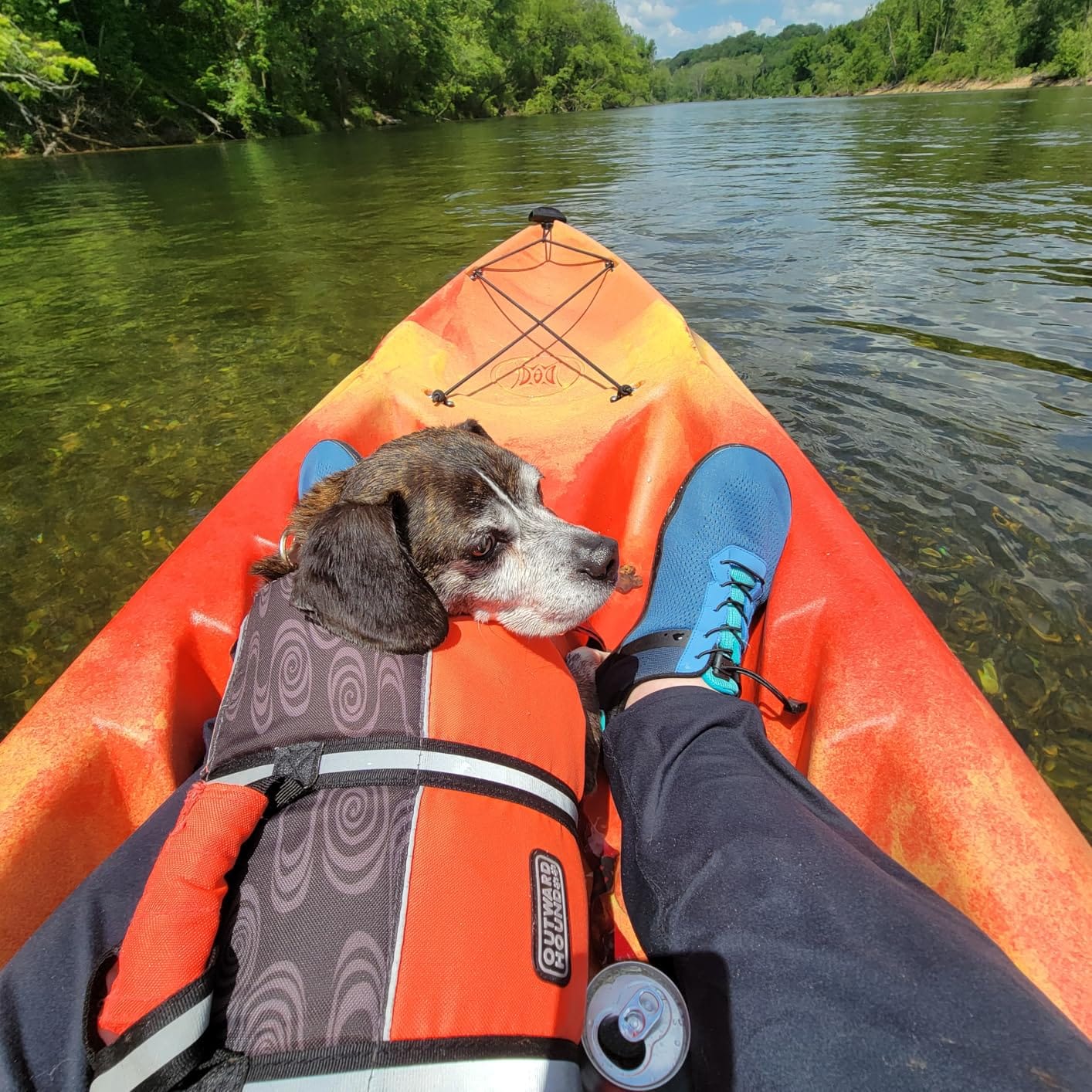
This suits a tall beginner who wants a stable platform without committing to a dedicated fishing boat. The 350 pound rating also makes it a sensible solo choice for a larger paddler who will carry a decent amount of gear.
Who should skip it
Skip it if you paddle in exposed water or wind, where a 30 inch beam is less forgiving than the wider hulls here. Experienced paddlers who want fishing features should spend up instead.
9. Reel Yaks Raptor Modular Fishing Kayak – Pedal Power With a Low Seat
Reel Yaks Raptor Modular Fishing Kayak, Fin Drive 9.5ft, 380 lbs Capacity
- Two-piece modular hull breaks into sections that fit in a trunk or closet
- Fin pedal drive is quiet and efficient against wind and current
- Wide W-hull with 380 lb capacity feels stable when casting
- Rod holders plus track rails and storage hatches included
- Rudder hardware is the weak point and breaks for some owners
- Seat sits very close to the floor with no height extender offered
- Only 9.5 ft long which limits tracking in wind
This is the odd one out, and the reason it is here is the pedal drive. Owners are enthusiastic about how quietly and efficiently the fin drive moves you against wind or current, and for a paddler with long legs that matters, because your legs do the work instead of your arms. If pedal propulsion is what you want to explore further, our pedal kayak roundup compares the main drive options.
The storage argument is just as strong. The two-piece hull breaks into sections light enough for one person to carry, snaps back together in seconds, and lives in a trunk or a closet rather than needing a trailer or roof rack.
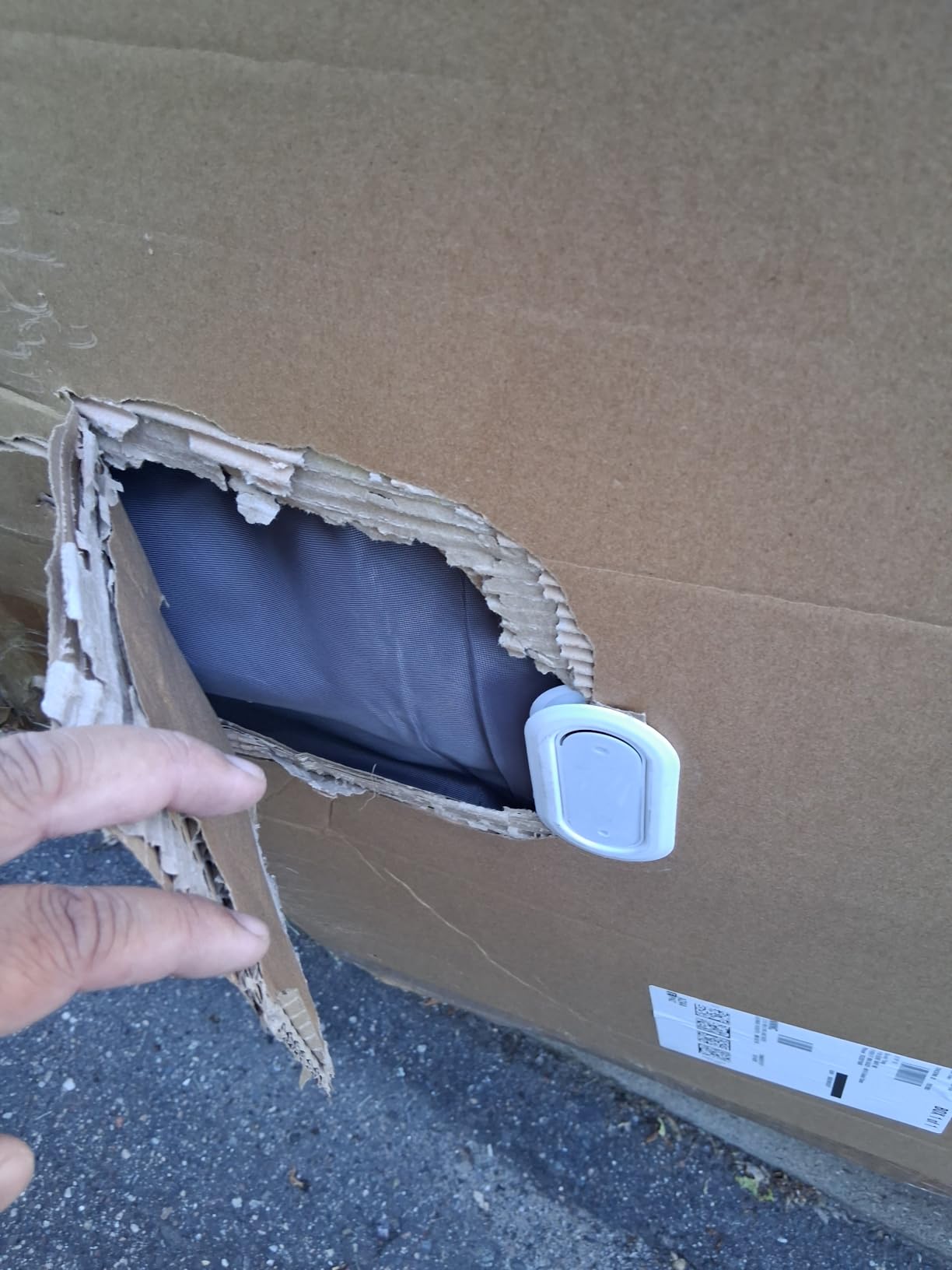
The wide W-hull and 380 pound rating feel planted when casting, and the included rig covers flush-mount rod holders, track rails, storage hatches and a stadium seat.
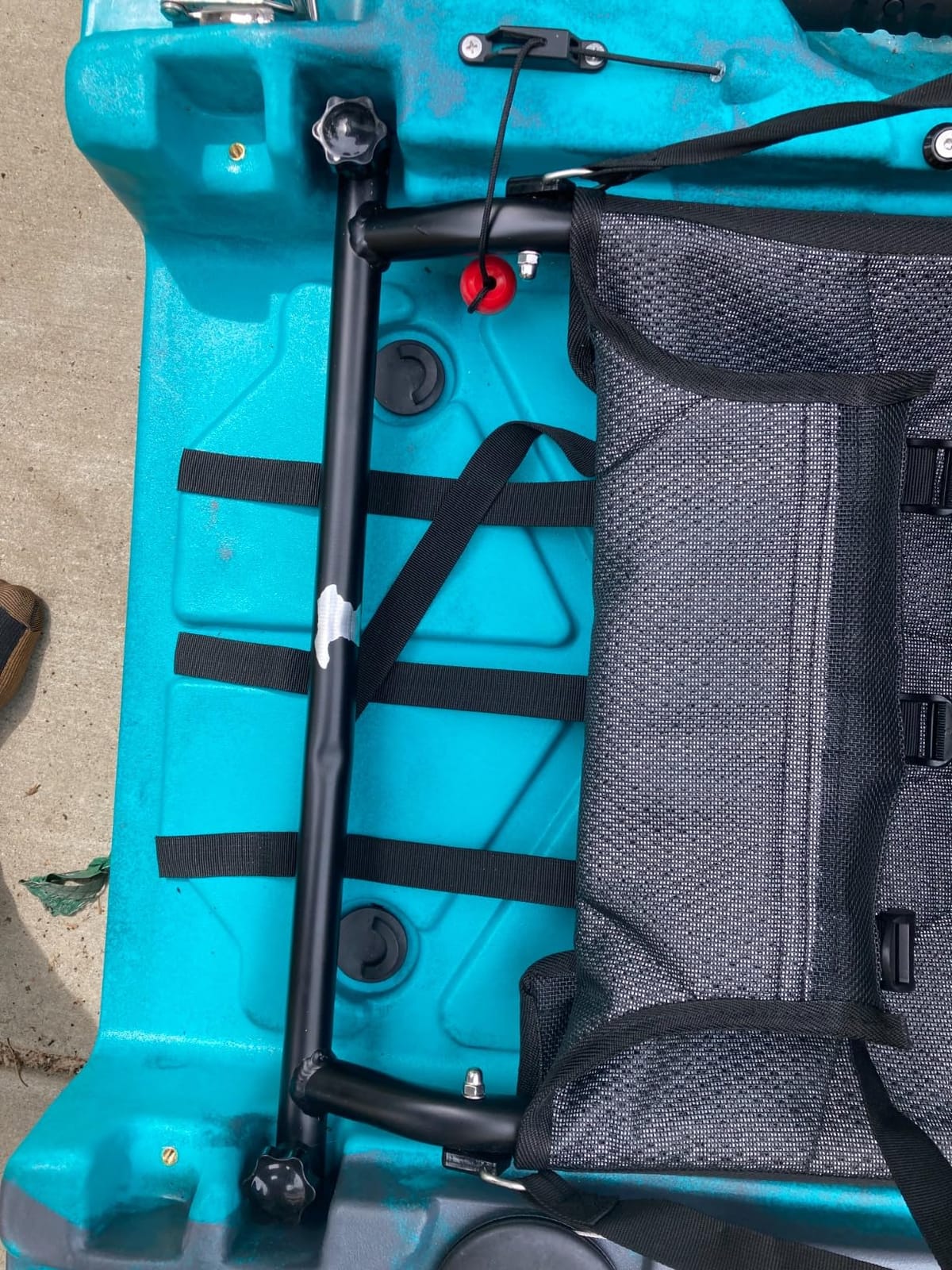
Now the part that matters most for this roundup, and it is the honest caveat: the seat sits very close to the floor and there are no height-extender options. Tall paddlers report wanting a seat riser. If your knees already complain after an hour, this is the boat you will want to modify first.
Who this boat suits
This suits a tall paddler with no roof rack, no trailer and no patience for a long carry. It also suits anyone who wants to cover water without paddling, because the drive does the propulsion.
Who should skip it
Skip it if your knees need a high seat, or if you paddle in wind, since a 9.5 foot hull wanders in a breeze. Reviewers also report repeated rudder hardware failures, which is worth factoring into a long-term purchase.
10. Pelican Catch Mode 110 Fishing Kayak – the Widest Beam and the Highest Seat
Pelican Catch Mode 110 – Angler Fishing Kayak with Lawnchair seat – 10.5 ft
- Tunnel hull with a wide flat deck is very stable and easy to get into
- You can stand to cast on the flat deck without tripping over gear
- ERGOBOOST seat folds up to add 6 inches of seat height for knee relief
- 375 lb capacity is the highest in the sit-on-top group here
- Heaviest sit-on-top here at 67 lb so a kayak cart is close to essential
- The raised casting deck adds windage in open water
- Premium pricing for the tier of hull and seating
Two numbers make this the best tall-paddler fishing boat in the list: a 34.5 inch beam, which is the widest fishing hull here, and a seat that folds up to add six inches of height. That seat feature is the single most direct answer to the knee pain long legs cause, and almost nothing else in this category offers it.
The tunnel hull gives a wide, flat deck with no gear to trip over, so standing to cast is realistic rather than theoretical. Owners rate the ERGOBOOST seat as one of the most comfortable fishing chairs they have used.
Capacity is a genuine strength at 375 pounds, and the hull carries extra internal flotation to meet or exceed ABYC standards, which matters in cold water when you are fully dressed.
Three flush-mount rod holders sit within reach and there is storage under the seat. The high molecular weight polyethylene keeps the weight down for a boat of this size.
Who this boat suits
This suits a tall angler who stands to cast and whose knees need the extra seat height. It is also the pick for a larger paddler who wants both capacity and a wide, confident platform in one hull.
Who should skip it
Skip it if you carry it alone, because 67 pounds effectively means a kayak cart. It is also a poor choice on open, exposed water, where the raised casting deck catches wind.
11. Perception Rambler Tandem Sit-On-Top – the Longest Boat and the Highest Capacity
Perception Kayaks Rambler Sit On Top for Recreation, Sunset, 13’6″
- Highest capacity here at 550 lb with room for two adults plus gear
- Very wide 34 in beam and a heavy hull that feels stable and confident
- Roomy molded-in seats make getting in and out easy
- Mold-in center seat works for a child or a large dog
- Heaviest boat in the group at 78 lb so transport needs a cart or a second person
- Some units arrive with transit scuffs
- 13 ft 6 in length makes garage and vehicle storage difficult
At 162 inches long and 34 inches wide, this is the most interior space in the roundup, and for two tall paddlers it is hard to argue with anything smaller. Reviewers describe paddling it for hours with a partner and not noticing the time.
There are multiple footrest positions to accommodate paddlers of different sizes, and the roomy molded-in seats plus a removable padded seat and backrest make getting in and out straightforward, which is a real benefit for larger paddlers with less flexibility.
The center molded-in seat is a practical spot for a child or a large dog, and the large rear open storage takes a cooler and gear. The heavy bow pushes through chop and light surf well.
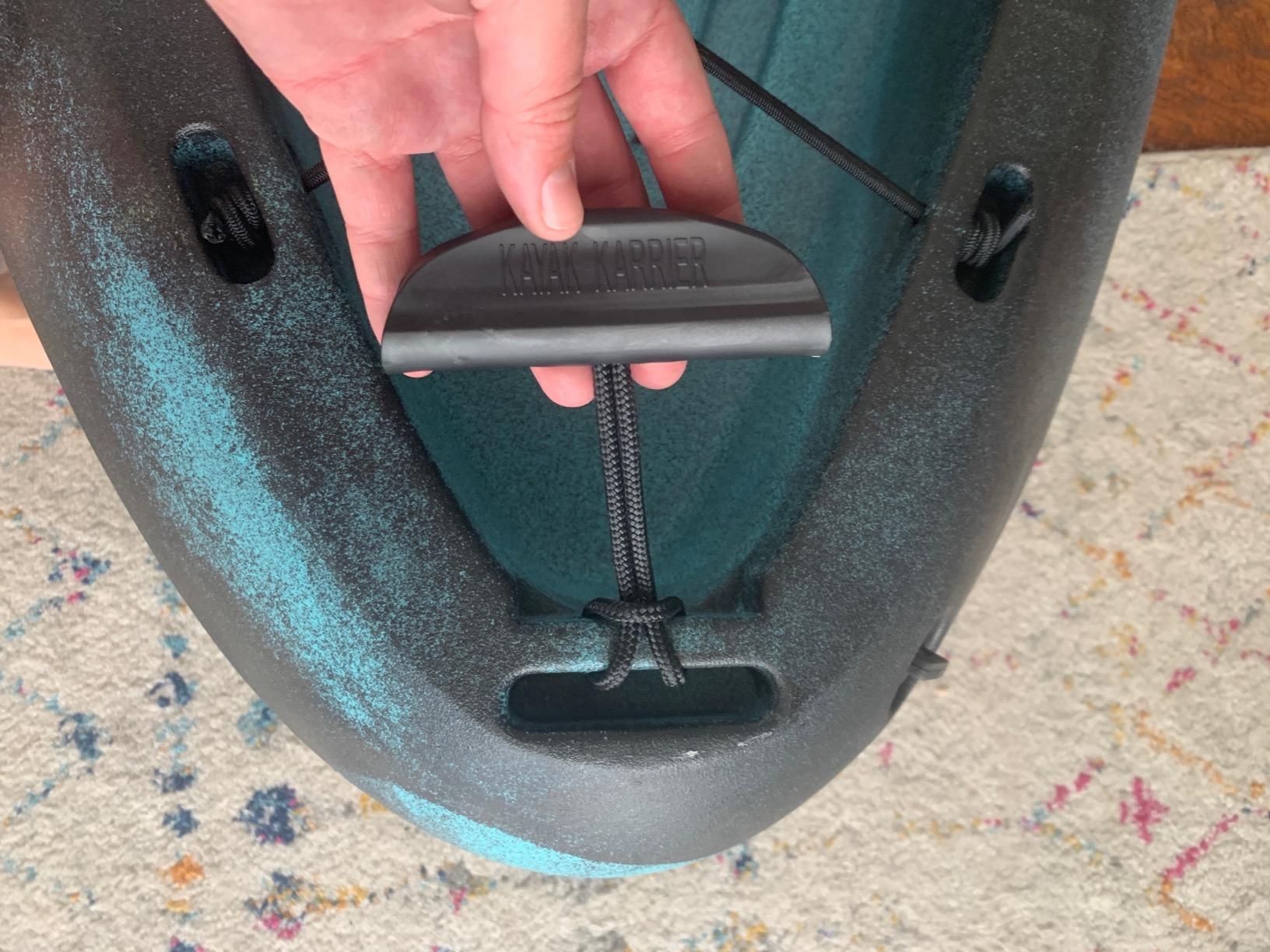
Nearly every reviewer flags the 78 pound weight as the deciding drawback. A kayak cart is not optional here. A few also report cosmetic transit scuffs, so inspect on arrival.
Who this boat suits
This suits two tall adults, or one tall adult and a child, who want one boat for everything and have a cart or a second person at the car. It also suits anyone paddling with a large dog.
Who should skip it
Skip it if you are a solo paddler, because you would be carrying 78 pounds for one person and handling a 13.5 foot hull in a small garage. If you want our wider take on two-person boats, see our tandem kayak roundup.
12. BKC Brooklyn 12.5 Tandem Fishing Kayak – the Boat That Seats Three
BKC Brooklyn 12.5 Tandem Fishing Kayak, 2 to 3 Person Sit-on-Top
- Seats two adults plus a child or a large extra gear load
- 595 lb capacity is among the highest in this group
- Six rod holders including two articulating for fishing multiple lines
- Built-in trolling motor mount area for later upgrades
- Multiple footrest positions fit paddlers of different heights
- Lowest rated of the twelve at 4.1 with 12 percent one-star reviews
- Heaviest of the tandem fishing options at 70 lb for solo transport
- Seats and comfort drop off on long trips
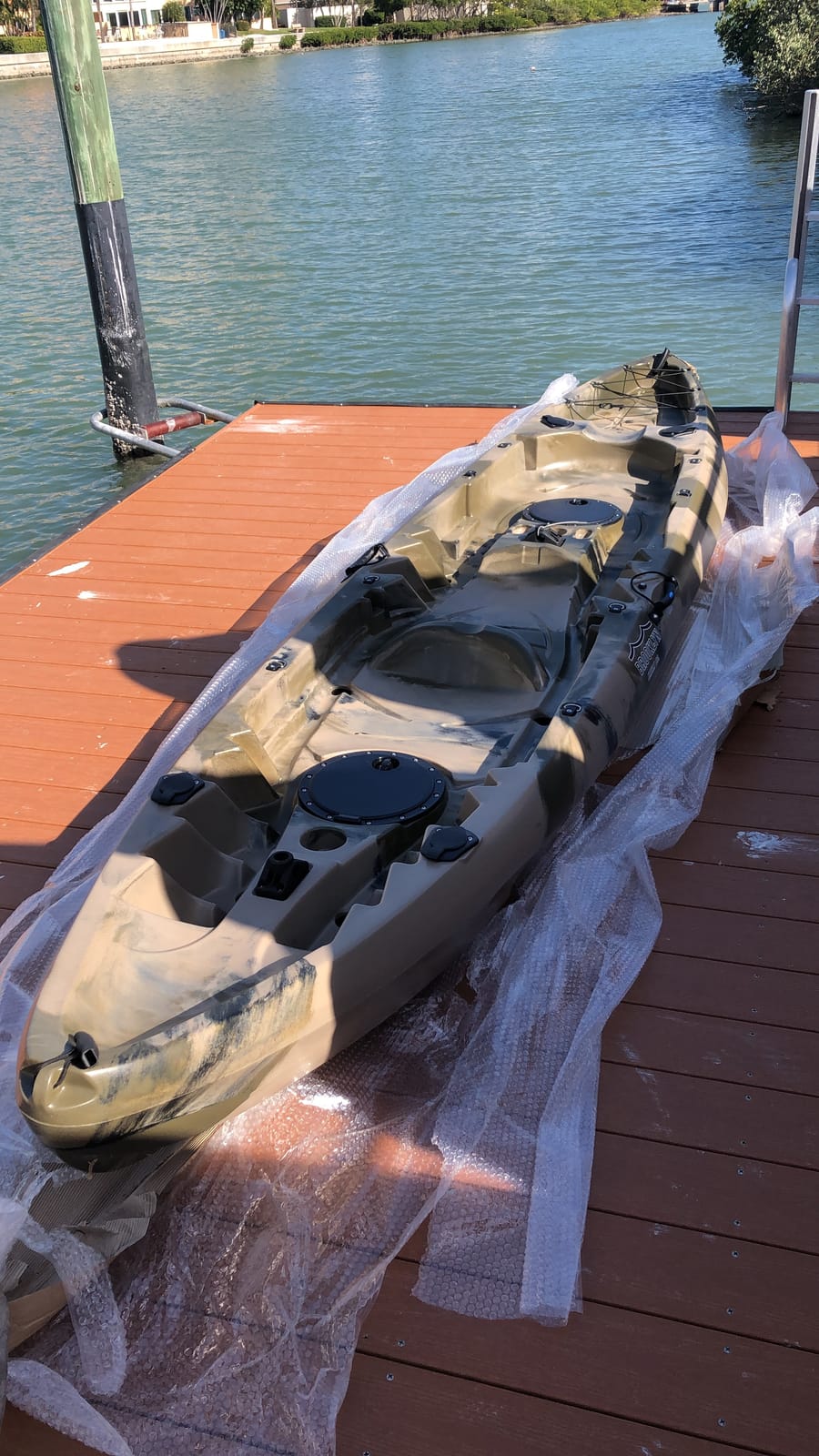
If your group includes two tall adults and a third person, this is the only boat here built for it. The 595 pound class capacity leaves room for two full-size paddlers plus a child or a substantial gear load, which is the situation most families with tall kids actually have.
The single-piece rotomolded HDPE hull is impact and UV resistant and will take abuse, and the 32 inch beam gives enough balance for standing casts. Six rod holders, four flush plus two articulating, let you fish more than one line hands-free.
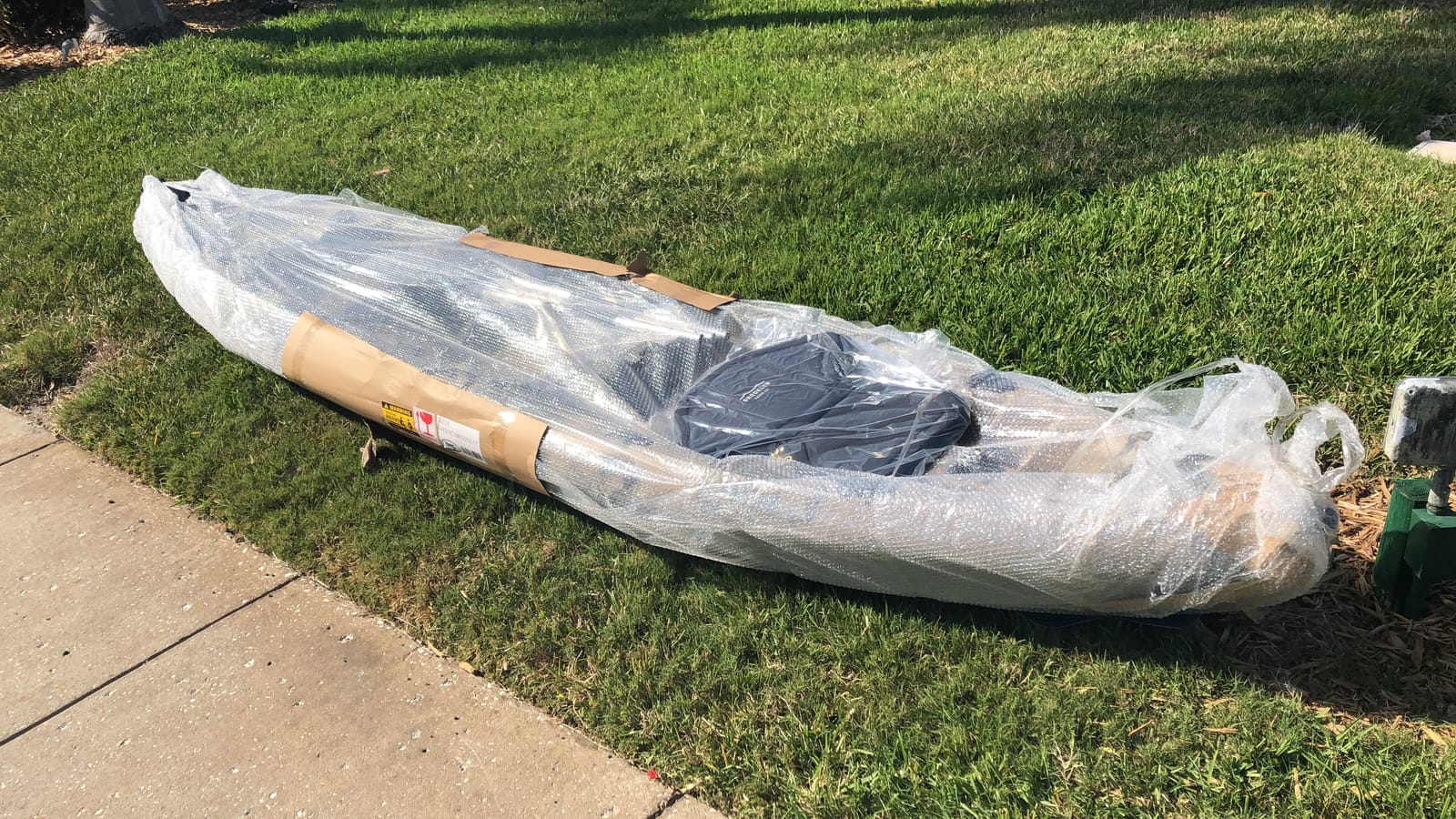
Two memory foam seats and two paddles come in the box, so there is nothing to buy to get started. A built-in trolling motor mount area is there for a later upgrade, though the motor is not included.
It is also the least refined boat here. Owners rate comfort as basic, the seats as less supportive than premium angler seats, and roughly one in eight reviews is a one-star. For long days that matters.
Who this boat suits
This suits a family group of three where two paddlers are tall, and anyone who wants capacity and rod holders without moving to a premium angler tier. It also works for fishing in lakes and sheltered coastal water.
Who should skip it
Skip it if you paddle long hours alone and care about seat comfort, because a solo paddler gets the basics. Skip it if you must carry it solo, since 70 pounds is a two-person lift.
How to Size a Kayak for Your Height?
The direct answer: measure your inseam, then choose a boat whose cockpit length is at least that inseam plus four to six inches, and whose seat height lets your knees sit at or slightly above the cockpit rim. Height alone tells you little. Inseam tells you almost everything.
Height and inseam diverge more than most people assume. Two paddlers both six feet tall can have inseams differing by four or five inches depending on torso and leg proportion, and the short-inseam one may need a less aggressive cockpit than the long-inseam one. This is why tall female paddlers and tall teens often fit a boat that a tall adult man cannot, and why sizing advice that quotes only feet and inches fails them.
How to measure your inseam in five steps
Stand flat against a wall with your feet together and your shoes off.
Place a hardcover book or a rigid spine flat against the wall between your legs, spine up.
Slide it down until the spine touches the top of your crotch, then keep it there.
Measure the floor to the top of the book with a tape measure, in inches.
Write the number down and take it with you. This is the only measurement that matters for cockpit length.
If you cannot get to a wall, measure a pair of trousers that fit well from crotch to hem, which is close enough for a first pass.
What the 120 rule actually means
The 120 rule is a starting heuristic, not a fit test. It says that for a paddler over roughly six feet, aim for a hull of about 120 centimeters, or near twelve feet, and for shorter paddlers aim lower. The idea behind it is sound: a longer hull tracks straighter and holds speed with less effort.
Where it fails is for very tall paddlers. Community advice among tall paddlers is consistent that a fifteen foot hull is not automatically more comfortable, and can feel unwieldy, while a hull in the twelve to fourteen foot range with a wide beam is easier to control. Treat 120 centimeters as a floor for tracking, not a target to exceed.
Cockpit length beats overall length
Cockpit length is the front-to-back space your legs occupy. Overall length includes the bow and stern that sit ahead of and behind you, and on a sit-on-top much of that length does nothing for leg room at all. This is why the nine foot six inch Sentinel and the eleven foot six inch Tribe can suit tall paddlers very differently despite being similar widths.
As a rough guide, look for a cockpit at least four to six inches longer than your inseam. Below that, your knees will press into the cockpit sides and you will feel pressure within the first half hour.
Seat height and seat depth do the quiet work
Seat height determines how far your knees sit above the hull floor, and seat depth determines how far your back is from the seat edge. For long legs, both push in the same direction: your knees are high, and unless the hull is deep enough or the seat high enough, you brace your legs harder than you should.
This is why the Pelican Catch Mode 110 seat that folds up six inches matters more than its width does, and why a high-backed framed seat solves problems that a longer hull does not. If you already have knee pain after an hour, seat height should be near the top of your criteria.
Give yourself capacity headroom
Add your body weight, your gear and any partner or dog before comparing a rating. A paddler at 200 pounds carrying a day of gear in a 275 pound boat has very little margin, and a boat near its rating sits noticeably lower and feels less stable than the same boat with room to spare.
A useful target is at least 100 pounds of rated capacity above your combined body and gear weight. For two paddlers sharing a tandem, add both bodies first. Our tandem kayak guide covers the two-person sizing questions in more detail.
Sit-on-top or sit-in for tall legs
A sit-on-top has no cockpit rim to swing your legs over, which makes getting in and out far easier, and the open deck lets you extend your legs forward in a way a sit-in does not allow. Many tall paddlers who dislike the kneeling posture of a sit-in find that a sit-on-top simply works better for them.
A sit-in gives you a lower centre of mass, a spray skirt that keeps water out in cold conditions, and enclosed storage. It also demands that your legs fit inside a fixed opening. If you cannot get in without contorting, it is the wrong hull no matter how good it is otherwise.
Paddle length matters as much as the boat
A paddle that is too short for your height forces a hunched, upright stroke and burns out your shoulders long before your legs are tired. Aim for a shaft length roughly two-thirds of your height, or about 86 inches for a six-foot-three paddler and closer to 95 inches above six foot six. A paddler at six feet generally lands in the 79 to 86 inch range.
Higher sitting positions and wider hulls need longer paddles to reach the water properly. If you buy one of the sit-on-tops in this list, buy the paddle at the same time rather than living with the short stock shaft for a season.
How to test-fit a kayak before you buy
Sit in the boat on the floor of the showroom with your knees up and your heels back, exactly as you would sit in the water.
Check that your knees clear the cockpit sides with at least an inch of space each side when you are in a paddling position.
Confirm your feet touch the foot braces or footrests without your knees riding above the rim.
Check that your back rests against the seat back with lumbar support, not floating above a gap.
Ask the dealer to check the hull is straight and undamaged, and confirm what the capacity rating covers.
If no showroom near you stocks a boat large enough, ask a local outfitter about demo days or guided rental trips. A rental hour in the hull you intend to buy is worth more than any specification sheet.
For a broader look at hull types and models, our touring kayak roundup covers the faster end, where long hulls and adjustable cockpits overlap most with what tall paddlers want.
Frequently Asked Questions
What is the best kayak for tall people?
The best kayak for tall people is a wide-beam sit-on-top or a touring sit-in with a cockpit at least four to six inches longer than your inseam, adjustable foot braces or thigh pads, and a seat height that keeps your knees at or above the cockpit rim. Weight capacity matters less than those four fit levers. In this roundup, the Intex Explorer K2 at 36 inches of beam and the Pelican Catch Mode 110 with its six-inch seat riser solve the problem most directly.
What size kayak do I need for my height and weight?
Measure your inseam against a wall with shoes off, then look for a cockpit four to six inches longer than that number. Add your body weight plus your gear and aim for at least 100 pounds of rated capacity above the total. Roughly: 5 foot 10 inch paddlers do well in 10 to 12 foot hulls, 6 foot 2 inch paddlers in 11 to 13 foot hulls, and 6 foot 5 inch and taller paddlers in 12 to 14 foot hulls with a beam of 31 inches or wider.
What is the best kayak length for a 6-foot-tall man?
For a six-foot paddler, start near 12 feet, which is roughly 120 centimeters, and work from there. Three steps: measure your inseam first, because inseam beats height; add four to six inches to that inseam to get a minimum cockpit length; then add enough hull to reach that cockpit plus tracking you can control. Beating 14 feet rarely adds comfort and often makes a boat harder to handle.
What is the 120 rule for kayaking?
The 120 rule is a starting heuristic, not a fit test. It suggests that a paddler over about six feet should look at a hull of roughly 120 centimeters, or near twelve feet, and shorter paddlers should go shorter. The reasoning is sound, since longer hulls track straighter and hold speed with less effort. The limit is that very long hulls feel unwieldy, so treat 120 centimeters as a floor rather than a target to exceed.
Is it better to have a shorter or longer kayak?
For a tall paddler, shorter with a wide beam usually beats longer and narrow. A longer hull tracks straighter and carries speed better, but it only helps if your legs fit inside the cockpit. Overall length beyond your cockpit adds tracking and looks, while beam adds actual knee room. Between a 12 foot hull at 30 inches of beam and a 14 foot hull at 28 inches, the taller paddler is usually happier in the first.
What paddle length do I need for my height?
Aim for a shaft length of roughly two-thirds of your height. That puts most six-foot paddlers in the 79 to 86 inch range, a six-foot-three paddler near 86 inches, and paddlers above six foot six closer to 95 inches. A paddle that is too short forces an upright, hunched stroke that tires your shoulders before your legs. Higher sitting positions and wider hulls also need a longer shaft to reach the water.
Final Verdict for Tall Paddlers
For most tall paddlers on calm water, the Intex Explorer K2 is the boat to buy, because 36 inches of beam removes the cramped-knee problem outright and the removable seats make it work solo or tandem. If you want a hard shell you can lift alone and value a planted feel more than speed, the Pelican Argo 100X is the strongest-rated pick in the group.
Choose by use case from there. The Wilderness Systems Pungo 120 is the fit you can actually adjust, with thigh pads and a fully adjustable seat for distance paddling. The Pelican Catch Mode 110 wins for standing casts and knee relief. The Perception Rambler is the answer when two tall adults are sharing one boat.
Whatever you choose, measure your inseam first and buy a paddle shaft that matches your height in the same order. Those two steps solve more of the tall-paddler frustration than any hull length you can pick on a spec sheet, and they are what makes the best kayaks for tall paddlers a short list rather than an endless one.