
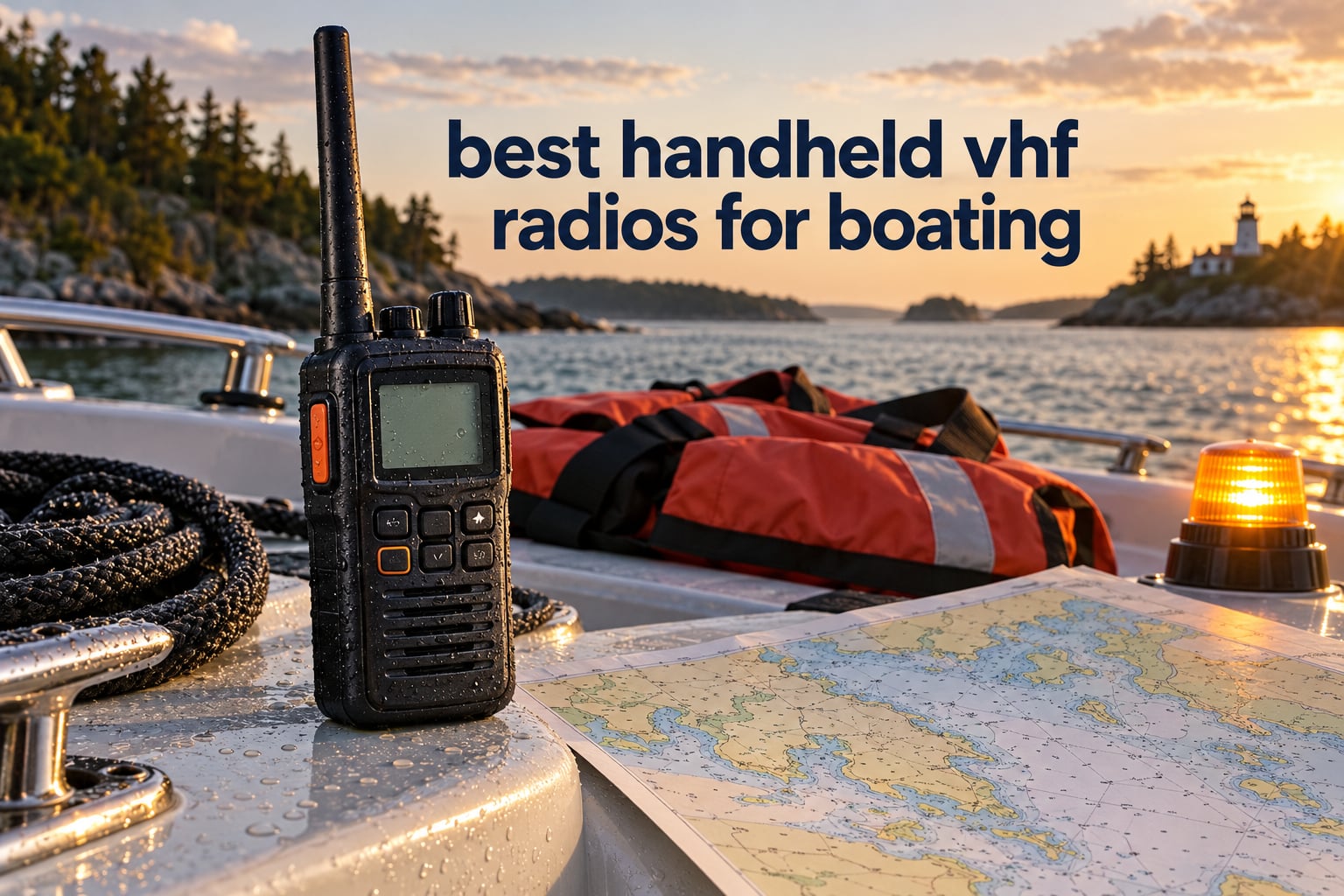
A handheld VHF marine radio is a battery-powered portable transceiver that works the international marine band from 156 to 174 MHz, so you can talk to nearby boats, marinas, bridges and the US Coast Guard on Channel 16 without needing cell coverage. When it carries DSC and a registered MMSI number, one button press broadcasts your position with a distress alert.
That last capability matters more than most buyers realise at the checkout. Cell towers and phones go quiet exactly when you need help most: offshore, in fog, after a dead battery, or in the gap between where the signal ends and where the harbour is. A handheld VHF marine radio runs on its own battery, works in the rain, and fits in a ditch bag.
We pulled together the best handheld VHF radios for boating available now, spanning budget units for kayaks and full Class H DSC models with built-in GPS for coastal passages. Ten models, every one checked against its manufacturer spec sheet and its owner feedback, so you can pick by boat type and water rather than by brand reputation alone.
If you are still working out what a VHF radio does for you, our guide to fixed-mount VHF marine radios covers the installed side of the picture.
Table of Contents
Top 3 Picks: the Shortlist (October 2026)
Three models cover most boating situations. The Uniden MHS75 is the one we keep reaching for because it does everything a non-DSC radio should and refuses to be complicated. The Standard Horizon HX890 is the one to buy if you are going more than a few miles offshore. The Standard Horizon HX210 is the sensible middle ground for most people.

Uniden MHS75
- IPX8 submersible to 5 feet
- Selectable 1/2.5/5W power
- Triple Watch on 16/9
- NOAA weather alerts
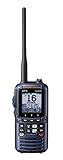
Standard Horizon HX890
- 6W transmit power
- Class H DSC with 66-channel GPS
- Water-activated strobe
- 11-hour Li-ion battery
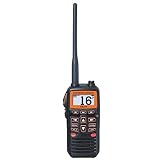
Standard Horizon HX210
- 6W selectable output
- IPX7 floating
- 1850mAh Li-ion
- Water-activated strobe
Every radio in the list below is covered in detail further down, including the four that carry a 1W-only or 3W output ceiling, since a lower wattage number does not always mean a worse radio for the water you actually boat on.
All 10 Radios Compared Side by Side
Specs at a glance before the long version. The columns that matter most are transmit power, waterproof rating, and whether DSC is fitted, because those three decide whether a radio suits sheltered water or an open coast.
| Product | Specifications | Action |
|---|---|---|
| Uniden MHS75 |
|
Check Latest Price |
 Uniden Atlantis 155 Uniden Atlantis 155 |
|
Check Latest Price |
| Standard Horizon HX890 |
|
Check Latest Price |
| Standard Horizon HX210 |
|
Check Latest Price |
 Retevis RM21 Retevis RM21 |
|
Check Latest Price |
 Cobra BlueBound 350 Cobra BlueBound 350 |
|
Check Latest Price |
 Cobra BlueBound 150 Cobra BlueBound 150 |
|
Check Latest Price |
 Uniden MHS338BT Uniden MHS338BT |
|
Check Latest Price |
 Icom M25 Icom M25 |
|
Check Latest Price |
 Standard Horizon HX891BT Standard Horizon HX891BT |
|
Check Latest Price |
1. Uniden MHS75: the most dependable all-round handheld
- Exceptionally long battery life that holds a charge in storage
- Selectable 1/2.5/5W power with clear reception
- Triple Watch monitors three channels at once
- NOAA weather alerts work reliably
- Solid build with a bright legible display
- Multiple owners report it does not actually float despite the marketing
- No USB charging and the 12V-only charger needs an adapter at home
- Drop-in charger contact pins can recede and stop charging
- Some reports of water-resistance failures and difficult warranty support
The MHS75 has been in the kit bag of more boats than any other radio we have tested, and for a straightforward reason: it turns on, it transmits, and the battery is still good at the end of the day. It is a 5 watt radio with selectable 1, 2.5 and 5 watt output, which is enough power to be useful on open water without dragging a fixed mount’s size around with you.
Battery life is the headline here. Owners describe charging it once and finding it still holding a charge weeks later in a locker, which removes the single most common complaint we hear about handheld VHF radios in general. The spec sheet lists a 12 hour average life, and in practice a weekend of intermittent listening is one charge.
Triple Watch is the feature that gets used most and noticed least. The radio monitors Channel 16, Channel 9 and whatever working channel you have selected at the same time, so you are not toggling between the distress channel and your fishing buddy all afternoon.
All NOAA weather channels are fitted with an alert tone, so a severe weather broadcast interrupts whatever you are listening to. On a center console in the Gulf, that alert has been the difference between getting back to the marina early and sitting out a squall.
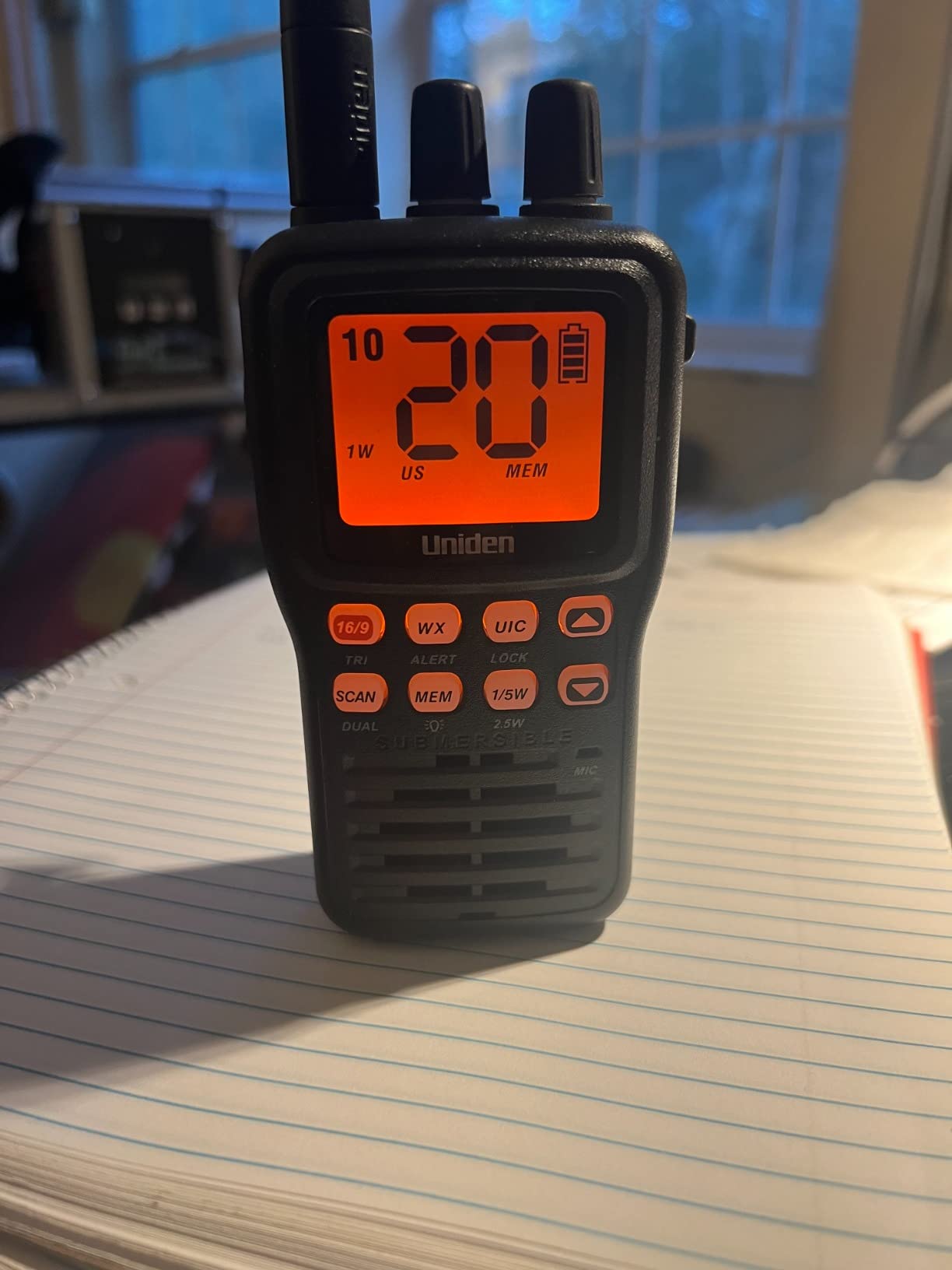
What the MHS75 does well and where it falls short
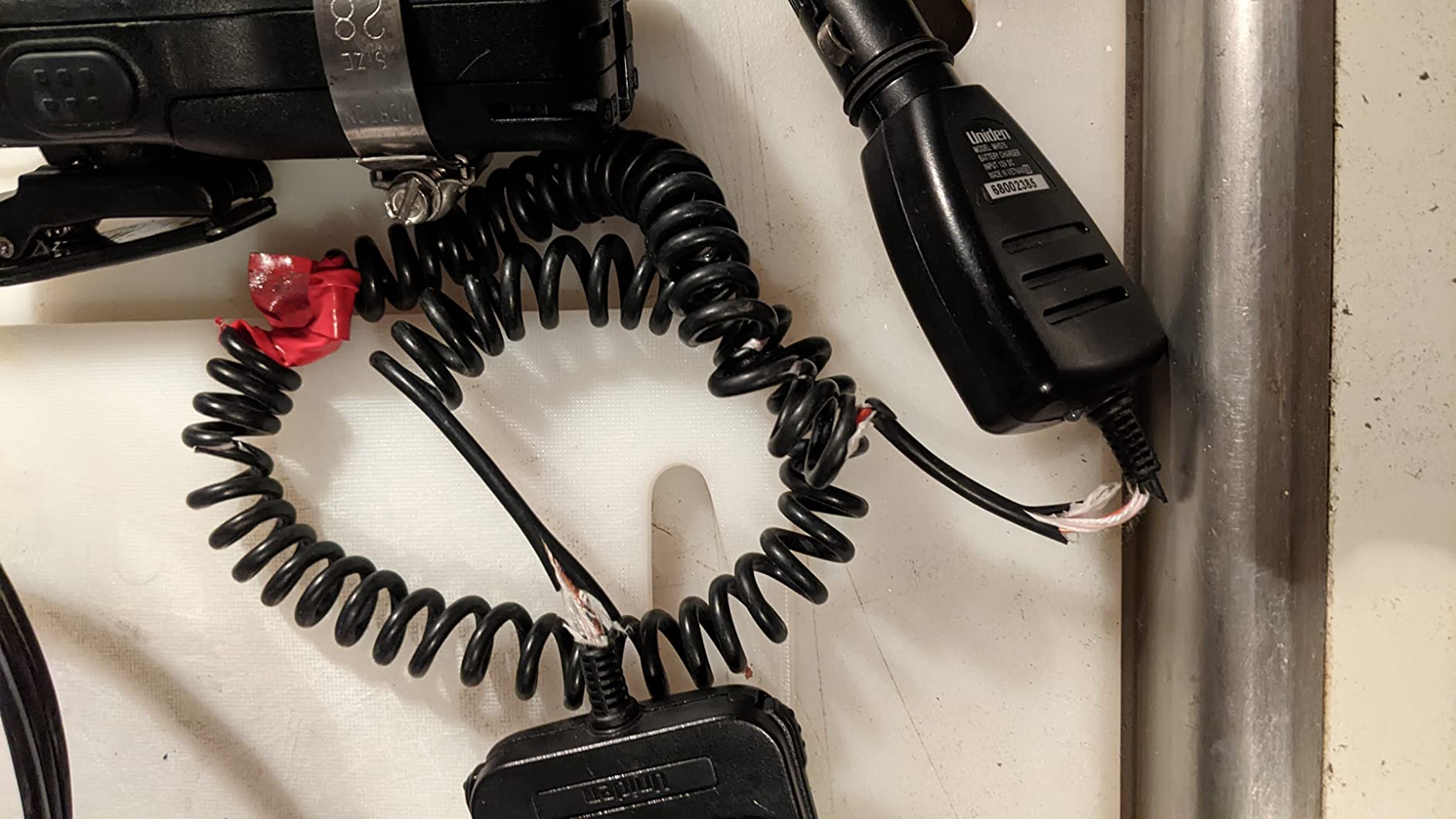
The build feels solid in the hand, the controls are responsive, and the display is bright enough to read through spray. Where it disappoints is the charging arrangement: there is no USB port, and the included cable is a 12 volt cigarette lighter lead, so charging at home needs an adapter you have to buy separately.
The floating claim is the other recurring complaint. Multiple owners report the radio does not float in practice despite the marketing, so if you are putting one in a kayak or working from a dinghy, treat it as a sinker unless you have confirmed otherwise. Owners also report the drop-in charger pins receding over a season or two until charging becomes intermittent.
Where the MHS75 fits and where it stops being the answer
There is no DSC on this radio. That matters only if you plan to rely on it offshore or alone; inshore, on a lake, or as a ditch bag backup alongside a fixed mount, it does exactly what it should. Our broader two-way radio comparison covers the non-marine options if you also want shore-based comms.
Buy it when your boating stays inside the coast you can see, and carry it as the companion to a fixed mount rather than instead of one. Skip it if you plan to run offshore alone or want automatic position reporting, because you will want DSC with a built-in GPS for that, and at 5 watts with no MMSI function the MHS75 is not the radio to bet a passage on.
2. Uniden Atlantis 155: the budget entry that genuinely floats
- Compact body with the largest LCD screen in its class
- Dual-color backlight preserves night vision
- Truly floats and clears its speaker after submersion
- Very affordable entry into marine VHF
- Covers USA
- Canadian and international channels
- One-star reviews are the largest single bucket at 12 percent
- NiMH battery pack rather than modern Li-ion
- Basic feature set with no DSC or GPS
The Atlantis 155 is the radio to buy when you are paddling, floating on an inner tube, or handing a safety comms device to a child on a small boat. It is genuinely submergent: IPX8 and JIS8 rated, and it floats with a clear speaker drain that empties itself after a dunking.
The screen is the reason it keeps coming up in budget conversations. At 25 by 40 millimeters it is the largest LCD in this class, with a paper white backlight for daylight and a red backlight for night work so you keep your dark adaptation on a pre-dawn trip.
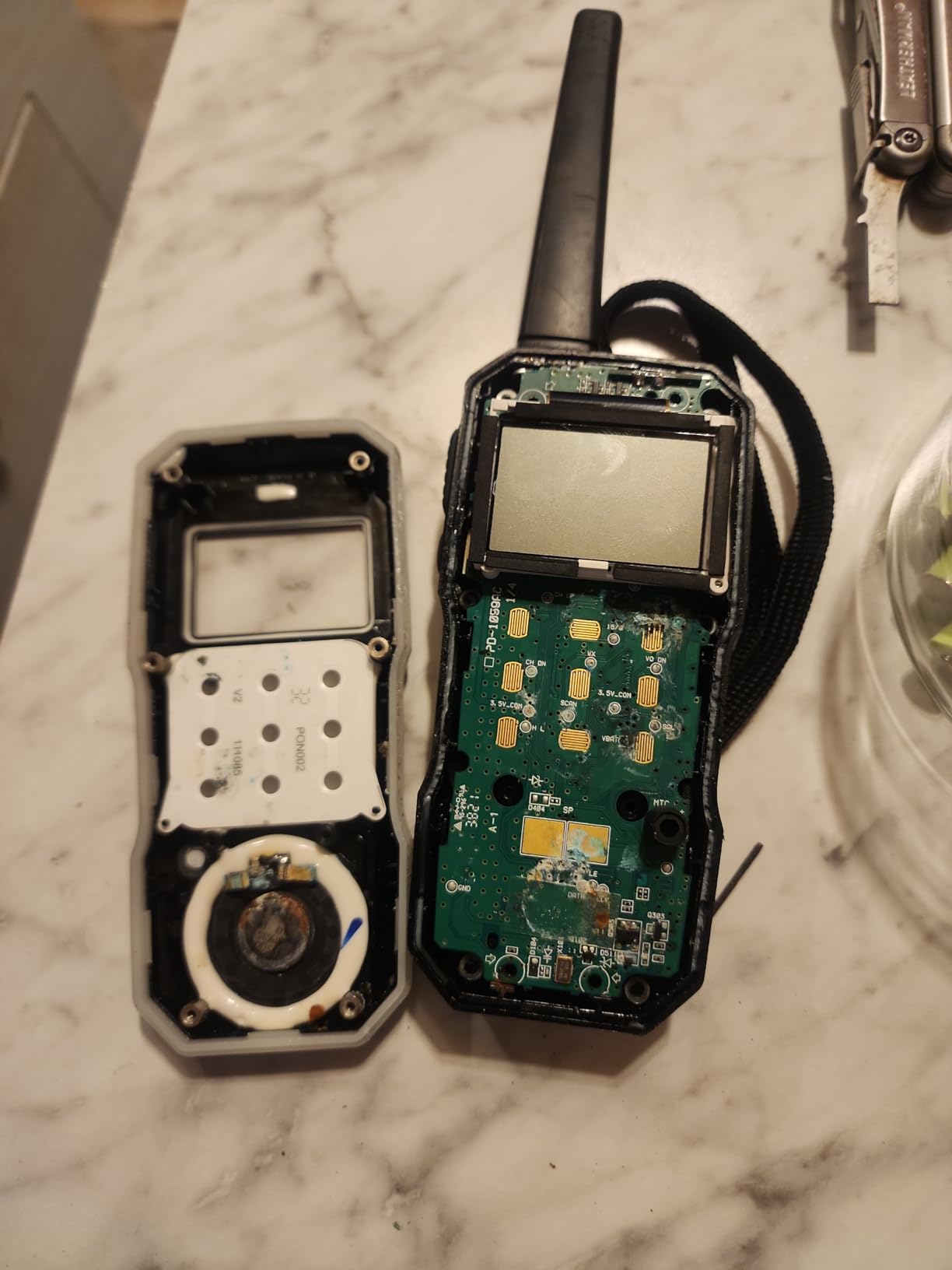
Power is the compromise. Three watts, with a user-selectable one watt low setting, which is plenty for a lake or a sheltered bay but not what you want for an open coastal crossing. The lower one watt setting does stretch the battery though, and it is the right choice for a radio you are carrying rather than talking on.
All USA, Canadian and international marine channels are fitted, including four digit and B channels if you travel. NOAA weather channels come as standard, so it doubles as a severe weather receiver.
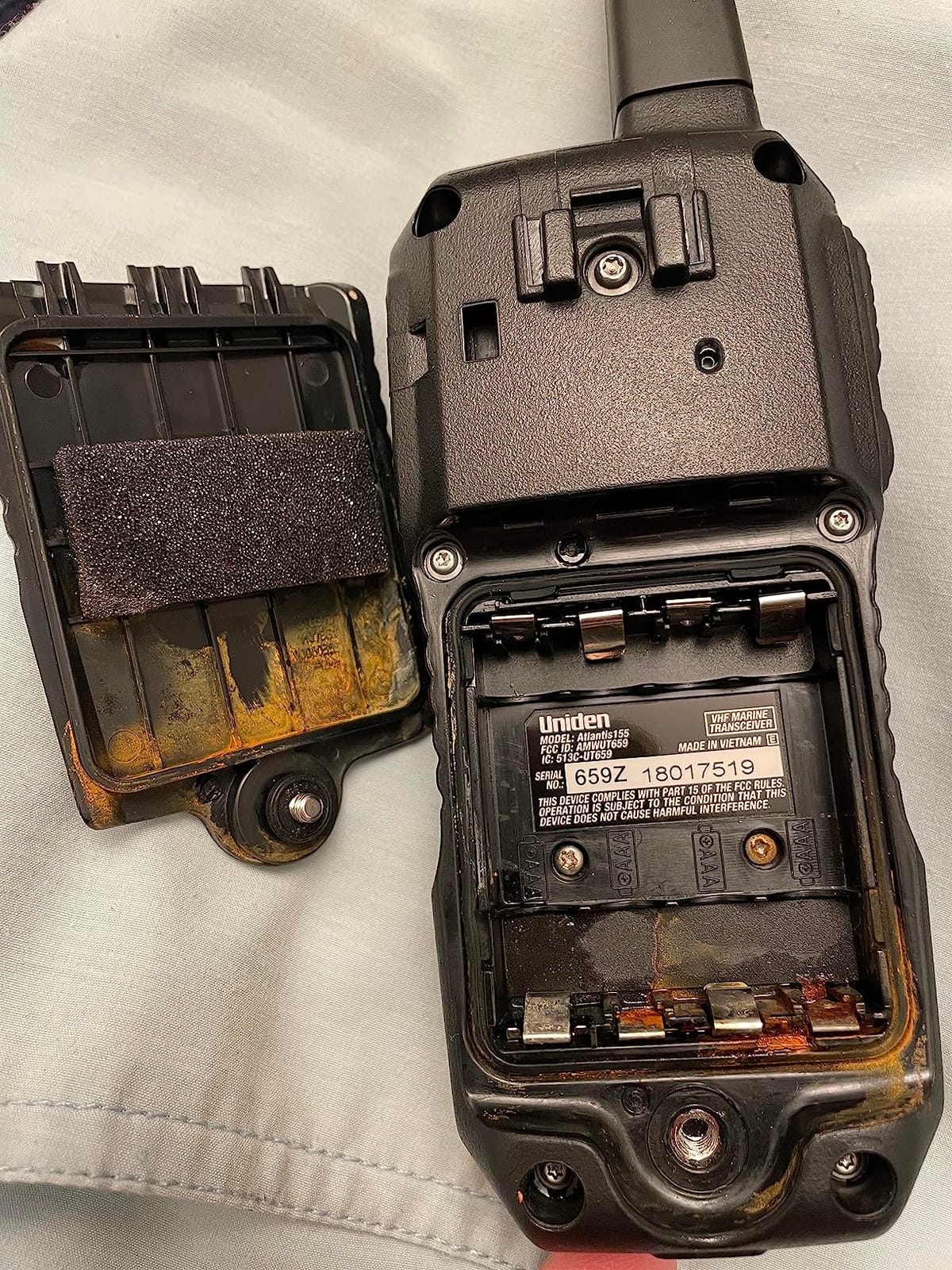
Screen size and night use in practice
The 25 by 40 millimeter LCD is large for a handheld this small, and the dual backlight does something genuinely useful rather than ornamental: paper white by day, red at night. On a pre-dawn paddle or a night return to the marina, red preserves the dark adaptation you need to see an unlit shoreline, and that is worth more than any of the menu options on the bigger radios.
The speaker also clears itself of water after submersion, so a dunking is a rinse-and-shake rather than a trip to the bench. That behaviour only matters if the radio actually floats, and this one does.
Who should buy it and who should look elsewhere
Buy it if the radio is a safety item for light craft, a PFD-mounted backup, or a first marine radio for a teenager. The dual backlight and true float are the features you will touch every single time, and they are done properly.
Skip it if reliability under sustained use matters more than the entry price. The rating profile is the weakest in this roundup, with one-star reviews making up the largest single bucket at 12 percent, and the NiMH battery pack is an older chemistry than everything else on this list. If you want a non-DSC radio with a longer track record, the MHS75 above is the safer pick.
3. Standard Horizon HX890: the best-equipped radio here
Standard Horizon HX890 Handheld VHF Navy Blue – Floating 6 Watt Class H DSC Two Way Radio
- Loads of features for the price including DSC and integrated GPS
- Clear loud speaker audio with noise cancelling on transmit and receive
- Transmits your coordinates automatically on DSC
- Easy to set up with a straightforward menu
- Full accessory kit including Li-ion battery
- alkaline tray
- 110V and 220V chargers
- cradle
- 12V charger and programming cable
- Can only be charged in the cradle with no direct cable charging
- Menu system has a learning curve and the FM and weather broadcast options can be confusing
- Heavier and larger than basic handhelds
The HX890 is the most capable radio in this roundup and the one we would put in an offshore ditch bag. It runs six watts, carries ITU-R M.493 Class H DSC, and has a 66 channel WAAS GPS receiver built into the body, which means it transmits your position with a distress alert without needing a separate GPS puck wired to it.
That combination is the whole argument for spending more here. A radio that can send a formatted distress alert containing your coordinates to the Coast Guard and to nearby vessels is a different class of device from one where you have to key your position in over the air yourself.
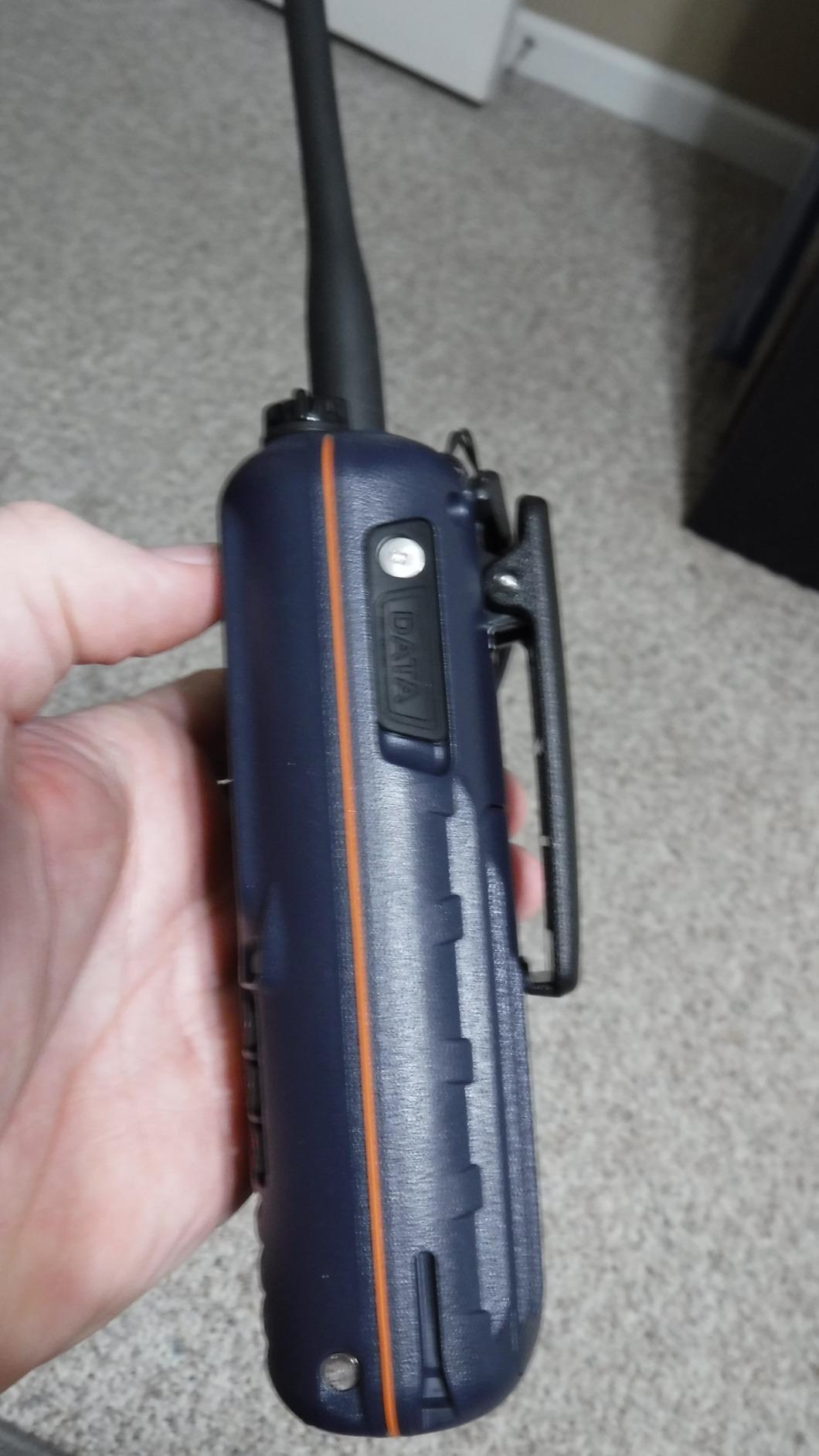
Audio is the other reason it stands out. Seven hundred milliwatts of loud audio with noise cancelling on both transmit and receive, which matters more than it sounds when you are calling a marina from a rolling boat with an outboard running. The 1.7 inch full dot matrix display has day and night modes and reads clearly in spray.
Battery life is quoted at 11 hours from an 1800mAh lithium-ion pack, and the dual and triple watch scanning lets you keep working a channel while still monitoring 16 and 9. The MOB mode fires a water-activated white strobe if the radio goes in the drink, which is the feature you hope never to use and are glad to have.
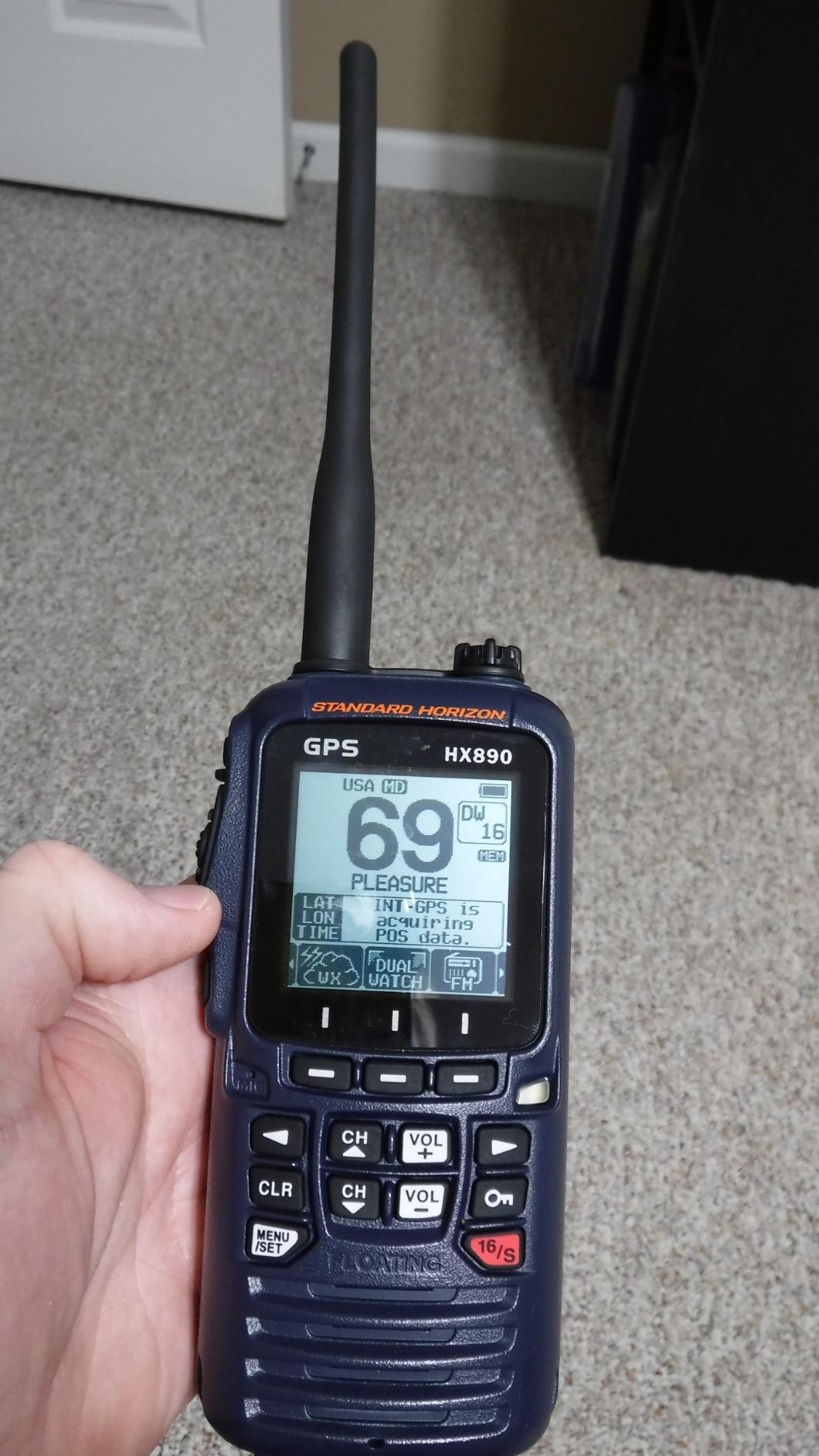
Where the HX890 earns its place and where it frustrates
Two scramblers are built in, 4-code CVS2500A and 32-code FVP-42, along with waypoint and route navigation, a group monitor function and an FM broadcast receiver. The accessory kit is genuinely generous: Li-ion battery, alkaline battery tray, 110V and 220V chargers, a charging cradle, a 12V charger and a programming cable are all included.
The charging arrangement is the main gripe. It will only charge in the drop-in cradle, so plan your charging around the cradle rather than a cable, and the menu system does have a learning curve when you are configuring the FM receiver and weather broadcast options under time pressure. It is also heavier and larger than the basic handhelds here, which you notice on a long walk to the beach with the boat.
4. Standard Horizon HX210: the sensible 6 watt all-rounder
Standard Horizon HX210 6W Floating Handheld Marine VHF Transceiver [HX210]
- Solid build that floats and holds a charge for days
- Excellent value for a Japanese-made marine radio
- Loud crystal-clear audio with easy squelch adjustment
- Quick to learn and simple to operate
- Ships with a drop-in rapid charging cradle plus AC and DC cables
- Bulky and heavy next to compact handhelds
- Awkward to clip to a lifejacket for kayaking or paddleboarding
- IPX7 rather than IPX8 so no full-immersion rating
The HX210 is the radio we hand to people who ask us to pick one and do not want to think about it. It is made in Japan, it floats, it runs six watts, and the controls are simple enough that you will not need a manual after the first ten minutes.
Owners consistently describe it as reliable and easy to use, with loud audio and a squelch control that is easy to find with cold hands. The oversized full dot matrix display carries programmable function keys, so the two buttons you actually use can sit where your thumb naturally falls.
![Standard Horizon HX210 6W Floating Handheld Marine VHF Transceiver [HX210] customer photo 1](https://www.dognotebook.com/wp-content/uploads/2026/08/B07TD9855T_customer_1.jpg)
The 1850mAh lithium-ion battery with the included three hour desktop rapid charger is the practical part. It holds a charge for days across a weekend of fishing rather than needing a top-up between sessions, and both the 12V DC and 110V AC cables plus the cradle are in the box.
All USA, International and Canadian channels are fitted, along with a built-in FM broadcast band receiver and a water-activated emergency strobe light. There is a three year waterproof warranty, which is longer than most brands in this category offer.
![Standard Horizon HX210 6W Floating Handheld Marine VHF Transceiver [HX210] customer photo 2](https://www.dognotebook.com/wp-content/uploads/2026/08/B07TD9855T_customer_2.jpg)
Who this suits and where it stops being the answer
It suits inshore anglers, coastal cruisers and anyone who wants six watts of punch without DSC complexity. If you boat from a bay boat or a center console and mostly talk to the marina and your mates on one working channel, the HX210 does the job and does it for years.
It stops being the answer in two situations. For kayaking and paddleboarding the case is bulky and awkward to clip to a PFD, so a compact model suits better; and the IPX7 rating covers immersion to one meter for 30 minutes, not the deeper full-submersion rating that the Uniden and HX890 models carry. Our hand-crank and emergency radio guide covers what else belongs in a grab-and-go kit.
5. Retevis RM21: noise cancellation for engine noise
Retevis RM21 5W Marine Radio VHF IP67 Floating, Noise Cut for Boat (1 Pack)
- One-button noise cancellation cuts engine wind and wave noise
- Good 10-hour battery life with 60-hour standby
- Floats and the red water-drop light helps locate it
- 5W power with three selectable levels plus battery saver
- 7-color backlit LCD with dual-band watch and instant Channel 16
- IP67 only so less submersible than IPX8 models
- No DSC or GPS capability
- Brand is far less established in marine equipment than Uniden
- Standard Horizon or Icom
The RM21 solves one problem better than anything else here: it lets you talk over your own engine. One button press activates AI intelligent noise cancellation tuned for engine, wind and wave noise, and on a center console with the outboard at full tilt that is the difference between being heard and being asked to repeat.
Power runs 5, 3 and 1 watts through a HI/MI/LO switch with a battery saver mode. The 1800mAh lithium-ion pack is quoted at 10 hours of operation and 60 hours of standby, so a full day of running with the radio monitoring in the background is comfortable.
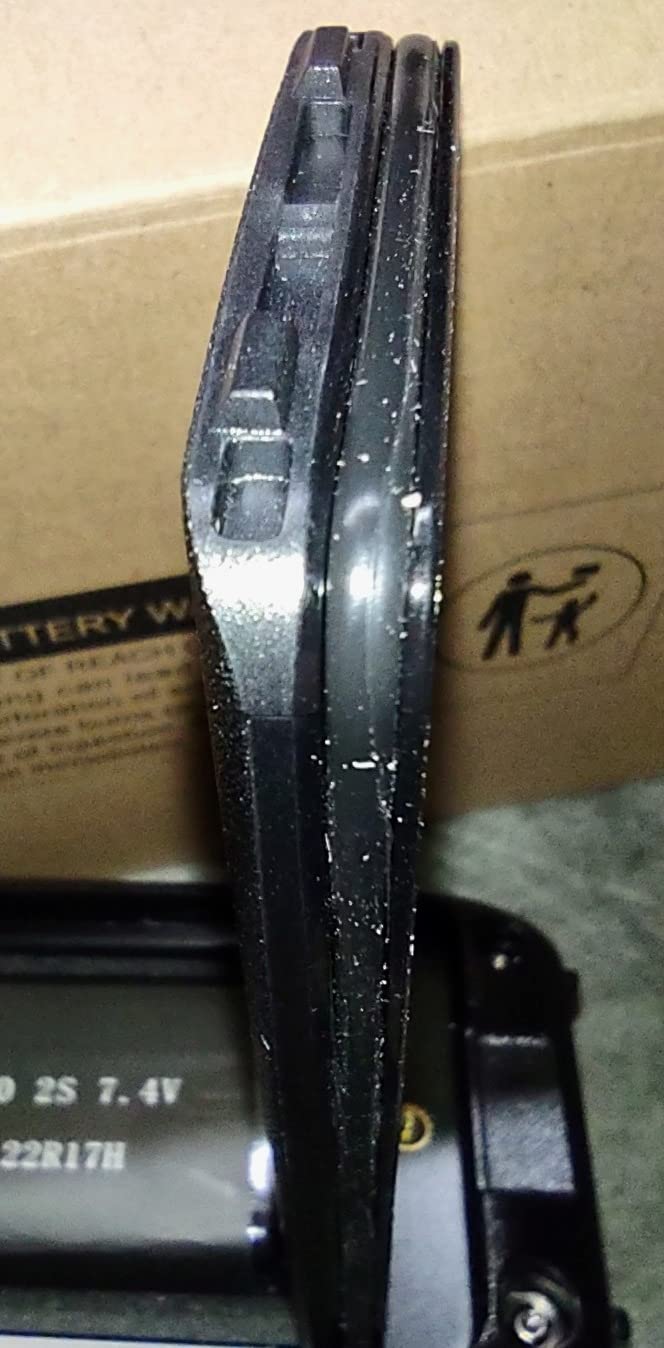
It floats, and the red flashing water-drop warning light activates on contact with water, which turns a lost radio into a findable one. Dual-band watch gives you instant access to Channel 16 for Coast Guard calls, and NOAA weather alerts are fitted.
Eighty-eight channels are covered on dedicated marine VHF bands from 156.050 to 163.275 MHz. The 7-color backlit LCD is more than most radios in this price bracket offer and lets you pick a setting that stays readable in the sun.
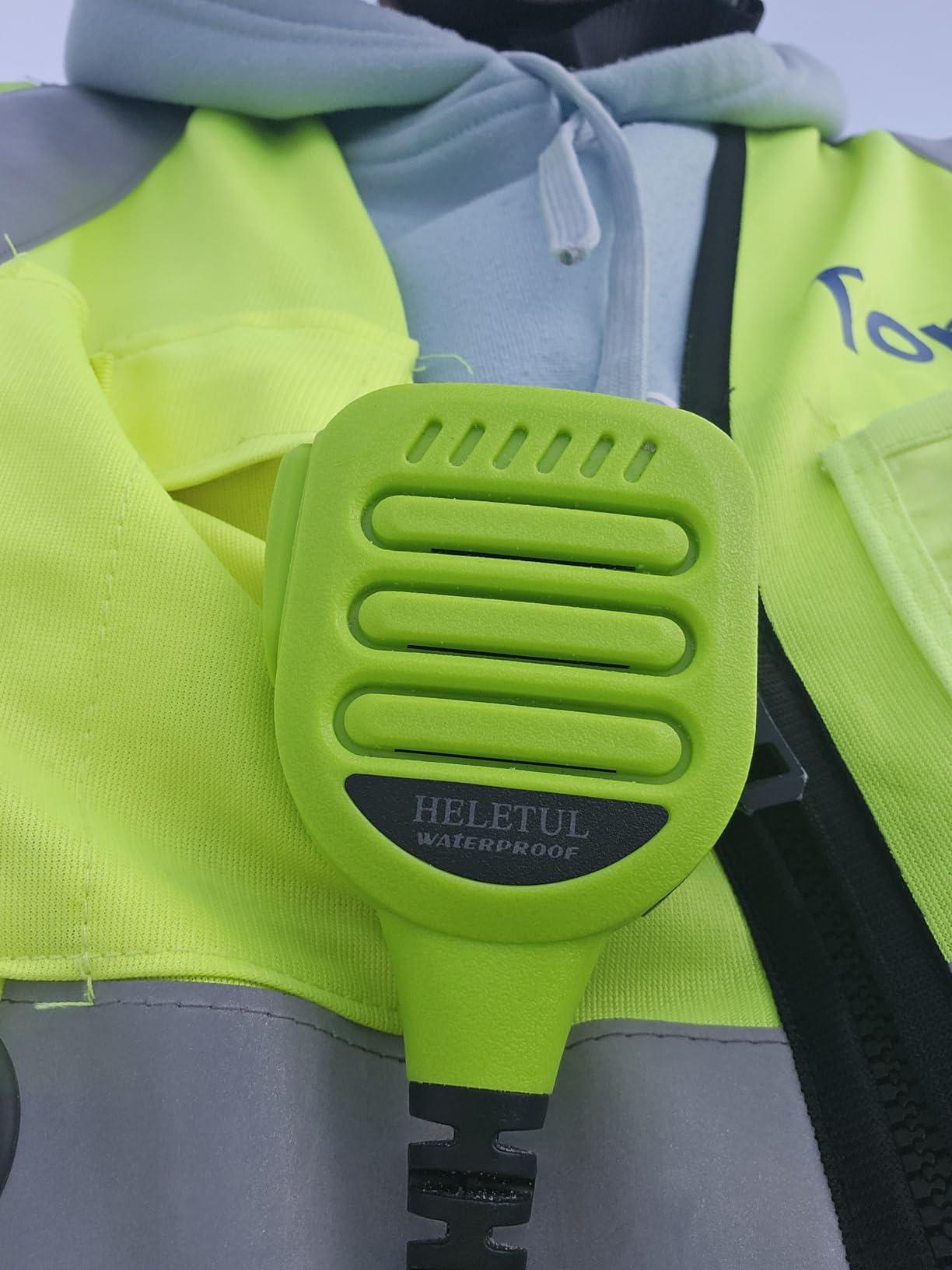
Where the RM21 fits and who should pass
It fits buyers whose main frustration is being drowned out by engine noise, and who want five watts at a budget price point. Charging dock, antenna, belt clip and power adapter are included, so there is no extra spend to get started.
Pass if your radio is going offshore or into a ditch bag as your only comms. There is no DSC and no GPS, the IP67 rating is shallower than the IPX8 units here, and Retevis is a much newer name in marine equipment than the three brands that dominate every forum discussion. For a boat that goes out alone, we would rather you had a known brand behind the warranty.
6. Cobra BlueBound 350: 6 watts in a high-visibility shell
Cobra BlueBound 350 VHF Handheld Marine Radio – White, 6-Watt, Floats
- Holds its charge for a full day of use
- Clear strong audio heard by the Coast Guard on transmit
- Good reception reported at 8 miles down river
- Compact and easy to carry in its orange floating core
- Three year manufacturer warranty
- Not USB-C rechargeable on the radio itself despite what the listing implies as it charges through the base
- No DSC or GPS
- Only 79 ratings so less field history than the Uniden and Standard Horizon models
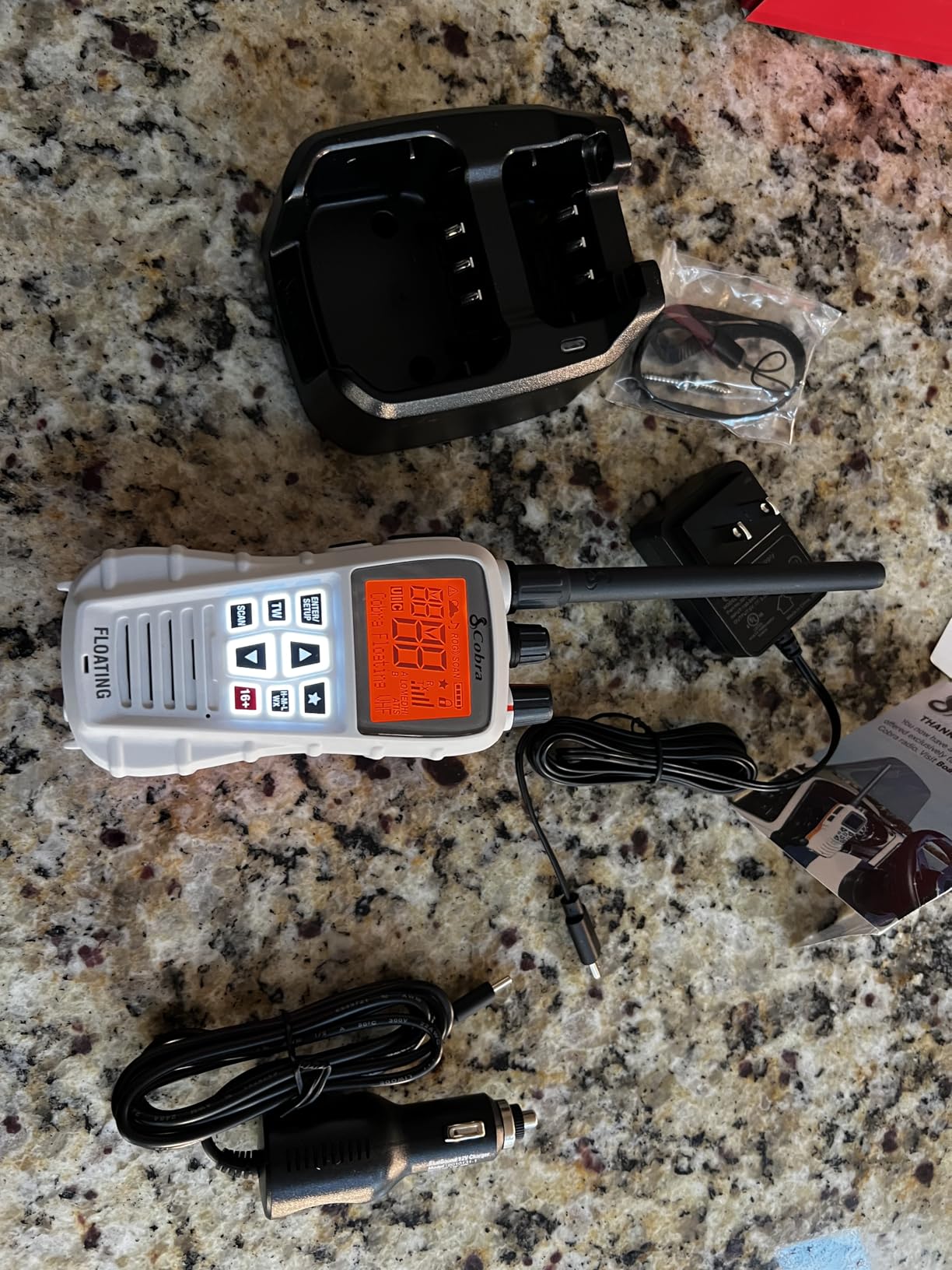
The BlueBound 350 puts six watts into a light, compact body with an orange floating core, which is a combination you do not usually get at the same time. Most high-output handhelds are bricks; this one weighs 9.44 ounces and is 10 inches long.
Owner feedback is positive on the two things that matter: audio clarity on transmit and range. People report being heard clearly by the Coast Guard, and one owner logged good reception at 8 miles downriver. Battery life is listed at 12 hours, and owners describe it holding a charge for a full day of use.
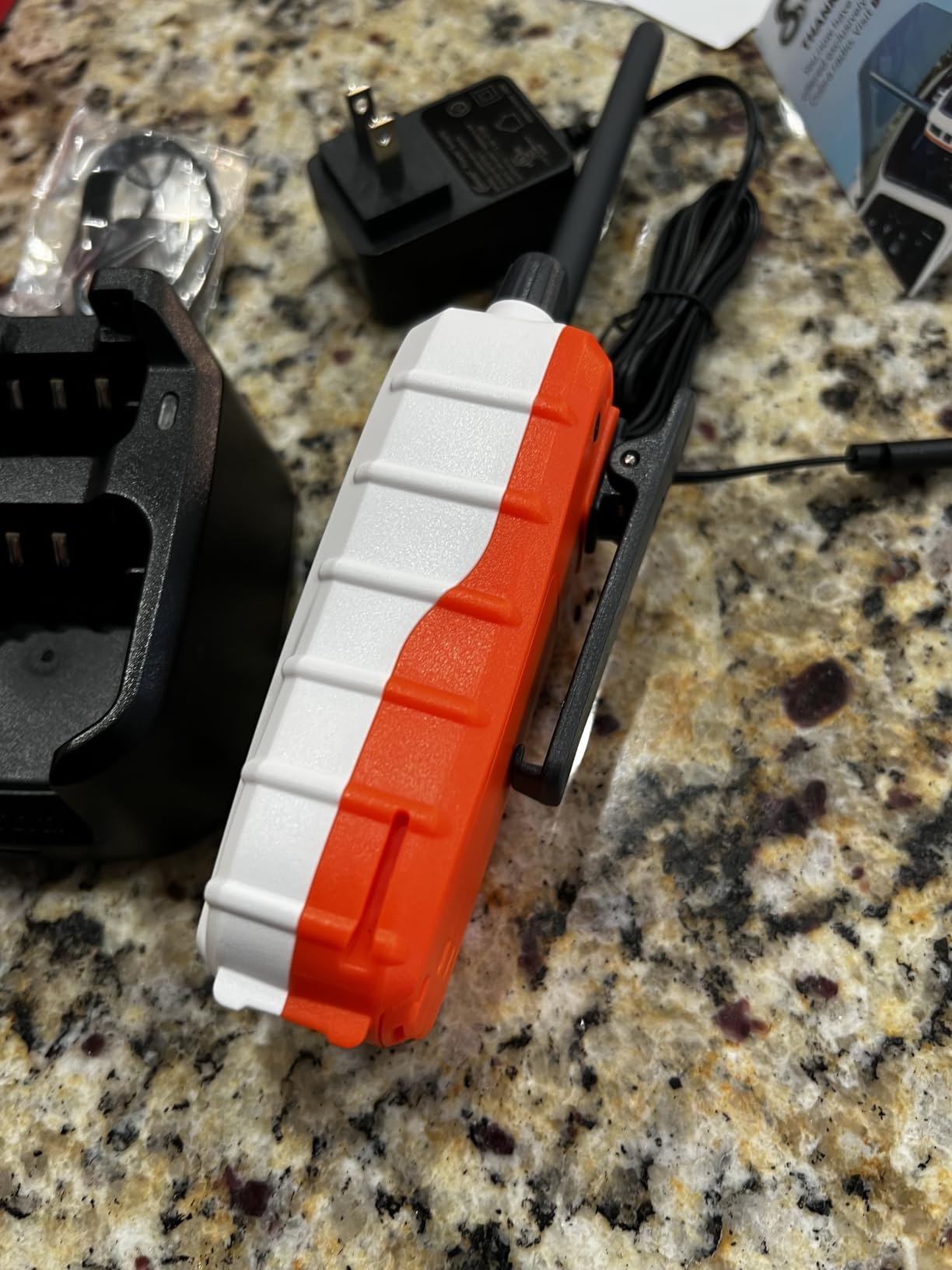
Tri-Watch monitors channels 9, 16 and a user-specified channel at once, which is the more flexible version of the two-channel dual watch some competitors stop at. The day and night selectable LCD stays readable in both conditions, and all 12 NOAA weather channels plus the emergency broadcast channel are available.
Battery, belt clip, cable, charger and lanyard are included, and the warranty is three years, which matches the better Standard Horizon coverage rather than the single year some budget brands manage.
What to know before you pick the BlueBound 350
It suits boaters who want real transmit power without the size of a full DSC flagship, and who will notice the orange core immediately if the radio goes over the side. Tri-Watch plus a 12-hour battery makes it a strong companion on a fishing boat.
Know that there is no DSC and no GPS, so it cannot send a distress alert with your position. Also note the charging claim: the USB-C reference applies to the included charging base, not to the radio itself, and owners have been caught out by that distinction. With only 79 ratings it has the thinnest feedback record of the higher-spec models here.
7. Cobra BlueBound 150: the lightest thing here
Cobra BlueBound 150 VHF Handheld Marine Radio, Black – 3-Watt, Floats
- Lightest and most compact option at 8.64 ounces
- Floats with a high-visibility orange core for easy retrieval
- Accepts both rechargeable and alkaline AAA batteries
- USB-C charging port for convenient recharging
- Large clear display usable day or night
- Only 3 watts maximum power which is the lowest ceiling here
- Dual-Watch only with no Tri-Watch on a user channel
- One year manufacturer warranty against three years on the BlueBound 350
- Lowest average rating in the group at 4.1 with a 10 percent one-star share
At 8.64 ounces the BlueBound 150 is the radio you forget you are carrying, which is exactly what you want clipped to a PFD for a paddle session. It is 9.41 inches long, floats in the same high-visibility orange core as the 350, and rates IPX7 for full immersion.
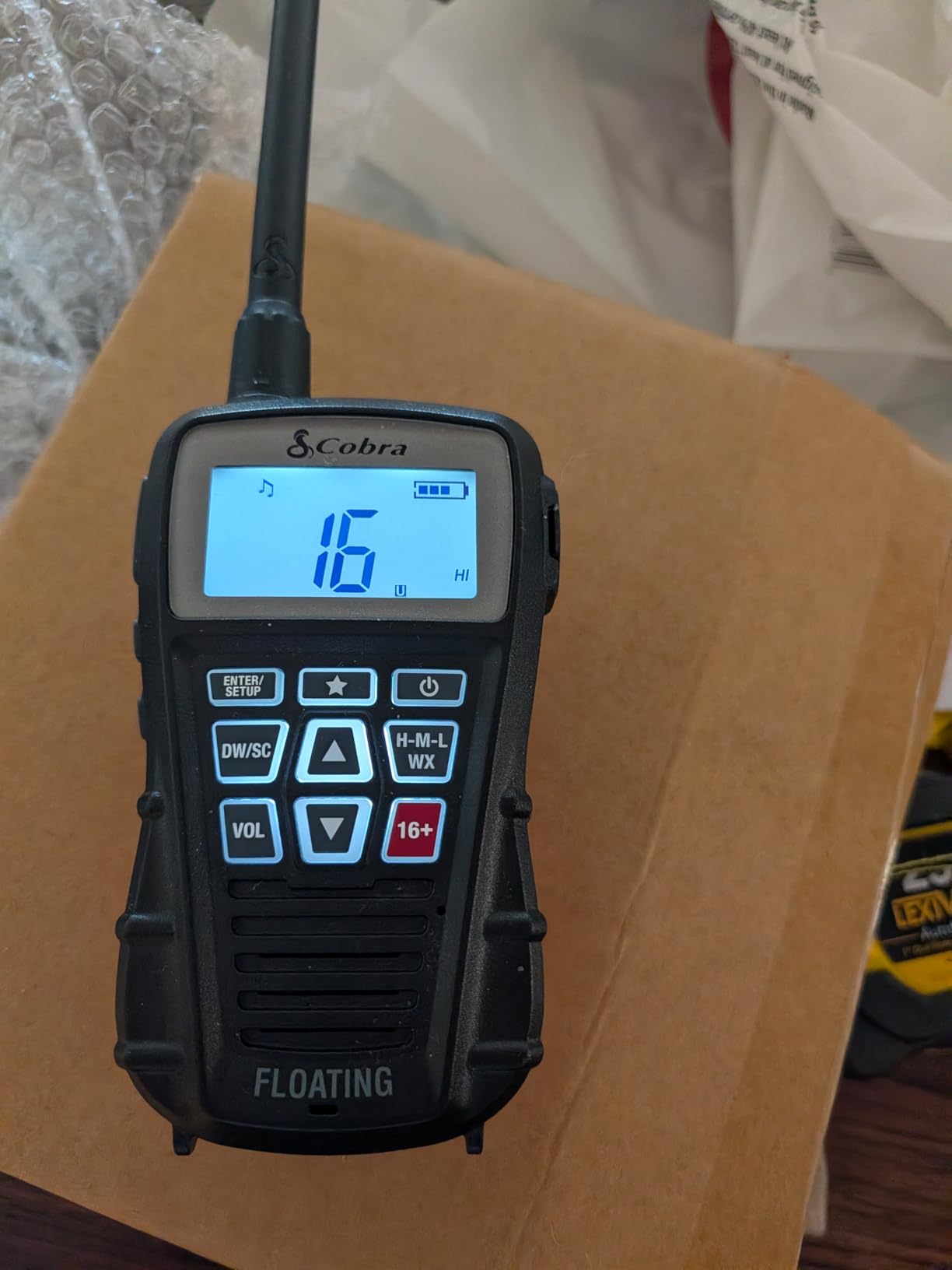
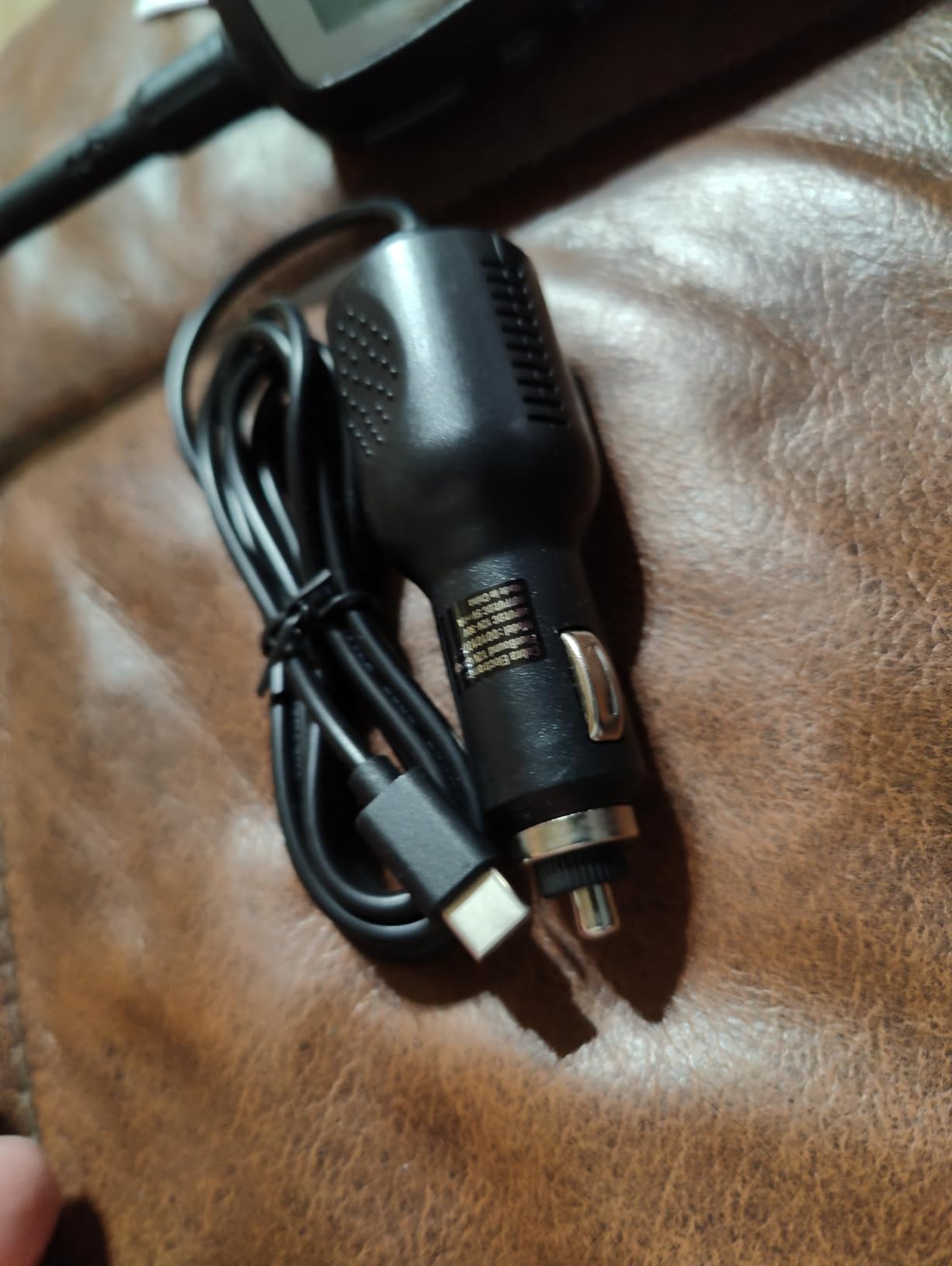
The flexible power setup is unusual and genuinely useful. It runs on rechargeable or alkaline AAA cells and charges through a USB-C port on the radio, so if you run the battery flat mid-trip you can top it up from a power bank or swap in a fresh set of alkalines.
Power is the trade-off. Selectable 0.5, 1 and 3 watts with a 3 watt ceiling, which is the lowest maximum output in this roundup alongside the Icom M25. On a lake or inside a harbour that is more than adequate; on an open coast with traffic you will be transmitting at the bottom of what other boats are using.
Scanning is Dual-Watch on channels 9 and 16 only, not Tri-Watch, so you give up monitoring your own working channel while you scan. All 12 NOAA weather channels and the emergency broadcast channel are fitted, and the large LCD is legible in all lighting.
The kayaking case and its limits
For kayaks, SUP and dinghy work this is the shape and weight you want, with a floating body, a USB-C port and the flexibility to run ordinary AAA cells when a charger is not in the dry bag. The warranty is one year, which is the shortest in this roundup.
If you move between open water and sheltered water on the same day, remember the 3 watt ceiling and the dual-watch limitation. Our guide to life jackets for boating covers the other half of that PFD-mounted safety kit, including setups for carrying passengers and dogs on deck.
8. Uniden MHS338BT: DSC, GPS and text messaging in one
- Combines 6W power
- DSC
- integrated GPS and Bluetooth in one floating IPX8 body
- Bluetooth app support for setup and VHF text messaging
- Water-activated strobe flashlight and automatic MOB alert
- Light at 10.6 ounces for a feature set this complete
- Automatic backlight switching between white and amber
- Only 61 ratings which is the thinnest review base among the premium models here
- Charging requires the included drop-in cradle
- Average rating of 4.2 is the second lowest despite the premium feature set
The MHS338BT packs more into a handheld than anything else here at 10.6 ounces. You get full six watt output with selectable 1, 2.5 and 6 watt settings, international Class D DSC, an integrated GPS with a favourite position mode and waypoint directory, and Bluetooth for the Uniden smartphone app plus VHF text messaging to other text-capable radios.
The Bluetooth text messaging is the feature that separates it from the other DSC handhelds. It lets you send and receive short messages between compatible radios and control the set from a phone, which on a fishing trip is far less noisy than a voice channel.
The safety hardware is unusually complete. A water-activated emergency strobe light and flashlight, plus an automatic Man Overboard alert that fires when the radio hits the water, mean a dropped radio announces itself rather than sinking quietly.
The large orange backlit LCD has eight-step backlight adjustment with automatic day and amber switching, and noise cancelling is applied to both transmitted and received audio. The housing is IPX8 submersible and floats. Charging is through the included drop-in cradle.
Day-to-day usability of the M338BT controls
The eight-step backlight adjustment and automatic day to amber switching matter on a passage that starts before dawn and ends after dark. Noise cancelling applied to both transmitted and received audio means the person on the other end hears you over your engine, and the compass display gives you a bearing reference without opening a chart.
Twenty-five channels are fitted, covering the international marine band from 156.000 to 162.025 MHz, with dual and triple watch operation for keeping working channels and 16 monitored at once. Automatic MOB alert fires when the housing hits water, alongside the strobe and flashlight.
Who should buy the MHS338BT and who should not
Buy it if you want DSC and GPS without adding a separate GPS unit and without a second brand in your electronics stack. For a boat doing coastal work with a second crew member on board, text messaging between handhelds is genuinely useful.
Do not buy it on ratings alone. With 61 ratings it has the thinnest feedback record of the premium models here, and the 4.2 average is the second lowest despite the richest feature set. Owner ratings trail the Standard Horizon models with comparable capability, and if you want proven field history in a radio that might be your only comms, the HX890 or HX891BT carry more of it.
9. Icom M25: compact Icom build, 1 watt ceiling
- Icom build quality and a 4.6 average rating from owners
- Lightweight and compact and easy to carry in a life vest or pocket
- Compatible with the HM-213 speaker microphone and other Icom accessories
- Only 1 watt of transmit power which is the lowest maximum output in this roundup
- Only 43 ratings which is the smallest sample of any model here
- One year limited warranty against three years on the Standard Horizon and Uniden models
- IPX7 rather than IPX8 and the listing does not confirm a floating housing
Icom has been the first name in forum threads about handheld VHF radios for years, and the M25 is why. On forums.sailinganarchy.com a poster summarises the field as Standard Horizon, Icom and Uniden, and recommends getting an Icom; on r/boating the recurring advice is that Icom is the best hands down. The M25 is where that reputation meets a genuinely small case.
It is a one watt radio across 40 channels from 156.025 to 157.425 MHz, IPX7 waterproof, and it comes with a lithium-ion battery, antenna, belt clip and hand strap. The accessory ecosystem matters here: it takes the HM-213 speaker microphone, headsets, earpieces and external antennas.
The accessory point is real rather than decorative. A remote speaker microphone lets someone in the cockpit or on the foredeck answer without holding the radio to their mouth, and the listing for this model includes the compatibility in the specification.
What the 1 watt ceiling means for a real passage
One watt is a genuine constraint, not a spec-sheet quibble. At the same distance, the weaker signal means the other boat hears you first or hears you not at all, and if they are calling the marina from a distance you cannot reach back, the conversation breaks down. For a harbour entrance, a lake or a tender run between an anchored yacht and the shore, that is a non-issue. For rounding a headland with the coast station behind you, it is.
Channel coverage of 40 channels across 156.025 to 157.425 MHz covers the working and distress channels in the US band. The listing does not confirm a floating housing, so treat this as a radio to keep in a dry pocket rather than one to clip to a deck.
Where the M25 works and where the wattage bites
Buy it for harbour and near-shore work, for a dinghy tender run, or as a light carry item in a PFD pocket. Owners rate the build and the 4.6 average highly, and it is the smallest radio on this list that still comes from a marine-first brand.
One watt is the constraint. That is the lowest maximum output here, so it is the wrong radio for an offshore passage or for being heard around a headland. It also carries only a one year limited warranty against three years on the Standard Horizon and Uniden models, and with 43 ratings it has the smallest sample of any model on this list. Icom buyers wanting more reach should look at the six watt models.
10. Standard Horizon HX891BT: Bluetooth DSC with WAAS GPS
- Reaches others reliably with 6W output even in rough conditions
- Built-in 66-channel WAAS GPS for accurate position reporting
- Bluetooth hands-free operation with an optional SSM-BT-20 headset
- Submersible and floating IPX8 housing
- Intuitive controls that stay easy to operate in neoprene gloves
- 5-star-heavy rating distribution with 86 percent five-star reviews
- Range is limited compared with fixed-mount radios with large antennas
- Does not provide AIS despite owner interest in that feature
- One owner reports a failure after 4 months and a very slow manufacturer warranty process
The HX891BT is the HX890 platform with Bluetooth added, and for many skippers that one addition is worth having. It pairs hands-free with the optional SSM-BT-20 Bluetooth headset, so you can talk to a marina without holding the radio while both hands are busy on a wheel or a throttle.
Underneath it is the same core: six watts selectable down to 2 and 1 watt, a built-in 66 channel WAAS GPS, DSC distress calling, NOAA weather alert, waypoint navigation and group monitoring, all in a submersible floating IPX8 housing at 16 ounces.
The owner feedback skews strongly positive, with 86 percent five-star reviews. Owners highlight dependable six watt range even in rough conditions and controls that stay easy to operate in neoprene gloves, which is a practical test that most spec sheets never mention.
Day-to-day handling of the HX891BT
The large dot matrix display is readable day or night, and at 16 ounces the body still sits comfortably on a cockpit console or in a chest pocket of a PFD. Controls are intuitive enough that owners running it in neoprene gloves report no trouble, which is the most useful ergonomic test on a sailboat in a cold breeze.
Group monitoring lets you listen to a channel shared by a fleet or a race committee, and waypoint navigation pairs with the built-in GPS for a mark or a waypoint you intend to return to. An MMSI number is required before DSC operation will work, so set that up before the first trip.
Who the HX891BT suits and where its limits are
Buy it if you want hands-free calling on a small sailboat or a center console where nobody can hold a radio, and you want DSC and GPS in the same floating body. The Bluetooth headset support is the reason to choose this over the standard HX890.
Accept that it does not include AIS, which owners have asked for, and that a handheld will never match the range of a fixed mount with a roof antenna. One owner also reports a unit failing after four months alongside a slow manufacturer warranty process, which is worth factoring in if you are relying on it alone.
Handheld or Fixed Mount: Which One Do You Actually Need?
A handheld and a fixed mount do not compete. They cover different failure modes, and the near-universal advice on cruising forums such as cruisersforum.com is that every serious boat should have a quality fixed VHF installed with a handheld riding in the ditch bag as backup.
The fixed mount wins on range because of antenna height and power. A roof or mast-mounted antenna on a 25 watt set can reach 25 to 30 miles in clear line of sight; a handheld with a short internal antenna at one or six watts is working with far less of everything.
The handheld wins on everything else. It needs no wiring, no mounting bracket, no coax run through a deck seal, and it works the moment you unclipped it. For a kayak, a SUP, a tender run, or a boat whose owner does not want a hole in the console, a handheld is the only realistic option.
Our rule of thumb: if your boat has a cabin, a console and an electrical system that already exists, install a fixed mount and carry a handheld anyway. If your boat is a skiff, a dinghy, or a paddle craft, the handheld is the radio, and it needs to be a good one with DSC if you venture past sight of the coast.
How Far Can a Handheld VHF Really Reach?
VHF radio waves travel in straight lines. Range is governed by antenna height and line of sight, not by marketing, which is why two identical radios on two boats perform very differently depending on where each is sitting.
Competitors quote everything from 2 to 3 miles to 8 to 15 miles, and none of them are lying outright. The short figures come from handheld-to-handheld tests with both antennas near the water, where the horizon between two people sitting in small boats is only a few miles away.
The long figures come from a handheld talking to a fixed mount or a shore station with an antenna well above you. A tug with a mast-mounted mast, a marina tower, or a bridge operator is simply visible from much further away, and that extends the usable path enormously.
Realistic expectations: plan on 5 to 8 miles handheld to handheld on open water, with a workable reach beyond that when the other end is elevated. Fixed mounts with a roof antenna reach 25 to 30 miles in clear conditions, and fog, rain and a sea between you will cut every one of those figures.
On transmit power specifically, going from 5 watts to 6 watts is a real but modest gain; the jump that matters is 1 watt to 5 or 6 watts. That is why the Icom M25 and Cobra BlueBound 150 sit at the entry end and why we would not put either of them offshore.
IPX7 vs IPX8 and Why Floating Matters
IPX7 means the radio survives immersion in one meter of water for 30 minutes. IPX8, as used by the Uniden MHS75, Atlantis 155, HX890, MHS338BT and HX891BT, is tested to a deeper and often longer submersion, with the MHS75 specified to 5 feet for 30 minutes.
Neither rating means you should leave a radio submerged deliberately. The point of the rating is that a radio dropped off a deck into water will still work when you fish it out, and in a sea with a following wind you have seconds, not minutes.
Floating is a separate question from waterproofing. The Atlantis 155, HX890, MHS338BT and HX891BT are described as floating, and the two Cobra models float inside a high-visibility orange core that also helps you spot them on the surface. The MHS75 is marketed as floating but multiple owners report it does not float in practice.
The practical rule: if the radio lives in a PFD pocket or on a kayak deck where it can end up in the water, assume it will sink and fit a lanyard or strobe to compensate. If it lives in a dry ditch bag inside the cabin, waterproofing matters and floatability does not.
DSC, GPS and AIS: What Each One Actually Does
DSC, Digital Selective Calling, lets you send a distress alert, safety announcement or position request on a dedicated channel without speaking. An alert includes your MMSI and, with GPS, your coordinates, so the rescue chain starts before anyone has spoken a word.
GPS inside the radio is what makes DSC useful. Without a position fix, a distress alert tells a coast station you are in trouble and gives them a database number; with it, they know exactly where to send the boat. Three of the ten radios here combine DSC and GPS in one body: the HX890, MHS338BT and HX891BT.
AIS, the Automatic Identification System, is a receive-only function on handhelds. It displays the name, type, course, speed and position of vessels broadcasting their AIS transponder, which lets you see what is around a headland before you see it. None of the ten models here has an AIS receiver, and if AIS matters to you, a chartplotter or a dedicated AIS unit is the way to get it.
The priority order we use: DSC with GPS first, transmit power second, waterproofing third, everything else fourth. A 1 watt radio with DSC and GPS will get you rescued in a fog bank; a 6 watt radio without them will not.
How to Register Your MMSI and Test Your DSC Alert
This is the single most common failure we see: a boat owner buys a DSC handheld, never registers an MMSI number, and the distress feature they paid for cannot send anything. Registration is free in the US, and it takes about fifteen minutes.
Get your MMSI from the FCC Wireless Communications Bureau, or through a boatyard, sailing club or Coast Guard Auxiliary that offers the service.
Program the nine-digit MMSI into the radio’s DSC menu before you leave the dock, then save it. Confirm it by powering the radio off and back on.
Make a test DSC call to a coast station or to a nearby boat with the radio in test mode, which sends the signal without broadcasting a real distress.
Log the radio and MMSI with the vessel documentation so a coast station can match the alert to your boat.
Re-test after every firmware or menu change, and again at the start of each season.
Before every trip, check that the radio charges, that the MMSI is still stored after a battery change, and that the Channel 16 volume is up. A radio with a dead battery and a valid MMSI is still a working distress beacon, which is the argument for a handheld over a wired set you cannot reach.
Icom vs Standard Horizon vs Uniden vs Cobra
Nobody publishes a clean head-to-head, which is why the same argument runs forever on r/boating and forums.sailinganarchy.com. Our view after working through the ten models here is that the ranking is about build quality and support, not about radio performance.
Icom and Standard Horizon sit at the top. Both are Japanese-built marine-first names with long field histories, both appear as the two most recommended brands across every forum source we read, and Standard Horizon currently offers the stronger warranty story at three years waterproof across its range. If you are buying one radio and keeping it for a decade, either is defensible.
Uniden is the value alternative with the deepest field history in this roundup. The MHS75 alone carries over 2000 ratings, which is more real-world feedback than every other brand on this list combined. Uniden currently competes with Standard Horizon at the premium end through the MHS338BT, though its owner ratings are lower.
Cobra and Retevis sit at the entry end, and both are legitimate choices within their limits. Cobra gives you the light, high-visibility, six watt designs we liked for fishing and kayaking; Retevis gave us the best noise cancellation per dollar. Neither is the radio for a solo offshore passage.
If you want the forum consensus in one line: r/boating members say Icom is the best hands down and would not use anything lower tier than Standard Horizon, while SailingAnarchy regulars narrow their own favourites to the Icom M25 and Standard Horizon HX300. Treat that as a quality signal, then pick on the features your boat actually needs.
Which Radio Fits Your Boat and Your Water
Match the radio to the smallest water you could realistically be asked to help you on. That is the single decision that matters, and it is usually made by boat type rather than by price.
Kayak and SUP paddler: the Cobra BlueBound 150 or Uniden Atlantis 155, both light, both floating, neither needing a bridge. Stay inside sheltered water or within reach of a populated shore.
Dinghy or tender: the Uniden MHS75 for battery life and simplicity, or the Icom M25 if you will use the HM-213 remote microphone in a tender with an outboard.
Inshore and bay fishing: the Standard Horizon HX210 or the Retevis RM21. Six watts or five watts of punch matters here, and the noise cancellation on the RM21 earns its place next to an outboard.
Coastal cruiser: the Cobra BlueBound 350 for six watts and tri-watch in a light body, or step up to the Standard Horizon HX891BT if you want DSC and hands-free calling.
Offshore or blue water: the Standard Horizon HX890, or the Uniden MHS338BT if you want Bluetooth text messaging. Both give you six watts, DSC and a built-in GPS, which is the minimum for a passage with any distance from help.
Saltwater Care and Cold-Weather Battery Planning
Saltwater corrosion on charging contacts and battery terminals is the recurring complaint from long-term owners, and it degrades transmit performance over a season before anything visibly fails. A freshwater rinse after every saltwater outing, with the battery pack removed and the contacts dried, prevents most of it.
Run through a seasonal routine as well. Check the charging cradle pins for corrosion and clean them with a contact cleaner rather than a file, inspect the antenna connector and the battery contacts for green bloom, and confirm the transmit power still feels full after a long layup on a low charge.
Cold weather is the other under-documented issue. Lithium-ion capacity drops in cold conditions, and a radio carried in an open deck pocket on a midwinter passage will give you less than its quoted hours. Keep the battery off the boat in winter if you can, warm it in your hand before transmitting, and carry a spare charge rather than assuming the quoted figure holds.
On charging standards, the picture is mixed and worth planning for. The BlueBound 150 has a USB-C port on the radio itself, the RM21 and HX210 ship with a drop-in dock, and the HX890 and MHS338BT charge only in their cradles. Standard Horizon’s accessory kit includes 110V and 220V chargers plus a 12V lead, which matters if you cruise outside the US.
One final piece of kit discipline: buy a second battery and a lanyard for anything that lives in a PFD, and keep the radio’s firmware and menu settings written down somewhere. Replacing a radio should not mean relearning how to reach a distress channel under pressure.
Frequently Asked Questions
What is the best handheld VHF radio for boating?
The Uniden MHS75 is the best all-round handheld for most boaters, with 1/2.5/5W selectable power, IPX8 submersibility, triple watch on channels 16 and 9, and exceptional battery life. Offshore and blue-water sailors should choose the Standard Horizon HX890 for 6W, Class H DSC and a built-in 66-channel WAAS GPS.
Are handheld VHF radios any good?
Yes. A handheld VHF marine radio transmits on the same marine band as a fixed mount, reaches nearby boats, marinas and the Coast Guard on Channel 16, and works with no cell coverage. Its limits are antenna height and transmit power, so expect shorter range than a fixed mount with a roof antenna.
Who makes the best handheld radio?
Icom and Standard Horizon are the two most recommended marine brands on cruising forums, and Standard Horizon currently offers a three year waterproof warranty. Uniden offers the deepest field history with the MHS75, carrying over 2000 ratings. Cobra and Retevis are credible entry-level choices for sheltered water.
What are some good handheld VHF radios with DSC?
The Standard Horizon HX890 and HX891BT both pair 6W transmit with ITU-R M.493 Class H DSC and a built-in 66-channel WAAS GPS. The Uniden MHS338BT adds Bluetooth text messaging and a water-activated MOB alert. All three need a registered MMSI number before DSC can send a distress alert.
What is the range of a handheld VHF marine radio?
Plan on 5 to 8 miles handheld to handheld on open water, and more when the other station is elevated, such as a mast, bridge or shore tower. Range depends on antenna height and line of sight rather than wattage alone. Fog, rain and a sea between the two boats reduce every figure.
Do I need a floating handheld VHF radio?
If the radio can end up in the water, yes. A floating body or a high-visibility core gives you a chance to retrieve it, and a water-activated strobe makes it findable. If the radio lives in a dry ditch bag inside the cabin, waterproofing matters more than floatability.
The Best Handheld VHF Radio for Boating in 2026
For most boaters the Uniden MHS75 is the right answer, because it does the fundamentals without fuss and its battery simply lasts. If your boat stays inside the coast you can see, add the Standard Horizon HX210 for six watts of extra punch.
If you are going offshore, alone, or anywhere with traffic you cannot see, buy the Standard Horizon HX890 or the Uniden MHS338BT and accept that DSC with a built-in GPS is not optional at that distance. Register the MMSI before you leave the dock, because an unregistered DSC radio cannot send the alert you bought it for.
Whatever you choose, get a handheld into the ditch bag and keep it charged. Our fixed-mount VHF marine radio guide covers the installed side, and either way, the 2026 gear list should treat a working handheld as standard rather than optional equipment.