
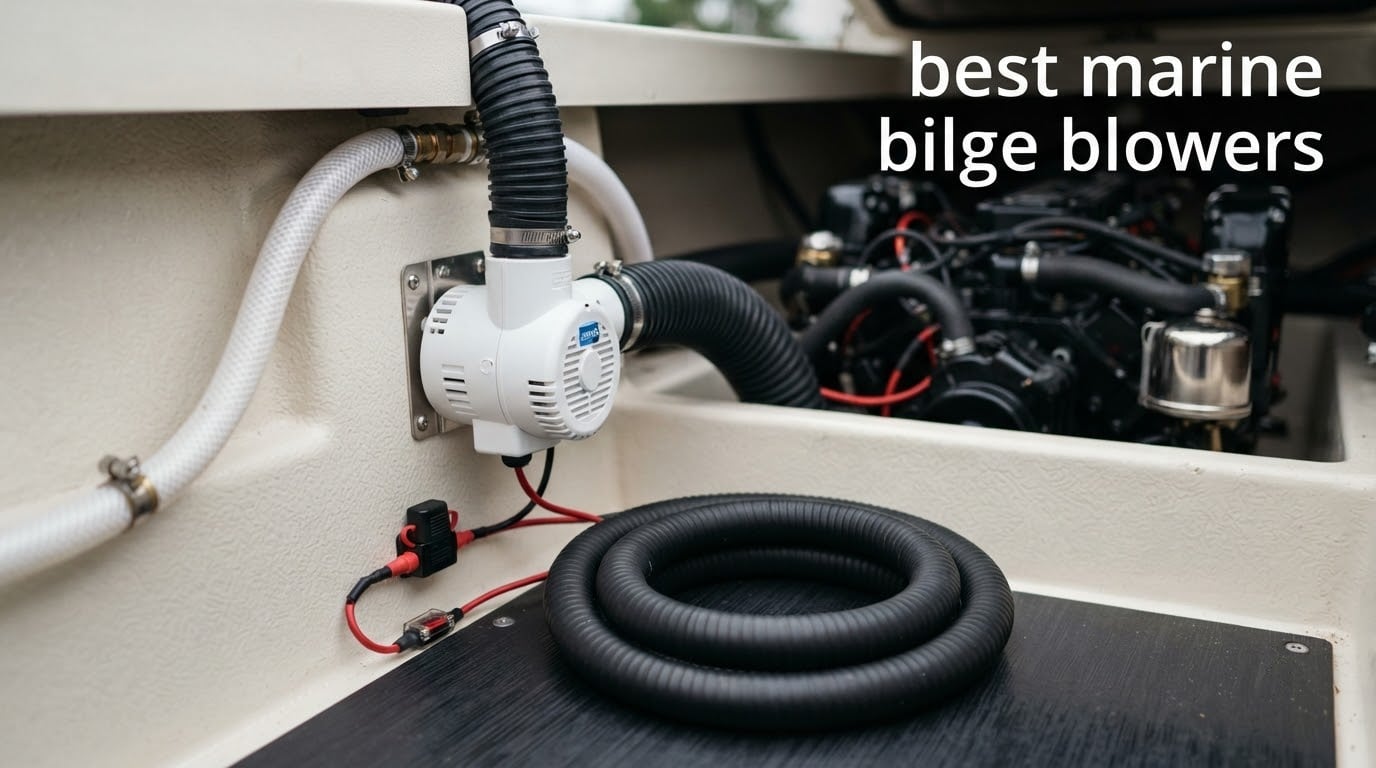
A bilge blower is the cheapest piece of safety equipment on a boat and the one most owners replace without thinking. That is a mistake. The fan is what keeps gasoline vapour from settling in the bottom of your hull, and a weak or dead blower turns a routine refuel into a fire risk.
We compared twelve of the best marine bilge blowers currently on the market, weighing airflow against amp draw, checking the duty ratings, housing materials, warranty terms and the duct sizes each one actually fits. What surprised us most was how much of the marketing on retail listings is noise. More on that below.
This guide covers the differences that matter when you are picking a replacement, including the continuous versus intermittent duty question that trips up a lot of buyers, and the free-air CFM figures that make cheap blowers look far stronger than they are. If you are also upgrading the rest of your audio setup, our picks for the best marine speakers and best marine stereos cover the same kind of fitment-first thinking.
Table of Contents
Top 3 Picks for the Best Marine Bilge Blowers in 2026
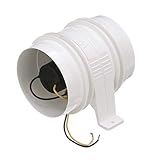
Attwood Turbo 4000 4-Inch Bilge Blower
- 4 inch duct
- aerospace axial fan
- water resistant housing
- 3 year warranty

Attwood Turbo 3000 3-Inch Blower
- 3 inch vent hose
- compact body
- 12V DC
- direct fit replacement

The Attwood Turbo 4000 takes the top spot because it is the only blower in this group combining the highest rating we saw with a four inch duct, a water resistant housing and a decade of owner feedback behind it. The Turbo 3000 is the sensible three inch option, and the SEAFLO 270 is the one to buy when certification and a four year warranty matter more than price.
Best Marine Bilge Blowers at a Glance in 2026
What Is a Marine Bilge Blower?
A marine bilge blower is a 12-volt ducted fan that forces air through a boat’s bilge and engine compartment to expel gasoline vapour and trapped heat. Gasoline vapour is heavier than air, so it settles into the lowest corners of the hull where it can pool and ignite. The blower draws that vapour away from the fuel system and pushes it out through a high exhaust vent, keeping the air moving so nothing settles.
It is a ventilation device, not a pump. A bilge pump removes water. A bilge blower moves air. USCG regulations under 33 CFR 183.410 require ventilation for inboard gasoline engines, and ABYC H-2 sets the construction and airflow standards those systems are built to. The same fan also clears heat from a diesel engine bay, dries a damp bilge and handles odours in a galley or head.
Bilge Blower vs Bilge Pump: What Each One Does
The most common confusion on boat forums is whether you need a blower, a pump, or both. The answer is both, because they solve entirely different problems.
- Bilge pump: a centrifugal or diaphragm pump that removes water from the hull. It is switched on by a float switch when water rises to a set level, and it is the last line of defence against sinking.
- Bilge blower: a ducted ventilation fan that moves air. It runs on a manual switch or a pressure sensor while the boat is underway or before refuelling, and it does nothing at all about water.
- Engine room purge fan: a separate exhaust fan that clears combustion gases and heat from a sealed diesel engine compartment. It is not a substitute for the bilge blower on a gasoline installation.
One forum thread on boatered.com sums up the common sentiment neatly: for a component this small, fitment matters more than brand. Find one that matches your existing three or four inch ducting and you avoid modifying anything.
How to Choose a Marine Bilge Blower
Most buyers open a retail page, read a big CFM number, and buy. Here is what that number actually tells you, and what else to check before you commit.
Free-air CFM is not the number that matters
Retail listings often quote free-air or open-flow CFM, which is the volume a fan moves with nothing attached to the inlet or outlet. The moment you clamp on 3 or 4 inch ducting, a long run of hose and a mesh vent screen, the moving air develops back pressure and output drops sharply. A unit advertised at a high open-flow number can deliver a fraction of that through real ducting.
Use the CFM figure for comparing units of the same size, not for deciding whether a 130 CFM blower is enough. Airflow through a plenum matters more than the label. One owner on prcforum.com described a four inch blower at roughly 245 CFM as ideal for bilges and motor compartments, which is a far more useful data point than any open-flow number on a listing.
A simple CFM sizing rule
Measure the length, width and height of the compartment you need to ventilate and multiply them to get cubic feet. Then aim for a total air exchange of about 10 to 20 times the compartment volume per hour, which works out to roughly 2 to 4 air changes every minute for a small engine bay. As a practical shortcut, match the duct diameter to the compartment: three inch duct for bays under about 8 cubic feet, four inch above that.
If the number you land on exceeds what a single unit delivers, run a matched pair. Owners on marineteboat.com routinely fit two units in parallel for exactly this reason, and owners on clubsearay.com run a pair of four inch in-line blowers drawing from the low point of the bilge and exhausting through opposite side vents. Airflow clears engine bay heat faster than clever placement does.
Three inch or four inch
Four inch ducting moves substantially more air for the same amp draw, because airflow scales with the square of the diameter. If your existing plumbing is three inch, stay three inch unless you are rebuilding the vent system. Forcing a four inch blower onto three inch hose throws away most of its advantage and can starve the impeller.
A four inch blower is the better buy if your engine bay houses a V8, a pair of engines or a hot diesel. A three inch unit is entirely adequate for a four cylinder outboard bay or a small cabin cruiser.
In-line or cage blower
An in-line blower screws between two lengths of duct and is the standard fitment on most production boats. A cage or axial fan blows into an open vent and is the configuration a boatered.com thread described as the best and quietest option for moving air.
Cage blowers suit boats with an open transom vent, where ducting is awkward to run. They are less efficient through long hose runs and harder to include in a sealed purge system. If your existing system is ducted, an in-line unit is the drop-in answer.
Continuous duty versus intermittent duty
This label causes more returns than any other. An intermittent duty blower is designed for short bursts around refuelling and launching. A continuous duty blower can run for hours without cooking its own motor windings. A thread on cruisersforum.com showed owners discovering after the fact that their cheap blower was labelled for intermittent use only, then replacing it a year later.
On iBoats, the SHURFLO Yellowtail is repeatedly named as the one small-boat blower widely regarded as genuinely continuous-duty rated. None of the twelve blowers in our lineup carries an explicit continuous duty stamp in its published specification, so treat runtime claims with care and keep run times short unless the manufacturer states otherwise.
Housing material and saltwater exposure
In a saltwater application, a plastic housing that is not sealed will fail from the inside out. Look for a sealed motor shaft, and front and rear shaft seals if the design offers both. Attwood’s 102mm water resistant housing and the nickel-plated motor housing on the Rule unit both point in the right direction, and several units here use ABS plastic described as corrosion resistant.
Amp draw and battery impact
Most three inch blowers in this group draw 2.5A to 3A, and the four inch units run 6A or more. A six amp draw for ten minutes is one amp-hour of your house bank, which is manageable. Run two six amp blowers overnight and you will find a flat bank in the morning. Fuse each blower on its own properly rated circuit, and size wire to the load, as a low-current fuse that cannot carry startup amperage will let a blower stall and burn out.
When to Run a Bilge Blower
Run the blower before you start the engine and before you refuel, and during the first part of your trip. It is the vapour evacuation step, not a comfort feature.
- Before refuelling: run the blower for several minutes, shut it off, then open the fill. Never run the blower while fuel is flowing.
- Before starting: a few minutes of blower clears vapour from the compartment before the first spark.
- Underway: run it alongside the engine for the first twenty to thirty minutes while the bay is working hardest, then switch it off.
- After a long idle or a hot afternoon in the sun: run it again to pull heat out of the bay before you leave the boat unattended.
Forum advice on thehulltruth.com was that a blower should draw from the lowest point of the engine compartment, because that is where fuel vapour collects. Mount it high, blow upward, and you are ventilating the top of the bay while the vapour stays where it started.
1. Attwood Turbo 4000 4-Inch In-Line Bilge Blower
- Highest rated blower we tested at 4.7 across more than 1700 reviews
- Aerospace-derived axial fan design moves real air through a compact body
- Water resistant 102mm housing suited to a wet bilge
- Mounting tie straps included
- Works with 7/8 inch I.D. thru-hull and livewell drains
- Not certified for use with chemicals or fuels
- Three year warranty is shorter than the four year options
This is the blower we would put in our own boat without hesitating. It carries the highest rating in the entire lineup, and it does so across more than 1,700 reviews, which is a much harder number to flatter by accident than a 4.8 across forty reviews.
The Turbo 4000 uses an axial flow fan design developed from aerospace practice, and in a housing that measures just over 6 inches across. That combination is the reason it outperforms larger-looking plastic boxes. The 4 inch duct is the big practical win on a boat that already has four inch plumbing.
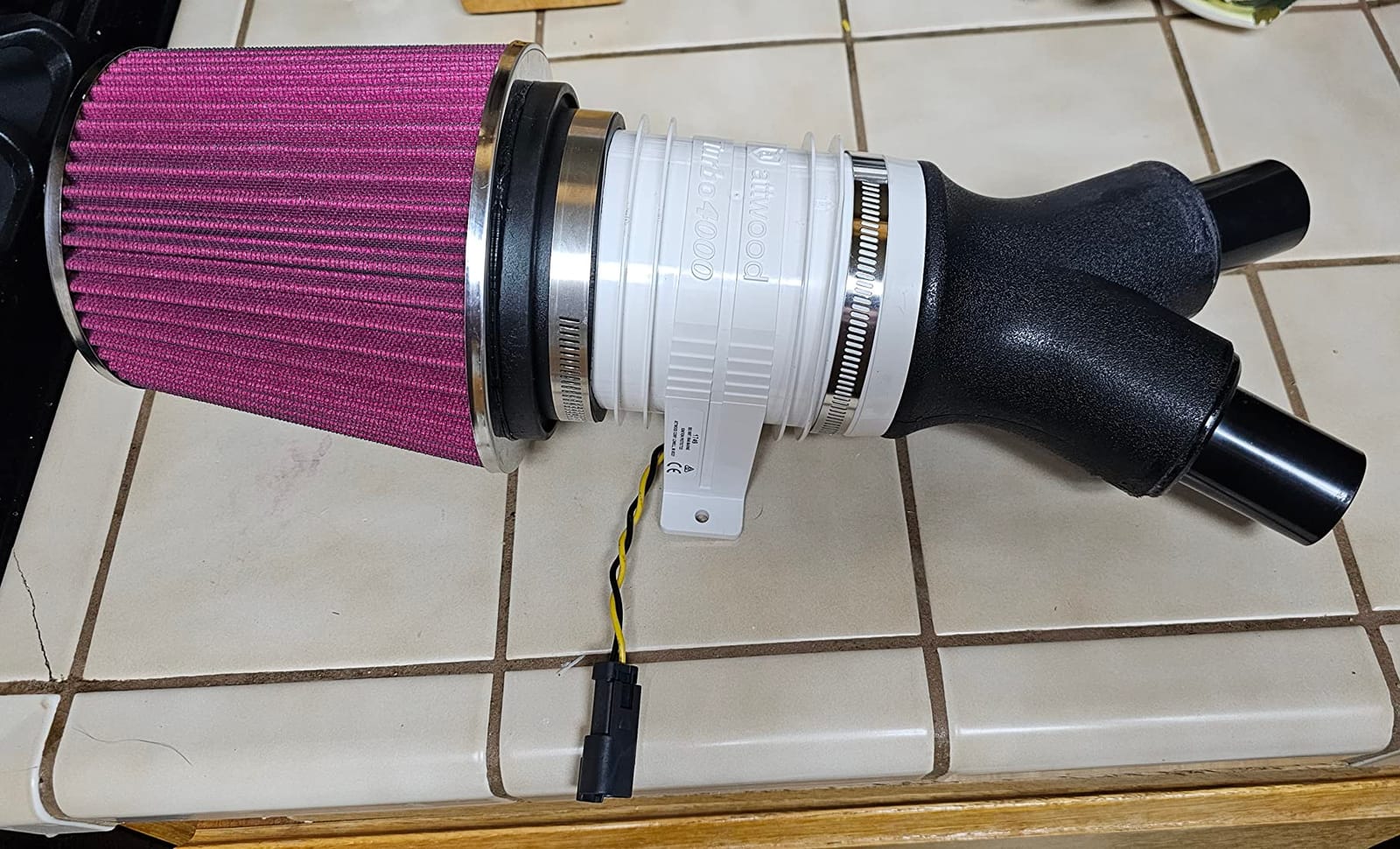
Owners consistently report strong airflow, quiet running and straightforward installation for bilge and livewell ventilation. The rating distribution is heavily positive, with 81 percent five star and 12 percent four star, and only a small minority mention noise at high output.
One caveat worth knowing: the manufacturer states it is not for use with chemicals or fuels. Standard bilge venting is exactly what it is built for, but do not plumb it into a fuel line or an engine room purge system where flammable media flow through it.
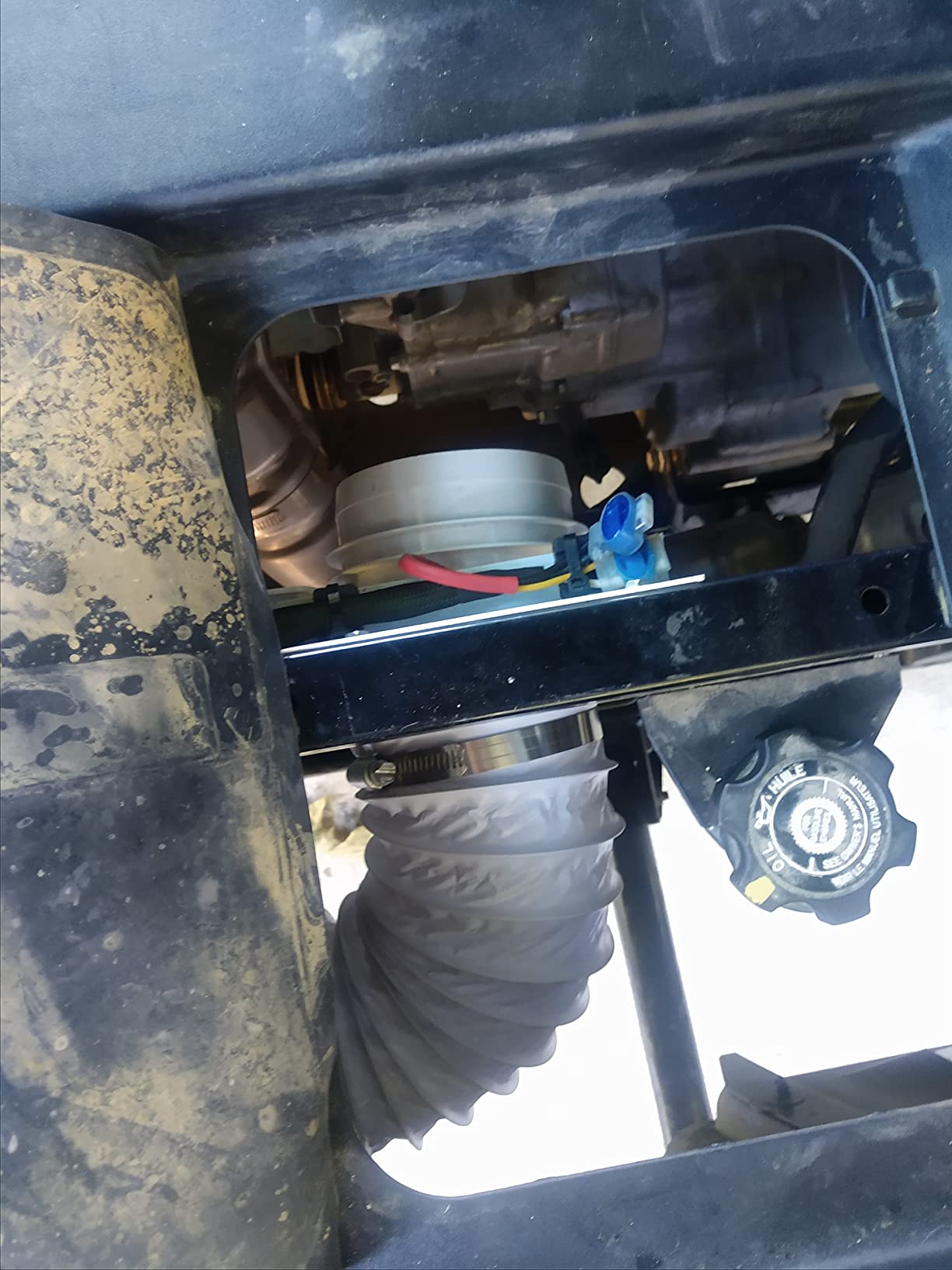
When the Turbo 4000 is the right buy
Choose it when your boat already has four inch ducting, or when you are running a V8, twin engines or a diesel that puts real heat into the bay. The 30 watt draw is modest for the airflow, so it will not flatten a house bank over a morning run.
It is also the safest option for a livewell drain or a 7/8 inch thru-hull application, where the water resistant housing earns its keep.
When something else fits better
If your existing plumbing is three inch, this unit forces you to rebuild your vent system, and the Attwood Turbo 3000 covers that case for less. If you want a warranty that outlasts a typical ownership period, the SEAFLO 270 carries four years against this model’s three.
2. Attwood 1733-4 Turbo 3000 3-Inch In-Line Blower
- Compact body with a strong motor for its size
- Quiet enough to run unnoticed inside a boat
- Direct-fit replacement for many factory bilge blowers
- Verified buyers report years of service without failure
- Fits 3 inch vent hose straight out of the box
- Needs roughly 3.1A to start reliably
- Audible under load in some installations
This is the most-reviewed blower in the group by a comfortable margin, at more than 1,750 reviews averaging 4.6 stars with 80 percent five star. It is also the answer to the most common replacement scenario we saw, which is a three inch hole in the deck and a blower that has stopped spinning.
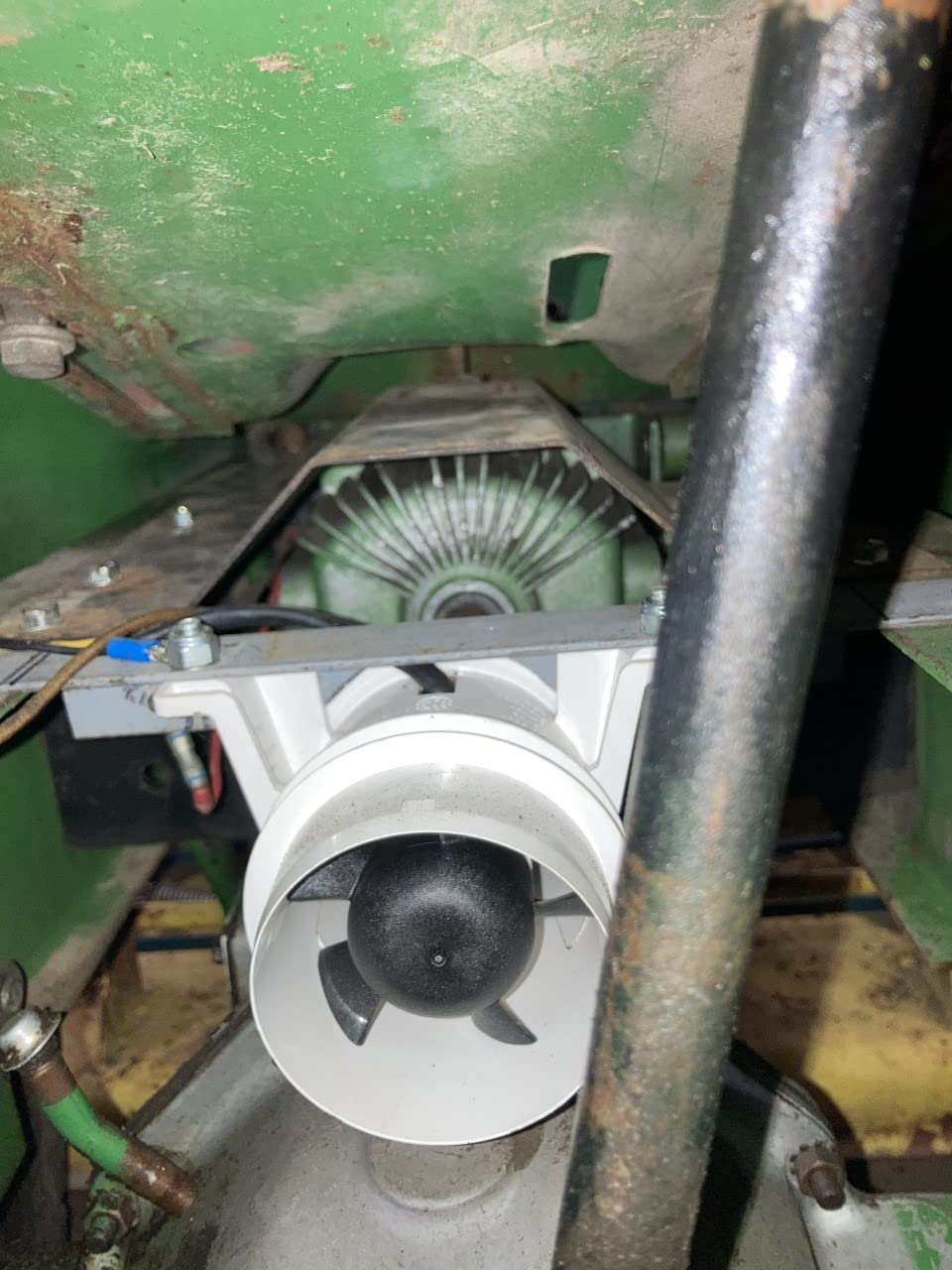
The Turbo 3000 platform is compact, quiet and widely used as an OEM replacement. Several owners run it off the boat entirely, venting a furnace or a kettle, which tells you how versatile the platform is even before you get to the bilge application.
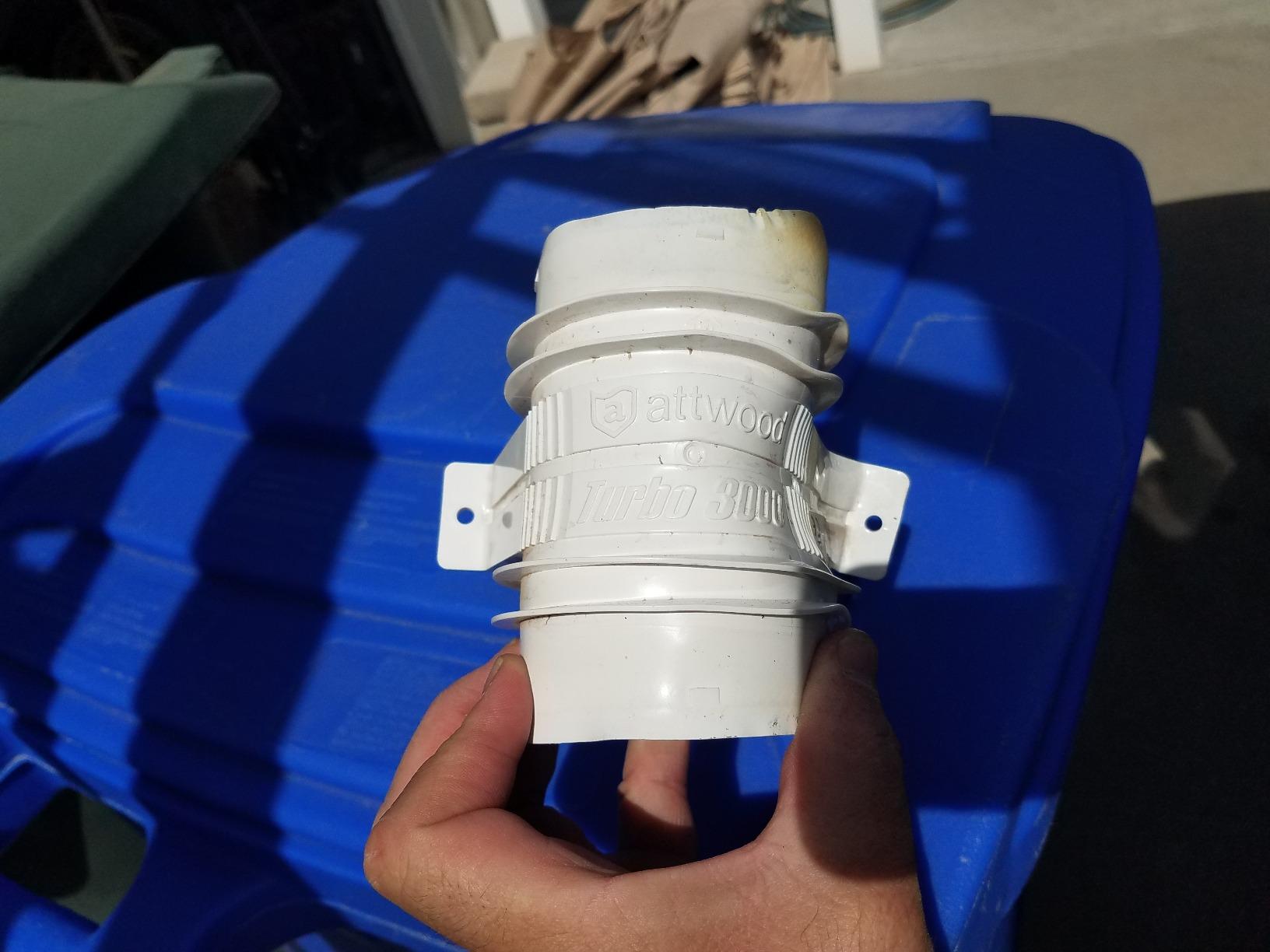
The single most repeated caveat in the reviews is electrical rather than mechanical. It needs roughly 3.1A minimum at 12V to start reliably, so an undersized fuse or a marginal power supply will make it stall and eventually burn out. Wire it properly and it will run for years.
A few owners also note it becomes audible under load in certain installations. That is usually a symptom of a tight or partially blocked duct rather than the motor itself, and it clears when the vent path is cleaned out.
When the Turbo 3000 is the right buy
It is the right call for the majority of boats with a three inch vent system and a modest engine bay. Verified buyers report years of service, and the direct-fit pattern means you can usually swap it in an afternoon with the existing tie straps.
Choose it over the four inch Turbo 4000 when compartment space is tight, since the body is roughly 11 inches by 5.75 inches and mounts vertically or horizontally.
When something else fits better
Skip it if your bay is hot enough to need serious air changes, because 130 class three inch flow will not keep up with a big diesel or a pair of engines. It is also the wrong pick if your electrical system is marginal or if you plan to run it continuously for long stretches.
3. SEAFLO 270 CFM 4-Inch In-Line Bilge Blower
- 270 CFM from a 4 inch duct
- ISO 8846 ignition protection certified
- Sealed front and rear motor shafts with corrosion-resistant ABS housing
- Built-in mounting feet for tight spaces
- 4 year limited warranty
- Draws 6A
- so fusing and wire gauge matter
- Some users find it louder than the advertised sub-45 dB figure
This is the one we would want mounted if a bay held flammable vapour and we wanted the paperwork behind it. SEAFLO lists ISO 8846 ignition protection certification alongside CE and RoHS, and that certification is what separates a genuine marine blower from a generic plastic fan with a marine label.
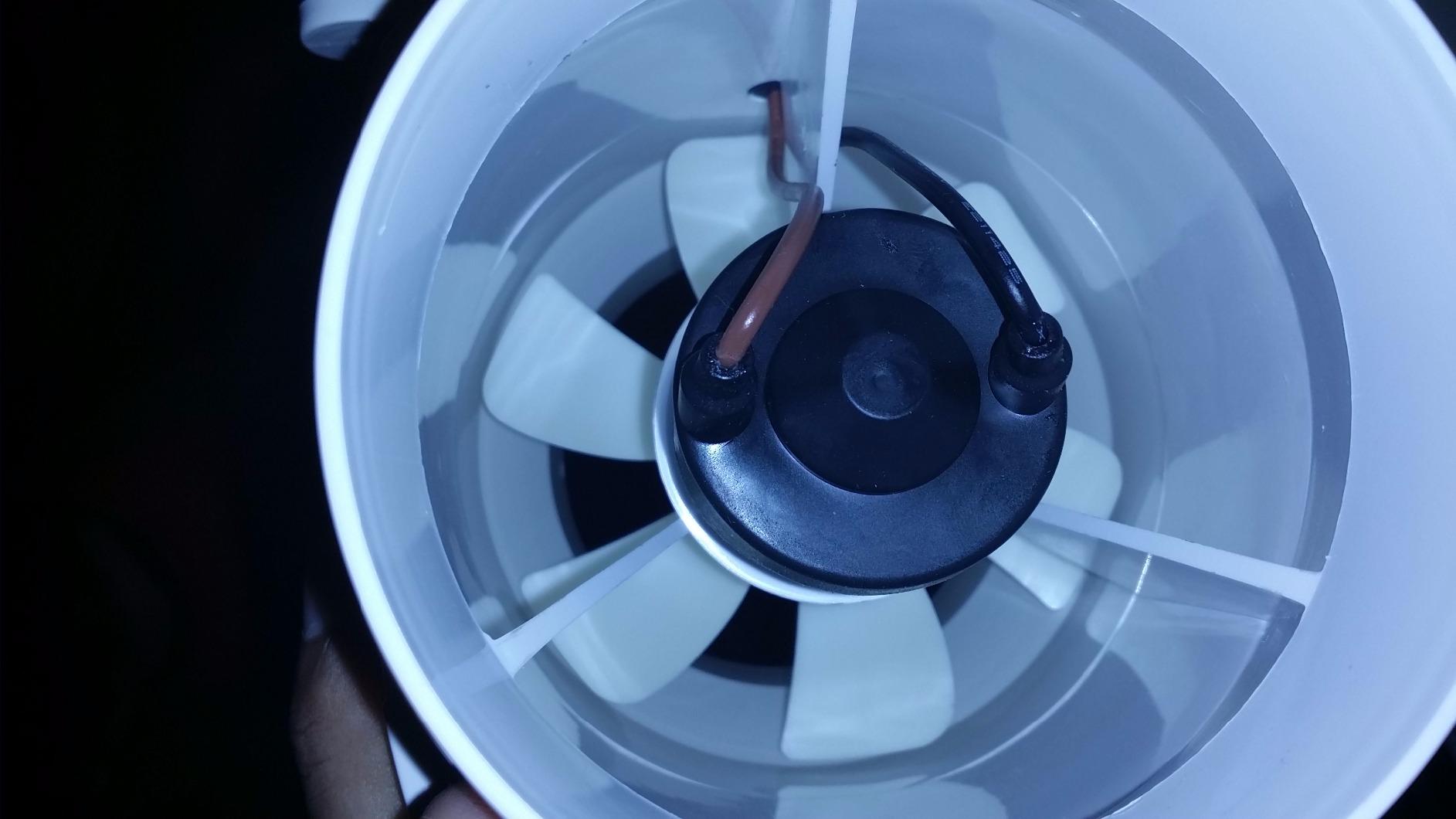
The specification is where it earns its place. 270 CFM through a four inch intake, a six blade axial fan for low vibration, a maximum draw of 6.0A with a 10A fuse recommendation, and a stated noise level under 45 dB. Independent measurement by at least one owner found roughly double the rated CFM, which is unusual.
At 1,553 reviews and a 4.4 average it holds the number one position in Amazon’s Boat Engine Blowers category. Buyers consistently praise the combination of airflow volume and low perceived noise inside the hull, and several note that the mounting holes matched an existing Attwood blower, avoiding new drilling entirely.
The 6A draw is the practical consideration. It needs a proper 10A fuse and heavier wire than the three inch units, and it is not the right choice for someone running a long unattended cooling project on a house bank.
When the SEAFLO 270 is the right buy
Pick it for a large engine bay, a sailboat with a long duct run, or any compartment where ignition protection certification is worth having on paper. The four year warranty is the longest combined with the Chillout unit, and it is the strongest airflow in the genuinely marine-rated group here.
It is also the blower to buy if you want quiet operation inside the cabin, where the stated sub-45 dB figure actually matters.
When something else fits better
It is the wrong choice if your bay is small, because 270 CFM through a small compartment is airflow you do not need and current you will pay for. It is also wrong if you need continuous rating, since the listing does not claim it.
4. Amarine Made 12V In-Line Bilge Air Blower
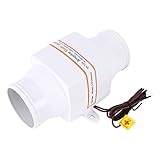
Amarine Made Marine Boat 12v Electric in Line Bilge Air Blower fan Boat Engine Blowers Marine Cabin Engine Ventilation Blower Fan130cfm
- Two airflow options in one product family
- Low current draw on the 130 CFM version
- Easy two-screw-and-clamp installation
- Flow direction arrow molded into the housing
- Audible at speed
- Model number listed simply as 1 so spec documentation is thin
Most blowers in this group come in one size. This one is sold with a choice of a 130 CFM three inch version drawing 2.5A or a 270 CFM four inch version drawing 6A, which makes it useful if you are not yet sure how much air your compartment needs.
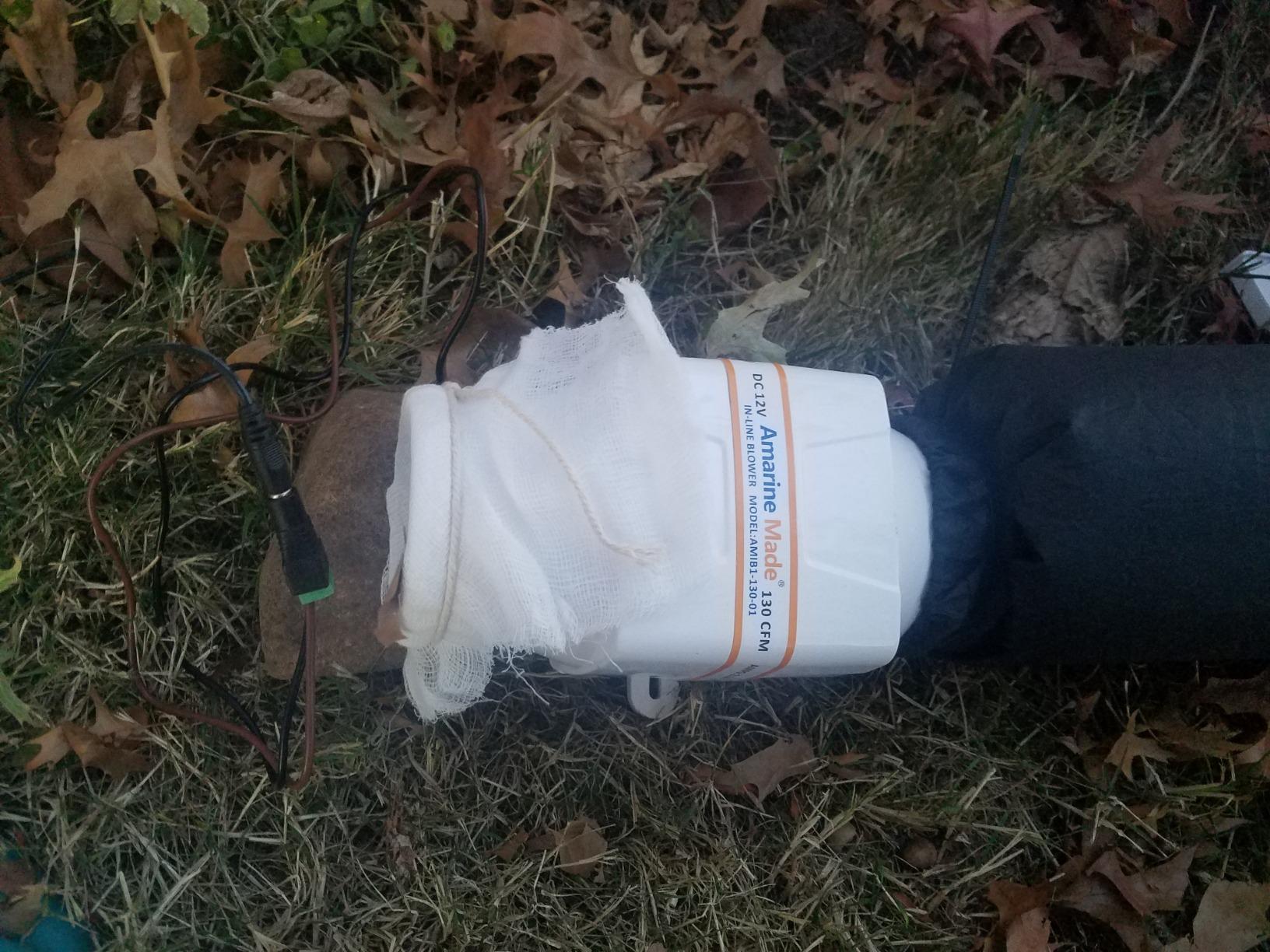
The construction is straightforward and correct for the job: ABS housing, sealed motor shaft, corrosion resistant, and built-in mounting feet for vertical or horizontal installation. The flow direction arrow moulded into the housing is a small detail that saves real time during install.
Across 782 reviews at 4.5 stars, feedback centres on strong airflow for the size, low current draw, easy mounting and durability over months of use. The most repeated caveat is noise, which owners largely accept as the trade for the airflow they are getting.
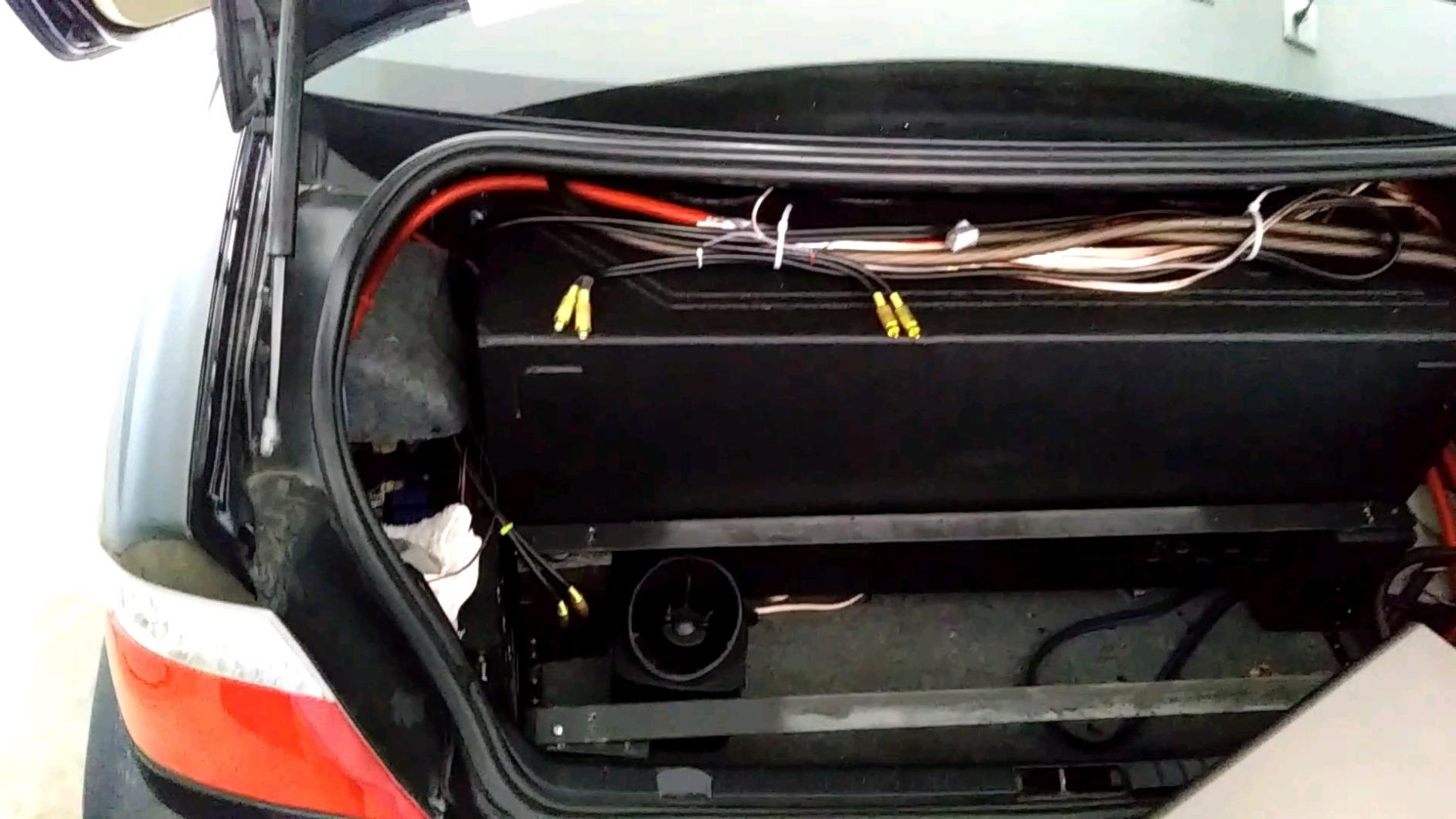
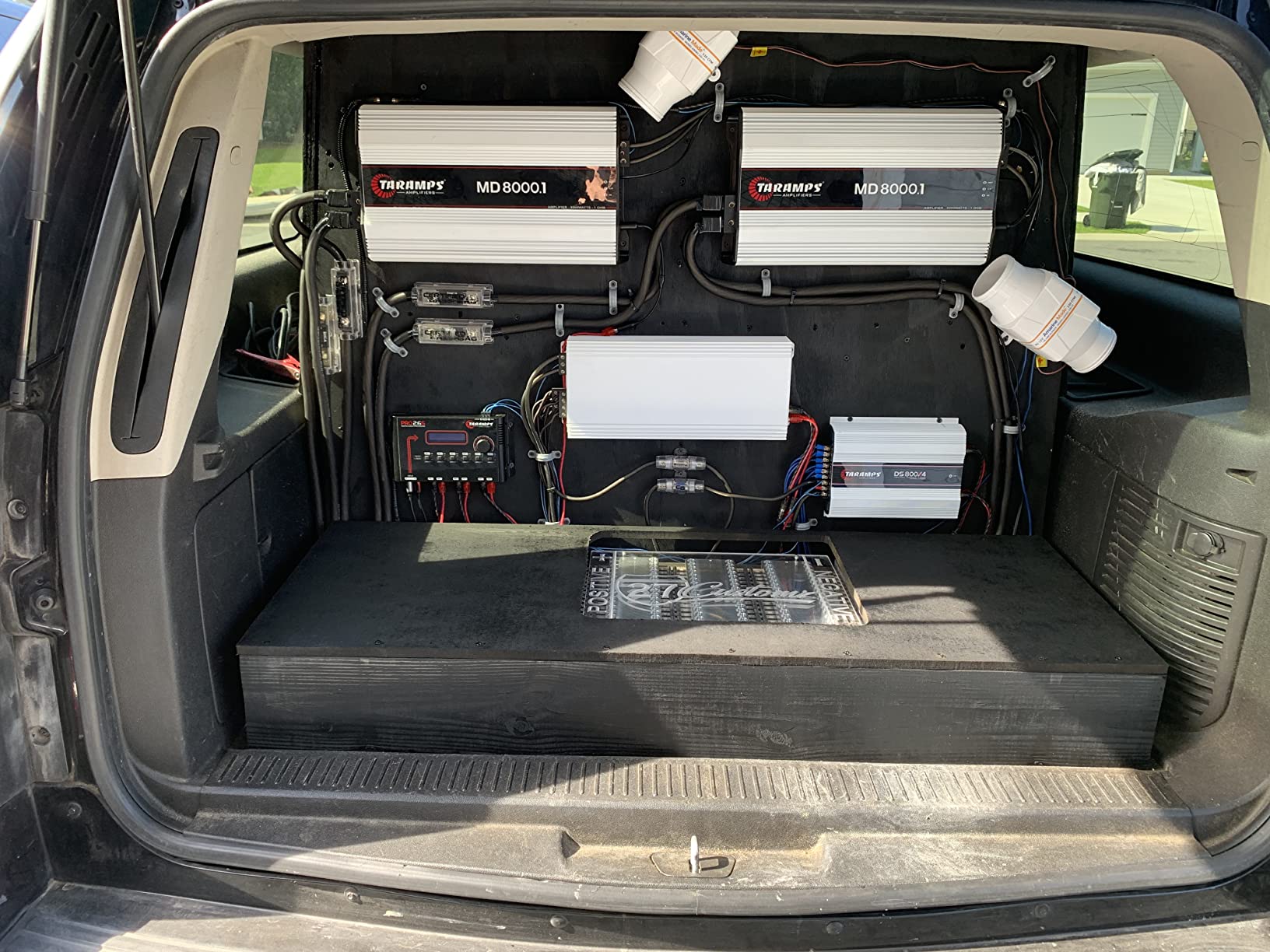
It is worth noting this blower is widely used off the boat as a cooling fan for amplifier cabinets and equipment lockers, which is where our marine amplifier picks come into play if you are building a system in the same compartment.
When the Amarine Made is the right buy
Choose it when you want one product family to cover two compartment sizes, or when you need genuine low current draw because your house bank is small. The 2.5A three inch version is among the most efficient blowers here.
It is also a solid choice for amplifier and electronics cabinet cooling, where the low draw matters more than marine certification.
When something else fits better
Spec documentation is thin, with the model number listed simply as 1, so confirm the CFM and current on the label before you buy. If noise in a cabin is your main concern, the SEAFLO 270 has a published decibel figure and a balanced six blade fan.
5. Rule In-Line Marine Bilge Blower 135 CFM

- Slip-on duct connections make plumbing fast without hose clamps
- Front and rear shaft seals plus nickel-plated motor housing target moisture and corrosion
- Low amp draw and quiet operation for the airflow delivered
- Very light at 14.4 ounces
- Only a handful of reviews on this listing
- Listings surface a 24V variant so voltage must be confirmed against your boat
Rule is one of the names owners name most often in bilge blower threads, and this in-line unit is the one to look at. The build details are the standout: front and rear shaft seals, a sealed motor shaft for moisture protection and a corrosion resistant nickel-plated motor housing.
Slip-on 3 or 4 inch inlet and outlet connections are the practical win. You slide ducting on and it holds, which removes a hose clamp from every joint and shortens install time noticeably.
There is an important caveat before anything else, and it is why this blower sits where it does in our list. The listing surfaces a 24V, 135 CFM variant as the named model. Most recreational boats run a 12V system, so confirm the voltage on the listing matches your boat before you order. Getting this wrong means an inoperative blower and a wiring problem.
At 14.4 ounces, this is among the lightest units we looked at, which makes it easy to mount high in a cramped compartment. Review signal on this specific listing is thin at only four reviews, so treat the manufacturer specification as more reliable than the customer feedback here.
When the Rule in-line blower is the right buy
Choose it if you run a 24V DC system, or if you want slip-on ducting connections and dual shaft seals and your supply runs 12V with the correct variant available. The sealed housing is a genuine advantage in a wet, salty bilge.
At 135 CFM it suits small to mid size engine bays rather than a hot V8 installation.
When something else fits better
If you cannot confirm the voltage, pick a unit with an unambiguous 12V rating. With only four reviews, there is very little long term owner data on this specific listing, and for a safety component that matters.
6. YaeMarine 3 Inch 12V In-Line Blower 130 CFM

YaeMarine 3 Inch 12V in-Line Blower Electric in-Line Marine Bilge Air Blower 130 CFM White for Boat Marine
- Low cost true 3 inch 12V in-line blower
- Reported quieter than the older factory blower it replaced
- Long wire leads simplify routing during installation
- Good airflow for engine room air exchange on small vessels
- Noticeably noisy when run continuously
- Not marketed for extended continuous duty use
This is the value pick for anyone replacing a tired three inch blower on a small boat without wanting to spend much. At 329 reviews and 4.5 stars, it does exactly one job properly: moving 130 CFM through a three inch intake at 2.5A.
Construction is appropriate for the environment. Four blade fan, sealed motor shaft, moisture proof and corrosion resistant ABS plastic, with a mounting stand that allows vertical or horizontal installation. The intake pipe diameter is 3 inches, or 76mm, and the spec calls for a 3A fuse.
The detail that stands out in the reviews is the long wire leads. When you are routing power to a blower under a deck hatch or along a stringer, extra lead length removes a splicing problem, and several owners specifically call this out alongside easy installation.
One owner reported it running quieter than the older factory blower it replaced on a Bayliner, which is a useful real comparison rather than a laboratory claim.
When the YaeMarine 130 CFM is the right buy
It suits a small vessel with a modest engine room that needs a cheap, reliable replacement for a failed factory unit. The 2.5A draw is easy on a house bank, and three inch ducting is by far the most common on boats of this size.
Pick it when your priority is replacing a dead blower quickly and quietly, with no need for certification paperwork.
When something else fits better
It is audible under continuous running, and one owner added a manual switch purely to control the noise. It is also not marketed for extended continuous duty, so if you intend to run it for long stretches at a berth, a unit with a stated continuous rating is the better purchase.
7. Yaegoo Marine 3-Inch In-Line Bilge Blower 130 CFM
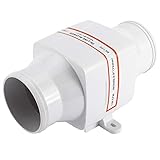
Yaegoo Marine Boat 3″ in-Line Bilge Air Blower DC 12V 130 CFM
- Low cost 130 CFM blower
- Owners buy multiples as spares
- Operating range measured down to about 2V and up to 16V
- Good airflow and a drop-in replacement for an existing blower
- Noticeably noisy at full output
- One buyer reported a motor with weak solder joints that failed
Where the YaeMarine competes on price, the Yaegoo competes on tolerance. The measured operating range is the distinguishing detail here: owners report it running from roughly 2V up to 16V, which means it shrugs off a sagging house bank and a charging system spike in a way tighter-spec motors do not.
Everything else is a competent three inch unit. DC 12V, 2.5A draw, 130 CFM through a three inch outlet hose, white ABS plastic with built-in moulded mounting brackets, and vertical or horizontal installation. Package weight is 0.6 kg.
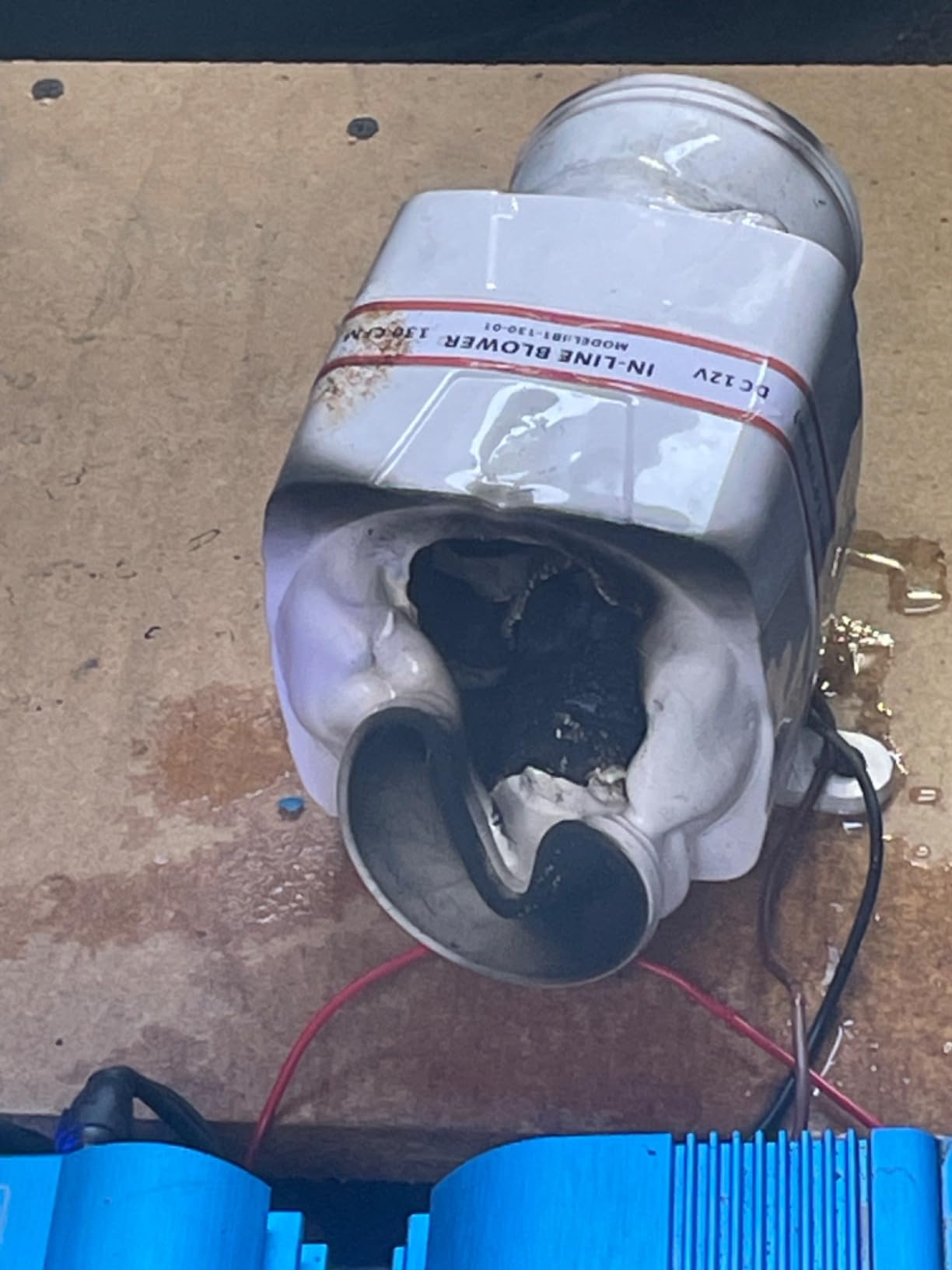
At 319 reviews and 4.4 stars with 70 percent five star, buyers consistently report that it moves a lot of air at 2.5A, fits existing boats and represents good value. The product also holds a strong position in the Boat Engine Blowers category, sitting at number four.
Noise is the most common complaint. One owner fitted a speed controller to soften it, which is a reasonable modification if the noise bothers you in a cabin and you understand what you are doing to the motor.
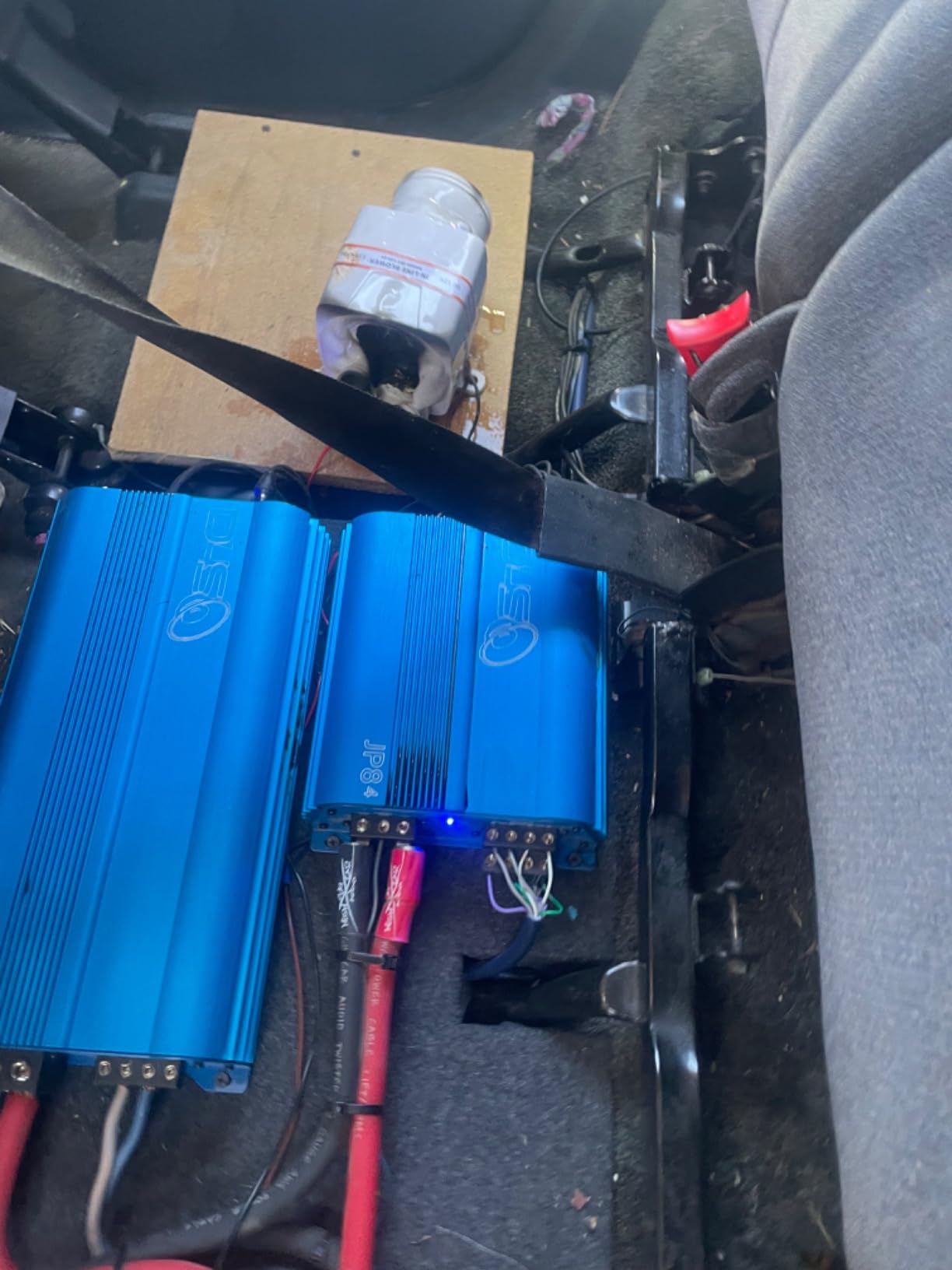
When the Yaegoo 130 CFM is the right buy
Choose it when your electrical supply is unreliable, when you want a spare on board, or when you want a drop-in replacement for an existing three inch blower at the lowest cost. The wide voltage tolerance makes it a good fit for older boats with tired wiring.
When something else fits better
It is loud at full output, so it is not the choice for a cabin-adjacent compartment where you want conversation. One isolated failure report mentioned a motor with weak solder joints, and while a single report is not a pattern, it is a reason to keep a spare on board.
8. NovelBee 12V 270 CFM 4-Inch Bilge Blower

NovelBee 12V Electric 270CFM in-Line Boat Bilge Air Blower,4″ Bilge Blower
- 270 CFM through a 4 inch intake at a low price
- Six blade fan design for flow efficiency
- Sealed motor shaft and corrosion resistant ABS housing
- Sized at roughly 8 by 6 by 5.3 inches
- Listed noise level of 92 dB is audible in a boat cabin
- No stated warranty term in the listing
If you want four inch airflow without paying a marine brand premium, this is the unit to look at. It delivers a stated 270 CFM, or 7,660 litres per minute, through a four inch intake at 6A and a recommended 10A fuse.
The construction matches the specification: six blade fan, corrosion resistant ABS plastic housing, sealed motor shaft for moisture protection, and a body measuring roughly 8 by 6 by 5.3 inches that fits a standard four inch marine blower hose.
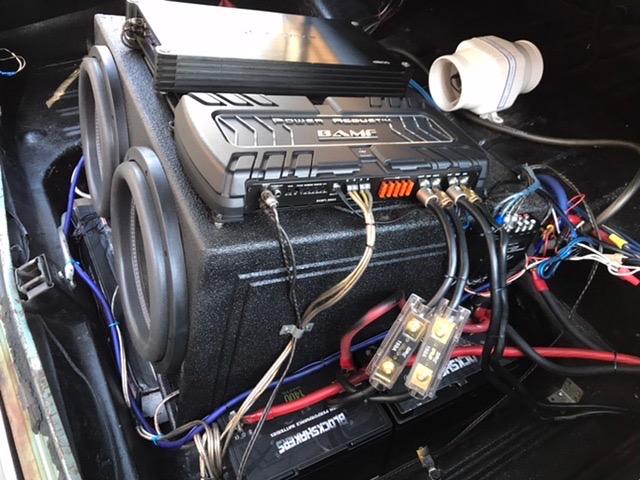
At 220 reviews and 4.5 stars with 77 percent five star, owners highlight strong airflow for the money and straightforward installation. The reservation buyers voice most often is sound, and the listing states a noise level of 92 dB, which is honest and unusually high for a published figure.
There is no stated warranty term in the listing. That matters more than it sounds, because a blower is a replace-in-place component and you want to know what happens if the motor fails in its second season.
When the NovelBee 270 CFM is the right buy
Choose it for a large engine bay when airflow is the priority and the compartment is not near where people sit. It is a strong low-cost match for a four inch ducted system that needs real volume rather than a token fan.
It is also a sensible option for a boat that lives on a trailer or in a slip, where the blower runs in short bursts at launch and shutdown rather than for hours.
When something else fits better
A 92 dB listed noise level rules it out for a cabin or head compartment where people are sitting close. With no stated warranty, the SEAFLO 270 or the Attwood Turbo 4000 are the safer long-term purchases.
9. Pactrade Marine Turbo In-Line Bilge Blower 3-Inch

Marine HIGH Performance Turbo in LINE Bilge Blower 3″ Diameter 12V
- Compact 3 inch body sized for small boats with limited compartment space
- Modest 3A draw with 140 CFM airflow
- Front and rear shaft seals and corrosion resistant motor housing
- Built-in feet for vertical or horizontal mounting
- Lowest rated among the higher review count blowers here at 4.3
- No stated warranty on the listing
The smallest footprint in the group is the reason to notice this one. The protective cover measures 5 by 5 by 3.5 inches, which is a meaningful saving in an engine bay that is already crowded with hoses, wiring and a fuel system.
It also moves more air than most three inch units in this roundup. The five blade fan delivers a stated 140 CFM at 3A draw with a 2.7A fuse recommendation, which is a better CFM-to-current ratio than the typical 130 CFM at 2.5A design.
Construction is marine appropriate: injection-moulded ABS, CE certified, front and rear shaft seals and a corrosion resistant motor housing. Built-in feet allow the same vertical or horizontal mounting as the other units here.
The rating is the softest spot. At 4.3 across 197 reviews, this is the lowest score among the blowers with substantial feedback, and 12 percent of reviews are three star. Those reviews tend to describe airflow as adequate rather than impressive, and mention limited brand support.
When the Pactrade Marine is the right buy
Choose it when space is the binding constraint, which is common in small centre console and ski boats with a shallow engine bay. The compact body and 140 CFM output make it a good fit for a modest four cylinder bay that needs more air than a 130 CFM unit provides.
When something else fits better
If the compartment is hot or if you want brand support behind the part, a better rated option is worth the step up. There is no stated warranty on the listing, and for a safety component that is a real gap.
10. Chillout Systems Club Series 4-Inch In-Line Blower

- Highest airflow figure in the lineup at 285 CFM
- Extremely light at 7.5 ounces for ducted and small installs
- Four year warranty
- Manufacturer replaced a defective unit with a fast and well received response
- Loud enough to be clearly audible
- Loud and priced above marine rated equivalents
- One report of a warped casing touching the blades and damaging them
This is the airflow leader in the group at a stated 285 CFM, and at 7.5 ounces it is also the lightest unit we looked at by a wide margin. It runs from 10.5 to 15 volts, draws a maximum of 4.7A, and carries a four year warranty.
It was designed for motorsport use rather than marine service. The four blade fan, UV stabilised ABS construction and sealed motor shaft suit an engine bay, but the listing does not carry marine ignition protection certification, which is the distinction that matters in a compartment with fuel vapour.
The feedback is the widest spread in the whole roundup. At 155 reviews and a 4.1 average, 69 percent are five star but 16 percent are one star. Motorsport users praise airflow and low weight for ducted cooling. The critical minority report casing deformation, blade contact and a price premium against marine rated equivalents.
One buyer specifically reported a warped, apparently 3D printed casing whose clearance eventually touched the blades and damaged them. That is a manufacturing consistency problem, not a design problem, but on a safety component it is worth weighing.
When the Chillout Club Series is the right buy
Choose it when airflow per pound matters most, such as a ducted driver cooling setup or a small boat where weight is at a premium, and when you are not relying on the blower for fuel vapour evacuation.
It is a legitimate performance choice, and the four year warranty is a genuine plus.
When something else fits better
For any gasoline boat where the blower is part of the fire safety system, buy a marine certified unit instead. The absence of ignition protection certification, the noise and the reported casing issue are three separate reasons to choose elsewhere, even though the airflow is the best on offer.
11. OASIS MARINE 4-Inch In-Line Bilge Air Blower

OASIS MARINE 4-Inch in-Line Bilge Air Blower Fan, 12V DC Marine Boat Ventilation Exhaust for Engine Compartment
- Marine-specific design with corrosion resistant ABS housing and sealed motor shaft
- Six blade fan tuned for efficiency and smooth airflow
- Compact enough for tight bilge spaces with simple mounting
- Fits standard 4 inch marine blower hose
- Two year warranty is the shortest here
- Only 151 reviews so long term reliability data is limited
OASIS MARINE is a name that comes up repeatedly in offshore and saltwater contexts, and this four inch in-line unit reflects that. Heavy duty white ABS housing with corrosion resistant materials, sealed motor shaft, and a six blade fan, at 8.2 by 6.1 by 5.7 inches.
It fits standard four inch marine blower hose, which removes the most common installation headache, and the built-in mounting feet handle vertical or horizontal installation in tight spaces. The listing covers bilges, engine compartments, heads and galleys, and it is equally at home on an RV.
At 151 reviews and 4.5 stars with 74 percent five star, buyers describe a straightforward, well-built blower that removes fumes, heat and odours effectively, with a small physical size suited to tight installations. Complaints are limited and mostly about value and the warranty term.
When the OASIS MARINE is the right buy
Choose it for a four inch ducted system in a saltwater environment where the sealed shaft and corrosion resistant housing are the priority. The compact body works well in a small bilge where a bulkier four inch unit would not fit.
It is a good match for a boat that also tows an RV or runs a generator compartment, given the range of uses the design covers.
When something else fits better
The two year warranty is the shortest among the units here, and with 151 reviews there is limited long term data. If you want a longer warranty on a four inch marine blower, the SEAFLO 270 covers four years with certification to match.
12. SEAFLO 130 CFM In-Line Bilge Blower

SEAFLO In Line Bilge Air Blower 130CFM Boat Black Ventilation Marine 12V 2.5AMP
- Fully serviceable screw-together motor with heavy-duty brushes and a balanced rotor
- Quiet running suited to cabins as well as engine bays
- Works with a variable-speed controller when fitted inline
- Serviceable design extends the life of the unit
- Loud relative to a squirrel-cage blower for the same airflow
- Some buyers report an out-of-balance wheel and a rattling motor
- Priced above other 130 CFM 12V in-line options
This is the only blower in the roundup you can realistically service. The motor assembly comes apart with screws, uses heavy-duty brushes and has a balanced rotor, so a worn brush set is a repair rather than a replacement. For a component that lives in a wet compartment, that changes the ownership maths.
The core specification is a 12V unit drawing 2.5A and moving 130 CFM, or 220 cubic metres per hour, in ABS plastic at 8.2 by 7.6 by 7.2 inches. It also works with a variable-speed controller when fitted in line, which gives you a genuine way to reduce noise at low load.
Feedback is mixed. At 129 reviews and 4.1 stars, with 65 percent five star but 11 percent one star, some owners praise build quality and quiet running in cabins while a smaller cluster reports balance issues, noise and motor winding failures, including one unit that stopped after about five minutes. Reviewers also note that this in-line model is louder than SEAFLO’s own squirrel-cage option for the same airflow.
When the SEAFLO 130 CFM is the right buy
Choose it when you want to keep the blower for the life of the boat, and when you are comfortable opening a sealed motor when the brushes go. The serviceable design and the variable-speed controller compatibility are real advantages for a long term owner.
It is also a reasonable cabin-adjacent unit given the reported quiet running, if you fit a controller to soften it.
When something else fits better
At a higher price than other 130 CFM in-line units offering the same rated flow, you are paying for the serviceable motor. If you replace blowers rarely and do not want to open one, a simpler unit does the same job for less. The one star motor winding reports also argue for keeping a spare on board.
Bilge Blower Failure Modes and Maintenance
Most blower failures are avoidable, and the symptoms tell you which cause you are looking at before you spend money on a replacement.
- Burnt motor smell and no rotation: usually an undersized fuse or a starved battery. The motor stalls on startup, the windings cook and the fuse never blows because it is undersized. Fusing each blower on its own correctly rated circuit fixes this permanently.
- Grinding or rattling noise: an out-of-balance wheel or a bearing on the way out. On a serviceable unit you can often rebalance or replace the rotor; on a sealed unit, replace the blower.
- Weak airflow that returns after a few months: a blocked intake screen or a crushed duct. Clean the vent screens each season and check for kinked or flattened hose, which is a far cheaper fix than a new fan.
- Failure after a season offshore: corrosion. Look for a replacement with a sealed motor shaft and corrosion resistant housing rather than repeating the same specification.
Two habits cover most of this. Clean the intake screens and vents twice a year, and run the blower periodically even when you do not need to. Motors that sit for months collect salt and condensation in the bearings, and a short run keeps them moving.
While you are in there, it is also worth confirming your switch, fuse and wiring are all sized for the blower you fitted, especially if you have upgraded from a three inch unit to a higher draw four inch model.
Frequently Asked Questions
What is the difference between a bilge pump and a bilge blower?
A bilge pump removes water from the hull, usually triggered by a float switch when water reaches a set level. A bilge blower moves air, forcing it through the bilge and engine compartment to expel gasoline vapour and trapped heat. A boat needs both: the pump handles water, the blower handles vapour and heat. They are not interchangeable.
What is a bilge blower?
A marine bilge blower is a 12-volt ducted fan that pushes air through a boat’s bilge and engine compartment. It draws vapour away from the fuel system and exhausts it through a high vent, preventing gasoline vapour from pooling in the hull. It also clears heat from the engine bay. USCG rules under 33 CFR 183.410 require this ventilation on inboard gasoline engines.
When should you run a bilge blower on a boat?
Run the blower before refuelling, before starting the engine, during the first twenty to thirty minutes of the trip, and any time you are about to leave the boat unattended after a hot or idle period. Mount it to draw from the lowest point of the compartment, since gasoline vapour collects there.
How long should you run a bilge blower?
Run it for several minutes before opening the fuel fill and before the first start. Underway, twenty to thirty minutes alongside the engine covers the period of highest vapour production. If your blower is rated for intermittent duty only, keep run times to these short bursts rather than leaving it running for hours.
Do you leave the bilge blower on while fuelling?
No. Run the blower first, then shut it off before you open the fill. Starting a fan near flowing fuel creates a potential ignition source at exactly the moment vapour concentration is highest. Let the blower run for several minutes, switch it off, then refuel.
How many CFM of bilge blower do I need?
Measure the length, width and height of the compartment and multiply to get cubic feet, then target 10 to 20 air changes per hour. As a shortcut, a three inch duct suits bays under about 8 cubic feet and a four inch duct suits larger ones. If one unit does not reach your figure, run a matched pair.
Why is my bilge blower so loud?
A fan pushes more air when it works against resistance, so noise rises with airflow and with a long or restricted duct run. A pinched hose, a blocked vent screen or a clogged bilge will make any blower loud. Cage and axial fans are generally quieter than in-line units, and a variable-speed controller can reduce noise at part load.
Conclusion
The best marine bilge blower for most boats is the Attwood Turbo 4000, because it pairs the highest rating in this group with a four inch duct and a water resistant housing. If your system is three inch, the Attwood Turbo 3000 does the same job at a lower cost and is the easiest drop-in replacement available. For a large engine bay where certification and a four year warranty matter, the SEAFLO 270 is the one to beat.
Match the duct diameter to your existing plumbing before anything else, ignore the free-air CFM figures on the listing, and check the amp draw against your house bank. If you are refreshing the rest of the electrical side of the boat, our marine subwoofer guide covers the next thing most owners tackle.