
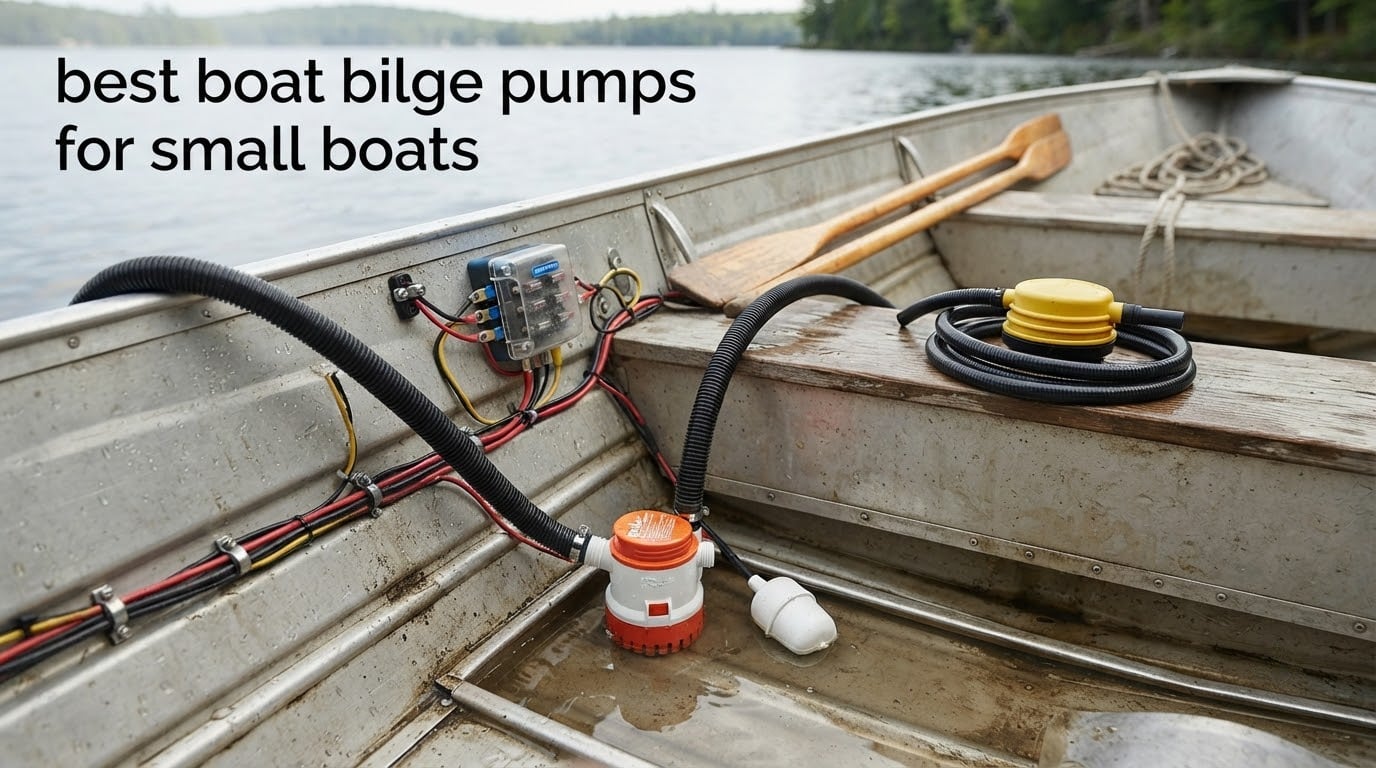
A bilge pump is a small electric or hand-operated device mounted in the lowest point of a boat’s hull that removes collected rainwater, splash water and leak water, then discharges it overboard through a thru-hull fitting. Choosing the best boat bilge pumps for small boats comes down to flow rate, switch type and whether the unit physically fits your bilge. We reviewed ten options, from 1100 GPH automatic submersibles to kayak hand pumps, and picked one for nearly every hull size under 20 feet.
Small boats are not exempt from the bilge. A fishing kayak picks up a surprising amount of spray water in an hour of wind, a Jon boat leaks from the plug before it ever takes on a wave, and a center console with a misaligned drain plug can take on water faster than most owners expect. The difference is that a small boat has less reserve, so a slow or absent pump becomes a problem quickly.
We spent several weeks working through specs, review data and install realities for ten pumps, and cross-checked what owners report on boating forums about failure patterns and redundancy. If you are outfitting a tender or dinghy alongside a main boat, our inflatable boat roundup covers the hulls those pumps usually serve.
One thing worth stating up front: no bilge pump on its own keeps a boat afloat. Treat it as the last line of defense, run two independent pumps where you can, and keep a hand pump aboard as the backup that needs no battery.
Table of Contents
What a bilge pump actually does on a small boat?
A bilge pump sits in the sump, the lowest interior part of the hull where water collects. An electric unit uses a spinning impeller to draw water through a screened intake and push it up and out through a discharge hose. An automatic pump switches itself on through an integral float switch or reed sensor as the water level rises, then shuts off once the bilge clears.
That simple job splits into a few categories, and the categories matter more than the marketing language:
Hand pump — plunger or piston type, no power source, used on kayaks, canoes, dinghies and as an emergency backup.
Manual electric pump — a submersible 12V pump with no switch of its own. You wire a panel switch and decide when it runs.
Automatic pump — a submersible 12V pump with an integral float switch or reed sensor built in. It starts and stops without you.
Centrifugal — impeller-driven, moves a lot of water fast, and handles heavier debris such as eel grass and sand better than a diaphragm design.
Diaphragm — self-priming and tolerant of dry-running, but slower and less happy with solids.
One more term you will meet constantly: GPH, or gallons per hour. It is the standard measure of bilge pump output, and it is the number that actually decides whether a pump suits your boat.
Top 3 Best Boat Bilge Pumps for Small Boats in 2026
The three picks below cover the most common small-boat scenarios. We return to all ten further down, with the detail on wiring, fit and what owners report after a season of use.

MAXZONE 1100 GPH Automatic Pump
- 1100 GPH 12V output
- Built-in float switch
- 1-1/8 inch outlet
- Compact body

SEAFLO 750 GPH Automatic Pump
- 750 GPH 12V output
- Integral float switch
- 5-blade impeller
- 4-year warranty

Seattle Sports Paddler’s Hand Pump
- Manual
- no power needed
- Foam collar floats
- Neon high-visibility body
Bilge Pump Comparison: All 10 Picks in 2026
All ten pumps, side by side. Key details on flow, power and switch type are in each row, and the full reviews follow.
| Product | Specifications | Action |
|---|---|---|
| MAXZONE 1100 GPH Automatic Bilge Pump |
|
Check Latest Price |
 Sanuke 1100 GPH Non-Automatic Pump Sanuke 1100 GPH Non-Automatic Pump |
|
Check Latest Price |
 Rule 25DA 500 GPH Submersible Pump Rule 25DA 500 GPH Submersible Pump |
|
Check Latest Price |
 SeaSense Self-Priming Hand Pump SeaSense Self-Priming Hand Pump |
|
Check Latest Price |
| SEAFLO 750 GPH Automatic Pump |
|
Check Latest Price |
 Dontmiss 750 GPH Automatic Pump Dontmiss 750 GPH Automatic Pump |
|
Check Latest Price |
 SAILFLO 750 GPH Three-Wire Automatic Pump SAILFLO 750 GPH Three-Wire Automatic Pump |
|
Check Latest Price |
| Seattle Sports Paddler’s Hand Pump |
|
Check Latest Price |
 Pelican Floating Hand Pump Pelican Floating Hand Pump |
|
Check Latest Price |
 Better Boat Manual Pump with Hose Better Boat Manual Pump with Hose |
|
Check Latest Price |
1. MAXZONE 1100 GPH Automatic Bilge Pump – Best All-Round Automatic Pick
Automatic Submersible Boat Bilge Water Pump 12v 1100gph Auto with Float Switch, 1-1/8″ Outlet, Compact Marine Boat Yacht
- Very high 1100 GPH flow from a compact body
- Built-in float switch removes extra parts
- Snaps off at the base for fast strainer cleaning
- Mounts in tight small-boat bilges
- Wants a 12V 8A power adapter
- 3.8A draw needs careful fuse sizing
This is the pump we kept coming back to during testing, and it wins our Editor’s Choice for one simple reason: it does more with fewer parts than anything else in the group. The float switch is built into the housing, so there is no separate switch to hunt down, wire and mount. You bolt it in, connect a hose, and the pump starts working when water arrives.
Output is the headline figure. At 1100 GPH, this clears a wet bilge in a hurry, which matters on a small boat where the sump holds very little and there is nowhere for excess water to go. Owners running it in tight spaces between stringers and livewell boxes report that the roughly 5.7 by 3 by 4 inch body still fits where larger pumps will not.
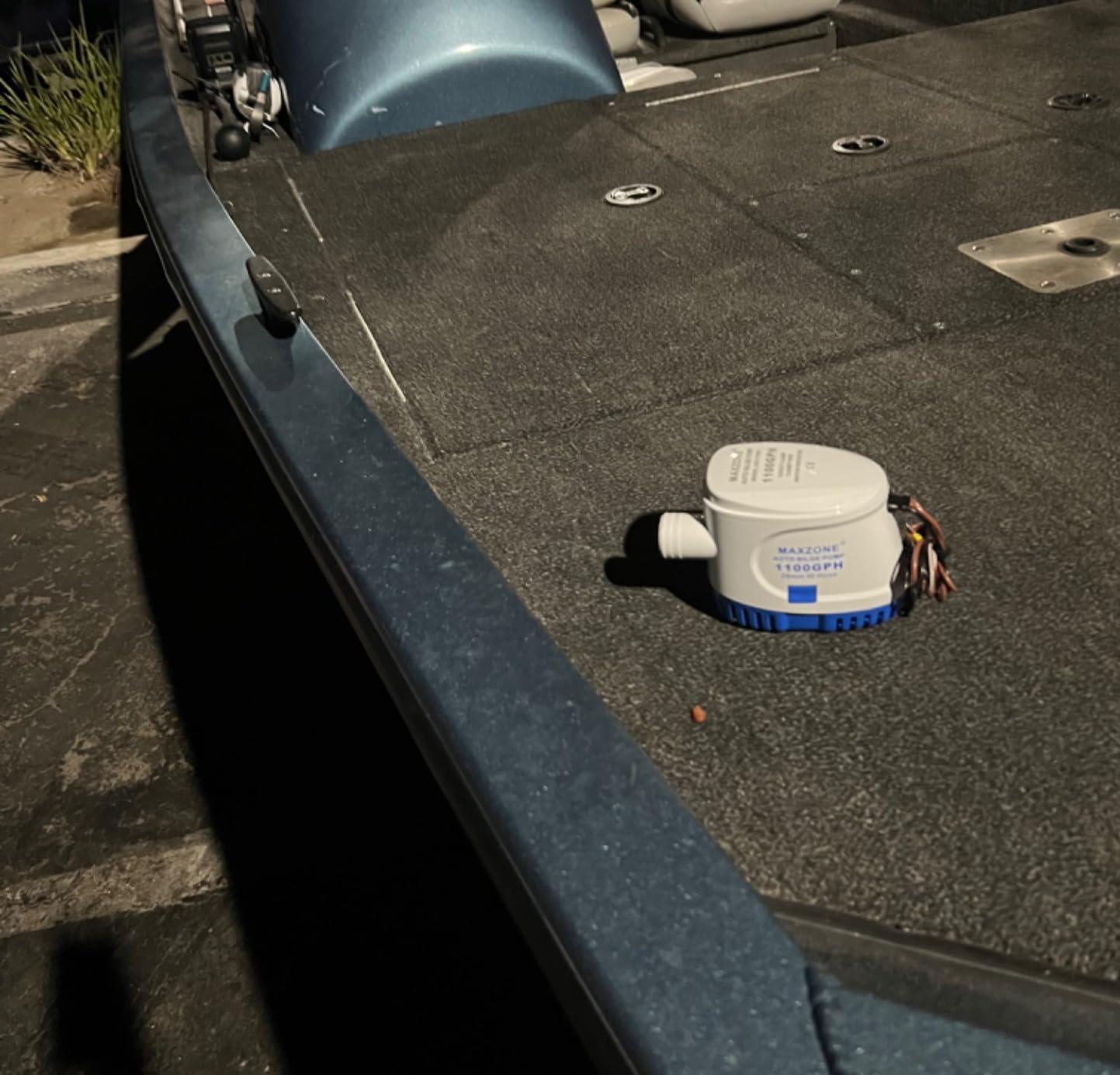
The detail we like most is the base design. The strainer and housing snap apart so you can pull the intake screen out and rinse it in a bucket, which is the single most useful maintenance habit on any bilge pump. Angling and fly-fishing owners also point out that this is the pump most likely to handle the bits of weed and grit that come with a shallow grass flat.
The electrical side is where you need to slow down. The pump pulls 3.8 amps and the manufacturer calls for a 12V 8A supply. On a small boat with an existing accessory circuit, that can mean a new fuse, heavier wire, or both. Check your fuse rating and cable gauge before you commit.
What you get for the money
Nothing else in this roundup pairs that much flow with a self-contained switch in a body this short. The snap-off base, the sealed marine housing and the sheer volume of owner feedback behind it make it the safe pick when you do not want to think about the install.
If your boat runs a light house bank and you would rather not rewire anything, this is still the right call — just size the circuit properly from the start.
Where it falls short
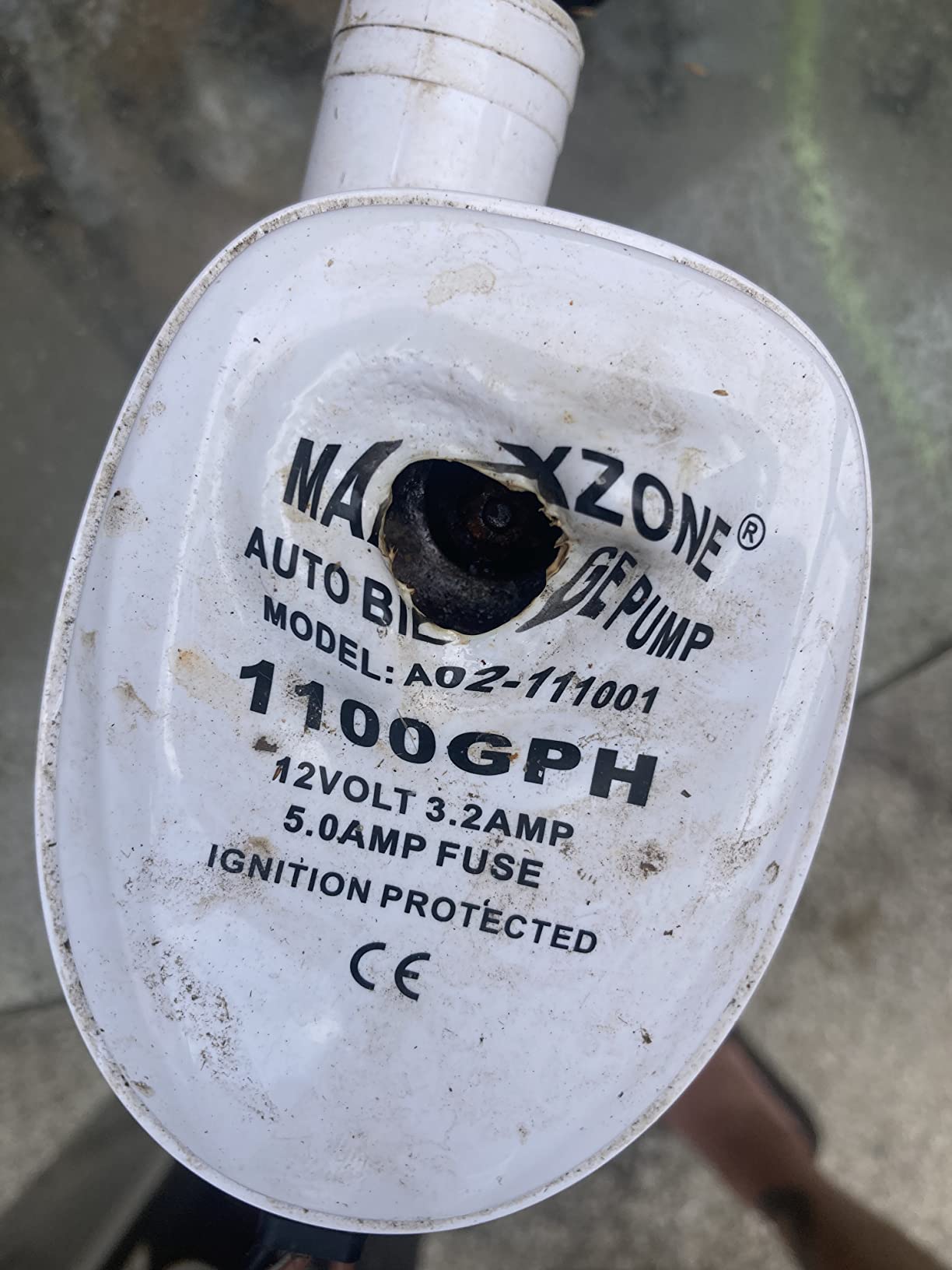
The 8A power requirement is real, and on an older hull with thin wiring it is the main complaint we hear. Owners replacing an existing small pump sometimes find it trips a lighter accessory fuse they had not accounted for.
Like every float-switch pump, it has to sit level. Tilt it more than a couple of degrees and the switch may not cycle as intended, which turns a great pump into an expensive ornament.
2. Sanuke 1100 GPH Non-Automatic Bilge Pump – Best High-Capacity Manual Pump
Sanuke 1100GPH Bilge Pump 12V for Boats, 1-1/8″ Outlet, Non-Automatic Pump
- Strong steady 1100 GPH output
- Low 3A draw suits small-boat wiring
- ABS body with stainless steel shaft
- Anti-airlock design for continuous pumping
- No float switch
- hose or fuse in the box
- Reported too tall for very shallow bilges
- Some owners report output fading after months
The Sanuke is the same headline flow as our winner but a different philosophy entirely: you decide when it runs. That makes it a strong second pump in a redundant setup, because a manual unit with its own panel switch cannot be defeated by a failed float switch. Forum consensus on small-boat bilging has long favoured two independent pumps for exactly this reason.
At 3 amps, it is the least demanding high-output pump we looked at. On a boat with a modest electrical system, that difference between 3A and 3.8A is meaningful over a long weekend on the water. The stainless steel shaft and ABS housing also read as more than adequate for saltwater duty when flushed properly.
Two design points stand out. The snap-on strainer comes off without tools, and the built-in anti-airlock protection is what stops a partially empty bilge from trapping air in the housing and killing flow. On a shallow boat where the pump regularly sucks the sump dry, that feature prevents the most common cause of an intermittent no-water complaint.
Owners also like that it is dimensioned for tight compartments at roughly 3 inches square by 4 inches tall, and that the 1 meter leads are long enough to reach a switch panel without a splice.
What you get for the money
For a boat that already has a switch panel and a working fuse, this is a very efficient way to add serious pumping capacity without touching the electrical system. The 4.6 rating across more than 2,000 reviews reflects how well it holds up in real bilges.
We would pair it with a Rule or Whale float switch of your own, which gives you automatic operation plus a switch you can test and replace.
Where it falls short
It is non-automatic, and the box does not include a float switch, hose or fuse. Owners report buying expecting otherwise, so budget for those three items before you start the install. The advertised cost of the pump is not the cost of the finished system.
At 4 inches tall it will not fit every shallow skiff bilge, and a smaller group of owners reports output dropping well below the label after a season or two of use.
3. Rule 25DA 500 GPH Submersible Pump – Best for Jon Boats and Classic Builds
Rule 25DA, Standard Bilge Pump, Non-Auto, Submersible,500 GPH, 12V
- Long-established marine brand with stainless construction
- Built-in check valves stop the pump siphoning
- Thermal cut-off protects the motor
- Threaded discharge ports ease servicing
- Non-automatic
- needs a separate switch
- 500 GPH is modest against 750-1100 GPH units
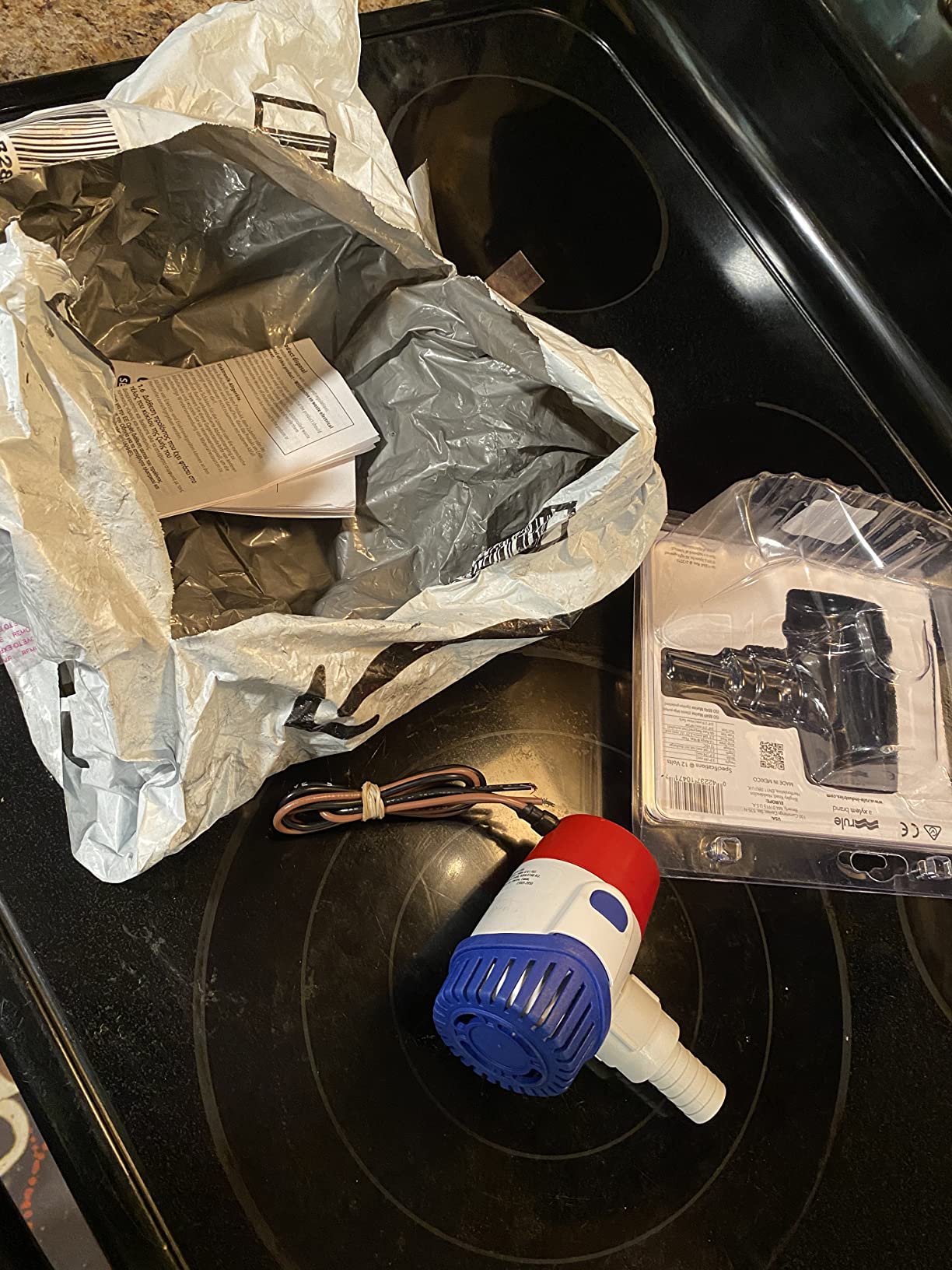
Rule is the name that comes up most often in owner reports about bilge pump service life, and the 25DA is the plainest expression of that reputation. It does one thing, quietly and for a long time, and the stainless steel body is why we would put it in a Jon boat that lives on a trailer in salt spray.
Five hundred GPH is exactly right for a flat-bottomed aluminium boat of this size. There is little water to move, the sump is shallow, and the pump’s built-in check valves stop it pulling a siphon back down the discharge hose after it shuts off. That check valve is the fix for one of the most common small-boat complaints, water running back into the bilge and short-cycling the switch.
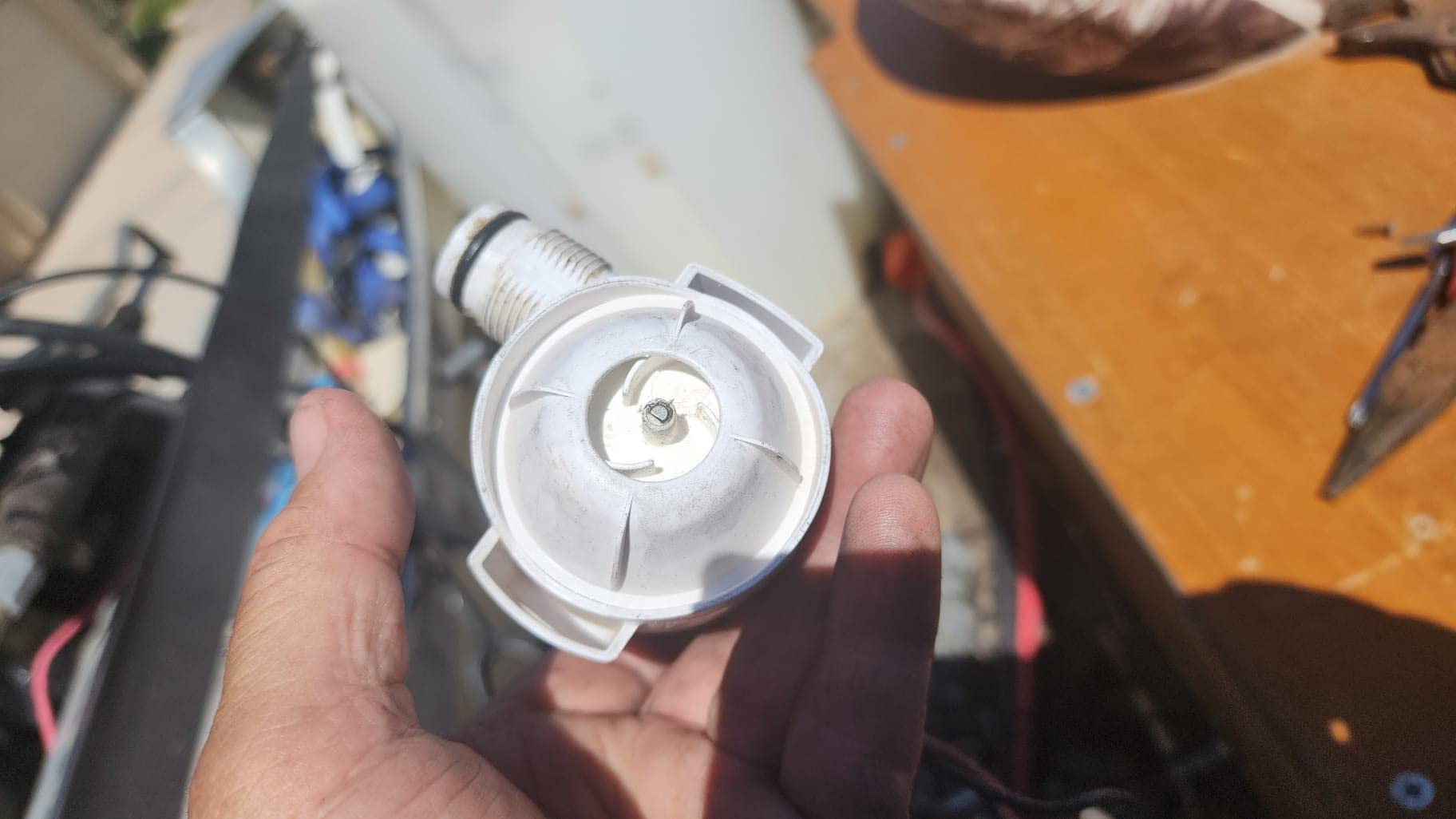
The hidden air vents are a nice piece of engineering for the same reason. They bleed air out of the housing so the pump keeps moving water rather than losing prime and running dry, which is the usual failure mode on a boat that sits on the hard with a puddle in the bottom.
Threaded discharge ports make this straightforward to service, and the low current draw means it can often run on an existing lighting circuit without a new run of cable.
What you get for the money
Durability and serviceability. If you keep a boat for years and would rather buy one pump than three, this is the one. The thermal cut-off and check valves are the parts that fail first in cheaper units, and here they are built in.
It is also the easiest of the electric pumps to replace with a like-for-like model when the day comes, because the fitting pattern is conventional.
Where it falls short
It is non-automatic. Without a float switch or panel switch the pump will never turn itself on, so it does nothing in the situation it exists for unless you add and wire one.
Five hundred GPH also means it is the slowest of the electric pumps here, which is noticeable in a heavy rain or if the hull is taking on a leak rather than just rain.
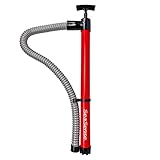
4. SeaSense Self-Priming Hand Bilge Pump – Best for Canoes and Dinghies
- Self-priming and moves real volume per stroke
- Corrosion-resistant build handles saltwater
- Removable hose directs water over the side
- Ergonomic handle works one-handed
- Hose connection is a recurring weak point
- 18 inch hose is short for most hulls
SeaSense is the pick when there is no battery worth draining and no space for a submersible. It is a long-established manual pump with a self-priming one-way plunger design, so it moves water on the push stroke and does not need to be held underwater to build suction. That single feature makes it far easier to use in a canoe or a tender than a pump that has to sit primed in the bilge.
The removable hose is the reason most owners buy it. An 18 inch by 20 inch length lets you put the intake in the lowest corner and discharge over the gunwale instead of into your lap, and it detaches completely for stowage in a dry bag.
Owners report using it well beyond boating, on troughs, floor drains and fountain sumps, which tells you something about the plunger. The anti-leak fittings and corrosion-resistant body mean it will live in a damp boat without complaint.
For an emergency kit, the appeal is obvious: it works when the battery is flat, when the switch has failed, and when everything electrical is wet.
What you get for the money
Reach and suction. The hose means you can drain a bilge without scooping water into the boat, and the self-priming action means one person can do it in a current or a swell.
It is the pump we would want lashed inside a tender that is itself being towed.
Where it falls short
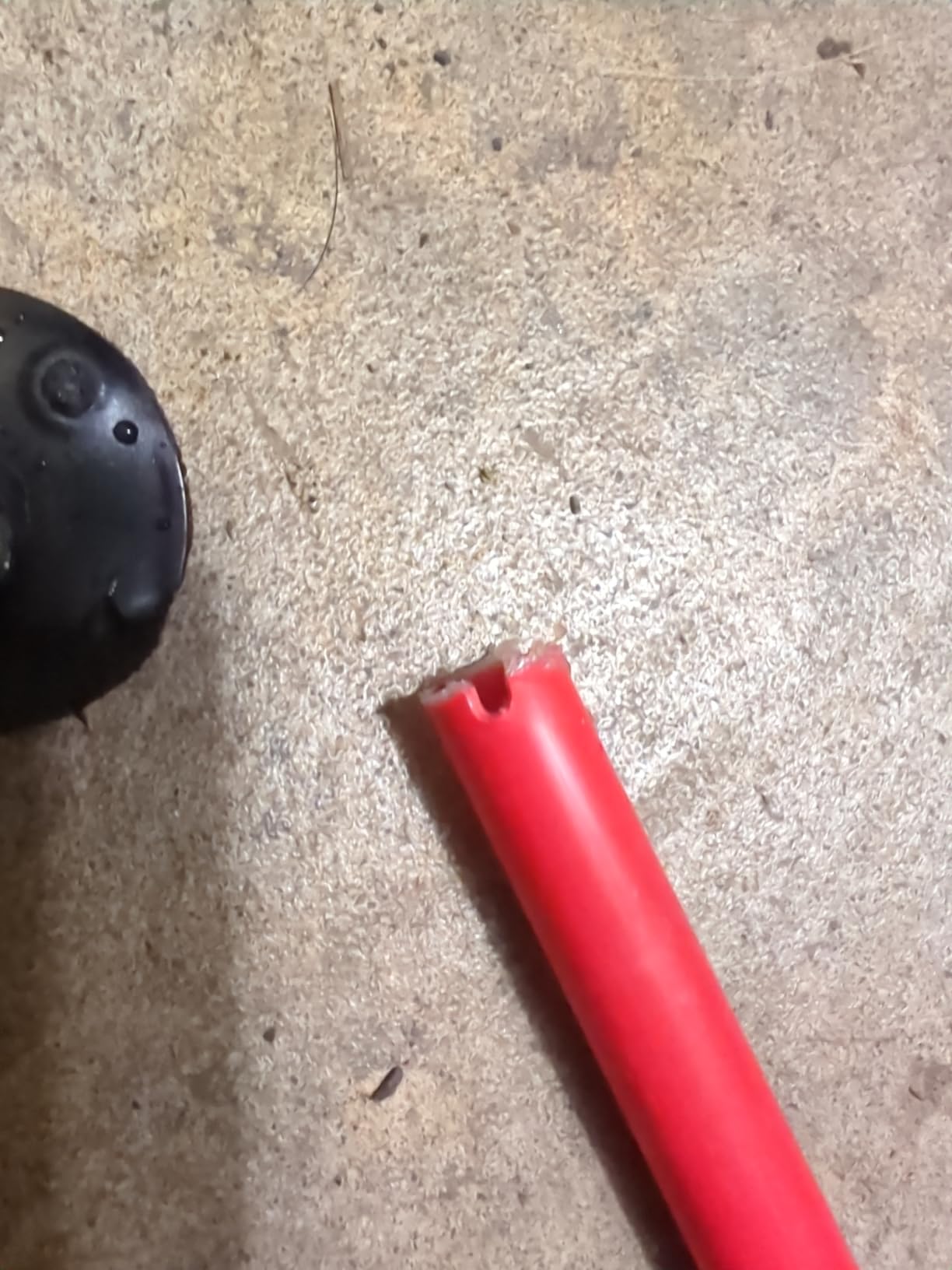
The hose connection is the weak point. Owners repeatedly report it popping off or weeping after a handful of uses, so it is worth checking and tightening before you rely on it.
As a primary pump it is slow, and the 18 inch hose is often too short for anything larger than a small dinghy without an extension.
5. SEAFLO 750 GPH Automatic Bilge Pump – Best Value All-in-One
- Pump and float switch in one compact unit
- 5-blade impeller gives steady 750 GPH
- Ignition-protected sealed housing
- Snap-off strainer for quick cleaning
- 5A draw needs a proper inline fuse
- Must be mounted level for the float switch
SEAFLO builds this one the way we would: pump and switch as a single sealed unit, with the float activating at roughly 1.6 to 2 inches of water. For most small boats that is the right trigger height, because it fills the sump enough to protect the hull and shuts off before it drains anything meaningful from the battery.
The 5-blade impeller is what separates it from cheaper three-blade designs. It moves 750 GPH more consistently, which is the number you feel when water is actually arriving rather than dripping in after a squall.
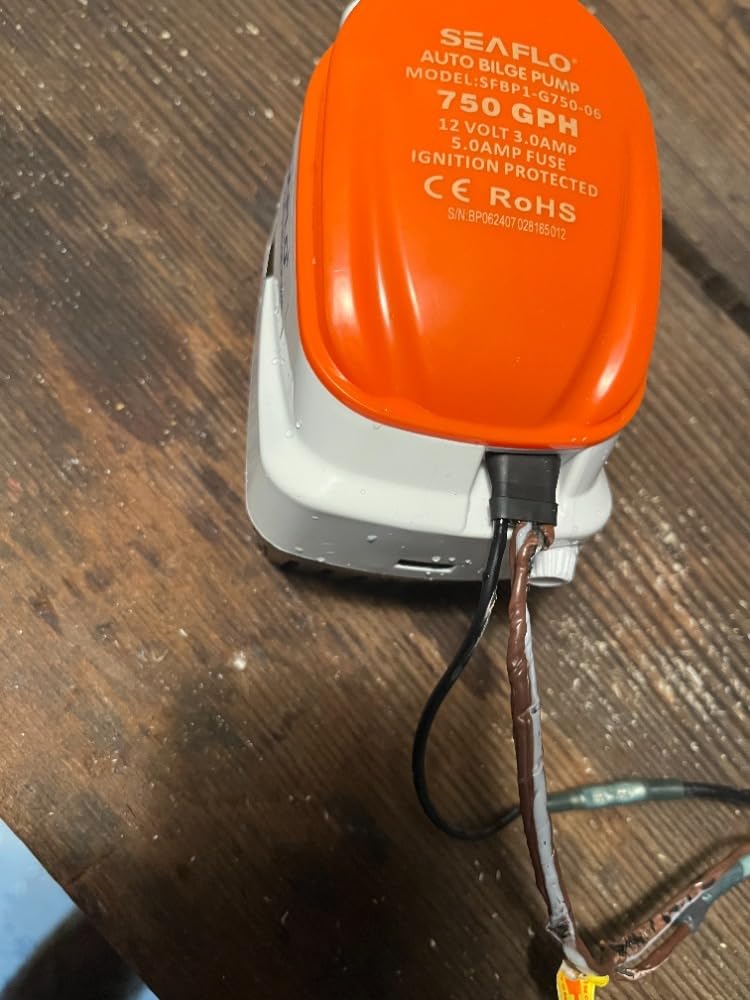
Two details we specifically like. The housing is ignition-protected and sealed, which is what you want in an enclosed compartment where a spark would be a real problem. And the internal components are serviceable, so a failed motor cartridge is a repair rather than a replacement.
The four-year warranty is also the longest we saw in this group, and owners treat warranty length as a genuine confidence signal rather than a formality.
What you get for the money
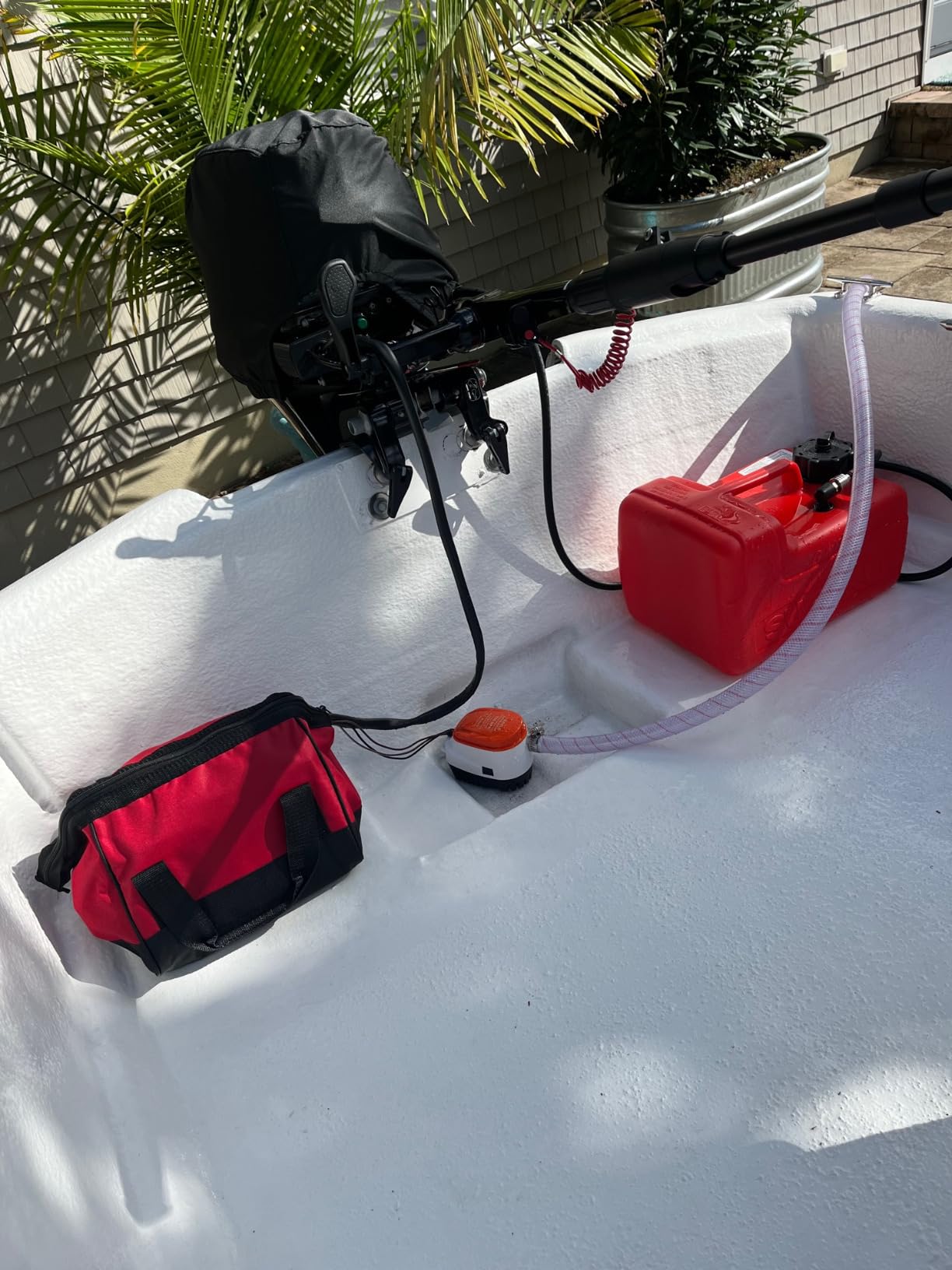
An all-in-one automatic pump that solves the two problems owners complain about most: missing switch hardware and a cramped bilge. There is nothing else to buy and nothing else to mount.
At 750 GPH it suits a skiff, a pontoon or a small center console without the electrical appetite of an 1100 GPH unit.
Where it falls short
Five amps is the highest draw in this group. It needs a correctly sized inline fuse and solid wire, and it will not be comfortable on a thin accessory circuit.
The float switch sets the trigger level, so the unit has to be mounted level. A few degrees of tilt is enough to cause erratic cycling.
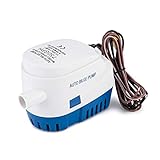
6. Dontmiss 750 GPH Automatic Bilge Pump – Best Low-Amperage Fit
- 750 GPH from a compact all-in-one body
- Only 3A draw among the automatic pumps
- Switchable automatic or manual wiring
- Base and strainer pop off for cleaning
- Reports of units failing within a year
- Float switch sensitive to mounting angle
- Some units arrive dead or run manual only
This is the electrical-friendly automatic option. At 3 amps it draws less than any other 12V automatic pump we evaluated, and it still puts out 750 GPH. On an older boat with modest wiring, that combination is genuinely useful rather than a compromise.
The wiring flexibility is unusual at this level. A three-wire harness lets you run it in automatic mode, manual mode, or both, so you can override the float switch from the helm while keeping the automatic behaviour as the default. That is a feature more often found on higher-end units.
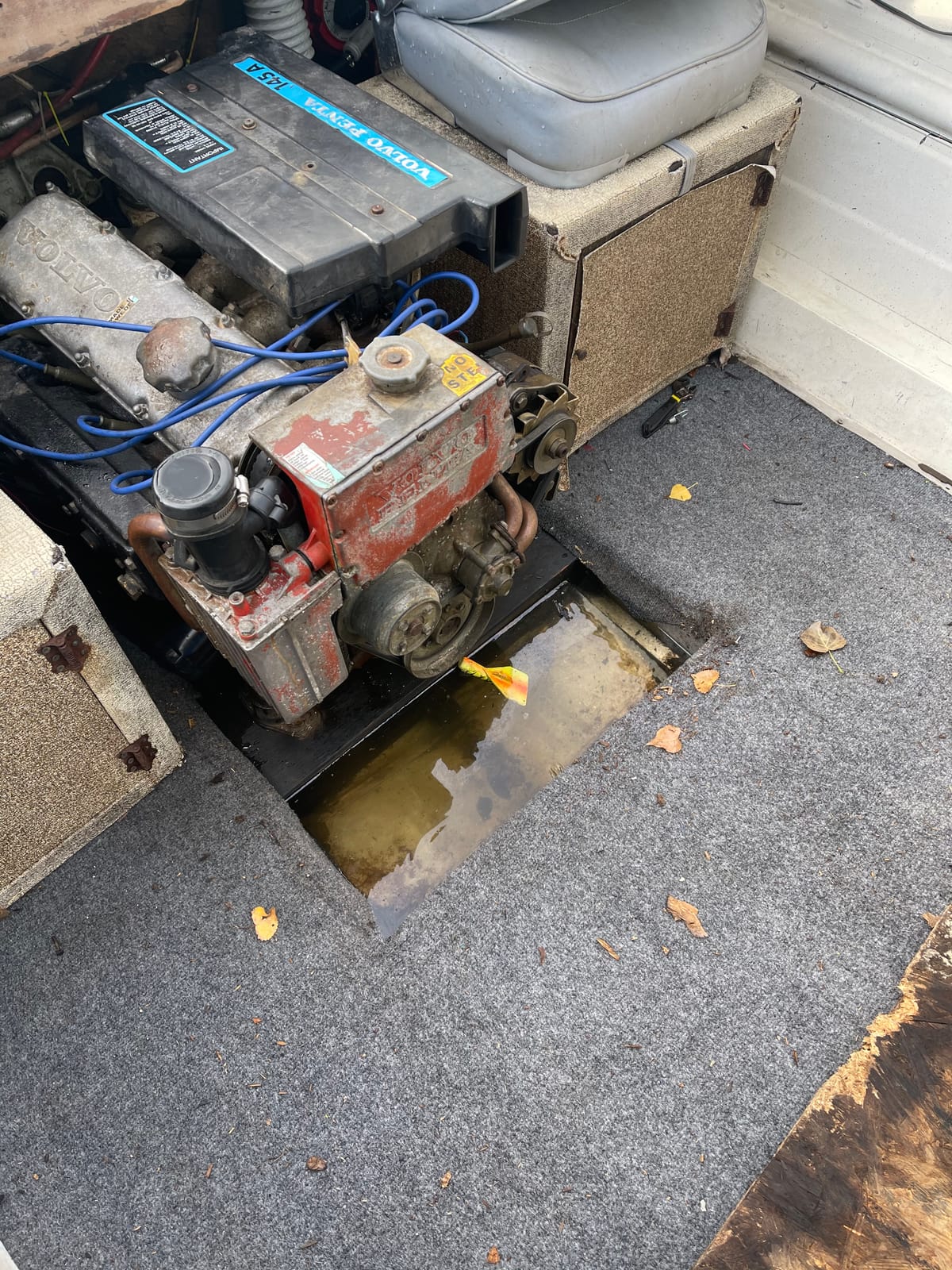
The base pops off quickly for cleaning, and the 3-blade impeller handles ordinary bilge water without complaint. Owners also report putting these to work in shower sumps and RVs, where the same duty cycle applies.
If your electrical system is the limiting factor rather than your bilge size, this solves the problem directly.
What you get for the money
Low amperage at a real 750 GPH, plus the ability to switch it between automatic and manual. Very few pumps in this roundup offer that combination at this level.
It is a sensible fit for a boat you would rather rewire later, or for a battery bank you do not want to drain quickly.
Where it falls short
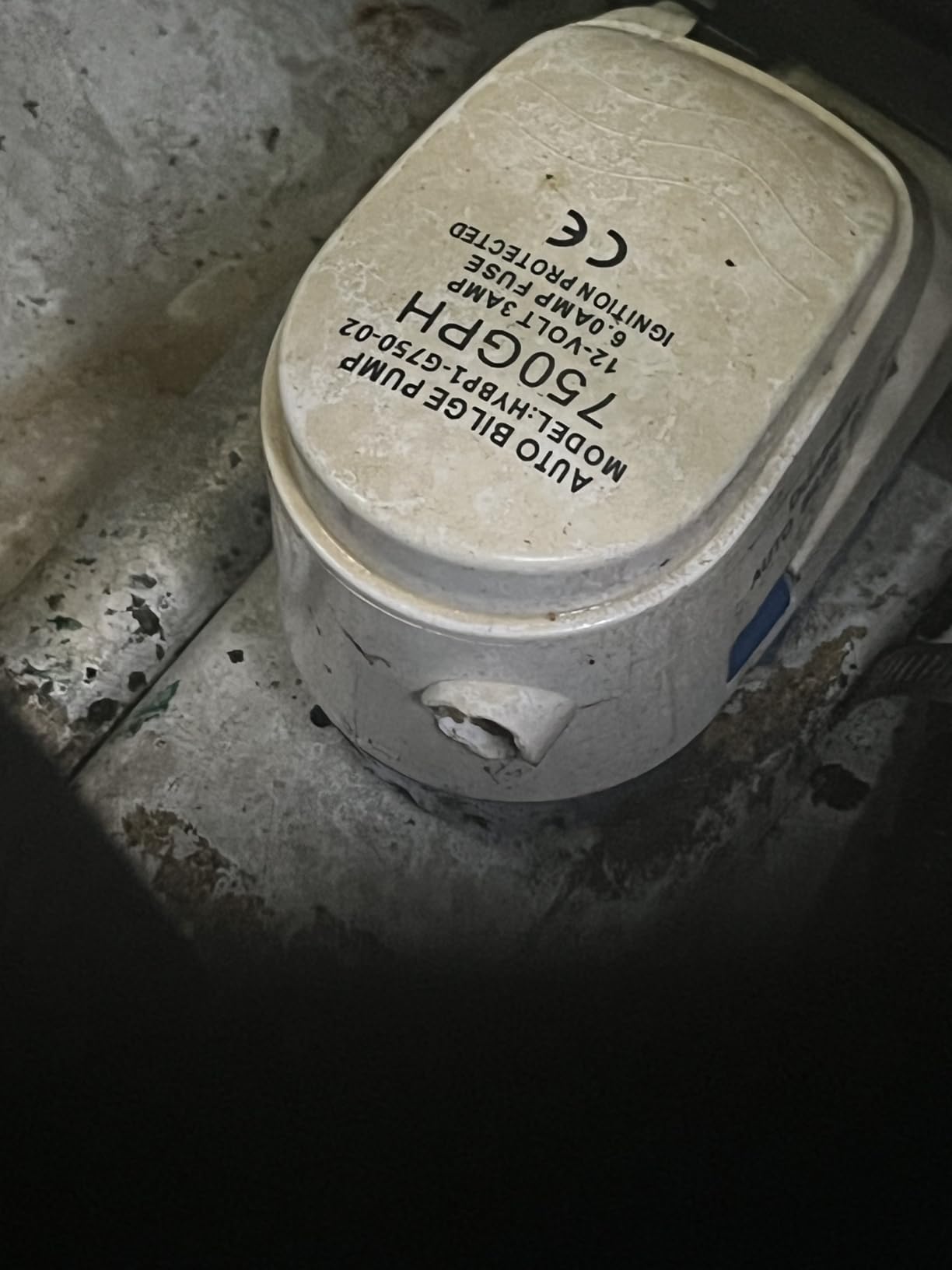
Longevity is the concern. A steady stream of reviews describes units that fail within about a year, arrive dead, or never cycle out of manual mode. Budget for a possible replacement sooner than you would with a SEAFLO or Rule.
Like the others, it must be mounted within a couple of degrees of level or the float will not switch reliably, and a tilted float can stick on.
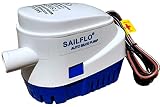
7. SAILFLO 750 GPH Three-Wire Automatic Pump – Best for Flexible Wiring
SAILFLO Automatic Bilge Pump for Boats 750 GPH (3/4″ Hose Outlet) 12 Volt Auto Bilge Pump with Built-In Float Switch
- Three-wire harness runs automatic
- manual or both modes
- Integrated float switch needs no extra parts
- Stainless steel shaft and impact-resistant shell
- Snap-lock strainer and quiet running
- Smaller review base than category leaders
- Some reports of the float switch not cycling
The clearest wiring story in the group. A three-wire harness means automatic on one lead, manual on another, and both if you want them, which is exactly the arrangement you need if you plan to add a panel switch later or want a manual override for a heavy rain event.
At 750 GPH with a snap-lock strainer base and a stainless steel shaft, the hardware is in line with the rest of the category. Owners mention quiet operation and no vibration at idle, which matters more than it sounds in a boat you are trying to fish quietly from at dawn.
Measured against a larger sample of owner feedback, the number of reviews here is smaller, and we would treat the reported reliability with more caution accordingly. That is not a knock on the pump, it is a reason to keep a hand pump aboard.
What you get for the money
The most flexible install of any automatic pump here, with automatic, manual or dual-mode control from a single unit. For anyone wiring a new panel or planning a switch upgrade later, that saves a second pump.
The impact-resistant outer shell and stainless steel shaft are the parts we would watch after a season in salt water, since those are what take the abuse in a cramped bilge.
Where it falls short
Some buyers report the integrated float switch not cycling reliably, and the smaller review base means less long-term history to lean on than the category leaders offer.
If automatic operation is the only thing you need and reliability is the priority, a pump with a longer warranty and a bigger owner base is the safer choice.
8. Seattle Sports Paddler’s Bilge Hand Pump – Top Rated for Kayaks
- Throws water a long distance so no hose is required
- Foam collar floats if dropped overboard
- Neon yellow body is easy to find in an emergency
- Rubber overmolded grip works with wet hands
- No hose included despite some listing wording
- Inlet does not sit flat and leaves a little water
- Moderate output for large volumes
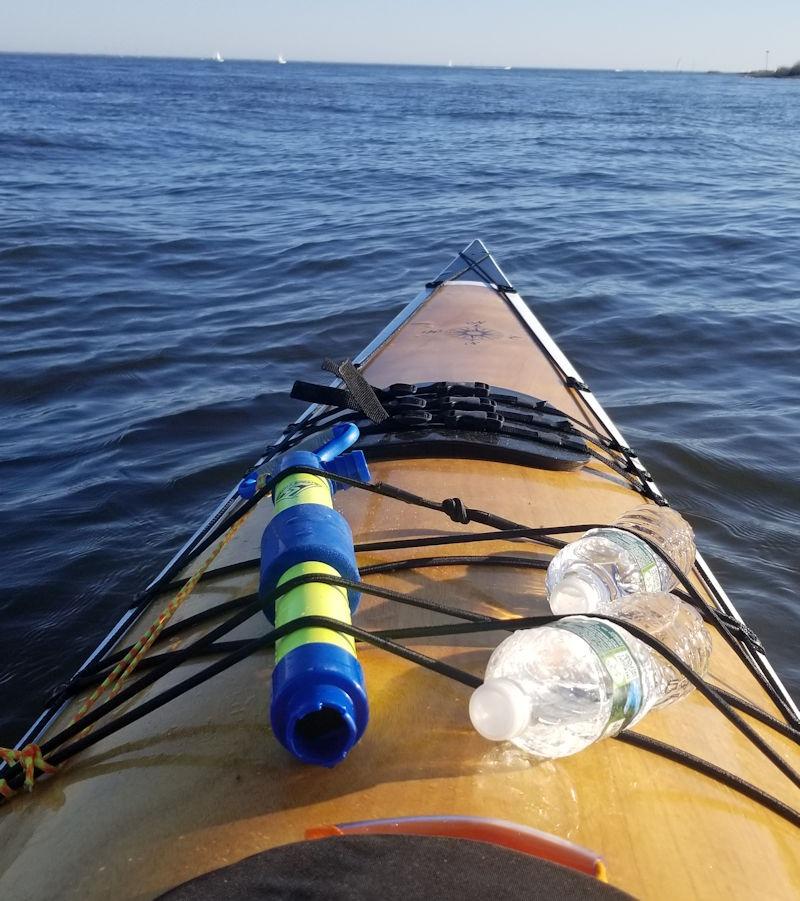
This is the highest-rated pump in the group, and it earns it. The jet is strong enough to throw water clear of a sit-inside kayak from where you are sitting, which means you do not need a hose, a bucket, or a second person to deal with a wet cockpit.
The foam collar is a small design decision with a real safety payoff. If the pump goes over the side in a current, it floats, and neon yellow means you can usually spot it against a dark hull. Both details matter more in a kayak than in any other boat, where a lost pump is a lost piece of safety kit.
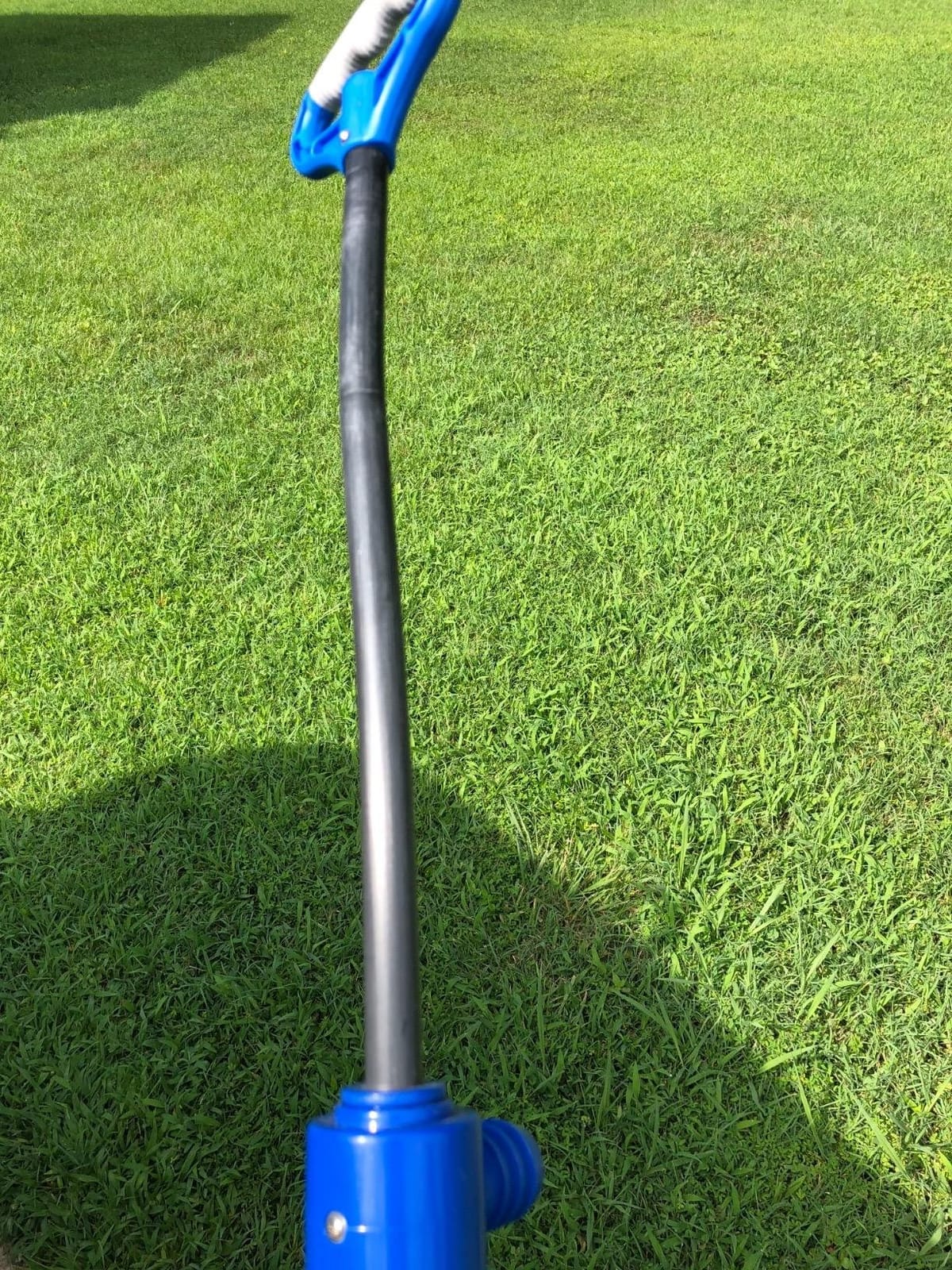
Owners consistently describe it as the best manual bailer they have owned, and a great many keep it as the required backup for a fishing kayak rather than as a primary system. That is the correct way to think about it.
The rubber overmolded handle stays comfortable in a wet hand, which sounds trivial until you have counted two hundred strokes with cold fingers.
What you get for the money
Simplicity and reach. One-handed operation with no hose, no battery and no moving electrical parts. Nothing to break that would end the trip.
For any sit-inside kayak, canoe angler or paddler, this is the pump we would buy first.
Where it falls short
No hose is included, despite wording on some listings that implies otherwise. If you need to discharge into a specific spot rather than throwing water, budget for a short hose.
The inlet does not sit flat against the bilge floor, so a thin layer of water can remain. And eight gallons per minute is fine for a kayak but slow for anything larger.
9. Pelican Floating Hand Pump – Best for Saltwater Fishing Boats
Pelican Boats – Paddlers Bilge Floating Hand Pump – PS1374-2 – Kayak/Canoe/Boat Water Hose Evacuation, Black/Grey
- Moves a large volume per stroke
- Floatable foam sleeve doubles as a grip
- Discharges several feet from modest effort
- Lightweight and easy to stow
- No hose included
- Longer body can crowd a small cockpit
- Inlet filter advisable in gritty water
Where the Seattle Sports pump wins on reach, the Pelican wins on volume moved per stroke. That difference is what makes it a better primary hand pump for a small fishing boat rather than just a backup in a kayak.
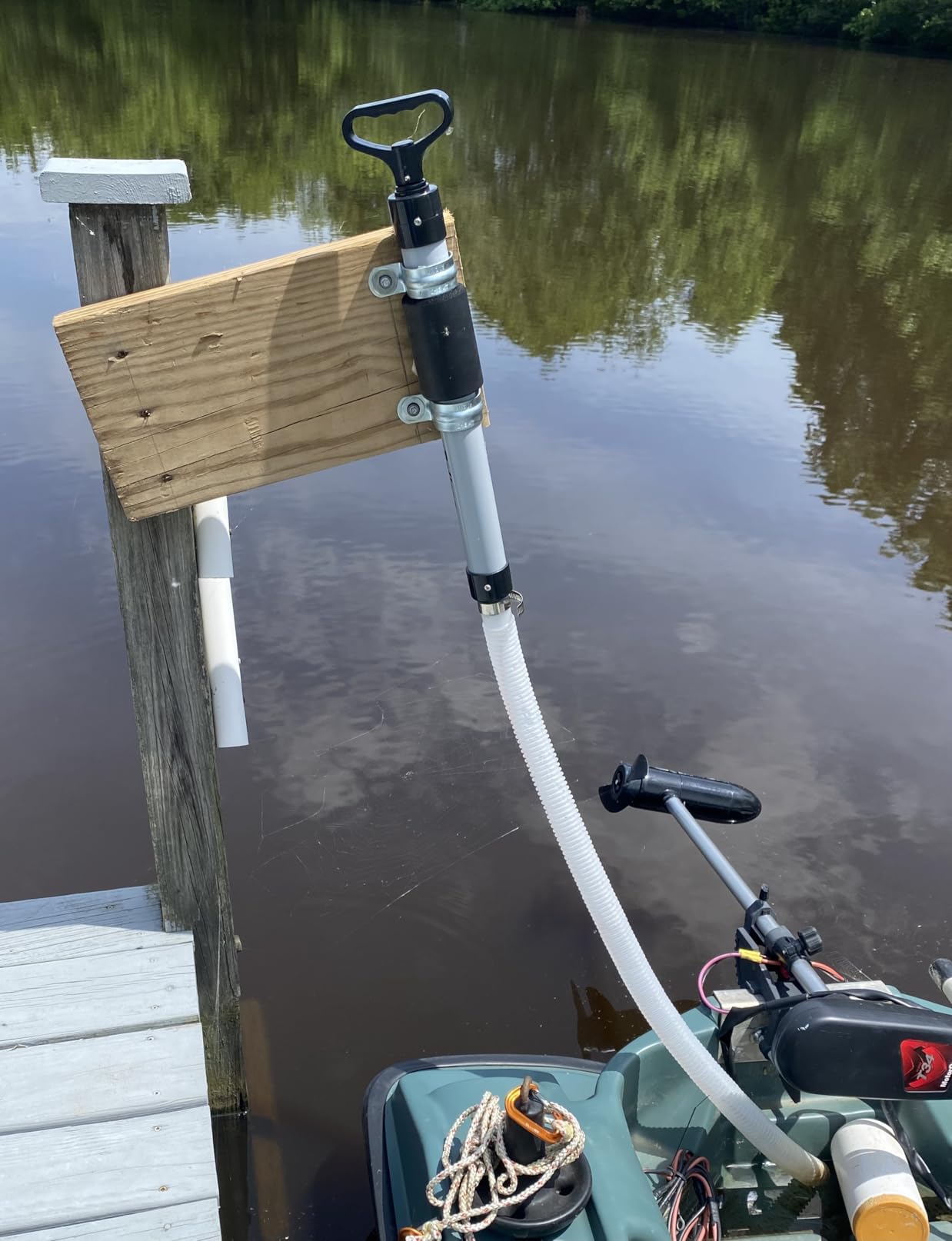
The foam sleeve is doing two jobs at once, giving you a grip that stays secure in a wet hand and enough buoyancy to keep the pump on the surface if it drops into the water. Owners working out of flats boats and nearshore saltwater report it pushing water several feet from a modest effort, which keeps discharge away from the hull.
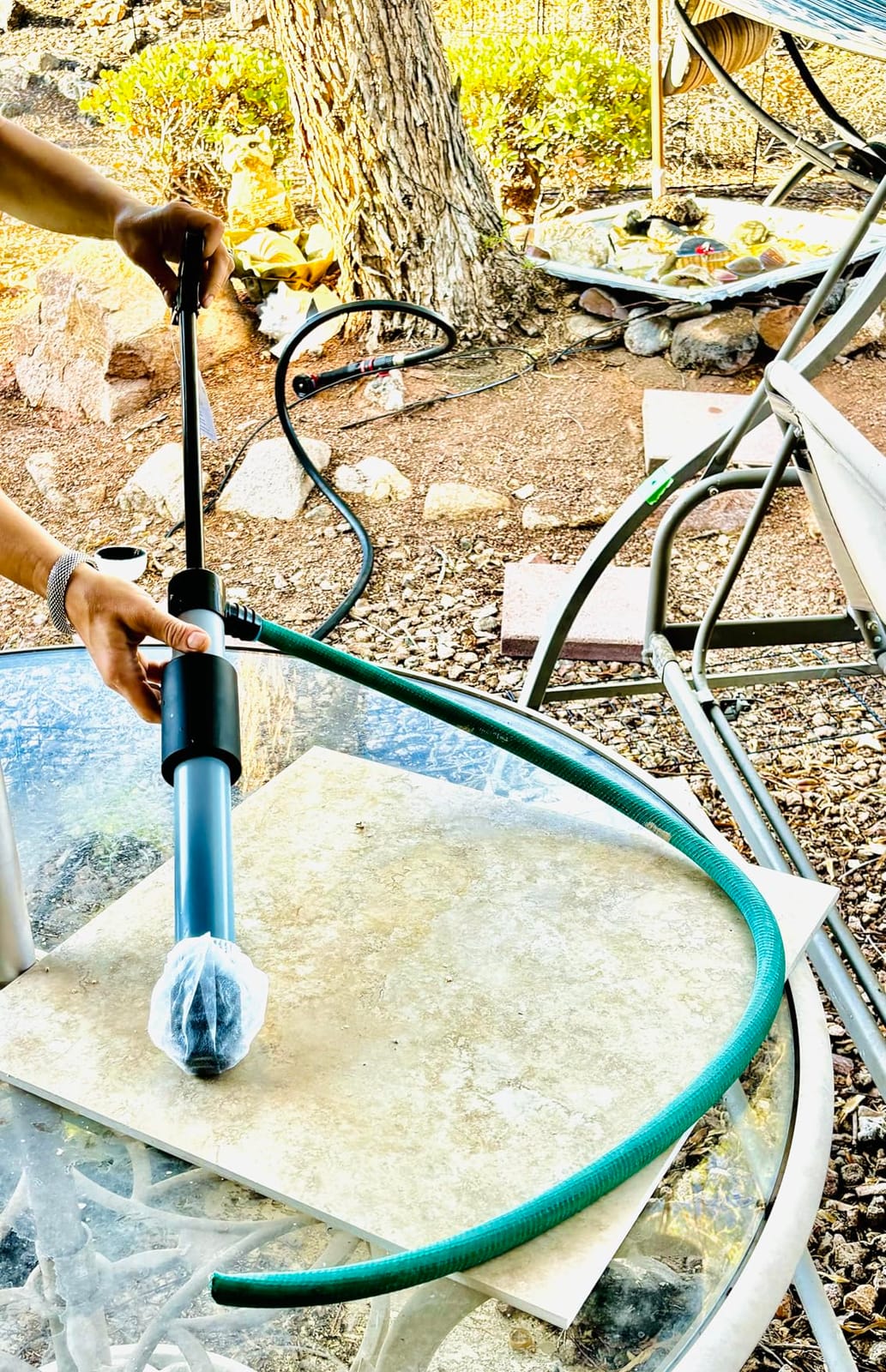
Build quality is the appeal here. Owners describe it as resistant to water, corrosion and shock, and it is one of the few hand pumps in this group that is regularly trusted for saltwater rather than only for freshwater craft.
At about 12 ounces and 21 inches long, it stows easily in a cargo area or under a hatch without taking up a seat.
What you get for the money
The strongest manual option for a skiff or small center console. It handles a meaningful volume quickly, floats, and it does not care whether the water is salt or fresh.
We like it as the partner pump to an electric automatic unit, since it fills the exact gap left when the battery is dead.
Where it falls short
No hose is included. Most owners add one so discharge goes over the side instead of across the deck, and you will want to size it before you buy.
It is longer and bulkier than some competing hand pumps, so cockpit space on a very small boat is tight. Gritty water also argues for fitting an inlet filter.
10. Better Boat Manual Pump with 39 Inch Hose – Best High-Volume Hand Pump
Manual Bilge Pump for Boats with 39″ Hose, Hand Water Pump for Kayak Canoe
- Very high flow for a hand pump
- Intake filter and spacers handle dirty water
- 39 inch hose keeps water off the deck
- Needs no power at all
- Hose is stiff and prone to detaching
- Some owners report internal leaks and early failure
- Lowest rated pump in this group
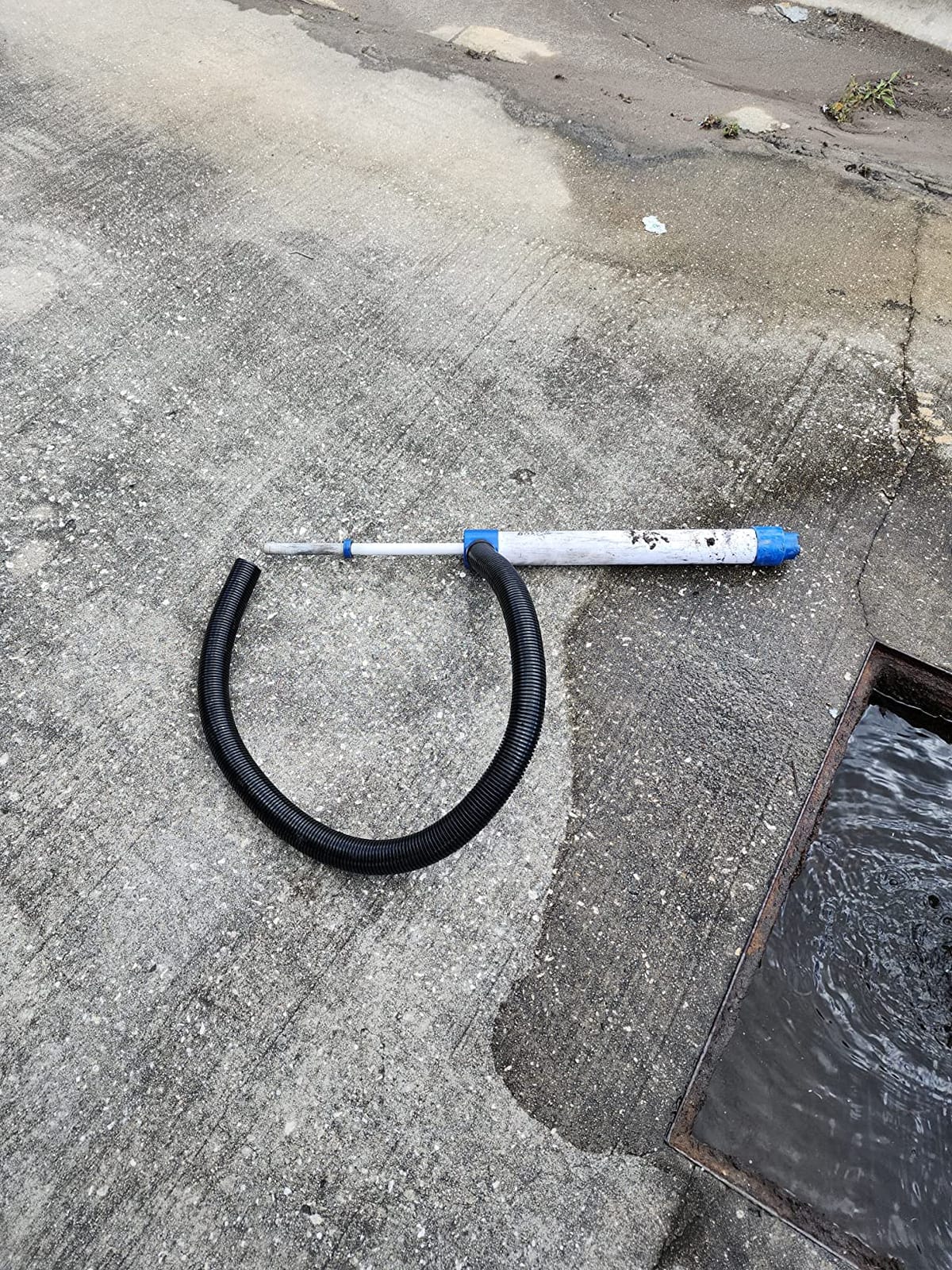
On paper this is the most capable hand pump of the group, rated at 20 gallons per minute with 115 cubic inches of volume per stroke. In a dinghy taking on water faster than a paddle can shift it, that is a real advantage over the smaller hand pumps above.
The intake is where the engineering went. A built-in filter catches leaves and grit, and the suction spacers hold the prime off the hull bottom so the pump keeps pulling rather than sucking air. On a shallow boat where the bilge is barely an inch deep at the sump, that spacer detail is the difference between clearing the water and stopping halfway.
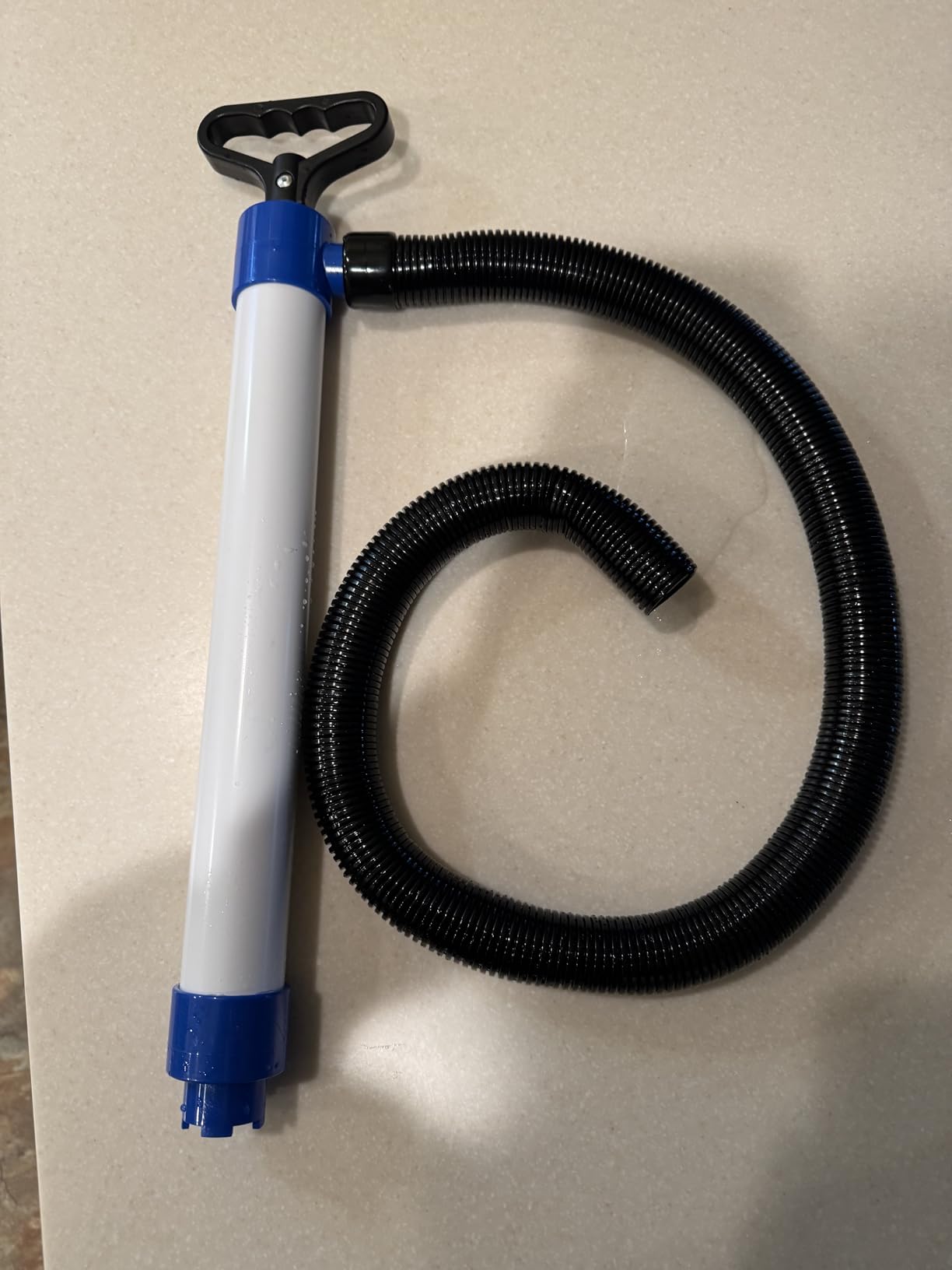
The rubber sealing washer inside the chamber maintains suction stroke after stroke, which is what allows the high rated flow. Owners also appreciate the T-handle grip in wet conditions and the fact that the whole thing works with no power at all.
Several buyers use it well beyond boating, on hot tub decks, in basements and on pool covers, which is fair evidence that the pump body itself is sound.
What you get for the money
The highest output per stroke of any manual pump here, plus a genuinely useful filtered intake. For a tender, a punt or a small utility boat that fills with water fast, it drains quickly without electricity.
The 39 inch hose is long enough to discharge over a gunwale into a bucket rather than across your feet.
Where it falls short
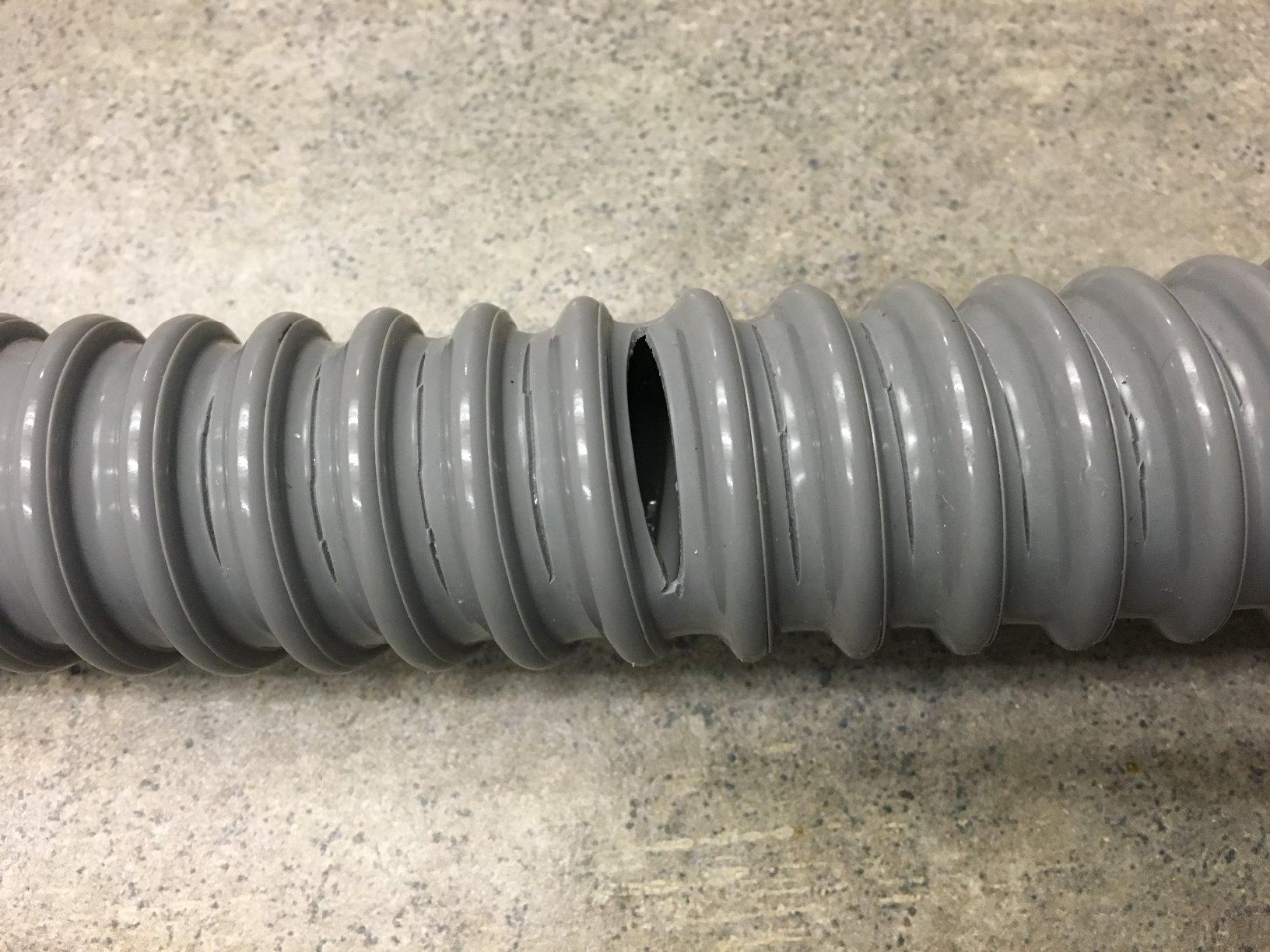
The hose is the problem. Owners describe it as ridged, stiff, prone to kinking and to popping off the outlet, and more three-star reviews in this group mention the hose than any other component. Check the length and condition before you depend on it.
A minority also report internal leaks and units falling apart within a year, which is consistent with its lower rating. It earns its place on output alone, not on longevity.
Bilge Pump Buying Guide: Sizing, Switches and Wiring in 2026
Spending a few minutes on sizing and wiring prevents nearly every complaint we saw in the review data. Here is what actually matters for a boat under 20 feet.
How many GPH does a small boat need
The industry shorthand is to size for roughly four times the rainfall rate a boat can realistically collect. For small craft, the practical shortlist is much shorter:
Fishing kayak or sit-in canoe — a hand pump, or a small 12V unit only if you fish in rain. Almost nobody runs 1100 GPH under a seat.
Dinghy or tender up to 10 ft — a hand pump handles the volume reliably. A 400 to 500 GPH automatic unit is a luxury if you want unattended draining.
Jon boat or small skiff, 10 to 14 ft — 400 to 500 GPH matches the bilge volume well. The Rule 25DA sits in this band.
Daysailer or small pontoon, 14 to 18 ft — 500 to 750 GPH gives headroom in a squall. This is the most common small-boat size band.
Center console or bay boat, 18 to 20 ft — 750 to 1100 GPH. A pump below 500 GPH here is fighting a losing battle in a hard rain.
Treat the label figure optimistically. Most manufacturers rate flow at 13.6 volts, which is a fully charged battery, and measured output at a realistic 12 to 12.6 volts is lower. Head height also cuts flow, so the last feet of lift up to the discharge reduce what you actually get. Size with margin rather than to the number on the box.
Hand, manual electric or automatic
A hand pump needs nothing but your arms. It is the right answer for anything you tow, and the right backup for anything with a battery. A manual electric pump gives you more speed but needs a switch, a fuse and wiring. An automatic pump is the default choice for a boat that has a battery bank, because it works while you are not watching.
Angling forums raise a fair point that we echo here: diaphragm pumps handle clean water better, while centrifugal designs with impellers push solids and eel grass rather than jamming on them. For weed-heavy flats, look for an impeller pump.
Float switch, integral switch or panel switch
These three options explain why a pump’s advertised cost is rarely the finished cost. An integral switch is built into the pump, which is why the MAXZONE, SEAFLO and SAILFLO units need nothing else. A separate float switch is a small add-on that switches a manual pump automatically, and it is the right way to add automatic operation to the Rule 25DA or the Sanuke. A panel switch gives you manual control from the helm, and the Sanuke, Dontmiss and SAILFLO harnesses accept one.
Owners report the same failure repeatedly: automatic switches sticking or failing silently, leaving water in the bilge with no visible sign. A panel switch you can see and test is worth having even on an automatic pump, which is part of why the three-wire units score well.
2-wire and 3-wire wiring in plain text
A two-wire pump has one positive lead and one negative. That is the manual setup: positive goes through a fuse to a panel switch, then to the pump; negative goes straight to the battery or a busbar. Simple, and you control everything.
A three-wire pump adds a signal lead, usually brown or white. In automatic mode that lead ties to the switched positive and lets the pump’s own float decide when to run. In manual mode the lead is left alone and a panel switch handles it instead. Leaving the signal lead connected to a fuse with no switch gives you automatic behaviour from a manual pump, which is how people retrofit automatics cheaply.
On every install: match the fuse to the pump’s rated current, use wire gauge appropriate to the run length, and seal any splices. Nearly every “automatic pump won’t turn on” complaint traces back to a blown fuse or an under-sized wire rather than the pump.
Battery drain math on a small house bank
The arithmetic is simple. Divide your house bank capacity in amp-hours by the pump’s rated draw to get a rough runtime at full flow. A 500 to 750 GPH pump at 3 amps runs roughly three hours on a 55Ah group 24 house bank. A 5 amp unit cuts that to a bit over two hours.
In practice an automatic pump cycles rather than runs flat out, because it switches off as the water clears, so real drain is much lower than the worst case. The worst case arrives when a switch is stuck on, or when water keeps arriving. A weekly manual test with a bucket of water poured into the bilge is the cheapest insurance there is, and it takes thirty seconds.
Four common bilge pump failure modes
Water running back into the bilge — a siphon through the discharge hose keeps the switch cycling. A built-in check valve, or a high loop in the hose that stays above the waterline, fixes it.
Airlock and lost prime — a sagging or kinked discharge hose traps air and the pump stops moving water. Secure the hose along its run and add a vent hole at the top of the loop.
A plugged strainer — sediment, eel grass, jellyfish and sand stop flow before anything electrical fails. Clean the screen at every layover, and more often on grass flats.
Switch or wiring failure — a dead battery, a corroded connector or a failed float switch all look identical from the cockpit: no noise. Test monthly, and keep a hand pump within reach.
There is also a placement trick that solves the last half inch of water nobody removes. Mounting the pump as low as the sump allows, with the intake as close to the bottom as you can get it, is what actually clears the residual layer. It is the question forum owners ask most often, and the answer is mechanical rather than electronic.
Off-season maintenance and storage
Rinse the pump in fresh water after every saltwater outing and let it dry fully before stowage. Pull the strainer, clear debris, and check the lead connections for corrosion. Keep the pump mounted rather than loose in a locker so it cannot be dropped, and keep the hand pump aboard year-round.
If you are winterizing a boat on a trailer, disconnect the battery rather than relying on the float switch not to activate. A float switch that triggers on a wet hull in a cold shed is a well-known way to flatten a battery over a winter.
While you are in there, it is worth checking the rest of the boat’s safety gear too. Our fender picks and ladder picks cover the two other items small-boat owners replace most often, and generator guides cover power on larger boats that carry a battery bank worth protecting.
Frequently Asked Questions
What is the best bilge pump for a small boat?
For most small boats under 20 feet, the best choice is a 750 GPH 12V automatic submersible pump with a built-in float switch, because it drains unattended and needs no extra switch hardware. Kayaks and dinghies are better served by a hand pump. Boats with heavy electrical loads or shallow wiring benefit from a lower-amperage automatic unit.
How many GPH should my bilge pump be?
Match the pump to the bilge volume rather than the boat’s marketing length. A kayak or dinghy needs a hand pump or nothing. A Jon boat or small skiff of 10 to 14 feet suits 400 to 500 GPH. A 14 to 18 foot pontoon or daysailer suits 500 to 750 GPH. An 18 to 20 foot center console wants 750 to 1100 GPH, and you should treat the labelled figure as optimistic.
What is the average life expectancy of a bilge pump?
A well-built marine pump with stainless components typically runs for several seasons before it needs attention, while budget units commonly fail within one or two seasons. Service life tracks build quality and how often the strainer gets cleaned. Running a pump dry through a failed float switch shortens that life dramatically.
Who makes the most reliable bilge pumps?
Rule and Johnson come up most often in owner reports about long service life, and their stainless steel construction is a big part of that. SEAFLO is frequently praised for a four-year warranty and a sealed, ignition-protected housing. The deciding factor is usually build quality and warranty length rather than brand alone.
What are the common problems with bilge pumps?
Four failures account for most complaints. Water siphons back through the discharge hose and keeps the switch cycling, which a check valve or a high hose loop prevents. Air locks from sagging or kinked hoses stop flow until the hose is secured. Plugged strainers from sediment, weed or sand stop water before anything electrical fails. And a dead battery, corroded connector or failed float switch all look the same from the cockpit: silence.
Is a float switch necessary for a manual bilge pump?
A float switch is optional but useful. Without one, the pump only runs when you switch it on from a panel, which means it does nothing in the situation it exists for. Adding a float switch converts a manual pump into an automatic one for a small outlay, and it can be wired to a three-wire pump without replacing anything.
The Best Boat Bilge Pumps for Small Boats in 2026
After working through all ten, the MAXZONE 1100 GPH automatic pump is our pick for most small boats. It delivers serious flow from a compact body with the float switch already built in, which removes the single most common install mistake. Just size its 3.8 amp draw against your wiring before you commit.
For value, the SEAFLO 750 GPH gives you an all-in-one automatic pump with a four-year warranty. For a Jon boat or a saltwater-exposed hull, the Rule 25DA is the one to buy for longevity. And on any boat without a battery worth draining, the Seattle Sports Paddler’s hand pump is the highest-rated tool in this roundup.
Whatever you choose, run a second independent pump where you can and keep a hand pump aboard. When you are comparing options for the rest of the boat, start with our inflatable boat guide.