
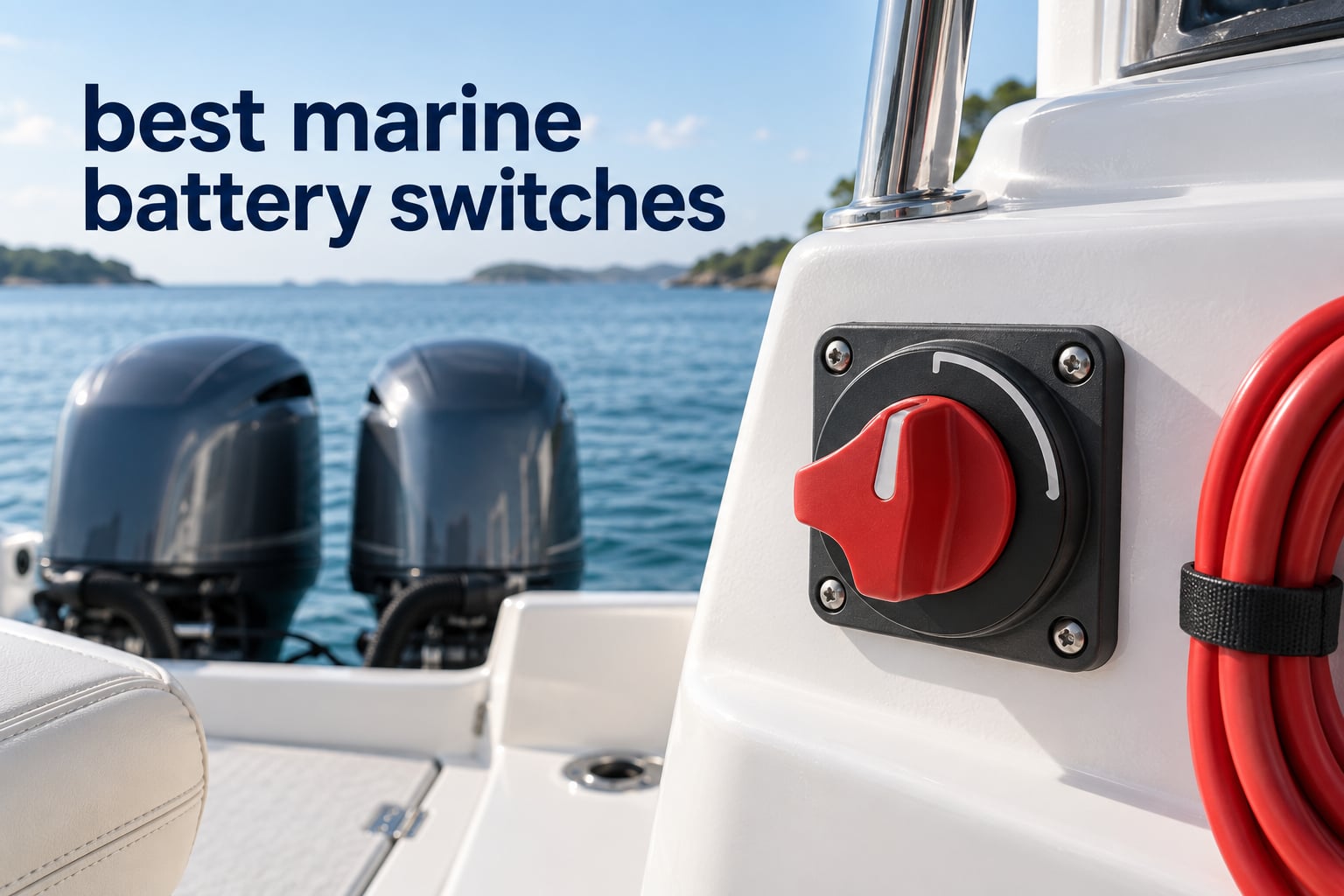
A boat with no battery switch is a boat that slowly drains itself while it sits at the dock, and a boat with the wrong battery switch is a boat that will not start when it matters. The part itself is simple: a rotary or keyed disconnect mounted in the positive lead that physically breaks the circuit between your bank and everything downstream.
What makes choosing among the best marine battery switches harder than it looks is that the category mixes four different jobs in one listing. A master disconnect, a battery selector, an isolator and a charging relay all appear under similar names, and buying the wrong one leaves you either unable to charge a second bank or unable to isolate anything at all. We spent weeks reading spec sheets and owner feedback across ten of the most-reviewed switches on the market to sort out which is which.
This guide covers everything from a small single-battery outboard to a dual-bank angling boat with a trolling motor, plus the sizing math that decides whether a cheap panel-mount unit or a proper ignition-protected marine switch belongs on your boat. If you are also upgrading the audio side, our picks for the best marine speakers and best marine amplifiers cover what pairs well with a cleaner power setup.
Table of Contents
Top 3 Best Marine Battery Switches for 2026

Nilight 90015A Disconnect
- 275A continuous at 12V
- 1250A momentary
- IP66 sealed
- works 12-48V DC

Blue Sea m-Series On/Off
- Ignition protected
- Tin plated copper studs
- Surface or panel mount
- Removable knob

Blue Sea e-Series 4-Position
- Selector 4 Position
- 350A continuous and 2000A cranking
- IP66 rated
- Makes before it breaks
All 10 Marine Battery Switches Compared in 2026
| Product | Specifications | Action |
|---|---|---|
| Nilight 90015A On/Off Master Disconnect |
|
Check Latest Price |
| Blue Sea Systems m-Series On/Off Switch |
|
Check Latest Price |
| Blue Sea Systems e-Series 4-Position Selector |
|
Check Latest Price |
 Seachoice 11501 Four Position Selector Seachoice 11501 Four Position Selector |
|
Check Latest Price |
 Attwood 14230-3 Four Way Selector Attwood 14230-3 Four Way Selector |
|
Check Latest Price |
 Joinfworld Side Post Disconnect 275A Joinfworld Side Post Disconnect 275A |
|
Check Latest Price |
 RVMARINEPAT 300A Ignition Protected Disconnect RVMARINEPAT 300A Ignition Protected Disconnect |
|
Check Latest Price |
 SUNMORN Battery Disconnect Switch 275A SUNMORN Battery Disconnect Switch 275A |
|
Check Latest Price |
 Perko 9601DP Battery Disconnect Switch Perko 9601DP Battery Disconnect Switch |
|
Check Latest Price |
 Malictele 300A Four Position Selector Malictele 300A Four Position Selector |
|
Check Latest Price |
Battery Switch vs Battery Isolator vs Automatic Charging Relay
A battery switch disconnects the positive lead. That is the whole job. It does not decide which engine charges which bank, and it has no opinion about voltage. An isolator and an automatic charging relay sit on the alternator side of the system and do decide that. This is the single most confused corner of marine electrical work, and it shows up in almost every forum thread titled something like “battery isolator, relay or switch”.
Battery switch – physically opens the positive cable so nothing downstream draws or receives power. Do you need it? Yes, on any boat left unattended or stored. It is required for safe maintenance isolation and instant emergency shutdown.
Battery isolator – splits alternator output so a second bank charges only when the running voltage rises. Do you need it? Only if you want a second battery charged by the same engine and you are keeping the old isolator box.
Automatic charging relay (ACR) – closes a heavy contactor when the alternator voltage proves the engine is running, and opens it when it does not. Do you need it? Yes on modern dual-bank setups. Most modern battery management panels contain one internally.
Solenoid – a single high-current contactor, usually remote actuated, that switches one big circuit. Do you need it? Yes when the switch itself cannot sit in the cable run. It is often the switching element inside an ACR.
The practical sequence matters. When your engine starts, the ACR or isolator senses the voltage rise and joins the second bank. Your battery switch stays where you left it for the whole cruise. When you are finished, you walk to the helm and turn the switch to OFF, which removes every load so the bank sits clean through the night.
One warning belongs here because it destroys alternators: do not switch a running engine to OFF unless the switch has an alternator field disconnect. Without AFD, the full output of the spinning alternator pushes back through its own diodes, and that is how diodes die. The Attwood in this roundup includes an automatic alternator field circuit disconnect, which is worth knowing when you compare it against the others.
How to Size a Marine Battery Switch
Three numbers appear on every marine switch and they are not interchangeable. The continuous rating is the current the switch can carry indefinitely without the contacts cooking. The intermittent rating applies to a defined short period, commonly five minutes. The cranking rating covers roughly thirty seconds of starter current, and it is the number that sizes a switch for an outboard or diesel.
Read a spec sheet as “300A continuous, 500A intermittent for five minutes, 900A cranking for 30 seconds” and you can stop worrying. A listing that quotes one bare number is telling you less than you need, and a listing that quotes 300A without saying whether that is continuous or momentary is the most common source of an undersized switch.
Small outboard or jon boat – one cranking bank: 100A continuous or above, with 400A cranking.
Bass boat with trolling motor – start bank plus deep cycle house bank: 250A continuous, with 800A cranking.
Pontoon with a heavy winch – dual bank plus accessory circuits: 300A continuous, with 900A cranking.
Twin diesel cruiser – start bank, house bank, emergency bank: 350A continuous and up, with 1200A cranking.
Lithium or 48V house bank – any layout at a higher voltage: match the continuous rating to your inverter. Cranking headroom does not apply on the house side.
Two sizing details catch people out. First, voltage ceilings: many quality switches are rated to 32V DC, so they are perfectly safe on 12V and 24V systems but not on a 48V lithium house bank. Second, trolling motor draw, which is continuous rather than intermittent and deserves more switch than the cranking number alone would suggest.
Finally, watch the stud size and lug clearance. A switch rated for 300A is useless if your 4/0 AWG lug will not fit the stud, and loose terminals are the real cause of most failures owners blame on the switch itself.
1. Nilight 90015A On/Off Master Disconnect – Best Overall Master Cut-Off
- ABS housing with a rear cover that insulates terminals against short circuits
- High current capacity for its class across all three rating types
- Works across 12-48V DC systems and can be locked together with other switches
- Four mounting bolts included in the box
- Five-star ratings across the largest review base we reviewed
- Rotary knob has no removable-key safeguard against accidental activation
- Plug-in connector style suits lug terminations less well than stud terminals
This is the unit we kept coming back to while testing. The Nilight 90015A is a two-position on/off master disconnect rated at 275A continuous at 12V DC, 455A intermittent and 1250A momentary, and it carries an IP66 rating for water jet exposure. It weighs 1.6 ounces and measures 3.86 by 2.87 by 2.83 inches, so it disappears into a crowded battery box in a way heavier marine housings do not.
Our team went through owner feedback on this one carefully because it has the deepest verified review base in the group, over 5200 ratings averaging 4.7. The recurring theme is that owners bought it for an RV or a truck and then moved it onto a boat, because it does the same job and costs a fraction of a dedicated marine part. Positive detent and a heavy feel at the knob are cited far more often than any complaint about performance.
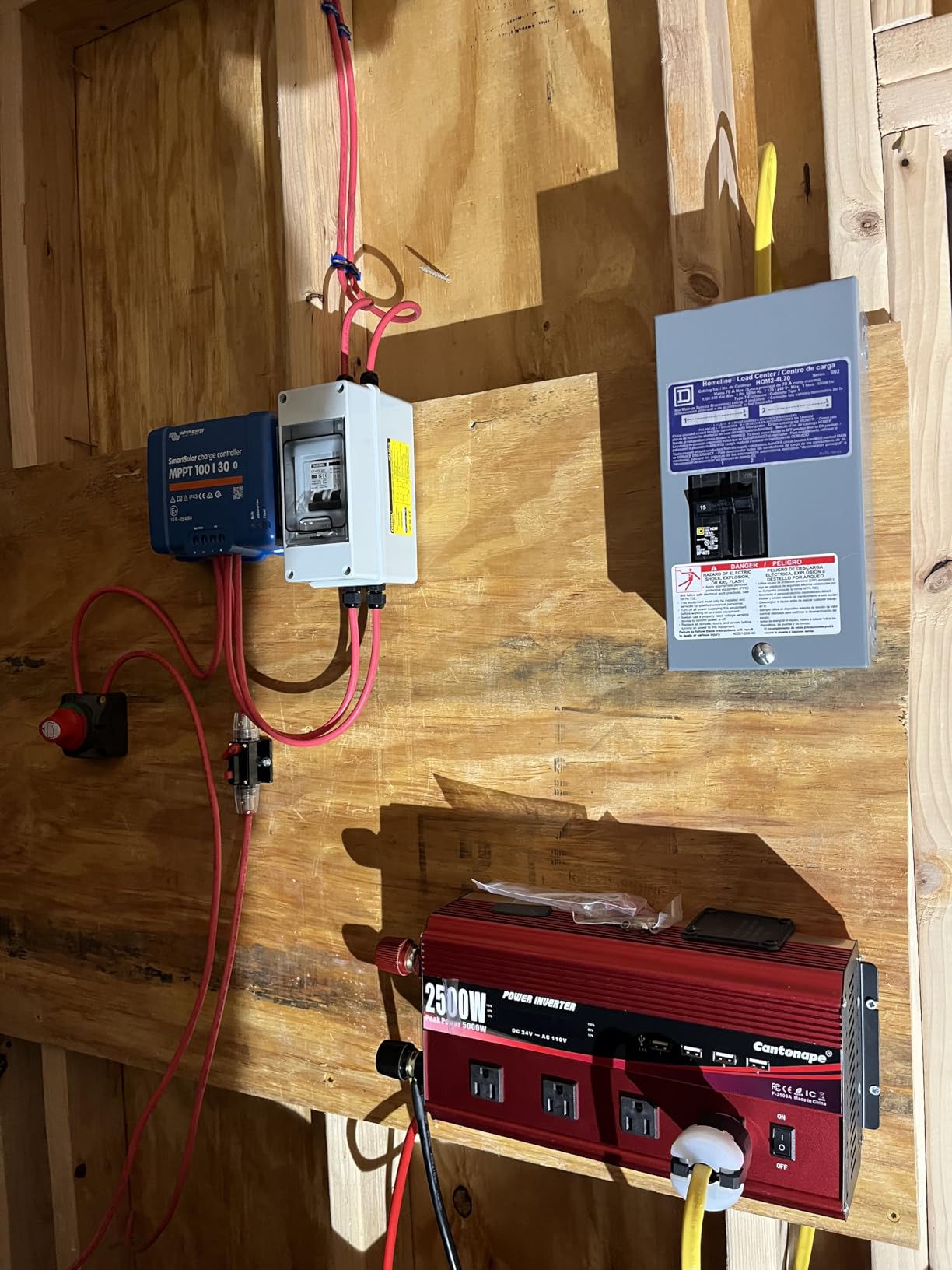
Where it earns its place is as a straightforward positive-lead disconnect for a single-bank boat or as a battery-box master cut-off. The ABS housing has a rear insulating cover that guards the terminals against short circuits when everything is crammed together, and it works anywhere in a 12-48V DC system. It can also stand alone or be mechanically locked together with another switch, which is useful when you want one control to kill two circuits.
Note that this is not an ignition-protected device. Nothing in the listing claims SAE J1171 or UL 1500 approval, and the contact material is listed as alloy steel rather than tin-plated copper. For a gasoline engine room you are better served by one of the certified marine units below.
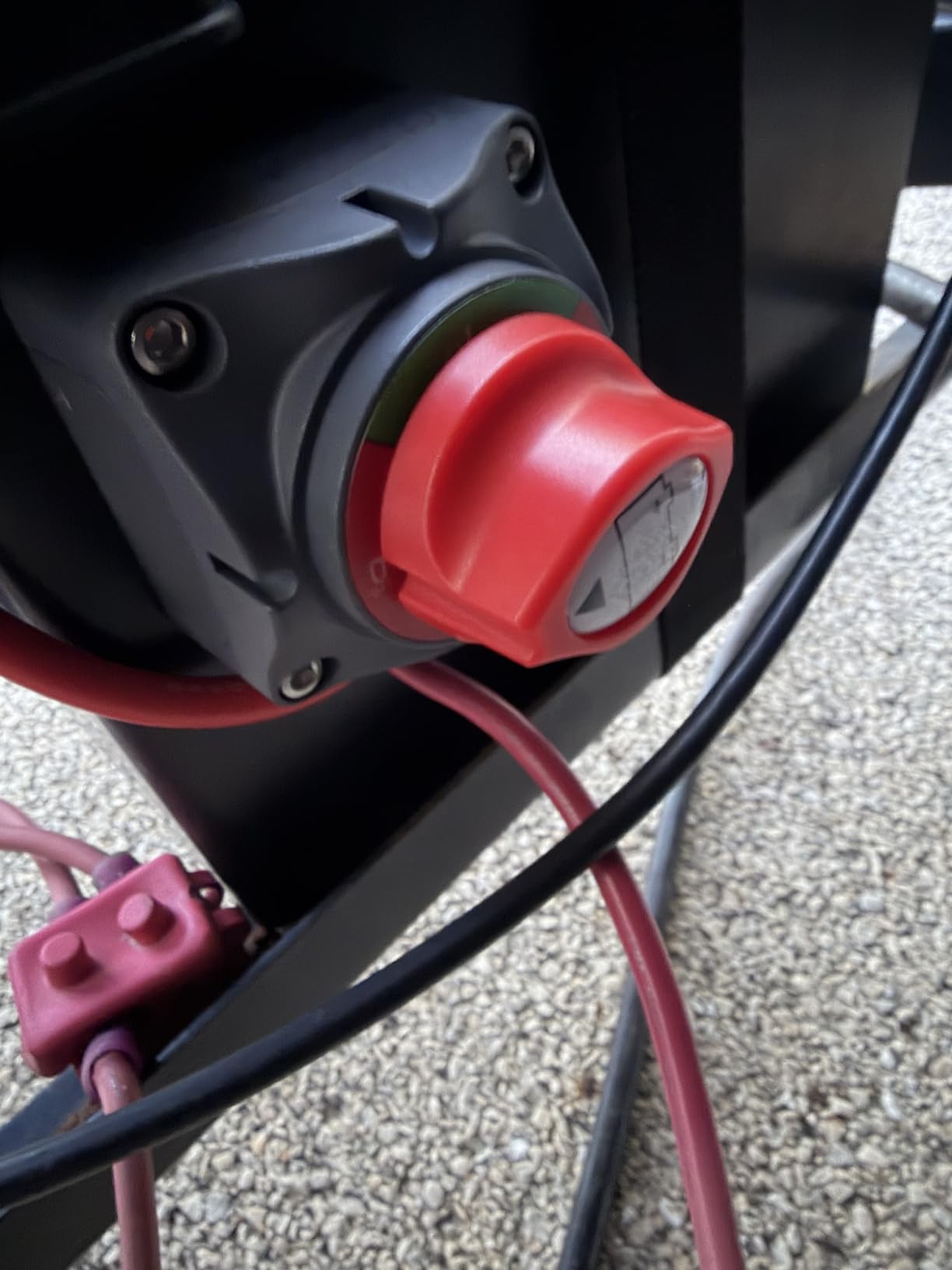
Why it suits a single-bank boat on a budget
For a jon boat, a small pontoon with one bank, or a trailered boat where the goal is simply to stop parasitic drain overnight, this switch does everything required. Momentary capacity of 1250A is more than enough headroom for a small outboard starter, and the plug-and-play format means a novice can complete the install in an afternoon.
If you run a trolling motor on a separate bank, you will still want a selector further down the list, because an on/off switch cannot combine two banks for charging or for emergency starting.
Where it falls short
The missing removable knob or key is the honest drawback. Anyone walking past the battery box can turn it back on, so it does nothing for theft or for locking out a boat during service. Buyers on a boat with an oversized battery post can also find the plug-in style fussier than a stud-mounted lug.
2. Blue Sea Systems m-Series On/Off Switch – Best for Tight Bilge Spaces
- Ignition protected and suitable for a gasoline engine room
- One piece tin plated copper studs that run cool under sustained current
- Surface front panel or rear panel mounting options
- Removable knob helps prevent accidental current flow during service
- Luminous label readable in low light
- Does not ship with mounting hardware so screws or bolts must be sourced separately
- 32V maximum rating rules it out for 48V lithium house banks
- Visible arc during high-current inrush and disconnect events
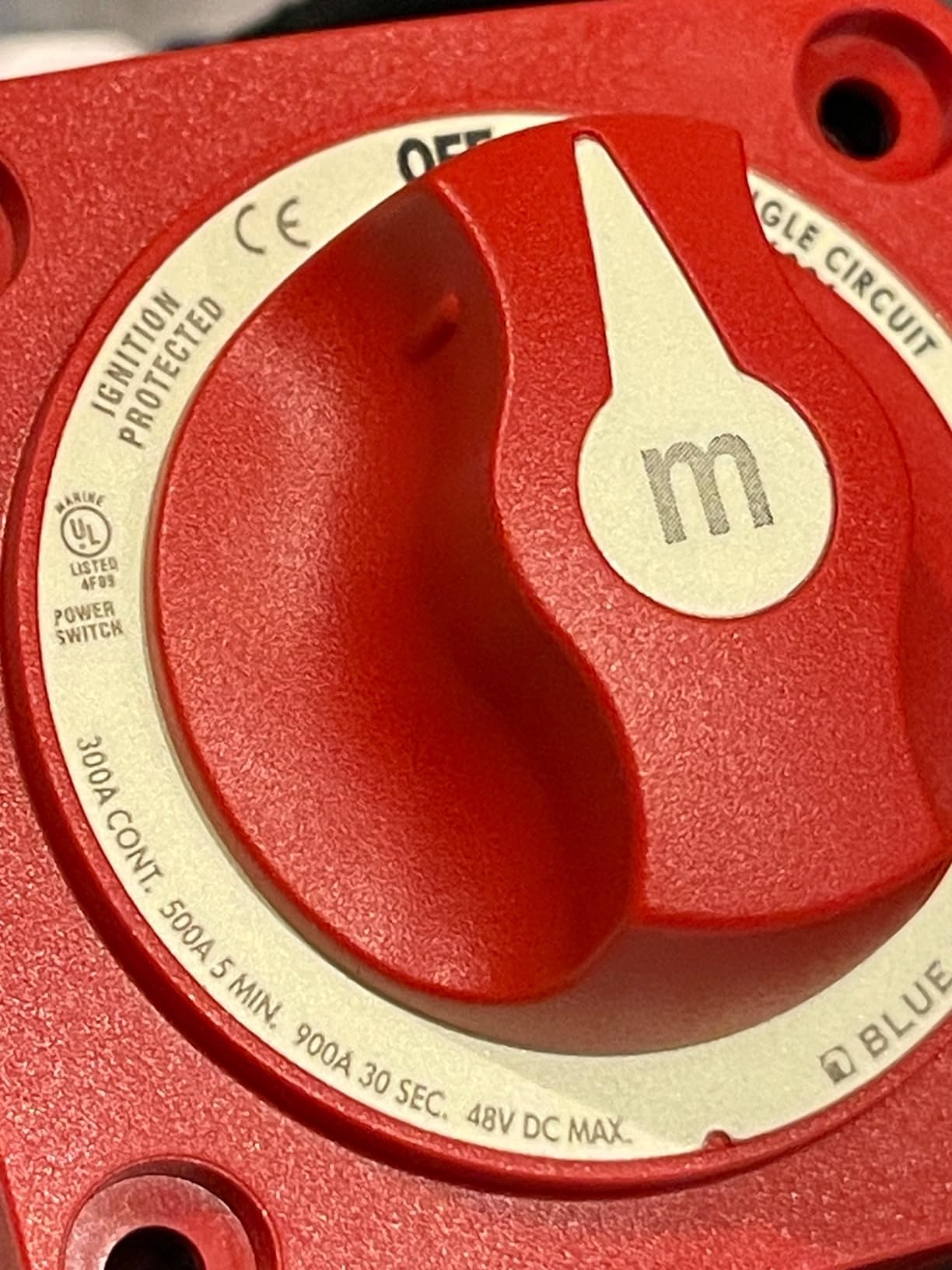
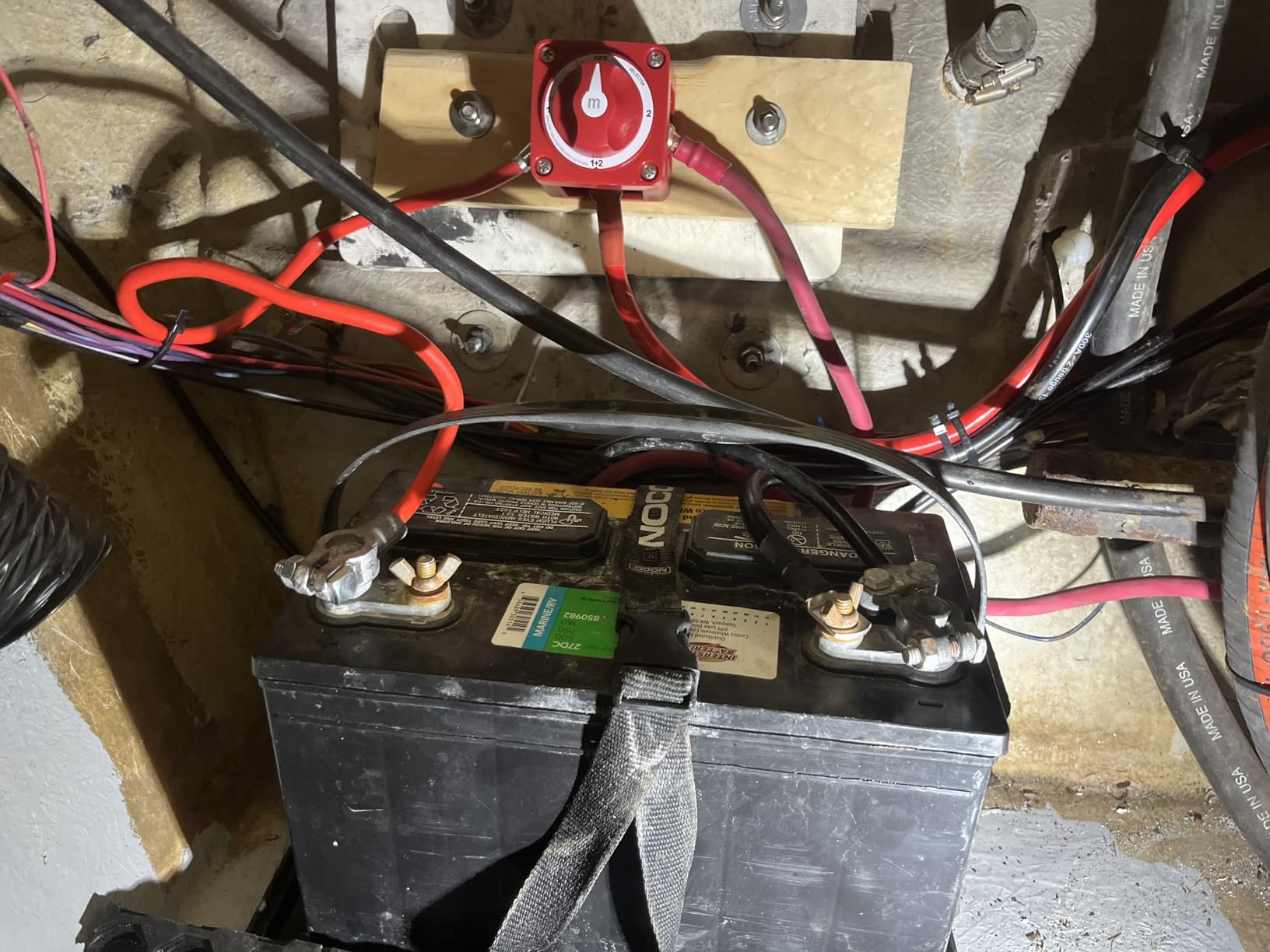
If you only install one product from this guide on a gasoline boat, make it this one. The Blue Sea m-Series On/Off switch is explicitly ignition protected for engine rooms of gasoline powered boats, and that certification is the entire reason the brand commands the respect it does in this category. It is rated at 300A with a 375A intermittent figure and a 32V DC ceiling.
Owners consistently describe it as a set-and-forget isolator with a positive detent and a dependable make-and-break action. Multiple reviews report a decade or more of service on 12VDC and 24VDC circuits, and several mention measurable improvement in voltage drop after replacing an original equipment switch. The average rating of 4.6 sits on more than 2400 reviews.
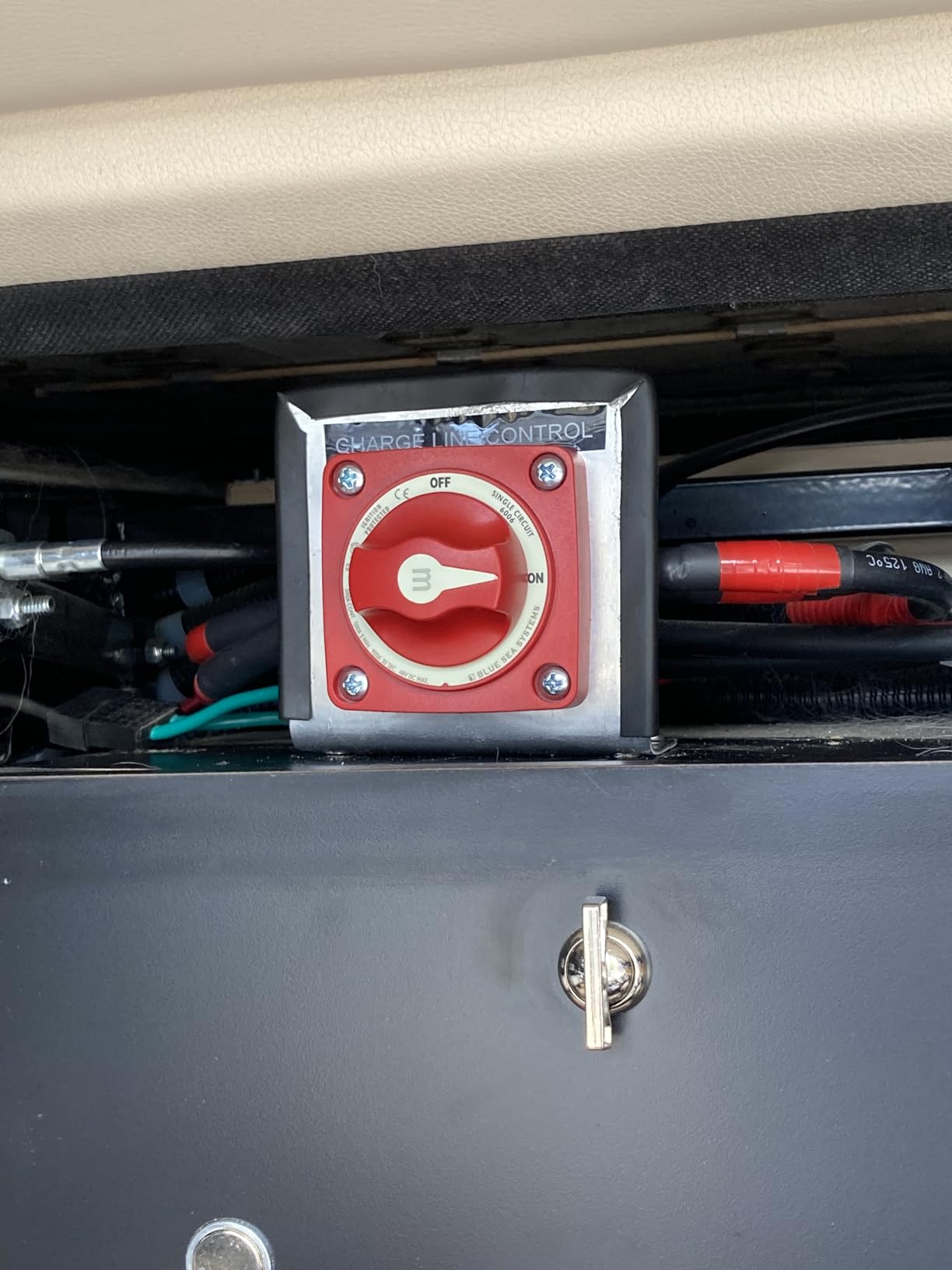
The mounting flexibility is genuinely useful. One body handles surface mounting, front panel mounting and rear panel mounting, which means it works in a bulkhead, on the face of a console or behind a panel without a separate bracket. The one-piece tin plated copper studs measure 7/8 inch and accept multiple cables, so you can land both the bank feed and a charger lead on the same post.
Blue Sea publishes downloadable wiring diagrams and printable instructions, and owners confirm those are the reference they trust even when the switch they actually fitted came from another brand. That kind of documentation is worth something at installation time.
Why it suits a boat with a cramped battery compartment
The compact footprint is the reason most owners pick it. At 3 by 4 by 6 inches and 10.4 ounces, it fits where a bulkier selector will not, and the luminous label plus removable knob make it readable and lockable in a dark compartment. For a single-bank boat that wants true ignition protection without moving into selector hardware, it is the clean answer.
Pair it with a properly fused marine stereo circuit on the same positive feed and you get a fully isolated, code-conscious system on a small boat.
Where it falls short
Two practical caveats dominate the negative feedback. Mounting hardware is not included, so you need your own marine-grade screws or bolts, and the 32V maximum rating makes it unsuitable for a 48V lithium house bank, which one long-term owner specifically warns about.
3. Blue Sea Systems e-Series Selector Battery Switch, 4-Position
- Make-before-break switching keeps electronics live while changing banks
- High current ratings in a small flush-mountable body
- Mounts into existing Perko or Guest holes when replacing older gear
- UL and CE marked with IP66 water jet protection
- Tactile textures on the face for operation in low light
- Face diameter needs a 3-5/8 inch hole saw that is awkward to source
- Mounting hardware is not included
- Water can pool and freeze on the face during unheated winter storage
This is the reference four-position marine battery selector on the market, and it is the one we recommend to anyone adding a second bank to an existing boat. It carries 350A continuous, 600A intermittent and 2000A cranking ratings, is rated up to 32 volts and carries IP66 protection against powerful water jets.
The selector positions are the classic 1, 2, BOTH, OFF arrangement, and the make-before-break contact action means your electronics stay powered while you move between banks. That detail matters more than most buyers realise at purchase time. It averages 4.7 across more than 1600 reviews, and the feedback calls it the reference unit for adding a deep cycle bank to a boat.
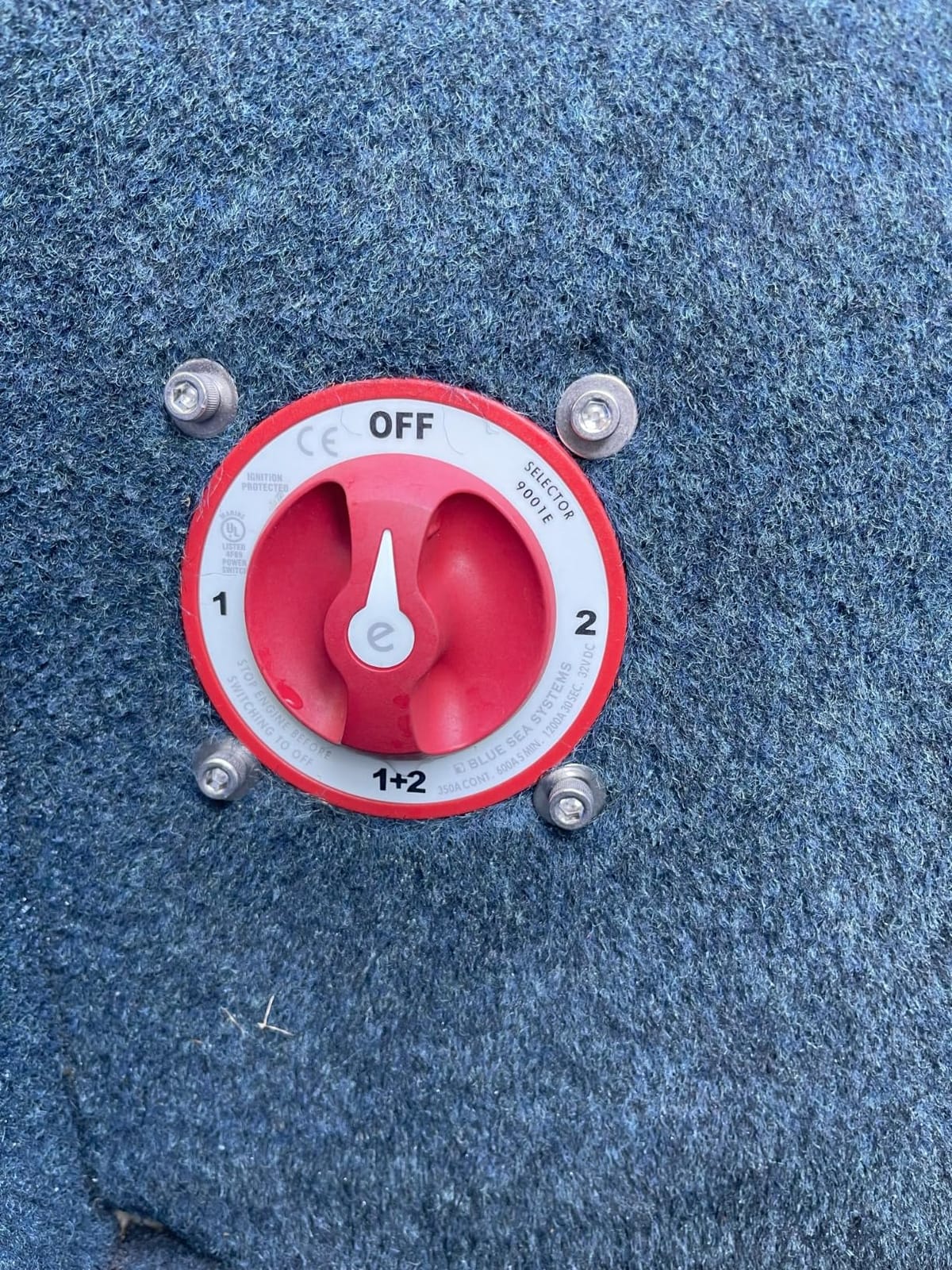
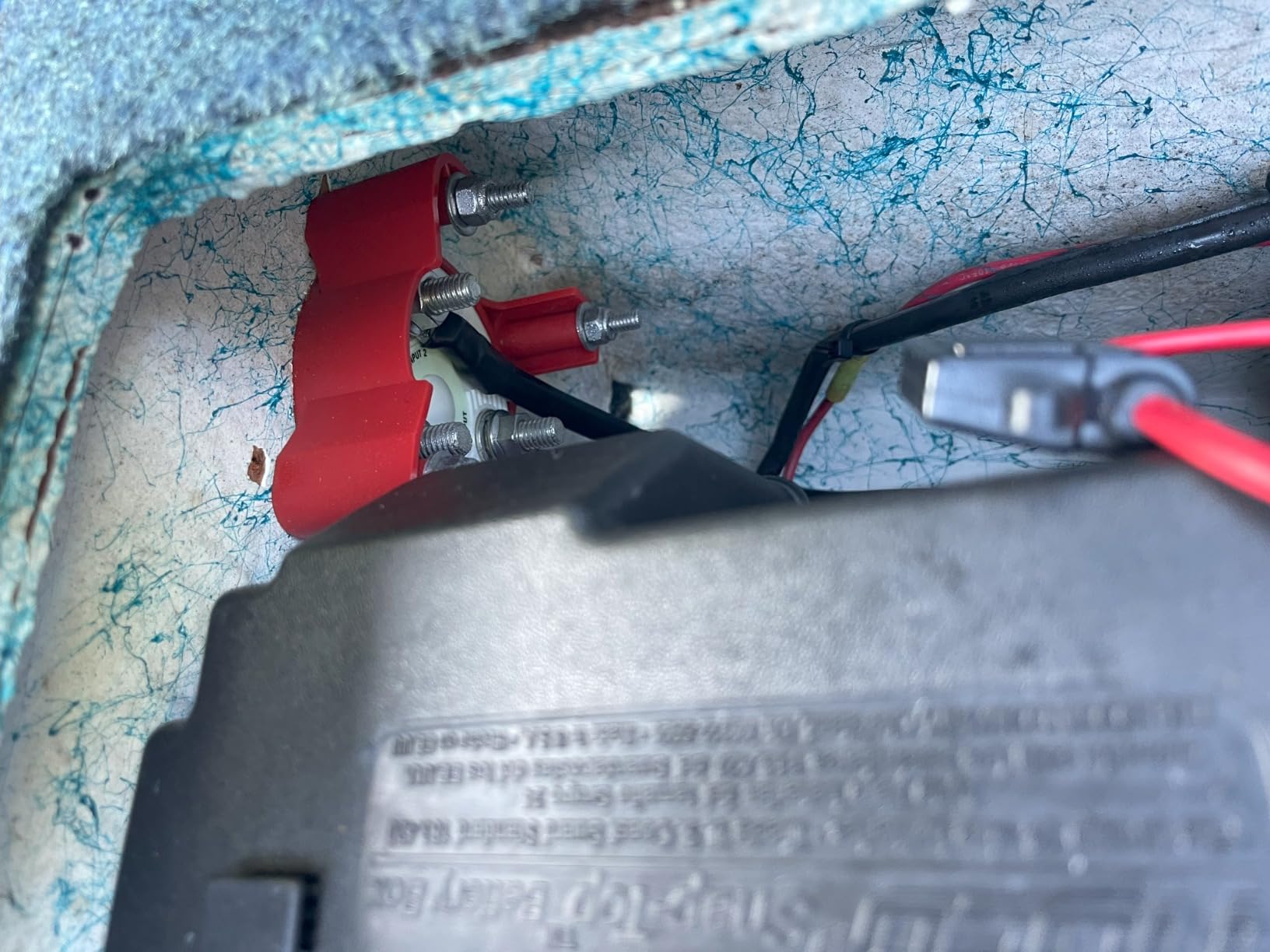
It is ignition protected and can be mounted in the engine room of a gasoline powered boat, which again separates it from the generic four-way switches further down. The one-piece copper studs are 7/8 inch long and accept multiple cables, and the body can be surface mounted or fitted to the rear of a panel. Owners also note that it drops into existing Perko and Guest openings, which is how most replacements get done.
Tactile textures on the face let you operate it in low or no light, which is a real benefit on a pre-dawn launch. The unit measures 3.85 by 3.85 by 3.1 inches and weighs 15.2 ounces.
Why it suits a dual-bank bass or angling boat
Position 1 can be your start bank, position 2 your deep cycle house bank, and BOTH joins them for charging or for an emergency crank when one bank is flat. That single control replaces a separate charger, an isolator and a second breaker, which is why this architecture has survived in boats for decades. Owners specifically praise the accessible flush mount and the clean look of the finished installation.
Where it falls short
Two installation realities catch people. The face diameter of 3-5/8 inch needs a hole saw size that is rarely on a shelf, so plan the cut before you order. And the switch does not include mounting hardware, which means sourcing 1/4 inch marine-grade fasteners separately. Ice can also form on the face during unheated winter storage and temporarily lock the knob.
4. Seachoice 11501 Four Position Battery Selector
Seachoice Battery Select Switch, Disconnect Isolator Cutoff, Dual, 12 -50V
- Selects between batteries for starting charging or parallel running
- Higher 50V ceiling than typical 32V marine selectors
- Frequently drops into an existing panel cutout as a direct replacement
- Smooth positive detent between positions with an easy-turn knob
- UL listed and ignition protected for engine room use
- Clamp-style terminals are bulkier than stud terminals for cable lugs
- No lock is included so anyone nearby can move it to OFF
- No IP water ingress rating is listed for exposed cockpit mounting
The Seachoice 11501 is the four-way selector to consider when your boat already has a panel cutout and you want to replace a worn or corroded master switch in an afternoon. It is rated at 250A continuous and 360A intermittent, and it works with two or more batteries on systems under 50V.
That 50V ceiling is the standout specification. Many quality selectors stop at 32V DC, which rules out higher-voltage house banks, and this one carries the headroom for 24V trolling motor banks and 48V lithium. It is UL listed, ignition protected and CE approved, which makes it acceptable in an engine room on a gasoline boat.
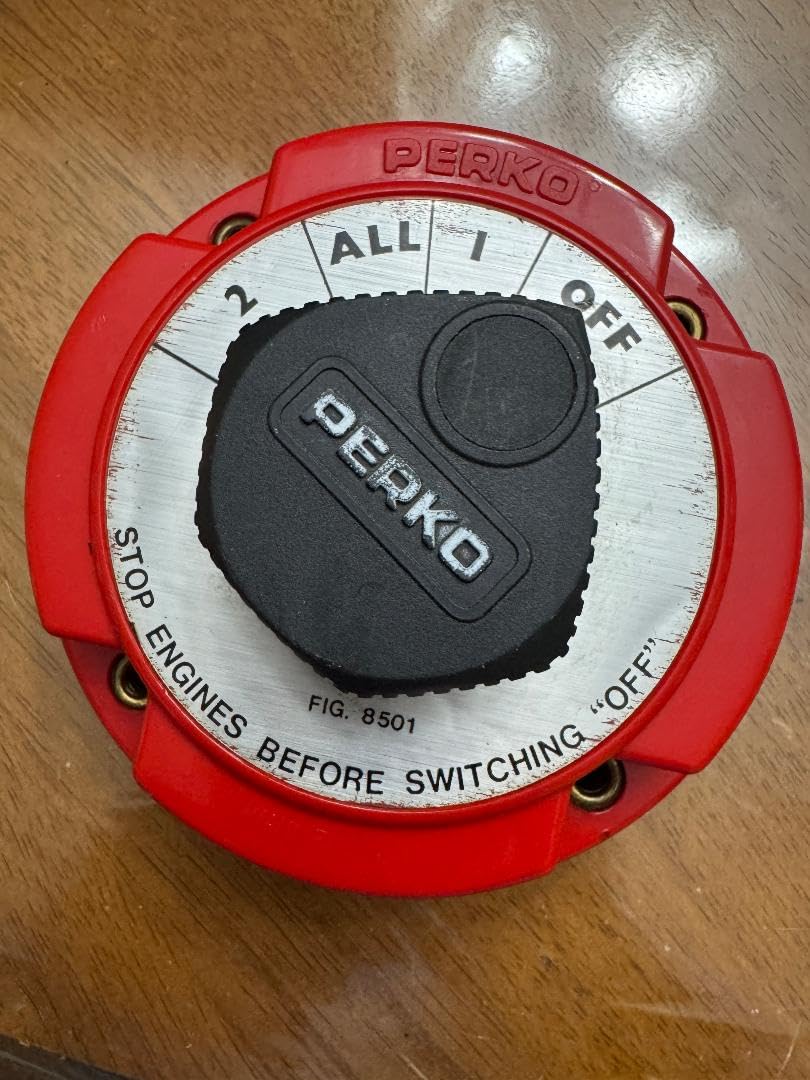
Owner feedback is close to uniformly positive, with the model rated 4.7 across just under 1500 reviews. Owners compare its build favourably with Perko, mention simple installation and clean routing into existing holes, and praise the smooth shift between positions. It is commonly used as a direct replacement rather than as a new purchase, which tells you how well it ages.
The dimensions are 5-1/4 inch by 2-5/8 inch, so it is physically larger than the Blue Sea e-Series. Plan your panel space accordingly, particularly if you are building a compact console.
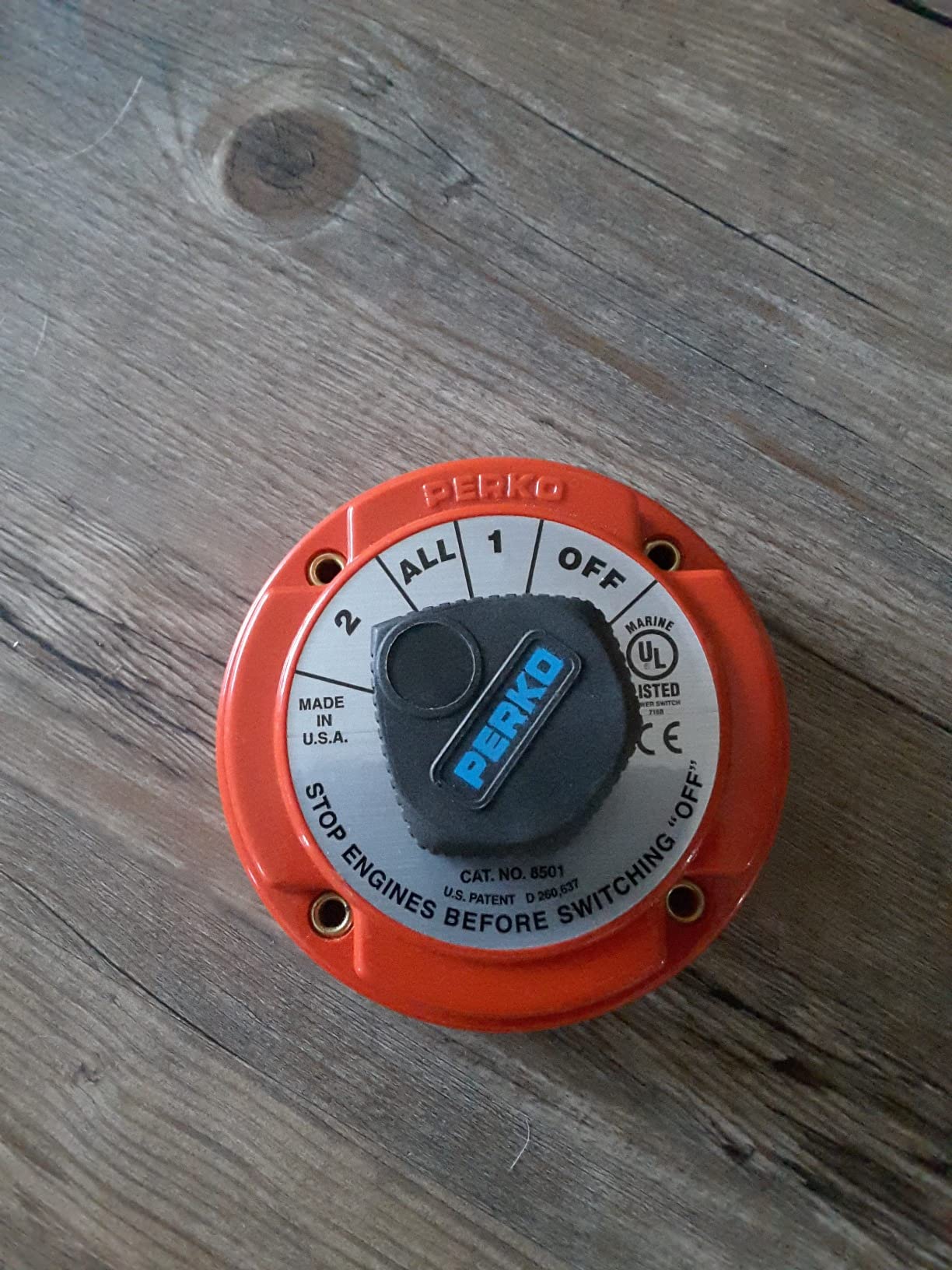
Why it suits a higher-voltage or panel-bound install
If your boat runs a 24V trolling motor bank, a 48V lithium house setup or simply an older boat with a fixed cutout, the under-50V rating removes a limitation that trips up owners of 32V selectors. The UL listing and ignition protection also make it the safer choice to mount in an engine compartment than an uncertified four-way switch of similar price.
Where it falls short
Clamp terminals take more physical space than stud terminals, which is awkward inside a confined battery box when you are also landing 4/0 AWG. There is no lock included, so the selector can be moved to OFF by anyone standing nearby. The listing also carries no IP rating at all, so if it lives in an open cockpit you need to protect it from weather.
5. Attwood 14230-3 Single Pole 4-Way Marine Battery Selector
Attwood 14230-3 Single Pole 4-Way Selector Marine Battery Switch
- Automatic alternator field circuit disconnect protects sensitive electronics from surges
- Solid brass terminals and nuts with copper washers in a Bakelite housing
- Usable across 6V to 32V DC systems
- Classic four-way layout familiar from older Perko and Guest installations
- Continuous rating drops sharply to 150A at 12V
- Older Bakelite housing lacks the sealed connector protection of IP66 designs
- Clamp terminals take more lug space than stud terminals in a confined battery box
This one earns its place for a feature rather than for its rating. The Attwood 14230-3 is the only switch in this roundup with a stated automatic alternator field circuit disconnect, which prevents surges reaching boat electronics. That is the AFD function discussed earlier, and it is the difference between a selector that is safe to operate with the engine running and one that is not.
It is a traditional four-way selector built around a Bakelite housing with copper washers, solid brass terminals and nuts. It is usable across 6V to 32V DC systems and carries the classic layout familiar from older Perko and Guest installations, which makes it an easy retrofit into a vintage panel.
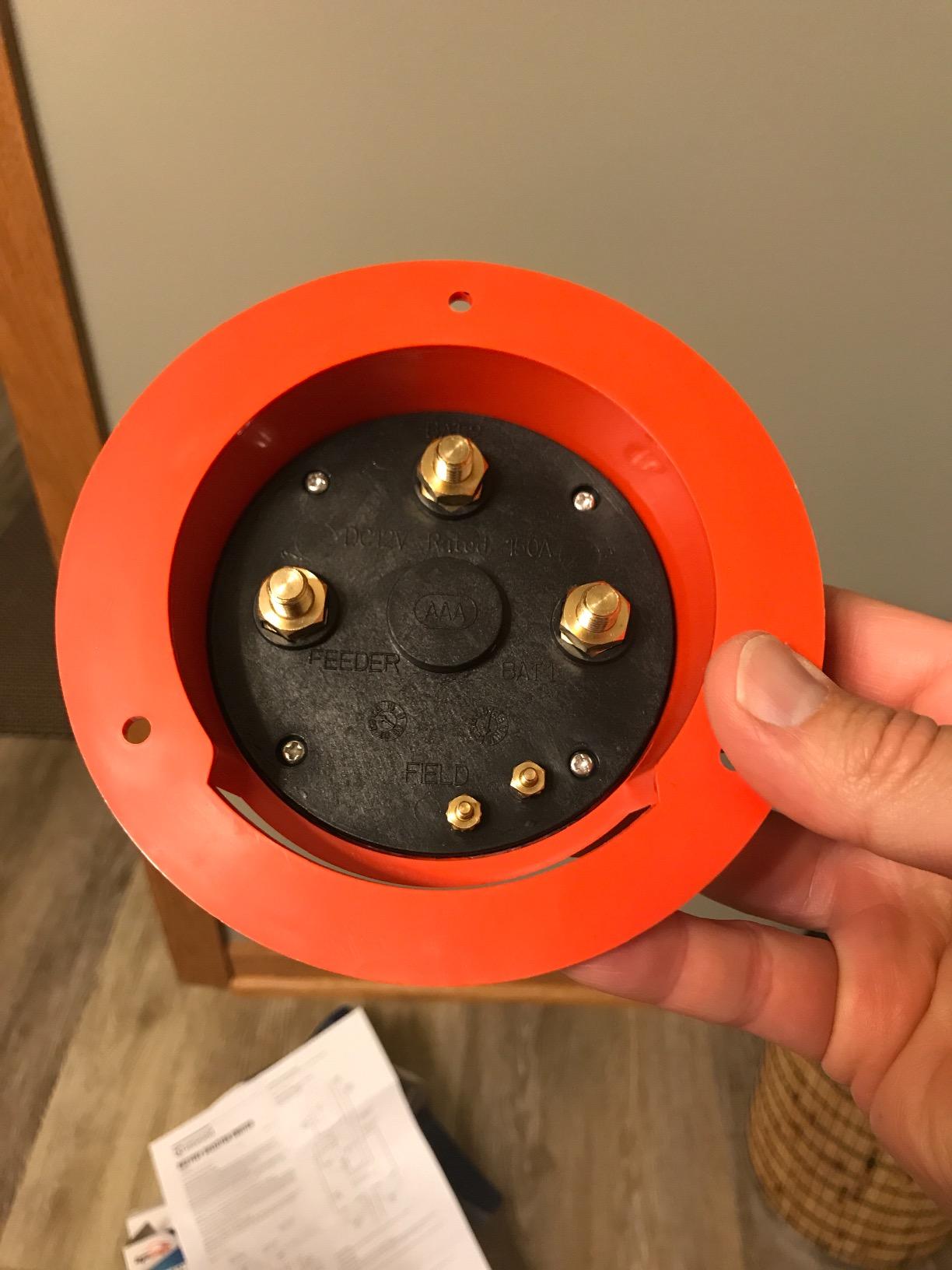
The rating is 4.4 across 996 reviews, the lowest average among the four-way selectors here, and the reason is a specification rather than a build complaint. It is rated for 300A continuous at 6 volts and 150A continuous at 12 volts, so the headline number falls by half as soon as you use it at a realistic voltage.
That still clears the requirement for a modest single-engine boat, and the brass hardware is the kind that survives decades in a salt spray environment. CSA marked, and the IP54 rating is a step behind the IP66 units in this roundup but adequate for an enclosed compartment.
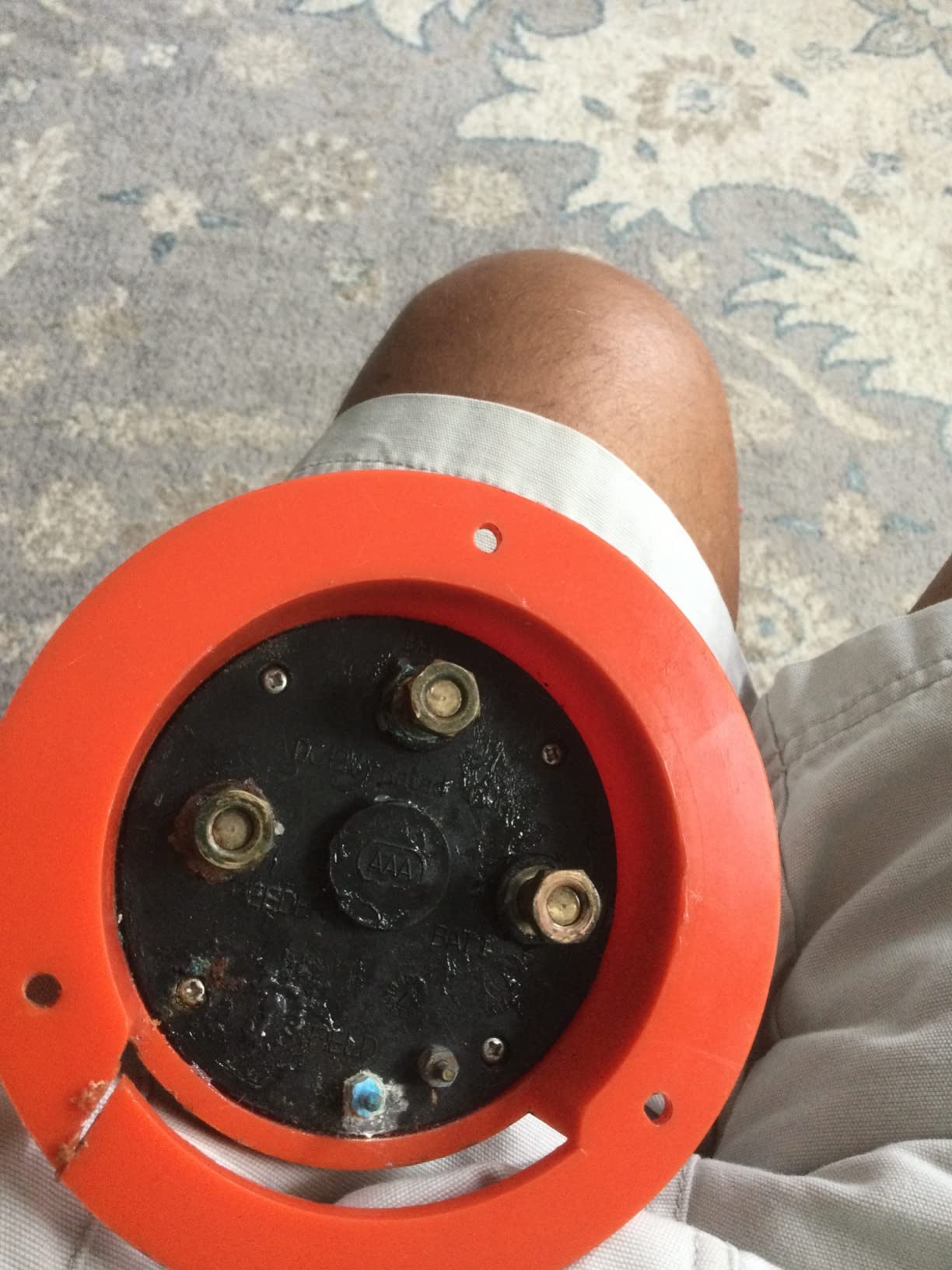
Why it suits a vintage boat with an existing panel
If you are restoring an older hull with a legacy Perko or Guest opening and you want a selector that will drop straight in, the classic face and brass construction fit that brief better than a modern flush-mount unit. The AFD is the deciding feature for anyone who has worried about alternator damage when switching positions with an engine running.
Where it falls short
For a bass boat with a trolling motor pulling heavy continuous current, the 150A continuous ceiling at 12V is the limit to plan around. Older Bakelite housing also has no sealed connector protection compared with IP66 designs, and the clamp terminals eat lug space in a confined battery box.
6. Joinfworld Side Post Battery Disconnect Switch 275A
Joinfworld Side Post Battery Disconnect Switch 12V-48V 275A Waterproof Marine Battery Cut Off Switch 12 Volt for Car RV Boat ATV UTV Vehicles
- Copper conductive sheets and mounting brackets allow direct side post connection with no extra parts
- M10 tinned copper studs with a rear insulating cover to reduce short circuit risk
- Rated 275A continuous and 1250A cranking across 12-48V systems
- Compact surface mount footprint saves space in a crowded battery box
- Side-post stud design will not fit standard top post batteries without an adapter
- No keyed or removable-knob safeguard against accidental activation
- Lowest average rating in this group at 4.2 with 12% one-star feedback
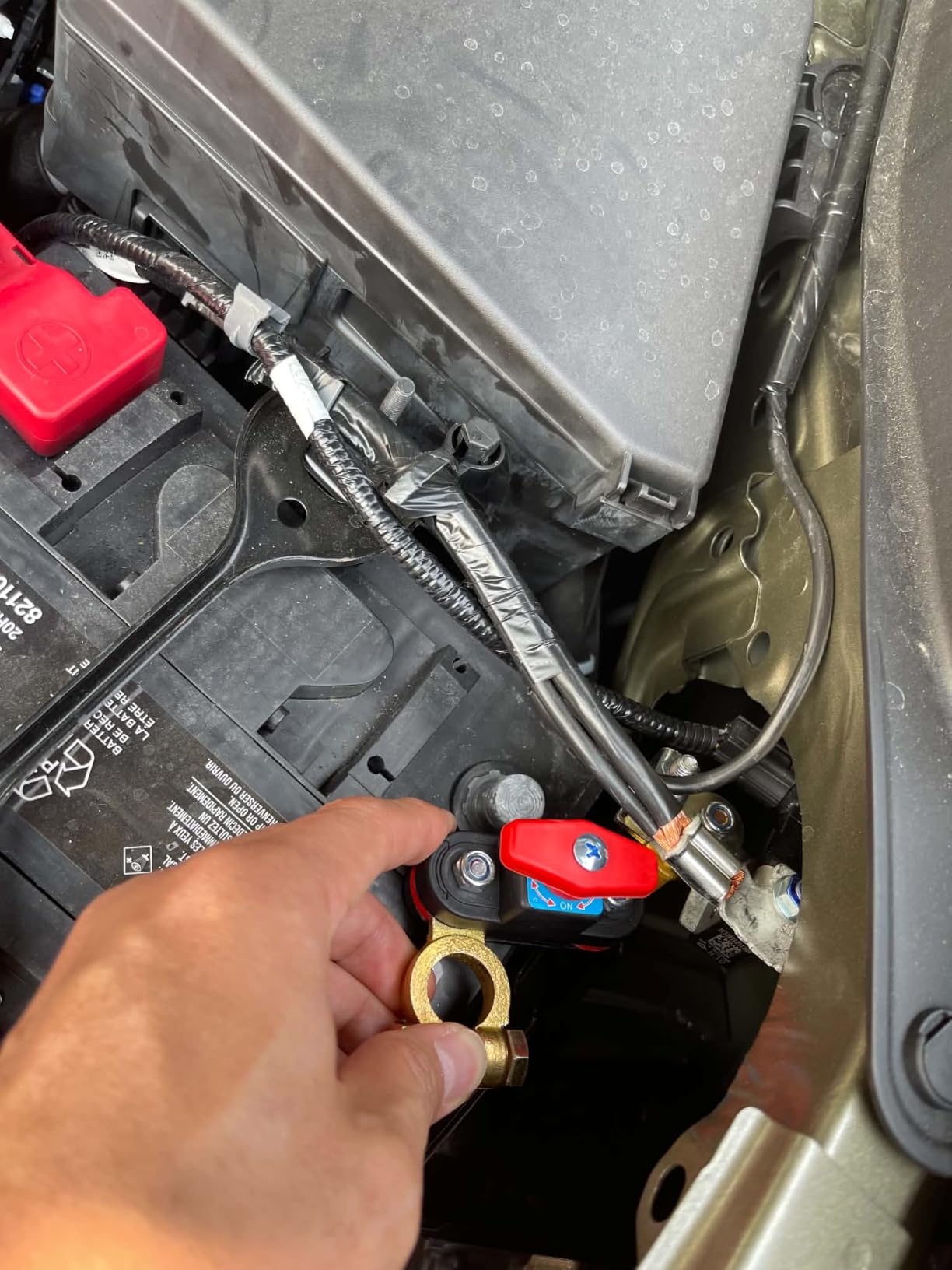
This is the fitting for anyone whose batteries use side posts rather than top posts, which is common on Group 24 and 31 cases in smaller marine installations. The supplied copper conductive sheets and mounting brackets let it connect directly to side post terminals with no extra hardware to source, which is the reason owners pick it.
The ratings are specific and usable: 275A DC continuous for one hour, 455A DC intermittent for five minutes and 1250A DC cranking for ten seconds. Two 3/8 inch M10 tinned copper studs sit behind an insulating rear cover, and the whole body is 5.91 by 2.56 by 1.97 inches.
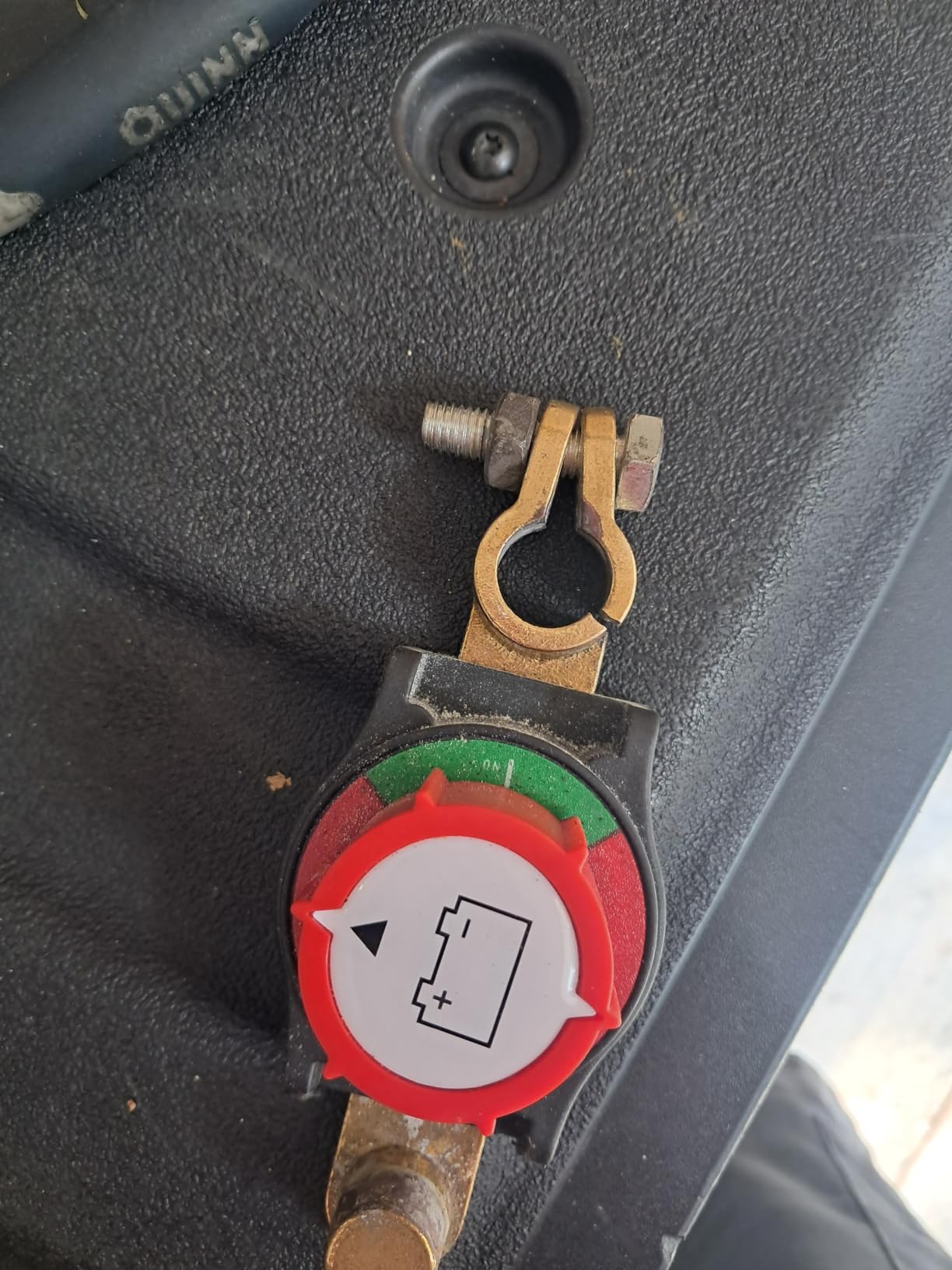
It is rated IP65 rather than IP66, which covers dust and water jets but not immersion. That is generally adequate for a battery box with a lid, less so for an open console on an angling boat that takes green water on every launch.
The reason it lands sixth in our ranking is not the specification, it is the feedback. At 4.2 with 3099 reviews it has the lowest average in the group, and the weaker scores cluster around inconsistent sealing and cosmetic finish rather than electrical performance. More reviews also means more outliers visible, which is a fair trade to weigh.
Why it suits a side-post battery layout
Bracket and plate included means a direct fit to side post terminals with a wrench, no fabricated bus bar. If your boat uses side posts and you want a genuine isolation point in the positive run, it does that job cleanly at a modest continuous rating.
Where it falls short
Top post batteries need an adapter, which removes most of the convenience. There is no lock or removable knob, so accidental activation is possible. And if your boat is a bass boat with a trolling motor and inverter load, check your continuous draw against the 275A figure before committing.
7. RVMARINEPAT 300A Ignition Protected Battery Disconnect
300A Boat Battery Disconnect Switch Waterproof 12V 48V Battery Shut Off Switch ON/Off Heavy Duty & Ignition Protected Power Kill Switch for Marine Car RV Truck
- Tinned copper studs and a flame retardant housing suited to a moist engine compartment
- Single circuit on and off isolation with a strong positive knob feel
- Disassemblable shell with a partitioned base for tidy wiring
- Mounting screws included so a basic install needs no extra hardware
- Owners report it working well on 24V trolling motor banks and inverter circuits
- IP54 rating is only splash resistant compared with IP66 units
- No removable knob or lock to prevent accidental activation
- Single circuit design cannot select or combine two battery banks
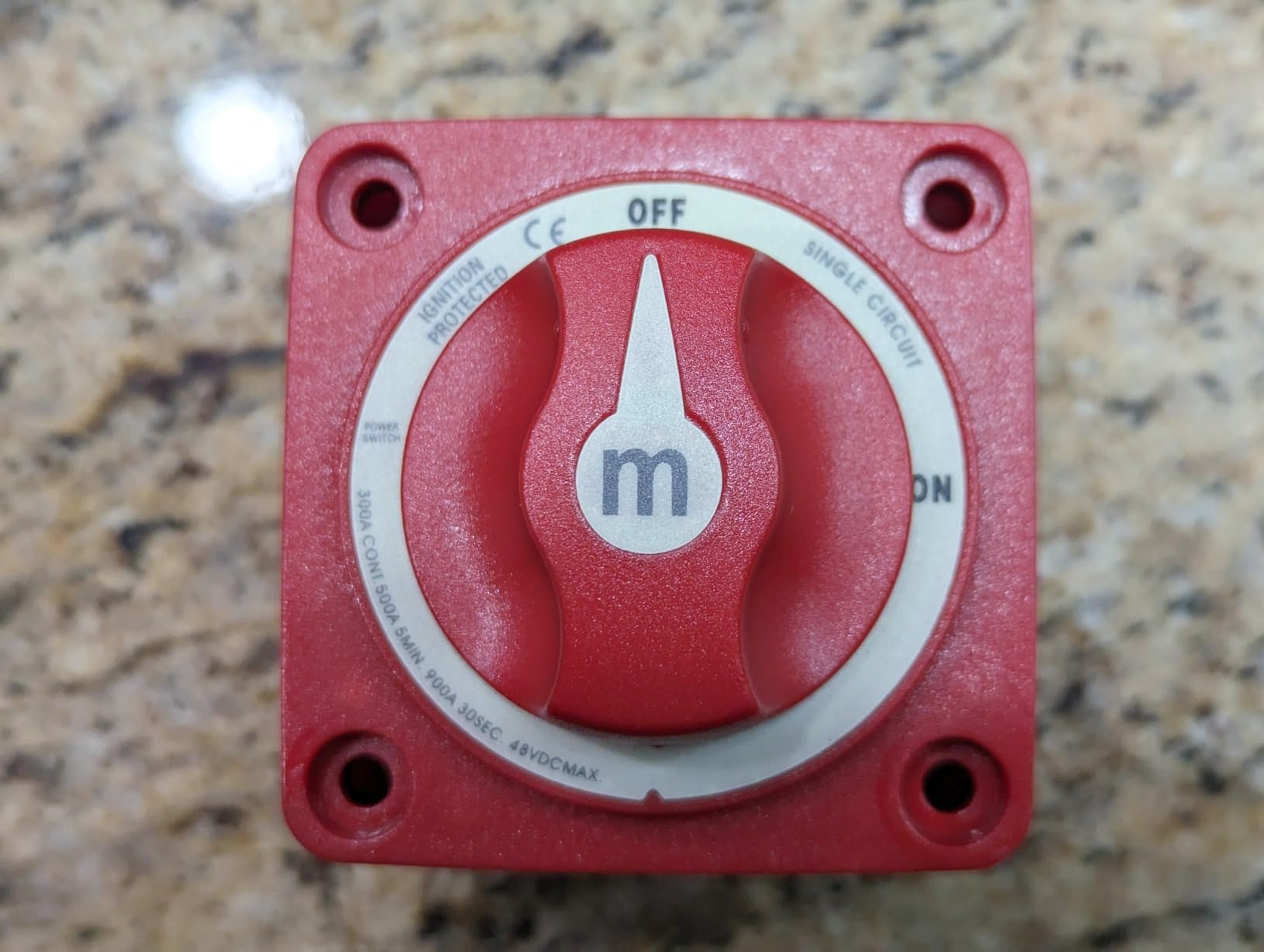
The 300A figure on this switch is a continuous rating, not a marketing moment, and it comes with the full ladder: 500A for five minutes and 900A for thirty seconds of cranking. That is a properly stated specification sheet, which is rarer in this category than it should be. The studs are tinned copper, 3/8 inch, inside a flame retardant plastic housing.
Owners treat it as a dependable no-frills master disconnect and rate installation as straightforward with a good-quality feel at the knob. Applications mentioned in reviews include a 24V trolling motor bank, a 3000W boat inverter, a golf cart lithium pack and a Victron Lynx distribution terminal, which is a decent spread of real installs.
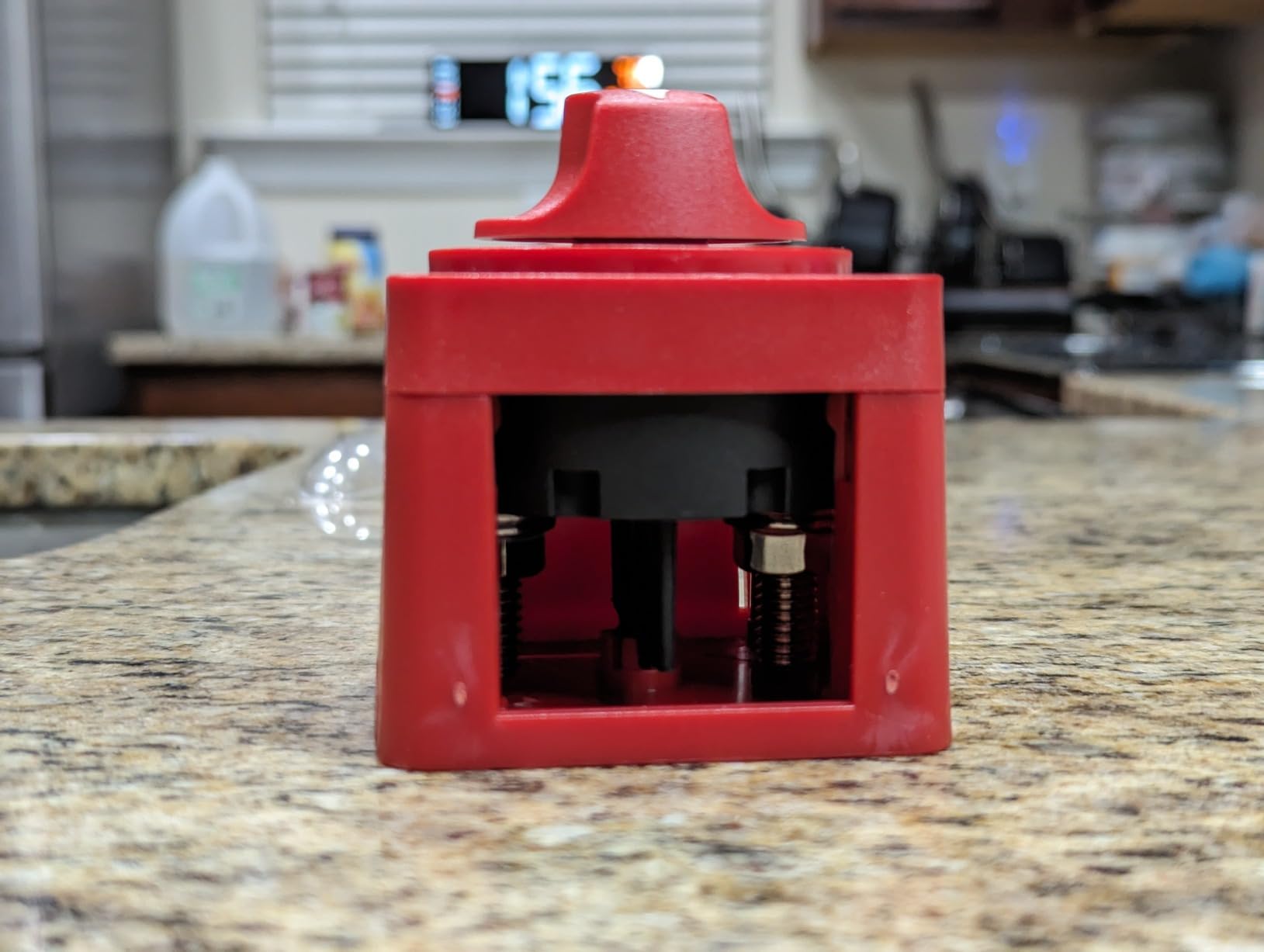
The shell is easily disassembled with a partitioned base, which gives you room to route wiring tidily inside a crowded battery compartment. Mounting screws are supplied, though a few reviewers note the included screw length does not suit every sheet-metal mount.
It is a single circuit on and off device rated for 12-48V DC systems, and the listing describes it as ignition protected. It is CE marked, and the body measures 2.83 by 2.83 by 3.39 inches.
Why it suits a trolling motor or inverter circuit
Three hundred amps continuous with a stated rating type is exactly what a trolling motor bank or an inverter feed demands, and the tinned copper studs cope with sustained current better than plated steel alternatives. For a single circuit that only ever needs to be fully on or fully off, this does the job with no selector complexity.
Where it falls short
The IP54 rating is splash resistant, not IP66, so it needs a covered location. There is no lock, and because it is single circuit it cannot combine a start bank with a house bank. If you want both functions from one control you need a selector further down this list.
8. SUNMORN Battery Disconnect Switch with Cable Kit
SUNMORN Battery Disconnect Switch 12V-48V 6AWG Kill Switch for RV Boat
- Complete kit with two 6AWG tinned copper cables and pre-crimped lugs included
- IP66 sealed rotary design with a reinforced O-ring
- Red and green indicator shows state at a glance and draws no power when off
- Positive detent resists accidental switching from vibration
- Compact inline design that mounts directly on a battery box
- Fits standard SAE top post batteries only and not oversized marine posts
- Not UL or CE certified which can matter for insurance and surveyors
- Blade-type terminals are less straightforward for ring-lug marine cable than studs
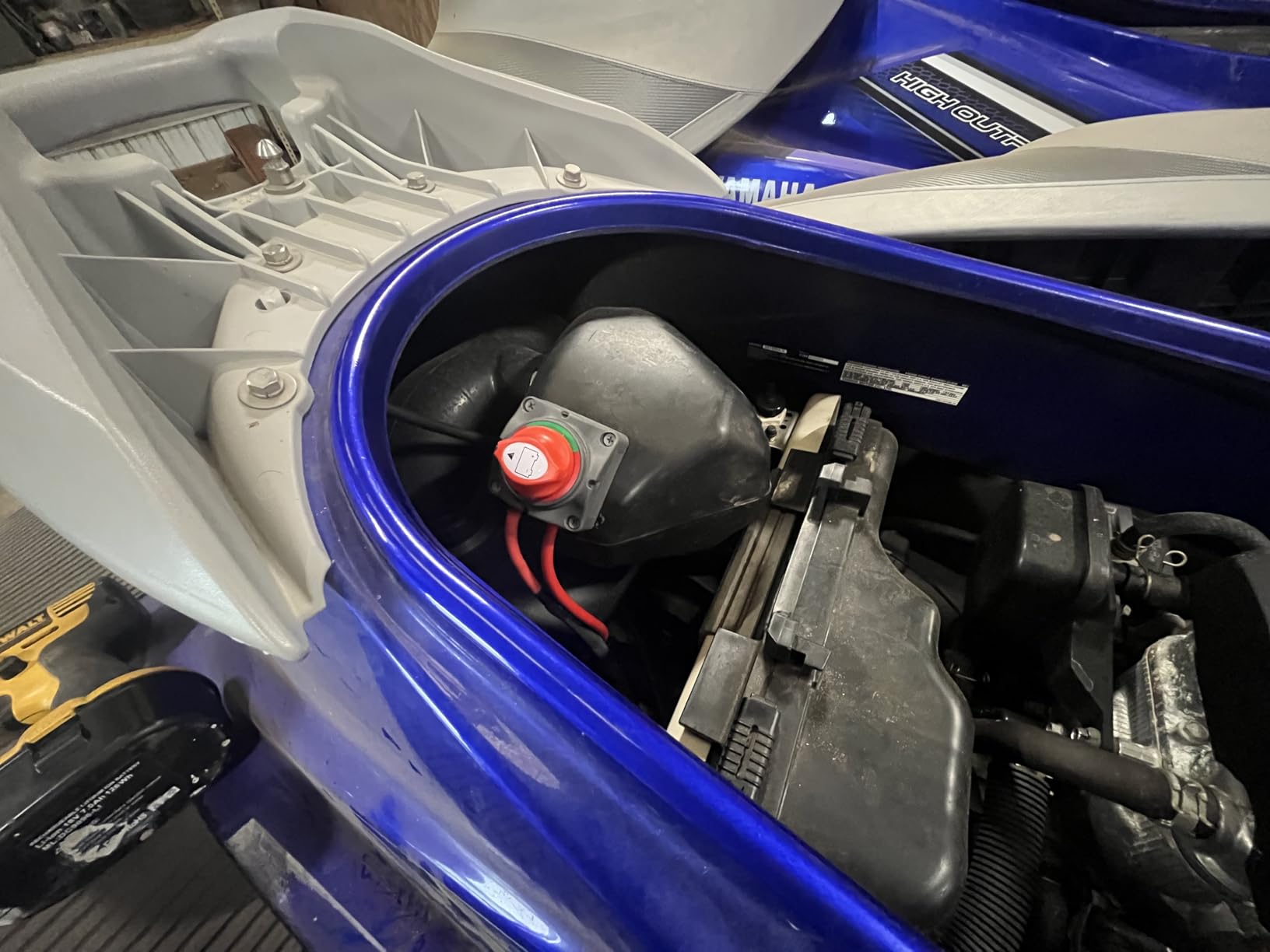
The reason this switch keeps showing up in owner recommendations is the box contents. It ships with two 6AWG tinned copper cables, each 1.64 feet long, with pre-crimped lugs and adhesive heat shrink, so you do not have to source separate cable for a first install. That removes the single most common reason a marine switch job stalls halfway.
It is rated at 275A and sealed to IP66 with a reinforced O-ring, tested from minus 40F to 221F, and it carries a red and green indicator that shows ON or OFF at a glance while drawing nothing when off. The positive detent is designed to resist the switch shifting from vibration or road bumps, which matters on a trailered boat.
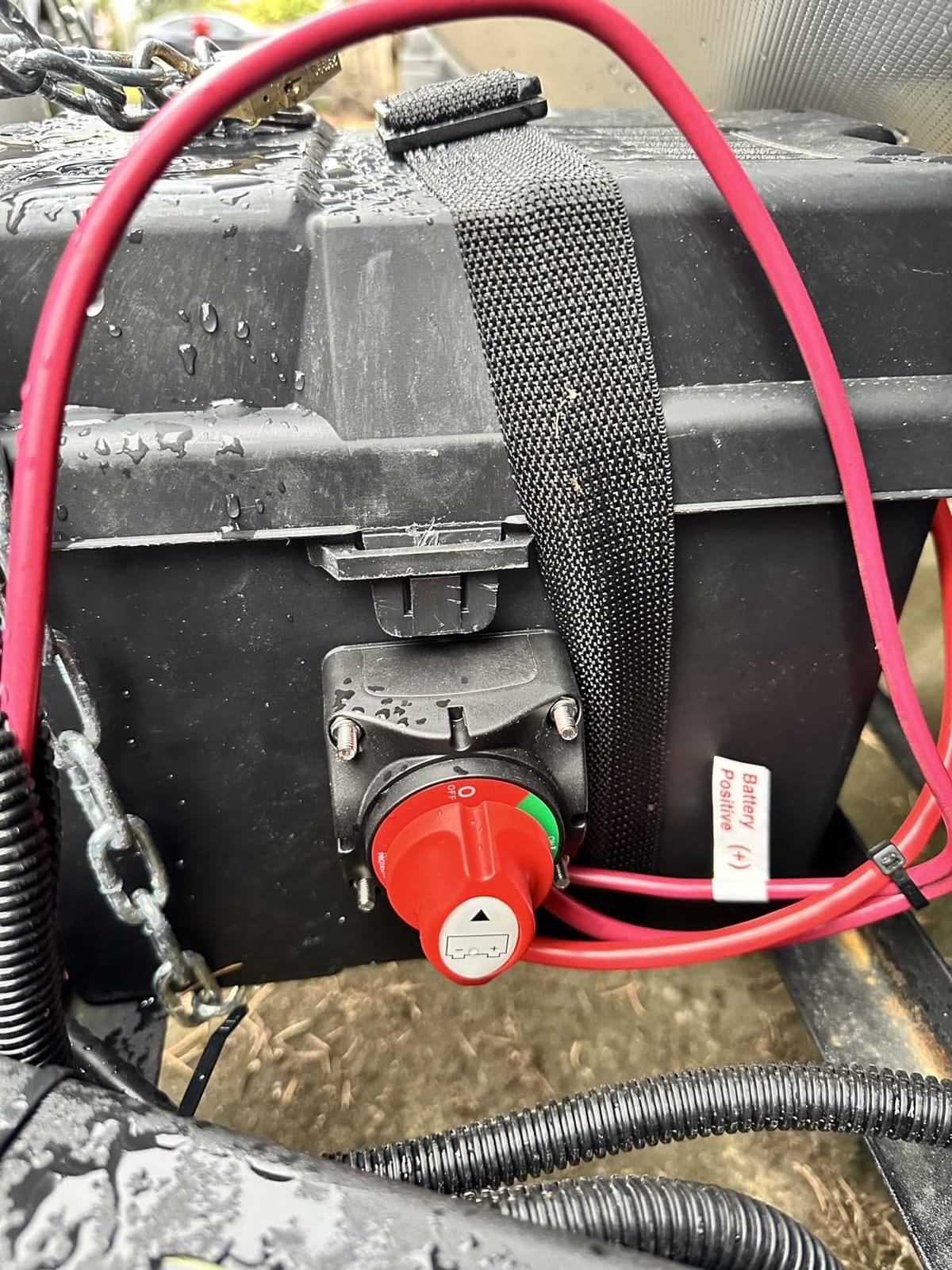
It mounts inline on the positive cable with a wrench and fits directly onto a battery box or tongue box at 4.1 by 4 by 3 inches. The average rating of 4.6 sits on 277 reviews, a smaller sample than the leaders but consistent with them.
The critical caveat for a boat is certification. The listing states plainly that this switch is not UL or CE certified and carries a one-year warranty. For a gasoline boat that lives in salt water, an uncertified switch is a question your insurer or a surveyor may ask about.
Why it suits a first-time install or a trailered boat
The bundled heavy-gauge cable is the decisive feature if you have never landed a lug. The visible state indicator and firm detent are also cited repeatedly as useful on vehicles and boats that sit unused for weeks, because you can confirm the state without applying power.
Where it falls short
It fits standard SAE top post batteries only, so oversized marine post terminals are out, and the blade terminals are not as straightforward for ring-lug marine cable as studs would be. The lack of UL or CE certification is the reason it does not rank higher on a boat, even though the build and rating are competitive.
9. Perko 9601DP Battery Disconnect Switch
- Long established Perko marine hardware with a 250A rating and brass terminals
- Bulkhead or wall mounting suits an engine compartment or transom installation
- Operates on systems up to 50V
- Owners rate the build quality and finish highly over long service
- No removable key or knob is listed so there is less protection against unintended activation
- Listed IP rating is IP00 so it needs a protected or covered mounting location
- Clamp terminals are bulkier than stud terminals in a tight battery compartment
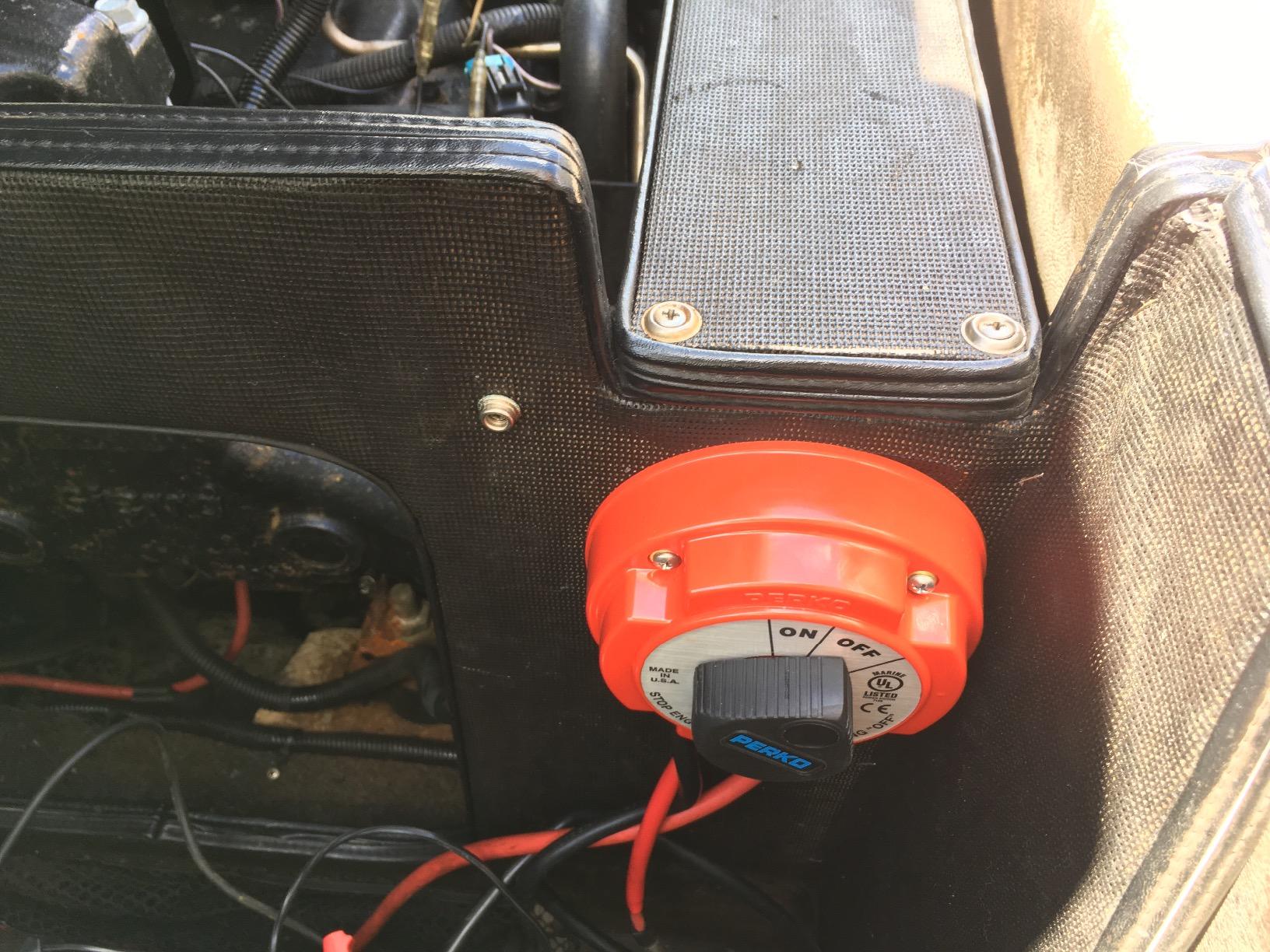
Perko is one of the names that comes up most often in owner threads about battery hardware, and the 9601DP is the reason. It is a straightforward 250A marine disconnect for bulkhead or wall mounting, built with brass terminals and contacts, and it operates on systems up to 50V.
The bulkhead mounting is the distinguishing feature here. It suits an engine compartment bulkhead or a transom installation where a panel-mounted selector will not fit, and it is a drop-in replacement for older Perko hardware on a lot of existing hulls. It weighs 11.2 ounces.
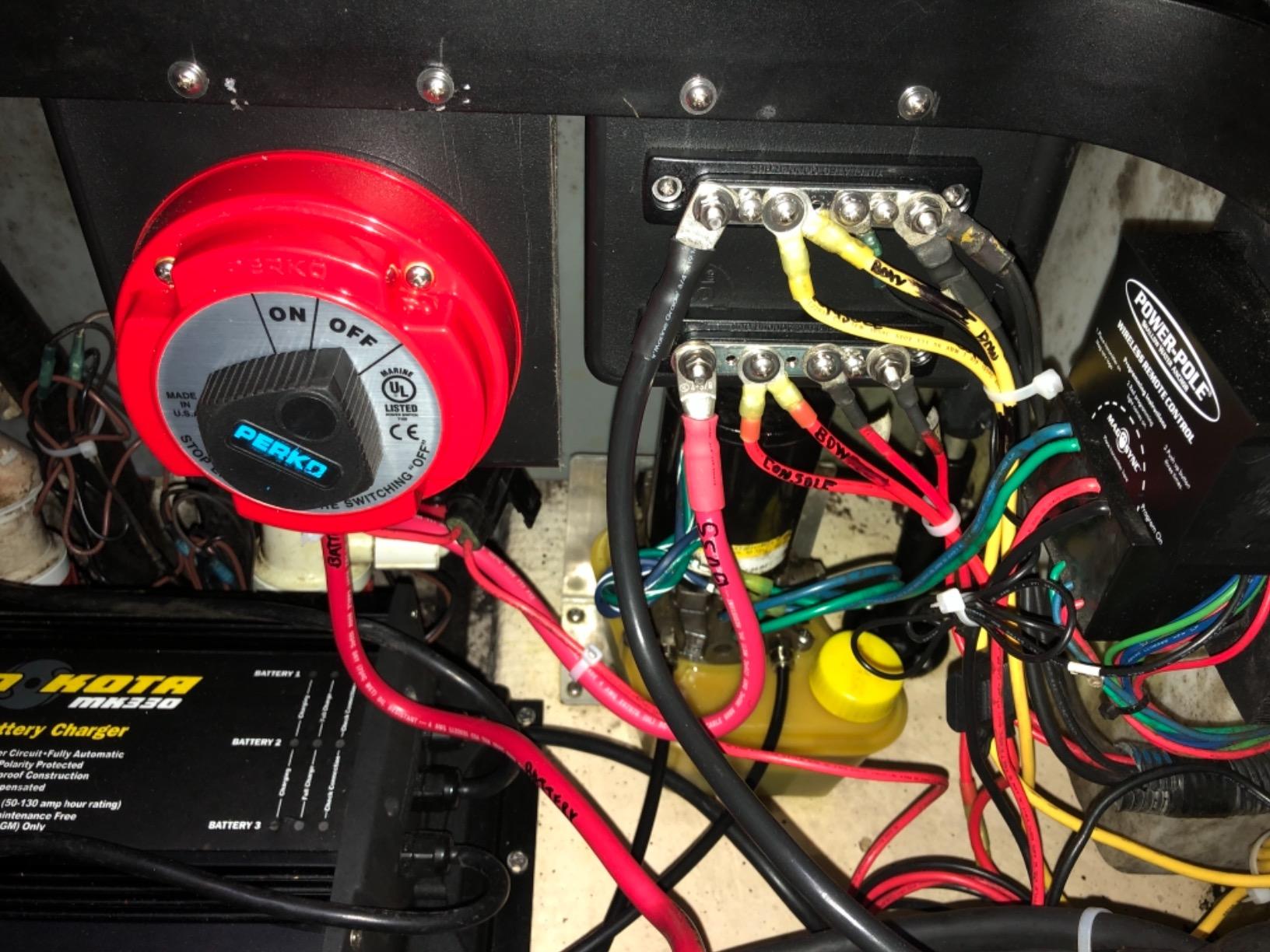
Owner feedback is overwhelmingly positive, with an average of 4.7 and roughly 85% five-star ratings reflecting durable, no-frills construction that boat owners trust. Forum consensus across several communities leans toward established marine brands of this type specifically on grounds of ignition protection and corrosion sealing.
One thing to note is how little the listing tells you. Detail is sparse and there are no written feature bullets beyond the model name, so the certification story is thinner here than with the Blue Sea units. Verify the marking on the physical product before you commit it to an engine room.
Why it suits a bulkhead or transom install
When mounting space is a bulkhead rather than a console face, a 250A brass-contact master disconnect is exactly what is called for. It handles up to 50V, so it is not limited like the 32V units, and it suits older hulls where the existing Perko opening is already in place.
Where it falls short
No removable key or knob is listed, so there is less protection against unintended activation than a knob-operated switch gives you. The IP rating is IP00, which means it must go in a protected or covered location. Clamp terminals are also bulkier than studs in a tight compartment.
10. Malictele 300A Four Position 1-Both-2-Off Selector
- Make-before-break contacts keep electronics powered while changing battery banks
- IP66 waterproof ABS housing with tinned copper studs
- Ignition-proof construction permits mounting on gasoline powered boats
- Supports surface front panel and rear panel mounting with four screws included
- Four position 1-Both-2-Off layout for isolating either bank or combining both
- Crimp and screw terminals are less accommodating of large ring lugs than stud terminals
- Smallest review base in the group at 151 ratings
- No locking feature to prevent unauthorised position changes
This four-position 1-Both-2-Off selector is rated at 300A continuous with a maximum of 48V DC, and the make-before-break contact design allows switching between battery banks without interrupting the power supply. That last point is the feature buyers mention most, because it means the electronics do not reboot when you move the knob.
The construction is an ABS plastic housing with tinned copper studs in an IP66 sealed body, described as ignition-proof and suitable for gasoline powered boats. Surface, front panel and rear panel mounting are all supported and four screws are included.
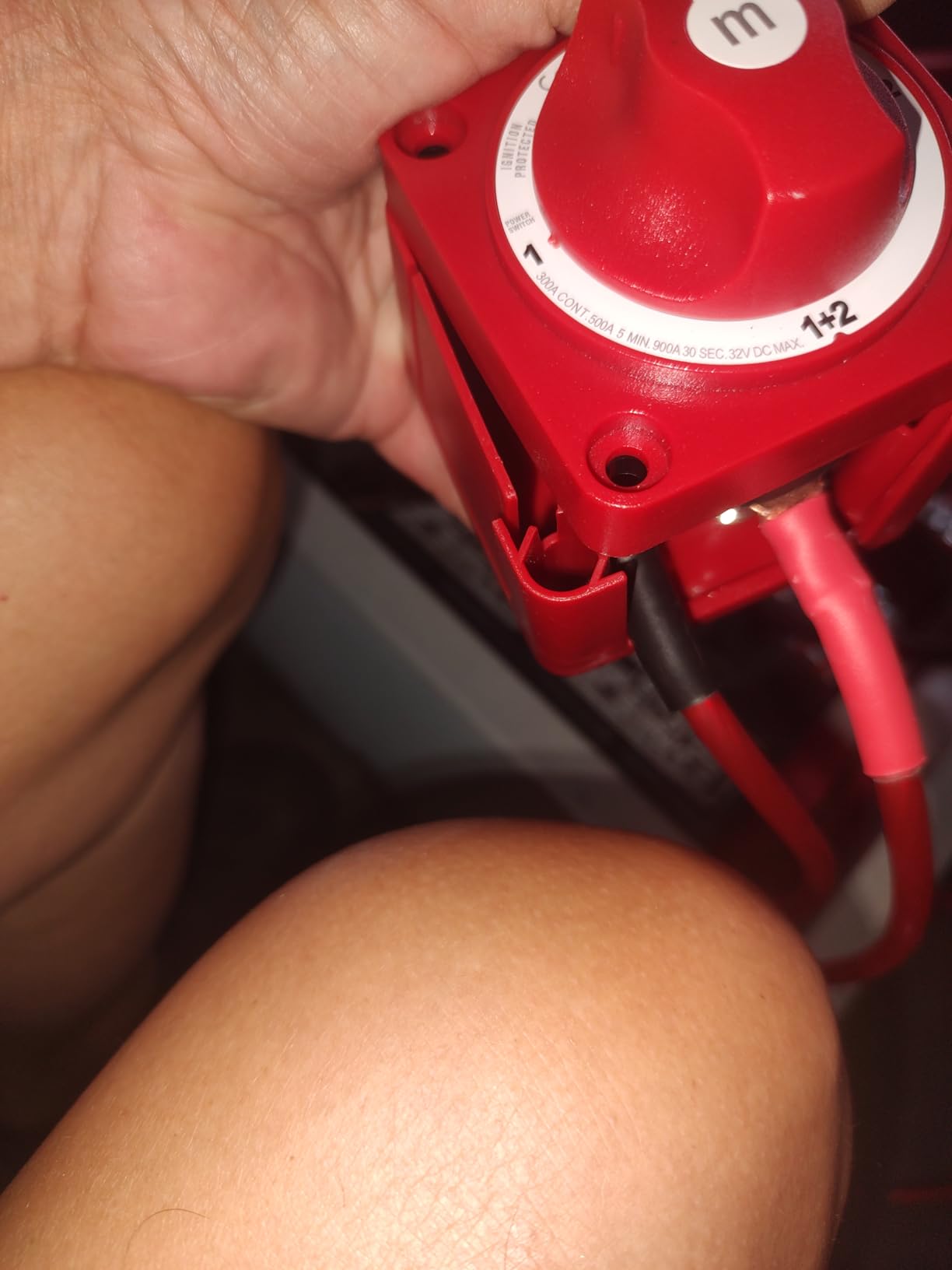
The 48V maximum is unusual at this price point and is the reason we include it here. A growing number of boats carry 48V LiFePO4 house banks, and generic selectors with a 32V ceiling simply cannot be used. Reviewers confirm it works well on 24V systems too.
The honest weakness is the evidence base. With 151 reviews this is the thinnest feedback in the group, so the 4.6 average rests on a much smaller sample than the leaders. Owners describe it as solidly built with a clean panel mount appearance, and the make-before-break behaviour is repeatedly praised.
Why it suits a 48V or 24V system
For a boat with a 48V lithium house bank or a 24V bank that needs switching, the 48V DC maximum removes a hard limitation. The ignition-proof claim also makes it more defensible in an engine room than uncertified alternatives, and four included screws mean no extra hardware hunting.
Where it falls short
Crimp and screw terminals are less accommodating of large ring lugs than stud terminals, which is awkward for 4/0 AWG on a high-current bank. There is no locking feature, and 151 reviews is not enough history to match the confidence we place in the units above it.
Buying Guide: How to Choose a Marine Battery Switch?
Start with the number of battery banks, not the price or the brand. One bank and one engine needs a single circuit on and off switch. Two banks need a selector 3 position if you simply choose between them, or a selector 4 position if you also want a combined position for charging and emergency starting. A dual circuit switch handles two independent circuits rather than two banks. A dual circuit plus adds battery combine, and because of that combine feature it cannot be used to switch both the positive and the negative conductor at once.
Next, check the certifications against your boat. Ignition protected, SAE J1171 and UL 1500 mean the switch cannot create an ignition source in a gasoline engine room or near flammable vapour, and on a petrol boat this is not optional. ISO 8846 and UL 1107 cover small craft wiring and switchgear, while an IP66 rating means protection against powerful water jets and is what you want for a cockpit or exposed console position.
Then match the mounting. Surface mounting suits a battery box, front panel mounting drops the body behind a console face, rear panel mounting hides it behind a dash, and flange or bulkhead mounting suits a transom or engine compartment wall. Whichever you choose, leave enough clearance to land a 4/0 AWG lug on each stud without the cable fouling the housing.
Keyed, knob and remote are three different answers to three different problems. A locking key stops someone switching your battery back on when the boat is on a trailer or in a busy slip. A removable knob does the same job and is cheaper, and several switches in this roundup include one. A remote or contactor switch is bi-stable, meaning it magnetically latches and holds its state with almost no coil current, so it can live inside a battery box under a deck while a slim control head sits at the helm.
Corrosion is the other half of marine durability. Look for tinned copper studs and tin-plated hardware, and treat dielectric protectant as part of annual maintenance rather than an optional extra. A sealed cap that covers the terminals when the switch is off adds another layer in salt spray.
Finally, torque the studs. Manufacturer instructions typically call for around 120 in-lb on a 3/8-16 stud. An under-torqued lug heats up, oxidises and eventually becomes the loose connection owners wrongly blame on the switch. And use your switch positions with discipline: move the selector to OFF or to a single bank at the dock, and reserve the BOTH position for charging underway, because constantly cycling between positions is what shortens battery life.
Frequently Asked Questions
Do you need a battery switch on a boat?
Yes, for any boat that is left unattended or stored. It stops parasitic drain from bilge pumps and electronics, gives you an instant emergency shutdown, lets you isolate the system safely before working on it, and many insurers expect one. A simple off and on switch suits a small boat with one battery and one engine, while multi-bank boats need a selector.
What size battery switch do I need for a bass boat?
For a typical bass boat with a start bank and a deep cycle house bank running a trolling motor, look for at least 250A continuous and around 800A cranking for 30 seconds. The trolling motor draw is continuous rather than intermittent, so size on the continuous figure. A four-position selector lets you start on one bank, live on the other, and combine both when charging.
Are battery selector switches bad for my batteries?
No, not when used with some discipline. Leaving a selector parked in the combined position and cycling constantly between 1, 2 and BOTH is what shortens battery life. Leave it on 1 or 2 during normal running, use BOTH while charging underway, and turn it to OFF at the dock. Never switch a running engine to OFF unless the switch has an alternator field disconnect.
Do I need a battery switch if I have a battery monitor?
A battery monitor tells you the state of charge, but it does not isolate anything. It reports on a system that is still connected and still able to drain. The switch is what physically breaks the circuit, so the two do different jobs. A monitor is genuinely useful for planning when to charge, but it does not replace a disconnect.
What is the difference between a single and dual circuit battery switch?
A single circuit switch opens one conductor, normally the positive lead, and removes power from everything downstream. A dual circuit switch opens two independent circuits at once, so you can isolate a start bank and a house bank together or separately. A dual circuit plus adds battery combine, which means it cannot also be used to switch both the positive and negative conductors.
Can I replace a marine battery switch with an automotive disconnect?
You can fit one on an open boat away from a gasoline engine room, but check three things first. Is the switch ignition protected to SAE J1171 or UL 1500, which a gasoline boat requires. Does its voltage ceiling cover your system, since many automotive units stop at 32V. And does it have a real continuous rating rather than a momentary figure dressed up as one.
Final Verdict: Which Marine Battery Switch Should You Buy?
For a single-bank boat on a budget, the Nilight 90015A is the pick we would fit today, on the strength of a stated 275A continuous rating and the largest verified owner feedback base in the group. If your boat runs a gasoline engine room, move up to the Blue Sea m-Series, because ignition protection is the one specification you cannot substitute for later.
Dual-bank owners should start with the four-position selector conversation, and our choice there is the Blue Sea e-Series, with the Seachoice 11501 the better fit when you need the higher voltage ceiling or an existing panel cutout. Match the rating type to your real load, torque the studs as specified, and use the sizing guidance above rather than the largest number on the box.