
If you want one sentence that settles most of the debate: lithium iron phosphate (LiFePO4) wins on weight and service life, absorbed glass mat (AGM) wins on simplicity and cold-weather charging, and flooded lead-acid wins only on cost. Those are the three chemistries that matter in the best marine deep cycle batteries you will find in 2026, and everything else on the shelf is a variation on one of them.
That is the honest starting point because the rest of the market is noise. Retailer listings all read the same, spec sheets are marketing documents rather than test data, and several of the brand names on the box are the same factory with a different sticker. The confusion is so widespread that buyers routinely assume a brand they have never heard of is a different manufacturer from the one they already own.
So here is how this roundup was built. We compared the ten batteries below on the things you can actually check: cell chemistry, rated amp-hours, physical case size, discharge current, warranty length, and the pattern of what owners say after a season or two of use. Where owner reports exist, they matter more to us than a cycle-life number printed on a box. We also mapped who really manufactures each brand, because several of the most recommended names are siblings rather than rivals.
Every battery here is a deep cycle unit, which is the category built for steady discharge and recharge. None of them is a starting battery, with the single exception of the dual-purpose Group 31M later in the list, and even that one describes itself as a combined unit rather than a pure cranking battery. If your boat needs to turn over a large outboard or inboard, keep reading before you buy.
Last updated: October 2026.
Table of Contents
Top 3 Picks for Marine Deep Cycle Batteries (October 2026)
The three below cover the most common situations: a sealed AGM for owners who want zero fuss, a premium LiFePO4 for weight-sensitive boats, and a lithium pack that fits straight into an existing Group 31 marine box.

WEIZE 12V 100Ah AGM
- Sealed maintenance-free AGM
- 1100A max discharge
- 3 percent self-discharge
- 1-year warranty

LiTime 12V 100Ah Group 31 LiFePO4
- 1280Wh in 22 pounds
- Built-in 100A BMS
- IP65 enclosure
- 5-year warranty
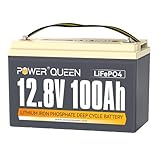
Power Queen 12V 100Ah Group 31 LiFePO4
- Grade-A cells
- Up to 15000 cycles
- IP65 housing
- 4S4P expansion
Quick Overview: Every Battery in This Roundup
All ten are 12V batteries. Eight are rated at 100Ah, one is 110Ah and one is 150Ah, and six of the ten sit in a Group 24 or Group 31 case. That case size is the decision that matters most before capacity, because the wrong footprint will not physically fit your battery box.
| Product | Specifications | Action |
|---|---|---|
| WEIZE 12V 100Ah AGM |
|
Check Latest Price |
 Renogy 12V 100Ah AGM Renogy 12V 100Ah AGM |
|
Check Latest Price |
| LiTime 12V 100Ah Group 31 LiFePO4 |
|
Check Latest Price |
 Daakmax 12V 100Ah AGM Daakmax 12V 100Ah AGM |
|
Check Latest Price |
| Power Queen 12V 100Ah Group 31 LiFePO4 |
|
Check Latest Price |
 Rvpozwer 12V 100Ah Group 31 LiFePO4 Rvpozwer 12V 100Ah Group 31 LiFePO4 |
|
Check Latest Price |
 WEIZE BCI Group 31M Dual Purpose AGM WEIZE BCI Group 31M Dual Purpose AGM |
|
Check Latest Price |
 DC HOUSE 12V 100Ah Bluetooth LiFePO4 DC HOUSE 12V 100Ah Bluetooth LiFePO4 |
|
Check Latest Price |
 Dumfume 12V 150Ah Max LiFePO4 Dumfume 12V 150Ah Max LiFePO4 |
|
Check Latest Price |
 SUPER EMPOWER 12V 100Ah Group 24 LiFePO4 SUPER EMPOWER 12V 100Ah Group 24 LiFePO4 |
|
Check Latest Price |
1. WEIZE 12V 100Ah AGM – the dependable all-rounder for mixed boat duties
- Sealed design with no acid checks or spills
- 1100A max discharge handles hard starting bursts
- 3 percent self-discharge suits long storage between trips
- Easy to connect and fits standard battery boxes
- Very heavy at 57 pounds and awkward to lift alone
- Larger than standard flooded cases so some boxes need changing
- Short 1-year warranty for a unit this heavy
This is the battery with by far the largest body of owner feedback behind it, and it is the one I would put on a boat with mixed duties. It is sealed, it needs nothing from you after installation, and the 1100A five-second discharge figure means it will carry a hard load without complaining.
The 3 percent monthly self-discharge rate matters more than most spec sheets admit. A boat that sits for weeks between trips loses less capacity to self-discharge than a comparable flooded cell would, which means fewer surprises on the first morning out.
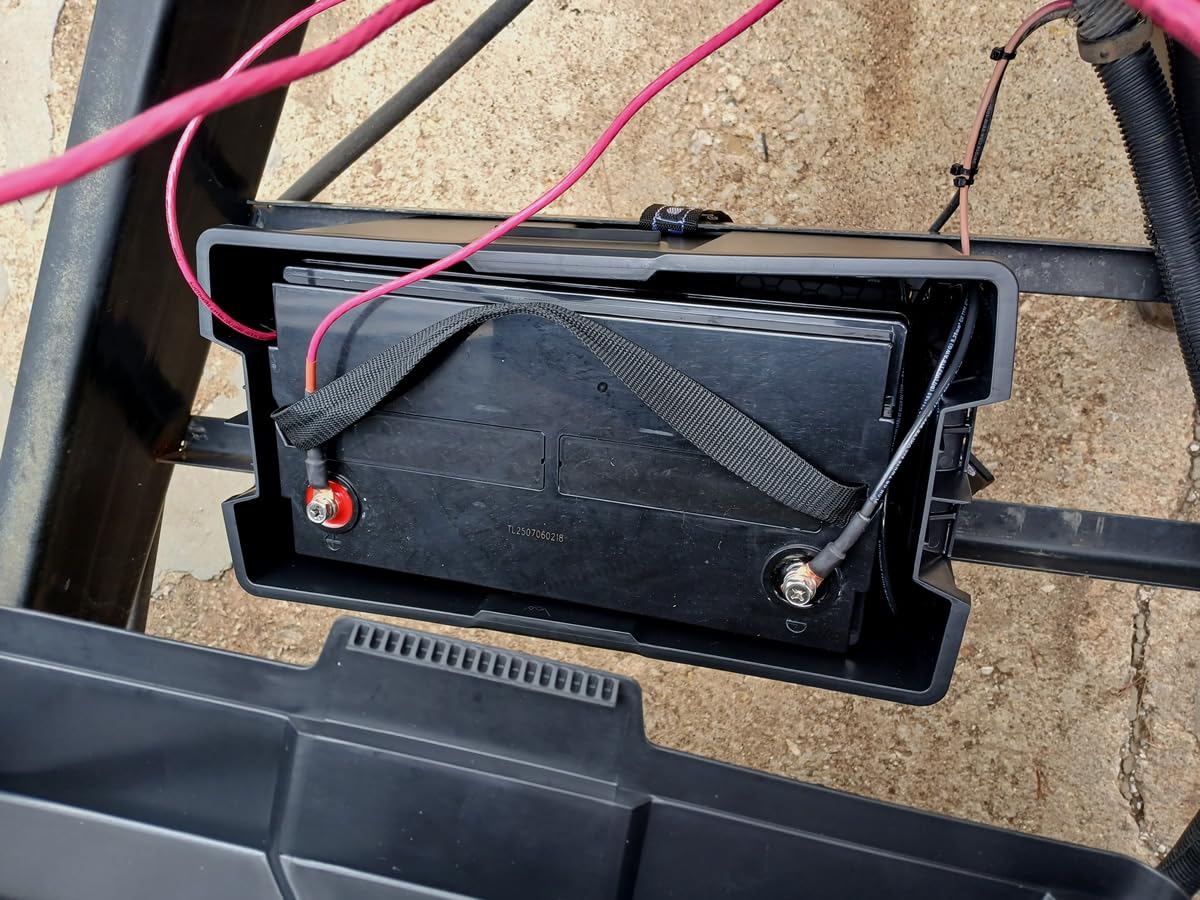
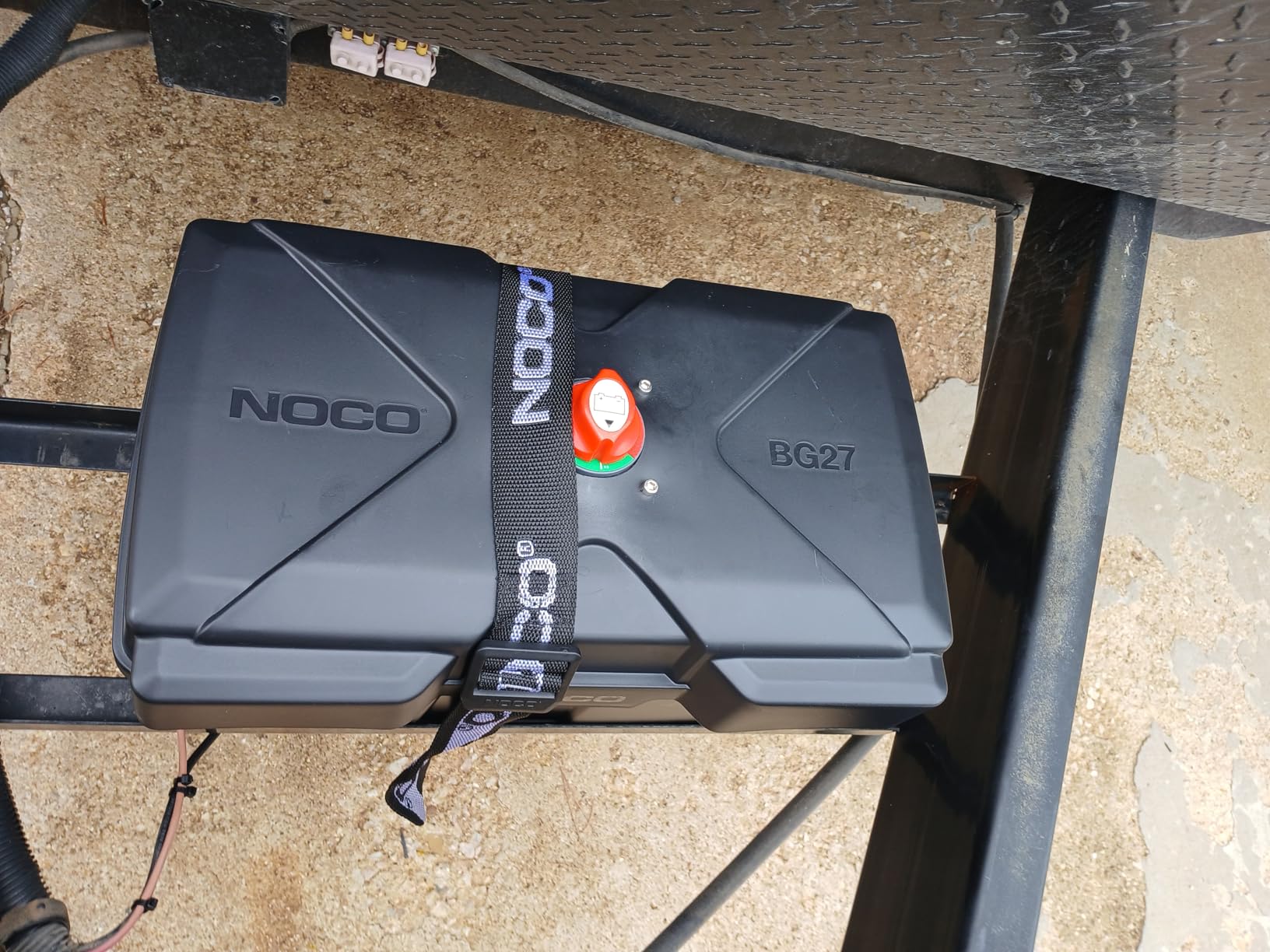
Reviewers repeatedly note that it delivers several hours of trolling motor runtime, works on a simple solar setup with no shore power, and connects without drama. Customer service also comes up in the positive column, including replacement of a battery that arrived damaged in transit.
The one complaint that repeats without fail is weight. At 57 pounds, lifting this into a center console or a bass boat is a two-person job, and owners planning to move batteries around should factor that in before they buy a pack of them. A few reviewers also report batteries that arrived with reduced state of health and would not charge fully, and a small number needed a different battery box because the case is larger than a standard flooded unit.
What you get for the weight
This is a 100Ah sealed lead acid unit, not a lithium pack, so the chemistry sets your ceiling. Two of these in parallel give you a comfortable trolling day with plenty of headroom for livewell and electronics, and you are buying a battery that will sit in a salt-laden bilge without complaint.
The 1-year warranty is the honest weak point. Owners on forums repeatedly describe the smart move as budgeting for replacement somewhere in years three to seven, and keeping the battery charged so it never sits below a 50 percent state of charge is the single habit that extends that life.
Where it falls short
If your boat is a small skiff or a flats boat where every pound on the transom is fought over, 57 pounds times two changes the handling of the entire boat. Lithium solves that problem outright, and the trade is roughly twice the weight savings for a higher upfront cost.
It also does not start an engine by design. If you have no starting battery, look at the dual-purpose Group 31M further down, or keep a separate flooded cranking battery in the boat as most owners do.
2. Renogy 12V 100Ah AGM – the steady house bank for solar and RV charging
Renogy 12 Volt 100Ah Deep Cycle AGM Battery, Lead Acid Solar Battery
- Verified real capacity in large parallel banks
- Sealed design needs no watering
- Discharge performance from minus 4F to 140F
- Near Group 31 size fits common battery compartments
- 63.9 pounds is a lot to move in a boat
- A minority of batteries would not hold a charge on arrival
- Smart chargers can flag the battery as faulty
This one earns its place through measured behaviour rather than novelty. Long-term owners report dependable capacity across large parallel banks over multi-day discharge tests, which is exactly the evidence a spec sheet cannot give you.
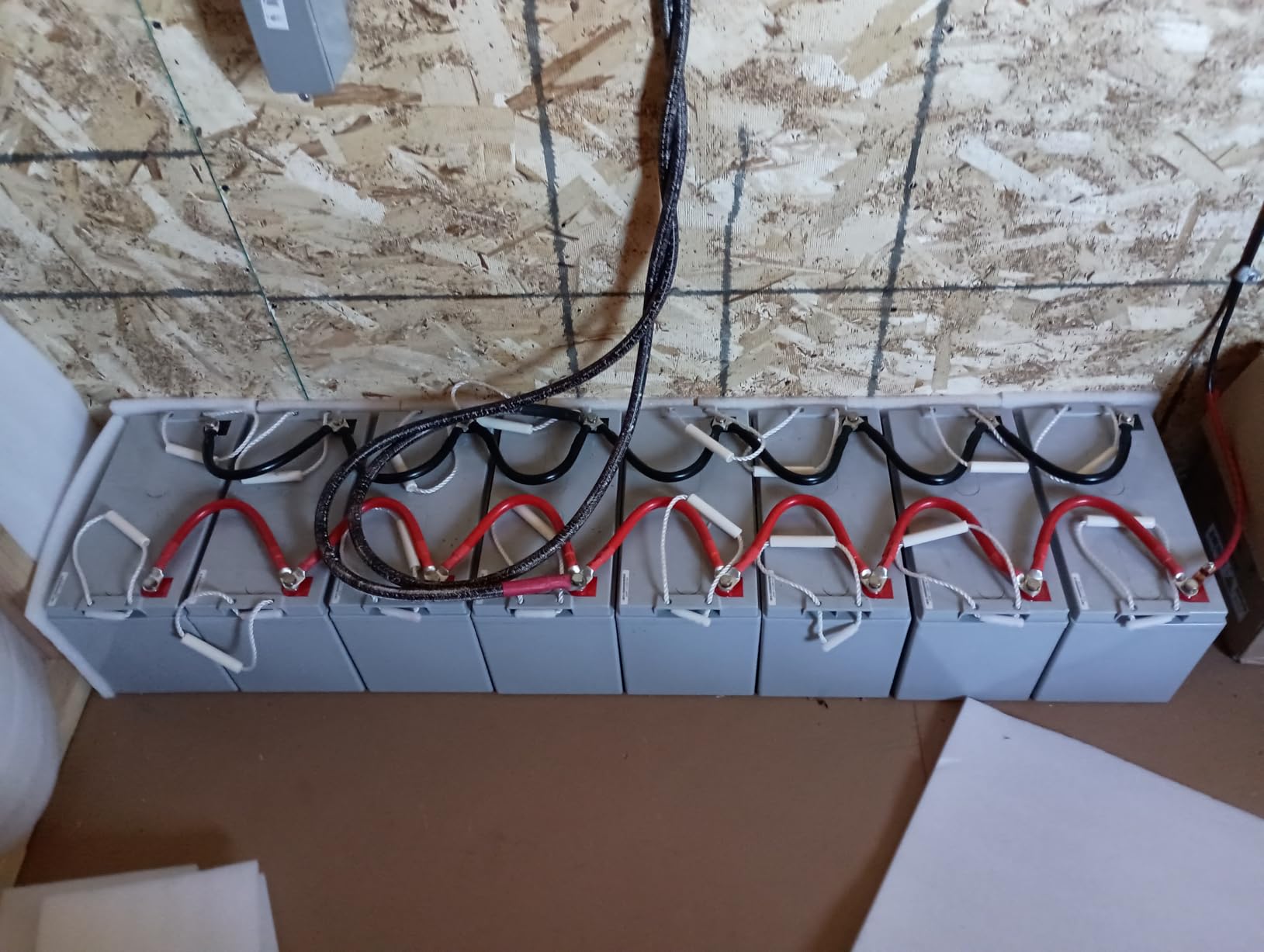
The electrical design is sensible for a bank: series connections are effectively unlimited and parallel expansion up to four units is supported, so a house bank grows in steps instead of all at once. Self-discharge stays below 3 percent per month at room temperature, which keeps idle losses low between trips.
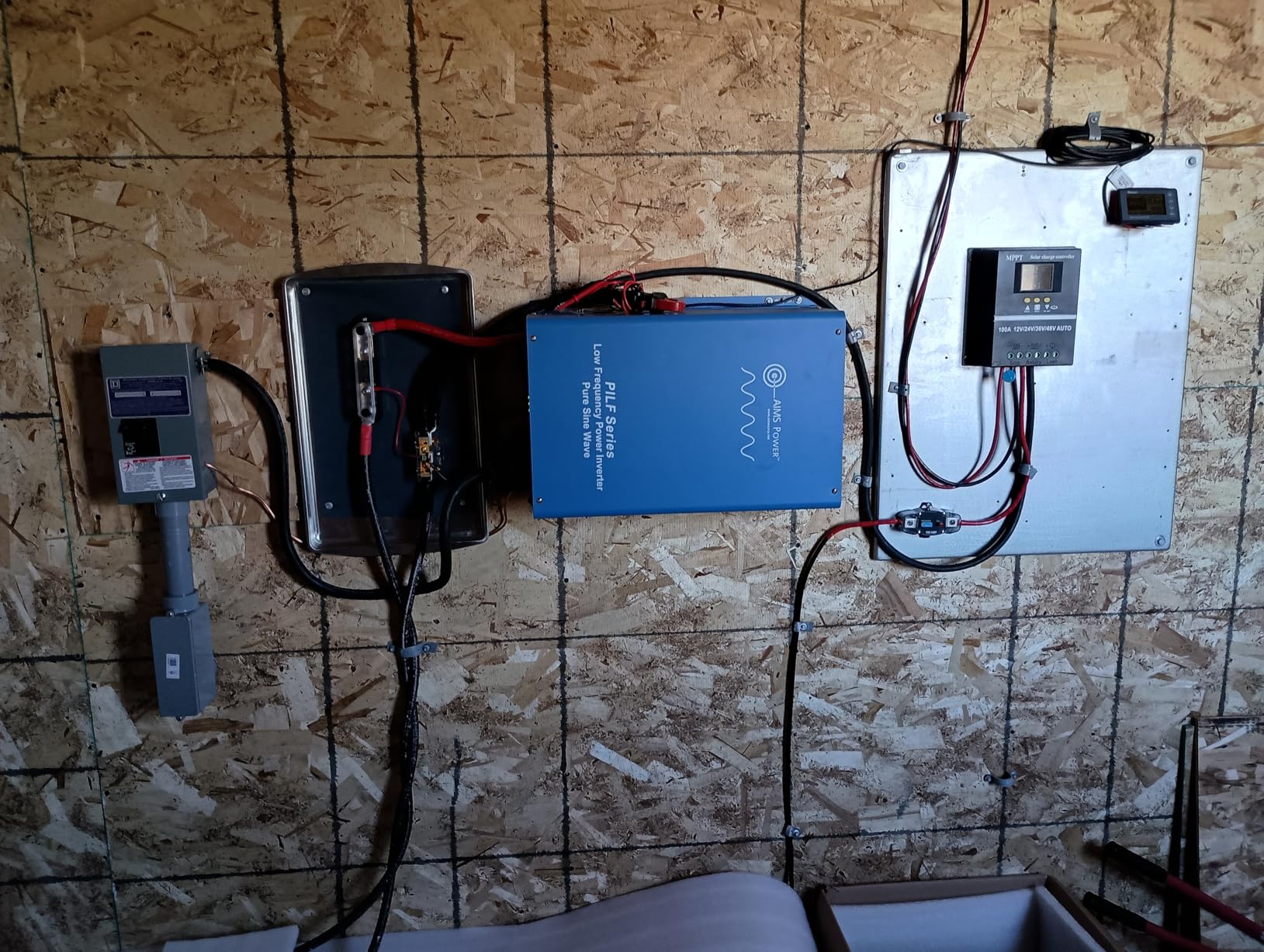
The temperature envelope is the quiet strength. Discharge performance is specified from -4F to 140F, and the manufacturer has published a Peukert constant of 1.1 alongside 90 percent charge efficiency, which are the numbers you need if you are running this partly on solar.
Reviewers do flag a real cluster of units that would not hold a charge after arrival, though several of those buyers say they received replacements. Others note that some smart chargers flag the battery as bad after a few days, which usually points to a charger profile mismatch rather than a dead cell. The M8 terminal screws with removable caps are a small quality touch, and the case sits close to Group 31 so it fits common marine compartments.
Why owners keep coming back to it
Fewer moving parts is the appeal. There is no watering, no vent, and no cell imbalance to worry about across four batteries wired in parallel, and reviewers describe the sealed design as having fewer failure points than lithium in a wet environment.
If you are adding house capacity to a boat rather than replacing a trolling motor bank, this is a sensible anchor. If you want to compare how it behaves as stationary power, our solar battery roundup covers that use case in depth.
Where it falls short
At 63.9 pounds this is a heavy battery, and the pros and cons both say it needs a team lift. Two of them in a house bank means you are handling more mass than any lithium equivalent would ever ask of you.
The 2-year prorated warranty is short relative to several lithium options here, and there are no instructions in the box, so record the charge voltages and set up your own maintenance baseline. The group of buyers who report dead-on-arrival batteries is small but real; buy from a seller with straightforward returns.
3. LiTime 12V 100Ah Group 31 LiFePO4 – the premium lithium pick for trolling motors
LiTime 12V 100Ah Group 31 LiFePO4 Deep Cycle Battery for RV Marine Solar
- About one third the weight of equivalent lead acid
- Built-in 100A BMS with multi-layer protection
- Group 31 footprint with marine terminals
- 15000 plus cycles claimed at 60 percent depth of discharge
- Highest cost in this 100Ah group
- Not intended for engine starting
- Needs a current regulator for MerCruiser and Mercury engines
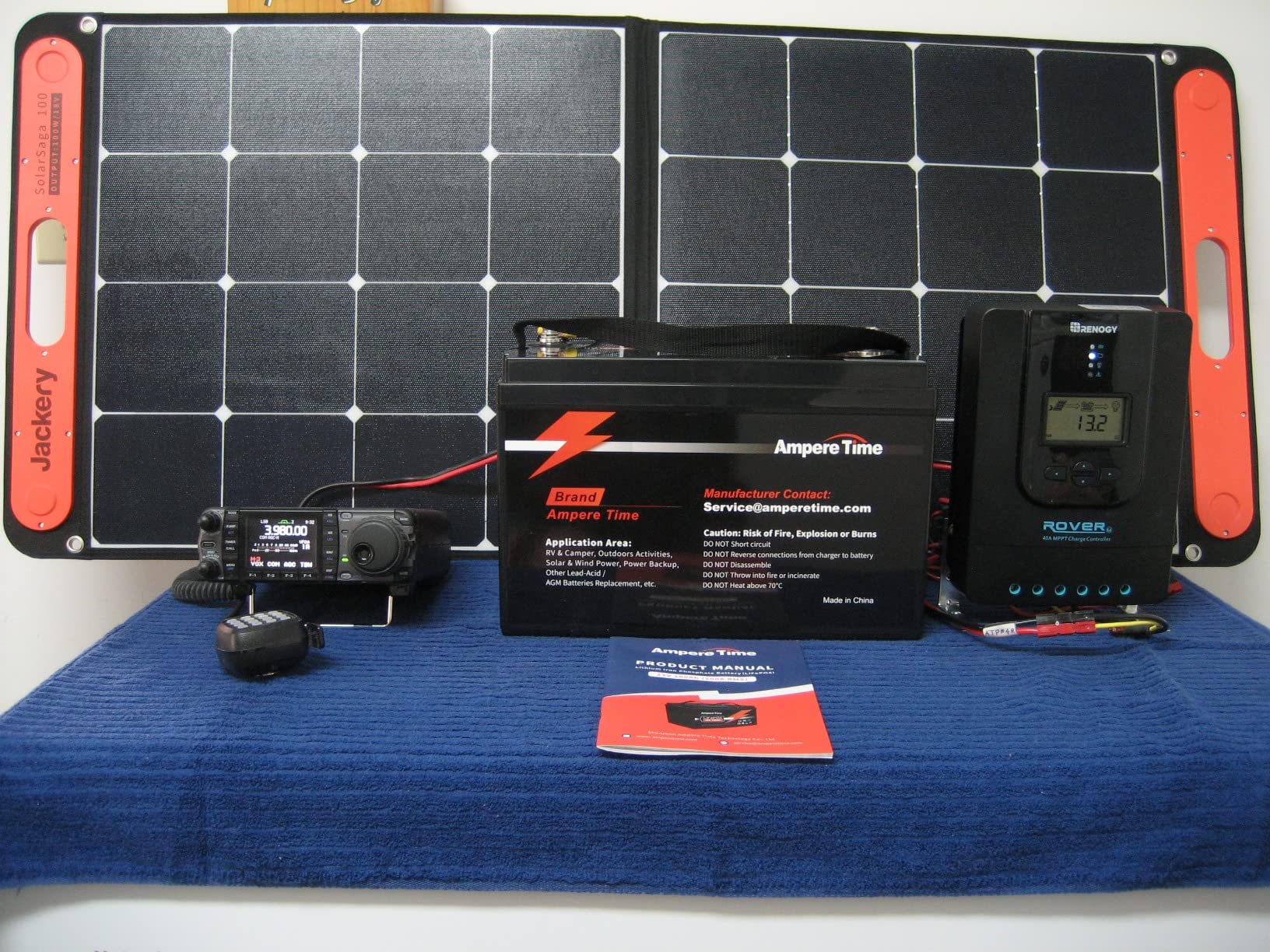
This is the pack that solves the weight problem outright. At 22.1 pounds it delivers 1280Wh, roughly a third of the mass of a 100Ah lead acid unit, and owners consistently report that a single pack replaces a pair of batteries they used to carry.
The form factor is the reason to choose it over other lithium options. A true Group 31 footprint with marine terminals means it drops into the box you already have, which removes the single most common reason people hesitate to switch chemistry.

The built-in 100A BMS covers overcharge, over-discharge, short circuit, over-voltage, over-current and over-temperature, and the cell-level balancing that happens behind it is what lets the pack hold its rated capacity over thousands of cycles instead of drifting. The IP65 enclosure handles spray, and expansion to 4P4S is supported if you later build a 48V trolling system.
The limits are stated clearly and are worth respecting. It is not a starting battery, not a golf cart battery, and the manufacturer is explicit that Mercury and MerCruiser engines need a current regulator fitted. Five years of warranty and 24-hour technical support are both above what most of the value packs in this list offer.
Where lithium earns its cost
Lift it with one hand. On a flats boat, a small skiff, or anything you trailer alone, that difference changes how the boat is used, and it is the reason lithium has taken over the trolling motor battery conversation.
Voltage behaviour is the second quiet benefit. The discharge curve stays flat until the pack is close to empty, so a fish finder or a spotlight runs at full output for the whole day rather than dimming as the pack drains.
Where it falls short
The cost is the highest in this group of 100Ah batteries, and you are paying a chemistry premium on top of the capacity premium. Owners balancing a fixed budget often land on the AGM picks earlier in this list instead.
Verify your outboard before you commit. If you run a Mercury or MerCruiser, the regulator requirement is a real installation step, not a formality, and skipping it risks the BMS cutting out under cranking load.
4. Daakmax 12V 100Ah AGM – no-maintenance power on a tighter budget
Daakmax 12V 100ah Deep Cycle AGM Battery Rechargeable SLA Maintenance-Free Batteries for Camping Marine Cabin RV Off-Grid System
- Arrives charged and ready to use
- Strong cranking power for the class
- Sealed leak-proof design with no maintenance
- Good value for a 100Ah sealed unit
- Square nut terminals are awkward in a tight compartment
- Shorter terminal screws make thick cable ends difficult
- 1-year warranty
This is the pick when the deciding factor is simply getting a sealed 100Ah battery installed without a large outlay. Reviewers describe batteries that arrive charged and ready to power up immediately, which removes the first afternoon of the install.
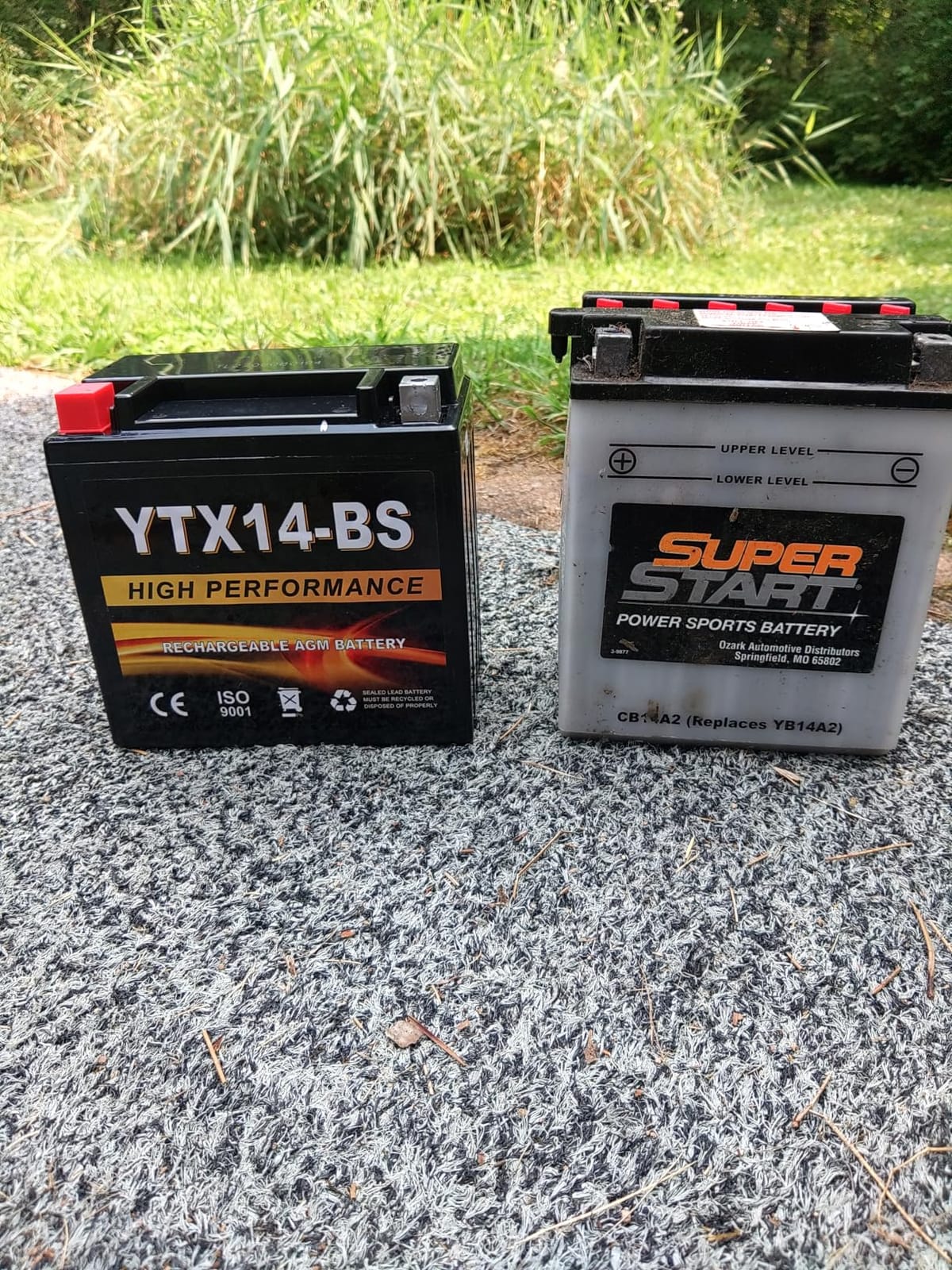
It handles more than house loads. Owners report strong cranking power that fits common powersports and marine battery bays without modification, so on a boat with a modest outboard it can cover the turn-over as well as the electronics.
The 1150A maximum discharge current is the highest figure among the sealed AGM units in this roundup, and the vibration-resistant ABS casing is a sensible choice for a hull that works. Self-discharge sits in the same 1 to 3 percent monthly range as the other AGMs here.
The terminal hardware is the recurring practical complaint, and it is a real one on a boat. Square nuts and short terminal screws are genuinely awkward to thread in a cramped compartment, and reviewers with thick factory cable ends report difficulty getting a solid connection.
When this is the right call
Choose it for a house bank, a livewell setup, or a battery that lives under a hatch you rarely open. The leak-proof sealed design means no watering schedule and no acid check, which removes the two tasks that cause people to neglect flooded batteries in the first place.
Its 1-year warranty is the trade you accept for the lower cost. For owners who keep batteries charged and stay above a 50 percent state of charge, the observed pattern on forums is that service life is set by treatment rather than by the warranty length printed on the box.
Where it falls short
The terminal design will cost you time. If your battery compartment is tight, budget extra for a proper wrench and consider adding short marine-grade cable with lugs that suit the studs rather than factory ring terminals.
It is also a lead acid unit, so you accept the weight that goes with it. If you are adding capacity to a small boat rather than replacing a house bank, a lithium pack in the same footprint will change how the boat handles.
5. Power Queen 12V 100Ah Group 31 LiFePO4 – the highest-rated Group 31 lithium pack
- Tied for the highest average rating here at 4.6
- Grade-A cells with a 100A BMS
- 40 milliohms internal resistance
- Expands to 4S4P for a 20.48kWh build
- Costs considerably more than 100Ah AGM alternatives
- M8 terminals may need adapters for some marine cable lugs
- 3 percent self-discharge means occasional top-ups
With 82 percent of its feedback at five stars, this is one of the best-liked packs in the group, and the reasons are consistent. Owners cite the weight, the Group 31 fit, and a battery that keeps its capacity across seasons of trolling use.
Low internal resistance is the quiet specification that matters here. At 40 milliohms, the pack wastes less energy as heat during high-current discharge, which translates into usable amp-hours when the trolling motor is working hard in moving water.
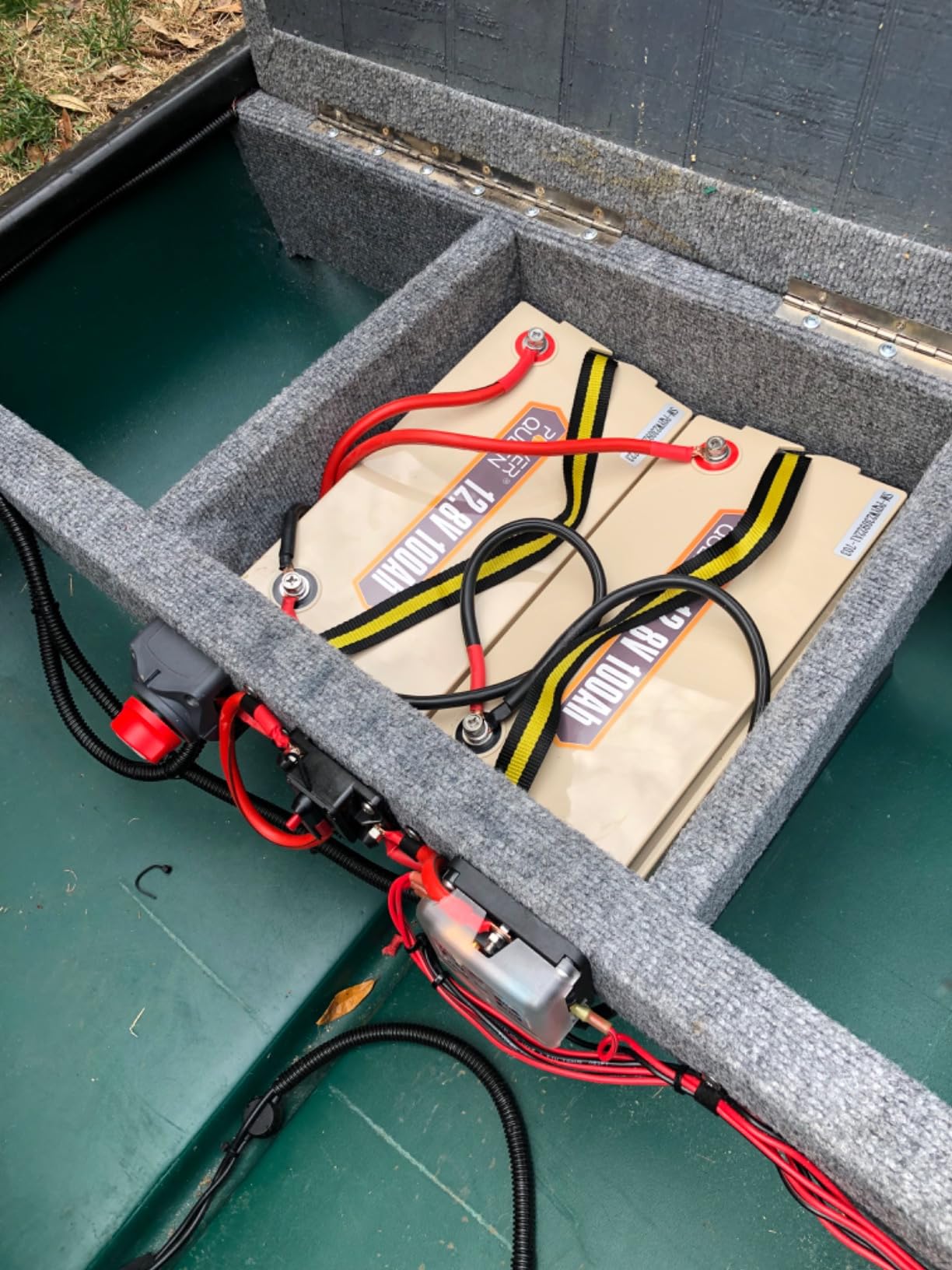
The 100A BMS provides overcharge, over-discharge, short circuit and overheat protection around Grade-A cells, and the manufacturer claims up to 15000 deep cycles at a 60 percent depth of discharge. The IP65 housing and 3 percent self-discharge rate round out a package that suits a boat left in a wet dock for weeks.
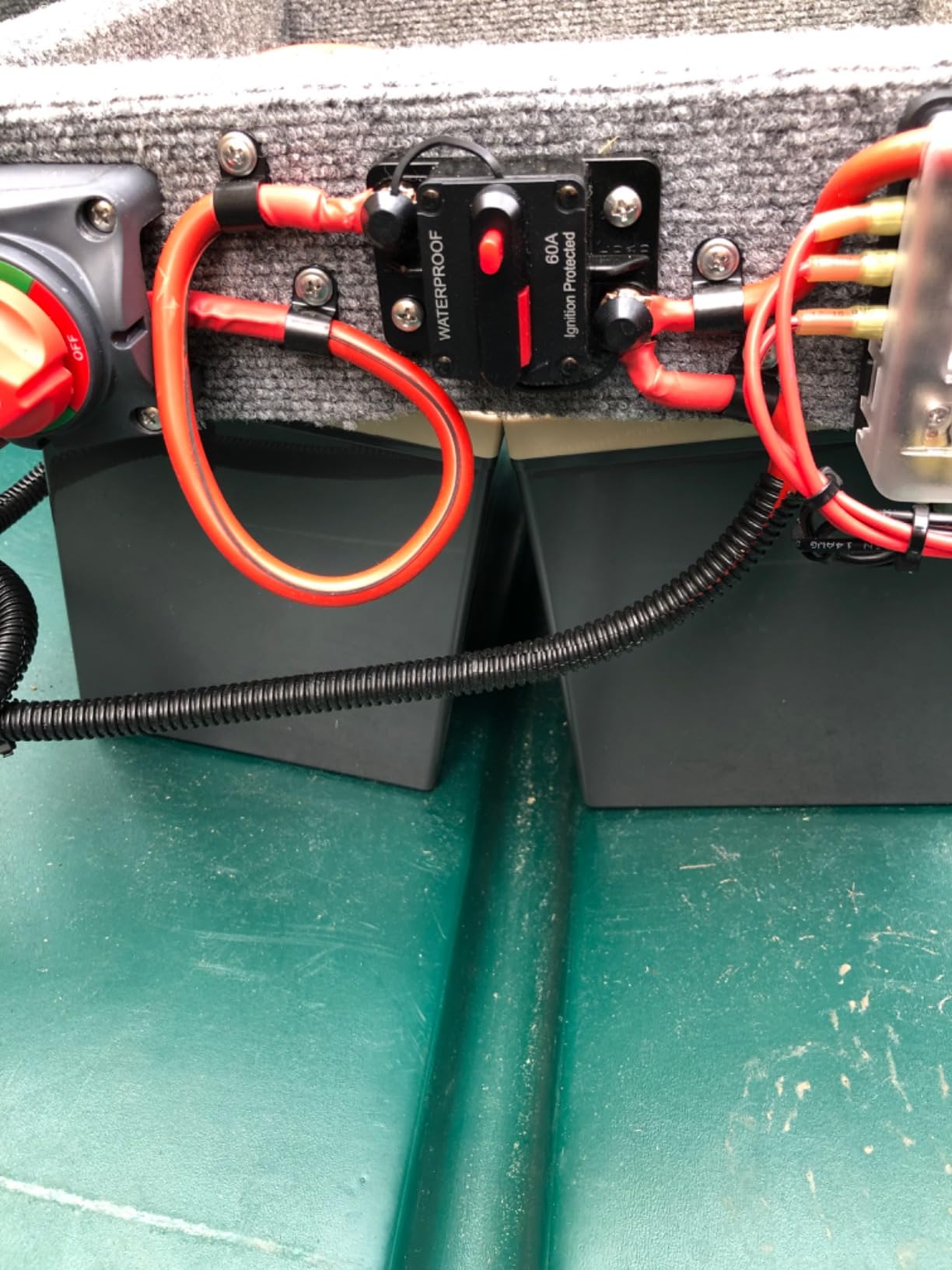
Expansion is where this one separates from the crowd. Support for 4S4P means a single pack can grow into a 51.2V 400Ah installation of about 20.48kWh, so a multi-day offshore trip does not force a second purchase later.
What owners confirm after use
Owners report that a pack this size is easy to reposition in a boat on their own, which is the sentence that decides most lithium purchases. They also report thirteen times more cycles and roughly three times the service life of the lead acid batteries they replaced.
Bluetooth is not part of this pack. If you want to read state of charge from your phone while you sit on the dock, one of the lithium units further down includes app monitoring and is the one to look at instead.
Where it falls short
Against a 100Ah AGM the cost gap is large, and that gap only narrows if you keep the pack for many seasons. The M8 terminal layout also causes occasional fit questions, so check your existing cable lugs before ordering rather than after.
Like every lithium pack in this roundup, it is not a cranking battery and it wants a lithium-profile charger. Our buying guide below covers the charging side in detail because that is where most installation mistakes happen.
6. Rvpozwer 12V 100Ah Group 31 LiFePO4 – the cheapest way into 100Ah lithium
Rvpozwer 12V 100Ah LiFePO4 Lithium Battery Group 31 with Built-in 100A BMS
- Lowest cost per amp-hour in the lithium group
- 23 lb Group 31 case is easy to carry to a boat
- 120A Smart BMS with full protection suite
- Wide minus 20C to 65C operating range
- Lowest average rating here at 4.1 with 17 percent one-star feedback
- Brand support and liability coverage less established
- Not intended for engine starting
This is the pick for a first lithium install, where the goal is to move to the chemistry at the lowest sensible outlay. The 23-pound Group 31 case gives you the same physical footprint and roughly the same usable capacity as the premium packs at a fraction of the spend.
Cycle claims are competitive on paper. The manufacturer rates 4000 cycles at full depth of discharge, 6000 at 80 percent, and up to 15000 at a 60 percent depth of discharge, which is a normal LiFePO4 curve rather than an aggressive claim.
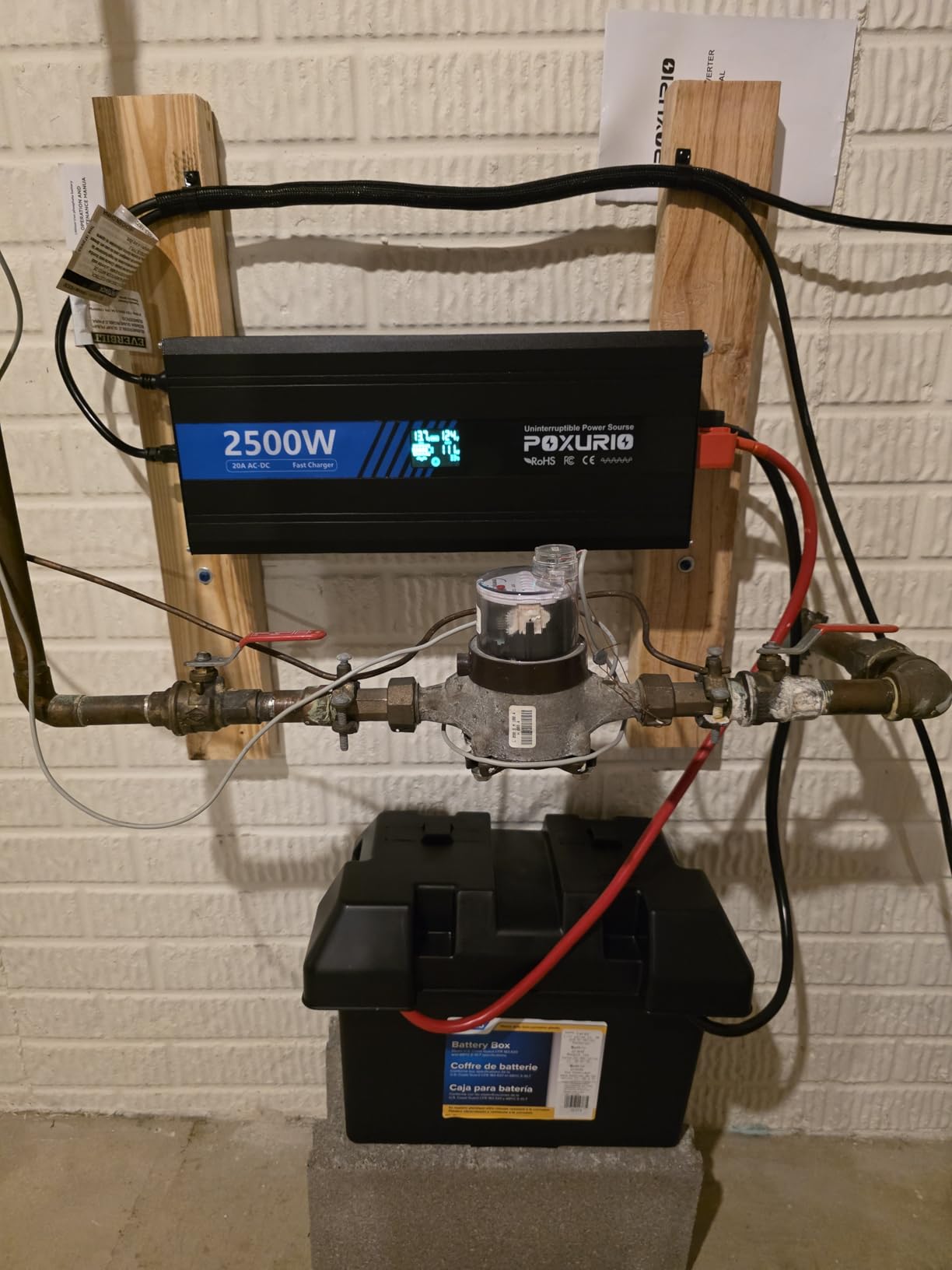
The 120A Smart BMS covers overcharge, over-discharge, over-current, over-voltage and short circuits, and the operating range of -20C to 65C is wider than most packs in this roundup advertise. A nylon carry handle is a small thing that matters when the battery lives at the end of a dock.
What separates it from the rest is the rating spread. At 4.1 average with 17 percent one-star feedback, this is the least consistent pack here, and that tells you what to expect: some buyers love the capacity-to-weight ratio while others report quality issues. Treat the warranty and the seller as part of the purchase decision, not an afterthought.
Where the value sits
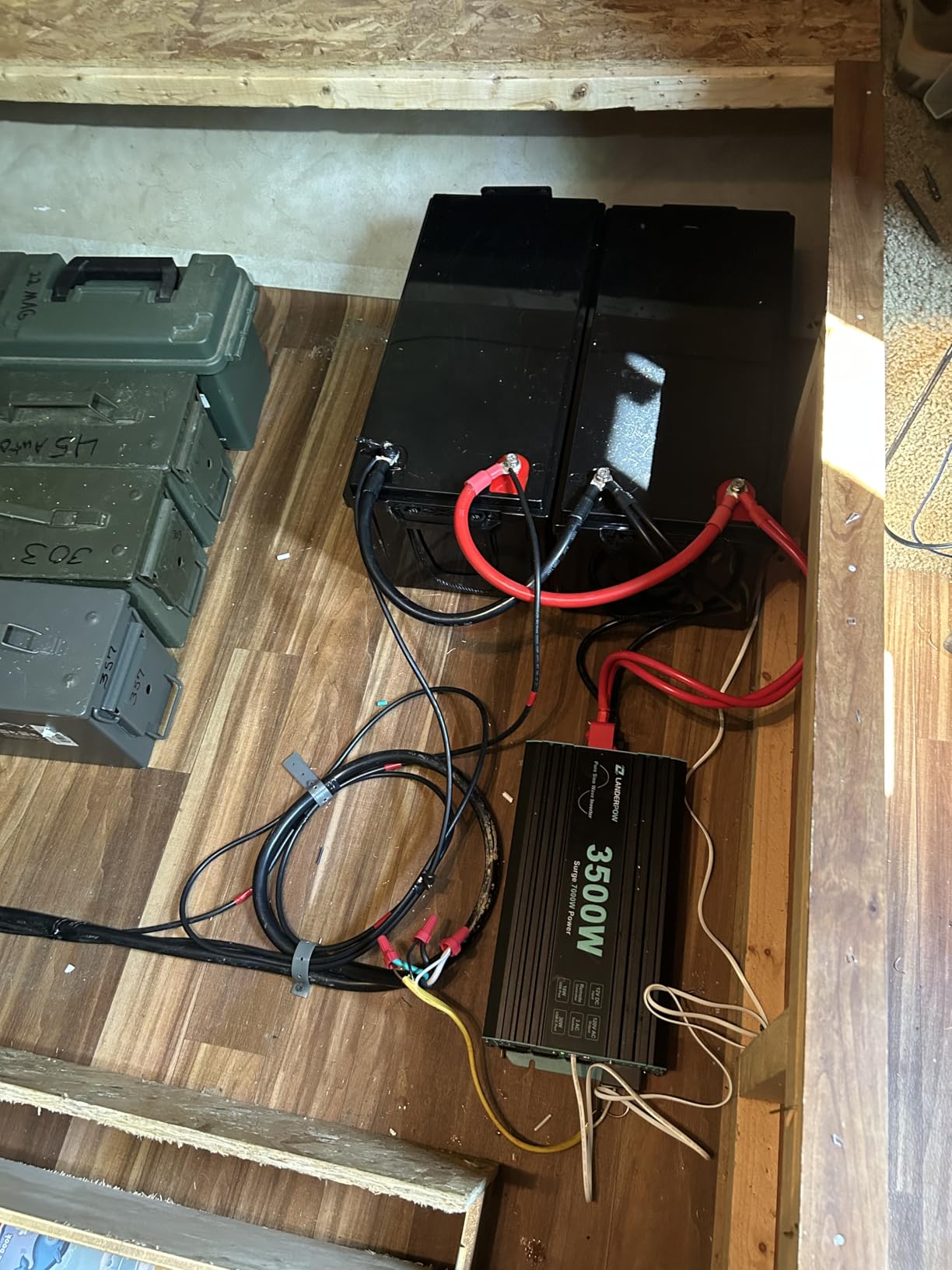
If your boat needs a house bank for electronics, a portable power source for a kayak or ice-fishing shelter, or a single pack to run a modest trolling motor, the price per amp-hour is hard to argue with. Expansion to 4S or a 400Ah parallel bank is supported if the need grows.
It also suits owners who are still deciding whether lithium suits them, because the downside of switching chemistry at this price point is small compared with the cost of a premium pack.
Where it falls short
Consistency is the issue. A 17 percent one-star share means you should expect more variation in units than with the higher-rated packs, and the brand name will not carry weight with a warranty department the way an established maker does.
Check the low-temperature charge behaviour before winter use. This pack publishes a wide operating range but the more important question is whether charging is blocked in freezing conditions, and that detail is not in the listing.
7. WEIZE BCI Group 31M Dual Purpose AGM – one case for cranking and house loads
Weize BCI Group 31M Dual Purpose AGM Battery, 240RC 825CCA 12V 110AH Starter & Deep Cycle Sealed Marine & RV Battery
- Cranking power and deep cycle capacity in one marine case
- Owners report easy starting of a large inboard
- Charges up to five times faster than flooded
- 20x the vibration resistance of flooded designs
- Heaviest battery in the roundup at 67.5 pounds
- 12 percent one-star feedback
- One battery arrived unable to crank
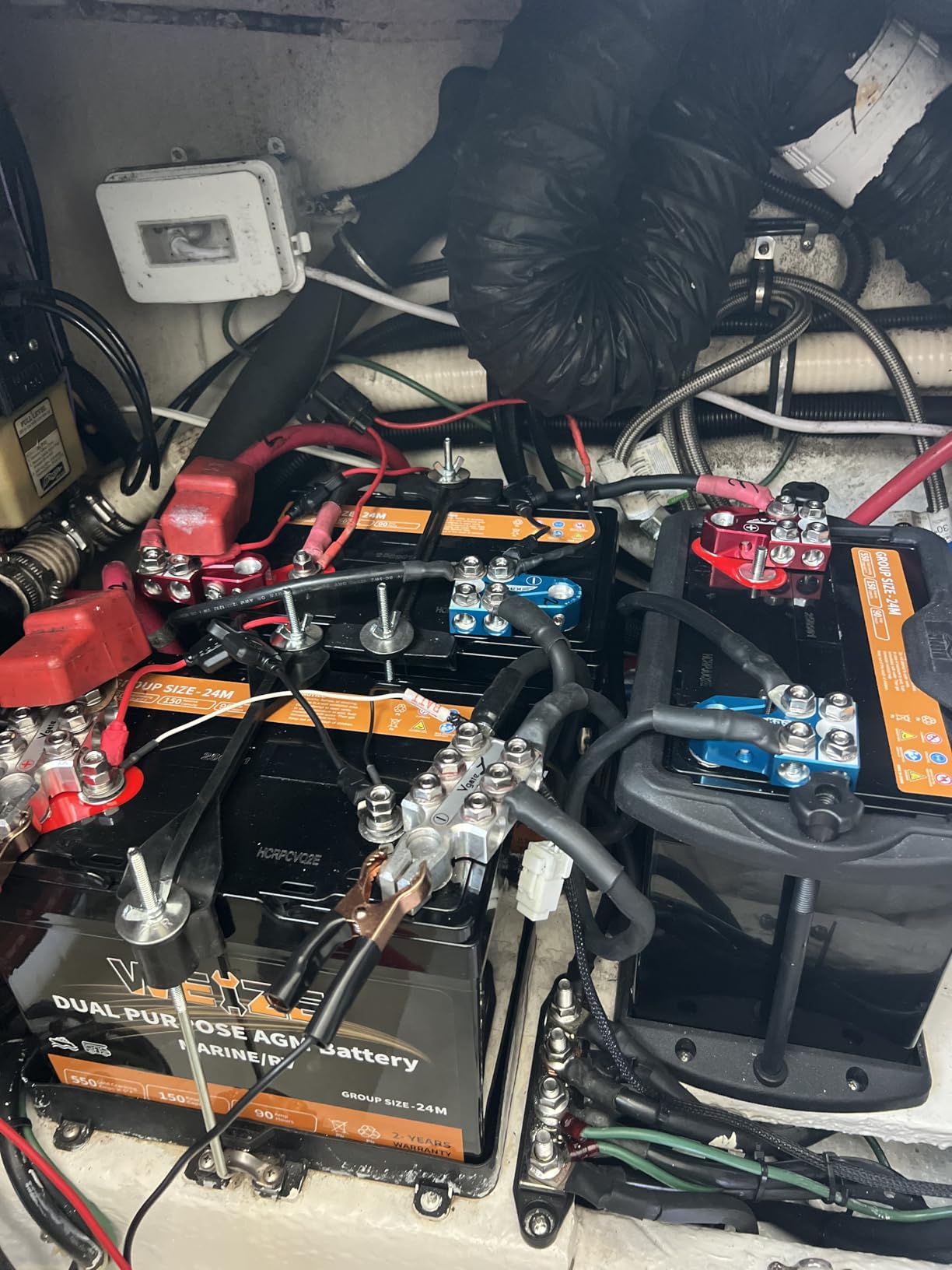
This is the only unit here designed to start an engine and cycle house loads from the same case, which is why it earns a place on a boat with a battery compartment and no room for two batteries. The 825 CCA figure is the number that matters for cranking, and it sits well above anything else in this roundup.
The 110Ah capacity and 240 minutes of reserve capacity cover livewells, lighting and electronics for a day. On a boat where the trolling motor is rarely used, that combination removes a whole category of installation decision.
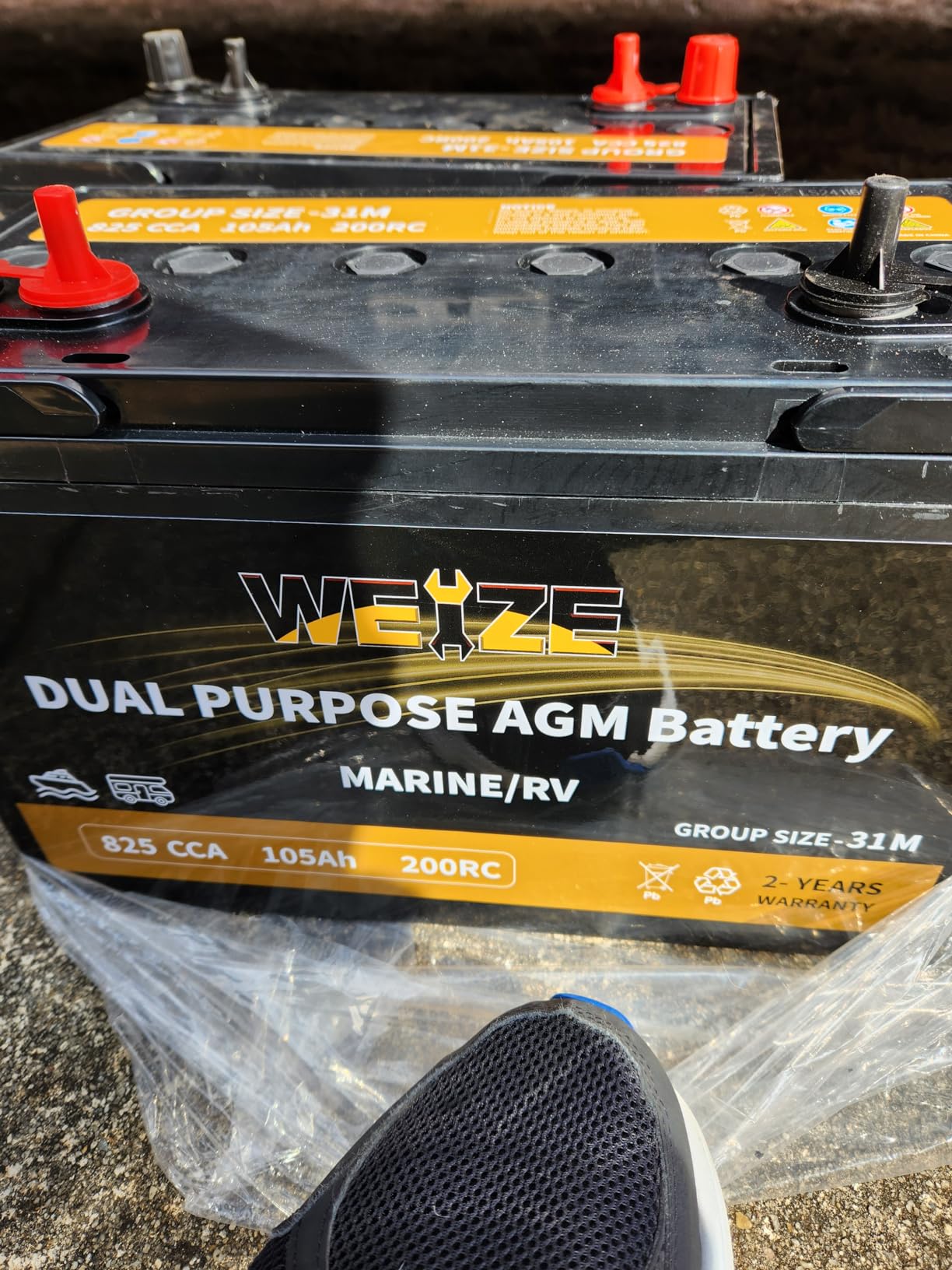
Owners report it spins and starts a large 8.1 litre inboard effortlessly, and several buyers say it outperformed a premium Interstate Group 31 AGM they already owned. The charging figures are the other draw: up to five times faster than flooded, charging at 14.4 volts with a 21 amp maximum inside 24 hours.
Vibration resistance is specified at 20 times a flooded design, which is meaningful in a hull where a trolling motor is bolted to the deck. Dual mounting posts let you fit cranking and accessory cable ends to the same battery.
When one battery is enough
Choose it when your boat has a small outboard, a manageable cabin load, and a single battery box. You get the cranking capability that pure deep cycle lithium packs deliberately do not offer, plus enough capacity for a working day on the water.
It also makes sense as a house bank for a boat that lives on a trailer, where the engine is started frequently and the deep cycling is occasional.
Where it falls short
At 67.5 pounds it is the heaviest battery here, and you feel every one of those pounds when it goes into a boat. Two of these is a genuine two-person lift, so plan your install around that.
Its 12 percent one-star share is the second highest in this roundup, and one buyer reported a unit that would not crank at all. Dual-purpose design also means you compromise slightly on both jobs, so owners who troll hard every week are better served by a separate starting battery and a dedicated deep cycle pack.
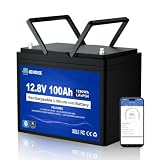
8. DC HOUSE 12V 100Ah Bluetooth LiFePO4 – cell-level monitoring from your phone
DC HOUSE 12V 100Ah Bluetooth LiFePO4 Trolling Motor Lithium Battery
- Cell-level state of charge voltage and current data on a phone
- Low temperature charge and discharge cutoffs
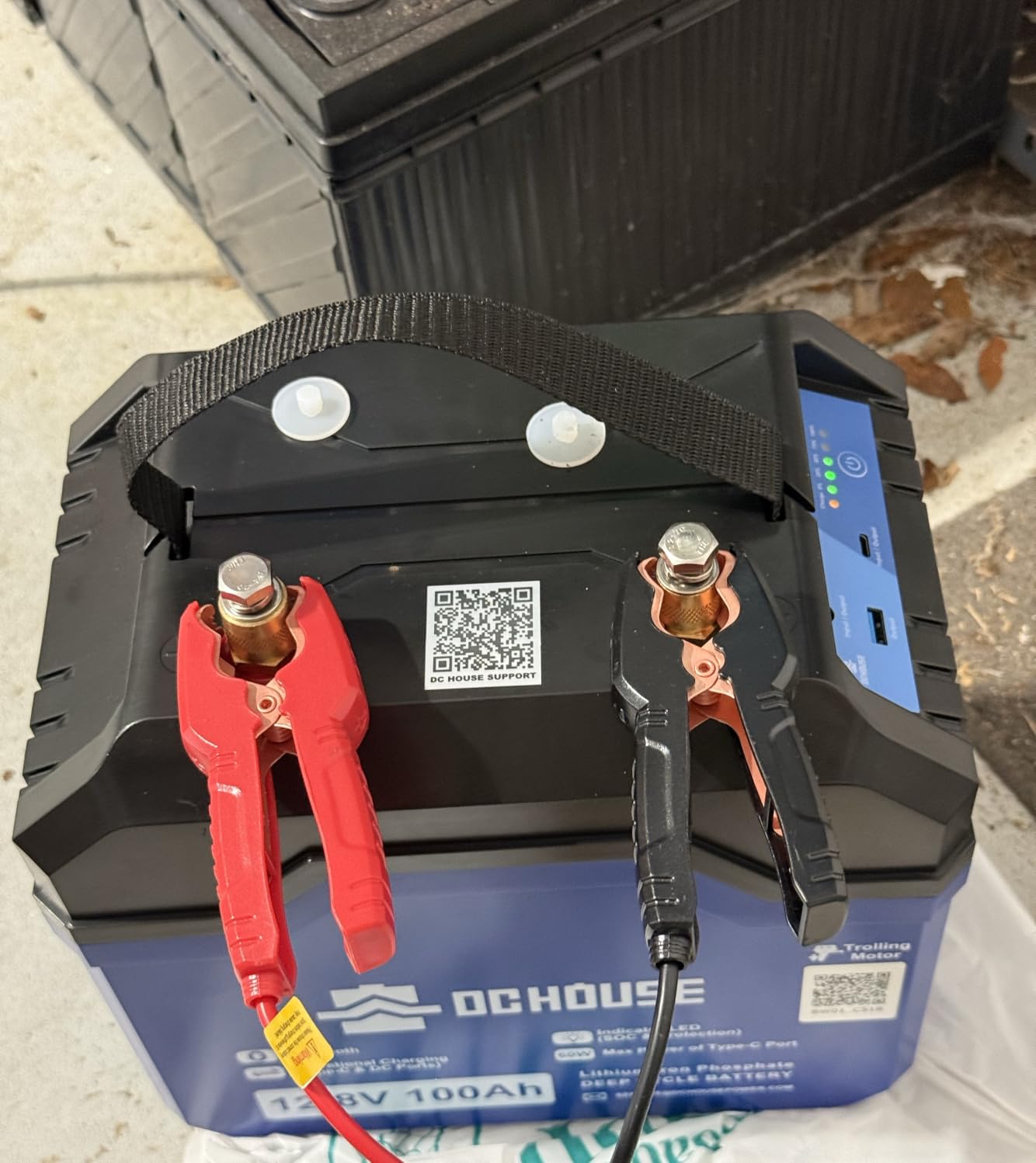
- 23.8 lb Group 24 footprint
- UL and UN38.3 tested cells with push notifications
- Runs about 0.32 inches taller than a standard Group 24
- Bluetooth range is only 5 to 10 meters
- 3-year warranty and not a starting battery
The reason to pick this pack is visibility. Bluetooth 5.1 monitoring through the manufacturer app reports state of charge, voltage and current per cell along with a fault display page, and it is the only battery in this roundup that does it.
That changes how you use a battery on a boat. Instead of guessing from a voltage meter at the dock, you can see which cell is drifting and catch a problem before a ruined fishing day.
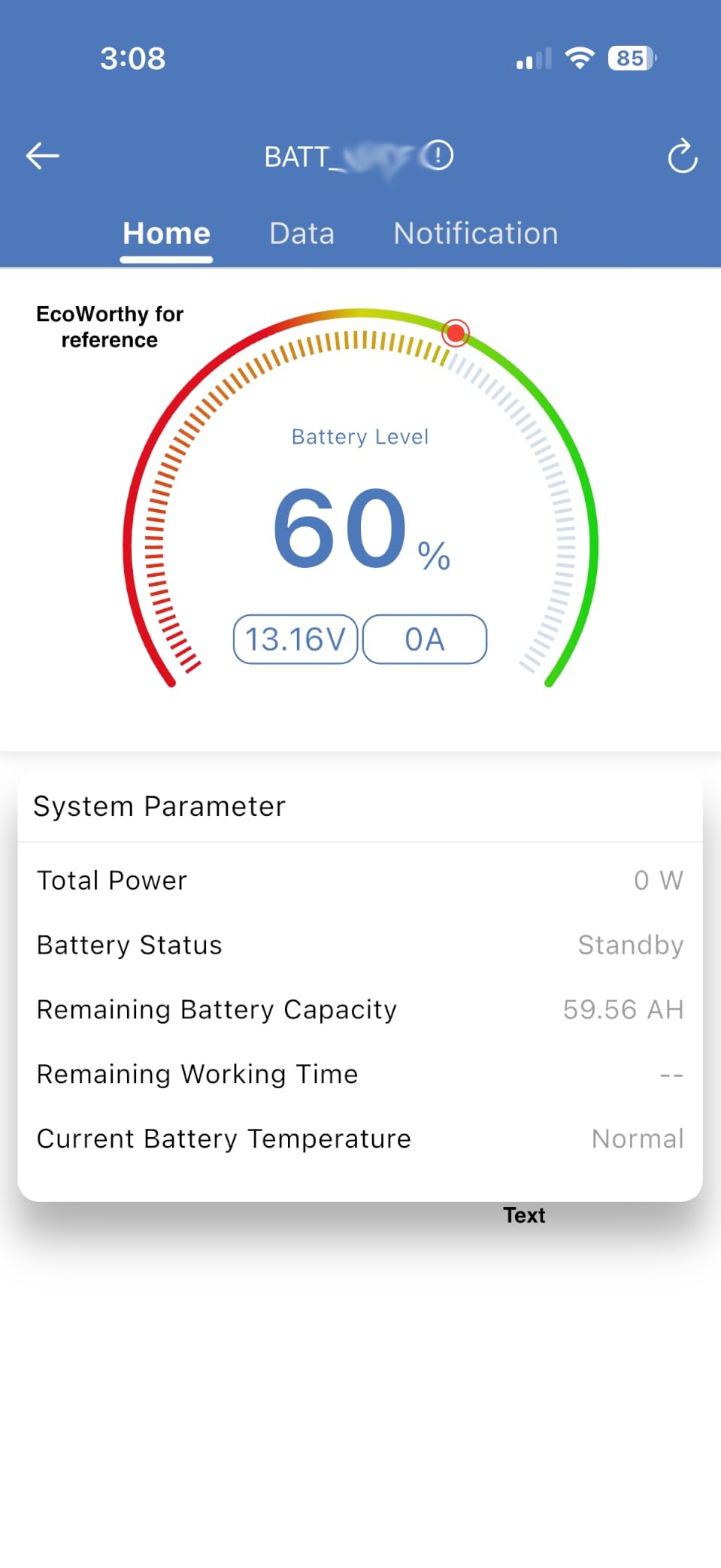
The low temperature cutoffs are specified in detail: charging cuts below 19.4F, discharge cuts below -4F, and charging resumes at 32F. Those numbers are what you want to see on a battery that lives in a boat through a northern winter, and they are unusual to see stated plainly.
Cells are UL and UN38.3 tested, cycle life is claimed at up to 15000 cycles with a 10-year service life, and push notifications flag anomalies to protect a trolling motor and boat electronics. At 23.8 pounds in a Group 24 footprint it fits most standard boxes.
What the app actually does for you
It turns battery maintenance into a glance rather than a routine. A weekend reading of cell voltages tells you far more than a single pack voltage ever did, and fault codes let you diagnose a bank that is drifting out of balance.
Owners on trolling motors rate it highly for exactly this reason, with 81 percent five-star feedback focused on monitoring and cold-weather protection. It is also the pack we would pick for anyone worried about charging a boat battery in a cold garage.
Where it falls short
Bluetooth range of 5 to 10 meters means your phone has to be near the battery, which is a limitation worth knowing before you picture checking state of charge from the helm. The app is a tool for standing next to the bank, not a dashboard.
Check your box before ordering. The case runs about 0.32 inches taller than a standard Group 24, and that extra fraction of an inch is the reason some owners cannot seat the lid. The 3-year warranty is also shorter than the five years offered by several lithium packs here.
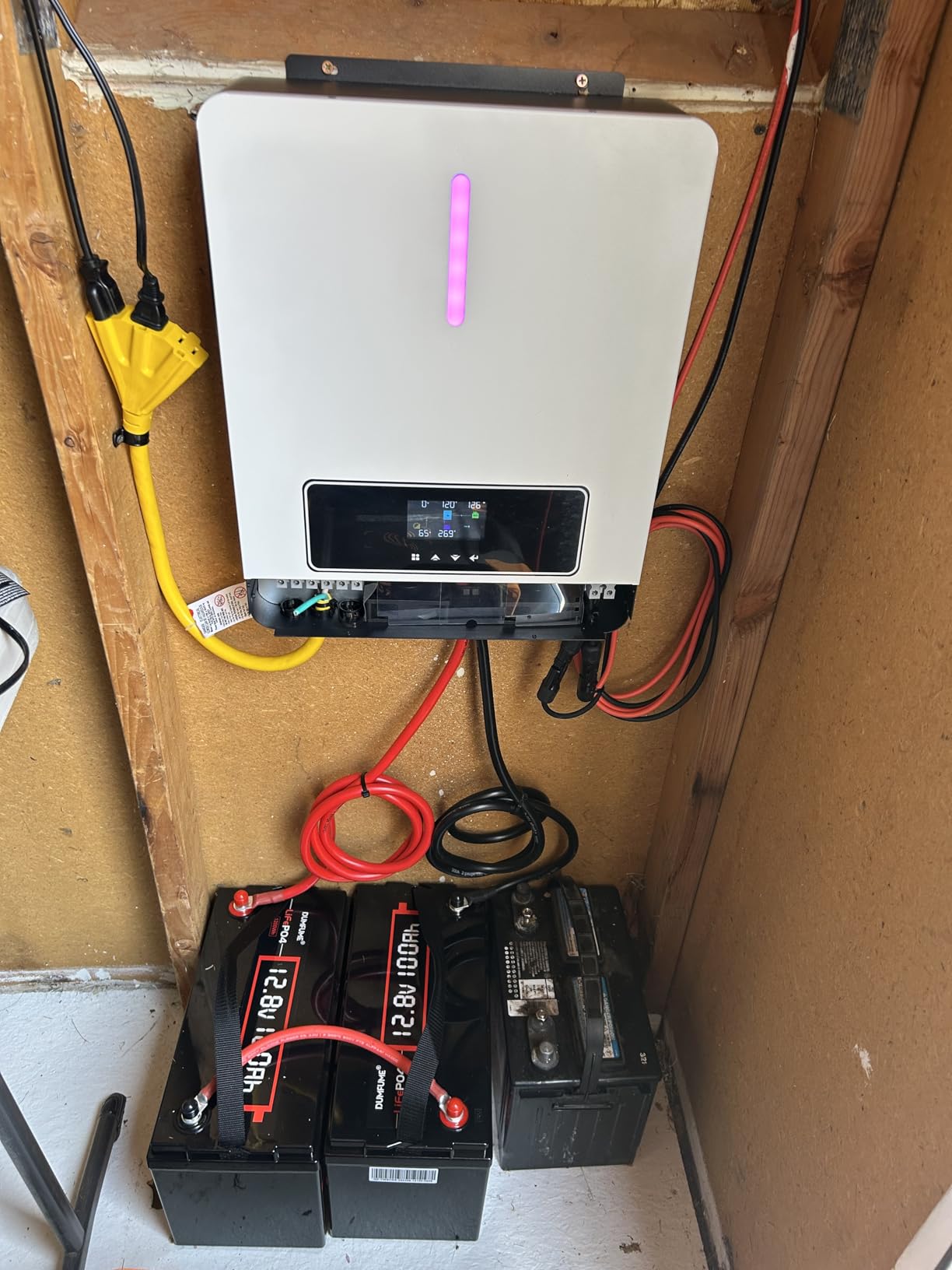
9. Dumfume 12V 150Ah Max LiFePO4 – one pack instead of a bank of two
dumfume 12V 150Ah Max LiFePO4 Battery, IP65 Waterproof 100A BMS
- 150Ah in roughly a 41 lb package
- 1920Wh with 4000 plus cycles to 80 percent
- Compact case fits tight cabin and camper spaces
- 100A BMS with multi-layer protection
- Must operate at 5C or above so cold charging is not covered
- Energy storage only and not for engine starting
- Needs a full maintenance cycle every 6 months in long storage
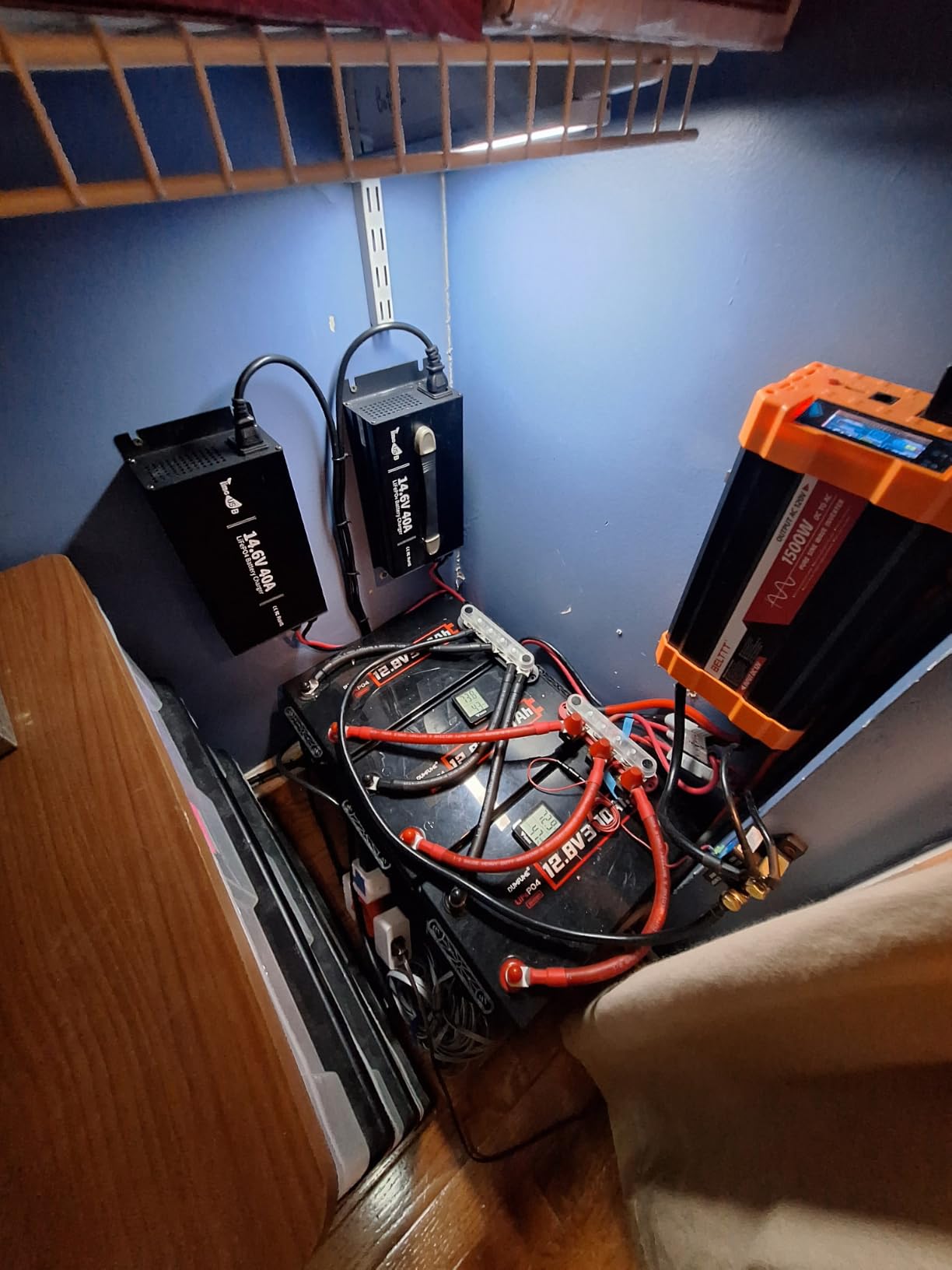
Capacity is the pitch here. At 150Ah and 1920Wh in roughly 41 pounds, this single pack carries the energy of a 100Ah lead acid unit and a half while weighing less than one of them, and owners highlight the ratio first in almost every review.
For a house bank serving electronics, lighting, refrigeration or an inverter, that arithmetic is what makes lithium add up. You install one battery, one set of cables, and one connection to maintain.
Cycle life is specified at more than 4000 cycles to 80 percent of rated capacity, which is a realistic figure for a pack used across mixed house loads. The 100A BMS covers overcharge, over-discharge, short circuit and overheating, and the IP65 enclosure handles spray.
Series and parallel expansion up to 4S4P is supported, so a boat that grows its load later can scale the bank rather than replace it. The case measures 10.04 by 7.68 by 9.84 inches, compact enough for cabinet spaces that will not take two 100Ah batteries.
Where a 150Ah pack makes sense
Multi-day trips, livewell refrigeration, a cabin with a lot of electronics, or a boat used as a weekend base all benefit from the extra capacity. Reviewers commonly pair it with solar charging, and the 5-year warranty is above average for this capacity class.
Its sales ranking sits far higher than most packs in this roundup, which usually means replacement parts, chargers and accessories are easier to find than for a lesser-known brand.
Where it falls short
Read the temperature requirement carefully. The manufacturer specifies operation at 5C or above and states that low-temperature charging is not covered by the return policy, so this is a battery for a climate where your boat is not winterised in a freezing shed.
It is also energy storage only, and long-term storage calls for a full maintenance cycle every six months. Set a calendar reminder, because a lithium pack left flat for a year without a check is the one way to shorten its life.
10. SUPER EMPOWER 12V 100Ah Group 24 LiFePO4 – a true drop-in retrofit
12V 100Ah LiFePO4 Battery, Group 24 Deep Cycle for RVs & Trolling Motors
- Genuine drop-in replacement for existing lead acid AGM or SLA group 24 boxes
- 21.6 lb build is the lightest group 24 pack here
- Built-in 100A BMS with cell balancing
- Low temperature charge and discharge protection
- 5-year warranty
- Charging pauses below 32F so winter charging needs planning
- Needs a dedicated LiFePO4 charger
- Not for engine starting or cranking
This is the retrofit pick. It is specified as a direct replacement for lead acid, AGM or SLA Group 24 installations, so you can convert a boat to lithium without moving a cable, changing a box, or re-laying a hold-down.
Both lithium makes in this roundup rate 4.6, the joint highest here, and this pack carries 84 percent five-star feedback. Owners credit a true drop-in fit, low weight and cold-weather protection in the same case.
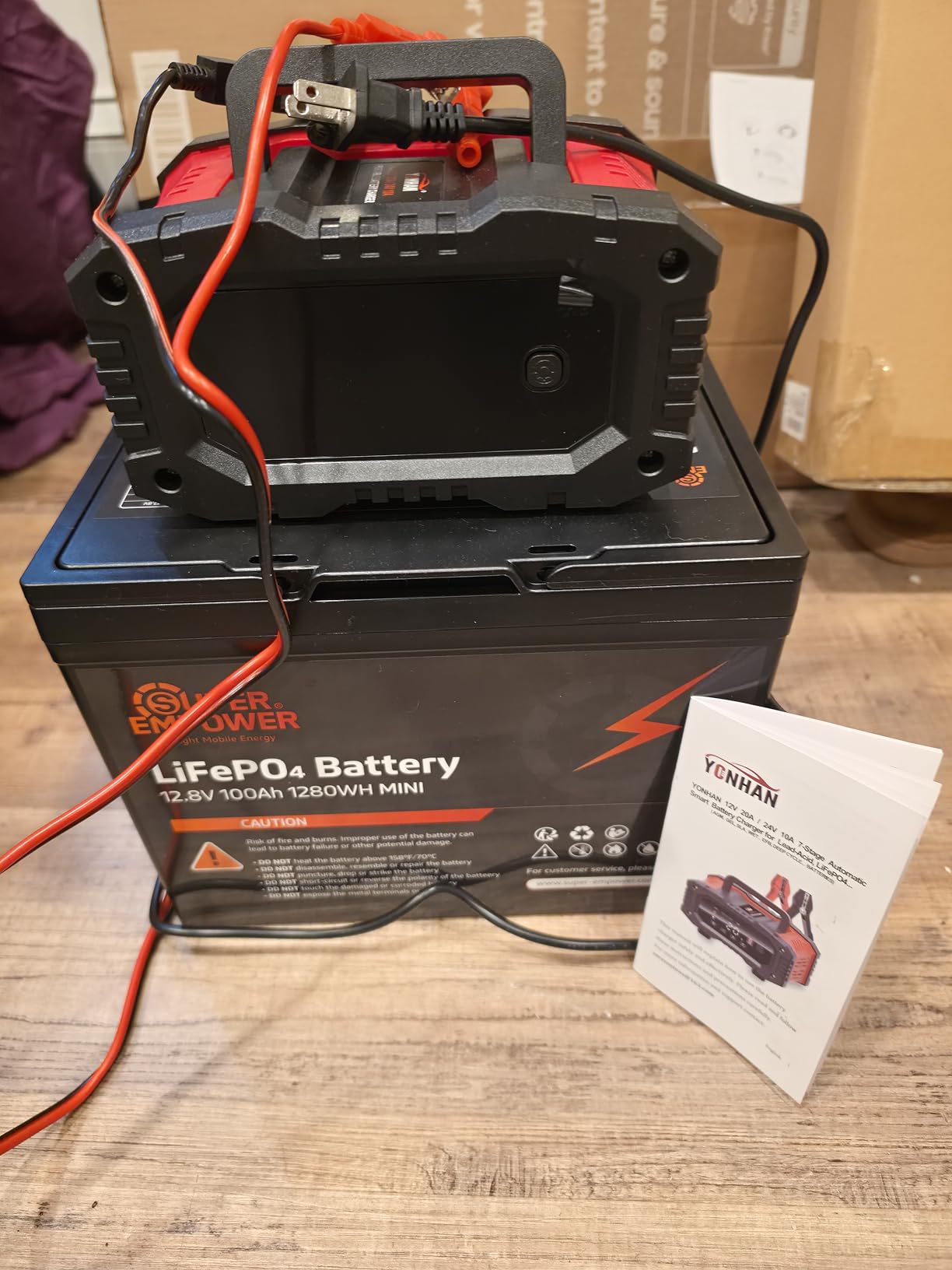
The electrical specification is 1280Wh from Grade-A LiFePO4 cells with 40 milliohms internal resistance, behind a 100A BMS that manages charge, discharge, current and temperature and handles cell balancing. Expansion to 4S4P reaches 51.2V 400Ah, about 20.48kWh.
Cold behaviour is stated precisely: charging cuts off below 32F, discharge stops at -4F, and charging resumes above 41F. Those thresholds are more conservative than several competitors and mean you should plan charging around them rather than leave a pack on a shore charger through a freeze.
Why the drop-in claim matters
Most lithium conversions fail on installation, not on chemistry. Matching an existing Group 24 case with M8 terminals means your existing hold-downs, cable lugs and compartment all keep working, so the change takes an afternoon.
Owners also point out the practical side of 21.6 pounds. Installing a pair of these into a boat that once carried lead acid is a one-person job, and that is the reason most conversions never happened before lithium got this light.
Where it falls short
It is energy storage only, and the manufacturer is explicit that it is not for engine starting or cranking. Keep a separate cranking battery, which is what most owners do anyway.
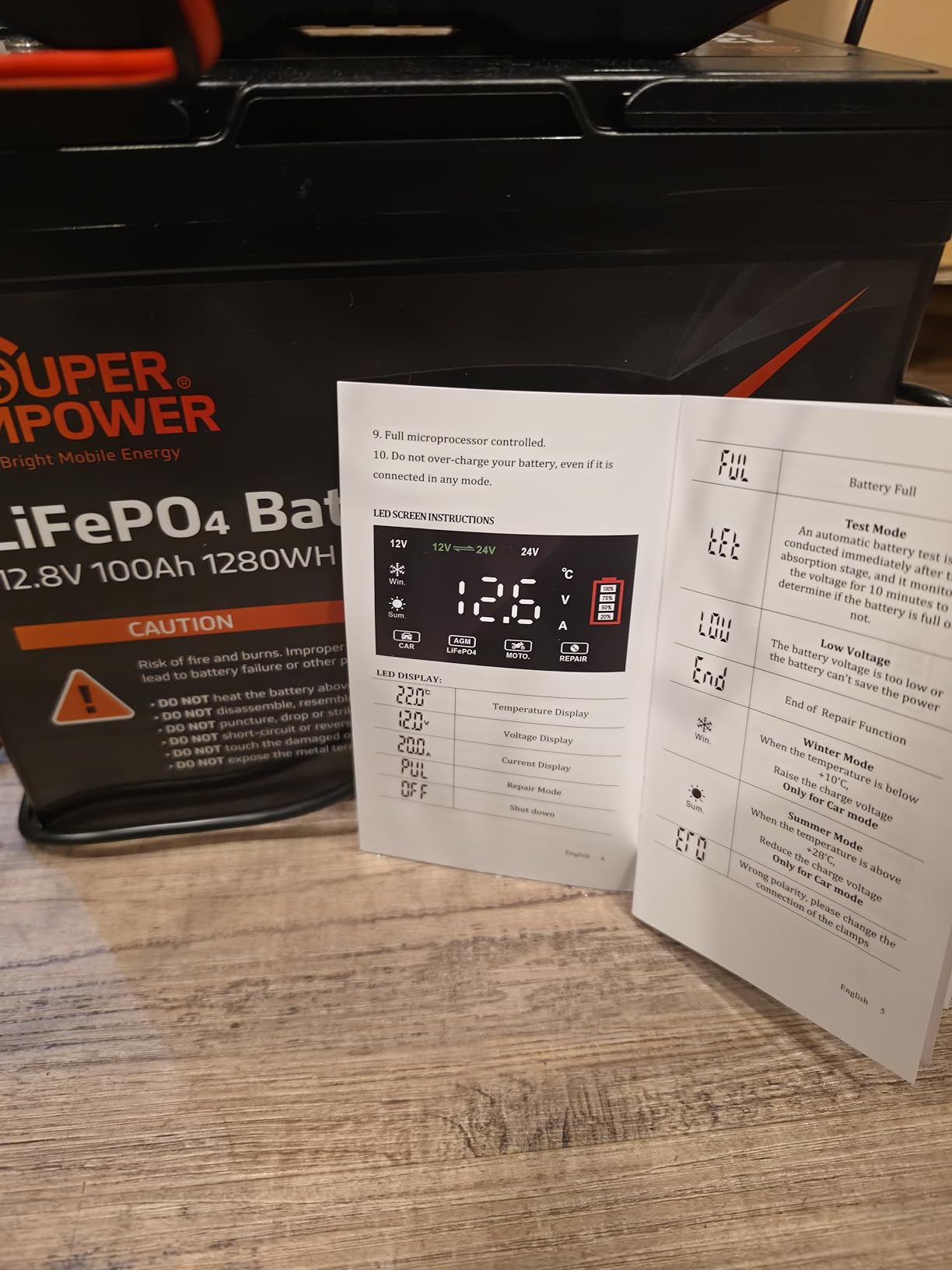
The dedicated LiFePO4 charger requirement is the other real condition. A lead acid charger left on a full lithium pack floats it at a lower voltage and leaves it chronically undercharged, so budget for the charger as part of the purchase rather than an accessory. For more on choosing the right one, see the step-by-step guide below.
Marine Battery Chemistry Compared: Flooded, AGM, Gel and LiFePO4
Four chemistries reach marine shelves, and they are not equally good at everything. This is the comparison, attribute by attribute, so you can match the chemistry to the job rather than to the marketing.
Flooded lead-acid. Cheapest by a wide margin, needs watering, vents gas, and loses capacity faster than anything else here. Expect roughly 3 to 5 years of service. It makes sense on a cheap flat boat that lives on a trailer and gets used hard in summer only. Weight is the other penalty, and it sits at the top of the range for any given capacity.
AGM. Sealed, maintenance-free, tolerant of vibration, and chargeable in cold conditions without a special profile. Expect roughly 4 to 7 years, which is why AGM is the safe default for most boats. The trade is weight: a 100Ah AGM is around 57 to 64 pounds, and dual-purpose Group 31M units reach 67.5 pounds.
Gel. Excellent at slow, deep discharge and very tolerant of being left partially depleted, but sensitive to fast charging and needs a gel-specific charger. Expect roughly 4 to 6 years. Gel is the quiet option that people rarely regret and rarely insist on, and it is worth considering for a house bank that idles.
LiFePO4. The cycle-life and weight winner, with a typical service life of 10 years or more and roughly half the mass of comparable lead acid. The costs are the upfront price, the need for a lithium-profile charger, and cold-weather charging limits that vary by pack. Choose this for trolling motors, weight-sensitive boats, and long ownership horizons.
Two rules explain most of the differences in practice. First, never discharge a deep cycle bank beyond 50 percent of rated capacity; that single habit is the most repeated advice in owner threads and the biggest lever on service life. Second, lithium iron phosphate is a far safer chemistry on a boat than nickel-manganese-cobalt lithium, and the BMS is the part that earns its keep, handling cell balancing, overcharge, over-discharge, short circuit and temperature cutoffs so a single weak cell does not take the pack down.
For related battery guidance beyond the marine world, our RV battery roundup covers the same chemistries from a habitation-load angle.
Who Actually Makes Your Battery: The OEM and Rebranding Map
Much of the confusion in this market comes from brand names that share a factory. A handful of manufacturers build batteries for dozens of labels, and the labels are not always honest about it. Here is the map that answers the most common question in owner forums.
EnerSys makes both Odyssey and X2Power. They are sibling products, not competitors, and forum owners frequently report that X2Power performs on par with Odyssey at a lower cost because it is essentially the same battery with different branding and packaging.
East Penn Manufacturing makes Deka, Duracell, Napa and Super Start. A Duracell marine AGM and a Deka of the same group size come off the same line. This is the single most useful fact on this page, because East Penn products carry the strongest owner-reported service life in the category, including reports of 10 and 11 years on AGM sets in RV and boat service.
Walmart house-brand marine batteries shifted from Johnson Controls to Exide. The label looks like a private brand but the manufacturer changed, which is part of why owners report a wide spread in results, from about 2 years on house-brand specials to 9 years on a good quality Group 31.
Optima, Odyssey, Deka, Interstate and Trojan are distinct manufacturers with distinct plants. Odyssey and X2Power are not, Deka and Duracell are not, and anyone telling you a brand choice is a factory choice is only right when the label really does change the plant.
The practical takeaway: judge the group size, the RC or amp-hour rating, the warranty and the date code, not the logo. And note that the market’s price spread is usually a distribution difference, not a manufacturing one. The same Group 31 can cost a fraction of a marine retailer price at a warehouse club with a core exchange, because the club is not paying a dealer to hold a shelf. The rest of the difference is freight, warranty handling and the retailer’s margin, not a better cell.
How to Choose a Marine Deep Cycle Battery?
Step 1: pick the chemistry for your boat and budget
Start with how the battery is used, not with the label. Trolling all day on a boat you trailer alone points to LiFePO4, because weight is the constraint that decides whether you bring two batteries or one. A house bank on a boat that stays in a slip points to AGM, because it is sealed, needs nothing, and charges in any weather. A cheap flat boat used only in summer can run flooded lead acid and spend the savings on fuel.
Gel earns a place when a bank idles at low charge for long stretches, and it is worth a look if you already have a gel-compatible charger. Avoid NMC lithium on a boat; the failure mode is less forgiving than LiFePO4 and the argument is not worth having in a confined hull.
Step 2: size it, group size first
Match the case size before anything else. Group 24 fits many skiffs, Group 27 fits plenty of center consoles, and Group 31 is the marine workhorse. If your new battery does not physically fit the box and clear the hold-down, none of the other specifications matter.
Then size the capacity. Multiply your average current draw in amps by the hours you need it to run, and treat half the rated amp-hours as your usable figure. A 30 pound trolling motor drawing roughly 5 amps continuously for 8 hours needs about 40Ah of usable capacity, which a single 100Ah pack covers with room to spare, whether it is AGM or LiFePO4.
Two batteries of equal age and capacity should be wired in parallel for more capacity, and in series only when you need a higher voltage for a 24 or 36 volt trolling motor. Never mix old and new batteries in a bank, and never mix chemistries in one bank. If your load is high enough to start an engine, that is a starting battery requirement, and a deep cycle bank alone will disappoint you.
Step 3: match the charger, and give lithium its own
A lithium pack wants a charger with a lithium profile, typically a 14.4 to 14.6 volt absorption stage and no trickle stage. A lead acid charger left connected to a full lithium pack floats at a lower voltage and leaves it chronically undercharged, which shows up as a battery that never reaches full capacity and a BMS that cuts out early.
A smart multi-chemistry charger is the simplest answer if you run more than one type of battery on board. The same rule applies to the charging path while the engine runs: an alternator that is not regulated for lithium will overcharge a LiFePO4 bank, so a battery-to-battery charger is the standard fix.
You can absolutely run a lithium house bank alongside a separate AGM starting battery. What you cannot do is mix chemistries inside a single bank, because the lowest cell in the pack dictates the charge limit and the chemistry with the higher limit gets overcharged.
Step 4: saltwater, cold weather and corrosion
Salt spray is harder on terminals and hold-downs than on the battery itself, so rinse the box and the connections with fresh water, and keep the metal coated. Sealed AGM and LiFePO4 cases are largely indifferent to this; flooded cells are not, which is the practical argument against flooded batteries on a bay boat.
Cold charging is where lithium brands differ most. A good pack blocks charging below freezing, which is a protection rather than a fault. The DC HOUSE pack cuts charging below 19.4F and resumes at 32F, while the SUPER EMPOWER Group 24 pauses below 32F. Several budget packs state no such figure, so verify it before plugging a boat battery into a charger in an unheated garage. Charging a lithium cell below freezing is the failure mode worth avoiding.
Step 5: the cost over ten years
Compare cost per season, not cost per purchase. A sealed AGM that costs less today and needs replacing in year five is more expensive over a decade than a lithium pack costing more now and lasting through the whole ownership period, and owner reports across forums put the real range from about 2 years for house-brand specials to 9 to 11 years for quality AGM that was kept charged and never taken below half charge.
Add the weight into the same calculation. On a boat you load and unload alone, a lithium pack that halves the mass you carry has a value that never shows up on an invoice but shows up every single trip.
Once you have picked a chemistry, the sizing and group-size questions are the same across every use case, and the charging profiles are shared with RV installations too, which our RV battery guide covers in more detail.
Frequently Asked Questions
Which deep cycle battery lasts the longest?
Lithium iron phosphate (LiFePO4) lasts the longest, typically 10 years or more of service, compared with roughly 4 to 7 years for AGM, 4 to 6 years for gel, and 3 to 5 years for flooded lead acid. That figure assumes you keep the battery charged and never discharge it below 50 percent of rated capacity. Owner reports on boating forums range from about 2 years for budget house brands to 9 to 11 years for quality AGM treated that way.
Who makes the best deep cycle marine batteries?
The best overall picks are premium LiFePO4 packs such as LiTime and Power Queen, and the best value lead-acid comes from East Penn Manufacturing, which builds Deka, Duracell, Napa and Super Start from one plant. EnerSys makes both Odyssey and X2Power. Several of the brand names on the shelf are siblings rather than rivals, so compare group size, amp-hours, warranty and date code instead of the logo.
Is a 100Ah lithium battery enough for a trolling motor?
Yes, for most 30 to 50 pound trolling motors used at moderate speed for a full day. A 100Ah pack delivers roughly 50Ah of usable energy under the 50 percent depth-of-discharge rule, and a motor drawing about 5 amps continuously needs around 40Ah for 8 hours of fishing. Because a 100Ah LiFePO4 weighs about 22 to 24 pounds versus 57 to 65 pounds for comparable AGM, one lithium pack often replaces two lead-acid batteries.
Are LiFePO4 batteries better than AGM for a boat?
LiFePO4 is better on lifespan, typically 10 years or more against 4 to 7 years for AGM, on cycle life, on weight at roughly half the mass, and on maintenance since it is sealed with no watering. AGM is better on upfront cost and on cold-weather charging, because it accepts a charge in freezing conditions without a special profile. Lithium needs a charger with a lithium absorption stage and a BMS with temperature cutoffs.
Do LiFePO4 marine batteries need a special charger?
Yes. Use a charger with a lithium profile, typically a 14.4 to 14.6 volt absorption stage and no trickle stage, or a smart multi-chemistry charger. A lead-acid charger left on a full lithium pack floats it at a lower voltage and leaves it chronically undercharged, so the battery never reaches full capacity. An engine alternator that is not regulated for lithium will overcharge a LiFePO4 bank, so add a battery-to-battery charger.
Can I mix lithium and AGM batteries on my boat?
You can run a lithium house bank alongside a separate AGM starting battery, but never mix chemistries within one bank. In a mixed bank the weakest cell dictates the charge limit, and the chemistry with the higher limit gets overcharged. Run a separate starting battery on its own circuit, and use a multi-chemistry charger or a battery-to-battery charger between the two.
Bottom Line
Our pick for most boats is the WEIZE 12V 100Ah AGM: the largest body of owner feedback in this roundup, sealed, and it needs nothing from you after installation. If weight is what is holding you back, move up to a 100Ah LiFePO4 in a Group 31 or Group 24 case and you will halve the mass and add roughly a decade of service life.
Check the case size before you check anything else, budget for a lithium-profile charger if you choose lithium, and keep every bank above a 50 percent state of charge. Ignore the logo on the box until you have checked the manufacturer, because two of the most trusted names in this category are made by the same company.