
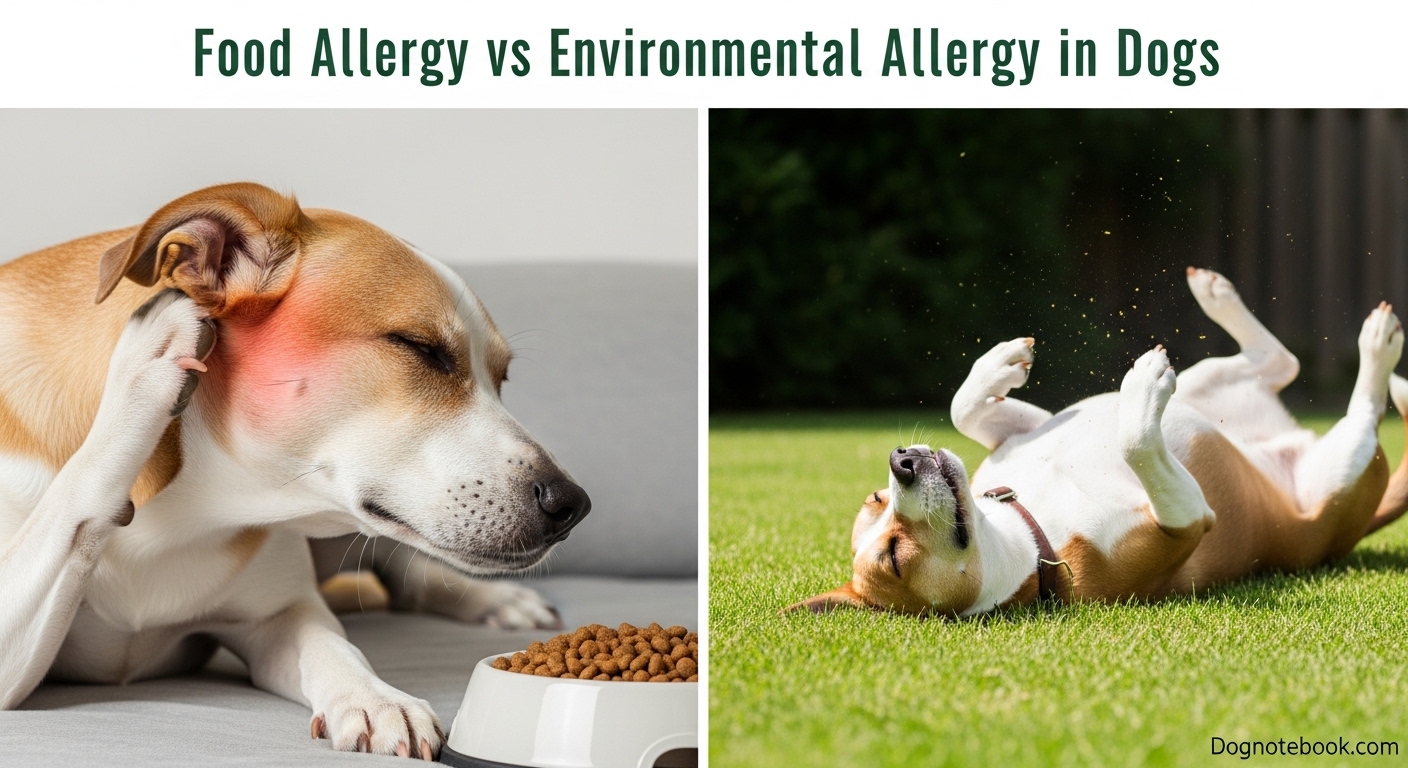
If your dog will not stop scratching, licking their paws, or shaking their head, you are probably wondering what is going on. Allergies are one of the most common reasons dogs visit the vet, and figuring out whether you are dealing with food allergy vs environmental allergy in dogs can feel like solving a puzzle with half the pieces missing.
The tricky part is that both types of allergies share many of the same symptoms. Itchy skin, ear infections, and hair loss show up in both food and environmental cases. But the treatments are very different, which is why getting the right diagnosis matters so much.
In this guide, our team walks you through everything you need to know about telling these two allergy types apart. We cover symptoms, diagnosis methods, treatment options, costs, and what real dog owners have learned from going through the process. By the end, you will have a clear picture of what to discuss with your veterinarian.
Table of Contents
Quick Comparison: Food vs Environmental Allergies at a Glance
The fastest way to understand the difference is to look at them side by side. Here is a breakdown of the key distinctions between food and environmental allergies in dogs.
| Feature | Food Allergies | Environmental Allergies |
|---|---|---|
| Onset Age | Any age (as early as 10 weeks) | Usually 1-3 years old (70% of cases) |
| Pattern | Year-round, constant | Often seasonal, can be year-round |
| GI Symptoms | Common (vomiting, diarrhea, gas) | Rare |
| Skin Symptoms | Itching, ear infections, hot spots | Itching, paw licking, face rubbing |
| Prevalence | About 10-15% of canine allergies | About 85-90% of canine allergies |
| Diagnosis | Elimination diet trial (8-12 weeks) | Intradermal skin test or blood test |
| Treatment | Dietary management, avoid triggers | Medication, immunotherapy, environmental control |
| Steroid Response | Minimal improvement | Significant improvement |
Keep this table handy as you read through the more detailed sections below. It captures the big-picture differences that will help you start narrowing things down before your vet visit.
One important note: about 30% of allergic dogs actually suffer from both food and environmental allergies at the same time. This overlap is one reason why diagnosis can take patience and why working with your vet is so important.
What Are Food Allergies in Dogs?
A food allergy in dogs is an overactive immune response to a specific protein in their diet. The immune system mistakenly identifies a harmless protein as a threat and attacks it, causing inflammation and all those uncomfortable symptoms.
Here is something that surprises many dog owners: a food allergy can develop at any point in a dog’s life. Your dog could have eaten the same chicken-based kibble for three years with zero issues, and then suddenly develop an allergic reaction to it. This is different from food intolerance, which does not involve the immune system and primarily causes digestive upset.
The most common food allergens for dogs include:
- Chicken – the number one culprit, partly because it is in so many commercial dog foods
- Beef – another protein dogs are frequently exposed to
- Dairy – lactose intolerance compounds the problem
- Wheat and soy – common fillers in many brands
- Eggs – less common but still a known trigger
- Lamb – once considered hypoallergenic, now a common allergen due to overexposure
As dog owners on Reddit frequently point out, chicken allergy is extremely common simply because it shows up in almost every commercial dog food, treat, and supplement. A dog that eats chicken daily for years has a much higher chance of developing sensitization to it.
Food allergies account for roughly 10-15% of all allergy cases in dogs. While that is the minority compared to environmental allergies, they can be just as miserable for your dog and often require more detective work to identify.
What Are Environmental Allergies in Dogs?
Environmental allergies, also called atopic dermatitis or atopy, occur when a dog’s immune system reacts to substances in their surroundings. Think of it as the canine version of hay fever, except dogs show it through their skin rather than sneezing and watery eyes.
The most common environmental triggers include:
- Pollen – from trees, grasses, and weeds
- Dust mites – present year-round in most homes
- Mold spores – both indoor and outdoor
- Grass – direct contact with treated lawns or wild grasses
- Animal dander – including from other pets
- Flea saliva – technically a parasite allergy but environmentally triggered
Environmental allergies are far more common than food allergies, making up about 85-90% of canine allergy cases. About 70% of dogs with environmental allergies start showing symptoms between 1 and 3 years of age, which is a helpful clue when distinguishing between the two types.
These allergies can be seasonal or year-round depending on what your dog reacts to. A dog allergic to ragweed might only itch during late summer and fall, while a dog allergic to dust mites might scratch all year long. This seasonal pattern is one of the most reliable ways to tell environmental allergies apart from food allergies, which tend to cause constant, nonstop symptoms regardless of the time of year.
Some breeds are genetically predisposed to atopy. Golden Retrievers, Labrador Retrievers, German Shepherds, Bulldogs, and most Terrier breeds all have higher rates of environmental allergies than the general dog population.
Food Allergy vs Environmental Allergy in Dogs: Symptoms Compared
Now for the part that matters most: how do the symptoms actually differ? Both types of allergies cause itching, which is why they are so hard to tell apart. But there are key differences if you know what to look for.
Shared Symptoms (Present in Both Types)
Both food and environmental allergies can cause:
- Persistent itching and scratching
- Recurrent ear infections (especially yeast-based)
- Hot spots (acute moist dermatitis)
- Hair loss from excessive scratching
- Skin redness and inflammation
- Secondary bacterial or yeast skin infections
These overlapping symptoms are why you cannot diagnose the allergy type from symptoms alone. Your vet needs additional clues and tests to sort it out.
Food Allergy Symptoms
Food allergies are more likely to include these specific signs:
- Gastrointestinal issues – vomiting, chronic diarrhea, excessive gas, and frequent bowel movements
- Year-round symptoms – the itching does not come and go with the seasons
- Perianal itching – scooting or licking around the rear end
- Face and ear focus – rubbing the face on furniture, chronic ear inflammation
- Onset at any age – even puppies as young as 10 weeks can develop food allergies
The presence of GI symptoms alongside skin issues is one of the strongest indicators that food allergies might be involved. If your dog has both chronic ear infections and regular bouts of diarrhea or gas, food allergy should be high on your vet’s list.
Environmental Allergy Symptoms
Environmental allergies tend to show these distinctive patterns:
- Seasonal pattern – symptoms worsen during specific times of year (spring, summer, fall)
- Paw licking and chewing – especially after being outdoors on grass
- Belly and armpit itching – areas with less fur and more contact with the ground
- Facial rubbing – pushing the face along carpets or furniture
- Worse after outdoor exposure – symptoms flare up after walks or yard time
Pay attention to when your dog’s symptoms appear or get worse. If the scratching ramps up every spring and dies down in winter, you are almost certainly looking at environmental allergies. If the itching is constant month after month, food allergies become more likely (though year-round environmental allergens like dust mites can also cause nonstop symptoms).
The Overlap Problem
Here is what makes this genuinely difficult: about 30% of allergic dogs have both food and environmental allergies simultaneously. Our team has spoken with owners whose dogs needed treatment for both types before they saw real improvement.
One Reddit user described it perfectly: “We spent six months treating our dog’s environmental allergies with Apoquel and still saw only partial improvement. It turned out she also had a chicken allergy. Once we switched her food too, the improvement was dramatic.”
This is why veterinarians sometimes recommend addressing both possibilities at once, especially in severe or stubborn cases.
How Vets Diagnose Food vs Environmental Allergies
Diagnosis is where things get practical. Your veterinarian has several tools available, and the approach differs depending on which type of allergy they suspect.
The Elimination Diet Trial (Gold Standard for Food Allergies)
If your vet suspects food allergies, the elimination diet trial is the most reliable diagnostic tool available. No blood test or skin test can accurately diagnose food allergies in dogs, so this hands-on approach remains the gold standard.
Here is how it works:
- Step 1: Switch to a novel protein or hydrolyzed diet. Your vet will recommend a food with a single protein source your dog has never eaten (like venison, duck, or rabbit) or a hydrolyzed protein diet where the proteins are broken down into tiny fragments the immune system cannot recognize.
- Step 2: Feed absolutely nothing else for 8-12 weeks. This means no treats, no table scraps, no flavored toothpaste, no medication hidden in cheese. Nothing except the trial diet and water. This strict phase is where many owners struggle.
- Step 3: Monitor for improvement. Most dogs with food allergies show significant improvement within 6-8 weeks. Some need the full 12 weeks.
- Step 4: Reintroduce ingredients one at a time. Once symptoms clear up, you gradually add back individual ingredients to pinpoint which ones cause reactions. Each ingredient is tested for 1-2 weeks before adding the next one.
This process takes patience. Dog owners on Reddit frequently mention that the hardest part is the strict 8-12 week commitment with absolutely no deviation. One shared treat or stolen piece of chicken can reset the clock on the trial.
The Steroid Response Trial
Here is a clever diagnostic trick that experienced veterinarians use. A short course of corticosteroids (typically 10-14 days) can help differentiate between food and environmental allergies.
Steroids suppress environmental allergy symptoms very effectively. If your dog’s itching dramatically improves on steroids, environmental allergies are likely the primary problem. If steroids make little to no difference, food allergies are the more probable cause.
This is not a perfect test, and it does not replace a proper elimination diet for confirming food allergies. But it can be a useful early clue that helps your vet choose the right diagnostic path.
Allergy Testing for Environmental Allergies
Two main testing methods exist for environmental allergies:
Intradermal Skin Testing: This is considered the more accurate option. A veterinary dermatologist injects small amounts of potential allergens under your dog’s skin and watches for reactions. It requires sedation and referral to a specialist, but the results are highly reliable for identifying specific environmental triggers.
Blood (Serum) Allergy Testing: A simple blood draw that measures allergen-specific IgE antibodies. It is more convenient and less expensive than skin testing but tends to be less accurate. Many vets use it as a starting point or for formulating immunotherapy serums.
Cost Expectations for Allergy Testing
One area where most online resources fall short is discussing actual costs. Here is what dog owners can expect to pay for allergy diagnosis:
- Blood allergy test: $200-$350
- Intradermal skin test: $300-$500 (plus dermatologist consultation fee)
- Dermatologist consultation: $150-$300
- Hydrolyzed diet (8-12 weeks): $100-$250 depending on brand and dog size
- Novel protein diet (8-12 weeks): $80-$200
These costs add up, which is why having a clear conversation with your vet about which tests make sense for your dog’s specific situation is so important. Not every dog needs every test.
Treatment Options for Food Allergies
The primary treatment for food allergies is straightforward in concept but challenging in execution: stop feeding your dog the ingredient that causes the reaction.
Dietary Management
Once you identify the offending ingredient or ingredients through an elimination diet trial, the long-term solution is to avoid those proteins entirely. This might mean switching to:
- A hydrolyzed protein diet – proteins are broken down so small that the immune system cannot recognize and react to them. Brands like Royal Canin Hydrolyzed Protein and Hill’s Prescription Diet z/d are commonly prescribed.
- A limited-ingredient diet – contains a single novel protein and single carbohydrate source. Simpler ingredient lists mean fewer potential triggers.
- A home-prepared diet – some owners prefer cooking for their dogs to have complete control over ingredients. This should be done with veterinary nutritionist guidance to ensure balanced nutrition.
The key is strict avoidance. Even small amounts of the allergen can trigger symptoms. This means reading labels carefully on treats, supplements, and even flavored medications.
What to Expect Timeline-Wise
Most dogs with food allergies show noticeable improvement within 2-4 weeks of starting the correct diet. Full resolution of symptoms can take 8-12 weeks. If you do not see any improvement after 12 weeks on a strict elimination diet, food allergies are unlikely to be the primary problem.
This timeline is important because many dog owners give up too early. The first week or two on a new diet might not show any change, which can be discouraging. But true food allergies require several weeks for the immune response to calm down and the skin to heal.
Treatment Options for Environmental Allergies
Environmental allergies require a different approach since you cannot simply remove the allergens from your dog’s life the way you can with food. Treatment usually involves a combination of medical management and environmental control.
Medications
Antihistamines: Over-the-counter options like Zyrtec (cetirizine), Benadryl (diphenhydramine), and Claritin (loratadine) can help with mild environmental allergy symptoms. They work for roughly 30% of dogs, so they are not universally effective. Dosing must be determined by your veterinarian, as human doses do not directly translate to dogs.
Apoquel (oclacitinib): This prescription medication targets the itching pathway specifically and works within hours. It is highly effective for moderate to severe environmental allergies but does not address the underlying immune reaction. Some dogs stay on it long-term, while others use it during flare-ups.
Cytopoint: An injectable biologic that blocks the itch signal at the nerve level. Each injection lasts 4-8 weeks and has very few side effects. Many owners prefer Cytopoint because it is targeted and does not suppress the immune system broadly.
Corticosteroids: Prednisone and similar drugs are very effective at suppressing allergic reactions but come with more side effects, especially with long-term use. Most vets reserve steroids for short-term flare management rather than ongoing treatment.
Immunotherapy (Allergy Shots)
Immunotherapy is the closest thing to a cure for environmental allergies. After allergy testing identifies your dog’s specific triggers, a custom serum is created that exposes your dog to gradually increasing amounts of those allergens. Over time, the immune system becomes desensitized.
This process takes 6-12 months to show full effect and requires commitment. Injections are typically given at home on a regular schedule. Success rates are around 60-70%, and dogs that respond often see dramatic, lasting improvement.
Environmental Controls
Managing your dog’s environment can significantly reduce symptoms:
- Wipe your dog’s paws and belly with a damp cloth after every walk to remove pollen and grass
- Wash bedding weekly in hot water to control dust mites
- Run HEPA air purifiers in rooms where your dog spends the most time
- Vacuum frequently with a HEPA-filtered vacuum
- Bathe your dog every 1-2 weeks with a hypoallergenic or medicated shampoo
- Keep grass cut short in your yard
- Rinse your dog off after outdoor play during high-pollen seasons
These steps may seem small, but they add up. Many dog owners report that consistent environmental management reduces their dog’s need for medication by half or more.
Omega-3 Fatty Acid Supplements
Fish oil supplements rich in EPA and DHA omega-3 fatty acids help strengthen the skin barrier and reduce inflammation. While they are not a standalone treatment, they are a valuable addition to any allergy management plan. Most veterinary dermatologists recommend them as a baseline supplement for allergic dogs.
Natural Approaches for Managing Dog Allergies
While veterinary treatment should always be the foundation, some natural approaches can provide additional relief for your dog. Always talk to your vet before introducing new remedies, especially if your dog is already on medication.
Colloidal oatmeal baths: Grinding plain oatmeal into a fine powder and adding it to your dog’s bathwater creates a soothing soak that calms itchy, inflamed skin. It is safe, inexpensive, and effective for temporary relief during flare-ups.
Coconut oil: Applied topically to hot spots and dry skin, coconut oil has moisturizing and mild antimicrobial properties. Some owners also add small amounts to food, though the evidence for internal benefits is less clear.
Apple cider vinegar rinse: Diluted apple cider vinegar (half water, half vinegar) can help manage yeast overgrowth on the skin and paws. Never apply it to open wounds or raw skin, as it will sting.
Quercetin: Sometimes called “nature’s Benadryl,” this plant flavonoid has natural antihistamine properties. It is available as a supplement, but dosing should be discussed with your vet since it can interact with certain medications.
Probiotics: A healthy gut microbiome supports immune function. Some studies suggest that probiotic supplementation may help modulate the immune response in allergic dogs, particularly those with food sensitivities.
Which Dog Breeds Are Most Prone to Allergies?
Genetics play a significant role in allergy development. Some breeds are genetically predisposed to one or both types of allergies, which can be a useful clue during diagnosis.
Breeds prone to environmental allergies (atopy):
- Golden Retrievers and Labrador Retrievers
- German Shepherds
- Bulldogs (English and French)
- Boxers
- Most Terrier breeds (especially West Highland White Terriers)
- Pugs and Shih Tzus
Breeds prone to food allergies:
- Cocker Spaniels
- Soft Coated Wheaten Terriers
- Dalmatians
- German Shepherds
- Labrador Retrievers
- West Highland White Terriers
Notice that some breeds appear on both lists. German Shepherds, Labrador Retrievers, and Westies are susceptible to both food and environmental allergies, which means owners of these breeds should be especially vigilant about monitoring symptoms.
Mixed breed dogs are not immune. While crossbreeding can sometimes reduce genetic predispositions, mixed breeds can and do develop allergies. Any dog of any breed can develop allergies at any point in their life.
When to See Your Veterinarian About Your Dog’s Allergies
Home management has its limits. You should schedule a vet visit if you notice any of the following:
- Symptoms lasting more than two weeks without improvement
- Signs of skin infection: redness, odor, pus, crusty patches, or warm-to-the-touch areas
- Excessive scratching causing open wounds, bleeding, or significant hair loss
- GI symptoms (vomiting or diarrhea) persisting more than a few days
- Ear infections that keep coming back after treatment
- Any swelling of the face, lips, or throat (this could be an emergency)
Do not try to self-diagnose your dog’s allergies. While internet research (including this article) can help you understand the possibilities, an accurate diagnosis requires professional testing and guidance. Many owners waste months trying over-the-counter solutions when a proper veterinary workup could have identified the problem quickly.
The sooner you get a proper diagnosis, the sooner your dog gets relief. Chronic itching and skin infections significantly impact a dog’s quality of life, and prolonged scratching can cause permanent skin changes that make future management harder.
Frequently Asked Questions
How to tell if dog allergies are environmental or food?
The most reliable clues are timing and GI symptoms. Environmental allergies often follow a seasonal pattern (worse in spring, summer, or fall) and typically start between 1-3 years of age. Food allergies cause year-round symptoms and frequently include gastrointestinal issues like vomiting, diarrhea, or chronic gas. A steroid trial can also help: steroids usually improve environmental allergies but have little effect on food allergies. The definitive test for food allergies is an 8-12 week elimination diet trial prescribed by your veterinarian.
Does Zyrtec help dogs with environmental allergies?
Zyrtec (cetirizine) can help some dogs with mild environmental allergy symptoms. It works for approximately 30% of dogs and is most effective when combined with other management strategies like fatty acid supplements and environmental controls. The typical dose ranges from 0.5-1 mg per pound of body weight given once daily, but always check with your veterinarian for the correct dose for your specific dog. Do not use Zyrtec-D, which contains pseudoephedrine and is toxic to dogs.
How do I fix my dog’s environmental allergies?
Environmental allergies cannot be cured but can be managed effectively with a multi-pronged approach: 1) Reduce exposure by wiping paws after walks, washing bedding weekly, using HEPA air purifiers, and bathing regularly. 2) Use medications like Apoquel or Cytopoint for moderate to severe symptoms. 3) Consider immunotherapy (allergy shots) for long-term desensitization, which has a 60-70% success rate. 4) Add omega-3 fatty acid supplements to support skin health. Work with your veterinarian to build a customized plan for your dog.
What is the best dog food for dogs with environmental allergies?
There is no single best food for dogs with environmental allergies, but a high-quality diet that supports skin health can help. Look for foods rich in omega-3 fatty acids (fish-based formulas are excellent), with limited fillers and artificial additives. If your dog has both food and environmental allergies (about 30% of allergic dogs), a hydrolyzed protein or novel protein diet may be recommended. Your veterinarian can suggest the best dietary approach based on your dog’s specific allergy profile.
Can dogs outgrow allergies?
Dogs rarely outgrow allergies completely. Environmental allergies tend to worsen with age if left untreated, and food allergies typically persist for life once they develop. However, with proper management (elimination of trigger foods for food allergies, immunotherapy or medication for environmental allergies), most dogs can live comfortable, relatively symptom-free lives. Puppies with mild symptoms may see changes as their immune system matures, so early veterinary evaluation is worthwhile.
How long does an elimination diet take to work in dogs?
Most dogs show improvement within 2-4 weeks of starting a strict elimination diet, but the full trial lasts 8-12 weeks. Some dogs need the complete 12 weeks before showing clear improvement. The diet must be strict: no treats, table scraps, flavored medications, or anything outside the prescribed food. After symptoms resolve, individual ingredients are reintroduced one at a time over 1-2 weeks each to identify specific triggers. The entire process from start to finish typically takes 3-5 months.
Helping Your Allergic Dog Feel Better
Understanding food allergy vs environmental allergy in dogs comes down to a few key distinctions. Food allergies cause year-round symptoms, often include digestive issues, can start at any age, and are diagnosed through elimination diet trials. Environmental allergies tend to follow seasonal patterns, usually begin between 1 and 3 years of age, and respond to testing and immunotherapy.
Both types can make your dog miserable, and both require veterinary guidance for proper diagnosis and treatment. The 30% overlap rate means some dogs need a plan that addresses both possibilities.
The most important takeaway: do not wait to seek help. Chronic allergies lead to skin damage, secondary infections, and a significant drop in your dog’s quality of life. Schedule that vet appointment, be prepared for a bit of detective work, and know that with patience and the right treatment plan, the vast majority of allergic dogs go on to live comfortable, happy lives.